

Climate anxiety in children and young people and their beliefs about government responses to climate change: a global survey
Open accessThe DOI matches its Crossref record; 27 of the 30 references it cites were found in a registry or an index, and 1 are not checked yet; 14 of the 48 sources its claims cite were checked for support.
Abstract
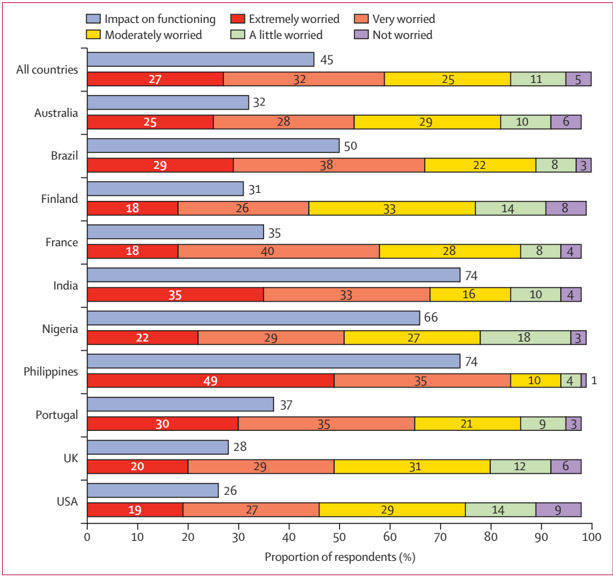
Background Climate change has important implications for the health and futures of children and young people, yet they have little power to limit its harm, making them vulnerable to climate anxiety. This is the first large-scale investigation of climate anxiety in children and young people globally and its relationship with perceived government response. Methods We surveyed 10 000 children and young people (aged 16-25 years) in ten countries (Australia, Brazil, Finland, France, India, Nigeria, Philippines, Portugal, the UK, and the USA; 1000 participants per country). Invitations to complete the survey were sent via the platform Kantar between May 18 and June 7, 2021. Data were collected on participants' thoughts and feelings about climate change, and government responses to climate change. Descriptive statistics were calculated for each aspect of climate anxiety, and Pearson's correlation analysis was done to evaluate whether climate-related distress, functioning, and negative beliefs about climate change were linked to thoughts and feelings about government response. Findings Respondents across all countries were worried about climate change (59% were very or extremely worried and 84% were at least moderately worried). More than 50% reported each of the following emotions: sad, anxious, angry, powerless, helpless, and guilty. More than 45% of respondents said their feelings about climate change negatively affected their daily life and functioning, and many reported a high n…
Verified 2026-11-25 · 1 reference not checked yet
Overview
CoChat Summary
TL;DR
This global survey of 10,000 people aged 16–25 across ten countries found widespread climate anxiety and distress, with many reporting negative functional impacts. Climate distress was correlated with negative perceptions of government responses and feelings of betrayal.
Key findings
- 59% were very or extremely worried about climate change and 84% were at least moderately worried; more than 50% reported feeling sad, anxious, angry, powerless, helpless, and guilty.
- More than 45% said their feelings about climate change negatively affected their daily life and functioning; 75% said the future is frightening and 83% said people have failed to take care of the planet.
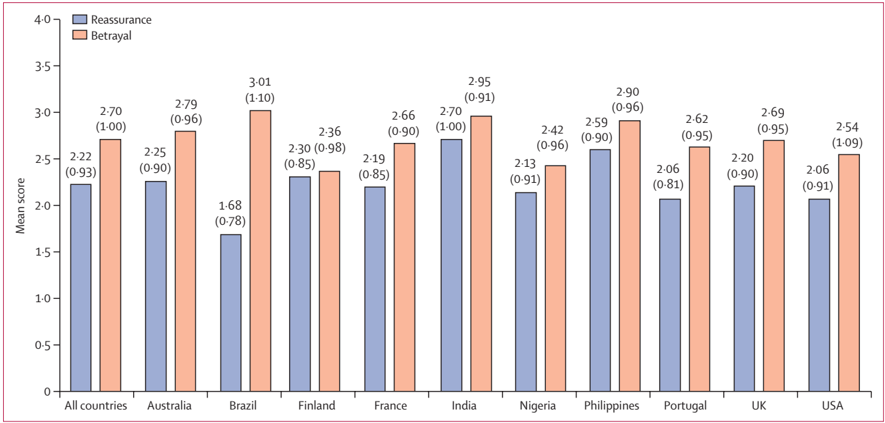
- Respondents rated government responses negatively (mean 14.96 on a 9–18 scale, SD 2.57) and reported greater betrayal (mean 2.7, SD 1.0) than reassurance (mean 2.22, SD 0.93; p<0.0001).
- Climate anxiety and distress were correlated with perceived inadequate government response and associated feelings of betrayal.
Methods
- Cross-sectional online survey of 10,000 children and young people aged 16–25 years in ten countries (Australia, Brazil, Finland, France, India, Nigeria, Philippines, Portugal, the UK, and the USA; 1000 per country), recruited via Kantar between May 18 and June 7, 2021.
- Quota sampling was based on age, gender, and region, with data weighted to OECD statistics for each country by age group, gender, and region.
- Descriptive statistics were calculated for climate anxiety constructs, and Pearson’s correlation analysis explored links between climate-related distress, functioning, negative beliefs, and thoughts/feelings about government response; findings significant at p≤0.001 are reported.
Limitations
- The paper states that non-standardised measures were used because no appropriate standardised measures existed; the study cannot indicate severity compared with normative samples, did not measure mental health outcomes, and used a yes/no/prefer-not-to-say response scale.
- The paper states that equal sample sizes per country were not weighted by population size, so aggregated results are not globally representative; online polling required internet access and sometimes English, and gender was recorded only as male or female.
- Evident from the text: the cross-sectional design cannot establish causality between perceived government response and climate distress.
Model-written summary. Check it against the paper before relying on it.
Integrity signals
Registry
Cites
Statistics
Figures
Verification
Claims the paper makes
12 Valid · 0 Not valid · 19 Not checked · 99 Own results and interpretations
Every source the paper cites for this claim was checked and supports it.
In the paper
“Children are now turning to legal action based on government failure to protect ecosystems, young citizens, and their futures. 26”
What the sources say
- Supportedcites [26] 26 Salas RN, Jacobs W, Perera F. The case of Juliana v. US-children and the health burdens of climate change. N Engl J Med 2019; 380: 2085-87 . source
The supplied Abstract passages describe children filing suit over federal inaction on climate change, which they say violates their constitutional rights. They also connect that inaction to threats to children’s safe environment and to future generations, supporting the citing sentence’s paraphrase. (LLM, conf=0.88)
plainstates a cause- Asserted: passes — The authors put it forward as true.
- Checkable: passes — It can be checked against evidence.
- Load-bearing: unclear — It is unclear whether the paper’s conclusions depend on it.
- Based: passes — The paper gives a reason why it holds.
- Supported
A result the paper reports from its own data — it cites no other source for it, so there is none to check. The quote shows it is in the paper.
In the paper
“in the Global North, Portugal (which had dramatic increases in wildfires since 2017) showed the highest level of worry.”
plainn = 1,000- Asserted: passes — The authors put it forward as true.
- Checkable: passes — It can be checked against evidence.
- Load-bearing: unclear — It is unclear whether the paper’s conclusions depend on it.
- Based: passes — The paper gives a reason why it holds.
A result the paper reports from its own data — it cites no other source for it, so there is none to check. The quote shows it is in the paper.
In the paper
“Respondents rated governmental responses to climate change negatively”
plain- Asserted: passes — The authors put it forward as true.
- Checkable: passes — It can be checked against evidence.
- Load-bearing: passes — The paper’s conclusions depend on it.
- Based: passes — The paper gives a reason why it holds.
A result the paper reports from its own data — it cites no other source for it, so there is none to check. The quote shows it is in the paper.
In the paper
“This distress was associated with beliefs about inadequate governmental response and feelings of betrayal.”
plainstates an association- Asserted: passes — The authors put it forward as true.
- Checkable: passes — It can be checked against evidence.
- Load-bearing: passes — The paper’s conclusions depend on it.
- Based: passes — The paper gives a reason why it holds.
A result the paper reports from its own data — it cites no other source for it, so there is none to check. The quote shows it is in the paper.
In the paper
“More than 45% of respondents said their feelings about climate change negatively affected their daily life and functioning”
- Also stated in: § Results · p. 5 · plain
“More than 45% of respondents said their feelings about climate change negatively affected their daily lives”
plainn = 10- Asserted: passes — The authors put it forward as true.
- Checkable: passes — It can be checked against evidence.
- Load-bearing: passes — The paper’s conclusions depend on it.
- Based: passes — The paper gives a reason why it holds.
- Also stated in: § Results · p. 5 · plain
50 more claims
Create a free account to see all 130 claims and to verify the 1 reference still open.
- Probably not a substantial claim. 51
- It may state two separate claims as one. 41
- The quote only partly states this claim. 6
Claims other papers make about this one
Each is checked against this paper’s own text: does it say what the citing paper says it does?
The source backs part of the claim, not all of it — or backs it for a different population, condition or comparison.
In the citing paper
“Investigations into anxiety about climate change have revealed that it is increasingly common for many people across the globe [9], with large-scale international studies identifying growing concern about climate change [10–12].”
From The relationship between climate change and mental health: a systematic review of the association between eco-anxiety, psychological distress, and symptoms of major affective disorders (2024) · cites this paper as [10]
Experimental — accuracy not yet measuredThe source backs part of the claim, not all of it — or backs it for a different population, condition or comparison.
In the citing paper
“The high prevalence of eco-anxiety [10] - be it at clinical or subclinical levels - underscores the need for broader level changes related to climate change.”
From The relationship between climate change and mental health: a systematic review of the association between eco-anxiety, psychological distress, and symptoms of major affective disorders (2024) · cites this paper as [10]
Experimental — accuracy not yet measuredThe source backs part of the claim, not all of it — or backs it for a different population, condition or comparison.
In the citing paper
“and varied understandings and experiences of climate change have differing impacts on the relationship with mental health [10, 12].”
From The relationship between climate change and mental health: a systematic review of the association between eco-anxiety, psychological distress, and symptoms of major affective disorders (2024) · cites this paper as [10]
Experimental — accuracy not yet measuredThe source backs part of the claim, not all of it — or backs it for a different population, condition or comparison.
In the citing paper
“A global survey of 10,000 young people (16-25) across 10 countries found: (1) 75% were frightened about the future; (2) 84% were moderately worried; (3) 59% were very or extremely worried; and (4) 45%+ reported climate change-related feelings negatively affected their daily life and functioning [21].”
From Climate Distress: A Review of Current Psychological Research and Practice (2023) · cites this paper as [21]
Experimental — accuracy not yet measuredThe source backs part of the claim, not all of it — or backs it for a different population, condition or comparison.
In the citing paper
“An overall lack of trust in government was also identified, with a wide belief that the government response to climate change will continue to be inadequate [21].”
From Climate Distress: A Review of Current Psychological Research and Practice (2023) · cites this paper as [21]
Experimental — accuracy not yet measured
21 more claims about this paper
Create a free account to see every claim other papers make about this one.
Self-check
Percentages, sums and reported differences re-computed from the paper’s own numbers.
Rated minor: it would not touch a result — a value no result rests on, a p-value that stays on the same side of the significance level, or a conflict that is clerical, resolved elsewhere in the paper, or outside its own findings.
In the paper
“15 543 people began the survey and 10 000 (68%) completed it.”
Reported 68 · recomputed 64.337644
Citations
Cites
Mental health of young people: A global public-health challenge
Patel, V., Flisher, A. J., Hetrick, S., & McGorry, P. (2007) · The Lancet · doi:10.1016/s0140-6736(07)60368-7 · Cited by 3,126 · cited 2×
“23 Children facing a future severely damaged by climate change will need support.”
Stress and Health: Psychological, Behavioral, and Biological Determinants
Schneiderman, N., Ironson, G., & Siegel, S. D. (2005) · Annual Review of Clinical Psychology · doi:10.1146/annurev.clinpsy.1.102803.144141 · Cited by 2,252 · cited 2×
“22 Exposure to chronic stress in childhood has a long-lasting impact and increases the risk of developing mental health problems.”
Development and validation of a measure of climate change anxiety
Clayton, S., & Karazsia, B. T. (2020) · Journal of Environmental Psychology · doi:10.1016/j.jenvp.2020.101434 · Cited by 1,196
Self-citationAnxiety and the Ecological Crisis: An Analysis of Eco-Anxiety and Climate Anxiety
Pihkala, P. (2020) · Sustainability · doi:10.3390/su12197836 · Cited by 978 · cited 2×
“In threatening and uncertain situations such as the climate crisis, this response can be seen as what is sometimes referred to as practical anxiety 1,4 because it has the beneficial effect of leading people to reassess their behaviour in order to respond appropriately.”
Self-citationMoral Injury: An Integrative Review
Griffin, B. J., Purcell, N., Burkman, K., Litz, B. T., Bryan, C. J., Schmitz, M., Villierme, C., Walsh, J., & Maguen, S. (2019) · Journal of Traumatic Stress · doi:10.1002/jts.22362 · Cited by 752 · cited 2×
“28 This might include an awareness of or failure to prevent harmful unethical behaviour.”
Stanley, S. K., Hogg, T. L., Leviston, Z., & Walker, I. (2021) · The Journal of Climate Change and Health · doi:10.1016/j.joclim.2021.100003 · Cited by 715
Anxiety, worry, and grief in a time of environmental and climate crisis: a narrative review
Ojala, M., Cunsolo, A., Ogunbode, C. A., & Middleton, J. (2021) · Annual Review of Environment and Resources · doi:10.1146/annurev-environ-012220-022716 · Cited by 670
The case for systems thinking about climate change and mental health
Berry, H. L., Waite, T. D., Dear, K. B. G., Capon, A. G., & Murray, V. (2018) · Nature Climate Change · doi:10.1038/s41558-018-0102-4 · Cited by 485 · cited 2×
“Changing climate and weather-related disasters have diverse impacts, both direct (eg, destruction and trauma) and indirect (eg, strained personal and public resources, interrupted community functioning), 2 as well as resulting in climate anxiety.”
Eco-Anxiety and Environmental Education
Pihkala, P. (2020) · Sustainability · doi:10.3390/su122310149 · Cited by 475
Self-citationThe Hogg Eco-Anxiety Scale: Development and Validation of a Multidimensional Scale
(2021) · doi:10.31219/osf.io/rxudb · Cited by 465
Research works printed but not linked: 4
- 11 Jensen T. Ecologies of guilt in environmental rhetorics. Cham: Palgrave Macmillan, 2019.
- 18 UNICEF. One billion children at 'extremely high risk' of the impacts of the climate crisis. Aug 20, 2021. https://www.unicef.org. uk/press-releases/onebillion-children-at-extremely-high-risk-of-theimpacts-of-the-climate-crisis-unicef (accessed Sept 5, 2021).
- 27 Weintrobe S. Psychological roots of the climate crisis: neoliberal exceptionalism and the culture of uncare. New York, NY: Bloomsbury Academic, 2021.
- 32 Mavronicola N. Torture, inhumanity and degradation under article 3 of the ECHR: absolute rights and absolute wrongs. Oxford: Bloomsbury Publishing, 2021.
Cited by
Items 1,901–2,000 of 2,164
Reconfiguring futures: students’ career and life anticipations in the context of the Anthropocene
Cerantola, M., Borges, A., Brazier, C. É., Randin, O., & Masdonati, J. (2026) · International Journal for Educational and Vocational Guidance · doi:10.1007/s10775-026-09806-1
Impact of Climate Change on Health: Bridging Science, Adaptation, and Communication
Ibrahim, I. D., Aniki, A. O., Nkomo, N. Z., & Jabu, M. A. (2025) · African Journal of Inter/Multidisciplinary Studies · doi:10.51415/ajims.v7i2.2480
Climate Stewardship in the Clinical Setting
Parnes, M. F., Weiss, E. M., & Grow, H. M. (2026) · Advances in Pediatrics · doi:10.1016/j.yapd.2026.02.003
Addressing Climate Anxiety in India: Role of Governmental and Non-governmental Organizations
Sindhuja, S., Majumdar, A., & Rajan, S. K. (2026) · Advances in global change research · doi:10.1007/978-3-032-25479-5_2
Hafsi, A., Cohen‐Scali, V., Ribeiro, M., Masdonati, J., Erby, W., Zein, R., Cerantola, M., & Valikhani, S. (2026) · International Journal for Educational and Vocational Guidance · doi:10.1007/s10775-026-09805-2
The Eco-Poetic Healing Cycle: a literary model of ecological recovery in the poetry of Aan Mansyur
Laila, W. R., & Ambarwati, A. (2026) · Journal of Poetry Therapy · doi:10.1080/08893675.2026.2678407
Roul, S. K. (2026) · Pastoral Psychology · doi:10.1007/s11089-026-01334-7
“Global surveys indicate that a majority of young people report feeling distressed about climate change and that this distress is frequently accompanied by a sense of betrayal by institutions and governments (Hickman et al., 2021).”
Anand, P., & Pradhan, R. K. (2026) · Springer eBooks · doi:10.1007/978-3-032-15911-3_16
Borbón, D. (2026) · Biodemography and Social Biology · doi:10.1080/19485565.2026.2680404
“…from 10 countries, climate anxiety is documented alongside beliefs about government responses to climate change, highlighting the interaction between perceived future threats and judgments about whether collective authorities are acting responsibly toward the next generation (Hickman et al. 2021).”
Bratu, A., Sharma, A., Closson, K., Gislason, M., Hogg, R. S., Logie, C. H., Marshall, C., Martin, G., Takaro, T. K., Wise, M., et al. (2026) · The Journal of Climate Change and Health · doi:10.1016/j.joclim.2025.100641
“One study found that 40% of 10,000 participants were reluctant to have children because of climate change [49].”
Psychische Gesundheit von Kindern und Jugendlichen in der Klimakrise
Peter, F., Dohm, L., & Weimann, E. (2026) · Springer eBooks · doi:10.1007/978-3-662-71302-0_5
Sezen‐Barrie, A., & Huang, Y. (2026) · Environmental Education Research · doi:10.1080/13504622.2026.2671436 · Cited by 1
Conceptualising street youth lived resilience in African cities
van Blerk, L., Hunter, J., Shand, W., et al. (2026) · Children s Geographies · doi:10.1080/14733285.2026.2673859
Linkages Between Climate Change Anxiety, Mental Health, and Eco-Activism in University Students
Bettmann, J. E., Mitra, S. J., Speelman, E. A., & Conley, K. (2026) · Journal of College Student Mental Health · doi:10.1080/28367138.2026.2678825
Lee, E. H., Ogunbode, C. A., Aquino, S. D., Bhullar, N., Albzour, M., Ardi, R., Ayanian, A. H., Bayad, A., Martínez‐Buelvas, L., Chegeni, R., et al. (2026) · Journal of Environmental Studies and Sciences · doi:10.1007/s13412-026-01120-0 · Cited by 1
From (Teaching About) Existential Threats to (Teaching) Existential Resilience and Sustainability
Wamsler, C. (2026) · Springer eBooks · doi:10.1007/978-3-032-11698-7_9
Green Leaves and Leverage Points
Wyman, S. M. (2026) · Springer eBooks · doi:10.1007/978-3-032-11698-7_1
Grace, J. M., & Kassa, M. D. (2026) · BMC Public Health · doi:10.1186/s12889-025-25049-1 · Cited by 1
“Several studies affirm the results of our study, revealing a close relationship between climate-induced displacement and mental health problems such as anxiety, depression, and post-traumatic stress disorder (PTSD) [20, 21, 29, 32].”
Climate change and children's mental health: a questionnaire study
Ahadov, S. S., Hashimova, U. F., & Safikhanova, K. (2025) · Azerbaijan Journal of Physiology · doi:10.59883/ajp.111
Yu, J., Sage, M., & Bernstein, D. (2026) · The Journal of Climate Change and Health · doi:10.1016/j.joclim.2025.100642
“Chronic risks include function-limiting climate anxiety among children and young adults as well as wildfire PM 2.5 air pollutants increasing dementia risk with a hazard ration (HR) of 1.05 [12,13].”
InfluentialMuseums as a Matter of Intergenerational Worldcare and Sustainable Social Change
Bastiansen, G., & Sadownik, A. R. (2026) · Sustainable development goals series · doi:10.1007/978-3-032-22167-4_9
Siegel, P. F. (2026) · Behavioral and Brain Sciences · doi:10.1017/s0140525x25103257
Russell, T. (2026) · Australian Journal of Environmental Education · doi:10.1017/aee.2026.10183 · Cited by 1
“The students ’ fear of negative social feedback accords with studies finding young people felt dismissed, belittled or judged for raising climate concerns (Hickman, 2020; Hickman et al. , 2021).”
L’éco-anxiété chez l’enfant : enjeux développementaux et implications cliniques
Simoës‐Perlant, A., & Hégot, Y. (2026) · Enfances & Psy · doi:10.3917/ep.107.0159
Leaving Earth behind: the semiotics of the failing planet in NewSpace online corporate imagery
Harrison, K. (2026) · Science as Culture · doi:10.1080/09505431.2025.2607358
“Recent medical research has shown widespread ‘eco-anxiety’ amongst young people, with 83 percent of 10,000 survey respondents in 10 countries reporting the view that ‘people have failed to take care of the planet’ and Earth is doomed (Hickman et al. , 2021, p. e863).”
Streby, H. M., Depinet, K., Dufour, P., Simbeck, L., Fuleky, S., Refsnider, J. M., & Sigler, V. (2026) · Interdisciplinary Journal of Environmental and Science Education · doi:10.29333/ijese/18706
“Globally, 70% of people aged 16-25 are very concerned about environmental issues and climate change (Hickman et al., 2021), suggesting that most students, regardless of degree plan, value and support environmental research and action.”
Floods and public perceptions of climate change
Zhao, Y., Liu, Z., Ziegler, A. D., Alkon, M., Lv, K., & He, X. (2026) · Journal of Hydrology · doi:10.1016/j.jhydrol.2026.135810 · Cited by 1
Lee, K., & Gjersoe, N. L. (2026) · Wiley Interdisciplinary Reviews Climate Change · doi:10.1002/wcc.70076
“However, understanding the views of children in HIC is equally important, not least because of their disproportionate exposure to climate impacts (Corner et al. 2015; Hansen et al. 2013), and their increased propensity to climate anxiety (e.g., Hickman et al. 2021).”
Simmons, B. A. (2026) · People and Nature · doi:10.1002/pan3.70365
“…to be more common among younger audiences (Clayton & Karazsia, 2020 ; Patrick et al., 2022 ) and women (Gifford & Gifford, 2016 ; Verplanken et al., 2020 ), as well as residents of disadvantaged communities (Patrick et al., 2022 ) and the Global South more broadly (Hickman et al., 2021 ).”
Climate Change and Global Public Health: Advancing SDG 3 in Light of COP30
Darwish, M., Elnakib, S., Maher, O. A., Napodano, C. M. P., & Bellizzi, S. (2026) · Climate · doi:10.3390/cli14060120
“Mental health, particularly among adolescents and young adults, has been treated in COP outputs as a soft secondary concern [20].”
Reyes, M. E. S., Pacquing, M. C. T., Trinidad, K. K. V., Balmaceda, J. I. C., Clemente, A. J. J., Jesus, A. C. M. D., Gool, R. J. A., Isidro, A. Q. A., & Ogunbode, C. A. (2026) · Chronic Stress · doi:10.1177/24705470261458542 · Cited by 1
Gal, A. (2026) · Sustainability · doi:10.3390/su18125814 · Cited by 2
What's in It for Them? A Developmental Science Perspective on Adolescent Climate Activism
van de Wetering, J., & Lee, K. (2026) · Journal of Adolescence · doi:10.1002/jad.70187 · Cited by 1
“Our study centers the voices of adolescents, a demographic group that is particularly affected by and concerned about climate change and has potential to be at the forefront of much needed sustainable societal change (Hickman et al. 2021; Thiery et al. 2021; Thomaes et al. 2023).”
Kolenatý, M., & Petrásková, S. (2026) · Czech Sociological Review · doi:10.13060/csr.2026.017
Climate Awareness, and the Impact of Extreme Heatwaves on Mental Health among Turkish Youth
Ünver, H., Akmehmet, S. S., & Fiş, N. P. (2026) · OSMANGAZİ JOURNAL OF MEDICINE · doi:10.20515/otd.1754923
Coelho, D. R. A., Pinsky, E. G., McKowen, J., Koh, K. A., Freudenreich, O., Salvi, J. D., Bido-Medina, R. O., & Keuroghlian, A. S. (2026) · Harvard Review of Psychiatry · doi:10.1097/hrp.0000000000000468
Liu, S., Tan, Y., & Zang, L. (2026) · Healthcare · doi:10.3390/healthcare14121624
Therapeutic strategies to manage climate distress among young people
Gunasiri, H., Lawrance, E. L., Menssink, J. M., Patrick, R., Wilson, C., Gresham, B., McGorry, P. D., & Gao, C. X. (2026) · The Lancet Planetary Health · doi:10.1016/j.lanplh.2026.101470 · Cited by 1
Mood changes of children and adolescents in dance classes: a prospective repeated-measures study
Henderson, T. C., Henderson, P. R., Robertson‐Kraft, C., & Levick, J. S. (2026) · Frontiers in Psychology · doi:10.3389/fpsyg.2026.1719704
“The crisis extends beyond digital harms: a global survey of over 10,000 youth across ten countries found that 59% were “very” or “extremely worried” about climate change, with nearly half reporting that this anxiety affected their daily functioning (Hickman et al., 2021).”
Ecoansiedad en América Latina: determinantes sociales y desafíos para la salud mental
Muñoz-Mella, C., & Hoffmann, T. (2026) · Revista Médicas UIS · doi:10.18273/revmed.v39n2-2026006
Özkan, E. Ç. (2026) · Sustainability · doi:10.3390/su18126027 · Cited by 3
Emotional reactions to climate change predict climate-friendly outcomes in 63 cross-country samples
Spampatti, T., & Doell, K. C. (2026) · Journal of Environmental Psychology · doi:10.1016/j.jenvp.2026.103111 · Cited by 3
Filipec, O. (2026) · Czech Sociological Review · doi:10.13060/csr.2026.019
Kim, T., Willis, M. A., Gao, A., Jett, J., & Lane, S. P. (2026) · Journal of Environmental Psychology · doi:10.1016/j.jenvp.2026.103109
The role of empathy and sustainability anxiety in shaping youth aspirations for education and career
Han, J. W., Kim, G., & Luong, T.-T. (2026) · International Journal of Educational Research · doi:10.1016/j.ijer.2026.103046
Kharwar, K., Nair, P., Vaishnav, D. K., Bansal, A., & Amoss, L. D. (2026) · Australian Journal of Environmental Education · doi:10.1017/aee.2026.10187
“The use of emotional coping strategies such as peer discussions, climate clubs at the school level and climate activism can help the children to convert their concerns into action (Hickman et al ., 2021; Ojala, 2012).”
Embedding psychological resilience in climate resilience through an observatory model
Belkin, G. S., Cooper, K., Lawrance, E. L., Chibanda, D., Joag, K., Kalha, J., Kasujja, R., Mariam, E., Mehran, K. A., Mehta, G., et al. (2026) · Nature Mental Health · doi:10.1038/s44220-026-00668-8
Yu, Z., Wang, D., Luo, M., Wang, Z., Fan, Y., Ma, Z., & Fan, F. (2026) · Journal of Environmental Psychology · doi:10.1016/j.jenvp.2026.103118
Case study of low-cost energy reductions in shared research laboratories at a U.S. public university
Tran, L. A., Loren, A., Lamer, S., et al. (2026) · Frontiers in Sustainability · doi:10.3389/frsus.2026.1729128
CEBECİ, F., Akay, O., MEYDAN, S., ARSLANKOÇ, S., BOLAT, G. B., Şahin, D. S., & Artan, T. (2026) · Frontiers in Public Health · doi:10.3389/fpubh.2026.1830212
When Worry Works: Eco-Anxiety as a Catalyst for Consumers’ Pro-Environmental Behavior
Azim, S. M. F., Shimul, A. S., & Reza, S. M. (2026) · Journal of Global Marketing · doi:10.1080/08911762.2026.2687786
Eco-Emotions and Suicidal Ideation and Behavior: A Systematic Literature Review
Kõlves, K., Shaw-Williams, D., Krishnamoorthy, S., Bayliss, L. T., Mathieu, S. L., Zhong, L. R., Hawgood, J. L., Donovan, C. L., Spence, S. H., & Reifels, L. (2026) · Crisis · doi:10.1027/0227-5910/a001065 · Cited by 3
Climate change concerns and perceived intergenerational mobility
Gugushvili, A., & Präg, P. (2026) · Journal of Environmental Psychology · doi:10.1016/j.jenvp.2026.103119 · Cited by 2
Bühn, S., & Kantrowitsch, V. (2026) · Zeitschrift für Arbeitswissenschaft · doi:10.1007/s41449-026-00535-3
“Besonders betroffen sind auch hier Menschen, die im Freien arbeiten.”
Zákostelnová, K. (2026) · Environmental Philosophy · doi:10.5840/envirophil2026615159
Köhler, H. E., Rauschenbach, A.-L., Rodney-Wolf, K., Bauch, J., Greiner, F., Saalbach, H., Baumann, E., & Schmitz, J. (2026) · BMC Public Health · doi:10.1186/s12889-026-28159-6
“Furthermore, new crises emerge, impacting the mental health of young people in Germany [14, 15].”
Akaras, E., & Sözlü, U. (2026) · BMC Medical Education · doi:10.1186/s12909-026-09696-5
“For example, large surveys have found that the majority of adolescents and young adults view climate change as frightening and report concern for the future [3].”
Fowler, K. N. (2026) · Science Education · doi:10.1002/sce.70080
Unheard voices: the overlooked mental health toll of climate change in vulnerable communities
Zeljic, K., Rasolomalala, N., Michalek, J. E., Solomon, S., Rasamison, H., Ramaroson, S., Hadfield, K., & Mareschal, I. (2026) · BMJ Mental Health · doi:10.1136/bmjment-2025-302344
Erby, W. J., Cohen‐Scali, V., Cerantola, M., Masdonati, J., Hult-Miekkavaara, H., & Vehviläinen, S. (2026) · International Journal for Educational and Vocational Guidance · doi:10.1007/s10775-026-09814-1
Abate, R., Punzo, G., & Velotti, P. (2026) · Journal of Public Health · doi:10.1007/s10389-026-02841-w
Understanding eco-anxiety among employees using the job demands–resources model
Kişi, N. (2026) · Future Business Journal · doi:10.1186/s43093-026-00904-8
“Consistent with this, Hick-man et al. [26] found that climate anxiety is widespread among 10,000 young people across ten countries, negatively affecting daily functioning and closely linked to perceptions of inadequate governmental responses, emphasizing the urgent need for policymakers to…”
Köhler, H. E., Bauch, J., Rodney-Wolf, K., Greiner-Döchert, F., Heitz, K., Saalbach, H., Baumann, E., Tucholski, N., & Schmitz, J. (2026) · Frontiers in Public Health · doi:10.3389/fpubh.2026.1760608 · Cited by 1
“Reported demand for all types of mental health services increased, likely reflecting elevated prevalence rates of mental health problems and the impact of ongoing global crises (11, 78, 79).”
Tacke, L. (2026) · Religionspädagogische Beiträge · doi:10.20377/rpb-1996
Molnár, E. L., Molnár, F., & Pálfi, J. (2026) · IEEE International Conference and Workshop Óbuda on Electrical and Power Engineering (CANDO-EPE) · doi:10.1109/cando-epe71091.2026.11569453
“Empirical studies indicate that climate anxiety is particularly pronounced among younger generations and may negatively affect mental well-being, optimism about the future, and trust in institutions [6].”
InfluentialSánchez, E., Ferrer‐Fons, M., Serral, G., Lopez-Muley, C., Santiá, P., Pérez, K., López, M. J., & Oliveras, L. (2026) · The Journal of Climate Change and Health · doi:10.1016/j.joclim.2026.100676
“Furthermore, adolescents from socioeconomically disadvantaged backgrounds may prioritize immediate material needs, which can limit engagement with broader environmental concerns such as CC [12].”
InfluentialL’Engle, K. L., Sahoo, J., Anderson, G. M. H., Brown, E., & Nutkiewicz, L. (2026) · International Journal of Environmental Research and Public Health · doi:10.3390/ijerph23070834 · Cited by 1
“We assessed three elements of climate anxiety that refer to emotional, psychological, and functional impacts of climate change and are mentioned in the literature: eco-emotions, eco-anxiety, and eco-impairment [15].”
InfluentialZ-topia: Gen Z perspectives on mental health in a changing climate
Guo, K., Meas, D., & Bower, M. (2026) · Social Psychiatry and Psychiatric Epidemiology · doi:10.1007/s00127-026-03150-z
Mental health as both outcome and determinant in climate adaptation
Long, Y., Zhou, Z., Kajikawa, Y., Asatani, K., Sakata, I., & Yoshida, Y. (2026) · Nature Climate Change · doi:10.1038/s41558-026-02673-2
Wu, Q., Ren, F., Hao, X., et al. (2026) · Materials Today Physics · doi:10.1016/j.mtphys.2026.102156
Jornet, A., Bussi, E. M., & Lemos, M. (2026) · SSRN Electronic Journal · doi:10.2139/ssrn.7008270
Transferring culture and livelihoods into sustainability
Song, J., & Xiao, L. (2026) · foresight · doi:10.1108/fs-02-2026-0052
Human dignity education and artmaking: addressing student and teacher wellness together
Law, M. A. (2026) · Frontiers in Health Services · doi:10.3389/frhs.2026.1854093 · Cited by 1
“…important as youth have been found to be particularly aware of and disturbed by polarizing geo-political events and other mega-trends, i.e., environmental issues, they have little control over (43, 44) and helps young people develop more inclusive social attitudes and respectful communication (45).”
Teismann, T., & Claus, C. (2026) · Springer eBooks · doi:10.1007/978-3-662-72796-6_1 · Cited by 2
Činčera, J., Kolenatý, M., Kroufek, R., Shah, S. A. A., Binka, B., Rosta, G., Sziva, D., Szabó, A. H., Szarka, K., Mónus, F., et al. (2026) · Environmental Education Research · doi:10.1080/13504622.2026.2693520
Nguyen, T. T. H., Pham, H. C. Q., & Nguyen, T. K. N. (2026) · Financial and credit activity problems of theory and practice · doi:10.55643/fcaptp.3.68.2026.5233
“Global evidence indicates that climate concern among younger cohorts is substantial, while recent transport research shows that climate-change concern can support sustainable mobility orientations and reduced car use (Hickman et al., 2021; Mouratidis & Næss, 2024).”
Role of translations in shaping eco-awareness and eco-anxiety among children in Türkiye
YÜCE, H. K. (2026) · Translation Studies · doi:10.1080/14781700.2026.2650652
Psychosoziale Hilfsangebote innerhalb und außerhalb der Schule
Bauch, J., Rodney-Wolf, K., Ikas, A., et al. (2026) · Springer eBooks · doi:10.1007/978-3-662-73219-9_8
Centeno, V. G., Ress, S., Sorsa, S., & Plötz, E. (2026) · European Educational Research Journal · doi:10.1177/14749041261456130 · Cited by 1
Scoping review: climate change-related anxiety and worry in children, adolescents, and young adults
Rodney-Wolf, K., Eisenschmidt, P., & Schmitz, J. (2026) · European Child & Adolescent Psychiatry · doi:10.1007/s00787-026-03026-2 · Cited by 1
“These emotions are not only linked to personal exposure and vulnerability to environmental threats but also stem from the awareness that climate change is occurring and broader concerns about global and intergenerational justice and the future of the planet [29, 34, 35].”
InfluentialMore than a Placard: The Power of Youth Generated Visual Evidence in Climate Decision Making
Catanzaro, M., & Yajman, V. (2026) · Journal of Applied Youth Studies · doi:10.1007/s43151-026-00227-z
Psychometric validation of the climate anxiety scale in spanish adolescents and adults
Collado, S., Moll, A., Rodríguez‐Rey, R., & Corraliza, J. A. (2026) · Current Psychology · doi:10.1007/s12144-026-09576-7
“Educational or counselling settings targeting cli - mate-engaged youth, such as student environmental groups, could use the CAS as a screening tool to detect early signs of distress and offer tailored support (Hickman et al., 2021 ).”
Composting global peril: horticultural therapy’s relevance for climate emergency
Rice, J. S. (2026) · Acta Horticulturae · doi:10.17660/actahortic.2026.1459.1
Ghotbabadi, T. D. (2026) · Lecture notes in computer science · doi:10.1007/978-3-032-30083-6_3
Ghotbabadi, T. D., Hodel, T., & El‐Nasr, M. S. (2026) · Lecture notes in computer science · doi:10.1007/978-3-032-30408-7_2
Climate Despair and Denial: How Critiques of Climate Despair Can Backfire
Bernardi, R. D. (2026) · International Journal of Philosophical Studies · doi:10.1080/09672559.2026.2689356
Ecofascism in the United States Political Discourse: Applications to the Southern Border
Carney, R. (2026) · The Interdependent Journal of Undergraduate Research in Global Studies · doi:10.33682/huk6-zkwu
Tracing pathways: the impact of the polycrisis on mental health trajectories in emerging adulthood
Pinheiro, P., Namer, Y., & Nowak, A. C. (2026) · Frontiers in Public Health · doi:10.3389/fpubh.2026.1782194 · Cited by 1
Eco-anxiety and the collective action problem of climate change alarmism
Amos, A. J., & Rowe, C. (2026) · Australasian Psychiatry · doi:10.1177/10398562261466061 · Cited by 1
Do moral evaluations of climate change threaten mental health?
Clayton, S., & Marks, E. M. (2026) · Environmental Research Health · doi:10.1088/2752-5309/ae87c1
“Such emotions have been associated with worries about climate change and feelings that governments are betraying their citizens (e.g. Hickman et al 2021), although more far more empirical work needs to be done to draw out our understanding of how moral emotions in this context relate to both MFT…”
InfluentialSelf-citationFekih‐Romdhane, F., Kheir, N., Shuwiekh, H. A. M., Helmy, M. S., Jebreen, K., Naser, A. Y., Fawaz, M. A., Laranjeira, C., Nawajah, I., RADWAN, E. S., et al. (2026) · Critical Public Health · doi:10.1080/09581596.2026.2698160
Dalglish, S. L., Sakyi, K. S., Prost, A., Amin, S., Sardesi, A., Mudaly, A., Bhan, G., Devakumar, D., Diouf, S., Doherty, T., et al. (2026) · The Lancet · doi:10.1016/s0140-6736(26)00856-1
Spanish Version of the Climate Change Anxiety Scale (CCAS–S): Adaptation and Validation Study
Aguilar‐Luzón, M. D. C., Benítez, I., Sánchez-Casasola, D., & Padilla, J.-L. (2026) · The Spanish Journal of Psychology · doi:10.1017/sjp.2026.10040
“…vulnerable to climate-related psychological distress: women, people in geographically at-risk areas, those with low socioeconomic status, and individuals with pre-existing mental health conditions, including children and older adults (Clayton, 2021; Sanandrés Pérez-Loizaga & Rodríguez Rey, 2022).”
Furman, L., Vinko, M., Perčič, S., Kobal, E., & Ačko, L. (2026) · The Journal of Climate Change and Health · doi:10.1016/j.joclim.2026.100705 · Cited by 1
“Previous studies suggest that climate anxiety often represents a rational and an understandable response to a perceived global threat rather than a pathological mental condition [36,37,43,67].”
Pfeifer, E., Stolterfoth, C., Aigner, S. E., & Ostermann, T. (2026) · Discover Psychology · doi:10.1007/s44202-026-00803-7 · Cited by 1
“Recent global studies show that children and young people worry about climate change, feel sad, anxious, and helpless, and experience negative impacts on their daily lives and functioning [30]–regardless of where they live [64].”
More‐than‐verbal methodological approaches to studying eco‐emotions: A critical narrative review
Williams, S., Portus, R., Peklanska, E., & Ramirez, L. (2026) · Geographical Research · doi:10.1111/1745-5871.70085
Jaro’ah, S., & Khotamanisah (2026) · Asian Journal of Psychiatry · doi:10.1016/j.ajp.2026.105091
Soliman, A., Clayton, S., Alghamdi, Y. A., & Fadhel, F. H. (2026) · Geopsychiatry · doi:10.1016/j.geopsy.2026.100105
Self-citation
Metadata
- Authors
- Hickman, C., Marks, E., Pihkala, P., Clayton, S., Lewandowski, R. E., Mayall, E. E., Wray, B., Mellor, C., & van Susteren, L.
- Affiliations
- University of Bath (GB)
- University of Helsinki (FI)
- College of Wooster (US)
- NYU Langone Health (US)
- University of East Anglia (GB)
- London School of Hygiene & Tropical Medicine (GB)
- Oxford Health NHS Foundation Trust (GB)
- Corresponding author
- Hickman, Caroline
- Venue
- The Lancet Planetary Health
- Publisher
- Elsevier BV
- Published
- 2021-12
- Volume
- 5
- Issue
- 12
- Pages
- e863-e873
- ISSN
- 2542-5196 (ISSN-L)
- OpenAlex
- W4200005759
- Semantic Scholar
- 4a876cc35863ba593aacf58fe6a24773b3cb9c29
- Cited by
- 2,324
- References
- 27
- Citations by year
- 2026: 566 · 2025: 652 · 2024: 566 · 2023: 364 · 2022: 170 · 2021: 4
- FWCI
- 382.19
- Type
- journal article
- Language
- en
- Open access
- gold
- doi.org
- Licence
- cc-by-nc-nd
- www.elsevier.com/tdm/userlicense/1.0/ (tdm)
- www.elsevier.com/legal/tdmrep-license (tdm)
- creativecommons.org/licenses/by-nc-nd/4.0/ (vor)
- Locations
- The Lancet Planetary Health (publishedVersion, cc-by-nc-nd)
- PubMed (publishedVersion)
- DOAJ (DOAJ: Directory of Open Access Journals) (submittedVersion, cc-by-sa)
- Työväentutkimus Vuosikirja (submittedVersion)
- Topics
- Social Sciences › Sociology and Political Science › Climate Change Communication and Perception
- Physical Sciences › Environmental Science › Health, Toxicology and Mutagenesis › Climate Change and Health Impacts
- Social Sciences › Psychology › Clinical Psychology › COVID-19 and Mental Health
- Keywords
- climate anxiety, children and young people, climate change, betrayal, climate change beliefs, daily functioning, global survey
- MeSH terms
- Adolescent, Adult, Anxiety, Australia, Child, Government, Humans, Surveys and Questionnaires, Young Adult, Climate Change
About these checks
Registry, retraction, Cites and statistics results are computed, not judged, with one exception: a printed reference that no index lists is read once by a model before it counts as a citation error. Claims are extracted by a model and kept only when their quote appears verbatim in the text; each cited source is then checked, with a model’s help, for whether it says what the claim relies on. Those verdicts can be wrong — read the claim’s quote and the cited source before relying on one.
The claim verdicts this report counts are experimental: their accuracy is not yet measured.
A language model drew the claims from the paper on 2026-10-10, under version 3 of the claim definition (model deepseek-v4.1-flash, prompt extract-v3).
A second model labelled each claim on 2026-10-10 (model jev-1.13-20260917, definition revision gold-guideline-v0.2).
Cited sources are checked with a language model’s help (gpt-6-sol).
Statistics and arithmetic are recomputed, not judged.
Confidence bands are shown only for fields calibrated on our annotated test set. None is calibrated yet, so no band is shown.
What counts as a claim ›How we measure confidence ›How we check this ›
Are you an author, or do you see a problem with this page? Request a review
Data sources
Bibliographic data: Semantic Scholar, OpenAlex, Crossref.
Contains information from the Semantic Scholar Academic Graph Datasets, made available under the ODC Attribution License (ODC-BY 1.0).
Semantic Scholar’s data is described in: Kinney, R., et al. (2023). The Semantic Scholar Open Data Platform. arXiv:2301.10140.
