

Climate anxiety in children and young people and their beliefs about government responses to climate change: a global survey
Open accessThe DOI matches its Crossref record; 27 of the 30 references it cites were found in a registry or an index, and 1 are not checked yet; 14 of the 48 sources its claims cite were checked for support.
Abstract
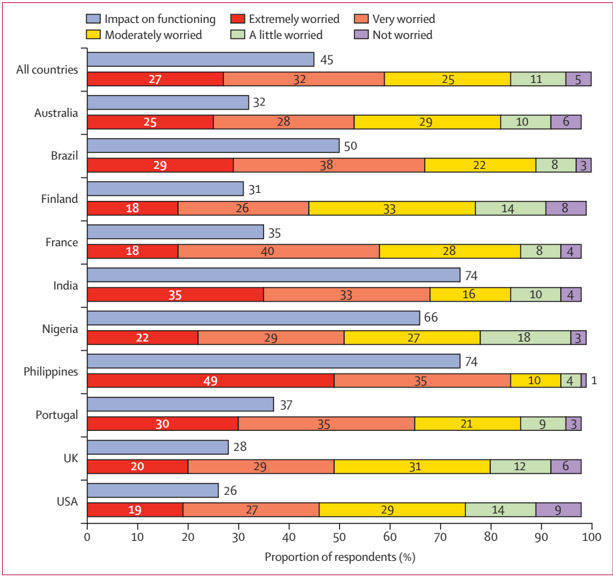
Background Climate change has important implications for the health and futures of children and young people, yet they have little power to limit its harm, making them vulnerable to climate anxiety. This is the first large-scale investigation of climate anxiety in children and young people globally and its relationship with perceived government response. Methods We surveyed 10 000 children and young people (aged 16-25 years) in ten countries (Australia, Brazil, Finland, France, India, Nigeria, Philippines, Portugal, the UK, and the USA; 1000 participants per country). Invitations to complete the survey were sent via the platform Kantar between May 18 and June 7, 2021. Data were collected on participants' thoughts and feelings about climate change, and government responses to climate change. Descriptive statistics were calculated for each aspect of climate anxiety, and Pearson's correlation analysis was done to evaluate whether climate-related distress, functioning, and negative beliefs about climate change were linked to thoughts and feelings about government response. Findings Respondents across all countries were worried about climate change (59% were very or extremely worried and 84% were at least moderately worried). More than 50% reported each of the following emotions: sad, anxious, angry, powerless, helpless, and guilty. More than 45% of respondents said their feelings about climate change negatively affected their daily life and functioning, and many reported a high n…
Verified 2026-11-25 · 1 reference not checked yet
Overview
CoChat Summary
TL;DR
This global survey of 10,000 people aged 16–25 across ten countries found widespread climate anxiety and distress, with many reporting negative functional impacts. Climate distress was correlated with negative perceptions of government responses and feelings of betrayal.
Key findings
- 59% were very or extremely worried about climate change and 84% were at least moderately worried; more than 50% reported feeling sad, anxious, angry, powerless, helpless, and guilty.
- More than 45% said their feelings about climate change negatively affected their daily life and functioning; 75% said the future is frightening and 83% said people have failed to take care of the planet.
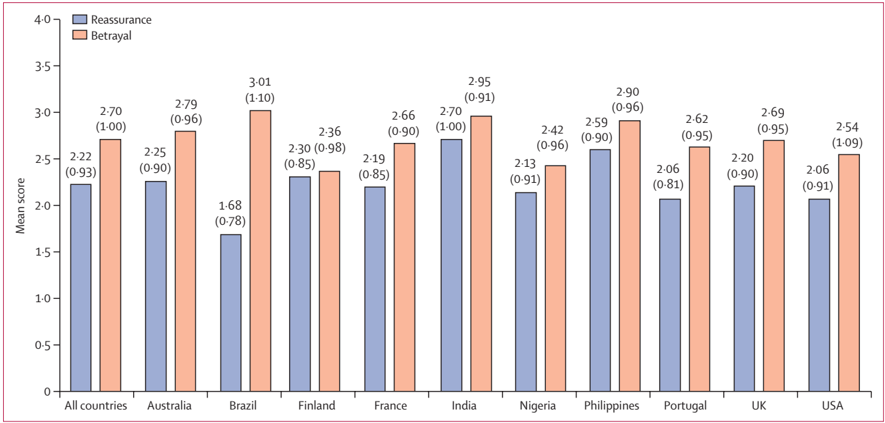
- Respondents rated government responses negatively (mean 14.96 on a 9–18 scale, SD 2.57) and reported greater betrayal (mean 2.7, SD 1.0) than reassurance (mean 2.22, SD 0.93; p<0.0001).
- Climate anxiety and distress were correlated with perceived inadequate government response and associated feelings of betrayal.
Methods
- Cross-sectional online survey of 10,000 children and young people aged 16–25 years in ten countries (Australia, Brazil, Finland, France, India, Nigeria, Philippines, Portugal, the UK, and the USA; 1000 per country), recruited via Kantar between May 18 and June 7, 2021.
- Quota sampling was based on age, gender, and region, with data weighted to OECD statistics for each country by age group, gender, and region.
- Descriptive statistics were calculated for climate anxiety constructs, and Pearson’s correlation analysis explored links between climate-related distress, functioning, negative beliefs, and thoughts/feelings about government response; findings significant at p≤0.001 are reported.
Limitations
- The paper states that non-standardised measures were used because no appropriate standardised measures existed; the study cannot indicate severity compared with normative samples, did not measure mental health outcomes, and used a yes/no/prefer-not-to-say response scale.
- The paper states that equal sample sizes per country were not weighted by population size, so aggregated results are not globally representative; online polling required internet access and sometimes English, and gender was recorded only as male or female.
- Evident from the text: the cross-sectional design cannot establish causality between perceived government response and climate distress.
Model-written summary. Check it against the paper before relying on it.
Integrity signals
Registry
Cites
Statistics
Figures
Verification
Claims the paper makes
12 Valid · 0 Not valid · 19 Not checked · 99 Own results and interpretations
Every source the paper cites for this claim was checked and supports it.
In the paper
“Children are now turning to legal action based on government failure to protect ecosystems, young citizens, and their futures. 26”
What the sources say
- Supportedcites [26] 26 Salas RN, Jacobs W, Perera F. The case of Juliana v. US-children and the health burdens of climate change. N Engl J Med 2019; 380: 2085-87 . source
The supplied Abstract passages describe children filing suit over federal inaction on climate change, which they say violates their constitutional rights. They also connect that inaction to threats to children’s safe environment and to future generations, supporting the citing sentence’s paraphrase. (LLM, conf=0.88)
plainstates a cause- Asserted: passes — The authors put it forward as true.
- Checkable: passes — It can be checked against evidence.
- Load-bearing: unclear — It is unclear whether the paper’s conclusions depend on it.
- Based: passes — The paper gives a reason why it holds.
- Supported
A result the paper reports from its own data — it cites no other source for it, so there is none to check. The quote shows it is in the paper.
In the paper
“in the Global North, Portugal (which had dramatic increases in wildfires since 2017) showed the highest level of worry.”
plainn = 1,000- Asserted: passes — The authors put it forward as true.
- Checkable: passes — It can be checked against evidence.
- Load-bearing: unclear — It is unclear whether the paper’s conclusions depend on it.
- Based: passes — The paper gives a reason why it holds.
A result the paper reports from its own data — it cites no other source for it, so there is none to check. The quote shows it is in the paper.
In the paper
“Respondents rated governmental responses to climate change negatively”
plain- Asserted: passes — The authors put it forward as true.
- Checkable: passes — It can be checked against evidence.
- Load-bearing: passes — The paper’s conclusions depend on it.
- Based: passes — The paper gives a reason why it holds.
A result the paper reports from its own data — it cites no other source for it, so there is none to check. The quote shows it is in the paper.
In the paper
“This distress was associated with beliefs about inadequate governmental response and feelings of betrayal.”
plainstates an association- Asserted: passes — The authors put it forward as true.
- Checkable: passes — It can be checked against evidence.
- Load-bearing: passes — The paper’s conclusions depend on it.
- Based: passes — The paper gives a reason why it holds.
A result the paper reports from its own data — it cites no other source for it, so there is none to check. The quote shows it is in the paper.
In the paper
“More than 45% of respondents said their feelings about climate change negatively affected their daily life and functioning”
- Also stated in: § Results · p. 5 · plain
“More than 45% of respondents said their feelings about climate change negatively affected their daily lives”
plainn = 10- Asserted: passes — The authors put it forward as true.
- Checkable: passes — It can be checked against evidence.
- Load-bearing: passes — The paper’s conclusions depend on it.
- Based: passes — The paper gives a reason why it holds.
- Also stated in: § Results · p. 5 · plain
50 more claims
Create a free account to see all 130 claims and to verify the 1 reference still open.
- Probably not a substantial claim. 51
- It may state two separate claims as one. 41
- The quote only partly states this claim. 6
Claims other papers make about this one
Each is checked against this paper’s own text: does it say what the citing paper says it does?
The source backs part of the claim, not all of it — or backs it for a different population, condition or comparison.
In the citing paper
“Investigations into anxiety about climate change have revealed that it is increasingly common for many people across the globe [9], with large-scale international studies identifying growing concern about climate change [10–12].”
From The relationship between climate change and mental health: a systematic review of the association between eco-anxiety, psychological distress, and symptoms of major affective disorders (2024) · cites this paper as [10]
Experimental — accuracy not yet measuredThe source backs part of the claim, not all of it — or backs it for a different population, condition or comparison.
In the citing paper
“The high prevalence of eco-anxiety [10] - be it at clinical or subclinical levels - underscores the need for broader level changes related to climate change.”
From The relationship between climate change and mental health: a systematic review of the association between eco-anxiety, psychological distress, and symptoms of major affective disorders (2024) · cites this paper as [10]
Experimental — accuracy not yet measuredThe source backs part of the claim, not all of it — or backs it for a different population, condition or comparison.
In the citing paper
“and varied understandings and experiences of climate change have differing impacts on the relationship with mental health [10, 12].”
From The relationship between climate change and mental health: a systematic review of the association between eco-anxiety, psychological distress, and symptoms of major affective disorders (2024) · cites this paper as [10]
Experimental — accuracy not yet measuredThe source backs part of the claim, not all of it — or backs it for a different population, condition or comparison.
In the citing paper
“A global survey of 10,000 young people (16-25) across 10 countries found: (1) 75% were frightened about the future; (2) 84% were moderately worried; (3) 59% were very or extremely worried; and (4) 45%+ reported climate change-related feelings negatively affected their daily life and functioning [21].”
From Climate Distress: A Review of Current Psychological Research and Practice (2023) · cites this paper as [21]
Experimental — accuracy not yet measuredThe source backs part of the claim, not all of it — or backs it for a different population, condition or comparison.
In the citing paper
“An overall lack of trust in government was also identified, with a wide belief that the government response to climate change will continue to be inadequate [21].”
From Climate Distress: A Review of Current Psychological Research and Practice (2023) · cites this paper as [21]
Experimental — accuracy not yet measured
21 more claims about this paper
Create a free account to see every claim other papers make about this one.
Self-check
Percentages, sums and reported differences re-computed from the paper’s own numbers.
Rated minor: it would not touch a result — a value no result rests on, a p-value that stays on the same side of the significance level, or a conflict that is clerical, resolved elsewhere in the paper, or outside its own findings.
In the paper
“15 543 people began the survey and 10 000 (68%) completed it.”
Reported 68 · recomputed 64.337644
Citations
Cites
Mental health of young people: A global public-health challenge
Patel, V., Flisher, A. J., Hetrick, S., & McGorry, P. (2007) · The Lancet · doi:10.1016/s0140-6736(07)60368-7 · Cited by 3,126 · cited 2×
“23 Children facing a future severely damaged by climate change will need support.”
Stress and Health: Psychological, Behavioral, and Biological Determinants
Schneiderman, N., Ironson, G., & Siegel, S. D. (2005) · Annual Review of Clinical Psychology · doi:10.1146/annurev.clinpsy.1.102803.144141 · Cited by 2,252 · cited 2×
“22 Exposure to chronic stress in childhood has a long-lasting impact and increases the risk of developing mental health problems.”
Development and validation of a measure of climate change anxiety
Clayton, S., & Karazsia, B. T. (2020) · Journal of Environmental Psychology · doi:10.1016/j.jenvp.2020.101434 · Cited by 1,196
Self-citationAnxiety and the Ecological Crisis: An Analysis of Eco-Anxiety and Climate Anxiety
Pihkala, P. (2020) · Sustainability · doi:10.3390/su12197836 · Cited by 978 · cited 2×
“In threatening and uncertain situations such as the climate crisis, this response can be seen as what is sometimes referred to as practical anxiety 1,4 because it has the beneficial effect of leading people to reassess their behaviour in order to respond appropriately.”
Self-citationMoral Injury: An Integrative Review
Griffin, B. J., Purcell, N., Burkman, K., Litz, B. T., Bryan, C. J., Schmitz, M., Villierme, C., Walsh, J., & Maguen, S. (2019) · Journal of Traumatic Stress · doi:10.1002/jts.22362 · Cited by 752 · cited 2×
“28 This might include an awareness of or failure to prevent harmful unethical behaviour.”
Stanley, S. K., Hogg, T. L., Leviston, Z., & Walker, I. (2021) · The Journal of Climate Change and Health · doi:10.1016/j.joclim.2021.100003 · Cited by 715
Anxiety, worry, and grief in a time of environmental and climate crisis: a narrative review
Ojala, M., Cunsolo, A., Ogunbode, C. A., & Middleton, J. (2021) · Annual Review of Environment and Resources · doi:10.1146/annurev-environ-012220-022716 · Cited by 670
The case for systems thinking about climate change and mental health
Berry, H. L., Waite, T. D., Dear, K. B. G., Capon, A. G., & Murray, V. (2018) · Nature Climate Change · doi:10.1038/s41558-018-0102-4 · Cited by 485 · cited 2×
“Changing climate and weather-related disasters have diverse impacts, both direct (eg, destruction and trauma) and indirect (eg, strained personal and public resources, interrupted community functioning), 2 as well as resulting in climate anxiety.”
Eco-Anxiety and Environmental Education
Pihkala, P. (2020) · Sustainability · doi:10.3390/su122310149 · Cited by 475
Self-citationThe Hogg Eco-Anxiety Scale: Development and Validation of a Multidimensional Scale
(2021) · doi:10.31219/osf.io/rxudb · Cited by 465
Research works printed but not linked: 4
- 11 Jensen T. Ecologies of guilt in environmental rhetorics. Cham: Palgrave Macmillan, 2019.
- 18 UNICEF. One billion children at 'extremely high risk' of the impacts of the climate crisis. Aug 20, 2021. https://www.unicef.org. uk/press-releases/onebillion-children-at-extremely-high-risk-of-theimpacts-of-the-climate-crisis-unicef (accessed Sept 5, 2021).
- 27 Weintrobe S. Psychological roots of the climate crisis: neoliberal exceptionalism and the culture of uncare. New York, NY: Bloomsbury Academic, 2021.
- 32 Mavronicola N. Torture, inhumanity and degradation under article 3 of the ECHR: absolute rights and absolute wrongs. Oxford: Bloomsbury Publishing, 2021.
Cited by
Items 101–200 of 2,164
Ediz, Ç., & YANIK, D. (2023) · International Journal of Social Psychiatry · doi:10.1177/00207640231206060 · Cited by 69
“The indifference and inaction toward climate change by those in power, such as adults and governments, reinforce negative emotional and thought patterns of hope-lessness (Hickman et al., 2021).”
BackgroundInfluentialDaysh, S., Thomas, E. F., Lizzio‐Wilson, M., Bird, L. H., & Wenzel, M. (2024) · Global Environmental Psychology · doi:10.5964/gep.11153 · Cited by 57
“Recent research highlights that, when people consider climate change, they frequently imagine strongly negative and fear-in voking content (e.g., Hickman et al., 2021).”
BackgroundRocchi, G., Pileri, J., Luciani, F., Gennaro, A., & Lai, C. (2023) · Journal of Environmental Psychology · doi:10.1016/j.jenvp.2023.102180 · Cited by 64
Hajek, A., & König, H. (2022) · Public Health · doi:10.1016/j.puhe.2022.09.007 · Cited by 51
Aylward, B., Cunsolo, A., Vriezen, R., & Harper, S. L. (2022) · International Review of Psychiatry · doi:10.1080/09540261.2022.2029368 · Cited by 44
“Further, in a recent global study, youth between the ages of 16 and 25 reported experiencing high levels of negative emotions, such as sadness, anxiety and helplessness related to climate change (Hickman et al., 2021).”
BackgroundSanson, A. V., Malca, K. P., Hoorn, J. L. V., & Burke, S. E. L. (2022) · Cambridge University Press eBooks · doi:10.1017/9781009118705 · Cited by 51
Marí-Dell’Olmo, M., Oliveras, L., Barón-Miras, L. E., Borrell, C., Montalvo, T., Ariza, C., Ventayol, I., Mercuriali, L., Sheehan, M. C., Gómez, A., et al. (2022) · International Journal of Environmental Research and Public Health · doi:10.3390/ijerph191912764 · Cited by 63
“concerned about climate change and 45% of them said their feelings about climate change negatively affected their daily life and functioning [92].”
BackgroundTsevreni, I., Proutsos, N. D., Tsevreni, M., & Tigkas, D. (2023) · Climate · doi:10.3390/cli11080171 · Cited by 96
“%) and India (64%), experience eco-anxiety, compared to the Global North, for example, 59.9% in the UK and 57.8% in the USA.”
BackgroundInfluentialClimate Distress: A Review of Current Psychological Research and Practice
Koder, J., Dunk, J., & Rhodes, P. (2023) · Sustainability · doi:10.3390/su15108115 · Cited by 43
An Emotional Road to Sustainability: How Affective Science Can Support pro-Climate Action
Schneider, C. R., & van der Linden, S. (2023) · Emotion Review · doi:10.1177/17540739231193742 · Cited by 56
“More recently, some work has started to look at emotions and climate change in non-WEIRD samples, with a focus on climate problems, such as anxiety (e.g., Hickman et al., 2021; Simon, Pakingan & Aruta, 2022; Tam, Chan & Clayton, 2023), which is a promising starting point.”
BackgroundClimate change and resilience: Developmental science perspectives
Sanson, A. V., & Masten, A. S. (2023) · International Journal of Behavioral Development · doi:10.1177/01650254231186332 · Cited by 65
“Contribute to theory and evidence on developmental effects of exposure to climate-related disasters and effective interventions to lessen these to knowledge on developmental implications of awareness and related distress about future effects of climate change and effective ways to encourage adaptive responses to reali…”
ResultInfluentialEco-anxiety and climate-anxiety linked to indirect exposure: A scoping review of empirical research
Jarrett, J. A., Gauthier, S., Baden, D. A., Ainsworth, B., & Dorey, L. (2024) · Journal of Environmental Psychology · doi:10.1016/j.jenvp.2024.102326 · Cited by 66
“…studies which adopted unvalidated quantitative survey techniques (n = 16) were not charted (Berry & Peel, 2015; Clayton, Pihkala, Wray, & Marks, 2023; Ekholm & Olofsson, 2017; Hickman et al., 2021; Leon-hardt, Granrud, Bonsaksen, & Lien, 2022; Maran & Begotti, 2021; Longitudinal (3 months).”
Zangerl, K. E., Hoernke, K., Andreas, M., Dalglish, S. L., Kelman, I., Nilsson, M., Rocklöv, J., Bärnighausen, T., & McMahon, S. A. (2024) · The Lancet Child & Adolescent Health · doi:10.1016/s2352-4642(24)00084-1 · Cited by 56
Captured Futures: Rethinking the Drama of Environmental Politics
Hajer, M. A., & Oomen, J. (2025) · doi:10.1093/9780198955382.001.0001 · Cited by 69
Sarrasin, O., von Roten, F. C., & Butera, F. (2022) · Sustainability · doi:10.3390/su14031414 · Cited by 50
Vamvalis, M. (2023) · Research in Education · doi:10.1177/00345237231160090 · Cited by 42
“Caroline Hickman et al. (2021) surfaced fi ndings involving 10,000 youth (ages 15 – 25) in 10 countries that governments ’ inadequate responses and inaction heighten youth climate anxiety and despair.”
BackgroundClimate anxiety: trigger or threat for mental disorders?
Sampaio, F., & Sequeira, C. (2022) · The Lancet Planetary Health · doi:10.1016/s2542-5196(22)00008-0 · Cited by 42
Introduction and behavioral validation of the climate change distress and impairment scale
Hepp, J., Klein, S. A., Horsten, L. K., Urbild, J., & Lane, S. P. (2023) · Scientific Reports · doi:10.1038/s41598-023-37573-4 · Cited by 41
“…in a recent sample of 10,000 young persons from ten socio-culturally diverse countries across the globe, more than 45% of participants (aged 16–25) stated that their feelings about climate change negatively affected their daily lives, suggesting increased levels of CCI in this age cohort 25 .”
Teo, S. M., Gao, C. X., Brennan, N., Fava, N., Simmons, M. B., Baker, D., Zbukvic, I., Rickwood, D., Brown, E., Smith, C. L., et al. (2023) · Journal of Environmental Psychology · doi:10.1016/j.jenvp.2023.102209 · Cited by 62
Towards a transformative climate change education: questions and pedagogies
Leite, S. (2024) · Environmental Education Research · doi:10.1080/13504622.2024.2365983 · Cited by 61
“Such climate-induced distress is a global phenomenon, with youth around the world experiencing sadness, anger, and guilt related to climate inaction (hickman et al. 2021).”
Prencipe, L., Houweling, T. A. J., van Lenthe, F. J., Kajula, L. J., & Palermo, T. (2023) · The Lancet Planetary Health · doi:10.1016/s2542-5196(23)00234-6 · Cited by 56
(2022) · doi:10.21203/rs.3.rs-1986606/v1 · Cited by 41
Eco-Anxiety and Pastoral Care: Theoretical Considerations and Practical Suggestions
Pihkala, P. (2022) · Religions · doi:10.3390/rel13030192 · Cited by 57
“…climate change among 10,000 children and youth in 10 countries revealed that 56% of them thought that “humanity is doomed”, while 75% felt the climate future to be frightening; 42% reported having felt at least some hesitation in having children because of the climate crisis (Hickman et al. 2021).”
InfluentialSelf-citationValidation of the Climate Change Anxiety Scale for Korean Adults
Jang, S. J., Chung, S. J., & Lee, H. (2023) · Perspectives In Psychiatric Care · doi:10.1155/2023/9718834 · Cited by 51
Empowering young people with climate and ocean science: Five strategies for adults to consider
Kelly, R., Elsler, L. G., Polejack, A., van der Linden, S., Tönnesson, K., Schoedinger, S. E., Santoro, F., Pecl, G. T., Palmgren, M. B., Mariani, P., et al. (2021) · One Earth · doi:10.1016/j.oneear.2022.07.007 · Cited by 56
Leonhardt, M., Granrud, M. D., Bonsaksen, T., & Lien, L. (2022) · International Journal of Environmental Research and Public Health · doi:10.3390/ijerph191912826 · Cited by 52
“However, the latter countries still had somewhat higher prevalence than our figures, with 44% extremely or very worried about climate change [2].”
BackgroundResultInfluentialHow to Feel About Climate Change? An Analysis of the Normativity of Climate Emotions
Mosquera, J., & Jylhä, K. M. (2022) · International Journal of Philosophical Studies · doi:10.1080/09672559.2022.2125150 · Cited by 52
Kabasakal-Cetin, A. (2023) · Food Quality and Preference · doi:10.1016/j.foodqual.2023.104972 · Cited by 48
Thomson, E. E., & Roach, S. P. (2023) · Frontiers in Psychology · doi:10.3389/fpsyg.2023.1241400 · Cited by 39
Voşki, A., Wong‐Parodi, G., & Ardoin, N. M. (2023) · Global Environmental Psychology · doi:10.5964/gep.11465 · Cited by 46
“…this provided evidence that participants’ eco-emotional patterns meaningfully differ from those presumed from the prior litera ture, with the prevalence of eco-anger and eco-grief over eco-anxiety as the most-often psychometrically assessed and observed in WEIRD populations (Hickman et al., 2021).”
BackgroundResultInfluentialShen, C., & Wang, Y. (2023) · Journal of Cleaner Production · doi:10.1016/j.jclepro.2023.139137 · Cited by 43
Plohl, N., Mlakar, I., Musil, B., & Smrke, U. (2023) · Frontiers in Psychology · doi:10.3389/fpsyg.2023.1297782 · Cited by 39
Reciprocal Relations Between Climate Change Anxiety and Pro-Environmental Behavior
Kühner, C., Rudolph, C. W., & Zacher, H. (2024) · Environment and Behavior · doi:10.1177/00139165241297050 · Cited by 53
“This trend is particularly strong among younger people (e.g., Hickman et al., 2021), but is also evident across the entire population.”
InfluentialMarks, E. M., Atkins, E., Garrett, J. K., Abrams, J. F., Shackleton, D., Hennessy, L. J., Mayall, E., Bennett, J. E., & Leach, I. (2023) · Frontiers in Psychology · doi:10.3389/fpsyg.2022.1076322 · Cited by 59
“Despite this concern, many young people feel ignored or dismissed when attempting to discuss such concerns and feelings (Hickman et al., 2021).”
BackgroundInfluentialSelf-citationBreaking the climate spiral of silence: lessons from a COP26 climate conversations campaign
Ettinger, J., McGivern, A., Spiegel, M. P., King, B., Shawoo, Z., Chapin, A. B., & Finnegan, W. (2023) · Climatic Change · doi:10.1007/s10584-023-03493-5 · Cited by 50
Global mental health and climate change: A geo-psychiatry perspectiv
Sri, A. S., Bhugra, D., Persaud, A., Tribe, R., Gnanapragasam, S., Castaldelli-Maia, J. M., Torales, J. C., & Ventriglio, A. (2023) · Asian Journal of Psychiatry · doi:10.1016/j.ajp.2023.103562 · Cited by 49
Agency in the Anthropocene: education for planetary health
White, P., Ardoin, N. M., Eames, C., & Monroe, M. C. (2024) · The Lancet Planetary Health · doi:10.1016/s2542-5196(23)00271-1 · Cited by 54
Emotions of the Anthropocene across Oceania
Clissold, R., McNamara, K. E., & Westoby, R. (2022) · International Journal of Environmental Research and Public Health · doi:10.3390/ijerph19116757 · Cited by 46
“There is also burgeoning research on and documentation of anxiety in relation to ecological and climate crises, which commonly manifest in connection with fear, grief, and guilt [28,38,39].”
BackgroundYouth Awareness and Attitudes towards a Circular Economy to Achieve the Green Deal Goals
Krajnc, D., Kovačič, D., Žunec, E., Brglez, K., & Lukman, R. K. (2022) · Sustainability · doi:10.3390/su141912050 · Cited by 55
Reframing sustainability initiatives in higher education
Husic, D. W. (2024) · Sustainable Earth Reviews · doi:10.1186/s42055-024-00076-9 · Cited by 38
“We live in an era in which terms like eco-anxiety and climate grief have entered the lexicon, and the psychological and physical health impacts of this psychological stress are the subject of current research [17].”
BackgroundLindhe, N., Bengtsson, A., Byggeth, E., Engström, J., Lundin, M., Ludvigsson, M., Aminoff, V., Berg, M., & Andersson, G. (2023) · Behaviour Research and Therapy · doi:10.1016/j.brat.2023.104438 · Cited by 46
“In a recent global survey, 84% out of 10 000 respondents aged 16 – 25 reported that they were at least moderately worried about climate change, and more than 50% reported feeling sad, anxious, angry, powerless, helpless, and guilty (Hickman et al., 2021).”
InfluentialSatire, Humor, and Environmental Crises
Zekavat, M., & Scheel, T. (2023) · Routledge eBooks · doi:10.4324/9781003055143 · Cited by 44
Ballew, M. T., Uppalapati, S. S., Myers, T. A., Carman, J., Campbell, E., Rosenthal, S. A., Kotcher, J., Leiserowitz, A., & Maibach, E. W. (2024) · npj Climate Action · doi:10.1038/s44168-024-00172-8 · Cited by 70
“Additionally, the prevalence of climate-related distress in this study is lower than what has been found in other studies 4,23,24,60 .”
Reiß, F., Kaman, A., Napp, A.-K., Devine, J., Li, L., Strelow, L. I., Erhart, M., Hölling, H., Schlack, R., & Ravens‐Sieberer, U. (2023) · Bundesgesundheitsblatt - Gesundheitsforschung - Gesundheitsschutz · doi:10.1007/s00103-023-03720-5 · Cited by 52
“Deutsche sowie internationale Studien verweisen auf dienegativenpsychischenAuswirkungen neuer, aktueller Krisen [13, 52].”
BackgroundInfluentialFinnegan, W. (2022) · Children s Geographies · doi:10.1080/14733285.2022.2153329 · Cited by 50
“Recent research has also found high levels of climate anxiety among young people, with students rating negative climate scenarios as more likely than positive climate scenarios (Finnegan 2022; Hickman et al. 2021).”
BackgroundNdetei, D. M., Wasserman, D., Mutiso, V., Shanley, J. R., Musyimi, C. W., Nyamai, P. K., Munyua, T., Swahn, M. H., Weisz, J. R., Osborn, T. L., et al. (2024) · BMC Psychiatry · doi:10.1186/s12888-024-05568-8 · Cited by 55
“Other studies particularly those with young people have found that climate change evoked emotions such as fear, worry, anger, shame, guilt, disgust, hopelessness and overwhelm [11–13].”
BackgroundResultSelf-citationComplex dynamics of climate emotions among environmentally active Finnish and American young people
Coppola, I., & Pihkala, P. (2023) · Frontiers in Political Science · doi:10.3389/fpos.2022.1063741 · Cited by 46
“Michael (male, 21 years, USA) This theme of whether to have children because of the climate crisis is receiving growing attention, and the issue clearly causes complex and difficult feelings (Schneider-Mayerson and Leong, 2020; Hickman et al., 2021; Schneider-Mayerson, 2022).”
BackgroundInfluentialSelf-citationClimate Change and Children’s Health: Building a Healthy Future for Every Child
Ahdoot, S., Baum, C. R., Cataletto, M. B., Hogan, P., Wu, C. B., Bernstein, A. S., Bole, A., Balk, S. J., Byron, L. G., Huerta-Montañez, G. M., et al. (2024) · PEDIATRICS · doi:10.1542/peds.2023-065504 · Cited by 74
Chapman, D. A., & Peters, E. M. (2024) · Journal of Environmental Psychology · doi:10.1016/j.jenvp.2024.102440 · Cited by 46
The Relationship between Climate Anxiety and Pro-Environment Behaviours
Coates, Z., Kelly, M., & Brown, S. D. (2024) · Sustainability · doi:10.3390/su16125211 · Cited by 47
Wullenkord, M. C., Johansson, M. V., Loy, L. S., Menzel, C., & Reese, G. (2024) · Journal of Environmental Psychology · doi:10.1016/j.jenvp.2024.102278 · Cited by 46
Climate change anxiety and pro-environmental behaviours: disentangling gender disparities
Pinho, M. (2025) · Frontiers in Sociology · doi:10.3389/fsoc.2025.1589501 · Cited by 45
Acute and chronic impacts of heat stress on planetary health
Sampath, V., Shalakhti, O., Veidis, E. M., Efobi, J. A., Shamji, M. H., Agache, I. O., Skevaki, C. L., Renz, H. E., & Nadeau, K. C. (2023) · Allergy · doi:10.1111/all.15702 · Cited by 46
Supporting young people with climate anxiety: mitigation, adaptation, and resilience
Hurley, E. A., Dalglish, S. L., & Sacks, E. (2022) · The Lancet Planetary Health · doi:10.1016/s2542-5196(22)00015-8 · Cited by 41
Testing an integrated model of climate change anxiety
Chan, H., Tam, K., & Clayton, S. (2024) · Journal of Environmental Psychology · doi:10.1016/j.jenvp.2024.102368 · Cited by 45
Self-citationGienger, A., Nursey‐Bray, M., Rodger, D., Szörényi, A., Weinstein, P., Hanson‐Easey, S., Fordham, D., Lemieux, D., Hill, C., & Yoneyama, S. (2024) · Environmental Education Research · doi:10.1080/13504622.2024.2367022 · Cited by 54
“…these threats, children and young people’s eco-anxiety is further fuelled by the insufficient societal and political responses to them (Bright and Eames 2020; Hickman et al. 2021; Thompson et al. 2022; Wortzel et al. 2022a) and their own inability to influence these responses (Kelly et al. 2022).”
InfluentialPsychological impacts of climate change on US youth
Vercammen, A., Wray, B., Crider, Y. S., Belkin, G. S., & Lawrance, E. L. (2025) · Proceedings of the National Academy of Sciences · doi:10.1073/pnas.2311400122 · Cited by 55
“…between key outcomes from the climate psychology literature (i.e., eco - anxiety (29, 39, 42) interference of climate thoughts and feelings on daily life (8, 41, 68), future planning (15, 16, 50, 51), perceived direct climate impact (23, 43–45, Data, Materials, and Software Availability .”
Self-citationUrban heat island impacts on mental health in middle-aged and older adults
Bao, Y., Li, Y., Gu, J., Shen, C., Zhang, Y., Deng, X., Han, L., & Ran, J. (2025) · Environment International · doi:10.1016/j.envint.2025.109470 · Cited by 45
Vercammen, A., Oswald, T. K., & Lawrance, E. L. (2023) · PLOS Global Public Health · doi:10.1371/journal.pgph.0001938 · Cited by 54
Australia’s university Generation Z and its concerns about climate change
Salguero, R. B., Bogueva, D., & Marinova, D. V. (2024) · Sustainable Earth Reviews · doi:10.1186/s42055-024-00075-w · Cited by 57
“Younger people are particularly affected by climate change prospects despite having contributed very little to the current situation [14].”
BackgroundInfluentialLeknoi, U., Yiengthaisong, A., & Likitlersuang, S. (2022) · Cities · doi:10.1016/j.cities.2022.103995 · Cited by 49
Critical life course interventions for children and adolescents to promote mental health
Laurenzi, C. A., Mamutse, S., Marlow, M., Mawoyo, T. L., Katzen, L. S., Carvajal-Vélez, L., Lai, J., Luitel, N. P., Servili, C., Sinha, M., et al. (2022) · Cambridge Prisms Global Mental Health · doi:10.1017/gmh.2022.58 · Cited by 42
“A recent global survey of children and youth found that the climate crisis is fuelling high levels of climate anxiety and associated complex emotions (Hickman et al., 2021).”
Eco-Anxiety and the Responses of Ecological Citizenship and Mindfulness
Bourban, M. (2023) · Environmental Politics and Theory · doi:10.1007/978-3-031-14346-5_4 · Cited by 31
The role of mental health professionals in the climate crisis: an urgent call to action
Li, C., Lawrance, E. L., Morgan, G., Brown, R., GREAVES, N. S., Krzanowski, J., Samuel, S., Guinto, R., & Belkin, G. S. (2022) · International Review of Psychiatry · doi:10.1080/09540261.2022.2097005 · Cited by 44
“Such emotions should be understood as valid responses in those who are engaging with the reality of our collective predicament, and concerned by the lack of proportionate and coordinated responses to tackle the issue (Hickman et al., 2021).”
BackgroundMethodAddressing climate anxiety among young people in the Philippines
Aruta, J. J. B. R., & Simon, P. D. (2022) · The Lancet Planetary Health · doi:10.1016/s2542-5196(22)00010-9 · Cited by 36
Nadarajah, K., David, J.-C., Brun, L., Bordel, S., Moyon, L., Foll, D. L., Delouvée, S., & Somat, A. (2022) · Psych · doi:10.3390/psych4030043 · Cited by 38
Looking at Emotions to Understand Responses to Environmental Challenges
Clayton, S., & Ogunbode, C. A. (2023) · Emotion Review · doi:10.1177/17540739231193757 · Cited by 46
“A study of 10,000 young people in 10 countries around the world showed that most had strong negative feelings about climate change that impacted their daily life and functioning (Hickman et al., 2021).”
BackgroundSelf-citationQuiroga, A. R., Loray, J. S. P., Moreno‐Poyato, A. R., Roldán-Merino, J. F., Botero, C., Bongiardino, L., Aufenacker, S. I., Stanley, S. K., Costa, T. F. O., Luís, S., et al. (2024) · BMC Psychology · doi:10.1186/s40359-024-01737-2 · Cited by 47
“Indeed, recent investigations of emotional responses to climate change show that feelings of anxiety and other types of distress are common [19].”
BackgroundTowards a unified conceptual framework of eco-anxiety: mapping eco-anxiety through a scoping review
Boivin, M., Gousse-Lessard, A.-S., & Legris, N. H. (2025) · Cogent Mental Health · doi:10.1080/28324765.2025.2490524 · Cited by 42
“…avoiding distressing climate-related information was linked to lower levels of eco-anxiety (Bingley et al., 2022; du Bray Mv, Wutich, et al., 2017; Hickman et al., 2021; Krewski et al., 2009; Stokols et al., 2009; Thomas et al., 2022; Vergunst et al., 2023), as this type of behaviour may provide…”
InfluentialMcGushin, A., Gasparri, G., Graef, V., Ngendahayo, C., Timilsina, S., Bustreo, F., & Costello, A. M. D. L. (2022) · BMJ · doi:10.1136/bmj-2022-071690 · Cited by 42
Barnwell, G., & Wood, N. (2022) · South African Journal of Psychology · doi:10.1177/00812463211073384 · Cited by 50
“An international poll conducted in 10 countries found that most children expressed significant climate-related distress, including fear, sadness, anxiousness, anger, and despair (Hickman et al., 2021).”
BackgroundResultInfluentialBuilding resilience to the mental health impacts of climate change in rural Australia
Longman, J. M., Braddon, M., Verlie, B., Schlosberg, D., Hampshire, L., Hawke, C. I., Noonan, A., & Saurman, E. (2023) · The Journal of Climate Change and Health · doi:10.1016/j.joclim.2023.100240 · Cited by 41
Leite, Â. M. T., Lopes, D., & Pereira, L. H. (2023) · Behavioral Sciences · doi:10.3390/bs13120966 · Cited by 41
“A complete understanding of climate anxiety must encompass relational, psychosocial, cultural, ethical, legal, and political factors [18] and can be related to a variety of emotions, including worry [21], fear [22], anger [23], sadness, despair, guilt and shame [24], or hope [25].”
BackgroundEco‐anxiety and environmental sustainability interest: A secondary data analysis
Chung, S. J., Jang, S. J., & Lee, H. (2023) · International Journal of Mental Health Nursing · doi:10.1111/inm.13150 · Cited by 38
A Neuroecosocial Perspective on Adolescent Development
Choudhury, S., Pi‐Sunyer, B. P., & Blakemore, S. (2023) · Annual Review of Developmental Psychology · doi:10.1146/annurev-devpsych-120321-011511 · Cited by 61
Veijonaho, S., Ojala, M., Hietajärvi, L., & Salmela‐Aro, K. (2023) · International Journal of Behavioral Development · doi:10.1177/01650254231205251 · Cited by 68
“Even though the worry and distress caused by awareness and knowledge about climate change are widespread among young people all around the world (Hickman et al., 2021), they do not always act in a climate-friendly manner (Grønhøj & Thøgersen, 2012; Hyry, 2021).”
BackgroundLibertson, F. (2023) · International Journal of Sustainability in Higher Education · doi:10.1108/ijshe-12-2022-0395 · Cited by 47
Climate Change and Mental Health Curricula: Addressing Barriers to Teaching
Seritan, A. L., Coverdale, J., & Brenner, A. M. (2022) · Academic Psychiatry · doi:10.1007/s40596-022-01625-0 · Cited by 27
Fond, G. B., Pauly, V., Brousse, Y., Llorca, P., Cortese, S., Rahmati, M., Correll, C. U., Gosling, C. J., Fornaro, M., Solmi, M., et al. (2025) · JAMA Network Open · doi:10.1001/jamanetworkopen.2024.52789 · Cited by 30
Rasa, T., Lavonen, J., & Laherto, A. (2023) · Science & Education · doi:10.1007/s11191-023-00432-9 · Cited by 41
“Thought-provokingly, technology can be seen as a last refuge of hope for sustainable futures and positive progress (see e.g., Cook, 2016)—after all, almost half of Finnish young people may believe that “humanity is doomed” (Hickman et al., 2021).”
Shock or opportunity? Unveiling the effect of low-carbon transition on employment
Zhang, R., Wang, S., & Yuan, C. (2024) · Journal of Environmental Management · doi:10.1016/j.jenvman.2024.120885 · Cited by 33
Australian Youth Mental Health and Climate Change Concern After the Black Summer Bushfires
Lykins, A. D., Parsons, M., Craig, B. M., Cosh, S., Hine, D. W., & Murray, C. (2023) · EcoHealth · doi:10.1007/s10393-023-01630-1 · Cited by 36
“…(e.g., Dooley et al., 2021) indicate that climate change is of concern for many young people; however, empirical data are only starting to emerge about the effects climate change and related events are having on this population’s mental health and wellbeing (Hickman et al., 2021; UNICEF, 2019).”
BackgroundResultInfluentialPitt, C., Norris, K., & Pecl, G. (2024) · Journal of Outdoor and Environmental Education · doi:10.1007/s42322-023-00156-y · Cited by 30
“It refers to the negative emotions people are feeling around the world in response to the climate crisis (Hickman et al., 2021; Ogunbode et al., 2022).”
Sarrasin, O., Henry, J. L. A., Masserey, C., & Graff, F. (2022) · Youth · doi:10.3390/youth2030031 · Cited by 40
“[8] in ten countries indeed showed that feelings of anxiety related to climate change are widespread among children and young people (see also [6]).”
BackgroundNakkerud, E. (2023) · Current Psychology · doi:10.1007/s12144-023-04295-9 · Cited by 40
Hobusch, U., Scheuch, M., Heuckmann, B., Hodžić, A., Hobusch, G. M., Rammel, C., Pfeffer, A., Lengauer, V., & Froehlich, D. E. (2024) · Frontiers in Public Health · doi:10.3389/fpubh.2023.1337748 · Cited by 46
Kałwak, W., Węziak‐Białowolska, D., Wendołowska, A. M., Bonarska, K., Sitnik‐Warchulska, K., Bańbura, A., Czyżowska, D., Gruszka, A., Opoczyńska-Morasiewicz, M., & Izydorczyk, B. (2024) · Scientific Reports · doi:10.1038/s41598-024-59325-8 · Cited by 45
“…climate crisis in the face of hopelessness, helplessness, and witnessing the inaction of decision-makers, as well as experiencing moral dilemmas related to climate change when making everyday decisions and plans, may increase the burden of climate change-related distress due to moral stress 27,28 .”
BackgroundBecoming good ancestors: A decolonial, childist approach to global intergenerational sustainability
Biswas, T. (2023) · Children & Society · doi:10.1111/chso.12722 · Cited by 36
Lovren, V. O., & Marušić-Jablanović, M. (2023) · Sustainability · doi:10.3390/su15086370 · Cited by 71
Climate change and sexual and reproductive health: what implications for future research?
Rousseau, C. (2023) · Sexual and Reproductive Health Matters · doi:10.1080/26410397.2023.2232196 · Cited by 39
“Adolescents and emerging adults are especially likely to report eco-anxiety and climate-related distress that impact their daily lives.(7) Some Indigenous communities, such as Inuit communities in Circumpolar regions, are witnessing rapid climate-related changes.”
BackgroundNiedzwiedz, C. L., Kankawale, S. M., & Katikireddi, S. V. (2023) · medRxiv · doi:10.1101/2023.12.19.23300198 · Cited by 28
Chung, J., Mukerji, S., & Kozlowska, K. (2023) · Australian & New Zealand Journal of Psychiatry · doi:10.1177/00048674221082520 · Cited by 27
“As climate change continues, and as natural disasters become more frequent and severe, we can expect far-ranging psychosocial consequences for communities, families and individuals, along with an increase in stress-related health problems, both physical and psychological (Hickman et al., 2021).”
BackgroundJalin, H., Sapin, A., Macherey, A., Boudoukha, A. H., & Congard, A. (2024) · Current Psychology · doi:10.1007/s12144-024-06098-y · Cited by 41
“In 2021, 60% of a panel of 10,000 young people in ten countries said they were worried or extremely worried about climate change, and 45% said it had a negative impact on their daily lives (Hickman et al., 2021).”
InfluentialStanley, S. K., Heffernan, T., Macleod, E., Lane, J., Walker, I. A., Evans, O., Greenwood, L., Kurz, T., Calear, A. L., Reynolds, J., et al. (2024) · Journal of Environmental Psychology · doi:10.1016/j.jenvp.2024.102273 · Cited by 35
The hope wheel: a model to enable hope-based pedagogy in Climate Change Education
Finnegan, W., & d’Abreu, C. (2024) · Frontiers in Psychology · doi:10.3389/fpsyg.2024.1347392 · Cited by 51
İLASLAN, N., & Orak, N. Ş. (2024) · BMC Nursing · doi:10.1186/s12912-024-02252-w · Cited by 41
“This mismatched discourse can increase climate change anxiety in individuals when it makes life difficult with frequently encountered environmental problems such as floods, fires, temperature increases, etc. [35, 36].”
BackgroundAn aspirational approach to planetary futures
Ellis, E. C., Malhi, Y. S., Ritchie, H., Montana, J., Díaz, S. M., Obura, D. O., Clayton, S., Leach, M., Pereira, L. M., Marris, E., et al. (2025) · Nature · doi:10.1038/s41586-025-09080-1 · Cited by 54
Self-citationIs climate change affecting mental health of urban populations?
Cianconi, P., Hanife, B., Hirsch, D., & Janiri, L. (2023) · Current Opinion in Psychiatry · doi:10.1097/yco.0000000000000859 · Cited by 39
Young people, climate change and fast fashion futures
Jones, V., & Podpadec, T. J. (2023) · Environmental Education Research · doi:10.1080/13504622.2023.2181269 · Cited by 38
“This lack of positive images for the future, can have a negative impact on wellbeing (Ojala 2021; Hickman et al. 2021; Wu, Snell, and Samji 2020).”
BackgroundInfluentialEco-distress is not a pathology, but it still hurts
Marks, E. M., & Hickman, C. (2023) · Nature Mental Health · doi:10.1038/s44220-023-00075-3 · Cited by 37
Self-citation
Metadata
- Authors
- Hickman, C., Marks, E., Pihkala, P., Clayton, S., Lewandowski, R. E., Mayall, E. E., Wray, B., Mellor, C., & van Susteren, L.
- Affiliations
- University of Bath (GB)
- University of Helsinki (FI)
- College of Wooster (US)
- NYU Langone Health (US)
- University of East Anglia (GB)
- London School of Hygiene & Tropical Medicine (GB)
- Oxford Health NHS Foundation Trust (GB)
- Corresponding author
- Hickman, Caroline
- Venue
- The Lancet Planetary Health
- Publisher
- Elsevier BV
- Published
- 2021-12
- Volume
- 5
- Issue
- 12
- Pages
- e863-e873
- ISSN
- 2542-5196 (ISSN-L)
- OpenAlex
- W4200005759
- Semantic Scholar
- 4a876cc35863ba593aacf58fe6a24773b3cb9c29
- Cited by
- 2,324
- References
- 27
- Citations by year
- 2026: 566 · 2025: 652 · 2024: 566 · 2023: 364 · 2022: 170 · 2021: 4
- FWCI
- 382.19
- Type
- journal article
- Language
- en
- Open access
- gold
- doi.org
- Licence
- cc-by-nc-nd
- www.elsevier.com/tdm/userlicense/1.0/ (tdm)
- www.elsevier.com/legal/tdmrep-license (tdm)
- creativecommons.org/licenses/by-nc-nd/4.0/ (vor)
- Locations
- The Lancet Planetary Health (publishedVersion, cc-by-nc-nd)
- PubMed (publishedVersion)
- DOAJ (DOAJ: Directory of Open Access Journals) (submittedVersion, cc-by-sa)
- Työväentutkimus Vuosikirja (submittedVersion)
- Topics
- Social Sciences › Sociology and Political Science › Climate Change Communication and Perception
- Physical Sciences › Environmental Science › Health, Toxicology and Mutagenesis › Climate Change and Health Impacts
- Social Sciences › Psychology › Clinical Psychology › COVID-19 and Mental Health
- Keywords
- climate anxiety, children and young people, climate change, betrayal, climate change beliefs, daily functioning, global survey
- MeSH terms
- Adolescent, Adult, Anxiety, Australia, Child, Government, Humans, Surveys and Questionnaires, Young Adult, Climate Change
About these checks
Registry, retraction, Cites and statistics results are computed, not judged, with one exception: a printed reference that no index lists is read once by a model before it counts as a citation error. Claims are extracted by a model and kept only when their quote appears verbatim in the text; each cited source is then checked, with a model’s help, for whether it says what the claim relies on. Those verdicts can be wrong — read the claim’s quote and the cited source before relying on one.
The claim verdicts this report counts are experimental: their accuracy is not yet measured.
A language model drew the claims from the paper on 2026-10-10, under version 3 of the claim definition (model deepseek-v4.1-flash, prompt extract-v3).
A second model labelled each claim on 2026-10-10 (model jev-1.13-20260917, definition revision gold-guideline-v0.2).
Cited sources are checked with a language model’s help (gpt-6-sol).
Statistics and arithmetic are recomputed, not judged.
Confidence bands are shown only for fields calibrated on our annotated test set. None is calibrated yet, so no band is shown.
What counts as a claim ›How we measure confidence ›How we check this ›
Are you an author, or do you see a problem with this page? Request a review
Data sources
Bibliographic data: Semantic Scholar, OpenAlex, Crossref.
Contains information from the Semantic Scholar Academic Graph Datasets, made available under the ODC Attribution License (ODC-BY 1.0).
Semantic Scholar’s data is described in: Kinney, R., et al. (2023). The Semantic Scholar Open Data Platform. arXiv:2301.10140.
