

Climate anxiety in children and young people and their beliefs about government responses to climate change: a global survey
Open accessThe DOI matches its Crossref record; 27 of the 30 references it cites were found in a registry or an index, and 1 are not checked yet; 14 of the 48 sources its claims cite were checked for support.
Abstract
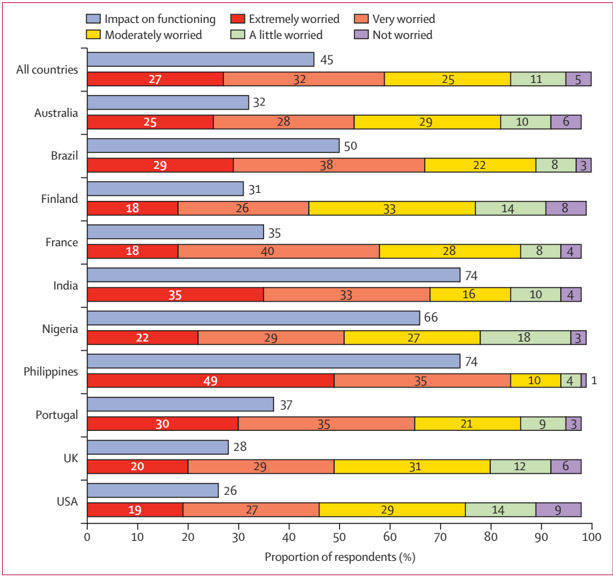
Background Climate change has important implications for the health and futures of children and young people, yet they have little power to limit its harm, making them vulnerable to climate anxiety. This is the first large-scale investigation of climate anxiety in children and young people globally and its relationship with perceived government response. Methods We surveyed 10 000 children and young people (aged 16-25 years) in ten countries (Australia, Brazil, Finland, France, India, Nigeria, Philippines, Portugal, the UK, and the USA; 1000 participants per country). Invitations to complete the survey were sent via the platform Kantar between May 18 and June 7, 2021. Data were collected on participants' thoughts and feelings about climate change, and government responses to climate change. Descriptive statistics were calculated for each aspect of climate anxiety, and Pearson's correlation analysis was done to evaluate whether climate-related distress, functioning, and negative beliefs about climate change were linked to thoughts and feelings about government response. Findings Respondents across all countries were worried about climate change (59% were very or extremely worried and 84% were at least moderately worried). More than 50% reported each of the following emotions: sad, anxious, angry, powerless, helpless, and guilty. More than 45% of respondents said their feelings about climate change negatively affected their daily life and functioning, and many reported a high n…
Verified 2026-11-25 · 1 reference not checked yet
Overview
CoChat Summary
TL;DR
This global survey of 10,000 people aged 16–25 across ten countries found widespread climate anxiety and distress, with many reporting negative functional impacts. Climate distress was correlated with negative perceptions of government responses and feelings of betrayal.
Key findings
- 59% were very or extremely worried about climate change and 84% were at least moderately worried; more than 50% reported feeling sad, anxious, angry, powerless, helpless, and guilty.
- More than 45% said their feelings about climate change negatively affected their daily life and functioning; 75% said the future is frightening and 83% said people have failed to take care of the planet.
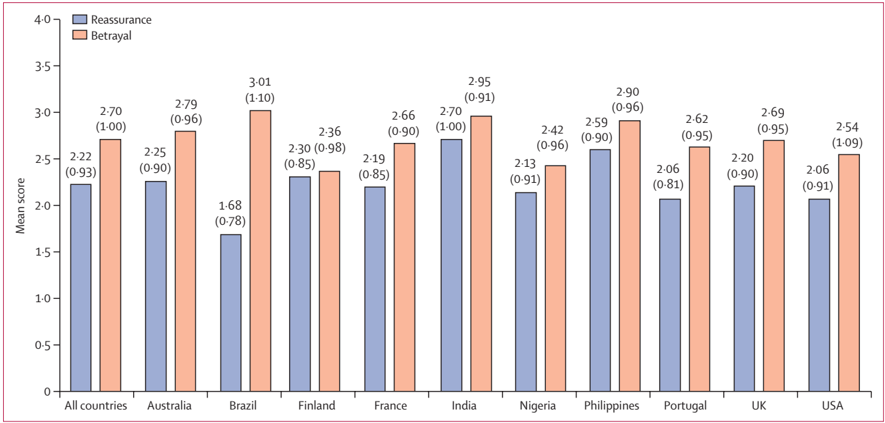
- Respondents rated government responses negatively (mean 14.96 on a 9–18 scale, SD 2.57) and reported greater betrayal (mean 2.7, SD 1.0) than reassurance (mean 2.22, SD 0.93; p<0.0001).
- Climate anxiety and distress were correlated with perceived inadequate government response and associated feelings of betrayal.
Methods
- Cross-sectional online survey of 10,000 children and young people aged 16–25 years in ten countries (Australia, Brazil, Finland, France, India, Nigeria, Philippines, Portugal, the UK, and the USA; 1000 per country), recruited via Kantar between May 18 and June 7, 2021.
- Quota sampling was based on age, gender, and region, with data weighted to OECD statistics for each country by age group, gender, and region.
- Descriptive statistics were calculated for climate anxiety constructs, and Pearson’s correlation analysis explored links between climate-related distress, functioning, negative beliefs, and thoughts/feelings about government response; findings significant at p≤0.001 are reported.
Limitations
- The paper states that non-standardised measures were used because no appropriate standardised measures existed; the study cannot indicate severity compared with normative samples, did not measure mental health outcomes, and used a yes/no/prefer-not-to-say response scale.
- The paper states that equal sample sizes per country were not weighted by population size, so aggregated results are not globally representative; online polling required internet access and sometimes English, and gender was recorded only as male or female.
- Evident from the text: the cross-sectional design cannot establish causality between perceived government response and climate distress.
Model-written summary. Check it against the paper before relying on it.
Integrity signals
Registry
Cites
Statistics
Figures
Verification
Claims the paper makes
12 Valid · 0 Not valid · 19 Not checked · 99 Own results and interpretations
Every source the paper cites for this claim was checked and supports it.
In the paper
“Children are now turning to legal action based on government failure to protect ecosystems, young citizens, and their futures. 26”
What the sources say
- Supportedcites [26] 26 Salas RN, Jacobs W, Perera F. The case of Juliana v. US-children and the health burdens of climate change. N Engl J Med 2019; 380: 2085-87 . source
The supplied Abstract passages describe children filing suit over federal inaction on climate change, which they say violates their constitutional rights. They also connect that inaction to threats to children’s safe environment and to future generations, supporting the citing sentence’s paraphrase. (LLM, conf=0.88)
plainstates a cause- Asserted: passes — The authors put it forward as true.
- Checkable: passes — It can be checked against evidence.
- Load-bearing: unclear — It is unclear whether the paper’s conclusions depend on it.
- Based: passes — The paper gives a reason why it holds.
- Supported
A result the paper reports from its own data — it cites no other source for it, so there is none to check. The quote shows it is in the paper.
In the paper
“in the Global North, Portugal (which had dramatic increases in wildfires since 2017) showed the highest level of worry.”
plainn = 1,000- Asserted: passes — The authors put it forward as true.
- Checkable: passes — It can be checked against evidence.
- Load-bearing: unclear — It is unclear whether the paper’s conclusions depend on it.
- Based: passes — The paper gives a reason why it holds.
A result the paper reports from its own data — it cites no other source for it, so there is none to check. The quote shows it is in the paper.
In the paper
“Respondents rated governmental responses to climate change negatively”
plain- Asserted: passes — The authors put it forward as true.
- Checkable: passes — It can be checked against evidence.
- Load-bearing: passes — The paper’s conclusions depend on it.
- Based: passes — The paper gives a reason why it holds.
A result the paper reports from its own data — it cites no other source for it, so there is none to check. The quote shows it is in the paper.
In the paper
“This distress was associated with beliefs about inadequate governmental response and feelings of betrayal.”
plainstates an association- Asserted: passes — The authors put it forward as true.
- Checkable: passes — It can be checked against evidence.
- Load-bearing: passes — The paper’s conclusions depend on it.
- Based: passes — The paper gives a reason why it holds.
A result the paper reports from its own data — it cites no other source for it, so there is none to check. The quote shows it is in the paper.
In the paper
“More than 45% of respondents said their feelings about climate change negatively affected their daily life and functioning”
- Also stated in: § Results · p. 5 · plain
“More than 45% of respondents said their feelings about climate change negatively affected their daily lives”
plainn = 10- Asserted: passes — The authors put it forward as true.
- Checkable: passes — It can be checked against evidence.
- Load-bearing: passes — The paper’s conclusions depend on it.
- Based: passes — The paper gives a reason why it holds.
- Also stated in: § Results · p. 5 · plain
50 more claims
Create a free account to see all 130 claims and to verify the 1 reference still open.
- Probably not a substantial claim. 51
- It may state two separate claims as one. 41
- The quote only partly states this claim. 6
Claims other papers make about this one
Each is checked against this paper’s own text: does it say what the citing paper says it does?
The source backs part of the claim, not all of it — or backs it for a different population, condition or comparison.
In the citing paper
“Investigations into anxiety about climate change have revealed that it is increasingly common for many people across the globe [9], with large-scale international studies identifying growing concern about climate change [10–12].”
From The relationship between climate change and mental health: a systematic review of the association between eco-anxiety, psychological distress, and symptoms of major affective disorders (2024) · cites this paper as [10]
Experimental — accuracy not yet measuredThe source backs part of the claim, not all of it — or backs it for a different population, condition or comparison.
In the citing paper
“The high prevalence of eco-anxiety [10] - be it at clinical or subclinical levels - underscores the need for broader level changes related to climate change.”
From The relationship between climate change and mental health: a systematic review of the association between eco-anxiety, psychological distress, and symptoms of major affective disorders (2024) · cites this paper as [10]
Experimental — accuracy not yet measuredThe source backs part of the claim, not all of it — or backs it for a different population, condition or comparison.
In the citing paper
“and varied understandings and experiences of climate change have differing impacts on the relationship with mental health [10, 12].”
From The relationship between climate change and mental health: a systematic review of the association between eco-anxiety, psychological distress, and symptoms of major affective disorders (2024) · cites this paper as [10]
Experimental — accuracy not yet measuredThe source backs part of the claim, not all of it — or backs it for a different population, condition or comparison.
In the citing paper
“A global survey of 10,000 young people (16-25) across 10 countries found: (1) 75% were frightened about the future; (2) 84% were moderately worried; (3) 59% were very or extremely worried; and (4) 45%+ reported climate change-related feelings negatively affected their daily life and functioning [21].”
From Climate Distress: A Review of Current Psychological Research and Practice (2023) · cites this paper as [21]
Experimental — accuracy not yet measuredThe source backs part of the claim, not all of it — or backs it for a different population, condition or comparison.
In the citing paper
“An overall lack of trust in government was also identified, with a wide belief that the government response to climate change will continue to be inadequate [21].”
From Climate Distress: A Review of Current Psychological Research and Practice (2023) · cites this paper as [21]
Experimental — accuracy not yet measured
21 more claims about this paper
Create a free account to see every claim other papers make about this one.
Self-check
Percentages, sums and reported differences re-computed from the paper’s own numbers.
Rated minor: it would not touch a result — a value no result rests on, a p-value that stays on the same side of the significance level, or a conflict that is clerical, resolved elsewhere in the paper, or outside its own findings.
In the paper
“15 543 people began the survey and 10 000 (68%) completed it.”
Reported 68 · recomputed 64.337644
Citations
Cites
Mental health of young people: A global public-health challenge
Patel, V., Flisher, A. J., Hetrick, S., & McGorry, P. (2007) · The Lancet · doi:10.1016/s0140-6736(07)60368-7 · Cited by 3,126 · cited 2×
“23 Children facing a future severely damaged by climate change will need support.”
Stress and Health: Psychological, Behavioral, and Biological Determinants
Schneiderman, N., Ironson, G., & Siegel, S. D. (2005) · Annual Review of Clinical Psychology · doi:10.1146/annurev.clinpsy.1.102803.144141 · Cited by 2,252 · cited 2×
“22 Exposure to chronic stress in childhood has a long-lasting impact and increases the risk of developing mental health problems.”
Development and validation of a measure of climate change anxiety
Clayton, S., & Karazsia, B. T. (2020) · Journal of Environmental Psychology · doi:10.1016/j.jenvp.2020.101434 · Cited by 1,196
Self-citationAnxiety and the Ecological Crisis: An Analysis of Eco-Anxiety and Climate Anxiety
Pihkala, P. (2020) · Sustainability · doi:10.3390/su12197836 · Cited by 978 · cited 2×
“In threatening and uncertain situations such as the climate crisis, this response can be seen as what is sometimes referred to as practical anxiety 1,4 because it has the beneficial effect of leading people to reassess their behaviour in order to respond appropriately.”
Self-citationMoral Injury: An Integrative Review
Griffin, B. J., Purcell, N., Burkman, K., Litz, B. T., Bryan, C. J., Schmitz, M., Villierme, C., Walsh, J., & Maguen, S. (2019) · Journal of Traumatic Stress · doi:10.1002/jts.22362 · Cited by 752 · cited 2×
“28 This might include an awareness of or failure to prevent harmful unethical behaviour.”
Stanley, S. K., Hogg, T. L., Leviston, Z., & Walker, I. (2021) · The Journal of Climate Change and Health · doi:10.1016/j.joclim.2021.100003 · Cited by 715
Anxiety, worry, and grief in a time of environmental and climate crisis: a narrative review
Ojala, M., Cunsolo, A., Ogunbode, C. A., & Middleton, J. (2021) · Annual Review of Environment and Resources · doi:10.1146/annurev-environ-012220-022716 · Cited by 670
The case for systems thinking about climate change and mental health
Berry, H. L., Waite, T. D., Dear, K. B. G., Capon, A. G., & Murray, V. (2018) · Nature Climate Change · doi:10.1038/s41558-018-0102-4 · Cited by 485 · cited 2×
“Changing climate and weather-related disasters have diverse impacts, both direct (eg, destruction and trauma) and indirect (eg, strained personal and public resources, interrupted community functioning), 2 as well as resulting in climate anxiety.”
Eco-Anxiety and Environmental Education
Pihkala, P. (2020) · Sustainability · doi:10.3390/su122310149 · Cited by 475
Self-citationThe Hogg Eco-Anxiety Scale: Development and Validation of a Multidimensional Scale
(2021) · doi:10.31219/osf.io/rxudb · Cited by 465
Research works printed but not linked: 4
- 11 Jensen T. Ecologies of guilt in environmental rhetorics. Cham: Palgrave Macmillan, 2019.
- 18 UNICEF. One billion children at 'extremely high risk' of the impacts of the climate crisis. Aug 20, 2021. https://www.unicef.org. uk/press-releases/onebillion-children-at-extremely-high-risk-of-theimpacts-of-the-climate-crisis-unicef (accessed Sept 5, 2021).
- 27 Weintrobe S. Psychological roots of the climate crisis: neoliberal exceptionalism and the culture of uncare. New York, NY: Bloomsbury Academic, 2021.
- 32 Mavronicola N. Torture, inhumanity and degradation under article 3 of the ECHR: absolute rights and absolute wrongs. Oxford: Bloomsbury Publishing, 2021.
Cited by
Items 801–900 of 2,164
How can education address the global metacrisis? 21 education goals for the 21st century
Wheatley, K. F. (2025) · Policy Futures in Education · doi:10.1177/14782103251333825 · Cited by 5
Beeri, I. (2025) · Cities · doi:10.1016/j.cities.2025.106083 · Cited by 9
Juel, R., Bwire, C., Eddine, H. C., Mariyam, D., Umesh, H., Alobeid, R., Bonnet, G., Milner, J., Yeung, S., & Hughes, R. C. (2025) · Cities · doi:10.1016/j.cities.2025.106137 · Cited by 5
Climate shocks and fertility intentions: Evidence from extreme temperature events
Zhang, X., Zhang, J., & Chen, F. (2025) · Economic Modelling · doi:10.1016/j.econmod.2025.107223 · Cited by 4
Barrett, M. D. (2025) · Intercultural Education · doi:10.1080/14675986.2025.2534763 · Cited by 5
“Research into young people’s responses to climate change reveals that their levels of eco-anxiety are extremely high (Hickman et al. 2021; Ojala et al. 2021; Pihkala 2020; Vercammen et al. 2025).”
McConnell, A. R., & Jacobs, T. P. (2025) · Social and Personality Psychology Compass · doi:10.1111/spc3.70089 · Cited by 5
Kirjallisuuden ympäristötunteet ja empiirinen ekokritiikki
Pihkala, P., & Helle, A. (2022) · Joutsen / Svanen Kotimaisen kirjallisuudentutkimuksen vuosikirja · doi:10.33346/joutsensvanen.114413 · Cited by 16
Self-citationVidal, D. G., Lencastre, M. P. A., de Magalhães, S. P. L. V. T., Barroso, E. P., Campelo, Á., Cunha, P., & Estrada, R. (2023) · Climate change management · doi:10.1007/978-3-031-26592-1_1 · Cited by 8
Designing learning environments for promoting young people’s constructive coping with climate change
Brown, A., Collado, S., Evans, G. W., & Loebach, J. E. (2023) · Advances in child development and behavior · doi:10.1016/bs.acdb.2023.05.005 · Cited by 7
Psychodrama and eco-anxiety—A case study
Raile, P. (2023) · Environment and Social Psychology · doi:10.54517/esp.v9i1.1910 · Cited by 5
Fridays for Future auf lokaler Ebene. Aktivität und Stärke der Ortsgruppen in deutschen Städten
Haupt, W., Eckersley, P., Irmisch, J., & Kern, K. (2023) · Bürgergesellschaft und Demokratie · doi:10.1007/978-3-658-41447-4_10 · Cited by 4
Holdsworth, J., Hunte, S.-A., Barker, K. R., Sherin, J., Rao, M., & Maharaj, S. B. (2023) · Frontiers in Public Health · doi:10.3389/fpubh.2023.1322831 · Cited by 4
Verbruggen, S. C. A. T., den Otter, S. C., Bakker, J., Briassoulis, G. C., Ilia, S., Latten, L., Joosten, K. F. M., Rooze, S., van Zanten, E., Beattie, R. M., et al. (2024) · Frontline Gastroenterology · doi:10.1136/flgastro-2023-102478 · Cited by 6
Bexell, S. M., & Forbes, R. A. (2024) · Social Work in Mental Health · doi:10.1080/15332985.2024.2380518 · Cited by 4
“Hickman et al. (2021), in a survey of youth ages 16–25 across 10 countries and four languages found that nearly half of youth ( n = 10,000) surveyed state that climate anxiety impacts their daily lives, 75% say that “the future is frightening,” 64% said that their governments were not doing enough…”
Beyond Climate Strikes: Intersectionality and Environmental Care
Walker, C., & van Holstein, E. (2024) · Springer eBooks · doi:10.1007/978-981-99-8606-4_129 · Cited by 5
Lycett, K., Lane, H., Frykberg, G., Maury, S., Wallace, C. A., Taafua, L., Morris, B., Hollonds, A., Sahlberg, P., Kapeke, K., et al. (2024) · The Medical Journal of Australia · doi:10.5694/mja2.52494 · Cited by 5
Climate emergency and political will—reaching beyond human usefulness
Dobson, J., Cook, S., Wedmore, F., & Abbasi, K. A. (2023) · BMJ · doi:10.1136/bmj.p2244 · Cited by 4
Embedding Sustainability in the Economics Curriculum
Barile, L., Mearman, A., & Plumridge, A. (2023) · doi:10.53593/n3626a · Cited by 5
Goldblatt, R., Holz, N. E., Tate, G., Sherman, K., Ghebremicael, S., Bhuyan, S. S., Al‐Ajlouni, Y. A., Santillanes, S., Araya, G., Abad, S., et al. (2023) · medRxiv · doi:10.1101/2023.11.06.23298044 · Cited by 4
“…2050 [6], climate change also challenges mental health, especially during extreme weather events, with more than two thirds of children experiencing posttraumatic stress symptoms post-disasters (reviewed in [7]) and extreme weather conditions and pandemics elevating anxiety and distress [8,9] [10].”
The Kids Are Not Alright: The Mental Health Toll of Environmental Injustice
Parnes, M. F., Bennett, M. B., Rao, M., MacDuffie, K. E., Zhang, A. Y., Grow, H. M., & Weiss, E. M. (2024) · The American Journal of Bioethics · doi:10.1080/15265161.2024.2303161 · Cited by 4
“Political contexts may also exacerbate mental health challenges, as young people globally are experiencing frustration with the perceived governmental failure to take effective action toward climate adaptation and mitigation (Hickman et al. 2021).”
BackgroundInfluentialYouth Mental Health in Times of Global Crises: Evidence from the Longitudinal COPSY StudyPreprint
Kaman, A., Devine, J., Erhart, M., Napp, A.-K., Reiß, F., Moeller, S., Zoellner, F., Behn, S., & Ravens‐Sieberer, U. (2024) · SSRN Electronic Journal · doi:10.2139/ssrn.5043077 · Cited by 7
Walker, C., van Holstein, E., & Klocker, N. (2025) · Geographical Research · doi:10.1111/1745-5871.12689 · Cited by 4
McGregor, C. (2025) · Environmental Education Research · doi:10.1080/13504622.2025.2543005 · Cited by 4
“…unevenly distributed along the same intra-generational axes of inequality that we usually associate with climate injustice, discourses of climate anxiety are disproportionately shaped by white, middle-class voices and voices from the Global north (Olsen et al. 2024; Marks et al. 2021; Ray, 2021).”
Noone, S., D'Arcy, C., Donegan, S., Durkan, W., Essel, B., Healion, K., Hersbach, H., Madden, S., Marshall, J., McConnell, L., et al. (2024) · Geoscience Data Journal · doi:10.1002/gdj3.248 · Cited by 4
“Recent studies have shown that young people between the ages of 10 and 24 are experiencing climate anxiety re-lated to the global climate crisis and associated threat of environmental disaster (Galway & Field, 2023; Hickman et al., 2021; Marks et al., 2021; Wu et al., 2020).”
Bayram, H. M., & Öztürkcan, A. (2025) · Mediterranean Journal of Nutrition and Metabolism · doi:10.1177/1973798x251377713 · Cited by 5
“19,20 These psychological responses have been described with various terms such as climate anxiety, 21 ecological grief, 22 and eco-anxiety.”
Large Language Models for Automatic Detection of Sensitive Topics
Wen, R., Crowe, S., Gupta, K., Li, X., Billinghurst, M., Hoermann, S., Allan, D. D., Nassani, A., & Piumsomboon, T. (2024) · Australian Conference on Human-Computer Interaction (OzCHI) · doi:10.1145/3726986.3727014 · Cited by 12
“Based on the preliminary study results, dataset preprocessing, and prior studies, human coders revised the topic scope to include climate change [26] and finance issues [32] as sensitive topics.”
Gender, Mental Health, and Climate Change: Impacts on Women and Gender Minorities
Chekuri, B., Sood, N., Campbell, H., Vurgeç, B. A., Isom, J., Ojiaku, N., & Sorensen, C. J. (2024) · Springer eBooks · doi:10.1007/978-3-031-56736-0_5 · Cited by 6
Retirement Planning and the Climate Crisis: The Millennial Perspective
Hettinger, M., Helm, S., & Walker, K. (2024) · Journal of Family and Economic Issues · doi:10.1007/s10834-024-10001-z · Cited by 3
“Climate change anxiety is also a common theme in the literature (Clayton, 2021; Hickman et al., 2021).”
Levesque, A., & Rocque, R. (2024) · Environmental Education Research · doi:10.1080/13504622.2024.2431197 · Cited by 7
“A recent international study highlighted that this experience is widespread among young people, with nearly half of the participants reporting that their climate-related emotions significantly affected their quality of life (Hickman et al. 2021).”
Climate crisis as a form of structural violence against children and youth
Bourdillon, M. F. C., Driscoll, J., Myers, W., O'Kane, C., & Rink, P. (2024) · BMJ Paediatrics Open · doi:10.1136/bmjpo-2024-003059 · Cited by 3
Lüdtke, K. A., Thapa, P. P., & Zerbe, S. (2024) · European Journal of Education · doi:10.1111/ejed.12797 · Cited by 11
Hoffmann, T. (2025) · SciComm Report · doi:10.32457/scr.v4i1.2812 · Cited by 18
Prendergast, K. B., Hayward, B., Aoyagi, M., Burningham, K., Hasan, M. M., Jackson, T. P., Jha, V., Loukianov, A., Mattar, H., Schudel, I., et al. (2025) · Local Environment · doi:10.1080/13549839.2025.2454985 · Cited by 5
“Anxiety about the changing climate is also increasingly common among young people (Hickman et al. 2021; Sangervo, Jylhä, and Pihkala 2022), particularly in urban areas (Le and Kelly 2024).”
A Review of Qualitative Studies of Parents’ Perspectives on Climate Change
Graham, H. M., Lampard, P., & Golder, S. (2025) · Societies · doi:10.3390/soc15040104 · Cited by 5
Current Topic in Developing World: Are Early Adolescents Aware of Climate Change?
Yekdeş, D. H., Yekdeş, A. C., Stewart, S. T., Çağlayan, M., Uysal, H., Çelikkalp, Ü., & Ekuklu, G. (2025) · OSMANGAZİ JOURNAL OF MEDICINE · doi:10.20515/otd.1585542 · Cited by 4
From detached to alarmed: How eco-emotion profiles predict concern and sacrifice for the planet
Jäger, A. K., & Hine, D. W. (2025) · PLoS ONE · doi:10.1371/journal.pone.0325916 · Cited by 5
“Several recent international studies have investigated the prevalence of eco-emotions and their relevance to PEB [19–21].”
Homman, L. E., Augustine, L., & Granlund, M. (2025) · BMC Public Health · doi:10.1186/s12889-025-23388-7 · Cited by 7
Predictors and correlates of self-reported climate anxiety in the United States
Kricorian, K., Kricorian, C., & Turner, K. (2025) · PLOS Climate · doi:10.1371/journal.pclm.0000534 · Cited by 24
Wang, D., Lu, Z., Li, M. S., Zhang, L., Yu, H., Tan, L., Mao, W., Qiao, X., An, T., & Hu, Y. (2025) · Behavioral Sciences · doi:10.3390/bs15070985 · Cited by 5
“For instance, in a global survey, more than half of young people reported feelings of sadness, anxiety, powerlessness, or other negative emotions due to unusual environment change (Hickman et al., 2021).”
Goldberg, L., Luby, S. P., Shuchi, N. S., Sen, T., Hossen, M. N., Wong‐Parodi, G., Jensen, E., Ardoin, N. M., Rahman, M. M., & Jahan, F. (2025) · The Lancet Planetary Health · doi:10.1016/j.lanplh.2025.05.003 · Cited by 7
Too anxious to eat? Climate anxiety and intentions to reduce meat in the UK
Boaitey, A. (2025) · Food Quality and Preference · doi:10.1016/j.foodqual.2025.105649 · Cited by 3
Exploring the long-term psychological impact of socio-political crisis in Israel: a network analysis
Hamama, L. (2025) · BMC Psychology · doi:10.1186/s40359-025-03231-9 · Cited by 3
“This measure was adapted from Hickman and colleagues’ survey [34], which assessed emotional responses to government actions on climate change.”
“I have no future” - the critical need to counter climate doomism
Stuart, D. (2025) · Environmental Sociology · doi:10.1080/23251042.2025.2552388 · Cited by 7
“Indeed, a global survey of 10,000 young people (16–25 years old) across 10 different countries found that 42% reported climate-related despair and 55.7% agreed that ‘humanity is doomed’ (Hickman et al. 2021).”
InfluentialEco-anxiety in Indonesian adolescents and young adults and its influencing factors
Kaligis, F., Pramatirta, B., Darmawan, M. D., & Adnyani, C. I. A. D. (2025) · International Journal of Adolescence and Youth · doi:10.1080/02673843.2025.2553733 · Cited by 9
“Recent findings from the World Health Organization emphasize the profound effects climate-related hazards have on our psychological well-being, with anxiety and post-traumatic stress disorder (PTSD) on the rise (Hickman et al., 2021; World Health Organization, 2022).”
Glynn, R., Dwyer, C. O., Casey, M., Sharma, S. K., Harrold, P., O’Connor, P., Harrold, P., & Glynn, L. G. (2025) · Frontiers in Psychology · doi:10.3389/fpsyg.2025.1648880 · Cited by 8
The psychological impacts of climate change on pregnant women in Türkiye
Işık, M. A., Akbaş, P., & Şat, S. Ö. (2025) · Women and Birth · doi:10.1016/j.wombi.2025.102111 · Cited by 4
Wasmus, H., Fleck, L., Schmidt, T., Scheydt, S., Schirmbeck, F. N., Kazlauskas, E., Tol, W. A., & Reininghaus, U. (2025) · BMJ Mental Health · doi:10.1136/bmjment-2025-301549 · Cited by 5
“4 This awareness fostered feelings of responsibility, paired with frustration and helplessness due to perceived limited self-efficacy.”
Indirect influence of global climate change, mediated by nutrition, on anxiety disorders
Albuquerque, U. P., do Carmo, R. F. R., Gomes, S. M., Gusmão, R. A. F., Jacob, M. C. M., Magalhães, A. R., Silva, M. T. P., da Silva-Maia, J. K., Schiel, N., Júnior, M. D. S., et al. (2025) · Discover Food · doi:10.1007/s44187-025-00622-0 · Cited by 6
CEBECİ, F., Reyes, M. E. S., Innocenti, M., Kuriala, G. K., Jeremie, W., Buvár, Á., Atak, I., KARAMAN, M., Dinçer, R., Cankardas, S., et al. (2025) · International Journal of Social Psychiatry · doi:10.1177/00207640251378601 · Cited by 6
“This section contains questions from the survey used in a study by Hickman et al. (2021).”
InfluentialHarper, S. L., Cunsolo, A., Aylward, B., Clayton, S., Lin, M., Minor, K., Vriezen, R., Banuet-Martínez, M., & Bayne, H. L. (2025) · Nature Mental Health · doi:10.1038/s44220-025-00521-4 · Cited by 6
“…assessed the Climate Change Anxiety Scale’s performance after removing functional impairment items 70 , as well as the precedent of reducing the functional scale to a single item in other studies 32,52,67 —we determined that collapsing the functional impairment items into one item was justified.”
Self-citationSocial media use is associated with climate anxiety, climate doom, and support for radical action
Buck, H. J., Shah, P., & Yang, J. Z. (2025) · Climatic Change · doi:10.1007/s10584-025-04048-6 · Cited by 12
“Climate anxiety has been predicted by demographic factors such as being female (Verplanken et al. 2020), younger (Hickman et al. 2021), and having left-wing values (Wullenkord et al. 2021), and it has been theorized to correlate with individual personality factors such as trait neuroticism or…”
Léger‐Goodes, T., Herba, C. M., Piché, J., Smith, J., Éthier, M., Lefrançois, D., & Malboeuf‐Hurtubise, C. (2025) · BMC Psychology · doi:10.1186/s40359-025-03589-w · Cited by 7
“Children in our study reported feeling hopeless and threatened by the uncertainty of the future, which is similar to other children and youth populations [6, 13].”
Help Is Just a Message Away: Online Counselling Chat Services Bridging Gaps in Youth Mental Health?
Dewaele, A., Denayer, E., Cabello, M., Higuera-Lozano, I., Pitkänen, T., Felvinczi, K., Kaló, Z., Soininvaara, S., & Goossens, L. (2025) · European Journal of Investigation in Health Psychology and Education · doi:10.3390/ejihpe15120257 · Cited by 9
“In Europe, recent crises such as the COVID-19 pandemic, the war in Ukraine, and climate change have intensified uncertainty and negatively affected youth mental health (Badanta et al., 2024; Hickman et al., 2021).”
An Analysis of Eco-Emotions Among Iranian Students in Environmental Education
Boroumand, A., Amiri, M. J., & Faryadi, S. (2025) · International Journal of Environmental Research · doi:10.1007/s41742-025-01001-4 · Cited by 5
“This work seeks to catalyze comprehensive academic exam - ination of affective dimensions in EE, addressing a critical gap in regional educational research.”
Ediz, Ç., YANIK, D., Okuyan, C. B., & Uzun, S. (2025) · Psychology Health & Medicine · doi:10.1080/13548506.2025.2606185 · Cited by 4
Climate Change Anxiety and Youth: Mental Health Implications
Ossipova, I., Henry, M. C., & Temmen, C. D. (2026) · Journal of Child and Adolescent Counseling · doi:10.1080/23727810.2026.2615589 · Cited by 4
“A recent international survey of youth aged 16–25 revealed that 84% are at least moderately concerned about climate change, while 59% stated they are very or extremely worried about it (Hickman et al., 2021).”
InfluentialHope or fear? Children’s responses to climate change fiction
Koolen, R., van Amelsvoort, M., van der Beek, S., Borst, R., Claassen, S., Goudbeek, M. B., & Looij, P. (2026) · Environmental Education Research · doi:10.1080/13504622.2026.2618476 · Cited by 5
“More recently, young people describe feelings such as anxiety, guilt, powerlessness, and anger in response to climate change (Hickman et al. 2021; Zurba et al. 2024).”
Park, J. L., Deneault, A., McArthur, B. A., Tough, S., & Madigan, S. L. (2026) · Child and Adolescent Mental Health · doi:10.1111/camh.70076 · Cited by 5
Sejdiu, S., & Ramadani, R. (2026) · Education Sciences · doi:10.3390/educsci16030494 · Cited by 7
The impact of climate change on mental health: A systematic review and meta-analysis
Niazi, Y., Farooq, S. M. Y., Moazzam, M., Yousaf, S., & Hameed, S. (2026) · Geopsychiatry · doi:10.1016/j.geopsy.2026.100067 · Cited by 4
Latent Profiles of Eco-Anxiety: Resilience, and Vulnerability Factors in a Portuguese-Sample
Ferrajão, P. C., Torres, N., & Martins, A. Q. (2026) · Sustainability · doi:10.3390/su18094345 · Cited by 3
Mental Health and Well-Being for Patients and Clinicians
Senay, E., Levine, R. L., Shepherd, J. M., Rizzo, A., Yitshak‐Sade, M., Carrión, D., Liu, B., Lewis, J. L., Wright, R. J., Sorensen, C. J., et al. (2022) · Journal of Occupational and Environmental Medicine · doi:10.1097/jom.0000000000002655 · Cited by 3
“Recent data suggest that young people are increasingly experiencing themental health impacts of accelerated climate change.(26) Further, not all youth are equally vulnerable; for those with social determinants of health that create disadvantage, climate change can add to already existing mental health burdens.”
BackgroundProleptic Logics in Media Coverage of the IPCC Sixth Assessment Report
Mehlenbacher, A. R., Eckert, C., Doody, S., et al. (2023) · Rhetoric Review · doi:10.1080/07350198.2023.2219495 · Cited by 3
Young people’s climate leadership in Aotearoa
Ritchie, J., Skerrett, M., & Glasgow, A. (2023) · Journal of Peace Education · doi:10.1080/17400201.2023.2289649 · Cited by 4
“…the need for urgent action to address the climate emergency (Pörtner et al. 2022), many children and young people are becoming increasingly disturbed that the slow pace of government and societal change is imperilling their futures (Hickman et al. 2021; Menzies, Gluckman, and Poulton 2020).”
Predan, B., & Oven, P. Č. (2023) · Sustainability · doi:10.3390/su152416899 · Cited by 3
Planetaarinen sosiaalipedagogiikka uudistaa käsityksiä työstä ja ammatillisesta osaamisesta
Laininen, E., & Salonen, A. O. (2023) · Sosiaalipedagogiikka · doi:10.30675/sp.127973 · Cited by 16
Beyond hope and despair: The radical imagination as a collective practice for uprising
Dermijnsbrugge, E. V. (2024) · Educational Philosophy and Theory · doi:10.1080/00131857.2024.2333853 · Cited by 3
“These pathologies are also making their way into schools where an increasing number of young people feel anxious, depressed, and, indeed, paralyzed because of climate-related events (see Hickman et al., 2021).”
As governments fail us on climate change, courts are forced to consider ethical questions
Patterson, D., Hesselman, M., & Tahzib, F. (2024) · The Journal of Climate Change and Health · doi:10.1016/j.joclim.2024.100321 · Cited by 3
“For example, we need further research into, and better articulation of, the impact of climate change on the mental health of children and young people − provided in a format which can be understood and applied in a court of law [15].”
Disterheft, A. (2024) · Strategies for sustainability · doi:10.1007/978-3-031-54026-4_2 · Cited by 11
Hvilke konsekvenser har naturtap for psykisk helse, sosialt liv og relasjonsarbeid?
Bjørlykhaug, K. I., & Johannessen, A. (2024) · Tidsskrift for psykisk helsearbeid · doi:10.18261/tph.21.2.2 · Cited by 3
de Melo, P. R. H., Alves, P. V., Bourscheidt, V., & de Camargo, T. S. (2024) · Challenges · doi:10.3390/challe15020031 · Cited by 4
“These issues impact the emotions, cognitive development, and overall functioning of children and adolescents [114].”
BackgroundCognitive Behavioral Principles for Conceptualizing Young People’s Eco-Emotions and Eco-Distress
Marks, E. M., & Hudson, K. E. (2024) · Cambridge University Press eBooks · doi:10.1017/9781009252904.009 · Cited by 7
Self-citationMochizuki, Y., & Bryan, A. (2024) · Springer eBooks · doi:10.1007/978-981-99-8606-4_130 · Cited by 4
Duhn, I., McPherson, A., & Kirkwood, L. (2024) · Education, equity, economy · doi:10.1007/978-3-031-64900-4_5 · Cited by 3
Fitting the outreach in: school strategies for integrating student-led, community-based projects
Vare, P., & Burch, C. (2024) · Environmental Education Research · doi:10.1080/13504622.2024.2404214 · Cited by 7
“An important dimension of learning for sustainability is the emotional impact of accelerating climate change (hickman et al. 2021) with meaningful coping strategies being seen as important in mitigating climate worry (Ojala 2012; Wullenkord and Ojala 2023; Grund, Singer-Brodowski, and Büssing 2023).”
Education as a Strategy for Climate Change Mitigation and Adaptation
Borde, B., Lescarmontier, L., Vogt, N., & Lena, P. J. (2024) · Springer eBooks · doi:10.1007/978-1-4614-6431-0_149-2 · Cited by 4
Love and Reparation: An Approach to Climate Pastoral Care
Johannessen‐Henry, C. T. (2024) · Pastoral Psychology · doi:10.1007/s11089-024-01175-2 · Cited by 4
“Young people’s climate anxiety may seem to have grown worse because of political leaders’ lack of engagement in ambitious climate politics (cf. Hickman, 2020; Hickman et al., 2021; Johnson & Wilkinson, 2020).”
Compassion-focused approaches to understanding the mental health of climate scientists
Calabria, L., Peters, C., & Williams, M. O. (2024) · The Cognitive Behaviour Therapist · doi:10.1017/s1754470x23000223 · Cited by 6
“These emotional responses are congruous with the current understanding of ecological distress (Hickman et al ., 2021).”
Practising CBT amid the climate and ecological crises
Marks, E. M., & Cole, A. (2024) · The Cognitive Behaviour Therapist · doi:10.1017/s1754470x24000242 · Cited by 5
“Feeling overwhelmed by climate change and distressing eco-emotions is increasingly common and has been associated with impaired mental health and functioning, which has been described as eco-anxiety or eco-distress (Hickman et al ., 2021; Ogunbode et al ., 2021; Whitmarsh et al ., 2022).”
Self-citationThe Development of Eco-Anxiety through Middle Childhood and Adolescence
Mallet, P. (2024) · Psychology · doi:10.4236/psych.2024.1511099 · Cited by 4
Ratilla, M. C., Lerma, D. F. P., Rosíková, M., & Khan, K. A. (2025) · Cogent Social Sciences · doi:10.1080/23311886.2024.2443034 · Cited by 4
“Furthermore, farming activities and crop performance face high vulnerability to climate change risk (chandra et al., 2017) and frequent exposure to extreme weather events; climate anxiety levels are high among Filipinos (hickman et al., 2021).”
Connecting climate research and teaching in higher education with secondary education
Saddington, L., Reilly, G., & Huppatz, M. (2025) · Geography · doi:10.1080/00167487.2025.2450911 · Cited by 3
Wardle, A. C. (2025) · International Journal of Art Therapy · doi:10.1080/17454832.2024.2382955 · Cited by 8
“Examining the different emotional responses of children from various countries towards the climate crisis, Hickman et al. (2021) found that 84% of young people were at least moderately worried, and 59% were very or extremely worried about climate change.”
Piedra, F.-A., Salazar, M. A., Abouelniaj, S., Rahman, R., Clark, J. C., Han, Y., Wang, Z., & Maresso, A. W. (2025) · Applied and Environmental Microbiology · doi:10.1128/aem.02118-24 · Cited by 5
“…community and environmental neglect, and by virtue of its association with runaway climate change, it contributes to a widespread feeling of dismay (4); it can cause a plethora of infrastructure issues, especially in water manage ment and flood control (5, 6); and it can be straightforwardly…”
Crafting palettes of potential for a multispecies justice-oriented education
Saari, M. H. (2025) · Environmental Education Research · doi:10.1080/13504622.2025.2475150 · Cited by 3
“For example, by working with young people through participatory approaches (Cutter-Mackenzie and Rousell 2019) and addressing ecoanxiety (Hickman et al. 2021).”
Weimann, B., & Opaliński, K. (2025) · Psychiatria i Psychologia Kliniczna · doi:10.15557/pipk.2024.0027 · Cited by 4
King, K. I. (2025) · Journal of Human Rights and Social Work · doi:10.1007/s41134-025-00372-0 · Cited by 3
“These developmental changes may, in part, explain why climate-related anxiety and despair about the future, among other associated mental health concerns, disproportionately affect youth as compared to older and younger populations (Hickman et al., 2021).”
Amin, S. (2025) · Sustainable Development · doi:10.1002/sd.3489 · Cited by 5
da Silva, R. R. (2025) · International Journal of Sustainability in Higher Education · doi:10.1108/ijshe-09-2024-0602 · Cited by 4
Chanioti, M., Nikolelis, G., Mitsika, I., & Αντωνιάδου, Μ. (2025) · Circular Economy and Sustainability · doi:10.1007/s43615-025-00561-z · Cited by 12
“This can be attributed to age differences, as it has been shown that younger people tend to be more sensitized and better educated about environmental issues [ 46, 86 ].”
Fuchs, T. T., Roppel, S., Harding, T., & Erickson, H. (2025) · Contemporary trends and issues in science education · doi:10.1007/978-3-031-83837-8_22 · Cited by 4
Waltzer, T., Quezada-Mares, J., Eguchi, A., Barron, A., & Heyman, G. D. (2025) · Journal of Cognition and Development · doi:10.1080/15248372.2025.2506051 · Cited by 3
“In large-scale surveys of 16-to 25-year-olds across the globe, researchers have found that over 80% of youth reported being worried about climate change (Hickman et al., 2021; Lewandowski et al., 2024).”
Fan, Y., Zhu, J., Li, J., et al. (2025) · ACS Applied Materials & Interfaces · doi:10.1021/acsami.5c01862 · Cited by 3
Community attitudes towards advancing climate justice with climate aid
Stanley, S. K., Ghasemi, O., Kerr, J. R., Ross, R. M., Marques, M. D., Mede, N. G., Berger, S., Alfano, M., Levy, N. L., Ferreira, M., et al. (2025) · Journal of Environmental Psychology · doi:10.1016/j.jenvp.2025.102679 · Cited by 4
Bäckström, M. K., Girdler, S. J., Jonsson, U., Håkansson, C., & Lexén, A. (2025) · PLoS ONE · doi:10.1371/journal.pone.0327617 · Cited by 5
“This phenomenon is increasingly affecting young adults, leading to heightened stress, feelings of helplessness, and uncertainty about the future [32].”
Psychological Distress and Coping Mechanisms Among Flood-Affected Children in Maiduguri, Nigeria
Haruna, H., Kever, R. T., Babaji, M., Inuwa, A., Hamina, D., Umar, N. J., Salihu, D., & Chutiyami, M. (2025) · Children · doi:10.3390/children12091137 · Cited by 4
“Hickman et al. [19], in one of the largest global studies on climate anxiety, reported that over 75% of young people from countries such as Nigeria felt the future was frightening due to climate change, with many experiencing sadness, anxiety, and helplessness.”
Teigen, E. L., & Zottarelli, L. K. (2025) · Social Work in Public Health · doi:10.1080/19371918.2025.2566676 · Cited by 3
“Climate anxiety is fueled by the many uncertainties related to the effects, timing, and location of extreme weather and climate change, and it is linked to first-hand experience and awareness of climate-related devastation and local-level impacts (Clayton, 2021; Pearson, 2024).”
InfluentialMatijasevich, A., Xavier, M. O., Tovo‐Rodrigues, L., Ribeiro, A. I., Henriques, A., Pastor‐Valero, M., & Santos, I. S. (2025) · Journal of Environmental Psychology · doi:10.1016/j.jenvp.2025.102792 · Cited by 4
Why Climate Action Is Global Health Action
_, _. (2022) · American Journal of Tropical Medicine and Hygiene · doi:10.4269/ajtmh.22-0189 · Cited by 4
“Children and adolescents are at particular risk of increased anxiety, depression, acute stress, and PTSD associated with climate change.(2,11) Communities most at risk of”
BackgroundYoung adults’ perspective of global environmental risks: A study on Polish university students
Przybylski, B., Janeczko, E., Studnıckı, M., Bielinis, E., & Bielinis, L. (2022) · PLoS ONE · doi:10.1371/journal.pone.0273393 · Cited by 7
“Respondents rated governmental responses to climate change negativel and reported greater feelings of betrayal than of reassurance [25].”
Background
Metadata
- Authors
- Hickman, C., Marks, E., Pihkala, P., Clayton, S., Lewandowski, R. E., Mayall, E. E., Wray, B., Mellor, C., & van Susteren, L.
- Affiliations
- University of Bath (GB)
- University of Helsinki (FI)
- College of Wooster (US)
- NYU Langone Health (US)
- University of East Anglia (GB)
- London School of Hygiene & Tropical Medicine (GB)
- Oxford Health NHS Foundation Trust (GB)
- Corresponding author
- Hickman, Caroline
- Venue
- The Lancet Planetary Health
- Publisher
- Elsevier BV
- Published
- 2021-12
- Volume
- 5
- Issue
- 12
- Pages
- e863-e873
- ISSN
- 2542-5196 (ISSN-L)
- OpenAlex
- W4200005759
- Semantic Scholar
- 4a876cc35863ba593aacf58fe6a24773b3cb9c29
- Cited by
- 2,324
- References
- 27
- Citations by year
- 2026: 566 · 2025: 652 · 2024: 566 · 2023: 364 · 2022: 170 · 2021: 4
- FWCI
- 382.19
- Type
- journal article
- Language
- en
- Open access
- gold
- doi.org
- Licence
- cc-by-nc-nd
- www.elsevier.com/tdm/userlicense/1.0/ (tdm)
- www.elsevier.com/legal/tdmrep-license (tdm)
- creativecommons.org/licenses/by-nc-nd/4.0/ (vor)
- Locations
- The Lancet Planetary Health (publishedVersion, cc-by-nc-nd)
- PubMed (publishedVersion)
- DOAJ (DOAJ: Directory of Open Access Journals) (submittedVersion, cc-by-sa)
- Työväentutkimus Vuosikirja (submittedVersion)
- Topics
- Social Sciences › Sociology and Political Science › Climate Change Communication and Perception
- Physical Sciences › Environmental Science › Health, Toxicology and Mutagenesis › Climate Change and Health Impacts
- Social Sciences › Psychology › Clinical Psychology › COVID-19 and Mental Health
- Keywords
- climate anxiety, children and young people, climate change, betrayal, climate change beliefs, daily functioning, global survey
- MeSH terms
- Adolescent, Adult, Anxiety, Australia, Child, Government, Humans, Surveys and Questionnaires, Young Adult, Climate Change
About these checks
Registry, retraction, Cites and statistics results are computed, not judged, with one exception: a printed reference that no index lists is read once by a model before it counts as a citation error. Claims are extracted by a model and kept only when their quote appears verbatim in the text; each cited source is then checked, with a model’s help, for whether it says what the claim relies on. Those verdicts can be wrong — read the claim’s quote and the cited source before relying on one.
The claim verdicts this report counts are experimental: their accuracy is not yet measured.
A language model drew the claims from the paper on 2026-10-10, under version 3 of the claim definition (model deepseek-v4.1-flash, prompt extract-v3).
A second model labelled each claim on 2026-10-10 (model jev-1.13-20260917, definition revision gold-guideline-v0.2).
Cited sources are checked with a language model’s help (gpt-6-sol).
Statistics and arithmetic are recomputed, not judged.
Confidence bands are shown only for fields calibrated on our annotated test set. None is calibrated yet, so no band is shown.
What counts as a claim ›How we measure confidence ›How we check this ›
Are you an author, or do you see a problem with this page? Request a review
Data sources
Bibliographic data: Semantic Scholar, OpenAlex, Crossref.
Contains information from the Semantic Scholar Academic Graph Datasets, made available under the ODC Attribution License (ODC-BY 1.0).
Semantic Scholar’s data is described in: Kinney, R., et al. (2023). The Semantic Scholar Open Data Platform. arXiv:2301.10140.
