

Climate anxiety in children and young people and their beliefs about government responses to climate change: a global survey
Open accessThe DOI matches its Crossref record; 27 of the 30 references it cites were found in a registry or an index, and 1 are not checked yet; 14 of the 48 sources its claims cite were checked for support.
Abstract
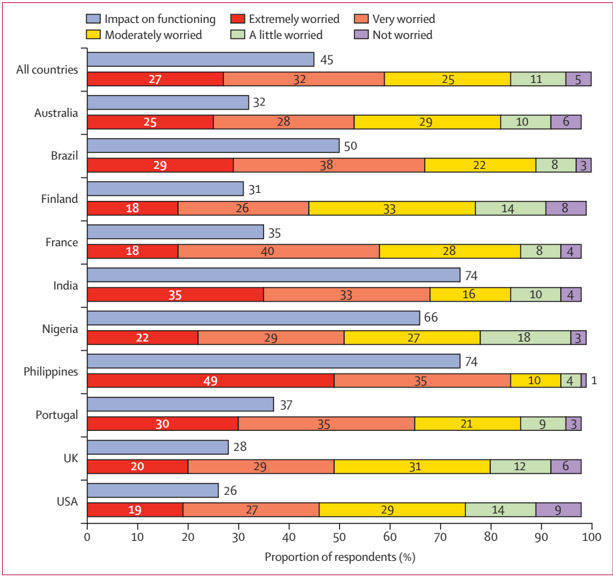
Background Climate change has important implications for the health and futures of children and young people, yet they have little power to limit its harm, making them vulnerable to climate anxiety. This is the first large-scale investigation of climate anxiety in children and young people globally and its relationship with perceived government response. Methods We surveyed 10 000 children and young people (aged 16-25 years) in ten countries (Australia, Brazil, Finland, France, India, Nigeria, Philippines, Portugal, the UK, and the USA; 1000 participants per country). Invitations to complete the survey were sent via the platform Kantar between May 18 and June 7, 2021. Data were collected on participants' thoughts and feelings about climate change, and government responses to climate change. Descriptive statistics were calculated for each aspect of climate anxiety, and Pearson's correlation analysis was done to evaluate whether climate-related distress, functioning, and negative beliefs about climate change were linked to thoughts and feelings about government response. Findings Respondents across all countries were worried about climate change (59% were very or extremely worried and 84% were at least moderately worried). More than 50% reported each of the following emotions: sad, anxious, angry, powerless, helpless, and guilty. More than 45% of respondents said their feelings about climate change negatively affected their daily life and functioning, and many reported a high n…
Verified 2026-11-25 · 1 reference not checked yet
Overview
CoChat Summary
TL;DR
This global survey of 10,000 people aged 16–25 across ten countries found widespread climate anxiety and distress, with many reporting negative functional impacts. Climate distress was correlated with negative perceptions of government responses and feelings of betrayal.
Key findings
- 59% were very or extremely worried about climate change and 84% were at least moderately worried; more than 50% reported feeling sad, anxious, angry, powerless, helpless, and guilty.
- More than 45% said their feelings about climate change negatively affected their daily life and functioning; 75% said the future is frightening and 83% said people have failed to take care of the planet.
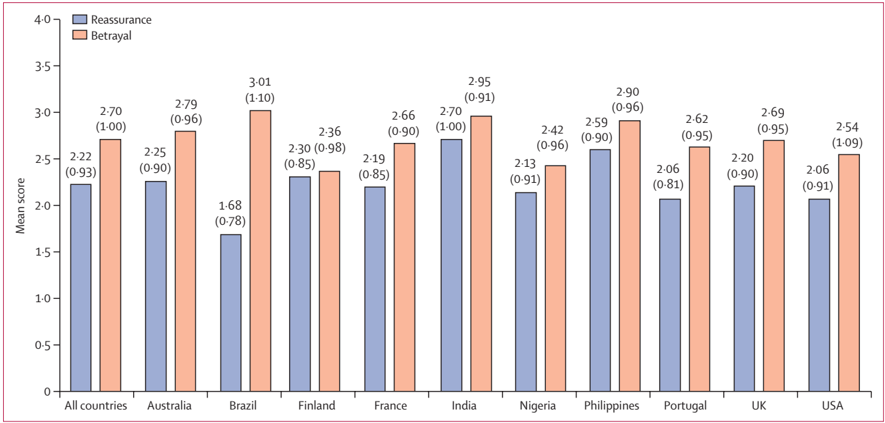
- Respondents rated government responses negatively (mean 14.96 on a 9–18 scale, SD 2.57) and reported greater betrayal (mean 2.7, SD 1.0) than reassurance (mean 2.22, SD 0.93; p<0.0001).
- Climate anxiety and distress were correlated with perceived inadequate government response and associated feelings of betrayal.
Methods
- Cross-sectional online survey of 10,000 children and young people aged 16–25 years in ten countries (Australia, Brazil, Finland, France, India, Nigeria, Philippines, Portugal, the UK, and the USA; 1000 per country), recruited via Kantar between May 18 and June 7, 2021.
- Quota sampling was based on age, gender, and region, with data weighted to OECD statistics for each country by age group, gender, and region.
- Descriptive statistics were calculated for climate anxiety constructs, and Pearson’s correlation analysis explored links between climate-related distress, functioning, negative beliefs, and thoughts/feelings about government response; findings significant at p≤0.001 are reported.
Limitations
- The paper states that non-standardised measures were used because no appropriate standardised measures existed; the study cannot indicate severity compared with normative samples, did not measure mental health outcomes, and used a yes/no/prefer-not-to-say response scale.
- The paper states that equal sample sizes per country were not weighted by population size, so aggregated results are not globally representative; online polling required internet access and sometimes English, and gender was recorded only as male or female.
- Evident from the text: the cross-sectional design cannot establish causality between perceived government response and climate distress.
Model-written summary. Check it against the paper before relying on it.
Integrity signals
Registry
Cites
Statistics
Figures
Verification
Claims the paper makes
12 Valid · 0 Not valid · 19 Not checked · 99 Own results and interpretations
Every source the paper cites for this claim was checked and supports it.
In the paper
“Children are now turning to legal action based on government failure to protect ecosystems, young citizens, and their futures. 26”
What the sources say
- Supportedcites [26] 26 Salas RN, Jacobs W, Perera F. The case of Juliana v. US-children and the health burdens of climate change. N Engl J Med 2019; 380: 2085-87 . source
The supplied Abstract passages describe children filing suit over federal inaction on climate change, which they say violates their constitutional rights. They also connect that inaction to threats to children’s safe environment and to future generations, supporting the citing sentence’s paraphrase. (LLM, conf=0.88)
plainstates a cause- Asserted: passes — The authors put it forward as true.
- Checkable: passes — It can be checked against evidence.
- Load-bearing: unclear — It is unclear whether the paper’s conclusions depend on it.
- Based: passes — The paper gives a reason why it holds.
- Supported
A result the paper reports from its own data — it cites no other source for it, so there is none to check. The quote shows it is in the paper.
In the paper
“in the Global North, Portugal (which had dramatic increases in wildfires since 2017) showed the highest level of worry.”
plainn = 1,000- Asserted: passes — The authors put it forward as true.
- Checkable: passes — It can be checked against evidence.
- Load-bearing: unclear — It is unclear whether the paper’s conclusions depend on it.
- Based: passes — The paper gives a reason why it holds.
A result the paper reports from its own data — it cites no other source for it, so there is none to check. The quote shows it is in the paper.
In the paper
“Respondents rated governmental responses to climate change negatively”
plain- Asserted: passes — The authors put it forward as true.
- Checkable: passes — It can be checked against evidence.
- Load-bearing: passes — The paper’s conclusions depend on it.
- Based: passes — The paper gives a reason why it holds.
A result the paper reports from its own data — it cites no other source for it, so there is none to check. The quote shows it is in the paper.
In the paper
“This distress was associated with beliefs about inadequate governmental response and feelings of betrayal.”
plainstates an association- Asserted: passes — The authors put it forward as true.
- Checkable: passes — It can be checked against evidence.
- Load-bearing: passes — The paper’s conclusions depend on it.
- Based: passes — The paper gives a reason why it holds.
A result the paper reports from its own data — it cites no other source for it, so there is none to check. The quote shows it is in the paper.
In the paper
“More than 45% of respondents said their feelings about climate change negatively affected their daily life and functioning”
- Also stated in: § Results · p. 5 · plain
“More than 45% of respondents said their feelings about climate change negatively affected their daily lives”
plainn = 10- Asserted: passes — The authors put it forward as true.
- Checkable: passes — It can be checked against evidence.
- Load-bearing: passes — The paper’s conclusions depend on it.
- Based: passes — The paper gives a reason why it holds.
- Also stated in: § Results · p. 5 · plain
50 more claims
Create a free account to see all 130 claims and to verify the 1 reference still open.
- Probably not a substantial claim. 51
- It may state two separate claims as one. 41
- The quote only partly states this claim. 6
Claims other papers make about this one
Each is checked against this paper’s own text: does it say what the citing paper says it does?
The source backs part of the claim, not all of it — or backs it for a different population, condition or comparison.
In the citing paper
“Investigations into anxiety about climate change have revealed that it is increasingly common for many people across the globe [9], with large-scale international studies identifying growing concern about climate change [10–12].”
From The relationship between climate change and mental health: a systematic review of the association between eco-anxiety, psychological distress, and symptoms of major affective disorders (2024) · cites this paper as [10]
Experimental — accuracy not yet measuredThe source backs part of the claim, not all of it — or backs it for a different population, condition or comparison.
In the citing paper
“The high prevalence of eco-anxiety [10] - be it at clinical or subclinical levels - underscores the need for broader level changes related to climate change.”
From The relationship between climate change and mental health: a systematic review of the association between eco-anxiety, psychological distress, and symptoms of major affective disorders (2024) · cites this paper as [10]
Experimental — accuracy not yet measuredThe source backs part of the claim, not all of it — or backs it for a different population, condition or comparison.
In the citing paper
“and varied understandings and experiences of climate change have differing impacts on the relationship with mental health [10, 12].”
From The relationship between climate change and mental health: a systematic review of the association between eco-anxiety, psychological distress, and symptoms of major affective disorders (2024) · cites this paper as [10]
Experimental — accuracy not yet measuredThe source backs part of the claim, not all of it — or backs it for a different population, condition or comparison.
In the citing paper
“A global survey of 10,000 young people (16-25) across 10 countries found: (1) 75% were frightened about the future; (2) 84% were moderately worried; (3) 59% were very or extremely worried; and (4) 45%+ reported climate change-related feelings negatively affected their daily life and functioning [21].”
From Climate Distress: A Review of Current Psychological Research and Practice (2023) · cites this paper as [21]
Experimental — accuracy not yet measuredThe source backs part of the claim, not all of it — or backs it for a different population, condition or comparison.
In the citing paper
“An overall lack of trust in government was also identified, with a wide belief that the government response to climate change will continue to be inadequate [21].”
From Climate Distress: A Review of Current Psychological Research and Practice (2023) · cites this paper as [21]
Experimental — accuracy not yet measured
21 more claims about this paper
Create a free account to see every claim other papers make about this one.
Self-check
Percentages, sums and reported differences re-computed from the paper’s own numbers.
Rated minor: it would not touch a result — a value no result rests on, a p-value that stays on the same side of the significance level, or a conflict that is clerical, resolved elsewhere in the paper, or outside its own findings.
In the paper
“15 543 people began the survey and 10 000 (68%) completed it.”
Reported 68 · recomputed 64.337644
Citations
Cites
Mental health of young people: A global public-health challenge
Patel, V., Flisher, A. J., Hetrick, S., & McGorry, P. (2007) · The Lancet · doi:10.1016/s0140-6736(07)60368-7 · Cited by 3,126 · cited 2×
“23 Children facing a future severely damaged by climate change will need support.”
Stress and Health: Psychological, Behavioral, and Biological Determinants
Schneiderman, N., Ironson, G., & Siegel, S. D. (2005) · Annual Review of Clinical Psychology · doi:10.1146/annurev.clinpsy.1.102803.144141 · Cited by 2,252 · cited 2×
“22 Exposure to chronic stress in childhood has a long-lasting impact and increases the risk of developing mental health problems.”
Development and validation of a measure of climate change anxiety
Clayton, S., & Karazsia, B. T. (2020) · Journal of Environmental Psychology · doi:10.1016/j.jenvp.2020.101434 · Cited by 1,196
Self-citationAnxiety and the Ecological Crisis: An Analysis of Eco-Anxiety and Climate Anxiety
Pihkala, P. (2020) · Sustainability · doi:10.3390/su12197836 · Cited by 978 · cited 2×
“In threatening and uncertain situations such as the climate crisis, this response can be seen as what is sometimes referred to as practical anxiety 1,4 because it has the beneficial effect of leading people to reassess their behaviour in order to respond appropriately.”
Self-citationMoral Injury: An Integrative Review
Griffin, B. J., Purcell, N., Burkman, K., Litz, B. T., Bryan, C. J., Schmitz, M., Villierme, C., Walsh, J., & Maguen, S. (2019) · Journal of Traumatic Stress · doi:10.1002/jts.22362 · Cited by 752 · cited 2×
“28 This might include an awareness of or failure to prevent harmful unethical behaviour.”
Stanley, S. K., Hogg, T. L., Leviston, Z., & Walker, I. (2021) · The Journal of Climate Change and Health · doi:10.1016/j.joclim.2021.100003 · Cited by 715
Anxiety, worry, and grief in a time of environmental and climate crisis: a narrative review
Ojala, M., Cunsolo, A., Ogunbode, C. A., & Middleton, J. (2021) · Annual Review of Environment and Resources · doi:10.1146/annurev-environ-012220-022716 · Cited by 670
The case for systems thinking about climate change and mental health
Berry, H. L., Waite, T. D., Dear, K. B. G., Capon, A. G., & Murray, V. (2018) · Nature Climate Change · doi:10.1038/s41558-018-0102-4 · Cited by 485 · cited 2×
“Changing climate and weather-related disasters have diverse impacts, both direct (eg, destruction and trauma) and indirect (eg, strained personal and public resources, interrupted community functioning), 2 as well as resulting in climate anxiety.”
Eco-Anxiety and Environmental Education
Pihkala, P. (2020) · Sustainability · doi:10.3390/su122310149 · Cited by 475
Self-citationThe Hogg Eco-Anxiety Scale: Development and Validation of a Multidimensional Scale
(2021) · doi:10.31219/osf.io/rxudb · Cited by 465
Research works printed but not linked: 4
- 11 Jensen T. Ecologies of guilt in environmental rhetorics. Cham: Palgrave Macmillan, 2019.
- 18 UNICEF. One billion children at 'extremely high risk' of the impacts of the climate crisis. Aug 20, 2021. https://www.unicef.org. uk/press-releases/onebillion-children-at-extremely-high-risk-of-theimpacts-of-the-climate-crisis-unicef (accessed Sept 5, 2021).
- 27 Weintrobe S. Psychological roots of the climate crisis: neoliberal exceptionalism and the culture of uncare. New York, NY: Bloomsbury Academic, 2021.
- 32 Mavronicola N. Torture, inhumanity and degradation under article 3 of the ECHR: absolute rights and absolute wrongs. Oxford: Bloomsbury Publishing, 2021.
Cited by
Items 401–500 of 2,164
Marty, C., Amghar, S., Patlán, A. B., & Adams, A. M. (2025) · The Journal of Climate Change and Health · doi:10.1016/j.joclim.2025.100416 · Cited by 18
Cooper, M., Cunsolo, A., Aylward, B., Yamamoto, S. S., & Harper, S. L. (2025) · Social Science & Medicine · doi:10.1016/j.socscimed.2025.118002 · Cited by 28
Tafon, R., & Saunders, F. P. (2025) · PLOS Climate · doi:10.1371/journal.pclm.0000472 · Cited by 25
“Throughput legitimacy centers on procedural fairness as a condition for more deliberative and collaborative interactions that purposively seek to reduce power disparities among stakeholders and create a conducive environment for accountability and reciprocity [50].”
Improving Student Wellbeing: Evidence From a Mixed Effects Design and Comparison to Normative Data
Kemp, A. H., Mead, J., & Fisher, Z. (2022) · Teaching of Psychology · doi:10.1177/00986283221112428 · Cited by 16
“Recent work has reported high levels of climate-related distress in children and young people (Hickman et al., 2021), and such distress will inevitably lead institutions to question what they can do to support students in managing dif fi cult emotions relating to the unfolding climate catastrophe.”
Wortzel, J. R., Lee, J., Benoit, L., Rubano, A., & Pinsky, E. G. (2022) · Academic Psychiatry · doi:10.1007/s40596-022-01707-z · Cited by 12
Mede, N. G., Cologna, V., Berger, S., Besley, J. C., Brick, C. A., Joubert, M., Maibach, E. W., Mihelj, S., Орескес, Н., Schäfer, M. S., et al. (2024) · doi:10.31234/osf.io/jktsy · Cited by 13
Elsen, F., & Ord, J. (2023) · Youth · doi:10.3390/youth3040090 · Cited by 12
“[11] p. 8 It would be naïve to think that these kinds of omnipresent global crises do not affect young people’s well-being regardless of whether they identify them as part of the reasons behind their mental health difficulties or not.”
BackgroundHunt, D. F., Morgan, M., Connors, M., & Mellor, C. (2022) · International Review of Psychiatry · doi:10.1080/09540261.2022.2080530 · Cited by 13
Self-citationPeter, F., Dohm, L., & Krimmer, M. (2022) · Monatsschrift Kinderheilkunde · doi:10.1007/s00112-022-01670-x · Cited by 15
“Ein Großteil der befragten jungen Menschen zeigte in der Hickman-Studie nur wenig Vertrauen in die Klimapolitik der Regierungen: Es werde nicht genug getan, was verbreitet als Verrat empfunden wird [4].”
BackgroundKhalaim, O., & Budziszewska, M. (2024) · The Journal of Environmental Education · doi:10.1080/00958964.2024.2339824 · Cited by 21
“Climate anxiety is a gradually increasing problem for young people worldwide (Hickman et al., 2021), yet remains not fully recognized in higher education in terms of diagnosis, research, and action.”
InfluentialLearning in Relation with a Changing World: Thinking Beyond ESD 1 and ESD 2 Towards ESD 3
Pettig, F., & Singer‐Brodowski, M. (2024) · Journal of Education for Sustainable Development · doi:10.1177/09734082251347383 · Cited by 44
“These recent studies (Hickman et al., 2021; Ojala, 2016; Verlie, 2019) show that negatively connoted emotions in the context of the climate crisis (fear, anger, sadness, etc.) dominate among young people.”
Supporting conservationists’ mental health through better working conditions
Pienkowski, T., Keane, A. M., y Tickell, S. C., de Lange, E., Hazenbosch, M., Khanyari, M., Arlidge, W. N. S., Baranyi, G., Brittain, S., Kapoor, V., et al. (2023) · Conservation Biology · doi:10.1111/cobi.14097 · Cited by 19
“Environmental change can be a source of anxiety and grief among the general public (e.g., Hickman et al., 2021), partly arising from the current and anticipated loss of valued places, things, knowledge, and relationships (Cianconi et al., 2020; Clay-ton, 2020).”
Speculative design for envisioning more-than-human futures in desirable counter-cities
Edwards, F., & Pettersen, I. N. (2023) · Cities · doi:10.1016/j.cities.2023.104553 · Cited by 30
Horne, E., Loftus, S., McCoy, S. S., & Winn, A. M. (2023) · Auditing A Journal of Practice & Theory · doi:10.2308/ajpt-2022-107 · Cited by 23
Sustainability Transition Framework: An Integrated Conceptualisation of Sustainability Change
Petrović, E. K. (2023) · Sustainability · doi:10.3390/su16010217 · Cited by 27
Knowledge and perception of Spanish school children of climate change
Seguido, Á. F. M., & Hernández, M. H. (2024) · Children s Geographies · doi:10.1080/14733285.2024.2303581 · Cited by 18
“Other studies about the perception of the effects of climate change (Hickman et al. 2021) reveal that more than 45.0% of respondents said their feelings about global warming negatively affected their daily life and functioning, and many reported a high number of negative thoughts about climate…”
BackgroundInfluentialPadrón‐Monedero, A., Linares, C., Díaz, J., & Noguer-Zambrano, I. (2024) · International Journal of Biometeorology · doi:10.1007/s00484-024-02657-x · Cited by 17
“…expected consequences, including drought, are important psychological and emotional stressors (Marí-Dell'Olmo et al. 2022; Dodgen et al. 2016), especially for the younger population, that report, among others, feelings of sadness and anxiousness that affect their daily life (Hickman et al. 2021).”
BackgroundLucas, C. H., Earl-Jones, C., Mocatta, G., Beasy, K. M., Kelly, R., & Pecl, G. T. (2024) · One Earth · doi:10.1016/j.oneear.2024.02.017 · Cited by 17
Doshi, S. M., Vuppula, S., & Jaggi, P. (2024) · Journal of the Pediatric Infectious Diseases Society · doi:10.1093/jpids/piae029 · Cited by 14
Young people at a crossroads: Climate solidarity through intergenerational storytelling
Walker, C., van Holstein, E., & Klocker, N. (2024) · Geographical Research · doi:10.1111/1745-5871.12668 · Cited by 16
Coping with climate anxiety: impacts on functioning in Australian adolescents
Crandon, T., Scott, J. G., Charlson, F., & Thomas, H. J. (2024) · Australian Psychologist · doi:10.1080/00050067.2024.2404987 · Cited by 18
“Items were developed based on climate anxiety and coping literature (Arditte Hall et al., 2019; Chan et al., 2015; Hickman et al., 2021; Hogg et al., 2021; Knowles et al., 2017; Ojala et al., 2012; Soutar & Wand, 2022), cognitive behavioural theory (Beck, 1976; Curtiss et al., 2021) and…”
Calabria, L., & Marks, E. M. (2024) · The Cognitive Behaviour Therapist · doi:10.1017/s1754470x24000096 · Cited by 13
“Repeated studies show that concerns about climate change are high: 83% of 10,000 children and young people globally report concerns (Hickman et al ., 2021), as do 86% of Australians (Reser et al ., 2012a) and up to 40% of Europeans (Steentjes et al ., 2017).”
Self-citationSoomro, S., Zhou, D., & Charan, I. A. (2024) · Disaster Medicine and Public Health Preparedness · doi:10.1017/dmp.2024.267 · Cited by 12
“…feel guilty about their contributions to climate change or ashamed of the greater climatic damage caused by humans, has only recently started; 14 among participants, most children ’ s perceptions of climate-related anxiety have significantly negative effects on mental health and…”
Magruder, K. J., & Chipman, S. J. (2025) · Journal of Human Rights and Social Work · doi:10.1007/s41134-024-00350-y · Cited by 16
“In a another global survey of over 10,000 young people, 84% of respondents aged 16–25 were at least moderately wor-ried about climate change (Hickman et al., 2021).”
Baum, C. M., Brutschin, E., Fritz, L., & Sovacool, B. K. (2025) · Risk Analysis · doi:10.1111/risa.17713 · Cited by 12
“There may be (group-wise) differences in how worried individuals report being about climate change, but these are small enough to not be robust to the Bonferroni correction.”
InfluentialEco-anxiety or simply eco-worry? Incremental validity study in a representative Spanish sample
Jiménez, M. L. V., Alonso-Ferres, M., & Díaz‐Silveira, C. (2025) · Frontiers in Psychology · doi:10.3389/fpsyg.2025.1560024 · Cited by 14
Roberts, A., Poortinga, W., & Williams, M. O. (2025) · Journal of Environmental Psychology · doi:10.1016/j.jenvp.2025.102595 · Cited by 15
Safeguarding youth health in climate-vulnerable countries
Aruta, J. J. B. R., & Guinto, R. (2022) · The Lancet Child & Adolescent Health · doi:10.1016/s2352-4642(22)00029-3 · Cited by 11
Crisis in the air: the mental health implications of the 2023 Canadian wildfires
Lowe, S. R., & Garfin, D. R. (2023) · The Lancet Planetary Health · doi:10.1016/s2542-5196(23)00188-2 · Cited by 12
What is the role of universities at a time of climate and ecological crisis?
Dyke, J. G., & Monbiot, G. (2024) · Geo Geography and Environment · doi:10.1002/geo2.146 · Cited by 18
Editorial: Adolescent mental health in a rapidly changing world
Stevens, G. W. J. M. (2024) · Journal of Child Psychology and Psychiatry · doi:10.1111/jcpp.14065 · Cited by 15
Michaud, P., Michaud, L., Mazur, A., Hadjipanayis, A., Kapp, C., & Ambresin, A. (2022) · Frontiers in Pediatrics · doi:10.3389/fped.2022.800000 · Cited by 18
‘I am really scared for the future’: climate distress among Brazilian youth
Schor, M., Clayton, S., Cardoso, M. C. V., Fernandes, M. N., Frota, M. A., & Surkan, P. J. (2024) · Environmental Education Research · doi:10.1080/13504622.2024.2409946 · Cited by 18
“Although a global study found that 45% of youth studied reported that their concerns about climate change were affecting their daily functioning, that study asked only for a yes or no response and was not designed to measure clinically-relevant impact (Hickman et al. 2021).”
InfluentialSelf-citationAn Introduction to the Complex Construct of Wellbeing, Societal Challenges and Potential Solutions
Kemp, A. H., & Edwards, D. J. (2022) · Springer eBooks · doi:10.1007/978-3-031-18329-4_1 · Cited by 12
Pediatric climate distress: A scoping review and clinical resource
Wortzel, J. D., Denga, V.-S., Angrish, J., Dooley, L. N., Manjón, I., Shabdar, S., Lykins, A. D., Cosh, S., Bain, P. A., Olagunju, A. T., et al. (2024) · The Journal of Climate Change and Health · doi:10.1016/j.joclim.2024.100349 · Cited by 13
“There were notably four studies whose samples were ≥ 1.5 times the inter-quartile range and were therefore classi fi ed as outliers [21 − 24].”
InfluentialSpontaneous hope, anger and climate activism
Whyman, T. (2025) · Environmental Values · doi:10.1177/09632719251317888 · Cited by 11
“Similar numbers are re fl ected in data from Smith and Leiserowitz 2014 (44% of Americans reported feeling climate anger), and Hickman et al. 2021 (57% of young respondents reported feeling angry about climate change).”
Alibudbud, R. C. (2023) · Asian Journal of Psychiatry · doi:10.1016/j.ajp.2023.103673 · Cited by 10
Slotnick, M. J., Falbe, J., Wolfson, J. A., Jones, A. D., & Leung, C. W. (2023) · Journal of the Academy of Nutrition and Dietetics · doi:10.1016/j.jand.2023.11.021 · Cited by 13
Vasiljevic, M., Hughes, J. P., Andersen, C. D., Pennington, G., Leite, A. C., Weick, M., & Couturier, D. (2023) · Food Quality and Preference · doi:10.1016/j.foodqual.2023.105084 · Cited by 15
Ceylan, B., Koçoğlu, D., Saçıkara, Z., & Dengiz, K. S. (2024) · Chronobiology International · doi:10.1080/07420528.2024.2315220 · Cited by 10
“Recently, young people, in particular, have been struggling with the psychological effects of negative developments in today’s world, such as climate change, migration, war, economic crisis, and pandemic (Hickman et al. 2021).”
BackgroundGibson, L., Stevenson, K. T., Busch, K. C., Cutts, B. B., Seekamp, E., & Krementz, S. (2024) · The Journal of Environmental Education · doi:10.1080/00958964.2023.2259853 · Cited by 14
“Because of this phrasing, students who score highly on this particular hopelessness scale might be those most worried about the threat of environmental problems and recognize the scale of change needed to address them (Hickman et al., 2021).”
BackgroundClimate change and mental health in Northeast of Thailand
Wongpanarak, N., & Langkulsen, U. (2024) · International Journal of Environmental Health Research · doi:10.1080/09603123.2024.2328741 · Cited by 13
“These events will become more frequent or severe if meaningful and immediate action is not taken to reduce greenhouse gas emissions (Hickman et al. 2021).”
Deka, C., Dutta, M., Yazdanpanah, M., & Komendantova, N. (2024) · Cleaner and Responsible Consumption · doi:10.1016/j.clrc.2024.100191 · Cited by 9
“%) reported a feeling of fear for the future due to climate change (Hickman et al., 2021).”
BackgroundZurba, M., Baum-Talmor, P., Woodgate, R. L., Busolo, D. S., PARK, A. W., Mendritzki, E., & Binkley, L. (2024) · Climatic Change · doi:10.1007/s10584-024-03757-8 · Cited by 16
“Despite there being no formally defined diagnosis, it is now known that children and youth are disproportionately affected by the impacts of climate change, not only psychologically but also physically, socially and neurologically (Hickman et al. 2021).”
Reassessing ‘good’ medical practice and the climate crisis
Yassaie, R., & Brooks, L. (2024) · Journal of Medical Ethics · doi:10.1136/jme-2023-109713 · Cited by 12
“10 The climate movement has arguably been a movement of younger generations, 46 with the crisis casting a dark shadow on their childhood, 47 while they attempt to undo the damage caused by previous generations.”
BackgroundGüler, K. G., & Albayrak, E. (2024) · Public Health Nursing · doi:10.1111/phn.13388 · Cited by 14
Wilf, S. B., Rudra, A., & Wray‐Lake, L. (2024) · Youth · doi:10.3390/youth4030078 · Cited by 14
“A recent survey across 10 countries found that Indian youth reported some of the highest rates of worry about the climate crisis [47].”
BackgroundComing of age in a warming world: A self-determination theory perspective
Spitzer, J. E., Grapsas, S., Poorthuis, A. M. G., Vansteenkiste, M., & Thomaes, S. C. E. (2025) · Child Development Perspectives · doi:10.1111/cdep.12534 · Cited by 16
“Collaborative and international efforts (e.g., Hickman et al., 2021; Ogunbode et al., 2022) demonstrate that it is possible to build a more representative field of research.”
Sustainability Education in the Nordic Countries
Jónsson, Ó. P., Demant-Poort, L., Wolff, L.-A., Clausen, S. W., Johansson, E. W., Oras, R., & Gunnarsdóttir, G. J. (2024) · Nordic Council of Ministers eBooks · doi:10.6027/nord2024-038 · Cited by 18
How Western Buddhist climate activists negotiate climate emotions
Cairns, J., & Pihkala, P. (2024) · Frontiers in Psychology · doi:10.3389/fpsyg.2024.1487258 · Cited by 15
Self-citationImproving human well-being through community-led coastal restoration
Pichler, E. L., Connell, S. D., & McAfee, D. (2024) · Biological Conservation · doi:10.1016/j.biocon.2024.110892 · Cited by 17
Colombo, S. L., Raffone, A., & Simione, L. (2024) · Mindfulness · doi:10.1007/s12671-024-02483-7 · Cited by 20
“…areas of the world — e.g. 21% of a sample of French-speaking adults in Europe and Africa (Heeren et al., 2022), 26–27% of US adults (Clayton & Karazsia, 2020) and 45% of teens in Australia, Brazil, Finland, France, India, Nigeria, Philippines, Portugal, the UK, and the USA (Hickman et al., 2021).”
Education and the Future: Four Orientations
Rasa, T. (2024) · European Journal of Education · doi:10.1111/ejed.12884 · Cited by 20
Beyond “Hope”: Constructive Anger as a Force in Sustained Climate Action
Grau, M. (2025) · Pastoral Psychology · doi:10.1007/s11089-024-01196-x · Cited by 13
“Two large-scale international studies have focused on the climate emotions of young people around the globe (Hickman et al., 2021; Ogunbode et al., 2022).”
Kyambade, M., Sewante, L., & Namatovu, A. (2025) · Cogent Social Sciences · doi:10.1080/23311886.2025.2466790 · Cited by 12
“…become more aware of their rights, they actively engage in discussions on climate change and advocate for solutions to environmental issues (hickman et al., 2021). gounder and Tan (2024) stress the need for a socioecological approach to address disparities in environmental justice,…”
Bakul, F., Heanoy, E. Z., Antu, A. D., Khandakar, F., & Ahmed, S. (2025) · Acta Psychologica · doi:10.1016/j.actpsy.2025.104847 · Cited by 19
The role of parental identity in experiencing climate change anxiety and pro-environmental behaviors
Pinho, M. (2025) · Frontiers in Psychology · doi:10.3389/fpsyg.2025.1579893 · Cited by 17
Weber, A. M., van Laar, E., Borgonovi, F., Ackerman, P. L., Nixon, N., Graesser, A. C., & Greiff, S. (2025) · Educational Psychology Review · doi:10.1007/s10648-025-10014-6 · Cited by 14
Shibesh, B. F., & Nagabhatla, N. (2025) · Climate · doi:10.3390/cli13070139 · Cited by 16
“Indirect consequences arise from observing and anticipating the effects of climate change, which can foster ‘eco-anxiety’ or ‘climate anxiety’ and contribute to concerns about the future, especially among younger generations [25].”
Climate anxiety in early childhood: A state-of-the-art review
Spiteri, J. (2025) · Journal of Childhood Education & Society · doi:10.37291/2717638x.202562558 · Cited by 16
“Beyond the immediate effects, climate change can drive forced migration, increased rates of hospitalisation, higher suicide rates, increase aggression and social conflict, and intensify feelings of anxiety (Hickman et al., 2021; Karabal, 2022; Lawrance et al., 2022).”
Integrating positive psychology and spirituality in the context of climate change
Bellehumeur, C. R., Bilodeau, C., & Kam, C. (2022) · Frontiers in Psychology · doi:10.3389/fpsyg.2022.970362 · Cited by 19
“This is of increasing concern as younger people are expressing more and more signs of eco-anxiety as well as discontentment with political inaction (Hickman et al., 2021).”
BackgroundEco-anxiety and its divergent power holds: a youth climate activist’s perspective
Uchendu, J. O. (2022) · South African Journal of Psychology · doi:10.1177/00812463221130586 · Cited by 13
Zimmer‐Gembeck, M. J., Modecki, K. L., Duffy, A. L., Hawes, T., Farrell, L. J., Waters, A. M., Gardner, A. A., Shum, D., & Skinner, E. A. (2023) · Journal of Adolescence · doi:10.1002/jad.12194 · Cited by 13
A Clear and Present Pedagogy: Teaching About Planetary Crisis (When You're in a Planetary Crisis)
Suarez, D. C., Kircher, C., & Santi, T. (2023) · Antipode · doi:10.1111/anti.12977 · Cited by 13
Anaesthetic subspecialties and sustainable healthcare: a narrative review
Oliver, C., Charlesworth, M., Pratt, O., Sutton, R., & Metodiev, Y. (2024) · Anaesthesia · doi:10.1111/anae.16169 · Cited by 10
“A recent international survey found that 84% of those aged 16 – 25 y (n = 10,000) were at least moderately worried about climate change, with 75% saying they found the future frightening as a result [39].”
BackgroundAltered spaces: new ways of seeing and envisioning nature with Minecraft
McNally, B., & de Andrade, B. A. (2022) · Visual Studies · doi:10.1080/1472586x.2022.2090121 · Cited by 10
“Several global studies have confirmed the increasing levels of eco-anxiety, or psychological distress due to our changing climate, among young people (Hickman et al. 2021).”
Adolescents' mental health and emotional problems: a qualitative study in Switzerland
Chok, L., Surís, J.-C., & Barrense‐Dias, Y. (2022) · Qualitative Research Journal · doi:10.1108/qrj-08-2022-0115 · Cited by 13
“Indeed, as shown in a recent international study on climate anxiety in children and young people (Hickman et al., 2021), our results demonstrate that adolescents are worried about climate change and have pessimistic beliefs about the future.”
BackgroundClimate Change and Eco-Anxiety in the US: Predictors, Correlates, and Potential SolutionsPreprint
Kricorian, K., & Turner, K. (2022) · medRxiv · doi:10.1101/2022.08.28.22279314 · Cited by 12
Contreras, A., Blanchard, M. A., Mouguiama-Daouda, C., et al. (2023) · doi:10.31234/osf.io/sp8hn · Cited by 10
Steffensen, L., Johnsen-Høines, M., & Hauge, K. H. (2022) · Educational Philosophy and Theory · doi:10.1080/00131857.2022.2144221 · Cited by 10
“Young people across the globe are worried and disillusioned about whether appropriate actions will be taken to address climate change (Hickman et al., 2021).”
BackgroundGrowing up in Victoria, Australia, in the midst of the climate emergency
Chavez, K. M., Quinn, P., Gibbs, L. F., Block, K., Leppold, C., Stanley, J., & Vella‐Brodrick, D. (2023) · International Journal of Behavioral Development · doi:10.1177/01650254231205239 · Cited by 13
“Instances of dismissal or backlash from adults and authorities, along with government inaction on climate change, contribute to the distress experienced by young activists (Hickman et al., 2021).”
BackgroundResultInfluentialFernee, C. R., Wahlgren, S. L. H., & Trangsrud, L. K. J. (2023) · Journal of Outdoor and Environmental Education · doi:10.1007/s42322-023-00157-x · Cited by 12
“Climate anxiety and eco-grief are prevalent, especially in the younger populations (Hickman et al., 2021) and, therefore, something we are likely to encounter more frequently in outdoor health care over the years to come.”
Runkle, J. D., Herbst, K., Ryan, S., Sewell, K., Mallare, A., Berry, I., Getz, E., McKee, A., Thompson, M. P., & Sugg, M. M. (2025) · The Journal of Climate Change and Health · doi:10.1016/j.joclim.2025.100419 · Cited by 18
“A global survey of 10,000 children and adolescents across ten countries revealed that 6 out of 10 young people were very or extremely worried about climate change, with 75 % of respondents feeling that the future is frightening [2].”
InfluentialYatirajula, S. K., Prashad, L., Daniel, M., & Maulik, P. K. (2023) · The Lancet Regional Health - Southeast Asia · doi:10.1016/j.lansea.2023.100191 · Cited by 14
“This is important given the impact that both climate change and COVID has on the lives of all individuals but particularly on young people’s future.(35,36) Further, this study is significant as is it confirms that there is concern among adolescents and young people about the climate crisis even in poorer settings.”
BackgroundVercammen, A., Yatirajula, S. K., Daniel, M., Maharaj, S. B., Campbell, M., GREAVES, N. S., Guinto, R., Aruta, J. J. B. R., Peñamante, C. A., Wray, B., et al. (2023) · Challenges · doi:10.3390/challe14030034 · Cited by 12
“A number of studies, including some large international surveys [13,14], have catalogued climate concerns, emotions, and the impacts on the lives and behaviours of people worldwide, with a particular interest in young people.”
BackgroundSelf-citationThe role of school counsellors in response to eco-anxiety
Köse, A. (2023) · Journal of Psychologists and Counsellors in Schools · doi:10.1017/jgc.2023.11 · Cited by 11
Climate distress and social identity: bringing theory to clinical practice
Williams, M. O. (2023) · Frontiers in Psychology · doi:10.3389/fpsyg.2023.1126922 · Cited by 12
“…highlighted that individual and societal responses to climate change are woven tightly together: climate anxiety was correlated with feelings of government betrayal, and 48% of the sample reported that others had ignored or dismissed their attempts to discuss climate change (Hickman et al., 2021).”
BackgroundReflections on co‐productive research in a youth‐focused climate education project
Portus, R., Williams, S., Mansikka‐aho, A., Reilly, K., Aarnio‐Linnanvuori, E., Vito, L. D., Dillon, B., Fahy, F., Gnecco, I., Palla, A., et al. (2024) · Geographical Research · doi:10.1111/1745-5871.12642 · Cited by 18
A ‘greenhouse affect’? Exploring young Australians’ emotional responses to climate change
Russell, T. (2024) · Climatic Change · doi:10.1007/s10584-024-03737-y · Cited by 14
“Another important study (Hickman et al. 2021) was the first to demonstrate that young people’s climate distress was greater when coupled with perceptions of deficient governmental climate responses, which led to feelings of betrayal.”
InfluentialOlson, R. E., Smith, A., McKenzie, J., Patulny, R., & Bellocchi, A. (2024) · Journal of Sociology · doi:10.1177/14407833241248774 · Cited by 12
“Along with anger, sadness, help-lessness and guilt, children and adults worldwide are said to be experiencing heightened levels of climate-related anxiety (Hickman et al., 2021; Verlie, 2022), and strong feelings of powerlessness and dissatisfaction with government efforts to address climate change.”
What Children Know: Children, Climate Change, and Epistemic Injustice
Mercer, J. A. (2024) · Pastoral Psychology · doi:10.1007/s11089-024-01146-7 · Cited by 15
“Or, adults may simply have failed to ask them, or not asked them in a way that elicited sufficient trust from the children to disclose their vulnerability (Hickman et al., 2021).”
BackgroundHands-on climate engagement: principles for effective hands-on activities and demonstrations
Croak, A., & Walker, G. (2024) · Journal of Science Communication · doi:10.22323/2.23030803 · Cited by 15
“The positive emotions associated with creative and intrinsically motivating hands-on activities contrast with the overwhelmingly negative emotions young people report regarding climate change globally [Hickman et al., 2021].”
BackgroundFilho, W. L., Dinis, M. A. P., Salvia, A. L., Sierra, J., Vasconcelos, H. C., Henderson‐Wilson, C., Diatta, S., Kumar, T. V. L., Meirelles, M., & Carvalho, F. (2024) · PLoS ONE · doi:10.1371/journal.pone.0304019 · Cited by 13
“Recent research by Hickman et al. [17] shows that the psychological burdens of climate change are affecting the mental health of young people across the globe.”
Evaluating climate change competence in pre-teens: Instrument development and validation
Ortega-Quevedo, V., Luengo, M. A. L., Ferrari, E., & Ruíz, C. (2024) · Journal of Environmental Psychology · doi:10.1016/j.jenvp.2024.102329 · Cited by 13
Heat and Organization Studies: Organizing in a world approaching 50°C
Dentoni, D. (2024) · Organization Studies · doi:10.1177/01708406241261442 · Cited by 11
“Entangled with climate anxiety, young people’s feelings of doom (Hickman et al., 2021) and mental health issues (Khan, 2021) may vary significantly across families.”
Thacker, I. (2024) · Contemporary Educational Psychology · doi:10.1016/j.cedpsych.2024.102285 · Cited by 17
“Despite increasing concern about climate change among young people across the globe (Hickman et al., 2021; Wray, 2022), climate change is under-emphasized in secondary education.”
BackgroundGonzález-Muñoz, E., Cartea, P. Á. M., & Pérez, J. G. (2024) · Environmental Education Research · doi:10.1080/13504622.2024.2364799 · Cited by 12
“Hickman et al. (2021) conducted a cross-national survey of emotional, cognitive, and functional responses to CC, with representative and comparable samples of young people (aged 16-25) from 10 countries in Africa, the Americas, Asia, Europe, and Oceania.”
InfluentialClimate change distress, entrapment, and suicidal ideation
Brailovskaia, J., & Teismann, T. (2024) · Climatic Change · doi:10.1007/s10584-024-03784-5 · Cited by 16
“…study, more than 45% of young adults from ten countries worldwide, stated that concerns about climate change negatively affected their daily lives (Hickman et al. 2021) and about one-quarter of respondents to an U.S. survey state to feel high levels of climate anxiety (American Psychological…”
‘There’s no helpline’: how mental health services can support young people with climate distress
Williams, M. O., Samuel, V. M., Whitmarsh, L. E., Poortinga, W., Jenkins, C. R., & Constable, C. (2024) · Cogent Mental Health · doi:10.1080/28324765.2024.2409815 · Cited by 13
“Worry about climate change is associated with feelings of betrayal by governments and their lack of action, and young people often feel that their concerns are ignored by adults (Hickman et al., 2021).”
Anderson, A. G. (2024) · Climatic Change · doi:10.1007/s10584-024-03815-1 · Cited by 22
Lenhard, F., de la Cruz, L. F., Wahlund, T., Andersson, E., Åhlén, J., Nerini, F. F., Akay, H., & Mataix‐Cols, D. (2024) · BMC Psychology · doi:10.1186/s40359-024-02244-0 · Cited by 17
Pinchoff, J., Etim, E.-O. E., Babatunde, D., Blomstrom, E., Ainul, S., Akomolafe, T., Carranza, B. M., Valle, Á. D., & Austrian, K. (2025) · BMJ Global Health · doi:10.1136/bmjgh-2024-016788 · Cited by 25
A framework for quantifying the multisectoral burden of animal disease to support decision making
Lysholm, S., Chaters, G. L., Bari, C. D., Hughes, E. C., Huntington, B., Rushton, J., & Thomas, L. F. (2025) · Frontiers in Veterinary Science · doi:10.3389/fvets.2025.1476505 · Cited by 10
People’s perception of biodiversity loss: Validation of a scale in Germany
Eylering, A., Borghorst, J., Neufeld, K., Szczepanski, L., van Valkengoed, A. M., & Fiebelkorn, F. (2025) · Journal for Nature Conservation · doi:10.1016/j.jnc.2025.126854 · Cited by 11
Feraco, T., Carbone, E., Cramarossa, G., & Meneghetti, C. (2025) · Environmental Education Research · doi:10.1080/13504622.2025.2459323 · Cited by 13
“…shaped by climate change and environmental crisis (Finnegan 2023); (b) young people are among the most worried and concerned about climate change (hickman et al. 2021); (c) climate education is of uttering importance (lodge and Finnegan 2021; Otto et al. 2020; United Nations 2021); and (d)…”
From rising temperature to eco-emotions: exploring the impact of climate change on suicidality
Kõlves, K., Shaw-Williams, D., Krishnamoorthy, S., Bayliss, L. T., Hawgood, J. L., & Reifels, L. (2025) · The Lancet Regional Health - Western Pacific · doi:10.1016/j.lanwpc.2025.101491 · Cited by 10
“8 Other commonly addressed emotional responses are ecological grief and solastalgia.”
Wickson, F., Lambert, L., & Bernstein, M. J. (2025) · Current Opinion in Environmental Sustainability · doi:10.1016/j.cosust.2025.101525 · Cited by 17
Climate change concerns and fertility intentions: first evidence from Italy
Puglisi, C., Muttarak, R., & Vignoli, D. (2025) · Genus · doi:10.1186/s41118-025-00244-5 · Cited by 20
“…on the influence of environmental uncertainty—that is, uncertainty arising because of climate change and its future consequences, on fertility intentions, despite mounting evidence of climate anxiety and fear over climate futures among young people (Crandon et al., 2022; Hickman et al., 2021).”
Building the world anew: on critical hope in climate change education
Jadallah, C. C., Barry, K. M., Germinaro, K., & Barry, N. (2025) · Environmental Education Research · doi:10.1080/13504622.2025.2498941 · Cited by 12
“…2023; ojala et al. 2021). the vast majority of young people worry about climate change, with many expressing sadness, anxiety, anger, helplessness (Hickman et al. 2021; marczak et al. 2023), and poor mental health as a result (Berry et al. 2010; Palinkas & Wong 2020). one shortcoming of some…”
Counted, V., Lee, M. T., Lomas, T., Cowden, R. G., Allen, K., Basu, J., Laidler, D., Routledge, C. D., Seamon, D., & VanderWeele, T. J. (2025) · International Journal of Intercultural Relations · doi:10.1016/j.ijintrel.2025.102203 · Cited by 10
Metadata
- Authors
- Hickman, C., Marks, E., Pihkala, P., Clayton, S., Lewandowski, R. E., Mayall, E. E., Wray, B., Mellor, C., & van Susteren, L.
- Affiliations
- University of Bath (GB)
- University of Helsinki (FI)
- College of Wooster (US)
- NYU Langone Health (US)
- University of East Anglia (GB)
- London School of Hygiene & Tropical Medicine (GB)
- Oxford Health NHS Foundation Trust (GB)
- Corresponding author
- Hickman, Caroline
- Venue
- The Lancet Planetary Health
- Publisher
- Elsevier BV
- Published
- 2021-12
- Volume
- 5
- Issue
- 12
- Pages
- e863-e873
- ISSN
- 2542-5196 (ISSN-L)
- OpenAlex
- W4200005759
- Semantic Scholar
- 4a876cc35863ba593aacf58fe6a24773b3cb9c29
- Cited by
- 2,324
- References
- 27
- Citations by year
- 2026: 566 · 2025: 652 · 2024: 566 · 2023: 364 · 2022: 170 · 2021: 4
- FWCI
- 382.19
- Type
- journal article
- Language
- en
- Open access
- gold
- doi.org
- Licence
- cc-by-nc-nd
- www.elsevier.com/tdm/userlicense/1.0/ (tdm)
- www.elsevier.com/legal/tdmrep-license (tdm)
- creativecommons.org/licenses/by-nc-nd/4.0/ (vor)
- Locations
- The Lancet Planetary Health (publishedVersion, cc-by-nc-nd)
- PubMed (publishedVersion)
- DOAJ (DOAJ: Directory of Open Access Journals) (submittedVersion, cc-by-sa)
- Työväentutkimus Vuosikirja (submittedVersion)
- Topics
- Social Sciences › Sociology and Political Science › Climate Change Communication and Perception
- Physical Sciences › Environmental Science › Health, Toxicology and Mutagenesis › Climate Change and Health Impacts
- Social Sciences › Psychology › Clinical Psychology › COVID-19 and Mental Health
- Keywords
- climate anxiety, children and young people, climate change, betrayal, climate change beliefs, daily functioning, global survey
- MeSH terms
- Adolescent, Adult, Anxiety, Australia, Child, Government, Humans, Surveys and Questionnaires, Young Adult, Climate Change
About these checks
Registry, retraction, Cites and statistics results are computed, not judged, with one exception: a printed reference that no index lists is read once by a model before it counts as a citation error. Claims are extracted by a model and kept only when their quote appears verbatim in the text; each cited source is then checked, with a model’s help, for whether it says what the claim relies on. Those verdicts can be wrong — read the claim’s quote and the cited source before relying on one.
The claim verdicts this report counts are experimental: their accuracy is not yet measured.
A language model drew the claims from the paper on 2026-10-10, under version 3 of the claim definition (model deepseek-v4.1-flash, prompt extract-v3).
A second model labelled each claim on 2026-10-10 (model jev-1.13-20260917, definition revision gold-guideline-v0.2).
Cited sources are checked with a language model’s help (gpt-6-sol).
Statistics and arithmetic are recomputed, not judged.
Confidence bands are shown only for fields calibrated on our annotated test set. None is calibrated yet, so no band is shown.
What counts as a claim ›How we measure confidence ›How we check this ›
Are you an author, or do you see a problem with this page? Request a review
Data sources
Bibliographic data: Semantic Scholar, OpenAlex, Crossref.
Contains information from the Semantic Scholar Academic Graph Datasets, made available under the ODC Attribution License (ODC-BY 1.0).
Semantic Scholar’s data is described in: Kinney, R., et al. (2023). The Semantic Scholar Open Data Platform. arXiv:2301.10140.
