

Climate anxiety in children and young people and their beliefs about government responses to climate change: a global survey
Open accessThe DOI matches its Crossref record; 27 of the 30 references it cites were found in a registry or an index, and 1 are not checked yet; 14 of the 48 sources its claims cite were checked for support.
Abstract
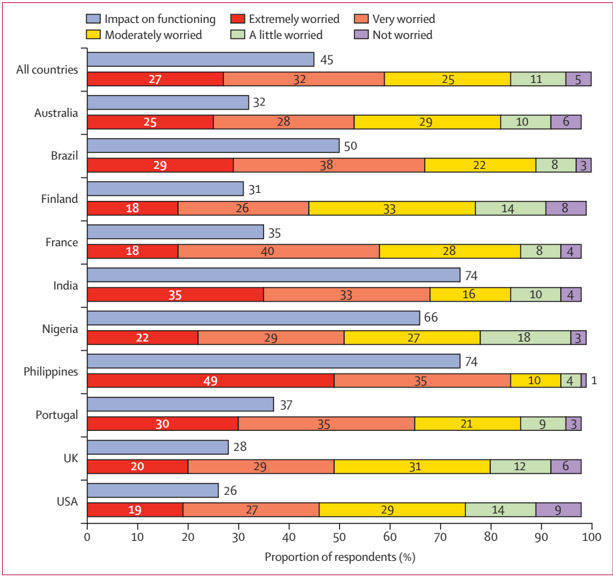
Background Climate change has important implications for the health and futures of children and young people, yet they have little power to limit its harm, making them vulnerable to climate anxiety. This is the first large-scale investigation of climate anxiety in children and young people globally and its relationship with perceived government response. Methods We surveyed 10 000 children and young people (aged 16-25 years) in ten countries (Australia, Brazil, Finland, France, India, Nigeria, Philippines, Portugal, the UK, and the USA; 1000 participants per country). Invitations to complete the survey were sent via the platform Kantar between May 18 and June 7, 2021. Data were collected on participants' thoughts and feelings about climate change, and government responses to climate change. Descriptive statistics were calculated for each aspect of climate anxiety, and Pearson's correlation analysis was done to evaluate whether climate-related distress, functioning, and negative beliefs about climate change were linked to thoughts and feelings about government response. Findings Respondents across all countries were worried about climate change (59% were very or extremely worried and 84% were at least moderately worried). More than 50% reported each of the following emotions: sad, anxious, angry, powerless, helpless, and guilty. More than 45% of respondents said their feelings about climate change negatively affected their daily life and functioning, and many reported a high n…
Verified 2026-11-25 · 1 reference not checked yet
Overview
CoChat Summary
TL;DR
This global survey of 10,000 people aged 16–25 across ten countries found widespread climate anxiety and distress, with many reporting negative functional impacts. Climate distress was correlated with negative perceptions of government responses and feelings of betrayal.
Key findings
- 59% were very or extremely worried about climate change and 84% were at least moderately worried; more than 50% reported feeling sad, anxious, angry, powerless, helpless, and guilty.
- More than 45% said their feelings about climate change negatively affected their daily life and functioning; 75% said the future is frightening and 83% said people have failed to take care of the planet.
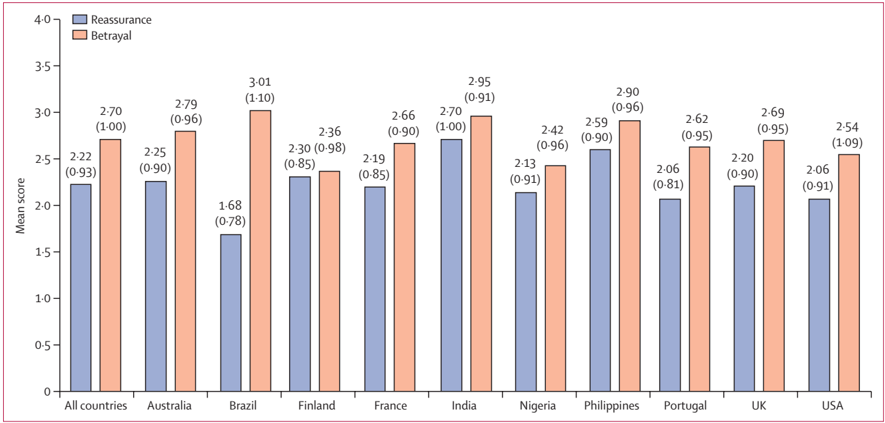
- Respondents rated government responses negatively (mean 14.96 on a 9–18 scale, SD 2.57) and reported greater betrayal (mean 2.7, SD 1.0) than reassurance (mean 2.22, SD 0.93; p<0.0001).
- Climate anxiety and distress were correlated with perceived inadequate government response and associated feelings of betrayal.
Methods
- Cross-sectional online survey of 10,000 children and young people aged 16–25 years in ten countries (Australia, Brazil, Finland, France, India, Nigeria, Philippines, Portugal, the UK, and the USA; 1000 per country), recruited via Kantar between May 18 and June 7, 2021.
- Quota sampling was based on age, gender, and region, with data weighted to OECD statistics for each country by age group, gender, and region.
- Descriptive statistics were calculated for climate anxiety constructs, and Pearson’s correlation analysis explored links between climate-related distress, functioning, negative beliefs, and thoughts/feelings about government response; findings significant at p≤0.001 are reported.
Limitations
- The paper states that non-standardised measures were used because no appropriate standardised measures existed; the study cannot indicate severity compared with normative samples, did not measure mental health outcomes, and used a yes/no/prefer-not-to-say response scale.
- The paper states that equal sample sizes per country were not weighted by population size, so aggregated results are not globally representative; online polling required internet access and sometimes English, and gender was recorded only as male or female.
- Evident from the text: the cross-sectional design cannot establish causality between perceived government response and climate distress.
Model-written summary. Check it against the paper before relying on it.
Integrity signals
Registry
Cites
Statistics
Figures
Verification
Claims the paper makes
12 Valid · 0 Not valid · 19 Not checked · 99 Own results and interpretations
Every source the paper cites for this claim was checked and supports it.
In the paper
“Children are now turning to legal action based on government failure to protect ecosystems, young citizens, and their futures. 26”
What the sources say
- Supportedcites [26] 26 Salas RN, Jacobs W, Perera F. The case of Juliana v. US-children and the health burdens of climate change. N Engl J Med 2019; 380: 2085-87 . source
The supplied Abstract passages describe children filing suit over federal inaction on climate change, which they say violates their constitutional rights. They also connect that inaction to threats to children’s safe environment and to future generations, supporting the citing sentence’s paraphrase. (LLM, conf=0.88)
plainstates a cause- Asserted: passes — The authors put it forward as true.
- Checkable: passes — It can be checked against evidence.
- Load-bearing: unclear — It is unclear whether the paper’s conclusions depend on it.
- Based: passes — The paper gives a reason why it holds.
- Supported
A result the paper reports from its own data — it cites no other source for it, so there is none to check. The quote shows it is in the paper.
In the paper
“in the Global North, Portugal (which had dramatic increases in wildfires since 2017) showed the highest level of worry.”
plainn = 1,000- Asserted: passes — The authors put it forward as true.
- Checkable: passes — It can be checked against evidence.
- Load-bearing: unclear — It is unclear whether the paper’s conclusions depend on it.
- Based: passes — The paper gives a reason why it holds.
A result the paper reports from its own data — it cites no other source for it, so there is none to check. The quote shows it is in the paper.
In the paper
“Respondents rated governmental responses to climate change negatively”
plain- Asserted: passes — The authors put it forward as true.
- Checkable: passes — It can be checked against evidence.
- Load-bearing: passes — The paper’s conclusions depend on it.
- Based: passes — The paper gives a reason why it holds.
A result the paper reports from its own data — it cites no other source for it, so there is none to check. The quote shows it is in the paper.
In the paper
“This distress was associated with beliefs about inadequate governmental response and feelings of betrayal.”
plainstates an association- Asserted: passes — The authors put it forward as true.
- Checkable: passes — It can be checked against evidence.
- Load-bearing: passes — The paper’s conclusions depend on it.
- Based: passes — The paper gives a reason why it holds.
A result the paper reports from its own data — it cites no other source for it, so there is none to check. The quote shows it is in the paper.
In the paper
“More than 45% of respondents said their feelings about climate change negatively affected their daily life and functioning”
- Also stated in: § Results · p. 5 · plain
“More than 45% of respondents said their feelings about climate change negatively affected their daily lives”
plainn = 10- Asserted: passes — The authors put it forward as true.
- Checkable: passes — It can be checked against evidence.
- Load-bearing: passes — The paper’s conclusions depend on it.
- Based: passes — The paper gives a reason why it holds.
- Also stated in: § Results · p. 5 · plain
50 more claims
Create a free account to see all 130 claims and to verify the 1 reference still open.
- Probably not a substantial claim. 51
- It may state two separate claims as one. 41
- The quote only partly states this claim. 6
Claims other papers make about this one
Each is checked against this paper’s own text: does it say what the citing paper says it does?
The source backs part of the claim, not all of it — or backs it for a different population, condition or comparison.
In the citing paper
“Investigations into anxiety about climate change have revealed that it is increasingly common for many people across the globe [9], with large-scale international studies identifying growing concern about climate change [10–12].”
From The relationship between climate change and mental health: a systematic review of the association between eco-anxiety, psychological distress, and symptoms of major affective disorders (2024) · cites this paper as [10]
Experimental — accuracy not yet measuredThe source backs part of the claim, not all of it — or backs it for a different population, condition or comparison.
In the citing paper
“The high prevalence of eco-anxiety [10] - be it at clinical or subclinical levels - underscores the need for broader level changes related to climate change.”
From The relationship between climate change and mental health: a systematic review of the association between eco-anxiety, psychological distress, and symptoms of major affective disorders (2024) · cites this paper as [10]
Experimental — accuracy not yet measuredThe source backs part of the claim, not all of it — or backs it for a different population, condition or comparison.
In the citing paper
“and varied understandings and experiences of climate change have differing impacts on the relationship with mental health [10, 12].”
From The relationship between climate change and mental health: a systematic review of the association between eco-anxiety, psychological distress, and symptoms of major affective disorders (2024) · cites this paper as [10]
Experimental — accuracy not yet measuredThe source backs part of the claim, not all of it — or backs it for a different population, condition or comparison.
In the citing paper
“A global survey of 10,000 young people (16-25) across 10 countries found: (1) 75% were frightened about the future; (2) 84% were moderately worried; (3) 59% were very or extremely worried; and (4) 45%+ reported climate change-related feelings negatively affected their daily life and functioning [21].”
From Climate Distress: A Review of Current Psychological Research and Practice (2023) · cites this paper as [21]
Experimental — accuracy not yet measuredThe source backs part of the claim, not all of it — or backs it for a different population, condition or comparison.
In the citing paper
“An overall lack of trust in government was also identified, with a wide belief that the government response to climate change will continue to be inadequate [21].”
From Climate Distress: A Review of Current Psychological Research and Practice (2023) · cites this paper as [21]
Experimental — accuracy not yet measured
21 more claims about this paper
Create a free account to see every claim other papers make about this one.
Self-check
Percentages, sums and reported differences re-computed from the paper’s own numbers.
Rated minor: it would not touch a result — a value no result rests on, a p-value that stays on the same side of the significance level, or a conflict that is clerical, resolved elsewhere in the paper, or outside its own findings.
In the paper
“15 543 people began the survey and 10 000 (68%) completed it.”
Reported 68 · recomputed 64.337644
Citations
Cites
Mental health of young people: A global public-health challenge
Patel, V., Flisher, A. J., Hetrick, S., & McGorry, P. (2007) · The Lancet · doi:10.1016/s0140-6736(07)60368-7 · Cited by 3,126 · cited 2×
“23 Children facing a future severely damaged by climate change will need support.”
Stress and Health: Psychological, Behavioral, and Biological Determinants
Schneiderman, N., Ironson, G., & Siegel, S. D. (2005) · Annual Review of Clinical Psychology · doi:10.1146/annurev.clinpsy.1.102803.144141 · Cited by 2,252 · cited 2×
“22 Exposure to chronic stress in childhood has a long-lasting impact and increases the risk of developing mental health problems.”
Development and validation of a measure of climate change anxiety
Clayton, S., & Karazsia, B. T. (2020) · Journal of Environmental Psychology · doi:10.1016/j.jenvp.2020.101434 · Cited by 1,196
Self-citationAnxiety and the Ecological Crisis: An Analysis of Eco-Anxiety and Climate Anxiety
Pihkala, P. (2020) · Sustainability · doi:10.3390/su12197836 · Cited by 978 · cited 2×
“In threatening and uncertain situations such as the climate crisis, this response can be seen as what is sometimes referred to as practical anxiety 1,4 because it has the beneficial effect of leading people to reassess their behaviour in order to respond appropriately.”
Self-citationMoral Injury: An Integrative Review
Griffin, B. J., Purcell, N., Burkman, K., Litz, B. T., Bryan, C. J., Schmitz, M., Villierme, C., Walsh, J., & Maguen, S. (2019) · Journal of Traumatic Stress · doi:10.1002/jts.22362 · Cited by 752 · cited 2×
“28 This might include an awareness of or failure to prevent harmful unethical behaviour.”
Stanley, S. K., Hogg, T. L., Leviston, Z., & Walker, I. (2021) · The Journal of Climate Change and Health · doi:10.1016/j.joclim.2021.100003 · Cited by 715
Anxiety, worry, and grief in a time of environmental and climate crisis: a narrative review
Ojala, M., Cunsolo, A., Ogunbode, C. A., & Middleton, J. (2021) · Annual Review of Environment and Resources · doi:10.1146/annurev-environ-012220-022716 · Cited by 670
The case for systems thinking about climate change and mental health
Berry, H. L., Waite, T. D., Dear, K. B. G., Capon, A. G., & Murray, V. (2018) · Nature Climate Change · doi:10.1038/s41558-018-0102-4 · Cited by 485 · cited 2×
“Changing climate and weather-related disasters have diverse impacts, both direct (eg, destruction and trauma) and indirect (eg, strained personal and public resources, interrupted community functioning), 2 as well as resulting in climate anxiety.”
Eco-Anxiety and Environmental Education
Pihkala, P. (2020) · Sustainability · doi:10.3390/su122310149 · Cited by 475
Self-citationThe Hogg Eco-Anxiety Scale: Development and Validation of a Multidimensional Scale
(2021) · doi:10.31219/osf.io/rxudb · Cited by 465
Research works printed but not linked: 4
- 11 Jensen T. Ecologies of guilt in environmental rhetorics. Cham: Palgrave Macmillan, 2019.
- 18 UNICEF. One billion children at 'extremely high risk' of the impacts of the climate crisis. Aug 20, 2021. https://www.unicef.org. uk/press-releases/onebillion-children-at-extremely-high-risk-of-theimpacts-of-the-climate-crisis-unicef (accessed Sept 5, 2021).
- 27 Weintrobe S. Psychological roots of the climate crisis: neoliberal exceptionalism and the culture of uncare. New York, NY: Bloomsbury Academic, 2021.
- 32 Mavronicola N. Torture, inhumanity and degradation under article 3 of the ECHR: absolute rights and absolute wrongs. Oxford: Bloomsbury Publishing, 2021.
Cited by
Items 301–400 of 2,164
Higher education in Nordic countries: analyzing the construction of policy futures
Kallo, J., & Välimaa, J. (2024) · Higher Education · doi:10.1007/s10734-024-01280-4 · Cited by 28
“In the public realm, anxiety continues to grow as governments worldwide fail to seriously consider alarming projections and act coherently and urgently to solve global problems (e.g., Hickman et al., 2021).”
Young people need experiences that boost their mental health
Fuligni, A. J., & Galván, A. (2022) · Nature · doi:10.1038/d41586-022-03172-y · Cited by 19
Commentary: Three tasks for eco‐anxiety research – a commentary on Thompson et al. (2021)
Pihkala, P. (2021) · Child and Adolescent Mental Health · doi:10.1111/camh.12529 · Cited by 26
Self-citationMohamed, M., Amin, S., Lever, E., Montini, A., Machida, K., Rajagopalan, S., Costello, A. M. D. L., McGushin, A., Jennings, B., Benoit, L., et al. (2025) · The Lancet Planetary Health · doi:10.1016/s2542-5196(25)00061-0 · Cited by 32
“37,38 We also found few studies linking climate change to children’s risk of contracting neglected tropical diseases and malaria.”
Zhang, X., Mori, Y., Abio, A., Kafami, Z., Gilbert, S., Grimland, M., Bezborodovs, N., Yunus, W. M. A. W. M., Silwal, S., Westerlund, M., et al. (2025) · BMJ Global Health · doi:10.1136/bmjgh-2025-019267 · Cited by 32
Xue, T., Yu, Y., Ma, R., Ma, M., Li, J., Wang, C., & Yin, Y. (2025) · Advanced Fiber Materials · doi:10.1007/s42765-025-00630-w · Cited by 32
“With more frequent extreme weather, humans are increasingly vulnerable to extreme heat and coldness [3, 4].”
Turcotte‐Tremblay, A., Fortier, G., Bélanger, R. E., Dion, C. B., Gansaonré, R. J., Leatherdale, S. T., & Haddad, S. H. S. (2024) · BMC Public Health · doi:10.1186/s12889-024-20333-y · Cited by 30
“In a study by Hickman et al. [14] of young people (aged 16–25 years) in 10 countries (Australia, Brazil, Finland, France, India, Nigeria, Philippines, Portugal, the United Kingdom, and the United States), 59% of respondents were very or extremely worried and 84% were at least moderately worried.”
BackgroundReconceptualizing conservation
Cooke, S. J., Michaels, S., Nyboer, E. A., Schiller, L., Littlechild, D. B., Hanna, D. E. L., Robichaud, C., Murdoch, A. D., Roche, D. G., Soroye, P., et al. (2022) · PLOS Sustainability and Transformation · doi:10.1371/journal.pstr.0000016 · Cited by 23
Environmental psychology in the Philippines: Growth, challenges and prospects
Aruta, J. J. B. R. (2023) · International Journal of Psychology · doi:10.1002/ijop.12896 · Cited by 20
Ghosh, A. K., Azan, A., Basu, G., Bernstein, J., Gillespie, E., Gordon, L. B., Krishnamurthy, S., LeFrancois, D., Marcus, E. N., Tejani, M., et al. (2024) · Journal of General Internal Medicine · doi:10.1007/s11606-024-08690-1 · Cited by 26
“42 The increase in morbidity related to the changing climate and its effect on planetary health combined with this disruption to medical education needs to be highlighted by medical societies, and plans undertaken to address these important issues affecting the well-being of medical professionals…”
Rodney-Wolf, K., & Schmitz, J. (2025) · Frontiers in Public Health · doi:10.3389/fpubh.2025.1480630 · Cited by 21
Impacts of Antarctic summer sea-ice extremes
Doddridge, E. W., Hobbs, W. R., Auger, M., Boyd, P. W., Chua, S. M. T., Cook, S., Corney, S. P., Emmerson, L., Fraser, A. D., Heil, P., et al. (2025) · PNAS Nexus · doi:10.1093/pnasnexus/pgaf164 · Cited by 38
Mental health of children and young people in the WHO Europe region
Tarasenko, A., Josy, G., Minnis, H., Hall, J., Danese, A., Lau, J. Y. F., Cortese, S., Stringaris, A. K., Redlich, C., & Ougrin, D. (2025) · The Lancet Regional Health - Europe · doi:10.1016/j.lanepe.2025.101459 · Cited by 46
Addressing Students’ Eco-anxiety when Teaching Sustainability in Higher Education
Eriksson, E., Peters, A.-K., Pargman, D. S., Hedin, B., Thorslund, M. L., & Sjoo, S. (2022) · International Conference on ICT for Sustainability (ICT4S) · doi:10.1109/ict4s55073.2022.00020 · Cited by 32
Gu, X., Firdousi, S. F., Obrenovic, B., Afzal, A., Amir, B., & Wu, T. (2023) · Environmental Science and Pollution Research · doi:10.1007/s11356-023-27355-w · Cited by 29
Stanislavská, L. K., Pilař, L., Vogli, X., Hlavsa, T., Kuralová, K., Feenstra, A., Pilařová, L., Hartman, R., & Rosak-Szyrocka, J. (2023) · PeerJ Computer Science · doi:10.7717/peerj-cs.1390 · Cited by 27
“Negative sentiment communicated in relation to the topics of Waste and Climate Change is not necessarily the result of public opposition to communicated CSR activities in these areas but is generally a consequence of negative emotions—such as the sadness and fear that environmental problems elicit in certain parts of…”
BackgroundIsham, A., Morgan, G., & Kemp, A. H. (2023) · Frontiers in Psychology · doi:10.3389/fpsyg.2023.1205991 · Cited by 23
“org future is frightening’ and over half (56%) agreed that ‘humanity is doomed’ (Hickman et al., 2021).”
BackgroundEmbracing climate emotions to advance higher education
Pellitier, P. T., Ng, M., Castaneda, S., Moser, S. C., & Wray, B. (2023) · Nature Climate Change · doi:10.1038/s41558-023-01838-7 · Cited by 25
Self-citationHot brain: practical climate change advice for neurologists
Sisodiya, S. M. (2024) · Practical Neurology · doi:10.1136/pn-2023-003777 · Cited by 17
“38 Some have described the process as part of an individual climate journey.”
BackgroundFekih‐Romdhane, F., Malaeb, D. N., Postigo, Á., Sakr, F., Dabbous, M., Khatib, S. E., Obeïd, S., & Hallit, S. R. (2024) · International Journal of Social Psychiatry · doi:10.1177/00207640231221102 · Cited by 22
“Several researchers have raised the alarm about CCA being a ‘chronic, long-term, and potentially inescapable’ stressor that might have substantial, incremental, and long-lasting detrimental consequences for young people’s mental health (Hickman et al., 2021).”
BackgroundThawing Permafrost Releases Industrial Contaminants into Arctic Communities
Christensen, K. (2024) · Environmental Health Perspectives · doi:10.1289/ehp13998 · Cited by 17
“53 In the face of climate anxiety, 54 Timlin says empowerment to face changes related to thawing permafrost is enormously important to Indigenous peoples ’ well-being and satisfaction with life, as is continuing to practice traditional ways of life, such as observing ceremo-nies and, tothe…”
BackgroundChung, S. J., Lee, H., & Jang, S. J. (2024) · Journal of Advanced Nursing · doi:10.1111/jan.16205 · Cited by 26
“Younger consider climate change and sustainability as serious problems (Hickman et al., 2021 ).”
Ecological Grief, Religious Coping, and Spiritual Crises: Exploring Eco-Spiritual Grief
Pihkala, P. (2024) · Pastoral Psychology · doi:10.1007/s11089-024-01158-3 · Cited by 39
“This can cause anxiety and feelings of power-lessness and helplessness, which are very common eco-emotions in surveys (e.g. Hickman et al., 2021; for an overview, see Pihkala, 2022c).”
Self-citationGaithuma, J., Chor, S., Natukunda, A., Shahleen, P., & Kavle, J. A. (2024) · Maternal and Child Nutrition · doi:10.1111/mcn.13730 · Cited by 25
“African youth are also experiencing climate ‐ induced mental health disorders, including anxiety, depression and trauma, especially those who have suffered from natural disasters or live in areas with high climate vulnerability (FAO, 2023; Hickman et al., 2021).”
Activism as education in and through the youth climate justice movement
Trott, C. D. (2024) · British Educational Research Journal · doi:10.1002/berj.4082 · Cited by 29
What happens when climate change and the mental-health crisis collide?
(2024) · Nature · doi:10.1038/d41586-024-00993-x · Cited by 21
Climate Change and Consumers’ Food Choices towards Sustainability: A Narrative Review
Berti, C., Baglioni, M., Vecchia, A. L., D’Oria, V., Bettocchi, S., & Agostoni, C. V. (2025) · Nutrition Reviews · doi:10.1093/nutrit/nuaf151 · Cited by 21
Conceptualising eco-anxiety using an existential framework
Rehling, J. (2022) · South African Journal of Psychology · doi:10.1177/00812463221130898 · Cited by 27
Wen, T., Zheng, R., Wu, T., Liu, Z., Zhou, M., Syed, T. A., Ghataoura, D. S., & Chen, Y. (2024) · European Journal of Operational Research · doi:10.1016/j.ejor.2024.12.015 · Cited by 27
Herrick, I. R., Lawson, M., & Matewos, A. M. (2025) · Science Education · doi:10.1002/sce.21962 · Cited by 21
Niedzwiedz, C. L., Kankawale, S. M., & Katikireddi, S. V. (2025) · Nature Mental Health · doi:10.1038/s44220-025-00550-z · Cited by 82
Petrescu‐Mag, R. M., Petrescu, D. C., Ivan, A., & Ţenter, A. (2023) · BMC Public Health · doi:10.1186/s12889-023-15353-z · Cited by 30
“However, the percentage of those declared extremely and very worried was higher in the Philippines (84%) and India (68%) than in the UK (49%) and France (58%) [101].”
BackgroundMüller, H., Rehn-Groenendijk, J., & Wasmer, A. (2023) · Frontiers in Psychology · doi:10.3389/fpsyg.2023.1112209 · Cited by 24
“, 2020) as well as due to climate change (Hickman et al., 2021).”
BackgroundClimate Connected: An Immersive VR and PC Game for Climate Change Engagement
Galeote, D. F., Legaki, N.-Z., & Hamari, J. (2023) · Annual Symposium on Computer-Human Interaction in Play · doi:10.1145/3573382.3616053 · Cited by 19
“The target audience was considered to be preferably adolescents and young adults, who tend to be concerned about climate change [25].”
BackgroundBourke, B. C., McCarthy, M. B., & McCarthy, S. N. (2024) · International Journal of Consumer Studies · doi:10.1111/ijcs.13078 · Cited by 26
Aruta, J. J. B. R., Salcedo, S. S., Guilaran, J., & Guinto, R. (2022) · International Review of Psychiatry · doi:10.1080/09540261.2022.2123701 · Cited by 15
“The limited number of licenced individuals who can offer their mental health expertise and services will not be able to keep up with the increasing need for mental health care due to climate-related and climate change-induced distress in the coming years (Hickman et al., 2021; Reyes et al., 2021).”
BackgroundTeaching justice-based environmental sustainability in higher education: generative dialogues
Misiaszek, G. W., & Rodrigues, C. (2023) · Teaching in Higher Education · doi:10.1080/13562517.2023.2214879 · Cited by 19
“…(2023) problematize how HE teaching and HEI structures most frequently have the following two competing, conflictive aspects: ‘recognizing a growing gap between the world their education was designed to prepare them for, and the world they will inherit’ (2023, 987; citing (Hickman et al. 2021)).”
BackgroundLópez-García, L., Latorre, F., Jiménez, M. L. V., & Díaz‐Silveira, C. (2025) · Sustainability · doi:10.3390/su17104543 · Cited by 30
Karl, J. A., & Stanley, S. K. (2024) · Mindfulness · doi:10.1007/s12671-024-02427-1 · Cited by 29
“Unsurprisingly, many people report feeling anxious about climate change, especially among the younger generations (Hickman et al., 2021).”
Saari, M. H., Poulton-Busler, R., & Vladimirova, A. (2024) · The Journal of Environmental Education · doi:10.1080/00958964.2024.2375210 · Cited by 24
“With growing ecoanxiety (Hickman et al., 2021) there has been increased focus on finding creative ways to engage children and young people in climate education (Rautio et al., 2022; Rousell & Cutter-Mackenzie-Knowles, 2020; Tammi et al., 2020).”
Davis, Z., Jarvis, I., Macaulay, R., Johnson, K. A., Williams, N. S. G., Li, J., & Hahs, A. K. (2024) · Environmental Research · doi:10.1016/j.envres.2024.120551 · Cited by 19
Lulewicz-Sas, A., Kinowska, H., Zubek, M., & Danilewicz, D. (2025) · Central European Management Journal · doi:10.1108/cemj-08-2024-0242 · Cited by 34
Appréhender l’éco-anxiété : une approche clinique et phénoménologique
Jalin, H., Chandès, C., Congard, A., & Boudoukha, A. H. (2022) · Psychologie Française · doi:10.1016/j.psfr.2022.03.003 · Cited by 28
Croasdale, K., Grailey, K., Jennings, N., Mole, J., & Lawrance, E. L. (2023) · The Journal of Climate Change and Health · doi:10.1016/j.joclim.2023.100253 · Cited by 16
Lycett, K., Cleary, J., Calder, R., Frykberg, G., Hollonds, A., Dakin, P., Russell, S. E., Demaio, S., & Goldfeld, S. R. (2023) · The Medical Journal of Australia · doi:10.5694/mja2.52145 · Cited by 16
“…six children live in poverty, 5 one in four experience overweight or obesity, 6 three in five adults report experiencing some form of child maltreatment, 7 one in two adolescents are very or extremely worried about climate change, 8 and one in seven children and adolescents have a mental disorder.”
BackgroundAyalon, L., Ulitsa, N., AboJabel, H., & Engdau‐Vanda, S. (2023) · Journal of Applied Gerontology · doi:10.1177/07334648231212279 · Cited by 16
“However, on the other hand, research has shown that younger people and children are particularly susceptible to climate anxiety brought by fears about the impact of climate change on our lives (Hickman et al., 2021; L´eger-Goodes et al., 2022).”
BackgroundÇimşir, E., Şahin, M. D., & Akdoğan, R. (2024) · Cambridge Prisms Global Mental Health · doi:10.1017/gmh.2024.20 · Cited by 19
“…implications of the climate crisis, research regarding the anxiety experienced in relation to climate change and/or similar environmental issues has been accumulating (e.g. Dodds, 2021; Hickman et al., 2021; Stanley et al., 2021; Aruta and Guinto, 2022; Schwartz et al., 2023; Reyes et al., 2023).”
BackgroundHow to communicate about climate change with patients
Kotcher, J., Patel, L. H., Wheat, S., Philipsborn, R. P., & Maibach, E. W. (2024) · BMJ · doi:10.1136/bmj-2024-079831 · Cited by 20
“6 For example, in the wake of a local climate related disaster, physicians can inquire about and consider mental health impacts.”
BackgroundGarfin, D. R., & Wong‐Parodi, G. (2024) · The Lancet Planetary Health · doi:10.1016/s2542-5196(24)00100-1 · Cited by 18
Geraci, A., Giordano, G., Cucinella, N., Cannavò, M., Cavarretta, M. V., Alesi, M., Caci, B., D’Amico, A., Gentile, A., Iannello, N. M., et al. (2024) · Current Psychology · doi:10.1007/s12144-024-06263-3 · Cited by 16
“…have warned that the psychosocial consequences of climate change are impactful across populations (Abbass et al., 2022; Cianconi et al., 2023; Hickman et al., 2021), a line of research has stressed the importance of young individuals in this context, as they represent potential future…”
Amin, S. M., El‐Monshed, A. H., Khedr, M. A., Morsy, O. M. I., & El‐Ashry, A. M. (2024) · Journal of Advanced Nursing · doi:10.1111/jan.16606 · Cited by 19
Mobilising hope to overcome climate despair
Frumkin, H., Cook, S., Dobson, J., & Abbasi, K. (2022) · BMJ · doi:10.1136/bmj.o2411 · Cited by 18
A psychometric evaluation of the Climate Change Anxiety ScalePreprint
Feather, G., & Williams, M. N. (2022) · doi:10.31234/osf.io/uzf7j · Cited by 15
Voltmer, K., & von Salisch, M. (2023) · Sustainability · doi:10.3390/su16010134 · Cited by 19
Making people aware of eco-innovations can decrease climate despair
Neale, C., Austin, M. M. K., Roe, J. J., & Converse, B. A. (2023) · Climatic Change · doi:10.1007/s10584-023-03635-9 · Cited by 16
“…addressing important questions related to climate hopelessness—especially descriptive research that aims to document the scope of the problem (e.g., Hickman et al. 2021) and correlational research that identifies both positive and negative dispositional predictors (see Ojala 2023 for a…”
InfluentialMortier, P., Yang, X., Altwaijri, Y. A., Holdcraft, J. A., Lee, S., Sampson, N. A., Albor, Y., AlHadi, A. N., Alonso, J., Al-Saud, N. K., et al. (2025) · Psychiatry Research · doi:10.1016/j.psychres.2025.116555 · Cited by 19
“Data was multiply imputed, m = 30. b All univariable models controlled for person-year and survey year. c None of the interactions of lifetime suicide plan with each of the included predictor variables in predicting the transition from lifetime ideation to attempt were significant (see…”
Browne, S., Mullen, A., Mulholland, B., Lo, C., & Ruttledge, A. (2023) · Journal of Human Nutrition and Dietetics · doi:10.1111/jhn.13220 · Cited by 20
Bleda, M., & Pinkse, J. (2023) · Business & Society · doi:10.1177/00076503231219692 · Cited by 24
“…as floods, storms, and bushfires may elicit highly intense emotions such as fear, noticing or receiving information on more gradual changes such as a sea-level rise can lead to moderate or less intense but more enduring emotional states such as climate anxiety or sadness (Hickman et al., 2021).”
Levy, S. R., Gopang, M., Ramírez, L. F., Bernardo, A. B. I., Ruck, M. D., & Sternisko, A. (2023) · Social Issues and Policy Review · doi:10.1111/sipr.12103 · Cited by 32
How the public understands and reacts to the term “climate anxiety”
Gregersen, T., Doran, R., Ogunbode, C. A., & Böhm, G. (2024) · Journal of Environmental Psychology · doi:10.1016/j.jenvp.2024.102340 · Cited by 17
Asbrand, J., Spirkl, N., Reese, G., Spangenberg, L., Shibata, N., & Dippel, N. (2024) · Anxiety Stress & Coping · doi:10.1080/10615806.2024.2388255 · Cited by 25
“…direct pathways (e.g., through increasing intensity of natural disasters) and indirect pathways (e.g., through slow increases in temperature and sea levels, disrupted infrastructure and societies, and a general feeling of threat) between our planet’s health and mental health exist (Clayton, 2021).”
Ecological Grief in Filipino Youth
Aruta, J. J. B. R. (2022) · Journal of Loss and Trauma · doi:10.1080/15325024.2022.2108204 · Cited by 14
“Hence, the alarming findings on the Filipino youth as the most ecologically grieving population in the world (Hickman et al., 2021) is a valid response to the actual threats of climate change and other ecological losses that they face as they are the future adults who will have to witness the more…”
BackgroundRethinking chemical engineering education
Gong, J., Shallcross, D., Yan, J., et al. (2024) · Nature Chemical Engineering · doi:10.1038/s44286-024-00029-1 · Cited by 14
Acceptance and commitment therapy as an approach for working with climate distress
Williams, M. O., & Samuel, V. M. (2024) · The Cognitive Behaviour Therapist · doi:10.1017/s1754470x23000247 · Cited by 13
“It is common for people to report feeling hopeless, helpless and powerless about climate and ecological decline (Hickman et al ., 2021; Minor et al ., 2019).”
Doherty, T., Artman, S., Homan, J., Keluskar, J., & White, K. E. (2024) · The Cognitive Behaviour Therapist · doi:10.1017/s1754470x24000278 · Cited by 16
“…(e.g. Buzzell and Chalquist, 2009; Jordan and Hinds, 2016), research on the mental health impacts of climate change (e.g. Crandon et al ., 2022; Hickman et al ., 2021), relationships between environmental justice and identity (Ceaser, 2015), and relationships between environmental distress and…”
InfluentialKinder- und Jugendgesundheit in der Klimakrise
Eichinger, M., Andreas, M., Hoeppe, A., Nisius, K., & Rink, K. (2023) · Monatsschrift Kinderheilkunde · doi:10.1007/s00112-022-01685-4 · Cited by 14
Climate Change Cognition, Affect, and Behavior in Youth: A Scoping Review
Tapia‐Echanove, M., Bloch‐Atefi, A., Hanson‐Easey, S., Oswald, T. K., & Eliott, J. (2025) · Wiley Interdisciplinary Reviews Climate Change · doi:10.1002/wcc.70000 · Cited by 25
“As the threat of climate change becomes more evident, youth concern increases; a large study found that 84% of young people were at least moderately worried, and the perception of inadequate government action is contributing to climate distress (Hickman et al. 2021).”
Karami, R. (2023) · Environment Development and Sustainability · doi:10.1007/s10668-023-03215-y · Cited by 13
“…al., 2015) were environmentally oriented (Panno et al., 2018), while it was observed that young people who have to live with a lower share of carbon intending to less contribute to climate change disaster express more concerns about these changes (Hickman et al., 2021; Sciberras & Fernando, 2022).”
Poetry therapy and Eco-Anxiety – a case study
Raile, P. (2023) · Journal of Poetry Therapy · doi:10.1080/08893675.2023.2203833 · Cited by 19
“…paper de fi ne Eco-Anxiety based on the prior work of several authors in this fi eld like Clayton (2020), Clayton and Karazsia (2020), Hickman (2020), Hickman et al., 2021, Orange (2016), Pihkala (2020a, 2020b), Raile and Rieken (2021), Raile (2023), Taylor (2020) etc. as follows: Eco-Anxiety is…”
BackgroundTrott, C. D., Weinberg, A. E., Frame, S. M., Jean-Pierre, P., & Even, T. L. (2023) · International Journal of Behavioral Development · doi:10.1177/01650254231188661 · Cited by 26
“…study conducted with young people (ages 16–25 years), 59% were very or extremely worried about climate change, and 45% reported that their climate change emotions (e.g., sadness, anxiety, anger, powerlessness) negatively impacted their everyday life and ability to function (Hickman et al., 2021).”
BackgroundSpitzer, J. E., Grapsas, S., Poorthuis, A. M. G., & Thomaes, S. C. E. (2023) · International Journal of Behavioral Development · doi:10.1177/01650254231190919 · Cited by 18
“So far, relevant research in the field has focused almost exclusively on adults (e.g., Brosch, 2021; Mah et al., 2020; Moser, 2007; Myers et al., 2012), whereas adolescents are particularly emotionally involved in climate change (Hickman et al., 2021; Hufnagel, 2017; Ojala, 2023).”
BackgroundOnyekuru, A. N., Marchant, R., Touza, J., Ume, C. O., Chiemela, C., Onyia, C., Eboh, E. C., & Eze, C. C. (2023) · Environment Development and Sustainability · doi:10.1007/s10668-023-03474-9 · Cited by 17
“Available evidence showed that the West Africa subregion is already affected by various ecological challenges, which are directly or indirectly connected with change in climate (Hickman, Marks, Pihkala, et al., 2021; Ume, Nuppenau, Domptail 2022).”
Minding our futures: Understanding climate-related mental wellbeing using systems science
Patrick, R., Noy, S., Henderson‐Wilson, C., Hayward, J., Allender, S. E., Gunasiri, H., Bruges, N., Snell, T., & Capetola, T. (2023) · Health & Place · doi:10.1016/j.healthplace.2023.103134 · Cited by 13
Jones, L., Parsons, K. J., Halstead, F., & Wolstenholme, J. (2023) · Children & Society · doi:10.1111/chso.12819 · Cited by 16
Adolescent mental distress in the wake of climate disasters
Auchincloss, A. H., Ruggiero, D. A., Donnelly, M. T., Chernak, E. D., & Kephart, J. L. (2024) · Preventive Medicine Reports · doi:10.1016/j.pmedr.2024.102651 · Cited by 24
“Additionally adolescents have the cognitive and emotional maturity to recognize that climate-related events they are currently experiencing are likely to become more severe and more frequent and could upend their future (Hickman et al., 2021; Lawson et al., 2019).”
BackgroundArnot, G., Pitt, H., McCarthy, S., Warner, E., & Thomas, S. L. (2024) · Health Promotion International · doi:10.1093/heapro/daae023 · Cited by 19
“Empathy in children and young people can be observed across other studies relating to climate (Hickman et al ., 2021), as well as in other public health issues such as gambling (Pitt et al ., 2022).”
BackgroundHockey, J. A. (2024) · Journal of Youth Studies · doi:10.1080/13676261.2024.2370275 · Cited by 18
“However, these and other scholars also argue that prioritising ecoanxiety individualises the burden of climate change (Hickman 2021) and fails to investigate what young people experience as citizen-consumers.”
Atta, M. H. R., El‐Sayed, A. A. I., Taleb, F., Elsayed, S. M., Shurafi, S. O. A., Altaheri, A. T., almoliky, M. A., & Asal, M. G. R. (2024) · Journal of Advanced Nursing · doi:10.1111/jan.16513 · Cited by 19
Sustainability in Dentistry: An Overview for Oral Healthcare Team Members
Hackley, D. M., & Luca, J. (2024) · Journal of the California Dental Association · doi:10.1080/19424396.2024.2422150 · Cited by 26
Soomro, S., Zhou, D., & Charan, I. A. (2024) · Cambridge Prisms Global Mental Health · doi:10.1017/gmh.2024.65 · Cited by 16
“…shown that young children are most affected by the indirect consequences of climate change, such as environmental anxiety, which can harm social and psychological health and well-being and may exacerbate the mental health problems of children who already have these problems (Hickman et al., 2021).”
Children and Climate Anxiety: An Ecofeminist Practical Theological Perspective
Mercer, J. A. (2022) · Religions · doi:10.3390/rel13040302 · Cited by 19
Lam, S., & Trott, C. D. (2022) · Educação Sociedade & Culturas · doi:10.24840/esc.vi62.478 · Cited by 17
Clayton, S., Pihkala, P., Wray, B., et al. (2022) · Research Square · doi:10.21203/rs.3.rs-2256929/v1 · Cited by 13
Self-citationShrestha, T., Cassarino, M., Foley, S., & Blasi, Z. D. (2025) · Journal of Environmental Psychology · doi:10.1016/j.jenvp.2025.102556 · Cited by 20
Rafa, N., Zabala, A., & Galway, L. P. (2025) · People and Nature · doi:10.1002/pan3.70090 · Cited by 23
“For example, solastalgia often reflects powerlessness amid anthropogenic harm (Askland & Bunn, 2018 ), whereas eco-anxiety arises TABLE 1 Common concepts often used in conjunction with solastalgia. from anticipatory stress about global ecological collapse (Hickman et al., 2021 ).”
Elson, B., Steinbach, I., & Hillson, R. (2025) · Anaesthesia · doi:10.1111/anae.70023 · Cited by 14
“This is re fl ected in patient preferences, with younger generations particularly concerned about climate change [35]; a 2021 survey of 40 young people aged 10 – 21 y revealed that, if given the choice, 90% would choose an intravenous over inhalational induction given the lower environmental impact…”
Jackson, J. E., Rawson, R., Colman, R. D., & Kotera, Y. (2025) · Environmental Education Research · doi:10.1080/13504622.2025.2588268 · Cited by 17
Boncu, Ș., Prundeanu, O., Holman, A. C., & Popușoi, S. A. (2022) · International Journal of Environmental Research and Public Health · doi:10.3390/ijerph192417038 · Cited by 15
“A recent global survey of 10,000 young people from ten countries indicated that 59% were extremely worried about climate change, and 75% considered their future to be frightening [1].”
BackgroundEco-psychology: a critical paradigm in the climate emergency
Rhodes, P., & Dunk, J. H. (2023) · Australian Psychologist · doi:10.1080/00050067.2022.2157240 · Cited by 17
“In a landmark study Hickman et al. (2021) surveyed 10,000 young people in 10 countries and found that 60% were extremely worried about climate change, with 50% feeling sad, angry and powerless.”
BackgroundA framework for climate change education in critical geography
Fuchs, T. T. (2023) · Geography · doi:10.1080/00167487.2023.2217632 · Cited by 12
Adaptation to climate change: EU policy on a Mission towards transformation?
Rayner, T. (2023) · npj Climate Action · doi:10.1038/s44168-023-00068-z · Cited by 12
“Whilst these make for unsettling, indeed frightening times 5 , adaptation to climate impacts also presents some important opportunities — to reform unhelpful, ‘ maladaptive ’ policies in particular sectors, address entrenched societal inequalities, and widen the range of voices involved in key…”
BackgroundEmbedding climate change education into higher-education programmes
Padhra, A., & Tolouei, E. (2023) · Nature Climate Change · doi:10.1038/s41558-023-01847-6 · Cited by 12
Supporting young people as genuine political actors in climate decision-making
Arnot, G., Pitt, H., McCarthy, S., Collin, P. J., & Thomas, S. L. (2023) · Health Promotion International · doi:10.1093/heapro/daad148 · Cited by 12
Health impacts of greenhouse gases emissions on humans and the environment
Kiehbadroudinezhad, M., Merabet, A., & Hosseinzadeh-Bandbafha, H. (2024) · Elsevier eBooks · doi:10.1016/b978-0-443-19231-9.00011-9 · Cited by 30
Engaging with Climate Grief, Guilt, and Anger in Religious Communities
Pihkala, P. (2024) · Religions · doi:10.3390/rel15091052 · Cited by 13
Self-citationHelm, S., Kemper, J. A., White, S., & Dean, D. (2024) · Environmental Sociology · doi:10.1080/23251042.2024.2408779 · Cited by 14
“Some people may expect natural resources to become unavailable to sustain a comfortable or adequate lifestyle, for their future self or children (Hickman et al. 2021).”
Workplace eco-anxiety: a scoping review of what we know and how to mitigate the consequences
Ayassamy, P., Francoeur, V., & Paillé, P. (2024) · Frontiers in Sustainability · doi:10.3389/frsus.2024.1371737 · Cited by 16
Aruta, J. J. B. R. (2024) · Current Psychology · doi:10.1007/s12144-024-07150-7 · Cited by 18
“Fifth, as emerging evidence began to show the importance of studying climate anxiety in different countries (Hickman et al., 2021), there is value in investigating how climate anxiety comes into play in the environmental concern and behavioral engagement in climate change relationships in different…”
Buswell, G., Williams, M. O., Marks, E. M., & Morgan, G. (2025) · Cogent Mental Health · doi:10.1080/28324765.2025.2449878 · Cited by 15
“Hickman et al. (2021) found that 45% of a sample of 10,000 young people across 10 countries reported negative impacts on daily functioning due to worries about climate change.”
InfluentialSelf-citation
Metadata
- Authors
- Hickman, C., Marks, E., Pihkala, P., Clayton, S., Lewandowski, R. E., Mayall, E. E., Wray, B., Mellor, C., & van Susteren, L.
- Affiliations
- University of Bath (GB)
- University of Helsinki (FI)
- College of Wooster (US)
- NYU Langone Health (US)
- University of East Anglia (GB)
- London School of Hygiene & Tropical Medicine (GB)
- Oxford Health NHS Foundation Trust (GB)
- Corresponding author
- Hickman, Caroline
- Venue
- The Lancet Planetary Health
- Publisher
- Elsevier BV
- Published
- 2021-12
- Volume
- 5
- Issue
- 12
- Pages
- e863-e873
- ISSN
- 2542-5196 (ISSN-L)
- OpenAlex
- W4200005759
- Semantic Scholar
- 4a876cc35863ba593aacf58fe6a24773b3cb9c29
- Cited by
- 2,324
- References
- 27
- Citations by year
- 2026: 566 · 2025: 652 · 2024: 566 · 2023: 364 · 2022: 170 · 2021: 4
- FWCI
- 382.19
- Type
- journal article
- Language
- en
- Open access
- gold
- doi.org
- Licence
- cc-by-nc-nd
- www.elsevier.com/tdm/userlicense/1.0/ (tdm)
- www.elsevier.com/legal/tdmrep-license (tdm)
- creativecommons.org/licenses/by-nc-nd/4.0/ (vor)
- Locations
- The Lancet Planetary Health (publishedVersion, cc-by-nc-nd)
- PubMed (publishedVersion)
- DOAJ (DOAJ: Directory of Open Access Journals) (submittedVersion, cc-by-sa)
- Työväentutkimus Vuosikirja (submittedVersion)
- Topics
- Social Sciences › Sociology and Political Science › Climate Change Communication and Perception
- Physical Sciences › Environmental Science › Health, Toxicology and Mutagenesis › Climate Change and Health Impacts
- Social Sciences › Psychology › Clinical Psychology › COVID-19 and Mental Health
- Keywords
- climate anxiety, children and young people, climate change, betrayal, climate change beliefs, daily functioning, global survey
- MeSH terms
- Adolescent, Adult, Anxiety, Australia, Child, Government, Humans, Surveys and Questionnaires, Young Adult, Climate Change
About these checks
Registry, retraction, Cites and statistics results are computed, not judged, with one exception: a printed reference that no index lists is read once by a model before it counts as a citation error. Claims are extracted by a model and kept only when their quote appears verbatim in the text; each cited source is then checked, with a model’s help, for whether it says what the claim relies on. Those verdicts can be wrong — read the claim’s quote and the cited source before relying on one.
The claim verdicts this report counts are experimental: their accuracy is not yet measured.
A language model drew the claims from the paper on 2026-10-10, under version 3 of the claim definition (model deepseek-v4.1-flash, prompt extract-v3).
A second model labelled each claim on 2026-10-10 (model jev-1.13-20260917, definition revision gold-guideline-v0.2).
Cited sources are checked with a language model’s help (gpt-6-sol).
Statistics and arithmetic are recomputed, not judged.
Confidence bands are shown only for fields calibrated on our annotated test set. None is calibrated yet, so no band is shown.
What counts as a claim ›How we measure confidence ›How we check this ›
Are you an author, or do you see a problem with this page? Request a review
Data sources
Bibliographic data: Semantic Scholar, OpenAlex, Crossref.
Contains information from the Semantic Scholar Academic Graph Datasets, made available under the ODC Attribution License (ODC-BY 1.0).
Semantic Scholar’s data is described in: Kinney, R., et al. (2023). The Semantic Scholar Open Data Platform. arXiv:2301.10140.
