

Climate anxiety in children and young people and their beliefs about government responses to climate change: a global survey
Open accessThe DOI matches its Crossref record; 27 of the 30 references it cites were found in a registry or an index, and 1 are not checked yet; 14 of the 48 sources its claims cite were checked for support.
Abstract
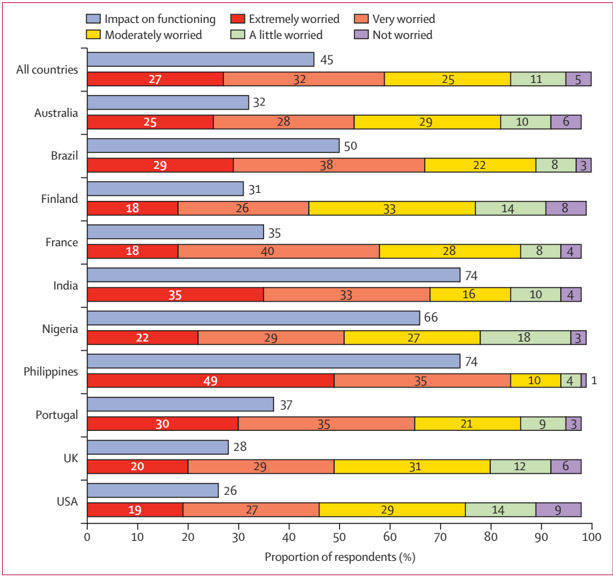
Background Climate change has important implications for the health and futures of children and young people, yet they have little power to limit its harm, making them vulnerable to climate anxiety. This is the first large-scale investigation of climate anxiety in children and young people globally and its relationship with perceived government response. Methods We surveyed 10 000 children and young people (aged 16-25 years) in ten countries (Australia, Brazil, Finland, France, India, Nigeria, Philippines, Portugal, the UK, and the USA; 1000 participants per country). Invitations to complete the survey were sent via the platform Kantar between May 18 and June 7, 2021. Data were collected on participants' thoughts and feelings about climate change, and government responses to climate change. Descriptive statistics were calculated for each aspect of climate anxiety, and Pearson's correlation analysis was done to evaluate whether climate-related distress, functioning, and negative beliefs about climate change were linked to thoughts and feelings about government response. Findings Respondents across all countries were worried about climate change (59% were very or extremely worried and 84% were at least moderately worried). More than 50% reported each of the following emotions: sad, anxious, angry, powerless, helpless, and guilty. More than 45% of respondents said their feelings about climate change negatively affected their daily life and functioning, and many reported a high n…
Verified 2026-11-25 · 1 reference not checked yet
Overview
CoChat Summary
TL;DR
This global survey of 10,000 people aged 16–25 across ten countries found widespread climate anxiety and distress, with many reporting negative functional impacts. Climate distress was correlated with negative perceptions of government responses and feelings of betrayal.
Key findings
- 59% were very or extremely worried about climate change and 84% were at least moderately worried; more than 50% reported feeling sad, anxious, angry, powerless, helpless, and guilty.
- More than 45% said their feelings about climate change negatively affected their daily life and functioning; 75% said the future is frightening and 83% said people have failed to take care of the planet.
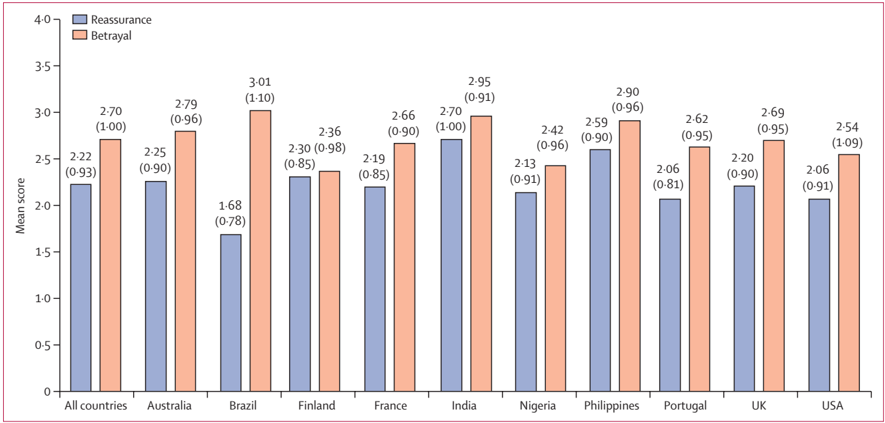
- Respondents rated government responses negatively (mean 14.96 on a 9–18 scale, SD 2.57) and reported greater betrayal (mean 2.7, SD 1.0) than reassurance (mean 2.22, SD 0.93; p<0.0001).
- Climate anxiety and distress were correlated with perceived inadequate government response and associated feelings of betrayal.
Methods
- Cross-sectional online survey of 10,000 children and young people aged 16–25 years in ten countries (Australia, Brazil, Finland, France, India, Nigeria, Philippines, Portugal, the UK, and the USA; 1000 per country), recruited via Kantar between May 18 and June 7, 2021.
- Quota sampling was based on age, gender, and region, with data weighted to OECD statistics for each country by age group, gender, and region.
- Descriptive statistics were calculated for climate anxiety constructs, and Pearson’s correlation analysis explored links between climate-related distress, functioning, negative beliefs, and thoughts/feelings about government response; findings significant at p≤0.001 are reported.
Limitations
- The paper states that non-standardised measures were used because no appropriate standardised measures existed; the study cannot indicate severity compared with normative samples, did not measure mental health outcomes, and used a yes/no/prefer-not-to-say response scale.
- The paper states that equal sample sizes per country were not weighted by population size, so aggregated results are not globally representative; online polling required internet access and sometimes English, and gender was recorded only as male or female.
- Evident from the text: the cross-sectional design cannot establish causality between perceived government response and climate distress.
Model-written summary. Check it against the paper before relying on it.
Integrity signals
Registry
Cites
Statistics
Figures
Verification
Claims the paper makes
12 Valid · 0 Not valid · 19 Not checked · 99 Own results and interpretations
Every source the paper cites for this claim was checked and supports it.
In the paper
“Children are now turning to legal action based on government failure to protect ecosystems, young citizens, and their futures. 26”
What the sources say
- Supportedcites [26] 26 Salas RN, Jacobs W, Perera F. The case of Juliana v. US-children and the health burdens of climate change. N Engl J Med 2019; 380: 2085-87 . source
The supplied Abstract passages describe children filing suit over federal inaction on climate change, which they say violates their constitutional rights. They also connect that inaction to threats to children’s safe environment and to future generations, supporting the citing sentence’s paraphrase. (LLM, conf=0.88)
plainstates a cause- Asserted: passes — The authors put it forward as true.
- Checkable: passes — It can be checked against evidence.
- Load-bearing: unclear — It is unclear whether the paper’s conclusions depend on it.
- Based: passes — The paper gives a reason why it holds.
- Supported
A result the paper reports from its own data — it cites no other source for it, so there is none to check. The quote shows it is in the paper.
In the paper
“in the Global North, Portugal (which had dramatic increases in wildfires since 2017) showed the highest level of worry.”
plainn = 1,000- Asserted: passes — The authors put it forward as true.
- Checkable: passes — It can be checked against evidence.
- Load-bearing: unclear — It is unclear whether the paper’s conclusions depend on it.
- Based: passes — The paper gives a reason why it holds.
A result the paper reports from its own data — it cites no other source for it, so there is none to check. The quote shows it is in the paper.
In the paper
“Respondents rated governmental responses to climate change negatively”
plain- Asserted: passes — The authors put it forward as true.
- Checkable: passes — It can be checked against evidence.
- Load-bearing: passes — The paper’s conclusions depend on it.
- Based: passes — The paper gives a reason why it holds.
A result the paper reports from its own data — it cites no other source for it, so there is none to check. The quote shows it is in the paper.
In the paper
“This distress was associated with beliefs about inadequate governmental response and feelings of betrayal.”
plainstates an association- Asserted: passes — The authors put it forward as true.
- Checkable: passes — It can be checked against evidence.
- Load-bearing: passes — The paper’s conclusions depend on it.
- Based: passes — The paper gives a reason why it holds.
A result the paper reports from its own data — it cites no other source for it, so there is none to check. The quote shows it is in the paper.
In the paper
“More than 45% of respondents said their feelings about climate change negatively affected their daily life and functioning”
- Also stated in: § Results · p. 5 · plain
“More than 45% of respondents said their feelings about climate change negatively affected their daily lives”
plainn = 10- Asserted: passes — The authors put it forward as true.
- Checkable: passes — It can be checked against evidence.
- Load-bearing: passes — The paper’s conclusions depend on it.
- Based: passes — The paper gives a reason why it holds.
- Also stated in: § Results · p. 5 · plain
50 more claims
Create a free account to see all 130 claims and to verify the 1 reference still open.
- Probably not a substantial claim. 51
- It may state two separate claims as one. 41
- The quote only partly states this claim. 6
Claims other papers make about this one
Each is checked against this paper’s own text: does it say what the citing paper says it does?
The source backs part of the claim, not all of it — or backs it for a different population, condition or comparison.
In the citing paper
“Investigations into anxiety about climate change have revealed that it is increasingly common for many people across the globe [9], with large-scale international studies identifying growing concern about climate change [10–12].”
From The relationship between climate change and mental health: a systematic review of the association between eco-anxiety, psychological distress, and symptoms of major affective disorders (2024) · cites this paper as [10]
Experimental — accuracy not yet measuredThe source backs part of the claim, not all of it — or backs it for a different population, condition or comparison.
In the citing paper
“The high prevalence of eco-anxiety [10] - be it at clinical or subclinical levels - underscores the need for broader level changes related to climate change.”
From The relationship between climate change and mental health: a systematic review of the association between eco-anxiety, psychological distress, and symptoms of major affective disorders (2024) · cites this paper as [10]
Experimental — accuracy not yet measuredThe source backs part of the claim, not all of it — or backs it for a different population, condition or comparison.
In the citing paper
“and varied understandings and experiences of climate change have differing impacts on the relationship with mental health [10, 12].”
From The relationship between climate change and mental health: a systematic review of the association between eco-anxiety, psychological distress, and symptoms of major affective disorders (2024) · cites this paper as [10]
Experimental — accuracy not yet measuredThe source backs part of the claim, not all of it — or backs it for a different population, condition or comparison.
In the citing paper
“A global survey of 10,000 young people (16-25) across 10 countries found: (1) 75% were frightened about the future; (2) 84% were moderately worried; (3) 59% were very or extremely worried; and (4) 45%+ reported climate change-related feelings negatively affected their daily life and functioning [21].”
From Climate Distress: A Review of Current Psychological Research and Practice (2023) · cites this paper as [21]
Experimental — accuracy not yet measuredThe source backs part of the claim, not all of it — or backs it for a different population, condition or comparison.
In the citing paper
“An overall lack of trust in government was also identified, with a wide belief that the government response to climate change will continue to be inadequate [21].”
From Climate Distress: A Review of Current Psychological Research and Practice (2023) · cites this paper as [21]
Experimental — accuracy not yet measured
21 more claims about this paper
Create a free account to see every claim other papers make about this one.
Self-check
Percentages, sums and reported differences re-computed from the paper’s own numbers.
Rated minor: it would not touch a result — a value no result rests on, a p-value that stays on the same side of the significance level, or a conflict that is clerical, resolved elsewhere in the paper, or outside its own findings.
In the paper
“15 543 people began the survey and 10 000 (68%) completed it.”
Reported 68 · recomputed 64.337644
Citations
Cites
Mental health of young people: A global public-health challenge
Patel, V., Flisher, A. J., Hetrick, S., & McGorry, P. (2007) · The Lancet · doi:10.1016/s0140-6736(07)60368-7 · Cited by 3,126 · cited 2×
“23 Children facing a future severely damaged by climate change will need support.”
Stress and Health: Psychological, Behavioral, and Biological Determinants
Schneiderman, N., Ironson, G., & Siegel, S. D. (2005) · Annual Review of Clinical Psychology · doi:10.1146/annurev.clinpsy.1.102803.144141 · Cited by 2,252 · cited 2×
“22 Exposure to chronic stress in childhood has a long-lasting impact and increases the risk of developing mental health problems.”
Development and validation of a measure of climate change anxiety
Clayton, S., & Karazsia, B. T. (2020) · Journal of Environmental Psychology · doi:10.1016/j.jenvp.2020.101434 · Cited by 1,196
Self-citationAnxiety and the Ecological Crisis: An Analysis of Eco-Anxiety and Climate Anxiety
Pihkala, P. (2020) · Sustainability · doi:10.3390/su12197836 · Cited by 978 · cited 2×
“In threatening and uncertain situations such as the climate crisis, this response can be seen as what is sometimes referred to as practical anxiety 1,4 because it has the beneficial effect of leading people to reassess their behaviour in order to respond appropriately.”
Self-citationMoral Injury: An Integrative Review
Griffin, B. J., Purcell, N., Burkman, K., Litz, B. T., Bryan, C. J., Schmitz, M., Villierme, C., Walsh, J., & Maguen, S. (2019) · Journal of Traumatic Stress · doi:10.1002/jts.22362 · Cited by 752 · cited 2×
“28 This might include an awareness of or failure to prevent harmful unethical behaviour.”
Stanley, S. K., Hogg, T. L., Leviston, Z., & Walker, I. (2021) · The Journal of Climate Change and Health · doi:10.1016/j.joclim.2021.100003 · Cited by 715
Anxiety, worry, and grief in a time of environmental and climate crisis: a narrative review
Ojala, M., Cunsolo, A., Ogunbode, C. A., & Middleton, J. (2021) · Annual Review of Environment and Resources · doi:10.1146/annurev-environ-012220-022716 · Cited by 670
The case for systems thinking about climate change and mental health
Berry, H. L., Waite, T. D., Dear, K. B. G., Capon, A. G., & Murray, V. (2018) · Nature Climate Change · doi:10.1038/s41558-018-0102-4 · Cited by 485 · cited 2×
“Changing climate and weather-related disasters have diverse impacts, both direct (eg, destruction and trauma) and indirect (eg, strained personal and public resources, interrupted community functioning), 2 as well as resulting in climate anxiety.”
Eco-Anxiety and Environmental Education
Pihkala, P. (2020) · Sustainability · doi:10.3390/su122310149 · Cited by 475
Self-citationThe Hogg Eco-Anxiety Scale: Development and Validation of a Multidimensional Scale
(2021) · doi:10.31219/osf.io/rxudb · Cited by 465
Research works printed but not linked: 4
- 11 Jensen T. Ecologies of guilt in environmental rhetorics. Cham: Palgrave Macmillan, 2019.
- 18 UNICEF. One billion children at 'extremely high risk' of the impacts of the climate crisis. Aug 20, 2021. https://www.unicef.org. uk/press-releases/onebillion-children-at-extremely-high-risk-of-theimpacts-of-the-climate-crisis-unicef (accessed Sept 5, 2021).
- 27 Weintrobe S. Psychological roots of the climate crisis: neoliberal exceptionalism and the culture of uncare. New York, NY: Bloomsbury Academic, 2021.
- 32 Mavronicola N. Torture, inhumanity and degradation under article 3 of the ECHR: absolute rights and absolute wrongs. Oxford: Bloomsbury Publishing, 2021.
Cited by
Items 901–1,000 of 2,164
Children, Climate Justice, and Lessons From Puerto Rico
Huerta-Montañez, G., & Bernstein, A. S. (2022) · Archives of Pediatrics and Adolescent Medicine · doi:10.1001/jamapediatrics.2022.5143 · Cited by 3
Ecological awareness among secondary school pupils
Cepić, S., & Jurčević, R. (2022) · Školski vjesnik : časopis za pedagogijsku teoriju i praksu · doi:10.38003/sv.71.2.10 · Cited by 3
“Similarly, research conducted with pupils and students (Aleixo et al., 2021; Hassan et al., 2010; Hickman et al., 2021; Zwolińska et al., 2022) shows that they are aware of climate change and sustainable development goals and feel personal responsibility for the world in which they live.”
Arce, M. L., Flores‐Ramírez, R., Tovar, C. P., Palacios-Ramírez, A., Pérez‐Vázquez, F. J., Ramírez-Landeros, L., Brussel, E. V., & Díaz‐Barriga, F. (2023) · Revista Panamericana de Salud Pública · doi:10.26633/rpsp.2023.29 · Cited by 3
Climate Change Impact on Mental Health: Is Nature Fighting Us Back?
Silva, I., Jólluskin, G., Cardoso, P. R., & Byrne, A. M. (2023) · Climate change management · doi:10.1007/978-3-031-26592-1_4 · Cited by 3
Bereda, G. (2023) · Annals of Medicine and Surgery · doi:10.1097/ms9.0000000000000628 · Cited by 5
“Participants in this study stated that they would have declined the first term if the immunizations had been paid for out of pocket in the second term because they could not afford it([27]).”
BackgroundQuand travailler rend éco-anxieux
Sutter, P.-É., Michot, D., & Steffan, L. (2023) · Revue Confluence · doi:10.3917/confl.003.0139 · Cited by 5
Beyond Climate Strikes: Intersectionality and Environmental Care
Walker, C., & van Holstein, E. (2023) · Springer eBooks · doi:10.1007/978-981-4451-96-3_129-1 · Cited by 3
Why we're seduced by climate tech and what it means for our happiness
Weijers, D., & Agar, N. (2023) · Frontiers in Climate · doi:10.3389/fclim.2023.1193581 · Cited by 3
“The prevalence and severity of climate anxiety—especially among young people (Hornsey et al., 2016; Hickman et al., 2021)—have led to increasing calls to formally recognize it as a mental disorder (Clayton, 2020).”
BackgroundMcClellan, E., & Davis, K. (2023) · Javnost - The Public · doi:10.1080/13183222.2023.2198940 · Cited by 3
Monteiro, K. A., Davy, C., Maurier, J., & Smith, K. F. (2023) · Challenges · doi:10.3390/challe14030036 · Cited by 3
Lena, P. J., & Lescarmontier, L. (2023) · Springer eBooks · doi:10.1007/978-3-031-25910-4_228 · Cited by 3
Cordie, D. R., & Maxwell, L. (2023) · Environmental Education Research · doi:10.1080/13504622.2023.2255938 · Cited by 4
“By comparison, 75% of young people in the us between the ages of 16–25 felt at least ‘moderately worried’ about climate change and 56.9% reported that climate change made them feel ‘sad’ (Hickman et al. 2021).”
BackgroundInfluentialSection Articles Model of Character Education for College Students in the Era of VUCA
Universitas Islam Indonesia, Y., Nudin, B., Awliya, W., et al. (2023) · el-Tarbawi · doi:10.20885/tarbawi.vol16.iss1.art2 · Cited by 3
Fillieule, R. (2023) · Journal des Économistes et des Études Humaines · doi:10.1515/jeeh-2023-0018 · Cited by 3
Comparing Social Media and News Articles on Climate Change: Different Viewpoints Revealed
Lee, K. N., Lee, H., Kim, J. H., Kim, Y., & Lee, S. J. (2023) · KSII Transactions on Internet and Information Systems · doi:10.3837/tiis.2023.11.004 · Cited by 6
The climate and health crisis: Heeding our responsibility in medical education research
Teherani, A., & Basu, G. (2023) · Medical Education · doi:10.1111/medu.15292 · Cited by 3
Kwong, Y. M. C. (2024) · Frontiers in Sustainable Tourism · doi:10.3389/frsut.2023.1291142 · Cited by 4
Campos, R. M. D. O., & Martins, J. C. (2024) · Globalizations · doi:10.1080/14747731.2024.2323786 · Cited by 4
“…becomes especially relevant when it comes to ecological and climate issues, where we see a strong conviction regarding the inca-pacity of political institutions to act e ff ectively, accentuating the split between young people and traditional political actors (Hickman et al., 2021; Pickard, 2022).”
InfluentialCentering an Environmental Ethic in Climate Crisis
Kurth, C., & Pihkala, P. (2024) · Cambridge University Press eBooks · doi:10.1017/9781009188128.040 · Cited by 5
Self-citationLes jeunes générations atteintes d’éco-anxiété : que faire ?
Jehel, L., & Guidère, M. (2024) · Médecine de Catastrophe - Urgences Collectives · doi:10.1016/j.pxur.2024.03.001 · Cited by 3
Hudson, S., Muspratt-Tucker, N., & Kudsk‐Iversen, S. (2024) · Anaesthesia · doi:10.1111/anae.16296 · Cited by 3
“There is growing awareness of the signi fi cant distress and impact on mental health from climate anxiety, particularly in young people [24].”
Mochizuki, Y., & Bryan, A. (2024) · Springer eBooks · doi:10.1007/978-981-4451-96-3_130-1 · Cited by 7
Planetary health: A great opportunity for anaesthesiologists
Hübner, A., Nakoinz, A., & Schulz, C. M. (2024) · European Journal of Anaesthesiology · doi:10.1097/eja.0000000000002049 · Cited by 3
Wang, H. (2024) · Sustainability · doi:10.3390/su16177680 · Cited by 7
Environmental justice in education for climate action: Case studies from Perú and Uganda
Wilder, R., Nuwategeka, E., Monge, C., & Talavera, A. B. (2024) · Children & Society · doi:10.1111/chso.12899 · Cited by 9
Understanding climate literacy research using scientometrics analysis
Rahmawaty, R., Ismail, M. H., Rauf, A., Abdullah, M., Noor, M. I. M., Mustafa, A. M. A. A., Gandaseca, S., Karuniasa, M., Kim, Y., Suratman, M. N., et al. (2024) · Heliyon · doi:10.1016/j.heliyon.2024.e39214 · Cited by 7
Detecting climate anxiety in therapy through natural language processing
Bahar, L., Rego, S. A., & Sadeh‐Sharvit, S. (2024) · Scientific Reports · doi:10.1038/s41598-024-75269-5 · Cited by 7
Jones, R., & Johnstone, C. (2024) · The Cognitive Behaviour Therapist · doi:10.1017/s1754470x24000011 · Cited by 4
“From a cognitive behavioural perspective, some key dimensions for therapeutic intervention are: Affect: Strong emotions may be provoked in individuals facing the state of the world (Hickman et al ., 2021).”
Edberg, K., & Storm, A. (2024) · Heritage & Society · doi:10.1080/2159032x.2024.2434989 · Cited by 3
“…(Darian-Smith and Pascoe 2013; Ginzarly and Srour 2021; Kraftl 2013; Sparrman et al. 2024; Sparrman and Aarsand 2022), for example, by voicing deep anxieties in relation to climate change (Hickman et al. 2021; Ojala 2016, 2017) or difficult heritage such as terrorist attacks (Hrechaniuk 2024).”
Precarious futures: The birth of vision at the end of the world
Starr-Karlin, P. S. (2025) · Psychoanalysis Self and Context · doi:10.1080/24720038.2025.2475797 · Cited by 3
“Existential despair may already be operating outside adult awareness, and studies of youth confirm it as an explicit concern (Hickman et al., 2021).”
Climate Change and Youth: Fast-Tracking Mental Health Solutions
Gao, C. X., Fava, N., Browne, V., Patrick, R., Gunasiri, H., & Menssink, J. M. (2025) · Journal of Applied Youth Studies · doi:10.1007/s43151-025-00174-1 · Cited by 5
“According to an international survey of youth aged 16 to 25 ( N = 10,000), almost half described how they felt about climate change impacting their functioning on a daily basis, and three-quarters felt scared about the future (Hickman et al. 2021).”
InfluentialThe Uses of Hopelessness: A Response to Røkenes and Jornet
Curnow, J., & Uttamchandani, S. L. (2025) · Science Education · doi:10.1002/sce.21989 · Cited by 5
The shame of the world in ordinary climate politics
Dillet, B. (2025) · Environmental Politics · doi:10.1080/09644016.2025.2526906 · Cited by 3
“Results in leading psychology studies show without ambiguity the existence of a real mental health epidemic, with a majority of participants expressing anxiety and sometimes fear about the changing climate and its subsequent impacts (Hickman et al .”
Impact of temperature variability on supply chain resilience in China: Mechanisms and insights
Yang, L., Zhang, Y.-T., & Chen, M.-L. (2025) · Finance research letters · doi:10.1016/j.frl.2025.107866 · Cited by 3
Climate change and its impact on mental health
Bhugra, D. (2025) · Neuropsychiatrie · doi:10.1007/s40211-025-00537-3 · Cited by 8
Tiwari, I., McKinnon, R. A., Jafry, A., Grewal, E., Gilliland, J., Ferguson, K. N., Card, K. G., Gislason, M., Cosma, A. P., & Martin, G. (2025) · PLOS mental health. · doi:10.1371/journal.pmen.0000424 · Cited by 8
“While asking about feeling worry rather than overall mental health impacts, Hickman et al.'s [28] survey of 10,000 young people (aged 16–25 years) in ten countries revealed that 59% of the participants felt ‘very’ or ‘extremely’ worried about climate change, while 84% were at least moderately…”
InfluentialAttuning to geostories: Learning encounters with urban plants
Smolander, W., & Pyyry, N. (2022) · Educational Philosophy and Theory · doi:10.1080/00131857.2022.2133700 · Cited by 7
Enhancing Environmental Literacy Using EMKONTAN Learning for Biology Teacher Candidates
Nurwidodo, N., Wahyuni, S. I., & Hindun, I. (2023) · Prisma Sains Jurnal Pengkajian Ilmu dan Pembelajaran Matematika dan IPA IKIP Mataram · doi:10.33394/j-ps.v11i1.6976 · Cited by 5
Seritan, A. L., Hasser, C., Burke, M. G., Bussmann, G. L., Charlesworth, A., Cooper, R., Fortuna, L. R., Herbst, E. D., Jayaratne, A., Richards, A. L., et al. (2022) · Academic Psychiatry · doi:10.1007/s40596-022-01606-3 · Cited by 3
Turcotte‐Tremblay, A., Fortier, G., Bélanger, R. E., et al. (2023) · Research Square · doi:10.21203/rs.3.rs-2720187/v1 · Cited by 3
Klimawandel, Gesundheitskompetenz und psychische Gesundheit
Welzel, F. D. (2023) · Psychiatrische Praxis · doi:10.1055/a-2080-8463 · Cited by 3
“[16] Hickman C, Marks E, Pihkala P et al.”
BackgroundStudents’ emotional experiences with climate change and how universities can helpPreprint
Hill-Harding, C. K. V., Barsalou, L. W., & Papies, E. K. (2024) · PsyArXiv (OSF Preprints) · doi:10.31234/osf.io/nu76j · Cited by 3
Chanioti, M., Nikolelis, G., Mitsika, I., et al. (2024) · Preprints.org · doi:10.20944/preprints202405.1372.v1 · Cited by 3
Youth Mental Health in Times of Global Crises: Evidence from the Longitudinal COPSY StudyPreprint
Kaman, A., Devine, J., Erhart, M., Napp, A.-K., Reiß, F., Moeller, S., Zoellner, F., Behn, S., & Ravens‐Sieberer, U. (2024) · SSRN Electronic Journal · doi:10.2139/ssrn.5033407 · Cited by 5
Urban Effects of Climate Change on Elderly Population and the Need for Implementing Urban Policies
Cremonini, L., & Georgiadis, T. (2025) · Encyclopedia · doi:10.3390/encyclopedia5030140 · Cited by 6
“It is also clear that children and adolescents are particularly affected and will exhibit intense reactions to the scale of the crisis and lack of action [41].”
Eating disorders and eco-anxiety: exploring mental health challenges in university students
Tavolacci, M., & Ladner, J. (2025) · Journal of Eating Disorders · doi:10.1186/s40337-025-01382-z · Cited by 7
“In a large study of 10,000 participants aged 16 to 25 in ten countries in 2021, 59% were “very” or “extremely” worried about climate change, and 45% reported that their climate-related feelings negatively influenced their daily lives [5].”
Earl-Jones, C., Davison, A., & Lucas, C. H. (2025) · Geoforum · doi:10.1016/j.geoforum.2025.104391 · Cited by 3
Tomljenović, Z. (2026) · Sustainability · doi:10.3390/su18063131 · Cited by 3
Dunlop, L., Rushton, E. A. C., Agar, H., Chubb, K., Cirelli, M., Dafe, C., Forbes, L., Lyell, M., Rosca, N., Hurst, O. Y., et al. (2024) · Children s Geographies · doi:10.1080/14733285.2024.2418642 · Cited by 4
Self-citationPischel, M., Wüster, A.-L., Metz, K., Wulf, H., Lahmann, C., & Pfeifer, E. (2025) · Counselling and Psychotherapy Research · doi:10.1002/capr.70035 · Cited by 2
From Grassroots to the UN — The Role of Faith in Climate Action
Mash, R., & Abumoghli, I. (2023) · Journal of Climate Action Research and Policy · doi:10.1142/s2972312423500029 · Cited by 2
Gripe, A. S., & Sandahl, J. (2024) · Historical Encounters A journal of historical consciousness historical cultures and history education · doi:10.52289/hej11.101 · Cited by 5
Busby, S., Dean, M., Litonde, P. M., & Sutton, P. (2024) · Research in Drama Education The Journal of Applied Theatre and Performance · doi:10.1080/13569783.2024.2337682 · Cited by 3
“In a study completed by the Lancet that interviewed 10,000 16 – 25-year-olds from 10 countries it summarised that 60% of young people felt extremely concerned about the climate crisis and 50% stated that climate change impacted their daily lives (Hickman et al. 2021, e863).”
BackgroundRedmond, C. (2024) · Climate Literacy in Education · doi:10.24926/cle.v2i1.6231 · Cited by 3
Williams, S., Portus, R., Roberston, S., & Alston, A. (2024) · Environmental Education Research · doi:10.1080/13504622.2024.2397593 · Cited by 7
“1 As a result, the emotional impacts of climate crisis on young people have come under increasing scrutiny, and climate anxiety (as well as facsimiles of this term such as eco-anxiety and climate fear) has become prevalent (hickman et al. 2021; Lee et al. 2020).”
Digital Mental Health Innovations in the Face of Climate Change: Navigating a Sustainable Future
Parnes, M. F., & Weiss, E. M. (2024) · Psychiatric Services · doi:10.1176/appi.ps.20240327 · Cited by 3
Abd–El–Aal, W. M. M., & Evans, N. S. (2025) · Journal of Science Teacher Education · doi:10.1080/1046560x.2024.2442839 · Cited by 4
“…& Corkett, 2022; Clayton et al., 2024), as well as increasing worry about climate change issues among younger populations (Atherton, 2020; Hickman et al., 2021; Ojala et al., 2021; Will, 2022) and educators globally (Clayton et al., 2024; North American Association for Environmental…”
Teaching about climate change in US classrooms
Parnes, M. F., Turner, J., Wang, M., Bae, J., Dorritie, B., Subramanian, M., & Schwartz, S. E. O. (2025) · Theory Into Practice · doi:10.1080/00405841.2025.2453372 · Cited by 4
“Youth are reporting high rates of distress, including anxiety, sadness, fear of the future, and worry about climate change and its impact on functioning (Hickman et al., 2021).”
Catch them young! Inspiring climate action and activism through Ghana’s basic school curriculum
Addai-Mununkum, R. (2025) · Environmental Education Research · doi:10.1080/13504622.2025.2462788 · Cited by 2
“A global survey of people’s reaction to climate change reveals that 59% of people were extremely worried and 84% were at least, moderately worried, exuding emotions of sadness, anxiety, anger, helplessness and guilt (Hickman et al. 2021).”
Enhancing the potential of children’s agency to achieve global sustainability
Elwell, T. L., Laura Nahuelhual, M., Fernández, M. S., Bianchini, J. A., & Gaines, S. D. (2025) · AMBIO · doi:10.1007/s13280-025-02134-8 · Cited by 6
“For example, youth in India and the Philippines, lower-middle-income countries, expressed high levels of worry and negative beliefs associated with both climate change and perceived inadequate government responses to climate change (Hickman et al. 2021).”
Learning for sustainability in Scotland: when best practice is not enough
Ward, K. S., Purcell, M. E., Beresford-Dey, M., Searle, B. A., Birch, R., & MacDonald, T. (2025) · Environmental Education Research · doi:10.1080/13504622.2025.2464242 · Cited by 5
“Hickman et al. (2021) remind us that these anxieties and concerns are genuine and that young people have their own contextual frameworks of reference related to their community, media exposure and the terminology and associated understandings.”
The Role of the G20 Countries in Embedding Climate Literacy in Education: From Knowing to Doing
Puri, R., Ghosh, A., & Ketkar, S. (2024) · HAPSc Policy Briefs Series · doi:10.12681/hapscpbs.38975 · Cited by 2
Kambiet, P. L. K., & Mbah, M. F. (2025) · Springer eBooks · doi:10.1007/978-3-031-84081-4_17 · Cited by 3
Psyche in der Klimakrise? Update zur ökologischen Psychiatrie und Psychotherapie
Brakemeier, E., Karl, S., Stapel, S., & Meyer‐Lindenberg, A. (2025) · DMW - Deutsche Medizinische Wochenschrift · doi:10.1055/a-2447-2517 · Cited by 2
“Selbst wenn solche Symptome noch nicht die Kriterien für definierte psychische Erkrankungen erfüllen, können sie das Funktionsniveau der Betroffenen beein-trächtigen [7].”
Bodas, A., Chlebuch, N., & Weisberg, D. S. (2025) · Journal of Children and Media · doi:10.1080/17482798.2025.2472666 · Cited by 3
“…motivation to take action to health nature, although current findings regarding the relationship between environmental worry and people’s motivation to act are mixed (e.g., Bouman et al., 2021; Hickman et al., 2021; GoodesLéger-Goodes et al., 2022; Schwartz et al., 2022; von Gal et al., 2024).”
Epel, E. S., White, K. E., Brownell, K. D., Rodin, J., Hollis, A. M., Diefenbach, M. A., Alegria, K. E., Fromer, E., Czajkowski, S. M., Bacon, S., et al. (2025) · Annals of Behavioral Medicine · doi:10.1093/abm/kaae088 · Cited by 2
Animal ethical mourning: types of loss and grief in relation to non-human animals
Pihkala, P., & Aaltola, E. (2025) · Frontiers in Veterinary Science · doi:10.3389/fvets.2025.1526302 · Cited by 10
Self-citationBognár, A. (2025) · Szociológiai szemle · doi:10.51624/szocszemle.17007 · Cited by 4
“Generációs különbségek is megfigyelhetők a nemzetközi adatokban: a fiatalabb korosztályt magasabb arányban jellemzik a negatív klímaér-zelmek (Hickman et al. 2021).”
Climate anxiety as a call to global justice
Hanife, B., Cianconi, P., Grillo, F., Paulinich, A., & Janiri, L. (2025) · Frontiers in Psychology · doi:10.3389/fpsyg.2025.1547678 · Cited by 4
Chen, V., Chiavaroli, L., Glenn, A. J., Kavanagh, M. E., Zeitoun, T., Mahdavi, S. M., Kendall, C. W. C., Jenkins, D. J. A., El‐Sohemy, A., & Sievenpiper, J. L. (2025) · BMC Public Health · doi:10.1186/s12889-025-22479-9 · Cited by 5
“Additionally, given that many young adults are highly conscious about climate change [70], their dietary choices may be influenced by environmental considerations [71, 72].”
Evolving transformative social and emotional learning with an ecological perspective
Owen, R., Srinivasan, M., & Wanless, S. B. (2025) · Social and Emotional Learning Research Practice and Policy · doi:10.1016/j.sel.2025.100126 · Cited by 4
Does gender matter for climate change governance? A review of empirical research
Hathaway, E. (2025) · French Politics · doi:10.1057/s41253-025-00287-2 · Cited by 5
“However, as public concern over compounding climate crises continues to rise (Hickman et al. 2021; Tendero 2021) and climate change confirms its staying power within academic debate and political discourse, some scholars have begun to ask whether women’s increasing political representation might be…”
Gillespie, E., Sorensen, C. J., Rao, S., et al. (2025) · The Journal of Climate Change and Health · doi:10.1016/j.joclim.2025.100468 · Cited by 2
“A 2021 study [20] by Caroline Hickman et al. evinced the profound implications of the climate crisis on the mental health of young people.”
Yılmaz, G., Kanat, M., Torpuş, K., & Usta, G. (2025) · Sociological Spectrum · doi:10.1080/02732173.2025.2519340 · Cited by 4
“In a study covering 10 different countries, 95% of participants reported varying levels of concern about climate change (Hickman et al. 2021).”
Pasupuleti, D., Chowdhury, Z. H., Suneesh, S., et al. (2025) · Interaction Design and Children · doi:10.1145/3713043.3737388 · Cited by 2
“Children today face an increasingly uncertain world shaped by environmental distress, social isolation, and global crises such as armed conflicts and pandemics [8, 15].”
Are we attending to climate change? A systematic review of the cognitive science literature
Carlson, J. M., Fang, L., Weiler, M., & Dawson, A. J. (2025) · Cognitive Processing · doi:10.1007/s10339-025-01284-7 · Cited by 2
“Research indicates that climate anxiety may have negative impacts on the daily lives of those who experience it (Heeren et al. 2022 ; Hickman et al. 2021; Ogun-bode et al. 2021 ).”
Aylward, B., Cunsolo, A., Clayton, S., Minor, K., Cooper, M., Chatwood, S., & Harper, S. L. (2025) · Regional Environmental Change · doi:10.1007/s10113-025-02422-9 · Cited by 4
“…limited to directly experiencing a climate hazard, witnessing the impact of climate change on others, perceived government inaction, self-reflection on personal greenhouse gas emissions, and thinking about the impact of anticipated future climate change (Hickman et al. 2021; Galway and Field 2023).”
Self-citationHow Is Climate Change Impacting the Educational Choices and Career Plans of Undergraduates?
Stafford, S. L. (2025) · Sustainability · doi:10.3390/su17146324 · Cited by 2
Young People’s Perspectives on Climate Change in Urban Brazil
Rizzini, I., & Neumann, M. M. (2025) · Challenges · doi:10.3390/challe16030035 · Cited by 4
“According to Hickman et al. [28], these mixed emotions are especially challenging because they occur during the child and youth developmental stages and may cause psychological, neurological, physical, and social effects, and/or exacerbate pre-existing mental conditions.”
The Emergence of Ecological Consciousness: A Transformative Journey
Corvello, M. M., Benomar, C., & Maggi, S. (2025) · Youth · doi:10.3390/youth5030076 · Cited by 7
The Effects of Climate Change on Children’s Health
Bonthrone, A. F., Piyasena, C., & Counsell, S. J. (2025) · Pediatric Clinics of North America · doi:10.1016/j.pcl.2025.05.010 · Cited by 3
Guzmán, C. M., Cabaero, M. L. L., Lo, J. R., Loro, J. R., Crisostomo, M. V., Ylade, M. C., & Agrupis, K. A. (2025) · Frontiers in Climate · doi:10.3389/fclim.2025.1594793 · Cited by 6
The Heat Is On : A Game to Envision Thriving Futures in a Climate Changed World
Lucas, C. H., Beasy, K. M., Earl-Jones, C. A., Earl, N., Conroy, I., Hay, A., & Hu, J. (2025) · Australian Journal of Environmental Education · doi:10.1017/aee.2025.10053 · Cited by 3
“The Heat Is On responds to global recognition of the psychological impact of climate change on children and young people (Hickman et al ., 2021; Jones & Lucas, 2023; Teo et al ., 2024) by disrupting a “ discourse of doom ” (Lucas et al ., 2024; Tucci et al ., 2007; Zummo, 2024) and immersing young…”
Correlates of climate change distress: The difference to general distress
Beckord, J., Gebhardt, N., Nikendei, C., Krakowczyk, J. B., Skoda, E.-M., Teufel, M., & Bäuerle, A. (2025) · International Journal of Clinical and Health Psychology · doi:10.1016/j.ijchp.2025.100613 · Cited by 6
“The lack of association between CC distress and age is contradictive to previous research indicating that especially younger people aged under 25 suffer from an increased distress due to climate change (Hickman et al., 2021; Koder et al., 2023).”
Ecological Emotions and Environmental Education: Voices of Youth in a Mediterranean Region
Tsevreni, I., Kali, A. M., & Bonoti, F. (2025) · Societies · doi:10.3390/soc15080225 · Cited by 2
Climate Change Projects and Youth Engagement: Empowerment and Contested Knowledge
Stavrianakis, K., Nielsen, J. A. E., & Morrison, Z. (2025) · Sustainability · doi:10.3390/su17167556 · Cited by 6
“…impacts of climate change on the mental health of youth have been reported as a global phenomenon, with one study indicating that 45% of the study’s respondents (aged between 16 and 25 years old) reported that their feelings towards climate change have negative effects on their daily lives [16,17].”
Vergara-Arteaga, M., Albareda-Tiana, S., Martín, M. G., & Loss, M. F. (2025) · Frontiers in Education · doi:10.3389/feduc.2025.1662244 · Cited by 3
Bosire, E. N., Wahid, S. S., Khakali, L., Oestericher, B., Agoi, F., Shaukat, J., Ngugi, A. K., Iseme, R. A., Shah, J., Merali, Z., et al. (2025) · SSM - Mental Health · doi:10.1016/j.ssmmh.2025.100529 · Cited by 7
Aran, N., Sharma, A., Bratu, A., Closson, K., Gislason, M., Kennedy, A. M., Logie, C. H., Barkin, J. L., Hogg, R. S., & Card, K. G. (2025) · Frontiers in Public Health · doi:10.3389/fpubh.2025.1642689 · Cited by 2
The Promise for Posthumanist-Cli-Fi: Writing with/in/for/as Stormy Worlds
Hankin, C., & Hogarth, H. (2025) · Australian Journal of Environmental Education · doi:10.1017/aee.2025.10074 · Cited by 2
Ribeiro, A. I., Morais-Vilaça, I., Henriques, A., Pastor‐Valero, M., Matijasevich, A., Severo, M., & Barros, H. (2025) · Journal of Adolescent Health · doi:10.1016/j.jadohealth.2025.07.021 · Cited by 4
Mallet, P., & Vignoli, E. (2025) · Journal of Career Development · doi:10.1177/08948453251382178 · Cited by 4
Cognition in Climate Change: Is It Just a Matter of Time?
Bertoli, M., Cesaris, M. D., Bonventre, S., & Brunetti, M. (2025) · Wiley Interdisciplinary Reviews Cognitive Science · doi:10.1002/wcs.70014 · Cited by 4
Giannakopoulos, G. (2025) · Psychiatry International · doi:10.3390/psychiatryint6040119 · Cited by 7
“Young people bring developmentally attuned insight into the emotional, social, and existential dimensions of the climate crisis—insight that must be centered in research, not merely extracted or observed [5].”
Leoniak, K. J., & Korniluk, A. (2025) · Journal of Environmental Psychology · doi:10.1016/j.jenvp.2025.102796 · Cited by 2
Hällmark, K. (2025) · Earth System Governance · doi:10.1016/j.esg.2025.100294 · Cited by 5
Spiteri, J. (2025) · Children & Society · doi:10.1111/chso.13009 · Cited by 2
Using contemplative nature engagement practices to address ecological distress
Macaulay, R., Joyce, C., Johnson, K. A., Vella‐Brodrick, D., Walker, I. A., & Williams, K. J. H. (2025) · People and Nature · doi:10.1002/pan3.70172 · Cited by 3
The role of emotional messaging in climate education: Hope vs. fear appeals and student efficacy
Lui, A. L.-C., Wong, G. K. W., & Not, C. (2025) · The Journal of Environmental Education · doi:10.1080/00958964.2025.2558524 · Cited by 7
“Younger generations felt powerless and incapable to tackle climate change (Hickman et al., 2021; Pfautsch & Gray, 2017).”
Metadata
- Authors
- Hickman, C., Marks, E., Pihkala, P., Clayton, S., Lewandowski, R. E., Mayall, E. E., Wray, B., Mellor, C., & van Susteren, L.
- Affiliations
- University of Bath (GB)
- University of Helsinki (FI)
- College of Wooster (US)
- NYU Langone Health (US)
- University of East Anglia (GB)
- London School of Hygiene & Tropical Medicine (GB)
- Oxford Health NHS Foundation Trust (GB)
- Corresponding author
- Hickman, Caroline
- Venue
- The Lancet Planetary Health
- Publisher
- Elsevier BV
- Published
- 2021-12
- Volume
- 5
- Issue
- 12
- Pages
- e863-e873
- ISSN
- 2542-5196 (ISSN-L)
- OpenAlex
- W4200005759
- Semantic Scholar
- 4a876cc35863ba593aacf58fe6a24773b3cb9c29
- Cited by
- 2,324
- References
- 27
- Citations by year
- 2026: 566 · 2025: 652 · 2024: 566 · 2023: 364 · 2022: 170 · 2021: 4
- FWCI
- 382.19
- Type
- journal article
- Language
- en
- Open access
- gold
- doi.org
- Licence
- cc-by-nc-nd
- www.elsevier.com/tdm/userlicense/1.0/ (tdm)
- www.elsevier.com/legal/tdmrep-license (tdm)
- creativecommons.org/licenses/by-nc-nd/4.0/ (vor)
- Locations
- The Lancet Planetary Health (publishedVersion, cc-by-nc-nd)
- PubMed (publishedVersion)
- DOAJ (DOAJ: Directory of Open Access Journals) (submittedVersion, cc-by-sa)
- Työväentutkimus Vuosikirja (submittedVersion)
- Topics
- Social Sciences › Sociology and Political Science › Climate Change Communication and Perception
- Physical Sciences › Environmental Science › Health, Toxicology and Mutagenesis › Climate Change and Health Impacts
- Social Sciences › Psychology › Clinical Psychology › COVID-19 and Mental Health
- Keywords
- climate anxiety, children and young people, climate change, betrayal, climate change beliefs, daily functioning, global survey
- MeSH terms
- Adolescent, Adult, Anxiety, Australia, Child, Government, Humans, Surveys and Questionnaires, Young Adult, Climate Change
About these checks
Registry, retraction, Cites and statistics results are computed, not judged, with one exception: a printed reference that no index lists is read once by a model before it counts as a citation error. Claims are extracted by a model and kept only when their quote appears verbatim in the text; each cited source is then checked, with a model’s help, for whether it says what the claim relies on. Those verdicts can be wrong — read the claim’s quote and the cited source before relying on one.
The claim verdicts this report counts are experimental: their accuracy is not yet measured.
A language model drew the claims from the paper on 2026-10-10, under version 3 of the claim definition (model deepseek-v4.1-flash, prompt extract-v3).
A second model labelled each claim on 2026-10-10 (model jev-1.13-20260917, definition revision gold-guideline-v0.2).
Cited sources are checked with a language model’s help (gpt-6-sol).
Statistics and arithmetic are recomputed, not judged.
Confidence bands are shown only for fields calibrated on our annotated test set. None is calibrated yet, so no band is shown.
What counts as a claim ›How we measure confidence ›How we check this ›
Are you an author, or do you see a problem with this page? Request a review
Data sources
Bibliographic data: Semantic Scholar, OpenAlex, Crossref.
Contains information from the Semantic Scholar Academic Graph Datasets, made available under the ODC Attribution License (ODC-BY 1.0).
Semantic Scholar’s data is described in: Kinney, R., et al. (2023). The Semantic Scholar Open Data Platform. arXiv:2301.10140.
