

Climate anxiety in children and young people and their beliefs about government responses to climate change: a global survey
Open accessThe DOI matches its Crossref record; 27 of the 30 references it cites were found in a registry or an index, and 1 are not checked yet; 14 of the 48 sources its claims cite were checked for support.
Abstract
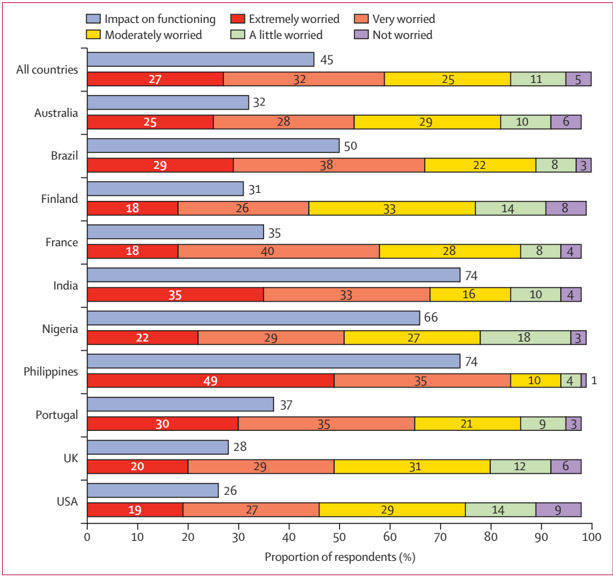
Background Climate change has important implications for the health and futures of children and young people, yet they have little power to limit its harm, making them vulnerable to climate anxiety. This is the first large-scale investigation of climate anxiety in children and young people globally and its relationship with perceived government response. Methods We surveyed 10 000 children and young people (aged 16-25 years) in ten countries (Australia, Brazil, Finland, France, India, Nigeria, Philippines, Portugal, the UK, and the USA; 1000 participants per country). Invitations to complete the survey were sent via the platform Kantar between May 18 and June 7, 2021. Data were collected on participants' thoughts and feelings about climate change, and government responses to climate change. Descriptive statistics were calculated for each aspect of climate anxiety, and Pearson's correlation analysis was done to evaluate whether climate-related distress, functioning, and negative beliefs about climate change were linked to thoughts and feelings about government response. Findings Respondents across all countries were worried about climate change (59% were very or extremely worried and 84% were at least moderately worried). More than 50% reported each of the following emotions: sad, anxious, angry, powerless, helpless, and guilty. More than 45% of respondents said their feelings about climate change negatively affected their daily life and functioning, and many reported a high n…
Verified 2026-11-25 · 1 reference not checked yet
Overview
CoChat Summary
TL;DR
This global survey of 10,000 people aged 16–25 across ten countries found widespread climate anxiety and distress, with many reporting negative functional impacts. Climate distress was correlated with negative perceptions of government responses and feelings of betrayal.
Key findings
- 59% were very or extremely worried about climate change and 84% were at least moderately worried; more than 50% reported feeling sad, anxious, angry, powerless, helpless, and guilty.
- More than 45% said their feelings about climate change negatively affected their daily life and functioning; 75% said the future is frightening and 83% said people have failed to take care of the planet.
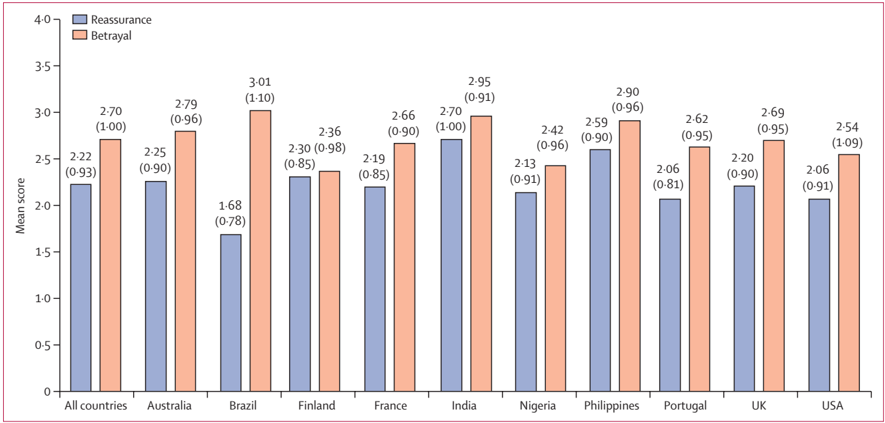
- Respondents rated government responses negatively (mean 14.96 on a 9–18 scale, SD 2.57) and reported greater betrayal (mean 2.7, SD 1.0) than reassurance (mean 2.22, SD 0.93; p<0.0001).
- Climate anxiety and distress were correlated with perceived inadequate government response and associated feelings of betrayal.
Methods
- Cross-sectional online survey of 10,000 children and young people aged 16–25 years in ten countries (Australia, Brazil, Finland, France, India, Nigeria, Philippines, Portugal, the UK, and the USA; 1000 per country), recruited via Kantar between May 18 and June 7, 2021.
- Quota sampling was based on age, gender, and region, with data weighted to OECD statistics for each country by age group, gender, and region.
- Descriptive statistics were calculated for climate anxiety constructs, and Pearson’s correlation analysis explored links between climate-related distress, functioning, negative beliefs, and thoughts/feelings about government response; findings significant at p≤0.001 are reported.
Limitations
- The paper states that non-standardised measures were used because no appropriate standardised measures existed; the study cannot indicate severity compared with normative samples, did not measure mental health outcomes, and used a yes/no/prefer-not-to-say response scale.
- The paper states that equal sample sizes per country were not weighted by population size, so aggregated results are not globally representative; online polling required internet access and sometimes English, and gender was recorded only as male or female.
- Evident from the text: the cross-sectional design cannot establish causality between perceived government response and climate distress.
Model-written summary. Check it against the paper before relying on it.
Integrity signals
Registry
Cites
Statistics
Figures
Verification
Claims the paper makes
12 Valid · 0 Not valid · 19 Not checked · 99 Own results and interpretations
Every source the paper cites for this claim was checked and supports it.
In the paper
“Children are now turning to legal action based on government failure to protect ecosystems, young citizens, and their futures. 26”
What the sources say
- Supportedcites [26] 26 Salas RN, Jacobs W, Perera F. The case of Juliana v. US-children and the health burdens of climate change. N Engl J Med 2019; 380: 2085-87 . source
The supplied Abstract passages describe children filing suit over federal inaction on climate change, which they say violates their constitutional rights. They also connect that inaction to threats to children’s safe environment and to future generations, supporting the citing sentence’s paraphrase. (LLM, conf=0.88)
plainstates a cause- Asserted: passes — The authors put it forward as true.
- Checkable: passes — It can be checked against evidence.
- Load-bearing: unclear — It is unclear whether the paper’s conclusions depend on it.
- Based: passes — The paper gives a reason why it holds.
- Supported
A result the paper reports from its own data — it cites no other source for it, so there is none to check. The quote shows it is in the paper.
In the paper
“in the Global North, Portugal (which had dramatic increases in wildfires since 2017) showed the highest level of worry.”
plainn = 1,000- Asserted: passes — The authors put it forward as true.
- Checkable: passes — It can be checked against evidence.
- Load-bearing: unclear — It is unclear whether the paper’s conclusions depend on it.
- Based: passes — The paper gives a reason why it holds.
A result the paper reports from its own data — it cites no other source for it, so there is none to check. The quote shows it is in the paper.
In the paper
“Respondents rated governmental responses to climate change negatively”
plain- Asserted: passes — The authors put it forward as true.
- Checkable: passes — It can be checked against evidence.
- Load-bearing: passes — The paper’s conclusions depend on it.
- Based: passes — The paper gives a reason why it holds.
A result the paper reports from its own data — it cites no other source for it, so there is none to check. The quote shows it is in the paper.
In the paper
“This distress was associated with beliefs about inadequate governmental response and feelings of betrayal.”
plainstates an association- Asserted: passes — The authors put it forward as true.
- Checkable: passes — It can be checked against evidence.
- Load-bearing: passes — The paper’s conclusions depend on it.
- Based: passes — The paper gives a reason why it holds.
A result the paper reports from its own data — it cites no other source for it, so there is none to check. The quote shows it is in the paper.
In the paper
“More than 45% of respondents said their feelings about climate change negatively affected their daily life and functioning”
- Also stated in: § Results · p. 5 · plain
“More than 45% of respondents said their feelings about climate change negatively affected their daily lives”
plainn = 10- Asserted: passes — The authors put it forward as true.
- Checkable: passes — It can be checked against evidence.
- Load-bearing: passes — The paper’s conclusions depend on it.
- Based: passes — The paper gives a reason why it holds.
- Also stated in: § Results · p. 5 · plain
50 more claims
Create a free account to see all 130 claims and to verify the 1 reference still open.
- Probably not a substantial claim. 51
- It may state two separate claims as one. 41
- The quote only partly states this claim. 6
Claims other papers make about this one
Each is checked against this paper’s own text: does it say what the citing paper says it does?
The source backs part of the claim, not all of it — or backs it for a different population, condition or comparison.
In the citing paper
“Investigations into anxiety about climate change have revealed that it is increasingly common for many people across the globe [9], with large-scale international studies identifying growing concern about climate change [10–12].”
From The relationship between climate change and mental health: a systematic review of the association between eco-anxiety, psychological distress, and symptoms of major affective disorders (2024) · cites this paper as [10]
Experimental — accuracy not yet measuredThe source backs part of the claim, not all of it — or backs it for a different population, condition or comparison.
In the citing paper
“The high prevalence of eco-anxiety [10] - be it at clinical or subclinical levels - underscores the need for broader level changes related to climate change.”
From The relationship between climate change and mental health: a systematic review of the association between eco-anxiety, psychological distress, and symptoms of major affective disorders (2024) · cites this paper as [10]
Experimental — accuracy not yet measuredThe source backs part of the claim, not all of it — or backs it for a different population, condition or comparison.
In the citing paper
“and varied understandings and experiences of climate change have differing impacts on the relationship with mental health [10, 12].”
From The relationship between climate change and mental health: a systematic review of the association between eco-anxiety, psychological distress, and symptoms of major affective disorders (2024) · cites this paper as [10]
Experimental — accuracy not yet measuredThe source backs part of the claim, not all of it — or backs it for a different population, condition or comparison.
In the citing paper
“A global survey of 10,000 young people (16-25) across 10 countries found: (1) 75% were frightened about the future; (2) 84% were moderately worried; (3) 59% were very or extremely worried; and (4) 45%+ reported climate change-related feelings negatively affected their daily life and functioning [21].”
From Climate Distress: A Review of Current Psychological Research and Practice (2023) · cites this paper as [21]
Experimental — accuracy not yet measuredThe source backs part of the claim, not all of it — or backs it for a different population, condition or comparison.
In the citing paper
“An overall lack of trust in government was also identified, with a wide belief that the government response to climate change will continue to be inadequate [21].”
From Climate Distress: A Review of Current Psychological Research and Practice (2023) · cites this paper as [21]
Experimental — accuracy not yet measured
21 more claims about this paper
Create a free account to see every claim other papers make about this one.
Self-check
Percentages, sums and reported differences re-computed from the paper’s own numbers.
Rated minor: it would not touch a result — a value no result rests on, a p-value that stays on the same side of the significance level, or a conflict that is clerical, resolved elsewhere in the paper, or outside its own findings.
In the paper
“15 543 people began the survey and 10 000 (68%) completed it.”
Reported 68 · recomputed 64.337644
Citations
Cites
Mental health of young people: A global public-health challenge
Patel, V., Flisher, A. J., Hetrick, S., & McGorry, P. (2007) · The Lancet · doi:10.1016/s0140-6736(07)60368-7 · Cited by 3,126 · cited 2×
“23 Children facing a future severely damaged by climate change will need support.”
Stress and Health: Psychological, Behavioral, and Biological Determinants
Schneiderman, N., Ironson, G., & Siegel, S. D. (2005) · Annual Review of Clinical Psychology · doi:10.1146/annurev.clinpsy.1.102803.144141 · Cited by 2,252 · cited 2×
“22 Exposure to chronic stress in childhood has a long-lasting impact and increases the risk of developing mental health problems.”
Development and validation of a measure of climate change anxiety
Clayton, S., & Karazsia, B. T. (2020) · Journal of Environmental Psychology · doi:10.1016/j.jenvp.2020.101434 · Cited by 1,196
Self-citationAnxiety and the Ecological Crisis: An Analysis of Eco-Anxiety and Climate Anxiety
Pihkala, P. (2020) · Sustainability · doi:10.3390/su12197836 · Cited by 978 · cited 2×
“In threatening and uncertain situations such as the climate crisis, this response can be seen as what is sometimes referred to as practical anxiety 1,4 because it has the beneficial effect of leading people to reassess their behaviour in order to respond appropriately.”
Self-citationMoral Injury: An Integrative Review
Griffin, B. J., Purcell, N., Burkman, K., Litz, B. T., Bryan, C. J., Schmitz, M., Villierme, C., Walsh, J., & Maguen, S. (2019) · Journal of Traumatic Stress · doi:10.1002/jts.22362 · Cited by 752 · cited 2×
“28 This might include an awareness of or failure to prevent harmful unethical behaviour.”
Stanley, S. K., Hogg, T. L., Leviston, Z., & Walker, I. (2021) · The Journal of Climate Change and Health · doi:10.1016/j.joclim.2021.100003 · Cited by 715
Anxiety, worry, and grief in a time of environmental and climate crisis: a narrative review
Ojala, M., Cunsolo, A., Ogunbode, C. A., & Middleton, J. (2021) · Annual Review of Environment and Resources · doi:10.1146/annurev-environ-012220-022716 · Cited by 670
The case for systems thinking about climate change and mental health
Berry, H. L., Waite, T. D., Dear, K. B. G., Capon, A. G., & Murray, V. (2018) · Nature Climate Change · doi:10.1038/s41558-018-0102-4 · Cited by 485 · cited 2×
“Changing climate and weather-related disasters have diverse impacts, both direct (eg, destruction and trauma) and indirect (eg, strained personal and public resources, interrupted community functioning), 2 as well as resulting in climate anxiety.”
Eco-Anxiety and Environmental Education
Pihkala, P. (2020) · Sustainability · doi:10.3390/su122310149 · Cited by 475
Self-citationThe Hogg Eco-Anxiety Scale: Development and Validation of a Multidimensional Scale
(2021) · doi:10.31219/osf.io/rxudb · Cited by 465
Research works printed but not linked: 4
- 11 Jensen T. Ecologies of guilt in environmental rhetorics. Cham: Palgrave Macmillan, 2019.
- 18 UNICEF. One billion children at 'extremely high risk' of the impacts of the climate crisis. Aug 20, 2021. https://www.unicef.org. uk/press-releases/onebillion-children-at-extremely-high-risk-of-theimpacts-of-the-climate-crisis-unicef (accessed Sept 5, 2021).
- 27 Weintrobe S. Psychological roots of the climate crisis: neoliberal exceptionalism and the culture of uncare. New York, NY: Bloomsbury Academic, 2021.
- 32 Mavronicola N. Torture, inhumanity and degradation under article 3 of the ECHR: absolute rights and absolute wrongs. Oxford: Bloomsbury Publishing, 2021.
Cited by
Items 701–800 of 2,164
Szczęśniak, M., Timoszyk-Tomczak, C., Łoś, J., & Grzeczka, M. (2025) · Frontiers in Psychology · doi:10.3389/fpsyg.2024.1441927 · Cited by 16
Komulainen, K., Elovainio, M. J., Gutvilig, M., Niemi, R., Partonen, T., Ruuhela, R., Virtanen, M., & Hakulinen, C. A. (2025) · Environmental Research · doi:10.1016/j.envres.2025.121206 · Cited by 5
Portus, R., Williams, S., Peklanska, E., Portus, R., & Walmsley, T. (2025) · Environmental Education Research · doi:10.1080/13504622.2025.2478430 · Cited by 10
“While it may be instinctive to shield children from environmental knowledge due to wellbeing concerns (hickman et al. 2021), in consideration of environmentally uncertain realities it is necessary to provide children with tools for engagement and agency (Williams and McEwen 2021; Doull and ogier…”
Couto, M. T., Senent‐Valero, M., dos Santos, L. A., Carmo, M. M., Matijasevich, A., & Pastor‐Valero, M. (2025) · Frontiers in Public Health · doi:10.3389/fpubh.2025.1555386 · Cited by 13
Jiménez-Vázquez, D., Piqueras, J. A., Fernández, L. E., Canals, J., & López, L. J. G. (2025) · Frontiers in Psychology · doi:10.3389/fpsyg.2025.1631481 · Cited by 8
Lohani, M., Elsey, J. S., Dutton, S., & Zummo, L. (2025) · Cogent Mental Health · doi:10.1080/28324765.2025.2539201 · Cited by 7
“These findings align with previous work (Hickman et al., 2021) that found that young people felt betrayed by their government and found their governments’ climate change response inadequate.”
InfluentialOne health the future of rural health?
Skinner, T. C. (2022) · Australian Journal of Rural Health · doi:10.1111/ajr.12893 · Cited by 5
Introduction: What Moment for Climate Activism?
de Moor, J. (2022) · South Atlantic Quarterly · doi:10.1215/00382876-10242742 · Cited by 15
Williams, A. P., & Gray, S. (2023) · Language Arts · doi:10.58680/la202332316 · Cited by 5
Fabio, A. D., & Svicher, A. (2023) · Journal of Psychoeducational Assessment · doi:10.1177/07342829231212320 · Cited by 5
“Research points to greater vulnerability among younger generations (Hickman et al., 2021) including university students (Searle & Gow, 2010), adolescents (Sciberras & Fernando, 2022), and children (L´eger-Goodes et al., 2022), who have an ampli fi ed exposure to environmental issues and associated…”
BackgroundÉcologie : l’angle mort de la recherche en ACP
Chicaud, M., Macias, R. M., & Taconet, S. (2023) · Annales de Pathologie · doi:10.1016/j.annpat.2023.09.006 · Cited by 5
Uçar, Ö., Çelik, S., Dursun, N., Çakıroğlu, E., Türk, H. B., Keskin, S., & Idriss, L. A. (2023) · Bingöl Üniversitesi Sağlık Dergisi · doi:10.58605/bingolsaglik.1397296 · Cited by 8
Imagining sustainable worlds: the potential of mythical stories in environmental education
Ikonen, E., Keränen-Pantsu, R., & Welz, C. (2024) · Journal of Philosophy of Education · doi:10.1093/jopedu/qhae021 · Cited by 11
Yeşil Adaletin Sesi: İklim Değişikliği Karşısında Sosyal Hizmetin Rolü ve Mücadelesi
Artan, T. (2024) · doi:10.5152/1600 · Cited by 12
Delemere, E., & Liston, P. M. (2024) · Energy Reports · doi:10.1016/j.egyr.2024.05.042 · Cited by 7
Gauthier, A., Konyani, B., Londoño, A. T., et al. (2024) · ACM Interaction Design and Children Conference (IDC) · doi:10.1145/3628516.3659376 · Cited by 5
“In the UK, 49% of young people report being very or extremely concerned about climate change and, whilst participation in climate action is increasing, another 26% avoid talking about climate change altogether [11].”
BackgroundThe role of renewable energy in addressing climate change concerns: an assessment study
Akbaba, M. F. (2024) · Energy Sources Part A Recovery Utilization and Environmental Effects · doi:10.1080/15567036.2024.2376328 · Cited by 4
“Similarly, research published in Hickman et al. (2021) underscores that young people who maintain a hopeful outlook toward climate action exhibit better overall well-being and resilience.”
Towards a climate of hope: learning in response to frames at an innovative museum exhibit
Zummo, L., Schultz, C., Janney, B., Clifford, C., Davis, C., & Thompson, L. (2024) · Environmental Education Research · doi:10.1080/13504622.2024.2387755 · Cited by 6
“Additionally, given the severity of climate-related threats, learning about climate change can provoke anxiety, grief, and fear (e.g. Hufnagel 2015; Hickman et al. 2021), which can lead to disengagement and disempowerment (O’Neill and Nicholson-Cole 2009; Jones and Davison 2021).”
Demetriou, K., Rana, S. S. J. B., & Williams, J. M. (2024) · Journal of Environmental Psychology · doi:10.1016/j.jenvp.2024.102433 · Cited by 8
Children’s participation in green space planning: a pathway to environmental justice
Dominiak-Szymańska, P., Łaszkiewicz, E., & Kronenberg, J. (2024) · Children s Geographies · doi:10.1080/14733285.2024.2418644 · Cited by 11
“…how to deal with climate change and fi ght against environmental inequities, are still taken foremost by parents, local leaders, governments and global corporations (Clark et al. 2020), raising climate anxiety among children about the government responses to the climate change (Hickman et al. 2021).”
Labarthe, M. I. Z., & Marks, E. M. (2024) · The Cognitive Behaviour Therapist · doi:10.1017/s1754470x23000284 · Cited by 8
“…and their perception that governments were failing to act appropriately or sufficiently on climate change (and the scientific consensus); as well as a positive association between young people ’ s climate anxiety and feeling abandoned and betrayed by such governments (Hickman et al ., 2021).”
Self-citationMeasuring pro-environmental behavioural determinants using closed-answer surveys
Doughty, H. L., & Thomas‐Walters, L. (2025) · Oryx · doi:10.1017/s0030605324001194 · Cited by 11
Vulnerability and psychosocial impacts of extreme weather events among young people in Australia
Ziou, M., Gan, D. Z. Q., Boon, B., Teo, S. M., Menssink, J. M., Yu, W., Smith, C. L., Patrick, R., Gunasiri, H., Fava, N., et al. (2025) · Environmental Research · doi:10.1016/j.envres.2025.121385 · Cited by 13
Tripathi, A., Jeswani, P., Shukla, R., & Patel, V. (2025) · International Journal of Social Psychiatry · doi:10.1177/00207640251362911 · Cited by 10
“Hickman et al. (2021) conducted a global survey to assess the amount of distress that the youth are experiencing in the light of climate change.”
Ekososiaalinen kysymys: Ekososiaalisen kasvatusajattelun teoreettisia lähtökohtia.
Pulkki, J. M., & Takkinen, P. (2022) · Kasvatus & Aika · doi:10.33350/ka.120359 · Cited by 19
Krüger, T., Kraus, T., & Kaifie, A. (2022) · Research Square · doi:10.21203/rs.3.rs-1532636/v1 · Cited by 4
Timmons, S., Andersson, Y., & Lunn, P. (2022) · doi:10.31234/osf.io/4kjmp · Cited by 5
The Need to Focus More on Climate Change Communication and Incorporate More Systems Approaches
Lee, B. Y., Pavilonis, B., John, D. C., Heneghan, J. L., Bartsch, S. M., & Kavouras, I. G. (2024) · Journal of Health Communication · doi:10.1080/10810730.2024.2361566 · Cited by 15
“Gen X and Millennials have an elevated perception of threats and how climate will affect them throughout their lifetime rather than climate cognition and skepticism (Hickman et al., 2021).”
BackgroundKaman, A., Erhart, M., Devine, J., Napp, A.-K., Reiß, F., Behn, S., & Ravens‐Sieberer, U. (2024) · SSRN Electronic Journal · doi:10.2139/ssrn.5033413 · Cited by 12
Söder, A., Herr, R. M., Görig, T., & Diehl, K. (2025) · Climate · doi:10.3390/cli13020027 · Cited by 7
Understanding climate anxiety and potential impacts on pro-environment behaviours
Coates, Z., Brown, S. D., & Kelly, M. (2025) · Journal of Anxiety Disorders · doi:10.1016/j.janxdis.2025.103049 · Cited by 10
Climate change competencies from perspective of Finnish youth
Taurinen, J., Vesterinen, V.-M., Veijonaho, S., Siponen, J., Riuttanen, L., & Ruuskanen, T. M. (2024) · Journal of Youth Studies · doi:10.1080/13676261.2024.2343724 · Cited by 18
“Young people have a strong sense of uncertainty about their future and feel both betrayed and abandoned by governments and adults because climate change issues have not been adequately addressed (Marks et al. 2021; Hickman et al. 2021; Myllyniemi and Kiilakoski 2019).”
Zhao, D. Y., Epel, E. S., Allen, E., & Hwong, A. R. (2024) · PLOS Climate · doi:10.1371/journal.pclm.0000387 · Cited by 7
Steentjes, K., & Roberts, E. (2024) · Frontiers in Psychology · doi:10.3389/fpsyg.2024.1404252 · Cited by 5
Climate change and sustainability education framework: an opportunity for pre-service teaching
Johnson, J. A. R., Marston, S., Happle, A., & Majid, N. (2025) · Cogent Education · doi:10.1080/2331186x.2025.2460412 · Cited by 14
“This type of collaboration or collective action is essential in empowering young people to make change particularly when there are [apparently] increasing levels of climate anxiety (Hickman et al., 2021).”
Cook, R., Nam, X., & Weitzman, M. L. (2025) · Journal of Developmental & Behavioral Pediatrics · doi:10.1097/dbp.0000000000001357 · Cited by 6
“26,27 Not only is this reflected in articles in academic journals and the lay press and news, but by the recent emergence of a lexicon derived from neologisms such as eco-anxiety and climate anxiety, 30,31 climate grief, 32 climate havens, 33 and solastalgia.”
Zummo, L., Hadzic, L., & Gargroetzi, E. C. (2025) · Science Education · doi:10.1002/sce.21969 · Cited by 10
Liu, S., & Château, P.-A. (2025) · Journal of Science Education and Technology · doi:10.1007/s10956-025-10229-w · Cited by 18
Integrating Ecofeminism Into Canadian Nursing to Tackle Climate Change and Health Issues
Tremblay, É., & Harrisson, S. (2025) · Nursing Inquiry · doi:10.1111/nin.70035 · Cited by 4
Brown, I. M. (2025) · Environmental Science & Policy · doi:10.1016/j.envsci.2025.104150 · Cited by 4
Wicks, C. L., McPherson, S., Booker, C. L., Trotta, A., Kumari, M., & Murray, E. T. (2025) · Health & Place · doi:10.1016/j.healthplace.2025.103501 · Cited by 5
It’s not just climate: rethinking ‘climate emotions’ in the age of burnout capitalism
Albert, M. J. (2025) · Environmental Politics · doi:10.1080/09644016.2025.2526228 · Cited by 7
“2020, Hickman et al .”
Emotional climate: a bibliometric analysis of the psychological consequences of climate change
Momenpour, Y., & Choobchian, S. (2025) · Frontiers in Psychology · doi:10.3389/fpsyg.2025.1521771 · Cited by 6
Major‐Smith, D., Halstead, I. N., & Major-Smith, K. (2025) · Royal Society Open Science · doi:10.1098/rsos.251099 · Cited by 5
“First, climate concern is much more common than climate anxiety in the population, with approximately 60% of 16−25-year-olds worldwide ‘extremely’ or ‘very’ worried about climate change [2]; for similar results, see [3,24].”
InfluentialEstablishing spirituality competencies in social work
Boynton, H. M. (2025) · Journal of Religion & Spirituality in Social Work Social Thought · doi:10.1080/15426432.2025.2547230 · Cited by 5
“Ecospiritual and existential angst are becoming more evident concerns (Bingley et al., 2022; Hickman et al., 2021).”
Excluded voices – investigating youth climate anxiety and distress beyond Western contexts
Chuah, C., Homer, S. T., & Loo, W. H. (2025) · International Journal of Sustainability in Higher Education · doi:10.1108/ijshe-09-2024-0637 · Cited by 5
Chan, H., Lin, L., & Tam, K. (2025) · Journal of Environmental Psychology · doi:10.1016/j.jenvp.2025.102798 · Cited by 6
Sourander, A., Zhang, X., Dadras, O., Abio, A., Mishina, K. E., Ståhlberg, T., Mori, Y., Gilbert, S., Heinonen, E., & Gyllenberg, D. (2025) · Child and Adolescent Mental Health · doi:10.1111/camh.70040 · Cited by 6
Increased attention to climate change mitigation approaches leads to lower levels of climate anxiety
Carlson, J. M. (2025) · Discover Psychology · doi:10.1007/s44202-025-00490-w · Cited by 4
“Indeed, feelings of hopelessness and anxiety stemming from climate change are often reported as arising from frustrations attributable to collective inaction, government inadequacy, and the sense that individual-level actions have little impact [13, 25].”
Children’s Coping in Disasters: Developments, Challenges, and Future Directions
Powell, T. M., Cohen, F., & Ramchal, M. (2025) · Current Psychiatry Reports · doi:10.1007/s11920-025-01654-0 · Cited by 9
“In a 2021 survey of 10,000 young people (ages 16–25) across 10 coun - tries, 84% reported being worried about climate change, with nearly two-thirds believing their governments had failed to protect them [ 46 ].”
Evaluating the climate change adaptation of urban communities in Beijing, China
Liu, L., Lan, T., Wei, H., Shen, Y., & Yang, M. (2026) · Habitat International · doi:10.1016/j.habitatint.2025.103706 · Cited by 6
Lee, E., Jeon, J. Y., & Spence, J. C. (2026) · Health Promotion International · doi:10.1093/heapro/daag003 · Cited by 7
“Such a reorientation is vital for physical activity scholarship in light of growing global health challenges—climate anxiety (Hickman et al .”
Davì, D., Destro, C. L., & Melchiori, F. M. (2026) · Social Sciences · doi:10.3390/socsci15020088 · Cited by 6
From anxiety to hope: Do climate change-related emotions influence actual environmental behaviour?
Schwarz, M. I., Rosenauer, V., Vlasak, T., & Barth, A. (2026) · Journal of Environmental Psychology · doi:10.1016/j.jenvp.2026.102939 · Cited by 10
Trait Mindfulness and Pro-Environmental Behaviours: The Mediating Role of Eco-Emotions
Bontempo, D., Perazzini, M., Giancola, M., D’Amico, S., & Perilli, E. (2026) · Sustainability · doi:10.3390/su18052446 · Cited by 6
Elkhwesky, Z., Castañeda-García, J.-A., Derhab, N., Patwary, A. K., & Hassan, H. M. (2026) · International Journal of Hospitality Management · doi:10.1016/j.ijhm.2026.104678 · Cited by 6
Academic Framing as a Cause of Eco-Anxiety
Chioléro, A. (2023) · Epidemiologia · doi:10.3390/epidemiologia4010006 · Cited by 4
“Researchers, and it is true for all domains of population health sciences, should carefully think about how societal and public health questions are framed, notably on how the severity of a threat is presented and what can be done to address this threat, because these narratives are determinants of anxiety or hope fee…”
BackgroundSlater, P. (2023) · Journal of Child Psychotherapy · doi:10.1080/0075417x.2023.2274081 · Cited by 8
Coping with Climate Change among Young People: Meaning-Focused Coping and Constructive Hope
Ojala, M., & Chen, X. (2024) · Cambridge University Press eBooks · doi:10.1017/9781009252904.016 · Cited by 9
Ocean Literacy as a Socioscientific Issue for Hope in the Anthropocene
Mauriz, B. P., Cruz-Lorite, I. M., & Evagorou, M. (2024) · Contemporary trends and issues in science education · doi:10.1007/978-3-031-63382-9_9 · Cited by 5
Preparing Preservice Chemistry Teachers to Teach for Climate Empowerment through Macro-rehearsals
Zummo, L., Marler, K., Mercer, J., & Walker, C. (2024) · Journal of Chemical Education · doi:10.1021/acs.jchemed.4c00459 · Cited by 4
Murry, V. M. (2024) · Journal of Research on Adolescence · doi:10.1111/jora.13020 · Cited by 5
Applying Emotional Regulation Strategies to Manage Climate Distress
Ibrahim, M. (2024) · IntechOpen eBooks · doi:10.5772/intechopen.1007813 · Cited by 10
Young Climate Activists: A ‘Gritty’ Hope for Things to be Better than They Are Now
Hockey, J. A. (2024) · Journal of Applied Youth Studies · doi:10.1007/s43151-024-00152-z · Cited by 9
“However, critics of this framing argue that ecoanxiety individualises what are inherently collective responses to a complex problem (Hickman et al. 2021).”
Pigott, A., Nuuttila, H., Thomas, M. J., Smith, F., Bohata, K., Murray, T., Palser, M., Holmes, E., & Elias, O. (2024) · Frontiers in Sociology · doi:10.3389/fsoc.2024.1456393 · Cited by 8
Kolltveit, K., & Karlsen, R. (2025) · Party Politics · doi:10.1177/13540688241312372 · Cited by 4
“The presence of climate anxiety and climate grief among children and young adults has been documented in several studies (Hickman et al., 2021).”
Lerolle, A., Micoulaud‐Franchi, J., Fourneret, P., Heeren, A., & Gauld, C. (2025) · Frontiers in Psychology · doi:10.3389/fpsyg.2024.1408835 · Cited by 14
Postmaterialism and voluntary childlessness
Anisin, A. (2025) · Journal of Family Studies · doi:10.1080/13229400.2025.2450030 · Cited by 6
Stanley, S. K., Ghasemi, O., Ross, R. M., Kerr, J. R., Marques, M. D., Mede, N. G., Berger, S., Alfano, M., Levy, N. L., Ferreira, M., et al. (2025) · The Journal of Climate Change and Health · doi:10.1016/j.joclim.2025.100415 · Cited by 11
“There is a growing recognition that climate emotions are experienced around the world (e.g., [29]); however, anticipatory solastalgia research is currently limited to four relatively wealthy, English-speaking nations, precluding cross-cultural analysis.”
Coleman, M. C., Khan, P. Y., Linde, L., Williams, P. C. M., & Marais, B. J. (2025) · Current Opinion in Pediatrics · doi:10.1097/mop.0000000000001442 · Cited by 5
Edwards, R. C., Perry, J., & Walshe, N. (2025) · Behavioral Sciences · doi:10.3390/bs15040407 · Cited by 9
“Responses to the Climate Crisis: Eco-Anxiety and Pro-Environmental Behaviour Eco-anxiety is experienced particularly acutely among children and young people (Boluda-Verdú et al., 2022; Hickman et al., 2021).”
Magklara, K., Kapsimalli, E., Vlassopoulos, C., Λιαράκου, Γ., & Lazaratou, E. (2025) · Children · doi:10.3390/children12040432 · Cited by 6
“These emotions, while distressing, may also serve as catalysts for action, driving individuals to engage in climate-friendly behaviors [17,18].”
Akpan, U. U., Ja’afar, I. K., & Eke, S. C. (2025) · Cambridge Prisms Global Mental Health · doi:10.1017/gmh.2024.77 · Cited by 9
“Climate change and weather-related disasters not only result in direct impacts such as destruction and trauma but they also have indirect consequences like strained resources and interrupted community and societal functioning (Hickman et al., 2021).”
Hope under siege: youth precarity, far-right politics, and the colonisation of the future
González‐Calvo, G., & Gutiérrez, E. J. D. (2025) · Globalisation Societies and Education · doi:10.1080/14767724.2025.2519742 · Cited by 5
“…to a context in which late capit-alism appears as the only possible logic, and young people perceive their future as foreclosed by job insecurity, ecological crises, and the dismantling of social protections, among other factors (Adam 2023; Bazzani 2022; Hickman et al. 2021; Standing 2011).”
Letters to the future challenge: A scalable online tool to engage management students with the SDGs
Schippers, M. C., de Jong, E. M., Rus, D., Rommers, H., & Banerjee, S. (2025) · The International Journal of Management Education · doi:10.1016/j.ijme.2025.101233 · Cited by 11
Kallio, K. P., Vainikka, V., & Häkli, J. (2025) · Childhood · doi:10.1177/09075682251392497 · Cited by 7
“These were rarely expressed by our participants (altogether 12 mentions in each country), which for us indicates that unlearning directly about emotionally perplexing issues as part of one ’ s lived reality is not inviting – it can even lead to anxiety (Hickman et al., 2021).”
Loose, T., Côté, S. M., Malboeuf‐Hurtubise, C., Ayotte‐Beaudet, J., Lessard, G., Chadi, N., Gauvin, L. I., Ouellet‐Morin, I., & Geoffroy, M. (2023) · BMC Public Health · doi:10.1186/s12889-023-15033-y · Cited by 8
Maessen, S. E., Taylor, B. J., Gillon, G. T., Barnes, H. M., Firestone, R. T., Taylor, R. W., Milne, B. J., Hetrick, S. E., Cargo, T., McNeill, B., et al. (2023) · Journal of the Royal Society of New Zealand · doi:10.1080/03036758.2023.2173257 · Cited by 6
“Although there are no comparable statistics available for NZ, 84% of respondents in an international survey of 10,000 16 – 24-year-olds were at least ‘ moderately worried ’ about climate change, and more than 45% reported that this worry a ff ected their daily functioning (Hickman et al. 2021).”
BackgroundHoughton, A. (2023) · Frontiers in Public Health · doi:10.3389/fpubh.2023.1090725 · Cited by 5
Beyond Doom and Gloom: Teaching Climate Change to Foster Empowerment
Christensen, A., Welton‐Mitchell, C., Gold, A. U., et al. (2023) · Connected Science Learning · doi:10.1080/24758779.2023.12318633 · Cited by 4
Steering signification for sustainability
Lahsen, M. (2024) · Global Sustainability · doi:10.1017/sus.2024.10 · Cited by 17
“…interest groups currently have little or no policy influence in countries around the world, rich and poor (Eleftheriadis, 2014; Gilens & Page, 2014; Markus & Charnysh, 2017), as also expressed in globally wide popular disillusionment around climate change (Hickman et al., 2021; Pew, 2015).”
BackgroundEcological Grief Observed from a Distance
Beran, O. (2024) · Philosophies · doi:10.3390/philosophies9020037 · Cited by 4
“…and underprivileged urban neighbourhoods, is likely to induce (politicised) anger and a heightened sense of climate injustice (as has been shown, e.g., by Hickman and her colleagues [23]) rather than an overwhelming kind of grief similar to that which we encounter among Cunsolo’s Inuit respondents.”
ResultGalleto, L. M. D., & Sagala, G. B. (2024) · Journal of Communication and Management · doi:10.58966/jcm2024314 · Cited by 4
The Perceived Role of Occupational Therapists in Climate Change
Du, J., Bird, A., Boniface, G., Boniface, J., & Mortenson, W. B. (2024) · Canadian Journal of Occupational Therapy · doi:10.1177/00084174241259304 · Cited by 8
“Hickman et al. (2021) revealed that climate anxiety affects young people daily functioning worldwide, including reported feelings of hopelessness and perceived future as frightening.”
Breathe Out: Ecopsychology and Eco-anxiety Relating to Age, Sex, and Climate Crisis Knowledge
Evangelista, A. M. O., David, S. M. A., Diaz, J. B., Florendo, M. C., Triveles, K. J. B., Calvario, A. E., & Bendicio, D. (2024) · Advances in mental health and addiction · doi:10.1007/978-3-031-58367-4_4 · Cited by 4
A Global Perspective on Climate Change and Mental Health
Clayton, S., Aruta, J. J. B. R., Aylward, B., Cunsolo, A., Harper, S. L., & Berry, H. L. (2024) · Springer eBooks · doi:10.1007/978-3-031-56736-0_1 · Cited by 7
Self-citationKumbhojkar, N., & Raman, R. (2024) · International Conference on Trends in Quantum Computing and Emerging Business Technologies (TQCEBT) · doi:10.1109/tqcebt59414.2024.10545066 · Cited by 5
“Whilst Web portal creates an ever-lasting impression through content and information, a technical survey by Lancet [36] undoubtedly has proven that 16 to 25-year-olds suffer from climate anxiety and want to study at an institution which shares their vision for a sustainable future.”
BackgroundBrakemeier, E., Karl, S., Stapel, S., & Meyer‐Lindenberg, A. (2024) · Nervenheilkunde · doi:10.1055/a-2109-0556 · Cited by 9
“Selbst wenn Symptome noch nicht die Kriterien für definierte psychische Er-krankungen erfüllen, können sie das Funktionsniveau der Betroffenen beeinträchtigen [7].”
Why are you cleaning beaches? A study on motivations of volunteer beach cleaners
Lind, L., & Lundberg, E. (2024) · Journal of Environmental Planning and Management · doi:10.1080/09640568.2024.2409963 · Cited by 10
“Young people tend to report climate anxiety (Hickman et al. 2021), which could influence pro-environmental behaviour in the beach cleaning context (Sangervo, Jylh € a, and Pihkala 2022; Verplanken, Marks, and Dobromir 2020).”
Planetare Gesundheit und psychische Gesundheit
Großkopf, C. M., Dauterstedt, H., Severus, W. E., Bauer, M., Reininger, K. M., Scharping, K., & Nikendei, C. (2024) · Der Nervenarzt · doi:10.1007/s00115-024-01742-1 · Cited by 4
Beyond voice: Listening and silence in climate change education
Facer, K. (2024) · Journal of Moral Education · doi:10.1080/03057240.2024.2379064 · Cited by 6
“Seventy-five per cent of children in a survey of 10,000 children around the world in 2021 stated that they were scared of the future (Hickman et al., 2021).”
Navigating Emerging Climate Crises Through Adaptive Polycentric Meta-networks
Staub, T., & Tirmizi, S. A. (2024) · Humanistic Management Journal · doi:10.1007/s41463-024-00189-5 · Cited by 8
“This is alarming, as more young people are expressing signs of climate anxiety and frustration with political inaction (Hickman et al. 2021).”
Strategies for delivering trauma-informed climate change instruction
Hurless, N., & Kong, N. Y. (2024) · The Journal of Environmental Education · doi:10.1080/00958964.2024.2423298 · Cited by 7
“Adults can also explicitly state their own responsibility in addressing the climate crisis so youth can trust adults to do their part (Hickman et al., 2021; Pickard, 2021).”
Psychometric properties of the French version of the climate change worry scale
Shepherd, S., Raynal, P., & Guedj, M. (2024) · The Journal of Climate Change and Health · doi:10.1016/j.joclim.2024.100361 · Cited by 6
“A survey of 10,000 individuals aged 16 − 25 across fi ve continents found that a majority were very or extremely concerned about climate change [9].”
Fuertes, M. Á., Ferrari, E., Eugenio‐Gozalbo, M., & Ruíz, C. (2024) · International Research in Geographical and Environmental Education · doi:10.1080/10382046.2024.2427279 · Cited by 6
“This is not a local issue, but a global one: a recent survey with 10,000 children and young people in ten countries (Hickman et al., 2021) found that young people across all countries were worried about Climate Change (59% extremely worried and 84% at least moderately worried) and felt sad,…”
The role of trait mindfulness in moderating climate distress during wildfire season
Guan, J., Dutcher, E. G., Goldin, P. R., Ahmadi, S. E., Fromer, E., Weiser, S. D., Maibach, E. W., Prather, A. A., & Epel, E. S. (2024) · PLOS Climate · doi:10.1371/journal.pclm.0000524 · Cited by 5
Semız, G. K., & Sund, P. (2025) · Journal of Biological Education · doi:10.1080/00219266.2025.2452190 · Cited by 10
“A number of scholarly studies report that young people are worried about their futures, and climate anxiety among the world’s youth is increasing and affecting their well-being (Clayton 2020; Hickman et al. 2021).”
Sheldrake, R., Walshe, N., & Hargreaves, E. (2025) · Environmental Education Research · doi:10.1080/13504622.2025.2464240 · Cited by 8
“Many also feel sad, pow-erless, and helpless around climate change (Hickman et al. 2021).”
Donati, M. A., Santisi, S., Romano, L., Panno, A., & Primi, C. (2025) · Journal of Environmental Psychology · doi:10.1016/j.jenvp.2025.102562 · Cited by 5
Regnoli, G. M., Tiano, G., & Rosa, B. D. (2025) · Sustainability · doi:10.3390/su17062622 · Cited by 6
Metadata
- Authors
- Hickman, C., Marks, E., Pihkala, P., Clayton, S., Lewandowski, R. E., Mayall, E. E., Wray, B., Mellor, C., & van Susteren, L.
- Affiliations
- University of Bath (GB)
- University of Helsinki (FI)
- College of Wooster (US)
- NYU Langone Health (US)
- University of East Anglia (GB)
- London School of Hygiene & Tropical Medicine (GB)
- Oxford Health NHS Foundation Trust (GB)
- Corresponding author
- Hickman, Caroline
- Venue
- The Lancet Planetary Health
- Publisher
- Elsevier BV
- Published
- 2021-12
- Volume
- 5
- Issue
- 12
- Pages
- e863-e873
- ISSN
- 2542-5196 (ISSN-L)
- OpenAlex
- W4200005759
- Semantic Scholar
- 4a876cc35863ba593aacf58fe6a24773b3cb9c29
- Cited by
- 2,324
- References
- 27
- Citations by year
- 2026: 566 · 2025: 652 · 2024: 566 · 2023: 364 · 2022: 170 · 2021: 4
- FWCI
- 382.19
- Type
- journal article
- Language
- en
- Open access
- gold
- doi.org
- Licence
- cc-by-nc-nd
- www.elsevier.com/tdm/userlicense/1.0/ (tdm)
- www.elsevier.com/legal/tdmrep-license (tdm)
- creativecommons.org/licenses/by-nc-nd/4.0/ (vor)
- Locations
- The Lancet Planetary Health (publishedVersion, cc-by-nc-nd)
- PubMed (publishedVersion)
- DOAJ (DOAJ: Directory of Open Access Journals) (submittedVersion, cc-by-sa)
- Työväentutkimus Vuosikirja (submittedVersion)
- Topics
- Social Sciences › Sociology and Political Science › Climate Change Communication and Perception
- Physical Sciences › Environmental Science › Health, Toxicology and Mutagenesis › Climate Change and Health Impacts
- Social Sciences › Psychology › Clinical Psychology › COVID-19 and Mental Health
- Keywords
- climate anxiety, children and young people, climate change, betrayal, climate change beliefs, daily functioning, global survey
- MeSH terms
- Adolescent, Adult, Anxiety, Australia, Child, Government, Humans, Surveys and Questionnaires, Young Adult, Climate Change
About these checks
Registry, retraction, Cites and statistics results are computed, not judged, with one exception: a printed reference that no index lists is read once by a model before it counts as a citation error. Claims are extracted by a model and kept only when their quote appears verbatim in the text; each cited source is then checked, with a model’s help, for whether it says what the claim relies on. Those verdicts can be wrong — read the claim’s quote and the cited source before relying on one.
The claim verdicts this report counts are experimental: their accuracy is not yet measured.
A language model drew the claims from the paper on 2026-10-10, under version 3 of the claim definition (model deepseek-v4.1-flash, prompt extract-v3).
A second model labelled each claim on 2026-10-10 (model jev-1.13-20260917, definition revision gold-guideline-v0.2).
Cited sources are checked with a language model’s help (gpt-6-sol).
Statistics and arithmetic are recomputed, not judged.
Confidence bands are shown only for fields calibrated on our annotated test set. None is calibrated yet, so no band is shown.
What counts as a claim ›How we measure confidence ›How we check this ›
Are you an author, or do you see a problem with this page? Request a review
Data sources
Bibliographic data: Semantic Scholar, OpenAlex, Crossref.
Contains information from the Semantic Scholar Academic Graph Datasets, made available under the ODC Attribution License (ODC-BY 1.0).
Semantic Scholar’s data is described in: Kinney, R., et al. (2023). The Semantic Scholar Open Data Platform. arXiv:2301.10140.
