

Climate anxiety in children and young people and their beliefs about government responses to climate change: a global survey
Open accessThe DOI matches its Crossref record; 27 of the 30 references it cites were found in a registry or an index, and 1 are not checked yet; 14 of the 48 sources its claims cite were checked for support.
Abstract
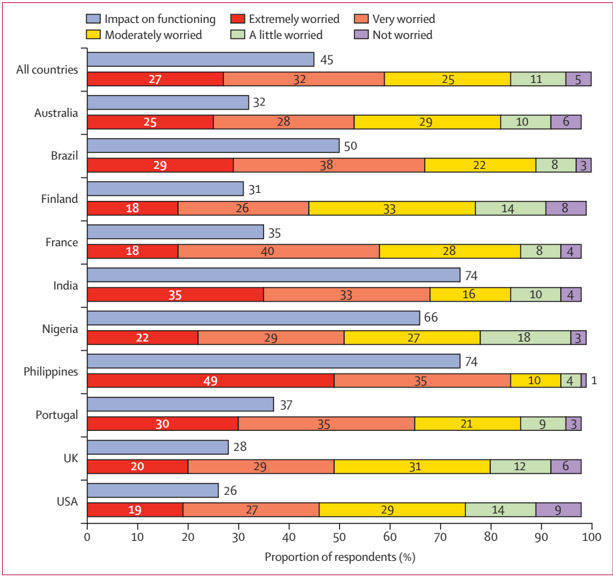
Background Climate change has important implications for the health and futures of children and young people, yet they have little power to limit its harm, making them vulnerable to climate anxiety. This is the first large-scale investigation of climate anxiety in children and young people globally and its relationship with perceived government response. Methods We surveyed 10 000 children and young people (aged 16-25 years) in ten countries (Australia, Brazil, Finland, France, India, Nigeria, Philippines, Portugal, the UK, and the USA; 1000 participants per country). Invitations to complete the survey were sent via the platform Kantar between May 18 and June 7, 2021. Data were collected on participants' thoughts and feelings about climate change, and government responses to climate change. Descriptive statistics were calculated for each aspect of climate anxiety, and Pearson's correlation analysis was done to evaluate whether climate-related distress, functioning, and negative beliefs about climate change were linked to thoughts and feelings about government response. Findings Respondents across all countries were worried about climate change (59% were very or extremely worried and 84% were at least moderately worried). More than 50% reported each of the following emotions: sad, anxious, angry, powerless, helpless, and guilty. More than 45% of respondents said their feelings about climate change negatively affected their daily life and functioning, and many reported a high n…
Verified 2026-11-25 · 1 reference not checked yet
Overview
CoChat Summary
TL;DR
This global survey of 10,000 people aged 16–25 across ten countries found widespread climate anxiety and distress, with many reporting negative functional impacts. Climate distress was correlated with negative perceptions of government responses and feelings of betrayal.
Key findings
- 59% were very or extremely worried about climate change and 84% were at least moderately worried; more than 50% reported feeling sad, anxious, angry, powerless, helpless, and guilty.
- More than 45% said their feelings about climate change negatively affected their daily life and functioning; 75% said the future is frightening and 83% said people have failed to take care of the planet.
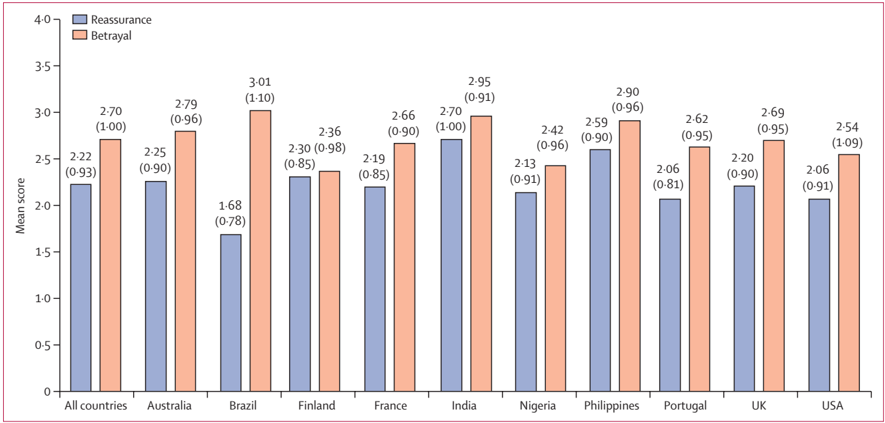
- Respondents rated government responses negatively (mean 14.96 on a 9–18 scale, SD 2.57) and reported greater betrayal (mean 2.7, SD 1.0) than reassurance (mean 2.22, SD 0.93; p<0.0001).
- Climate anxiety and distress were correlated with perceived inadequate government response and associated feelings of betrayal.
Methods
- Cross-sectional online survey of 10,000 children and young people aged 16–25 years in ten countries (Australia, Brazil, Finland, France, India, Nigeria, Philippines, Portugal, the UK, and the USA; 1000 per country), recruited via Kantar between May 18 and June 7, 2021.
- Quota sampling was based on age, gender, and region, with data weighted to OECD statistics for each country by age group, gender, and region.
- Descriptive statistics were calculated for climate anxiety constructs, and Pearson’s correlation analysis explored links between climate-related distress, functioning, negative beliefs, and thoughts/feelings about government response; findings significant at p≤0.001 are reported.
Limitations
- The paper states that non-standardised measures were used because no appropriate standardised measures existed; the study cannot indicate severity compared with normative samples, did not measure mental health outcomes, and used a yes/no/prefer-not-to-say response scale.
- The paper states that equal sample sizes per country were not weighted by population size, so aggregated results are not globally representative; online polling required internet access and sometimes English, and gender was recorded only as male or female.
- Evident from the text: the cross-sectional design cannot establish causality between perceived government response and climate distress.
Model-written summary. Check it against the paper before relying on it.
Integrity signals
Registry
Cites
Statistics
Figures
Verification
Claims the paper makes
12 Valid · 0 Not valid · 19 Not checked · 99 Own results and interpretations
Every source the paper cites for this claim was checked and supports it.
In the paper
“Children are now turning to legal action based on government failure to protect ecosystems, young citizens, and their futures. 26”
What the sources say
- Supportedcites [26] 26 Salas RN, Jacobs W, Perera F. The case of Juliana v. US-children and the health burdens of climate change. N Engl J Med 2019; 380: 2085-87 . source
The supplied Abstract passages describe children filing suit over federal inaction on climate change, which they say violates their constitutional rights. They also connect that inaction to threats to children’s safe environment and to future generations, supporting the citing sentence’s paraphrase. (LLM, conf=0.88)
plainstates a cause- Asserted: passes — The authors put it forward as true.
- Checkable: passes — It can be checked against evidence.
- Load-bearing: unclear — It is unclear whether the paper’s conclusions depend on it.
- Based: passes — The paper gives a reason why it holds.
- Supported
A result the paper reports from its own data — it cites no other source for it, so there is none to check. The quote shows it is in the paper.
In the paper
“in the Global North, Portugal (which had dramatic increases in wildfires since 2017) showed the highest level of worry.”
plainn = 1,000- Asserted: passes — The authors put it forward as true.
- Checkable: passes — It can be checked against evidence.
- Load-bearing: unclear — It is unclear whether the paper’s conclusions depend on it.
- Based: passes — The paper gives a reason why it holds.
A result the paper reports from its own data — it cites no other source for it, so there is none to check. The quote shows it is in the paper.
In the paper
“Respondents rated governmental responses to climate change negatively”
plain- Asserted: passes — The authors put it forward as true.
- Checkable: passes — It can be checked against evidence.
- Load-bearing: passes — The paper’s conclusions depend on it.
- Based: passes — The paper gives a reason why it holds.
A result the paper reports from its own data — it cites no other source for it, so there is none to check. The quote shows it is in the paper.
In the paper
“This distress was associated with beliefs about inadequate governmental response and feelings of betrayal.”
plainstates an association- Asserted: passes — The authors put it forward as true.
- Checkable: passes — It can be checked against evidence.
- Load-bearing: passes — The paper’s conclusions depend on it.
- Based: passes — The paper gives a reason why it holds.
A result the paper reports from its own data — it cites no other source for it, so there is none to check. The quote shows it is in the paper.
In the paper
“More than 45% of respondents said their feelings about climate change negatively affected their daily life and functioning”
- Also stated in: § Results · p. 5 · plain
“More than 45% of respondents said their feelings about climate change negatively affected their daily lives”
plainn = 10- Asserted: passes — The authors put it forward as true.
- Checkable: passes — It can be checked against evidence.
- Load-bearing: passes — The paper’s conclusions depend on it.
- Based: passes — The paper gives a reason why it holds.
- Also stated in: § Results · p. 5 · plain
50 more claims
Create a free account to see all 130 claims and to verify the 1 reference still open.
- Probably not a substantial claim. 51
- It may state two separate claims as one. 41
- The quote only partly states this claim. 6
Claims other papers make about this one
Each is checked against this paper’s own text: does it say what the citing paper says it does?
The source backs part of the claim, not all of it — or backs it for a different population, condition or comparison.
In the citing paper
“Investigations into anxiety about climate change have revealed that it is increasingly common for many people across the globe [9], with large-scale international studies identifying growing concern about climate change [10–12].”
From The relationship between climate change and mental health: a systematic review of the association between eco-anxiety, psychological distress, and symptoms of major affective disorders (2024) · cites this paper as [10]
Experimental — accuracy not yet measuredThe source backs part of the claim, not all of it — or backs it for a different population, condition or comparison.
In the citing paper
“The high prevalence of eco-anxiety [10] - be it at clinical or subclinical levels - underscores the need for broader level changes related to climate change.”
From The relationship between climate change and mental health: a systematic review of the association between eco-anxiety, psychological distress, and symptoms of major affective disorders (2024) · cites this paper as [10]
Experimental — accuracy not yet measuredThe source backs part of the claim, not all of it — or backs it for a different population, condition or comparison.
In the citing paper
“and varied understandings and experiences of climate change have differing impacts on the relationship with mental health [10, 12].”
From The relationship between climate change and mental health: a systematic review of the association between eco-anxiety, psychological distress, and symptoms of major affective disorders (2024) · cites this paper as [10]
Experimental — accuracy not yet measuredThe source backs part of the claim, not all of it — or backs it for a different population, condition or comparison.
In the citing paper
“A global survey of 10,000 young people (16-25) across 10 countries found: (1) 75% were frightened about the future; (2) 84% were moderately worried; (3) 59% were very or extremely worried; and (4) 45%+ reported climate change-related feelings negatively affected their daily life and functioning [21].”
From Climate Distress: A Review of Current Psychological Research and Practice (2023) · cites this paper as [21]
Experimental — accuracy not yet measuredThe source backs part of the claim, not all of it — or backs it for a different population, condition or comparison.
In the citing paper
“An overall lack of trust in government was also identified, with a wide belief that the government response to climate change will continue to be inadequate [21].”
From Climate Distress: A Review of Current Psychological Research and Practice (2023) · cites this paper as [21]
Experimental — accuracy not yet measured
21 more claims about this paper
Create a free account to see every claim other papers make about this one.
Self-check
Percentages, sums and reported differences re-computed from the paper’s own numbers.
Rated minor: it would not touch a result — a value no result rests on, a p-value that stays on the same side of the significance level, or a conflict that is clerical, resolved elsewhere in the paper, or outside its own findings.
In the paper
“15 543 people began the survey and 10 000 (68%) completed it.”
Reported 68 · recomputed 64.337644
Citations
Cites
Mental health of young people: A global public-health challenge
Patel, V., Flisher, A. J., Hetrick, S., & McGorry, P. (2007) · The Lancet · doi:10.1016/s0140-6736(07)60368-7 · Cited by 3,126 · cited 2×
“23 Children facing a future severely damaged by climate change will need support.”
Stress and Health: Psychological, Behavioral, and Biological Determinants
Schneiderman, N., Ironson, G., & Siegel, S. D. (2005) · Annual Review of Clinical Psychology · doi:10.1146/annurev.clinpsy.1.102803.144141 · Cited by 2,252 · cited 2×
“22 Exposure to chronic stress in childhood has a long-lasting impact and increases the risk of developing mental health problems.”
Development and validation of a measure of climate change anxiety
Clayton, S., & Karazsia, B. T. (2020) · Journal of Environmental Psychology · doi:10.1016/j.jenvp.2020.101434 · Cited by 1,196
Self-citationAnxiety and the Ecological Crisis: An Analysis of Eco-Anxiety and Climate Anxiety
Pihkala, P. (2020) · Sustainability · doi:10.3390/su12197836 · Cited by 978 · cited 2×
“In threatening and uncertain situations such as the climate crisis, this response can be seen as what is sometimes referred to as practical anxiety 1,4 because it has the beneficial effect of leading people to reassess their behaviour in order to respond appropriately.”
Self-citationMoral Injury: An Integrative Review
Griffin, B. J., Purcell, N., Burkman, K., Litz, B. T., Bryan, C. J., Schmitz, M., Villierme, C., Walsh, J., & Maguen, S. (2019) · Journal of Traumatic Stress · doi:10.1002/jts.22362 · Cited by 752 · cited 2×
“28 This might include an awareness of or failure to prevent harmful unethical behaviour.”
Stanley, S. K., Hogg, T. L., Leviston, Z., & Walker, I. (2021) · The Journal of Climate Change and Health · doi:10.1016/j.joclim.2021.100003 · Cited by 715
Anxiety, worry, and grief in a time of environmental and climate crisis: a narrative review
Ojala, M., Cunsolo, A., Ogunbode, C. A., & Middleton, J. (2021) · Annual Review of Environment and Resources · doi:10.1146/annurev-environ-012220-022716 · Cited by 670
The case for systems thinking about climate change and mental health
Berry, H. L., Waite, T. D., Dear, K. B. G., Capon, A. G., & Murray, V. (2018) · Nature Climate Change · doi:10.1038/s41558-018-0102-4 · Cited by 485 · cited 2×
“Changing climate and weather-related disasters have diverse impacts, both direct (eg, destruction and trauma) and indirect (eg, strained personal and public resources, interrupted community functioning), 2 as well as resulting in climate anxiety.”
Eco-Anxiety and Environmental Education
Pihkala, P. (2020) · Sustainability · doi:10.3390/su122310149 · Cited by 475
Self-citationThe Hogg Eco-Anxiety Scale: Development and Validation of a Multidimensional Scale
(2021) · doi:10.31219/osf.io/rxudb · Cited by 465
Research works printed but not linked: 4
- 11 Jensen T. Ecologies of guilt in environmental rhetorics. Cham: Palgrave Macmillan, 2019.
- 18 UNICEF. One billion children at 'extremely high risk' of the impacts of the climate crisis. Aug 20, 2021. https://www.unicef.org. uk/press-releases/onebillion-children-at-extremely-high-risk-of-theimpacts-of-the-climate-crisis-unicef (accessed Sept 5, 2021).
- 27 Weintrobe S. Psychological roots of the climate crisis: neoliberal exceptionalism and the culture of uncare. New York, NY: Bloomsbury Academic, 2021.
- 32 Mavronicola N. Torture, inhumanity and degradation under article 3 of the ECHR: absolute rights and absolute wrongs. Oxford: Bloomsbury Publishing, 2021.
Cited by
Items 601–700 of 2,164
Definitions and Conceptualizations of Climate Distress: An International Perspective
Pihkala, P. (2024) · Cambridge University Press eBooks · doi:10.1017/9781009252904.003 · Cited by 11
Self-citationAbdelwahed, N. A. A., & Ramish, M. S. (2024) · OBM Neurobiology · doi:10.21926/obm.neurobiol.2404250 · Cited by 13
Hepp, J., Klein, S. A., Horsten, L. K., Urbild, J., & Lane, S. P. (2022) · doi:10.31234/osf.io/j6pbu · Cited by 6
Wullenkord, M. C., & Ojala, M. (2023) · doi:10.31234/osf.io/g9pm7 · Cited by 7
Health Psychology and Climate Change: Time to address humanity’s most existential crisisPreprint
Papies, E. K., Nielsen, K. S., & Soares, V. A. (2023) · doi:10.31234/osf.io/ujwk4 · Cited by 7
How do Climate Change and Environmental Degradation contribute to Violence against Children?Preprint
Datzberger, S., Howard‐Merrill, L., Iorfa, S. K., & Parkes, J. (2023) · SocArXiv (OSF Preprints) · doi:10.31235/osf.io/zpxc8 · Cited by 10
Leite, Â. M. T., Lopes, D., & Pereira, L. H. (2023) · Preprints.org · doi:10.20944/preprints202310.2031.v1 · Cited by 7
Toward a Cripistemology of Eco-Anxiety
Hall, K. Q. (2024) · Journal of Literary & Cultural Disability Studies · doi:10.3828/jlcds.2024.4 · Cited by 7
Tecuta, L., Casu, G., & Tomba, E. (2024) · Frontiers in Psychology · doi:10.3389/fpsyg.2024.1441561 · Cited by 7
Ecological Grief and the Dual Process Model of Coping with Bereavement
Pihkala, P. (2025) · Religions · doi:10.3390/rel16040411 · Cited by 15
“This is also evident in relation to ecological grief and anxiety: The ecological crisis evokes many kinds of emotions in people (Albrecht 2019; Hickman et al. 2021; Pihkala 2022b).”
Self-citationUsing generative AI to increase sceptics’ engagement with climate science
Bagó, B., Müller, P., & Bonnefon, J. (2025) · Nature Climate Change · doi:10.1038/s41558-025-02424-9 · Cited by 10
“First, climate change facts are emotionally charged and provoke feelings of fear, helplessness or anxiety 25 .”
Estimating climate change and mental health impacts in Canada: A cross-sectional survey protocol
Harper, S. L., Cunsolo, A., Aylward, B., Clayton, S., Minor, K., Cooper, M., & Vriezen, R. (2023) · PLoS ONE · doi:10.1371/journal.pone.0291303 · Cited by 20
“[42] also used this question as a proxy for functional impairment.”
MethodSelf-citationMental Health and the Climate Crisis: A Call to Action for Canadian Psychiatrists
Rosenbaum, D., & Levitt, S. E. (2023) · The Canadian Journal of Psychiatry · doi:10.1177/07067437231175532 · Cited by 6
Effects of climate change on the health of children and young people
Squires, E., Whiting, L. S., & Petty, J. (2024) · Nursing Standard · doi:10.7748/ns.2024.e12308 · Cited by 10
Student responses to climate knowledge: enabling climate concern to flourish
Williams, S., Portus, R., & Laurentis, C. D. (2024) · International Journal of Sustainability in Higher Education · doi:10.1108/ijshe-09-2023-0408 · Cited by 6
How Western Buddhists Combine Buddhism and Climate Activism
Cairns, J., Pihkala, P., & Grönlund, H. (2024) · Contemporary Buddhism · doi:10.1080/14639947.2024.2374704 · Cited by 12
“The biographic frames presented by the participants reflect various common themes: personally significant experiences of the more-than-human world (positive connection or experiences of degradation; Chawla 1999, 2020); family background of social justice (Chawla 1999); distraught response to recent political events (e…”
Self-citationClimate Change Challenge Faced by Italian Children: A Nationwide Study
Provenzi, L., Gómez, M. O., Frassone, S., Pilo, C., Angiolini, E., & Barello, S. (2024) · Healthcare · doi:10.3390/healthcare12171797 · Cited by 8
“However, significant concerns about the planet’s future and climate change are evident, particularly among older children and females, suggesting that climate-related anxiety is a critical issue that needs to be addressed [9].”
Climate change news coverage, partisanship, and public opinion
Merry, M. K. (2024) · Climatic Change · doi:10.1007/s10584-024-03831-1 · Cited by 10
“In a study of 10,000 young people (aged 16-25) across 10 countries, 45% of survey respondents indicated that their feelings about climate change negatively affected their daily lives (Hickman et al. 2021).”
Shariff, Y., Mushtaq, M., Shah, S. M. A., Malik, H., Abdullah, M., Jamil, M. U., Rehman, A., Hudaib, M., Manahil, Ahad, A. U., et al. (2024) · Environmental Health Insights · doi:10.1177/11786302241310031 · Cited by 9
Owczarek, M., Redican, E., Shevlin, M. E., & Nolan, E. (2025) · Current Psychology · doi:10.1007/s12144-025-07519-2 · Cited by 26
“Some studies have employed appropriate sampling methods—such as Sciberras and Fernando (2022) with stratified cluster sampling, and Hickman et al. ( 2021) using quota sampling on diverse online panels—though these studies are limited by their focus on youth, potentially leading to issues with…”
Rising seas, rising concerns: how climate change vulnerability shapes opinions towards policy
Reny, T. T., Reeves, A., & Christenson, D. P. (2025) · Environmental Politics · doi:10.1080/09644016.2025.2463860 · Cited by 9
“5 Climate anxiety is mitigated both by individual-level characteristics such as age and the country of residence (Hickman et al .”
Climate change distress and impairment among adolescents in Germany
König, L., Schröder, R., Breves, P. L., Linnemann, G. A., Hamer, T., & Suhr, R. (2025) · Frontiers in Climate · doi:10.3389/fclim.2025.1568676 · Cited by 8
Ahmead, M., Sharif, N. E., Maqboul, E., Zyoud, R. N., & Nawajah, I. (2025) · Frontiers in Climate · doi:10.3389/fclim.2025.1580361 · Cited by 13
Gauthier, A., Vasalou, A., Londoño, A. T., Wu, N., & Konyani, B. (2025) · International Journal of Child-Computer Interaction · doi:10.1016/j.ijcci.2025.100749 · Cited by 10
Mapping ocean literacy educational journeys: a systematic scoping review
Bastos, E., Clarke, G., Dodds, B., Higgs, S., Willcocks, K., & Bridge, N. L. (2025) · Environmental Education Research · doi:10.1080/13504622.2025.2512088 · Cited by 11
“This is seen as positive given that children and young people (16–25) are extremely concerned with the impact of current climate breakdown on their future (Hickman et al. 2021).”
Climate change and child health: The growing burden of climate-related adverse health outcomes
Reichelt, P., Schumacher, A., Meyer, N., & Zenclussen, A. C. (2025) · Environmental Research · doi:10.1016/j.envres.2025.122502 · Cited by 16
The epistemological implications of species extinction: An overview
Luetz, J. M. (2025) · AMBIO · doi:10.1007/s13280-025-02230-9 · Cited by 6
Höhle, J., & Poeck, K. V. (2025) · Environmental Innovation and Societal Transitions · doi:10.1016/j.eist.2025.101031 · Cited by 6
Climate Anxiety in Perspective: A Look at Dominant Stressors in Youth Mental Health and Sleep
Ogunbode, C. A., Player, L., Lu, S., Park, M. S., & Doran, R. (2025) · Annals of the New York Academy of Sciences · doi:10.1111/nyas.70057 · Cited by 15
Existential anxiety, psychological flexibility, and deep resilience to climate crises
Weems, C. F., Poleacovsch, C., Feinstein, S. G., & Nartey, M. (2025) · Frontiers in Psychology · doi:10.3389/fpsyg.2025.1628080 · Cited by 9
Nieminen, V., Partonen, T., Halonen, J. I., Hyvönen, K., Lanki, T., Raza, A., & Virtanen, M. (2025) · Journal of Environmental Psychology · doi:10.1016/j.jenvp.2025.102828 · Cited by 13
Chen, Y., Zhou, Q., Chen, Y., Liyi, F., Huang, Z., & Li, X. (2025) · BMC Geriatrics · doi:10.1186/s12877-025-06687-x · Cited by 9
“Meanwhile, 45% said this fear affected their daily functioning [9].”
InfluentialThe Lancet Commission on improving population health post-COVID-19
Rutter, H., Wabnitz, K. J. P., Nambiar, D., Garde, A., Benton, T. G., Heymann, D. L., Yates, R., Friel, S., Hollands, G. J., Cai, W., et al. (2025) · The Lancet · doi:10.1016/s0140-6736(25)02061-6 · Cited by 13
Climate anxiety scholarship: A global bibliometric synthesis (2000–2024)
Anjum, G., Aziz, M., & Nawaz, A. R. (2026) · Journal of Anxiety Disorders · doi:10.1016/j.janxdis.2026.103110 · Cited by 7
The global burden of mental and substance use disorders among adolescents and young adults
Zhao, X., Liu, L., Zhang, L., Zhao, P., Jiang, W., & Nahata, M. C. (2026) · Molecular Psychiatry · doi:10.1038/s41380-026-03503-9 · Cited by 21
Co-Creation of a Center for a Regenerative Future
Bexell, S. M., Saitta, D. J., Sher, A. A., & Sutton, P. C. (2023) · Sustainability · doi:10.3390/su151712861 · Cited by 9
Children, Voting, and the Meaning of Universal Suffrage
Pearse, H. (2023) · Political Studies Review · doi:10.1177/14789299231195454 · Cited by 11
“The fact that children feel betrayed by governments’ inadequate responses to climate change suggests they are aware of, and either angry or despondent about, their political exclusion (Hickman et al., 2021; Strife, 2012).”
Social psychological pathways to climate justice: Emerging insights and intersecting challenges
Pearson, A. R., Favaro, S., Sparks, B., & Schuldt, J. P. (2024) · Group Processes & Intergroup Relations · doi:10.1177/13684302241242433 · Cited by 8
“In a 10-nation survey of over 10,000 young people aged 16–25, Hickman et al. (2021) found that large majorities of youth reported feeling angry (58”
Bellehumeur, C. R., & Carignan, L.-M. (2024) · Frontiers in Psychiatry · doi:10.3389/fpsyt.2024.1377205 · Cited by 10
Vidal, C., & Latkin, C. A. (2024) · Academic Psychiatry · doi:10.1007/s40596-024-01987-7 · Cited by 8
“The term eco-anxiety describes a person’s cognitive, emotional, and behavioral response to ecological downfall [8].”
Power, A., & Kitson, A. (2024) · History Education Research Journal · doi:10.14324/herj.21.1.08 · Cited by 13
Fostering students’ systems thinking through futures education
Hyyppä, I., Rasa, T., & Laherto, A. (2024) · Frontline Learning Research · doi:10.14786/flr.v12i2.1301 · Cited by 15
“Although such future predictions are highly researched and calculated scenarios, their intentions in evoking awareness and actions can backfire due to overwhelming sensations of helplessness and impossibility (Hickman et al., 2021).”
Perfectionism and Cognitive and Emotional Reactions to Climate Change and Psychological Distress
Pereira, A. T., Cabaços, C., Marques, C., Araújo, A. I., & Macedo, A. (2024) · Sustainability · doi:10.3390/su16219221 · Cited by 8
Smart Learning and Climate Change Awareness: A Simulation‐Based Case Study in Morocco
Marhraoui, M. A., & Ojubanire, O. A. (2025) · European Journal of Education · doi:10.1111/ejed.12917 · Cited by 7
Intercultural teaching practices and sustainability – a case study from Norway
Børhaug, F. B., & Dansholm, K. K. (2025) · Intercultural Education · doi:10.1080/14675986.2025.2484516 · Cited by 7
“As such, the call for intercultural imagination in education (Bash 2014) is most welcomed, and research about negative emotions and racialised encounters (Eriksen 2020; Zembylas 2021) combined with eco-anxiety among youth (e.g. Gunasiri et al. 2022; Hickman et al. 2021) is crucial.”
Long, J., Zhang, S., Chu, L., Balkian, J., Giovannucci, I., Mui, C., Luan, Y., Chang, O., Chanthavilay, P., Goundar, K., et al. (2025) · The Lancet Regional Health - Western Pacific · doi:10.1016/j.lanwpc.2025.101674 · Cited by 17
Student responses to the climate crisis: managing distress and exploring support systems
Lohani, M., Cachelin, A., Banerjee, D., Brunelle, A. R., Yeo, S. K., Zummo, L., & Shah, J. J. F. (2025) · International Journal of Sustainability in Higher Education · doi:10.1108/ijshe-03-2025-0154 · Cited by 7
Brydon‐Miller, M., Williams, B. T., Aguja, S. E., et al. (2022) · Educational Action Research · doi:10.1080/09650792.2022.2058043 · Cited by 6
Real-time suicide surveillance supporting policy and practice
Benson, R., Brunsdon, C., Rigby, J., Corcoran, P. E., Ryan, M., Cassidy, E., Dodd, P. C., Hennebry, D., & Arensman, E. (2022) · Cambridge Prisms Global Mental Health · doi:10.1017/gmh.2022.42 · Cited by 9
“The climate crisis poses an increasing environmental threat to humanity, triggering climate and eco-anxiety in the global population, particularly among children and young people (Taylor, 2020; Hickman et al., 2021).”
BackgroundAddressing the vexing educational challenges of biodiversity loss: A photo-based intervention
Gehlbach, H., Mu, N., Arcot, R. R., Chuter, C., Cornwall, K. J., Nehring, L., Robinson, C. D., & Vriesema, C. C. (2022) · Contemporary Educational Psychology · doi:10.1016/j.cedpsych.2022.102096 · Cited by 13
Brown, L. J., Turner, B. M., Cavero, V., & Flores, E. C. (2023) · The Journal of Climate Change and Health · doi:10.1016/j.joclim.2023.100217 · Cited by 8
Climate Education Policy in New York: Preparing Students for a Climate-Altered World
Birkett, E., Fano, E., Alonso, A., & Avina, I. (2023) · Journal of Science Policy & Governance · doi:10.38126/jspg220102 · Cited by 8
“…Issue 1, March 2023 interested and excited about making positive change in their schools and communities through practical application of curriculum, which not only encourages a solutions-oriented mindset, but helps offset the climate anxiety that many young people face today (Hickman et al. 2021).”
BackgroundInto the wild: uncertain frontiers and sustainable human–nature interactions
Patterson, J. J. (2024) · Frontiers in Sociology · doi:10.3389/fsoc.2024.1325963 · Cited by 9
Raj, P. S., & Amin, S. S. (2024) · Asian Journal of Interdisciplinary Research · doi:10.54392/ajir2421 · Cited by 6
“…survey was conducted in ten countries for more than half of 10000 people between the ages of 16 and 25 and revealed that they are still in a state of despair, wrath, shame, and anxiety about what and how to deal with climate change since they don't know how to deal with it (Hickman et. al, 2021).”
BackgroundMartin, G., Cosma, A. P., Roswell, T., Anderson, M. P., Leslie, K., Card, K. G., Closson, K., Kennedy, A. M., & Gislason, M. (2022) · BMJ Open · doi:10.1136/bmjopen-2022-062449 · Cited by 9
Climate Change and Anti-Meaning
Paola, M. D., & Nyholm, S. R. (2023) · Ethical Theory and Moral Practice · doi:10.1007/s10677-023-10377-1 · Cited by 7
A network approach to climate change anxiety and its key related featuresPreprint
Heeren, A., Mouguiama-Daouda, C., & McNally, R. J. (2022) · doi:10.31234/osf.io/5wyud · Cited by 6
Assessing Eco-Anxiety with a mixed method: Creation and Validation of a three dimensions scale.Preprint
Jalin, H., Chandès, C., Boudoukha, A. H., Jacob, A., Poinsot, R., & congard (2023) · doi:10.31219/osf.io/wnrjx · Cited by 6
Vercammen, A., Wray, B., Crider, Y. S., Belkin, G. S., & Lawrance, E. (2023) · Research Square · doi:10.21203/rs.3.rs-2698675/v1 · Cited by 6
Self-citationEco-anxiety in Adolescents: A Meta-Analysis of the Impact of Climate Change on Mental Health
Mondal, S., Kar, J., Bagchi, E., & Mukhopadhyay, U. (2024) · Climate Change Management · doi:10.1007/978-3-031-58261-5_15 · Cited by 6
Deepening relational capacity to confront the polycrisis in higher education and beyond
Stein, S. E., Andreotti, V., Restoule, J., Vukovic, R. K., McGregor, C. A., Pelton, L. F., Hundza, S. R., Milford, T., Seager, W., Randhawa, J., et al. (2025) · Higher Education Research & Development · doi:10.1080/07294360.2025.2525109 · Cited by 14
“Growing mental health challenges may be due to the uncertainties experienced by young people (Lancet Editorial Board, 2022), climate anxiety (Hickman et al., 2021), social isolation (Government of Canada, 2021), higher levels of reporting and diagnosis, or a combination of these and other things.”
Acceptance and commitment therapy to alleviate climate-induced psychological distress.
Bellehumeur, C. R., Carignan, L.-M., & Robinson, N. (2026) · British Journal of Guidance & Counselling · doi:10.1080/03069885.2024.2384745 · Cited by 5
“Furthermore, empirical fi ndings highlight an alarming picture of the psychological impact of climate change, particularly for younger generations (Hickman et al., 2021; Schneider-Mayerson & Leong, 2020).”
Timmons, S., Andersson, Y., & Lunn, P. (2024) · Climate Policy · doi:10.1080/14693062.2024.2341080 · Cited by 16
“Climate anxiety is a multifaceted concept that is generally understood to entail feelings of worry for the climate accompanied by climate-related negative thoughts and emotions that impair function (Clayton & Karazsia, 2020; Hickman et al., 2021; Ojala et al., 2021).”
InfluentialThe contribution of school social work to climate change education and mental health support
Wiedebusch, S. (2024) · European Journal of Social Work · doi:10.1080/13691457.2024.2344005 · Cited by 7
“…survey of adolescents and young adults aged 16 – 25 in ten countries show that climate anxiety among the younger generation is a global phenomenon (Hickman et al., 2021): 59% of respondents were very or even extremely worried about climate change, and more than half showed other climate-related…”
BackgroundRuiz, A. I., Reeb, R. N., Turner, T. N., Bringle, R. G., & Clayton, P. H. (2024) · Psychology Learning & Teaching · doi:10.1177/14757257241248425 · Cited by 9
Climate Distress among Young People: An Overview
Clayton, S., & Crandon, T. (2024) · Cambridge University Press eBooks · doi:10.1017/9781009252904.002 · Cited by 9
Self-citationOutreach, education and knowledge mobilization for effective use of ecosystem-based approaches
Kellogg, W., Dhaliwal, N., Barrette-Ng, I., Gelderloos, O. G., Hartig, J. H., Lisuk, J., & McLaughlin, C. (2024) · Aquatic Ecosystem Health & Management · doi:10.14321/aehm.027.02.49 · Cited by 6
“Several studies demonstrate that youth aged 16-25 years demonstrate climate anxiety and are dissatisfied with the actions of governments (Hickman et al., 2021) and growing pessimism in adolescents as they confront the complexity of climate change (Spellman et al., 2021; Hicks and Holden, 2007).”
Galway, L. P. (2025) · Environment and Planning E Nature and Space · doi:10.1177/25148486241313355 · Cited by 9
“” Other research on emotional dimensions of climate change with young people has also highlighted the prevalence and profound nature of powerless-ness speci fi cally (Coppola, 2021; Galway and Field, 2023; Hickman et al., 2021; Jones and Davison, 2021; Verlie, 2019).”
Pretty, J., Garrity, D. P., Badola, H. K., Barrett, M., Flora, C. B., Cameron, C., Grist, N., Hepburn, L. J., Hilburn, H., Isham, A., et al. (2025) · Sustainability · doi:10.3390/su17030849 · Cited by 10
“No wonder anxiety is high [179].”
Schuitema, G., & Lacchia, A. R. (2025) · PLoS ONE · doi:10.1371/journal.pone.0317725 · Cited by 9
Hadfield, K., Sulowska, M., Rasolomalala, N., Solomon, S. G., Ramaroson, S., & Mareschal, I. (2025) · The Journal of Climate Change and Health · doi:10.1016/j.joclim.2025.100438 · Cited by 12
“Adolescents in other countries have indicated feelings of betrayal and moral injury from insuf fi cient government responses to climate changes [41], but adolescents in our sample did not raise this issue.”
Wullenkord, M. C., Schulz, J., & Geiger, S. M. (2025) · Journal of Environmental Psychology · doi:10.1016/j.jenvp.2025.102664 · Cited by 9
Eco-anxiety, knowledge and action in primary school-aged children in East London
Hensler, I. I., Patel, K., Michalek, J. E., Ritchie, C., van Loggerenberg, F., Ougrin, D., & Lau, J. Y. F. (2025) · BMJ Paediatrics Open · doi:10.1136/bmjpo-2025-003324 · Cited by 5
Žilinská, M., & Urban, K. (2025) · Environmental Sociology · doi:10.1080/23251042.2025.2534251 · Cited by 5
“A growing body of research (e.g. Clayton et al. 2021; Doherty and Clayton 2011; Reser and Swim 2011; Romeu 2021; Shtob 2024) indicates that climate change and climate-related events are having increasingly wide-spread negative effects on both individual and community well-being.”
InfluentialEylering, A., Hölzl, C., van Valkengoed, A. M., & Fiebelkorn, F. (2025) · Journal of Environmental Psychology · doi:10.1016/j.jenvp.2025.102731 · Cited by 6
Rodney-Wolf, K., Bauch, J., Greiner, F., Saalbach, H., Heitz, K., Baumann, E., & Schmitz, J. (2025) · Zeitschrift für Klinische Psychologie und Psychotherapie · doi:10.1026/1616-3443/a000813 · Cited by 6
Mouton, B., Zimmermann, G., Antonietti, J., & Petegem, S. V. (2025) · Family Relations · doi:10.1111/fare.70048 · Cited by 7
Marcolini, F., Rocholl, J. K., Valenta, S. T., Ferrari, B., Vincenzo, M. D., Fiorillo, A., Ronchi, D. D., & Atti, A. R. (2025) · International Journal of Social Psychiatry · doi:10.1177/00207640251380066 · Cited by 13
“…individuals aged 16 to 25 across ten countries (excluding Italy) found that those living in regions more acutely affected by climate change were more likely to express deep concern and report that these worries negatively impacted their mental well-being (Hickman et al., 2021; Neira et al., 2023).”
Swahn, M. H., Matovu, G., Natuhamya, C., Murray, K., Ndetei, D. M., Palmier, J. B., Nabulya, A., Wandji, S. R., & Twinomuhangi, R. (2025) · BMJ Public Health · doi:10.1136/bmjph-2024-002439 · Cited by 6
“42 Our previous research underscores that the mental health context for young women residing in poverty in urban Kampala is quite complex as there is a high prevalence of sexually transmitted infections, including HIV, 43 high levels of sexual and gender-based violence victim-isation and intimate…”
Comoutos, N., Karamitrou, A., Κrommidas, C., Morres, I. D., Violatzi, A., Dimitriou, E., Hassandra, M., Papaioannou, A. G., & Theodorakis, Y. (2025) · Scientific Reports · doi:10.1038/s41598-025-23046-3 · Cited by 10
“These effects are especially important for youth exposed to natural disasters such as floods, where direct experience may heighten eco-anxiety and its negative impact on well-being 10 .”
What drives students’ green intentions? A psychological approach
Hou, A. C. Y., Duong, N. T., Pham, V. K., & Thi, T. D. P. (2025) · BMC Psychology · doi:10.1186/s40359-025-03791-w · Cited by 8
“These emotion-centered interventions align with research showing that emotional reflection enhances climate engagement and fosters empathy-driven environmental learning [30].”
Climate Change and Mental Health in Africa: A Scoping Review
Ndifoin, B. N., Kanmounye, U. S., Kukuia, K. K. E., Endomba, F. T., Mbonda, A., & Jumbam, D. T. (2026) · Annals of Global Health · doi:10.5334/aogh.5110 · Cited by 6
“Hickman et al.’s global study, which included Nigerian youth, found that 59% of young respondents were either “very” or “extremely” worried about climate change [20].”
InfluentialJm, T., Barrios, I., Ventriglio, A., Castaldelli-Maia, J. M., Lashley, M., Campbell, M., Liebrenz, M., Ramachandran, P., Aggarwal, N. K., Alibudbud, R. C., et al. (2026) · Asian Journal of Psychiatry · doi:10.1016/j.ajp.2026.104859 · Cited by 5
Transition Imaginaries: Contested Temporalities, Affective Politics, and Decolonial Technology
Dillet, B., & Hatzisavvidou, S. (2026) · Cambridge University Press eBooks · doi:10.1017/9781009488747 · Cited by 7
Doherty, F., Fries, C. M. D., & Rao, S. (2026) · Issues in Mental Health Nursing · doi:10.1080/01612840.2025.2596952 · Cited by 5
“Consequently, rates of climate anxiety and distress are particularly high among younger people (Hickman et al., 2021).”
Açikgöz, F., Busalim, A. H., Lynn, T., & Iahad, N. A. (2026) · Journal of Business Research · doi:10.1016/j.jbusres.2026.116048 · Cited by 18
Grapsas, S., van de Wetering, J., Spitzer, J. E., Poorthuis, A. M. G., & Thomaes, S. C. E. (2023) · Applied Developmental Science · doi:10.1080/10888691.2023.2260748 · Cited by 6
“As a group, adolescents are concerned about state of our natural environment, even more so than adults (Corner et al., 2015; Hickman et al., 2021).”
Adaptation of the Climate Anxiety Scale in Indonesian version: The sample of young adults
Jaro’ah, S., & Saffana, K. (2023) · Psikohumaniora Jurnal Penelitian Psikologi · doi:10.21580/pjpp.v8i2.17462 · Cited by 11
“This generation is experiencing anxiety and fears for the future (Ágoston et al., 2022; Hickman et al., 2021; Wu et al., 2020) due to their perception of a bleak future if climate change is not addressed.”
Background9-10-Year-Old Children’s Understanding of Climate Change
Kim, M., & Jin, Q. (2024) · doi:10.11648/j.ijeedu.20241301.13 · Cited by 6
Climate Change and Mental Health: An Interactive Educational Session
Costin, A., Fisher, D., Harper, B., Nahhas, R. W., & Sullenbarger, J. (2024) · MedEdPORTAL · doi:10.15766/mep_2374-8265.11418 · Cited by 9
“10 As the medical community increasingly recognizes the rising health threat of climate change through epidemiologic studies and climate modeling, incorporating climate health education into medical school curricula has become increasingly necessary.”
Climate crisis and youth mental health in Greece: an interdisciplinary approach
Magklara, K., Kapsimalli, E., Λιαράκου, Γ., Vlassopoulos, C., & Lazaratou, E. (2024) · European Child & Adolescent Psychiatry · doi:10.1007/s00787-024-02391-0 · Cited by 5
“They also report frustration with inadequate government responses [14], along with a sense of personal responsibility, being triggered by distressing media coverage [15].”
Mahbod, M., & Parnian, A. (2024) · Earth and environmental sciences library · doi:10.1007/978-3-031-60149-1_3 · Cited by 7
Weinberg, A. E., Jordan, M. E., & Jongewaard, R. (2024) · Sustainability Science · doi:10.1007/s11625-024-01560-z · Cited by 11
“While many young people show great interest in global sustainability issues, feelings of hopelessness, pessimism, guilt, anxiety, and helplessness can leave students overcome with anger and distress (Eckersley 1999; Hickman et al. 2021; Tucci et al 2007).”
Collaboration and care in climate education: Brave responses to an uncertain future
Chandler, K. M., Aristeidou, M., Ball, S., Charitonos, K., Kent, C., Perryman, L., & Rets, I. (2024) · The Curriculum Journal · doi:10.1002/curj.296 · Cited by 6
“We designed activities to help our learners appreciate the importance of acknowledging this anxiety and distress (Hickman et al., 2021) and to re-frame it in terms of a healthy response to what is happening in the world (Sharp & Hickman, 2019).”
The role of eco-anxiety in the presentation of bulimia nervosa: a case report
Runfola, C. D., & Safer, D. (2024) · Journal of Eating Disorders · doi:10.1186/s40337-024-01118-5 · Cited by 6
“Many respondents expressed negative emotions, with more than 50% reporting each of the following: feeling afraid, sad, anxious, angry, powerless, helpless, and guilty [7].”
BackgroundNairn, K. (2024) · Geography Compass · doi:10.1111/gec3.70010 · Cited by 5
Brown, J., & Krettenauer, T. (2025) · Sustainability · doi:10.3390/su17020389 · Cited by 8
Assessing Eco-Anxiety with a mixed method: Creation and Validation of a three dimensions scale.
Jalin, H., Chandès, C., Boudoukha, A. H., Jacob, A., Poinsot, R., & Congard, A. (2023) · European Review of Applied Psychology · doi:10.1016/j.erap.2024.101010 · Cited by 17
Economic vulnerability and emotions toward climate change: A case study of Spain
Fernández, J. J., Orriols, L., & Poncela, P. A. (2025) · Journal of Environmental Psychology · doi:10.1016/j.jenvp.2025.102537 · Cited by 7
Tackling grand challenges: reimagining a moral ecology of globalisation
Buckley, P. J., & Enderwick, P. (2025) · Asian Business & Management · doi:10.1057/s41291-025-00294-9 · Cited by 8
“Finally, climate change is the global challenge that appears upper-most in the minds of people, particularly young people (Hickman et al., 2021).”
Metadata
- Authors
- Hickman, C., Marks, E., Pihkala, P., Clayton, S., Lewandowski, R. E., Mayall, E. E., Wray, B., Mellor, C., & van Susteren, L.
- Affiliations
- University of Bath (GB)
- University of Helsinki (FI)
- College of Wooster (US)
- NYU Langone Health (US)
- University of East Anglia (GB)
- London School of Hygiene & Tropical Medicine (GB)
- Oxford Health NHS Foundation Trust (GB)
- Corresponding author
- Hickman, Caroline
- Venue
- The Lancet Planetary Health
- Publisher
- Elsevier BV
- Published
- 2021-12
- Volume
- 5
- Issue
- 12
- Pages
- e863-e873
- ISSN
- 2542-5196 (ISSN-L)
- OpenAlex
- W4200005759
- Semantic Scholar
- 4a876cc35863ba593aacf58fe6a24773b3cb9c29
- Cited by
- 2,324
- References
- 27
- Citations by year
- 2026: 566 · 2025: 652 · 2024: 566 · 2023: 364 · 2022: 170 · 2021: 4
- FWCI
- 382.19
- Type
- journal article
- Language
- en
- Open access
- gold
- doi.org
- Licence
- cc-by-nc-nd
- www.elsevier.com/tdm/userlicense/1.0/ (tdm)
- www.elsevier.com/legal/tdmrep-license (tdm)
- creativecommons.org/licenses/by-nc-nd/4.0/ (vor)
- Locations
- The Lancet Planetary Health (publishedVersion, cc-by-nc-nd)
- PubMed (publishedVersion)
- DOAJ (DOAJ: Directory of Open Access Journals) (submittedVersion, cc-by-sa)
- Työväentutkimus Vuosikirja (submittedVersion)
- Topics
- Social Sciences › Sociology and Political Science › Climate Change Communication and Perception
- Physical Sciences › Environmental Science › Health, Toxicology and Mutagenesis › Climate Change and Health Impacts
- Social Sciences › Psychology › Clinical Psychology › COVID-19 and Mental Health
- Keywords
- climate anxiety, children and young people, climate change, betrayal, climate change beliefs, daily functioning, global survey
- MeSH terms
- Adolescent, Adult, Anxiety, Australia, Child, Government, Humans, Surveys and Questionnaires, Young Adult, Climate Change
About these checks
Registry, retraction, Cites and statistics results are computed, not judged, with one exception: a printed reference that no index lists is read once by a model before it counts as a citation error. Claims are extracted by a model and kept only when their quote appears verbatim in the text; each cited source is then checked, with a model’s help, for whether it says what the claim relies on. Those verdicts can be wrong — read the claim’s quote and the cited source before relying on one.
The claim verdicts this report counts are experimental: their accuracy is not yet measured.
A language model drew the claims from the paper on 2026-10-10, under version 3 of the claim definition (model deepseek-v4.1-flash, prompt extract-v3).
A second model labelled each claim on 2026-10-10 (model jev-1.13-20260917, definition revision gold-guideline-v0.2).
Cited sources are checked with a language model’s help (gpt-6-sol).
Statistics and arithmetic are recomputed, not judged.
Confidence bands are shown only for fields calibrated on our annotated test set. None is calibrated yet, so no band is shown.
What counts as a claim ›How we measure confidence ›How we check this ›
Are you an author, or do you see a problem with this page? Request a review
Data sources
Bibliographic data: Semantic Scholar, OpenAlex, Crossref.
Contains information from the Semantic Scholar Academic Graph Datasets, made available under the ODC Attribution License (ODC-BY 1.0).
Semantic Scholar’s data is described in: Kinney, R., et al. (2023). The Semantic Scholar Open Data Platform. arXiv:2301.10140.
