

Climate anxiety in children and young people and their beliefs about government responses to climate change: a global survey
Open accessThe DOI matches its Crossref record; 27 of the 30 references it cites were found in a registry or an index, and 1 are not checked yet; 14 of the 48 sources its claims cite were checked for support.
Abstract
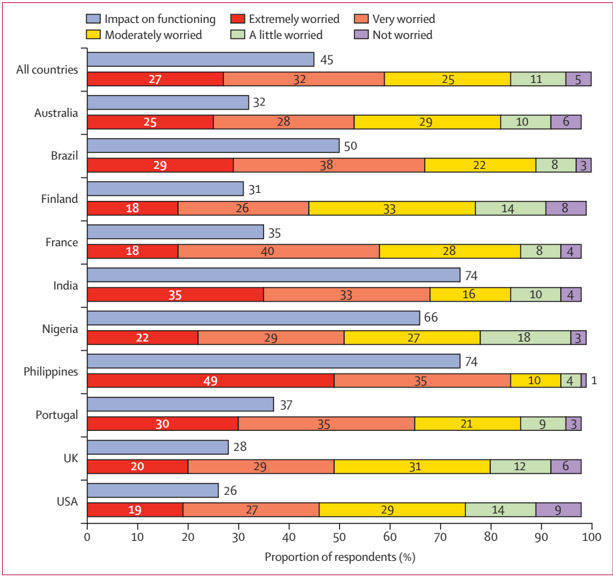
Background Climate change has important implications for the health and futures of children and young people, yet they have little power to limit its harm, making them vulnerable to climate anxiety. This is the first large-scale investigation of climate anxiety in children and young people globally and its relationship with perceived government response. Methods We surveyed 10 000 children and young people (aged 16-25 years) in ten countries (Australia, Brazil, Finland, France, India, Nigeria, Philippines, Portugal, the UK, and the USA; 1000 participants per country). Invitations to complete the survey were sent via the platform Kantar between May 18 and June 7, 2021. Data were collected on participants' thoughts and feelings about climate change, and government responses to climate change. Descriptive statistics were calculated for each aspect of climate anxiety, and Pearson's correlation analysis was done to evaluate whether climate-related distress, functioning, and negative beliefs about climate change were linked to thoughts and feelings about government response. Findings Respondents across all countries were worried about climate change (59% were very or extremely worried and 84% were at least moderately worried). More than 50% reported each of the following emotions: sad, anxious, angry, powerless, helpless, and guilty. More than 45% of respondents said their feelings about climate change negatively affected their daily life and functioning, and many reported a high n…
Verified 2026-11-25 · 1 reference not checked yet
Overview
CoChat Summary
TL;DR
This global survey of 10,000 people aged 16–25 across ten countries found widespread climate anxiety and distress, with many reporting negative functional impacts. Climate distress was correlated with negative perceptions of government responses and feelings of betrayal.
Key findings
- 59% were very or extremely worried about climate change and 84% were at least moderately worried; more than 50% reported feeling sad, anxious, angry, powerless, helpless, and guilty.
- More than 45% said their feelings about climate change negatively affected their daily life and functioning; 75% said the future is frightening and 83% said people have failed to take care of the planet.
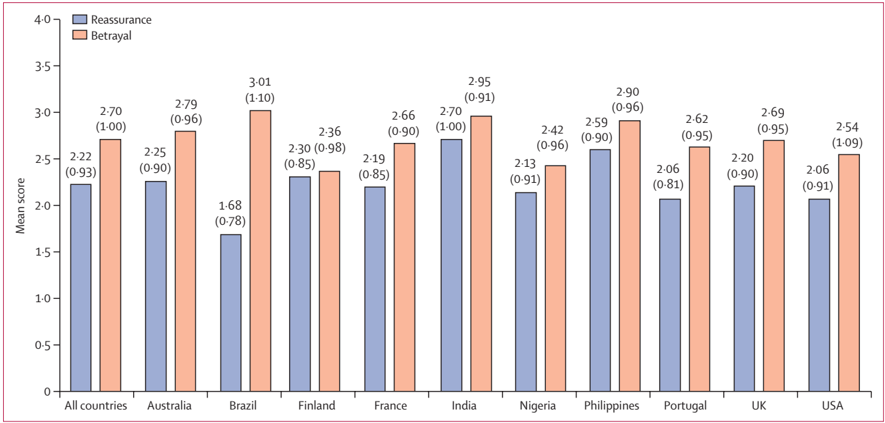
- Respondents rated government responses negatively (mean 14.96 on a 9–18 scale, SD 2.57) and reported greater betrayal (mean 2.7, SD 1.0) than reassurance (mean 2.22, SD 0.93; p<0.0001).
- Climate anxiety and distress were correlated with perceived inadequate government response and associated feelings of betrayal.
Methods
- Cross-sectional online survey of 10,000 children and young people aged 16–25 years in ten countries (Australia, Brazil, Finland, France, India, Nigeria, Philippines, Portugal, the UK, and the USA; 1000 per country), recruited via Kantar between May 18 and June 7, 2021.
- Quota sampling was based on age, gender, and region, with data weighted to OECD statistics for each country by age group, gender, and region.
- Descriptive statistics were calculated for climate anxiety constructs, and Pearson’s correlation analysis explored links between climate-related distress, functioning, negative beliefs, and thoughts/feelings about government response; findings significant at p≤0.001 are reported.
Limitations
- The paper states that non-standardised measures were used because no appropriate standardised measures existed; the study cannot indicate severity compared with normative samples, did not measure mental health outcomes, and used a yes/no/prefer-not-to-say response scale.
- The paper states that equal sample sizes per country were not weighted by population size, so aggregated results are not globally representative; online polling required internet access and sometimes English, and gender was recorded only as male or female.
- Evident from the text: the cross-sectional design cannot establish causality between perceived government response and climate distress.
Model-written summary. Check it against the paper before relying on it.
Integrity signals
Registry
Cites
Statistics
Figures
Verification
Claims the paper makes
12 Valid · 0 Not valid · 19 Not checked · 99 Own results and interpretations
Every source the paper cites for this claim was checked and supports it.
In the paper
“Children are now turning to legal action based on government failure to protect ecosystems, young citizens, and their futures. 26”
What the sources say
- Supportedcites [26] 26 Salas RN, Jacobs W, Perera F. The case of Juliana v. US-children and the health burdens of climate change. N Engl J Med 2019; 380: 2085-87 . source
The supplied Abstract passages describe children filing suit over federal inaction on climate change, which they say violates their constitutional rights. They also connect that inaction to threats to children’s safe environment and to future generations, supporting the citing sentence’s paraphrase. (LLM, conf=0.88)
plainstates a cause- Asserted: passes — The authors put it forward as true.
- Checkable: passes — It can be checked against evidence.
- Load-bearing: unclear — It is unclear whether the paper’s conclusions depend on it.
- Based: passes — The paper gives a reason why it holds.
- Supported
A result the paper reports from its own data — it cites no other source for it, so there is none to check. The quote shows it is in the paper.
In the paper
“in the Global North, Portugal (which had dramatic increases in wildfires since 2017) showed the highest level of worry.”
plainn = 1,000- Asserted: passes — The authors put it forward as true.
- Checkable: passes — It can be checked against evidence.
- Load-bearing: unclear — It is unclear whether the paper’s conclusions depend on it.
- Based: passes — The paper gives a reason why it holds.
A result the paper reports from its own data — it cites no other source for it, so there is none to check. The quote shows it is in the paper.
In the paper
“Respondents rated governmental responses to climate change negatively”
plain- Asserted: passes — The authors put it forward as true.
- Checkable: passes — It can be checked against evidence.
- Load-bearing: passes — The paper’s conclusions depend on it.
- Based: passes — The paper gives a reason why it holds.
A result the paper reports from its own data — it cites no other source for it, so there is none to check. The quote shows it is in the paper.
In the paper
“This distress was associated with beliefs about inadequate governmental response and feelings of betrayal.”
plainstates an association- Asserted: passes — The authors put it forward as true.
- Checkable: passes — It can be checked against evidence.
- Load-bearing: passes — The paper’s conclusions depend on it.
- Based: passes — The paper gives a reason why it holds.
A result the paper reports from its own data — it cites no other source for it, so there is none to check. The quote shows it is in the paper.
In the paper
“More than 45% of respondents said their feelings about climate change negatively affected their daily life and functioning”
- Also stated in: § Results · p. 5 · plain
“More than 45% of respondents said their feelings about climate change negatively affected their daily lives”
plainn = 10- Asserted: passes — The authors put it forward as true.
- Checkable: passes — It can be checked against evidence.
- Load-bearing: passes — The paper’s conclusions depend on it.
- Based: passes — The paper gives a reason why it holds.
- Also stated in: § Results · p. 5 · plain
50 more claims
Create a free account to see all 130 claims and to verify the 1 reference still open.
- Probably not a substantial claim. 51
- It may state two separate claims as one. 41
- The quote only partly states this claim. 6
Claims other papers make about this one
Each is checked against this paper’s own text: does it say what the citing paper says it does?
The source backs part of the claim, not all of it — or backs it for a different population, condition or comparison.
In the citing paper
“Investigations into anxiety about climate change have revealed that it is increasingly common for many people across the globe [9], with large-scale international studies identifying growing concern about climate change [10–12].”
From The relationship between climate change and mental health: a systematic review of the association between eco-anxiety, psychological distress, and symptoms of major affective disorders (2024) · cites this paper as [10]
Experimental — accuracy not yet measuredThe source backs part of the claim, not all of it — or backs it for a different population, condition or comparison.
In the citing paper
“The high prevalence of eco-anxiety [10] - be it at clinical or subclinical levels - underscores the need for broader level changes related to climate change.”
From The relationship between climate change and mental health: a systematic review of the association between eco-anxiety, psychological distress, and symptoms of major affective disorders (2024) · cites this paper as [10]
Experimental — accuracy not yet measuredThe source backs part of the claim, not all of it — or backs it for a different population, condition or comparison.
In the citing paper
“and varied understandings and experiences of climate change have differing impacts on the relationship with mental health [10, 12].”
From The relationship between climate change and mental health: a systematic review of the association between eco-anxiety, psychological distress, and symptoms of major affective disorders (2024) · cites this paper as [10]
Experimental — accuracy not yet measuredThe source backs part of the claim, not all of it — or backs it for a different population, condition or comparison.
In the citing paper
“A global survey of 10,000 young people (16-25) across 10 countries found: (1) 75% were frightened about the future; (2) 84% were moderately worried; (3) 59% were very or extremely worried; and (4) 45%+ reported climate change-related feelings negatively affected their daily life and functioning [21].”
From Climate Distress: A Review of Current Psychological Research and Practice (2023) · cites this paper as [21]
Experimental — accuracy not yet measuredThe source backs part of the claim, not all of it — or backs it for a different population, condition or comparison.
In the citing paper
“An overall lack of trust in government was also identified, with a wide belief that the government response to climate change will continue to be inadequate [21].”
From Climate Distress: A Review of Current Psychological Research and Practice (2023) · cites this paper as [21]
Experimental — accuracy not yet measured
21 more claims about this paper
Create a free account to see every claim other papers make about this one.
Self-check
Percentages, sums and reported differences re-computed from the paper’s own numbers.
Rated minor: it would not touch a result — a value no result rests on, a p-value that stays on the same side of the significance level, or a conflict that is clerical, resolved elsewhere in the paper, or outside its own findings.
In the paper
“15 543 people began the survey and 10 000 (68%) completed it.”
Reported 68 · recomputed 64.337644
Citations
Cites
Mental health of young people: A global public-health challenge
Patel, V., Flisher, A. J., Hetrick, S., & McGorry, P. (2007) · The Lancet · doi:10.1016/s0140-6736(07)60368-7 · Cited by 3,126 · cited 2×
“23 Children facing a future severely damaged by climate change will need support.”
Stress and Health: Psychological, Behavioral, and Biological Determinants
Schneiderman, N., Ironson, G., & Siegel, S. D. (2005) · Annual Review of Clinical Psychology · doi:10.1146/annurev.clinpsy.1.102803.144141 · Cited by 2,252 · cited 2×
“22 Exposure to chronic stress in childhood has a long-lasting impact and increases the risk of developing mental health problems.”
Development and validation of a measure of climate change anxiety
Clayton, S., & Karazsia, B. T. (2020) · Journal of Environmental Psychology · doi:10.1016/j.jenvp.2020.101434 · Cited by 1,196
Self-citationAnxiety and the Ecological Crisis: An Analysis of Eco-Anxiety and Climate Anxiety
Pihkala, P. (2020) · Sustainability · doi:10.3390/su12197836 · Cited by 978 · cited 2×
“In threatening and uncertain situations such as the climate crisis, this response can be seen as what is sometimes referred to as practical anxiety 1,4 because it has the beneficial effect of leading people to reassess their behaviour in order to respond appropriately.”
Self-citationMoral Injury: An Integrative Review
Griffin, B. J., Purcell, N., Burkman, K., Litz, B. T., Bryan, C. J., Schmitz, M., Villierme, C., Walsh, J., & Maguen, S. (2019) · Journal of Traumatic Stress · doi:10.1002/jts.22362 · Cited by 752 · cited 2×
“28 This might include an awareness of or failure to prevent harmful unethical behaviour.”
Stanley, S. K., Hogg, T. L., Leviston, Z., & Walker, I. (2021) · The Journal of Climate Change and Health · doi:10.1016/j.joclim.2021.100003 · Cited by 715
Anxiety, worry, and grief in a time of environmental and climate crisis: a narrative review
Ojala, M., Cunsolo, A., Ogunbode, C. A., & Middleton, J. (2021) · Annual Review of Environment and Resources · doi:10.1146/annurev-environ-012220-022716 · Cited by 670
The case for systems thinking about climate change and mental health
Berry, H. L., Waite, T. D., Dear, K. B. G., Capon, A. G., & Murray, V. (2018) · Nature Climate Change · doi:10.1038/s41558-018-0102-4 · Cited by 485 · cited 2×
“Changing climate and weather-related disasters have diverse impacts, both direct (eg, destruction and trauma) and indirect (eg, strained personal and public resources, interrupted community functioning), 2 as well as resulting in climate anxiety.”
Eco-Anxiety and Environmental Education
Pihkala, P. (2020) · Sustainability · doi:10.3390/su122310149 · Cited by 475
Self-citationThe Hogg Eco-Anxiety Scale: Development and Validation of a Multidimensional Scale
(2021) · doi:10.31219/osf.io/rxudb · Cited by 465
Research works printed but not linked: 4
- 11 Jensen T. Ecologies of guilt in environmental rhetorics. Cham: Palgrave Macmillan, 2019.
- 18 UNICEF. One billion children at 'extremely high risk' of the impacts of the climate crisis. Aug 20, 2021. https://www.unicef.org. uk/press-releases/onebillion-children-at-extremely-high-risk-of-theimpacts-of-the-climate-crisis-unicef (accessed Sept 5, 2021).
- 27 Weintrobe S. Psychological roots of the climate crisis: neoliberal exceptionalism and the culture of uncare. New York, NY: Bloomsbury Academic, 2021.
- 32 Mavronicola N. Torture, inhumanity and degradation under article 3 of the ECHR: absolute rights and absolute wrongs. Oxford: Bloomsbury Publishing, 2021.
Cited by
Items 501–600 of 2,164
Ge, J., Pan, W., Liang, X., & Zhang, J. (2025) · BMC Public Health · doi:10.1186/s12889-025-23282-2 · Cited by 17
“Similarly, a large-scale multi-national study demonstrated that climate change exerts a widespread and profound effect on mental health, contributing to prevalent anxiety and negative emotions [3].”
Wortzel, J. R., Guerrero, A. P. S., Aggarwal, R., Coverdale, J., & Brenner, A. M. (2022) · Academic Psychiatry · doi:10.1007/s40596-022-01688-z · Cited by 17
“In a recent international study of 10,000 adolescents and young adults polled about climate anxiety, 59% of participants reported feeling very to extremely worried about climate change [37], and many expressed a deep sense of confusion, betrayal, and anger toward adults who they perceive as not doing enough to protect…”
BackgroundEducation Beyond Green Growth: Regenerative Inquiry for Intergenerational Responsibility
Stein, S. E., Andreotti, V., Ahenakew, C., Suša, R., Taylor, L., Valley, W., Siwek, D., Cardoso, C., Duque, C. A., Calhoun, B., et al. (2024) · Nordic Journal of Comparative and International Education (NJCIE) · doi:10.7577/njcie.5618 · Cited by 11
“Particularly in light of growing eco-anxiety amongst young people (e.g., Galway & Field, 2023; Hickman et al., 2021), educators are being tasked to serve as emissaries of hope for the continuity and expansion of the existing system, as we are warned that failing to inspire this hope equates to…”
BackgroundCosentino, M., Gal-Oz, R., & Safer, D. L. (2024) · Springer eBooks · doi:10.1007/978-3-031-54790-4_15 · Cited by 12
Huynh, L., Anjum, S., Lieu, T., Horse, M. L., Martin‐Hill, D., & Wekerle, C. (2023) · Child Abuse & Neglect · doi:10.1016/j.chiabu.2023.106184 · Cited by 15
Climate Change and Child Health Equity
Budolfson, K., & Etzel, R. A. (2023) · Pediatric Clinics of North America · doi:10.1016/j.pcl.2023.03.012 · Cited by 10
Introduction to the Special Issue: A Collaborative Definition of Ecotherapy
Bodnar, S. (2023) · Ecopsychology · doi:10.1089/eco.2023.0022 · Cited by 11
Teacher candidates' preparedness to address diverse situations that can threaten pupils’ well-being
Salo, A., & Kajamies, A. (2024) · Teaching and Teacher Education · doi:10.1016/j.tate.2024.104470 · Cited by 23
Walking Forward Together—The Next Step: Indigenous Youth Mental Health and the Climate Crisis
Brown, M., Mirza, S., Lu, J., & Stewart, S. L. (2024) · Psych · doi:10.3390/psych6010013 · Cited by 12
Countering Climate Fear with Mindfulness: A Framework for Sustainable Behavioral Change
Poonamallee, L. (2025) · Sustainability · doi:10.3390/su17146472 · Cited by 15
“Don’t Look Up”: Eco-anxiety presenting in a Community Mental Health Service
Mulligan, D., O’Callaghan, A. K., & Guérandel, A. (2023) · Irish Journal of Psychological Medicine · doi:10.1017/ipm.2023.20 · Cited by 9
“In a recent survey (Hickman et al., 2021), 10,000 children and young people, from ten countries, were asked about their experiences of climate-related anxiety.”
BackgroundFine, J. C., Gray, S., Grosse, C. E., & Mark, B. (2023) · Climate and Development · doi:10.1080/17565529.2023.2261406 · Cited by 8
Philosophical Perspectives on Climate Anxiety
Vaškovic, P. (2023) · Handbooks in philosophy · doi:10.1007/978-3-031-07002-0_144 · Cited by 10
White, E. J., Williams, N., & Martin, K. (2024) · International Journal of Early Childhood · doi:10.1007/s13158-024-00392-3 · Cited by 13
“In a recent survey of 10,000 young people aged 16–25 years across 42 countries, Hickman et al. (2021) found that 59% are extremely worried about climate change, with 45% reporting that their daily lives were affected by negative thoughts and feelings of betrayal by adults—which the authors describe…”
Bhawra, J., Elsahli, N., & Patel, J. (2024) · JMIR Public Health and Surveillance · doi:10.2196/54064 · Cited by 17
“The majority of recent research in this area has shown that in addition to being active participants in climate change activism [117,118], children and youth are particularly vulnerable to both climate change impacts [119-122] and mental health challenges [121].”
BackgroundApproaches to Understanding Youth Well-Being
Cahill, H., & Gowing, A. (2024) · Springer eBooks · doi:10.1007/978-981-99-8606-4_10 · Cited by 13
Lau, S. S. S., Appiah, K., Ho, C. C. Y., Cheng, M. C. H., & Yang, B.-Y. (2024) · The Journal of Climate Change and Health · doi:10.1016/j.joclim.2024.100364 · Cited by 11
“To measure the mental health impacts, some researchers have used unvalidated simple questions [6,15] and non-climate-speci fi c anxiety inventories [16].”
Simon, P. D., Aruta, J. J. B. R., Fryer, L. K., & Bridges, S. (2024) · The Educational and Developmental Psychologist · doi:10.1080/20590776.2024.2440457 · Cited by 10
“Unfortunately, climate worry has not yet been studied in the Hong Kong context despite emerging evidence for climate-related negative emotions seen across 10 countries around the globe (Hickman et al., 2021).”
Climate change and youth development: A view of an emerging field
Thomaes, S. C. E. (2025) · International Journal of Behavioral Development · doi:10.1177/01650254251317141 · Cited by 12
“In one influential study, a large-scale investigation of climate anxiety, a total of 10,000 young people (ages 16–25) from 10 countries and 6 continents were surveyed (Hickman et al., 2021).”
Levy, S. R., Monahan, C., Araiza, A. M., Ramírez, L. F., & Palacios‐Espinosa, X. (2025) · Journal of Social Issues · doi:10.1111/josi.12664 · Cited by 19
Most Africans place primary responsibility for climate action on their own government
Andrews, T. M., Simpson, N. P., Krönke, M., Meyer, A. L. S., Trisos, C. H., & Roberts, D. (2025) · Communications Earth & Environment · doi:10.1038/s43247-025-02244-x · Cited by 13
“We additionally include an indicator variable for country of residence in the regression, ensuring any main effect of country of residence is not re fl ected in the other independent variables of interest (Supplementary Tables 2 and 10).”
InfluentialNeural pathways to resilience: Leveraging neuroscience to understand and mitigate eco‐anxiety
Ikiz, B., & Carlson, J. M. (2025) · Annals of the New York Academy of Sciences · doi:10.1111/nyas.15347 · Cited by 13
“6,7 In the US cohort, roughly 43% indicated that climate change had adverse effects on their mental health.”
Parola, A., & Marcionetti, J. (2025) · Journal of Adolescence · doi:10.1002/jad.12507 · Cited by 12
“The psychological literature traces how climate change (Hickman et al. 2021), fear and worry of war (Regnoli et al. 2024; Regnoli et al. 2025), and pandemics (Parola 2020) are associated with the perception of “ no future.”
The mental health impact of the climate and ecological crisis on vulnerable populations in Africa
Lewins, A., Churchard, A., & Kennedy–Williams, P. (2025) · Cogent Mental Health · doi:10.1080/28324765.2025.2500747 · Cited by 10
“Indeed, the significant negative impact of the climate crisis on children and young people is consistently reported in the literature (Burke et al., 2018; Hickman et al., 2021; Sharpe & Davison, 2022).”
Climate change and mental health: the rising tide of eco-distress
Sheate, W. R. (2025) · Perspectives in Public Health · doi:10.1177/17579139251333289 · Cited by 8
Jylhä, K. M., Kolk, M., & Fairbrother, M. (2025) · Population and Environment · doi:10.1007/s11111-025-00503-9 · Cited by 14
“Such concerns could be particularly pronounced among younger generations, as many adolescents and young adults feel deeply worried about the current state of the environment and their own prospects of parenting children in the climate-changing world (e.g., Hickman et al., 2021; Sasser, 2024).”
Kelemen, E., Czett, K., & Szentendrey, R. (2025) · International Journal of the Commons · doi:10.5334/ijc.1539 · Cited by 14
“While some examples are well-known where the youth became a sustainability change agent (e.g. the Fridays for Future movement), children are still highly vulnerable and have very little power to address emerging challenges (Hickman et al., 2021).”
Searching for the Goldilocks zone of climate anxiety
Heeren, A., & Clayton, S. (2025) · Trends in Cognitive Sciences · doi:10.1016/j.tics.2025.11.007 · Cited by 8
Self-citationPre-service teachers and climate change education: a belief-intention gap yet to be bridged
Winter, V., Büssing, A. G., Gericke, N. M., & Möller, A. (2026) · Environmental Education Research · doi:10.1080/13504622.2025.2608774 · Cited by 11
“Topic-specific characteristics include its scientific complexity, interdisci-plinarity, uncertainty about future outlooks, the lack of adequate political measures, and climate anxiety or reactance among young generations (IPCC, 2023; Hickman et al. 2021).”
Obach, B. K. (2023) · Teaching Sociology · doi:10.1177/0092055x231159094 · Cited by 8
“The effects of climate change are far reaching, and it has already had physical and psychological impacts on human health (Doherty and Clayton 2011; Fritze et al. 2008; Galway et al. 2019; Hickman et al. 2021).”
BackgroundInfluentialExpanding Nature’s storytelling: extended reality and debiasing strategies for an eco-agency
Reis, C. M., & Câmara, A. S. (2023) · Frontiers in Psychology · doi:10.3389/fpsyg.2023.941373 · Cited by 9
“Climate anxiety, particularly in young people, has been associated with their perception of being condemned to not having a future, feeling a sense of abandonment by those in charge, governments and adults (Hickman et al., 2021).”
BackgroundPinchoff, J., Regules, R., Gómez-Ugarte, A. C., Abularrage, T. F., & Bojórquez, I. (2023) · PLOS Global Public Health · doi:10.1371/journal.pgph.0002219 · Cited by 14
Adolescents Concerned about Climate Change: A Hermeneutic Study
Drumm, K., & Vandermause, R. K. (2023) · International Journal of Environmental Research and Public Health · doi:10.3390/ijerph20227063 · Cited by 11
“Beginning-stage research is uncovering that climate change concern in adolescents can be experienced in various forms, including grief, anger, powerlessness, and frustration [22].”
BackgroundKeller, J., Eichinger, M., Bechtoldt, M. N., Liu, S., Neuber, M., Peter, F., Pohle, C., Reese, G., Schäfer, F., & Heinzel, S. (2023) · The Journal of Climate Change and Health · doi:10.1016/j.joclim.2023.100286 · Cited by 15
“Today ’ s young generation is particularly affected by the detrimental consequences of the climate crisis [2,3] and suffers from adverse mental health effects, including climate anxiety [4 − 6].”
Bui, T. D., Hannah, A., Madria, S., Nabaweesi, R., Levin, E. L., Wilson, M., & Nguyen, L. (2023) · Mathematics · doi:10.3390/math11244910 · Cited by 14
Kaligis, F., Wangge, G., Fernando, G., et al. (2024) · Medical Journal of Indonesia · doi:10.13181/mji.bc.247147 · Cited by 8
Conversations across international divides: Children learning through empathy about climate change
Satchwell, C., Walley, B., Dodding, J., & Lagi, M. D. A. (2024) · Geographical Research · doi:10.1111/1745-5871.12638 · Cited by 14
Kurt, G., & Akdur, R. (2024) · Sustainability · doi:10.3390/su16062269 · Cited by 13
Cheung, K. K. C. (2024) · Research in Science Education · doi:10.1007/s11165-024-10164-7 · Cited by 17
“In the era of the climate change crisis, our next generation needs to critically analyse the present situation of climate change and anticipate the climate future (Hickman et al., 2021; Ojala, 2012c).”
Fabio, A. D., & Svicher, A. (2024) · Frontiers in Psychology · doi:10.3389/fpsyg.2024.1173303 · Cited by 8
Ballegeer, A.-M., Ferrari, E., Corrochano, D., & Ruíz, C. (2024) · European Journal of Teacher Education · doi:10.1080/02619768.2024.2370885 · Cited by 12
“There is a rapidly growing body of research that addresses the role of emotions in the behavioural response of society to CC (Hermans 2016; Hickman et al. 2021; Ogunbode et al. 2022; Ojala et al. 2021; Stanley et al. 2021).”
Kenstler, M., & Shelley, G. P. (2024) · Ecopsychology · doi:10.1089/eco.2023.0062 · Cited by 11
“Hickman et al. (2021) found that 75% of respondents reported that they felt that “ the future is frightening, ” 59% were extremely worried, 84% were moderately worried, and 45% reported that their daily life and functioning were negatively impacted by climate change.”
Age matters: The effect of regret and loss aversion on cultured meat acceptance
Duong, C., Sung, B., & Septianto, F. (2024) · Appetite · doi:10.1016/j.appet.2024.107614 · Cited by 10
“Indeed, this inclination is not surprising, considering that younger individuals frequently voice their concerns and worries about climate change (Hickman et al., 2021) and animal welfare (Cor-nish et al., 2016).”
Climate change perceptions in Latin America: From regional consensus to sociodemographic differences
Sapiains, R., Azócar, G., Vélez, G. F. P., Ugarte, A. M., & Aldunce, P. (2024) · Population and Environment · doi:10.1007/s11111-024-00464-5 · Cited by 13
“These results might align with ecoanxiety studies (Hickman et al., 2021), as they show a more intense and diverse psychological affectation of climate change in the youngest group.”
Parnes, M. F., Amort, B., Calderon-Smith, C., Chambers, E. C., & Musicaro, R. M. (2024) · Current Pediatrics Reports · doi:10.1007/s40124-024-00331-9 · Cited by 13
“In a global survey of youth climate change distress, youth endorsed feelings of sadness, fear, anxiety, anger, powerlessness, and guilt [1].”
Calabria, L., & Marks, E. M. (2024) · Frontiers in Psychology · doi:10.3389/fpsyg.2024.1351428 · Cited by 17
Self-citationAdvocating for planetary health is an essential part of advocating for children’s health
Haq, M., Sampath, V., Sheffield, P. E., Jackson, R. J., & Nadeau, K. C. (2024) · Pediatric Research · doi:10.1038/s41390-024-03665-8 · Cited by 11
Obesity, Pregnancy and the Social Contract with Today’s Adolescents
Berti, C., Elahi, S., Catalano, P. M., Bhutta, Z. A., Krawinkel, M. B., Parisi, F., Agostoni, C. V., Cetin, I., & Hanson, M. A. (2022) · Nutrients · doi:10.3390/nu14173550 · Cited by 9
“), along with emotional dissatisfaction with government responses, are widespread among young people and impact their daily functioning and the risk of mental health problems [34].”
BackgroundKlima-Angst und ökologischer Notfall: Psychotherapeutische Implikationen und Handlungsmöglichkeiten
Dohm, L., Chmielewski, F., Peter, F., & Schulze, M. (2023) · Ärztliche Psychotherapie · doi:10.21706/aep-18-1-5 · Cited by 12
Multiple psychotherapeutic approaches and perspectives on eco-anxiety
Raile, P. (2023) · Frontiers in Psychology · doi:10.3389/fpsyg.2023.1162616 · Cited by 13
“Eco-anxiety has only been discussed to a limited extent in the psychotherapeutic literature, although the number of scientific texts treating the phenomenon from different perspectives, such as psychology, sociology, and psychotherapy, has increased considerably in recent years (Pihkala, 2020a; Hickman et al., 2021; T…”
BackgroundSwiss electricity supply scenarios: Perspectives from the young generation
Holzer, S., Dubois, A., Cousse, J., Xexakis, G., & Trutnevyte, E. (2023) · Energy and Climate Change · doi:10.1016/j.egycc.2023.100109 · Cited by 14
Perception of environmental issues in the head-and-neck surgery room: A preliminary study
Carsuzaa, F., Fieux, M., Bartier, S., Fath, L., Alexandru, M., Legré, M., & Favier, V. (2023) · European Annals of Otorhinolaryngology Head and Neck Diseases · doi:10.1016/j.anorl.2023.06.003 · Cited by 8
Learning in the forest: environmental perception of Brazilian teenagers
Profice, C. C., Grenno, F. E., Fandi, A. C., Menezes, S. M., Seminara, C. I., & Cassano, C. R. (2023) · Frontiers in Psychology · doi:10.3389/fpsyg.2023.1046405 · Cited by 9
“org threat to children’s development and education (Hickman et al., 2021).”
BackgroundGlobal Boiling: Implications for Mental Health
Thomas, S. P. (2023) · Issues in Mental Health Nursing · doi:10.1080/01612840.2023.2244338 · Cited by 7
Using Content Area Reading to Support an Interdisciplinary Storyline Involving Climate Science
Clark, T. M., Clark, C. T., Jeong, S., et al. (2024) · Journal of Chemical Education · doi:10.1021/acs.jchemed.4c00390 · Cited by 8
Building capacity for climate-change education in Aotearoa New Zealand schools
Everth, T., Bright, R., Morey, C., DePetris, T., Gaze, S., Barker, A., Soanes, A., Gurney, L., & Eames, C. (2021) · set Research Information for Teachers · doi:10.18296/set.0202 · Cited by 12
Aruta, J. J. B. R. (2022) · Child and Adolescent Mental Health · doi:10.1111/camh.12549 · Cited by 8
Making Space for Critical Climate Education
Stein, S. E. (2024) · About Campus Enriching the Student Learning Experience · doi:10.1177/10864822241284622 · Cited by 13
Chiew, S., Mayes, E., Maiava, N., Villafaña, D., & Abhayawickrama, N. (2024) · Global Studies of Childhood · doi:10.1177/20436106241241338 · Cited by 20
“…and medical attention to the correlations between young people’s eco-anxiety, despair and anger and perceived inadequate governmental action on climate change (Hickman et al., 2021), feelings of anxiety, despair and rage move in dynamic affective relation with feelings of love, joy, love and hope.”
Tarrats-Pons, E., Mussons-Torras, M., & Jiménez-Pérez, Y. (2025) · Behavioral Sciences · doi:10.3390/bs15050571 · Cited by 21
“A global study involving 10,000 young people aged 16 to 25 revealed that 59% express deep concern about climate change, with nearly half reporting that this environmental anxiety negatively affects their daily lives (Hickman et al., 2021).”
Vargas, M., Álvarez-Sánchez, C., Tyler, V. Q., & Hachem, F. (2025) · The Lancet Planetary Health · doi:10.1016/s2542-5196(25)00033-6 · Cited by 14
Moula, Z., Powell, J., Konstant, T. N., & Karkou, V. (2023) · The Arts in Psychotherapy · doi:10.1016/j.aip.2023.102085 · Cited by 16
Liga, F., Cannavò, M., Papa, F., & Cuzzocrea, F. (2024) · International Journal of Emotional Education · doi:10.56300/srff1178 · Cited by 12
“Overall, this study’s findings parallel those related to how PEBs are closely related to both situational and individual components in emerging adults (Hickman et al., 2021; Sanson & Bellemo, 2021).”
Vaškovic, P., & Vičanová, G. (2024) · Human Studies · doi:10.1007/s10746-024-09728-3 · Cited by 15
Lopes, R. M., Comarú, M. W., Pierini, M. F., de Souza, R. A., & Hauser‐Davis, R. A. (2024) · Frontiers in Communication · doi:10.3389/fcomm.2024.1297246 · Cited by 7
Exploring the association between growth mindsets and climate action with young people
Rissanen, I., Kuusisto, E., Aarnio‐Linnanvuori, E., Portus, R., Williams, S., Laggan, S., Reilly, K., & Vainikainen, M. (2024) · Social Psychology of Education · doi:10.1007/s11218-024-09937-9 · Cited by 9
Rizeq, J., & Ojala, M. (2024) · Ecopsychology · doi:10.1089/eco.2024.0002 · Cited by 13
“Many young people are worried and concerned about the climate crisis (Clemens et al. 2022; Hickman et al., 2021; Ingle & Jafry, 2019; Ojala et al., 2021; Vercammen et al., 2023).”
Development and validation of the domain-specific climate change distress scale
Weiss, M. H., Gutzeit, J., & Hein, G. (2024) · Journal of Environmental Psychology · doi:10.1016/j.jenvp.2024.102392 · Cited by 11
How do extreme weather events contribute to violence against children?
Datzberger, S., Howard‐Merrill, L., Parkes, J., & Iorfa, S. K. (2024) · Child Abuse & Neglect · doi:10.1016/j.chiabu.2024.107093 · Cited by 12
“Evidence is mounting on ‘eco-anxiety —(cid:0) in children and youth because o the awareness and ear o the consequences o climate related EWEs (Hickman et al., 2021).”
Is Ecological Anxiety Due to Climate Change Associated With the Fertility Preferences of Women?
Özkan, A., Kolcu, M., AYDAN, Y., & Akbaş, G. (2024) · Journal of Evaluation in Clinical Practice · doi:10.1111/jep.14265 · Cited by 14
Asare‐Nuamah, P., Botchway, E., Nuamah, N. J., & Anane-Aboagye, M. (2025) · Climate and Development · doi:10.1080/17565529.2024.2448180 · Cited by 12
“A global survey in both developed and developing countries by Hickman et al. (2021) also observed negative climate emotions among children and youth.”
InfluentialEco-anxiety, climate change and the ‘bottom billion’: a plea for better understanding
Butler, C. D. (2025) · BMJ Mental Health · doi:10.1136/bmjment-2024-301380 · Cited by 10
Choręziak, A., & Rzymski, P. (2025) · Nutrients · doi:10.3390/nu17081377 · Cited by 12
Hindmarch, G., Meza, J. I., Shimkhada, R., Padilla-Frausto, D. I., & Eisenberg, D. (2025) · Journal of Adolescent Health · doi:10.1016/j.jadohealth.2025.02.019 · Cited by 10
Haugestad, C. A. P., & Carlquist, E. (2025) · British Journal of Social Psychology · doi:10.1111/bjso.12888 · Cited by 9
Helping young people cope with eco-anxiety: a qualitative intervention study
Eklöf, B., & Klöckner, C. A. (2025) · Environmental Education Research · doi:10.1080/13504622.2025.2542264 · Cited by 14
“Research shows that young people in less industrialized countries report being more affected by climate emotions (Hickman et al. 2021).”
Tolstrup, J. S., Larsen, S. R., Kelleher, I., Cannon, M. D., Larsen, C. V. L., & Nordentoft, M. (2025) · The Lancet Regional Health - Europe · doi:10.1016/j.lanepe.2025.101435 · Cited by 11
Assessing eco-anxiety across the lifespan: A systematic review of current global scales
Samarawickrama, S. K., Richmond, S., Freeman, N. C., & Kirk, H. (2025) · The Journal of Climate Change and Health · doi:10.1016/j.joclim.2025.100595 · Cited by 11
“However, this general-isability is limited as several of the reviewed scales were developed within young people or University students, such as the Hogg Eco-Anxiety Scale [16], the Unnamed Climate Anxiety Measure [17], and the unnamed Adolescent Climate Anxiety Scale [38].”
InfluentialNature Positive: halting and reversing biodiversity loss toward restoring Earth system stability
Locke, H., Rockström, J., Plowright, R. K., Laffoley, D., Bear, L. L., Peres, C. A., Wei, F., Karanth, K. K., Zemke, L., Seetal, R., et al. (2026) · Frontiers in Science · doi:10.3389/fsci.2026.1609998 · Cited by 18
“Additionally, the degradation of natural systems has serious mental health consequences, contributing to eco-anxiety among the general population (75, 76) and negatively impacting Indigenous communities whose cultural and spiritual well-being is deeply tied to their environments (77).”
Why I Hesitate to Have a Child: Eco-Anxiety and Reproduction Concerns
van den Broek, O. M. (2023) · Business & Society · doi:10.1177/00076503231174142 · Cited by 10
Michaelson, V. E., Wadge, S., Peters, M., Khan, S., Pilato, K. A., & Gardner, P. (2023) · Wellbeing Space and Society · doi:10.1016/j.wss.2023.100169 · Cited by 10
Bazoua, C., Rahim, A., Robinson, R., et al. (2023) · Dental Update · doi:10.12968/denu.2023.50.9.724 · Cited by 7
Fulfilling the Regenerative Potential of Higher Education: A Collaborative Auto-Ethnography
Wessels, K. R., & Grünwald, L. (2023) · Education Sciences · doi:10.3390/educsci13101037 · Cited by 15
‘Safe spaces’ and community building for climate scientists, exploring emotions through a case study
Haddaway, N., & Duggan, J. (2023) · Global Environmental Psychology · doi:10.5964/gep.11347 · Cited by 10
“…to as ‘climate anxiety’) (Whitmarsh et al., 2022), a term that has received considerable research attention of late (Coffey et al., 2021; Hayes et al., 2018; Ojala et al., 2021; Palinkas & Wong, 2020), and is the focus of increasing public concern (Hickman et al., 2021; Manning & Clayton, 2018).”
BackgroundArya, B., & Kumar, H. (2023) · IOP Conference Series Earth and Environmental Science · doi:10.1088/1755-1315/1279/1/012020 · Cited by 12
Ecogames: Playful Perspectives on the Climate Crisis
de Beke, L. O., Raessens, J., Werning, S., & Farca, G. (2024) · Amsterdam University Press eBooks · doi:10.1515/9789048557219 · Cited by 15
Climate Change and Heat: Challenges for Child Health Outcomes and Inequities
Zhang, A. Y., Bennett, M. B., Martin, S., & Grow, H. M. (2024) · Current Pediatrics Reports · doi:10.1007/s40124-024-00314-w · Cited by 9
“Climate change-related adverse outcomes in mental health are well documented, especially regarding climate anxiety [37, 38].”
Child Online Safety Legislation (COSL) - A Primer
Marwick, A. E., Smith, J., Caplan, R., & Wadhawan, M. (2024) · doi:10.21428/bfcb0bff.de78f444 · Cited by 17
Innovate for Impact: Young Adults Education and Empowerment for Climate Action
Rap, S., & Bodas, M. (2024) · Australian Journal of Environmental Education · doi:10.1017/aee.2024.46 · Cited by 9
Does Climate Change Worry Decrease during Armed Conflicts?
Hamama‐Raz, Y., & Shinan‐Altman, S. (2024) · Climate · doi:10.3390/cli12100162 · Cited by 7
The power of human narrative: Inspiring action on climate change
Husain-Naviatti, A. (2024) · Environmental Science & Policy · doi:10.1016/j.envsci.2024.103954 · Cited by 9
Wang, J., Yin, Z., Wang, M., et al. (2025) · Journal of Hazardous Materials · doi:10.1016/j.jhazmat.2025.138456 · Cited by 7
ESD in school: Understanding French-speaking Swiss pupils’ representations of sustainability
Gavin, A.-S., & Audrin, C. (2022) · Environmental Education Research · doi:10.1080/13504622.2022.2128061 · Cited by 9
“The inadequate response to climate crisis is associated with distress and anxiety (Hickman et al. 2021).”
BackgroundPark, M. K., Baek, S., Jeong, D. W., & Kim, G. S. (2023) · Korean Journal of Adult Nursing · doi:10.7475/kjan.2023.35.1.71 · Cited by 7
McLean, M., Phelps, C., & Moro, C. (2023) · Medical Teacher · doi:10.1080/0142159x.2023.2225721 · Cited by 11
Takkinen, P., Pulkki, J. M., & Vadén, T. (2023) · Educational Philosophy and Theory · doi:10.1080/00131857.2023.2274275 · Cited by 13
Khatun, F., & Logan, M. R. (2023) · Children s Geographies · doi:10.1080/14733285.2023.2285468 · Cited by 15
“Extreme anxiety amongst children and young people experienced globally is impacting their daily lives (Hickman et al. 2021).”
Silencing is the Real Crime: Youth and Elders Talk About Climate
Weintrobe, S. (2024) · The Psychoanalytic Study of the Child · doi:10.1080/00797308.2023.2287380 · Cited by 7
“Marks, Hickman et al. (2021), surveying 10,000 16-to 24-year-olds from across the world, found that 60% have lost trust in government to address the crisis.”
BackgroundCapoano, E., Balbé, A., & Costa, P. R. (2024) · Social Sciences · doi:10.3390/socsci13030145 · Cited by 13
A New Ontology and Youth Work Ethics in a Time of Planetary Crisis
Bessant, J., & Watts, R. (2024) · Ethics and Social Welfare · doi:10.1080/17496535.2024.2324313 · Cited by 9
“Understanding the signi fi cance of the anthropocene means recognising how young people already bear a disproportionate burden of harmful consequences of global warming compared to many older people (Hickman et al. 2021, 863 – 873).”
Background
Metadata
- Authors
- Hickman, C., Marks, E., Pihkala, P., Clayton, S., Lewandowski, R. E., Mayall, E. E., Wray, B., Mellor, C., & van Susteren, L.
- Affiliations
- University of Bath (GB)
- University of Helsinki (FI)
- College of Wooster (US)
- NYU Langone Health (US)
- University of East Anglia (GB)
- London School of Hygiene & Tropical Medicine (GB)
- Oxford Health NHS Foundation Trust (GB)
- Corresponding author
- Hickman, Caroline
- Venue
- The Lancet Planetary Health
- Publisher
- Elsevier BV
- Published
- 2021-12
- Volume
- 5
- Issue
- 12
- Pages
- e863-e873
- ISSN
- 2542-5196 (ISSN-L)
- OpenAlex
- W4200005759
- Semantic Scholar
- 4a876cc35863ba593aacf58fe6a24773b3cb9c29
- Cited by
- 2,324
- References
- 27
- Citations by year
- 2026: 566 · 2025: 652 · 2024: 566 · 2023: 364 · 2022: 170 · 2021: 4
- FWCI
- 382.19
- Type
- journal article
- Language
- en
- Open access
- gold
- doi.org
- Licence
- cc-by-nc-nd
- www.elsevier.com/tdm/userlicense/1.0/ (tdm)
- www.elsevier.com/legal/tdmrep-license (tdm)
- creativecommons.org/licenses/by-nc-nd/4.0/ (vor)
- Locations
- The Lancet Planetary Health (publishedVersion, cc-by-nc-nd)
- PubMed (publishedVersion)
- DOAJ (DOAJ: Directory of Open Access Journals) (submittedVersion, cc-by-sa)
- Työväentutkimus Vuosikirja (submittedVersion)
- Topics
- Social Sciences › Sociology and Political Science › Climate Change Communication and Perception
- Physical Sciences › Environmental Science › Health, Toxicology and Mutagenesis › Climate Change and Health Impacts
- Social Sciences › Psychology › Clinical Psychology › COVID-19 and Mental Health
- Keywords
- climate anxiety, children and young people, climate change, betrayal, climate change beliefs, daily functioning, global survey
- MeSH terms
- Adolescent, Adult, Anxiety, Australia, Child, Government, Humans, Surveys and Questionnaires, Young Adult, Climate Change
About these checks
Registry, retraction, Cites and statistics results are computed, not judged, with one exception: a printed reference that no index lists is read once by a model before it counts as a citation error. Claims are extracted by a model and kept only when their quote appears verbatim in the text; each cited source is then checked, with a model’s help, for whether it says what the claim relies on. Those verdicts can be wrong — read the claim’s quote and the cited source before relying on one.
The claim verdicts this report counts are experimental: their accuracy is not yet measured.
A language model drew the claims from the paper on 2026-10-10, under version 3 of the claim definition (model deepseek-v4.1-flash, prompt extract-v3).
A second model labelled each claim on 2026-10-10 (model jev-1.13-20260917, definition revision gold-guideline-v0.2).
Cited sources are checked with a language model’s help (gpt-6-sol).
Statistics and arithmetic are recomputed, not judged.
Confidence bands are shown only for fields calibrated on our annotated test set. None is calibrated yet, so no band is shown.
What counts as a claim ›How we measure confidence ›How we check this ›
Are you an author, or do you see a problem with this page? Request a review
Data sources
Bibliographic data: Semantic Scholar, OpenAlex, Crossref.
Contains information from the Semantic Scholar Academic Graph Datasets, made available under the ODC Attribution License (ODC-BY 1.0).
Semantic Scholar’s data is described in: Kinney, R., et al. (2023). The Semantic Scholar Open Data Platform. arXiv:2301.10140.
