

Climate anxiety in children and young people and their beliefs about government responses to climate change: a global survey
Open accessThe DOI matches its Crossref record; 27 of the 30 references it cites were found in a registry or an index, and 1 are not checked yet; 14 of the 48 sources its claims cite were checked for support.
Abstract
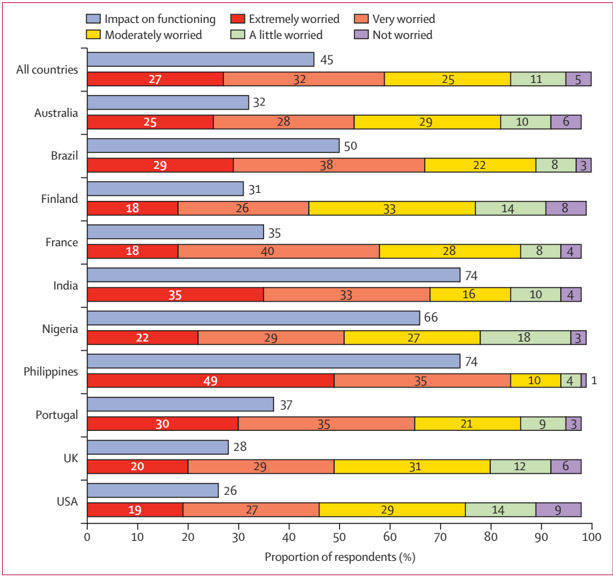
Background Climate change has important implications for the health and futures of children and young people, yet they have little power to limit its harm, making them vulnerable to climate anxiety. This is the first large-scale investigation of climate anxiety in children and young people globally and its relationship with perceived government response. Methods We surveyed 10 000 children and young people (aged 16-25 years) in ten countries (Australia, Brazil, Finland, France, India, Nigeria, Philippines, Portugal, the UK, and the USA; 1000 participants per country). Invitations to complete the survey were sent via the platform Kantar between May 18 and June 7, 2021. Data were collected on participants' thoughts and feelings about climate change, and government responses to climate change. Descriptive statistics were calculated for each aspect of climate anxiety, and Pearson's correlation analysis was done to evaluate whether climate-related distress, functioning, and negative beliefs about climate change were linked to thoughts and feelings about government response. Findings Respondents across all countries were worried about climate change (59% were very or extremely worried and 84% were at least moderately worried). More than 50% reported each of the following emotions: sad, anxious, angry, powerless, helpless, and guilty. More than 45% of respondents said their feelings about climate change negatively affected their daily life and functioning, and many reported a high n…
Verified 2026-11-25 · 1 reference not checked yet
Overview
CoChat Summary
TL;DR
This global survey of 10,000 people aged 16–25 across ten countries found widespread climate anxiety and distress, with many reporting negative functional impacts. Climate distress was correlated with negative perceptions of government responses and feelings of betrayal.
Key findings
- 59% were very or extremely worried about climate change and 84% were at least moderately worried; more than 50% reported feeling sad, anxious, angry, powerless, helpless, and guilty.
- More than 45% said their feelings about climate change negatively affected their daily life and functioning; 75% said the future is frightening and 83% said people have failed to take care of the planet.
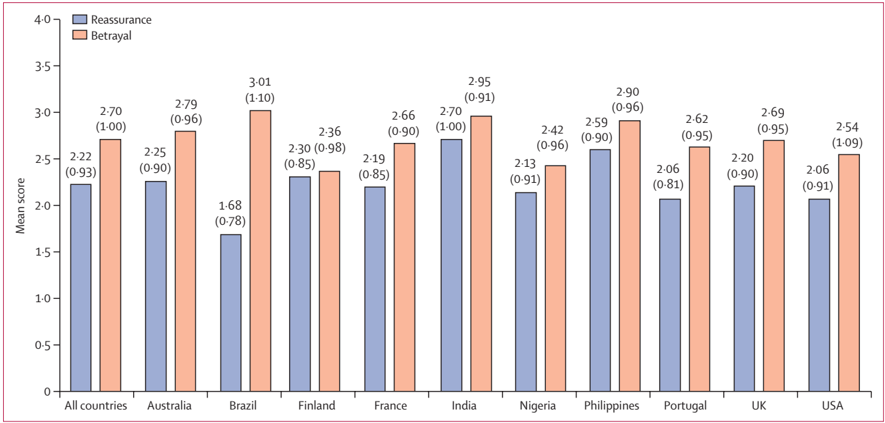
- Respondents rated government responses negatively (mean 14.96 on a 9–18 scale, SD 2.57) and reported greater betrayal (mean 2.7, SD 1.0) than reassurance (mean 2.22, SD 0.93; p<0.0001).
- Climate anxiety and distress were correlated with perceived inadequate government response and associated feelings of betrayal.
Methods
- Cross-sectional online survey of 10,000 children and young people aged 16–25 years in ten countries (Australia, Brazil, Finland, France, India, Nigeria, Philippines, Portugal, the UK, and the USA; 1000 per country), recruited via Kantar between May 18 and June 7, 2021.
- Quota sampling was based on age, gender, and region, with data weighted to OECD statistics for each country by age group, gender, and region.
- Descriptive statistics were calculated for climate anxiety constructs, and Pearson’s correlation analysis explored links between climate-related distress, functioning, negative beliefs, and thoughts/feelings about government response; findings significant at p≤0.001 are reported.
Limitations
- The paper states that non-standardised measures were used because no appropriate standardised measures existed; the study cannot indicate severity compared with normative samples, did not measure mental health outcomes, and used a yes/no/prefer-not-to-say response scale.
- The paper states that equal sample sizes per country were not weighted by population size, so aggregated results are not globally representative; online polling required internet access and sometimes English, and gender was recorded only as male or female.
- Evident from the text: the cross-sectional design cannot establish causality between perceived government response and climate distress.
Model-written summary. Check it against the paper before relying on it.
Integrity signals
Registry
Cites
Statistics
Figures
Verification
Claims the paper makes
12 Valid · 0 Not valid · 19 Not checked · 99 Own results and interpretations
Every source the paper cites for this claim was checked and supports it.
In the paper
“Children are now turning to legal action based on government failure to protect ecosystems, young citizens, and their futures. 26”
What the sources say
- Supportedcites [26] 26 Salas RN, Jacobs W, Perera F. The case of Juliana v. US-children and the health burdens of climate change. N Engl J Med 2019; 380: 2085-87 . source
The supplied Abstract passages describe children filing suit over federal inaction on climate change, which they say violates their constitutional rights. They also connect that inaction to threats to children’s safe environment and to future generations, supporting the citing sentence’s paraphrase. (LLM, conf=0.88)
plainstates a cause- Asserted: passes — The authors put it forward as true.
- Checkable: passes — It can be checked against evidence.
- Load-bearing: unclear — It is unclear whether the paper’s conclusions depend on it.
- Based: passes — The paper gives a reason why it holds.
- Supported
A result the paper reports from its own data — it cites no other source for it, so there is none to check. The quote shows it is in the paper.
In the paper
“in the Global North, Portugal (which had dramatic increases in wildfires since 2017) showed the highest level of worry.”
plainn = 1,000- Asserted: passes — The authors put it forward as true.
- Checkable: passes — It can be checked against evidence.
- Load-bearing: unclear — It is unclear whether the paper’s conclusions depend on it.
- Based: passes — The paper gives a reason why it holds.
A result the paper reports from its own data — it cites no other source for it, so there is none to check. The quote shows it is in the paper.
In the paper
“Respondents rated governmental responses to climate change negatively”
plain- Asserted: passes — The authors put it forward as true.
- Checkable: passes — It can be checked against evidence.
- Load-bearing: passes — The paper’s conclusions depend on it.
- Based: passes — The paper gives a reason why it holds.
A result the paper reports from its own data — it cites no other source for it, so there is none to check. The quote shows it is in the paper.
In the paper
“This distress was associated with beliefs about inadequate governmental response and feelings of betrayal.”
plainstates an association- Asserted: passes — The authors put it forward as true.
- Checkable: passes — It can be checked against evidence.
- Load-bearing: passes — The paper’s conclusions depend on it.
- Based: passes — The paper gives a reason why it holds.
A result the paper reports from its own data — it cites no other source for it, so there is none to check. The quote shows it is in the paper.
In the paper
“More than 45% of respondents said their feelings about climate change negatively affected their daily life and functioning”
- Also stated in: § Results · p. 5 · plain
“More than 45% of respondents said their feelings about climate change negatively affected their daily lives”
plainn = 10- Asserted: passes — The authors put it forward as true.
- Checkable: passes — It can be checked against evidence.
- Load-bearing: passes — The paper’s conclusions depend on it.
- Based: passes — The paper gives a reason why it holds.
- Also stated in: § Results · p. 5 · plain
50 more claims
Create a free account to see all 130 claims and to verify the 1 reference still open.
- Probably not a substantial claim. 51
- It may state two separate claims as one. 41
- The quote only partly states this claim. 6
Claims other papers make about this one
Each is checked against this paper’s own text: does it say what the citing paper says it does?
The source backs part of the claim, not all of it — or backs it for a different population, condition or comparison.
In the citing paper
“Investigations into anxiety about climate change have revealed that it is increasingly common for many people across the globe [9], with large-scale international studies identifying growing concern about climate change [10–12].”
From The relationship between climate change and mental health: a systematic review of the association between eco-anxiety, psychological distress, and symptoms of major affective disorders (2024) · cites this paper as [10]
Experimental — accuracy not yet measuredThe source backs part of the claim, not all of it — or backs it for a different population, condition or comparison.
In the citing paper
“The high prevalence of eco-anxiety [10] - be it at clinical or subclinical levels - underscores the need for broader level changes related to climate change.”
From The relationship between climate change and mental health: a systematic review of the association between eco-anxiety, psychological distress, and symptoms of major affective disorders (2024) · cites this paper as [10]
Experimental — accuracy not yet measuredThe source backs part of the claim, not all of it — or backs it for a different population, condition or comparison.
In the citing paper
“and varied understandings and experiences of climate change have differing impacts on the relationship with mental health [10, 12].”
From The relationship between climate change and mental health: a systematic review of the association between eco-anxiety, psychological distress, and symptoms of major affective disorders (2024) · cites this paper as [10]
Experimental — accuracy not yet measuredThe source backs part of the claim, not all of it — or backs it for a different population, condition or comparison.
In the citing paper
“A global survey of 10,000 young people (16-25) across 10 countries found: (1) 75% were frightened about the future; (2) 84% were moderately worried; (3) 59% were very or extremely worried; and (4) 45%+ reported climate change-related feelings negatively affected their daily life and functioning [21].”
From Climate Distress: A Review of Current Psychological Research and Practice (2023) · cites this paper as [21]
Experimental — accuracy not yet measuredThe source backs part of the claim, not all of it — or backs it for a different population, condition or comparison.
In the citing paper
“An overall lack of trust in government was also identified, with a wide belief that the government response to climate change will continue to be inadequate [21].”
From Climate Distress: A Review of Current Psychological Research and Practice (2023) · cites this paper as [21]
Experimental — accuracy not yet measured
21 more claims about this paper
Create a free account to see every claim other papers make about this one.
Self-check
Percentages, sums and reported differences re-computed from the paper’s own numbers.
Rated minor: it would not touch a result — a value no result rests on, a p-value that stays on the same side of the significance level, or a conflict that is clerical, resolved elsewhere in the paper, or outside its own findings.
In the paper
“15 543 people began the survey and 10 000 (68%) completed it.”
Reported 68 · recomputed 64.337644
Citations
Cites
Mental health of young people: A global public-health challenge
Patel, V., Flisher, A. J., Hetrick, S., & McGorry, P. (2007) · The Lancet · doi:10.1016/s0140-6736(07)60368-7 · Cited by 3,126 · cited 2×
“23 Children facing a future severely damaged by climate change will need support.”
Stress and Health: Psychological, Behavioral, and Biological Determinants
Schneiderman, N., Ironson, G., & Siegel, S. D. (2005) · Annual Review of Clinical Psychology · doi:10.1146/annurev.clinpsy.1.102803.144141 · Cited by 2,252 · cited 2×
“22 Exposure to chronic stress in childhood has a long-lasting impact and increases the risk of developing mental health problems.”
Development and validation of a measure of climate change anxiety
Clayton, S., & Karazsia, B. T. (2020) · Journal of Environmental Psychology · doi:10.1016/j.jenvp.2020.101434 · Cited by 1,196
Self-citationAnxiety and the Ecological Crisis: An Analysis of Eco-Anxiety and Climate Anxiety
Pihkala, P. (2020) · Sustainability · doi:10.3390/su12197836 · Cited by 978 · cited 2×
“In threatening and uncertain situations such as the climate crisis, this response can be seen as what is sometimes referred to as practical anxiety 1,4 because it has the beneficial effect of leading people to reassess their behaviour in order to respond appropriately.”
Self-citationMoral Injury: An Integrative Review
Griffin, B. J., Purcell, N., Burkman, K., Litz, B. T., Bryan, C. J., Schmitz, M., Villierme, C., Walsh, J., & Maguen, S. (2019) · Journal of Traumatic Stress · doi:10.1002/jts.22362 · Cited by 752 · cited 2×
“28 This might include an awareness of or failure to prevent harmful unethical behaviour.”
Stanley, S. K., Hogg, T. L., Leviston, Z., & Walker, I. (2021) · The Journal of Climate Change and Health · doi:10.1016/j.joclim.2021.100003 · Cited by 715
Anxiety, worry, and grief in a time of environmental and climate crisis: a narrative review
Ojala, M., Cunsolo, A., Ogunbode, C. A., & Middleton, J. (2021) · Annual Review of Environment and Resources · doi:10.1146/annurev-environ-012220-022716 · Cited by 670
The case for systems thinking about climate change and mental health
Berry, H. L., Waite, T. D., Dear, K. B. G., Capon, A. G., & Murray, V. (2018) · Nature Climate Change · doi:10.1038/s41558-018-0102-4 · Cited by 485 · cited 2×
“Changing climate and weather-related disasters have diverse impacts, both direct (eg, destruction and trauma) and indirect (eg, strained personal and public resources, interrupted community functioning), 2 as well as resulting in climate anxiety.”
Eco-Anxiety and Environmental Education
Pihkala, P. (2020) · Sustainability · doi:10.3390/su122310149 · Cited by 475
Self-citationThe Hogg Eco-Anxiety Scale: Development and Validation of a Multidimensional Scale
(2021) · doi:10.31219/osf.io/rxudb · Cited by 465
Research works printed but not linked: 4
- 11 Jensen T. Ecologies of guilt in environmental rhetorics. Cham: Palgrave Macmillan, 2019.
- 18 UNICEF. One billion children at 'extremely high risk' of the impacts of the climate crisis. Aug 20, 2021. https://www.unicef.org. uk/press-releases/onebillion-children-at-extremely-high-risk-of-theimpacts-of-the-climate-crisis-unicef (accessed Sept 5, 2021).
- 27 Weintrobe S. Psychological roots of the climate crisis: neoliberal exceptionalism and the culture of uncare. New York, NY: Bloomsbury Academic, 2021.
- 32 Mavronicola N. Torture, inhumanity and degradation under article 3 of the ECHR: absolute rights and absolute wrongs. Oxford: Bloomsbury Publishing, 2021.
Cited by
Items 201–300 of 2,164
Vay, J. N. L., Cunningham, A., Soul, L. C., Dave, H., Hoath, L., & Lawrance, E. L. (2024) · Frontiers in Psychology · doi:10.3389/fpsyg.2023.1298623 · Cited by 50
Brunette, M. F., Erlich, M. D., Edwards, M. L., Adler, D. A., Berlant, J., Dixon, L., First, M. B., Oslin, D. W., Siris, S. G., & Talley, R. M. (2023) · Journal of Nervous & Mental Disease · doi:10.1097/nmd.0000000000001734 · Cited by 26
“In a 10-country survey of 10,000 youth and young adults, 84% of surveyed young people reported they were moderately, very, or extremelyworried aboutclimate change (Hickman et al.,2021).”
BackgroundLife in the shadows: Young people’s experiences of climate change futures
Jones, C. (2023) · Futures · doi:10.1016/j.futures.2023.103264 · Cited by 36
Cohen, E. S., Kringos, D. S., Kouwenberg, L. H. J. A., Weiland, N. H. S., Richie, C., Aarts, J. W. M., & Hehenkamp, W. J. K. (2024) · Patient Education and Counseling · doi:10.1016/j.pec.2024.108427 · Cited by 36
Börner, S. (2023) · International Journal of Disaster Risk Reduction · doi:10.1016/j.ijdrr.2023.103636 · Cited by 51
Lukacs, J. N., Bratu, A., Adams, S., Logie, C., Tok, N., McCunn, L. J., Lem, M., Henley, A., Closson, K., Martin, G., et al. (2023) · Journal of Environmental Psychology · doi:10.1016/j.jenvp.2023.102091 · Cited by 26
Stanley, S. K. (2023) · Journal of Environmental Psychology · doi:10.1016/j.jenvp.2023.102134 · Cited by 45
Zimmermann, G., Darwiche, J., Messerli‐Bürgy, N., Petegem, S. V., Mouton, B., Venard, G., & Antonietti, J. (2024) · Emerging Adulthood · doi:10.1177/21676968241258270 · Cited by 34
“A recent large study of 10,000 young individuals aged 16 to 25 years across ten countries showed that 59% of participants were “ very ” or “ extremely worried ” about climate change (Hickman et al., 2021).”
Cosh, S., Williams, S. E., Lykins, A. D., Bartik, W. J., & Tully, P. J. (2024) · BMC Psychology · doi:10.1186/s40359-024-02240-4 · Cited by 35
“Recent research has shown that climate change anxiety is an increasingly common experience [13] that is observed around the world and across regions [14, 15].”
InfluentialKaman, A., Erhart, M., Devine, J., Napp, A.-K., Reiß, F., Behn, S., & Ravens‐Sieberer, U. (2025) · Bundesgesundheitsblatt - Gesundheitsforschung - Gesundheitsschutz · doi:10.1007/s00103-025-04045-1 · Cited by 54
Climate anxiety in the Philippines: Current situation, potential pathways, and ways forward
Aruta, J. J. B. R., & Guinto, R. (2022) · The Journal of Climate Change and Health · doi:10.1016/j.joclim.2022.100138 · Cited by 32
Curriculum development for student agency on sustainability issues: An exploratory study
Rap, S., Blonder, R., Sindiani-Bsoul, A., & Rosenfeld, S. (2022) · Frontiers in Education · doi:10.3389/feduc.2022.871102 · Cited by 41
“For example, a recently survey of 10,000 children and young people in 10 countries showed that 59% were very or extremely worried and 84% at least moderately worried about climate change and government responses to climate change (Hickman et al., 2021).”
BackgroundHajek, A., & König, H. (2023) · International Journal of Environmental Research and Public Health · doi:10.3390/ijerph20065064 · Cited by 27
Australian young people's perspectives about the political determinants of the climate crisis
Arnot, G., Thomas, S. L., Pitt, H., & Warner, E. (2023) · Health Promotion Journal of Australia · doi:10.1002/hpja.734 · Cited by 26
Climate change and mental health: Position paper of the European Psychiatric Association
Brandt, L., Adorjan, K., Catthoor, K., Chkonia, E. D., Falkai, P., Fiorillo, A., Gondek, T. M., Vay, J. N. L., Kuzman, M. R., Meyer‐Lindenberg, A., et al. (2024) · European Psychiatry · doi:10.1192/j.eurpsy.2024.1754 · Cited by 43
“In this context, a survey was conducted in 2021 among 10,000 adolescents and young adults aged 16 to 25 years from ten countries [55].”
BackgroundClimate Anxiety, Maturational Loss, and Adversarial Growth
Pihkala, P. (2024) · The Psychoanalytic Study of the Child · doi:10.1080/00797308.2023.2287382 · Cited by 34
“Climate anxiety is increasingly impacting people of all ages, but it is especially prominent in many children and youth (e.g. Galway and Field 2023; Hickman et al. 2021; Ogunbode et al. 2022; Sangervo, Jylhä, and Pihkala 2022).”
BackgroundSelf-citationTreble, M., Cosma, A. P., & Martin, G. (2023) · Current Psychiatry Reports · doi:10.1007/s11920-023-01430-y · Cited by 35
Regnoli, G. M., Tiano, G., & Rosa, B. D. (2024) · Climate · doi:10.3390/cli12080118 · Cited by 32
“Concerning our target audience, research shows that young adults’ increasing involvement in environmental issues [16,17] is triggering a catastrophic and apocalyptic perception of the climate crisis, expanding their fear of the unknown, sense of uncertainty, and dark vision of the future [35].”
BackgroundInfluentialClimate Anxiety: Current Evidence and Future Directions
Boehme, B. A. E., Kinsman, L. M., Norrie, H. J., Tessier, E. D., Fleming, S. W., & Asmundson, G. J. G. (2024) · Current Psychiatry Reports · doi:10.1007/s11920-024-01538-9 · Cited by 26
“Within the current body of evidence, differences in geographic region, age, gender, ethnicity or nationality, and occupation are associated with increased CA [10, 11].”
Climate Change and Mental Health
Clayton, S., & Crandon, T. (2024) · Annual Review of Clinical Psychology · doi:10.1146/annurev-clinpsy-081423-025932 · Cited by 57
Self-citationFrom Thinking Green to Riding Green: A Study on Influencing Factors in Electric Vehicle Adoption
Rafiq, F., Parthiban, E. S., Rajkumari, Y., Adil, M., Nasir, M., & Dogra, N. (2023) · Sustainability · doi:10.3390/su16010194 · Cited by 48
Jylhä, K. M., Ojala, M., Odisho, S., & Riise, A. (2023) · Frontiers in Psychology · doi:10.3389/fpsyg.2023.1178449 · Cited by 31
“These results are also of importance from a practical perspective when the intention is to find ways to encourage young people to choose more climate-friendly food choices, considering that many of them are concerned about climate change and are searching for ways to engage with the issue (Hickman et al., 2021; Pihkal…”
BackgroundAustralian young people’s perceptions of the commercial determinants of the climate crisis
Arnot, G., Thomas, S. L., Pitt, H., & Warner, E. (2023) · Health Promotion International · doi:10.1093/heapro/daad058 · Cited by 24
“Despite increasingly reporting experiences of anxiety and distress due to a lack of climate action (Hickman et al., 2021), young people around the globe demonstrate their strength and value as a collective as they persist in advocating for effective climate responses (Boulianne et al.”
BackgroundEmotions and the Climate Crisis: A Research Agenda for an Affective Sustainability Science
Brosch, T., & Sauter, D. A. (2023) · Emotion Review · doi:10.1177/17540739231193741 · Cited by 36
“Indeed, the emotional suffering experienced by many — especially young — people around the world can in itself be considered a major negative impact of the climate crisis (Hickman et al., 2021; Ojala et al., 2021).”
BackgroundRethinking ecoanxiety through environmental moral distress: an ethics reflection
Banwell, N., & Eggert, N. (2023) · The Journal of Climate Change and Health · doi:10.1016/j.joclim.2023.100283 · Cited by 32
Troy, C. L. C., Norman, M., Kim, N., Skurka, C., & Myrick, J. G. (2024) · Journal of Environmental Psychology · doi:10.1016/j.jenvp.2024.102312 · Cited by 29
Validation of the Hogg Climate Anxiety Scale
Hogg, T. L., Stanley, S. K., & O’Brien, L. V. (2024) · Climatic Change · doi:10.1007/s10584-024-03726-1 · Cited by 40
“Hickman and Marks et al. ( 2021) showed that most 16–25-year-olds who responded to their global survey from the United Kingdom (UK) and United States (US) felt anxious about climate change (UK: 60%; US: 58%).”
Eco‐anxiety among regional Australian youth with mental health problems: A qualitative study
Boyd, C. P., Jamieson, J., Gibson, K., Duffy, M., Williamson, M. K., & Parr, H. (2024) · Early Intervention in Psychiatry · doi:10.1111/eip.13549 · Cited by 38
Not Your Parents' Politics: Understanding Young People's Political Expression on Social Media
Kligler-Vilenchik, N., & Literat, I. (2024) · doi:10.1093/oso/9780197795156.001.0001 · Cited by 48
Gender perspectives in disaster response: An evidence-based review
Acanga, A., Matovu, B., Venugopalan, M., & Arlikatti, S. (2025) · Progress in Disaster Science · doi:10.1016/j.pdisas.2025.100416 · Cited by 42
Collery, A., & Niedzwiedz, C. L. (2025) · BMJ Mental Health · doi:10.1136/bmjment-2024-301318 · Cited by 41
“Future research should focus on identifying country-specific drivers of climate worry and developing tailored interventions that account for national contexts, including vulnerability to climate hazards, climate policies and healthcare infrastructure.”
Forest Bathing Increases Adolescents’ Mental Well-Being: A Mixed-Methods Study
Keller, J., Kayira, J., Chawla, L., & Rhoades, J. L. (2023) · International Journal of Environmental Research and Public Health · doi:10.3390/ijerph21010008 · Cited by 43
“It would also be useful to determine how long the mental health benefits of forest bathing last to recommend how frequently forest bathing must be practiced in order to maintain elevated mental well-being.”
BackgroundZeier, P., & Wessa, M. (2024) · Discover Sustainability · doi:10.1007/s43621-024-00209-2 · Cited by 34
“Hence, eco-guilt is based on feelings of responsibility that are especially prevalent in young people [24].”
Verlie, B. (2024) · Environment and Planning E Nature and Space · doi:10.1177/25148486241252734 · Cited by 37
“…a global injustice (Barnwell and Wood, 2022) and a torturous moral injury perpetrated through institutional betrayal (Henritze et al., 2023; Hickman et al., 2021), this paper brings together insights from a range of critical social theories to more rigorously outline the political and…”
InfluentialTriple planetary crisis: why healthcare professionals should care
Ihsan, F. R., Bloomfield, J. G., & Monrouxe, L. V. (2024) · Frontiers in Medicine · doi:10.3389/fmed.2024.1465662 · Cited by 32
Martin, S., Richards, C., Keogh, S. J., & Ward, A. (2024) · Teaching and learning in nursing · doi:10.1016/j.teln.2023.11.008 · Cited by 29
Boorse, D., & Jablonski, L. M. (2024) · Sustainable Earth Reviews · doi:10.1186/s42055-024-00077-8 · Cited by 23
“The existential threat of climate change, failure of world leaders to respond, and isolation of the pandemic have increased mental health challenges of youth who increasingly suffer from anxiety and experience climate grief and despair [3].”
Clayton, S., Sangalang, A., & Anderson, R. (2023) · Environmental Education Research · doi:10.1080/13504622.2023.2286934 · Cited by 35
Self-citationOrrù, L., Taccini, F., & Mannarini, S. (2024) · Behavioral Sciences · doi:10.3390/bs14030255 · Cited by 33
“Therefore, the relationship between eco-anxiety and emotion regulation [35] was investigated. between climate change worry, eco-anxiety, and emotion regulation [9,10,14,20,55–58].”
BackgroundMethodResultInfluentialA systematic review of mental health and climate change in the Philippines
Villarino, R. T., Hozhabri, K., Saint‐Onge, K., & Bernard, P. (2024) · Asian Journal of Psychiatry · doi:10.1016/j.ajp.2024.104191 · Cited by 33
Huang, H.-W., Teng, D. C.-E., & Tiangco, J. A. N. Z. (2025) · Journal of Science Education and Technology · doi:10.1007/s10956-024-10179-9 · Cited by 23
“This study also contributes by addressing the research gap pointed out by Hickman et al. (2021), Jones and Davison (2021), Monroe et al. (2017), and Plutzer et al. (2016) regarding identifying and evaluating teaching strategies that are effective and engaging so that learners are motivated and…”
Nguyen, K. M., Nguyen, N. T., Ngo, T. L., & Le, T. T. (2025) · Business Strategy & Development · doi:10.1002/bsd2.70063 · Cited by 28
Climate Data Practices: A Research Approach for HCI and Climate Justice
Soden, R., Agrawaal, T. S., Lord, A., Chanen, C., Flawn, L., Seaifan, Z., Classens, M., & Easterbrook, S. (2025) · ACM Transactions on Computer-Human Interaction · doi:10.1145/3719346 · Cited by 30
“Returning to the tripartite conception of climate justice discussed in Section 2.1 [52], we see that first, this can highlight distributive injustices, as with our discussion of financialization, by noting where and how the uneven impacts of climate change are accounted for, or elided, in climate…”
InfluentialTransformative Climate and Environmental Education for a Just Future
Sezen‐Barrie, A., Windschitl, M., & Nxumalo, F. (2025) · Science Education · doi:10.1002/sce.21963 · Cited by 41
İKLİM DEĞİŞİKLİĞİ ANKSİYETESİ ÖLÇEĞİ’NİN TÜRKÇE UYARLAMASI: GEÇERLİK VE GÜVENİRLİK ÇALIŞMASI
CEBECİ, F., KARAMAN, M., ÖZTÜRK, A. F., Uzun, K., ALTIN, O., ARICI, A., & Artan, T. (2022) · Ufkun Ötesi Bilim Dergisi · doi:10.54961/uobild.1129602 · Cited by 42
Rewriting the climate story with young climate justice activists
Trott, C. D. (2024) · Geographical Research · doi:10.1111/1745-5871.12662 · Cited by 33
Predictors of Pro-Environmental Behaviors in Adolescence: A Scoping Review
Denault, A., Bouchard, M., Proulx, J., Poulin, F., Dupéré, V., Archambault, I., & Lavoie, M. D. (2024) · Sustainability · doi:10.3390/su16135383 · Cited by 47
Martinsson, A. R., & Ojala, M. (2024) · Climatic Change · doi:10.1007/s10584-024-03778-3 · Cited by 40
“Although young people have been found to be particularly worried about climate change (see Hickman et al. 2021), not all feel responsibility to take an active part in mitigating this problem (e.g., World Wide Fund for Nature (WWF), 2017).”
BackgroundAnxiety and activism in response to climate change
Clayton, S., & Parnes, M. F. (2025) · Current Opinion in Psychology · doi:10.1016/j.copsyc.2025.101996 · Cited by 44
Self-citationMalboeuf‐Hurtubise, C., Léger‐Goodes, T., Herba, C. M., Bélanger, N., Smith, J., & Marks, E. M. (2024) · Frontiers in Child and Adolescent Psychiatry · doi:10.3389/frcha.2024.1296446 · Cited by 36
Self-citationChan, H., Li, L., Tam, K., & Hong, Y. (2024) · Journal of Anxiety Disorders · doi:10.1016/j.janxdis.2024.102917 · Cited by 29
van Dijk, S., van Schie, K., Smeets, T., & Mertens, G. (2024) · Journal of Anxiety Disorders · doi:10.1016/j.janxdis.2024.102957 · Cited by 29
Bibliometric analyses of climate psychology: critical psychology and climate justice perspectives
Anjum, G., & Aziz, M. (2025) · Frontiers in Psychology · doi:10.3389/fpsyg.2025.1520937 · Cited by 28
Thierry, V., Claustre, H., de Fommervault, O. P., Zilberman, N. V., Johnson, K. S., King, B., Wijffels, S., Bhaskar, U. T. V. S., Balmaseda, M., Belbéoch, M., et al. (2025) · Frontiers in Marine Science · doi:10.3389/fmars.2025.1593904 · Cited by 34
Krüger, T., Kraus, T., & Kaifie, A. (2022) · International Journal of Environmental Research and Public Health · doi:10.3390/ijerph19127143 · Cited by 38
James, A. A., & O’Shaughnessy, K. L. (2023) · Frontiers in Toxicology · doi:10.3389/ftox.2023.1290119 · Cited by 32
Heeren, A., Mouguiama-Daouda, C., & Contreras, A. (2021) · PsyArXiv (OSF Preprints) · doi:10.31234/osf.io/a69wp · Cited by 24
The cost of inaction on health equity and its social determinants
Yerramilli, P., Chopra, M., & Rasanathan, K. (2024) · BMJ Global Health · doi:10.1136/bmjgh-2023-012690 · Cited by 25
Mede, N. G., Cologna, V., Berger, S., Besley, J. C., Brick, C., Joubert, M., Maibach, E. W., Mihelj, S., Орескес, Н., Schäfer, M. S., et al. (2025) · Scientific Data · doi:10.1038/s41597-024-04100-7 · Cited by 60
“Following Hickman et al .”
Eichinger, M., Bechtoldt, M. N., Bui, I. T. M., Grund, J., Keller, J., Lau, A. G., Liu, S., Neuber, M., Peter, F., Pohle, C., et al. (2022) · International Journal of Environmental Research and Public Health · doi:10.3390/ijerph19138039 · Cited by 35
“A list of 19 emotions based on terms for emotional reactions from de Moor et al. (2020) [14], Gagn é and Krause (2021) [44] and Hickman et al. (2021) as well as from two reviews of Pihkala (2020) [45,46].”
BackgroundArnot, G., Thomas, S. L., Pitt, H., & Warner, E. (2023) · Australian and New Zealand Journal of Public Health · doi:10.1016/j.anzjph.2023.100048 · Cited by 28
Stanley, S. K., Leviston, Z., Hogg, T. L., & Walker, I. A. (2024) · Journal of Environmental Psychology · doi:10.1016/j.jenvp.2024.102490 · Cited by 33
Chai, L., Xing, G., Wang, W., et al. (2023) · Journal of Molecular Liquids · doi:10.1016/j.molliq.2023.121896 · Cited by 21
Jebsen, S., Senderovitz, M., & Winkler, I. (2023) · The International Journal of Management Education · doi:10.1016/j.ijme.2023.100860 · Cited by 30
Tran, P.-M., Nguyen, T., Dũng, N. H., Nguyen, A. T., Lam, N. D., Huyen, N. T., & Khuc, Q. V. (2024) · Urban Science · doi:10.3390/urbansci8020063 · Cited by 39
“Through their creative thinking and environmentally conscious actions, young people are leading the charge in accelerating the shift to a CE [13,14].”
BackgroundNature’s contributions to social determinants of mental health and the role of conservation
Pienkowski, T., Keane, A. M., Booth, H. L., Kinyanda, E., Fisher, J. C., Lawrance, E. L., Oh, R. R. Y., & Milner‐Gulland, E. J. (2024) · One Earth · doi:10.1016/j.oneear.2024.05.004 · Cited by 26
Laybourn‐Langton, L., Evans, J., & Dyke, J. G. (2023) · Earth System Dynamics · doi:10.5194/esd-14-1171-2023 · Cited by 35
“…action and of innovations that trigger positive tipping points are made more resilient In this regard, we should see adaptation as an enabler of mitigation under conditions of escalating destabilisation within the Earth sys-tem: the sustainability transition itself needs to be made more resilient”
BackgroundKnowledge, urgency and agency: reflections on climate change education course outcomes
Field, E., Berger, P., Lee, D., Strutt, C., & Nguyen, A. T. (2024) · Environmental Education Research · doi:10.1080/13504622.2023.2296359 · Cited by 32
“A heightened sense of urgency is also found in high levels of climate anxiety among young people (Galway and Field 2023; hickman et al. 2021).”
Translation and validation to the Arabic language version of the climate change anxiety scale (CCAS)
Fekih‐Romdhane, F., Malaeb, D. N., Yakın, E., Sakr, F., Dabbous, M., Khatib, S. E., Obeïd, S., & Hallit, S. R. (2024) · BMC Psychiatry · doi:10.1186/s12888-024-05956-0 · Cited by 33
“…a series of surveys documented that climate change is linked to a range of unpleasant negative emotions, including guilt, anger, helplessness [13], stress [14], sadness, hopelessness, fear [15], worries of being personally harmed [16], increased anxiety [13, 17], death anxiety and psychotic…”
BackgroundSengupta, D., Mathews, M., Bridges, L., D’Costa, R., & Bastian, B. L. (2024) · Administrative Sciences · doi:10.3390/admsci14100249 · Cited by 40
Climate emergency, young people and mental health: time for justice and health professional action
Singh, G., Xue, S., & Poukhovski-Sheremetyev, F. (2022) · BMJ Paediatrics Open · doi:10.1136/bmjpo-2021-001375 · Cited by 27
A human rights based approach to the global children's rights crisis: A call to action
Levy, S. R., Migacheva, K., Ramírez, L. F., Okorodudu, C., Cook, H., Araújo‐Soares, V., Minescu, A., Livert, D. E., Ragin, D. F., & Walker, P. (2022) · Journal of Social Issues · doi:10.1111/josi.12563 · Cited by 20
Understanding and managing psychological distress due to climate change
Seth, A., Maxwell, J., Dey, C., Le Feuvre, C., & Patrick, R. (2023) · Australian Journal of General Practice · doi:10.31128/ajgp-09-22-6556 · Cited by 20
Bleazby, J., Burgh, G., Thornton, S., et al. (2023) · Educational Philosophy and Theory · doi:10.1080/00131857.2023.2211260 · Cited by 20
“…people, aged 16–25, found that 84% were at least moderately worried about climate change and 59% were very or extremely worried, while 75% said “that they think the future is frightening and 83% said that they think people have failed to take care of the planet” (Hickman et al., 2021, p. e863).”
Health psychology and climate change: time to address humanity’s most existential crisis
Papies, E. K., Nielsen, K. S., & Soares, V. A. (2024) · Health Psychology Review · doi:10.1080/17437199.2024.2309242 · Cited by 34
“Notably, this anxiety correlates significantly with young people’s perceptions that their concerns are being ignored, and that governments are not doing enough to address the crisis (Hickman et al., 2021).”
InfluentialTrost, K., Ertl, V., König, J., Rosner, R., & Comtesse, H. (2024) · BMC Psychology · doi:10.1186/s40359-024-01677-x · Cited by 21
“However, these concepts have only recently been quantified [17, 19], with first results indicating associations of severe levels of these concepts with functional impacts in daily life (e.g., [20]).”
BackgroundResultMartin, G., Roswell, T., & Cosma, A. P. (2024) · Wellbeing Space and Society · doi:10.1016/j.wss.2024.100198 · Cited by 28
Chapter 15 : Human Health. Fifth National Climate Assessment
Hayden, M. H., Schramm, P. J., Beard, C. B., Bell, J. E., Bernstein, A. S., Bieniek-Tobasco, A., Cooley, N., Diuk‐Wasser, M. A., Dorsey, M. K., Ebi, K. L., et al. (2023) · doi:10.7930/nca5.2023.ch15 · Cited by 55
The co‐benefits of biodiversity citizen science for well‐being and nature relatedness
Eichholtzer, A. C., Driscoll, D. A., Patrick, R., Galletta, L., & Lawson, J. T. (2023) · Applied Psychology Health and Well-Being · doi:10.1111/aphw.12502 · Cited by 24
Qiu, S., & Qiu, J. (2024) · Frontiers in Psychology · doi:10.3389/fpsyg.2024.1363418 · Cited by 34
From individual to collective climate emotions and actions: a review
Brosch, T. (2024) · Current Opinion in Behavioral Sciences · doi:10.1016/j.cobeha.2024.101466 · Cited by 37
“Many people, especially younger ones, report substantial levels of climate anxiety, with considerable negative consequences for their mental health and well-being [3].”
Niedzwiedz, C. L., Olsen, J. R., Rizeq, J., Afework, T., Hill-Harding, C. K. V., Shaw, R. J., Thomas, R., Kariuki, S. M., Katikireddi, S. V., Weaver, A. J., et al. (2024) · Journal of Epidemiology & Community Health · doi:10.1136/jech-2024-222716 · Cited by 26
“48 54–56 These can relate to wider ‘ecological’ or ‘Earth’ emotions concerning environmental crises, such as biodiversity loss and species extinction.”
Hoffman, K. C., & Dicks, A. P. (2023) · Green Chemistry Letters and Reviews · doi:10.1080/17518253.2023.2185108 · Cited by 19
“…of adolescents and young adults (aged 16 – 25 years) quanti fi ed that climate change-related anxiety cuts across cultural and socio-economic lines ( 7 ), and a second eight-year longitudinal study ( N = 2244) indicated that 62.1% of adolescents experienced increasing, moderate, or high persistent…”
BackgroundInfluentialClimate change is a threat multiplier for violence against children
Cuartas, J. A., Bhatia, A., Carter, D., Cluver, L. D., Coll, C. V. N., Donger, E., Draper, C. E., Gardner, F. E. M., Herbert, B., Kelly, O. M., et al. (2023) · Child Abuse & Neglect · doi:10.1016/j.chiabu.2023.106430 · Cited by 26
Guiding principles for transdisciplinary and transformative fire research
Copes‐Gerbitz, K., Sutherland, I. J., Dickson‐Hoyle, S., Baron, J. N., Gonzalez-Moctezuma, P., Crowley, M. A., Kitchens, K. A., Devisscher, T., & Burr, J. (2024) · Fire Ecology · doi:10.1186/s42408-023-00244-w · Cited by 28
“ECRs are uniquely positioned to lead and engage in transdisciplinary research because we are the first generation of scholars experiencing negative effects of climate change during our early years of scholarship (Jeanson et al. 2020; Hickman et al. 2021).”
BackgroundLass‐Hennemann, J., Sopp, M. R., Ruf, N., et al. (2023) · Research Square · doi:10.21203/rs.3.rs-3131485/v1 · Cited by 19
Negative social tipping dynamics resulting from and reinforcing Earth system destabilization
Spaiser, V., Juhola, S. K., Constantino, S. M., Guo, W., Watson, T., Sillmann, J., Craparo, A., Basel, A. M., Bruun, J. T., Krishnamurthy, P. K., et al. (2024) · Earth System Dynamics · doi:10.5194/esd-15-1179-2024 · Cited by 33
Existential Risk, Climate Change, and Nonideal Justice
McLaughlin, A. (2024) · The Monist · doi:10.1093/monist/onae007 · Cited by 21
Long, J. (2024) · Political Geography · doi:10.1016/j.polgeo.2024.103117 · Cited by 37
Assmuth, A., Autto, H., Halonen, K.-M., Haltia, E., Huttunen, S., Lintunen, J., Lonkila, A., Nieminen, T. M., Ojanen, P., Peltoniemi, M., et al. (2024) · Land Use Policy · doi:10.1016/j.landusepol.2024.107341 · Cited by 20
Vergunst, F., Prentice, C. M., Orri, M., Berry, H. L., Paquin, V., Vitaro, F., Tremblay, R. E., Côté, S. M., & Geoffroy, M. (2024) · Climatic Change · doi:10.1007/s10584-024-03807-1 · Cited by 34
“Indeed, several multi-national surveys of young people indicate that negative emotions about climate change are associated with self-reported distress, insomnia, and reduced wellbeing (Hickman et al. 2021; Lawrance et al. 2022; Ogunbode et al. 2021, 2022; Sciberras and Fernando 2022).”
Trott, C. D. (2024) · Journal of Community & Applied Social Psychology · doi:10.1002/casp.70001 · Cited by 28
Kaman, A., Devine, J., Erhart, M., Napp, A.-K., Reiß, F., Moeller, S., Zoellner, F., Behn, S., & Ravens‐Sieberer, U. (2025) · Journal of Adolescent Health · doi:10.1016/j.jadohealth.2025.05.010 · Cited by 32
Beliefs on environmental impact of wood construction
Roos, A., Hurmekoski, E., Häyrinen, L., Jussila, J., Lähtinen, K., Mark‐Herbert, C., Nagy, E., Toivonen, R., & Toppinen, A. (2023) · Scandinavian Journal of Forest Research · doi:10.1080/02827581.2023.2168043 · Cited by 30
“Our findings are likely to be owing to underlying climate and environmental concerns in younger age groups (Hickman et al. 2021).”
BackgroundHöhle, J., & Bengtsson, S. L. (2023) · Environmental Education Research · doi:10.1080/13504622.2023.2182746 · Cited by 32
“A large-scale global study found that a large proportion of young people feel anxiety and distress about climate change and betrayal as a consequence of government actions against climate change (Hickman et al., 2021).”
BackgroundClimate change on the brain: Neural correlates of climate anxiety
Carlson, J. M., Foley, J., & Fang, L. (2024) · Journal of Anxiety Disorders · doi:10.1016/j.janxdis.2024.102848 · Cited by 25
Heinemeyer, C., Reason, M., Quatermass, N., Wood, N., & Adekola, O. A. (2024) · Research in Education · doi:10.1177/00345237241236191 · Cited by 22
“Speci fi cally, Hickman et al. (2021) found that young people particularly struggled if they perceived in fl uential adults to be avoiding taking action with regard to climate change.”
BackgroundHaupt, W., Laug, L., & Eckersley, P. (2024) · Regional Studies · doi:10.1080/00343404.2024.2354384 · Cited by 29
“Such conditions are also linked with more ambitious local climate policy (Kern et al., 2021b; Zahran et al., 2008), partly because younger people tend to be more concerned about climate and environmental issues (Hickman et al., 2021).”
Lau, S. S. S., Fong, J. W. L., van Rijsbergen, N. J., McGuire, L., Ho, C. C. Y., Cheng, M. C. H., & Tse, D. (2024) · The Lancet Planetary Health · doi:10.1016/s2542-5196(24)00097-4 · Cited by 30
Arnot, G., Thomas, S. L., Pitt, H., McCarthy, S., & Warner, E. (2024) · BMC Public Health · doi:10.1186/s12889-024-19406-9 · Cited by 24
“Children in this study, as well as children and young people in other studies [29, 51, 52], recognise that the climate crisis is driven by governments and the fossil fuel industry, and that the planet and their health and well-being is threatened as a consequence.”
Background
Metadata
- Authors
- Hickman, C., Marks, E., Pihkala, P., Clayton, S., Lewandowski, R. E., Mayall, E. E., Wray, B., Mellor, C., & van Susteren, L.
- Affiliations
- University of Bath (GB)
- University of Helsinki (FI)
- College of Wooster (US)
- NYU Langone Health (US)
- University of East Anglia (GB)
- London School of Hygiene & Tropical Medicine (GB)
- Oxford Health NHS Foundation Trust (GB)
- Corresponding author
- Hickman, Caroline
- Venue
- The Lancet Planetary Health
- Publisher
- Elsevier BV
- Published
- 2021-12
- Volume
- 5
- Issue
- 12
- Pages
- e863-e873
- ISSN
- 2542-5196 (ISSN-L)
- OpenAlex
- W4200005759
- Semantic Scholar
- 4a876cc35863ba593aacf58fe6a24773b3cb9c29
- Cited by
- 2,324
- References
- 27
- Citations by year
- 2026: 566 · 2025: 652 · 2024: 566 · 2023: 364 · 2022: 170 · 2021: 4
- FWCI
- 382.19
- Type
- journal article
- Language
- en
- Open access
- gold
- doi.org
- Licence
- cc-by-nc-nd
- www.elsevier.com/tdm/userlicense/1.0/ (tdm)
- www.elsevier.com/legal/tdmrep-license (tdm)
- creativecommons.org/licenses/by-nc-nd/4.0/ (vor)
- Locations
- The Lancet Planetary Health (publishedVersion, cc-by-nc-nd)
- PubMed (publishedVersion)
- DOAJ (DOAJ: Directory of Open Access Journals) (submittedVersion, cc-by-sa)
- Työväentutkimus Vuosikirja (submittedVersion)
- Topics
- Social Sciences › Sociology and Political Science › Climate Change Communication and Perception
- Physical Sciences › Environmental Science › Health, Toxicology and Mutagenesis › Climate Change and Health Impacts
- Social Sciences › Psychology › Clinical Psychology › COVID-19 and Mental Health
- Keywords
- climate anxiety, children and young people, climate change, betrayal, climate change beliefs, daily functioning, global survey
- MeSH terms
- Adolescent, Adult, Anxiety, Australia, Child, Government, Humans, Surveys and Questionnaires, Young Adult, Climate Change
About these checks
Registry, retraction, Cites and statistics results are computed, not judged, with one exception: a printed reference that no index lists is read once by a model before it counts as a citation error. Claims are extracted by a model and kept only when their quote appears verbatim in the text; each cited source is then checked, with a model’s help, for whether it says what the claim relies on. Those verdicts can be wrong — read the claim’s quote and the cited source before relying on one.
The claim verdicts this report counts are experimental: their accuracy is not yet measured.
A language model drew the claims from the paper on 2026-10-10, under version 3 of the claim definition (model deepseek-v4.1-flash, prompt extract-v3).
A second model labelled each claim on 2026-10-10 (model jev-1.13-20260917, definition revision gold-guideline-v0.2).
Cited sources are checked with a language model’s help (gpt-6-sol).
Statistics and arithmetic are recomputed, not judged.
Confidence bands are shown only for fields calibrated on our annotated test set. None is calibrated yet, so no band is shown.
What counts as a claim ›How we measure confidence ›How we check this ›
Are you an author, or do you see a problem with this page? Request a review
Data sources
Bibliographic data: Semantic Scholar, OpenAlex, Crossref.
Contains information from the Semantic Scholar Academic Graph Datasets, made available under the ODC Attribution License (ODC-BY 1.0).
Semantic Scholar’s data is described in: Kinney, R., et al. (2023). The Semantic Scholar Open Data Platform. arXiv:2301.10140.
