

The DOI matches its Crossref record; 47 of the 47 references it cites were found in a registry or an index; none of the 40 sources its claims cite is checked for support yet.
Therapeutic genome editing by combined viral and non-viral delivery of CRISPR system components in vivo
Open accessAbstract
The combination of Cas9, guide RNA and repair template DNA can induce precise gene editing and the correction of genetic diseases in adult mammals. However, clinical implementation of this technology requires safe and effective delivery of all of these components into the nuclei of the target tissue. Here, we combine lipid nanoparticle-mediated delivery of Cas9 mRNA with adeno-associated viruses encoding a sgRNA and a repair template to induce repair of a disease gene in adult animals. We applied our delivery strategy to a mouse model of human hereditary tyrosinemia and show that the treatment generated fumarylacetoacetate hydrolase (Fah)-positive hepatocytes by correcting the causative Fah-splicing mutation. Treatment rescued disease symptoms such as weight loss and liver damage. The efficiency of correction was >6% of hepatocytes after a single application, suggesting potential utility of Cas9-based therapeutic genome editing for a range of diseases.
Overview
AI snapshot
Written from the paper’s full text.
TL;DR
This study combined lipid nanoparticle delivery of Cas9 mRNA with AAV-delivered sgRNA and an HDR template to correct the Fah mutation in a mouse model of hereditary tyrosinemia type I. A single treatment corrected >6% of hepatocytes, restored Fah splicing, and rescued weight loss and liver damage.
Key findings
- In Fahmut/mut mice, combined nano.Cas9 + AAV-HDR treatment yielded 6.2% ± 1.0% Fah-positive hepatocytes by immunohistochemistry after a single application (n = 4 mice), with correction correlating with nano.Cas9 and AAV-HDR dose.
- Treated mice had 9.5% restored FAH mRNA without selection, 24.1% average indels at the sgRNA target region, and 0.81% ± 0.08% corrected “G-CC” sequence in total liver DNA by deep sequencing.
- Treatment completely prevented body weight loss after NTBC withdrawal, all nano.Cas9 + AAV-HDR mice survived 30 days, and serum AST, ALT, and bilirubin indicated substantially reduced liver damage compared with controls.
- Off-target editing was low at assayed sites: <0.3% indels at three top predicted off-target sites, and in vivo OT1/GOT sites were not substantially higher than background (P > 0.05); transient mRNA Cas9 also reduced off-target editing versus long-term lentiviral Cas9 in cells.
Methods
- Fahmut/mut mice (8–10 weeks old, male and female) were injected via tail vein with AAV2/8-HDR (6 × 10^11 or 1.2 × 10^12 genome copies) and nano.Cas9 (1 or 2 mg/kg); in the efficacy experiment, AAV-HDR was given at day −14, nano.Cas9 at day −7, and NTBC water was withdrawn at day 0.
- Cas9 mRNA was chemically modified and formulated with C12-200, cholesterol, C14PEG2000, DOPE, and arachidonic acid in lipid nanoparticles; AAV-HDR encoded U6-sgRNA and a 1.7-kb HDR template designed to correct the mutant “A” to wild-type “G” and introduce a “CC” PAM motif.
- Analyses included liver immunohistochemistry, serum biomarkers, qRT-PCR, Sanger sequencing, Illumina deep sequencing, GUIDE-Seq in Hepa1-6 cells, and statistics by Student’s t-tests and one-way ANOVA with Tukey post-test.
Limitations
- Stated: non-viral delivery of DNA into the nucleus in vivo with high efficiency and low toxicity remains difficult, and further improvement of HDR efficacy may require optimizing HDR template design and inhibiting the NHEJ pathway.
- Stated: the stringent “G-CC” pattern counting may underestimate HDR events, and an alternative explanation for the observed data is partial gene conversion; off-target analysis was limited to predicted and assayed sites.
- Evident from the text: efficacy was shown only in the Fahmut/mut mouse model, with small group sizes (n = 3–4 mice) and 30-day follow-up, so long-term durability, AAV immunogenicity, and human translation are not established.
Model-written summary. Check it against the paper before relying on it.
Integrity signals
Registry
Cites
Statistics
Figures
Verification
Claims the paper makes
32 Own result · 31 Not checked yet · 14 Own interpretation · 2 Own method · 1 No basis given
A result the paper reports from its own data — it cites no other source for it, so there is none to check. The quote shows it is in the paper.
In the paper
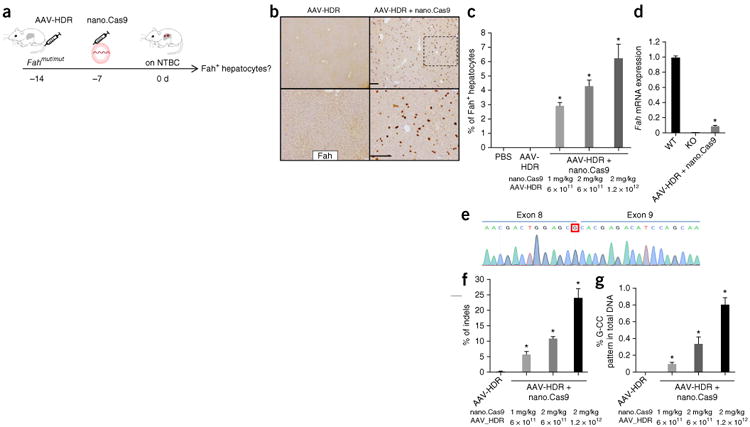
“The analysis of deep sequencing data confirmed a corrected “G-CC” pattern at the Fah locus in 0.81% ± 0.08% of the total liver DNA, in contrast to the AAV-HDR alone group, which contained no detectable “G-CC” sequences (Fig. 3g).”
§ Therapeutic genome editing by combined viral and non-viral delivery of CRISPR system components in vivo > Abstract
plainn = 4- Asserted: passes — The authors put it forward as true.
- Checkable: passes — It can be checked against evidence.
- Load-bearing: passes — The paper’s conclusions depend on it.
- Based: passes — The paper gives a reason why it holds.
A result the paper reports from its own data — it cites no other source for it, so there is none to check. The quote shows it is in the paper.
In the paper
“Here we report that systemic delivery of Cas9 mRNA by lipid nanoparticles and sgRNA/HDR template by AAV can efficiently cure Fahmut/mut mice.”
§ Therapeutic genome editing by combined viral and non-viral delivery of CRISPR system components in vivo > Abstract
plaindirect- Asserted: passes — The authors put it forward as true.
- Checkable: passes — It can be checked against evidence.
- Load-bearing: passes — The paper’s conclusions depend on it.
- Based: passes — The paper gives a reason why it holds.
A result the paper reports from its own data — it cites no other source for it, so there is none to check. The quote shows it is in the paper.
In the paper
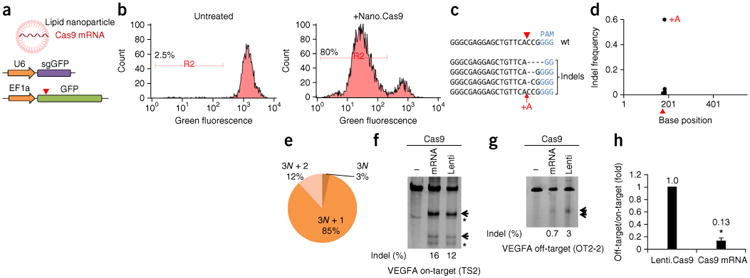
“We observed insertional or deletional mutations (indels) surrounding the Cas9 cleavage site (Fig. 1c–e and Supplementary Table 3).”
§ Therapeutic genome editing by combined viral and non-viral delivery of CRISPR system components in vivo > Abstract
plainn = 4- Asserted: passes — The authors put it forward as true.
- Checkable: passes — It can be checked against evidence.
- Load-bearing: passes — The paper’s conclusions depend on it.
- Based: passes — The paper gives a reason why it holds.
A result the paper reports from its own data — it cites no other source for it, so there is none to check. The quote shows it is in the paper.
In the paper
“The number of Fah-positive hepatocytes correlated with the dose of nano.Cas9 and AAV-HDR (Fig. 3c).”
§ Therapeutic genome editing by combined viral and non-viral delivery of CRISPR system components in vivo > Abstract
plaincorrelationaln = 4- Asserted: passes — The authors put it forward as true.
- Checkable: passes — It can be checked against evidence.
- Load-bearing: passes — The paper’s conclusions depend on it.
- Based: passes — The paper gives a reason why it holds.
A result the paper reports from its own data — it cites no other source for it, so there is none to check. The quote shows it is in the paper.
In the paper
“To determine whether lipid nanoparticles can deliver Cas9 mRNA, nano.Cas9 (1 mg/kg or 2 mg/kg) was injected intravenously, and Cas9 protein in total liver lysates was detected by immunoblot (Supplementary Fig. 2d).”
§ Therapeutic genome editing by combined viral and non-viral delivery of CRISPR system components in vivo > Abstract
plain- Asserted: passes — The authors put it forward as true.
- Checkable: passes — It can be checked against evidence.
- Load-bearing: passes — The paper’s conclusions depend on it.
- Based: passes — The paper gives a reason why it holds.
A result the paper reports from its own data — it cites no other source for it, so there is none to check. The quote shows it is in the paper.
In the paper
“We observed a number of GUIDE-Seq oligonucleotide integration sites within the genome (Supplementary Table 7) but only the Fah target site and one other site (OT1, which is also the computationally predicted off-target site with the fewest mismatches in the genome; Supplementary Fig. 7) passed our stringent criteria for potential nuclease cleavage sites (Supplementary Table 8).”
§ Therapeutic genome editing by combined viral and non-viral delivery of CRISPR system components in vivo > Abstract
plain- Asserted: passes — The authors put it forward as true.
- Checkable: passes — It can be checked against evidence.
- Load-bearing: passes — The paper’s conclusions depend on it.
- Based: passes — The paper gives a reason why it holds.
A result the paper reports from its own data — it cites no other source for it, so there is none to check. The quote shows it is in the paper.
In the paper
“Thus, at least for Ctnnb1, the all-viral Cas9 delivery did not significantly increase the HDR rate compared to mRNA delivery.”
§ Therapeutic genome editing by combined viral and non-viral delivery of CRISPR system components in vivo > Abstract
hedged- Asserted: passes — The authors put it forward as true.
- Checkable: passes — It can be checked against evidence.
- Load-bearing: passes — The paper’s conclusions depend on it.
- Based: passes — The paper gives a reason why it holds.
A result the paper reports from its own data — it cites no other source for it, so there is none to check. The quote shows it is in the paper.
In the paper
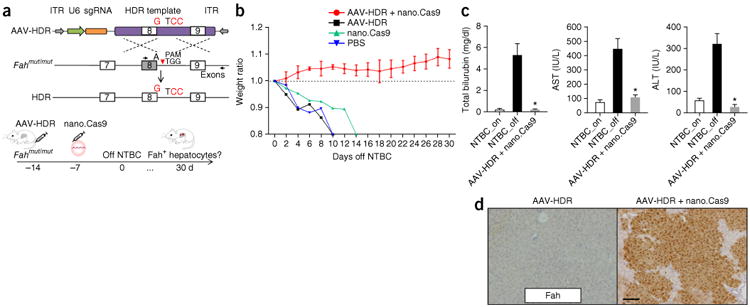
“At 30 d after NTBC water withdrawal, serum biomarkers (AST, ALT and bilirubin) indicated that liver damage was substantially reduced in nano.Cas9 + AAV-HDR–treated mice compared to control mice (Fig. 2c).”
§ Therapeutic genome editing by combined viral and non-viral delivery of CRISPR system components in vivo > Abstract
hedgeddirect- Asserted: passes — The authors put it forward as true.
- Checkable: passes — It can be checked against evidence.
- Load-bearing: passes — The paper’s conclusions depend on it.
- Based: passes — The paper gives a reason why it holds.
A result the paper reports from its own data — it cites no other source for it, so there is none to check. The quote shows it is in the paper.
In the paper
“We observed an average of 24.1% indels at predicted sgRNA target region within nano.Cas9 (2 mg/kg) + AAV-HDR group (1.2 × 10¹²) (Fig. 3f and Supplementary Table 5) (n = 4 mice).”
§ Therapeutic genome editing by combined viral and non-viral delivery of CRISPR system components in vivo > Abstract
plainn = 4- Asserted: passes — The authors put it forward as true.
- Checkable: passes — It can be checked against evidence.
- Load-bearing: passes — The paper’s conclusions depend on it.
- Based: passes — The paper gives a reason why it holds.
A result the paper reports from its own data — it cites no other source for it, so there is none to check. The quote shows it is in the paper.
In the paper
“All the mice in the nano.Cas9 + AAV-HDR group survived 30 d after NTBC withdrawal.”
§ Therapeutic genome editing by combined viral and non-viral delivery of CRISPR system components in vivo > Abstract
plain- Asserted: passes — The authors put it forward as true.
- Checkable: passes — It can be checked against evidence.
- Load-bearing: passes — The paper’s conclusions depend on it.
- Based: passes — The paper gives a reason why it holds.
- Probably not a substantial claim. 15
- It may state two separate claims as one. 28
- The quote only partly states this claim. 1
A result the paper reports from its own data — it cites no other source for it, so there is none to check. The quote shows it is in the paper.
In the paper
“The mean particle diameter of nano.Cas9 is about 120 nm as determined by dynamic light scattering (Supplementary Fig. 1c).”
§ Therapeutic genome editing by combined viral and non-viral delivery of CRISPR system components in vivo > Abstract
plain- Asserted: passes — The authors put it forward as true.
- Checkable: passes — It can be checked against evidence.
- Load-bearing: fails — The paper’s conclusions may not depend on it.
- Based: passes — The paper gives a reason why it holds.
Probably not a substantial claim. The paper’s conclusions may not depend on it.
A result the paper reports from its own data — it cites no other source for it, so there is none to check. The quote shows it is in the paper.
In the paper
“Compared to indels at the on-target Fah site (Fig. 3f), <0.3% indels were detected at the assayed off-target sites in nano.Cas9 + AAV-HDR–treated mice, and these numbers were comparable with AAV-HDR–treated control mice (Supplementary Fig. 7 and Supplementary Table 6), indicating that Cas9 mRNA delivery has minimal off-target effects at assayed sites for Fah sgRNA.”
§ Therapeutic genome editing by combined viral and non-viral delivery of CRISPR system components in vivo > Abstract
hedged- Asserted: passes — The authors put it forward as true.
- Checkable: passes — It can be checked against evidence.
- Load-bearing: passes — The paper’s conclusions depend on it.
- Based: passes — The paper gives a reason why it holds.
It may state two separate claims as one.
A result the paper reports from its own data — it cites no other source for it, so there is none to check. The quote shows it is in the paper.
In the paper
“OT1 and several other assayed sites had modest indel rates, and none of these sites were substantially higher than the background indel rate in untreated livers (P > 0.05; Supplementary Fig. 8b and Supplementary Table 9).”
§ Therapeutic genome editing by combined viral and non-viral delivery of CRISPR system components in vivo > Abstract
plain- Asserted: passes — The authors put it forward as true.
- Checkable: passes — It can be checked against evidence.
- Load-bearing: passes — The paper’s conclusions depend on it.
- Based: passes — The paper gives a reason why it holds.
It may state two separate claims as one.
A result the paper reports from its own data — it cites no other source for it, so there is none to check. The quote shows it is in the paper.
In the paper
“We observed ∼24% indels and ∼1.2% beta-Catenin–positive hepatocytes in vivo (Supplementary Fig. 6).”
§ Therapeutic genome editing by combined viral and non-viral delivery of CRISPR system components in vivo > Abstract
plaindirect- Asserted: passes — The authors put it forward as true.
- Checkable: passes — It can be checked against evidence.
- Load-bearing: passes — The paper’s conclusions depend on it.
- Based: passes — The paper gives a reason why it holds.
It may state two separate claims as one.
A result the paper reports from its own data — it cites no other source for it, so there is none to check. The quote shows it is in the paper.
In the paper
“We observed a clear band in livers of nano.Cas9 + AAV-HDR–treated animals, but not in control animals (Supplementary Fig. 5b). We sequenced the band and identified that the corrected sequence (“G-CC” pattern) is integrated (Supplementary Fig. 5c).”
§ Therapeutic genome editing by combined viral and non-viral delivery of CRISPR system components in vivo > Abstract
boosted- Asserted: passes — The authors put it forward as true.
- Checkable: passes — It can be checked against evidence.
- Load-bearing: passes — The paper’s conclusions depend on it.
- Based: passes — The paper gives a reason why it holds.
It may state two separate claims as one.
A result the paper reports from its own data — it cites no other source for it, so there is none to check. The quote shows it is in the paper.
In the paper
“These additional sites did not meet our peak calling criteria, but we detected 2.4% and 1.8% indels at OT1 in two replicates (Supplementary Fig. 8a and Supplementary Table 9), consistent with OT1 being a Cas9:sgFah off-target site in transformed cells in vitro.”
§ Therapeutic genome editing by combined viral and non-viral delivery of CRISPR system components in vivo > Abstract
hedgedcorrelational- Asserted: passes — The authors put it forward as true.
- Checkable: passes — It can be checked against evidence.
- Load-bearing: passes — The paper’s conclusions depend on it.
- Based: passes — The paper gives a reason why it holds.
It may state two separate claims as one.
A result the paper reports from its own data — it cites no other source for it, so there is none to check. The quote shows it is in the paper.
In the paper
“The Cas9 mRNA was present in the liver at 4 h and 14 h but was significantly diminished at 24 h (P < 0.05), consistent with transient expression (Supplementary Fig. 2e).”
§ Therapeutic genome editing by combined viral and non-viral delivery of CRISPR system components in vivo > Abstract
plaincorrelational- Asserted: passes — The authors put it forward as true.
- Checkable: passes — It can be checked against evidence.
- Load-bearing: unclear — It is unclear whether the paper’s conclusions depend on it.
- Based: passes — The paper gives a reason why it holds.
It may state two separate claims as one.
A result the paper reports from its own data — it cites no other source for it, so there is none to check. The quote shows it is in the paper.
In the paper
“We found sgRNA was already expressed at day 3, but its levels were more than tenfold higher at day 7 and day 14.”
§ Therapeutic genome editing by combined viral and non-viral delivery of CRISPR system components in vivo > Abstract
plaincorrelationaln = 4- Asserted: passes — The authors put it forward as true.
- Checkable: passes — It can be checked against evidence.
- Load-bearing: passes — The paper’s conclusions depend on it.
- Based: passes — The paper gives a reason why it holds.
It may state two separate claims as one.
A result the paper reports from its own data — it cites no other source for it, so there is none to check. The quote shows it is in the paper.
In the paper
“The efficiency of correction was >6% of hepatocytes after a single application, suggesting potential utility of Cas9-based therapeutic genome editing for a range of diseases.”
- Also stated in: § Abstract · plain
“Up to 6.2% ± 1.0% hepatocytes stained positive for the Fah protein by immunohistochemistry in nano.Cas9 plus AAV-HDR–treated animals (Fig. 3b,c; n = 4 mice; see Supplementary Table 4 for percentage of Fah-positive cells, age and gender of each mouse).”
§ Therapeutic genome editing by combined viral and non-viral delivery of CRISPR system components in vivo > Abstract
plainn = 4- Asserted: passes — The authors put it forward as true.
- Checkable: passes — It can be checked against evidence.
- Load-bearing: passes — The paper’s conclusions depend on it.
- Based: passes — The paper gives a reason why it holds.
It may state two separate claims as one.
- Also stated in: § Abstract · plain
A result the paper reports from its own data — it cites no other source for it, so there is none to check. The quote shows it is in the paper.
In the paper
“The particle size of nano.Cas9 was the same on day 0, 7, 11 and 18 (Supplementary Fig. 1d,e), indicating these particles are stable for at least 18 d in PBS.”
§ Therapeutic genome editing by combined viral and non-viral delivery of CRISPR system components in vivo > Abstract
hedged- Asserted: passes — The authors put it forward as true.
- Checkable: passes — It can be checked against evidence.
- Load-bearing: unclear — It is unclear whether the paper’s conclusions depend on it.
- Based: passes — The paper gives a reason why it holds.
It may state two separate claims as one.
A result the paper reports from its own data — it cites no other source for it, so there is none to check. The quote shows it is in the paper.
In the paper
“β-gal protein was detected in the mouse liver by immunoblot at 14 h after administration of a single dose (1 mg/kg or 2 mg/kg), and the amount of protein expressed correlated with the dose of mRNA (Supplementary Fig. 2b).”
§ Therapeutic genome editing by combined viral and non-viral delivery of CRISPR system components in vivo > Abstract
plaincorrelational- Asserted: passes — The authors put it forward as true.
- Checkable: passes — It can be checked against evidence.
- Load-bearing: passes — The paper’s conclusions depend on it.
- Based: passes — The paper gives a reason why it holds.
It may state two separate claims as one.
A result the paper reports from its own data — it cites no other source for it, so there is none to check. The quote shows it is in the paper.
In the paper
“Most indels are frameshift (e.g., 1 nt and 2 nt) mutations (Fig. 1e), which potentially cause loss of function of the GFP reporter.”
§ Therapeutic genome editing by combined viral and non-viral delivery of CRISPR system components in vivo > Abstract
hedgedconditionaln = 4- Asserted: passes — The authors put it forward as true.
- Checkable: passes — It can be checked against evidence.
- Load-bearing: passes — The paper’s conclusions depend on it.
- Based: passes — The paper gives a reason why it holds.
It may state two separate claims as one.
In the paper
“Systemic delivery of Cas9 mRNA by lipid nanoparticles, and sgRNA/HDR template by AAV, corrected a Fah mutation and restored Fah splicing in more than 6% of hepatocytes in the adult mouse liver, an order of magnitude improvement over that previously generated using high-pressure injection of DNA16.”
§ Therapeutic genome editing by combined viral and non-viral delivery of CRISPR system components in vivo > Abstract
What the sources say
- Not checked yetcites [16] Yin, H. et al. Genome editing with Cas9 in adult mice corrects a disease mutation and phenotype. Nat. Biotechnol. 32, 551–553 (2014). source
plaindirect- Asserted: passes — The authors put it forward as true.
- Checkable: passes — It can be checked against evidence.
- Load-bearing: passes — The paper’s conclusions depend on it.
- Based: passes — The paper gives a reason why it holds.
It may state two separate claims as one.
A result the paper reports from its own data — it cites no other source for it, so there is none to check. The quote shows it is in the paper.
In the paper
“This treatment is well-tolerated in mice and fully rescued body weight loss and liver damage in tyrosinemia mice.”
§ Therapeutic genome editing by combined viral and non-viral delivery of CRISPR system components in vivo > Abstract
plaindirect- Asserted: passes — The authors put it forward as true.
- Checkable: passes — It can be checked against evidence.
- Load-bearing: passes — The paper’s conclusions depend on it.
- Based: passes — The paper gives a reason why it holds.
It may state two separate claims as one.
A conclusion the paper draws from its own results — it cites no other source for it, so there is none to check. The quote shows it is in the paper.
In the paper
“The majority of the cells in liver sections stained positive in a β-gal activity assay (Supplementary Fig. 2c), indicating systemic delivery of mRNA to most of the cells in the mouse liver.”
§ Therapeutic genome editing by combined viral and non-viral delivery of CRISPR system components in vivo > Abstract
hedgeddirect- Asserted: passes — The authors put it forward as true.
- Checkable: passes — It can be checked against evidence.
- Load-bearing: passes — The paper’s conclusions depend on it.
- Based: passes — The paper gives a reason why it holds.
It may state two separate claims as one.
In the paper
“In HTI patients, mutation of fumarylacetoacetate hydrolase (FAH), the last enzyme catalyzing the tyrosine catabolic pathway, leads to accumulation of toxic metabolites and severe liver damage8.”
§ Therapeutic genome editing by combined viral and non-viral delivery of CRISPR system components in vivo > Abstract
What the sources say
- Not checked yetcites [8] Paulk, N.K. et al. Adeno-associated virus gene repair corrects a mouse model of hereditary tyrosinemia in vivo. Hepatology 51, 1200–1208 (2010). source
plaindirect- Asserted: passes — The authors put it forward as true.
- Checkable: passes — It can be checked against evidence.
- Load-bearing: passes — The paper’s conclusions depend on it.
- Based: passes — The paper gives a reason why it holds.
It may state two separate claims as one.
None of the sources cited for this claim have been checked yet.
In the paper
“The Fahmut/mut mouse model6,8 is caused by a G→A point mutation in the last nucleotide of exon 8. This causes skipping of exon 8 and truncated Fah mRNA.”
§ Therapeutic genome editing by combined viral and non-viral delivery of CRISPR system components in vivo > Abstract
What the sources say
- Not checked yetcites [6] Aponte, J.L. et al. Point mutations in the murine fumarylacetoacetate hydrolase gene: animal models for the human genetic disorder hereditary tyrosinemia type 1. Proc. Natl. Acad. Sci. USA 98, 641–645 (2001). source
- Not checked yetcites [8] Paulk, N.K. et al. Adeno-associated virus gene repair corrects a mouse model of hereditary tyrosinemia in vivo. Hepatology 51, 1200–1208 (2010). source
plaindirect- Asserted: passes — The authors put it forward as true.
- Checkable: passes — It can be checked against evidence.
- Load-bearing: passes — The paper’s conclusions depend on it.
- Based: passes — The paper gives a reason why it holds.
It may state two separate claims as one.
A conclusion the paper draws from its own results — it cites no other source for it, so there is none to check. The quote shows it is in the paper.
In the paper
“An alternative approach is the non-viral delivery of Cas9 mRNA, which would allow for short-term expression and, eventually, complete removal of the nuclease from the body.”
§ Therapeutic genome editing by combined viral and non-viral delivery of CRISPR system components in vivo > Abstract
hedgeddirect- Asserted: passes — The authors put it forward as true.
- Checkable: passes — It can be checked against evidence.
- Load-bearing: passes — The paper’s conclusions depend on it.
- Based: fails — The paper may give no reason why it holds.
Probably not a substantial claim. The paper may give no reason why it holds. It may state two separate claims as one.
In the paper
“However, all of these delivery studies have reported gene knockout rather than gene repair, a less efficient process requiring a DNA repair template15.”
§ Therapeutic genome editing by combined viral and non-viral delivery of CRISPR system components in vivo > Abstract
What the sources say
- Not checked yetcites [15] Chu, V.T., Weber, T. & Wefers, B. Increasing the efficiency of homology-directed repair for CRISPR-Cas9-induced precise gene editing in mammalian cells. Nat. Biotechnol. 33, 543–548 (2015). source
plain- Asserted: passes — The authors put it forward as true.
- Checkable: passes — It can be checked against evidence.
- Load-bearing: passes — The paper’s conclusions depend on it.
- Based: passes — The paper gives a reason why it holds.
It may state two separate claims as one.
None of the sources cited for this claim have been checked yet.
In the paper
“Cas9:sgRNA recognizes the protospacer-adjacent motif (PAM) sequence and a complementary 20-nucleotide genomic sequence and induces double-strand DNA breaks, which are repaired by error-prone nonhomologous end-joining (NHEJ) or precise homology-directed repair (HDR)2,5.”
§ Therapeutic genome editing by combined viral and non-viral delivery of CRISPR system components in vivo > Abstract
What the sources say
- Not checked yetcites [2] Doudna, J.A. & Charpentier, E. Genome editing. The new frontier of genome engineering with CRISPR-Cas9. Science 346, 1258096 (2014). source
- Not checked yetcites [5] Sander, J.D. & Joung, J.K. CRISPR-Cas systems for editing, regulating and targeting genomes. Nat. Biotechnol. 32, 347–355 (2014). source
plaindirect- Asserted: passes — The authors put it forward as true.
- Checkable: passes — It can be checked against evidence.
- Load-bearing: passes — The paper’s conclusions depend on it.
- Based: passes — The paper gives a reason why it holds.
Probably not a substantial claim. It may state two separate claims as one.
In the paper
“Recently, a smaller form of Cas9 was developed, and shown capable of packing and delivery with sgRNA by AAV in vivo12.”
§ Therapeutic genome editing by combined viral and non-viral delivery of CRISPR system components in vivo > Abstract
What the sources say
- Not checked yetcites [12] Ran, F.A. et al. In vivo genome editing using Staphylococcus aureus Cas9. Nature 520, 186–191 (2015). source
plaindirect- Asserted: passes — The authors put it forward as true.
- Checkable: passes — It can be checked against evidence.
- Load-bearing: fails — The paper’s conclusions may not depend on it.
- Based: passes — The paper gives a reason why it holds.
Probably not a substantial claim. The paper’s conclusions may not depend on it. It may state two separate claims as one.
In the paper
“Lipid and lipid-like formulations have shown great promise as delivery agents for siRNA in a range of species, including humans19.”
§ Therapeutic genome editing by combined viral and non-viral delivery of CRISPR system components in vivo > Abstract
What the sources say
- Not checked yetcites [19] Yin, H. et al. Non-viral vectors for gene-based therapy. Nat. Rev. Genet. 15, 541–555 (2014). source
boostedcorrelational- Asserted: passes — The authors put it forward as true.
- Checkable: passes — It can be checked against evidence.
- Load-bearing: passes — The paper’s conclusions depend on it.
- Based: passes — The paper gives a reason why it holds.
Probably not a substantial claim.
None of the sources cited for this claim have been checked yet.
In the paper
“Nevertheless, hydrodynamic injection yielded a low correction rate of 0.4% of hepatocytes, and this method has been tested in only one human clinical trial17.”
§ Therapeutic genome editing by combined viral and non-viral delivery of CRISPR system components in vivo > Abstract
What the sources say
- Not checked yetcites [16] Yin, H. et al. Genome editing with Cas9 in adult mice corrects a disease mutation and phenotype. Nat. Biotechnol. 32, 551–553 (2014). source
- Not checked yetcites [17] Khorsandi, S.E. et al. Minimally invasive and selective hydrodynamic gene therapy of liver segments in the pig and human. Cancer Gene Ther. 15, 225–230 (2008). source
plain- Asserted: passes — The authors put it forward as true.
- Checkable: passes — It can be checked against evidence.
- Load-bearing: passes — The paper’s conclusions depend on it.
- Based: passes — The paper gives a reason why it holds.
It may state two separate claims as one.
In the paper
“However, AAV has a loading capacity size of approximately 4.7 kb, and the most commonly used form of Cas9 from Streptococcus pyogenes is difficult to fit in typical AAV constructs with efficient promoters13.”
§ Therapeutic genome editing by combined viral and non-viral delivery of CRISPR system components in vivo > Abstract
What the sources say
- Not checked yetcites [13] Swiech, L. et al. In vivo interrogation of gene function in the mammalian brain using CRISPR-Cas9. Nat. Biotechnol. 33, 102–106 (2015). source
plaindirect- Asserted: passes — The authors put it forward as true.
- Checkable: passes — It can be checked against evidence.
- Load-bearing: passes — The paper’s conclusions depend on it.
- Based: passes — The paper gives a reason why it holds.
It may state two separate claims as one.
In the paper
“These mice can be treated with 2-(2-nitro-4-trifluoromethylbenzoyl)-1,3-cyclohexanedione (NTBC), an inhibitor of an enzyme upstream of Fah, to prevent toxin accumulation in hepatocytes8.”
§ Therapeutic genome editing by combined viral and non-viral delivery of CRISPR system components in vivo > Abstract
What the sources say
- Not checked yetcites [8] Paulk, N.K. et al. Adeno-associated virus gene repair corrects a mouse model of hereditary tyrosinemia in vivo. Hepatology 51, 1200–1208 (2010). source
plaindirect- Asserted: passes — The authors put it forward as true.
- Checkable: passes — It can be checked against evidence.
- Load-bearing: fails — The paper’s conclusions may not depend on it.
- Based: passes — The paper gives a reason why it holds.
Probably not a substantial claim. The paper’s conclusions may not depend on it.
In the paper
“To express sgRNA, we treated animals with up to 1.2 × 10¹² AAV genome copies/mouse, a standard dose described in the literature28.”
§ Therapeutic genome editing by combined viral and non-viral delivery of CRISPR system components in vivo > Abstract
What the sources say
- Not checked yetcites [28] Barzel, A. et al. Promoterless gene targeting without nucleases ameliorates haemophilia B in mice. Nature 517, 360–364 (2015). source
plain- Asserted: passes — The authors put it forward as true.
- Checkable: passes — It can be checked against evidence.
- Load-bearing: fails — The paper’s conclusions may not depend on it.
- Based: passes — The paper gives a reason why it holds.
Probably not a substantial claim. The paper’s conclusions may not depend on it.
A conclusion the paper draws from its own results — it cites no other source for it, so there is none to check. The quote shows it is in the paper.
In the paper
“This allowed for short-term expression of the Cas9 nuclease, which provided efficient on-target genome editing, while potentially reducing off-target editing (Fig. 1h).”
§ Therapeutic genome editing by combined viral and non-viral delivery of CRISPR system components in vivo > Abstract
hedgeddirect- Asserted: passes — The authors put it forward as true.
- Checkable: passes — It can be checked against evidence.
- Load-bearing: passes — The paper’s conclusions depend on it.
- Based: passes — The paper gives a reason why it holds.
It may state two separate claims as one.
In the paper
“A smaller form of Cas9 (Staphylococcus aureus Cas9), which fits into AAV vectors, has been recently used to knockout genes by NHEJ in the mouse liver. More than 40% indel formations in Pcsk9 locus was reported12.”
§ Therapeutic genome editing by combined viral and non-viral delivery of CRISPR system components in vivo > Abstract
What the sources say
- Not checked yetcites [12] Ran, F.A. et al. In vivo genome editing using Staphylococcus aureus Cas9. Nature 520, 186–191 (2015). source
plaindirect- Asserted: passes — The authors put it forward as true.
- Checkable: passes — It can be checked against evidence.
- Load-bearing: unclear — It is unclear whether the paper’s conclusions depend on it.
- Based: passes — The paper gives a reason why it holds.
It may state two separate claims as one.
What the paper did — it cites no source for this, so there is none to check. The quote shows it is in the paper.
In the paper
“All animal experiments were performed under the guideline of the MIT Animal Care and Use Committee.”
§ Therapeutic genome editing by combined viral and non-viral delivery of CRISPR system components in vivo > Online Methods > Animal experiments
plain- Asserted: passes — The authors put it forward as true.
- Checkable: passes — It can be checked against evidence.
- Load-bearing: fails — The paper’s conclusions may not depend on it.
- Based: passes — The paper gives a reason why it holds.
Probably not a substantial claim. The paper’s conclusions may not depend on it.
A conclusion the paper draws from its own results — it cites no other source for it, so there is none to check. The quote shows it is in the paper.
In the paper
“This estimation is consistent with the 0.81% corrected “G-CC” sequence pattern observed by deep sequencing in treated liver samples (Fig. 3g).”
§ Therapeutic genome editing by combined viral and non-viral delivery of CRISPR system components in vivo > Abstract
plaincorrelational- Asserted: passes — The authors put it forward as true.
- Checkable: passes — It can be checked against evidence.
- Load-bearing: passes — The paper’s conclusions depend on it.
- Based: passes — The paper gives a reason why it holds.
The quote only partly states this claim.
In the paper
“A recent study demonstrated that the chemical modification of sgRNA improved gene editing in vitro when co-delivered with Cas9 mRNA32.”
§ Therapeutic genome editing by combined viral and non-viral delivery of CRISPR system components in vivo > Abstract
What the sources say
- Not checked yetcites [32] Hendel, A. et al. Chemically modified guide RNAs enhance CRISPR-Cas genome editing in human primary cells. Nat. Biotechnol. 33, 985–989 (2015). source
boosteddirect- Asserted: passes — The authors put it forward as true.
- Checkable: passes — It can be checked against evidence.
- Load-bearing: fails — The paper’s conclusions may not depend on it.
- Based: passes — The paper gives a reason why it holds.
Probably not a substantial claim. The paper’s conclusions may not depend on it.
In the paper
“A key feature of our system is the transient expression of the nuclease Cas9, through delivery of mRNA. This allowed for sufficient exposure to the nuclease for gene repair and reduced concerns associated with long-term nuclease exposure34.”
§ Therapeutic genome editing by combined viral and non-viral delivery of CRISPR system components in vivo > Abstract
What the sources say
- Not checked yetcites [34] Wu, X. et al. Genome-wide binding of the CRISPR endonuclease Cas9 in mammalian cells. Nat. Biotechnol. 32, 670–676 (2014). source
plaindirect- Asserted: passes — The authors put it forward as true.
- Checkable: passes — It can be checked against evidence.
- Load-bearing: passes — The paper’s conclusions depend on it.
- Based: passes — The paper gives a reason why it holds.
It may state two separate claims as one.
In the paper
“The CRISPR systems have a number of potential advantages over ZFNs, most importantly their flexibility and ease in adjusting target site4.”
§ Therapeutic genome editing by combined viral and non-viral delivery of CRISPR system components in vivo > Abstract
What the sources say
- Not checked yetcites [4] Mali, P., Esvelt, K.M. & Church, G.M. Cas9 as a versatile tool for engineering biology. Nat. Methods 10, 957–963 (2013). source
plain- Asserted: passes — The authors put it forward as true.
- Checkable: passes — It can be checked against evidence.
- Load-bearing: fails — The paper’s conclusions may not depend on it.
- Based: passes — The paper gives a reason why it holds.
Probably not a substantial claim. The paper’s conclusions may not depend on it.
In the paper
“However, correction of 6% of hepatocytes following a single round of treatment without selection suggests that this approach may be suitable for the treatment of a range of metabolic liver diseases and hemophilia, where restoration of 3–7% normal functional protein can be therapeutic39.”
§ Therapeutic genome editing by combined viral and non-viral delivery of CRISPR system components in vivo > Abstract
What the sources say
- Not checked yetcites [39] Cox, D.B., Platt, R.J. & Zhang, F. Therapeutic genome editing: prospects and challenges. Nat. Med. 21, 121–131 (2015). source
hedgedconditional- Asserted: passes — The authors put it forward as true.
- Checkable: passes — It can be checked against evidence.
- Load-bearing: passes — The paper’s conclusions depend on it.
- Based: passes — The paper gives a reason why it holds.
It may state two separate claims as one.
None of the sources cited for this claim have been checked yet.
In the paper
“An alternative explanation for this observation is partial gene conversion in spite of “G” and “CC” single-nucleotide polymorphisms equidistant to the Cas9 cutting site.”
§ Therapeutic genome editing by combined viral and non-viral delivery of CRISPR system components in vivo > Abstract
What the sources say
- Not checked yetcites [36] Elliott, B., Richardson, C., Winderbaum, J., Nickoloff, J.A. & Jasin, M. Gene conversion tracts from double-strand break repair in mammalian cells. Mol. Cell. Biol. 18, 93–101 (1998). source
- Not checked yetcites [37] Goldberg, A.D. et al. Distinct factors control histone variant H3.3 localization at specific genomic regions. Cell 140, 678–691 (2010). source
- Not checked yetcites [38] Findlay, G.M., Boyle, E.A., Hause, R.J., Klein, J.C. & Shendure, J. Saturation editing of genomic regions by multiplex homology-directed repair. Nature 513, 120–123 (2014). source
hedgedconditional- Asserted: passes — The authors put it forward as true.
- Checkable: passes — It can be checked against evidence.
- Load-bearing: fails — The paper’s conclusions may not depend on it.
- Based: passes — The paper gives a reason why it holds.
Probably not a substantial claim. The paper’s conclusions may not depend on it.
None of the sources cited for this claim have been checked yet.
In the paper
“Previous work has reported on the use of zinc finger nucleases (ZFNs) for in vivo gene correction31,33.”
§ Therapeutic genome editing by combined viral and non-viral delivery of CRISPR system components in vivo > Abstract
What the sources say
- Not checked yetcites [31] Mahiny, A.J. et al. In vivo genome editing using nuclease-encoding mRNA corrects SP-B deficiency. Nat. Biotechnol. 33, 584–586 (2015). source
- Not checked yetcites [33] Li, H. et al. In vivo genome editing restores haemostasis in a mouse model of haemophilia. Nature 475, 217–221 (2011). source
plain- Asserted: passes — The authors put it forward as true.
- Checkable: passes — It can be checked against evidence.
- Load-bearing: fails — The paper’s conclusions may not depend on it.
- Based: passes — The paper gives a reason why it holds.
Probably not a substantial claim. The paper’s conclusions may not depend on it.
A conclusion the paper draws from its own results — it cites no other source for it, so there is none to check. The quote shows it is in the paper.
In the paper
“It is possible that our stringent “G-CC” pattern counting underestimated the HDR event.”
§ Therapeutic genome editing by combined viral and non-viral delivery of CRISPR system components in vivo > Abstract
hedgedconditional- Asserted: passes — The authors put it forward as true.
- Checkable: passes — It can be checked against evidence.
- Load-bearing: fails — The paper’s conclusions may not depend on it.
- Based: passes — The paper gives a reason why it holds.
Probably not a substantial claim. The paper’s conclusions may not depend on it.
The paper states this without a source or data behind it here, so there is nothing to check it against. The quote shows it is in the paper.
In the paper
“Although NHEJ has been reported using AAV-mediated Cas9 delivery, HDR using viral delivery in vivo has not been reported.”
§ Therapeutic genome editing by combined viral and non-viral delivery of CRISPR system components in vivo > Abstract
plain- Asserted: passes — The authors put it forward as true.
- Checkable: passes — It can be checked against evidence.
- Load-bearing: passes — The paper’s conclusions depend on it.
- Based: passes — The paper gives a reason why it holds.
It may state two separate claims as one.
What the paper did — it cites no source for this, so there is none to check. The quote shows it is in the paper.
In the paper
“Cells were tested by MIT core facility for mycoplasma contamination by an ELISA-based assay, and confirmed negative.”
§ Therapeutic genome editing by combined viral and non-viral delivery of CRISPR system components in vivo > Online Methods > Cell culture, off-target analysis and Illumina sequencing
plain- Asserted: passes — The authors put it forward as true.
- Checkable: passes — It can be checked against evidence.
- Load-bearing: fails — The paper’s conclusions may not depend on it.
- Based: passes — The paper gives a reason why it holds.
Probably not a substantial claim. The paper’s conclusions may not depend on it. It may state two separate claims as one.
In the paper
“For example, less than 10% indels at the Apob locus in the mouse liver was reported in the same study12.”
§ Therapeutic genome editing by combined viral and non-viral delivery of CRISPR system components in vivo > Abstract
What the sources say
- Not checked yetcites [12] Ran, F.A. et al. In vivo genome editing using Staphylococcus aureus Cas9. Nature 520, 186–191 (2015). source
plain- Asserted: passes — The authors put it forward as true.
- Checkable: passes — It can be checked against evidence.
- Load-bearing: fails — The paper’s conclusions may not depend on it.
- Based: passes — The paper gives a reason why it holds.
Probably not a substantial claim. The paper’s conclusions may not depend on it.
The paper relies on this without support.
Clinical implementation of CRISPR genome editing requires safe and effective delivery of all components into the nuclei of the target tissue.
“However, clinical implementation of this technology requires safe and effective delivery of all of these components into the nuclei of the target tissue.”
The paper relies on this without support.
Improvements to CRISPR delivery methods and HDR efficiency are required for therapeutic application of genome editing for disease gene correction.
“However, improvements to CRISPR delivery methods and HDR efficiency are required for therapeutic application of genome editing for disease gene correction.”
Claims other papers make about this one
Each is checked against this paper’s own text: does it say what the citing paper says it does?
The source backs part of the claim, not all of it — or backs it for a different population, condition or comparison.
In the citing paper
“If delivering Cas9 mRNA and sgRNA, this method is functionally like microinjection in result (Yin et al., 2016).”
From Delivering CRISPR: a review of the challenges and approaches (2018) · cites this paper as Yin et al., 2016
Experimental — accuracy not yet measuredIn the citing paper
“Gene-editing components can be delivered by lipid nanoparticle–mRNA formulations to treat genetic diseases, including HTI92,238, hypercholesterolaemia81,96,105,239, lipoprotein metabolism disorders85 and transthyretin amyloidosis239,240, which has been demonstrated in preclinical studies.”
From Lipid nanoparticles for mRNA delivery (2021) · cites this paper as [92]
In the citing paper
“We and others recently reported that CRISPR can correct this Fah mutation through HDR16–18 or allelic exchange19.”
From Adenine base editing in an adult mouse model of tyrosinaemia (2019) · cites this paper as [16]
In the citing paper
“Using the standard Guide-seq protocol, we detected only the Fah target site and one off-target site (defined as Guide-seq off-target site 1, or GOT1) (Supplementary Data Set 1).”
From Adenine base editing in an adult mouse model of tyrosinaemia (2019) · cites this paper as [16]
In the citing paper
“After a single treatment, the FAH expression in more than 6% of hepatocytes was repaired and the symptoms of hepatic damage were prevented in the following 30 days.”
From RNA delivery biomaterials for the treatment of genetic and rare diseases (2019) · cites this paper as [141]
In the citing paper
“Yin et al. combined lipid nanoparticle-mediated delivery of Cas9 mRNA with AAV encoding sgRNAs and donor templates to repair FAH gene in a mouse model of human hereditary tyrosinemia. The efficiency of correction was >6% of hepatocytes after a single application and the treatment rescued disease symptoms such as weight loss and liver damage [112].”
From Non-viral delivery systems for CRISPR/Cas9-based genome editing: challenges and opportunities (2018) · cites this paper as [112]
Citations
Cites
Multiplex Genome Engineering Using CRISPR/Cas Systems
Cong, L., Ran, F. A., Cox, D., Lin, S., Barretto, R., Habib, N., Hsu, P. D., Wu, X., Jiang, W., Marraffini, L. A., et al. (2013) · Science · doi:10.1126/science.1231143 · Cited by 15,339
RNA-Guided Human Genome Engineering via Cas9
Mali, P., Yang, L., Esvelt, K. M., Aach, J., Guell, M., DiCarlo, J. E., Norville, J. E., & Church, G. M. (2013) · Science · doi:10.1126/science.1232033 · Cited by 9,210
The new frontier of genome engineering with CRISPR-Cas9
Doudna, J. A., & Charpentier, E. (2014) · Science · doi:10.1126/science.1258096 · Cited by 7,062
DNA targeting specificity of RNA-guided Cas9 nucleases
Hsu, P. D., Scott, D. A., Weinstein, J. A., Ran, F. A., Konermann, S., Agarwala, V., Li, Y., Fine, E. J., Wu, X., Shalem, O., et al. (2013) · Nature Biotechnology · doi:10.1038/nbt.2647 · Cited by 4,741
Self-citationCRISPR-Mediated Modular RNA-Guided Regulation of Transcription in Eukaryotes
Gilbert, L. A., Larson, M. H., Morsut, L., Liu, Z., Brar, G. A., Torres, S. E., Stern-Ginossar, N., Brandman, O., Whitehead, E. H., Doudna, J. A., et al. (2013) · Cell · doi:10.1016/j.cell.2013.06.044 · Cited by 3,696
Organoid Models and Applications in Biomedical Research
Xinaris, C., Brizi, V., & Remuzzi, G. (2015) · The Nephron journals/Nephron journals · doi:10.1159/000433566 · Cited by 3,519
High-Frequency off-Target Mutagenesis Induced by CRISPR-Cas Nucleases in Human Cells
Fu, Y., Foden, J. A., Khayter, C., Maeder, M. L., Reyon, D., Joung, J. K., & Sander, J. D. (2013) · Nature Biotechnology · doi:10.1038/nbt.2623 · Cited by 3,292
CRISPR-Cas systems for editing, regulating and targeting genomes
Sander, J. D., & Joung, J. K. (2014) · Nature Biotechnology · doi:10.1038/nbt.2842 · Cited by 3,153
Non-viral vectors for gene-based therapy
Yin, H., Kanasty, R. L., Eltoukhy, A. A., Vegas, A. J., Dorkin, J. R., & Anderson, D. G. (2014) · Nature Reviews Genetics · doi:10.1038/nrg3763 · Cited by 3,123
Self-citationIn vivo genome editing using Staphylococcus aureus Cas9
Ran, F. A., Cong, L., Yan, W. X., Scott, D. A., Gootenberg, J. S., Kriz, A. J., Zetsche, B., Shalem, O., Wu, X., Makarova, K. S., et al. (2015) · Nature · doi:10.1038/nature14299 · Cited by 2,687
GUIDE-seq enables genome-wide profiling of off-target cleavage by CRISPR-Cas nucleases
Tsai, S. Q., Zheng, Z., Nguyen, N. T., Liebers, M., Topkar, V. V., Thapar, V., Wyvekens, N., Khayter, C., Iafrate, A. J., Le, L. P., et al. (2015) · Nature Biotechnology · doi:10.1038/nbt.3117 · Cited by 2,268
Rational design of cationic lipids for siRNA delivery
Semple, S. C., Akinc, A., Chen, J., Sandhu, A. P., Mui, B. L., Cho, C. K., Sah, D. W. Y., Stebbing, D., Crosley, E. J., Yaworski, E., et al. (2010) · Nature Biotechnology · doi:10.1038/nbt.1602 · Cited by 1,822
Self-citationZuris, J. A., Thompson, D. B., Shu, Y., Guilinger, J. P., Bessen, J. L., Hu, J. H., Maeder, M. L., Joung, J. K., Chen, Z.-Y., & Liu, D. R. (2015) · Nature Biotechnology · doi:10.1038/nbt.3081 · Cited by 1,460
Schwank, G., Koo, B.-K., Sasselli, V., Dekkers, J. F., Heo, I., Demircan, T., Sasaki, N., Boymans, S., Cuppen, E., van der Ent, C. K., et al. (2013) · Cell Stem Cell · doi:10.1016/j.stem.2013.11.002 · Cited by 1,424
Distinct Factors Control Histone Variant H3.3 Localization at Specific Genomic Regions
Goldberg, A. D., Banaszynski, L. A., Noh, K., Lewis, P. W., Elsässer, S. J., Stadler, S. C., Dewell, S. B., Law, M. J., Guo, X., Li, X., et al. (2010) · Cell · doi:10.1016/j.cell.2010.01.003 · Cited by 1,351
Therapeutic genome editing: prospects and challenges
Cox, D. B. T., Platt, R. J., & Zhang, F. (2015) · Nature Medicine · doi:10.1038/nm.3793 · Cited by 1,336
Chu, V. T., Weber, T., Wefers, B., Wurst, W., Sander, S., Rajewsky, K., & Kühn, R. (2015) · Nature Biotechnology · doi:10.1038/nbt.3198 · Cited by 1,210
Cas9 as a versatile tool for engineering biology
Mali, P., Esvelt, K. M., & Church, G. M. (2013) · Nature Methods · doi:10.1038/nmeth.2649 · Cited by 1,197
ChIPpeakAnno: a Bioconductor package to annotate ChIP-seq and ChIP-chip data
Zhu, L. J., Gazin, C., Lawson, N. D., Pagès, H., Lin, S. M., Lapointe, D. S., & Green, M. R. (2010) · BMC Bioinformatics · doi:10.1186/1471-2105-11-237 · Cited by 1,159
Self-citationChemically modified guide RNAs enhance CRISPR-Cas genome editing in human primary cells
Hendel, A., Bak, R. O., Clark, J. T., Kennedy, A. B., Ryan, D. E., Roy, S., Steinfeld, I., Lunstad, B. D., Kaiser, R. J., Wilkens, A. B., et al. (2015) · Nature Biotechnology · doi:10.1038/nbt.3290 · Cited by 1,090
Lipid-like materials for low-dose, in vivo gene silencing
Love, K. T., Mahon, K. P., Levins, C. G., Whitehead, K. A., Querbes, W., Dorkin, J. R., Qin, J., Cantley, W., Qin, L. L., Racie, T., et al. (2010) · Proceedings of the National Academy of Sciences · doi:10.1073/pnas.0910603106 · Cited by 969
Self-citationGenome editing with Cas9 in adult mice corrects a disease mutation and phenotype
Yin, H., Xue, W., Chen, S., Bogorad, R. L., Benedetti, E., Grompe, M., Koteliansky, V., Sharp, P. A., Jacks, T., & Anderson, D. G. (2014) · Nature Biotechnology · doi:10.1038/nbt.2884 · Cited by 951
Self-citationGenome-wide binding of the CRISPR endonuclease Cas9 in mammalian cells
Wu, X., Scott, D. A., Kriz, A. J., Chiu, A. C., Hsu, P. D., Dadon, D. B., Cheng, A. W., Trevino, A. E., Konermann, S., Chen, S., et al. (2014) · Nature Biotechnology · doi:10.1038/nbt.2889 · Cited by 944
Robust expansion of human hepatocytes in Fah−/−/Rag2−/−/Il2rg−/− mice
Azuma, H., Paulk, N., Ranade, A., Dorrell, C., Al-Dhalimy, M., Ellis, E., Strom, S., Kay, M. A., Finegold, M., & Grompe, M. (2007) · Nature Biotechnology · doi:10.1038/nbt1326 · Cited by 835
Kauffman, K. J., Dorkin, J. R., Yang, J. H., Heartlein, M. W., DeRosa, F., Mir, F. F., Fenton, O. S., & Anderson, D. G. (2015) · Nano Letters · doi:10.1021/acs.nanolett.5b02497 · Cited by 796
Self-citationCRISPR-mediated direct mutation of cancer genes in the mouse liver
Xue, W., Chen, S., Yin, H., Tammela, T., Papagiannakopoulos, T., Joshi, N. S., Cai, W., Yang, G., Bronson, R., Crowley, D. G., et al. (2014) · Nature · doi:10.1038/nature13589 · Cited by 776
Self-citationIn vivo interrogation of gene function in the mammalian brain using CRISPR-Cas9
Swiech, L., Heidenreich, M., Banerjee, A., Habib, N., Li, Y., Trombetta, J., Sur, M., & Zhang, F. (2015) · Nature Biotechnology · doi:10.1038/nbt.3055 · Cited by 772
Self-citationExpression of therapeutic proteins after delivery of chemically modified mRNA in mice
Kormann, M. S. D., Hasenpusch, G., Aneja, M. K., Nica, G., Flemmer, A. W., Herber-Jonat, S., Huppmann, M., Mays, L. E., Illenyi, M., Schams, A., et al. (2011) · Nature Biotechnology · doi:10.1038/nbt.1733 · Cited by 733
Prevention of muscular dystrophy in mice by CRISPR/Cas9–mediated editing of germline DNA
Long, C., McAnally, J. R., Shelton, J. M., Mireault, A. A., Bassel-Duby, R., & Olson, E. N. (2014) · Science · doi:10.1126/science.1254445 · Cited by 720
State-of-the-art gene-based therapies: the road ahead
Kay, M. A. (2011) · Nature Reviews Genetics · doi:10.1038/nrg2971 · Cited by 699
Correction of a genetic disease in mouse via use of CRISPR-Cas9
Wu, Y., Liang, D., Wang, Y., Bai, M., Tang, W., Bao, S., Yan, Z., Li, D., & Li, J. (2013) · Cell stem cell · doi:10.1016/j.stem.2013.10.016 · Cited by 614
In vivo genome editing restores haemostasis in a mouse model of haemophilia
Li, H., Haurigot, V., Doyon, Y., Li, T., Wong, S. Y., Bhagwat, A. S., Malani, N., Anguela, X. M., Sharma, R., Ivanciu, L., et al. (2011) · Nature · doi:10.1038/nature10177 · Cited by 548
Chen, D., Love, K. T., Chen, Y., Eltoukhy, A. A., Kastrup, C. J., Sahay, G., Jeon, A., Dong, Y.-Z., Whitehead, K., & Anderson, D. G. (2012) · Journal of the American Chemical Society · doi:10.1021/ja301621z · Cited by 386
Self-citationSaturation editing of genomic regions by multiplex homology-directed repair
Findlay, G. M., Boyle, E. A., Hause, R. J., Klein, J. C., & Shendure, J. (2014) · Nature · doi:10.1038/nature13695 · Cited by 362
Gene Conversion Tracts from Double-Strand Break Repair in Mammalian Cells
Elliott, B., Richardson, C. A., Winderbaum, J., Nickoloff, J. A., & Jasin, M. (1998) · Molecular and Cellular Biology · doi:10.1128/mcb.18.1.93 · Cited by 305
A Co-CRISPR Strategy for Efficient Genome Editing in Caenorhabditis elegans
Kim, H., Ishidate, T., Ghanta, K. S., Seth, M., Conte, D., Shirayama, M., & Mello, C. C. (2014) · Genetics · doi:10.1534/genetics.114.166389 · Cited by 291
Promoterless gene targeting without nucleases ameliorates haemophilia B in mice
Barzel, A., Paulk, N. K., Shi, Y., Huang, Y., Chu, K. C., Zhang, F., Valdmanis, P. N., Spector, L. P., Porteus, M. H., Gaensler, K. M. L., et al. (2014) · Nature · doi:10.1038/nature13864 · Cited by 264
Zhu, L. J., Holmes, B. R., D, N. A. M., & Brodsky, M. H. (2014) · PLoS ONE · doi:10.1371/journal.pone.0108424 · Cited by 192
Self-citationCanonical and atypical E2Fs regulate the mammalian endocycle
Chen, H.-Z., Ouseph, M. M., Li, J., Pécot, T., Chokshi, V., Kent, L., Bae, S., Byrne, M., Duran, C., Comstock, G., et al. (2012) · Nature Cell Biology · doi:10.1038/ncb2595 · Cited by 161
In vivo genome editing using nuclease-encoding mRNA corrects SP-B deficiency
Mahiny, A. J., Dewerth, A., Mays, L. E., Alkhaled, M., Mothes, B., Malaeksefat, E., Loretz, B., Rottenberger, J., Brosch, D. M., Reautschnig, P., et al. (2015) · Nature Biotechnology · doi:10.1038/nbt.3241 · Cited by 139
Adeno‐associated virus gene repair corrects a mouse model of hereditary tyrosinemia in vivo†‡
Paulk, N. K., Wursthorn, K., Wang, Z., Finegold, M. J., Kay, M. A., & Grompe, M. (2010) · Hepatology · doi:10.1002/hep.23481 · Cited by 135
DNA-binding-domain fusions enhance the targeting range and precision of Cas9
Bolukbasi, M. F., Gupta, A., Oikemus, S., Derr, A. G., Garber, M. G., Brodsky, M. H., Zhu, L. J., & Wolfe, S. A. (2015) · Nature Methods · doi:10.1038/nmeth.3624 · Cited by 117
Self-citationMfge8 Is Critical for Mammary Gland Remodeling during Involution
Atabai, K., Fernandez, R. J., Huang, X., Ueki, I. F., Kline, A., Li, Y., Sadatmansoori, S., Smith-Steinhart, C., Zhu, W., Pytela, R., et al. (2005) · Molecular Biology of the Cell · doi:10.1091/mbc.e05-02-0128 · Cited by 107
Self-citationMinimally invasive and selective hydrodynamic gene therapy of liver segments in the pig and human
Khorsandi, S. E., Bachellier, P., Weber, J. C., Greget, M., Jaeck, D., Zacharoulis, D., Rountas, C., Helmy, S. M., Helmy, A. S., Al-Waracky, M., et al. (2008) · Cancer Gene Therapy · doi:10.1038/sj.cgt.7701119 · Cited by 69
Aponte, J. L., Sega, G. A., Hauser, L. J., Dhar, M. S., Withrow, C. M., Carpenter, D. A., Rinchik, E. M., Culiat, C. T., & Johnson, D. K. (2001) · Proceedings of the National Academy of Sciences · doi:10.1073/pnas.98.2.641 · Cited by 68
Overview of guide RNA design tools for CRISPR-Cas9 genome editing technology
Zhu, L. J. (2015) · Frontiers in Biology · doi:10.1007/s11515-015-1366-y · Cited by 38
Self-citationA fast and sensitive alternative for β-galactosidase detection in mouse embryos
Sundararajan, S. K., Wakamiya, M., Behringer, R. R., & Rivera‐Pérez, J. A. (2012) · Development · doi:10.1242/dev.078790 · Cited by 35
Cited by
Sorted by citations
Lipid nanoparticles for mRNA delivery
Hou, X., Zaks, T., Langer, R., & Dong, Y. (2021) · Nature Reviews Materials · doi:10.1038/s41578-021-00358-0 · Cited by 4,076
Self-citationAdeno-associated virus vector as a platform for gene therapy delivery
Wang, D., Tai, P. W. L., & Gao, G. (2019) · Nature Reviews Drug Discovery · doi:10.1038/s41573-019-0012-9 · Cited by 2,444
Self-citationCheng, Q., Wei, T., Farbiak, L., Johnson, L. T., Dilliard, S. A., & Siegwart, D. J. (2020) · Nature Nanotechnology · doi:10.1038/s41565-020-0669-6 · Cited by 2,383
Drug delivery systems for RNA therapeutics
Paunovska, K., Loughrey, D., & Dahlman, J. E. (2022) · Nature Reviews Genetics · doi:10.1038/s41576-021-00439-4 · Cited by 1,349
Targeted drug delivery strategies for precision medicines
Manzari, M. T., Shamay, Y., Kiguchi, H., Rosen, N., Scaltriti, M., & Heller, D. A. (2021) · Nature Reviews Materials · doi:10.1038/s41578-020-00269-6 · Cited by 1,183
Metadata
- Authors
- Yin, H., Song, C.-Q., Dorkin, J. R., Zhu, L. J., Li, Y., Wu, Q., Park, A., Yang, J., Suresh, S., Bizhanova, A., Gupta, A., Bolukbasi, M. F., Walsh, S., Bogorad, R. L., Gao, G., Weng, Z., Dong, Y., Koteliansky, V., Wolfe, S. A., Langer, R., Xue, W., & Anderson, D. G.
- Affiliations
- Koch Institute for Integrative Cancer Research At MIT (US)
- University of Massachusetts Chan Medical School (US)
- Tongji University (CN)
- The Ohio State University (US)
- Skolkovo Institute of Science and Technology (RU)
- Harvard–MIT Division of Health Sciences and Technology (US)
- Corresponding author
- Xue, Wen
- Anderson, Daniel G
- ORCID
- Venue
- Nature Biotechnology
- Published
- 2016-02-01
- Volume
- 34
- Issue
- 3
- Pages
- 328-333
- ISSN
- 0733-222X (ISSN-L)
- 1087-0156
- 1546-1696
- PMC
- PMC5423356
- OpenAlex
- W2260024370
- Cited by
- 876
- References
- 47
- Citations by year
- 2026: 26 · 2025: 56 · 2024: 44 · 2023: 52 · 2022: 90 · 2021: 108 · 2020: 110 · 2019: 104 · 2018: 128 · 2017: 112 · 2016: 46
- FWCI
- 67.54
- Type
- journal article
- Language
- en
- Open access
- green
- www.ncbi.nlm.nih.gov
- Licence
- Locations
- Nature Biotechnology (publishedVersion)
- PubMed (publishedVersion)
- Europe PMC (PubMed Central) (acceptedVersion, cc-by)
- PubMed Central (acceptedVersion, cc-by)
- Digital Access to Scholarship at Harvard (DASH) (Harvard University) (submittedVersion, cc-by)
- eScholarship@UMassChan (submittedVersion)
- Funders
- National Institutes of Health (1f32eb017625-01)
- National Eye Institute (P30EY012196)
- National Cancer Institute (5‑U54‑CA151884‑04, U54CA151884, R00CA169512, P30CA014051, P30-CA-14051)
- National Institute of Biomedical Imaging and Bioengineering (1F32EB017625, F32 EB017625)
- Topics
- Life Sciences › Biochemistry, Genetics and Molecular Biology › Molecular Biology › CRISPR and Genetic Engineering
- Life Sciences › Biochemistry, Genetics and Molecular Biology › Genetics › Virus-based gene therapy research
- Life Sciences › Biochemistry, Genetics and Molecular Biology › Molecular Biology › RNA Interference and Gene Delivery
- Keywords
- therapeutic genome editing, CRISPR/Cas9, lipid nanoparticle delivery, adeno-associated virus vectors, hereditary tyrosinemia, fumarylacetoacetate hydrolase
- MeSH terms
- Animals, Disease Models, Animal, Genetic Vectors, Humans, Lipids, Mutation, Viruses, Genome, Human, RNA Editing, Gene Transfer Techniques, Tyrosinemias, Mice, Nanoparticles, CRISPR-Cas Systems
About these checks
Registry, retraction, Cites and statistics results are computed, not judged, with one exception: a printed reference that no index lists is read once by a model before it counts as a citation error. Claims are extracted by a model and kept only when their quote appears verbatim in the text; each cited source is then checked, with a model’s help, for whether it says what the claim relies on. Those verdicts can be wrong — read the claim’s quote and the cited source before relying on one.
A language model drew the claims from the paper on 2026-10-10, under version 3 of the claim definition (model deepseek-v4.1-flash, prompt extract-v3).
A second model labelled each claim on 2026-10-10 (model jev-1.13-20260917, definition revision gold-guideline-v0.2).
Statistics and arithmetic are recomputed, not judged.
Confidence bands are shown only for fields calibrated on our annotated test set. None is calibrated yet, so no band is shown.
What counts as a claim ›How we measure confidence ›How we check this ›
Are you an author, or do you see a problem with this page? Request a review
