

Age at onset of mental disorders worldwide: large-scale meta-analysis of 192 epidemiological studies
Open accessThe DOI matches its Crossref record; 67 of the 67 references it cites were found in a registry or an index.
Abstract
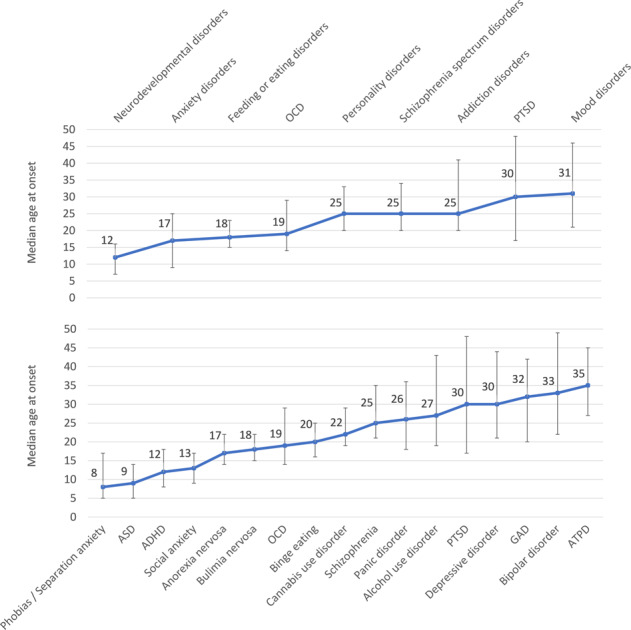
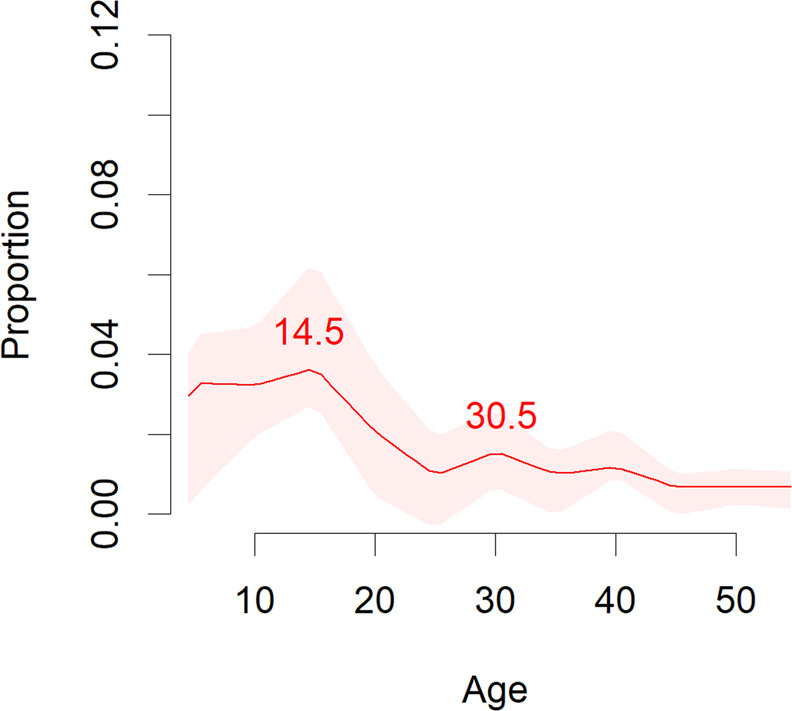
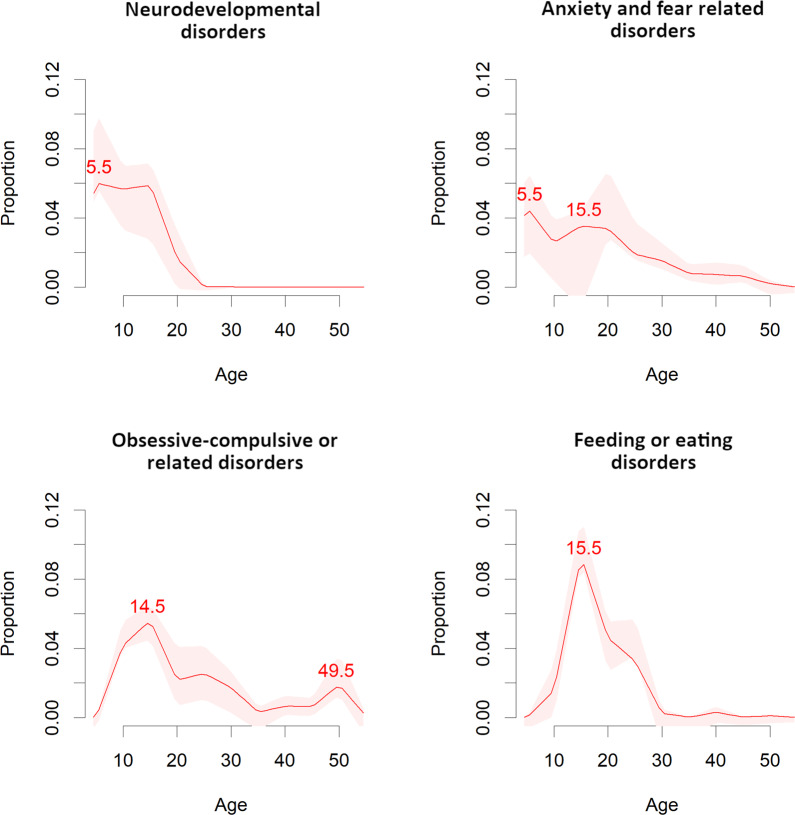
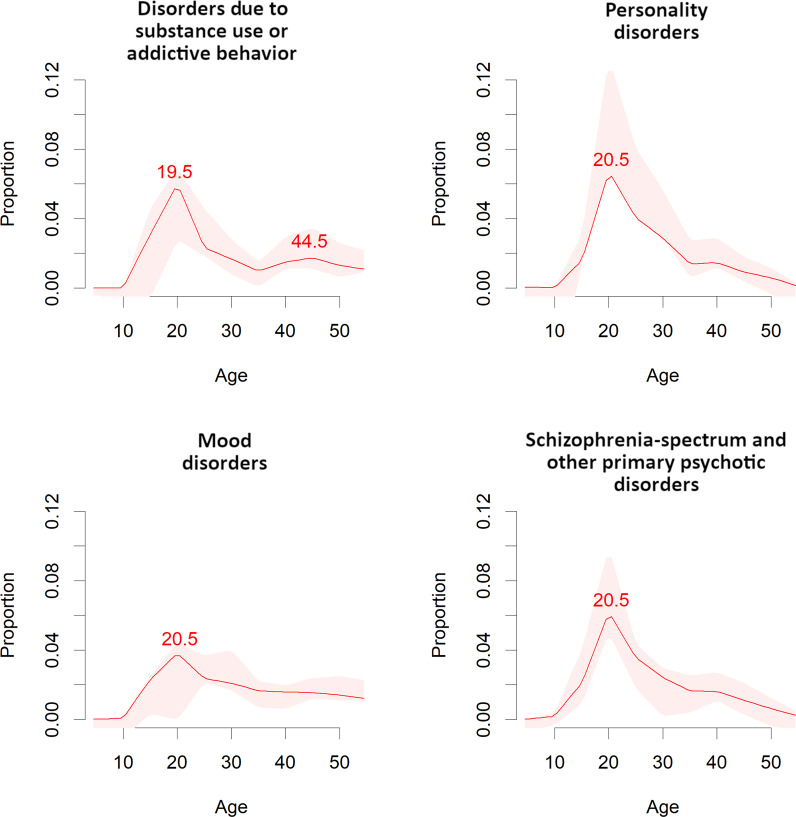
Promotion of good mental health, prevention, and early intervention before/at the onset of mental disorders improve outcomes. However, the range and peak ages at onset for mental disorders are not fully established. To provide robust, global epidemiological estimates of age at onset for mental disorders, we conducted a PRISMA/MOOSE-compliant systematic review with meta-analysis of birth cohort/cross-sectional/cohort studies, representative of the general population, reporting age at onset for any ICD/DSM-mental disorders, identified in PubMed/Web of Science (up to 16/05/2020) (PROSPERO:CRD42019143015). Co-primary outcomes were the proportion of individuals with onset of mental disorders before age 14, 18, 25, and peak age at onset, for any mental disorder and across International Classification of Diseases 11 diagnostic blocks. Median age at onset of specific disorders was additionally investigated. Across 192 studies ( n = 708,561) included, the proportion of individuals with onset of any mental disorders before the ages of 14, 18, 25 were 34.6%, 48.4%, 62.5%, and peak age was 14.5 years ( k = 14, median = 18, interquartile range (IQR) = 11–34). For diagnostic blocks, the proportion of individuals with onset of disorder before the age of 14, 18, 25 and peak age were as follows: neurodevelopmental disorders: 61.5%, 83.2%, 95.8%, 5.5 years ( k = 21, median=12, IQR = 7–16), anxiety/fear-related disorders: 38.1%, 51.8%, 73.3%, 5.5 years ( k = 73, median = 17, IQR = 9–25), obsessive-compulsive/related disorders: 24.6%, 45.1%, 64.0%, 14.5 years ( k = 20, median = 19, IQR = 14–29), feeding/eating disorders/problems: 15.8%, 48.1%, 82.4%, 15.5 years ( k = 11, median = 18, IQR = 15–23), conditions specifically associated with stress disorders: 16.9%, 27.6%, 43.1%, 15.5 years ( k = 16, median = 30, IQR = 17–48), substance use disorders/addictive behaviours: 2.9%, 15.2%, 48.8%, 19.5 years ( k = 58, median = 25, IQR = 20–41), schizophrenia-spectrum disorders/primary psychotic states: 3%, 12.3%, 47.8%, 20.5 years ( k = 36, median = 25, IQR = 20–34), personality disorders/related traits: 1.9%, 9.6%, 47.7%, 20.5 years ( k = 6, median = 25, IQR = 20–33), and mood disorders: 2.5%, 11.5%, 34.5%, 20.5 years ( k = 79, median = 31, IQR = 21–46). No significant difference emerged by sex, or definition of age of onset. Median age at onset for specific mental disorders mapped on a time continuum, from phobias/separation anxiety/autism spectrum disorder/attention deficit hyperactivity disorder/social anxiety (8-13 years) to anorexia nervosa/bulimia nervosa/obsessive-compulsive/binge eating/cannabis use disorders (17-22 years), followed by schizophrenia, personality, panic and alcohol use disorders (25-27 years), and finally post-traumatic/depressive/generalized anxiety/bipolar/acute and transient psychotic disorders (30-35 years), with overlap among groups and no significant clustering. These results inform the timing of good mental health promotion/preventive/early intervention, updating the current mental health system structured around a child/adult service schism at age 18.
Overview
The claims and statistics of this paper haven’t been checked yet.
Free: it reads the open-access text and checks the first 5 claims that cite a source we can check. Create a free account to check every claim.
Integrity signals
Registry
Cites
Statistics
Figures
Verification
Claims the paper makes
The claims and statistics of this paper haven’t been checked yet.
Free: it reads the open-access text and checks the first 5 claims that cite a source we can check. Create a free account to check every claim.
Claims other papers make about this one
Each is checked against this paper’s own text: does it say what the citing paper says it does?
The cited source doesn’t support the claim as written.
In the citing paper
“all major syndromes constituting approximately 75% of mental disorders begin before the age of 25 years [9, 10]”
From Towards a youth mental health paradigm: a perspective and roadmap (2023) · cites this paper as [9]
Checked by a reasoning model — may be wrong.
Experimental — accuracy not yet measuredThe source backs part of the claim, not all of it — or backs it for a different population, condition or comparison.
In the citing paper
“Most mental disorders have a typical onset between 12 and 25 years of age, highlighting the importance of this period for the pathogenesis, diagnosis, and treatment of mental ill-health.”
From Towards a youth mental health paradigm: a perspective and roadmap (2023) · cites this paper as [9]
Experimental — accuracy not yet measuredThe source backs part of the claim, not all of it — or backs it for a different population, condition or comparison.
In the citing paper
“the peak incidence of mental disorders during youth [9, 10]”
From Towards a youth mental health paradigm: a perspective and roadmap (2023) · cites this paper as [9]
Experimental — accuracy not yet measuredThe source backs part of the claim, not all of it — or backs it for a different population, condition or comparison.
In the citing paper
“the large unmet need in young people that has recently dramatically accelerated [9]”
From Towards a youth mental health paradigm: a perspective and roadmap (2023) · cites this paper as [9]
Experimental — accuracy not yet measuredThe source backs part of the claim, not all of it — or backs it for a different population, condition or comparison.
In the citing paper
“Relative to adolescents and adults, emerging adults experience the highest incidence and prevalence of substance use disorders (SUDs) and comorbid mental health disorders (2-4).”
From Initial insights from a quality improvement initiative to develop an evidence-informed young adult substance use program (2022) · cites this paper as [4]
Experimental — accuracy not yet measured
14 more claims about this paper
Create a free account to see every claim other papers make about this one.
Self-check
Percentages, sums and reported differences re-computed from the paper’s own numbers.
The self-check needs the paper’s full text.
Citations
Cites
Preferred Reporting Items for Systematic Reviews and Meta-Analyses: the PRISMA statement
Moher, D., Liberati, A., Tetzlaff, J., Altman, D. G., & for the PRISMA Group (2009) · BMJ · doi:10.1136/bmj.b2535 · Cited by 83,823
Preferred Reporting Items for Systematic Reviews and Meta-Analyses: The PRISMA Statement
Moher, D., Liberati, A., Tetzlaff, J., Altman, D. G., & The PRISMA Group (2009) · PLoS Medicine · doi:10.1371/journal.pmed.1000097 · Cited by 64,042 · cited 1×
“We performed a systematic review adhering to the preferred reporting items for systematic reviews and meta-analyses (PRISMA) recommendations [31] (e-Table 1) and the meta-analysis of observational studies in epidemiology (MOOSE) guidelines (e-Table 2) [32].”
MethodPreferred reporting items for systematic reviews and meta-analyses: the PRISMA Statement.
(2009) · PubMed Central · Cited by 44,859
Preferred reporting items for systematic reviews and meta-analyses: The PRISMA statement
Moher, D., Liberati, A., Tetzlaff, J., Altman, D. G., & the PRISMA Group* (2009) · Annals of Internal Medicine · doi:10.7326/0003-4819-151-4-200908180-00135 · Cited by 37,554
Dermyshi, E., Wang, Y., Yan, C., Hong, W., Qiu, G., Gong, X., & Zhang, T. (2017) · Neonatology · doi:10.1159/000454668 · Cited by 24,451
Meta-analysis of Observational Studies in Epidemiology<SUBTITLE>A Proposal for Reporting</SUBTITLE>
Stroup, D. F. (2000) · JAMA · doi:10.1001/jama.283.15.2008 · Cited by 20,623
Bootstrap Methods and their Application
Davison, A. C., & Hinkley, D. V. (1997) · doi:10.1017/cbo9780511802843 · Cited by 7,350
Bootstrap Methods and Their Application
Loughin, T. M., Davison, A. C., & Hinkley, D. V. (1999) · Journal of the American Statistical Association · doi:10.2307/2669707 · Cited by 5,418
Why do many psychiatric disorders emerge during adolescence?
Paus, T., Keshavan, M., & Giedd, J. N. (2008) · Nature Reviews Neuroscience · doi:10.1038/nrn2513 · Cited by 3,123 · cited 2×
“The meta-epidemiologic results of this work show that mental disorders have onset when dramatic biological changes in the brain occur, from childhood, through adolescence, to adulthood, that involves grey-matter density, cerebral metabolic rate, synaptic density, white matter growth and myelination [41].”
BackgroundWalker, E. R., McGee, R. E., & Druss, B. G. (2015) · JAMA Psychiatry · doi:10.1001/jamapsychiatry.2014.2502 · Cited by 2,976
Research works printed but not linked: 1
- McGorry PD Hartmann JA Spooner R Nelson B Beyond the "at risk mental state" concept: transitioning to transdiagnostic psychiatry World Psychiatry 2018 17 133 42 29856558 PMC5980504 · DOI · Paper page
Cited by
Items 601–700 of 1,015
Kung, F.-H., Tsai, C., Cheng, C., Tsai, S., Su, T., Chen, T., Bai, Y., Liang, C., & Chen, M. (2024) · European Child & Adolescent Psychiatry · doi:10.1007/s00787-024-02401-1 · Cited by 18
Minutillo, A., Trana, A. D., Aquilina, V., Ciancio, G. M., Berretta, P., & Maida, N. L. (2024) · Frontiers in Psychiatry · doi:10.3389/fpsyt.2024.1392317 · Cited by 23
“To this concern, the adolescent population should be further explored, considering the early onset of behavioral addictions, and ED (51 – 54).”
BackgroundPerceptions of Adulthood and Mental Health
Tavakkoli, M., Valarezo, E., & García, L. F. (2024) · International Journal of Environmental Research and Public Health · doi:10.3390/ijerph21060773 · Cited by 22
“Additionally, the majority of psychiatric disorders manifest during these stages [28].”
BackgroundYou Can Lead an Adolescent to Mindfulness, but You Can’t Make Them Mindful
Johnson, C., Taylor, A. M., Dray, J., & Dunning, D. L. (2024) · Mindfulness · doi:10.1007/s12671-024-02391-w · Cited by 18
Żulińska, S., Strosznajder, A. K., & Strosznajder, J. B. (2024) · International Journal of Molecular Sciences · doi:10.3390/ijms25137106 · Cited by 20
Wen, X., Wang, F., Tang, T. F., Xu, B., Yuan, M., Li, Y., Ding, H., Tao, F., Su, P., & Wang, G. (2024) · Journal of Affective Disorders · doi:10.1016/j.jad.2024.06.098 · Cited by 19
Dong, Q., Ma, Q., Wang, W., Wang, J., Pluess, M., & Ma, X. (2024) · Journal of Affective Disorders · doi:10.1016/j.jad.2024.08.178 · Cited by 17
Chan, J. K. N., Lee, K. C. K., Correll, C. U., So, Y. K., Chan, C. Y., Wong, C. S. M., Cheung, K. W., Seto, M. T. Y., Lin, J., & Chang, W. C. (2024) · Molecular Psychiatry · doi:10.1038/s41380-024-02723-1 · Cited by 20
Self-citationEstimating adolescent mental health in the general population: current challenges and opportunities
Black, L., Panayiotou, M., & Humphrey, N. (2024) · The Lancet Psychiatry · doi:10.1016/s2215-0366(24)00254-2 · Cited by 22
Calzavara‐Pinton, I., Nibbio, G., Bertoni, L., Cicale, A., Necchini, N., Zardini, D., Ubertino, U. B., Cerati, C., Deste, G., Barlati, S., et al. (2024) · Psychiatry Research · doi:10.1016/j.psychres.2024.116240 · Cited by 19
Laakso, M., Fagerlund, Å., & Lagerström, M. (2024) · Applied Psychology Health and Well-Being · doi:10.1111/aphw.12616 · Cited by 20
Marusak, H. A., Ely, S. L., Zundel, C. G., Gowatch, L. C., Shampine, M. M., Carpenter, C., Tamimi, R., Jaster, A. M., Shakir, T., May, L., et al. (2024) · Psychopharmacology · doi:10.1007/s00213-024-06717-3 · Cited by 18
“This is a critical gap, as adolescence is a high-risk period for trauma exposure—affecting 61.8% of youth according to national surveys (McLaughlin et al. 2013)—and the onset of psychiatric disorders (Solmi et al. 2021 ).”
InfluentialHerpertz‐Dahlmann, B., Eckardt, S., & Dempfle, A. (2024) · European Psychiatry · doi:10.1192/j.eurpsy.2024.1788 · Cited by 19
Gerhard, D. M., & Meyer, H. C. (2021) · Neurobiology of Learning and Memory · doi:10.1016/j.nlm.2021.107543 · Cited by 17
Identifying Clusters of Adolescents Based on Their Daily-Life Social Withdrawal Experience
Bamps, E., Teixeira, A. S., Lafit, G., Achterhof, R., Hagemann, N., Hermans, K. S. F. M., Hiekkaranta, A. P., Lecei, A., Kirtley, O. J., & Myin‐Germeys, I. (2022) · Journal of Youth and Adolescence · doi:10.1007/s10964-021-01558-1 · Cited by 20
“In addition, important developmental outcomes, such as mental health, also become more prominent with increasing age (Solmi et al., 2021).”
BackgroundMental health services in Scandinavia and Eurasia: comparison of financing and provision
Wang, B., Feldman, I., Chkonia, E. D., Пінчук, І., Panteleeva, L., & Skokauskas, N. (2022) · International Review of Psychiatry · doi:10.1080/09540261.2022.2065190 · Cited by 17
Paetzold, I., Schick, A., Rauschenberg, C., Hirjak, D., Banaschewski, T., Meyer‐Lindenberg, A., Butz, S., Floesser, C., Schültke, L., Boehnke, J. R., et al. (2022) · JMIR Formative Research · doi:10.2196/39511 · Cited by 19
“Mental disorders primarily emerge in adolescence and young adulthood, and >60% of all lifetime cases have their onset before the age of 25 years [1].”
BackgroundBoerma, M., Beel, N., Jeffries, C. H., & Ruse, J. N. (2023) · Child and Adolescent Mental Health · doi:10.1111/camh.12633 · Cited by 18
Gallop, L., Westwood, S. J., Lewis, Y. D., Campbell, I. C., & Schmidt, U. H. (2023) · European Child & Adolescent Psychiatry · doi:10.1007/s00787-023-02157-0 · Cited by 21
Scafuto, F., Quinto, R. M., Ghiroldi, S., Montecucco, N. F., Presaghi, F., Iani, L., & De Vincenzo, F. (2024) · Current Psychology · doi:10.1007/s12144-024-06081-7 · Cited by 16
Tibbs, M., Deschênes, S., van der Velden, P., & Fitzgerald, A. (2025) · Journal of Youth and Adolescence · doi:10.1007/s10964-024-02093-5 · Cited by 16
Gustafsson, J., Jasinskaja‐Lahti, I., Konttinen, H. M., Simonsen, N., Löfstedt, P., & Lyyra, N. (2025) · Journal of Research on Adolescence · doi:10.1111/jora.13058 · Cited by 18
Petersson, L., Ahlborg, M. G., & Westberg, K. H. (2025) · JMIR Mental Health · doi:10.2196/76973 · Cited by 21
“Combining data from multiple sources enriches AI analytic tasks, such as predictive modeling, by making them more data-driven and enabling an evidence-based practice 2.0 in health care [1,13] Thus, health care is one of AI’s most promising application areas [14].”
InfluentialGrisanzio, K. A., Flournoy, J. C., Mair, P., & Somerville, L. H. (2023) · Emotion · doi:10.1037/emo0001079 · Cited by 17
Synapse-specific roles for microglia in development: New horizons in the prefrontal cortex
Blagburn-Blanco, S. V., Chappell, M. S., Biase, L. M. D., & DeNardo, L. A. (2022) · Frontiers in Molecular Neuroscience · doi:10.3389/fnmol.2022.965756 · Cited by 16
“However, the median age of onset is younger for ASD compared to SZ (Solmi et al., 2022), suggesting that in ASD, disease risk is intertwined with earlier-occurring developmental processes.”
BackgroundPrins, S. J., Shefner, R. T., Kajeepeta, S., Hatzenbuehler, M. L., Branas, C. C., Metsch, L. R., & Russell, S. T. (2022) · Addictive Behaviors · doi:10.1016/j.addbeh.2022.107524 · Cited by 16
Manley, H., Tu, E., Reardon, T. C., & Creswell, C. (2023) · Review of Education · doi:10.1002/rev3.3385 · Cited by 19
Fine particulate matter exposure and pediatric mental health outcomes: An integrative review
Trombley, J. (2023) · Journal of Nursing Scholarship · doi:10.1111/jnu.12888 · Cited by 16
Lageborn, C. T., Bjureberg, J., Song, J., Runeson, B., Möller, J., Ljung, R., & Dahlin, M. (2023) · Social Psychiatry and Psychiatric Epidemiology · doi:10.1007/s00127-023-02484-2 · Cited by 17
The effect of childhood adversity on mental health in young adults: a longitudinal study
Villanueva, L., Adrián, J., & Pomares, A. G. (2023) · Current Psychology · doi:10.1007/s12144-023-04831-7 · Cited by 18
“Contrary to the trajectory of externalising problems, which decrease as participants enter adulthood, the prevalence of internal-ising outcomes remains stable or even increases with age (Adams et al., 2014; Solmi et al., 2022).”
Goodwin, J., Behan, L., Saab, M. M., O’Brien, N., O’Donovan, Á., Hawkins, A., Philpott, L. F., Connolly, A., Goulding, R., Clark, F., et al. (2023) · Mental Health Review Journal · doi:10.1108/mhrj-05-2023-0027 · Cited by 20
Bapuji, S. B., Hansen, A., Marembo, M., Olivier, P. L., & Yap, M. B. H. (2024) · Clinical Psychology Review · doi:10.1016/j.cpr.2024.102429 · Cited by 20
Scheuer, S. H., Andersen, G. S., Carstensen, B., Díaz, L. J., Kosjerina, V., Lindekilde, N., Wild, S. H., Jackson, C., Pouwer, F., Benros, M. E., et al. (2024) · Diabetes Care · doi:10.2337/dc23-2394 · Cited by 16
Riglin, L., Dennison, C. A., Martin, J., Tseliou, F., Armitage, J. M., Shakeshaft, A., Heron, J. E., Tilling, K. M., Thapar, A., & Collishaw, S. (2024) · European Child & Adolescent Psychiatry · doi:10.1007/s00787-024-02461-3 · Cited by 17
Grimmond, T., King, T. L., LaMontagne, A. D., Oostermeijer, S., Harrap, B., Newberry‐Dupé, J., & Reavley, N. J. (2024) · American Journal of Industrial Medicine · doi:10.1002/ajim.23620 · Cited by 19
Beyond the Window of Risk? The Dutch Bipolar Offspring Study: 22-Year Follow-Up
Helmink, F. G. L., Mesman, E., & Hillegers, M. H. J. (2024) · Journal of the American Academy of Child & Adolescent Psychiatry · doi:10.1016/j.jaac.2024.05.024 · Cited by 18
Monteleone, A. M., & Daga, G. A. (2024) · Current Opinion in Psychiatry · doi:10.1097/yco.0000000000000961 · Cited by 18
Evans-Lacko, S. E., Gilabert, P. F., & Knapp, M. R. J. (2024) · Social Science & Medicine · doi:10.1016/j.socscimed.2024.117385 · Cited by 17
Developmental mechanisms linking deprivation and threat to psychopathology and school outcomes
Murgueitio, N., Sheridan, M. A., Bauer, D. J., & Propper, C. B. (2024) · Development and Psychopathology · doi:10.1017/s0954579424001664 · Cited by 22
Yu, X., Zhang, Z., Herle, M., Banaschewski, T., Barker, G. J., Bokde, A. L. W., Flor, H., Grigis, A., Garavan, H., Gowland, P. A., et al. (2025) · Nature Mental Health · doi:10.1038/s44220-024-00354-7 · Cited by 17
“4 and 5) due to the limited portability across ancestries for PGSs.”
Edmondson-Stait, A. J., Davyson, E., Shen, X., Adams, M. J., Khandaker, G. M., Miron, V. E., McIntosh, A. M., Lawrie, S. M., Kwong, A. S. F., & Whalley, H. C. (2025) · European Psychiatry · doi:10.1192/j.eurpsy.2025.7 · Cited by 16
“Depression affects individuals across the entire life course with an onset typically occurring between ages 20 and 30 years [22, 23].”
Coote, T., Barrett, E. L., & Grummitt, L. R. (2025) · BMC Public Health · doi:10.1186/s12889-025-21621-x · Cited by 17
Vilela-Estrada, A. L., Villarreal‐Zegarra, D., Toyama, M., Carbonel, A., Fung, C., Carbonetti, F. L., Hidalgo-Padilla, L., Sureshkumar, D. S., Uribe-Restrepo, J. M., Olivar, N., et al. (2025) · Journal of Affective Disorders · doi:10.1016/j.jad.2025.02.088 · Cited by 17
A Scoping Review of Associations Between Cannabis Use and Anxiety in Adolescents and Young Adults
Stiles‐Shields, C., Archer, J., Zhang, J., Burnside, A. N., Draxler, J. M., Potthoff, L. M., Reyes, K. M., Williams, F. S., Westrick, J. C., & Karnik, N. S. (2021) · Child Psychiatry & Human Development · doi:10.1007/s10578-021-01280-w · Cited by 20
Li, Z., Li, D., & Chen, X. (2022) · Journal of Affective Disorders · doi:10.1016/j.jad.2022.04.097 · Cited by 16
Sheikhan, N. Y., Hawke, L. D., Ma, C., Courtney, D., Szatmári, P., Cleverley, K., Voineskos, A. N., Cheung, A., & Henderson, J. L. (2022) · The Canadian Journal of Psychiatry · doi:10.1177/07067437221097906 · Cited by 18
Timonen, J., Niemelä, M., Hakko, H. H., Alakokkare, A., & Räsänen, S. S. (2022) · European Child & Adolescent Psychiatry · doi:10.1007/s00787-022-02107-2 · Cited by 20
“The gender-specific values were calculated, because it is known that psychological symptoms are linked to age [35–37].”
BackgroundDistinct Effects of Anxiety and Depression on Updating Emotional Information in Working Memory
Zhang, Y., Boemo, T., Qiao, Z., Tan, Y., & Li, X. (2022) · International Journal of Environmental Research and Public Health · doi:10.3390/ijerph20010544 · Cited by 18
Tymofiyeva, O., Hu, M. Y., Sipes, B. S., Jakary, A., Glidden, D. V., Jariwala, N., Bhandari, S., Parks, K. C., Nguyen, C., Henje, E., et al. (2022) · Frontiers in Psychiatry · doi:10.3389/fpsyt.2022.838694 · Cited by 15
Lynch, L., Moorhead, A., Long, M., & Hawthorne-Steele, I. (2024) · Community Mental Health Journal · doi:10.1007/s10597-024-01237-y · Cited by 15
Jańczak, M. O., & Soroko, E. (2025) · Scientific Reports · doi:10.1038/s41598-025-96067-7 · Cited by 15
Association Between Neighborhood Opportunity, Cognitive Function, and Brain Structure in Youths
Zhou, L., Cai, T., & Ip, K. I. (2025) · Biological Psychiatry Global Open Science · doi:10.1016/j.bpsgos.2025.100533 · Cited by 20
“We hypothesized that the observed associations between COI, brain structure, and cognitive function would persist even after accounting for factors at the household level (12,13,21,24,25).”
Saunders, R., Suh, J. W., Buckman, J. E. J., John, A., Baou, C. E., Pilling, S., Lewis, G., Stott, J. C. H., Krebs, G., & Stringaris, A. K. (2025) · The Lancet Psychiatry · doi:10.1016/s2215-0366(25)00207-x · Cited by 16
“Reliable improvement was reporting a pre–post decrease in PHQ-9 or either the GAD-7 or ADSM scores larger than the threshold for the error of measurement of that scale (a change of ≥6 points on the PHQ-9 and of ≥4 points on the GAD-7, with thresholds on the ADSMs presented in the appendix [p 3]).”
Moore, G. F. (2025) · Journal of Child Psychology and Psychiatry · doi:10.1111/jcpp.70061 · Cited by 22
“Childhood and adolescence are vital periods in life-course mental health trajectories, with most mental health difficulties emerging before age 25 (Solmi et al., 2022).”
Fitzgerald, I., O'Dwyer, S., Dhubhlaing, C. N., Gee, S., Sahm, L. J., Wheeler, A., Hurley, E., Saastamoinen, L., Waksmundzka-Walczuk, A., Donohue, G., et al. (2026) · The Lancet Regional Health - Europe · doi:10.1016/j.lanepe.2026.101602 · Cited by 15
“To account for the peak age of onset of schizophrenia being estimated as approximately 20 years, 27 and inter-country differences in age structures, namely the population proportion of children and young people, the basis for the total population used was the number of people aged 15+ in each…”
Self-citationAdolescence as a peak period of borderline personality features? A meta-analytic approach
Aleva, A., Laceulle, O. M., Denissen, J. J. A., Hessels, C. J., & van Aken, M. A. G. (2022) · European Journal of Personality · doi:10.1177/08902070221134652 · Cited by 16
“Adolescence is considered to be the period wherein the features fi rst manifest (Chanen & Thompson, 2019; Sharp et al., 2018; Solmi et al., 2021).”
BackgroundHazzard, V. M., Loth, K. A., Fertig, A. R., Trofholz, A. C., de Brito, J. N., Doering, A. C., & Berge, J. M. (2023) · Eating Behaviors · doi:10.1016/j.eatbeh.2023.101728 · Cited by 15
Longitudinal Digital Mood Charting in Bipolar Disorder: Experiences with ChronoRecord Over 20 Years
Bauer, M., Glenn, T., Alda, M., Grof, P., Bauer, R., Ebner‐Priemer, U., Ehrlich, S., Pfennig, A., Pilhatsch, M., Rasgon, N., et al. (2023) · Pharmacopsychiatry · doi:10.1055/a-2156-5667 · Cited by 15
“The median age of onset of MDD and BD is between 20 and 30 years [8], followed by a large variation in disease trajectories.”
BackgroundGrummitt, L. R., Kelly, E. V., Newton, N. C., Stapinski, L. A., Lawler, S., Prior, K., & Barrett, E. L. (2023) · Child Abuse & Neglect · doi:10.1016/j.chiabu.2023.106534 · Cited by 17
Iannattone, S., Mignemi, G., Pivetta, E., Gatta, M., Sica, C., Cardi, V., Canale, N., Spoto, A., & Bottesi, G. (2024) · PLoS ONE · doi:10.1371/journal.pone.0299229 · Cited by 18
Giles, C. J., Västhagen, M., van Leuven, L., Edenius, A., Ghaderi, A., & Enebrink, P. (2024) · European Child & Adolescent Psychiatry · doi:10.1007/s00787-024-02424-8 · Cited by 15
McAtee, D., & Abdelmoneim, A. (2024) · NeuroToxicology · doi:10.1016/j.neuro.2024.06.003 · Cited by 15
Martin, F., Dahmash, D. T., Wicker, S., Glover, S.-L., Duncan, C., Anastassiou, A., Docherty, L., & Halligan, S. L. (2024) · BMJ Mental Health · doi:10.1136/bmjment-2023-300971 · Cited by 19
Cosgrove, J. A., Rao, N., George, P., Hoey, T., Taylor, J. A., Marshall, T., Ghose, S. S., & Patel, N. A. (2024) · Psychiatric Services · doi:10.1176/appi.ps.20240040 · Cited by 15
The association between motivations for social media use, stress and academic attainment
Hughes-Nind, J., Wang, M., Zhang, C., & Tibber, M. S. (2024) · Current Psychology · doi:10.1007/s12144-024-06392-9 · Cited by 16
Santos‐Silva, T., Souza, B. K., Colodete, D. A. E., Campos, L. R., Lima, T. S. A., Guimarães, F. S., & Gomes, F. V. (2024) · The International Journal of Neuropsychopharmacology · doi:10.1093/ijnp/pyae042 · Cited by 16
Kajastus, K., Kiviruusu, O. H., MARTTUNEN, M. J., & Ranta, K. (2024) · BMC Psychiatry · doi:10.1186/s12888-024-06231-y · Cited by 18
Henry, J., Azariah, F., Hughsam, M., Skeen, S., Tomlinson, M., Busakhwe, C., Mokoena, K., Mudaly, A., Sinha, M., & Laurenzi, C. A. (2024) · Cambridge Prisms Global Mental Health · doi:10.1017/gmh.2024.117 · Cited by 16
Prospective Association of Sedentary Behavior With Psychological Distress Among Adolescents
Werneck, A. O., Hallgren, M. Å., & Stubbs, B. (2024) · Journal of Adolescent Health · doi:10.1016/j.jadohealth.2024.10.019 · Cited by 17
Chen, G., Chen, W. W., Qi, S., & Shek, D. T. L. (2024) · International Journal of Environmental Research and Public Health · doi:10.3390/ijerph21121576 · Cited by 15
Long-term consequences of COVID-19 on mental and physical health in young adults
Falbová, D., Kovalčíková, V., Beňuš, R., & Vorobeľová, L. (2024) · Central European Journal of Public Health · doi:10.21101/cejph.a8118 · Cited by 17
GABAB Receptor: Structure, Biological Functions, and Therapy for Diseases
Xie, W., Li, Y., Wang, X., Blokhina, E. A., Krupitsky, E. M., Vetrova, M., Hu, J., Yuan, T., Chen, J., Wang, H., et al. (2025) · MedComm · doi:10.1002/mco2.70163 · Cited by 16
“BN and BED are prevalent mental eating disorders that impact approximately 4–5.8% of adults [50, 51].”
InfluentialJäckel, D., Bechdolf, A., Burkhardt, E., Kallenbach, M., Gamig, M., Mößnang, A., & Leopold, K. (2025) · Brain and Behavior · doi:10.1002/brb3.70469 · Cited by 16
“The majority of mental disorders occur in adolescence and the early stages of adulthood, with the peak age of onset at 14.5 years and around 63% of individuals having experienced the onset before the age of 25 (Solmi et al. 2022).”
InfluentialHan, M., Chesney, E., Ng, V., Bright, J. K., Sagar, Y. K., Baker, E., Meaney, M. J., & Law, E. C. N. (2025) · BMJ Mental Health · doi:10.1136/bmjment-2025-301613 · Cited by 19
Promoting good mental health in the whole population: The new frontier
Fusar‐Poli, P., & Santini, Z. I. (2021) · European Neuropsychopharmacology · doi:10.1016/j.euroneuro.2021.09.010 · Cited by 15
Self-citationPinna, F., Suprani, F., Deiana, V., Lai, L., Manchia, M., Paribello, P., Somaini, G., Diana, E., Nicotra, E. F., Farci, F., et al. (2022) · Frontiers in Psychiatry · doi:10.3389/fpsyt.2022.848031 · Cited by 15
Cerqueira, R. O., Ziebold, C., Cavalcante, D. A., Oliveira, G., Núñez, J. V., Undurraga, J. P., González‐Valderrama, A., Nachar, R., López‐Jaramillo, C., Noto, C. D. S., et al. (2022) · Journal of Affective Disorders · doi:10.1016/j.jad.2022.08.010 · Cited by 16
Dalhaug, K. C., Storvik, K., & Kildahl, A. N. (2022) · Journal of Mental Health Research in Intellectual Disabilities · doi:10.1080/19315864.2022.2117880 · Cited by 16
“Hallucinatory experiences, however, is associated with schizophrenia and not OCD (American Psychiatric Association, 2013), and mean age of onset seems to be higher for schizophrenia than for OCD (Solmi et al., 2021).”
BackgroundCortical profiles of numerous psychiatric disorders and normal development share a common pattern
Cao, Z., Cupertino, R. B., Ottino‐González, J., Murphy, A., Pancholi, D., Juliano, A., Chaarani, B., Albaugh, M. D., Yuan, D., Schwab, N., et al. (2022) · Molecular Psychiatry · doi:10.1038/s41380-022-01855-6 · Cited by 19
Noonan, R. J. (2022) · International Journal of Environmental Research and Public Health · doi:10.3390/ijerph192315579 · Cited by 16
“During adolescence it is common for sport participation levels [55] and self-esteem to decline [9], and for psychological disorders to also arise [56,57].”
BackgroundMarquez, J., Lambert, L., & Cutts, M. (2022) · Child Indicators Research · doi:10.1007/s12187-022-09993-7 · Cited by 16
“Evidence indicates that most lifetime cases of mental ill health manifest by the age of 24, with a peak age of onset of 14.5 years (Colizzi et al., 2020; Solmi et al., 2021).”
BackgroundInfluentialJunus, A., Kwan, C., Wong, C. L. H., Chen, Z., & YIP, P. S. F. (2022) · Social Science & Medicine · doi:10.1016/j.socscimed.2022.115648 · Cited by 16
Petrican, R., & Fornito, A. (2023) · Developmental Cognitive Neuroscience · doi:10.1016/j.dcn.2023.101229 · Cited by 17
“Importantly, this is also the life stage in which more than a third of all diagnosed mental disorders have their onset (Solmi et al., 2022), a finding that”
BackgroundInfluentialBeames, J. R., Werner‐Seidler, A., Hodgins, M., Brown, L., Fujimoto, H., Bartholomew, A., Maston, K., Huckvale, K., Zbukvic, I., Torok, M. H., et al. (2023) · JMIR Pediatrics and Parenting · doi:10.2196/42349 · Cited by 15
Cervin, M., Valls, C. M., Möller, S., Frick, A., Björkstrand, J., & Watson, D. (2023) · Assessment · doi:10.1177/10731911231170841 · Cited by 21
Sandboge, S., Räikkönen, K., Lahti‐Pulkkinen, M., Hauta‐alus, H., Holmlund-Suila, E. M., Girchenko, P. V., Kajantie, E., Mäkitie, O., Andersson, S., & Heinonen, K. (2023) · JAMA Network Open · doi:10.1001/jamanetworkopen.2023.14319 · Cited by 18
Berceanu, D. C.-A., Pânişoară, G., Popovici, A.-F., & Ghiță, C. M. (2023) · Behavioral Sciences · doi:10.3390/bs13050375 · Cited by 18
Flores-Bazán, T., Cabrera, G. B., Guerrero-Solano, J. A., Negrete‐Díaz, J. V., Germán-Ponciano, L. J., & Olivo, D. (2023) · Brain Research · doi:10.1016/j.brainres.2023.148554 · Cited by 15
Lycett, K., Cleary, J., Calder, R., Frykberg, G., Hollonds, A., Dakin, P., Russell, S. E., Demaio, S., & Goldfeld, S. R. (2023) · The Medical Journal of Australia · doi:10.5694/mja2.52145 · Cited by 16
“56 Thus, any attempt to measure what matters to children and young people must consider the full developmental spectrum from ages 0 to 24 years.”
BackgroundHaas, V. K., Wechsung, K., Kaiser, V., Schmidt, J., Raile, K., Busjahn, A., Grange, D. L., & Correll, C. U. (2023) · International Journal of Eating Disorders · doi:10.1002/eat.24098 · Cited by 18
Self-citationNkire, N., Kinsella, A., Russell, V., & Waddington, J. L. (2023) · European Neuropsychopharmacology · doi:10.1016/j.euroneuro.2023.12.005 · Cited by 15
Krokos, O., Brandhorst, I., Seizer, L., Gawrilow, C., & Löchner, J. (2024) · Internet Interventions · doi:10.1016/j.invent.2024.100733 · Cited by 15
Meta-analytical transdiagnostic neural correlates in common pediatric psychiatric disorders
Dugre, J. R., Eickhoff, S. B., & Potvin, S. (2022) · Scientific Reports · doi:10.1038/s41598-022-08909-3 · Cited by 18
“We identified 4 significant MAGs, which comprised co-occurrent deficits in brain regions that may share features with (1) internally/externally directed processes; (2) attentional control of emotions, (3) action execution and (4) visual processes.”
BackgroundVignapiano, A., Monaco, F., Pagano, C., Piacente, M., Farina, F., Petrillo, G., Sica, R., Marenna, A., Shin, J. I., Solmi, M., et al. (2023) · Frontiers in Psychiatry · doi:10.3389/fpsyt.2023.1321345 · Cited by 14
Self-citationMental Health Antecedents and Correlates of 2 Distinct Developmental Pathways to Suicidal Ideation
Geoffroy, M., MacNeil, S., Paquin, V., Inja, A., Girard, A., Chartrand, E., Ryan, N. C., Notredame, C.-É., Colman, I., Orri, M., et al. (2025) · JAMA Psychiatry · doi:10.1001/jamapsychiatry.2025.1273 · Cited by 14
Baumann, H., Singh, B., Staiano, A. E., Gough, C., Ahmed, M., Fiedler, J., Timm, I., Wunsch, K., Button, A., Yin, Z., et al. (2025) · Frontiers in Digital Health · doi:10.3389/fdgth.2025.1593677 · Cited by 18
Xin, Y., Wang, Y., Zhang, X., Li, P., Yang, W., Wang, B., & Yang, J. (2025) · Child and Adolescent Psychiatry and Mental Health · doi:10.1186/s13034-025-00959-5 · Cited by 17
“Anxiety, the brain’s response to perceived threats [15], is the most prevalent mental disorder among adolescents, typically emerging during puberty [16].”
Bourke, M., Brown, D. M. Y., & KWAN, M. Y. W. (2025) · Emerging Adulthood · doi:10.1177/21676968251376750 · Cited by 15
Multivariate Brain-Blood Signatures in Early-Stage Depression and Psychosis
Popovic, D., Weyer, C., Dwyer, D., Griffiths, S. L., Lalousis, P. A., Barnes, N. M., Vetter, C. S., Neuner, L., Buciuman, M.-O., Sarisik, E., et al. (2025) · JAMA Psychiatry · doi:10.1001/jamapsychiatry.2025.3803 · Cited by 14
Ahn, J., Lee, D., Lee, J. E., & Jung, Y. (2022) · PLoS ONE · doi:10.1371/journal.pone.0279577 · Cited by 17
“A recent epidemiologic study reported that the median onset of BN was 18 years of age, and the median onset of BED was 20 years [2].”
Background
Metadata
- Authors
- Solmi, M., Radua, J., Olivola, M., Croce, E., Soardo, L., Salazar de Pablo, G., Il Shin, J., Kirkbride, J. B., Jones, P., Kim, J. H., Kim, J. Y., Carvalho, A. F., Seeman, M. V., Correll, C. U., & Fusar-Poli, P.
- Affiliations
- University of Padua (IT)
- King's College London (GB)
- University of Ferrara (IT)
- University of Pavia (IT)
- University College London (GB)
- National Health Service (GB)
- Yonsei University (KR)
- University of Toronto (CA)
- Feinstein Institute for Medical Research (US)
- ORCID
- Venue
- Molecular Psychiatry
- Published
- 2021-06-02
- Volume
- 27
- Issue
- 1
- Pages
- 281-295
- ISSN
- 1359-4184 (ISSN-L)
- 1476-5578
- PMC
- PMC8960395
- OpenAlex
- W3164324796
- Cited by
- 3,835
- References
- 67
- Citations by year
- 2026: 925 · 2025: 1030 · 2024: 865 · 2023: 638 · 2022: 325 · 2021: 48
- FWCI
- 73.42
- Type
- journal article
- Language
- en
- Open access
- hybrid
- doi.org
- Licence
- cc-by
- creativecommons.org/licenses/by/4.0 (tdm)
- creativecommons.org/licenses/by/4.0 (vor)
- Locations
- Molecular Psychiatry (publishedVersion, cc-by)
- PubMed Central (publishedVersion, cc-by)
- PubMed (publishedVersion)
- UCL Discovery (University College London) (submittedVersion)
- Research Portal (King's College London) (submittedVersion, other-oa)
- Apollo (University of Cambridge) (submittedVersion)
- Apollo (University of Cambridge) (submittedVersion, cc-by)
- Apollo
- Deakin Research Online (Deakin University) (cc-by)
- Funders
- Fundación Alicia Koplowitz (PI19/00394)
- Wellcome Trust
- National Institute for Health and Care Research
- University College London
- European Commission (CPII19/00009)
- Instituto de Salud Carlos III ((CPII19/00009), PI19/00394)
- European Regional Development Fund (PI19/00394, CPII19/00009)
- European Social Fund (CPII19/00009, PI19/00394)
- Topics
- Health Sciences › Medicine › Psychiatry and Mental health › Mental Health Treatment and Access
- Social Sciences › Psychology › Clinical Psychology › Child and Adolescent Psychosocial and Emotional Development
- Health Sciences › Medicine › Psychiatry and Mental health › Schizophrenia research and treatment
- Keywords
- age of onset, mental illness, child psychopathology, adolescent mental disorders, neurodevelopmental disorders, anxiety disorders, obsessive-compulsive disorder, eating disorders, substance use disorders, mood disorders, psychosis, bipolar disorder, depression, schizophrenia spectrum disorders, psychosis spectrum disorders, early intervention, mental health promotion, global prevalence estimates
- MeSH terms
- Autism Spectrum Disorder, Alcoholism, Mental Disorders, Cross-Sectional Studies, Humans, Obsessive-Compulsive Disorder, Comorbidity, Prevalence, Age of Onset
About these checks
Registry, retraction, Cites and statistics results are computed, not judged, with one exception: a printed reference that no index lists is read once by a model before it counts as a citation error. Claims are extracted by a model and kept only when their quote appears verbatim in the text; each cited source is then checked, with a model’s help, for whether it says what the claim relies on. Those verdicts can be wrong — read the claim’s quote and the cited source before relying on one.
Statistics and arithmetic are recomputed, not judged.
Confidence bands are shown only for fields calibrated on our annotated test set. None is calibrated yet, so no band is shown.
What counts as a claim ›How we measure confidence ›How we check this ›
Are you an author, or do you see a problem with this page? Request a review
Data sources
Bibliographic data: Semantic Scholar, OpenAlex, Crossref.
Contains information from the Semantic Scholar Academic Graph Datasets, made available under the ODC Attribution License (ODC-BY 1.0).
Semantic Scholar’s data is described in: Kinney, R., et al. (2023). The Semantic Scholar Open Data Platform. arXiv:2301.10140.
