

Age at onset of mental disorders worldwide: large-scale meta-analysis of 192 epidemiological studies
Open accessThe DOI matches its Crossref record; 67 of the 67 references it cites were found in a registry or an index.
Abstract
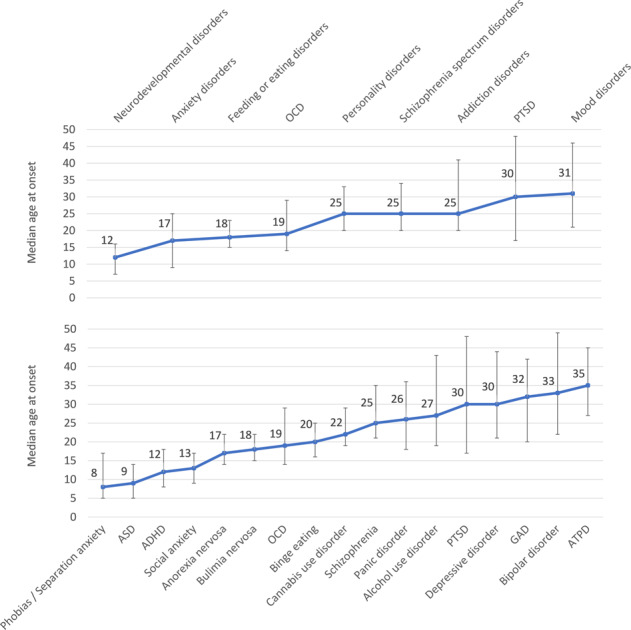
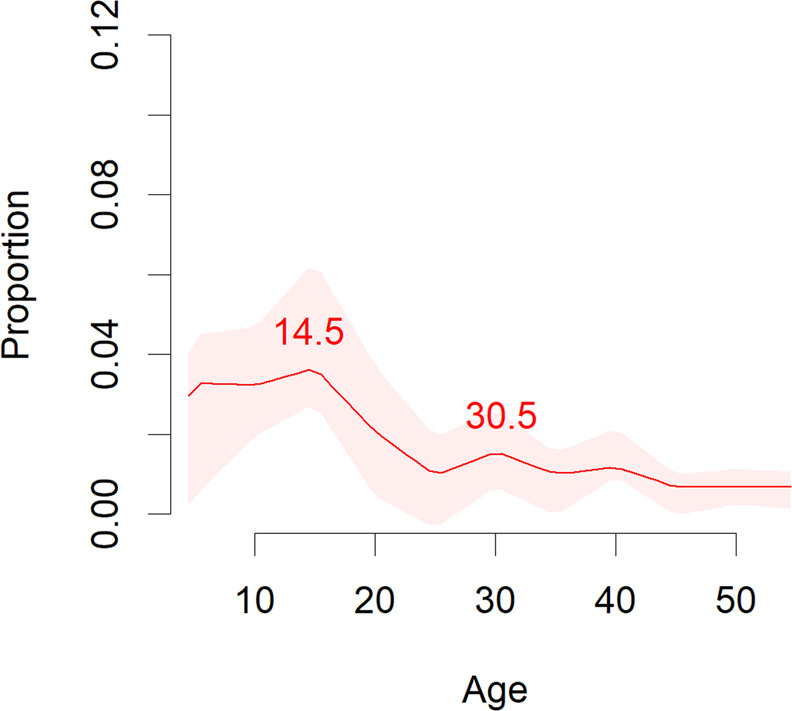
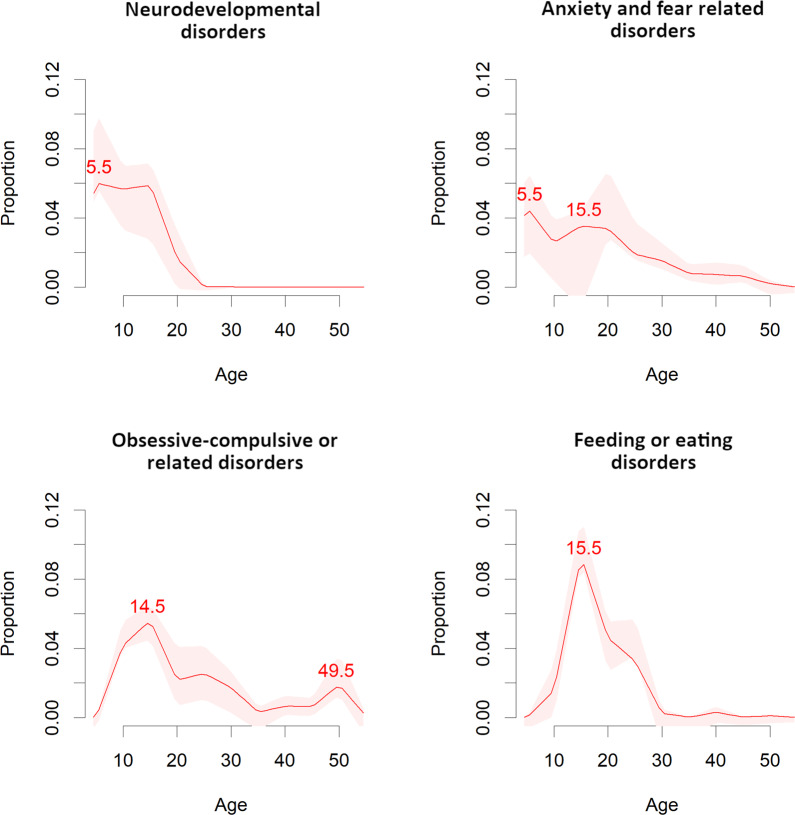
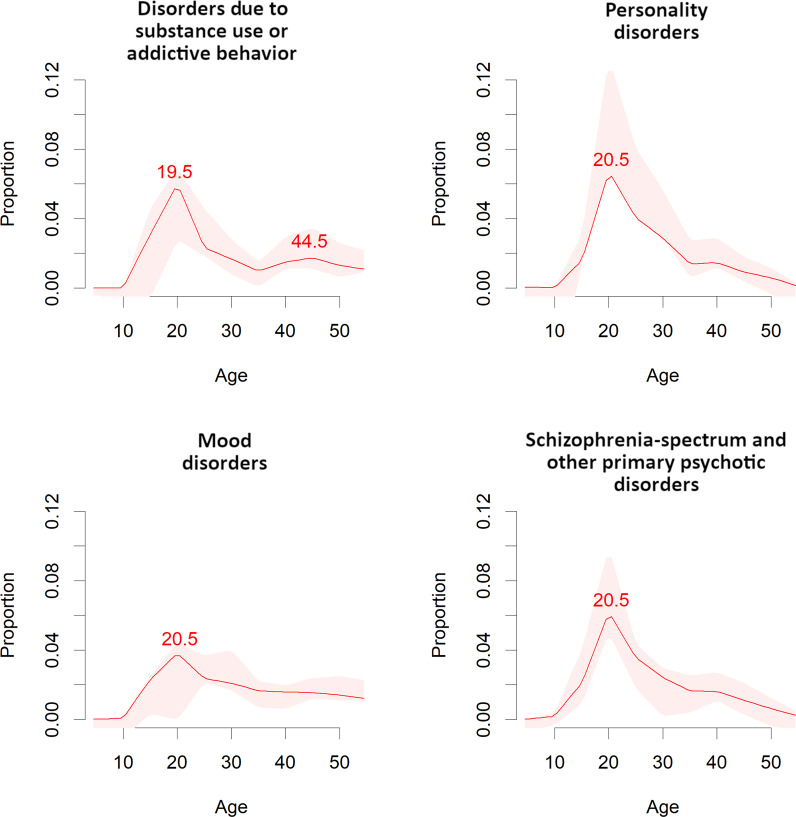
Promotion of good mental health, prevention, and early intervention before/at the onset of mental disorders improve outcomes. However, the range and peak ages at onset for mental disorders are not fully established. To provide robust, global epidemiological estimates of age at onset for mental disorders, we conducted a PRISMA/MOOSE-compliant systematic review with meta-analysis of birth cohort/cross-sectional/cohort studies, representative of the general population, reporting age at onset for any ICD/DSM-mental disorders, identified in PubMed/Web of Science (up to 16/05/2020) (PROSPERO:CRD42019143015). Co-primary outcomes were the proportion of individuals with onset of mental disorders before age 14, 18, 25, and peak age at onset, for any mental disorder and across International Classification of Diseases 11 diagnostic blocks. Median age at onset of specific disorders was additionally investigated. Across 192 studies ( n = 708,561) included, the proportion of individuals with onset of any mental disorders before the ages of 14, 18, 25 were 34.6%, 48.4%, 62.5%, and peak age was 14.5 years ( k = 14, median = 18, interquartile range (IQR) = 11–34). For diagnostic blocks, the proportion of individuals with onset of disorder before the age of 14, 18, 25 and peak age were as follows: neurodevelopmental disorders: 61.5%, 83.2%, 95.8%, 5.5 years ( k = 21, median=12, IQR = 7–16), anxiety/fear-related disorders: 38.1%, 51.8%, 73.3%, 5.5 years ( k = 73, median = 17, IQR = 9–25), obsessive-compulsive/related disorders: 24.6%, 45.1%, 64.0%, 14.5 years ( k = 20, median = 19, IQR = 14–29), feeding/eating disorders/problems: 15.8%, 48.1%, 82.4%, 15.5 years ( k = 11, median = 18, IQR = 15–23), conditions specifically associated with stress disorders: 16.9%, 27.6%, 43.1%, 15.5 years ( k = 16, median = 30, IQR = 17–48), substance use disorders/addictive behaviours: 2.9%, 15.2%, 48.8%, 19.5 years ( k = 58, median = 25, IQR = 20–41), schizophrenia-spectrum disorders/primary psychotic states: 3%, 12.3%, 47.8%, 20.5 years ( k = 36, median = 25, IQR = 20–34), personality disorders/related traits: 1.9%, 9.6%, 47.7%, 20.5 years ( k = 6, median = 25, IQR = 20–33), and mood disorders: 2.5%, 11.5%, 34.5%, 20.5 years ( k = 79, median = 31, IQR = 21–46). No significant difference emerged by sex, or definition of age of onset. Median age at onset for specific mental disorders mapped on a time continuum, from phobias/separation anxiety/autism spectrum disorder/attention deficit hyperactivity disorder/social anxiety (8-13 years) to anorexia nervosa/bulimia nervosa/obsessive-compulsive/binge eating/cannabis use disorders (17-22 years), followed by schizophrenia, personality, panic and alcohol use disorders (25-27 years), and finally post-traumatic/depressive/generalized anxiety/bipolar/acute and transient psychotic disorders (30-35 years), with overlap among groups and no significant clustering. These results inform the timing of good mental health promotion/preventive/early intervention, updating the current mental health system structured around a child/adult service schism at age 18.
Overview
The claims and statistics of this paper haven’t been checked yet.
Free: it reads the open-access text and checks the first 5 claims that cite a source we can check. Create a free account to check every claim.
Integrity signals
Registry
Cites
Statistics
Figures
Verification
Claims the paper makes
The claims and statistics of this paper haven’t been checked yet.
Free: it reads the open-access text and checks the first 5 claims that cite a source we can check. Create a free account to check every claim.
Claims other papers make about this one
Each is checked against this paper’s own text: does it say what the citing paper says it does?
The cited source doesn’t support the claim as written.
In the citing paper
“all major syndromes constituting approximately 75% of mental disorders begin before the age of 25 years [9, 10]”
From Towards a youth mental health paradigm: a perspective and roadmap (2023) · cites this paper as [9]
Checked by a reasoning model — may be wrong.
Experimental — accuracy not yet measuredThe source backs part of the claim, not all of it — or backs it for a different population, condition or comparison.
In the citing paper
“Most mental disorders have a typical onset between 12 and 25 years of age, highlighting the importance of this period for the pathogenesis, diagnosis, and treatment of mental ill-health.”
From Towards a youth mental health paradigm: a perspective and roadmap (2023) · cites this paper as [9]
Experimental — accuracy not yet measuredThe source backs part of the claim, not all of it — or backs it for a different population, condition or comparison.
In the citing paper
“the peak incidence of mental disorders during youth [9, 10]”
From Towards a youth mental health paradigm: a perspective and roadmap (2023) · cites this paper as [9]
Experimental — accuracy not yet measuredThe source backs part of the claim, not all of it — or backs it for a different population, condition or comparison.
In the citing paper
“the large unmet need in young people that has recently dramatically accelerated [9]”
From Towards a youth mental health paradigm: a perspective and roadmap (2023) · cites this paper as [9]
Experimental — accuracy not yet measuredThe source backs part of the claim, not all of it — or backs it for a different population, condition or comparison.
In the citing paper
“Relative to adolescents and adults, emerging adults experience the highest incidence and prevalence of substance use disorders (SUDs) and comorbid mental health disorders (2-4).”
From Initial insights from a quality improvement initiative to develop an evidence-informed young adult substance use program (2022) · cites this paper as [4]
Experimental — accuracy not yet measured
14 more claims about this paper
Create a free account to see every claim other papers make about this one.
Self-check
Percentages, sums and reported differences re-computed from the paper’s own numbers.
The self-check needs the paper’s full text.
Citations
Cites
Preferred Reporting Items for Systematic Reviews and Meta-Analyses: the PRISMA statement
Moher, D., Liberati, A., Tetzlaff, J., Altman, D. G., & for the PRISMA Group (2009) · BMJ · doi:10.1136/bmj.b2535 · Cited by 83,823
Preferred Reporting Items for Systematic Reviews and Meta-Analyses: The PRISMA Statement
Moher, D., Liberati, A., Tetzlaff, J., Altman, D. G., & The PRISMA Group (2009) · PLoS Medicine · doi:10.1371/journal.pmed.1000097 · Cited by 64,042 · cited 1×
“We performed a systematic review adhering to the preferred reporting items for systematic reviews and meta-analyses (PRISMA) recommendations [31] (e-Table 1) and the meta-analysis of observational studies in epidemiology (MOOSE) guidelines (e-Table 2) [32].”
MethodPreferred reporting items for systematic reviews and meta-analyses: the PRISMA Statement.
(2009) · PubMed Central · Cited by 44,859
Preferred reporting items for systematic reviews and meta-analyses: The PRISMA statement
Moher, D., Liberati, A., Tetzlaff, J., Altman, D. G., & the PRISMA Group* (2009) · Annals of Internal Medicine · doi:10.7326/0003-4819-151-4-200908180-00135 · Cited by 37,554
Dermyshi, E., Wang, Y., Yan, C., Hong, W., Qiu, G., Gong, X., & Zhang, T. (2017) · Neonatology · doi:10.1159/000454668 · Cited by 24,451
Meta-analysis of Observational Studies in Epidemiology<SUBTITLE>A Proposal for Reporting</SUBTITLE>
Stroup, D. F. (2000) · JAMA · doi:10.1001/jama.283.15.2008 · Cited by 20,623
Bootstrap Methods and their Application
Davison, A. C., & Hinkley, D. V. (1997) · doi:10.1017/cbo9780511802843 · Cited by 7,350
Bootstrap Methods and Their Application
Loughin, T. M., Davison, A. C., & Hinkley, D. V. (1999) · Journal of the American Statistical Association · doi:10.2307/2669707 · Cited by 5,418
Why do many psychiatric disorders emerge during adolescence?
Paus, T., Keshavan, M., & Giedd, J. N. (2008) · Nature Reviews Neuroscience · doi:10.1038/nrn2513 · Cited by 3,123 · cited 2×
“The meta-epidemiologic results of this work show that mental disorders have onset when dramatic biological changes in the brain occur, from childhood, through adolescence, to adulthood, that involves grey-matter density, cerebral metabolic rate, synaptic density, white matter growth and myelination [41].”
BackgroundWalker, E. R., McGee, R. E., & Druss, B. G. (2015) · JAMA Psychiatry · doi:10.1001/jamapsychiatry.2014.2502 · Cited by 2,976
Research works printed but not linked: 1
- McGorry PD Hartmann JA Spooner R Nelson B Beyond the "at risk mental state" concept: transitioning to transdiagnostic psychiatry World Psychiatry 2018 17 133 42 29856558 PMC5980504 · DOI · Paper page
Cited by
Items 501–600 of 1,015
Halladay, J. E., MacKillop, J. M., Munn, C., Amlung, M. T., & Georgiades, K. (2022) · Drug and Alcohol Dependence · doi:10.1016/j.drugalcdep.2022.109647 · Cited by 23
Mastrotheodoros, S., Boks, M. P., Rousseau, C., Meeus, W., & Branje, S. (2023) · Journal of Child Psychology and Psychiatry · doi:10.1111/jcpp.13821 · Cited by 23
Plasma proteomics discovery of mental health risk biomarkers in adolescents
Maciel, I. D. S., Piironen, A., Afonin, A. М., Ivanova, M., Alatalo, A., Jadhav, K. K., Júlvez, J., Foraster, M., KAMP, I. V., & Kanninen, K. M. (2023) · Nature Mental Health · doi:10.1038/s44220-023-00103-2 · Cited by 22
Xiao, X., Hammond, C., Salmeron, B. J., Wang, D., Gu, H., Zhai, T., Nguyen, H., Lu, H., Ross, T. J., & Yang, Y. (2023) · Biological Psychiatry · doi:10.1016/j.biopsych.2023.08.028 · Cited by 22
Disordered eating in elite youth athletes: A scoping review of studies published since 2000
Marrows, M., Grover, H., Buckley, G., JEACOCKE, N. A., & Walton, C. C. (2023) · JSAMS Plus · doi:10.1016/j.jsampl.2023.100040 · Cited by 23
“The vulnerability of younger athletes is particularly relevant, given that youth is a high risk developmental period for the emergence of mental health disorders [3], with EDs frequently fi rst showing their onset during adolescence [4,5].”
Menzies, R. E., Richmond, B., Sharpe, L., Skeggs, A., Liu, J., & Coutts‐Bain, D. (2024) · British Journal of Clinical Psychology · doi:10.1111/bjc.12453 · Cited by 24
Pawlak, M., Schmidtler, H., & Kopala‐Sibley, D. C. (2024) · Development and Psychopathology · doi:10.1017/s0954579424000130 · Cited by 24
Association of chronic stress during studies with depressive symptoms 10 years later
Weinmann, T., Wibowo, R., Forster, F., Gerlich, J., Wengenroth, L., Weinmayr, G., Genuneit, J., Nowak, D., Vogelberg, C., Radon, K., et al. (2025) · Scientific Reports · doi:10.1038/s41598-025-85311-9 · Cited by 22
Gouin, J., MacNeil, S., de la Torre‐Luque, A., Chartrand, E., Chadi, N., Rouquette, A., Boivin, M., Côté, S. M., & Geoffroy, M. (2023) · Canadian Journal of Public Health · doi:10.17269/s41997-023-00772-7 · Cited by 24
Vivas-Fernandez, M., Garcia-Lopez, L.-J., Piqueras, J. A., Muela-Martinez, J.-A., Canals-Sans, J., Espinosa-Fernandez, L., Jimenez-Vazquez, D., Diaz-Castela, M. D. M., Morales-Hidalgo, P., Rivera, M., et al. (2023) · Child and Adolescent Psychiatry and Mental Health · doi:10.1186/s13034-023-00616-9 · Cited by 20
Deciphering the role of probiotics in mental health: a systematic literature review of psychobiotics
Hussain, A., Koser, N., Aun, S. M., Siddiqui, M. F., Malik, S. A., & Ali, S. A. (2024) · Beneficial Microbes · doi:10.1163/18762891-bja00053 · Cited by 24
Economic Inequality and Mental Health: Causality, Mechanisms, and Interventions
Rakesh, D., Shiba, K., Lamont, M., Lund, C., Pickett, K. E., VanderWeele, T. J., & Patel, V. (2025) · Annual Review of Clinical Psychology · doi:10.1146/annurev-clinpsy-081423-025710 · Cited by 24
Du, J., Tao, X., Zhu, L., Qi, W., Min, X., Deng, H., Wei, S., Zhang, X., & Chang, X. (2025) · Frontiers in Public Health · doi:10.3389/fpubh.2025.1606316 · Cited by 27
Wolitzky-Taylor, K. B., Wen, A., Freimer, N. B., & Craske, M. G. (2025) · Neuropsychopharmacology · doi:10.1038/s41386-025-02174-4 · Cited by 26
Global lifetime prevalence of schizophrenia: A systematic review and meta-analysis
Zhang, S., Chen, Y., Zhang, L., Yang, X., Dong, J., Lu, M., Zhou, N., Feng, Y., Zhang, Y., & Zhou, Y. (2026) · Molecular Psychiatry · doi:10.1038/s41380-026-03533-3 · Cited by 26
“Inadequate age-based strati fi cation also affects the understanding of the lifetime prevalence of schizophrenia across age groups, particularly in low-and middle-income countries [32, 33].”
Pimenta, S. M., Hunter, S. C., Rasmussen, S. A., Cogan, N. A., & Martin, B. (2021) · Journal of Adolescent Research · doi:10.1177/07435584211062115 · Cited by 24
“5% of individuals experience their first symptoms by the age of 14 years old, irrespective of the mental illness diagnosis (Solmi et al., 2021).”
BackgroundMeule, A., Kolar, D. R., Rauh, E., & Voderholzer, U. (2022) · Eating Disorders · doi:10.1080/10640266.2022.2114586 · Cited by 21
“In fact, it has been estimated that in approximately 80% of cases the onset is before 25 years of age (Solmi et al., 2022).”
BackgroundAlawadhi, Y. T., Smith, M. R., & King, K. M. (2022) · Journal of Clinical Psychology · doi:10.1002/jclp.23458 · Cited by 22
Marchand, K., Liu, G., Mallia, E., Ow, N., Glowacki, K., Hastings, K. G., Mathias, S., Sutherland, J. M., & Barbic, S. P. (2022) · Substance Abuse Treatment Prevention and Policy · doi:10.1186/s13011-022-00508-9 · Cited by 20
Tornivuori, A., Kronström, K., Aromaa, M. E., Salanterä, S., & Karukivi, M. (2023) · Child and Adolescent Psychiatry and Mental Health · doi:10.1186/s13034-023-00576-0 · Cited by 26
Weckström, T., Elovainio, M. J., Pulkki-Råbäck, L., Suokas, K., Komulainen, K., Mullola, S., Böckerman, P., & Hakulinen, C. A. (2023) · Molecular Psychiatry · doi:10.1038/s41380-023-02081-4 · Cited by 29
Iorfino, F., Varidel, M., Marchant, R., Cripps, S., Crouse, J. J., Prodan, A., Oliveria, R., Carpenter, J. S., Hermens, D. F., Guastella, A. J., et al. (2023) · Epidemiology and Psychiatric Sciences · doi:10.1017/s2045796023000616 · Cited by 24
“Mental illness affects up to two-thirds of young people prior to age 25 years (Solmi et al., 2022), and the impacts they have over a lifetime are significant (Copeland et al.”
Promoting mental health among young males in sporting contexts: A systematic review
Petersen, J. M., Drummond, M., Rasheed, K., Elliott, S., Drummond, C., Smith, J. A., Wadham, B., & Prichard, I. J. (2023) · Psychology of sport and exercise · doi:10.1016/j.psychsport.2023.102551 · Cited by 21
Tape, N., Dry, M. J., Monaghan, B., Tan, N., & Turnbull, D. A. (2023) · The Educational and Developmental Psychologist · doi:10.1080/20590776.2023.2289627 · Cited by 20
“As adolescence is also widely known to be the peak onset age for most psychological disorders, researching perfectionism at this age may assist in the promotion of adaptive educational practices and mental health in adolescence (Solmi et al., 2021).”
BackgroundWake, A., & O'Donnell, A. W. (2024) · Youth & Society · doi:10.1177/0044118x241232997 · Cited by 25
Early intervention for eating disorders
Mills, R., Hyam, L., & Schmidt, U. H. (2024) · Current Opinion in Psychiatry · doi:10.1097/yco.0000000000000963 · Cited by 24
Loades, M. E., Higson‐Sweeney, N., Teague, B., Leas, J., Payne-Cook, C., Slastikova, A., Peel, H., Chamberlain, G., Ferguson, L., Janes, K., et al. (2024) · Psychology and Psychotherapy Theory Research and Practice · doi:10.1111/papt.12550 · Cited by 21
“We focused on those aged 13–18 years as depression prevalence dramatically increases during this age range (Solmi et al., 2021), and YP are developmentally transitioning from being more dependent on adults to functioning more autonomously, including when seeking help and using the internet.”
Direct and indirect genetic effects on early neurodevelopmental traits
Hegemann, L., Eilertsen, E. M., Pettersen, J. H., Corfield, E. C., Cheesman, R., Frach, L., Bjørndal, L. D., Ask, H., Pourcain, B. S., Havdahl, A., et al. (2025) · Journal of Child Psychology and Psychiatry · doi:10.1111/jcpp.14122 · Cited by 23
“Neurodevelopmental conditions, such as autism and attention-deficit hyperactivity disorder (ADHD), are highly heritable (Gidziela et al., 2023) and have the earliest age-of-onset of neuropsychiatric conditions (Solmi et al., 2022).”
Asscheman, J. S., Zanolie, K., Bexkens, A., & Bos, M. G. N. (2021) · Frontiers in Psychology · doi:10.3389/fpsyg.2021.722494 · Cited by 21
Resilience to social defeat stress in adolescent male mice
Reguilón, M. D., Ballestín, R., Miñarro, J., & Rodríguez‐Arias, M. (2022) · Progress in Neuro-Psychopharmacology and Biological Psychiatry · doi:10.1016/j.pnpbp.2022.110591 · Cited by 22
Skinner, A., Occhipinti, J.-A., Song, Y. J. C., & Hickie, I. B. (2023) · Scientific Reports · doi:10.1038/s41598-023-47322-2 · Cited by 19
Li, F., Zhang, Y., Fang, Y., & Chen, Z. (2024) · European Child & Adolescent Psychiatry · doi:10.1007/s00787-024-02626-0 · Cited by 19
Ghezae, F. T., Zungu, Z., John, A. M., Abdinasir, K., Bhui, K. S., Adebiyi, A., & Creswell, C. (2025) · BJPsych Open · doi:10.1192/bjo.2024.836 · Cited by 20
Birrell, L., Prior, K., Vescovi, J., Sunderland, M., Slade, T. N., & Chapman, C. (2025) · Epidemiology and Psychiatric Sciences · doi:10.1017/s2045796025000034 · Cited by 19
Rodney-Wolf, K., & Schmitz, J. (2025) · Frontiers in Public Health · doi:10.3389/fpubh.2025.1480630 · Cited by 21
Brumariu, L. E., Nair, T. K., Waslin, S. M., Rodrigues, G. A., Moore, M., & Kerns, K. A. (2025) · Development and Psychopathology · doi:10.1017/s095457942510059x · Cited by 21
Mental Health Promotion and Prevention: Best Practices in Public Health
OECD (2025) · OECD eBooks · doi:10.1787/88bbe914-en · Cited by 26
Investigating hierarchical critical periods in human neurodevelopment
Sydnor, V. J., Ojha, A., Larsen, B., Martínez, Á., Calabro, F. J., & Luna, B. (2025) · Neuropsychopharmacology · doi:10.1038/s41386-025-02246-5 · Cited by 26
Appleton, R., Barnett, P., Clarke, C., Yang, J., Begum, S., Edbrooke-Childs, J. H., Emptage, I., Foye, U., Griffiths, J., Hanson, I., et al. (2025) · BMC Medicine · doi:10.1186/s12916-025-04438-8 · Cited by 20
Network Analysis of Internalizing and Externalizing Symptoms in Children and Adolescents
Hernández, M. O. S., Tello, F. P. H., & Carrasco, M. Á. (2023) · Psicothema · doi:10.7334/psicothema2022.17 · Cited by 21
“Throughout this process, the analysis and identification of dysfunctional behaviors and emotional symptoms play an essential role in the early detection of possible mental health problems (Solmi et al., 2022).”
Bailey, S., Grummitt, L. R., Birrell, L., Kelly, E. V., Gardner, L. A., Champion, K. E., Chapman, C., Teesson, M., Barrett, E. L., & Newton, N. C. (2023) · Mental Health & Prevention · doi:10.1016/j.mhp.2023.200263 · Cited by 19
Qiu, A., & Liu, C. (2023) · Neuropsychopharmacology · doi:10.1038/s41386-023-01559-7 · Cited by 20
“Many psychiatric disorders, including neurodevelopmental disorders, anxiety, and fear-related disorders, schizophrenia, and mood disorders, tend to have their onset during adolescence or early adulthood [1].”
BackgroundPowell, V. E., Lennon, J., Jones, R. B., Stephens, A., Weavers, B., Osborn, D., Allardyce, J., Potter, R., Thapar, A., Collishaw, S., et al. (2023) · JCPP Advances · doi:10.1002/jcv2.12182 · Cited by 22
Polack, R. G., Bronstein, M. V., Questel, M., Edelman, A., Vinogradov, S., Kober, H., Joormann, J., & Everaert, J. (2023) · Development and Psychopathology · doi:10.1017/s0954579423000834 · Cited by 22
“Adolescence is a time of steep increases in psychopathology (Solmi et al., 2022).”
Black, L., Humphrey, N., & Marquez, J. (2023) · Royal Society Open Science · doi:10.1098/rsos.221230 · Cited by 20
Transdiagnostic neurocognitive dysfunction in children and adolescents with mental illness
Hilton, R. A., Tozzi, L., Nesamoney, S., Kozlowska, K., Kohn, M. R., Harris, A. W. F., Clarke, S. P., & Williams, L. M. (2024) · Nature Mental Health · doi:10.1038/s44220-023-00199-6 · Cited by 22
“So far, studies of clinical samples have largely investigated cognitive impairments in adults with mental illness, despite the majority of mental illnesses emerging in childhood and adolescence 21–24 .”
Cooper, K., Kumarendran, S. M., & Barona, M. (2024) · Clinical Psychology Review · doi:10.1016/j.cpr.2024.102411 · Cited by 24
Clark, C. A., Nakhid, D., Baldwin-Oneill, G., LaPointe, S., MacIsaac-Jones, M. A. C., Raja, S., & McMorris, C. A. (2024) · Journal of Affective Disorders · doi:10.1016/j.jad.2024.05.035 · Cited by 23
Fitzgerald, A., Mahon, C., Shevlin, M. E., Dooley, B. A., & O’Reilly, A. (2024) · Early Intervention in Psychiatry · doi:10.1111/eip.13562 · Cited by 23
Adhikari, S., Rana, H. B., Joshi, M. P., Cheng, S., Castillo, T. P., & Huang, K. (2025) · BMC Pediatrics · doi:10.1186/s12887-024-05358-x · Cited by 20
Werner‐Seidler, A., Mackinnon, A. J., Batterham, P. J., Calear, A. L., Larsen, M. E., Torok, M. H., O’Dea, B., Maston, K., Huckvale, K., Fujimoto, H., et al. (2025) · BMJ Mental Health · doi:10.1136/bmjment-2024-301426 · Cited by 21
Patafio, B., Skvarc, D., Miller, P. G., & Hyder, S. (2021) · Journal of Youth and Adolescence · doi:10.1007/s10964-021-01513-0 · Cited by 20
“…aiming to improve mental health literacy in youth are not uncommon given that between one third (Solmi et al. 2021) and half (World Health Organization 2020) of all mental disorders begin by age 14, while between 62 and 75% of disorders emerge before 25 years (Jones 2013; Solmi et al. 2021).”
BackgroundCorrell, C. U., Chepke, C., Gionfriddo, P., Parks, J., Foxworth, P. M., Basu, A., Brister, T. S., Brown, D., Clarke, C., & Hassoun, Y. (2022) · BMC Psychiatry · doi:10.1186/s12888-022-03685-w · Cited by 20
“Individuals with SCZ or BP-I have a disease onset in the late teens and early twenties [3] and an increased risk of premature death compared with the general population, including increased cardiovascular mortality and a higher risk of death by suicide [4–7].”
BackgroundSelf-citationSleep and Mental Health Among Adolescents During the COVID-19 Pandemic
Kim, D. H., Kim, B., Jang, S., Lee, S. G., & Kim, T. H. (2022) · Psychiatry Investigation · doi:10.30773/pi.2021.0342 · Cited by 22
Barr, P. B., Mallard, T. T., Sanchez‐Roige, S., Poore, H. E., Linnér, R. K., Collaborators, C., Porjesz, B., HESSELBROCK, V. M., Foroud, T., Agrawal, A., et al. (2022) · Translational Psychiatry · doi:10.1038/s41398-022-02171-x · Cited by 22
“The change in direction could reflect the fact that ALCP-specific captures (1) risk for problematic alcohol use once alcohol becomes available, or (2) risk for other psychiatric problems around their median age of onset, both of which occur during young adulthood [31], forcing the correlation with age of smoking initi…”
BackgroundPeel, A. J., Oginni, O. A., Assary, E., Krebs, G., Lockhart, C. L., McGregor, T., Palaiologou, E., Ronald, A., Danese, A., & Eley, T. C. (2022) · Journal of Child Psychology and Psychiatry · doi:10.1111/jcpp.13725 · Cited by 23
COVID-19–Related Changes in Adolescents' Daily-Life Social Interactions and Psychopathology Symptoms
Achterhof, R., Myin‐Germeys, I., Bamps, E., Hagemann, N., Hermans, K. S. F. M., Hiekkaranta, A. P., Janssens, J. J., Lecei, A., Lafit, G., & Kirtley, O. J. (2025) · The Journal of Nervous and Mental Disease · doi:10.1097/nmd.0000000000001826 · Cited by 20
Yoo, A., Li, F., Youn, J., Guan, J., Guyer, A. E., Hostinar, C. E., & Tagkopoulos, I. (2024) · Scientific Reports · doi:10.1038/s41598-024-72158-9 · Cited by 23
Alford, C., Wallis, A., Hay, P., & Mitchison, D. (2025) · Journal of Eating Disorders · doi:10.1186/s40337-025-01331-w · Cited by 20
“This is an important gap to address given that the peak age of onset of eating disorders is middle adolescence and many people with eating disorders first experience eating disorder treatment during their teen years [22].”
Wiegand, T. L. T., Jung, L., Gudera, J. A., Schuhmacher, L. S., Moehrle, P., Rischewski, J., Mehrzad, P., Jeong, S., Nguyen, L. H., Poeschla, M., et al. (2025) · npj Digital Medicine · doi:10.1038/s41746-025-01817-6 · Cited by 22
“However, there are also studies suggesting an earlier symptom onset in males in other diseases, e.g., schizophrenia 35 or diabetes type 2 36 ; or no known sex differences, e.g., in multiple sclerosis 37 or malaria 38 .”
Viskari, T., Koivumäki, T., Appelqvist‐Schmidlechner, K., Ståhl, T., Ruiz‐Ariza, A., & Fröjd, S. A. (2025) · Scandinavian Journal of Medicine and Science in Sports · doi:10.1111/sms.70150 · Cited by 18
“As the onset of the first mental disorder occurs before the age of 14 in 35%, the age of 18 in 48%, and the age of 25 in 63% of individuals, it is essential to find ways to prevent mental health problems among children and adolescents [27].”
Shorter, J. R., Pasman, J. A., Kurvits, S., Jangmo, A., Naamanka, J., Harder, A., Hagen, E., Kowalec, K., Frilander, N., Zetterberg, R., et al. (2025) · Nature Genetics · doi:10.1038/s41588-025-02396-8 · Cited by 21
Girchenko, P. V., Robinson, R., Rantalainen, V., Lahti‐Pulkkinen, M., Heinonen, K., Lemola, S., Wolke, D., Schnitzlein, D. D., Hämäläinen, E. K., Laivuori, H. M., et al. (2022) · Scientific Reports · doi:10.1038/s41598-022-04990-w · Cited by 19
Braund, T. A., O’Dea, B., Bal, D., Maston, K., Larsen, M. E., Werner‐Seidler, A., Tillman, G., & Christensen, H. M. (2023) · JMIR Mental Health · doi:10.2196/44986 · Cited by 19
“Approximately half of the mental disorders emerge before the age of 18 years [3], with more than 1 in 8 young people (ie, 4-17 years) meeting criteria for a diagnosis of a mental disorder in the last 12 months [1].”
Xu, H., Luo, X., Shen, Y., & Jin, X. (2023) · Frontiers in Public Health · doi:10.3389/fpubh.2023.1138813 · Cited by 20
Švecová, J., Fürstová, J., Kaščáková, N., Hašto, J., & Tavel, P. (2023) · BMC Psychology · doi:10.1186/s40359-023-01270-8 · Cited by 19
“before the age of 25 [95], the Slovak mental”
BackgroundDigitalization in mental health care. New opportunities for specialists and patients
Незнанов, Н. Г., & Vasileva, A. V. (2023) · National Health Care (Russia) · doi:10.47093/2713-069x.2023.4.2.15-24 · Cited by 18
Waizbard‐Bartov, E., Ferrer, E. E., Heath, B. E., Andrews, D. S., Rogers, S. J., Kerns, C. M., Nordahl, C. W., Solomon, M., & Amaral, D. G. (2023) · Autism · doi:10.1177/13623613231195108 · Cited by 20
“For neurotypical children, ADHD tends to emerge between ages 6 and 8 years and anxiety disorders between ages 8 and 13 years (Solmi et al., 2022; Visser et al., 2014).”
BackgroundDimitropoulos, G., Bassi, E. M., Bright, K. S., Gondziola, J., Bradley, J., Fersovitch, M., Stamp, L., LaMonica, H. M., Iorfino, F., Gaskell, T., et al. (2024) · JMIR Mental Health · doi:10.2196/49099 · Cited by 20
Papadopoulos, D. (2023) · Children · doi:10.3390/children11010007 · Cited by 24
“While all children with DDs have an increased risk of acquiring mental health comorbidities compared to children with other DDs [25] and typically developing (TD) children [26], those diagnosed with ASD are especially prone to emotional and behavioral disorders [27].”
BackgroundWalker, E. F., Aberizk, K., Yuan, E., Bilgrami, Z. R., Ku, B. S., & Guest, R. M. (2024) · Development and Psychopathology · doi:10.1017/s0954579424000397 · Cited by 18
A cognitive-computational account of mood swings in adolescence
Gregorová, K., Eldar, E., Deserno, L., & Reiter, A. M. F. (2024) · Trends in Cognitive Sciences · doi:10.1016/j.tics.2024.02.006 · Cited by 22
Mohebbi, F., Forati, A. M., Torres, L., deRoon‐Cassini, T. A., Harris, J., Tomas, C. W., Mantsch, J. R., & Ghose, R. (2024) · JMIR Public Health and Surveillance · doi:10.2196/52691 · Cited by 18
“The median onset age ranges from 8 to 35 years, and increased age is associated with better mental health [34].”
BackgroundBogaert, L., Hallford, D. J., Loyen, E., D’Argembeau, A., & Raes, F. (2024) · Behaviour Research and Therapy · doi:10.1016/j.brat.2024.104543 · Cited by 20
Chinese university students’ help-seeking behaviors when faced with mental health challenges
Ning, X., Huang, S., Hilario, C. T., Yamanda, J., Vahabi, M., Poon, M. L., Yao, Z., Fung, K. P.-L., Cheng, S., Gao, J., et al. (2024) · Journal of Mental Health · doi:10.1080/09638237.2024.2361259 · Cited by 20
Sheikh, A., Jacob, J., Vostanis, P., Ruby, F. J. M., Spuerck, I., Stankovic, M., Morgan, N., Mota, C. P., Ferreira, R., Eruyar, Ş., et al. (2024) · Administration and Policy in Mental Health and Mental Health Services Research · doi:10.1007/s10488-024-01382-2 · Cited by 18
Understanding the costs and economic impact of mental disorders in South Asia: A systematic review
McDaid, D., Vidyasagaran, A. L., Nasir, M., Walker, S., Wright, J. M., Muliyala, K. P., Thekkumkara, S. N., Huque, R., Faisal, M. R., Benkalkar, S., et al. (2024) · Asian Journal of Psychiatry · doi:10.1016/j.ajp.2024.104239 · Cited by 21
Wiklund, C. A., Ekblom, M., Wang, R., & Ekblom, Ö. B. (2024) · Journal of Adolescent Health · doi:10.1016/j.jadohealth.2024.10.017 · Cited by 19
Carbone, A., Pestell, C., Nevill, T., & Mancini, V. O. (2024) · International Journal of Environmental Research and Public Health · doi:10.3390/ijerph22010011 · Cited by 22
Song, B. J., Ge, Y., Nicolella, A. A., Kwon, M. J., Lodder, B., Bonanno, K., Valle-Tojeiro, A., Hartley, N. D., Mandell, K. P., Adeleye, J., et al. (2025) · Nature Communications · doi:10.1038/s41467-025-66504-2 · Cited by 21
Laroche, D. G., Godin, O., Dansou, Y., Belzeaux-R, R., Aouizerate, B., Burté, T., Courtet, P., Dubertret, C., Haffen, É., Llorca, P., et al. (2022) · European Psychiatry · doi:10.1192/j.eurpsy.2022.7 · Cited by 19
“As a whole, in this sample, and regardless of childhood maltreatment, some psychiatric comorbidities (GAD, CUD, AUD, PTSD, and panic disorders) seemed to occur earlier as compared to what would be expected in the general population, this being described in a meta-analysis of 192 epidemiological studies [44].”
ResultMitochondrial protein synthesis and the bioenergetic cost of neurodevelopment
Bülow, P., Patgiri, A., & Faúndez, V. (2022) · iScience · doi:10.1016/j.isci.2022.104920 · Cited by 19
Jonsson, U., Linton, S. J., Ybrandt, H., Ringborg, A., Leander, L., Moberg, K., Hultcrantz, M., & Arnberg, F. K. (2022) · Journal of Affective Disorders · doi:10.1016/j.jad.2022.11.036 · Cited by 20
Cortese, S., McGinn, K., Højlund, M., Apter, A., Arango, C., Baeza, I., Banaschewski, T., Buitelaar, J. K., Castro‐Fornieles, J., Coghill, D., et al. (2023) · Neuroscience & Biobehavioral Reviews · doi:10.1016/j.neubiorev.2023.105149 · Cited by 20
Self-citationMentalizing strategies for navigating the social world in adolescence
Guazzelli Williamson, V., & Mills, K. L. (2023) · Infant and Child Development · doi:10.1002/icd.2374 · Cited by 17
Silva, T. P. E., Gouveia, C. P. F., Santirso, F. A., Cunha, O. S., & Caridade, S. (2025) · Psychosocial Intervention · doi:10.5093/pi2025a8 · Cited by 20
Fegert, J. M., Gottschalk, G., Schneider, R. A., Sitarski, E., Sounderajah, V., & Graham, G. N. (2025) · Child and Adolescent Psychiatry and Mental Health · doi:10.1186/s13034-025-00932-2 · Cited by 18
Al‐Diwani, A., Theorell, J., Zghoul, T., Voruganti, A., Townsend, L., Giorgi, R. D., Griffin, B., Bajorek, T., Okai, D., Lennox, B., et al. (2025) · The Lancet Psychiatry · doi:10.1016/s2215-0366(25)00305-0 · Cited by 18
Malhi, G. S., Bell, E., Stavdal, A., Wu, C., Naylor, A., & Kumari, V. (2026) · The Lancet · doi:10.1016/s0140-6736(26)00201-1 · Cited by 23
Clinical outcomes in brief psychotic episodes: a systematic review and meta-analysis
Provenzani, U., de Pablo, G. S., Arribas, M., Pillmann, F., & Fusar‐Poli, P. (2021) · Epidemiology and Psychiatric Sciences · doi:10.1017/s2045796021000548 · Cited by 22
Self-citationFarrell, A. H., & Vaillancourt, T. (2021) · Development and Psychopathology · doi:10.1017/s0954579421001450 · Cited by 18
“…coincides with increases in the use of indirect aggression (Björkqvist et al., 1992), likely in response to the increased importance placed on social status and peer relationships (Vaillancourt & Hymel, 2006), as well as the onset of anxiety disorders (Kessler et al., 2005; Solmi et al., 2021).”
BackgroundInfluentialMawer, T., Kent, K., Williams, A. D., McGowan, C. J., Murray, S. L., Bird, M., Hardcastle, S., & Bridgman, H. (2022) · BMC Health Services Research · doi:10.1186/s12913-022-08182-0 · Cited by 20
“5% by age 25, indicating that most adult mental disorders originate earlier in the lifespan [3].”
BackgroundHalladay, J. E., Georgiades, K., MacKillop, J. M., Lipman, E. L., Pires, P., & Duncan, L. (2023) · European Child & Adolescent Psychiatry · doi:10.1007/s00787-023-02188-7 · Cited by 20
“Given SUDs typically do not emerge until the mid-twenties [12], embedded into clinical care assessing substance use (not merely disorder) and mental health problems could help fill this gap [1, 41].”
BackgroundJaekel, J., Heinonen, K., Baumann, N., Bilgin, A., Pyhälä, R., Sorg, C., Räikkönen, K., & Wolke, D. (2023) · BMC Psychiatry · doi:10.1186/s12888-023-04854-1 · Cited by 18
“While anxiety disorders may often have their age of onset in childhood, mood disorders typically have a later onset with prevalence rising rapidly from early adolescence into young adulthood [16, 17].”
BackgroundGalán‐Luque, T., Serrano-Ortiz, M., & Orgilés, M. (2023) · Child Psychiatry & Human Development · doi:10.1007/s10578-023-01566-1 · Cited by 21
“Additionally, recent efforts have been dedicated to developing the SCAS for the assessment of anxiety symptoms in children under the age of 8, as research indicates that certain anxiety disorders exhibit an onset peak before this age (e.g., specific phobias or separation anxiety disorder) [60].”
Scanferla, E., Seryer, S., Pachoud, B., & Gorwood, P. A. P. M. (2023) · European Eating Disorders Review · doi:10.1002/erv.3030 · Cited by 19
Edet, B. E., Essien, E. A., Eleazu, F., Abang, R., Ochijele, E., & Daniel, F. M. (2024) · Acta Medica Academica · doi:10.5644/ama2006-124.421 · Cited by 18
“However, it is also a vulnerable phase, with nearly 50% of all mental disorders beginning around the age of 18, peaking at 14.5 years (8, 9).”
BackgroundInfluentialConnolly, A., Giles‐Kaye, A., Smith, A. J., Dawson, G., Smith, R., Darling, S. J., Oberklaid, F., & Quach, J. (2024) · Mental Health & Prevention · doi:10.1016/j.mhp.2024.200323 · Cited by 20
Limited generalizability of multivariate brain-based dimensions of child psychiatric symptoms
Xu, B., Dall’Aglio, L., Flournoy, J. C., Bortsova, G., Tervo‐Clemmens, B., Collins, P. F., de Bruijne, M., Luciana, M. M., Marquand, A. F., Wang, H., et al. (2024) · Communications Psychology · doi:10.1038/s44271-024-00063-y · Cited by 21
“Aschildhoodandadolescenceareperiodsofmarkedbrain development 35 during which psychiatric problems emerge or exacerbate 36 , understanding how neural mechanisms are linked to psychopathology during this time is crucial.”
Geoffroy, M., Chadi, N., Bouchard, S., Fuoco, J., Chartrand, E., Loose, T., Sciola, A., Boruff, J. T., Iyer, S. N., Sun, Y., et al. (2024) · Canadian Journal of Public Health · doi:10.17269/s41997-024-00865-x · Cited by 18
Metadata
- Authors
- Solmi, M., Radua, J., Olivola, M., Croce, E., Soardo, L., Salazar de Pablo, G., Il Shin, J., Kirkbride, J. B., Jones, P., Kim, J. H., Kim, J. Y., Carvalho, A. F., Seeman, M. V., Correll, C. U., & Fusar-Poli, P.
- Affiliations
- University of Padua (IT)
- King's College London (GB)
- University of Ferrara (IT)
- University of Pavia (IT)
- University College London (GB)
- National Health Service (GB)
- Yonsei University (KR)
- University of Toronto (CA)
- Feinstein Institute for Medical Research (US)
- ORCID
- Venue
- Molecular Psychiatry
- Published
- 2021-06-02
- Volume
- 27
- Issue
- 1
- Pages
- 281-295
- ISSN
- 1359-4184 (ISSN-L)
- 1476-5578
- PMC
- PMC8960395
- OpenAlex
- W3164324796
- Cited by
- 3,835
- References
- 67
- Citations by year
- 2026: 925 · 2025: 1030 · 2024: 865 · 2023: 638 · 2022: 325 · 2021: 48
- FWCI
- 73.42
- Type
- journal article
- Language
- en
- Open access
- hybrid
- doi.org
- Licence
- cc-by
- creativecommons.org/licenses/by/4.0 (tdm)
- creativecommons.org/licenses/by/4.0 (vor)
- Locations
- Molecular Psychiatry (publishedVersion, cc-by)
- PubMed Central (publishedVersion, cc-by)
- PubMed (publishedVersion)
- UCL Discovery (University College London) (submittedVersion)
- Research Portal (King's College London) (submittedVersion, other-oa)
- Apollo (University of Cambridge) (submittedVersion)
- Apollo (University of Cambridge) (submittedVersion, cc-by)
- Apollo
- Deakin Research Online (Deakin University) (cc-by)
- Funders
- Fundación Alicia Koplowitz (PI19/00394)
- Wellcome Trust
- National Institute for Health and Care Research
- University College London
- European Commission (CPII19/00009)
- Instituto de Salud Carlos III ((CPII19/00009), PI19/00394)
- European Regional Development Fund (PI19/00394, CPII19/00009)
- European Social Fund (CPII19/00009, PI19/00394)
- Topics
- Health Sciences › Medicine › Psychiatry and Mental health › Mental Health Treatment and Access
- Social Sciences › Psychology › Clinical Psychology › Child and Adolescent Psychosocial and Emotional Development
- Health Sciences › Medicine › Psychiatry and Mental health › Schizophrenia research and treatment
- Keywords
- age of onset, mental illness, child psychopathology, adolescent mental disorders, neurodevelopmental disorders, anxiety disorders, obsessive-compulsive disorder, eating disorders, substance use disorders, mood disorders, psychosis, bipolar disorder, depression, schizophrenia spectrum disorders, psychosis spectrum disorders, early intervention, mental health promotion, global prevalence estimates
- MeSH terms
- Autism Spectrum Disorder, Alcoholism, Mental Disorders, Cross-Sectional Studies, Humans, Obsessive-Compulsive Disorder, Comorbidity, Prevalence, Age of Onset
About these checks
Registry, retraction, Cites and statistics results are computed, not judged, with one exception: a printed reference that no index lists is read once by a model before it counts as a citation error. Claims are extracted by a model and kept only when their quote appears verbatim in the text; each cited source is then checked, with a model’s help, for whether it says what the claim relies on. Those verdicts can be wrong — read the claim’s quote and the cited source before relying on one.
Statistics and arithmetic are recomputed, not judged.
Confidence bands are shown only for fields calibrated on our annotated test set. None is calibrated yet, so no band is shown.
What counts as a claim ›How we measure confidence ›How we check this ›
Are you an author, or do you see a problem with this page? Request a review
Data sources
Bibliographic data: Semantic Scholar, OpenAlex, Crossref.
Contains information from the Semantic Scholar Academic Graph Datasets, made available under the ODC Attribution License (ODC-BY 1.0).
Semantic Scholar’s data is described in: Kinney, R., et al. (2023). The Semantic Scholar Open Data Platform. arXiv:2301.10140.
