

Age at onset of mental disorders worldwide: large-scale meta-analysis of 192 epidemiological studies
Open accessThe DOI matches its Crossref record; 67 of the 67 references it cites were found in a registry or an index.
Abstract
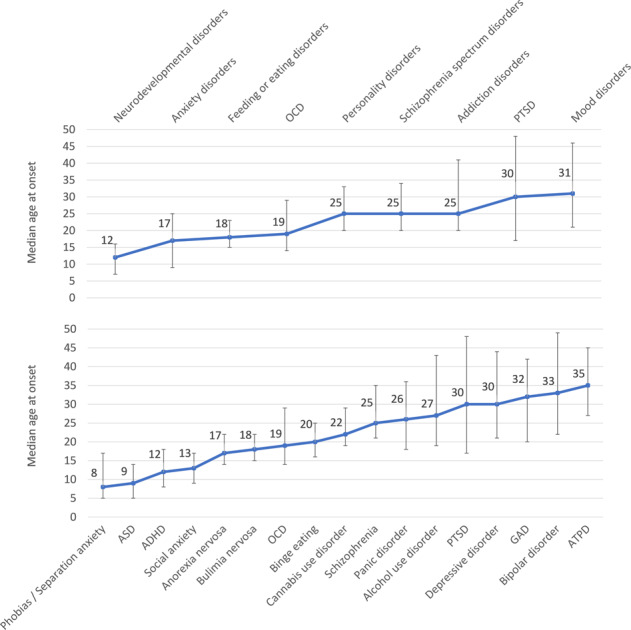
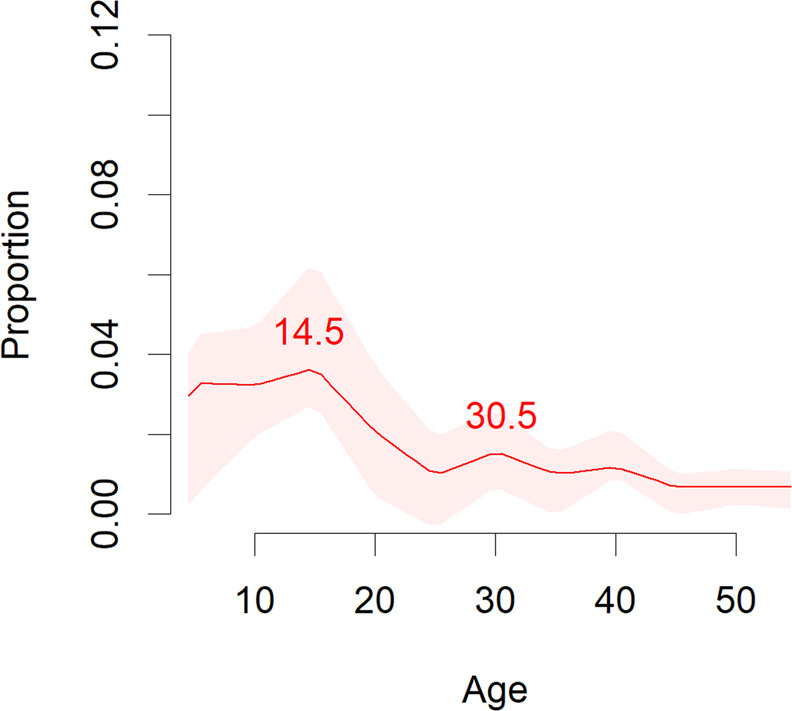
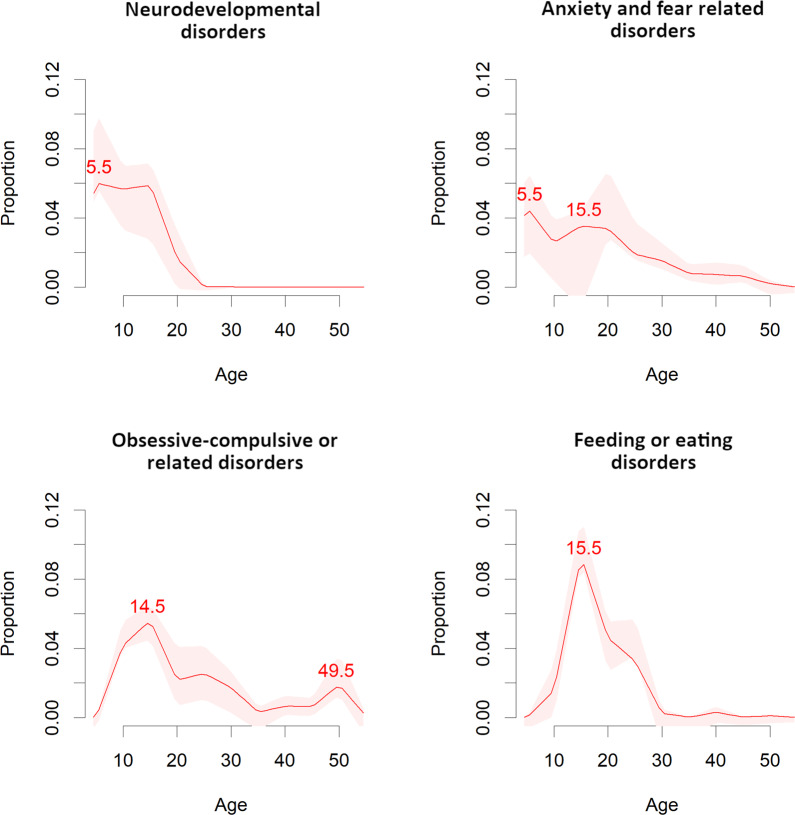
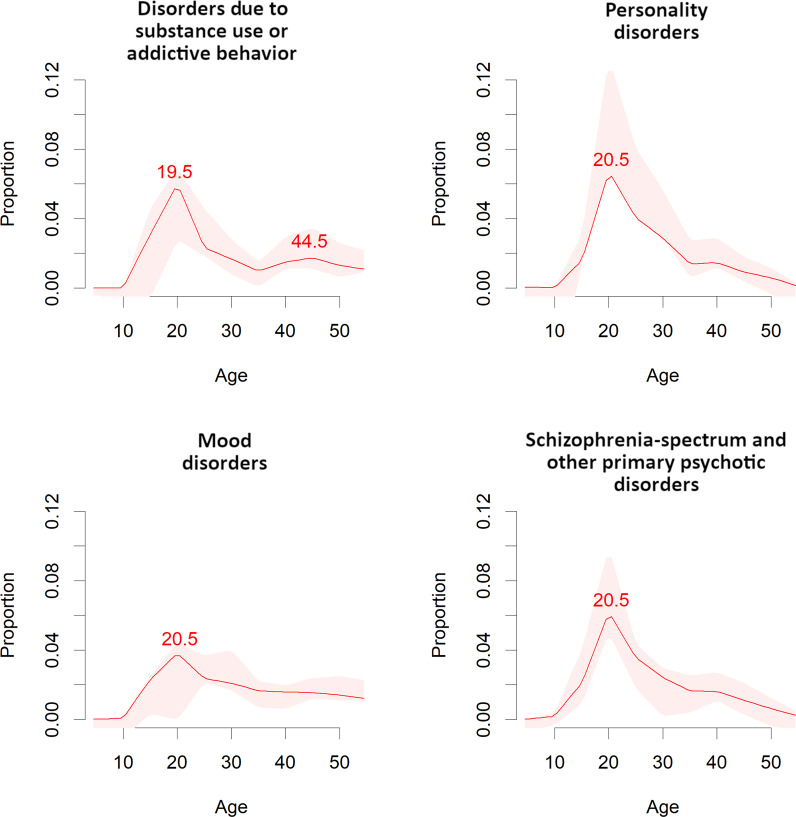
Promotion of good mental health, prevention, and early intervention before/at the onset of mental disorders improve outcomes. However, the range and peak ages at onset for mental disorders are not fully established. To provide robust, global epidemiological estimates of age at onset for mental disorders, we conducted a PRISMA/MOOSE-compliant systematic review with meta-analysis of birth cohort/cross-sectional/cohort studies, representative of the general population, reporting age at onset for any ICD/DSM-mental disorders, identified in PubMed/Web of Science (up to 16/05/2020) (PROSPERO:CRD42019143015). Co-primary outcomes were the proportion of individuals with onset of mental disorders before age 14, 18, 25, and peak age at onset, for any mental disorder and across International Classification of Diseases 11 diagnostic blocks. Median age at onset of specific disorders was additionally investigated. Across 192 studies ( n = 708,561) included, the proportion of individuals with onset of any mental disorders before the ages of 14, 18, 25 were 34.6%, 48.4%, 62.5%, and peak age was 14.5 years ( k = 14, median = 18, interquartile range (IQR) = 11–34). For diagnostic blocks, the proportion of individuals with onset of disorder before the age of 14, 18, 25 and peak age were as follows: neurodevelopmental disorders: 61.5%, 83.2%, 95.8%, 5.5 years ( k = 21, median=12, IQR = 7–16), anxiety/fear-related disorders: 38.1%, 51.8%, 73.3%, 5.5 years ( k = 73, median = 17, IQR = 9–25), obsessive-compulsive/related disorders: 24.6%, 45.1%, 64.0%, 14.5 years ( k = 20, median = 19, IQR = 14–29), feeding/eating disorders/problems: 15.8%, 48.1%, 82.4%, 15.5 years ( k = 11, median = 18, IQR = 15–23), conditions specifically associated with stress disorders: 16.9%, 27.6%, 43.1%, 15.5 years ( k = 16, median = 30, IQR = 17–48), substance use disorders/addictive behaviours: 2.9%, 15.2%, 48.8%, 19.5 years ( k = 58, median = 25, IQR = 20–41), schizophrenia-spectrum disorders/primary psychotic states: 3%, 12.3%, 47.8%, 20.5 years ( k = 36, median = 25, IQR = 20–34), personality disorders/related traits: 1.9%, 9.6%, 47.7%, 20.5 years ( k = 6, median = 25, IQR = 20–33), and mood disorders: 2.5%, 11.5%, 34.5%, 20.5 years ( k = 79, median = 31, IQR = 21–46). No significant difference emerged by sex, or definition of age of onset. Median age at onset for specific mental disorders mapped on a time continuum, from phobias/separation anxiety/autism spectrum disorder/attention deficit hyperactivity disorder/social anxiety (8-13 years) to anorexia nervosa/bulimia nervosa/obsessive-compulsive/binge eating/cannabis use disorders (17-22 years), followed by schizophrenia, personality, panic and alcohol use disorders (25-27 years), and finally post-traumatic/depressive/generalized anxiety/bipolar/acute and transient psychotic disorders (30-35 years), with overlap among groups and no significant clustering. These results inform the timing of good mental health promotion/preventive/early intervention, updating the current mental health system structured around a child/adult service schism at age 18.
Overview
The claims and statistics of this paper haven’t been checked yet.
Free: it reads the open-access text and checks the first 5 claims that cite a source we can check. Create a free account to check every claim.
Integrity signals
Registry
Cites
Statistics
Figures
Verification
Claims the paper makes
The claims and statistics of this paper haven’t been checked yet.
Free: it reads the open-access text and checks the first 5 claims that cite a source we can check. Create a free account to check every claim.
Claims other papers make about this one
Each is checked against this paper’s own text: does it say what the citing paper says it does?
The cited source doesn’t support the claim as written.
In the citing paper
“all major syndromes constituting approximately 75% of mental disorders begin before the age of 25 years [9, 10]”
From Towards a youth mental health paradigm: a perspective and roadmap (2023) · cites this paper as [9]
Checked by a reasoning model — may be wrong.
Experimental — accuracy not yet measuredThe source backs part of the claim, not all of it — or backs it for a different population, condition or comparison.
In the citing paper
“Most mental disorders have a typical onset between 12 and 25 years of age, highlighting the importance of this period for the pathogenesis, diagnosis, and treatment of mental ill-health.”
From Towards a youth mental health paradigm: a perspective and roadmap (2023) · cites this paper as [9]
Experimental — accuracy not yet measuredThe source backs part of the claim, not all of it — or backs it for a different population, condition or comparison.
In the citing paper
“the peak incidence of mental disorders during youth [9, 10]”
From Towards a youth mental health paradigm: a perspective and roadmap (2023) · cites this paper as [9]
Experimental — accuracy not yet measuredThe source backs part of the claim, not all of it — or backs it for a different population, condition or comparison.
In the citing paper
“the large unmet need in young people that has recently dramatically accelerated [9]”
From Towards a youth mental health paradigm: a perspective and roadmap (2023) · cites this paper as [9]
Experimental — accuracy not yet measuredThe source backs part of the claim, not all of it — or backs it for a different population, condition or comparison.
In the citing paper
“Relative to adolescents and adults, emerging adults experience the highest incidence and prevalence of substance use disorders (SUDs) and comorbid mental health disorders (2-4).”
From Initial insights from a quality improvement initiative to develop an evidence-informed young adult substance use program (2022) · cites this paper as [4]
Experimental — accuracy not yet measured
14 more claims about this paper
Create a free account to see every claim other papers make about this one.
Self-check
Percentages, sums and reported differences re-computed from the paper’s own numbers.
The self-check needs the paper’s full text.
Citations
Cites
Preferred Reporting Items for Systematic Reviews and Meta-Analyses: the PRISMA statement
Moher, D., Liberati, A., Tetzlaff, J., Altman, D. G., & for the PRISMA Group (2009) · BMJ · doi:10.1136/bmj.b2535 · Cited by 83,823
Preferred Reporting Items for Systematic Reviews and Meta-Analyses: The PRISMA Statement
Moher, D., Liberati, A., Tetzlaff, J., Altman, D. G., & The PRISMA Group (2009) · PLoS Medicine · doi:10.1371/journal.pmed.1000097 · Cited by 64,042 · cited 1×
“We performed a systematic review adhering to the preferred reporting items for systematic reviews and meta-analyses (PRISMA) recommendations [31] (e-Table 1) and the meta-analysis of observational studies in epidemiology (MOOSE) guidelines (e-Table 2) [32].”
MethodPreferred reporting items for systematic reviews and meta-analyses: the PRISMA Statement.
(2009) · PubMed Central · Cited by 44,859
Preferred reporting items for systematic reviews and meta-analyses: The PRISMA statement
Moher, D., Liberati, A., Tetzlaff, J., Altman, D. G., & the PRISMA Group* (2009) · Annals of Internal Medicine · doi:10.7326/0003-4819-151-4-200908180-00135 · Cited by 37,554
Dermyshi, E., Wang, Y., Yan, C., Hong, W., Qiu, G., Gong, X., & Zhang, T. (2017) · Neonatology · doi:10.1159/000454668 · Cited by 24,451
Meta-analysis of Observational Studies in Epidemiology<SUBTITLE>A Proposal for Reporting</SUBTITLE>
Stroup, D. F. (2000) · JAMA · doi:10.1001/jama.283.15.2008 · Cited by 20,623
Bootstrap Methods and their Application
Davison, A. C., & Hinkley, D. V. (1997) · doi:10.1017/cbo9780511802843 · Cited by 7,350
Bootstrap Methods and Their Application
Loughin, T. M., Davison, A. C., & Hinkley, D. V. (1999) · Journal of the American Statistical Association · doi:10.2307/2669707 · Cited by 5,418
Why do many psychiatric disorders emerge during adolescence?
Paus, T., Keshavan, M., & Giedd, J. N. (2008) · Nature Reviews Neuroscience · doi:10.1038/nrn2513 · Cited by 3,123 · cited 2×
“The meta-epidemiologic results of this work show that mental disorders have onset when dramatic biological changes in the brain occur, from childhood, through adolescence, to adulthood, that involves grey-matter density, cerebral metabolic rate, synaptic density, white matter growth and myelination [41].”
BackgroundWalker, E. R., McGee, R. E., & Druss, B. G. (2015) · JAMA Psychiatry · doi:10.1001/jamapsychiatry.2014.2502 · Cited by 2,976
Research works printed but not linked: 1
- McGorry PD Hartmann JA Spooner R Nelson B Beyond the "at risk mental state" concept: transitioning to transdiagnostic psychiatry World Psychiatry 2018 17 133 42 29856558 PMC5980504 · DOI · Paper page
Cited by
Brain charts for the human lifespan
Bethlehem, R. A. I., Seidlitz, J., White, S. R., Vogel, J. W., Anderson, K. M., Adamson, C., Adler, S., Alexopoulos, G. S., Anagnostou, E., Areces-Gonzalez, A., et al. (2022) · Nature · doi:10.1038/s41586-022-04554-y · Cited by 1,794
Self-citationThe social determinants of mental health and disorder: evidence, prevention and recommendations
Kirkbride, J. B., Anglin, D. M., Colman, I., Dykxhoorn, J., Jones, P. B., Patalay, P., Pitman, A., Soneson, E., Steare, T., Wright, T., et al. (2024) · World Psychiatry · doi:10.1002/wps.21160 · Cited by 1,253
“Although the majority of mental disorders manifest during ad olescence 19 , they are often rooted much earlier in development.”
BackgroundSelf-citationMarx, W., Penninx, B. W. J. H., Solmi, M., Furukawa, T. A., Firth, J., Carvalho, A. F., & Berk, M. (2023) · Nature Reviews Disease Primers · doi:10.1038/s41572-023-00454-1 · Cited by 768
Self-citationKieling, C., Buchweitz, C., Caye, A., Silvani, J., Ameis, S. H., Brunoni, A. R., Cost, K. T., Courtney, D. B., Georgiades, K., Merikangas, K. R., et al. (2024) · JAMA Psychiatry · doi:10.1001/jamapsychiatry.2023.5051 · Cited by 687
The Lancet Psychiatry Commission on youth mental health
McGorry, P. D., Mei, C., Dalal, N., Alvarez-Jimenez, M., Blakemore, S.-J., Browne, V., Dooley, B., Hickie, I. B., Jones, P. B., McDaid, D., et al. (2024) · The Lancet Psychiatry · doi:10.1016/s2215-0366(24)00163-9 · Cited by 663
Self-citationMcGrath, J. J., Al-Hamzawi, A., Alonso, J., Altwaijri, Y., Andrade, L. H., Bromet, E. J., Bruffaerts, R., de Almeida, J. M. C., Chardoul, S., Chiu, W. T., et al. (2023) · The Lancet Psychiatry · doi:10.1016/s2215-0366(23)00193-1 · Cited by 646
Solmi, M., Seitidis, G., Mavridis, D., Correll, C. U., Dragioti, E., Guimond, S., Tuominen, L., Dargél, A., Carvalho, A. F., Fornaro, M., et al. (2023) · Molecular Psychiatry · doi:10.1038/s41380-023-02138-4 · Cited by 570
Self-citationLawrance, E. L., Thompson, R., Newberry Le Vay, J., Page, L., & Jennings, N. (2022) · International Review of Psychiatry · doi:10.1080/09540261.2022.2128725 · Cited by 500
The association between academic pressure and adolescent mental health problems: a systematic review
Steare, T., Gutiérrez Muñoz, C., Sullivan, A., & Lewis, G. (2023) · Journal of Affective Disorders · doi:10.1016/j.jad.2023.07.028 · Cited by 372
Attention-deficit/hyperactivity disorder
Faraone, S. V., Bellgrove, M. A., Brikell, I., Cortese, S., Hartman, C. A., Hollis, C., Newcorn, J. H., Philipsen, A., Polanczyk, G. V., Rubia, K., et al. (2024) · Nature Reviews Disease Primers · doi:10.1038/s41572-024-00495-0 · Cited by 355
Treatment of eating disorders: A systematic meta-review of meta-analyses and network meta-analyses
Monteleone, A. M., Pellegrino, F., Croatto, G., Carfagno, M., Hilbert, A., Treasure, J., Wade, T., Bulik, C. M., Zipfel, S., Hay, P., et al. (2022) · Neuroscience & Biobehavioral Reviews · doi:10.1016/j.neubiorev.2022.104857 · Cited by 283
Self-citationSolmi, M., De Toffol, M., Kim, J. Y., Choi, M. J., Stubbs, B., Thompson, T., Firth, J., Miola, A., Croatto, G., Baggio, F., et al. (2023) · BMJ · doi:10.1136/bmj-2022-072348 · Cited by 271
Self-citationTowards a youth mental health paradigm: a perspective and roadmap
Uhlhaas, P. J., Davey, C. G., Mehta, U. M., Shah, J., Torous, J., Allen, N. B., Avenevoli, S., Bella-Awusah, T., Chanen, A., Chen, E. Y. H., et al. (2023) · Molecular Psychiatry · doi:10.1038/s41380-023-02202-z · Cited by 318
Self-citationSolmi, M., Monaco, F., Højlund, M., Monteleone, A. M., Trott, M., Firth, J., Carfagno, M., Eaton, M., De Toffol, M., Vergine, M., et al. (2024) · World Psychiatry · doi:10.1002/wps.21182 · Cited by 274
“AN is more common in women and starts earlier than BN and BED 22 .”
BackgroundSelf-citationFusar‐Poli, P., Estradé, A., Stanghellini, G., Venables, J., Onwumere, J., Messas, G., Gilardi, L., Nelson, B., Patel, V., Bonoldi, I., et al. (2022) · World Psychiatry · doi:10.1002/wps.20959 · Cited by 243
Self-citationAndreassen, O. A., Hindley, G. F. L., Frei, O., & Smeland, O. B. (2023) · World Psychiatry · doi:10.1002/wps.21034 · Cited by 243
Climate Change and Children’s Mental Health: A Developmental Perspective
Vergunst, F., & Berry, H. L. (2022) · Clinical Psychological Science · doi:10.1177/21677026211040787 · Cited by 197
“Adolescence is characterized by major physiological, neurocognitive, and hormonal changes, and the appearance of new psychiatric disorders peaks at this time (Solmi et al., 2022).”
BackgroundInfluentialAnxiety disorders in children and adolescents: A summary and overview of the literature
Rapee, R. M., Creswell, C., Kendall, P. C., Pine, D. S., & Waters, A. M. (2023) · Behaviour Research and Therapy · doi:10.1016/j.brat.2023.104376 · Cited by 174
Solmi, M., Song, M., Yon, D. K., Lee, S. W., Fombonne, E., Kim, M. S., Park, S., Lee, M. H., Hwang, J., Keller, R., et al. (2022) · Molecular Psychiatry · doi:10.1038/s41380-022-01630-7 · Cited by 226
Self-citationMechanisms linking social media use to adolescent mental health vulnerability
Orben, A., Meier, A., Dalgleish, T., & Blakemore, S.-J. (2024) · Nature Reviews Psychology · doi:10.1038/s44159-024-00307-y · Cited by 220
Montero-Marin, J., Allwood, M., Ball, S., Crane, C., De Wilde, K., Hinze, V., Jones, B., Lord, L., Nuthall, E., Raja, A., et al. (2022) · Evidence Based Mental Health · doi:10.1136/ebmental-2022-300439 · Cited by 184
de Wit, M., Gajewska, K. A., Goethals, E. R., McDarby, V., Zhao, X., Hapunda, G., Delamater, A. M., & DiMeglio, L. A. (2022) · Pediatric Diabetes · doi:10.1111/pedi.13428 · Cited by 185
Transforming mental health systems globally: principles and policy recommendations
Patel, V., Saxena, S., Lund, C., Kohrt, B., Kieling, C., Sunkel, C., Kola, L., Chang, O., Charlson, F., O’Neill, K., et al. (2023) · The Lancet · doi:10.1016/s0140-6736(23)00918-2 · Cited by 209
A call to action: the second Lancet Commission on adolescent health and wellbeing
Baird, S., Choonara, S., Azzopardi, P. S., Banati, P., Bessant, J., Biermann, O., Capon, A. G., Claeson, M., Collins, P. Y., Wet, N. D., et al. (2025) · The Lancet · doi:10.1016/s0140-6736(25)00503-3 · Cited by 245
Prevalence of Anxiety in University Students during the COVID-19 Pandemic: A Systematic Review
Liyanage, S., Saqib, K., Khan, A. F., Thobani, T. R., Tang, W., Chiarot, C. B., AlShurman, B. A., & Butt, Z. A. (2021) · International Journal of Environmental Research and Public Health · doi:10.3390/ijerph19010062 · Cited by 211
“Higher education students are particularly prone to mental health disorders during this pandemic being the high-risk age group to developing mental illness [12].”
BackgroundThe sleep–circadian interface: A window into mental disorders
Meyer, N., Lok, R., Schmidt, C., Kyle, S. D., McClung, C. A., Cajochen, C., Scheer, F. A. J. L., Jones, M. W., & Chellappa, S. L. (2024) · Proceedings of the National Academy of Sciences · doi:10.1073/pnas.2214756121 · Cited by 219
McIntyre, R. S., Alda, M., Baldessarini, R. J., Bauer, M., Berk, M., Correll, C. U., Fagiolini, A., Fountoulakis, K., Frye, M. A., Grunze, H., et al. (2022) · World Psychiatry · doi:10.1002/wps.20997 · Cited by 171
Self-citationVella, S. A., Aidman, E., Teychenne, M. J., Smith, J. J., Swann, C., Rosenbaum, S., White, R. L., & Lubans, D. R. (2023) · Journal of science and medicine in sport · doi:10.1016/j.jsams.2023.01.001 · Cited by 202
Huang, K., Beckman, E. M., Ng, N., Dingle, G. A., Han, R., James, K. E., WINKLER, E. A. H., Stylianou, M., & Gomersall, S. R. (2024) · Health Promotion International · doi:10.1093/heapro/daae054 · Cited by 204
“Undergraduate university students, typically in the 18–25 age range, face the highest risk of experiencing the first onset of mental health issues (Solmi et al ., 2022), such as poor wellbeing and symptoms of psychological distress, including anxiety and depression.”
BackgroundArmocida, B., Monasta, L., Sawyer, S., Bustreo, F., Segafredo, G., Castelpietra, G., Ronfani, L., Pasovic, M., Hay, S., Armocida, B., et al. (2022) · The Lancet Child & Adolescent Health · doi:10.1016/s2352-4642(22)00073-6 · Cited by 155
Wilson, S., & Dumornay, N. M. (2022) · Journal of Adolescent Health · doi:10.1016/j.jadohealth.2021.12.003 · Cited by 135
“Many cases of depression have their onset during adolescence or even earlier [1].”
BackgroundFerrari, M., Allan, S., Arnold, C., Eleftheriadis, D., Álvarez‐Jiménez, M., Gumley, A. I., & Gleeson, J. (2022) · Journal of Medical Internet Research · doi:10.2196/39686 · Cited by 187
“However, this developmental phase of emerging adulthood also coincides with the peak period of risk for onset of mental health disorders [2,3], and specific university lifestyle factors, including impaired sleep [4] and academic and financial stress, are known to exacerbate psychological distress in students [5,6].”
BackgroundRomer, A. L., & Pizzagalli, D. A. (2021) · Developmental Cognitive Neuroscience · doi:10.1016/j.dcn.2021.100994 · Cited by 142
“We expected that scalar invariance would not hold given that research shows significant growth in psychopathology throughout youth development (Copeland et al., 2011; Kessler et al., 2005a; Solmi et al., 2021).”
Maina, J. G., Balkhiyarova, Z., Nouwen, A., Pupko, I., Ulrich, A., Boissel, M., Bonnefond, A., Froguel, P., Khamis, A., Prokopenko, I., et al. (2023) · Diabetes Care · doi:10.2337/dc22-2373 · Cited by 163
“olescence or early adulthood (23), whereas”
Digital Phenotyping: Data-Driven Psychiatry to Redefine Mental Health
Oudin, A., Maatoug, R., Bourla, A., Ferreri, F., Bonnot, O., Millet, B., Schoeller, F., Mouchabac, S., & Adrien, V. (2023) · Journal of Medical Internet Research · doi:10.2196/44502 · Cited by 170
“For example, there is currently an average 8-year delay in the diagnosis of bipolar illness in France [82].”
Fonseca‐Pedrero, E., Díez-Gómez, A., Pérez‐Albéniz, A., Al‐Halabí, S., Lucas‐Molina, B., & Debbané, M. (2023) · Psychiatry Research · doi:10.1016/j.psychres.2023.115486 · Cited by 166
Cortese, S., Solmi, M., Michelini, G., Bellato, A., Blanner, C., Canozzi, A., Eudave, L., Farhat, L. C., Højlund, M., Köhler‐Forsberg, O., et al. (2023) · World Psychiatry · doi:10.1002/wps.21037 · Cited by 147
Self-citationAir quality and mental health: evidence, challenges and future directions
Bhui, K. S., Newbury, J. B., Latham, R. M., Ucci, M., Nasir, Z. A., Turner, B., O’Leary, C., Fisher, H. L., Marczylo, E. L., Douglas, P., et al. (2023) · BJPsych Open · doi:10.1192/bjo.2023.507 · Cited by 164
Uher, R., Pavlová, B., Raduà, J., Provenzani, U., Najafi, S., Fortea, L., Ortuño, M., Nazarova, A., Perroud, N. A., Palaniyappan, L. K., et al. (2023) · World Psychiatry · doi:10.1002/wps.21147 · Cited by 157
Self-citationFusar‐Poli, P., Estradé, A., Stanghellini, G., Esposito, C. M., Rosfort, R., Mancini, M., Norman, P., Cullen, J., Adesina, M., Jimenez, G. B., et al. (2023) · World Psychiatry · doi:10.1002/wps.21111 · Cited by 122
Self-citationThe Lancet Commission on self-harm
Moran, P., Chandler, A., Dudgeon, P., Kirtley, O. J., Knipe, D. W., Pirkis, J., Sinyor, M., Allister, R., Ansloos, J. P., Ball, M. A., et al. (2024) · The Lancet · doi:10.1016/s0140-6736(24)01121-8 · Cited by 160
Association between anxiety and hypertension in adults: A systematic review and meta-analysis
Lim, L.-F., Solmi, M., & Cortese, S. (2021) · Neuroscience & Biobehavioral Reviews · doi:10.1016/j.neubiorev.2021.08.031 · Cited by 134
Self-citationGrogans, S. E., Bliss‐Moreau, E., Buss, K. A., Clark, L. A., Fox, A. S., Keltner, D. J., Cowen, A., Kim, J. J., Kragel, P. A., MacLeod, C., et al. (2023) · Neuroscience & Biobehavioral Reviews · doi:10.1016/j.neubiorev.2023.105237 · Cited by 146
“This reflects the fact that anxiety disorders typically emerge early in life and are often left untreated or ultimately prove treatment resistant (Craske et al., 2017; Olfson et al., 2019; Solmi et al., 2022).”
BackgroundSelf-citationKavanagh, B. E., Corney, K. B., Beks, H., Williams, L. J., Quirk, S. E., & Versace, V. L. (2023) · BMC Health Services Research · doi:10.1186/s12913-023-10034-4 · Cited by 146
Lass‐Hennemann, J., Sopp, M. R., Ruf, N., Equit, M., Schäfer, S. K., Wirth, B. E., & Michael, T. (2023) · European Child & Adolescent Psychiatry · doi:10.1007/s00787-023-02300-x · Cited by 146
“Epidemiological studies show that the period of adolescence coincides with a sharp increase in mental health problems [3].”
BackgroundDragioti, E., Radua, J., Solmi, M., Gosling, C. J., Oliver, D., Lascialfari, F., Ahmed, M., Cortese, S., Estradé, A., Arrondo, G., et al. (2023) · World Psychiatry · doi:10.1002/wps.21068 · Cited by 130
Self-citationFarrell, A. H., Vitoroulis, I., Eriksson, M., & Vaillancourt, T. (2023) · Children · doi:10.3390/children10020279 · Cited by 130
Biazus, T. B., Beraldi, G. H., Tokeshi, L., Rotenberg, L. D. S., Dragioti, E., Carvalho, A. F., Solmi, M., & Lafer, B. (2023) · Molecular Psychiatry · doi:10.1038/s41380-023-02109-9 · Cited by 140
“Bipolar disorder (BD) is a chronic, often progressive, and disabling disorder that has peak and median age at onset at age 19.5 and 33 years old [1], and affects roughly one percent of the global population, regardless of sex, ethnicity, or social income [2 – 4].”
BackgroundInfluentialSelf-citationProsocial development in adolescence
Crone, E. A., & Achterberg, M. (2021) · Current Opinion in Psychology · doi:10.1016/j.copsyc.2021.09.020 · Cited by 125
Lawrance, E. L., Jennings, N., Kioupi, V., Thompson, R., Diffey, J., & Vercammen, A. (2022) · The Lancet Planetary Health · doi:10.1016/s2542-5196(22)00172-3 · Cited by 123
Social Media Use and adolescents' mental health and well-being: An umbrella review
Sala, A., Porcaro, L., & Gómez, E. (2024) · Computers in Human Behavior Reports · doi:10.1016/j.chbr.2024.100404 · Cited by 120
Dragioti, E., Radua, J., Solmi, M., Arango, C., Oliver, D., Cortese, S., Jones, P. B., Il Shin, J., Correll, C. U., & Fusar-Poli, P. (2022) · Molecular Psychiatry · doi:10.1038/s41380-022-01586-8 · Cited by 112
Self-citationSimmons, M. B., Cartner, S., MacDonald, R., Whitson, S., Bailey, A. P., & Brown, E. (2023) · BMC Psychiatry · doi:10.1186/s12888-023-04578-2 · Cited by 129
“5 years and the median was 18 years, leading authors to call for a focus on “indicated, selective and/or universal preventive interventions for mental disorders during mid/late adolescence and young adulthood” (page 286, [2]).”
BackgroundBrosch, K., Stein, F., Schmitt, S., Pfarr, J., Ringwald, K. G., Thomas‐Odenthal, F., Meller, T., Steinsträter, O., Waltemate, L., Lemke, H., et al. (2022) · Molecular Psychiatry · doi:10.1038/s41380-022-01687-4 · Cited by 119
Alhaj, O. A., Fekih‐Romdhane, F., Sweidan, D. H., Saif, Z., Khudhair, M. F., Ghazzawi, H., Nadar, M. S., Alhajeri, S. S., Levine, M. P., & Jahrami, H. (2022) · Eating and Weight Disorders - Studies on Anorexia Bulimia and Obesity · doi:10.1007/s40519-022-01452-0 · Cited by 134
“However, given what is known about risk factors and the modal ages of onset, one high-risk period is late adolescence and emerging adulthood, that is, roughly ages 17 through 22 [20].”
BackgroundZhao, R., Amanvermez, Y., Pei, J., Castro‐Ramirez, F., Rapsey, C., Garcia, C., Ebert, D. D., Haro, J. M., Fodor, L. A., David, O. A., et al. (2025) · Journal of Child Psychology and Psychiatry · doi:10.1111/jcpp.14145 · Cited by 110
“Most mental disorders have their onset during this period (Kessler, Amminger, Aguilar-Gaxiola, Alonso, & Lee, 2007), and a considerable number of students enter college with already established mental health conditions (Solmi et al., 2022).”
The neurobiological effects of childhood maltreatment on brain structure, function, and attachment
Tomoda, A., Nishitani, S., Takiguchi, S., Fujisawa, T. X., Sugiyama, T., & Teicher, M. H. (2024) · European Archives of Psychiatry and Clinical Neuroscience · doi:10.1007/s00406-024-01779-y · Cited by 133
Ramadan, R., Randell, A., Lavoie, S., Gao, C. X., Manrique, P. C., Anderson, R., McDowell, C., & Zbukvic, I. (2023) · Early Intervention in Psychiatry · doi:10.1111/eip.13374 · Cited by 76
Solmi, M., Soardo, L., Kaur, S., Azis, M., Cabras, A., Censori, M., Fausti, L., Besana, F., de Pablo, G. S., & Fusar‐Poli, P. (2023) · Molecular Psychiatry · doi:10.1038/s41380-023-02029-8 · Cited by 124
“A comprehensive transdiagnostic assessment in CHR-P individual is essential to inform preventive care.”
BackgroundSelf-citationMichelini, G., Carlisi, C. O., Eaton, N. R., Elison, J. T., Haltigan, J. D., Kotov, R., Krueger, R. F., Latzman, R. D., Li, J. J., Levin-Aspenson, H. F., et al. (2024) · World Psychiatry · doi:10.1002/wps.21225 · Cited by 119
“Nevertheless, on average, neurodevelopmental features tend to emerge earlier than most other psychiatric conditions 152 (see Figure 1).”
Hartman, C. A., Larsson, H., Vos, M., Bellato, A., Libutzki, B., Solberg, B. S., Chen, Q., Du Rietz, E., Mostert, J. C., Kittel-Schneider, S., et al. (2023) · Neuroscience & Biobehavioral Reviews · doi:10.1016/j.neubiorev.2023.105209 · Cited by 104
“…in the general population differ for ADs, MDD, BD and SUDs, respectively (Andreas et al., 2017, 2019; Pedersen et al., 2014; Schulte et al., 2014; Solmi et al., 2022; Volkert et al., 2013) and so does the course of these conditions throughout the lifespan (Beller et al., 2021; Hasin and Grant,…”
Nagata, J. M., Al-Shoaibi, A. A. A., Leong, A. W., Zamora, G., Testa, A., Ganson, K. T., & Baker, F. C. (2024) · BMC Public Health · doi:10.1186/s12889-024-20102-x · Cited by 103
Johnson, C. L., Gross, M., Jorm, A. F., & Hart, L. (2023) · Clinical Child and Family Psychology Review · doi:10.1007/s10567-023-00426-7 · Cited by 121
Ojala, M. (2022) · European Journal of Developmental Psychology · doi:10.1080/17405629.2022.2108396 · Cited by 108
“It is well known that the onset of mental ill-being peaks in adolescence, and this is a topic that many developmental scientists work with (see Solmi et al., 2021).”
BackgroundSheikh, A., Payne-Cook, C., Lisk, S. C., Carter, B., & Brown, J. S. L. (2024) · European Child & Adolescent Psychiatry · doi:10.1007/s00787-024-02520-9 · Cited by 109
“%) of mental health problems occur before age 18, with 62.5% occurring before age 25, and the peak age of onset being 14.5 years [4].”
InfluentialAssociations between mental and physical conditions in children and adolescents: An umbrella review
Arrondo, G., Solmi, M., Dragioti, E., Eudave, L., Ruiz-Goikoetxea, M., Ciaurriz-Larraz, A. M., Magallon, S., Carvalho, A. F., Cipriani, A., Fusar-Poli, P., et al. (2022) · Neuroscience & Biobehavioral Reviews · doi:10.1016/j.neubiorev.2022.104662 · Cited by 92
“With a global peak age at onset of any mental disorders of 14.5 years and 63% of mental disorders occurring prior to age 25 (Solmi et al., 2021b), and with associated physical health burden being frequently observed in children and adolescents, prevention and early intervention in young people has…”
InfluentialSelf-citationThe effectiveness of a school-based, universal mental health programme in six European countries
Cefai, C., Camilleri, L., Bartolo, P. A., Grazzani, I., Cavioni, V., Conte, E., Ornaghi, V., Agliati, A., Gandellini, S., Vorkapić, S. T., et al. (2022) · Frontiers in Psychology · doi:10.3389/fpsyg.2022.925614 · Cited by 125
Sex Differences in Mental Health Problems and Psychiatric Hospitalization in Autistic Young Adults
Martini, M. I., Kuja‐Halkola, R., Butwicka, A., Rietz, E. D., D'Onofrio, B. M., Happe, F. G. E., Kanina, A., Larsson, H., Lundström, S., Martin, J., et al. (2022) · JAMA Psychiatry · doi:10.1001/jamapsychiatry.2022.3475 · Cited by 106
Wright, M., Reitegger, F., Cela, H., Papst, A., & Gasteiger‐Klicpera, B. (2023) · Journal of Youth and Adolescence · doi:10.1007/s10964-023-01735-4 · Cited by 114
Precision psychiatry roadmap: towards a biology-informed framework for mental disorders
Kas, M. J., Penninx, B. W. J. H., Knudsen, G. M., Cuthbert, B. N., Falkai, P., Sachs, G. S., Ressler, K. J., Bałkowiec-Iskra, E., Butlen‐Ducuing, F., Leboyer, M., et al. (2025) · Molecular Psychiatry · doi:10.1038/s41380-025-03070-5 · Cited by 123
Cortese, S., Bellgrove, M. A., Brikell, I., Franke, B., Goodman, D. W., Hartman, C. A., Larsson, H., LEVIN, F. R., Ostinelli, E. G., Parlatini, V., et al. (2025) · World Psychiatry · doi:10.1002/wps.21374 · Cited by 114
“Only half of individuals with ADHD are diagnosed before age 14 92 .”
Self-citationThe impact of the environment on neurodevelopmental disorders in early childhood
Scattolin, M. A. D. A., Resegue, R., & do Rosário, M. C. (2021) · Jornal de Pediatria · doi:10.1016/j.jped.2021.11.002 · Cited by 113
Bülow, A., van Roekel, E., Boele, S., Denissen, J. J. A., & Keijsers, L. (2022) · Child Development · doi:10.1111/cdev.13733 · Cited by 102
Reynard, S., Dias, J., Mitić, M., Schrank, B., & Woodcock, K. A. (2022) · JMIR Serious Games · doi:10.2196/31456 · Cited by 112
“5 years as the worldwide peak age of psychiatric disorder onset [4].”
BackgroundLong-term effects of chronic stress models in adult mice
Tran, I., & Gellner, A. (2023) · Journal of Neural Transmission · doi:10.1007/s00702-023-02598-6 · Cited by 104
Is There a Burnout Epidemic among Medical Students? Results from a Systematic Review
Vincenzo, M. D., Arsenio, E., Rocca, B. D., Rosa, A., Tretola, L., Toricco, R., Boiano, A., Catapano, P., Cavaliere, S., Volpicelli, A., et al. (2024) · Medicina · doi:10.3390/medicina60040575 · Cited by 127
“According to a large meta-analysis including more than 700,000 individuals, 62.5% of the sample presented the onset of any mental disorder before the age of 25 [115].”
MethodInfluentialA Public Health Perspective of Post-Traumatic Stress Disorder
Jowf, G. I. A., Ahmed, Z. T., An, N., Reijnders, R. A., Ambrosino, E., Rutten, B. P. F., de Nijs, L., & Eijssen, L. (2022) · International Journal of Environmental Research and Public Health · doi:10.3390/ijerph19116474 · Cited by 112
The Impact of COVID‐19 on Adolescents’ Daily Lives: The Role of Parent–Child Relationship Quality
Janssens, J. J., Achterhof, R., Lafit, G., Bamps, E., Hagemann, N., Hiekkaranta, A. P., Hermans, K. S. F. M., Lecei, A., Myin‐Germeys, I., & Kirtley, O. J. (2021) · Journal of Research on Adolescence · doi:10.1111/jora.12657 · Cited by 80
“Adolescence is a developmental period where the vast majority of mental health conditions have their onset (Solmi et al., 2021).”
BackgroundSolmi, M., Cortese, S., Vita, G., Prisco, M. D., Raduà, J., Dragioti, E., Köhler‐Forsberg, O., Madsen, N. M., Rohde, C., Eudave, L., et al. (2023) · Molecular Psychiatry · doi:10.1038/s41380-023-02298-3 · Cited by 108
Self-citationDifficulties in emotion regulation in bipolar disorder: A systematic review and meta-analysis
Miola, A., Cattarinussi, G., Antiga, G., Caiolo, S., Solmi, M., & Sambataro, F. (2022) · Journal of Affective Disorders · doi:10.1016/j.jad.2022.01.102 · Cited by 96
Self-citationA framework for conceptualising early intervention for eating disorders
Allen, K. L., Mountford, V. A., Elwyn, R., Flynn, M., Fursland, A., Obeid, N., Partida, G., Richards, K. L., Schmidt, U. H., Serpell, L., et al. (2022) · European Eating Disorders Review · doi:10.1002/erv.2959 · Cited by 99
“The peak age of onset for an ED is during adolescence and emerging adulthood (i.e., up to age ~25) (Micali et al., 2013; Solmi et al., 2021; Steinhausen & Jensen, 2015).”
BackgroundSchmidt, U. H., Claudino, A. M., Fernández‐Aranda, F., Giel, K. E., Griffiths, J., Hay, P., Kim, Y., Marshall, J., Micali, N., Monteleone, A. M., et al. (2025) · World Psychiatry · doi:10.1002/wps.21263 · Cited by 102
“Typical onset spans from childhood to early adulthood, a developmentally sensitive time, with around 15% of FEDs developing by age 14, around 50% by age 18, over 80% by age 25, and practically no new onsets occurring after the age of 30 6 .”
Tudor, K., Maloney, S., Raja, A., Baer, R., Blakemore, S.-J., Byford, S., Crane, C., Dalgleish, T., De Wilde, K., Ford, T., et al. (2022) · Prevention Science · doi:10.1007/s11121-022-01361-9 · Cited by 79
Adolescent sleep and the foundations of prefrontal cortical development and dysfunction
Anastasiades, P. G., de Vivo, L., Bellesi, M., & Jones, M. W. (2022) · Progress in Neurobiology · doi:10.1016/j.pneurobio.2022.102338 · Cited by 84
“Data in A replotted from Solmi et al., 2021 and in B from Keyes et al., 2015 and Carskadon, 2011.”
García, M. D. L. A. C., Díez-Gómez, A., Pérez‐Albéniz, A., Lucas‐Molina, B., & Fonseca‐Pedrero, E. (2024) · Journal of Affective Disorders · doi:10.1016/j.jad.2024.03.047 · Cited by 97
Trends in Adolescent Health: Successes and Challenges From 2010 to the Present
Beckwith, S., Chandra‐Mouli, V., & Blum, R. W. (2024) · Journal of Adolescent Health · doi:10.1016/j.jadohealth.2024.04.015 · Cited by 99
Perez, N., Langlest, F., Mallet, L., De Pieri, M., Sentissi, O., Thorens, G., Seragnoli, F., Zullino, D., Kirschner, M., Kaiser, S., et al. (2023) · European Neuropsychopharmacology · doi:10.1016/j.euroneuro.2023.07.011 · Cited by 88
Self-citationGong, X., Wang, L., Rong, G., Zhang, D.-N., Zhang, A.-Y., & Liu, C. (2023) · Frontiers in Psychology · doi:10.3389/fpsyg.2023.1073647 · Cited by 86
“Adolescence and early adulthood are considered the peak life stages for the onset of psychiatric disorders, and three-quarters of adults with diagnosable mental health problems experience symptoms of poor mental health status before age 25 (Solmi et al., 2022).”
Backgroundde Pablo, G. S., Woods, S. W., Drymonitou, G., de Diego, H., & Fusar‐Poli, P. (2021) · Brain Sciences · doi:10.3390/brainsci11111544 · Cited by 95
Self-citationSutcliffe, K., Ball, J., Clark, T. C., Archer, D. J., Peiris-John, R. J., Crengle, S. M., & Fleming, T. M. (2022) · Australian & New Zealand Journal of Psychiatry · doi:10.1177/00048674221138503 · Cited by 85
“Younger students (<16) reported larger increases in the prevalence of depression symptoms, suicide thoughts and suicide attempts than older students (16+), in both absolute and relative terms, suggesting a downward shift in the age of onset of depression and suicidality, both traditionally thought to develop later in…”
BackgroundLekamge, R. B., Jain, R., Sheen, J., Solanki, P., Zhou, Y., Romero, L., Barry, M. M., Chen, L., Karim, M. N., & Ilić, D. (2025) · Journal of Youth and Adolescence · doi:10.1007/s10964-025-02135-6 · Cited by 91
Predicting Adolescent Mental Health Outcomes Across Cultures: A Machine Learning Approach
Rothenberg, W. A., Bizzego, A., Esposito, G., Lansford, J. E., Al‐Hassan, S. M., Bacchini, D., Bornstein, M. H., Chang, L., Deater-Deckard, K. D., Giunta, L. D., et al. (2023) · Journal of Youth and Adolescence · doi:10.1007/s10964-023-01767-w · Cited by 86
“A recent meta-analysis of over 700,000 individuals worldwide found that the peak age of onset for many externalizing disorders is 9.5 years old, whereas the peak age of onset for many internalizing disorders (especially depression) is 19.5 years old (Solmi et al., 2021).”
BackgroundInfluentialPharmacological Treatment of Generalised Anxiety Disorder: Current Practice and Future Directions
Fagan, H. A., & Baldwin, D. S. (2023) · Expert Review of Neurotherapeutics · doi:10.1080/14737175.2023.2211767 · Cited by 96
A Scoping Review and Analysis of Mental Health Literacy Interventions for Children and Youth
Marinucci, A., Grové, C., & Allen, K. (2022) · School Psychology Review · doi:10.1080/2372966x.2021.2018918 · Cited by 89
“Approximately 50% of mental health problems arise during late childhood to youth development, with the mean age of onset of mental illness being 14.5 years (Solmi et al., 2021; WHO, 2020).”
BackgroundInfluentialCervin, M. (2022) · Psychiatric Clinics of North America · doi:10.1016/j.psc.2022.10.006 · Cited by 116
Psychotic-like experiences of young adults in the general population predict mental disorders
Lindgren, M., Numminen, L., Torniainen‐Holm, M., Therman, S., & Tuulio‐Henriksson, A. (2022) · Psychiatry Research · doi:10.1016/j.psychres.2022.114543 · Cited by 84
Madrid‐Cagigal, A., Kealy, C., Potts, C., Mulvenna, M. D., Byrne, M., Barry, M. M., & Donohoe, G. (2025) · Early Intervention in Psychiatry · doi:10.1111/eip.70017 · Cited by 78
“Given that approximately 63% of mental health problems are established by the age of 25 (Solmi et al. 2022), early intervention for mental health difficulties in young adulthood is important and has potential to yield significant benefits across the lifespan (Kessler et al. 2005; D'Adamo et al.…”
O'Sullivan, D. T., Gordon, B. R., Lyons, M., Meyer, J. D., & Herring, M. P. (2023) · Psychiatry Research · doi:10.1016/j.psychres.2023.115322 · Cited by 86
“9% of cases first develop before 25 years of age (Solmi et al., 2022).”
InfluentialToward recovery in schizophrenia: Current concepts, findings, and future research directions
Onitsuka, T., Hirano, Y., Nakazawa, T., Ichihashi, K., Miura, K., Inada, K., Mitoma, R., Yasui‐Furukori, N., & Hashimoto, R. (2022) · Psychiatry and Clinical Neurosciences · doi:10.1111/pcn.13342 · Cited by 84
“4%.(8) In a Global Burden of Disease Study, ‘acute’ schizophrenia had the highest disability burden out of 220 health state valuations.”
BackgroundCannabis-Related Disorders and Toxic Effects
Gorelick, D. A. (2023) · New England Journal of Medicine · doi:10.1056/nejmra2212152 · Cited by 92
Metadata
- Authors
- Solmi, M., Radua, J., Olivola, M., Croce, E., Soardo, L., Salazar de Pablo, G., Il Shin, J., Kirkbride, J. B., Jones, P., Kim, J. H., Kim, J. Y., Carvalho, A. F., Seeman, M. V., Correll, C. U., & Fusar-Poli, P.
- Affiliations
- University of Padua (IT)
- King's College London (GB)
- University of Ferrara (IT)
- University of Pavia (IT)
- University College London (GB)
- National Health Service (GB)
- Yonsei University (KR)
- University of Toronto (CA)
- Feinstein Institute for Medical Research (US)
- ORCID
- Venue
- Molecular Psychiatry
- Published
- 2021-06-02
- Volume
- 27
- Issue
- 1
- Pages
- 281-295
- ISSN
- 1359-4184 (ISSN-L)
- 1476-5578
- PMC
- PMC8960395
- OpenAlex
- W3164324796
- Cited by
- 3,835
- References
- 67
- Citations by year
- 2026: 925 · 2025: 1030 · 2024: 865 · 2023: 638 · 2022: 325 · 2021: 48
- FWCI
- 73.42
- Type
- journal article
- Language
- en
- Open access
- hybrid
- doi.org
- Licence
- cc-by
- creativecommons.org/licenses/by/4.0 (tdm)
- creativecommons.org/licenses/by/4.0 (vor)
- Locations
- Molecular Psychiatry (publishedVersion, cc-by)
- PubMed Central (publishedVersion, cc-by)
- PubMed (publishedVersion)
- UCL Discovery (University College London) (submittedVersion)
- Research Portal (King's College London) (submittedVersion, other-oa)
- Apollo (University of Cambridge) (submittedVersion)
- Apollo (University of Cambridge) (submittedVersion, cc-by)
- Apollo
- Deakin Research Online (Deakin University) (cc-by)
- Funders
- Fundación Alicia Koplowitz (PI19/00394)
- Wellcome Trust
- National Institute for Health and Care Research
- University College London
- European Commission (CPII19/00009)
- Instituto de Salud Carlos III ((CPII19/00009), PI19/00394)
- European Regional Development Fund (PI19/00394, CPII19/00009)
- European Social Fund (CPII19/00009, PI19/00394)
- Topics
- Health Sciences › Medicine › Psychiatry and Mental health › Mental Health Treatment and Access
- Social Sciences › Psychology › Clinical Psychology › Child and Adolescent Psychosocial and Emotional Development
- Health Sciences › Medicine › Psychiatry and Mental health › Schizophrenia research and treatment
- Keywords
- age of onset, mental illness, child psychopathology, adolescent mental disorders, neurodevelopmental disorders, anxiety disorders, obsessive-compulsive disorder, eating disorders, substance use disorders, mood disorders, psychosis, bipolar disorder, depression, schizophrenia spectrum disorders, psychosis spectrum disorders, early intervention, mental health promotion, global prevalence estimates
- MeSH terms
- Autism Spectrum Disorder, Alcoholism, Mental Disorders, Cross-Sectional Studies, Humans, Obsessive-Compulsive Disorder, Comorbidity, Prevalence, Age of Onset
About these checks
Registry, retraction, Cites and statistics results are computed, not judged, with one exception: a printed reference that no index lists is read once by a model before it counts as a citation error. Claims are extracted by a model and kept only when their quote appears verbatim in the text; each cited source is then checked, with a model’s help, for whether it says what the claim relies on. Those verdicts can be wrong — read the claim’s quote and the cited source before relying on one.
Statistics and arithmetic are recomputed, not judged.
Confidence bands are shown only for fields calibrated on our annotated test set. None is calibrated yet, so no band is shown.
What counts as a claim ›How we measure confidence ›How we check this ›
Are you an author, or do you see a problem with this page? Request a review
Data sources
Bibliographic data: Semantic Scholar, OpenAlex, Crossref.
Contains information from the Semantic Scholar Academic Graph Datasets, made available under the ODC Attribution License (ODC-BY 1.0).
Semantic Scholar’s data is described in: Kinney, R., et al. (2023). The Semantic Scholar Open Data Platform. arXiv:2301.10140.
