

A translational perspective on the anti-anhedonic effect of ketamine and its neural underpinnings
Open accessThe DOI matches its Crossref record; 99 of the 99 references it cites were found in a registry or an index.
Abstract
Anhedonia, a pronounced reduction in interest or pleasure in any of life’s daily activities, is a cardinal symptom of major depression. In this Perspective article, we synthesise the recent evidence from rodent, monkey and human neuroimaging literature to highlight how the habenula, a small evolutionarily conserved subcortical structure located in the midbrain, may orchestrate the behavioural expression of anhedonia across fronto-mesolimbic networks. We then review how this circuitry can be modulated by ketamine, an NMDA receptor antagonist with rapid antidepressant properties. We propose that experimental paradigms founded in reinforcement learning and value-based decision-making can usefully probe this network and thereby help elucidate the mechanisms underlying ketamine’s rapid antidepressant action.
Overview
The claims and statistics of this paper haven’t been checked yet.
Free: it reads the open-access text and checks the first 5 claims that cite a source we can check. Create a free account to check every claim.
Integrity signals
Registry
Cites
Statistics
Figures
Verification
Claims the paper makes
The claims and statistics of this paper haven’t been checked yet.
Free: it reads the open-access text and checks the first 5 claims that cite a source we can check. Create a free account to check every claim.
Claims other papers make about this one
Each is checked against this paper’s own text: does it say what the citing paper says it does?
The source backs part of the claim, not all of it — or backs it for a different population, condition or comparison.
In the citing paper
“Neuroimaging research shows that ketamine also rescues anhedonia and enhances sensitivity to reward in patients with MDD, which is accompanied by increased activity in relevant mesolimbic brain networks [112, 113].”
From Beyond the serotonin deficit hypothesis: Communicating a neuroplasticity framework of major depressive disorder (2024) · cites this paper as [113]
Experimental — accuracy not yet measured
Self-check
Percentages, sums and reported differences re-computed from the paper’s own numbers.
The self-check needs the paper’s full text.
Citations
Cites
A neural substrate of prediction and reward
Schultz, W., Dayan, P., & Montague, P. R. (1997) · Science · doi:10.1126/science.275.5306.1593 · Cited by 9,388
U1 snRNP regulates cancer cell migration and invasion in vitro
Oh, J.-M., Venters, C. C., Di, C., Pinto, A. M., Wan, L., Younis, I., Cai, Z., Arai, C., So, B. R., Duan, J., et al. (2020) · Nature Communications · doi:10.1038/s41467-019-13993-7 · Cited by 7,157
Aston-Jones, G., & Cohen, J. D. (2005) · Annual Review of Neuroscience · doi:10.1146/annurev.neuro.28.061604.135709 · Cited by 4,472
Deep Brain Stimulation for Treatment-Resistant Depression
Mayberg, H. S., Lozano, A. M., Voon, V., McNeely, H. E., Seminowicz, D., Hamani, C., Schwalb, J. M., & Kennedy, S. H. (2005) · Neuron · doi:10.1016/j.neuron.2005.02.014 · Cited by 4,059
Antidepressant effects of ketamine in depressed patients
Berman, R. M., Cappiello, A., Anand, A., Oren, D. A., Heninger, G. R., Charney, D. S., & Krystal, J. H. (2000) · Biological Psychiatry · doi:10.1016/s0006-3223(99)00230-9 · Cited by 3,856
Subgenual prefrontal cortex abnormalities in mood disorders
Drevets, W. C., Price, J. L., Simpson, J. R., Todd, R. D., Reich, T., Vannier, M., & Raichle, M. E. (1997) · Nature · doi:10.1038/386824a0 · Cited by 2,693
Learning the value of information in an uncertain world
Behrens, T. E. J., Woolrich, M. W., Walton, M. E., & Rushworth, M. F. S. (2007) · Nature Neuroscience · doi:10.1038/nn1954 · Cited by 2,053
Moghaddam, B., Adams, B., Verma, A., & Daly, D. (1997) · The Journal of Neuroscience · doi:10.1523/jneurosci.17-08-02921.1997 · Cited by 1,793
Synaptic Dysfunction in Depression: Potential Therapeutic Targets
Duman, R. S., & Aghajanian, G. K. (2012) · Science · doi:10.1126/science.1222939 · Cited by 1,651
Dopamine-dependent prediction errors underpin reward-seeking behaviour in humans
Pessiglione, M., Seymour, B., Flandin, G., Dolan, R. J., & Frith, C. D. (2006) · Nature · doi:10.1038/nature05051 · Cited by 1,584
Joshi, S., Li, Y., Kalwani, R. M., & Gold, J. I. (2016) · Neuron · doi:10.1016/j.neuron.2015.11.028 · Cited by 1,387
Lateral habenula as a source of negative reward signals in dopamine neurons
Matsumoto, M., & Hikosaka, O. (2007) · Nature · doi:10.1038/nature05860 · Cited by 1,292
The subgenual anterior cingulate cortex in mood disorders
Drevets, W. C., Savitz, J., & Trimble, M. (2008) · CNS Spectrums · doi:10.1017/s1092852900013754 · Cited by 1,109
Li, N., Liu, R.-J., Dwyer, J. M., Banasr, M., Lee, B., Son, H., Li, X.-Y., Aghajanian, G., & Duman, R. S. (2011) · Biological Psychiatry · doi:10.1016/j.biopsych.2010.12.015 · Cited by 1,082
Ketamine blocks bursting in the lateral habenula to rapidly relieve depression
Yang, Y., Cui, Y., Sang, K., Dong, Y., Ni, Z., Ma, S., & Hu, H. (2018) · Nature · doi:10.1038/nature25509 · Cited by 1,036
Cingulate function in depression: a potential predictor of treatment response
Mayberg, H. S., Brannan, S. K., Mahurin, R. K., Jerabek, P. A., Brickman, J. S., Tekell, J. L., Silva, J. A., McGinnis, S., Glass, T. G., Martin, C. C., et al. (1997) · NeuroReport · doi:10.1097/00001756-199703030-00048 · Cited by 1,029
Distributed Neural Representation of Expected Value
Knutson, B., Taylor, J., Kaufman, M., Peterson, R., & Glover, G. (2005) · The Journal of Neuroscience · doi:10.1523/jneurosci.0642-05.2005 · Cited by 955
Architectonic subdivision of the human orbital and medial prefrontal cortex
Öngür, D., Ferry, A. T., & Price, J. L. (2003) · Journal of Comparative Neurology · doi:10.1002/cne.10609 · Cited by 944
Associative learning of social value
Behrens, T. E. J., Hunt, L. T., Woolrich, M. W., & Rushworth, M. F. S. (2008) · Nature · doi:10.1038/nature07538 · Cited by 925
Online learning control by association and reinforcement
Si, J., & Wang, Y.-T. (2001) · IEEE Transactions on Neural Networks · doi:10.1109/72.914523 · Cited by 773
A prefrontal cortex–brainstem neuronal projection that controls response to behavioural challenge
Warden, M. R., Selimbeyoglu, A., Mirzabekov, J. J., Lo, M., Thompson, K. R., Kim, S.-Y., Adhikari, A., Tye, K. M., Frank, L. M., & Deisseroth, K. (2012) · Nature · doi:10.1038/nature11617 · Cited by 645
Neuroscience of apathy and anhedonia: a transdiagnostic approach
Husain, M., & Roiser, J. P. (2018) · Nature Reviews Neuroscience · doi:10.1038/s41583-018-0029-9 · Cited by 640
Imaging synaptic density in the living human brain
Finnema, S. J., Nabulsi, N. B., Eid, T., Detyniecki, K., Lin, S.-F., Chen, M.-K., Dhaher, R., Matuskey, D., Baum, E., Holden, D., et al. (2016) · Science Translational Medicine · doi:10.1126/scitranslmed.aaf6667 · Cited by 575
Activation of lateral habenula inputs to the ventral midbrain promotes behavioral avoidance
Stamatakis, A. M., & Stuber, G. D. (2012) · Nature Neuroscience · doi:10.1038/nn.3145 · Cited by 564
Representation of negative motivational value in the primate lateral habenula
Matsumoto, M., & Hikosaka, O. (2009) · Nature Neuroscience · doi:10.1038/nn.2233 · Cited by 547
Expected value and prediction error abnormalities in depression and schizophrenia
Gradin, V. B., Kumar, P., Waiter, G., Ahearn, T., Stickle, C., Milders, M., Reid, I., Hall, J., & Steele, J. D. (2011) · Brain · doi:10.1093/brain/awr059 · Cited by 485
Mapping anhedonia onto reinforcement learning: a behavioural meta-analysis
Huys, Q. J., Pizzagalli, D. A., Bogdan, R., & Dayan, P. (2013) · Biology of Mood & Anxiety Disorders · doi:10.1186/2045-5380-3-12 · Cited by 480
Anxious individuals have difficulty learning the causal statistics of aversive environments
Browning, M., Behrens, T. E., Jocham, G., O'Reilly, J. X., & Bishop, S. J. (2015) · Nature Neuroscience · doi:10.1038/nn.3961 · Cited by 476 · cited 2×
“In human physiology studies, the activity of the pupil-linked arousal systems is shown to encode the volatility of punishment contingencies [88] more strongly than the volatility of reward contingencies [89].”
BackgroundCircuits and functions of the lateral habenula in health and in disease
Hu, H., Cui, Y., & Yang, Y. (2020) · Nature Reviews Neuroscience · doi:10.1038/s41583-020-0292-4 · Cited by 476
Dorsal raphe neurons signal reward through 5-HT and glutamate
Liu, Z., Zhou, J., Li, Y., Hu, F., Lu, Y., Ma, M., Feng, Q., Zhang, J.-E., Wang, D., Zeng, J., et al. (2014) · Neuron · doi:10.1016/j.neuron.2014.02.010 · Cited by 469
Reward processing by the lateral habenula in normal and depressive behaviors
Proulx, C. D., Hikosaka, O., & Malinow, R. (2014) · Nature Neuroscience · doi:10.1038/nn.3779 · Cited by 461
Activity in human ventral striatum locked to errors of reward prediction
Pagnoni, G., Zink, C. F., Montague, P. R., & Berns, G. S. (2002) · Nature Neuroscience · doi:10.1038/nn802 · Cited by 451
Medial prefrontal cell activity signaling prediction errors of action values
Matsumoto, M., Matsumoto, K., Abe, H., & Tanaka, K. (2007) · Nature Neuroscience · doi:10.1038/nn1890 · Cited by 437
Dopaminergic and Glutamatergic Regulation of Effort- and Delay-Based Decision Making
Floresco, S. B., Tse, M. T. L., & Ghods-Sharifi, S. (2008) · Neuropsychopharmacology · doi:10.1038/sj.npp.1301565 · Cited by 435
Habenula: crossroad between the basal ganglia and the limbic system
Hikosaka, O., Sesack, S. R., Lecourtier, L., & Shepard, P. D. (2008) · The Journal of Neuroscience · doi:10.1523/jneurosci.3463-08.2008 · Cited by 432
Mood as representation of momentum
Eldar, E., Rutledge, R. B., Dolan, R. J., & Niv, Y. (2016) · Trends in Cognitive Sciences · doi:10.1016/j.tics.2015.07.010 · Cited by 383
Abnormal temporal difference reward-learning signals in major depression
Kumar, P., Waiter, G., Ahearn, T., Milders, M., Reid, I., & Steele, J. D. (2008) · Brain · doi:10.1093/brain/awn136 · Cited by 374
Drevets, W. C., Öngür, D., & Price, J. L. (1998) · Molecular Psychiatry · doi:10.1038/sj.mp.4000370 · Cited by 352
Liu, R.-J., & Aghajanian, G. K. (2008) · Proceedings of the National Academy of Sciences · doi:10.1073/pnas.0706679105 · Cited by 346
Stamatakis, A. M., Van Swieten, M., Basiri, M. L., Blair, G. A., Kantak, P., & Stuber, G. D. (2016) · The Journal of Neuroscience · doi:10.1523/jneurosci.1202-15.2016 · Cited by 321
Nieuwenhuis, S., Slagter, H. A., Von Geusau, N. J. A., Heslenfeld, D. J., & Holroyd, C. B. (2005) · European Journal of Neuroscience · doi:10.1111/j.1460-9568.2005.04152.x · Cited by 317
Cheng, W., Rolls, E. T., Qiu, J., Liu, W., Tang, Y., Huang, C.-C., Wang, X., Zhang, J., Lin, W., Zheng, L., et al. (2016) · Brain · doi:10.1093/brain/aww255 · Cited by 294
Lecourtier, L., & Kelly, P. H. (2007) · Neuroscience & Biobehavioral Reviews · doi:10.1016/j.neubiorev.2007.01.004 · Cited by 283
The use of ketamine as an antidepressant: a systematic review and meta‐analysis
Coyle, C. M., & Laws, K. R. (2015) · Human Psychopharmacology: Clinical and Experimental · doi:10.1002/hup.2475 · Cited by 279
Lateral habenula neurons signal errors in the prediction of reward information
Bromberg-Martin, E. S., & Hikosaka, O. (2011) · Nature Neuroscience · doi:10.1038/nn.2902 · Cited by 275
Distinct Ventral Pallidal Neural Populations Mediate Separate Symptoms of Depression
Knowland, D., Lilascharoen, V., Pacia, C. P., Shin, S., Wang, E. H.-J., & Lim, B. K. (2017) · Cell · doi:10.1016/j.cell.2017.06.015 · Cited by 273
Lally, N., Nugent, A. C., Luckenbaugh, D. A., Ameli, R., Roiser, J. P., & Zarate, C. A. (2014) · Translational Psychiatry · doi:10.1038/tp.2014.105 · Cited by 271
Biochemical mapping of noradrenergic nerves arising from the rat locus coeruleus
Kobayashi, R. M., Palkovits, M., Kopin, I. J., & Jacobowitz, D. M. (1974) · Brain Research · doi:10.1016/0006-8993(74)90790-2 · Cited by 268
Lateral habenula in the pathophysiology of depression
Yang, Y., Wang, H., Hu, J., & Hu, H. (2018) · Current Opinion in Neurobiology · doi:10.1016/j.conb.2017.10.024 · Cited by 254
Neural correlates of change in major depressive disorder anhedonia following open-label ketamine
Lally, N., Nugent, A. C., Luckenbaugh, D. A., Niciu, M. J., Roiser, J. P., & Zarate, C. A. (2015) · Journal of Psychopharmacology · doi:10.1177/0269881114568041 · Cited by 224
An Agent Independent Axis for Executed and Modeled Choice in Medial Prefrontal Cortex
Nicolle, A., Klein-Flügge, M. C., Hunt, L. T., Vlaev, I., Dolan, R. J., & Behrens, T. E. J. (2012) · Neuron · doi:10.1016/j.neuron.2012.07.023 · Cited by 224
Halahakoon, D. C., Kieslich, K., O’Driscoll, C., Nair, A., Lewis, G., & Roiser, J. P. (2020) · JAMA Psychiatry · doi:10.1001/jamapsychiatry.2020.2139 · Cited by 222
Depression: a decision-theoretic analysis
Huys, Q. J. M., Daw, N. D., & Dayan, P. (2015) · Annual Review of Neuroscience · doi:10.1146/annurev-neuro-071714-033928 · Cited by 221 · cited 1×
“a reduction in the consummatory pleasure of reward) rather than differences in learning about reward from feedback [11, 12].”
BackgroundNeurocomputational mechanisms of prosocial learning and links to empathy
Lockwood, P. L., Apps, M. A. J., Valton, V., Viding, E., & Roiser, J. P. (2016) · Proceedings of the National Academy of Sciences · doi:10.1073/pnas.1603198113 · Cited by 220
A new control center for dopaminergic systems: pulling the VTA by the tail
Bourdy, R., & Barrot, M. (2012) · Trends in Neurosciences · doi:10.1016/j.tins.2012.06.007 · Cited by 212
Disrupted habenula function in major depression
Lawson, R. P., Nord, C. L., Seymour, B., Thomas, D. L., Dayan, P., Pilling, S., & Roiser, J. P. (2017) · Molecular Psychiatry · doi:10.1038/mp.2016.81 · Cited by 210
Association of neural and emotional impacts of reward prediction errors with major depression
Rutledge, R. B., Moutoussis, M., Smittenaar, P., Zeidman, P., Taylor, T., Hrynkiewicz, L., Lam, J., Skandali, N., Siegel, J. Z., Ousdal, O. T., et al. (2017) · JAMA Psychiatry · doi:10.1001/jamapsychiatry.2017.1713 · Cited by 209
Temporal discounting in major depressive disorder
Pulcu, E., Trotter, P. D., Thomas, E. J., McFarquhar, M., Juhasz, G., Sahakian, B. J., Deakin, J. F. W., Zahn, R., Anderson, I. M., & Elliott, R. (2014) · Psychological Medicine · doi:10.1017/s0033291713002584 · Cited by 200 · cited 1×
“This is a relevant domain as previous literature suggests that temporal discounting decisions are also impaired in patients with depression [76, 77] who display a higher discounting tendency associated with a preference for immediately available rewards.”
BackgroundSelf-citationDombrovski, A. Y., Szanto, K., Siegle, G. J., Wallace, M. L., Forman, S. D., Sahakian, B., Reynolds, C. F., & Clark, L. (2011) · Biological Psychiatry · doi:10.1016/j.biopsych.2010.12.025 · Cited by 198
Computational noise in reward-guided learning drives behavioral variability in volatile environments
Findling, C., Skvortsova, V., Dromnelle, R., Palminteri, S., & Wyart, V. (2019) · Nature Neuroscience · doi:10.1038/s41593-019-0518-9 · Cited by 196
Pasquier, D. A., Kemper, T. L., Forbes, W. B., & Morgane, P. J. (1977) · Brain Research Bulletin · doi:10.1016/0361-9230(77)90066-1 · Cited by 175
The Misestimation of Uncertainty in Affective Disorders
Pulcu, E., & Browning, M. (2019) · Trends in Cognitive Sciences · doi:10.1016/j.tics.2019.07.007 · Cited by 156 · cited 2×
“, those arising from systematic manipulation of expected uncertainty (see Box 1), which determines the information content of outcomes during RL [23]) to a considerably greater extent than negative RPEs encoded in this region [24].”
BackgroundSelf-citationThe habenula encodes negative motivational value associated with primary punishment in humans
Lawson, R. P., Seymour, B., Loh, E., Lutti, A., Dolan, R. J., Dayan, P., Weiskopf, N., & Roiser, J. P. (2014) · Proceedings of the National Academy of Sciences · doi:10.1073/pnas.1323586111 · Cited by 155
Neurobiology of rapid-acting antidepressants: convergent effects on GluA1-synaptic function
Duman, R. S., Shinohara, R., Fogaça, M. V., & Hare, B. (2019) · Molecular Psychiatry · doi:10.1038/s41380-019-0400-x · Cited by 154 · cited 2×
“Ketamine is a high trapping, non-competitive NMDA receptor antagonist [3] and has been associated with rapid and reliable antidepressant effects in patients with treatment-resistant major depressive disorder (MDD), which emerge within hours and last for a number of days [4, 5].”
Background(2012) · doi:10.1016/c2009-0-00185-8 · Cited by 152 · cited 1×
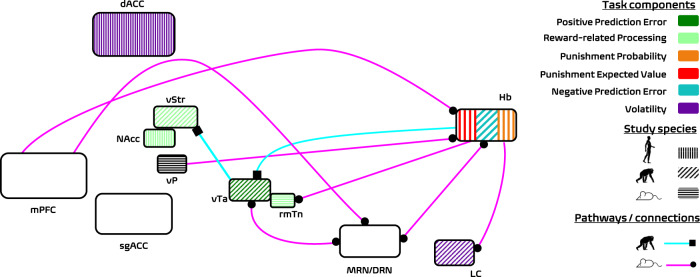
“An important excitatory input to the lHb is from the parvalbumin-positive neuronal populations [32] in the dopaminergic ventral pallidum (vP), which modulates analogues of depressive behaviours in rodent models [33].”
BackgroundDistinct Tonic and Phasic Anticipatory Activity in Lateral Habenula and Dopamine Neurons
Bromberg-Martin, E. S., Matsumoto, M., & Hikosaka, O. (2010) · Neuron · doi:10.1016/j.neuron.2010.06.016 · Cited by 148
Alexander, L., Gaskin, P. L. R., Sawiak, S. J., Fryer, T. D., Hong, Y. T., Cockcroft, G. J., Clarke, H. F., & Roberts, A. C. (2019) · Neuron · doi:10.1016/j.neuron.2018.11.021 · Cited by 120
A neural pathway controlling motivation to exert effort
Proulx, C. D., Aronson, S., Milivojevic, D., Molina, C., Loi, A., Monk, B., Shabel, S. J., & Malinow, R. (2018) · Proceedings of the National Academy of Sciences · doi:10.1073/pnas.1801837115 · Cited by 119
Psychomotor retardation in depression: A critical measure of the forced swim test
Ünal, G., & Canbeyli, R. S. (2019) · Behavioural Brain Research · doi:10.1016/j.bbr.2019.112047 · Cited by 118
Kawai, T., Yamada, H., Sato, N., Takada, M., & Matsumoto, M. (2015) · Neuron · doi:10.1016/j.neuron.2015.09.030 · Cited by 116
Ketamine modulates fronto-striatal circuitry in depressed and healthy individuals
Mkrtchian, A., Evans, J. W., Kraus, C., Yuan, P., Kadriu, B., Nugent, A. C., Roiser, J. P., & Zarate, C. A. (2021) · Molecular Psychiatry · doi:10.1038/s41380-020-00878-1 · Cited by 110
Revitalizing Psychiatric Therapeutics
Hyman, S. E. (2013) · Neuropsychopharmacology · doi:10.1038/npp.2013.181 · Cited by 99
The role of the dorsal raphé nucleus in reward-seeking behavior
Nakamura, K. (2013) · Frontiers in Integrative Neuroscience · doi:10.3389/fnint.2013.00060 · Cited by 99
Affective bias as a rational response to the statistics of rewards and punishments
Pulcu, E., & Browning, M. (2017) · eLife · doi:10.7554/elife.27879 · Cited by 93 · cited 2×
“In human physiology studies, the activity of the pupil-linked arousal systems is shown to encode the volatility of punishment contingencies [88] more strongly than the volatility of reward contingencies [89].”
BackgroundSelf-citationHigh-resolution functional MRI of the human amygdala at 7T
Sladky, R., Baldinger, P., Kranz, G. S., Tröstl, J., Höflich, A., Lanzenberger, R., Moser, E., & Windischberger, C. (2013) · European Journal of Radiology · doi:10.1016/j.ejrad.2011.09.025 · Cited by 92
Lythe, K. E., Moll, J., Gethin, J. A., Workman, C. I., Green, S., Lambon Ralph, M. A., Deakin, J. F. W., & Zahn, R. (2015) · JAMA Psychiatry · doi:10.1001/jamapsychiatry.2015.1813 · Cited by 91
Review of the cytology and connections of the lateral habenula, an avatar of adaptive behaving
Zahm, D. S., & Root, D. H. (2017) · Pharmacology Biochemistry and Behavior · doi:10.1016/j.pbb.2017.06.004 · Cited by 89
Aleksandrova, L. R., Wang, Y. T., & Phillips, A. G. (2020) · Molecular Brain · doi:10.1186/s13041-020-00627-z · Cited by 85
Roberts, A. C., & Clarke, H. F. (2019) · Proceedings of the National Academy of Sciences · doi:10.1073/pnas.1902288116 · Cited by 79
Stress transforms lateral habenula reward responses into punishment signals
Shabel, S. J., Wang, C., Monk, B., Aronson, S., & Malinow, R. (2019) · Proceedings of the National Academy of Sciences · doi:10.1073/pnas.1903334116 · Cited by 75
Stuart, S. A., Butler, P., Munafò, M. R., Nutt, D. J., & Robinson, E. S. (2015) · Neuropsychopharmacology · doi:10.1038/npp.2015.59 · Cited by 71
High‐resolution MRI and diffusion‐weighted imaging of the human habenula at 7 tesla
Strotmann, B., Heidemann, R. M., Anwander, A., Weiss, M., Trampel, R., Villringer, A., & Turner, R. (2014) · Journal of Magnetic Resonance Imaging · doi:10.1002/jmri.24252 · Cited by 71
Kottmeier, R., Bittern, J., Schoofs, A., Scheiwe, F., Matzat, T., Pankratz, M., & Klämbt, C. (2020) · Nature Communications · doi:10.1038/s41467-020-18291-1 · Cited by 71
Resting state connectivity of the human habenula at ultra-high field
Torrisi, S., Nord, C. L., Balderston, N. L., Roiser, J. P., Grillon, C., & Ernst, M. (2017) · NeuroImage · doi:10.1016/j.neuroimage.2016.10.034 · Cited by 64
Furman, D. J., & Gotlib, I. H. (2016) · Social Cognitive and Affective Neuroscience · doi:10.1093/scan/nsw019 · Cited by 53
Neural substrates for anticipation and consumption of social and monetary incentives in depression
He, Z., Zhang, D., Muhlert, N., & Elliott, R. (2019) · Social Cognitive and Affective Neuroscience · doi:10.1093/scan/nsz061 · Cited by 53
Habenula Connectivity and Intravenous Ketamine in Treatment-Resistant Depression
Rivas-Grajales, A. M., Salas, R., Robinson, M. E., Qi, K., Murrough, J. W., & Mathew, S. J. (2021) · International Journal of Neuropsychopharmacology · doi:10.1093/ijnp/pyaa089 · Cited by 51 · cited 1×
“In addition, there is preliminary evidence to suggest that improvements in depressive symptoms following ketamine infusion in patients with MDD correlates with an increased functional connectivity between the right habenula and right frontal pole [75].”
BackgroundToward an Improved Understanding of Anhedonia
Auerbach, R. P., Pagliaccio, D., & Pizzagalli, D. A. (2019) · JAMA Psychiatry · doi:10.1001/jamapsychiatry.2018.4600 · Cited by 51
WATSON, C. R. R. (2011) · Elsevier eBooks · doi:10.1016/b978-0-12-369497-3.10021-4 · Cited by 49
Jiang, C., Lin, W.-J., Labonté, B., Tamminga, C. A., Turecki, G., Nestler, E. J., Russo, S. J., & Salton, S. R. (2019) · Neuropsychopharmacology · doi:10.1038/s41386-018-0277-4 · Cited by 43
Brodmann’s map of the human cerebral cortex — or Brodmann’s maps?
Judáš, M., Cepanec, M., & Sedmak, G. (2012) · Translational Neuroscience · doi:10.2478/s13380-012-0009-x · Cited by 27
Anhedonia modulates the effects of positive mood induction on reward-related brain activation
Green, I. W., Pizzagalli, D. A., Admon, R., & Kumar, P. (2019) · NeuroImage · doi:10.1016/j.neuroimage.2019.02.063 · Cited by 23
The Habenula: Darkness, Disappointment, and Depression
Kaye, A. P., & Ross, D. A. (2017) · Biological Psychiatry · doi:10.1016/j.biopsych.2016.12.004 · Cited by 23
Yates, J. R., Gunkel, B. T., Rogers, K. K., Hughes, M. N., & Prior, N. A. (2016) · Psychopharmacology · doi:10.1007/s00213-016-4469-5 · Cited by 20
Enhanced subgenual cingulate response to altruistic decisions in remitted major depressive disorder
Pulcu, E., Zahn, R., Moll, J., Trotter, P. D., Thomas, E. J., Juhasz, G., Deakin, J. F. W., Anderson, I. M., Sahakian, B. J., & Elliott, R. (2014) · NeuroImage: Clinical · doi:10.1016/j.nicl.2014.04.010 · Cited by 18
Self-citationThe role of mPFC and MTL neurons in human choice under goal-conflict
Gazit, T., Gonen, T., Gurevitch, G., Cohen, N., Strauss, I., Zeevi, Y., Yamin, H. G., Fahoum, F., Hendler, T., & Fried, I. (2020) · Nature Communications · doi:10.1038/s41467-020-16908-z · Cited by 14 · cited 1×
“Recent electrophysiology work conducted in patients with pharmacologically intractable epilepsy has extended these findings, suggesting that neuronal populations within the dACC respond more selectively to punishments than to rewards [86].”
BackgroundIkwunne, B., Parham, J., & Pulcu, E. (2025) · PLoS Computational Biology · doi:10.1371/journal.pcbi.1013445 · Cited by 5
Self-citation[Clinical and radiological diagnosis of arthropathia deformans of the temporomandibular joint].
Stiebitz, R., Leber, J., & Hj, M. (1980) · PubMed · Cited by 4
Author Correction: The role of mPFC and MTL neurons in human choice under goal-conflict
Gazit, T., Gonen, T., Gurevitch, G., Cohen, N., Strauss, I., Zeevi, Y., Yamin, H. G., Fahoum, F., Hendler, T., & Fried, I. (2020) · Nature Communications · doi:10.1038/s41467-020-17982-z · Cited by 2
Cited by
Pizzagalli, D. A. (2022) · American Journal of Psychiatry · doi:10.1176/appi.ajp.20220423 · Cited by 199
The molecular pathophysiology of depression and the new therapeutics
Tian, H., Hu, Z., Xu, J., & Wang, C. (2022) · MedComm · doi:10.1002/mco2.156 · Cited by 122
A unified model of ketamine’s dissociative and psychedelic properties
Marguilho, M., Figueiredo, I., & Castro-Rodrigues, P. (2022) · Journal of Psychopharmacology · doi:10.1177/02698811221140011 · Cited by 78
“The acute blocking of lateral LHb bursting activity (Pulcu et al., 2021; Yang et al., 2018) seems to be a specific mechanism for ketamine-induced immediate improvement in anhedonia in depressed individuals and we speculate that it may be the trigger to the normalization in frontostriatal…”
BackgroundPage, C. E., Epperson, C. N., Novick, A. M., Duffy, K. A., & Thompson, S. M. (2024) · Molecular Psychiatry · doi:10.1038/s41380-024-02625-2 · Cited by 80
“Neuroimaging research shows that ketamine also rescues anhedonia and enhances sensitivity to reward in patients with MDD, which is accompanied by increased activity in relevant mesolimbic brain networks [112, 113].”
Zheng, H., Teague, T. K., Yeh, F.-C. F., Burrows, K., Figueroa‐Hall, L. K., Aupperle, R. L., Khalsa, S. S., Paulus, M. P., & Savitz, J. B. (2022) · Brain Behavior and Immunity · doi:10.1016/j.bbi.2022.07.011 · Cited by 36
Metadata
- Authors
- Pulcu, E., Guinea, C., Cowen, P. J., Murphy, S. E., & Harmer, C. J.
- Affiliations
- Oxford Health NHS Foundation Trust (GB)
- Corresponding author
- Pulcu, Erdem
- Harmer, Catherine J.
- Venue
- Molecular Psychiatry
- Published
- 2021-06-22
- Volume
- 27
- Issue
- 1
- Pages
- 81-87
- ISSN
- 1359-4184 (ISSN-L)
- 1476-5578
- PMC
- PMC8960410
- OpenAlex
- W3170387099
- Cited by
- 35
- References
- 99
- Citations by year
- 2026: 7 · 2025: 7 · 2024: 6 · 2023: 5 · 2022: 10
- FWCI
- 0.67
- Type
- journal article
- Language
- en
- Open access
- hybrid
- doi.org
- Licence
- cc-by
- creativecommons.org/licenses/by/4.0 (tdm)
- creativecommons.org/licenses/by/4.0 (vor)
- Locations
- Molecular Psychiatry (publishedVersion, cc-by)
- PubMed Central (publishedVersion, cc-by)
- PubMed (publishedVersion)
- Funders
- National Institute for Health and Care Research
- Medical Research Council (MR/S035591/1)
- Janssen Pharmaceuticals (MR/S035591/1)
- Topics
- Health Sciences › Medicine › Pharmacology (medical) › Treatment of Major Depression
- Life Sciences › Neuroscience › Cellular and Molecular Neuroscience › Neurotransmitter Receptor Influence on Behavior
- Life Sciences › Neuroscience › Cellular and Molecular Neuroscience › Neuroscience and Neuropharmacology Research
- Keywords
- anhedonia, ketamine, major depressive disorder, habenula, NMDA receptor antagonists, reinforcement learning, value-based decision making, translational neuroscience
- MeSH terms
- Antidepressive Agents, Depressive Disorder, Major, Major Depressive Disorder, Humans, Ketamine, Receptors, N-Methyl-D-Aspartate, Anhedonia
About these checks
Registry, retraction, Cites and statistics results are computed, not judged, with one exception: a printed reference that no index lists is read once by a model before it counts as a citation error. Claims are extracted by a model and kept only when their quote appears verbatim in the text; each cited source is then checked, with a model’s help, for whether it says what the claim relies on. Those verdicts can be wrong — read the claim’s quote and the cited source before relying on one.
Statistics and arithmetic are recomputed, not judged.
Confidence bands are shown only for fields calibrated on our annotated test set. None is calibrated yet, so no band is shown.
What counts as a claim ›How we measure confidence ›How we check this ›
Are you an author, or do you see a problem with this page? Request a review
Data sources
Bibliographic data: Semantic Scholar, OpenAlex, Crossref.
Contains information from the Semantic Scholar Academic Graph Datasets, made available under the ODC Attribution License (ODC-BY 1.0).
Semantic Scholar’s data is described in: Kinney, R., et al. (2023). The Semantic Scholar Open Data Platform. arXiv:2301.10140.
