

Randomized controlled experimental study of hydrocortisone and D-cycloserine effects on fear extinction in PTSD
Open accessThe DOI matches its Crossref record; 68 of the 69 references it cites were found in a registry or an index.
Abstract
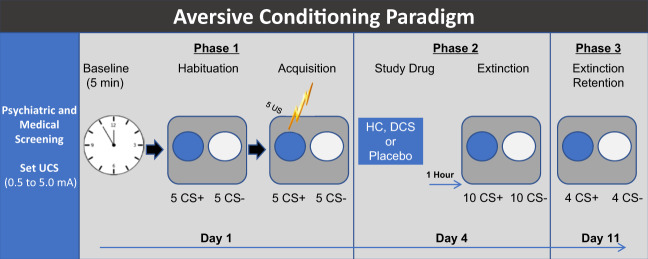
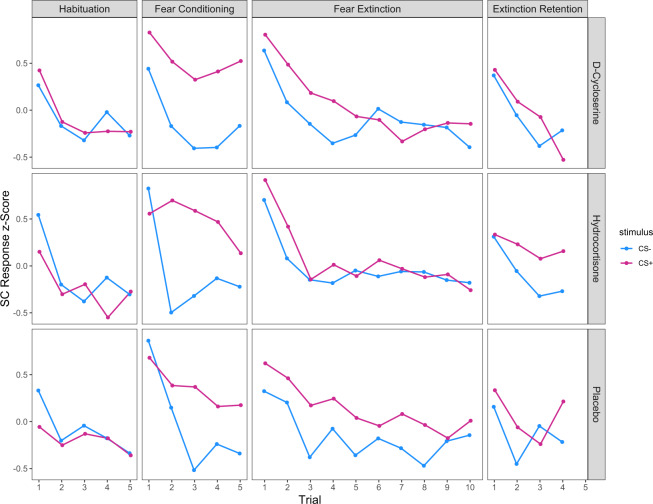
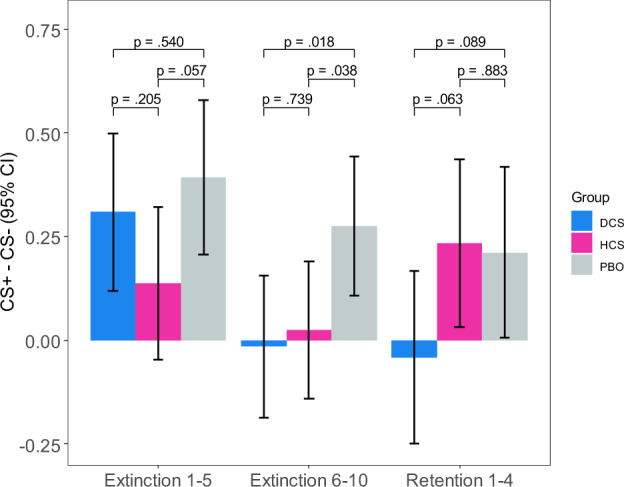
Fear extinction underlies prolonged exposure, one of the most well-studied treatments for posttraumatic stress disorder (PTSD). There has been increased interest in exploring pharmacological agents to enhance fear extinction learning in humans and their potential as adjuncts to PE. The objective of such adjuncts is to augment the clinical impact of PE on the durability and magnitude of symptom reduction. In this study, we examined whether hydrocortisone (HC), a corticosteroid, and D-Cycloserine (DCS), an N-methyl-D-aspartate receptor partial agonist, enhance fear extinction learning and consolidation in individuals with PTSD. In a double-blind placebo-controlled 3-group experimental design, 90 individuals with full or subsyndromal PTSD underwent fear conditioning with stimuli that were paired (CS+) or unpaired (CS−) with shock. Extinction learning occurred 72 h later and extinction retention was tested one week after extinction. HC 25 mg, DCS 50 mg or placebo was administered one hour prior to extinction learning. During extinction learning, the DCS and HC groups showed a reduced differential CS+/CS− skin conductance response (SCR) compared to placebo (b = −0.19, CI = −0.01 to −37, p = 0.042 and b = −0.25, CI = −08 to −0.43, p = 0.005, respectively). A nonsignificant trend for a lower differential CS+/CS− SCR in the DCS group, compared to placebo, (b = −0.25, CI = 0.04 to −0.55, p = 0.089) was observed at retention testing, one week later. A single dose of HC and DCS facilitated fear extinction learning in participants with PTSD symptoms. While clinical implications have yet to be determined, our findings suggest that glucocorticoids and NMDA agonists hold promise for facilitating extinction learning in PTSD.
Overview
The claims and statistics of this paper haven’t been checked yet.
Free: it reads the open-access text and checks the first 5 claims that cite a source we can check. Create a free account to check every claim.
Integrity signals
Registry
Cites
Statistics
Figures
Verification
Claims the paper makes
The claims and statistics of this paper haven’t been checked yet.
Free: it reads the open-access text and checks the first 5 claims that cite a source we can check. Create a free account to check every claim.
Claims other papers make about this one
Each is checked against this paper’s own text: does it say what the citing paper says it does?
The source backs part of the claim, not all of it — or backs it for a different population, condition or comparison.
In the citing paper
“Another study found that D-cycloserine in combination with hydrocortisone facilitated fear extinction in 90 participants with PTSD [174]”
From Ketamine in neuropsychiatric disorders: an update (2024) · cites this paper as [174]
Experimental — accuracy not yet measuredThe cited source says what the claim attributes to it.
In the citing paper
“More recent research is investigating adjunctive D-cycloserine for indications such as OCD, PTSD, and MDD [172-174]”
From Ketamine in neuropsychiatric disorders: an update (2024) · cites this paper as [174]
Self-check
Percentages, sums and reported differences re-computed from the paper’s own numbers.
The self-check needs the paper’s full text.
Citations
Cites
The development of a Clinician-Administered PTSD Scale
Blake, D. D., Weathers, F. W., Nagy, L. M., Kaloupek, D. G., Gusman, F. D., Charney, D. S., & Keane, T. M. (1995) · Journal of Traumatic Stress · doi:10.1002/jts.2490080106 · Cited by 5,024 · cited 2×
“PTSD diagnosis and symptom levels were determined by interview using the Clinician Administered PTSD Scale (CAPS) [33].”
MethodStress and the brain: from adaptation to disease
de Kloet, E. R., Joëls, M., & Holsboer, F. (2005) · Nature Reviews Neuroscience · doi:10.1038/nrn1683 · Cited by 4,621
A Multidimensional Meta-Analysis of Psychotherapy for PTSD
Bradley, R., Greene, J., Russ, E., Dutra, L., & Westen, D. (2005) · American Journal of Psychiatry · doi:10.1176/appi.ajp.162.2.214 · Cited by 1,938
Publication Recommendations for Electrodermal Measurements
Fowles, D. C., Christie, M. J., Edelberg, R., GRINGS, W. W., Lykken, D. T., & Venables, P. H. (1981) · Psychophysiology · doi:10.1111/j.1469-8986.1981.tb03024.x · Cited by 1,699
Myers, K. M., & Davis, M. (2007) · Molecular Psychiatry · doi:10.1038/sj.mp.4001939 · Cited by 1,277
Ressler, K. J., Rothbaum, B. O., Tannenbaum, L., Anderson, P., Graap, K., Zimand, E., Hodges, L., & Davis, M. (2004) · Archives of General Psychiatry · doi:10.1001/archpsyc.61.11.1136 · Cited by 1,063
Binder, E. B. (2009) · Psychoneuroendocrinology · doi:10.1016/j.psyneuen.2009.05.021 · Cited by 968
Psychotherapy for Military-Related PTSD: A Review of Randomized Clinical Trials
Steenkamp, M. M., Litz, B. T., Hoge, C. W., & Marmar, C. R. (2015) · JAMA · doi:10.1001/jama.2015.8370 · Cited by 958
Self-citationCusack, K., Jonas, D. E., Forneris, C. A., Wines, C., Sonis, J., Middleton, J. C., Feltner, C., Brownley, K. A., Olmsted, K. R., Greenblatt, A., et al. (2016) · Clinical Psychology Review · doi:10.1016/j.cpr.2015.10.003 · Cited by 865
Role of adrenal stress hormones in forming lasting memories in the brain
McGaugh, J. L., & Roozendaal, B. (2002) · Current Opinion in Neurobiology · doi:10.1016/s0959-4388(02)00306-9 · Cited by 818
Walker, D. L., Ressler, K. J., Lu, K.-T., & Davis, M. (2002) · The Journal of Neuroscience · doi:10.1523/jneurosci.22-06-02343.2002 · Cited by 815
Stress effects on memory: An update and integration
Schwabe, L., Joëls, M., Roozendaal, B., Wolf, O. T., & Oitzl, M. S. (2012) · Neuroscience & Biobehavioral Reviews · doi:10.1016/j.neubiorev.2011.07.002 · Cited by 714
De novo conditioning in trauma-exposed individuals with and without posttraumatic stress disorder.
Orr, S. P., Metzger, L. J., Lasko, N. B., Macklin, M. L., Peri, T., & Pitman, R. K. (2000) · Journal of Abnormal Psychology · doi:10.1037/0021-843x.109.2.290 · Cited by 653 · cited 3×
“Prior research has shown that individuals with PTSD have impaired extinction learning and retention [2, 6, 8].”
BackgroundMethodSelf-citationCorticosteroids in relation to fear, anxiety and psychopathology
Korte, S. M. (2001) · Neuroscience & Biobehavioral Reviews · doi:10.1016/s0149-7634(01)00002-1 · Cited by 607
Augmentation of Exposure Therapy With D-Cycloserine for Social Anxiety Disorder
Hofmann, S. G., Meuret, A. E., Smits, J. A. J., Simon, N. M., Pollack, M. H., Eisenmenger, K., Shiekh, M., & Otto, M. W. (2006) · Archives of General Psychiatry · doi:10.1001/archpsyc.63.3.298 · Cited by 560
Presence and acquired origin of reduced recall for fear extinction in PTSD: Results of a twin study
Milad, M. R., Orr, S. P., Lasko, N. B., Chang, Y., Rauch, S. L., & Pitman, R. K. (2008) · Journal of Psychiatric Research · doi:10.1016/j.jpsychires.2008.01.017 · Cited by 512 · cited 1×
“Prior research has shown that individuals with PTSD have impaired extinction learning and retention [2, 6, 8].”
BackgroundSelf-citationCurrent status of cortisol findings in post-traumatic stress disorder
Yehuda, R. (2002) · Psychiatric Clinics of North America · doi:10.1016/s0193-953x(02)00002-3 · Cited by 511 · cited 1×
“The effects of HC may be particularly important for individuals with PTSD; prior research has shown PTSD patients to have distinct HPA axis alterations, including increased CRH levels [55, 56] and increased glucocorticoid sensitivity that results in greater negative feedback of the HPA axis [57].”
BackgroundGlucocorticoids and the regulation of memory in health and disease
de Quervain, D. J.-F., Aerni, A., Schelling, G., & Roozendaal, B. (2009) · Frontiers in Neuroendocrinology · doi:10.1016/j.yfrne.2009.03.002 · Cited by 502
Roozendaal, B., Okuda, S., Van der Zee, E. A., & McGaugh, J. L. (2006) · Proceedings of the National Academy of Sciences · doi:10.1073/pnas.0601874103 · Cited by 499
Effects of D-Cycloserine on Extinction: Translation From Preclinical to Clinical Work
Davis, M., Ressler, K., Rothbaum, B. O., & Richardson, R. (2006) · Biological Psychiatry · doi:10.1016/j.biopsych.2006.03.084 · Cited by 498
Stress, glucocorticoids and memory: implications for treating fear-related disorders
de Quervain, D., Schwabe, L., & Roozendaal, B. (2017) · Nature Reviews Neuroscience · doi:10.1038/nrn.2016.155 · Cited by 484
Blechert, J., Michael, T., Vriends, N., Margraf, J., & Wilhelm, F. H. (2007) · Behaviour Research and Therapy · doi:10.1016/j.brat.2007.02.012 · Cited by 479
How the Neurocircuitry and Genetics of Fear Inhibition May Inform Our Understanding of PTSD
Jovanovic, T., & Ressler, K. J. (2010) · American Journal of Psychiatry · doi:10.1176/appi.ajp.2009.09071074 · Cited by 437
Neural and cellular mechanisms of fear and extinction memory formation
Orsini, C. A., & Maren, S. (2012) · Neuroscience & Biobehavioral Reviews · doi:10.1016/j.neubiorev.2011.12.014 · Cited by 429 · cited 1×
“Corticosteroids increase Ca influx through L-type Ca channels that affect long-term potentiation, a process important for neural plasticity (reviewed in [24]).”
BackgroundA meta-analytic review of the effects of acute cortisol administration on human memory
Het, S., Ramlow, G., & Wolf, O. T. (2005) · Psychoneuroendocrinology · doi:10.1016/j.psyneuen.2005.03.005 · Cited by 414
Norrholm, S. D., Jovanovic, T., Olin, I. W., Sands, L. A., Karapanou, I., Bradley, B., & Ressler, K. J. (2011) · Biological Psychiatry · doi:10.1016/j.biopsych.2010.09.013 · Cited by 397 · cited 1×
“Prior research has shown that individuals with PTSD have impaired extinction learning and retention [2, 6, 8].”
BackgroundEffects of D-cycloserine on extinction of conditioned freezing.
Ledgerwood, L., Richardson, R., & Cranney, J. (2003) · Behavioral Neuroscience · doi:10.1037/0735-7044.117.2.341 · Cited by 388
Rothbaum, B. O., Price, M., Jovanovic, T., Norrholm, S. D., Gerardi, M., Dunlop, B., Davis, M., Bradley, B., Duncan, E. J., Rizzo, A., et al. (2014) · American Journal of Psychiatry · doi:10.1176/appi.ajp.2014.13121625 · Cited by 388
Quirarte, G. L., Roozendaal, B., & McGaugh, J. L. (1997) · Proceedings of the National Academy of Sciences · doi:10.1073/pnas.94.25.14048 · Cited by 385
Santini, E., Muller, R. U., & Quirk, G. J. (2001) · The Journal of Neuroscience · doi:10.1523/jneurosci.21-22-09009.2001 · Cited by 358 · cited 1×
“More attention has focused on D-Cycloserine (DCS) as a drug that potentially may augment fear extinction due to its glutamatergic action on NMDA receptors [26].”
BackgroundPsychophysiologic assessment of aversive conditioning in posttraumatic stress disorder
Peri, T., Ben-Shakhar, G., Orr, S. P., & Shalev, A. Y. (2000) · Biological Psychiatry · doi:10.1016/s0006-3223(99)00144-4 · Cited by 349
Self-citationCortisol variation in humans affects memory for emotionally laden and neutral information.
Abercrombie, H. C., Kalin, N. H., Thurow, M. E., Rosenkranz, M. A., & Davidson, R. J. (2003) · Behavioral Neuroscience · doi:10.1037/0735-7044.117.3.505 · Cited by 309
Mataix-Cols, D., Fernández de la Cruz, L., Monzani, B., Rosenfield, D., Andersson, E., Pérez-Vigil, A., Frumento, P., de Kleine, R. A., Difede, J., Dunlop, B. W., et al. (2017) · JAMA Psychiatry · doi:10.1001/jamapsychiatry.2016.3955 · Cited by 288
Postreactivation Glucocorticoids Impair Recall of Established Fear Memory
Cai, W.-H., Blundell, J., Han, J., Greene, R. W., & Powell, C. M. (2006) · The Journal of Neuroscience · doi:10.1523/jneurosci.2397-06.2006 · Cited by 244
Lu, K.-T., Walker, D. L., & Davis, M. (2001) · The Journal of Neuroscience · doi:10.1523/jneurosci.21-16-j0005.2001 · Cited by 222 · cited 1×
“Corticosteroids also inhibit glutamate uptake from the synaptic cleft resulting in prolonged activation of NMDA receptors that leads to MAPK signal cascades [25].”
Backgroundde Kleine, R. A., Hendriks, G.-J., Kusters, W. J. C., Broekman, T. G., & van Minnen, A. (2012) · Biological Psychiatry · doi:10.1016/j.biopsych.2012.02.033 · Cited by 220
Yang, Y.-L., Chao, P.-K., & Lu, K.-T. (2006) · Neuropsychopharmacology · doi:10.1038/sj.npp.1300899 · Cited by 215
Difede, J., Cukor, J., Wyka, K., Olden, M., Hoffman, H., Lee, F. S., & Altemus, M. (2014) · Neuropsychopharmacology · doi:10.1038/npp.2013.317 · Cited by 212
Litz, B. T., Salters-Pedneault, K., Steenkamp, M. M., Hermos, J. A., Bryant, R. A., Otto, M. W., & Hofmann, S. G. (2012) · Journal of Psychiatric Research · doi:10.1016/j.jpsychires.2012.05.006 · Cited by 196
First-line Psychotherapies for Military-Related PTSD
Steenkamp, M. M., Litz, B. T., & Marmar, C. R. (2020) · JAMA · doi:10.1001/jama.2019.20825 · Cited by 192
Self-citationLedgerwood, L., Richardson, R., & Cranney, J. (2004) · Behavioral Neuroscience · doi:10.1037/0735-7044.118.3.505 · Cited by 190
Systems mediating acute glucocorticoid effects on memory consolidation and retrieval
Roozendaal, B. (2003) · Progress in Neuro-Psychopharmacology and Biological Psychiatry · doi:10.1016/j.pnpbp.2003.09.015 · Cited by 185
Yehuda, R., Bierer, L. M., Pratchett, L. C., Lehrner, A., Koch, E. C., Van Manen, J. A., Flory, J. D., Makotkine, I., & Hildebrandt, T. (2015) · Psychoneuroendocrinology · doi:10.1016/j.psyneuen.2014.08.004 · Cited by 172 · cited 2×
“In a randomized placebo-controlled pilot study, HC given 20min prior to exposure therapy sessions was associated with a greater reduction in PTSD symptoms [46].”
BackgroundMethodde Quervain, D. J.-F., & Margraf, J. (2008) · European Journal of Pharmacology · doi:10.1016/j.ejphar.2007.11.068 · Cited by 170
A randomized controlled trial of the effect of D-cycloserine on exposure therapy for spider fear
Guastella, A. J., Dadds, M. R., Lovibond, P. F., Mitchell, P., & Richardson, R. (2007) · Journal of Psychiatric Research · doi:10.1016/j.jpsychires.2006.05.006 · Cited by 164 · cited 1×
“While consistent with rodent studies demonstrating that DCS enhanced fear extinction [27–29], our results for DCS contrast with findings from several human laboratory studies of healthy participants that failed to show a benefit of DCS [31, 32, 44].”
ResultSex differences in fear conditioning in posttraumatic stress disorder
Inslicht, S. S., Metzler, T. J., Garcia, N. M., Pineles, S. L., Milad, M. R., Orr, S. P., Marmar, C. R., & Neylan, T. C. (2013) · Journal of Psychiatric Research · doi:10.1016/j.jpsychires.2012.08.027 · Cited by 158 · cited 2×
“Psychophysiological response scores The SCR score for each CS interval was obtained by subtracting the mean SCL for the 2 s preceding CS onset from the peak during the 8 s CS interval [6, 36].”
BackgroundMethodSelf-citationHigher Levels of Basal Serial CSF Cortisol in Combat Veterans With Posttraumatic Stress Disorder
Baker, D. G., Ekhator, N. N., Kasckow, J. W., Dashevsky, B., Horn, P. S., Bednarik, L., & Geracioti, T. D. (2005) · American Journal of Psychiatry · doi:10.1176/appi.ajp.162.5.992 · Cited by 135 · cited 1×
“The effects of HC may be particularly important for individuals with PTSD; prior research has shown PTSD patients to have distinct HPA axis alterations, including increased CRH levels [55, 56] and increased glucocorticoid sensitivity that results in greater negative feedback of the HPA axis [57].”
Backgroundde Kloet, C. S., Vermetten, E., Geuze, E., Lentjes, E. G. W. M., Heijnen, C. J., Stalla, G. K., & Westenberg, H. G. M. (2007) · Progress in Brain Research · doi:10.1016/s0079-6123(07)67025-3 · Cited by 115 · cited 1×
“The effects of HC may be particularly important for individuals with PTSD; prior research has shown PTSD patients to have distinct HPA axis alterations, including increased CRH levels [55, 56] and increased glucocorticoid sensitivity that results in greater negative feedback of the HPA axis [57].”
BackgroundNorrholm, S. D., Glover, E. M., Stevens, J. S., Fani, N., Galatzer-Levy, I. R., Bradley, B., Ressler, K. J., & Jovanovic, T. (2015) · International Journal of Psychophysiology · doi:10.1016/j.ijpsycho.2014.11.005 · Cited by 114 · cited 1×
“In Pavlovian fear conditioning studies, individuals with PTSD were found to have an exaggerated fear response in some [1], but not all studies [2–4], impaired inhibition of conditioned fear [5], and deficits in fear extinction learning and recall, compared to healthy controls [2, 3, 6–8].”
Guastella, A. J., Lovibond, P. F., Dadds, M. R., Mitchell, P., & Richardson, R. (2007) · Behaviour Research and Therapy · doi:10.1016/j.brat.2006.07.005 · Cited by 106 · cited 3×
“While DCS was shown to reduce self-reported arousal and amygdala activation between fear extinction learning and recall in imaging research [30], it failed to show an effect on psychophysiological measures in several studies [31, 32].”
BackgroundResultBehavioral effects of metyrapone on Pavlovian extinction
Barrett, D. W., & Gonzalez-Lima, F. (2004) · Neuroscience Letters · doi:10.1016/j.neulet.2004.08.046 · Cited by 102
Effects of Exogenous Glucocorticoid on Combat-Related Ptsd Symptoms
Suris, A., Nonth, C., Adinoff, B., Powell, C. M., & Gneene, R. (2010) · Annals of Clinical Psychiatry · doi:10.1177/104012371002200406 · Cited by 102 · cited 1×
“HC also reduced PTSD symptoms in a study of traumatic memory reactivation [50].”
BackgroundNeural Underpinnings of Cortisol Effects on Fear Extinction
Merz, C. J., Hamacher‐Dang, T. C., Stark, R. M., Wolf, O. T., & Hermann, A. (2017) · Neuropsychopharmacology · doi:10.1038/npp.2017.227 · Cited by 95 · cited 1×
“The effects of HC on fear extinction learning and retention were previously shown to be mediated by the amygdala–hippocampus–vmPFC network [18], and can occur via potentiation of glutamatergic NMDA receptors [17, 51].”
BackgroundYang, Y.-L., Chao, P.-K., Ro, L., Wo, Y.-Y. P., & Lu, K. (2006) · Neuropsychopharmacology · doi:10.1038/sj.npp.1301215 · Cited by 82 · cited 1×
“The effects of HC on fear extinction learning and retention were previously shown to be mediated by the amygdala–hippocampus–vmPFC network [18], and can occur via potentiation of glutamatergic NMDA receptors [17, 51].”
BackgroundOrr, S. P., Milad, M. R., Metzger, L. J., Lasko, N. B., Gilbertson, M. W., & Pitman, R. K. (2006) · Biological Psychology · doi:10.1016/j.biopsycho.2006.05.001 · Cited by 77 · cited 1×
“Orr and colleagues have previously shown that both extinction and conditioning memories were present one week after extinction [4].”
BackgroundSelf-citationTesting the effects of Δ9-THC and D-cycloserine on extinction of conditioned fear in humans
Klumpers, F., Denys, D., Kenemans, J. L., Grillon, C., van der Aart, J., & Baas, J. M. (2012) · Journal of Psychopharmacology · doi:10.1177/0269881111431624 · Cited by 72
Scheeringa, M. S., & Weems, C. F. (2014) · Journal of Child and Adolescent Psychopharmacology · doi:10.1089/cap.2013.0106 · Cited by 71
Galatzer‐Levy, I. R., Andero, R., Sawamura, T., Jovanović, T., Papini, S., Ressler, K. J., & Norrholm, S. D. (2016) · Neuropharmacology · doi:10.1016/j.neuropharm.2016.12.023 · Cited by 59
Michopoulos, V., Norrholm, S. D., Stevens, J. S., Glover, E. M., Rothbaum, B. O., Gillespie, C. F., Schwartz, A. C., Ressler, K. J., & Jovanovic, T. (2017) · Psychoneuroendocrinology · doi:10.1016/j.psyneuen.2017.05.023 · Cited by 57
Rosenfield, D., Smits, J. A. J., Hofmann, S. G., Mataix-Cols, D., de la Cruz, L. F., Andersson, E., Rück, C., Monzani, B., Pérez-Vigil, A., Frumento, P., et al. (2019) · Journal of Anxiety Disorders · doi:10.1016/j.janxdis.2019.102149 · Cited by 52 · cited 1×
“There was no difference found between studies using 50mg and higher doses as shown in a secondary analyses of data from 21 clinical trials [39].”
ResultHammoud, M. Z., Peters, C., Hatfield, J. R. B., Gorka, S. M., Phan, K. L., Milad, M. R., & Rabinak, C. A. (2019) · Neuropsychopharmacology · doi:10.1038/s41386-019-0416-6 · Cited by 42
Self-citationMaples-Keller, J. L., Jovanovic, T., Dunlop, B. W., Rauch, S., Yasinski, C., Michopoulos, V., Coghlan, C., Norrholm, S., Rizzo, A. S., Ressler, K., et al. (2019) · Journal of Anxiety Disorders · doi:10.1016/j.janxdis.2018.10.006 · Cited by 40 · cited 1×
“A trial of the glucocorticoid dexamethasone paired with virtual reality exposure therapy for PTSD did not show evidence of the drug enhancing exposure treatment and was associated with greater drop out compared to placebo, possibly explained by increased reexperiencing symptoms [47].”
BackgroundLongitudinal course of salivary cortisol in post‐traumatic stress disorder
Kellner, M., Yehuda, R., Arlt, J., & Wiedemann, K. (2002) · Acta Psychiatrica Scandinavica · doi:10.1034/j.1600-0447.2002.01012.x · Cited by 39 · cited 1×
“Although not measured in this study, future research should consider that individual differences in glucocorticoid signaling in PTSD may affect the potential benefit obtained from HC [59, 60].”
BackgroundNATHAN, S. V., GRIFFITH, Q. K., MCREYNOLDS, J. R., HAHN, E. L., & ROOZENDAAL, B. (2004) · Annals of the New York Academy of Sciences · doi:10.1196/annals.1314.015 · Cited by 38
Ebrahimi, C., Gechter, J., Lueken, U., Schlagenhauf, F., Wïttchen, H., Hamm, A. O., & Ströhle, A. (2019) · Neuropsychopharmacology · doi:10.1038/s41386-019-0552-z · Cited by 35
Is there a rationale for cortisol-based treatments for PTSD?
Yehuda, R., & Golier, J. (2009) · Expert Review of Neurotherapeutics · doi:10.1586/ern.09.79 · Cited by 31
D-cycloserine in the treatment of posttraumatic stress disorder
Baker, J., Cates, M. E., & Luthin, D. R. (2017) · Mental Health Clinician · doi:10.9740/mhc.2017.03.088 · Cited by 29
Ebrahimi, C., Gechter, J., Lueken, U., Schlagenhauf, F., Wïttchen, H., Hamm, A. O., & Ströhle, A. (2020) · Neuropsychopharmacology · doi:10.1038/s41386-020-0658-3 · Cited by 1 · cited 1×
“While DCS was shown to reduce self-reported arousal and amygdala activation between fear extinction learning and recall in imaging research [30], it failed to show an effect on psychophysiological measures in several studies [31, 32].”
Research works printed but not linked: 1
- First MB, Spitzer RL, Gibbon M, Williams JBW. Structured clinical interview for DSM-IV Axis I disorders, research version, non-patient edition. (SCID-I/NP). Biometrics Research, New York State Psychiatric Institute: New York; 2002.
Cited by
Ketamine in neuropsychiatric disorders: an update
Johnston, J. N., Kadriu, B., Kraus, C., Henter, I. D., & Zarate, C. A. (2024) · Neuropsychopharmacology · doi:10.1038/s41386-023-01632-1 · Cited by 108
“Another study found that D-cycloserine in combination with hydrocortisone facilitated fear extinction in 90 participants with PTSD [174].”
BackgroundResultPsilocybin facilitates fear extinction in mice by promoting hippocampal neuroplasticity
Du, Y., Li, Y., Zhao, X., Yao, Y., Wang, B., Zhang, L., & Wang, G. (2023) · Chinese Medical Journal · doi:10.1097/cm9.0000000000002647 · Cited by 94
“…and mTOR, and the number of DCX-and BrdU-positive cells induced by FC. Fear extinction is a key process in exposure-based psychotherapy for PTSD; [34,35] therefore, we used the auditory cued FC and fear extinction paradigm, which is commonly used to study fear-related disorders, such as PTSD.…”
MethodRaut, S. B., Marathe, P. A., van Eijk, L., Eri, R. D., Ravindran, M., Benedek, D. M., Ursano, R. J., Canales, J. J., & Johnson, L. R. (2022) · Pharmacology & Therapeutics · doi:10.1016/j.pharmthera.2022.108195 · Cited by 84
Antibiotics and mental health: the good, the bad and the ugly
Dinan, K., & Dinan, T. (2022) · Journal of Internal Medicine · doi:10.1111/joim.13543 · Cited by 69
Singewald, N., Sartori, S. B., Reif, A., & Holmes, A. (2023) · Neuropharmacology · doi:10.1016/j.neuropharm.2023.109418 · Cited by 69
“Nonetheless, research on this topic is continuing (e.g. (Difede et al., 2022; Inslicht et al., 2021) and some authors maintain the drug’s potential remains to be fulfilled (Rosenfield et al., 2019).”
Background
Metadata
- Authors
- Inslicht, S. S., Niles, A. N., Metzler, T. J., Lipshitz, S. L., Otte, C., Milad, M. R., Orr, S. P., Marmar, C. R., & Neylan, T. C.
- Affiliations
- University of California, San Francisco (US)
- San Francisco VA Health Care System (US)
- New York University (US)
- Harvard University (US)
- Corresponding author
- Inslicht, Sabra S.
- ORCID
- Venue
- Neuropsychopharmacology
- Published
- 2021-11-19
- Volume
- 47
- Issue
- 11
- Pages
- 1945-1952
- ISSN
- 0893-133X (ISSN-L)
- 1740-634X
- PMC
- PMC9485259
- OpenAlex
- W3212275176
- Cited by
- 44
- References
- 69
- Citations by year
- 2026: 7 · 2025: 7 · 2024: 6 · 2023: 16 · 2022: 8
- FWCI
- 5.12
- Type
- journal article
- Language
- en
- Open access
- hybrid
- doi.org
- Licence
- cc-by
- creativecommons.org/licenses/by/4.0 (tdm)
- creativecommons.org/licenses/by/4.0 (vor)
- Locations
- Neuropsychopharmacology (publishedVersion, cc-by)
- PubMed Central (publishedVersion, cc-by)
- PubMed (publishedVersion)
- eScholarship (California Digital Library) (submittedVersion, cc-by)
- Funders
- McCormick Foundation
- U.S. Department of Veterans Affairs (I01 CX000720)
- Charles H. Hood Foundation
- Robin Hood Foundation
- Jazz Pharmaceuticals
- Sage Therapeutics
- Steven and Alexandra Cohen Foundation
- Cohen Veterans Bioscience
- European Commission (IMI2 859366)
- Deutsche Forschungsgemeinschaft (EXC 2049)
- Bundesministerium für Bildung und Forschung (KS2017-067)
- Eisai
- Otsuka Pharmaceutical
- H. Lundbeck A/S
- Berlin Institute of Health (B3010350)
- National Institutes of Health (RR024130)
- University of California, San Francisco
- NIH Office of the Director
- National Center for Research Resources (KL2RR024130, RR-024130)
- NIH Clinical Center
- National Center for Advancing Translational Sciences
- Topics
- Social Sciences › Psychology › Clinical Psychology › Posttraumatic Stress Disorder Research
- Life Sciences › Neuroscience › Cognitive Neuroscience › Memory and Neural Mechanisms
- Life Sciences › Neuroscience › Cognitive Neuroscience › Memory Processes and Influences
- Keywords
- post-traumatic stress disorder, fear extinction, cortisol, D-cycloserine, prolonged exposure therapy, fear conditioning, skin conductance response, glucocorticoids, NMDA receptor partial agonist, drug augmentation, extinction consolidation
- MeSH terms
- Cycloserine, Double-Blind Method, Extinction, Psychological, Fear, Glucocorticoids, Humans, Hydrocortisone, Stress Disorders, Post-Traumatic, Receptors, N-Methyl-D-Aspartate, N-Methylaspartate
About these checks
Registry, retraction, Cites and statistics results are computed, not judged, with one exception: a printed reference that no index lists is read once by a model before it counts as a citation error. Claims are extracted by a model and kept only when their quote appears verbatim in the text; each cited source is then checked, with a model’s help, for whether it says what the claim relies on. Those verdicts can be wrong — read the claim’s quote and the cited source before relying on one.
Statistics and arithmetic are recomputed, not judged.
Confidence bands are shown only for fields calibrated on our annotated test set. None is calibrated yet, so no band is shown.
What counts as a claim ›How we measure confidence ›How we check this ›
Are you an author, or do you see a problem with this page? Request a review
Data sources
Bibliographic data: Semantic Scholar, OpenAlex, Crossref.
Contains information from the Semantic Scholar Academic Graph Datasets, made available under the ODC Attribution License (ODC-BY 1.0).
Semantic Scholar’s data is described in: Kinney, R., et al. (2023). The Semantic Scholar Open Data Platform. arXiv:2301.10140.
