

Insights to the neural response to food cues in class III compared with class I and II obese adults using a sample of endometrial cancer survivors seeking weight loss
Open accessThe DOI matches its Crossref record; 61 of the 62 references it cites were found in a registry or an index.
Abstract
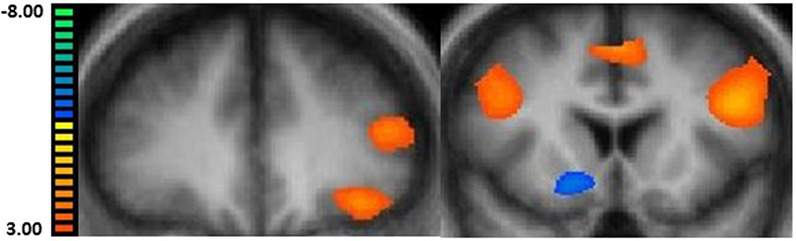
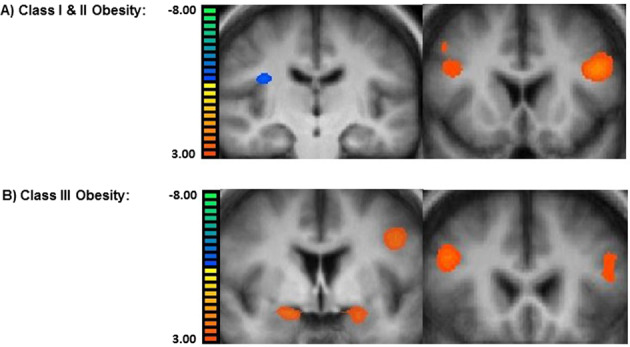
Background: The rates of severe or Class III obesity (BMI ≥ 40.0 kg/m 2) and endometrial cancer (EC) incidence and mortality have been increasing significantly in the United States. Adults with severe obesity are more likely to die and women with severe obesity have a higher risk of EC development and mortality than those with Class I/II obesity (BMI: 30–<40 kg/m 2). However, no prior studies have evaluated the neural response to food cues by obesity severity/class in adults with or without cancer. Methods: We conducted a functional magnetic resonance imaging visual food cue task in 85 obese Stage I EC survivors who were seeking weight loss in a lifestyle intervention at baseline. We evaluated the neural response to high-calorie vs. non-food images after an overnight fast (fasted state) and after eating a standardized meal (fed state), and grouped patients by obesity class (Class I/II: n = 38; Class III: n = 47). Results: In the fasted state, we found increased activation in several regions including the dorsolateral prefrontal cortex (DLPFC) in Class III and Class I/II patients (whole brain cluster corrected (WBCC), p < 0.05), which was significantly higher in Class III vs. Class I/II (p < 0.05). We found decreased activation in the insula in the fasted state, which was significantly lower in Class I/II vs. Class III (p = 0.03). In the fed state, we found increased activation in the DLPFC in Class III and Class I/II (WBCC, p < 0.05). The increased activation in cognitive control/inhibition regions (DLPFC) is consistent with the summative literature; however, the decreased activation in taste information processing regions (insula) was unexpected. Conclusions: Our results provide novel insights on food cue response between different classes of obesity and highlight the importance of targeting the DLPFC in weight loss interventions, particularly in severely obese patients. Additional studies examining food-related neural circuitry between different classes of obesity are needed.
Overview
The claims and statistics of this paper haven’t been checked yet.
Free: it reads the open-access text and checks the first 5 claims that cite a source we can check. Create a free account to check every claim.
Integrity signals
Registry
Cites
Statistics
Figures
Verification
Claims the paper makes
The claims and statistics of this paper haven’t been checked yet.
Free: it reads the open-access text and checks the first 5 claims that cite a source we can check. Create a free account to check every claim.
Claims other papers make about this one
Each is checked against this paper’s own text: does it say what the citing paper says it does?
The cited source doesn’t support the claim as written.
In the citing paper
“One study found higher postprandial activation of the prefrontal cortex in individuals with class III obesity compared with those with class I or II obesity [73].”
From Dietary and Behavioral Strategies for Weight Loss and Weight Loss Maintenance: A Narrative Review (2025) · cites this paper as [73]
Checked by a reasoning model — may be wrong.
Experimental — accuracy not yet measuredThe source backs part of the claim, not all of it — or backs it for a different population, condition or comparison.
In the citing paper
“Weight loss leads to changes in the concentrations of appetite regulating hormones [139] and in the activity of central reward pathways [73,74].”
From Dietary and Behavioral Strategies for Weight Loss and Weight Loss Maintenance: A Narrative Review (2025) · cites this paper as [73]
Experimental — accuracy not yet measured
Self-check
Percentages, sums and reported differences re-computed from the paper’s own numbers.
The self-check needs the paper’s full text.
Citations
Cites
Siegel, R. L., Miller, K. D., & Jemal, A. (2019) · CA: A Cancer Journal for Clinicians · doi:10.3322/caac.21551 · Cited by 20,160
Siegel, R. L., Miller, K. D., & Jemal, A. (2017) · CA: A Cancer Journal for Clinicians · doi:10.3322/caac.21387 · Cited by 14,712
Overweight, obesity, and mortality from cancer in a prospectively studied cohort of U.S. Adults
Calle, E. E., Rodriguez, C., Walker-Thurmond, K., & Thun, M. J. (2003) · New England Journal of Medicine · doi:10.1056/nejmoa021423 · Cited by 7,696
Cancer treatment and survivorship statistics, 2016
Miller, K. D., Siegel, R. L., Lin, C. C., Mariotto, A. B., Kramer, J. L., Rowland, J. H., Stein, K. D., Alteri, R., & Jemal, A. (2016) · CA: A Cancer Journal for Clinicians · doi:10.3322/caac.21349 · Cited by 6,066
Renehan, A. G., Tyson, M., Egger, M., Heller, R. F., & Zwahlen, M. (2008) · The Lancet · doi:10.1016/s0140-6736(08)60269-x · Cited by 5,219
Overweight, obesity and cancer: epidemiological evidence and proposed mechanisms
Calle, E. E., & Kaaks, R. (2004) · Nature reviews. Cancer · doi:10.1038/nrc1408 · Cited by 3,613
Bardo, M. T., & Hammer, R. P. (1991) · Neuroscience · doi:10.1016/0306-4522(91)90226-e · Cited by 3,219
Forman, S. D., Cohen, J. D., Fitzgerald, M., Eddy, W. F., Mintun, M. A., & Noll, D. C. (1995) · Magnetic Resonance in Medicine · doi:10.1002/mrm.1910330508 · Cited by 3,202
Cancer treatment and survivorship statistics, 2012
Siegel, R., DeSantis, C., Virgo, K., Stein, K., Mariotto, A., Smith, T., Cooper, D., Gansler, T., Lerro, C., Fedewa, S., et al. (2012) · CA: A Cancer Journal for Clinicians · doi:10.3322/caac.21149 · Cited by 2,928
Flint, A., Raben, A., Blundell, J., & Astrup, A. (2000) · International Journal of Obesity · doi:10.1038/sj.ijo.0801083 · Cited by 2,238
Reeves, G. K., Pirie, K., Beral, V., Green, J., Spencer, E., & Bull, D. (2007) · BMJ · doi:10.1136/bmj.39367.495995.ae · Cited by 1,507
Chan, D. S. M., Vieira, A. R., Aune, D., Bandera, E. V., Greenwood, D. C., McTiernan, A., Navarro Rosenblatt, D., Thune, I., Vieira, R., & Norat, T. (2014) · Annals of Oncology · doi:10.1093/annonc/mdu042 · Cited by 1,165
Cocaine cues and dopamine in dorsal striatum: mechanism of craving in cocaine addiction
Volkow, N. D., Wang, G.-J., Telang, F., Fowler, J. S., Logan, J., Childress, A.-R., Jayne, M., Ma, Y., & Wong, C. (2006) · Journal of Neuroscience · doi:10.1523/jneurosci.1544-06.2006 · Cited by 1,164
Goebel, R., Esposito, F., & Formisano, E. (2006) · Human Brain Mapping · doi:10.1002/hbm.20249 · Cited by 1,053
Widespread reward-system activation in obese women in response to pictures of high-calorie foods
Stoeckel, L. E., Weller, R. E., Cook, E. W., Twieg, D. B., Knowlton, R. C., & Cox, J. E. (2008) · NeuroImage · doi:10.1016/j.neuroimage.2008.02.031 · Cited by 857
Relation Between Obesity and Blunted Striatal Response to Food Is Moderated by Taq IA A1 Allele
Stice, E., Spoor, S., Bohon, C., & Small, D. M. (2008) · Science · doi:10.1126/science.1161550 · Cited by 786
Reward mechanisms in obesity: new insights and future directions
Kenny, P. J. (2011) · Neuron · doi:10.1016/j.neuron.2011.02.016 · Cited by 748
Multiple neural systems controlling food intake and body weight
Berthoud, H.-R. (2002) · Neuroscience & Biobehavioral Reviews · doi:10.1016/s0149-7634(02)00014-3 · Cited by 725
Rothemund, Y., Preuschhof, C., Bohner, G., Bauknecht, H.-C., Klingebiel, R., Flor, H., & Klapp, B. F. (2007) · NeuroImage · doi:10.1016/j.neuroimage.2007.05.008 · Cited by 679
The Brain, Appetite, and Obesity
Berthoud, H.-R., & Morrison, C. (2008) · Annual Review of Psychology · doi:10.1146/annurev.psych.59.103006.093551 · Cited by 641
Morbid obesity rates continue to rise rapidly in the United States
Sturm, R., & Hattori, A. (2013) · International Journal of Obesity · doi:10.1038/ijo.2012.159 · Cited by 619
van der Laan, L. N., de Ridder, D. T. D., Viergever, M. A., & Smeets, P. A. M. (2011) · NeuroImage · doi:10.1016/j.neuroimage.2010.11.055 · Cited by 601
Cao, Y., & Ma, J. (2011) · Cancer Prevention Research · doi:10.1158/1940-6207.capr-10-0229 · Cited by 485
Food and drug cues activate similar brain regions: A meta-analysis of functional MRI studies
Tang, D. W., Fellows, L. K., Small, D. M., & Dagher, A. (2012) · Physiology & Behavior · doi:10.1016/j.physbeh.2012.03.009 · Cited by 453
Hunger selectively modulates corticolimbic activation to food stimuli in humans
LaBar, K. S., Gitelman, D. R., Parrish, T. B., Kim, Y.-H., Nobre, A. C., & Mesulam, M. M. (2001) · Behavioral Neuroscience · doi:10.1037/0735-7044.115.2.493 · Cited by 444
Neuroimaging and obesity: current knowledge and future directions
Carnell, S., Gibson, C., Benson, L., Ochner, C. N., & Geliebter, A. (2012) · Obesity Reviews · doi:10.1111/j.1467-789x.2011.00927.x · Cited by 441
Kitahara, C. M., Flint, A. J., Berrington de Gonzalez, A., Bernstein, L., Brotzman, M., MacInnis, R. J., Moore, S. C., Robien, K., Rosenberg, P. S., Singh, P. N., et al. (2014) · PLoS Medicine · doi:10.1371/journal.pmed.1001673 · Cited by 433
Rosenbaum, M., Sy, M., Pavlovich, K., Leibel, R. L., & Hirsch, J. (2008) · Journal of Clinical Investigation · doi:10.1172/jci35055 · Cited by 407
Mela, D. J. (2006) · Appetite · doi:10.1016/j.appet.2006.02.006 · Cited by 384
Poirier, P., Cornier, M.-A., Mazzone, T., Stiles, S., Cummings, S., Klein, S., McCullough, P. A., Ren Fielding, C., & Franklin, B. A. (2011) · Circulation · doi:10.1161/cir.0b013e3182149099 · Cited by 339
Stice, E., Yokum, S., Bohon, C., Marti, N., & Smolen, A. (2010) · NeuroImage · doi:10.1016/j.neuroimage.2010.01.081 · Cited by 333
Neural Mechanisms Associated With Food Motivation in Obese and Healthy Weight Adults
Martin, L. E., Holsen, L. M., Chambers, R. J., Bruce, A. S., Brooks, W. M., Zarcone, J. R., Butler, M. G., & Savage, C. R. (2010) · Obesity · doi:10.1038/oby.2009.220 · Cited by 278
Brooks, S. J., Cedernaes, J., & Schiöth, H. B. (2013) · PLoS ONE · doi:10.1371/journal.pone.0060393 · Cited by 269
Selective Reduction in Neural Responses to High Calorie Foods Following Gastric Bypass Surgery
Ochner, C. N., Kwok, Y., Conceição, E., Pantazatos, S. P., Puma, L. M., Carnell, S., Teixeira, J., Hirsch, J., & Geliebter, A. (2011) · Annals of Surgery · doi:10.1097/sla.0b013e318203a289 · Cited by 249
Schouten, L. J., Goldbohm, R. A., & van den Brandt, P. A. (2004) · JNCI Journal of the National Cancer Institute · doi:10.1093/jnci/djh291 · Cited by 242
The Right Brain Hypothesis for Obesity
Alonso-Alonso, M., & Pascual-Leone, A. (2007) · JAMA · doi:10.1001/jama.297.16.1819 · Cited by 190
Noori, H. R., Cosa Linan, A., & Spanagel, R. (2016) · European Neuropsychopharmacology · doi:10.1016/j.euroneuro.2016.06.013 · Cited by 178
Food deprivation and emotional reactions to food cues: implications for eating disorders
Drobes, D. J., Miller, E. J., Hillman, C. H., Bradley, M. M., Cuthbert, B. N., & Lang, P. J. (2001) · Biological Psychology · doi:10.1016/s0301-0511(01)00093-x · Cited by 175
Friedenreich, C., Cust, A., Lahmann, P. H., Steindorf, K., Boutron-Ruault, M.-C., Clavel-Chapelon, F., Mesrine, S., Linseisen, J., Rohrmann, S., Boeing, H., et al. (2007) · Cancer Causes & Control · doi:10.1007/s10552-006-0113-8 · Cited by 173
Body mass index and mortality in endometrial cancer: A systematic review and meta-analysis
Secord, A. A., Hasselblad, V., Von Gruenigen, V. E., Gehrig, P. A., Modesitt, S. C., Bae-Jump, V., & Havrilesky, L. J. (2016) · Gynecologic Oncology · doi:10.1016/j.ygyno.2015.10.020 · Cited by 159
Dimitropoulos, A., Tkach, J., Ho, A., & Kennedy, J. (2012) · Appetite · doi:10.1016/j.appet.2011.10.014 · Cited by 151
Self-citationOchner, C. N., Stice, E., Hutchins, E., Afifi, L., Geliebter, A., Hirsch, J., & Teixeira, J. (2012) · Neuroscience · doi:10.1016/j.neuroscience.2012.02.030 · Cited by 151
von Gruenigen, V., Frasure, H. E., Kavanagh, M. B., Janata, J. W., Waggoner, S. E., Rose, P. G., Lerner, E., & Courneya, K. S. (2012) · Gynecologic Oncology · doi:10.1016/j.ygyno.2012.03.042 · Cited by 133
Stice, E. M., Yokum, S., Veling, H., Kemps, E., & Lawrence, N. (2017) · Behaviour Research and Therapy · doi:10.1016/j.brat.2017.04.007 · Cited by 130
Chang, S.-C., Lacey, J. V., Brinton, L. A., Hartge, P., Adams, K., Mouw, T., Carroll, L., Hollenbeck, A., Schatzkin, A., & Leitzmann, M. F. (2007) · Cancer Epidemiology, Biomarkers & Prevention · doi:10.1158/1055-9965.epi-06-0675 · Cited by 108
Altered brain activity in severely obese women may recover after Roux-en Y gastric bypass surgery
Frank, S., Wilms, B., Veit, R., Ernst, B., Thurnheer, M., Kullmann, S., Fritsche, A., Birbaumer, N., Preissl, H. T., & Schultes, B. (2013) · International Journal of Obesity · doi:10.1038/ijo.2013.60 · Cited by 105
Group comparisons: imaging the aging brain
Samanez-Larkin, G. R., & D’Esposito, M. (2008) · Social Cognitive and Affective Neuroscience · doi:10.1093/scan/nsn029 · Cited by 101
Body size, adult BMI gain and endometrial cancer risk: the multiethnic cohort
Park, S. L., Goodman, M. T., Zhang, Z., Kolonel, L. N., Henderson, B. E., & Setiawan, V. W. (2010) · International Journal of Cancer · doi:10.1002/ijc.24718 · Cited by 91
Neural Responsivity to Food Cues in Fasted and Fed States Pre and Post Gastric Bypass Surgery
Ochner, C. N., Laferrère, B., Afifi, L., Atalayer, D., Geliebter, A., & Teixeira, J. (2012) · Neuroscience Research · doi:10.1016/j.neures.2012.08.002 · Cited by 80
Trends in Endometrial Cancer Incidence Rates in the United States, 1999–2006
Duong, L. M., Wilson, R. J., Ajani, U. A., Singh, S. D., & Eheman, C. R. (2011) · Journal of Women's Health · doi:10.1089/jwh.2010.2529 · Cited by 74
Food-related Neural Circuitry in Prader-Willi Syndrome: Response to High- Versus Low-calorie Foods
Dimitropoulos, A., & Schultz, R. T. (2008) · Journal of Autism and Developmental Disorders · doi:10.1007/s10803-008-0546-x · Cited by 73
Self-citationPrevalence of class-I, class-II and class-III obesity in Australian adults between 1995 and 2011–12
Keating, C., Backholer, K., Gearon, E., Stevenson, C., Swinburn, B., Moodie, M., Carter, R., & Peeters, A. (2015) · Obesity Research & Clinical Practice · doi:10.1016/j.orcp.2015.02.004 · Cited by 66
Kennedy, J. T., & Dimitropoulos, A. (2014) · Appetite · doi:10.1016/j.appet.2013.12.017 · Cited by 50
Self-citationDorton, H. M., Luo, S., Monterosso, J. R., & Page, K. A. (2018) · Frontiers in Psychiatry · doi:10.3389/fpsyt.2017.00297 · Cited by 47
Crézé, C., Candal, L., Cros, J., Knebel, J., Seyssel, K., Stefanoni, N., Schneiter, P., Murray, M. M., Tappy, L., & Toepel, U. (2018) · Nutrients · doi:10.3390/nu10050615 · Cited by 44
Obesity and Cancer: Overview of Mechanisms
Nock, N. L., & Berger, N. A. (2010) · Springer eBooks · doi:10.1007/978-1-4419-5515-9_5 · Cited by 39
Self-citationUsanos, C. A., Valenzuela, P. L., de la Villa, P., Navarro, S. M., Aroeira, A. E. D. M., Usanos, I. A., Cancio, L. M., Villa, L. C., Shah, H., Magerowski, G., et al. (2019) · International Journal of Obesity · doi:10.1038/s41366-019-0486-x · Cited by 29
Nyrop, K. A., Deal, A. M., Lee, J. T., Muss, H. B., Choi, S. K., Dixon, S. A., Wheless, A., Carey, L., & Shachar, S. S. (2017) · Breast Cancer Research and Treatment · doi:10.1007/s10549-017-4106-y · Cited by 26
Nock, N. L., Dimitropoulos, A., Tkach, J. A., Frasure, H. E., & vonGruenigen, V. (2012) · BMC Neuroscience · doi:10.1186/1471-2202-13-74 · Cited by 24
Self-citationNock, N. L., Dimitropoulos, A., Rao, S. M., Flask, C. A., Schluchter, M., Zanotti, K. M., Rose, P. G., Kirwan, J. P., & Alberts, J. L. (2014) · Contemporary Clinical Trials · doi:10.1016/j.cct.2014.08.008 · Cited by 21
Self-citationHYSTERECTOMY IS ASSOCIATED WITH POSTMENOPAUSAL BODY COMPOSITION CHARACTERISTICS
Kirchengast, S., Gruber, D. M., Sator, M. O., & Huber, J. C. (2000) · Journal of Biosocial Science · doi:10.1017/s0021932000000377 · Cited by 18
Research works printed but not linked: 2
- Nock, N. L. & Berger, N. A. in Exercise, Energy Balance and Cancer (eds. Ulrich, C., Steindorf, K. & Berger, N. A.) (Springer, New York, 2012).
- Talairach, J. & Tournoux, P. Co-planar Steriotaxic Atlas of the Human Brain (Thieme, New York, 1988).
Cited by
Ogland-Hand, C., Ciesielski, T. H., Daunov, K., Bean, M. K., & Nock, N. L. (2023) · Nutrients · doi:10.3390/nu15071731 · Cited by 21
“Furthermore, some adult cancer survivors with obesity have enhanced neurophysiological responses to consuming high-calorie, nutrient weak foods [41], which may be similar in AYA cancer survivors with obesity.”
BackgroundSelf-citationDietary and Behavioral Strategies for Weight Loss and Weight Loss Maintenance: A Narrative Review
Żurawski, T., & Bartosiewicz, A. (2025) · Nutrients · doi:10.3390/nu18010012 · Cited by 18
“One study found higher postprandial activation of the prefrontal cortex in individuals with class III obesity compared with those with class I or II obesity [73].”
Altered Brain Structural Reorganization and Hierarchical Integrated Processing in Obesity
Zhang, P., Wu, G., Tang, L., Yu, F., Li, M., Wang, Z., Yang, Z., Zhang, Z., Lv, H., Liu, Y., et al. (2022) · Frontiers in Neuroscience · doi:10.3389/fnins.2022.796792 · Cited by 12
Jiang, X., Xia, L., Tang, T., Fan, X., Wang, R., Wang, M., Yang, W., Yan, J., Qi, K., & Li, P. (2024) · The Journal of Nutritional Biochemistry · doi:10.1016/j.jnutbio.2024.109627 · Cited by 8
Metadata
- Authors
- Nock, N. L., Jiang, H., Borato, L., Alberts, J., & Dimitropoulos, A.
- Affiliations
- Case Comprehensive Cancer Center (US)
- Case Western Reserve University (US)
- Cleveland Clinic (US)
- Corresponding author
- Nock, Nora L.
- Venue
- Nutrition & Diabetes
- Published
- 2020-06-15
- Volume
- 10
- Issue
- 1
- Pages
- 21-21
- ISSN
- 2044-4052 (ISSN-L)
- PMC
- PMC7296040
- OpenAlex
- W3035452468
- Cited by
- 4
- References
- 62
- Citations by year
- 2025: 1 · 2024: 1 · 2023: 1 · 2022: 1
- FWCI
- 0.26
- Type
- journal article
- Language
- en
- Open access
- gold
- doi.org
- Licence
- cc-by
- creativecommons.org/licenses/by/4.0 (tdm)
- creativecommons.org/licenses/by/4.0 (vor)
- Locations
- Nutrition and Diabetes (publishedVersion, cc-by)
- PubMed Central (publishedVersion, cc-by)
- PubMed (publishedVersion)
- Funders
- U.S. Department of Health & Human Services | National Institutes of Health (R01-CA175100)
- Topics
- Life Sciences › Neuroscience › Endocrine and Autonomic Systems › Regulation of Appetite and Obesity
- Social Sciences › Psychology › Clinical Psychology › Eating Disorders and Behaviors
- Life Sciences › Neuroscience › Cognitive Neuroscience › Neural and Behavioral Psychology Studies
- Keywords
- morbid obesity, endometrial cancer survivors, dorsolateral prefrontal cortex, insula, cognitive control, weight loss interventions, obesity severity
- MeSH terms
- Cancer Survivors, Aged, Brain, Energy Intake, Cues, Feeding Behavior, Female, Humans, Magnetic Resonance Imaging, Middle Aged, Obesity, Obesity, Morbid, Reward, Weight Loss, Endometrial Neoplasms, Prefrontal Cortex, Meals
About these checks
Registry, retraction, Cites and statistics results are computed, not judged, with one exception: a printed reference that no index lists is read once by a model before it counts as a citation error. Claims are extracted by a model and kept only when their quote appears verbatim in the text; each cited source is then checked, with a model’s help, for whether it says what the claim relies on. Those verdicts can be wrong — read the claim’s quote and the cited source before relying on one.
Statistics and arithmetic are recomputed, not judged.
Confidence bands are shown only for fields calibrated on our annotated test set. None is calibrated yet, so no band is shown.
What counts as a claim ›How we measure confidence ›How we check this ›
Are you an author, or do you see a problem with this page? Request a review
Data sources
Bibliographic data: Semantic Scholar, OpenAlex, Crossref.
Contains information from the Semantic Scholar Academic Graph Datasets, made available under the ODC Attribution License (ODC-BY 1.0).
Semantic Scholar’s data is described in: Kinney, R., et al. (2023). The Semantic Scholar Open Data Platform. arXiv:2301.10140.
