

Targeting epigenetic regulators for cancer therapy: mechanisms and advances in clinical trials
Open accessThe DOI matches its Crossref record; 675 of the 676 references it cites were found in a registry or an index.
Abstract
Epigenetic alternations concern heritable yet reversible changes in histone or DNA modifications that regulate gene activity beyond the underlying sequence. Epigenetic dysregulation is often linked to human disease, notably cancer. With the development of various drugs targeting epigenetic regulators, epigenetic-targeted therapy has been applied in the treatment of hematological malignancies and has exhibited viable therapeutic potential for solid tumors in preclinical and clinical trials. In this review, we summarize the aberrant functions of enzymes in DNA methylation, histone acetylation and histone methylation during tumor progression and highlight the development of inhibitors of or drugs targeted at epigenetic enzymes.
Overview
The claims and statistics of this paper haven’t been checked yet.
Free: it reads the open-access text and checks the first 5 claims that cite a source we can check. Create a free account to check every claim.
Integrity signals
Registry
Cites
Statistics
Figures
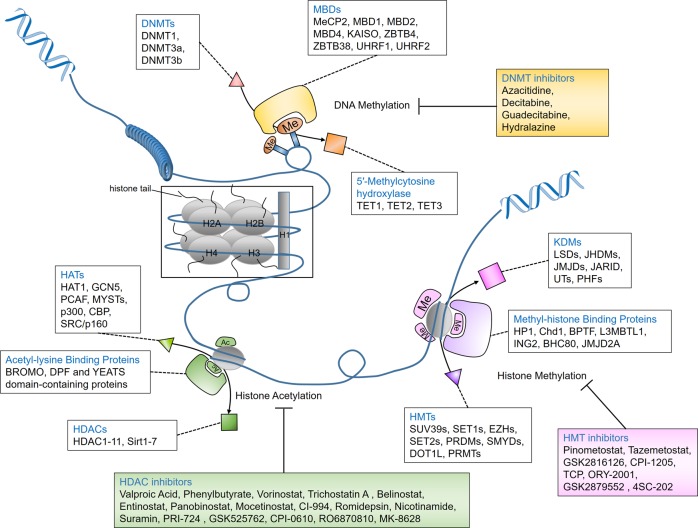
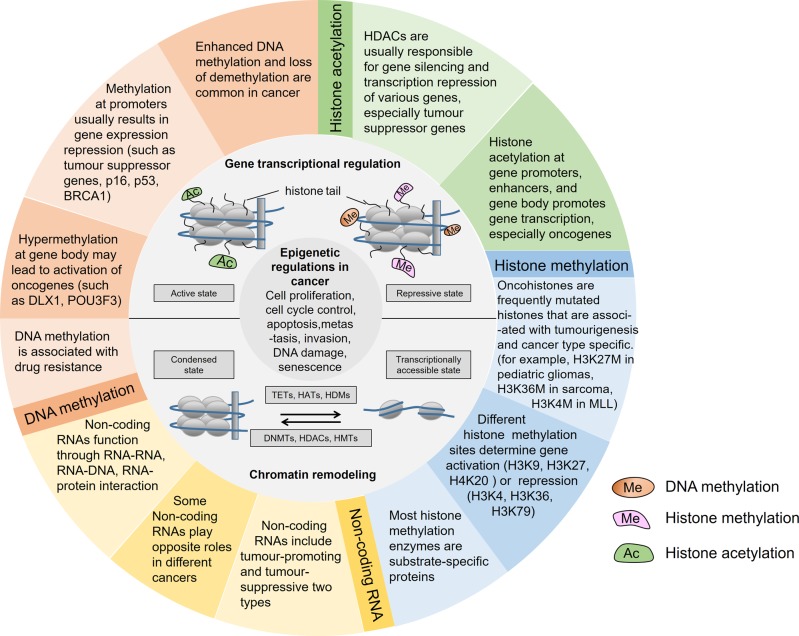
Verification
Claims the paper makes
The claims and statistics of this paper haven’t been checked yet.
Free: it reads the open-access text and checks the first 5 claims that cite a source we can check. Create a free account to check every claim.
Claims other papers make about this one
Each is checked against this paper’s own text: does it say what the citing paper says it does?
The check wasn’t confident either way, so it gives no verdict — never disputed.
In the citing paper
“Simvastatin, a cholesterol-lowering drug, displays anti-tumor effects in GBM by inducing apoptosis and inhibiting cell migration and invasion30.”
From Multi-omics analysis identifies glioblastoma dependency on H3K9me3 methyltransferase activity (2025) · cites this paper as [30]
Experimental — accuracy not yet measured
Self-check
Percentages, sums and reported differences re-computed from the paper’s own numbers.
The self-check needs the paper’s full text.
Citations
Cites
10 retracted
Expression of DNMT1 and DNMT3a Are Regulated by GLI1 in Human Pancreatic Cancer
He, S., Wang, F., Yang, L., Guo, C., Wan, R., Ke, A., Xu, L., Hu, G., Xu, X., Shen, J., et al. (2011) · PLoS ONE · doi:10.1371/journal.pone.0027684 · Cited by 88 · cited 1×
“cancer, the APC gene, encoding a regulator of cell junctions, is hypermethylated by DNMT overexpression.(29) During an analysis of colorectal disease methylation patterns, researchers found several genes that showed significant changes between precancerous diseases and cancers, including RUNX3, NEUROG1, CACNA1G, SFRP2…”
BackgroundRetractedcircZMYM2 Competed Endogenously with miR-335-5p to Regulate JMJD2C in Pancreatic Cancer
An, Y., Cai, H., Zhang, Y., Liu, S., Duan, Y., Sun, D., Chen, X., & He, X. (2018) · Cellular Physiology and Biochemistry · doi:10.1159/000495868 · Cited by 79
RetractedZhao, X., Zheng, F., Li, Y., Hao, J., Tang, Z., Tian, C., Yang, Q., Zhu, T., Diao, C., Zhang, C., et al. (2018) · Redox Biology · doi:10.1016/j.redox.2018.10.018 · Cited by 72
RetractedLi, T., Zheng, Q., An, J., Wu, M., Li, H., Gui, X., Pu, H., & Lu, D. (2016) · Molecular Therapy · doi:10.1038/mt.2015.208 · Cited by 56
RetractedHou, X., Gong, R., Zhan, J., Zhou, T., Ma, Y., Zhao, Y., Zhang, Y., Chen, G., Zhang, Z., Ma, S., et al. (2018) · BMC Cancer · doi:10.1186/s12885-018-4559-3 · Cited by 36
RetractedCai, M., Chen, Q., Shen, J., Lv, C., & Cai, L. (2018) · Journal of Cellular and Molecular Medicine · doi:10.1111/jcmm.13716 · Cited by 31
RetractedRETRACTED: Kaiso is expressed in lung cancer: Its expression and localization is affected by p120ctn
Dai, S., Wang, Y., Jiang, G., Zhang, P., Dong, X.-J., Wei, Q., Xu, H., Li, Q., Zhao, C., & Wang, E. (2009) · Lung Cancer · doi:10.1016/j.lungcan.2009.06.013 · Cited by 29
RetractedRETRACTED ARTICLE: TET2 inhibits tumorigenesis of breast cancer cells by regulating caspase-4
Zhu, X., & Li, S. (2018) · Scientific Reports · doi:10.1038/s41598-018-34462-z · Cited by 29
RetractedZhang, J., Liu, M., Liu, W., & Wang, W. (2019) · Artificial Cells Nanomedicine and Biotechnology · doi:10.1080/21691401.2019.1593857 · Cited by 13
RetractedSun, S., Zhang, Y., Zheng, J., Duan, B., Cui, J., Chen, Y., Deng, W., Ye, B., Liu, L., Chen, Y., et al. (2018) · Cell Death and Disease · doi:10.1038/s41419-018-0931-0 · Cited by 11
Retracted
Cited by
Items 901–997 of 997
Traberg, W. C., Uribe, J., Druet, V., Hama, A., Moysidou, C., Huerta, M., McCoy, R. S. A., Hayward, D., Savva, A., Genovese, A. M. R., et al. (2022) · Research Square · doi:10.21203/rs.3.rs-1697648/v1
DNA Methylation Biomarkers in Cancer: Current Clinical Utility and Future Perspectives
Durmuş, S., Gelışgen, R., & Uzun, H. (2022) · BENTHAM SCIENCE PUBLISHERS eBooks · doi:10.2174/9789815040463122010007
Alexeeva, M., Roalsø, M. T. T., & Søreide, K. (2022) · Elsevier eBooks · doi:10.1016/b978-0-323-91909-8.00027-x
Epigenetic therapy and DNA damage response
Baretti, M., & Azad, N. S. (2022) · Elsevier eBooks · doi:10.1016/b978-0-323-91081-1.00009-1
Anichini, A., Molla, A., Nicolini, G., Perotti, V., Sgambelluri, F., Covre, A., Fazio, C., Lofiego, M. F., Giacomo, A. M. D., Coral, S., et al. (2022) · Research Square · doi:10.21203/rs.3.rs-1918233/v1
Structural Basis of Targeted Imaging and Therapy in Cancer Explorations with the Epigenetic Drugs
Pandit, P., & Brahmkhatri, V. P. (2022) · Sub-cellular biochemistry/Subcellular biochemistry · doi:10.1007/978-3-031-07634-3_15
Crosstalk between Maternal Life and Fetal Epigenome; A Review Article
Mahgoub, S., Abosalem, H., Mahmoud, D., Abdel-Mohsen, D. M., & Abd-eltwab, Z. (2022) · Journal of Advanced Pharmacy Research · doi:10.21608/aprh.2022.144865.1181
Exploration of Mechanisms of Drug Resistance in a Microfluidic Device and Patient TissuesPreprint
Lim, W., Hwang, I., Zhang, J., Chen, Z., Han, J., Jeon, J., Koo, B., Kim, S., Lee, J. E., Kim, Y., et al. (2022) · bioRxiv (Cold Spring Harbor Laboratory) · doi:10.1101/2022.11.14.515727
“In breast cancer, aberrations in histone modification such as acetylation have been shown to be important for tumor progression and have been proposed as a promising therapeutic target (Cheng et al., 2019).”
BackgroundSelf-citationTavares, M. O. (2022) · Digital Library of Theses and Dissertations (Universidade de São Paulo) · doi:10.11606/d.58.2022.tde-01122022-183514
Oncology Clinical Trials in Greece: Progress in the Past Decade
Ourailidou, M. E., Tsirigoti, A., Kotsira, G., Angelis, S., Papadopoulos, V. P., Gazouli, M., & Filippou, D. K. (2022) · Journal of Long-Term Effects of Medical Implants · doi:10.1615/jlongtermeffmedimplants.2022044793
Epigenetic Regulators of NRF2: Exploring Therapeutic Opportunities in Cancer
Bhattacharjee, S. (2022) · Handbook of Oxidative Stress in Cancer: Therapeutic Aspects · doi:10.1007/978-981-16-5422-0_73
Aberrant DNA methylation of uveal melanoma drivers as an excellent prognostic toolPreprint
Šoltýsová, A., Dvorská, D., Kajabová, V. H., Pecimonova, M., Cepcekova, K., Ficek, A., Demková, L., Buociková, V., Babál, P., Juras, I., et al. (2023) · Research Square · doi:10.21203/rs.3.rs-2502537/v1
DNA/RNA structure and processing in vitro and in cells: from probing to prediction
Korsakova, A. (2022) · DR-NTU (Nanyang Technological University) · doi:10.32657/10356/164272
Epigenetic mechanisms in cardiovascular diseases
Varadarajan, S., Ushio‐Fukai, M., & Fukai, T. (2023) · Elsevier eBooks · doi:10.1016/b978-0-12-823931-5.00020-7
Toward understanding the roles of matrix metallopeptidase 1 in ovarian cancer
Cassie, H., Coogan, I., Hee, S. J., Yao Derek, Y., Olivia, N., Parmida, J., Berchuck, A., Murphy Susan, K., & Huang, Z. (2023) · Journal of Gynecological Research and Obstetrics · doi:10.17352/jgro.000120
Targeted Therapies: A Molecular Overview
Özveren, B., & Narter, F. (2023) · Bulletin of Urooncology · doi:10.4274/uob.galenos.2022.2022.4.1
Casciello, F., Kelly, G., Ramarao-Milne, P., Kamal, N. A., Stewart, T. A., Mukhopadhyay, P., Kazakoff, S. H., Miranda, M. S., Kim, D., Davis, F. M., et al. (2023) · doi:10.1158/0008-5472.c.6513936.v1
Lee, K. K., Rishishwar, L., Ban, D., Nagar, S. D., Mariño‐Ramírez, L., McDonald, J. F., & Jordan, I. K. (2023) · doi:10.1158/0008-5472.c.6513702.v1
Amjadi‐Moheb, F., Paniri, A., & Akhavan‐Niaki, H. (2023) · doi:10.1158/0008-5472.c.6512979.v1
Bhan, A., Ansari, K. I., Chen, M. Y., & Jandial, R. (2023) · doi:10.1158/0008-5472.c.6513268.v1
Wirawan, A., Tajima, K., Takahashi, F., Mitsuishi, Y., Winardi, W., Hidayat, M., Hayakawa, D., Matsumoto, N., Izumi, K., Asao, T., et al. (2023) · doi:10.1158/1541-7786.c.6545018.v1
Epigenetic and Genetics Factors
Alsofyani, A. A., & Said, Y. (2023) · BENTHAM SCIENCE PUBLISHERS eBooks · doi:10.2174/9789815080384123010011
Yeung, E., Bertram, C., Senapathi, H., Perry, M., Morada, A. O., Bertsch, D. J., & Cagir, B. (2023) · Guthrie Journal · doi:10.3138/guthrie.75.1.02
Quantitating and Characterizing the Effects of Epigenetic Targeted Drugs
Gruber, E., Lewis, A. C., & Kats, L. M. (2023) · Wiley eBooks · doi:10.1002/9781119819950.ch15
Supplementary Figure S10 from Comutations and KRASG12C Inhibitor Efficacy in Advanced NSCLC
Negrao, M. V., Araújo, H. A., Lamberti, G., Cooper, A. J., Akhave, N. S., Zhou, T., Delasos, L., Hicks, J. K., Aldea, M. D., Minuti, G., et al. (2023) · doi:10.1158/2159-8290.23310275
Supplementary Figure S10 from Comutations and KRASG12C Inhibitor Efficacy in Advanced NSCLC
Negrao, M. V., Araújo, H. A., Lamberti, G., Cooper, A. J., Akhave, N. S., Zhou, T., Delasos, L., Hicks, J. K., Aldea, M. D., Minuti, G., et al. (2023) · doi:10.1158/2159-8290.23310275.v1
Charan, K. V. S., Kumari, M., Nivedha, K., & Aishwariya, M. (2023) · SRM Journal of Research in Dental Sciences · doi:10.4103/srmjrds.srmjrds_31_23
Santos, M. E. D. S., Abreu, A. K. D. C., da Silva, F. W. M., Ferreira, E. B., dos Reis, P. E. D., & Ramos, D. D. A. R. (2023) · Oral Oncology Reports · doi:10.1016/j.oor.2023.100058
RetractedSupplementary Figure S10 from Comutations and KRASG12C Inhibitor Efficacy in Advanced NSCLC
Negrao, M. V., Araújo, H. A., Lamberti, G., Cooper, A. J., Akhave, N. S., Zhou, T., Delasos, L., Hicks, J. K., Aldea, M. D., Minuti, G., et al. (2023) · doi:10.1158/2159-8290.23641387
Supplementary Figure S10 from Comutations and KRASG12C Inhibitor Efficacy in Advanced NSCLC
Negrao, M. V., Araújo, H. A., Lamberti, G., Cooper, A. J., Akhave, N. S., Zhou, T., Delasos, L., Hicks, J. K., Aldea, M. D., Minuti, G., et al. (2023) · doi:10.1158/2159-8290.23641387.v1
Nature-Nurture and the Epigenome
Frankel, S. A., THURBER, S. D., & Bourgeois, J. A. (2023) · Springer eBooks · doi:10.1007/978-3-031-14949-8_5
Chaves, L. P. (2023) · Digital Library of Theses and Dissertations (Universidade de São Paulo) · doi:10.11606/d.17.2023.tde-08082023-145937
Raman, A. N., & Chowlur, S. (2023) · OSF Preprints (OSF Preprints) · doi:10.31219/osf.io/ed85p
Developments in Epigenetic Cancer Therapeutics
Shanmugam, L., & Samuel, P. J. (2023) · Springer eBooks · doi:10.1007/978-981-99-2196-6_52-1
Exploration of Mechanisms of Drug Resistance in a Microfluidic Device and Patient TissuesPreprint
Lim, W., Hwang, I., Zhang, J., Chen, Z., Han, J., Jeon, J., Koo, B., Kim, S., Lee, J. E., Pienta, K. J., et al. (2023) · eLife · doi:10.7554/elife.88830.1
Self-citationРишатовна, П. Н., Yakovleva, D. V., Ulyasheva, N. S., Proshkina, E., & Moskalev, A. (2023) · Proceedings of the Komi Science Centre of the Ural Division of the Russian Academy of Sciences · doi:10.19110/1994-5655-2023-6-103-114
Epigentic signaling: regulation of cancer stem cells in colorectal cancer
Chhetri, D., Munuswamy‐Ramanujam, G., Kumar, R. C. S., Baskaran, R., Palaniyandi, K., & Gnanasampanthapandian, D. (2023) · Elsevier eBooks · doi:10.1016/b978-0-443-13212-4.00004-0
Epigenetic modification: key regulator of reprogramming in cancer stem cells
Palol, V. V., Saravanan, S. K., Chinnadurai, R. K., & Subramanyam, V. (2023) · Elsevier eBooks · doi:10.1016/b978-0-443-13212-4.00017-9
mRNA Epi-Drugs: The Possible Use and Potential of mRNA in Radiation Therapy
Cattaneo, C. G., & Felice, F. D. (2023) · International Journal of Radiation Oncology*Biology*Physics · doi:10.1016/j.ijrobp.2023.07.041
Eskenazi, A. P. E. (2023) · Digital Library of Theses and Dissertations (Universidade de São Paulo) · doi:10.11606/d.58.2023.tde-25102023-153449
Epigenetic Alterations in Pancreatic Cancer
Bulbul, C. Z., Bülbül, M. V., & Soner, S. (2023) · Epigenetics and human health · doi:10.1007/978-3-031-42365-9_8
Epigenetic dysregulation in brain tumors
Peedicayil, J., & Abraham, A. P. (2024) · Elsevier eBooks · doi:10.1016/b978-0-443-18516-8.00011-9
Epigenetic Regulation of Gene Expression and Hepatocyte Proliferation by Nuclear Receptor PPARA
Aibara, D. (2024) · YAKUGAKU ZASSHI · doi:10.1248/yakushi.23-00176
An update on the genetic predisposition of testicular germ cell tumors
Islam, R., Hansen, A., Liesen, A., & Schorle, H. (2024) · Translational Andrology and Urology · doi:10.21037/tau-23-560
“In fact, such alterations have been identified as a risk factor in other cancers (9,10).”
Growth: Emergence of the Circadian Clock
Tsuchiya, Y., & Yagita, K. (2024) · Royal Society of Chemistry eBooks · doi:10.1039/bk9781839167553-00429
Escape from Original Home: Do Metastatic Cells Stay Dormant or Destructive?
Wynn, A. A., Mya, N. K., & Thein, T. T. (2024) · Borneo Journal of Medical Sciences (BJMS) · doi:10.51200/bjms.v18i1.4866
“Enzymes such as DNA methyltransferases that modify epigenome are genetically altered in malignancies, such as DNMT3B in pancreatic and breast cancer cells (Yuan et al., 2019).”
BackgroundGene Editing and Gene Therapies in Cancer Treatment
Tripathi, G., Faiyaz, M., Hasan, Z., Khanam, A., & Husain, A. (2023) · IGI Global eBooks · doi:10.4018/979-8-3693-3026-5.ch032
Soleiman, M., Fathi‐Roudsari, M., Khajeh, K., & Maghsoudi, A. (2024) · Cancer Investigation · doi:10.1080/07357907.2024.2345183
“For example, the repression of tumor suppressor genes is usually caused by methylation of DNA CpG islands together with hypoacetylated and hypermethylated histones (38).”
BackgroundArjmand, F., Tabassum, S., & Khan, H. Y. (2024) · Springer eBooks · doi:10.1007/978-981-97-0146-9_8
Linek, M. (2024) · eDiss (Georg-August-Universität Göttingen) · doi:10.53846/goediss-10478
Ahmed, B. A., & Mohamed, M. H. (2024) · Odovtos - International Journal of Dental Sciences · doi:10.15517/ijds.2024.60003
Diet-Induced Histone Modifications: Implications for Human Health and Diseases
Mir, U. S., Mushtaq, A., Saqib, N., Tantray, W. W., & Altaf, M. (2024) · Epigenetics and human health · doi:10.1007/978-3-031-54215-2_2
Zhang, X., Chen, Z., Zhao, X. H., Pan, J., Pandol, S. J., & Li, W. (2024) · Journal of Pancreatology · doi:10.1097/jp9.0000000000000188
Environmental contaminants and the epigenome
Avenbuan, O. N., & Fry, R. C. (2024) · Elsevier eBooks · doi:10.1016/b978-0-443-23802-4.00026-0
Dietary components as epigenetic modifiers and their roles in cancer prevention
Thakur, C., & Saran, U. (2024) · Elsevier eBooks · doi:10.1016/b978-0-443-13209-4.00010-6
Stransky, S., Cutler, R. R., Aguilan, J. T., DeAngelo, J. D., Shechter, D., & Sidoli, S. (2024) · bioRxiv (Cold Spring Harbor Laboratory) · doi:10.1101/2024.08.05.606680
Inflammation and Its Role in the Aetiopathogenesis of Malignant Brain Tumours
Strojnik, T. (2024) · IntechOpen eBooks · doi:10.5772/intechopen.1006516 · Cited by 1
Wu, Z., Yang, X., Yuan, Z., Guo, Y., Wang, X., & Qu, L. (2024) · Heliyon · doi:10.1016/j.heliyon.2024.e36615
“A total of 40 histone acetylation-related regulators presented in Supplementary Table S2 were obtained from a review [24].”
BackgroundGouthami, K., Maity, S., Santra, A., Venkatesh, G. P., Mallikarjunaswamy, A. M. M., Mubeena, A., Hebbani, A. V., & Reddy, V. D. (2024) · Current Cancer Therapy Reviews · doi:10.2174/0115733947314317240805204339
Alom, S., Anal, B. V., & Ghosh, S. (2024) · Current Cancer Therapy Reviews · doi:10.2174/0115733947313656240819093316 · Cited by 2
Vickers, E. (2024) · Wiley eBooks · doi:10.1002/9781119834090.ch4
Kobets, T., & Williams, G. M. (2024) · Elsevier eBooks · doi:10.1016/b978-0-323-95488-4.00133-9
THE INVOLVEMENT OF DIFFERENT VITAMIN TYPES IN ASSISTING THE ACTIVATION OF STEM CELLS: A REVIEW
Hapsari, T. P. (2024) · Journal of Stem Cell Research and Tissue Engineering · doi:10.20473/jscrte.v8i1.57473
Phytochemicals with epigenetic properties and their role in melanoma therapy
Anestopoulos, I., Kyriakou, S., Deligiorgi, M. V., Trafalis, D. T., Botaitis, S., Giatromanolaki, A. N., Franco, R., Koukourakis, M. I., Pappa, A., & Panayiotidis, M. I. (2024) · International review of cytology · doi:10.1016/bs.ircmb.2024.12.001
Defining the genetic profile of prostate cancer
Ajayi, A. F., Hamed, M. A., Onaolapo, M. C., Fiyinfoluwa, O. H., Oyeniran, O., & Oluwole, D. T. (2024) · Urologic Oncology Seminars and Original Investigations · doi:10.1016/j.urolonc.2024.11.018
Epigenetische Therapien in der Krebsbehandlung: Chancen und Herausforderungen
Heßmann, E., & Schneider, G. (2025) · Forum · doi:10.1007/s12312-024-01411-z
Zhang, X., Liu, Y., Hou, Q., Guo, Y., & He, Y. (2025) · Frontiers in Pharmacology · doi:10.3389/fphar.2024.1527903
“Moreover, DNA methylation inhibitors contribute to altering the epigenetic state of leukemia cells, enabling the cells to regain sensitivity to other therapeutic approaches (Cheng et al., 2019).”
Blood-based biomarkers derived from tumor-informed DNA methylation analysis for lung adenocarcinoma
Chitta, P., Barrow, T. M., Dawangpa, A., Christiani, D. C., Poungvarin, N., & Sae‐Lee, C. (2025) · Heliyon · doi:10.1016/j.heliyon.2025.e42581
“Epigenetic modifications play a crucial role in development, cellular differentiation, and adaptation to environmental stimuli [8], and they are implicated in a wide range of diseases, including cancer, neurological disorders, and metabolic conditions.”
Papadopoulos, P., Zisis, V., Andreadis, D., Poulopoulos, K., Parlitsis, D., Paraskevopoulos, K., Anastasiadou, P. A., Anagnostou, E., Vahtsevanos, K., & Poulopoulos, A. K. (2025) · Cureus · doi:10.7759/cureus.79085
“Epigenetics contributes to the final characteristics of cancer, being the end point of a long multistage carcinogenic process [8-9].”
InfluentialJaniszewska, J., Paczkowska, J., Kostrzewska‐Poczekaj, M., Schreiber, A. M., Kiwerska, K., Bednarek, K., Kowal-Wiśniewska, E., Drozdowska, Z., Wierzbicka, M., Jarmuż‐Szymczak, M., et al. (2025) · Journal of Applied Genetics · doi:10.1007/s13353-025-00942-y
“In recent years, scientific studies revealed a strong link between epigenetic mechanisms and key characteristics of cancer, indicating that tumor development is driven by a sequence of epigenetic changes (Cheng et al. 2019; Recillas-Targa 2022).”
Piorczynski, T. B., Liu, Y., Estrella, B., Ricker, E., Pazos, M., Gonzalez, Y., Tolu, S. S., Tiger, Y. K., Obradovic, A., Liu, C., et al. (2025) · bioRxiv (Cold Spring Harbor Laboratory) · doi:10.1101/2025.03.13.642871
“Epigenetic therapies such as histone deacetylase inhibitors (HDACi) and hypomethylating agents have emerged as potential therapeutic approaches to counteract lymphoma proliferation 20,21 , while HAT bromodomain inhibitors exploit synthetic lethality 22,23 .”
Singh, D. (2025) · Current pharmacogenomics and personalized medicine (Online)/Current pharmacogenomics and personalized medicine · doi:10.2174/0118756921349049250324173511
The Benefits of Jaboticaba-Based Interventions on Disease: Cancers
Lemos, I. L., & Baseggio, A. M. (2025) · Springer eBooks · doi:10.1007/978-3-031-81489-1_10
Cancer Specific Epigenetic Biomarker Extraction from DNA Methylation and Gene Expression Data
Panchami, V., Manish, T. I., & Manesh, K. K. (2025) · AI-Driven Smart Healthcare for Society 5.0 · doi:10.1109/ieeeconf64992.2025.10962874
“It regulates the expression of genes and has the capability of differentiating normal cells from diseased cells [2].”
Soetomo, S. A., Sharp, M. F., & Crismani, W. (2025) · bioRxiv (Cold Spring Harbor Laboratory) · doi:10.1101/2025.05.02.651448
Predicting the effect of CRISPR-Cas9-based epigenome editingPreprint
Batra, S. S., Cabrera, A., Spence, J. P., Goell, J., Anand, S. S., Hilton, I. B., & Song, Y. S. (2025) · eLife · doi:10.7554/elife.92991.3 · Cited by 1
Zeinali, E., Bagheri, V., Rostami, E., Mansouri, A., & Sarab, G. A. (2025) · Human Gene · doi:10.1016/j.humgen.2025.201437 · Cited by 2
Heng, W., Su, C., Cong, A., Zhao, Z., Cui, S., Wu, C.-Y., Huang, Z., Xie, Y., Hu, Z., Zhou, Z., et al. (2025) · Journal of the American Society of Nephrology · doi:10.1681/asn.0000000761
Integrative Proteomics and Histone PTMomics Study on Anti-TNBC Effect of JIB-04
Tao, S., Guo, J., Zhang, J., Zhang, M., Wang, Z., Zhang, J. P., Li, M., Liu, B., Yuan, J., Tan, M., et al. (2025) · Journal of the American Society for Mass Spectrometry · doi:10.1021/jasms.5c00022 · Cited by 1
Epigenetics and pharmacoepigenetics of bacterial infections
Drapala, D. M., & Grabiec, A. M. (2025) · Elsevier eBooks · doi:10.1016/b978-0-443-18722-3.00012-8
Transcription Factor Associated with Human Diseases
Singh, A., Mittal, A., Gupta, J., Atale, N., & Rani, V. (2025) · Advances in Science, Technology & Innovation/Advances in science, technology & innovation · doi:10.1007/978-3-031-80973-6_6
Sontidejkul, S., Phuengmaung, P., Saisorn, W., Kaewduangduen, W., Doi, K., Boonmee, A., Benjaskulluecha, S., Palaga, T., & Leelahavanichkul, A. (2025) · Inflammation Research · doi:10.1007/s00011-025-02077-6 · Cited by 1
“Then, the use of epigenetic manipulations (MGMT blockage) in macrophages [41, 42], together with the inhibitors against FGF-21, a compensatory system supporting TAM, might be a new strategy for cancer treatment.”
Chinnappan, S., Venkatesan, S., & Ranganathan, V. (2025) · Research Journal of Pharmacy and Technology · doi:10.52711/0974-360x.2025.00494
Paternal Aging and Offspring Health
Stirland, I., Jenkins, A., Barnett, B., Salehisedeh, N., & Jenkins, T. G. (2025) · Elsevier eBooks · doi:10.1016/b978-0-443-21477-6.00480-6
Islam, F., Zehravi, M., Molla, M. R., Sweilam, S. H., Jahnavi, P., Bagade, O. M., Gupta, J. K., Vodeti, R., Krishnan, K., Bakshi, V., et al. (2025) · Medical Oncology · doi:10.1007/s12032-025-03051-2
The road to cancer and back: A thermodynamic point of view
Barua, A., & Hatzikirou, H. (2025) · Oxford University Press eBooks · doi:10.1093/med/9780192867636.003.0008
The anti-tumor mechanism and epigenetic effects of bioactive components in saffron
Chen, X.-N., Li, Z.-J., Zhang, Y., Lau, A. T. Y., & Xu, Y. (2025) · Phytochemistry Reviews · doi:10.1007/s11101-025-10183-w
“…Waddington first proposed the concept of ‘‘epigenetics’’ in 1942, interpreting it as the biological study of learning the interactions between genotype and phenotype that determine how an organism’s genotype responds to the environment in a more coordinated way (Lu et al. 2020; Cheng et al. 2019).”
Костарева, И. О., Киргизов, К. И., Shubina, I. Z., Stepanyan, N. G., Batmanova, N. A., Valiev, T. T., Kiselevsky, M., & Варфоломеева, С. Р. (2025) · Children · doi:10.3390/children12101418
“In the cytological examination of biopsy specimens from skin infiltrates, the presence of blast cells confirms the diagnosis of leukemia, even in the absence of blast cells in the peripheral blood [16,17].”
InfluentialPatient-specific enhancers in genetically uniform leukemias
Kong, T., & Abdel-Wahab, O. I. (2025) · Blood · doi:10.1182/blood.2025030493
Recent advances in DNA methylation in tumorigenesis and diagnosis
Liu, S., Yao, Y., Li, Z., & Wang, Z. (2026) · MedMat. · doi:10.1097/mm9.0000000000000032 · Cited by 1
Perspective Chapter: BPA-Mediated Epigenetic Disruption in Endometrial Cancer Progression
Srinivasan, D., Thirunavukarasu, K., Subramaniam, S., & Velusamy, T. (2025) · Genetics. · doi:10.5772/intechopen.1012539 · Cited by 1
Pai, P., Das, I., Reddy, Y., Venkidesh, B. S., Bhandari, P., Madalageri, M., Sadashivanavar, V., Pai, K. S. R., Rao, P., Oruganti, S., et al. (2025) · Acta Neuropathologica Communications · doi:10.1186/s40478-025-02194-7 · Cited by 4
“Epigenetic modulation, particularly that involving histone deacetylases (HDACs) and histone acetylases (HATs), plays a crucial role in tumor progression [5].”
Gürbüz, V., & Kuşat, T. (2025) · Ege Tıp Dergisi · doi:10.19161/etd.1623604
Neupane, M., Kumar, M., Mwamufiya, M. A., Donnelly, C. M., Ibragimova, A., Curcio, B., Chervoneva, I., Vasilevskaya, I. A., & Silver, D. P. (2025) · Molecular Cancer Therapeutics · doi:10.1158/1535-7163.mct-25-0603
Metadata
- Authors
- Cheng, Y., He, C., Wang, M., Ma, X., Mo, F., Yang, S., Han, J., & Wei, X.
- Affiliations
- Sichuan University (CN)
- Corresponding author
- Wei, Xiawei
- Venue
- Signal Transduction and Targeted Therapy
- Published
- 2019-12-17
- Volume
- 4
- Issue
- 1
- Pages
- 62-62
- ISSN
- 2059-3635 (ISSN-L)
- PMC
- PMC6915746
- OpenAlex
- W2995898384
- Cited by
- 1,097
- References
- 676
- Citations by year
- 2026: 75 · 2025: 157 · 2024: 198 · 2023: 217 · 2022: 175 · 2021: 190 · 2020: 77
- FWCI
- 9.76
- Type
- journal article
- Language
- en
- Open access
- gold
- doi.org
- Licence
- cc-by
- creativecommons.org/licenses/by/4.0 (tdm)
- creativecommons.org/licenses/by/4.0 (vor)
- Locations
- Signal Transduction and Targeted Therapy (publishedVersion, cc-by)
- Europe PMC (PubMed Central) (publishedVersion, cc-by)
- PubMed Central (publishedVersion, cc-by)
- PubMed (publishedVersion)
- DOAJ (DOAJ: Directory of Open Access Journals) (submittedVersion)
- Funders
- National Natural Science Foundation of China (No. 81602950)
- National Key Research and Development Program of China
- Topics
- Life Sciences › Biochemistry, Genetics and Molecular Biology › Molecular Biology › Epigenetics and DNA Methylation
- Life Sciences › Biochemistry, Genetics and Molecular Biology › Molecular Biology › Histone Deacetylase Inhibitors Research
- Life Sciences › Biochemistry, Genetics and Molecular Biology › Molecular Biology › Chromatin Remodeling and Cancer
- Keywords
- epigenetic regulators, DNA methylation, histone acetylation, histone methylation, epigenetic enzymes, enzyme inhibitors, hematologic malignancies, solid tumors, tumor progression, clinical trials
About these checks
Registry, retraction, Cites and statistics results are computed, not judged, with one exception: a printed reference that no index lists is read once by a model before it counts as a citation error. Claims are extracted by a model and kept only when their quote appears verbatim in the text; each cited source is then checked, with a model’s help, for whether it says what the claim relies on. Those verdicts can be wrong — read the claim’s quote and the cited source before relying on one.
Statistics and arithmetic are recomputed, not judged.
Confidence bands are shown only for fields calibrated on our annotated test set. None is calibrated yet, so no band is shown.
What counts as a claim ›How we measure confidence ›How we check this ›
Are you an author, or do you see a problem with this page? Request a review
Data sources
Bibliographic data: Semantic Scholar, OpenAlex, Crossref.
Contains information from the Semantic Scholar Academic Graph Datasets, made available under the ODC Attribution License (ODC-BY 1.0).
Semantic Scholar’s data is described in: Kinney, R., et al. (2023). The Semantic Scholar Open Data Platform. arXiv:2301.10140.
