

Targeting epigenetic regulators for cancer therapy: mechanisms and advances in clinical trials
Open accessThe DOI matches its Crossref record; 675 of the 676 references it cites were found in a registry or an index.
Abstract
Epigenetic alternations concern heritable yet reversible changes in histone or DNA modifications that regulate gene activity beyond the underlying sequence. Epigenetic dysregulation is often linked to human disease, notably cancer. With the development of various drugs targeting epigenetic regulators, epigenetic-targeted therapy has been applied in the treatment of hematological malignancies and has exhibited viable therapeutic potential for solid tumors in preclinical and clinical trials. In this review, we summarize the aberrant functions of enzymes in DNA methylation, histone acetylation and histone methylation during tumor progression and highlight the development of inhibitors of or drugs targeted at epigenetic enzymes.
Overview
The claims and statistics of this paper haven’t been checked yet.
Free: it reads the open-access text and checks the first 5 claims that cite a source we can check. Create a free account to check every claim.
Integrity signals
Registry
Cites
Statistics
Figures
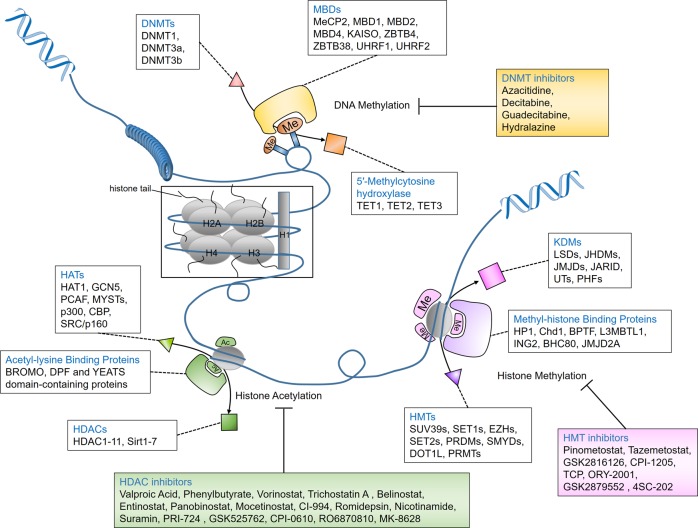
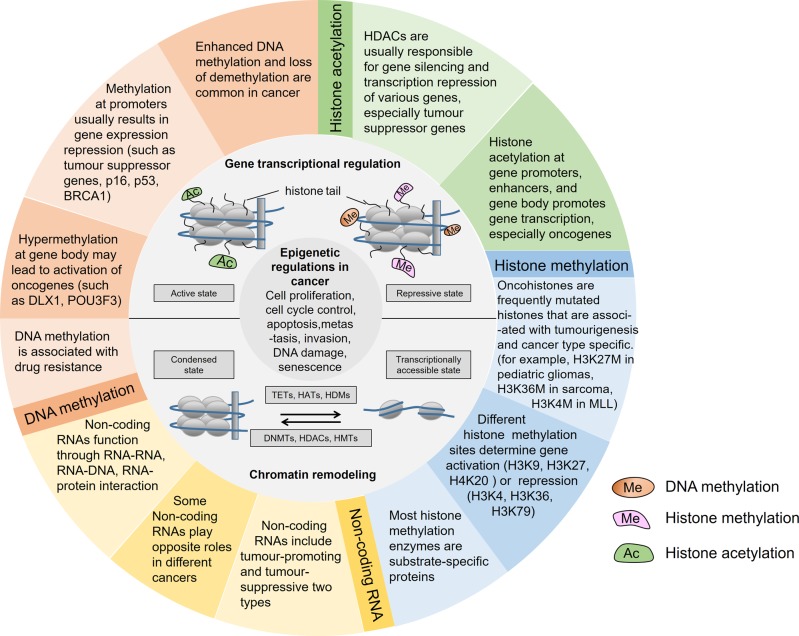
Verification
Claims the paper makes
The claims and statistics of this paper haven’t been checked yet.
Free: it reads the open-access text and checks the first 5 claims that cite a source we can check. Create a free account to check every claim.
Claims other papers make about this one
Each is checked against this paper’s own text: does it say what the citing paper says it does?
The check wasn’t confident either way, so it gives no verdict — never disputed.
In the citing paper
“Simvastatin, a cholesterol-lowering drug, displays anti-tumor effects in GBM by inducing apoptosis and inhibiting cell migration and invasion30.”
From Multi-omics analysis identifies glioblastoma dependency on H3K9me3 methyltransferase activity (2025) · cites this paper as [30]
Experimental — accuracy not yet measured
Self-check
Percentages, sums and reported differences re-computed from the paper’s own numbers.
The self-check needs the paper’s full text.
Citations
Cites
10 retracted
Expression of DNMT1 and DNMT3a Are Regulated by GLI1 in Human Pancreatic Cancer
He, S., Wang, F., Yang, L., Guo, C., Wan, R., Ke, A., Xu, L., Hu, G., Xu, X., Shen, J., et al. (2011) · PLoS ONE · doi:10.1371/journal.pone.0027684 · Cited by 88 · cited 1×
“cancer, the APC gene, encoding a regulator of cell junctions, is hypermethylated by DNMT overexpression.(29) During an analysis of colorectal disease methylation patterns, researchers found several genes that showed significant changes between precancerous diseases and cancers, including RUNX3, NEUROG1, CACNA1G, SFRP2…”
BackgroundRetractedcircZMYM2 Competed Endogenously with miR-335-5p to Regulate JMJD2C in Pancreatic Cancer
An, Y., Cai, H., Zhang, Y., Liu, S., Duan, Y., Sun, D., Chen, X., & He, X. (2018) · Cellular Physiology and Biochemistry · doi:10.1159/000495868 · Cited by 79
RetractedZhao, X., Zheng, F., Li, Y., Hao, J., Tang, Z., Tian, C., Yang, Q., Zhu, T., Diao, C., Zhang, C., et al. (2018) · Redox Biology · doi:10.1016/j.redox.2018.10.018 · Cited by 72
RetractedLi, T., Zheng, Q., An, J., Wu, M., Li, H., Gui, X., Pu, H., & Lu, D. (2016) · Molecular Therapy · doi:10.1038/mt.2015.208 · Cited by 56
RetractedHou, X., Gong, R., Zhan, J., Zhou, T., Ma, Y., Zhao, Y., Zhang, Y., Chen, G., Zhang, Z., Ma, S., et al. (2018) · BMC Cancer · doi:10.1186/s12885-018-4559-3 · Cited by 36
RetractedCai, M., Chen, Q., Shen, J., Lv, C., & Cai, L. (2018) · Journal of Cellular and Molecular Medicine · doi:10.1111/jcmm.13716 · Cited by 31
RetractedRETRACTED: Kaiso is expressed in lung cancer: Its expression and localization is affected by p120ctn
Dai, S., Wang, Y., Jiang, G., Zhang, P., Dong, X.-J., Wei, Q., Xu, H., Li, Q., Zhao, C., & Wang, E. (2009) · Lung Cancer · doi:10.1016/j.lungcan.2009.06.013 · Cited by 29
RetractedRETRACTED ARTICLE: TET2 inhibits tumorigenesis of breast cancer cells by regulating caspase-4
Zhu, X., & Li, S. (2018) · Scientific Reports · doi:10.1038/s41598-018-34462-z · Cited by 29
RetractedZhang, J., Liu, M., Liu, W., & Wang, W. (2019) · Artificial Cells Nanomedicine and Biotechnology · doi:10.1080/21691401.2019.1593857 · Cited by 13
RetractedSun, S., Zhang, Y., Zheng, J., Duan, B., Cui, J., Chen, Y., Deng, W., Ye, B., Liu, L., Chen, Y., et al. (2018) · Cell Death and Disease · doi:10.1038/s41419-018-0931-0 · Cited by 11
Retracted
Cited by
Items 301–400 of 997
From Orchard to Wellness: Unveiling the Health Effects of Sweet Cherry Nutrients
Gonçalves, B. C., Aires, A., Oliveira, I. V., Baltazar, M., Cosme, F., Afonso, S., Pinto, T., Anjos, R., Inês, A., Morais, M. C., et al. (2024) · Nutrients · doi:10.3390/nu16213660 · Cited by 28
Growth Hormone Action as a Target in Cancer: Significance, Mechanisms, and Possible Therapies
Basu, R., Boguszewski, C. L., & Kopchick, J. J. (2024) · Endocrine Reviews · doi:10.1210/endrev/bnae030 · Cited by 28
Epi-nutrients for cancer prevention: Molecular mechanisms and emerging insights
Bakrim, S., Omari, N. E., Yaagoubi, O. M. E., Khalid, A., Abdalla, A. N., Hamza, S. M. A., Ibrahim, S. E., Atifi, F., Zaid, Y., Bouyahya, A., et al. (2025) · Cell Biology and Toxicology · doi:10.1007/s10565-025-10054-2 · Cited by 30
“Epigenetics encompasses reversible modifications to gene expression without changes in the DNA sequence itself (Cheng et al. 2019; Jenke et al. 2021).”
A Perspective on Therapeutic Pan-Resistance in Metastatic Cancer
Korentzelos, D. K., Clark, A. M., & Wells, A. H. (2020) · International Journal of Molecular Sciences · doi:10.3390/ijms21197304 · Cited by 21
Huang, L.-Y., Hsu, D., & Pears, C. J. (2021) · Nucleic Acids Research · doi:10.1093/nar/gkab154 · Cited by 23
“For example in haematopoiesis fine-tuned lineage-specific gene expression is required for the correct establishment of downstream cell types, a process that requires multiple KDACs as transcription cofactors[18].”
BackgroundInfluentialKopczyński, M., Rumieńczyk, I., Kulecka, M., Statkiewicz, M., Pyśniak, K., Sandowska-Markiewicz, Z., Wójcik-Trechcińska, U., Goryca, K., Pyziak, K., Majewska, E., et al. (2021) · International Journal of Molecular Sciences · doi:10.3390/ijms221910204 · Cited by 25
Role of Histone Deacetylases in T-Cell Development and Function
Pieniawska, M., & Iżykowska, K. (2022) · International Journal of Molecular Sciences · doi:10.3390/ijms23147828 · Cited by 25
“Class III stands out significantly from other HDACs and is known as the class of Sirtuins, which are homologous to yeast Sir 2 protein and require NAD+ as a coenzyme for activity [25].”
BackgroundInfluentialLiu, Y., Lin, Y.-H., Chi, H., Huang, P.-S., Liao, C., Liou, Y.-S., Lin, C.-C., Yu, C., Yeh, C., Huang, Y., et al. (2022) · Clinical Epigenetics · doi:10.1186/s13148-022-01326-3 · Cited by 24
MBD5 and MBD6 stabilize the BAP1 complex and promote BAP1-dependent cancer
Tsuboyama, N., Szczepanski, A. P., Zhao, Z., & Wang, L. (2022) · Genome Biology · doi:10.1186/s13059-022-02776-x · Cited by 21
JAK/BCL2 inhibition acts synergistically with LSD1 inhibitors to selectively target ETP-ALL
Benyoucef, A., Haigh, K., Cuddihy, A. R., & Haigh, J. J. (2022) · Leukemia · doi:10.1038/s41375-022-01716-9 · Cited by 21
“More globally, the application of epigenetic drugs in the clinic is gaining more interest, and this is due to their increasing efficacy and specificity [47].”
BackgroundThe Role of Epigenetics in the Development and Progression of Multiple Myeloma
Ismail, N. H., Mussa, A., Zakaria, N. A., Al-Khreisat, M. J., Zahidin, M. A., Ramli, N. N., Mohammad, S. N. N. A., Hassan, R., Mohd Noor, N. H., Iberahim, S., et al. (2022) · Biomedicines · doi:10.3390/biomedicines10112767 · Cited by 22
Kling, M. J., Kesherwani, V., Mishra, N. K., Alexander, G. R., McIntyre, E. M., Ray, S., Challagundla, K. B., Joshi, S. S., Coulter, D. W., & Chaturvedi, N. K. (2022) · Journal of Experimental & Clinical Cancer Research · doi:10.1186/s13046-022-02530-y · Cited by 26
“With the goal of targeting epigenetic-driven cancers, several epigenetic drugs are being explored as possible therapeutics [39].”
BackgroundKroonen, J. S., de Graaf, I. J., Kumar, S., Remst, D. F. G., Wouters, A. K., Heemskerk, M. H. M., & Vertegaal, A. C. O. (2023) · Leukemia · doi:10.1038/s41375-023-01838-8 · Cited by 24
“Epigenetic regulation includes DNA methylation, modification of histones and chromatin remodeling, regulating expression and/or repression of the genome [4].”
BackgroundCasticin as potential anticancer agent: recent advancements in multi-mechanistic approaches
Carbone, K., Gervasi, F., Кожамжарова, Л. С., Altybaeva, N., Gürer, E. S., Sharifi‐Rad, J., Hano, C., & Călina, D. C. (2023) · Frontiers in Molecular Biosciences · doi:10.3389/fmolb.2023.1157558 · Cited by 22
“Epigenetic changes, such as DNA methylation, have attracted increasing attention in studying tumor occurrence and progression with the aim of finding novel strategies for cancer treatment like epigenetic chemotherapy (Cheng et al., 2019) (Supplementary Table S3).”
BackgroundHarnessing Nanotechnology: Emerging Strategies for Multiple Myeloma Therapy
Yang, M., Chen, Y., Zhu, L., You, L., Tong, H., Meng, H., Sheng, J., & Jin, J. (2024) · Biomolecules · doi:10.3390/biom14010083 · Cited by 29
“Furthermore, the integration of nanotechnology with emerging fields such as immuno-oncology and multi-omics could pave the way for personalized, precision therapies for myeloma [93].”
BackgroundHarnessing Pharmacomultiomics for Precision Medicine in Diabetes: A Comprehensive Review
Dhieb, D., Mustafa, D. N., Hassiba, M., Alasmar, M., Elsayed, M. E. M., Musa, A., Zirie, M. A., & Bastaki, K. (2025) · Biomedicines · doi:10.3390/biomedicines13020447 · Cited by 32
“Epigenetic therapies, which include inhibitors of DNA methyltransferases (DNMTs) and histone deacetylases (HDACs), represent another promising avenue, although they are primarily employed in cancer treatment [115].”
Tahghighi, A., Seyedhashemi, E., Mohammadi, J., Moradi, A., Esmaeili, A., Pornour, M., Jafarifar, K., & Ganji, S. M. (2025) · Clinical Epigenetics · doi:10.1186/s13148-025-01844-w · Cited by 25
“Additionally, miR-153 overexpression in cancer cells enhances CAR T cell killing capacity in vitro and suppresses tumour growth in a murine colorectal cancer xenograft model by downregulating IDO1 expression [177, 178].”
Iacucci, M., Nardone, O. M., Ditonno, I., Capobianco, I., Pugliano, C. L., Maeda, Y., Majumder, S., Zammarchi, I., Santacroce, G., & Ghosh, S. (2025) · Clinical Gastroenterology and Hepatology · doi:10.1016/j.cgh.2025.06.035 · Cited by 26
Global View of Candidate Therapeutic Target Genes in Hormone-Responsive Breast Cancer
Salvati, A., Gigantino, V., Nassa, G., Cappa, V. M., Ventola, G. M., Cracas, D. G. C., Mastrocinque, R., Rizzo, F. M., Tarallo, R., Weisz, A., et al. (2020) · International Journal of Molecular Sciences · doi:10.3390/ijms21114068 · Cited by 22
“Hypermethylation of promoter CpG islands is often associated with silencing of gene expression because it coincides with a repressive chromatin status where nucleosome occludes the transcription factor binding sites, preventing transcriptional machinery recruitment [77].”
BackgroundRubio‐Ruíz, B., Pérez‐López, A. M., Sebastián, V., & Unciti‐Broceta, A. (2021) · Bioorganic & Medicinal Chemistry · doi:10.1016/j.bmc.2021.116217 · Cited by 21
Kuchaříková, H., Dobrovolná, P., Lochmanová, G., & Zdráhal, Z. (2021) · Molecular & Cellular Proteomics · doi:10.1016/j.mcpro.2021.100114 · Cited by 29
Al-Rawashde, F. A., Johan, M. F., Taib, W. R. W., Ismail, I., Johari, S. A. T. T., Almajali, B., Al-wajeeh, A. S., Nazari, M., & Al‐Jamal, H. A. N. (2021) · Pharmaceuticals · doi:10.3390/ph14121287 · Cited by 28
“A proper balance in the expressions of DNMTs, TET2, and WT1 is essential to regulate the DNA methylation process [33].”
BackgroundEpigenetic regulation and targeting of ECM for cancer therapy
Gupta, R. (2022) · American Journal of Physiology-Cell Physiology · doi:10.1152/ajpcell.00022.2022 · Cited by 25
Sagvekar, P., Shinde, G., Mangoli, V. S., Desai, S. K., & Mukherjee, S. (2022) · Molecular Human Reproduction · doi:10.1093/molehr/gaac019 · Cited by 22
Parenti, M. D., Naldi, M., Manoni, E., Fabini, E., Cederfelt, D., Talibov, V., Gressani, V., Güven, Ü., Grossi, V., Fasano, C., et al. (2022) · European Journal of Medicinal Chemistry · doi:10.1016/j.ejmech.2022.114683 · Cited by 23
DNA Repair Inhibitors: Potential Targets and Partners for Targeted Radionuclide Therapy
Obata, H., Ogawa, M., & Zalutsky, M. R. (2023) · Pharmaceutics · doi:10.3390/pharmaceutics15071926 · Cited by 23
“A variety of inhibitors for cancer epigenetic regulators have been developed and evaluated at the clinical level [134].”
BackgroundSingh, V. P., Shirbhate, E., Kore, R., Vishwakarma, S., Parveen, S., Veerasamy, R., Tiwari, A. K., & Rajak, H. (2024) · Mini-Reviews in Medicinal Chemistry · doi:10.2174/0113895575320344240625080555 · Cited by 23
de Azevedo, H. F. Z., Pessoa, G. C., Vitorino, F. N. D. L., Nsengimana, J., Newton‐Bishop, J., Reis, E. M. R., da Cunha, J. P. C., & Jasiulionis, M. G. (2020) · Clinical Epigenetics · doi:10.1186/s13148-020-00910-9 · Cited by 22
“The gene expression of histone-modifying enzymes previously involved in tumor progression [84] was also investigated.”
BackgroundMYC inhibitors in multiple myeloma
Martínez-Martín, S., & Soucek, L. (2021) · Cancer Drug Resistance · doi:10.20517/cdr.2021.55 · Cited by 27
Circular RNA circ_GLIS2 suppresses hepatocellular carcinoma growth and metastasis
Wu, X., Zhou, P., Zhang, H., Chen, L., Zhou, Y., Cui, X., & Liu, Z. (2021) · Liver International · doi:10.1111/liv.15097 · Cited by 22
Kadamb, R., Leibovitch, B. A., Farias, E., Dahiya, N. R., Suryawanshi, H., Bansal, N., & Waxman, S. (2021) · Translational Oncology · doi:10.1016/j.tranon.2021.101320 · Cited by 27
“Reduction of proliferation (reduced Ki67) and increased CDH1 might affect tumor mass but as previous reports [38,39] suggested that SIN3 and PF1 might be regulating senescence, we tested whether senescence, as defined by increased β-gal (SA-β-gal) expression, was responsible for the observed reduction in tumor growth.”
BackgroundGolla, U., Sesham, K., Dallavalasa, S., Manda, N. K., Sambamoorthy, U., Sanapala, A. K., Nalla, S., Kondam, S., & Kumar, R. (2022) · Non-Coding RNA · doi:10.3390/ncrna8020021 · Cited by 27
“The epigenetic regulators are exploited as effective therapeutic targets for the treatment of cancer, and many molecules are in clinical development [93].”
BackgroundZhang, Q., Yang, H., Feng, Q., Cao, J., Zhang, Y., Li, L., & Yu, L. (2022) · Pharmacological Research · doi:10.1016/j.phrs.2022.106159 · Cited by 19
Characteristic Hallmarks of Aging and the Impact on Carcinogenesis
Fiore, M., Terracina, S. A., Ferraguti, G., Petrella, C., Bruno, S. M., Blaconà, G., Certo, M. G. D., Minni, A., Greco, A., Musacchio, A., et al. (2022) · Current Cancer Drug Targets · doi:10.2174/1568009622666220816120353 · Cited by 23
Role and mechanism of DNA methylation and its inhibitors in hepatic fibrosis
Lyu, S., Xiao, W., Cui, G., Yu, C., Liu, H., Lyu, M., Kuang, Q.-Y., Xiao, E., & Luo, Y. (2023) · Frontiers in Genetics · doi:10.3389/fgene.2023.1124330 · Cited by 29
“DNAmethylation inhibitors are mainly divided into two classes: nucleoside and non-nucleoside analogs (Cheng et al., 2019).”
BackgroundH3G34-Mutant Gliomas—A Review of Molecular Pathogenesis and Therapeutic Options
Nguyen, A. V. P., Soto, J. M., Gonzalez, S.-M. C., Murillo, J., Trumble, E. R., Shan, F. Y., & Huang, J. H. (2023) · Biomedicines · doi:10.3390/biomedicines11072002 · Cited by 26
“Epigenetic alterations are known to be involved in oncogenesis and have therapeutic implications as well [23,24].”
Molecular epigenetic dynamics in breast carcinogenesis
Hazra, A., Bose, P., Sunita, P., & Pattanayak, S. P. (2021) · Archives of Pharmacal Research · doi:10.1007/s12272-021-01348-0 · Cited by 20
USP44 Promoter Methylation in Plasma Cell-Free DNA in Prostate Cancer
Londra, D., Mastoraki, S., Bournakis, E., Zavridou, M., Thanos, A., Rampias, T. N., & Lianidou, E. S. (2021) · Cancers · doi:10.3390/cancers13184607 · Cited by 21
“In cancer, methylation plays an important role in many cellular pathways like apoptosis, differentiation, and cell growth [10].”
BackgroundEpigenetic activation of the elongator complex sensitizes gallbladder cancer to gemcitabine therapy
Xu, S., Jiang, C., Lin, R., Wang, X., Hu, X., Chen, W., Chen, X., & Chen, T. (2021) · Journal of Experimental & Clinical Cancer Research · doi:10.1186/s13046-021-02186-0 · Cited by 20
“DNA demethylating agents, such as 5-aza-2′-deoxycytidine (decitabine, DAC) and 5-azacytidine, have been used to reactivate silenced tumour suppressor transcription and synergize with traditional chemotherapies [13].”
Mayer, M., Berger, A., Leischner, C., Renner, O., Burkard, M., Böcker, A., Noor, S., Weiland, T., Weiß, T. S., Busch, C., et al. (2022) · Pharmaceuticals · doi:10.3390/ph15040438 · Cited by 20
“The classical way to inhibit an HDAC is based on modeling of a HDAC pharmacophore and requires three elements (zinc binding group, linker, and cap) [61,71,72].”
BackgroundFritz, A. J., Dika, M. E., Toor, R. H., Rodriguez, P. D., Foley, S. J., Ullah, R., Nie, D., Banerjee, B., Lohese, D., Tracy, K. M., et al. (2022) · Results and problems in cell differentiation · doi:10.1007/978-3-031-06573-6_12 · Cited by 30
Role of histone methyltransferase SETDB1 in regulation of tumourigenesis and immune response
Zhao, Z., Feng, L., Peng, X., Ma, T., Tong, R., & Zhong, L. (2022) · Frontiers in Pharmacology · doi:10.3389/fphar.2022.1073713 · Cited by 20
“Unlike gene mutations, epigenetic modifications are heritable phenotypic alterations that do not change the nucleotide sequence and mainly include histone modification, DNA methylation and changes in chromatin structure and microRNA levels (Cheng et al., 2019; Cao and Yan, 2020).”
BackgroundEpigenetic signals that direct cell type–specific interferon beta response in mouse cells
Muckenhuber, M., Seufert, I., Müller‐Ott, K., Mallm, J., Klett, L. C., Knotz, C., Hechler, J., Kepper, N., Erdel, F., & Rippe, K. (2023) · Life Science Alliance · doi:10.26508/lsa.202201823 · Cited by 19
DNA Glycosylases Define the Outcome of Endogenous Base Modifications
Lirussi, L., & Nilsen, H. L. (2023) · International Journal of Molecular Sciences · doi:10.3390/ijms241210307 · Cited by 22
AF9 sustains glycolysis in colorectal cancer via H3K9ac‐mediated PCK2 and FBP1 transcription
He, X., Zhong, X., Fang, Y., Hu, Z., Chen, Z., Wang, Y., Huang, H., Zhao, S., Li, D., & Wei, P. (2023) · Clinical and Translational Medicine · doi:10.1002/ctm2.1352 · Cited by 20
“37,38 Through our siRNA library screening in 591 ERFs coding genes, we found that the deletion of AF9 could promote the progression of CRC cells.”
MLL1 regulates cytokine-driven cell migration and metastasis
Nair, P. R., Danilova, L., Gómez‐de‐Mariscal, E., Kim, D., Fan, R., Muñoz‐Barrutia, A., Fertig, E. J., & Wirtz, D. (2024) · Science Advances · doi:10.1126/sciadv.adk0785 · Cited by 21
“However, the vast majority of the epigenetic drugs target families of epigenetic proteins rather than a specific protein (136).”
BackgroundTian, X., Yu, H. T., Li, D., Jin, G., Dai, S., Gong, P., Kong, C., & Wang, X. (2020) · Molecular Therapy · doi:10.1016/j.ymthe.2020.11.022 · Cited by 22
Chromatin Manipulation and Editing: Challenges, New Technologies and Their Use in Plants
Fal, K., Tomková, D., Vachon, G., Chabouté, M., Berr, A., & Carles, C. C. (2021) · International Journal of Molecular Sciences · doi:10.3390/ijms22020512 · Cited by 21
Bhan, A., Ansari, K. I., Chen, M. Y., & Jandial, R. (2021) · Cancer Research · doi:10.1158/0008-5472.can-20-3317 · Cited by 19
“Relevant to the latter, various groups have focused on developing cofactor analogs to modulate activities of epigenetic enzymes overexpressed in tumors (15).”
BackgroundThe Impact of Exercise on Telomere Length, DNA Methylation and Metabolic Footprints
Haupt, S., Niedrist, T., Sourij, H., Schwarzinger, S., & Moser, O. (2022) · Cells · doi:10.3390/cells11010153 · Cited by 24
Asuthkar, S., Venkataraman, S., Janardhan, A., Shishido, K., Vibhakar, R., Veo, B. L., Purvis, I. J., Guda, M. R., & Velpula, K. K. (2022) · Cancers · doi:10.3390/cancers14071673 · Cited by 19
JARID2 and EZH2, the eminent epigenetic drivers in human cancer
Sreeshma, B., & Devi, A. (2023) · Gene · doi:10.1016/j.gene.2023.147584 · Cited by 19
Insight into Cancer Immunity: MHCs, Immune Cells and Commensal Microbiota
Wen, M., Li, Y., Qin, X., Qin, B., & Wang, Q. A. (2023) · Cells · doi:10.3390/cells12141882 · Cited by 21
The Role of Non-Coding RNAs in Epigenetic Dysregulation in Glioblastoma Development
Isachesku, E., Braicu, C., Pîrlog, R., Kocijancic, A., Busuioc, C. I., Pruteanu, L.-L., Pandey, D. P., & Berindan‐Neagoe, I. (2023) · International Journal of Molecular Sciences · doi:10.3390/ijms242216320 · Cited by 18
“There are four well-known epigenetic modifications: DNA epigenetic alterations, histone post-translational modifications (PTMs), non-coding RNAs (ncRNAs), and remodeling chromatin complexes [16].”
BackgroundEpigenetics in the diagnosis and prognosis of head and neck cancer: A systematic review
Lim, I., Tan, J. M., Alam, A., Idrees, M. M., Brennan, P. A., Coletta, R. D., & Kujan, O. (2024) · Journal of Oral Pathology and Medicine · doi:10.1111/jop.13513 · Cited by 18
Thng, D. K. H., Hooi, L., Siew, B. E., Lee, K.-Y., Tan, I. J.-W., Lieske, B., Lin, N. S., Kow, A. W. C., Wang, S., Rashid, M. B. M. A., et al. (2024) · npj Precision Oncology · doi:10.1038/s41698-024-00543-8 · Cited by 21
“Conceivably, vorinostat has thus been assessed in combination with 5-fl uorouracil in clinical trials for metCRC patients following promising preclinical data 64 – 68 .”
BackgroundPreclinical and Clinical Epigenetic-Based Reconsideration of Beckwith-Wiedemann Syndrome
Papulino, C., Chianese, U., Nicoletti, M. M., Benedetti, R., & Altucci, L. (2020) · Frontiers in Genetics · doi:10.3389/fgene.2020.563718 · Cited by 22
“BWS is characterized by juvenile abnormal overgrowth (Choufani et al., 2010; Eggermann et al., 2015), affecting 1 child in 10,340–13,700 live births worldwide (Mussa et al., 2013).”
BackgroundAlchemical Free Energy Methods Applied to Complexes of the First Bromodomain of BRD4
Guest, E. E., Cervantes, L. F., Pickett, S. D., Brooks, C. L., & Hirst, J. D. (2022) · Journal of Chemical Information and Modeling · doi:10.1021/acs.jcim.1c01229 · Cited by 24
Zune, A. L. D., Olwal, C. O., Tapela, K., Owoicho, O., Nganyewo, N. N., Lyko, F., & Paemka, L. (2021) · Cancers · doi:10.3390/cancers13236051 · Cited by 19
“Epigenetics is a term that describes reversible heritable changes in gene expression without variations in the DNA sequence [14].”
BackgroundSbirkov, Y., Schenk, T., Kwok, C., Stengel, S., Brown, R., Brown, G., Chesler, L., Zelent, A., Fuchter, M. J., & Petrie, K. R. (2023) · Frontiers in Cell and Developmental Biology · doi:10.3389/fcell.2023.1076458 · Cited by 19
“The reversible nature of epigenetic modifications makes them excellent therapeutic targets (Cheng et al., 2019), exemplified by our study using tranylcypromine (TCP), an inhibitor of the histone H3 lysine 4 (H3K4) demethylase LSD1 (KDM1A), to demonstrate that drug-induced epigenetic remodeling could reprogram acute my…”
BackgroundNew class of RNA biomarker for endometriosis diagnosis: The potential of salivary piRNA expression
Dabi, Y., Suisse, S., Marie, Y., Delbos, L., Poilblanc, M., Descamps, P., Golfier, F., Jornéa, L., Forlani, S., Bouteiller, D., et al. (2023) · European Journal of Obstetrics & Gynecology and Reproductive Biology · doi:10.1016/j.ejogrb.2023.10.015 · Cited by 21
Khalil, H., Nada, A. H., Mahrous, H. A., Hassan, A., Rijo, P. M., Ibrahim, I. A., Mohamed, D. D., Al‐Salmi, F. A., Mohamed, D. D., & Maksoud, A. I. A. E. (2024) · Frontiers in Immunology · doi:10.3389/fimmu.2023.1206990 · Cited by 22
Singh, V. K., Rajak, N., Singh, Y., Singh, A. K., Giri, R., & Garg, N. (2024) · Annals of Surgical Oncology · doi:10.1245/s10434-024-15453-z · Cited by 18
“22 Several mutations in DNA repair genes (germline levels), namely RAD51 Paralog D (RAD51D), partner and localizer of BRCA2, ataxia-tel-angiectasia mutated (ATM), checkpoint kinase 2 (CHEK2), breast cancer gene 2 (BRCA2), and breast cancer gene 1 (BRCA1), are important prognostic markers for the…”
Early-Phase Interventional Trials in Oral Cancer Prevention
McCarthy, C., Fedele, S., Ottensmeier, C. H. H., & Shaw, R. (2021) · Cancers · doi:10.3390/cancers13153845 · Cited by 20
“There are HDACs approved for use in haematological malignancies and limited evidence in combination therapy for some solid tumours [83].”
BackgroundInfluentialMolecular Structure, Binding Affinity, and Biological Activity in the Epigenome
Zsidó, B. Z., & Hetényi, C. (2020) · International Journal of Molecular Sciences · doi:10.3390/ijms21114134 · Cited by 19
“The expression of JMJD2A is increased in prostate cancer [78].”
BackgroundInfluentialDNA methylation profiles in cancer: functions, therapy, and beyond
Zhu, J., Yang, Y., Li, L., Tang, J., & Zhang, R. (2023) · Cancer Biology and Medicine · doi:10.20892/j.issn.2095-3941.2023.0403 · Cited by 32
Jassi, C., Kuo, W., Kuo, C., Chang, C., Chen, M., Shih, T., Li, C., & Huang, C. (2024) · Heliyon · doi:10.1016/j.heliyon.2024.e34460 · Cited by 21
“Changes in one epigenetic mechanism can trigger alterations in others, thereby influencing overall gene expression patterns [88,100 – 102].”
BackgroundThe interplay of p16INK4a and non-coding RNAs: bridging cellular senescence, aging, and cancer
Balaraman, A. K., Afzal, M., Moglad, E. H. O., Babu, M. A., Priya, G. P., Bansal, P., Rajotiya, S., Kondapavuluri, B. K., Kazmi, I. A., Alzarea, S. I., et al. (2025) · Biogerontology · doi:10.1007/s10522-025-10194-2 · Cited by 16
“The ability to design siRNAs to target p16INK4a specifically allows researchers to downregulate its expression in situations where p16INK4a is aberrantly over-expressed, such as several types of cancer (Cheng et al. 2019).”
Drug resistance and tumor heterogeneity: cells and ensembles
Nussinov, R., Yavuz, B. R., & Jang, H. (2025) · Biophysical Reviews · doi:10.1007/s12551-025-01320-y · Cited by 18
“…and Akimitsu 2021; Tuna et al. 2019), and dysregulated epigenetic modulators (Ansari and Abbas 2022; Banerjee et al. 2024a; Berglund et al. 2021; Cheng et al. 2019; Cristancho and Marsh 2020; Dai et al. 2021; Di Pietro and Good-Jacobson 2018; Giorgi and Del Re 2021; Ilango et al. 2020; Komninou…”
Bauer, T. L., Collmar, K., Kaltofen, T., Loeffler, A.-K., Decker, L., Mueller, J., Pinter, S., Eisler, S. A., Mahner, S., Fraungruber, P., et al. (2021) · Cancers · doi:10.3390/cancers13153801 · Cited by 19
“Many epigenetic co-regulator complexes play an important role in cancer biology and resistance development [15], among them the nucleosome remodeling and histone deacetylase (NuRD) complex.”
BackgroundEmerging Epigenetic Therapies for Brain Tumors
Kukreja, L., Li, C. J., Ezhilan, S., Iyer, V. R., & Kuo, J. S. (2021) · NeuroMolecular Medicine · doi:10.1007/s12017-021-08691-x · Cited by 18
Butyrophilin-like 9 expression is associated with outcome in lung adenocarcinoma
Ma, W., Liang, J., Mo, J., Zhang, S., Hu, N., Tian, D., & Chen, Z. (2021) · BMC Cancer · doi:10.1186/s12885-021-08790-9 · Cited by 16
“miRNA and lncRNA are non-coding RNAs involved in tumor promotion and suppression, depending on the tumor type [41].”
BackgroundEpigenetic Approaches to Overcome Fluoropyrimidines Resistance in Solid Tumors
Grumetti, L., Lombardi, R., Iannelli, F., Pucci, B., Avallone, A., Gennaro, E. D., & Budillon, A. (2022) · Cancers · doi:10.3390/cancers14030695 · Cited by 19
“Importantly, both HDACs and HATs are expressed not only in the nucleus but also in the cytoplasm, thereby regulating the acetylation of different nonhistone proteins [6].”
BackgroundAdvances on Epigenetic Drugs for Pediatric Brain Tumors
Skouras, P., Markouli, M., Strepkos, D., & Piperi, C. (2022) · Current Neuropharmacology · doi:10.2174/1570159x20666220922150456 · Cited by 16
“…monotherapy in solid tumors may have limited selectivity compared to hematologic malignancies, limited solubility and sometimes unfavorable toxicity [65], the latest research has unveiled ways of solving these issues to benefit from the widespread targeting options that these drugs have to offer.”
BackgroundFrom cancer big data to treatment: Artificial intelligence in cancer research
Danishuddin, M., Khan, S., & Kim, J.-J. (2023) · The Journal of Gene Medicine · doi:10.1002/jgm.3629 · Cited by 19
“37 DNA methylation changes have been found to occur in the early stages of cancer development, making them an important early risk indicator for disease.”
BackgroundThe mechanistic role of NAT10 in cancer: Unraveling the enigmatic web of oncogenic signaling
Rodrigues, P., Bangali, H., Ali, E., Абдрешов, С. Н., Hjazi, A. M., Fenjan, M. N., Alawadi, A. H., Alsaalamy, A. H., Alasheqi, M. Q., & Mustafa, Y. F. (2023) · Pathology - Research and Practice · doi:10.1016/j.prp.2023.154990 · Cited by 17
Nano‐Regulator Inhibits Tumor Immune Escape via the “Two‐Way Regulation” Epigenetic Therapy Strategy
Liang, S., Liu, M., Mu, W., Gao, T., Gao, S., Fu, S., Yuan, S., Liu, J., Liu, Y., Jiang, D., et al. (2023) · Advanced Science · doi:10.1002/advs.202305275 · Cited by 18
Amjadi‐Moheb, F., Paniri, A., & Akhavan‐Niaki, H. (2021) · Cancer Research · doi:10.1158/0008-5472.can-20-3613 · Cited by 17
“MYC epigenetic–targeted strategies Understanding the role of pathologic epigenetic alterations in DNA and protein modification has been broadly studied in tumorigenesis (158).”
BackgroundPfisterer, U., Bräunig, J., Brattås, P. L., Heidenblad, M., Karlsson, G., & Fioretos, T. (2021) · Genes Chromosomes and Cancer · doi:10.1002/gcc.22944 · Cited by 18
“and histone deacetylase inhibitors have been investigated as anticancer drugs and are approved by the FDA for several cancers.(103)”
BackgroundHarnessing the epigenome to boost immunotherapy response in non-small cell lung cancer patients
Γκουντάκος, Α., Delfino, P., Lawlor, R. T., Scarpa, A., Corbo, V., & Bria, E. (2021) · Therapeutic Advances in Medical Oncology · doi:10.1177/17588359211006947 · Cited by 15
Bon, C., Si, Y., Pernak, M., Barbachowska, M., Levi-Acobas, E., Cadet-Daniel, V., Jallet, C., Ružić, D., Djoković, N., Djikić, T., et al. (2021) · Molecules · doi:10.3390/molecules26175300 · Cited by 16
“These modifications are often altered in cancer [6].”
BackgroundDownregulation of SETD5 Suppresses the Tumorigenicity of Hepatocellular Carcinoma Cells
Park, M., Moon, B., Kim, J.-H., Park, S., Kim, S., Park, K., Kim, J., Kim, S., Kim, J., & Kim, J. (2022) · Molecules and Cells · doi:10.14348/molcells.2022.0009 · Cited by 19
“Targeting epigenetic regulators has emerged as a promising approach to treat cancers associated with less distinctive genomic aberrations (Cheng et al., 2019).”
BackgroundA Comprehensive Overview of Recent Advances in Epigenetics in Pediatric Acute Lymphoblastic Leukemia
Drożak, P., Bryliński, Ł., & Zawitkowska, J. (2022) · Cancers · doi:10.3390/cancers14215384 · Cited by 16
“Epigenetic dysregulation, alongside genetic lesions, has been well-recognized as a significant factor contributing to the development and progression of many cancers [4,5].”
BackgroundCombinatorial Epigenetic and Immunotherapy in Breast Cancer Management: A Literature Review
Lee, Y.-T., Chuang, Y., & Chan, M. W. Y. (2020) · Epigenomes · doi:10.3390/epigenomes4040027 · Cited by 18
“Understanding the epigenetic mechanism is necessary for the development of epi-drugs for targeting epigenetic regulators as a promising strategy for anticancer treatment [26].”
BackgroundSergeeva, O. V., Luo, L., & Guiseppi‐Elie, A. (2025) · Frontiers in Bioengineering and Biotechnology · doi:10.3389/fbioe.2024.1499474 · Cited by 23
Ma, C., Xu, A., Zuo, L., Li, Q., Fan, F., Hu, Y., & Sun, C. (2025) · Pharmaceuticals · doi:10.3390/ph18050640 · Cited by 21
“Histone methylation refers to the process of methylation that occurs on the N-terminal lysine, arginine, or histidine residues of H3 and H4 histones [72].”
The role of ankyrin repeat-containing proteins in epigenetic and transcriptional regulation
Wu, M., Zhao, Y., Yang, J., Yang, F., Dai, Y., Wang, Q., Chen, C., & Chu, X. (2025) · Cell Death Discovery · doi:10.1038/s41420-025-02519-4 · Cited by 18
“Histone methylation occurs at its arginine or lysine residues, and can either promote or inhibit gene expression, which depends on the speci fi c situation [42].”
Deep learning-driven drug response prediction and mechanistic insights in cancer genomics
Yu, G., & Fan, Q. (2025) · Scientific Reports · doi:10.1038/s41598-025-91571-2 · Cited by 25
Byun, W. S., Lee, G. H., Park, H., & Lee, S. K. (2020) · Pharmaceuticals · doi:10.3390/ph14010018 · Cited by 15
“The oncogenic role of HMTs is associated with the aberrant expression and activation of its associated signaling pathways in several cancers [28].”
BackgroundCrucial Role of Lysine-Specific Histone Demethylase 1 in RANKL-Mediated Osteoclast Differentiation
Ding, M., Chen, Z., Cho, E., Park, S.-W., & Lee, T. (2023) · International Journal of Molecular Sciences · doi:10.3390/ijms24043605 · Cited by 17
“diseases, such as cancer [33] and acute myeloid leukemia [34].”
BackgroundEpigenetic regulation of pluripotency inducer genes NANOG and SOX2 in human prostate cancer
Niharika, N., Roy, A., Mishra, J., Chakraborty, S., Singh, S. P., & Patra, S. K. (2023) · Progress in molecular biology and translational science · doi:10.1016/bs.pmbts.2023.01.010 · Cited by 16
Farani, M. R., Sarlak, M., Gholami, A., Azaraian, M., Binabaj, M. M., Kakavandi, S., Tambuwala, M. M., Taheriazam, A., Hashemi, M., & Ghasemi, S. (2023) · Pathology - Research and Practice · doi:10.1016/j.prp.2023.154688 · Cited by 18
Targeting DNA Methylation Machinery in Pediatric Solid Tumors
Cristalli, C., & Scotlandi, K. (2024) · Cells · doi:10.3390/cells13141209 · Cited by 16
“Nucleoside DNMTis have been associated with mutagenic risk, genomic instability, and myelosuppression as side effects [232].”
BackgroundInfluentialRegulatory RNAs: role as scaffolds assembling protein complexes and their epigenetic deregulation
Poltronieri, P. (2024) · Exploration of Targeted Anti-tumor Therapy · doi:10.37349/etat.2024.00252 · Cited by 18
Nayan, N. M., Husin, A., & Siran, R. (2024) · Early Human Development · doi:10.1016/j.earlhumdev.2024.106120 · Cited by 16
Single-Cell Epigenomics in Cancer: Charting a Course to Clinical Impact
Bond, D. R., Uddipto, K., Enjeti, A. K., & Lee, H. J. (2020) · Epigenomics · doi:10.2217/epi-2020-0046 · Cited by 16
Retinoic acid signaling and bladder cancer: Epigenetic deregulation, therapy and beyond
Ozgun, G., Şentürk, Ş., & Erkek, S. (2020) · International Journal of Cancer · doi:10.1002/ijc.33374 · Cited by 17
“dysregulation mechanisms, contributing to all common hallmarks of cancer.(70,71)”
BackgroundEpigenetics of obstructive sleep apnea syndrome: a systematic review
Leader, B. A., Koritala, B. S. C., Moore, C. A., Dean, E. G., Kottyan, L. C., & Smith, D. F. (2021) · Journal of Clinical Sleep Medicine · doi:10.5664/jcsm.9514 · Cited by 15
“These epigenetic signatures have served as potential biomarkers for cancer 14,15 and neurodegenerative disorders, 16 among other diseases.”
Shao, Z., Wang, T., Zhang, M., Jiang, Z., Huang, S., & Zeng, P. (2021) · PLoS Computational Biology · doi:10.1371/journal.pcbi.1009250 · Cited by 15
Wirawan, A., Tajima, K., Takahashi, F., Mitsuishi, Y., Winardi, W., Hidayat, M., Hayakawa, D., Matsumoto, N., Izumi, K., Asao, T., et al. (2022) · Molecular Cancer Research · doi:10.1158/1541-7786.mcr-21-0230 · Cited by 15
“However, clinical success has been limited, because the specific regulatory mechanism remains to be elucidated and it is complex involving several genetic pathways (38).”
Background
Metadata
- Authors
- Cheng, Y., He, C., Wang, M., Ma, X., Mo, F., Yang, S., Han, J., & Wei, X.
- Affiliations
- Sichuan University (CN)
- Corresponding author
- Wei, Xiawei
- Venue
- Signal Transduction and Targeted Therapy
- Published
- 2019-12-17
- Volume
- 4
- Issue
- 1
- Pages
- 62-62
- ISSN
- 2059-3635 (ISSN-L)
- PMC
- PMC6915746
- OpenAlex
- W2995898384
- Cited by
- 1,097
- References
- 676
- Citations by year
- 2026: 75 · 2025: 157 · 2024: 198 · 2023: 217 · 2022: 175 · 2021: 190 · 2020: 77
- FWCI
- 9.76
- Type
- journal article
- Language
- en
- Open access
- gold
- doi.org
- Licence
- cc-by
- creativecommons.org/licenses/by/4.0 (tdm)
- creativecommons.org/licenses/by/4.0 (vor)
- Locations
- Signal Transduction and Targeted Therapy (publishedVersion, cc-by)
- Europe PMC (PubMed Central) (publishedVersion, cc-by)
- PubMed Central (publishedVersion, cc-by)
- PubMed (publishedVersion)
- DOAJ (DOAJ: Directory of Open Access Journals) (submittedVersion)
- Funders
- National Natural Science Foundation of China (No. 81602950)
- National Key Research and Development Program of China
- Topics
- Life Sciences › Biochemistry, Genetics and Molecular Biology › Molecular Biology › Epigenetics and DNA Methylation
- Life Sciences › Biochemistry, Genetics and Molecular Biology › Molecular Biology › Histone Deacetylase Inhibitors Research
- Life Sciences › Biochemistry, Genetics and Molecular Biology › Molecular Biology › Chromatin Remodeling and Cancer
- Keywords
- epigenetic regulators, DNA methylation, histone acetylation, histone methylation, epigenetic enzymes, enzyme inhibitors, hematologic malignancies, solid tumors, tumor progression, clinical trials
About these checks
Registry, retraction, Cites and statistics results are computed, not judged, with one exception: a printed reference that no index lists is read once by a model before it counts as a citation error. Claims are extracted by a model and kept only when their quote appears verbatim in the text; each cited source is then checked, with a model’s help, for whether it says what the claim relies on. Those verdicts can be wrong — read the claim’s quote and the cited source before relying on one.
Statistics and arithmetic are recomputed, not judged.
Confidence bands are shown only for fields calibrated on our annotated test set. None is calibrated yet, so no band is shown.
What counts as a claim ›How we measure confidence ›How we check this ›
Are you an author, or do you see a problem with this page? Request a review
Data sources
Bibliographic data: Semantic Scholar, OpenAlex, Crossref.
Contains information from the Semantic Scholar Academic Graph Datasets, made available under the ODC Attribution License (ODC-BY 1.0).
Semantic Scholar’s data is described in: Kinney, R., et al. (2023). The Semantic Scholar Open Data Platform. arXiv:2301.10140.
