

Targeting epigenetic regulators for cancer therapy: mechanisms and advances in clinical trials
Open accessThe DOI matches its Crossref record; 675 of the 676 references it cites were found in a registry or an index.
Abstract
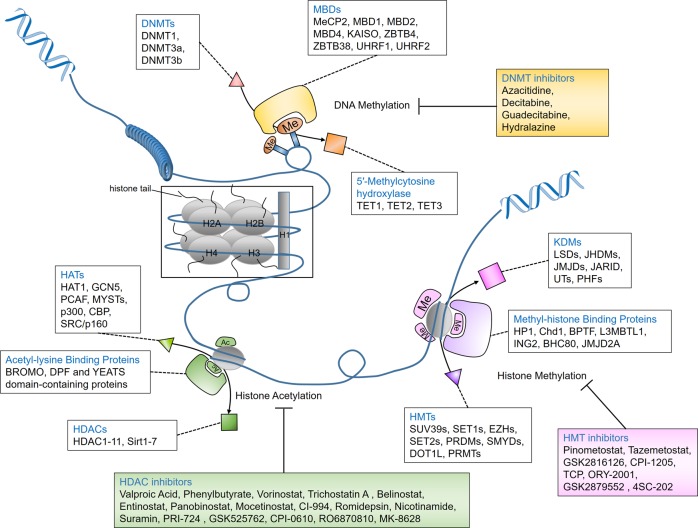
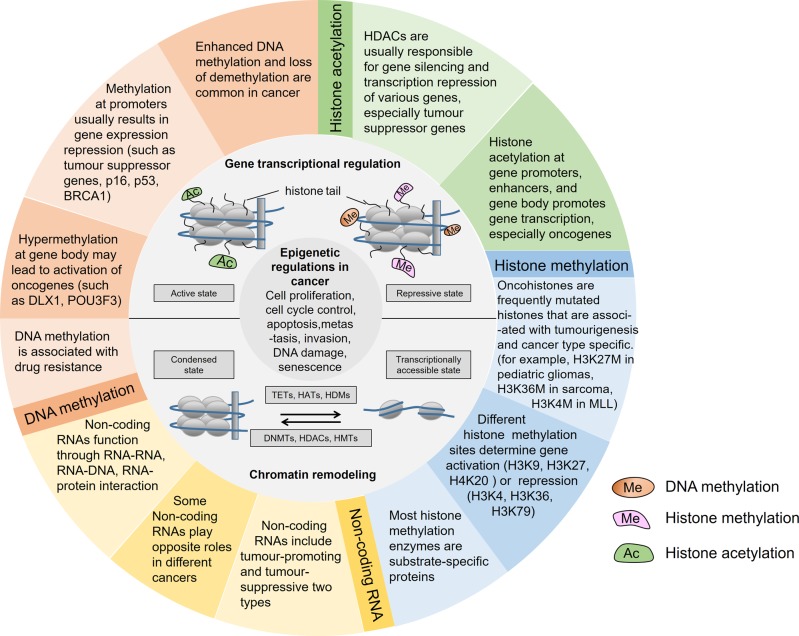
Epigenetic alternations concern heritable yet reversible changes in histone or DNA modifications that regulate gene activity beyond the underlying sequence. Epigenetic dysregulation is often linked to human disease, notably cancer. With the development of various drugs targeting epigenetic regulators, epigenetic-targeted therapy has been applied in the treatment of hematological malignancies and has exhibited viable therapeutic potential for solid tumors in preclinical and clinical trials. In this review, we summarize the aberrant functions of enzymes in DNA methylation, histone acetylation and histone methylation during tumor progression and highlight the development of inhibitors of or drugs targeted at epigenetic enzymes.
Overview
The claims and statistics of this paper haven’t been checked yet.
Free: it reads the open-access text and checks the first 5 claims that cite a source we can check. Create a free account to check every claim.
Integrity signals
Registry
Cites
Statistics
Figures
Verification
Claims the paper makes
The claims and statistics of this paper haven’t been checked yet.
Free: it reads the open-access text and checks the first 5 claims that cite a source we can check. Create a free account to check every claim.
Claims other papers make about this one
Each is checked against this paper’s own text: does it say what the citing paper says it does?
The check wasn’t confident either way, so it gives no verdict — never disputed.
In the citing paper
“Simvastatin, a cholesterol-lowering drug, displays anti-tumor effects in GBM by inducing apoptosis and inhibiting cell migration and invasion30.”
From Multi-omics analysis identifies glioblastoma dependency on H3K9me3 methyltransferase activity (2025) · cites this paper as [30]
Experimental — accuracy not yet measured
Self-check
Percentages, sums and reported differences re-computed from the paper’s own numbers.
The self-check needs the paper’s full text.
Citations
Cites
10 retracted
Expression of DNMT1 and DNMT3a Are Regulated by GLI1 in Human Pancreatic Cancer
He, S., Wang, F., Yang, L., Guo, C., Wan, R., Ke, A., Xu, L., Hu, G., Xu, X., Shen, J., et al. (2011) · PLoS ONE · doi:10.1371/journal.pone.0027684 · Cited by 88 · cited 1×
“cancer, the APC gene, encoding a regulator of cell junctions, is hypermethylated by DNMT overexpression.(29) During an analysis of colorectal disease methylation patterns, researchers found several genes that showed significant changes between precancerous diseases and cancers, including RUNX3, NEUROG1, CACNA1G, SFRP2…”
BackgroundRetractedcircZMYM2 Competed Endogenously with miR-335-5p to Regulate JMJD2C in Pancreatic Cancer
An, Y., Cai, H., Zhang, Y., Liu, S., Duan, Y., Sun, D., Chen, X., & He, X. (2018) · Cellular Physiology and Biochemistry · doi:10.1159/000495868 · Cited by 79
RetractedZhao, X., Zheng, F., Li, Y., Hao, J., Tang, Z., Tian, C., Yang, Q., Zhu, T., Diao, C., Zhang, C., et al. (2018) · Redox Biology · doi:10.1016/j.redox.2018.10.018 · Cited by 72
RetractedLi, T., Zheng, Q., An, J., Wu, M., Li, H., Gui, X., Pu, H., & Lu, D. (2016) · Molecular Therapy · doi:10.1038/mt.2015.208 · Cited by 56
RetractedHou, X., Gong, R., Zhan, J., Zhou, T., Ma, Y., Zhao, Y., Zhang, Y., Chen, G., Zhang, Z., Ma, S., et al. (2018) · BMC Cancer · doi:10.1186/s12885-018-4559-3 · Cited by 36
RetractedCai, M., Chen, Q., Shen, J., Lv, C., & Cai, L. (2018) · Journal of Cellular and Molecular Medicine · doi:10.1111/jcmm.13716 · Cited by 31
RetractedRETRACTED: Kaiso is expressed in lung cancer: Its expression and localization is affected by p120ctn
Dai, S., Wang, Y., Jiang, G., Zhang, P., Dong, X.-J., Wei, Q., Xu, H., Li, Q., Zhao, C., & Wang, E. (2009) · Lung Cancer · doi:10.1016/j.lungcan.2009.06.013 · Cited by 29
RetractedRETRACTED ARTICLE: TET2 inhibits tumorigenesis of breast cancer cells by regulating caspase-4
Zhu, X., & Li, S. (2018) · Scientific Reports · doi:10.1038/s41598-018-34462-z · Cited by 29
RetractedZhang, J., Liu, M., Liu, W., & Wang, W. (2019) · Artificial Cells Nanomedicine and Biotechnology · doi:10.1080/21691401.2019.1593857 · Cited by 13
RetractedSun, S., Zhang, Y., Zheng, J., Duan, B., Cui, J., Chen, Y., Deng, W., Ye, B., Liu, L., Chen, Y., et al. (2018) · Cell Death and Disease · doi:10.1038/s41419-018-0931-0 · Cited by 11
Retracted
Cited by
Items 801–900 of 997
Epigenetic alterations in urothelial bladder cancer associated with disease outcomes
Nunes, F. M., Apolónio, J. D., Mota‐Pinto, A., & Leao, R. R. N. (2023) · International Journal of Urology · doi:10.1111/iju.15335 · Cited by 2
“5,6 To date, methylation signatures have been applied as cancer biomarkers due to their dynamic behavior across tumor stage and grade, stability between individuals and consistency within tissue speci fi city.”
Epigenetic Regulator Enzymes and Their Implications in Distinct Malignancies
Ganai, S. A. (2020) · Springer eBooks · doi:10.1007/978-981-15-8179-3_2 · Cited by 2
Epigenetic Epidemiology of Obesity and Type 2 Diabetes
Ling, C., Ruhrmann, S., Säll, J., Bacos, K., & Rönn, T. (2022) · Springer eBooks · doi:10.1007/978-3-030-94475-9_19 · Cited by 2
Ma, B., Pan, J., Hou, X., Li, C., Xiong, T., Gong, Y., & Song, F. (2021) · Research Square · doi:10.21203/rs.3.rs-438740/v1 · Cited by 2
Chatterjee, A., Bararia, A., Ganguly, D., Roy, P., Banerjee, S., Ghosh, S., Gulati, S., Ghatak, S., Chattopadhyay, B. K., Maitra, A., et al. (2021) · bioRxiv (Cold Spring Harbor Laboratory) · doi:10.1101/2021.06.14.448193 · Cited by 2
Campit, S., Bhowmick, R., Lu, T., Saoji, A. V., Jin, R., Shay, M. R., Robida, A. M., & Chandrasekaran, S. (2023) · bioRxiv (Cold Spring Harbor Laboratory) · doi:10.1101/2023.02.27.530260 · Cited by 3
“Epigenome-targeted therapies are emerging as a therapeutic option for several cancers and immune disorders, with numerous drugs currently in the preclinical and clinical pipeline 28,29 .”
BackgroundBagheri, M., Lee, M. K., Muller, K. E., Miller, T. W., Pattabiraman, D. R., & Christensen, B. C. (2023) · bioRxiv (Cold Spring Harbor Laboratory) · doi:10.1101/2023.06.09.544426 · Cited by 2
DNA Methylation (DM) data format and DMtools for efficient DNA methylation data storage and analysisPreprint
Zhou, Q., Zhou, C., Zhu, Z., Sun, Y., & Li, G. (2023) · bioRxiv (Cold Spring Harbor Laboratory) · doi:10.1101/2023.11.27.568779 · Cited by 3
“…processes, such as cell differentiation (Bock, et al., 2012; Laurent, et al., 2010), development (Luo, et al., 2014), aging (Jones, et al., 2015), genomic imprinting (Tucci, et al., 2019), X chromosome inactivation (Luijk, et al., 2018) and other important biological processes (Yang, et al., 2014).”
BackgroundArai, S. (2023) · International Journal of Urology · doi:10.1111/iju.15361 · Cited by 2
Awad, S. M., Bonne, I., Sim, A. Y., & Abuelenain, G. L. (2024) · bioRxiv (Cold Spring Harbor Laboratory) · doi:10.1101/2024.08.16.608297 · Cited by 2
Predicting the effect of CRISPR-Cas9-based epigenome editingPreprint
Batra, S. S., Cabrera, A., Spence, J. P., Goell, J., Anand, S. S., Hilton, I. B., & Song, Y. S. (2024) · eLife · doi:10.7554/elife.92991.2 · Cited by 2
Павловна, М. В., Makus, J. V., Usalka, O., Lylova, E. S., Bugaeva, P., Михайловна, Ж. Е., Fedorov, D. A., Lizogub, O. P., Lesovaya, E. A., Belitsky, G. A., et al. (2020) · Siberian Journal of Oncology · doi:10.21294/1814-4861-2020-19-4-67-78 · Cited by 1
“In contrast to acetylation, methylation of histones H3 and H4 does not change the total charge of the molecule, and the effect on transcription occurs due to interaction of the effector molecules with modified bases [1].”
BackgroundInfluentialWnt signaling and Hedgehog expression in basal cell carcinoma
Houschyar, K. S., Borrelli, M. R., Tapking, C., Rein, S., Popp, D., Puladi, B., Wallner, C., Schulz, T., Maan, Z. N., Duscher, D., et al. (2021) · European Journal of Plastic Surgery · doi:10.1007/s00238-021-01920-3 · Cited by 1
“Tumor formation is a multi-stage process in which the standard controls over cell proliferation, cell differentiation, and cell–cell interactions are gradually lost due to the accumulation of genetic mutations in critical genes [36].”
BackgroundEpigenetic biomarkers in diagnosis, prognosis, and treatment of hepatocellular carcinoma
Kvaratskhelia, E., Kankava, K., Surmava, S., & Abzianidze, E. (2022) · Elsevier eBooks · doi:10.1016/b978-0-323-99283-1.00024-0 · Cited by 1
Local causal pathway discovery for single-cell RNA sequencing count data: a benchmark study
Ma, S., Wang, J., Bieganek, C., Tourani, R., & Aliferis, C. (2023) · Journal of Translational Genetics and Genomics · doi:10.20517/jtgg.2022.22 · Cited by 6
Role of Epigenetics in Cancer and Targeted Therapies for Oncologic Treatments
Martha, S., Sanjay, S. P., Manik, L. P., Babar, V. B., & Maheshwari, K. M. K. (2024) · Current Journal of Applied Science and Technology · doi:10.9734/cjast/2024/v43i64383 · Cited by 2
Star wars against leukemia: attacking the clones
Toma, M. M., & Skórski, T. (2024) · Leukemia · doi:10.1038/s41375-024-02369-6 · Cited by 3
“Thus, inhibitors of DNA methyltransferases (DNMTs), histone acetyltransferases and deacetylases (HATs and HDACs, respectively), and histone methyltransferases and demethylases (HMT and HDMT) have been developed and are used to treat cancer [67].”
BackgroundApproaches to anticancer therapy based on modulation of DNA methylation
Павловна, М. В., Makus, J. V., Popova, V. G., Usalka, O., Belitsky, G. A., Геннадиевна, Я. М., & Игоревич, К. К. (2024) · Siberian Journal of Oncology · doi:10.21294/1814-4861-2024-23-4-125-140 · Cited by 1
Kalsum, S., Xu, R., Akber, M., Huang, S., Lerm, M., Chen, Y., Lourda, M., Zhou, Y., & Brighenti, S. (2025) · Biomolecules · doi:10.3390/biom15040550 · Cited by 1
“Therefore, numerous epigenetic modulators, including HDAC inhibitors, are currently being tested in preclinical studies and clinical trials for different diseases [15,16].”
The role and mechanism of human papillomavirus in urinary system tumors
Huang, H., Feng, S., & Liu, Y. (2025) · Journal of International Medical Research · doi:10.1177/03000605251348233 · Cited by 1
Kundu, S., & Suresh, P. K. (2025) · Current Molecular Medicine · doi:10.2174/0115665240387430250508080548 · Cited by 4
Lee, D. H. T., Kim, J., Kim, K., & Lee, Y. (2025) · Experimental Neurobiology · doi:10.5607/en25017 · Cited by 2
“DNA modification, particularly methylation, is one form of nonmutational epigenetic event, and CpG methylation causes gene silencing [4, 5].”
Yang, J., Yan, X., Wang, X., Chang, X., Gao, J., & Song, G. (2025) · Expert Review of Anticancer Therapy · doi:10.1080/14737140.2025.2570164 · Cited by 3
“Epigenetic dysregulation is now recognized as a central hallmark in OSCC, driving tumor initiation, progression, immune evasion, and treatment resistance [161,162].”
Bibi, R., George, M., & Sarkar, K. (2025) · Journal of Immunotherapy · doi:10.1097/cji.0000000000000582 · Cited by 1
Vidalina, D., Ghali, L. R., Kassouf, N., Li, S., Li, D., & Wen, X. (2025) · Current Issues in Molecular Biology · doi:10.3390/cimb47120990 · Cited by 1
“EPZ6438 is currently being tested in numerous clinical trials involving B-cell lymphomas, advanced lymphomas, recurrent ovarian cancer, epithelial sarcoma, etc. [43,44].”
Jo, S.-R., Kim, J. S., Baek, S. H., & Jang, Y. K. (2025) · Scientific Reports · doi:10.1038/s41598-025-30772-1 · Cited by 4
“Epigenetic dysregulation is another hallmark of cancer 24–26 , including CRC 27,28 , where sequential genetic and epigenetic changes collectively drive tumor development.”
DNA methylation-mediated extracellular matrix gene silencing in colorectal cancer
Menyhárt, O., Müller, D., & Győrffy, B. (2026) · Seminars in Oncology · doi:10.1016/j.seminoncol.2026.152469 · Cited by 1
Thng, D. K. H., Hooi, L., Yong, W. K., Kappei, D., Toh, T. B., & Chow, E. K. (2026) · Oncogenesis · doi:10.1038/s41389-026-00597-2 · Cited by 1
SARS-CoV-2 altered mitochondrial DNA methylation in Indian COVID-19 patients
Kumari, D., Singh, S., Chauhan, D., Dange, K., Ganju, L., Dogra, V., Garg, I., Srivastava, S., & Singh, Y. (2026) · Scientific Reports · doi:10.1038/s41598-025-28945-z · Cited by 2
Tang, B., Lin, Y. N., Jiang, T., Chen, Y., Zhao, Q., Wang, S., Shen, Y., Wang, S., Wu, Q., Xie, P., et al. (2026) · Cell Communication and Signaling · doi:10.1186/s12964-025-02303-y · Cited by 2
“Epigenomic studies have revealed associations between histone glycosylation, aberrant DNA methylation, and cancer development and progression [52].”
EVIDENCE-BASED ANALYSIS OF ADVANCED CLINICAL MANAGEMENT IN ORAL SQUAMOUS CELL CARCINOMA
Zhang, G., CHEN, S., Li, S., Zhang, G., Wu, Y., Wang, L., Huang, G., & Li, C. (2026) · Journal of Evidence Based Dental Practice · doi:10.1016/j.jebdp.2026.102233 · Cited by 1
Abroudi, A. S., Jalaeianbanayan, A., Djamali, M., & Azizi, H. (2026) · Discover Oncology · doi:10.1007/s12672-026-04580-6 · Cited by 1
Song, H., Wang, X., Qin, Y., Yang, W., Cheng, Z., Yang, J., Yang, P., Yan, B., Wu, Z., Sheng, H., et al. (2025) · International Journal of Surgery · doi:10.1097/js9.0000000000003942 · Cited by 1
Wu, Y., Zhang, S., Zhang, S., Lü, J., Yang, Y., Zeng, Z., Lei, S., Mi, R., Zhang, Y., Ge, L., et al. (2026) · Cell Death and Disease · doi:10.1038/s41419-026-08731-z · Cited by 1
“In addition, epigenetic alterations — including DNA methylation, histone modi fi cations, and non ‑ coding RNA activity — contribute to the aberrant expression of apoptosis ‑ related genes, thereby facilitating tumor development [56].”
Oncogenic role of LncRNA DLEU2 in thyroid cancer through a NAT10/USP39 regulatory axis.
Yang, J.-W., Li, C., Yin, W., Fang, F., & Zhao, Z.-Y. (2026) · Mammalian Genome · doi:10.1007/s00335-026-10225-4 · Cited by 1
Luo, M., Wu, C., Zhou, M., Liu, R., Zhang, Y., Li, Y., Liao, Y., Huang, X. Y. S., Du, C., Lv, S., et al. (2026) · Oncogene · doi:10.1038/s41388-026-03828-3 · Cited by 1
(14321), W. Z., & Pan, J.-X. (2026) · Acta Pharmacologica Sinica · doi:10.1038/s41401-026-01835-4 · Cited by 3
“These alterations may confer intrinsic resistance to standard therapies while simultaneously creating synthetic-lethal vulnerabilities that can be therapeutically exploited [15, 16, 26].”
Paik, J. Y., Gajulapalli, S. R., Li, V., Park, S., Lee, Y., Orlikova-Boyer, B., Lorant, A., Christov, C., Kirsch, G., Kang, H. J., et al. (2026) · Biomedicine & Pharmacotherapy · doi:10.1016/j.biopha.2026.119652 · Cited by 1
Bakr, H., Al-Awar, A., Spetz, J. K. E., & Forssell-Aronsson, E. B. (2026) · International Journal of Molecular Sciences · doi:10.3390/ijms27198709 · Cited by 1
A gyógyszerkutatás új irányzatai: hatékonyság és biztonságosság
Kotschy, A. (2021) · Scientia et Securitas · doi:10.1556/112.2021.00028 · Cited by 1
Pandey, M., Lalwani, A., & Mehta, R. G. (2022) · BENTHAM SCIENCE PUBLISHERS eBooks · doi:10.2174/9781681089522112010010 · Cited by 1
Methylation of CpG Sites as Biomarkers Predictive of Drug-Specific Patient Survival in Cancer
Neary, B., Lin, S., & Qiu, P. (2022) · Cancer Informatics · doi:10.1177/11769351221131124 · Cited by 1
Pant, A., Pelham, C. J., & Jadhav, G. P. (2023) · Elsevier eBooks · doi:10.1016/b978-0-12-823931-5.00009-8 · Cited by 1
Inhibitors targeting epigenetic modifications in cancer
Baghel, V. S., Shinde, S., Sinha, V., Dixit, V., Tiwari, A. K., Saxena, S., Vishvakarma, N. K., Shukla, D., & Bhatt, P. (2023) · Elsevier eBooks · doi:10.1016/b978-0-323-99521-4.00007-6 · Cited by 1
Cai, Y., Chang, H., Pérez‐Losada, J., & Mao, J. (2023) · Oncology Insights · doi:10.55085/oi.2023.691 · Cited by 1
Lee, M. S., Min, N. Y., Kwon, H., Kim, Y., & Lee, I. K. (2023) · Open Journal of Genetics · doi:10.4236/ojgen.2023.131003 · Cited by 1
Kuo, C., Moi, S., Hou, M., Luo, C., & Pan, M. (2023) · International Journal of Molecular Sciences · doi:10.3390/ijms24065583 · Cited by 2
“Aberrant expression of these genes has been linked to the development and progression of breast cancer [19].”
BackgroundEpigenetic Signatures of Aging: A Comprehensive Study of Biomarker Discovery
Lee, M. S., Kwon, H., Kim, Y., Min, N. Y., Lee, S. Y., & Lee, I. K. (2023) · Advances in Aging Research · doi:10.4236/aar.2023.122002 · Cited by 2
Causes and Consequences of Lung Cancer Heterogeneity
Padhye, A. (2022) · American Journal of Biomedical Science & Research · doi:10.34297/ajbsr.2022.17.002384 · Cited by 1
Oncology: Way Forward from Clinical and Molecular Diagnosis to Treatment
Srivastava, S., & Pandey, A. (2023) · Springer eBooks · doi:10.1007/978-981-99-1529-3_1 · Cited by 2
Therapeutic Targeting of the Regulators of Cancer Epigenomes
Al-Janabi, I. I. (2023) · Al-Rafidain Journal of Medical Sciences · doi:10.54133/ajms.v5i.128 · Cited by 1
Epigenetic therapy: BBC1115, a novel BET inhibitor with broad antitumor activity
Cingaram, P. R. (2023) · Molecular Therapy — Nucleic Acids · doi:10.1016/j.omtn.2023.06.014 · Cited by 1
“Three categories of epigenetic regulators, namely writers, readers, and erasers, play crucial roles in installing, binding to, and removing epigenetic marks.(3,4) Recent efforts have focused on developing targeted strategies, leading to the FDA approval of tazemetostat, an HMT (histone methyltransferase) inhibitor, in…”
BackgroundAnticancer Potential of Plant-Derived Compounds: An Overview of Their Epigenetic Mode of Action
Soni, P., Ghufran, M. S., & Duddukuri, G. R. (2023) · Springer eBooks · doi:10.1007/978-3-031-28780-0_48 · Cited by 1
Epigenome editing in cancer: Advances and challenges for potential therapeutic options
Lee, S.-W., Frankston, C. M., & Kim, J. (2023) · International review of cytology · doi:10.1016/bs.ircmb.2023.10.001 · Cited by 1
Ministry of Health and Environment, A.-R. H. D., Mosa, H. M., & Al-Hamashi, A. A. (2023) · Azerbaijan Pharmaceutical and Pharmacoterapy Journal · doi:10.61336/appj/22-2-44 · Cited by 1
In silico analysis of hippo signaling pathway associated microRNAs in breast cancer
Bhavnagari, H. M., & Shah, F. D. (2024) · Human Gene · doi:10.1016/j.humgen.2024.201269 · Cited by 1
Lin, C. T., Ting, R.-T., Ou, Y.-H., Shao, T.-L., & Lee, M.-C. (2024) · iScience · doi:10.1016/j.isci.2024.109683 · Cited by 2
Shetty, M. G., Pai, P., Dey, B., Satyamoorthy, K., Shil, S., Nayak, U. Y., Ashwini, T., & Babitha, K. S. (2024) · DARU Journal of Pharmaceutical Sciences · doi:10.1007/s40199-024-00514-1 · Cited by 4
“Unlike genetic abnormalities, epigenetic modifications are reversible and responsive to extrinsic factors, making them valuable targets for cancer treatments [2, 3].”
BackgroundLin, H., Liao, F., Liu, J., Yang, Z., Zhang, J., Cheng, J., Zhou, H., Li, S., Li, L., Li, Y., et al. (2024) · Pediatric Research · doi:10.1038/s41390-024-03318-w · Cited by 1
Understanding epigenetics in health and human diseases – An overview
Agarwal, A., & Padhan, P. (2024) · Journal of Integrative Medicine and Research · doi:10.4103/jimr.jimr_54_24 · Cited by 1
Singh, H., Mohanto, S., Kumar, A., Mishra, A. K., Kumar, A., Mishra, A., Ahmed, M. G., Singh, M., Yadav, A. P., Chopra, S., et al. (2025) · Pathology - Research and Practice · doi:10.1016/j.prp.2025.155869 · Cited by 1
Transcriptome Complexity Disentangled: A Regulatory Molecules Approach
Asiaee, A., Abrams, Z. B., Pua, H. H., & Coombes, K. R. (2025) · International Journal of Molecular Sciences · doi:10.3390/ijms26062510 · Cited by 1
“First, several other types of regulatory molecules, such as epigenetic modifiers [43] and chromatin re-modeling complexes [44], play essential roles in gene regulation besides TFs and miRs.”
Epigenetic Therapy in Cervical Cancer
Jose, A., Shenoy, P. V., Malik, Y., Keni, S. S., Arya, N., & Kolathur, K. K. (2025) · Springer eBooks · doi:10.1007/978-981-96-3985-4_11 · Cited by 1
Cacabelos, R., Naidoo, V., Tellado, I., Corzo, L., Cacabelos, N., Cacabelos, P., Martínez-Iglesias, O. A., & Segre, R. (2025) · Elsevier eBooks · doi:10.1016/b978-0-443-18722-3.00029-3 · Cited by 1
Jose, A., Kulkarni, P., Kumar, N. A. N., Usman, N., Rodrigues, G. S., Shenoy, G. G., Damerla, R. R., Munisamy, M., Bisht, B., Varambally, S., et al. (2025) · Scientific Reports · doi:10.1038/s41598-025-13845-z · Cited by 2
“a substantial role in cancer detection, prevention, and development of targeted therapies 4 .”
UTX coordinates TCF1 and STAT3 to control progenitor CD8+ T cell fate in autoimmune diabetes
Chen, H.-C., Bang, M. F., Wang, H., Shpargel, K. B., Kohn, L. A., Sailer, D., Zhang, S. C., McCarthy, E. C., Seyedsadr, M., Stevens, S., et al. (2025) · Journal of Clinical Investigation · doi:10.1172/jci196325 · Cited by 1
“Therapies that modulate epigenetic mechanisms are already in use for cancer (52), and our data reveal the UTX:TCF1:STAT3 complex as a potential therapeutic target for chronic autoimmunity.”
Ganai, S. A. (2020) · Springer eBooks · doi:10.1007/978-981-15-8179-3_7 · Cited by 2
Maillard, M., Louveau, B., Vilquin, P., Goldwirt, L., Thomas, F., & Mourah, S. (2021) · Therapies · doi:10.1016/j.therap.2021.11.003 · Cited by 2
Quantum assisted unsupervised data clustering on the basis of neural networks
Lazarev, I. D., Narożniak, M., Byrnes, T., & Pyrkov, A. N. (2022) · International Conference on Micro- and Nano-Electronics (ICMNE) · doi:10.1117/12.2625092 · Cited by 1
Transcriptional Control Leading to Clinical Outcomes in Breast Cancer Cases
Aftab, A., Khan, R., Hameed, U., Abbas, T., & Ahmad, B. (2022) · Springer eBooks · doi:10.1007/978-981-19-0197-3_13 · Cited by 2
Ma, W., Liang, J., Zhang, S., Hu, N., Chen, Z., & Tian, D. (2020) · Research Square · doi:10.21203/rs.3.rs-113263/v1 · Cited by 1
Rapid Single-Pot Assembly of Modular Chromatin Proteins for Epigenetic Engineering v1Preprint
Priode, J. H., & Haynes, K. A. (2021) · doi:10.17504/protocols.io.brgcm3sw
Epigenetic Regulation of Sex Determination and Toxicity in Non‐mammalian Vertebrates
Yamagishi, G., Iguchi, T., & Miyagawa, S. (2022) · Wiley eBooks · doi:10.1002/9781119807704.ch19 · Cited by 1
He, Y., Yu, X., Zhang, M., & Guo, W. (2021) · Research Square · doi:10.21203/rs.3.rs-389804/v1 · Cited by 1
Lin, I., Awamleh, Z., Wei, A., Russell, B. E., Weksberg, R., & Arboleda, V. A. (2022) · bioRxiv (Cold Spring Harbor Laboratory) · doi:10.1101/2022.12.15.519823 · Cited by 1
“Targeting the epigenome is an emerging approach to treating cancer(17) yet there are no precision-targeted epigenomic treatments for rare disease patients(18).”
BackgroundDiscovering genetic biomarkers for targeted cancer therapeutics with eXplainable AIPreprint
Chakraborty, D., Gutierrez‐Chakraborty, E., Rodriguez‐Aguayo, C., Başağaoğlu, H., Lopez‐Berestein, G., & Amero, P. (2023) · bioRxiv (Cold Spring Harbor Laboratory) · doi:10.1101/2023.07.24.550346 · Cited by 1
“The literature further indicates that TAF10 may have significant implications, such as enhancing tumor-suppressing p53 activity ( 10 – 15 ) and regulating MYC transcriptional activity ( 16 , 17 ).”
BackgroundSteigerwald, H., Bozzetti, T., Tams, M., On, J., Hoffmann, G., Lambertz, J., Weidele, K., Treitschke, S., Reinhard, F., Kulik, A., et al. (2023) · bioRxiv (Cold Spring Harbor Laboratory) · doi:10.1101/2023.10.01.560038 · Cited by 1
“…deacetylases, DNA-methyltransferases, or bromodomain and extra-terminal protein inhibitors address ubiquitous epigenetic regulators, controlling a wide range of physiological processes, including cancer promotion and suppression, characterized by only limited cancer pathology specificity 27,28 .”
Predicting the effect of CRISPR-Cas9-based epigenome editingPreprint
Batra, S. S., Cabrera, A., Spence, J. P., Hilton, I. B., & Song, Y. S. (2023) · eLife · doi:10.7554/elife.92991.1 · Cited by 3
Exploration of Mechanisms of Drug Resistance in a Microfluidic Device and Patient TissuesPreprint
Lim, W., Hwang, I., Zhang, J., Chen, Z., Han, J., Jeon, J., Koo, B., Kim, S., Lee, J. E., Kim, Y., et al. (2024) · eLife · doi:10.7554/elife.88830.2 · Cited by 1
Self-citationNalla, K., Chatterjee, B., Poyya, J., Swain, A., Ghosh, K., Pan, A., Joshi, C. G., Manavathi, B., & Kanade, S. R. (2024) · bioRxiv (Cold Spring Harbor Laboratory) · doi:10.1101/2024.05.22.595443 · Cited by 1
“Conversely, it can lead to the activation of oncogenes, with cell proliferation and survival enhancement, contributing to malignant transformation (5,6) .”
BackgroundNavigating the autophagic landscape: Epigenetic modulation in gastrointestinal cancer
Ramoni, D., Carbone, F., & Montecucco, F. (2024) · World Journal of Gastroenterology · doi:10.3748/wjg.v30.i31.3628 · Cited by 1
“Furthermore, the regulation of gene expression by non-coding RNAs (ncRNAs)[19,20], functional RNA molecules that are not translated into proteins, but wield considerable influence over DNA methylation and chromatin organization, modulate the expression of numerous genes.”
Cancer Epigenetics and Bioinformatics
Dakal, T. C., Beura, A., Kaur, A., Gogoi, B., Sengupta, A., Suravajhala, P., & Kumar, A. (2024) · Elsevier eBooks · doi:10.1016/b978-0-323-95502-7.00160-3 · Cited by 1
Targeting (de)acetylation: A Diversity of Mechanism and Disease
Quaas, C. E., & Long, D. T. (2021) · Elsevier eBooks · doi:10.1016/b978-0-12-820472-6.00076-1
The clinical landscape of HDAC inhibitors
Ganesan, A. (2021) · Elsevier eBooks · doi:10.1016/b978-0-12-823928-5.00036-0
Franco, O. A., & Morales, N. O. (2021) · Revista Colombiana de Cancerología · doi:10.35509/01239015.726
Inibidores de Desmetilase Lisina-Específica 1 (LSD1) como candidatos a agentes antineoplásicos
Lima, E. J. C. (2021) · Digital Library of Theses and Dissertations (Universidade de São Paulo) · doi:10.11606/t.9.2021.tde-06072021-104351
González, L., & Alejandro, D. (2021)
Sun, Y., Guillamot, M., Dolgalev, I., Aifantis, I., & Axiotis, C. A. (2021) · Medical Research Archives · doi:10.18103/mra.v9i10.2570
García‐Giménez, J. L., Beltrán-García, J., Osca-Verdegal, R., Pallardó, F. V., Ushijima, T., & Tollefsbol, T. O. (2021) · Elsevier eBooks · doi:10.1016/b978-0-12-823008-4.00014-7 · Cited by 1
Epigenetics and precision medicine in bone and soft tissue sarcomas
Fatema, K., Luelling, S., Kirkham, M., Pavek, A., Heyneman, A. L., & Barrott, J. J. (2021) · Elsevier eBooks · doi:10.1016/b978-0-12-823008-4.00009-3 · Cited by 1
Planificación financiera y de marketing para alcanzar la rentabilidad
Fox, H. W. (1976) · Alta dirección
PHENANTHROLINE COMPLEXES OF RARE EARTHS IN SOLUTIONS
Konenko, L. I., & Poluektov, N. S. (1962) · OSTI OAI (U.S. Department of Energy Office of Scientific and Technical Information)
Batista, M. D. P. (2021) · Digital Library of Theses and Dissertations (Universidade de São Paulo) · doi:10.11606/t.17.2021.tde-07022022-172446
Ke, H., Ren, Z., Chen, S., Tseng, G. C., Qi, J., & Ma, T. (2022) · bioRxiv (Cold Spring Harbor Laboratory) · doi:10.1101/2022.02.21.481160
“To benchmark our method, we compared rPCor to other popular screening methods in linear models, including SIS (Fan and Lv, 2008), CIS (He et al., 2019) and PC-simple (B¨uhlmann et al., 2010), as well as a model-free screening method, DC-SIS (Li et al., 2012).”
BackgroundMethodInfluentialAge-dependent transcriptional and epigenetic alterations in mouse hepatocytes
Sharma, A. (2021) · DR-NTU (Nanyang Technological University) · doi:10.32657/10356/155390
Role of Epigenetics and its Basic Mechanism in Health and Disease
(2022) · Al-Azhar University Journal of Virus Researches and Studies · doi:10.21608/aujv.2022.222832
Ma, W., Liang, J., Zhang, S., Hu, N., Chen, Z., & Tian, D. (2020) · Research Square · doi:10.21203/rs.3.rs-92631/v1
TSE, C. (2022) · Cronfa (Swansea University) · doi:10.23889/suthesis.60060
Metadata
- Authors
- Cheng, Y., He, C., Wang, M., Ma, X., Mo, F., Yang, S., Han, J., & Wei, X.
- Affiliations
- Sichuan University (CN)
- Corresponding author
- Wei, Xiawei
- Venue
- Signal Transduction and Targeted Therapy
- Published
- 2019-12-17
- Volume
- 4
- Issue
- 1
- Pages
- 62-62
- ISSN
- 2059-3635 (ISSN-L)
- PMC
- PMC6915746
- OpenAlex
- W2995898384
- Cited by
- 1,097
- References
- 676
- Citations by year
- 2026: 75 · 2025: 157 · 2024: 198 · 2023: 217 · 2022: 175 · 2021: 190 · 2020: 77
- FWCI
- 9.76
- Type
- journal article
- Language
- en
- Open access
- gold
- doi.org
- Licence
- cc-by
- creativecommons.org/licenses/by/4.0 (tdm)
- creativecommons.org/licenses/by/4.0 (vor)
- Locations
- Signal Transduction and Targeted Therapy (publishedVersion, cc-by)
- Europe PMC (PubMed Central) (publishedVersion, cc-by)
- PubMed Central (publishedVersion, cc-by)
- PubMed (publishedVersion)
- DOAJ (DOAJ: Directory of Open Access Journals) (submittedVersion)
- Funders
- National Natural Science Foundation of China (No. 81602950)
- National Key Research and Development Program of China
- Topics
- Life Sciences › Biochemistry, Genetics and Molecular Biology › Molecular Biology › Epigenetics and DNA Methylation
- Life Sciences › Biochemistry, Genetics and Molecular Biology › Molecular Biology › Histone Deacetylase Inhibitors Research
- Life Sciences › Biochemistry, Genetics and Molecular Biology › Molecular Biology › Chromatin Remodeling and Cancer
- Keywords
- epigenetic regulators, DNA methylation, histone acetylation, histone methylation, epigenetic enzymes, enzyme inhibitors, hematologic malignancies, solid tumors, tumor progression, clinical trials
About these checks
Registry, retraction, Cites and statistics results are computed, not judged, with one exception: a printed reference that no index lists is read once by a model before it counts as a citation error. Claims are extracted by a model and kept only when their quote appears verbatim in the text; each cited source is then checked, with a model’s help, for whether it says what the claim relies on. Those verdicts can be wrong — read the claim’s quote and the cited source before relying on one.
Statistics and arithmetic are recomputed, not judged.
Confidence bands are shown only for fields calibrated on our annotated test set. None is calibrated yet, so no band is shown.
What counts as a claim ›How we measure confidence ›How we check this ›
Are you an author, or do you see a problem with this page? Request a review
Data sources
Bibliographic data: Semantic Scholar, OpenAlex, Crossref.
Contains information from the Semantic Scholar Academic Graph Datasets, made available under the ODC Attribution License (ODC-BY 1.0).
Semantic Scholar’s data is described in: Kinney, R., et al. (2023). The Semantic Scholar Open Data Platform. arXiv:2301.10140.
