

Comprehensive review of targeted therapy for colorectal cancer
Open accessThe DOI matches its Crossref record; 521 of the 521 references it cites were found in a registry or an index.
Abstract
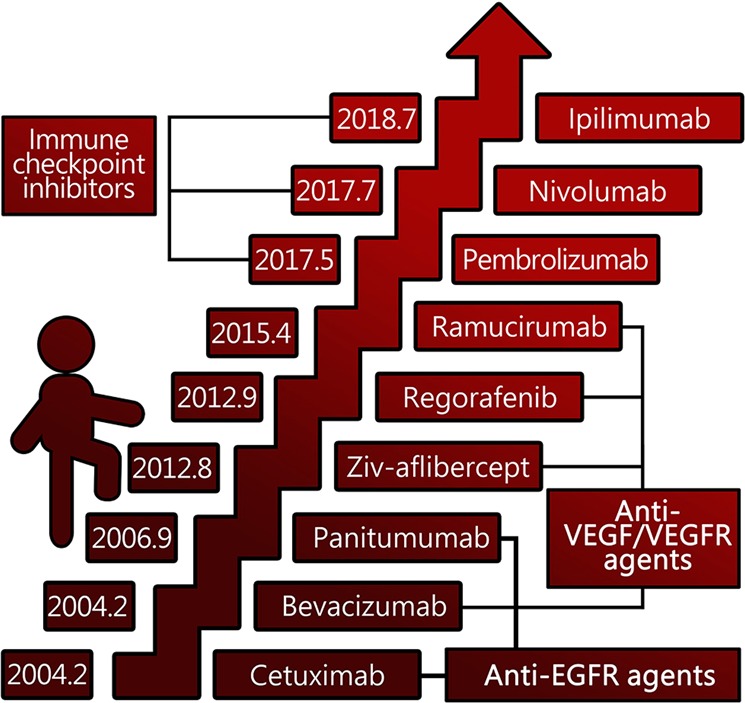
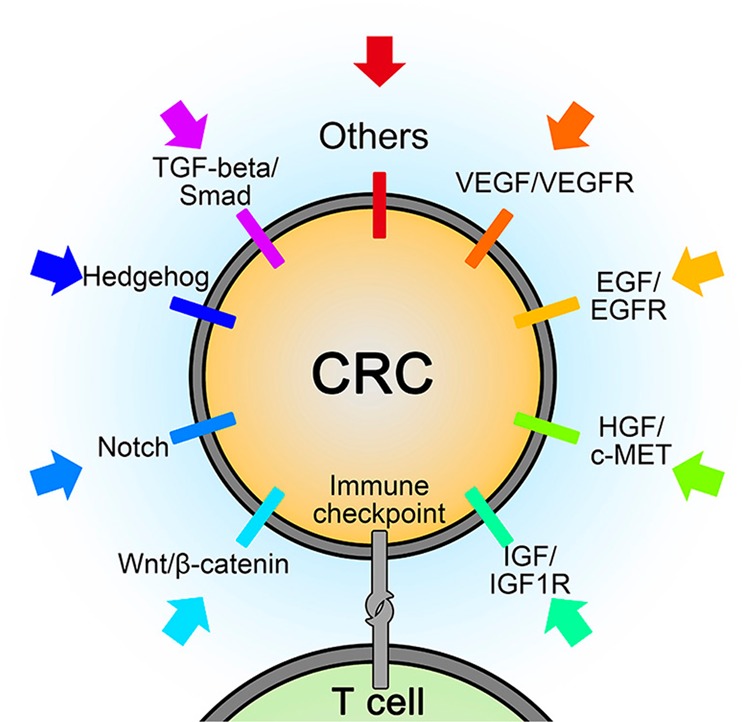
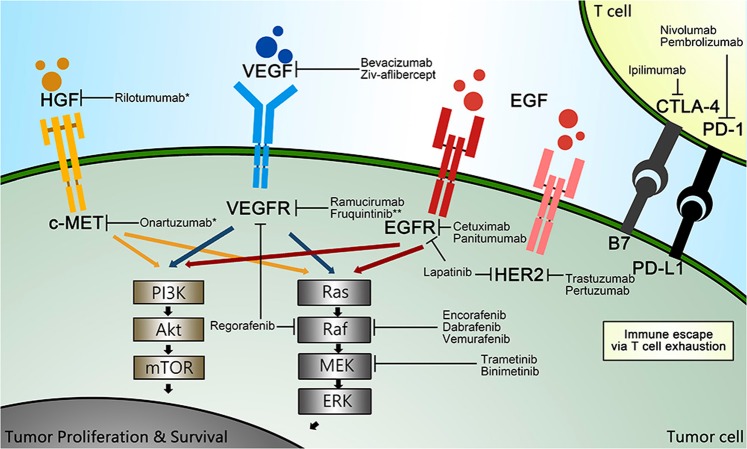
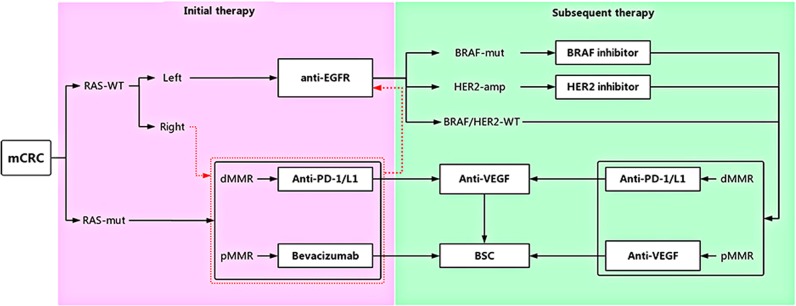
Colorectal cancer (CRC) is among the most lethal and prevalent malignancies in the world and was responsible for nearly 881,000 cancer-related deaths in 2018. Surgery and chemotherapy have long been the first choices for cancer patients. However, the prognosis of CRC has never been satisfying, especially for patients with metastatic lesions. Targeted therapy is a new optional approach that has successfully prolonged overall survival for CRC patients. Following successes with the anti-EGFR (epidermal growth factor receptor) agent cetuximab and the anti-angiogenesis agent bevacizumab, new agents blocking different critical pathways as well as immune checkpoints are emerging at an unprecedented rate. Guidelines worldwide are currently updating the recommended targeted drugs on the basis of the increasing number of high-quality clinical trials. This review provides an overview of existing CRC-targeted agents and their underlying mechanisms, as well as a discussion of their limitations and future trends.
Overview
The claims and statistics of this paper haven’t been checked yet.
Free: it reads the open-access text and checks the first 5 claims that cite a source we can check. Create a free account to check every claim.
Integrity signals
Registry
Cites
Statistics
Figures
Verification
Claims the paper makes
The claims and statistics of this paper haven’t been checked yet.
Free: it reads the open-access text and checks the first 5 claims that cite a source we can check. Create a free account to check every claim.
Claims other papers make about this one
Each is checked against this paper’s own text: does it say what the citing paper says it does?
The source backs part of the claim, not all of it — or backs it for a different population, condition or comparison.
In the citing paper
“The therapeutic landscape of metastatic colorectal cancer is moving toward biomarker-selected strategies. However, options are limited to agents directed at tumors carrying BRAF V600E mutations and to antibodies against programmed death 1 (PD-1) in patients with high microsatellite instability or mismatch-repair deficiency.13,26,27”
From Adagrasib with or without Cetuximab in Colorectal Cancer with Mutated KRAS G12C (2023) · cites this paper as [13]
Experimental — accuracy not yet measuredThe source backs part of the claim, not all of it — or backs it for a different population, condition or comparison.
In the citing paper
“Current first-line standard of care for KRAS G12C-positive CRC includes 5-FU-based chemotherapy with irinotecan, oxaliplatin and/or capecitabine, but is limited by low tumor-specific selectivity and systemic toxicity21.”
From Divarasib plus cetuximab in KRAS G12C-positive colorectal cancer: a phase 1b trial (2024) · cites this paper as [21]
Experimental — accuracy not yet measuredThe cited source says what the claim attributes to it.
In the citing paper
“Cetuximab is an anti-EGFR monoclonal antibody that is indicated for the treatment of RAS wild-type metastatic colorectal cancer, either as monotherapy or in combination with chemotherapy.13”
From Adagrasib with or without Cetuximab in Colorectal Cancer with Mutated KRAS G12C (2023) · cites this paper as [13]
The check wasn’t confident either way, so it gives no verdict — never disputed.
In the citing paper
“Currently, no therapies that specifically target KRAS G12C protein have been approved for the treatment of colorectal cancer.13,19”
From Adagrasib with or without Cetuximab in Colorectal Cancer with Mutated KRAS G12C (2023) · cites this paper as [13]
Experimental — accuracy not yet measuredIn the citing paper
“ROS-mediated DNA damage induces p53 phosphorylation, which in turn stabilizes p53, indispensable to counter tumorigenic growth and differentiation.68”
Self-check
Percentages, sums and reported differences re-computed from the paper’s own numbers.
The self-check needs the paper’s full text.
Citations
Cites
2 retracted
Lee, Y.-J., Karl, D. L., Maduekwe, U. N., Rothrock, C., Ryeom, S., D'Amore, P. A., & Yoon, S. S. (2010) · Cancer Research · doi:10.1158/0008-5472.can-10-1138 · Cited by 61
RetractedYang, S., Zhang, X., Qu, H., Qu, B., Yin, X., & Zhao, H. (2019) · Cancer Gene Therapy · doi:10.1038/s41417-019-0098-6 · Cited by 16 · cited 1×
“Similarly, an exciting antitumor performance of cabozantinib was observed in research based on CRC xenograft models and cell lines, while the results from CRC-focused clinical trials are awaited.(289,336,337) Merestinib, an inhibitor of MET, AXL (Axl receptor tyrosine kinase), TEK (tunica interna endothelial cell kina…”
BackgroundRetractedBray, F., Ferlay, J., Soerjomataram, I., Siegel, R. L., Torre, L. A., & Jemal, A. (2018) · CA: A Cancer Journal for Clinicians · doi:10.3322/caac.21492 · Cited by 84,109
PD-1 and PD-L1 Immune Checkpoint Blockade to Treat Breast Cancer
Hartkopf, A. D., Taran, F.-A., Wallwiener, M., Walter, C. B., Krämer, B., Grischke, E.-M., & Brucker, S. Y. (2016) · Breast Care · doi:10.1159/000453569 · Cited by 30,845
Siegel, R. L., Miller, K. D., & Jemal, A. (2019) · CA: A Cancer Journal for Clinicians · doi:10.3322/caac.21551 · Cited by 20,160
Adverse Renal Effects of Immune Checkpoint Inhibitors: A Narrative Review
Wanchoo, R., Karam, S., Uppal, N. N., Barta, V. S., Deray, G., Devoe, C., Launay-Vacher, V., Jhaveri, K. D., & on behalf of Cancer and Kidney International Network Workgroup on Immune Checkpoint Inhibitors (2017) · American Journal of Nephrology · doi:10.1159/000455014 · Cited by 15,256
Improved Survival with Ipilimumab in Patients with Metastatic Melanoma
Hodi, F. S., O'Day, S. J., McDermott, D. F., Weber, R. W., Sosman, J. A., Haanen, J. B., Gonzalez, R., Robert, C., Schadendorf, D., Hassel, J. C., et al. (2010) · New England Journal of Medicine · doi:10.1056/nejmoa1003466 · Cited by 15,155
Bevacizumab plus Irinotecan, Fluorouracil, and Leucovorin for Metastatic Colorectal Cancer
Hurwitz, H., Fehrenbacher, L., Novotny, W., Cartwright, T., Hainsworth, J., Heim, W., Berlin, J., Baron, A., Griffing, S., Holmgren, E., et al. (2004) · New England Journal of Medicine · doi:10.1056/nejmoa032691 · Cited by 10,968
Immunity, Inflammation, and Cancer
Grivennikov, S. I., Greten, F. R., & Karin, M. (2010) · Cell · doi:10.1016/j.cell.2010.01.025 · Cited by 10,755
Mutations of the BRAF gene in human cancer
Davies, H., Bignell, G. R., Cox, C., Stephens, P., Edkins, S., Clegg, S., Teague, J., Woffendin, H., Garnett, M. J., Bottomley, W., et al. (2002) · Nature · doi:10.1038/nature00766 · Cited by 10,674
Cited by
Items 901–1,000 of 1,000
Loss of tyrosine phosphatase SHP2 activity promotes growth of colorectal carcinoma HCT-116 cells
Chen, X., Fu, X., Zhao, W., Ho, W., Xing, S., & Zhao, Z. J. (2020) · Signal Transduction and Targeted Therapy · doi:10.1038/s41392-020-0192-0 · Cited by 6
Craig, S. G., Mende, S. P., Humphries, M. P., Bingham, V., Pulsawatdi, A. V., Loughrey, M. B., Coleman, H. G., McQuaid, S., Wilson, R. H., Schaeybroeck, S. V., et al. (2021) · Molecular Oncology · doi:10.1002/1878-0261.13089 · Cited by 6
NDRG4 sensitizes CRC cells to 5‑FU by upregulating DDIT3 expression
Li, R., He, C., Shen, L., Wang, S., Shen, Y., Feng, F., Zhang, J., & Zheng, J. (2021) · Oncology Letters · doi:10.3892/ol.2021.13043 · Cited by 7
“As such, minimizing tumor size and inhibiting further growth and proliferation are the primary aims for patients whose tumors cannot be completely removed, or those who are unable to tolerate surgery, for which chemotherapy and radiotherapy are the key treatment options (3).”
The impact of DNA testing on management of patients with colorectal cancer
Howe, J. R. (2021) · Annals of Gastroenterological Surgery · doi:10.1002/ags3.12526 · Cited by 7
Goldberg, R. M., Adams, R., Buyse, M. E., Eng, C., Grothey, A. F., André, T., Sobrero, A. F., Lichtman, S. M., Benson, A. B., Punt, C. J. A., et al. (2021) · JNCI Journal of the National Cancer Institute · doi:10.1093/jnci/djab218 · Cited by 7
Mudd, A. M., Gu, T., Munagala, R., Jeyabalan, J., Fraig, M., Egilmez, N. K., & Gupta, R. C. (2021) · Oncoscience · doi:10.18632/oncoscience.548 · Cited by 7
Evaluation of age-associated DNA methylation markers in colorectal cancer of Thai population
Lucknuch, T., & Praihirunkit, P. (2022) · Forensic Science International Reports · doi:10.1016/j.fsir.2022.100265 · Cited by 8
Supplementation with High or Low Iron Reduces Colitis Severity in an AOM/DSS Mouse Model
Moon, S., Kim, M., Kim, Y.-H., & Lee, S.-M. (2022) · Nutrients · doi:10.3390/nu14102033 · Cited by 7
“Despite recent developments and improvements in various treatment strategies, the mortality rate of CRC remains high [2].”
BackgroundProtein Kinase Inhibitor-Mediated Immunoprophylactic and Immunotherapeutic Control of Colon Cancer
Ghione, S., Racoeur, C., Mabrouk, N., Shan, J., Groetz, E., Ballot, E., Truntzer, C., Chouchane, L., Végran, F., Paul, C., et al. (2022) · Frontiers in Immunology · doi:10.3389/fimmu.2022.875764 · Cited by 7
“Unlike the very low number of the small molecules multikinase inhibitors tested against CRC, a myriad of other small molecules directed selected kinases involved in various pathways mediating the initiation, progression, and migration of CRC are currently being explored [for review (35)].”
BackgroundLiao, W., Hu, X., Du, Z., Wang, P., & Ding, K. (2022) · Glycoconjugate Journal · doi:10.1007/s10719-022-10088-2 · Cited by 7
Antibody-Loaded Nanoplatforms for Colorectal Cancer Diagnosis and Treatment: An Update
Djermane, R., Nieto, C., Vega, M. A., & del Valle, E. M. M. (2023) · Pharmaceutics · doi:10.3390/pharmaceutics15051514 · Cited by 8
“In addition, chemotherapy has other major, well-known drawbacks, such as low tumor specificity, the emergence of unpredictable resistance and, consistently, poor response rates [4,9,10].”
BackgroundInfluentialAXL receptor as an emerging molecular target in colorectal cancer
Rosa, L. D., Stasi, R. D., Fusco, V., & D’Andrea, L. D. (2024) · Drug Discovery Today · doi:10.1016/j.drudis.2024.104005 · Cited by 7
Han, W., Shi, W., Yao, Q., Wu, H., Lei, X., & Guo, G. (2024) · Journal of Drug Delivery Science and Technology · doi:10.1016/j.jddst.2024.105819 · Cited by 6
Brown, K. A., Cordts, K. M. P., & Lally, R. M. (2024) · Journal of Psychosocial Oncology · doi:10.1080/07347332.2024.2425679 · Cited by 5
Lin, T., Yang, S.-L., Chen, C., & Liu, P. (2025) · Journal of Proteome Research · doi:10.1021/acs.jproteome.4c00738 · Cited by 6
Parida, R. C., Thamızhanban, D., Lakshmi, K. V., & Jena, G. K. (2025) · Biomedical Materials & Devices · doi:10.1007/s44174-025-00415-0 · Cited by 5
Theranostics in the management of colorectal cancer
Menon, G., Anandan, T., Kolage, S. M., Shenoy, S. C., Lohakare, O. K., Ahire, A. S., & Ravindran, D. (2025) · Discover Nano · doi:10.1186/s11671-025-04390-9 · Cited by 7
THERAPEUTIC TARGETING OF MOLECULAR PATHWAYS IN COLORECTAL CANCER
Nur, A. E. (2023) · Experimental Oncology · doi:10.32471/exp-oncology.2312-8852.vol-44-no-1.17455 · Cited by 5
Zhai, S., Li, X., Wu, Y., Shi, X., Ji, B., & Qiu, C. (2022) · Frontiers in Genetics · doi:10.3389/fgene.2022.980437 · Cited by 5
“Of patients who are diagnosed as metastatic colorectal cancer, about 70–75% of patients survive more than 1 year, about 30–35% patients survive more than 3 years, and less than 20% patients survive more than 5 years (Xie et al., 2020; Biller and Schrag, 2021).”
BackgroundThe Glasgow Microenvironment Score and risk and site of recurrence in TNM I–III colorectal cancer
Alexander, P. G., Wyk, H. C. V., Pennel, K. A. F., Hay, J. R., McMillan, D. C., Horgan, P. G., Roxburgh, C. S. D., Edwards, J., & Park, J. H. (2022) · British Journal of Cancer · doi:10.1038/s41416-022-02069-x · Cited by 7
“It was observed that 54 of the patients with rectal cancer also received neoadjuvant chemoradiotherapy and this may have had an impact on these recurrence figures [20].”
BackgroundXu, M. Q., Tsunedomi, R., Kiyotani, K., Tomochika, S., Furuya, K., NAKAJIMA, M., MATSUI, H., Tokumitsu, Y., Shindo, Y., Yoshida, S., et al. (2023) · Anticancer Research · doi:10.21873/anticanres.16197 · Cited by 5
Al-Omari, M., Al-Omari, T., Batainah, N., Al-Qauod, K., Olejnicka, B. T., & Janciauskiene, S. M. (2023) · BMC Cancer · doi:10.1186/s12885-023-11195-5 · Cited by 6
“In recent years, an increasing number of monotherapy or combination therapy strategies using immune checkpoint inhibitors for CRC have been designed [9].”
BackgroundVashishat, A., Singh, A., Kurmi, B. D., Gupta, G. D., & Singh, D. (2023) · Therapeutic Delivery · doi:10.4155/tde-2023-0027 · Cited by 6
Wu, X., Chen, C.-W., Jaiswal, S., Chang, T.-S., Zhang, R., Dame, M. K., Duan, Y., Jiang, H., Spence, J. R., Hsieh, S., et al. (2023) · Cancers · doi:10.3390/cancers15194795 · Cited by 5
“This aberrant signaling pathway has been associated with cell motility, proliferation, apoptosis, and angiogenesis [24,25].”
BackgroundSala, A. A. E., Khawaja, G., Khalil, M. I. M., & Salam, S. A. (2024) · Journal of Pharmacy and Pharmacology · doi:10.1093/jpp/rgae022 · Cited by 5
Roles of long non‑coding RNA SNHG16 in human digestive system cancer (Review)
Zhao, L., Kan, Y., Wang, L., Pan, J., Li, Y., Zhu, H., Yang, Z., Xiao, L., Fu, X., Peng, F., et al. (2024) · Oncology Reports · doi:10.3892/or.2024.8765 · Cited by 7
Chung, D.-J., Wang, C., Liu, P.-J., Ng, S.-K., Luo, C.-K., Jwo, S.-H., Li, C.-T., Hsu, D.-Y., Fan, C.-C., & Wei, T.-T. (2024) · Cancer Gene Therapy · doi:10.1038/s41417-024-00838-9 · Cited by 6
“Although the gradual discovery of chemotherapeutic and molecular targeted agents has increased the survival time of patients with metastatic CRC from 12 to 24 months in the past two decades, inevitably, the emergence of acquired resistance ultimately leads to mortality [3 – 5].”
Liu, L., Guo, X., Ye, W., & Liu, Y. (2024) · International Journal of General Medicine · doi:10.2147/ijgm.s487525 · Cited by 5
Puxeddu, M., Ling, L., Ripa, S., D’Ambrosio, M., Nalli, M., Parisi, A., Sciò, P., Coluccia, A., Granese, A., Santelli, M., et al. (2024) · Journal of Medicinal Chemistry · doi:10.1021/acs.jmedchem.4c01708 · Cited by 5
Dey, S., Ghosh, M., & Dev, A. (2024) · Gene · doi:10.1016/j.gene.2024.149099 · Cited by 5
Bulkurcuoğlu, B., Gürbüz, M. U., Tyčiaková, S., Pavlov, K. P., Mojzesova, N., Matúšková, M., Tülü, M., & Erçelen, Ş. (2024) · Biotechnology Journal · doi:10.1002/biot.202400362 · Cited by 5
“Targeted CRC therapies focus on specific weaknesses of cancer cells, potentially leading to more effective treatment with fewer side effects [44].”
Tang, Y.-C., Ou, J., Hsu, S.-C., Huang, C., Lin, L.-M., Chang, H.-H., Wang, Y.-H., Huang, Z.-T., Sun, M., Liu, K.-J., et al. (2024) · Pharmacological Research · doi:10.1016/j.phrs.2024.107556 · Cited by 5
Beni, F. A., Abdolvand, M., poorbafrani, F., Salehi, M., Dehghanian, F., & Kazemi, M. (2025) · Egyptian Journal of Medical Human Genetics · doi:10.1186/s43042-025-00663-1 · Cited by 5
Kwon, Y.-J., Kim, D. Y., Kim, U.-I., Kim, S. H., Kim, Y.-H., Kim, K., & Kim, J. (2025) · Biochemical Pharmacology · doi:10.1016/j.bcp.2025.116842 · Cited by 5
Mallick, S., Narayana, V. K., Rai, A. B., Upadhyay, S. S., Prasad, T. S. K., Sudheer Shenoy, P., & Bose, B. (2025) · The International Journal of Biochemistry & Cell Biology · doi:10.1016/j.biocel.2025.106773 · Cited by 6
Xu, C., Zhang, Z., Ying, Y., Li, S., Dang, Y., He, L., Liu, X., Wang, P., & Xue, F. (2025) · Journal of Colloid and Interface Science · doi:10.1016/j.jcis.2025.137529 · Cited by 6
Fu, X., Rui, L., Meiru, C., Lü, Y., & Ying, J. (2025) · Scientific Reports · doi:10.1038/s41598-025-98266-8 · Cited by 5
Knockout of the sulfide: quinone oxidoreductase SQR reduces growth of HCT116 tumor xenograft
Lu, T., Wang, Q., Xin, Y., Wu, X., Wang, Y., Xia, Y., Xun, L., & Liu, H. (2025) · Redox Biology · doi:10.1016/j.redox.2025.103650 · Cited by 5
“CRC is the second leading cause of cancer-related deaths globally, and its intrinsic and acquired resistance to drugs highlights the requirement for novel therapeutic targets [20,21].”
Huang, Y., Huang, Y., Huang, W., Yu, M., Chuang, C.-H., Hsu, Y., Chen, H.-C., Chen, L., Huang, S., & Hsu, M. (2025) · Scientific Reports · doi:10.1038/s41598-025-04714-w · Cited by 7
“The success of monoclonal antibodies targeting vascular endothelial growth factor (VEGF) and epidermal growth factor receptor (EGFR) signaling, as well as the advent of immune checkpoint inhibitors, has significantly improved therapeutic outcomes in CRC patients 39 .”
Wu, N., Jia, W., Ning, J., Zhou, L., Li, Z., Zhang, A. L., & Song, X. (2025) · Frontiers in Immunology · doi:10.3389/fimmu.2025.1628005 · Cited by 6
“Current clinical treatment for colorectal cancer relies on 5-FU-based chemotherapy (3), often combined with targeted therapies like anti-EGFR or anti-VEGF agents (4).”
Lee, Y.-J., Kim, J. H., Kim, T. Y., Park, H. H., Kim, M. E., Park, S., Sin, S.-I., Chung, J. H., & Park, K. (2025) · Food Research International · doi:10.1016/j.foodres.2025.116894 · Cited by 6
Ashique, S., Debnath, B., Ramzan, M., Taj, T., Islam, A., Chaudhary, P., Kaushik, M., Garg, A., Sen, A., Raveendran, C., et al. (2025) · Biomedicine & Pharmacotherapy · doi:10.1016/j.biopha.2025.118308 · Cited by 5
Masci, D., Ling, L., Yang, L., Puxeddu, M., Colla, C., Coluccia, A., Santelli, M., Sciò, P., Cuřínová, P., Ansari, M. S. Z., et al. (2025) · Journal of Medicinal Chemistry · doi:10.1021/acs.jmedchem.5c01561 · Cited by 6
Naringenin in the Prevention of Colon Cancer: An Updated Review
Sarojamma, V., & Vadde, R. (2022) · Onco Therapeutics · doi:10.1615/oncotherap.2022044893 · Cited by 6
Lastraioli, E., Bettiol, A., Iorio, J., Limatola, E., Checcacci, D., Parisi, E., Bianchi, C., Arcangeli, A., Iannopollo, M., Costanzo, F. D., et al. (2023) · Cells · doi:10.3390/cells12111458 · Cited by 7
“The gold standard of treatment for CRC patients is represented by surgery but metastatic (TNM IV, mCRC) patients are also treated by systemic approaches, based on chemotherapy, targeted therapy, and combination therapies, although frequently characterized by reduced effectiveness [3].”
BackgroundAbdelaziz, M. A. A., Nelson, V. K., Kumarasamy, M., & Peraman, R. (2023) · Toxicon · doi:10.1016/j.toxicon.2023.107243 · Cited by 5
Alkader, M. S., Shahin, A. A., Alsoreeky, M. S., Matarweh, H., & Abdullah, I. A. (2023) · Cureus · doi:10.7759/cureus.46187 · Cited by 9
“It is recommended that all patients with mCRC be offered palliative chemotherapy, which can increase survival time by up to 20 months and is offered depending on the performance status of patients [10].”
BackgroundSawai, K., Goi, T., Kimura, Y., & Koneri, K. (2023) · Cancers · doi:10.3390/cancers15235517 · Cited by 5
Chen, J., Chang, X., Li, X., Liu, J., Wang, N., Wu, Y., Zheng, L., & Nie, X. (2023) · Cancer Medicine · doi:10.1002/cam4.6766 · Cited by 6
“6,16,17 Preclinical evidence demonstrated that VEGF and EGF share some common downstream signaling pathways to regulate cellular growth and proliferation.”
BackgroundMethodInfluentialComprehensive characterization of PKHD1 mutation in human colon cancer
Han, L., Gong, F.-M., Wu, X., Tang, W., Bao, H., Wang, Y., Wang, D., Sun, Y., & Li, P. (2024) · Cancer Medicine · doi:10.1002/cam4.6796 · Cited by 6
“6 Hence, identifying and characterizing novel CRC-associated genes could help optimize the clinical diagnosis and offer insights into new, targeted therapeutic approaches to CRC.”
BackgroundHo, Y. H., Hsu, C. Y., Li, A. F. Y., & Liang, W. Y. (2024) · Human Pathology · doi:10.1016/j.humpath.2024.02.012 · Cited by 5
Chen, E. X., Kavan, P., Tehfe, M. A., Kortmansky, J. S., Sawyer, M. B., Chiorean, E. G., Lieu, C. H., Polite, B., Wong, L., Fakih, M., et al. (2024) · Clinical Colorectal Cancer · doi:10.1016/j.clcc.2024.03.002 · Cited by 7
Li, W., Zheng, C., Xu, X., Xia, Y., Zhang, K., Huang, A., Zhang, X., Yong, Z., Chen, G., & Zhang, S. (2024) · Cellular & Molecular Biology Letters · doi:10.1186/s11658-024-00555-z · Cited by 6
“HER2 has been considered to be one of the most successfully targeted therapeutic markers expressed in various tumor tissues [23, 51, 52].”
BackgroundNoninvasive Stratification of Colon Cancer by Multiplex PET Imaging
Malviya, G., Lannagan, T. R. M., Johnson, E. R., Mackintosh, A., Bielik, R., Peters, A., Soloviev, D., Brown, G. D., Jackstadt, R., Nixon, C., et al. (2024) · Clinical Cancer Research · doi:10.1158/1078-0432.ccr-23-1063 · Cited by 6
“The identi fi cation of subtypes in colorectal cancer aims to facilitate effective interventions speci fi c to each subtype, similar to the use of BRAF inhibitors for BRAF V600E mutant tumors and EGFR inhibitors for wild-type RAS tumors (5).”
Zhang, S., Huang, L., Zeng, Y., Gao, G., Wu, H. M., Li, D., & Guo, R. (2024) · ACS Omega · doi:10.1021/acsomega.4c00901 · Cited by 5
Hardhiyuna, M., Arbi, U. Y., Zuraida, Z., & Ahmadi, P. (2024) · Asian Pacific Journal of Cancer Prevention · doi:10.31557/apjcp.2024.25.5.1737 · Cited by 6
“The pathology of CRC is very complex and varied because they were triggered by various factors related to diet, lifestyle, and also related to genetic factors [4].”
BackgroundFeng, L., Wang, X., Guo, X., Shi, L., Su, S., Li, X., Wang, J., Tan, N., Ma, Y., & Wang, Z. (2024) · Angewandte Chemie · doi:10.1002/ange.202402543 · Cited by 5
Jong, K. X. J., Mohamed, E. H. M., Syafruddin, S. E., Faruqu, F. N., Vellasamy, K. M., Ibrahim, K., & Ibrahim, Z. A. (2024) · Molecular Biology Reports · doi:10.1007/s11033-024-09895-7 · Cited by 5
Zhou, J., Sun, H., Zhou, H., & Liu, Y. (2024) · Journal of Biochemical and Molecular Toxicology · doi:10.1002/jbt.70009 · Cited by 5
Ma, J., Wang, Y., Zhao, Z., Xiong, Z.-Y., Zhang, Z., Cai, J., & Guo, J. (2024) · Frontiers in Oncology · doi:10.3389/fonc.2024.1483987 · Cited by 5
Abdelgadir, O., Kuo, Y., Khan, M. F., Okorodudu, A. O., Cheng, Y., & Dong, J. (2025) · Diagnostics · doi:10.3390/diagnostics15050590 · Cited by 7
Nicolini, A., Ferrari, P., Silvestri, R., & Bini, D. A. (2025) · MedComm · doi:10.1002/mco2.70373 · Cited by 8
Tong, G., Luo, Q., Pang, X., Chen, B., Lv, G., Li, X., & Wang, S. (2021) · Cancer Biotherapy and Radiopharmaceuticals · doi:10.1089/cbr.2020.4013 · Cited by 5
“20 Nanosized therapeutics, including nanoconjugates of monoclonal antibodies along with drugs and organic/inorganic nanoparticles, were also used to treat CRC. 21 Furthermore, angiogenesis inhibitors, epidermal growth factor receptor-targeted therapy, Serine/ Threonine-protein kinase B-raf (BRAF)…”
Muscella, A., Stefàno, E., Calabriso, N., Pascali, S. D., Fanizzi, F., & Marsigliante, S. (2021) · Biochemical Pharmacology · doi:10.1016/j.bcp.2021.114702 · Cited by 5
Garza-Treviño, E. N., Martı́nez-Rodrı́guez, H. G., González, P. D., Solís‐Coronado, O., Ortı́z-López, R., Soto‐Domínguez, A., Treviño, V., Padilla-Rivas, G. R., Islas, J. F., Quiroz-Reyes, A. G., et al. (2021) · Molecular Medicine Reports · doi:10.3892/mmr.2021.12360 · Cited by 5
Yao, D., Yu, L., He, W., Hu, Y., Xu, H., Yuan, Y., & Dai, H. (2021) · BMJ Open · doi:10.1136/bmjopen-2020-046166 · Cited by 5
Exploring Cytotoxic Potential of Ciclopirox on Colorectal Cancer Cells by In-Silico Methodology
(2021) · Biointerface Research in Applied Chemistry · doi:10.33263/briac126.72877310 · Cited by 5
Fu, X., & Xu, X. (2022) · Cancer Management and Research · doi:10.2147/cmar.s351518 · Cited by 6
“Therapies targeting cancer-related pathways to affect the expression and accumulation of RNAs and proteins with critical regulatory functions in cancers are emerging novel options to treat cancers.(9) For instance, Wnt/β-catenin signaling can be targeted to suppress CRC progression.”
BackgroundHu, L., Dong, H., He, L., Shi, M., Xiang, N., Su, Y., Wang, C., Tian, Y., Hu, Y., Wang, H., et al. (2022) · Biological and Pharmaceutical Bulletin · doi:10.1248/bpb.b22-00053 · Cited by 5
Ding, J., Cao, Y., Qi, C., & Zong, Z. (2023) · Human Cell · doi:10.1007/s13577-023-00899-2 · Cited by 5
Lam, K. K., Low, Y. S., Lo, M., Wong, M., Tang, C. L., Tan, E., Chok, A. Y., Seow‐En, I., Wong, S. H., & Cheah, P. Y. (2023) · Frontiers in Oncology · doi:10.3389/fonc.2023.1036871 · Cited by 6
“In fact, to date, only one clinical trial (NCT02788279) has progressed past Phase 2 [reviewed by Xie, Chen (23)].”
BackgroundThe Role of Targeted Therapy in the Multi-Disciplinary Approach to Colorectal Liver Metastasis
Ruff, S. M., Shannon, A. H., & Pawlik, T. M. (2023) · Cancers · doi:10.3390/cancers15133513 · Cited by 6
“MET has been identified as a potential cause of EGFR inhibitor resistance [69].”
BackgroundInfluentialEphraim, R., Fraser, S., Devereaux, J., Stavely, R. G., Feehan, J., Eri, R. D., Nurgali, K., & Apostolopoulos, V. (2023) · Cancers · doi:10.3390/cancers15194793 · Cited by 6
“In CRC, Ctla-4 promotes tumour growth and metastasis [81], as well as silencing CRC cell lysate-loaded dendritic cells for immunotherapy [82,83].”
BackgroundPermatasari, H. K., Bdira, S. B., Moon, M., Amalia, N., Sulistomo, H. W., Riawan, W., Choi, J., Chung, S., Park, M. N., Seo, B.-K., et al. (2023) · Journal of Agriculture and Food Research · doi:10.1016/j.jafr.2023.100796 · Cited by 8
Yarmand, S., Abdollahi, N., Nejad, E. T., Souni, F., Vali, M., Nouri, M., Shateri, Z., & Rashidkhani, B. (2024) · Clinical Nutrition ESPEN · doi:10.1016/j.clnesp.2024.02.003 · Cited by 6
Sud, R., & Mujeeb, V. R. (2022) · Asian Pacific Journal of Cancer Care · doi:10.31557/apjcc.2022.7.1.91-100 · Cited by 5
“Her2nu targeted therapy along with chemotherapy is an approved option in metastatic colorectal cancer [45].”
BackgroundOncostatin M Receptor as a Therapeutic Target for Radioimmune Therapy in Synovial Sarcoma
McCollum, S., Kalivas, A., Kirkham, M., Kunz, K. M., Okojie, J., Pavek, A., & Barrott, J. J. (2022) · Pharmaceuticals · doi:10.3390/ph15060650 · Cited by 5
Randall‐Demllo, S., Al-Qadami, G. H., Raposo, A. E., Ma, C., Priebe, I. K., Hor, M., Singh, R., & Fung, K. Y. C. (2024) · Cancers · doi:10.3390/cancers16213664 · Cited by 6
“In particular, treatment options for advanced CRC have grown, with newer targeted chemotherapies and immunotherapies increasing survival for patients with metastatic disease [6,7].”
BackgroundGallbladder Cancer: Epigenetic Landscape, Targeted Therapy, and Prospect of Epitherapy
Sharma, N., Tomar, A., & Tiwari, P. K. (2023) · Springer eBooks · doi:10.1007/978-981-19-6442-8_12 · Cited by 4
Chetveryakov, A. V., & Львович, Ц. В. (2023) · Zhurnal «Patologicheskaia fiziologiia i eksperimental`naia terapiia» · doi:10.25557/0031-2991.2023.01.56-62 · Cited by 4
Atwan, Q. S., & Al-Ogaidi, I. A. Z. (2024) · Biomedical Materials · doi:10.1088/1748-605x/ad1dfc · Cited by 4
“These treatment options aim to remove or destroy cancer cells, prevent their growth, or improve the body’s immune response against cancer (Xie et al 2020).”
Immunologic aspects of colorectal cancer progression
Викторовна, Т. А., Vladimirova, L. Y., Sagakyants, A. B., Dzhenkova, E. A., Novikova, I. A., & Zlatnik, E. Y. (2024) · South Russian Journal of Cancer · doi:10.37748/2686-9039-2024-5-1-6 · Cited by 4
Chen, W., Mao, W., Yin, Y., Ma, Z., Song, M., Ma, Z., Li, T., Zhu, J., Liu, C., Yu, H., et al. (2024) · Chemical Communications · doi:10.1039/d4cc00085d · Cited by 4
Sun, Z., Wang, H., Xu, Y., Liu, Y., Wang, L., Zhou, R., Zhou, R., Ma, W., & Zhang, T. (2024) · Journal of Gastrointestinal Oncology · doi:10.21037/jgo-23-956 · Cited by 4
Archana, & Deshmukh, R. (2024) · Nanoscience & Nanotechnology-Asia · doi:10.2174/0122106812306507240725114851 · Cited by 4
ARID1A loss sensitizes colorectal cancer cells to floxuridine
Xiang, C., Wang, Z., Yu, Y., Han, Z., Lu, J., Pan, L., Zhang, X., Wang, Z., He, Y., Wang, K., et al. (2024) · Neoplasia · doi:10.1016/j.neo.2024.101069 · Cited by 4
“Despite advancements in treatment, including cytotoxic chemotherapy, targeted agents, and immune checkpoint inhibitors, the five-year survival rate for metastatic CRC remains dismally low at around 20 % [8,9].”
Zhang, Y., Gao, S., Mao, J., Song, Y., Wang, X., Jiang, J., Li, Z., Zhou, Z., & Wang, J. (2024) · Molecules · doi:10.3390/molecules29215214 · Cited by 4
“With the success of the anti-EGFR drug cetuximab and the anti-angiogenic drug bevacizumab, new drugs that block different key pathways and immune checkpoints are emerging at an unprecedented rate [11].”
BackgroundContemporary trends in utilization of metastasectomy in the era of targeted and immunotherapies
Passman, J. E., Kallan, M. J., Roberson, J. L., Ginzberg, S. P., Amjad, W., Ballester, J. M. S., Tortorello, G. N., Fraker, D. L., Karakousis, G. C., Bartlett, E. K., et al. (2024) · Cancer · doi:10.1002/cncr.35664 · Cited by 4
Elkattan, H. H., El‐Sisi, A. E., & El-Lakkany, N. M. (2024) · Toxicology Reports · doi:10.1016/j.toxrep.2024.101856 · Cited by 5
Park, J.-H., Hwang, Y.-N., Na, H.-H., Kim, D.-Y., Lee, H.-J., Kwon, T.-H., Park, J.-S., & Kim, K. (2024) · Journal of pharmacopuncture · doi:10.3831/kpi.2024.27.4.332 · Cited by 5
Walle, G. T., Kitaw, T. A., & Masresha, S. A. (2025) · BMC Cancer · doi:10.1186/s12885-025-13462-z · Cited by 4
Nadukkandy, A. S., Blaize, B., Kumar, C. D., Mori, G., Cordani, M., & Kumar, L. D. (2025) · Cellular Signalling · doi:10.1016/j.cellsig.2025.111605 · Cited by 5
Mahmoud, M. O., Al‐Hamid, H. A., Hassan, N. F., El‐Ansary, M. R., & Gomaa, S. B. (2025) · Journal of Biochemical and Molecular Toxicology · doi:10.1002/jbt.70206 · Cited by 4
CanSeer: a translational methodology for developing personalized cancer models and therapeutics
Butt, R. N., Bibi, A., Sultan, M. U., Tanveer, Z. B., Gondal, M. N., Hussain, R., Khan, S., Akbar, R., Nasir, Z., Khalid, M. F., et al. (2025) · Scientific Reports · doi:10.1038/s41598-025-99219-x · Cited by 5
Cyclodextrins as non-viral vectors in cancer theranostics: A review
Qu, G., Xu, H., Ma, L., Feng, S., Li, Y., & Zhang, X. (2025) · International Journal of Biological Macromolecules · doi:10.1016/j.ijbiomac.2025.143697 · Cited by 7
Targeted apoptotic immune modulator for the treatment of metastatic EGFR-positive solid tumors
Broka, D. M., Klein, S., Shir, A., Schade, B., Saxena, M. T., Dasargyri, A., Jarzębińska, A., Feyter, C. D., Bajic, D., Colecchia, D., et al. (2025) · Proceedings of the National Academy of Sciences · doi:10.1073/pnas.2500489122 · Cited by 4
“The EGFR monoclonal antibodies, cetux imab and panitumumab, were approved for the treatment of met astatic colorectal cancer (mCRC), and cetuximab for HN cancer, but their impact on progression - free survival or overall survival in the metastatic setting is limited ( 43 – 45 ).”
Ullah, M. A., Paul, P., Runa, S. A., Johura, F., Tonmoy, M. I. Q., Shakil, M. S. K., Rashid, R., Rahaman, M. M., & Bahadur, N. M. (2025) · Medinformatics · doi:10.47852/bonviewmedin52024568 · Cited by 4
“Targeted therapy is a precision medicine approach that shows promise in cancer treatment by specifically targeting genes or proteins associated with cancer development [9, 10].”
Huang, L., Tong, Y., Li, X., Wang, W., Wang, Z., Chen, B., Jifu, E., Zhou, R., Wang, H., & He, J. (2025) · Molecular Medicine · doi:10.1186/s10020-025-01252-z · Cited by 4
“…and excavate more molecular targets or markers that can be used for disease diagnosis and treatment, so as to enhance the clinical precise treatment of colorectal cancer patients to improve the prognosis and survival of patients (Harada and Morlote 2020; Li et al. 2021a; Xie et al. 2020).”
Savino, G., Rosso, G., D’Aloia, M., Roppolo, I., & Cauda, V. (2025) · Materials & Design · doi:10.1016/j.matdes.2025.114478 · Cited by 4
Teixeira, S., Ferreira, D., Rodrigues, A. R. O., Rodrigues, L. R., Castanheira, E. M. S., & Carvalho, M. A. (2025) · Pharmaceuticals · doi:10.3390/ph18081210 · Cited by 5
“Compounds based on pyrimido[5,4-d ]pyrimidine scaffold (in blue), exemplified in Figure 1, have been presented as targeted anticancer agents, whose may inhibit signaling pathways by either directly inhibiting tyrosine kinase receptors, like EGFR and HER2, or inhibiting nucleoside-nucleobase…”
Influential
Metadata
- Authors
- Xie, Y.-H., Chen, Y.-X., & Fang, J.-Y.
- Affiliations
- Shanghai Jiao Tong University (CN)
- Corresponding author
- Fang, Jing-Yuan
- ORCID
- Fang, Jing-Yuan
- Venue
- Signal Transduction and Targeted Therapy
- Published
- 2020-03-20
- Volume
- 5
- Issue
- 1
- Pages
- 22-22
- ISSN
- 2059-3635 (ISSN-L)
- PMC
- PMC7082344
- OpenAlex
- W3011481749
- Semantic Scholar
- 4980bbd78186d8dcd72cea78c224da6b545d763a
- Cited by
- 1,687
- References
- 521
- Citations by year
- 2026: 153 · 2025: 285 · 2024: 348 · 2023: 346 · 2022: 300 · 2021: 202 · 2020: 51
- FWCI
- 24.09
- Type
- journal article
- Language
- en
- Open access
- gold
- doi.org
- Licence
- cc-by
- creativecommons.org/licenses/by/4.0 (tdm)
- creativecommons.org/licenses/by/4.0 (vor)
- Locations
- Signal Transduction and Targeted Therapy (publishedVersion, cc-by)
- PubMed Central (publishedVersion, cc-by)
- PubMed (publishedVersion)
- Funders
- National Natural Science Foundation of China (81421001, 81530072)
- Topics
- Health Sciences › Medicine › Oncology › Colorectal Cancer Treatments and Studies
- Health Sciences › Medicine › Oncology › Colorectal Cancer Surgical Treatments
- Health Sciences › Medicine › Oncology › Pancreatic and Hepatic Oncology Research
- Keywords
- colorectal cancer, targeted therapy, metastatic colorectal cancer, anti-EGFR therapy, cetuximab, bevacizumab, angiogenesis inhibitors, immune checkpoint inhibitors, molecular pathways, drug mechanisms, treatment guidelines
- MeSH terms
- Bevacizumab, Cetuximab, Humans, Neoplasm Metastasis, Neovascularization, Pathologic, Colorectal Neoplasms, Molecular Targeted Therapy, ErbB Receptors
About these checks
Registry, retraction, Cites and statistics results are computed, not judged, with one exception: a printed reference that no index lists is read once by a model before it counts as a citation error. Claims are extracted by a model and kept only when their quote appears verbatim in the text; each cited source is then checked, with a model’s help, for whether it says what the claim relies on. Those verdicts can be wrong — read the claim’s quote and the cited source before relying on one.
Statistics and arithmetic are recomputed, not judged.
Confidence bands are shown only for fields calibrated on our annotated test set. None is calibrated yet, so no band is shown.
What counts as a claim ›How we measure confidence ›How we check this ›
Are you an author, or do you see a problem with this page? Request a review
Data sources
Bibliographic data: Semantic Scholar, OpenAlex, Crossref.
Contains information from the Semantic Scholar Academic Graph Datasets, made available under the ODC Attribution License (ODC-BY 1.0).
Semantic Scholar’s data is described in: Kinney, R., et al. (2023). The Semantic Scholar Open Data Platform. arXiv:2301.10140.
