

Comprehensive review of targeted therapy for colorectal cancer
Open accessThe DOI matches its Crossref record; 521 of the 521 references it cites were found in a registry or an index.
Abstract
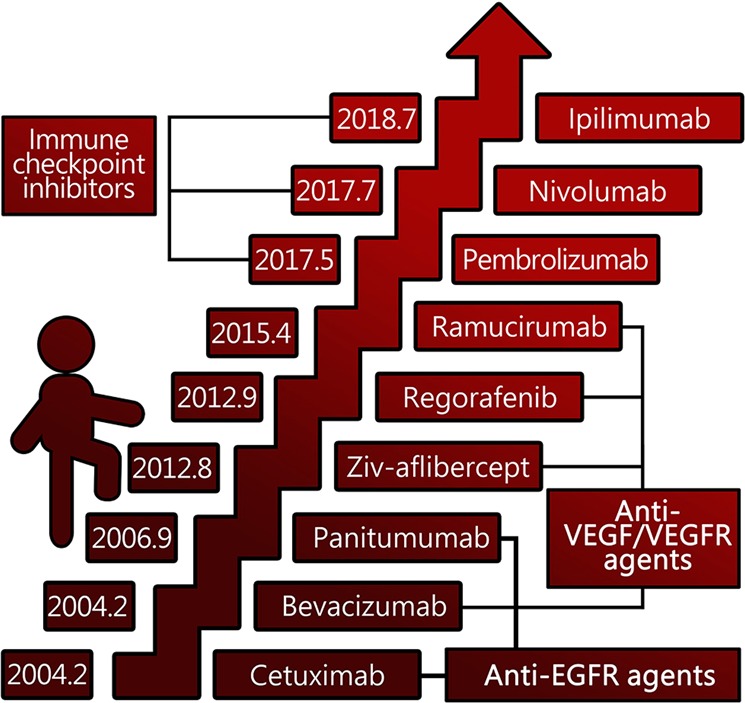
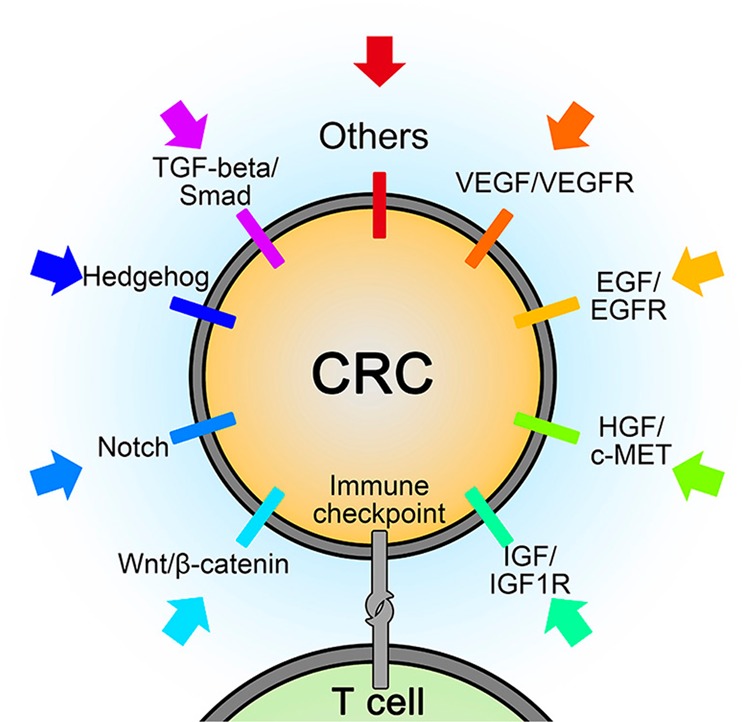
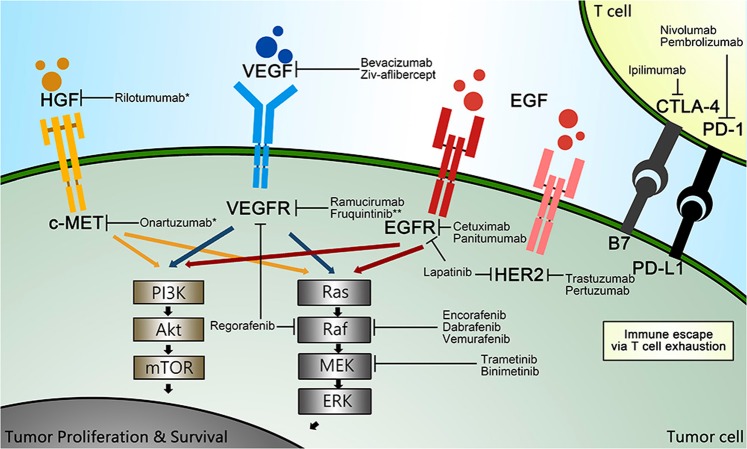
Colorectal cancer (CRC) is among the most lethal and prevalent malignancies in the world and was responsible for nearly 881,000 cancer-related deaths in 2018. Surgery and chemotherapy have long been the first choices for cancer patients. However, the prognosis of CRC has never been satisfying, especially for patients with metastatic lesions. Targeted therapy is a new optional approach that has successfully prolonged overall survival for CRC patients. Following successes with the anti-EGFR (epidermal growth factor receptor) agent cetuximab and the anti-angiogenesis agent bevacizumab, new agents blocking different critical pathways as well as immune checkpoints are emerging at an unprecedented rate. Guidelines worldwide are currently updating the recommended targeted drugs on the basis of the increasing number of high-quality clinical trials. This review provides an overview of existing CRC-targeted agents and their underlying mechanisms, as well as a discussion of their limitations and future trends.
Overview
The claims and statistics of this paper haven’t been checked yet.
Free: it reads the open-access text and checks the first 5 claims that cite a source we can check. Create a free account to check every claim.
Integrity signals
Registry
Cites
Statistics
Figures
Verification
Claims the paper makes
The claims and statistics of this paper haven’t been checked yet.
Free: it reads the open-access text and checks the first 5 claims that cite a source we can check. Create a free account to check every claim.
Claims other papers make about this one
Each is checked against this paper’s own text: does it say what the citing paper says it does?
The source backs part of the claim, not all of it — or backs it for a different population, condition or comparison.
In the citing paper
“The therapeutic landscape of metastatic colorectal cancer is moving toward biomarker-selected strategies. However, options are limited to agents directed at tumors carrying BRAF V600E mutations and to antibodies against programmed death 1 (PD-1) in patients with high microsatellite instability or mismatch-repair deficiency.13,26,27”
From Adagrasib with or without Cetuximab in Colorectal Cancer with Mutated KRAS G12C (2023) · cites this paper as [13]
Experimental — accuracy not yet measuredThe source backs part of the claim, not all of it — or backs it for a different population, condition or comparison.
In the citing paper
“Current first-line standard of care for KRAS G12C-positive CRC includes 5-FU-based chemotherapy with irinotecan, oxaliplatin and/or capecitabine, but is limited by low tumor-specific selectivity and systemic toxicity21.”
From Divarasib plus cetuximab in KRAS G12C-positive colorectal cancer: a phase 1b trial (2024) · cites this paper as [21]
Experimental — accuracy not yet measuredThe cited source says what the claim attributes to it.
In the citing paper
“Cetuximab is an anti-EGFR monoclonal antibody that is indicated for the treatment of RAS wild-type metastatic colorectal cancer, either as monotherapy or in combination with chemotherapy.13”
From Adagrasib with or without Cetuximab in Colorectal Cancer with Mutated KRAS G12C (2023) · cites this paper as [13]
The check wasn’t confident either way, so it gives no verdict — never disputed.
In the citing paper
“Currently, no therapies that specifically target KRAS G12C protein have been approved for the treatment of colorectal cancer.13,19”
From Adagrasib with or without Cetuximab in Colorectal Cancer with Mutated KRAS G12C (2023) · cites this paper as [13]
Experimental — accuracy not yet measuredIn the citing paper
“ROS-mediated DNA damage induces p53 phosphorylation, which in turn stabilizes p53, indispensable to counter tumorigenic growth and differentiation.68”
Self-check
Percentages, sums and reported differences re-computed from the paper’s own numbers.
The self-check needs the paper’s full text.
Citations
Cites
2 retracted
Lee, Y.-J., Karl, D. L., Maduekwe, U. N., Rothrock, C., Ryeom, S., D'Amore, P. A., & Yoon, S. S. (2010) · Cancer Research · doi:10.1158/0008-5472.can-10-1138 · Cited by 61
RetractedYang, S., Zhang, X., Qu, H., Qu, B., Yin, X., & Zhao, H. (2019) · Cancer Gene Therapy · doi:10.1038/s41417-019-0098-6 · Cited by 16 · cited 1×
“Similarly, an exciting antitumor performance of cabozantinib was observed in research based on CRC xenograft models and cell lines, while the results from CRC-focused clinical trials are awaited.(289,336,337) Merestinib, an inhibitor of MET, AXL (Axl receptor tyrosine kinase), TEK (tunica interna endothelial cell kina…”
BackgroundRetractedBray, F., Ferlay, J., Soerjomataram, I., Siegel, R. L., Torre, L. A., & Jemal, A. (2018) · CA: A Cancer Journal for Clinicians · doi:10.3322/caac.21492 · Cited by 84,109
PD-1 and PD-L1 Immune Checkpoint Blockade to Treat Breast Cancer
Hartkopf, A. D., Taran, F.-A., Wallwiener, M., Walter, C. B., Krämer, B., Grischke, E.-M., & Brucker, S. Y. (2016) · Breast Care · doi:10.1159/000453569 · Cited by 30,845
Siegel, R. L., Miller, K. D., & Jemal, A. (2019) · CA: A Cancer Journal for Clinicians · doi:10.3322/caac.21551 · Cited by 20,160
Adverse Renal Effects of Immune Checkpoint Inhibitors: A Narrative Review
Wanchoo, R., Karam, S., Uppal, N. N., Barta, V. S., Deray, G., Devoe, C., Launay-Vacher, V., Jhaveri, K. D., & on behalf of Cancer and Kidney International Network Workgroup on Immune Checkpoint Inhibitors (2017) · American Journal of Nephrology · doi:10.1159/000455014 · Cited by 15,256
Improved Survival with Ipilimumab in Patients with Metastatic Melanoma
Hodi, F. S., O'Day, S. J., McDermott, D. F., Weber, R. W., Sosman, J. A., Haanen, J. B., Gonzalez, R., Robert, C., Schadendorf, D., Hassel, J. C., et al. (2010) · New England Journal of Medicine · doi:10.1056/nejmoa1003466 · Cited by 15,155
Bevacizumab plus Irinotecan, Fluorouracil, and Leucovorin for Metastatic Colorectal Cancer
Hurwitz, H., Fehrenbacher, L., Novotny, W., Cartwright, T., Hainsworth, J., Heim, W., Berlin, J., Baron, A., Griffing, S., Holmgren, E., et al. (2004) · New England Journal of Medicine · doi:10.1056/nejmoa032691 · Cited by 10,968
Immunity, Inflammation, and Cancer
Grivennikov, S. I., Greten, F. R., & Karin, M. (2010) · Cell · doi:10.1016/j.cell.2010.01.025 · Cited by 10,755
Mutations of the BRAF gene in human cancer
Davies, H., Bignell, G. R., Cox, C., Stephens, P., Edkins, S., Clegg, S., Teague, J., Woffendin, H., Garnett, M. J., Bottomley, W., et al. (2002) · Nature · doi:10.1038/nature00766 · Cited by 10,674
Cited by
Items 401–500 of 1,000
Khan, M. Z. I., & Law, H. (2021) · Frontiers in Molecular Biosciences · doi:10.3389/fmolb.2021.627022 · Cited by 21
Babajnai, A., Rahmani, S., Asadi, M. J., Gheytanchi, E., Adibhesami, G., Vakhshiteh, F., & Madjd, Z. (2025) · Cancer Cell International · doi:10.1186/s12935-025-03758-2 · Cited by 23
Al-Jaber, H., Biswas, K. H., & Al-Mansoori, L. (2025) · Frontiers in Oncology · doi:10.3389/fonc.2025.1570712 · Cited by 23
Synergistic activation of mutant TERT promoter by Sp1 and GABPA in BRAFV600E-driven human cancers
Wu, Y., Shi, L., Zhao, Y., Chen, P., Cui, R., Ji, M., He, N., Wang, M., Li, G., & Hou, P. (2021) · npj Precision Oncology · doi:10.1038/s41698-020-00140-5 · Cited by 24
Leonard, N. A., Reidy, E., Thompson, K., McDermott, E. A., Peerani, E., Tomas-Bort, E., Balkwill, F. R., Loessner, D., & Ryan, A. E. (2021) · Cancers · doi:10.3390/cancers13235998 · Cited by 21
“EGFR blocking/inhibition is the most successful targeted therapy for the treatment of CRC to date [66].”
BackgroundBaker, K. J., O’Donnell, C., Bendix, M. B., Keogh, S., Byrne, J., O’Riordain, M., Neary, P., Houston, A. M., & Brint, E. K. (2022) · Oncogene · doi:10.1038/s41388-022-02281-2 · Cited by 20
Mechanical signatures of human colon cancers
Lopez‐Crapez, E., Costa, L., Tosato, G., Ramos, J., Mazard, T., Guiramand, J., Thierry, A. R., Colinge, J., Milhiet, P., & Bénistant, C. (2022) · Scientific Reports · doi:10.1038/s41598-022-16669-3 · Cited by 21
Yang, H., Yue, G. G., Leung, P., Wong, C.-K., Zhang, Y., & Lau, C. B. (2022) · Pharmacological Research · doi:10.1016/j.phrs.2022.106457 · Cited by 19
Abbes, S., Baldi, S., Sellami, H., Amedei, A., & Keskes, L. (2023) · World Journal of Gastrointestinal Oncology · doi:10.4251/wjgo.v15.i3.425 · Cited by 21
Ren, S.-N., Zhang, Z.-Y., Guo, R.-J., Wang, D., Chen, F., Chen, X., & Fang, X. (2023) · World Journal of Gastroenterology · doi:10.3748/wjg.v29.i13.1911 · Cited by 22
Baralić, K., Živančević, K., Marić, Đ., Božić, D., Djordjević, A. B., Miljaković, E. A., Ćurčić, M., Bulat, Z., Antonijević, B., & Đukić-Ćosić, D. (2023) · Environmental Research · doi:10.1016/j.envres.2023.115818 · Cited by 19
The Ameliorative Role of Probiotics in 5-fluorouracil Induced Intestinal Mucositis
Sim, A. H., Cheam, J. Y., Law, J. W.-F., Letchumanan, V., Kumari, Y., Ogawa, S., Wong, S. H., Chan, K.-G., & Tan, L. T.-H. (2023) · Progress In Microbes & Molecular Biology · doi:10.36877/pmmb.a0000339 · Cited by 23
“Currently, 5-FU is either administered as a single drug or in combination with other drugs([7]).”
BackgroundInhibition of autocrine HGF maturation overcomes cetuximab resistance in colorectal cancer
Jones, V. T., Graves‐Deal, R., Cao, Z., Bogatcheva, G. T., Ramirez, M. A., Harmych, S. J., Higginbotham, J. N., Sharma, V., Damalanka, V. C., Wahoski, C. C., et al. (2024) · Cellular and Molecular Life Sciences · doi:10.1007/s00018-023-05071-5 · Cited by 19
“The addition of targeted therapies such as cetuximab and panitumumab has prolonged overall survival rates for metastatic CRC to a median of 30 months compared to 20 months with conventional chemotherapy [3–7].”
BackgroundKuo, Y.-R., Lin, C., Lin, W., & Pan, M. (2024) · Molecular Nutrition & Food Research · doi:10.1002/mnfr.202300704 · Cited by 23
Anticancer potential of active alkaloids and synthetic analogs derived from marine invertebrates
Cai, C., Yang, D., Cao, Y., Peng, Z., Wang, Y., Xi, J., Yan, C., & Li, X. (2024) · European Journal of Medicinal Chemistry · doi:10.1016/j.ejmech.2024.116850 · Cited by 20
Bioinformatics Analyses Identify the Therapeutic Potential of ST8SIA6 for Colon Cancer
Ko, C., Chu, T., Hsu, C.-C., Chen, H., Huang, S., Chang, C., Tzou, S., Chen, T., Chen, T.-Y., Shih, P.-C., et al. (2022) · Journal of Personalized Medicine · doi:10.3390/jpm12030401 · Cited by 19
“Medical screening for colon cancer has been developed over the past 20 years [36].”
BackgroundThe pathogenic roles of lncRNA-Taurine upregulated 1 (TUG1) in colorectal cancer
Azizidoost, S., Nasrolahi, A., Ghaedrahmati, F., Kempisty, B., Mozdziak, P. E., Radoszkiewicz, K., & Farzaneh, M. (2022) · Cancer Cell International · doi:10.1186/s12935-022-02745-1 · Cited by 21
“Current treatment of CRC in primary and metastatic patients include laparoscopic surgery for primary disease, resection in case of metastatic tumors, radiotherapy for rectal neoplasm along with palliative, and neoadjuvant chemotherapies [10].”
Cao, Y., Hou, L., Li, M., Zhang, J., Wang, L., Liu, C., Luo, T., Yan, L., & Zheng, L. (2024) · Food and Chemical Toxicology · doi:10.1016/j.fct.2024.114563 · Cited by 20
Cui, C., Zhang, T., Lin, Q., Huang, T., Rao, E., Du, J., & Fu, L. (2024) · MedComm – Oncology · doi:10.1002/mog2.70004 · Cited by 20
Hoang, T., Choi, M. K., Oh, J. H., & Kim, J. (2025) · International Journal of Cancer · doi:10.1002/ijc.35442 · Cited by 24
High Concordance of Genomic Profiles between Primary and Metastatic Colorectal Cancer
Lee, S. E., Park, H. Y., Hwang, D., & Han, H. S. (2021) · International Journal of Molecular Sciences · doi:10.3390/ijms22115561 · Cited by 19
“These results are also consistent with the recommendation that molecular analysis of the primary tumor is representative of the genetic characteristic of the metastatic tumor [17].”
BackgroundResultThe RNA-Binding Protein ESRP1 Modulates the Expression of RAC1b in Colorectal Cancer Cells
Manco, M., Ala, U., Cantarella, D., Tolosano, E., Médico, E., Altruda, F., & Fagoonee, S. (2021) · Cancers · doi:10.3390/cancers13164092 · Cited by 19
“Management of this malignant tumor is achieved by several strategies, including chemotherapy and targeted therapy using small molecules [2].”
BackgroundLiu, C., Liu, D., Wang, F., Xie, J., Liu, Y., Wang, H., Rong, J., Xie, J., Wang, J., Zeng, R., et al. (2022) · Frontiers in Cell and Developmental Biology · doi:10.3389/fcell.2022.971992 · Cited by 18
“Despite many advances in the available therapeutic strategies for COAD, including surgery, radiotherapy, chemotherapy, immunotherapy, and adjuvant therapy, improving the survival of COAD patients remains a major clinical challenge (Sveen et al., 2020; Xie et al., 2020).”
BackgroundSelf-citationEmerging roles for IL-25 and IL-33 in colorectal cancer tumorigenesis
Jou, E., Rodríguez‐Rodríguez, N., & McKenzie, A. N. J. (2022) · Frontiers in Immunology · doi:10.3389/fimmu.2022.981479 · Cited by 19
Moench, R., Gasser, M., Nawalaniec, K., Grimmig, T., Ajay, A. K., de Souza, L. C. R., Cao, M., Luo, Y., Hoegger, P., Ribas, C. A. P. M., et al. (2022) · Oncotarget · doi:10.18632/oncotarget.28281 · Cited by 20
A decade's worth of impact: Dox loaded liposomes in anticancer activity
Ghosh, P., Tiwari, H., Lakkakula, J., Roy, A., Emran, T. B., Rashid, S., Alghamdi, S. A., Rajab, B. S., Almehmadi, M. M., Allahyani, M. A., et al. (2022) · Materials Today Advances · doi:10.1016/j.mtadv.2022.100313 · Cited by 22
Yang, J., Wu, Z., Wu, X., Chen, S., Xia, X., & Zeng, J. (2022) · Frontiers in Oncology · doi:10.3389/fonc.2022.1050288 · Cited by 18
CAR-T cells for cancer immunotherapy
Xie, Y., Li, X., Wu, J., Zeng, H., Boucetta, H., Wang, B., Yang, P., & He, W. (2023) · Chinese Chemical Letters · doi:10.1016/j.cclet.2023.108202 · Cited by 20
Self-citationRuiz‐Malagón, A. J., Hidalgo‐Garcia, L., Rodríguez‐Sojo, M. J., Molina‐Tijeras, J. A., García, F., Diez‐Echave, P., Vezza, T., Becerra, P., Marchal, J. A., Redondo‐Cerezo, E., et al. (2023) · Biomedicine & Pharmacotherapy · doi:10.1016/j.biopha.2023.114760 · Cited by 20
Du, Y., Rokavec, M., & Hermeking, H. (2023) · International Journal of Biological Sciences · doi:10.7150/ijbs.85724 · Cited by 20
“Today, therapies targeting EGFR, BRAF, KRAS, HER2, NTRK and VEGF, as well as the immune-checkpoint inhibitors have been approved for treatment of a subset of metastatic CRC [4, 5].”
BackgroundArginine Is a Novel Drug Target for Arginine Decarboxylase in Human Colorectal Cancer Cells
Wei, X., Chow, H., Chong, H.-C., Leung, S.-L., Ho, M.-K., Lee, L. M.-Y., & Leung, Y. (2023) · International Journal of Molecular Sciences · doi:10.3390/ijms241813741 · Cited by 19
“Targeted therapy such as cetuximab, panitumumab, and bevacizumab have shown promise in treating colorectal cancer; however, they are expensive, and patients sometimes develop drug resistance [16].”
BackgroundCan immunotherapy reinforce chemotherapy efficacy? a new perspective on colorectal cancer treatment
He, X., Lan, H., Jin, K., & Liu, F. (2023) · Frontiers in Immunology · doi:10.3389/fimmu.2023.1237764 · Cited by 23
Chen, P., Yu, J., Luo, Q., Li, J., & Wang, W. (2023) · BMC Gastroenterology · doi:10.1186/s12876-023-03020-x · Cited by 20
“Although the survival duration of certain colon cancer patients has increased due to the application of novel medicines such as molecular targeted therapy [15], immunotherapy [16, 17], and intestinal microbe management [18], many patients still have a poor prognosis.”
BackgroundThe next bastion to be conquered in immunotherapy: microsatellite stable colorectal cancer
Ding, K., Mou, P., Wang, Z., Liu, S., Liu, J., Lü, H., & Yu, G. (2023) · Frontiers in Immunology · doi:10.3389/fimmu.2023.1298524 · Cited by 25
“Additionally, Cetuximab can enhance the expression of PD-L1 on tumor cells, leading to immune suppression and suggesting a potential synergistic effect with PD-1 antibodies (89 – 91).”
BackgroundLiu, H., Zhou, D., Liu, D., Xu, X., Zhang, K., Hu, R., Xiong, P., Wang, C.-X., Zeng, X., Wang, L., et al. (2024) · Cell Death and Disease · doi:10.1038/s41419-024-06572-2 · Cited by 21
Varlı, M., Bhosle, S. R., Kim, E., Yang, Y., Taş, İ., Zhou, R., Pulat, S., Gamage, C. D. B., Park, S., Ha, H., et al. (2024) · JACS Au · doi:10.1021/jacsau.3c00774 · Cited by 18
GUCY2C as a biomarker to target precision therapies for patients with colorectal cancer
Lisby, A., Flickinger, J. C., Bashir, B., Weindorfer, M., Shelukar, S., Crutcher, M. M., Snook, A. E., & Waldman, S. A. (2021) · Expert Review of Precision Medicine and Drug Development · doi:10.1080/23808993.2021.1876518 · Cited by 21
“working to slow or stop disease progression [13,14].”
BackgroundGiordano, G., Parcesepe, P., Bruno, G., Piscazzi, A., Lizzi, V., Remo, A., Pancione, M., D'Andrea, M. R., Santis, E. D., Coppola, L., et al. (2021) · International Journal of Molecular Sciences · doi:10.3390/ijms22147717 · Cited by 19
“First-line cetuximab- or panitumumab-based therapy is the gold standard in RAS wild-type mCRCs despite the site of the primary tumors, even though the magnitude of its activity is stronger in tumors arising in the left colon [17,120].”
BackgroundDescarpentrie, J., Araúzo-Bravo, M. J., He, Z., François, A., González, Á., García-Gallastegui, P., Badiola, I., Évrard, S., Pernot, S., Creemers, J. W. M., et al. (2022) · Cancers · doi:10.3390/cancers14051195 · Cited by 18
“To date, the treatment strategies for CRC are mainly based on surgery, radiotherapy, and/or chemotherapy [47].”
BackgroundFatima, I., Ahmad, R., Barman, S., Gowrikumar, S., Pravoverov, K., Primeaux, M., Fisher, K. W., Singh, A. B., & Dhawan, P. (2024) · British Journal of Cancer · doi:10.1038/s41416-023-02570-x · Cited by 21
Jiso, A., Demuth, P., Bachowsky, M., Haas, M., Seiwert, N., Heylmann, D., Rasenberger, B., Christmann, M., Dietrich, L., Brunner, T., et al. (2021) · Cancers · doi:10.3390/cancers13133282 · Cited by 17
“These promising therapeutic strategies include inhibitors of tumor cell metabolism such as α-lipoic acid and others [16,17], natural or synthetic small molecules targeting oncogenic signaling mediated by mTOR, AKT, or STAT3 [18], and inhibitors of the DDR [19].”
BackgroundZaniani, N. R., Oroujalian, A., Valipour, A., & Peymani, M. (2021) · Molecular Biology Reports · doi:10.1007/s11033-021-06623-3 · Cited by 17
Personalised Medicine for Colorectal Cancer Using Mechanism-Based Machine Learning Models
Nwaokorie, A., & Fey, D. (2021) · International Journal of Molecular Sciences · doi:10.3390/ijms22189970 · Cited by 17
“For CMS2 and 3, both of which are poorly immunogenic in comparison to CMS1 and 4, the only associated treatment is toxic chemotherapy, which results in poor patient prognosis [2,8].”
BackgroundBavachin induces apoptosis in colorectal cancer cells through Gadd45a via the MAPK signaling pathway
Wang, M., Tian, B., Shen, J., Xu, S., Liu, C., Guan, L., Guo, M., & Dou, J. (2023) · Chinese Journal of Natural Medicines · doi:10.1016/s1875-5364(23)60383-8 · Cited by 18
Ghafouri, I., Pakravan, K., Razmara, E., Montazeri, M., Rouhollah, F., & Babashah, S. (2023) · Journal of Cancer Research and Clinical Oncology · doi:10.1007/s00432-023-05095-1 · Cited by 18
Emerging Role of Tumor-Educated Platelets as a New Liquid Biopsy Tool for Colorectal Cancer
Razzaghi, H., Khabbazpour, M., Heidary, Z., Heiat, M., Moghaddam, Z. S., Derogar, P., Khoncheh, A., & Zaki‐Dizaji, M. (2023) · Archives of Iranian Medicine · doi:10.34172/aim.2023.68 · Cited by 21
Mathur, S., Srivastava, P., Srivastava, A., Rai, N. K., Abbas, S., Kumar, A., Tiwari, M., & Sharma, L. K. (2024) · BMC Cancer · doi:10.1186/s12885-024-12064-5 · Cited by 19
“Although treatment mainly relies on surgical removal and/or chemotherapy, recent developments in targeted therapies, have also improved patient survival [3].”
BackgroundCCDC113 promotes colorectal cancer tumorigenesis and metastasis via TGF-β signaling pathway
Hou, C., Yang, Y., Wang, P., Xie, H., Jin, S., Zhao, L., Wu, G., Xing, H., Chen, H., Liu, B., et al. (2024) · Cell Death and Disease · doi:10.1038/s41419-024-07036-3 · Cited by 18
Shen, T., Sun, X., Yang, S., Wang, W., Chen, Z., Lin, Y., Li, S., Peng, H., Zeng, L., Gan, L., et al. (2024) · ACS Nano · doi:10.1021/acsnano.4c08044 · Cited by 17
Sun, X., Zhang, J., Dong, B., Xiong, Q., Wang, X., Gu, Y., Wang, Z., Liu, H., Zhang, J., Xu, H., et al. (2024) · Advanced Science · doi:10.1002/advs.202400367 · Cited by 30
Role of Vitamin D in Colorectal Cancer: A Holistic Approach and Review of the Clinical Utility
Javed, M., Althwanay, A., Ahsan, F., Oliveri, F., Goud, H. K., Mehkari, Z., Mohammed, L., & Rutkofsky, I. H. (2020) · Cureus · doi:10.7759/cureus.10734 · Cited by 17
“5 million new cases by the year 2035 [2].”
BackgroundCao, W., Liu, T., Yang, S., Liu, M., Pan, Z., Zhou, Y., & Deng, X. (2021) · Journal of Natural Products · doi:10.1021/acs.jnatprod.1c00310 · Cited by 19
Xu, F., Xiao, Z., Fan, L., Ruan, G., Cheng, Y., Tian, Y., Chen, M., Chen, D., & Wei, Y. (2021) · Frontiers in Cell and Developmental Biology · doi:10.3389/fcell.2021.675356 · Cited by 18
“Colorectal cancer (CRC), with a high level of metastasis ability, accounts for a quarter of recorded cancer deaths (Zhang et al., 2016; Xie et al., 2020).”
BackgroundRole of Interleukin-1 in the pathogenesis of colorectal cancer: A brief look at anakinra therapy
Xie, J., Zhang, Y., & Jiang, L. (2022) · International Immunopharmacology · doi:10.1016/j.intimp.2022.108577 · Cited by 19
Louie, B. H., Kato, S., Kim, K. H., Lim, H. J., Lee, S., Okamura, R., Fanta, P. T., & Kurzrock, R. (2022) · Molecular Oncology · doi:10.1002/1878-0261.13202 · Cited by 20
Does the Microbiota Composition Influence the Efficacy of Colorectal Cancer Immunotherapy?
Lin, Y., Kong, D.-X., & Zhang, Y.-N. (2022) · Frontiers in Oncology · doi:10.3389/fonc.2022.852194 · Cited by 17
“therapies including surgery, chemotherapy, radiation therapy, and novel and targeted therapies such as immunotherapy are used to treat patients with CRC (13, 14).”
BackgroundMin, H., Cho, J., Sim, J. Y., Boo, H., Lee, J., Lee, S., Lee, Y., Kim, S. J., Kim, K., Park, I., et al. (2022) · Clinical and Translational Medicine · doi:10.1002/ctm2.986 · Cited by 20
Wu, Z., Huang, X., Cai, M., & Huang, P. (2022) · BMC Urology · doi:10.1186/s12894-022-01037-0 · Cited by 18
“Discussions Because of its advanced stage and dismal prognosis, treating KIRP is a serious clinical challenge [33].”
BackgroundJaneeh, A. S., Bajbouj, K., Rah, B., Abu‐Gharbieh, E., & Hamad, M. A. (2025) · Frontiers in Immunology · doi:10.3389/fimmu.2025.1587950 · Cited by 21
“The FDA granted cetuximab approval to treat metastatic CRC, either as monotherapy or in combination with irinotecan in 2004 (24).”
Shen, L., Lin, C., Lü, W., He, J., Wang, Q., Huang, Y., Zheng, X., & Wang, Z. (2022) · Cell Biology and Toxicology · doi:10.1007/s10565-022-09765-7 · Cited by 18
“Cytotoxic chemotherapy, radiotherapy and surgical intervention remain the primary treatments for CRC, although several new therapies have been developed (Ciombor et al. 2015; Jiao et al. 2020; Xie et al. 2020).”
BackgroundAfzal, O., Yusuf, M., Ahsan, M. J., Altamimi, A. S. A., Bakht, M. A., Ali, A., & Salahuddin, S. (2022) · Plants · doi:10.3390/plants11202737 · Cited by 18
Gamage, C. D. B., Kim, J.-H., Yang, Y., Taş, İ., Park, S., Zhou, R., Pulat, S., Varlı, M., Hur, J., Nam, S., et al. (2023) · Cancers · doi:10.3390/cancers15020489 · Cited by 16
“As the crude extract of EL000327 exerted comparatively high cytotoxicity on CRC, which is considered to be the second most lethal cancer type in the world [32], the cytotoxicity of B on CRC was assessed.”
BackgroundPhan, T. X., Nguyen, V. H., Su, R. J., Li, Y., Qing, Y., Qin, H., Cho, H., Jiang, L., Wu, X., Chen, J., et al. (2023) · Frontiers in Oncology · doi:10.3389/fonc.2023.1087644 · Cited by 18
“On the other hand, the use of antibiotics might reduce gut microbiota which is associated with lower mortality in metastatic CRC patients with bevacizumab therapy (4).”
BackgroundA cascade-responsive nanoplatform with tumor cell-specific drug burst release for chemotherapy
He, X., Xu, B., Fang, A., Li, X., Huang, Z., Qin, S., Xiao, W., Li, G., Tian, M., Fan, N., et al. (2023) · Acta Biomaterialia · doi:10.1016/j.actbio.2023.02.022 · Cited by 18
Huang, S., Li, J., Wu, S., Zheng, Z., Wang, C., Li, H., Zhao, L., Zhang, X., Huang, H., Huang, C., et al. (2023) · Oncogene · doi:10.1038/s41388-023-02656-z · Cited by 17
“Targeted therapy for CRC has thus become a research hotspot [3].”
BackgroundNaes, S. M., Rahim, S. A., Mazlan, M., Hashim, N. A. A., & Rahman, A. A. (2023) · Experimental and Therapeutic Medicine · doi:10.3892/etm.2023.11911 · Cited by 16
“In 2018, ~10% of all new cases of cancer and cancer‐associated mortalities were recorded as being due to CRC (2).”
BackgroundKim, S., Park, J. Y., Lee, H. W., Bae, S. U., Kim, K. E., Byun, S. J., & Seo, I. (2023) · Scientific Reports · doi:10.1038/s41598-023-39488-6 · Cited by 17
Zhai, P. C., Zhang, H., Li, Q., Yang, M. W., Guo, Y., & Xing, C. (2023) · Gene · doi:10.1016/j.gene.2023.147887 · Cited by 18
Abbass, E. M., Al-Karmalawy, A. A., Sharaky, M. M., Khattab, M., Alzahrani, A. Y. A., & Hassaballah, A. I. (2023) · Bioorganic Chemistry · doi:10.1016/j.bioorg.2023.106936 · Cited by 16
Sriramulu, S., Malayaperumal, S., Banerjee, A., Anbalagan, M., Kumar, M. M., Radha, R. K. N., Liu, X., Zhang, H., Hu, G., Sun, X., et al. (2024) · Current Gene Therapy · doi:10.2174/0115665232273077240104045022 · Cited by 19
Discovery of LINC01614 associated with the SPP1 gene in colorectal cancer
Norouzinasab, F., Salimian, N., Mokhtari, K., Akbari, M., Maghsoudloo, M., Entezari, M., Taheriazam, A., Farahani, N., & Hashemi, M. (2024) · Pathology - Research and Practice · doi:10.1016/j.prp.2024.155761 · Cited by 17
Eng, C., Dasari, A. N., Lonardi, S., García‐Carbonero, R., Élez, E., Yoshino, T., Sobrero, A. F., Yao, J. C., Alfonso, P. G., Kocsis, J., et al. (2025) · The Oncologist · doi:10.1093/oncolo/oyae360 · Cited by 18
Yeoh, Y., Low, T. Y., Abu, N., & Lee, P. Y. (2021) · PeerJ · doi:10.7717/peerj.12338 · Cited by 19
Vimentin Suppresses Inflammation and Tumorigenesis in the Mouse Intestine
Wang, L., Mohanasundaram, P., Lindström, M., Asghar, M. N., Sultana, G., Misiorek, J. O., Jiu, Y., Chen, H., Chen, Z. J., Toivola, D. M., et al. (2022) · Frontiers in Cell and Developmental Biology · doi:10.3389/fcell.2022.862237 · Cited by 16
“Patients suffering from IBD with tissue damage and chronic mucosal inflammation are predisposed to the development of colorectal cancer (CRC), one of the most common malignancies in the world (Grivennikov et al., 2010a; Parent et al., 2010; Xie et al., 2020).”
BackgroundZhu, Z., Hou, Q., Wang, B., Li, C., Liu, L., Gong, W., Chai, J., & Guo, H. (2022) · Human Cell · doi:10.1007/s13577-022-00702-8 · Cited by 17
“As an important strategy for COAD treatment, multidisciplinary treatment based on surgery only achieves limited clinical benefit [2].”
BackgroundAl-Mterin, M. A., Murshed, K., Alsalman, A., Abu-Dayeh, A., & Elkord, E. (2022) · BMC Cancer · doi:10.1186/s12885-022-09710-1 · Cited by 18
“8 million new cases of colon cancer were diagnosed in 2018, accounting for approximately 10% of all new cancer cases and deaths globally [1, 2].”
BackgroundJia, F., Yu, Q., Zhao, L., Shen, Y., Guo, H., & He, F. (2022) · Cancers · doi:10.3390/cancers14246111 · Cited by 18
“Despite great progress in targeted therapy and immunotherapy of CRC in recent years, few patients benefit from them [3].”
BackgroundKo, H.-J., Chiou, S.-J., Tsai, C.-Y., Loh, J., Lin, X., Tran, T.-H., Hou, C.-C., Cheng, T., Lai, J.-M., Chang, P. M., et al. (2022) · Cell Communication and Signaling · doi:10.1186/s12964-022-01007-x · Cited by 16
“Nevertheless, there is growing evidence indicating that a combination therapy may be more effective than monotherapy in most malignancies [4, 5].”
BackgroundZuo, Y., Zhang, J., Wang, X., Sun, B., Tian, S., & Miao, M. (2026) · Journal of Translational Medicine · doi:10.1186/s12967-025-07657-y · Cited by 20
“These harmful side effects on healthy tissues can be fatal [48].”
Fath, M. K., Anjomrooz, M., Taha, S. R., Zadeh, M. S., Sahraei, M., Atbaei, R., Naghibi, A. F., Payandeh, Z., Rahmani, Z., & Barati, G. (2022) · Pathology - Research and Practice · doi:10.1016/j.prp.2022.154024 · Cited by 16
Conti, G., Calderan, L., Sierra, L. A. Q., Conti, A., Ossanna, R., Boschi, F., Marzola, P., Ferrarini, F., Governa, M., Lievens, P., et al. (2022) · Tissue and Cell · doi:10.1016/j.tice.2022.101990 · Cited by 18
Okuno, K., Pratama, M. Y., Jiang, L., Tokunaga, M., Wang, X., Kinugasa, Y., & Goel, A. (2023) · Carcinogenesis · doi:10.1093/carcin/bgad025 · Cited by 16
Rosidi, B., Priyatno, D., Putra, T. P., & Yusuf, I. (2023) · Cancer Management and Research · doi:10.2147/cmar.s385278 · Cited by 15
Kenneth, M. J., Shishir, T. A., & Haque, F. K. M. (2023) · Journal of Genetic Engineering and Biotechnology · doi:10.1186/s43141-023-00532-7 · Cited by 17
“These molecules penetrate cells and inhibit the target pathway, interfering with the growth of tumors and, in some cases, causing apoptosis [37].”
BackgroundJiang, H., Zhou, S., & Li, G. (2023) · Frontiers in Pharmacology · doi:10.3389/fphar.2023.1189799 · Cited by 15
“The molecular mechanisms underlying this association involve the production of specific metabolites, such as short-chain fatty acids and secondary bile acids, as well as the activation of proinflammatory pathways, which can serve as potential biomarkers for the detection and monitoring of CRC (Xie et al., 2020).”
BackgroundInfluentialA Comprehensive Review on Targeted Cancer Therapy: New Face of Treatment Approach
Karati, D., & Kumar, D. (2023) · Current Pharmaceutical Design · doi:10.2174/0113816128272203231121034814 · Cited by 20
Silva, V. R., Santos, L. D. S., de Castro, M. V. L., Dias, R. B., Valverde, L. D. F., Rocha, C. A. G., Soares, M. B. P., Quadros, C. A., Corrêa, R. S., Batista, A. A., et al. (2023) · Cell Death Discovery · doi:10.1038/s41420-023-01759-6 · Cited by 19
“…5-fl uorouracil (5-FU), introduced in the clinical treatment of CRC in 1957, is still the recommended fi rst-line treatment for advanced CRC and has achieved response rates of 10% ‐ 15%, which can be improved to approximately 40% ‐ 50% when combined with irinotecan and oxaliplatin [2, 3].”
Apigenin exerts anti-cancer effects in colon cancer by targeting HSP90AA1
Sain, A., Khamrai, D., Kandasamy, T., & Naskar, D. (2023) · Journal of Biomolecular Structure and Dynamics · doi:10.1080/07391102.2023.2299305 · Cited by 20
“On the other hand, the conventional way (chemotherapy and surgical resection) of treating or managing CC is still not optimum and adequate due to treatment-induced adverse effects (Xie et al., 2020).”
Oleuropein impact on colorectal cancer
Nsairat, H., Jaber, A. M., Faddah, H., & Ahmad, S. (2024) · Future Science OA · doi:10.2144/fsoa-2023-0131 · Cited by 17
“Gene therapy targeting defective genes like TP53 and KRAS in colorectal cancers possibly acts as an alternate therapy for the disease in side to chemotherapy [40] .”
BackgroundZhou, X., Zhang, K., Wang, C., Teng, Y., Yu, P., Cai, W. L., Gao, W., Li, M., Ding, Y., Sun, P. G., et al. (2024) · Cancer Letters · doi:10.1016/j.canlet.2024.216868 · Cited by 22
Li, X., Jiang, Z., Li, J., Yang, K., He, J. H., Deng, Q., Xu, S., Jiang, Z., Liu, F., & Jiang, Z. (2024) · APOPTOSIS · doi:10.1007/s10495-024-02015-7 · Cited by 15
“Bevacizumab, a humanized IgG monoclonal antibody targeting VEGFA, has been approved by the FDA as a first-and second-line VEGF-targeting agent for CRC [40].”
Zhou, J., He, X., Dai, W., Li, Q., Xiang, Z., Wang, Y., Zhang, T., Xu, W., Wang, L., & Mao, A. (2024) · APOPTOSIS · doi:10.1007/s10495-024-02018-4 · Cited by 17
USP21-EGFR signaling axis is functionally implicated in metastatic colorectal cancer
Shin, J. H., Kim, M., Kim, J., Choi, B., Kang, Y., Kim, S. H., Lee, H.-J., Kwon, D., Cho, Y. B., Kim, K. K., et al. (2024) · Cell Death Discovery · doi:10.1038/s41420-024-02255-1 · Cited by 15
Kurt, B. Z., Özmen, Ö., Civelek, D. Ö., Şenol, H., & Sönmez, F. (2025) · Bioorganic & Medicinal Chemistry · doi:10.1016/j.bmc.2025.118060 · Cited by 17
Zhang, X., Zhang, Y., Wang, P., Shi, F., Du, S., Zhang, Z., Wu, D., She, J., & Wang, Y. (2025) · Aggregate · doi:10.1002/agt2.730 · Cited by 15
Rudalska, R., Harbig, J., Förster, M., Woelffing, P., Esposito, A., Kudolo, M., Botezatu, A., Haller, V., Janssen, N., Holzmayer, S. J., et al. (2025) · Nature Cancer · doi:10.1038/s43018-024-00899-7 · Cited by 22
“However, these combinatorial therapies only moderately improve the survival of persons with metastatic CRC (median overall survival between 24 and 27 months) 5 .”
Anticancer signal transduction pathways of selenium nanoparticles in mouse colorectal cancer model
Varlamova, E. G., Gudkov, S. V., Блинова, Е. В., Блинов, Д. С., & Turovsky, E. A. (2025) · Biochemical and Biophysical Research Communications · doi:10.1016/j.bbrc.2025.151962 · Cited by 18
Reovirus enhances cytotoxicity of natural killer cells against colorectal cancer via TLR3 pathway
Long, S., Gu, Y., An, Y., Lin, X., Chen, X., Wang, X., Liao, C., Ouyang, W., Wang, N., He, Z., et al. (2021) · Journal of Translational Medicine · doi:10.1186/s12967-021-02853-y · Cited by 15
He, P., Zou, Y., Qiu, J., Yang, T., Peng, L., & Zhang, X. (2021) · Journal of Oncology · doi:10.1155/2021/6687291 · Cited by 17
“Additionally, BRAF mutation has an incidence of about 10% [23] and mutation in NRAS at a rate of about 3% [24], while HRAS, ARAF, or CRAF mutations rarely occur [25].”
BackgroundEmerging drug targets for colon cancer: A preclinical assessment
Crutcher, M. M., Baybutt, T. R., Kopenhaver, J. S., Snook, A. E., & Waldman, S. A. (2022) · Expert Opinion on Therapeutic Targets · doi:10.1080/14728222.2022.2039119 · Cited by 15
“cells, such as immune cells, to restore stalled antitumor immune responses [5].”
Background
Metadata
- Authors
- Xie, Y.-H., Chen, Y.-X., & Fang, J.-Y.
- Affiliations
- Shanghai Jiao Tong University (CN)
- Corresponding author
- Fang, Jing-Yuan
- ORCID
- Fang, Jing-Yuan
- Venue
- Signal Transduction and Targeted Therapy
- Published
- 2020-03-20
- Volume
- 5
- Issue
- 1
- Pages
- 22-22
- ISSN
- 2059-3635 (ISSN-L)
- PMC
- PMC7082344
- OpenAlex
- W3011481749
- Semantic Scholar
- 4980bbd78186d8dcd72cea78c224da6b545d763a
- Cited by
- 1,687
- References
- 521
- Citations by year
- 2026: 153 · 2025: 285 · 2024: 348 · 2023: 346 · 2022: 300 · 2021: 202 · 2020: 51
- FWCI
- 24.09
- Type
- journal article
- Language
- en
- Open access
- gold
- doi.org
- Licence
- cc-by
- creativecommons.org/licenses/by/4.0 (tdm)
- creativecommons.org/licenses/by/4.0 (vor)
- Locations
- Signal Transduction and Targeted Therapy (publishedVersion, cc-by)
- PubMed Central (publishedVersion, cc-by)
- PubMed (publishedVersion)
- Funders
- National Natural Science Foundation of China (81421001, 81530072)
- Topics
- Health Sciences › Medicine › Oncology › Colorectal Cancer Treatments and Studies
- Health Sciences › Medicine › Oncology › Colorectal Cancer Surgical Treatments
- Health Sciences › Medicine › Oncology › Pancreatic and Hepatic Oncology Research
- Keywords
- colorectal cancer, targeted therapy, metastatic colorectal cancer, anti-EGFR therapy, cetuximab, bevacizumab, angiogenesis inhibitors, immune checkpoint inhibitors, molecular pathways, drug mechanisms, treatment guidelines
- MeSH terms
- Bevacizumab, Cetuximab, Humans, Neoplasm Metastasis, Neovascularization, Pathologic, Colorectal Neoplasms, Molecular Targeted Therapy, ErbB Receptors
About these checks
Registry, retraction, Cites and statistics results are computed, not judged, with one exception: a printed reference that no index lists is read once by a model before it counts as a citation error. Claims are extracted by a model and kept only when their quote appears verbatim in the text; each cited source is then checked, with a model’s help, for whether it says what the claim relies on. Those verdicts can be wrong — read the claim’s quote and the cited source before relying on one.
Statistics and arithmetic are recomputed, not judged.
Confidence bands are shown only for fields calibrated on our annotated test set. None is calibrated yet, so no band is shown.
What counts as a claim ›How we measure confidence ›How we check this ›
Are you an author, or do you see a problem with this page? Request a review
Data sources
Bibliographic data: Semantic Scholar, OpenAlex, Crossref.
Contains information from the Semantic Scholar Academic Graph Datasets, made available under the ODC Attribution License (ODC-BY 1.0).
Semantic Scholar’s data is described in: Kinney, R., et al. (2023). The Semantic Scholar Open Data Platform. arXiv:2301.10140.
