

Comprehensive review of targeted therapy for colorectal cancer
Open accessThe DOI matches its Crossref record; 521 of the 521 references it cites were found in a registry or an index.
Abstract
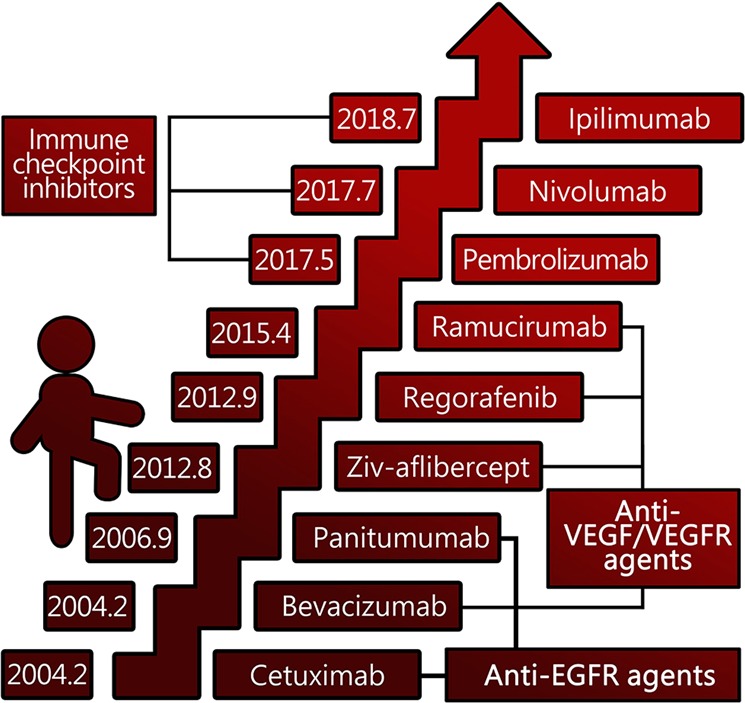
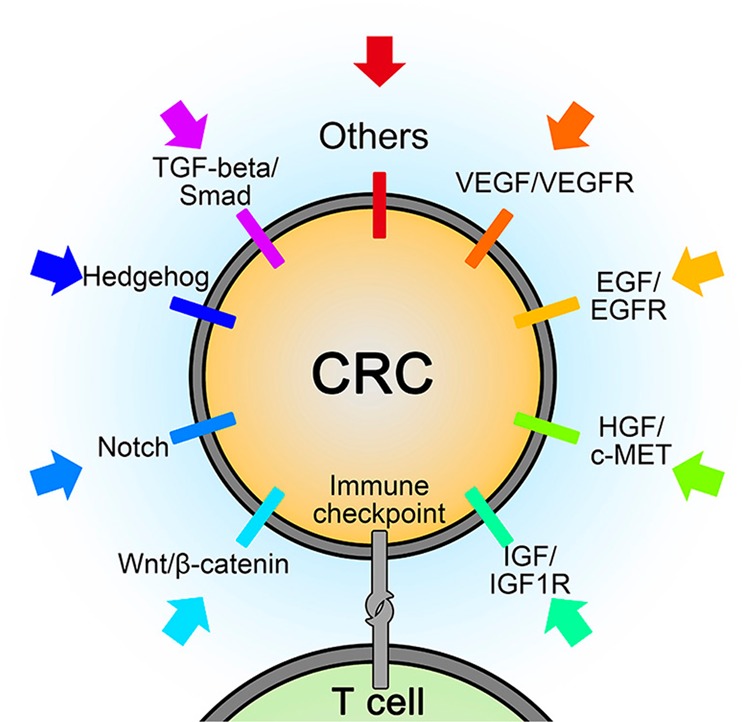
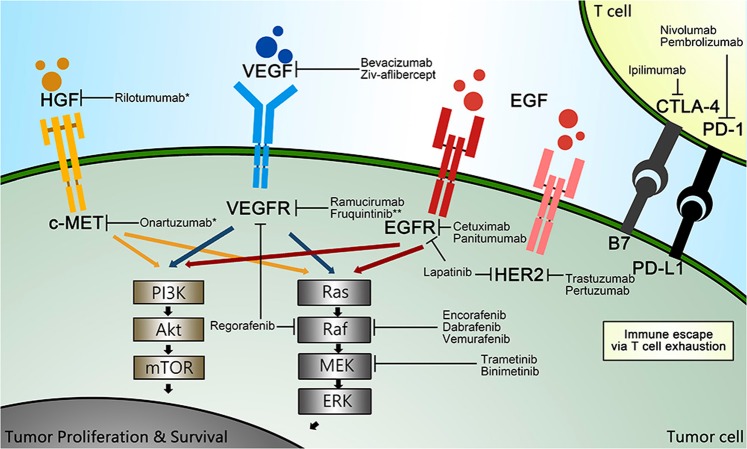
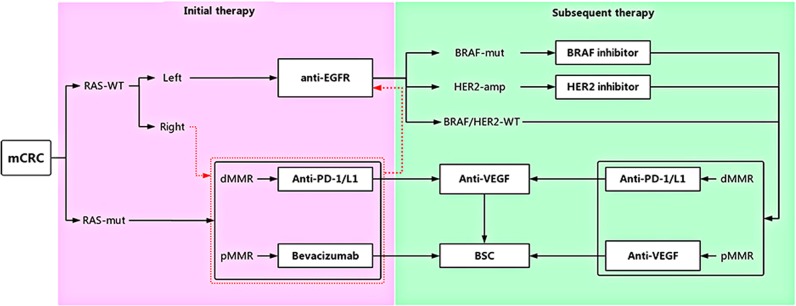
Colorectal cancer (CRC) is among the most lethal and prevalent malignancies in the world and was responsible for nearly 881,000 cancer-related deaths in 2018. Surgery and chemotherapy have long been the first choices for cancer patients. However, the prognosis of CRC has never been satisfying, especially for patients with metastatic lesions. Targeted therapy is a new optional approach that has successfully prolonged overall survival for CRC patients. Following successes with the anti-EGFR (epidermal growth factor receptor) agent cetuximab and the anti-angiogenesis agent bevacizumab, new agents blocking different critical pathways as well as immune checkpoints are emerging at an unprecedented rate. Guidelines worldwide are currently updating the recommended targeted drugs on the basis of the increasing number of high-quality clinical trials. This review provides an overview of existing CRC-targeted agents and their underlying mechanisms, as well as a discussion of their limitations and future trends.
Overview
The claims and statistics of this paper haven’t been checked yet.
Free: it reads the open-access text and checks the first 5 claims that cite a source we can check. Create a free account to check every claim.
Integrity signals
Registry
Cites
Statistics
Figures
Verification
Claims the paper makes
The claims and statistics of this paper haven’t been checked yet.
Free: it reads the open-access text and checks the first 5 claims that cite a source we can check. Create a free account to check every claim.
Claims other papers make about this one
Each is checked against this paper’s own text: does it say what the citing paper says it does?
The source backs part of the claim, not all of it — or backs it for a different population, condition or comparison.
In the citing paper
“The therapeutic landscape of metastatic colorectal cancer is moving toward biomarker-selected strategies. However, options are limited to agents directed at tumors carrying BRAF V600E mutations and to antibodies against programmed death 1 (PD-1) in patients with high microsatellite instability or mismatch-repair deficiency.13,26,27”
From Adagrasib with or without Cetuximab in Colorectal Cancer with Mutated KRAS G12C (2023) · cites this paper as [13]
Experimental — accuracy not yet measuredThe source backs part of the claim, not all of it — or backs it for a different population, condition or comparison.
In the citing paper
“Current first-line standard of care for KRAS G12C-positive CRC includes 5-FU-based chemotherapy with irinotecan, oxaliplatin and/or capecitabine, but is limited by low tumor-specific selectivity and systemic toxicity21.”
From Divarasib plus cetuximab in KRAS G12C-positive colorectal cancer: a phase 1b trial (2024) · cites this paper as [21]
Experimental — accuracy not yet measuredThe cited source says what the claim attributes to it.
In the citing paper
“Cetuximab is an anti-EGFR monoclonal antibody that is indicated for the treatment of RAS wild-type metastatic colorectal cancer, either as monotherapy or in combination with chemotherapy.13”
From Adagrasib with or without Cetuximab in Colorectal Cancer with Mutated KRAS G12C (2023) · cites this paper as [13]
The check wasn’t confident either way, so it gives no verdict — never disputed.
In the citing paper
“Currently, no therapies that specifically target KRAS G12C protein have been approved for the treatment of colorectal cancer.13,19”
From Adagrasib with or without Cetuximab in Colorectal Cancer with Mutated KRAS G12C (2023) · cites this paper as [13]
Experimental — accuracy not yet measuredIn the citing paper
“ROS-mediated DNA damage induces p53 phosphorylation, which in turn stabilizes p53, indispensable to counter tumorigenic growth and differentiation.68”
Self-check
Percentages, sums and reported differences re-computed from the paper’s own numbers.
The self-check needs the paper’s full text.
Citations
Cites
2 retracted
Lee, Y.-J., Karl, D. L., Maduekwe, U. N., Rothrock, C., Ryeom, S., D'Amore, P. A., & Yoon, S. S. (2010) · Cancer Research · doi:10.1158/0008-5472.can-10-1138 · Cited by 61
RetractedYang, S., Zhang, X., Qu, H., Qu, B., Yin, X., & Zhao, H. (2019) · Cancer Gene Therapy · doi:10.1038/s41417-019-0098-6 · Cited by 16 · cited 1×
“Similarly, an exciting antitumor performance of cabozantinib was observed in research based on CRC xenograft models and cell lines, while the results from CRC-focused clinical trials are awaited.(289,336,337) Merestinib, an inhibitor of MET, AXL (Axl receptor tyrosine kinase), TEK (tunica interna endothelial cell kina…”
BackgroundRetractedBray, F., Ferlay, J., Soerjomataram, I., Siegel, R. L., Torre, L. A., & Jemal, A. (2018) · CA: A Cancer Journal for Clinicians · doi:10.3322/caac.21492 · Cited by 84,109
PD-1 and PD-L1 Immune Checkpoint Blockade to Treat Breast Cancer
Hartkopf, A. D., Taran, F.-A., Wallwiener, M., Walter, C. B., Krämer, B., Grischke, E.-M., & Brucker, S. Y. (2016) · Breast Care · doi:10.1159/000453569 · Cited by 30,845
Siegel, R. L., Miller, K. D., & Jemal, A. (2019) · CA: A Cancer Journal for Clinicians · doi:10.3322/caac.21551 · Cited by 20,160
Adverse Renal Effects of Immune Checkpoint Inhibitors: A Narrative Review
Wanchoo, R., Karam, S., Uppal, N. N., Barta, V. S., Deray, G., Devoe, C., Launay-Vacher, V., Jhaveri, K. D., & on behalf of Cancer and Kidney International Network Workgroup on Immune Checkpoint Inhibitors (2017) · American Journal of Nephrology · doi:10.1159/000455014 · Cited by 15,256
Improved Survival with Ipilimumab in Patients with Metastatic Melanoma
Hodi, F. S., O'Day, S. J., McDermott, D. F., Weber, R. W., Sosman, J. A., Haanen, J. B., Gonzalez, R., Robert, C., Schadendorf, D., Hassel, J. C., et al. (2010) · New England Journal of Medicine · doi:10.1056/nejmoa1003466 · Cited by 15,155
Bevacizumab plus Irinotecan, Fluorouracil, and Leucovorin for Metastatic Colorectal Cancer
Hurwitz, H., Fehrenbacher, L., Novotny, W., Cartwright, T., Hainsworth, J., Heim, W., Berlin, J., Baron, A., Griffing, S., Holmgren, E., et al. (2004) · New England Journal of Medicine · doi:10.1056/nejmoa032691 · Cited by 10,968
Immunity, Inflammation, and Cancer
Grivennikov, S. I., Greten, F. R., & Karin, M. (2010) · Cell · doi:10.1016/j.cell.2010.01.025 · Cited by 10,755
Mutations of the BRAF gene in human cancer
Davies, H., Bignell, G. R., Cox, C., Stephens, P., Edkins, S., Clegg, S., Teague, J., Woffendin, H., Garnett, M. J., Bottomley, W., et al. (2002) · Nature · doi:10.1038/nature00766 · Cited by 10,674
Cited by
Items 201–300 of 1,000
Abdullah, S., Hadad, S. E., & Aldahlawi, A. (2021) · International Journal of Pharmaceutics · doi:10.1016/j.ijpharm.2021.121406 · Cited by 39
Overcoming Therapy Resistance in Colon Cancer by Drug Repurposing
Zarif, T. E., Yibirin, M., Oliveira-Gomes, D. D., Machaalani, M., Nawfal, R., Carlini, G. B., Bahmad, H. F., & Bitar, N. (2022) · Cancers · doi:10.3390/cancers14092105 · Cited by 39
“For patients with unresectable lesions, treatment is a combination of maximum tumoral cytoreduction and chemotherapy [11].”
BackgroundWang, Y., Pan, S., He, X., Wang, Y., Huang, H., Chen, J., Zhang, Y., Zhang, Z., & Qin, X. (2021) · OncoTargets and Therapy · doi:10.2147/ott.s284211 · Cited by 40
“Currently, the standard treatment for CRC includes surgery and chemotherapy, which are associated with physical complications, systemic toxicity, and resistance.(4) Although significant advances have been made in the development of new treatments for CRC patients, the overall long-term outcome for patients curatively…”
BackgroundKumar, R., Singh, H., Mazumder, A., Salahuddin, Yadav, R. K., Chauhan, B., & Abdulah, M. M. (2022) · Anti-Cancer Agents in Medicinal Chemistry · doi:10.2174/1871520622666220810153735 · Cited by 44
Huang, Z., Kaller, M., & Hermeking, H. (2023) · Cell Death and Differentiation · doi:10.1038/s41418-023-01193-2 · Cited by 43
“Although promising, check-point inhibitor-based or targeted therapy only bene fi t a fraction of CRC patients [7, 8].”
BackgroundCutshaw, G., Hassan, N. A., Uthaman, S., Wen, X., Singh, B., Sarkar, A., & Bardhan, R. (2023) · Analytical Chemistry · doi:10.1021/acs.analchem.3c02073 · Cited by 38
Ponterio, E., Maria, R. D., & Haas, T. L. (2020) · Frontiers in Immunology · doi:10.3389/fimmu.2020.565631 · Cited by 40
“To reduce the complexity, we will here concentrate on CAR T cell targets explored in clinical trials of two important solid tumor entities: GB that represents the most aggressive form of brain tumors and CRC, which is the third most deadly tumor type worldwide (40, 41).”
BackgroundNear infrared photoimmunotherapy of cancer; possible clinical applications
Wakiyama, H., Kato, T., Furusawa, A., Choyke, P. L., & Kobayashi, H. (2021) · Nanophotonics · doi:10.1515/nanoph-2021-0119 · Cited by 45
“Some of the anti-EGFR mAbs including cetuximab and panitumumab have been approved by FDA as first-line treatments of colorectal cancer [143].”
Lee, S., Joo, S. H., Kwak, A., Lee, M., Seo, J., Cho, S., Yoon, G., Chae, J., & Shim, J. (2021) · Biomolecules & Therapeutics · doi:10.4062/biomolther.2021.143 · Cited by 40
“The first-line treatment for patients with colorectal cancer is chemotherapy based on 5-fluorouracil, but it has limitations including a low response rate, systemic toxicity, and low selectivity for cancer cells (Xie et al., 2020).”
BackgroundInfluentialACSL4 promotes colorectal cancer and is a potential therapeutic target of emodin
Dai, G., Wang, D., Ma, S., Hong, S., Ding, K., Tan, X., & Ju, W. (2022) · Phytomedicine · doi:10.1016/j.phymed.2022.154149 · Cited by 41
Nanoparticles: The future of effective diagnosis and treatment of colorectal cancer?
Naeimi, R., Najafi, R., Molaei, P., Amini, R., & Pecic, S. (2022) · European Journal of Pharmacology · doi:10.1016/j.ejphar.2022.175350 · Cited by 40
Nanoparticles for imaging-guided photothermal therapy of colorectal cancer
Farzam, O. R., Mehran, N., Bilan, F., Aghajani, E., Dabbaghipour, R., Shahgoli, G. A., & Baradaran, B. (2023) · Heliyon · doi:10.1016/j.heliyon.2023.e21334 · Cited by 38
“Following the successes achieved with the anti-angiogenic agent bevacizumab and the anti-epidermal O.R. Farzam et al. growth factor receptor (EGFR) agent cetuximab, new agents that block immune checkpoints and various critical pathways are rapidly emerging [18].”
BackgroundPerspectives on Immunotherapy of Metastatic Colorectal Cancer
Dai, Y., Zhao, W., Yue, L., Dai, X., Rong, D., Wu, F., Gu, J., & Qian, X. (2021) · Frontiers in Oncology · doi:10.3389/fonc.2021.659964 · Cited by 39
Berberine as a Potential Agent for the Treatment of Colorectal Cancer
Jiang, X., Jiang, Z., Jiang, M., & Sun, Y. (2022) · Frontiers in Medicine · doi:10.3389/fmed.2022.886996 · Cited by 48
“Level 3 or level 4 adverse events can be infrequently detected, and their incidence might increase when two or more targeted agents are combined (11).”
BackgroundHall, A. E., Pohl, S., Cammareri, P., Aitken, S., Younger, N. T., Raponi, M., Billard, C. V., Bolado‐Carrancio, A., Akan, A. B., Freile, P., et al. (2022) · Nature Communications · doi:10.1038/s41467-022-30489-z · Cited by 46
Colorectal cancer management: strategies in drug delivery
Singh, P., Waghambare, P., Khan, T. A., & Omri, A. (2022) · Expert Opinion on Drug Delivery · doi:10.1080/17425247.2022.2084531 · Cited by 36
METTL3 antagonizes 5‑FU chemotherapy and confers drug resistance in colorectal carcinoma
Li, M., Xia, M., Zhang, Z., Tan, Y., Li, E., Guo, Z., Fang, M., Zhu, Y., & Hu, Z. (2022) · International Journal of Oncology · doi:10.3892/ijo.2022.5396 · Cited by 41
“5‐Fluorouracil (5‐FU) is the first‐line chemotherapeutic agent for CRC treatment (4).”
BackgroundStokes, M. E., Calvo, V., Fujisawa, S., Dudgeon, C., Huang, S., Ballal, N., Shen, L., Gasparek, J., Betzenhauser, M. J., Taylor, S. J., et al. (2023) · Clinical Cancer Research · doi:10.1158/1078-0432.ccr-23-1182 · Cited by 37
“50), hepatocellular carcinoma (cabozantinib, sorafenib, lenvatinib, regorafenib; ref.”
Zhou, X., Li, D., Xia, S., Ma, X., Li, R., Mu, Y., Liu, Z., Zhang, L., Zhou, Q., Zhuo, W., et al. (2023) · Journal of Controlled Release · doi:10.1016/j.jconrel.2023.12.018 · Cited by 39
Roy, S., Deka, D., Babu, K. S., Ayyadurai, P., Siripragada, S., Philip, N., Pathak, S., Duttaroy, A. K., & Banerjee, A. (2025) · Epigenetics · doi:10.1080/15592294.2025.2491316 · Cited by 43
“However, limitations such as systemic toxicity, low tumor selectivity, response variability, and resistance highlight the need for new therapeutic approaches [40,57].”
Recent Advances in Monoclonal Antibody Therapy for Colorectal Cancers
Hwang, K., Yoon, J. H., Lee, J., & Lee, S. (2021) · Biomedicines · doi:10.3390/biomedicines9010039 · Cited by 43
“It was engineered to prevent cytotoxic effector functions (ADCC or CDC) against PD-L1-positive immune cells [189].”
BackgroundZhao, Y., Wang, C., & Goel, A. (2022) · Carcinogenesis · doi:10.1093/carcin/bgac008 · Cited by 39
CHK2 activation contributes to the development of oxaliplatin resistance in colorectal cancer
Hsieh, C., Hsu, S.-H., Lin, C., Liaw, H., Li, T., Jiang, K.-Y., Chiang, N., Chen, S., Lin, B., Chen, P.-C., et al. (2022) · British Journal of Cancer · doi:10.1038/s41416-022-01946-9 · Cited by 38
“In the past decade, various chemotherapeutic combinations have significantly improved the median survival of patients with recurrent and advanced CRC [3].”
BackgroundCho, E., Mun, S., Kim, H. K., Ham, Y. S., Gil, W. J., & Yang, C. (2023) · Acta Pharmacologica Sinica · doi:10.1038/s41401-023-01188-2 · Cited by 38
“However, upon the prolonged use of these therapeutic strategies, resistance eventually develops in all CRC cells [10].”
Kumar, A., Vaiphei, K. K., Singh, N., Chigurupati, S. P. D., Paliwal, S. R., Paliwal, R., & Gulbake, A. (2024) · Nanomedicine · doi:10.1080/17435889.2024.2350356 · Cited by 44
Predictors of response to immunotherapy in colorectal cancer
González‐Montero, J., Rojas, C. I., & Burotto, M. (2024) · The Oncologist · doi:10.1093/oncolo/oyae152 · Cited by 38
Szczuka, I., Wierzbicki, J., Serek, P., Szczęśniak-Sięga, B. M., & Krzystek‐Korpacka, M. (2021) · Biomolecules · doi:10.3390/biom11111588 · Cited by 34
“Potential molecular targets are researched from among pathways crucial for cancer growth, survival and progression [1].”
BackgroundGhasemi, K., & Ghasemi, K. (2021) · European Journal of Pharmacology · doi:10.1016/j.ejphar.2021.174593 · Cited by 38
A synopsis of modern - day colorectal cancer: Where we stand
Ranasinghe, R., Mathai, M. L., & Zulli, A. (2022) · Biochimica et Biophysica Acta (BBA) - Reviews on Cancer · doi:10.1016/j.bbcan.2022.188699 · Cited by 42
Recent Advances in the Study of Extracellular Vesicles in Colorectal Cancer
Glass, S. E., & Coffey, R. J. (2022) · Gastroenterology · doi:10.1053/j.gastro.2022.06.039 · Cited by 37
Ivanova, M. D., Venetis, K., Guerini‐Rocco, E., Bottiglieri, L., Mastropasqua, M. G., Garrone, O., Fusco, N., & Ghidini, M. (2022) · Life · doi:10.3390/life12091403 · Cited by 40
MUC1 plays an essential role in tumor immunity of colorectal cancer stem cell vaccine
Guo, M., Luo, B., Pan, M., Li, M., Zhao, F., & Dou, J. (2020) · International Immunopharmacology · doi:10.1016/j.intimp.2020.106631 · Cited by 34
Recent progress in the molecular imaging of therapeutic monoclonal antibodies
He, K., Zeng, S., & Qian, L. (2020) · Journal of Pharmaceutical Analysis · doi:10.1016/j.jpha.2020.07.006 · Cited by 36
“Cetuximab competitively targeting the ligand-binding site of epidermal growth factor receptor (EGFR) was the first mAb approved by the FDA for the treatment of EGFR-expressing, metastatic colorectal carcinoma [62].”
BackgroundLiu, Y., Guo, F., Guo, W., Wang, Y., Song, W., & Fu, T. (2021) · Clinical and Experimental Medicine · doi:10.1007/s10238-021-00697-w · Cited by 41
She, T., Shi, Q., Zhao, L., Feng, Y., Yang, H., Tao, Z., Li, H., Chen, J., Wang, S., Liang, Y., et al. (2021) · Theranostics · doi:10.7150/thno.51193 · Cited by 34
“signaling pathways have been identified, providing new alternatives for CRC therapy [2].”
BackgroundDu, T., Gao, Q., Zhao, Y., Gao, J., Li, J., Wang, L., Li, P., Wang, Y., Du, L., & Wang, C. (2021) · Frontiers in Oncology · doi:10.3389/fonc.2021.651796 · Cited by 38
Chen, Z., Li, Y., He, K., Jianguo, Y., Deng, Q., Chen, Y., & Fu, Z. (2023) · Journal of Experimental & Clinical Cancer Research · doi:10.1186/s13046-023-02915-7 · Cited by 32
Self-citationZhang, Y., Li, L., Sun, S., Cheng, L., Gu, Z., & Hong, Y. (2024) · Carbohydrate Polymers · doi:10.1016/j.carbpol.2024.121825 · Cited by 33
Tumor mutational burden in colorectal cancer: Implications for treatment
Marques, A., Cavaco, P., Torre, C., Sepodes, B. M. N., & Rocha, J. P. (2024) · Critical Reviews in Oncology/Hematology · doi:10.1016/j.critrevonc.2024.104342 · Cited by 38
Shek, D., Akhuba, L. G., Carlino, M. S., Nagrial, A. M., Moujaber, T., Read, S. A., Gao, B., & Ahlenstiel, G. (2021) · Cancers · doi:10.3390/cancers13174345 · Cited by 42
“Targeted therapy has opened a new chapter in the management of CRC, with ICIs providing a new hope for patients with advanced colonic malignancies [39].”
BackgroundDisrupting cancer angiogenesis and immune checkpoint networks for improved tumor immunity
Anderson, T. S., McCormick, A. L., Piersall, S. L., Okpalanwaka, I. F., & Lowe, D. B. (2022) · Seminars in Cancer Biology · doi:10.1016/j.semcancer.2022.02.009 · Cited by 37
Chou, P.-H., Luo, C.-K., Wali, N., Lin, W.-Y., Ng, S.-K., Wang, C., Zhao, M., Lin, S., Yang, P., Liu, P.-J., et al. (2022) · Journal of Biomedical Science · doi:10.1186/s12929-022-00803-4 · Cited by 36
Shi, Y., Zhu, H., Jiang, H., Yue, H., Yuan, F., & Wang, F. (2022) · Anti-Cancer Drugs · doi:10.1097/cad.0000000000001445 · Cited by 32
Nanobody-Based EGFR-Targeting Immunotoxins for Colorectal Cancer Treatment
Narbona, J., Hernández-Baraza, L., Gordo, R. G., Sanz, L., & Lacadena, J. (2023) · Biomolecules · doi:10.3390/biom13071042 · Cited by 32
“They are transmembrane glycoproteins that upon the binding of their ligand, EGF or TGF-α, homo- or hetero-dimerize and activate downstream signaling routes, such as RAS/RAF/MEK/ERK, PI3K/AKT, and JAK/STAT3, involved in the proliferation and survival of a great number of different cell types [31,32].”
BackgroundFranzén, A. S., Boulifa, A., Radecke, C., Stintzing, S., Raftery, M. J., & Pecher, G. (2024) · Cancers · doi:10.3390/cancers16020388 · Cited by 34
“Among these approaches, CEA-CAR therapy has been demonstrated to be well tolerated in clinical trials [57–59].”
MethodPatient‐Derived Organoids as Therapy Screening Platforms in Cancer Patients
Khorsandi, D., Yang, J., Foster, S., Khosravi, S., Kouchehbaghi, N. H., Zarei, F., Lee, Y. B., Runa, F., Gangrade, A., Voskanian, L., et al. (2024) · Advanced Healthcare Materials · doi:10.1002/adhm.202302331 · Cited by 34
Leszto, K., Biskup, L., Korona, K., Marcinkowska, W., Możdżan, M., Węgiel, A., Młynarska, E., Rysz, J., & Franczyk, B. (2024) · Antioxidants · doi:10.3390/antiox13060688 · Cited by 34
Innovation applications of MXenes in biomedicine
Amani, A. M., Tayebi, L., Vafa, E., Jahanbin, A., Abbasi, M., Vaez, A., Kamyab, H., & Chelliapan, S. (2024) · Materials Today Communications · doi:10.1016/j.mtcomm.2024.109929 · Cited by 36
Puzzo, M., Santo, M. D., Morelli, C., Leggio, A., Catalano, S., & Pasqua, L. (2025) · International Journal of Molecular Sciences · doi:10.3390/ijms26031313 · Cited by 36
“The emerging agents include aflibercept, ramucirumab and regorafenib [6].”
InfluentialChi, L., Xu, C., Li, S., Wang, X., Tang, D., & Xue, F. (2020) · The Analyst · doi:10.1039/d0an01399d · Cited by 31
Cui, K., Yao, S., Zhang, H., Zhou, M., Liu, B., Cao, Y., Fei, B., Huang, S., & Huang, Z. (2021) · Oncogene · doi:10.1038/s41388-021-01677-w · Cited by 33
“Besides, anti-CTLA4 plus anti-PD-1 combination therapy has been approved for the treatment of advanced KIRC and MSI/dMMR aberrations in metastatic CRC [49, 50].”
BackgroundEmerging Trends for Radio-Immunotherapy in Rectal Cancer
Corrò, C., Dutoit, V., & Koessler, T. (2021) · Cancers · doi:10.3390/cancers13061374 · Cited by 36
“On top of surgery, management of RC patients largely relies on conventional methods such as chemotherapy and RT [35].”
MethodChok, K. C., Koh, R. Y., Ng, M. G., Ng, P. Y., & Chye, S. M. (2021) · Molecules · doi:10.3390/molecules26165038 · Cited by 39
“Although new drugs against CRC have been developed in recent years, chemotherapy remains the mainstream of the first-line treatment [5].”
BackgroundIepsen, U. W., & Ringbæk, T. (2013) · PubMed · Cited by 38
Ghorbaninezhad, F., Masoumi, J., Bakhshivand, M., Baghbanzadeh, A., Mokhtarzadeh, A., Kazemi, T., Maleki, L. A., Shotorbani, S. S., Jafarlou, M., Brunetti, O., et al. (2022) · Frontiers in Immunology · doi:10.3389/fimmu.2022.931316 · Cited by 35
“The main reason for this is supposed to be antigen presentation weakness, diminished tumor-specific antigen expression, activation of immunosuppressive pathways, immune checkpoint signaling pathways, and presence of immune regulatory cells (20).”
BackgroundHu, D., Meng, R. Y., Nguyen, T. V., Chai, O. H., Park, B. S., Lee, J., & Kim, S. (2022) · Molecular Medicine Reports · doi:10.3892/mmr.2022.12898 · Cited by 35
Wijewantha, N. W., Sane, S., Eikanger, M. M., Antony, R. M., Potts, R. A., Lang, L., Rezvani, K. S., & Sereda, G. A. (2023) · Cancers · doi:10.3390/cancers15041145 · Cited by 32
“With limited therapeutic options for advanced CRC, there is a clear need to develop more effective targeted therapies to decrease the high mortality rates associated with metastatic disease [82].”
Idoudi, S., Bedhiafi, T., Sahir, F., Hijji, Y. M., Shahab Uddin, M. S., Merhi, M., Dermime, S., & Billa, N. (2023) · International Journal of Biological Macromolecules · doi:10.1016/j.ijbiomac.2023.123827 · Cited by 33
Ma, J., Wang, G., Ding, X., Wang, F., Zhu, C., & Rong, Y. (2023) · ACS Omega · doi:10.1021/acsomega.2c06242 · Cited by 37
Tang, H., Zhou, T., Jin, W., Zong, S., Mamtimin, T., Salama, E., Jeon, B., Liu, P., Han, H., & Li, X. (2023) · Life Sciences · doi:10.1016/j.lfs.2023.121709 · Cited by 36
CCAT 1- A Pivotal Oncogenic Long Non-Coding RNA in Colorectal Cancer
Liau, X. L., Salvamani, S., Gunasekaran, B., Chellappan, D. K., Rhodes, A., Ulaganathan, V., & Tiong, Y. L. (2023) · British Journal of Biomedical Science · doi:10.3389/bjbs.2023.11103 · Cited by 35
Kandhavelu, J., Subramanian, K., Naidoo, V., Sebastianelli, G., Doan, P., Saravanan, K. M., Yapışlar, H., Hacıosmanoğlu, E., Arslan, L., Ozer, S., et al. (2023) · British Journal of Pharmacology · doi:10.1111/bph.16141 · Cited by 37
“Colorectal cancer (CRC) is the second most lethal cancer and the third most malignant tumour worldwide (Xie et al., 2020).”
BackgroundAlbadari, N. G., Xie, Y., & Li, W. (2024) · Frontiers in Pharmacology · doi:10.3389/fphar.2023.1340401 · Cited by 38
Self-citationPathological Insights: Enhanced Vision Transformers for the Early Detection of Colorectal Cancer
Ayana, G., Barki, H., & Choe, S. (2024) · Cancers · doi:10.3390/cancers16071441 · Cited by 36
“However, only 40% of CRC cases are found in the early stages, and the survival probability drops if the disease spreads outside the colon or rectum [11].”
BackgroundAhmad, A., Mahmood, N., Raza, M. A., Mushtaq, Z., Saeed, F., Afzaal, M., Hussain, M., Amjad, H., & Al-Awadi, H. M. (2024) · Heliyon · doi:10.1016/j.heliyon.2024.e29495 · Cited by 35
“Stimulation of T cells normally requires three signals [1]: identification of antigenic proteins expressed by the APCs [2]; stimulation of costimulatory proteins like CD40/CD40L, CD80/CD28, and [3] secretion of cytokines IFN γ , IL-1, IL-2, IL-6, and IL-12.”
BackgroundInfluentialAl-Ostoot, F. H., Salah, S., & Khanum, S. A. (2024) · Cancer Investigation · doi:10.1080/07357907.2024.2361295 · Cited by 35
Qu, X., Hamidi, H., Johnson, R. M., Sokol, E. S., Lin, E., Eng, C., Kim, T.-W., Bendell, J. C., Sivakumar, S., Kaplan, B., et al. (2025) · Nature Communications · doi:10.1038/s41467-025-59588-3 · Cited by 39
“…pathway, one of the major downstream pathways of EGFR, has been postulated as a potential mechanism of resistance to anti-EGFR therapies 11,22 – 25 we sought to see if alterationsinPI3K/AKTpathwaygeneswerealsoselectively enriched in patients following anti-EGFR but not anti-VEGF therapies in…”
Li, J., Yang, Z., Li, X., Dong, X., Chen, W., Guan, Z., & Zhang, C. (2020) · PubMed · Cited by 36
Significance of Kynurenine 3-Monooxygenase Expression in Colorectal Cancer
Liu, C., Huang, T., Chen, J.-L., Chu, P., Lee, C., Lee, H., Lee, Y., Chang, Y.-Y., Yang, S.-H., Jiang, J., et al. (2021) · Frontiers in Oncology · doi:10.3389/fonc.2021.620361 · Cited by 39
“Tumor metastasis, relapse, and drug resistance lead to poor prognosis in CRC, despite advances in CRC treatments, such as radiotherapy, surgery, and chemotherapy (4, 5).”
BackgroundWłodarczyk, J., Włodarczyk, M., Zielińska, M., Jędrzejczak, B., Dziki, Ł. A., & Fichna, J. (2021) · Pharmacological Reports · doi:10.1007/s43440-021-00281-9 · Cited by 35
“1 3 EGFR‐ or BRAF mutation–targeted therapies, and other strategies, including immunotherapy [6].”
BackgroundStukalin, I., Ahmed, N. S., Fundytus, A. M., Qian, A. S., Coward, S., Kaplan, G. G., Hilsden, R. J., Burak, K. W., Lee, J. K., Singh, S., et al. (2021) · Gastroenterology · doi:10.1053/j.gastro.2021.12.244 · Cited by 34
Genome editing via non-viral delivery platforms: current progress in personalized cancer therapy
Lan, T., Que, H., Luo, M., Zhao, X., & Wei, X. (2022) · Molecular Cancer · doi:10.1186/s12943-022-01550-8 · Cited by 34
“They are characterized by improved efficiency and safety, such as personalized therapy [8], immunotherapy [9], targeted therapy [10], combination therapy [11], and gene therapy [12].”
BackgroundFrom Dukes-MAC Staging System to Molecular Classification: Evolving Concepts in Colorectal Cancer
Banias, L., Jung, I., Chiciudean, R., & Gurzu, S. (2022) · International Journal of Molecular Sciences · doi:10.3390/ijms23169455 · Cited by 36
Nisin delivery by nanosponges increases its anticancer activity against in-vivo melanoma model
Monfared, Y. K., Mahmoudian, M., Caldera, F., Pedrazzo, A. R., Zakeri‐Milani, P., Matencio, A., & Trotta, F. (2022) · Journal of Drug Delivery Science and Technology · doi:10.1016/j.jddst.2022.104065 · Cited by 34
Wang, Z., Chen, K., Zhang, K., He, K., Zhang, D., Guo, X., Huang, T., Hu, J., Zhou, X., & Nie, S. (2023) · Carbohydrate Polymers · doi:10.1016/j.carbpol.2023.121208 · Cited by 33
Qanash, H., Bazaid, A. S., Binsaleh, N. K., Patel, M. B., Althomali, O. W., & Sheeha, B. H. B. (2023) · Nutrients · doi:10.3390/nu15153448 · Cited by 31
“Treatment may include surgery to remove the cancerous tissue; the use of several drugs such as fluoropyrimidine, irinotecan, oxaliplatin, and capecitabine; radiation therapy; chemotherapy; or a combination of these approaches [14].”
BackgroundRauth, S., Malafa, M. P., Ponnusamy, M. P., & Batra, S. K. (2024) · Gastroenterology · doi:10.1053/j.gastro.2024.05.005 · Cited by 34
Tardito, S., Matis, S., Zocchi, M. R., Benelli, R., & Poggi, A. D. (2024) · International Journal of Molecular Sciences · doi:10.3390/ijms25137131 · Cited by 34
“On the other hand, neoadjuvant chemo/radiotherapy is used to reduce the tumor mass in locally advanced or metastatic CRC, allowing for or improving the outcome of subsequent surgery [3].”
BackgroundInfluentialDeng, X., Yang, Z., Chan, K. W., & Bakar, M. Z. A. (2024) · Pharmaceutics · doi:10.3390/pharmaceutics16081011 · Cited by 32
“However, the disadvantages of 5-FU, such as nonspecific targeting, poor solubility, dose-dependent toxicity on normal tissues, and minimal tumor accumulation, greatly limit its clinical application [6,7].”
BackgroundChen, E., Zeng, Z., & Zhou, W. (2024) · Biochimica et Biophysica Acta (BBA) - Reviews on Cancer · doi:10.1016/j.bbcan.2024.189198 · Cited by 37
Advanced hydrogel material for colorectal cancer treatment
Guo, Y., Wang, M., Zhang, Y., Zhao, Z., & Li, J. (2024) · Drug Delivery · doi:10.1080/10717544.2024.2446552 · Cited by 36
“However, the the administration of bevacizumab intravenous injections bi-weekly over 30–90 min can be extremely incon-venient for patients (Xie et al., 2020). lee et al. used an ABA triblock copolymer hydrogel of vitamin D-functionalized poly-carbonate and polyethylene glycol as a sustained release…”
Wang, J., Yuan, C., Tang, B., Liu, J., & Pu, K. (2025) · Scientific Reports · doi:10.1038/s41598-025-08915-1 · Cited by 37
MicroRNA, Diabetes Mellitus and Colorectal Cancer
Wang, H. (2020) · Biomedicines · doi:10.3390/biomedicines8120530 · Cited by 29
“Instead, targeted therapy that is a new option has successfully prolonged overall survival for CRC patients [9].”
BackgroundWhole-exome sequencing in eccrine porocarcinoma indicates promising therapeutic strategies
Denisova, E., Westphal, D., Surowy, H., Meier, F. E., Hutter, B., REIFENBERGER, J., Rütten, A., Schulz, A., Sergon, M., Ziemer, M., et al. (2021) · Cancer Gene Therapy · doi:10.1038/s41417-021-00347-z · Cited by 31
“ious tumour entities [54, 55], the HRR pathway has not been the focus of previous skin tumour research, with the exception of melanoma.”
BackgroundThe Adroitness of Andrographolide as a Natural Weapon Against Colorectal Cancer
Paul, S., Roy, D., Pati, S., & Sa, G. (2021) · Frontiers in Pharmacology · doi:10.3389/fphar.2021.731492 · Cited by 31
McFall, T. B., & Stites, E. C. (2021) · Cell Reports · doi:10.1016/j.celrep.2021.110096 · Cited by 31
“Although EGFR inhibitors like cetuximab and panitumumab are sometimes used as single agents in WT RAS CRC, they are more commonly utilized in combination with chemotherapy (Van Cutsem et al., 2009; Xie et al., 2020).”
Liu, J., Liang, L., Gan, P., Lin, F., Dai, Z., Chen, Z., Xu, Y., Yang, Q., Cao, M., Wang, S., et al. (2025) · Journal of Medicinal Chemistry · doi:10.1021/acs.jmedchem.5c00066 · Cited by 28
Colorectal Cancer: Therapeutic Approaches and Their Complications
Adebayo, A. S., Adeleke, A., Adesina, S. K., Agbaje, K. O., & Olajubutu, O. (2025) · Biomedicines · doi:10.3390/biomedicines13071646 · Cited by 32
“Aside from this, treatment also involves the use of multiple agent regimens that combine 5-FU with oxaliplatin (OX), capecitabine (CAP or XELODA or XEL), and irinotecan (IRI) [17].”
InfluentialThe Mechanistic Roles of ncRNAs in Promoting and Supporting Chemoresistance of Colorectal Cancer
Micallef, I., & Baron, B. (2021) · Non-Coding RNA · doi:10.3390/ncrna7020024 · Cited by 33
“Activation of VEGFR-1 under pathological conditions mediates the activation of several downstream pathways, such as PI3K/AKT/MAPK/ERK, while the VEGFR-2 interacts with VEGF-A [19].”
BackgroundInfluentialEmerging Therapeutic Agents for Colorectal Cancer
Nalli, M., Puxeddu, M., Regina, G. L., Gianni, S., & Silvestri, R. (2021) · Molecules · doi:10.3390/molecules26247463 · Cited by 29
“Potential therapies for CRC have been consistently analyzed in the excellent reviews by Xie [24] and Das [25].”
BackgroundLuo, M., Huang, Z., Yang, X., Chen, Y., Jiang, J., Zhang, L., Zhou, L., Qin, S., Jin, P., Fu, S., et al. (2021) · Cellular and Molecular Gastroenterology and Hepatology · doi:10.1016/j.jcmgh.2021.12.011 · Cited by 31
“metastasis who experience progression on adjuvant therapies, which cannot be readily explained by genetic mechanisms.(14,16) To date, dysregulation of EGFR endocytic trafficking has been linked to the pathogenesis of cancers, but our understanding remains incomplete.”
BackgroundSelf-citationIsoalantolactone Induces Cell Cycle Arrest, Apoptosis and Autophagy in Colorectal Cancer Cells
Li, J., Zhu, P., Chen, Y., Zhang, S., Zhang, Z., Zhang, Z., Wang, Y., Jiang, X., Lin, K., Wu, W., et al. (2022) · Frontiers in Pharmacology · doi:10.3389/fphar.2022.903599 · Cited by 33
“therapeutic modalities, such as low response rates, severe side effects and the emergence of drug resistance (Xie et al., 2020).”
BackgroundSelf-citationJiang, H., Jiang, Y., Yang, B., Long, F., Yang, Z., & Tang, D. (2022) · Cancer Medicine · doi:10.1002/cam4.4896 · Cited by 28
Kouroshnia, A., Zeinali, S., Irani, S., & Sadeghi, A. (2022) · Cancer Cell International · doi:10.1186/s12935-022-02656-1 · Cited by 31
“CRCs present the third most commonly diagnosed form of cancer worldwide, accounting for 11% of all diagnosed cancer cases 38.8% of GI cancer cases and 26.0% of GI cancer-related deaths [3–5].”
BackgroundInfluentialZhang, H., Liang, J., Lu, T., Li, M., Shan, G., Bi, G., Zhao, M., Jin, X., Wang, Q., Chen, Z., et al. (2023) · Pharmacological Research · doi:10.1016/j.phrs.2023.106819 · Cited by 30
EphA2 in Cancer: Molecular Complexity and Therapeutic Opportunities
Toracchio, L., Carrabotta, M., Mancarella, C., Morrione, A., & Scotlandi, K. (2024) · International Journal of Molecular Sciences · doi:10.3390/ijms252212191 · Cited by 33
Addressing Challenges in Targeted Therapy for Metastatic Colorectal Cancer
Hage, M. E., Su, Z., & Linnebacher, M. (2025) · Cancers · doi:10.3390/cancers17071098 · Cited by 34
Dai, S., Xu, S., Yao, Y., & Ding, K. (2020) · Frontiers in Genetics · doi:10.3389/fgene.2020.607009 · Cited by 31
“For inoperable patients, chemotherapy (mostly 5fluorouracil- or oxaliplatin-based) and target therapy (epidermal growth factor receptor or vascular endothelial growth factortargeted) have been the standard of care (Xie et al., 2020).”
BackgroundArnold, C., Demuth, P., Seiwert, N., Wittmann, S., Boengler, K., Rasenberger, B., Christmann, M., Huber, M., Brunner, T., Linnebacher, M., et al. (2022) · Molecular Cancer Therapeutics · doi:10.1158/1535-7163.mct-21-0393 · Cited by 30
“, cetuximab) emerged in the last decade as targeted options for first- or second-line therapy of colorectal cancer, respectively (7).”
BackgroundAuranofin and its analogs as prospective agents for the treatment of colorectal cancer
Massai, L., Cirri, D., Marzo, T., & Luigi Messori, A. (2022) · Cancer Drug Resistance · doi:10.20517/cdr.2021.71 · Cited by 31
Metadata
- Authors
- Xie, Y.-H., Chen, Y.-X., & Fang, J.-Y.
- Affiliations
- Shanghai Jiao Tong University (CN)
- Corresponding author
- Fang, Jing-Yuan
- ORCID
- Fang, Jing-Yuan
- Venue
- Signal Transduction and Targeted Therapy
- Published
- 2020-03-20
- Volume
- 5
- Issue
- 1
- Pages
- 22-22
- ISSN
- 2059-3635 (ISSN-L)
- PMC
- PMC7082344
- OpenAlex
- W3011481749
- Semantic Scholar
- 4980bbd78186d8dcd72cea78c224da6b545d763a
- Cited by
- 1,687
- References
- 521
- Citations by year
- 2026: 153 · 2025: 285 · 2024: 348 · 2023: 346 · 2022: 300 · 2021: 202 · 2020: 51
- FWCI
- 24.09
- Type
- journal article
- Language
- en
- Open access
- gold
- doi.org
- Licence
- cc-by
- creativecommons.org/licenses/by/4.0 (tdm)
- creativecommons.org/licenses/by/4.0 (vor)
- Locations
- Signal Transduction and Targeted Therapy (publishedVersion, cc-by)
- PubMed Central (publishedVersion, cc-by)
- PubMed (publishedVersion)
- Funders
- National Natural Science Foundation of China (81421001, 81530072)
- Topics
- Health Sciences › Medicine › Oncology › Colorectal Cancer Treatments and Studies
- Health Sciences › Medicine › Oncology › Colorectal Cancer Surgical Treatments
- Health Sciences › Medicine › Oncology › Pancreatic and Hepatic Oncology Research
- Keywords
- colorectal cancer, targeted therapy, metastatic colorectal cancer, anti-EGFR therapy, cetuximab, bevacizumab, angiogenesis inhibitors, immune checkpoint inhibitors, molecular pathways, drug mechanisms, treatment guidelines
- MeSH terms
- Bevacizumab, Cetuximab, Humans, Neoplasm Metastasis, Neovascularization, Pathologic, Colorectal Neoplasms, Molecular Targeted Therapy, ErbB Receptors
About these checks
Registry, retraction, Cites and statistics results are computed, not judged, with one exception: a printed reference that no index lists is read once by a model before it counts as a citation error. Claims are extracted by a model and kept only when their quote appears verbatim in the text; each cited source is then checked, with a model’s help, for whether it says what the claim relies on. Those verdicts can be wrong — read the claim’s quote and the cited source before relying on one.
Statistics and arithmetic are recomputed, not judged.
Confidence bands are shown only for fields calibrated on our annotated test set. None is calibrated yet, so no band is shown.
What counts as a claim ›How we measure confidence ›How we check this ›
Are you an author, or do you see a problem with this page? Request a review
Data sources
Bibliographic data: Semantic Scholar, OpenAlex, Crossref.
Contains information from the Semantic Scholar Academic Graph Datasets, made available under the ODC Attribution License (ODC-BY 1.0).
Semantic Scholar’s data is described in: Kinney, R., et al. (2023). The Semantic Scholar Open Data Platform. arXiv:2301.10140.
