

Comprehensive review of targeted therapy for colorectal cancer
Open accessThe DOI matches its Crossref record; 521 of the 521 references it cites were found in a registry or an index.
Abstract
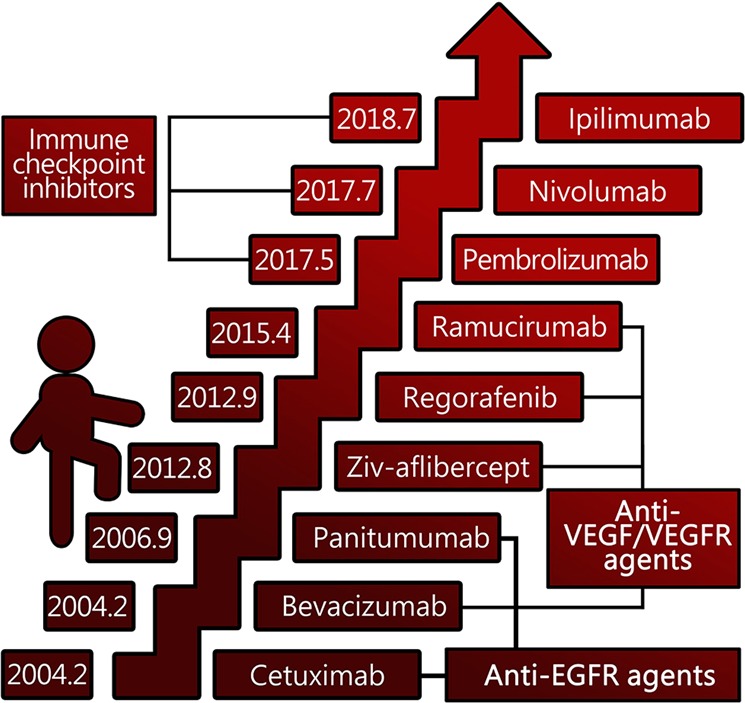
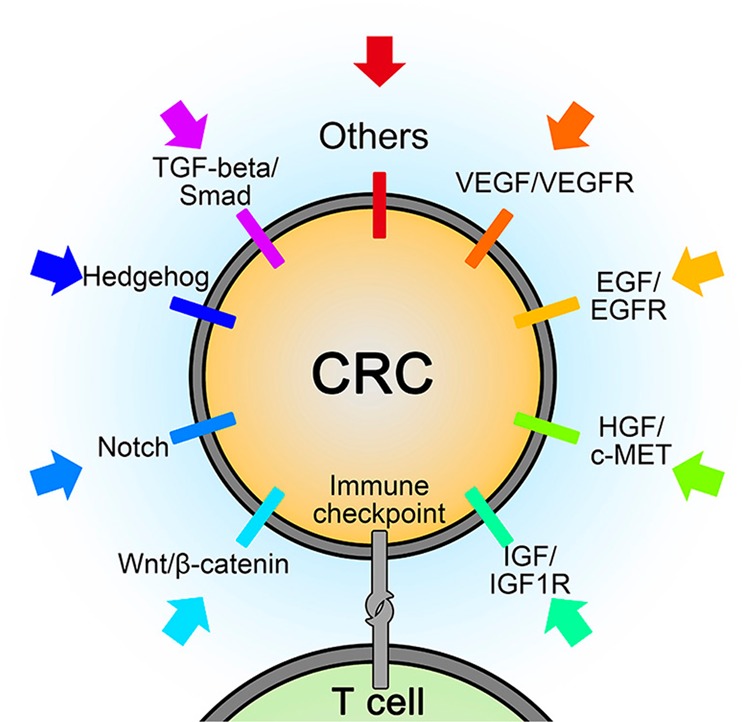
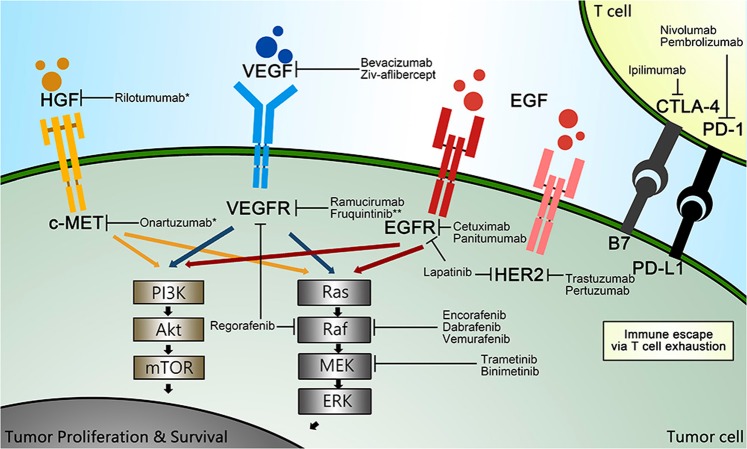
Colorectal cancer (CRC) is among the most lethal and prevalent malignancies in the world and was responsible for nearly 881,000 cancer-related deaths in 2018. Surgery and chemotherapy have long been the first choices for cancer patients. However, the prognosis of CRC has never been satisfying, especially for patients with metastatic lesions. Targeted therapy is a new optional approach that has successfully prolonged overall survival for CRC patients. Following successes with the anti-EGFR (epidermal growth factor receptor) agent cetuximab and the anti-angiogenesis agent bevacizumab, new agents blocking different critical pathways as well as immune checkpoints are emerging at an unprecedented rate. Guidelines worldwide are currently updating the recommended targeted drugs on the basis of the increasing number of high-quality clinical trials. This review provides an overview of existing CRC-targeted agents and their underlying mechanisms, as well as a discussion of their limitations and future trends.
Overview
The claims and statistics of this paper haven’t been checked yet.
Free: it reads the open-access text and checks the first 5 claims that cite a source we can check. Create a free account to check every claim.
Integrity signals
Registry
Cites
Statistics
Figures
Verification
Claims the paper makes
The claims and statistics of this paper haven’t been checked yet.
Free: it reads the open-access text and checks the first 5 claims that cite a source we can check. Create a free account to check every claim.
Claims other papers make about this one
Each is checked against this paper’s own text: does it say what the citing paper says it does?
The source backs part of the claim, not all of it — or backs it for a different population, condition or comparison.
In the citing paper
“The therapeutic landscape of metastatic colorectal cancer is moving toward biomarker-selected strategies. However, options are limited to agents directed at tumors carrying BRAF V600E mutations and to antibodies against programmed death 1 (PD-1) in patients with high microsatellite instability or mismatch-repair deficiency.13,26,27”
From Adagrasib with or without Cetuximab in Colorectal Cancer with Mutated KRAS G12C (2023) · cites this paper as [13]
Experimental — accuracy not yet measuredThe source backs part of the claim, not all of it — or backs it for a different population, condition or comparison.
In the citing paper
“Current first-line standard of care for KRAS G12C-positive CRC includes 5-FU-based chemotherapy with irinotecan, oxaliplatin and/or capecitabine, but is limited by low tumor-specific selectivity and systemic toxicity21.”
From Divarasib plus cetuximab in KRAS G12C-positive colorectal cancer: a phase 1b trial (2024) · cites this paper as [21]
Experimental — accuracy not yet measuredThe cited source says what the claim attributes to it.
In the citing paper
“Cetuximab is an anti-EGFR monoclonal antibody that is indicated for the treatment of RAS wild-type metastatic colorectal cancer, either as monotherapy or in combination with chemotherapy.13”
From Adagrasib with or without Cetuximab in Colorectal Cancer with Mutated KRAS G12C (2023) · cites this paper as [13]
The check wasn’t confident either way, so it gives no verdict — never disputed.
In the citing paper
“Currently, no therapies that specifically target KRAS G12C protein have been approved for the treatment of colorectal cancer.13,19”
From Adagrasib with or without Cetuximab in Colorectal Cancer with Mutated KRAS G12C (2023) · cites this paper as [13]
Experimental — accuracy not yet measuredIn the citing paper
“ROS-mediated DNA damage induces p53 phosphorylation, which in turn stabilizes p53, indispensable to counter tumorigenic growth and differentiation.68”
Self-check
Percentages, sums and reported differences re-computed from the paper’s own numbers.
The self-check needs the paper’s full text.
Citations
Cites
2 retracted
Lee, Y.-J., Karl, D. L., Maduekwe, U. N., Rothrock, C., Ryeom, S., D'Amore, P. A., & Yoon, S. S. (2010) · Cancer Research · doi:10.1158/0008-5472.can-10-1138 · Cited by 61
RetractedYang, S., Zhang, X., Qu, H., Qu, B., Yin, X., & Zhao, H. (2019) · Cancer Gene Therapy · doi:10.1038/s41417-019-0098-6 · Cited by 16 · cited 1×
“Similarly, an exciting antitumor performance of cabozantinib was observed in research based on CRC xenograft models and cell lines, while the results from CRC-focused clinical trials are awaited.(289,336,337) Merestinib, an inhibitor of MET, AXL (Axl receptor tyrosine kinase), TEK (tunica interna endothelial cell kina…”
BackgroundRetractedBray, F., Ferlay, J., Soerjomataram, I., Siegel, R. L., Torre, L. A., & Jemal, A. (2018) · CA: A Cancer Journal for Clinicians · doi:10.3322/caac.21492 · Cited by 84,109
PD-1 and PD-L1 Immune Checkpoint Blockade to Treat Breast Cancer
Hartkopf, A. D., Taran, F.-A., Wallwiener, M., Walter, C. B., Krämer, B., Grischke, E.-M., & Brucker, S. Y. (2016) · Breast Care · doi:10.1159/000453569 · Cited by 30,845
Siegel, R. L., Miller, K. D., & Jemal, A. (2019) · CA: A Cancer Journal for Clinicians · doi:10.3322/caac.21551 · Cited by 20,160
Adverse Renal Effects of Immune Checkpoint Inhibitors: A Narrative Review
Wanchoo, R., Karam, S., Uppal, N. N., Barta, V. S., Deray, G., Devoe, C., Launay-Vacher, V., Jhaveri, K. D., & on behalf of Cancer and Kidney International Network Workgroup on Immune Checkpoint Inhibitors (2017) · American Journal of Nephrology · doi:10.1159/000455014 · Cited by 15,256
Improved Survival with Ipilimumab in Patients with Metastatic Melanoma
Hodi, F. S., O'Day, S. J., McDermott, D. F., Weber, R. W., Sosman, J. A., Haanen, J. B., Gonzalez, R., Robert, C., Schadendorf, D., Hassel, J. C., et al. (2010) · New England Journal of Medicine · doi:10.1056/nejmoa1003466 · Cited by 15,155
Bevacizumab plus Irinotecan, Fluorouracil, and Leucovorin for Metastatic Colorectal Cancer
Hurwitz, H., Fehrenbacher, L., Novotny, W., Cartwright, T., Hainsworth, J., Heim, W., Berlin, J., Baron, A., Griffing, S., Holmgren, E., et al. (2004) · New England Journal of Medicine · doi:10.1056/nejmoa032691 · Cited by 10,968
Immunity, Inflammation, and Cancer
Grivennikov, S. I., Greten, F. R., & Karin, M. (2010) · Cell · doi:10.1016/j.cell.2010.01.025 · Cited by 10,755
Mutations of the BRAF gene in human cancer
Davies, H., Bignell, G. R., Cox, C., Stephens, P., Edkins, S., Clegg, S., Teague, J., Woffendin, H., Garnett, M. J., Bottomley, W., et al. (2002) · Nature · doi:10.1038/nature00766 · Cited by 10,674
Cited by
Items 501–600 of 1,000
Rau, A., Janssen, N., Kühl, L., Sell, T., Kalmykova, S., Mürdter, T. E., Dahlke, M., Sers, C., Morkel, M., Schwab, M. G., et al. (2022) · Molecular Cancer Therapeutics · doi:10.1158/1535-7163.mct-21-0818 · Cited by 16
Huang, E., Ma, T., Zhou, J., Ma, N., Yang, W.-S., Liu, C., Hou, Z., Chen, S., Zong, Z., Zeng, B., et al. (2022) · Journal of Gastrointestinal Oncology · doi:10.21037/jgo-22-721 · Cited by 18
“Frontline treatment for CRC, such as chemotherapy and targeted therapy, is often associated with dose-limiting toxicities in patients and resistance in cancer cells (2).”
Ciftci, H. I., Sever, B., Bayrak, N., Yıldız, M., Yıldırım, H., Tateishi, H., Otsuka, M., Fujita, M., & Tuyun, A. F. (2022) · Pharmaceuticals · doi:10.3390/ph15101266 · Cited by 16
“Therefore, there is an urgency to find more effective and safer drugs [2,6].”
BackgroundGomes, G. B., Stutz, C., Guilhermi, J. S., Toffoli-Kadri, M. C., Beatriz, A., Rafique, J., Parisotto, E. B., Saba, S., & Perdomo, R. T. (2023) · Pharmaceuticals · doi:10.3390/ph16060814 · Cited by 18
“The incidence and mortality rates of colon cancer are predicted to increase [31], underscoring the importance of improving the survival response, whether through diagnostic markers or chemotherapy [32].”
BackgroundTargeting EPHA2 with Kinase Inhibitors in Colorectal Cancer
Tröster, A., Jores, N., Mineev, K. S., Sreeramulu, S., DiPrima, M., Tosato, G., & Schwalbe, H. (2023) · ChemMedChem · doi:10.1002/cmdc.202300420 · Cited by 17
Sildenafil in Combination Therapy against Cancer: A Literature Review
Iratni, R., & Ayoub, M. A. (2020) · Current Medicinal Chemistry · doi:10.2174/0929867327666200730165338 · Cited by 16
Sharda, N., Ikuse, T., Hill, E., Garcia, S. A., Czinn, S. J., Bafford, A. C., Blanchard, T. G., & Banerjee, A. (2021) · Clinical Medicine Insights Oncology · doi:10.1177/11795549211012672 · Cited by 15
TNIK Inhibition Has Dual Synergistic Effects on Tumor and Associated Immune Cells
Kim, J., Oh, J., Peterson, H. M., Carlson, J. C. T., Pittet, M. J., & Weissleder, R. (2022) · Advanced Biology · doi:10.1002/adbi.202200030 · Cited by 14
Rathore, M., Zhang, W., Wright, M., Bhattacharya, R., Fan, F., Vaziri-Gohar, A., Winter, J., Wang, Z., Markowitz, S. D., Willis, J., et al. (2022) · Molecular Cancer Research · doi:10.1158/1541-7786.mcr-21-0633 · Cited by 14
Duan, J., Chen, T., Li, Q., Zhang, Y., Lu, T., Xue, J., Sun, Y., Gao, L., & Zhang, Y. (2025) · Journal for ImmunoTherapy of Cancer · doi:10.1136/jitc-2024-010639 · Cited by 16
Pan, D., Hu, J., Guo, L., Gao, X., Wang, J., Jiang, L., Lin, H., Chen, Y., Chen, Y., Zheng, Y., et al. (2025) · Oncogene · doi:10.1038/s41388-025-03453-6 · Cited by 14
Self-citationPushpaveni, C., Hemavathi, S., Kurmi, S. P. C., Patra, B. R., Esther, V. A., Yadav, C. K., Biradar, M. S., & Thapa, S. (2025) · Bioinformatics and Biology Insights · doi:10.1177/11779322251365019 · Cited by 20
“7,8 In addition, the time-consuming and expensive nature of developing new anticancer drugs makes alternative strategies more desirable.”
Zhuang, Q.-S., Sun, X., Chong, Q.-Y., Banerjee, A., Zhang, M., Wu, Z., Zhu, T., Pandey, V., & Lobie, P. E. (2021) · Frontiers in Oncology · doi:10.3389/fonc.2021.712348 · Cited by 16
“There is also a growing list of targeted agents currently in clinical trial (7).”
BackgroundYang, W., Zhao, Y., Ge, Q., Wang, X., Yang, J. X., Zhao, J., Liu, G., Huang, H., Cheng, F., Wang, X., et al. (2022) · Frontiers in Immunology · doi:10.3389/fimmu.2022.947080 · Cited by 14
“Meanwhile, the 5-year survival rate for CRC is about 64% but drops to 12% for advanced CRC patients (6).”
BackgroundGuo, L., Tang, X., Wong, S. W., Guo, A., Lin, Y., & Kwok, H. F. (2022) · Frontiers in Pharmacology · doi:10.3389/fphar.2022.1022129 · Cited by 15
“Chemotherapy has been considered as the first therapeutic strategy for the last 20 years, and survival rates have increased with the benefits of targeted therapy (Xie et al., 2020).”
BackgroundLin, C., LIN, K.-H., Ku, H., Lee, K., Lin, S., & Hsu, F. (2023) · Environmental Toxicology · doi:10.1002/tox.23749 · Cited by 16
“therapy, and current treatments are correlated with prolonged survival in CRC patients.(2,3) In addition, studies investigating the efficacy and safety of novel neoadjuvant therapy in CRC patients are ongoing.”
BackgroundLien, S.-T., Lin, T. E., Hsieh, J., Sung, T.-Y., Chen, J., & Hsu, K. (2023) · Computers in Biology and Medicine · doi:10.1016/j.compbiomed.2023.106722 · Cited by 14
Chen, W., Li, T., Chen, C., Zhang, J., Ma, Z., Hou, W., Yao, Y., Mao, W., Liu, C., Kong, D., et al. (2023) · Biosensors and Bioelectronics · doi:10.1016/j.bios.2023.115335 · Cited by 14
Racca, L., Rosso, G., Carofiglio, M., Fagoonee, S., Mesiano, G., Altruda, F., & Cauda, V. (2023) · Cancer Nanotechnology · doi:10.1186/s12645-023-00195-6 · Cited by 17
Jahedi, M., & Meshkini, A. (2023) · Colloids and Surfaces B Biointerfaces · doi:10.1016/j.colsurfb.2023.113333 · Cited by 14
NUCKS1 promotes the progression of colorectal cancer via activating PI3K/AKT/mTOR signaling pathway
Liao-Liao, Z. H. U., Jing-Jie, S. H. I., Yong-Dong, G. U. O., Yang, C., Rong-Lin, W. A. N. G., Shan-Shan, L. I., Gan, D., Pei-Xiang, M. A., Jun-Qiang, L. I., & Hai-Chuan, S. U. (2023) · Neoplasma · doi:10.4149/neo_2023_221107n1088 · Cited by 16
“1 million deaths are expected each year [2].”
BackgroundPseudobudding: ruptured glands do not represent true tumor buds
Haddad, T. S., van den Dobbelsteen, L., Öztürk, S. K., Geene, R., Nijman, I. J., Verrijp, K. N., Jamieson, N. B., Wood, C. S., van Vliet, S., Reuvers, L., et al. (2023) · The Journal of Pathology · doi:10.1002/path.6146 · Cited by 16
“Potential targeting or inhibition of MET-driven pathways may slow tumor progression [27,28].”
BackgroundPotential molecular mechanisms of myrtenal against colon cancer: A systematic review
Boopathy, L. K., Roy, A., Gopal, T., Kandy, R. R. K., & Arumugam, M. K. (2023) · Journal of Biochemical and Molecular Toxicology · doi:10.1002/jbt.23525 · Cited by 16
Ahn, M., Lee, T., Kim, K. S., Lee, S., & Na, K. (2023) · Advanced Healthcare Materials · doi:10.1002/adhm.202302374 · Cited by 14
Chen, R., Zhang, Y., Ge, Y., He, C., Wu, Z., Wang, J., Yu, J., Xiao, J., Zhang, X., Tao, M., et al. (2023) · Oncology Letters · doi:10.3892/ol.2023.14164 · Cited by 15
“Despite significant progress in the treatment of colon cancer patients, the overall prognosis and long‑term survival rate of patients have not been significantly improved in the past decade (5,6).”
Functionalised Ligand-Based Nanomaterial Drug Targeting Approaches for Colorectal Cancer Therapy
Dixit, A. A., Mandlik, D. S., & Mandlik, S. K. (2024) · Recent Advances in Drug Delivery and Formulation · doi:10.2174/0126673878301004240703073107 · Cited by 14
Giarrizzo, M., LaComb, J. F., Patel, H. R., Reddy, R. G., Haley, J. D., Graves, L. M., Iwanowicz, E. J., & Bialkowska, A. B. (2024) · Molecular Cancer Therapeutics · doi:10.1158/1535-7163.mct-24-0170 · Cited by 16
Tarun, M. T. I., Elsayed, H. E., Ebrahim, H. Y., & Sayed, K. A. E. (2025) · Nutrients · doi:10.3390/nu17030397 · Cited by 16
Modulation of intestinal signal transduction pathways: Implications on gut health and disease
Verma, M., Garg, M., Yadav, P., Khan, A. S., Rahman, S. S., Ali, A., & Kamthan, M. (2025) · European Journal of Pharmacology · doi:10.1016/j.ejphar.2025.177531 · Cited by 17
Liu, G., Chen, L., Zhao, J., Jiang, Y., Guo, Y., Mao, X., Ren, X., Liu, K., Mei, Q., Li, Q., et al. (2025) · Advanced Science · doi:10.1002/advs.202415645 · Cited by 19
Sugai, T., Osakabe, M., Sugimoto, R., Eizuka, M., Tanaka, Y., Yanagawa, N., Otsuka, K., Sasaki, A., Matsumoto, T., & Suzuki, H. (2020) · Genes Chromosomes and Cancer · doi:10.1002/gcc.22924 · Cited by 15
KRAS mutation‐independent downregulation of MAPK/PI3K signaling in colorectal cancer
Lam, K. K., Tang, C. L., Tan, E., Wong, S. H., & Cheah, P. Y. (2022) · Molecular Oncology · doi:10.1002/1878-0261.13163 · Cited by 19
Groysman, L., Carlsen, L., Huntington, K. E., Shen, W. H., Zhou, L., & El‐Deiry, W. S. (2021) · PubMed · Cited by 17
Liu, Y., Xu, H., Zhang, X., Yu, Y., Zhao, Y., Zhang, S., & Qiao, Y. (2022) · BMJ Open · doi:10.1136/bmjopen-2021-054403 · Cited by 14
Sun, J., Zhao, X., Jiang, H., Yang, T., Li, D., Yang, X., Jia, A., Ma, Y., & Qian, Z. (2022) · Tissue and Cell · doi:10.1016/j.tice.2022.101817 · Cited by 15
Hameedat, F., Pizarroso, N. A., Teixeira, N., Pinto, S. F. T., & Sarmento, B. F. C. C. (2022) · European Journal of Pharmaceutical Sciences · doi:10.1016/j.ejps.2022.106259 · Cited by 14
Fatima, I., Uppada, J. P., Chhonker, Y. S., Gowrikumar, S., Barman, S., Roy, S., Tolentino, K. T., Palermo, N. Y., Natarajan, A., Beauchamp, D. R., et al. (2023) · Biomedicine & Pharmacotherapy · doi:10.1016/j.biopha.2023.114255 · Cited by 16
Synergistic antitumor activity of regorafenib and rosuvastatin in colorectal cancer
Yuan, T., Wu, R., Wang, W., Liu, Y., Kong, W., Yang, B., He, Q., & Zhu, H. (2023) · Frontiers in Pharmacology · doi:10.3389/fphar.2023.1136114 · Cited by 17
“Currently, surgical resection is the primary resort modality for localized early-stage colorectal cancer, while advanced colorectal cancer mainly adopts a strategy of combining chemotherapy with targeted drugs (Dekker et al., 2019; Xie et al., 2020; Biller and Schrag, 2021).”
Background6-Regioisomeric 5,8-quinolinediones as potent CDC25 inhibitors against colorectal cancers
Narwanti, I., Yu, Z.-Y., Sethy, B., Lai, M.-J., Lee, H., Popazova, O., Lee, S., & Liou, J. (2023) · European Journal of Medicinal Chemistry · doi:10.1016/j.ejmech.2023.115505 · Cited by 14
Song, Y., Huang, T., Pan, H., Du, A., Wu, T., Lan, J., Zhou, X., Lv, Y., Xue, S., & Yuan, K. (2023) · Frontiers in Medicine · doi:10.3389/fmed.2023.1169562 · Cited by 17
“Colorectal cancer (CRC) is the world’s second-largest cause of cancer death and the third most common malignancy (19).”
BackgroundTranslational research of new developments in targeted therapy of colorectal cancer
Yang, L., Atakhanova, N. E., Arellano, M. T. C., Mohamed, M. Y., Hani, T., Fahdil, A. A., Castillo-Acobo, R. Y., Juyal, A., Hussein, A. K., Amin, A. H., et al. (2023) · Pathology - Research and Practice · doi:10.1016/j.prp.2023.154888 · Cited by 16
Chen, C., Chang, P.-Y., Chang, Y., You, J., Chan, E., Chen, J., Tsai, W., Huang, Y.-L., Fan, C., Hsu, H., et al. (2022) · Biomedical Journal · doi:10.1016/j.bj.2022.01.011 · Cited by 14
Novel Therapeutic Approaches for Colorectal Cancer Treatment
Papavassiliou, A. G., & Cave, D. D. (2024) · International Journal of Molecular Sciences · doi:10.3390/ijms25042228 · Cited by 15
Hajibabaie, F., Abedpoor, N., Maleki, B., Boshtam, M., Shenavar, N., Zarrabi, A., Babakhani, M., Sharifi, M., Shariati, L., Rahimmanesh, I., et al. (2025) · Critical Reviews in Oncology/Hematology · doi:10.1016/j.critrevonc.2025.105072 · Cited by 15
Immune Checkpoint Inhibitor-Mediated Cancer Theranostics with Radiolabeled Anti-Granzyme B Peptide
Ferreira, C. A., Heidari, P., Ataeinia, B., Sinevici, N., Granito, A., Kumar, H. M., Wehrenberg-Klee, E. P., & Mahmood, U. (2022) · Pharmaceutics · doi:10.3390/pharmaceutics14071460 · Cited by 14
Razali, N. N., Ali, R. A. R., Nawawi, K. N. M., Yahaya, A., & Mokhtar, N. M. (2022) · International Journal of Molecular Sciences · doi:10.3390/ijms231911472 · Cited by 14
“Targeted therapies for CRC now focus on a few common pathways, including EGFR (cetuximab and panitumumab) and VEGF (bevacizumab), which can stimulate a number of downstream intracellular signaling pathways including the PI3K signaling pathway [51].”
BackgroundTRIM55 inhibits colorectal cancer development via enhancing protein degradation of c‐Myc
Min, L., Fang, Z., Lin, X., Zhou, W., Wang, Y., Han, S., Ming, Y., & Zhu, F. (2023) · Cancer Medicine · doi:10.1002/cam4.6020 · Cited by 13
Anjum, S. M., Kumar, K. S., Umamaheswari, A., Lakhanpal, D., Swargam, S., Riazunnisa, K., & Chandrasekhar, T. (2023) · Results in Chemistry · doi:10.1016/j.rechem.2023.100970 · Cited by 14
Giesen, A., Baekelandt, L., Devlies, W., Devos, G., Dumez, H., Everaerts, W., Claessens, F., & Joniau, S. (2023) · Frontiers in Oncology · doi:10.3389/fonc.2023.1265812 · Cited by 15
Minhajat, R., Harjianti, T., Rasyid, H., Bukhari, A., Islam, I. C., Zainal, A. T. F., Gunawan, A. M. A. K., Ramadhan, A. C., Hatta, H., Alam, N., et al. (2023) · Annals of Medicine · doi:10.1080/07853890.2023.2281662 · Cited by 16
“More study is still needed to develop sensible approaches for medical preventive and rehabilitative development [10].”
BackgroundInnovative Nanoparticulate Strategies in Colon Cancer Treatment: A Paradigm Shift
Yadav, R., Bhawale, R., Srivastava, V., Pardhi, E. R., Bhalerao, H. A., Sonti, R., & Mehra, N. K. (2024) · AAPS PharmSciTech · doi:10.1208/s12249-024-02759-0 · Cited by 13
“As a result of dietary and lifestyle variables, as well as an ageing population, the incidence of CRC has been rising quickly [12].”
Bhusare, N., & KUMAR, M. (2024) · Oncology Research Featuring Preclinical and Clinical Cancer Therapeutics · doi:10.32604/or.2024.047042 · Cited by 15
“The speci fi c organ involved in cancer results in different types of cancer, such as kidney [3], bladder [4], lung [5], breast [6], colon or colorectal [7] and brain cancer [8].”
BackgroundGamage, C. D. B., Kim, J., Zhou, R., Park, S., Pulat, S., Varlı, M., Nam, S., & Kim, H. (2024) · BioFactors · doi:10.1002/biof.2120 · Cited by 13
Kandeel, M. M., Abdelhameid, M. K., Adel, M., Al‐Shorbagy, M. Y., & Negmeldin, A. T. (2025) · Molecules · doi:10.3390/molecules30051105 · Cited by 13
“Semaxanib has been used in the treatment of colorectal cancer, while Sunitinib has received the FDA approval for the treatment of renal and gastrointestinal cancers [10].”
Pallatt, S., Nambidi, S., Adhikary, S., Banerjee, A., Pathak, S., & Duttaroy, A. K. (2025) · Oncology Reviews · doi:10.3389/or.2025.1549416 · Cited by 14
“In scenarios where the malignancy is classi fi ed as non-resectable, a multimodal approach encompassing chemotherapy, radiation therapy, and immunotherapy is generally utilized (139, 140).”
Comprehensive application of artificial intelligence in colorectal cancer: A review
Sun, K., Wang, Y., Qu, R., Yang, Q., Luo, R., Jiang, Z., Wang, H., & Fu, W. (2025) · iScience · doi:10.1016/j.isci.2025.112980 · Cited by 20
Kciuk, M., Wanke, K., Kruczkowska, W., Marciniak, B., & Kontek, R. (2025) · Molecules · doi:10.3390/molecules30132686 · Cited by 15
Zhao, H., Huang, C., Luo, Y., Yao, X., Hu, Y., Wang, M., Chen, X., Zeng, J., Hu, W., Wang, J., et al. (2021) · Frontiers in Oncology · doi:10.3389/fonc.2021.595099 · Cited by 13
“Currently, targeted therapy is a new approach in the treatment of colorectal cancer and has been successful in prolonging the overall survival of CRC patients (1).”
BackgroundKamran, S., Seyedrezazadeh, E., Shanehbandi, D., Asadi, M., Zafari, V., Shekari, N., Namvar, L., & Zarredar, H. (2021) · Journal of Gastrointestinal Cancer · doi:10.1007/s12029-021-00667-1 · Cited by 16
“Even though the surgery is the main treatment for colorectal cancer which followed by chemotherapy and radiotherapy, these strategies have not enough effect to control or remove cancer cells and also have some side effects in patients [11].”
BackgroundNovel Xanthone Derivatives Impair Growth and Invasiveness of Colon Cancer Cells In Vitro
Rech, J., Sypniewski, D., Żelaszczyk, D., Szkaradek, N., Rogóż, W., Waszkielewicz, A. M., Marona, H., & Bednarek, I. A. (2021) · Biomolecules · doi:10.3390/biom11101480 · Cited by 13
“Current therapies for colorectal cancer combine advanced chemotherapy, radiotherapy, and surgery, depending on tumor progression [5,6].”
BackgroundYepes, A. F., Arias, J. D., Cardona‐Galeano, W., Herrera-R, A., & Moreno, G. (2021) · Medicinal Chemistry Research · doi:10.1007/s00044-021-02805-7 · Cited by 13
Strategies for the treatment of colorectal cancer caused by gut microbiota
de Souza, J. B., de Castro, M. C. A. B., & Cavalcanti, I. M. F. (2021) · Life Sciences · doi:10.1016/j.lfs.2021.120202 · Cited by 15
Rodríguez‐Fanjul, V., Guerrero, R., Fernández-Varas, B., Perona, R., Sastre-Perona, A., & Sastre, L. (2022) · Cells · doi:10.3390/cells11030511 · Cited by 13
“Standard first- and second-line treatments of CRC are based on the combination of 5fluorouracil plus oxaliplatin or irinotecan [4].”
BackgroundZhao, L., She, T., Yang, H., Su, T., Shi, Q., Tao, Z., Feng, Y., Yang, F., Cheng, J., & Lu, X. (2022) · Drug Delivery · doi:10.1080/10717544.2022.2079766 · Cited by 13
“ities have been developed in recent years (Xie et al., 2020).”
BackgroundInfluentialPfohl, U., Loskutov, J., Bashir, S., Kühn, R., Herter, P., Templin, M. F., Mamlouk, S., Belanov, S., Linnebacher, M., Bürtin, F., et al. (2022) · Cancers · doi:10.3390/cancers14133252 · Cited by 15
“Combined with chemotherapy, targeted agents are already an important pillar in the standard-of-care treatment of multiple cancers [45].”
BackgroundShin, M.-J., Chae, H.-J., Lee, J. W., Koo, M. H., Kim, H., Seo, J. B., yanIllia, S., Park, S. H., Lo, H. E., Kim, S.-H., et al. (2022) · Evidence-based Complementary and Alternative Medicine · doi:10.1155/2022/7404493 · Cited by 14
“Furthermore, multiple strategies using immune checkpoint blockade have been tried, but have sufered from several uncharacterized resistant mechanisms [6, 7].”
BackgroundRetractedBae, S.-W., Wang, J., Georgiou, D. K., Wen, X., Cohen, A. S., Geng, L., Tantawy, M. N., & Manning, H. C. (2023) · Tomography · doi:10.3390/tomography9020041 · Cited by 14
“Numerous drugs for patients with CRC have been developed and brought into preclinical and clinical trials, especially for metastatic colorectal cancer (mCRC), yet response rates remain limited [2].”
BackgroundHu, Y., Yue, G. G., Li, X., Xu, G., & Lau, C. B. (2023) · Phytochemistry · doi:10.1016/j.phytochem.2023.113727 · Cited by 13
Li, H., Wu, Z., Zhang, Y., Lu, X., & Miao, L. (2023) · Frontiers in Oncology · doi:10.3389/fonc.2023.1201297 · Cited by 14
“A recent study discovered that alterations to the mechanism of programmed tumor cell death may enhance STAD’s targeted therapeutic benefits (25).”
BackgroundCaffeine enhances chemosensitivity to irinotecan in the treatment of colorectal cancer
Yoon, S., Lee, B., & Kim, K. P. (2023) · Phytomedicine · doi:10.1016/j.phymed.2023.155120 · Cited by 16
Sehgal, M., Ramu, S., Vaz, J. M., Ganapathy, Y. R., Muralidharan, S., Venkatraghavan, S., & Jolly, M. K. (2023) · Translational Oncology · doi:10.1016/j.tranon.2023.101845 · Cited by 15
“The inherent diversity in molecular and phenotypic heterogeneity of tumors leads to variable responses to targeted therapies and survival outcomes [6,7,8].”
BackgroundKim, H. Y., Um, S. H., Sung, Y., Shim, M. K., Yang, S., Park, J., Kim, E. S., Kim, K., Kwon, I. C., & Ryu, J. H. (2020) · Journal of Controlled Release · doi:10.1016/j.jconrel.2020.08.046 · Cited by 14
Bai, M., Li, Z., & Ba, Y. (2021) · International Journal of General Medicine · doi:10.2147/ijgm.s300968 · Cited by 13
Shi, R., Li, Y., Ran, L., Dong, Y., Zhou, X., Tang, J., Han, L., Wang, M., Pang, L., Qi, Y., et al. (2021) · Science China Life Sciences · doi:10.1007/s11427-021-1944-5 · Cited by 13
Advances in the use of 3D colorectal cancer models for novel drug discovery
Baião, A., Dias, S., Soares, A. F., Pereira, C. L., Oliveíra, C., & Sarmento, B. F. C. C. (2022) · Expert Opinion on Drug Discovery · doi:10.1080/17460441.2022.2056162 · Cited by 14
“(EGFR), and BRAF inhibitors, as encorafenib [7].”
Koni, M., Castellano, I., Venturelli, E., Sarcinella, A., Lopatina, T., Grange, C., Cedrino, M., Femminò, S., Cossu‐Rocca, P., Orrù, S., et al. (2022) · Cancers · doi:10.3390/cancers14163918 · Cited by 14
“Currently, many clinical trials targeting specific receptors in tumour and stromal cells are ongoing, and targeted therapies based on immunohistochemical studies are under investigation [6,7].”
BackgroundCave, D. D. (2025) · International Journal of Molecular Sciences · doi:10.3390/ijms26010346 · Cited by 13
Exploring and bypassing resistance to targeted therapies in colorectal cancer
Favier, S., Xiong, W., Chalabi-Dchar, M., Chettab, K., Piercey, O., Wu, T., Fenouil, T., Albaret, M.-A., Jordheim, L. P., Diaz, J.-J., et al. (2025) · Biomedicine & Pharmacotherapy · doi:10.1016/j.biopha.2025.118741 · Cited by 12
Cell-free chromatin state tracing reveals disease origin and therapy responses
Chen, X., Meng, X., Zhang, W., Zhang, X., Zhang, Y., Yang, P., Liu, Y., Bao, F., Li, S., Wang, J., et al. (2026) · Nature · doi:10.1038/s41586-026-10224-0 · Cited by 14
Dai, W., Dai, Y. G., Ren, D. F., & Zhu, D. W. (2023) · Journal of Biochemical and Molecular Toxicology · doi:10.1002/jbt.23313 · Cited by 12
Bazyari, M. J., Saadat, Z., Firouzjaei, A. A., & Aghaee‐Bakhtiari, S. H. (2023) · Biochemistry and Biophysics Reports · doi:10.1016/j.bbrep.2023.101491 · Cited by 15
“More research is needed to establish an effective treatment approach [29].”
BackgroundNajafi, A., Keykhaee, M., Kazemi, M. H., Karimi, M. Y., Khorramdelazad, H., Aghamohamadi, N., Bolouri, M. R., Nazari, H. G., Mirsharif, E. S., Karimi, M., et al. (2023) · Biomedicine & Pharmacotherapy · doi:10.1016/j.biopha.2023.115557 · Cited by 14
Moravčík, R., Olejárová, S., Zlacká, J., & Herichová, I. (2023) · PLoS ONE · doi:10.1371/journal.pone.0292880 · Cited by 12
“Colorectal cancer (CRC) is one of the leading causes of cancer death in Europe and the U.S.A. [1,2].”
BackgroundOttaiano, A., Iacovino, M. L., Santorsola, M., Facchini, S., Iervolino, D., Perri, F., Nasti, G., Quagliariello, V., Maurea, N., Ronchi, A., et al. (2024) · Journal of Translational Medicine · doi:10.1186/s12967-024-04889-2 · Cited by 13
“Despite notable advancements, the overall survival for patients with metastatic CRC seldom exceeds 30 months [3, 4].”
BackgroundZhang, H., Xie, F., Yuan, X., Dai, X.-T., Tian, Y., Sun, M.-M., Yu, S., Cai, J., Sun, B., Zhang, W., et al. (2024) · Acta Pharmacologica Sinica · doi:10.1038/s41401-024-01231-w · Cited by 13
Arch, J. J., Slivjak, E. T., & Finkelstein, L. B. (2024) · Journal of Palliative Medicine · doi:10.1089/jpm.2023.0658 · Cited by 13
Bani, N., Rahmani, F., Shakour, N., Amerizadeh, F., Khalili‐Tanha, G., Khazaei, M., Hassanian, S. M., Kerachian, M. A., Abbaszadegan, M. R., Mojarad, M., et al. (2024) · Anti-Cancer Agents in Medicinal Chemistry · doi:10.2174/0118715206296355240325113920 · Cited by 13
Wu, J., Li, W., Su, J., Zheng, J., Liang, Y., Lin, J., Xu, B., & Liu, Y. (2024) · Scientific Reports · doi:10.1038/s41598-024-62913-3 · Cited by 15
“In the domain of CRC clinical management, chemotherapy stands as the cornerstone, where its therapeutic effectiveness relies significantly on cancer cell susceptibility to chemotherapeutic agents 115 .”
Li, N., Yu, Y., Chen, Q., Niu, J., Gao, C., Qu, X., Zhang, J., & Gao, H. (2024) · Acta Biomaterialia · doi:10.1016/j.actbio.2024.05.051 · Cited by 12
Mangla, B., Mittal, P., Kumar, P., & Aggarwal, G. (2024) · Medical Oncology · doi:10.1007/s12032-024-02414-5 · Cited by 13
“It is a type of cancer that originates in the large intestine (colon) and spreads to the lower section of the digestive tract [59].”
Liu, Y., Chen, L., Wang, J., Bao, X., Huang, J., Qiu, Y., Wang, T., & Yu, H. (2024) · British Journal of Pharmacology · doi:10.1111/bph.16494 · Cited by 12
“…urgently required to mitigate the rising health burden of CRC. Targeted therapy with the characteristic of strong specificity is a novel approach that could effectively reduce the toxic and side effects of chemotherapy and extend overall survival for patients suffering from CRC (Xie et al., 2020).”
Gu, R., Fang, H., Wang, R., Dai, W., & Cai, G. (2024) · Clinical and Translational Medicine · doi:10.1002/ctm2.1764 · Cited by 17
“49,50 In a prospective clinical trial, which added anti-EGFR regimen to FOLFIRI, patients with BRAF V600E mutation did not derive extra benefits from anti-EGFR treatment (HR = 0.69; 95% CI: 0.32 − 1.49; p = .3).”
BackgroundInfluentialCocrystal@protein-anchoring nanococktail for combinatorially treating multidrug-resistant cancer
Zou, J., Xing, X., Teng, C., Zhao, Q., He, W., Wu, X., & Xia, Y. (2024) · Acta Pharmaceutica Sinica B · doi:10.1016/j.apsb.2024.08.014 · Cited by 12
“Simultaneously, Cyt C can bind with apoptotic protease activating factor-1 (Apaf-1) and caspase 9 proteins in the cytoplasm, followed by activating Pro-caspase 3 to Cleaved-caspase 3 to further promote cell apoptosis 13 .”
BackgroundInfluentialGuernsey-Biddle, C., High, P. C., & Carmon, K. S. (2024) · Onco · doi:10.3390/onco4040019 · Cited by 14
“…mAb resistance are being explored, including combination treatment with mAbs and small-molecule inhibitors targeting alternative pathway activation such as MET (e.g., capmatinib), HER2 amplification (e.g., trastuzumab), and mutant KRAS/BRAF (e.g., sotorasib and encorafenib), among others [4,112].”
Chang-qin, L., & Li, J. (2024) · Critical Reviews in Oncology/Hematology · doi:10.1016/j.critrevonc.2024.104543 · Cited by 14
Garavaglia, B., Vallino, L., Ferraresi, A., Visciglia, A., Amoruso, A., Pane, M., Munteanu, C., & Isidoro, C. (2025) · Biomedicines · doi:10.3390/biomedicines13071554 · Cited by 16
“More recently, novel strategies such as target therapy, gene therapy, and immunotherapy have been introduced to treat CRC [7].”
Mattia, E. D., Polesel, J., Roncato, R., Labriet, A., Bignucolo, A., Gagno, S., Buonadonna, A., D'Andrea, M. R., Lévesque, É., Jonker, D. J., et al. (2021) · Cancers · doi:10.3390/cancers13071705 · Cited by 12
Lastraioli, E., Fraser, S. P., Guzel, R. M., Iorio, J., Bencini, L., Scarpi, E., Messerini, L., Villanacci, V., Cerino, G., Ghezzi, N., et al. (2021) · Cancers · doi:10.3390/cancers13153832 · Cited by 14
“In order to optimise treatment(s), several biomarkers have been proposed [8].”
BackgroundDawson, J. C., Munro, A. F., Macleod, K., Muir, M., Timpson, P., Williams, R. J., Frame, M. C., Brunton, V. G., & Carragher, N. O. (2021) · Molecular Oncology · doi:10.1002/1878-0261.13151 · Cited by 13
“Mechanisms in different contexts include, 80 reactivation of EGFR signalling following MAPK pathway blockade (23, 28, 29), reactivation of MAPK 81 pathway itself (30), activation of parallel pathways (e.”
Tiruneh, Y. M., Beshah, D. T., & Wassie, M. (2022) · Cancer Management and Research · doi:10.2147/cmar.s349495 · Cited by 12
Metadata
- Authors
- Xie, Y.-H., Chen, Y.-X., & Fang, J.-Y.
- Affiliations
- Shanghai Jiao Tong University (CN)
- Corresponding author
- Fang, Jing-Yuan
- ORCID
- Fang, Jing-Yuan
- Venue
- Signal Transduction and Targeted Therapy
- Published
- 2020-03-20
- Volume
- 5
- Issue
- 1
- Pages
- 22-22
- ISSN
- 2059-3635 (ISSN-L)
- PMC
- PMC7082344
- OpenAlex
- W3011481749
- Semantic Scholar
- 4980bbd78186d8dcd72cea78c224da6b545d763a
- Cited by
- 1,687
- References
- 521
- Citations by year
- 2026: 153 · 2025: 285 · 2024: 348 · 2023: 346 · 2022: 300 · 2021: 202 · 2020: 51
- FWCI
- 24.09
- Type
- journal article
- Language
- en
- Open access
- gold
- doi.org
- Licence
- cc-by
- creativecommons.org/licenses/by/4.0 (tdm)
- creativecommons.org/licenses/by/4.0 (vor)
- Locations
- Signal Transduction and Targeted Therapy (publishedVersion, cc-by)
- PubMed Central (publishedVersion, cc-by)
- PubMed (publishedVersion)
- Funders
- National Natural Science Foundation of China (81421001, 81530072)
- Topics
- Health Sciences › Medicine › Oncology › Colorectal Cancer Treatments and Studies
- Health Sciences › Medicine › Oncology › Colorectal Cancer Surgical Treatments
- Health Sciences › Medicine › Oncology › Pancreatic and Hepatic Oncology Research
- Keywords
- colorectal cancer, targeted therapy, metastatic colorectal cancer, anti-EGFR therapy, cetuximab, bevacizumab, angiogenesis inhibitors, immune checkpoint inhibitors, molecular pathways, drug mechanisms, treatment guidelines
- MeSH terms
- Bevacizumab, Cetuximab, Humans, Neoplasm Metastasis, Neovascularization, Pathologic, Colorectal Neoplasms, Molecular Targeted Therapy, ErbB Receptors
About these checks
Registry, retraction, Cites and statistics results are computed, not judged, with one exception: a printed reference that no index lists is read once by a model before it counts as a citation error. Claims are extracted by a model and kept only when their quote appears verbatim in the text; each cited source is then checked, with a model’s help, for whether it says what the claim relies on. Those verdicts can be wrong — read the claim’s quote and the cited source before relying on one.
Statistics and arithmetic are recomputed, not judged.
Confidence bands are shown only for fields calibrated on our annotated test set. None is calibrated yet, so no band is shown.
What counts as a claim ›How we measure confidence ›How we check this ›
Are you an author, or do you see a problem with this page? Request a review
Data sources
Bibliographic data: Semantic Scholar, OpenAlex, Crossref.
Contains information from the Semantic Scholar Academic Graph Datasets, made available under the ODC Attribution License (ODC-BY 1.0).
Semantic Scholar’s data is described in: Kinney, R., et al. (2023). The Semantic Scholar Open Data Platform. arXiv:2301.10140.
