

Comprehensive review of targeted therapy for colorectal cancer
Open accessThe DOI matches its Crossref record; 521 of the 521 references it cites were found in a registry or an index.
Abstract
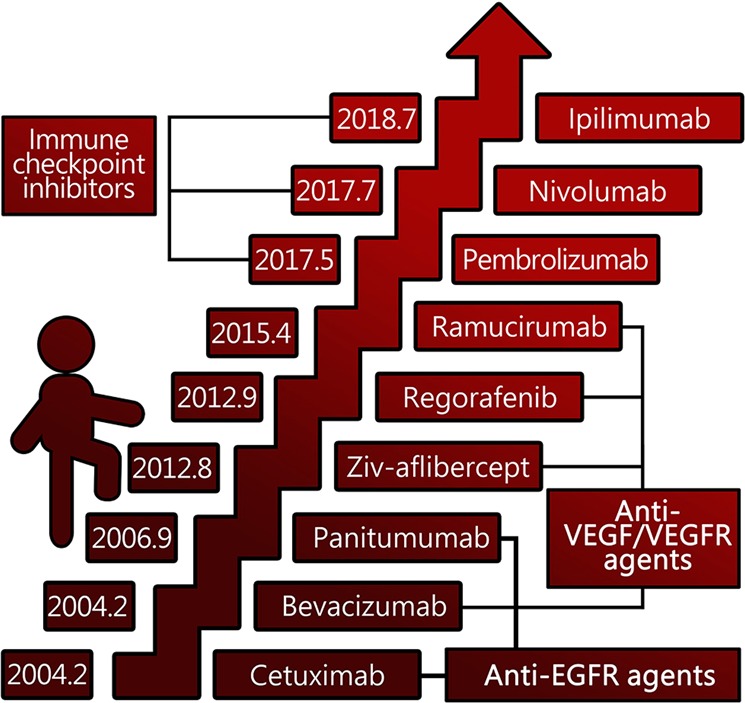
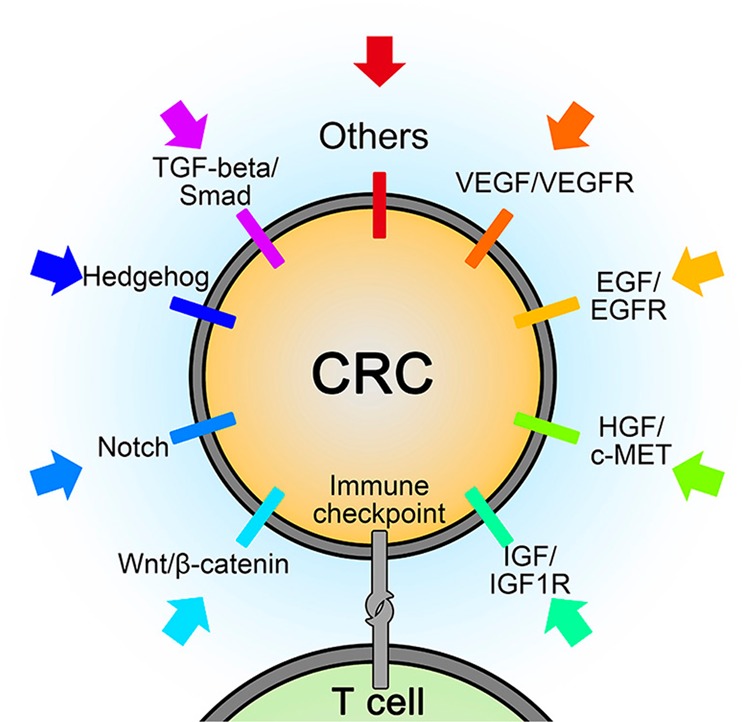
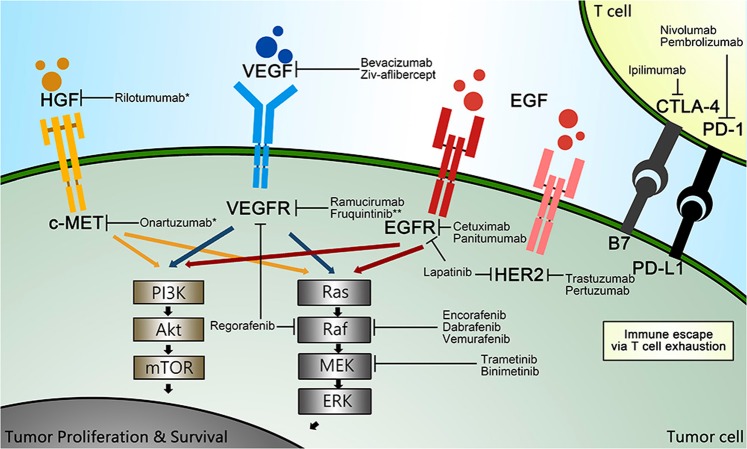
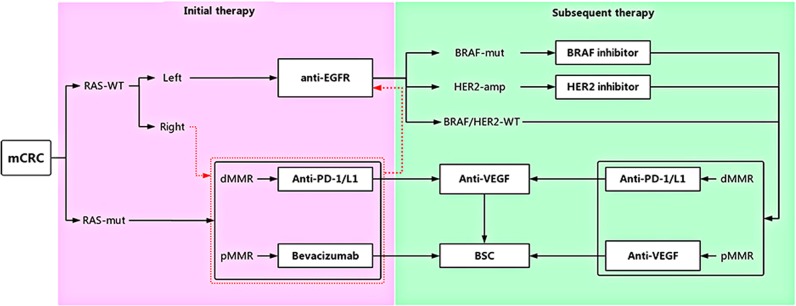
Colorectal cancer (CRC) is among the most lethal and prevalent malignancies in the world and was responsible for nearly 881,000 cancer-related deaths in 2018. Surgery and chemotherapy have long been the first choices for cancer patients. However, the prognosis of CRC has never been satisfying, especially for patients with metastatic lesions. Targeted therapy is a new optional approach that has successfully prolonged overall survival for CRC patients. Following successes with the anti-EGFR (epidermal growth factor receptor) agent cetuximab and the anti-angiogenesis agent bevacizumab, new agents blocking different critical pathways as well as immune checkpoints are emerging at an unprecedented rate. Guidelines worldwide are currently updating the recommended targeted drugs on the basis of the increasing number of high-quality clinical trials. This review provides an overview of existing CRC-targeted agents and their underlying mechanisms, as well as a discussion of their limitations and future trends.
Overview
The claims and statistics of this paper haven’t been checked yet.
Free: it reads the open-access text and checks the first 5 claims that cite a source we can check. Create a free account to check every claim.
Integrity signals
Registry
Cites
Statistics
Figures
Verification
Claims the paper makes
The claims and statistics of this paper haven’t been checked yet.
Free: it reads the open-access text and checks the first 5 claims that cite a source we can check. Create a free account to check every claim.
Claims other papers make about this one
Each is checked against this paper’s own text: does it say what the citing paper says it does?
The source backs part of the claim, not all of it — or backs it for a different population, condition or comparison.
In the citing paper
“The therapeutic landscape of metastatic colorectal cancer is moving toward biomarker-selected strategies. However, options are limited to agents directed at tumors carrying BRAF V600E mutations and to antibodies against programmed death 1 (PD-1) in patients with high microsatellite instability or mismatch-repair deficiency.13,26,27”
From Adagrasib with or without Cetuximab in Colorectal Cancer with Mutated KRAS G12C (2023) · cites this paper as [13]
Experimental — accuracy not yet measuredThe source backs part of the claim, not all of it — or backs it for a different population, condition or comparison.
In the citing paper
“Current first-line standard of care for KRAS G12C-positive CRC includes 5-FU-based chemotherapy with irinotecan, oxaliplatin and/or capecitabine, but is limited by low tumor-specific selectivity and systemic toxicity21.”
From Divarasib plus cetuximab in KRAS G12C-positive colorectal cancer: a phase 1b trial (2024) · cites this paper as [21]
Experimental — accuracy not yet measuredThe cited source says what the claim attributes to it.
In the citing paper
“Cetuximab is an anti-EGFR monoclonal antibody that is indicated for the treatment of RAS wild-type metastatic colorectal cancer, either as monotherapy or in combination with chemotherapy.13”
From Adagrasib with or without Cetuximab in Colorectal Cancer with Mutated KRAS G12C (2023) · cites this paper as [13]
The check wasn’t confident either way, so it gives no verdict — never disputed.
In the citing paper
“Currently, no therapies that specifically target KRAS G12C protein have been approved for the treatment of colorectal cancer.13,19”
From Adagrasib with or without Cetuximab in Colorectal Cancer with Mutated KRAS G12C (2023) · cites this paper as [13]
Experimental — accuracy not yet measuredIn the citing paper
“ROS-mediated DNA damage induces p53 phosphorylation, which in turn stabilizes p53, indispensable to counter tumorigenic growth and differentiation.68”
Self-check
Percentages, sums and reported differences re-computed from the paper’s own numbers.
The self-check needs the paper’s full text.
Citations
Cites
2 retracted
Lee, Y.-J., Karl, D. L., Maduekwe, U. N., Rothrock, C., Ryeom, S., D'Amore, P. A., & Yoon, S. S. (2010) · Cancer Research · doi:10.1158/0008-5472.can-10-1138 · Cited by 61
RetractedYang, S., Zhang, X., Qu, H., Qu, B., Yin, X., & Zhao, H. (2019) · Cancer Gene Therapy · doi:10.1038/s41417-019-0098-6 · Cited by 16 · cited 1×
“Similarly, an exciting antitumor performance of cabozantinib was observed in research based on CRC xenograft models and cell lines, while the results from CRC-focused clinical trials are awaited.(289,336,337) Merestinib, an inhibitor of MET, AXL (Axl receptor tyrosine kinase), TEK (tunica interna endothelial cell kina…”
BackgroundRetractedBray, F., Ferlay, J., Soerjomataram, I., Siegel, R. L., Torre, L. A., & Jemal, A. (2018) · CA: A Cancer Journal for Clinicians · doi:10.3322/caac.21492 · Cited by 84,109
PD-1 and PD-L1 Immune Checkpoint Blockade to Treat Breast Cancer
Hartkopf, A. D., Taran, F.-A., Wallwiener, M., Walter, C. B., Krämer, B., Grischke, E.-M., & Brucker, S. Y. (2016) · Breast Care · doi:10.1159/000453569 · Cited by 30,845
Siegel, R. L., Miller, K. D., & Jemal, A. (2019) · CA: A Cancer Journal for Clinicians · doi:10.3322/caac.21551 · Cited by 20,160
Adverse Renal Effects of Immune Checkpoint Inhibitors: A Narrative Review
Wanchoo, R., Karam, S., Uppal, N. N., Barta, V. S., Deray, G., Devoe, C., Launay-Vacher, V., Jhaveri, K. D., & on behalf of Cancer and Kidney International Network Workgroup on Immune Checkpoint Inhibitors (2017) · American Journal of Nephrology · doi:10.1159/000455014 · Cited by 15,256
Improved Survival with Ipilimumab in Patients with Metastatic Melanoma
Hodi, F. S., O'Day, S. J., McDermott, D. F., Weber, R. W., Sosman, J. A., Haanen, J. B., Gonzalez, R., Robert, C., Schadendorf, D., Hassel, J. C., et al. (2010) · New England Journal of Medicine · doi:10.1056/nejmoa1003466 · Cited by 15,155
Bevacizumab plus Irinotecan, Fluorouracil, and Leucovorin for Metastatic Colorectal Cancer
Hurwitz, H., Fehrenbacher, L., Novotny, W., Cartwright, T., Hainsworth, J., Heim, W., Berlin, J., Baron, A., Griffing, S., Holmgren, E., et al. (2004) · New England Journal of Medicine · doi:10.1056/nejmoa032691 · Cited by 10,968
Immunity, Inflammation, and Cancer
Grivennikov, S. I., Greten, F. R., & Karin, M. (2010) · Cell · doi:10.1016/j.cell.2010.01.025 · Cited by 10,755
Mutations of the BRAF gene in human cancer
Davies, H., Bignell, G. R., Cox, C., Stephens, P., Edkins, S., Clegg, S., Teague, J., Woffendin, H., Garnett, M. J., Bottomley, W., et al. (2002) · Nature · doi:10.1038/nature00766 · Cited by 10,674
Cited by
Items 601–700 of 1,000
Hatthakarnkul, P., Quinn, J. A., Ammar, A., Lynch, G., van Wyk, H., McMillan, D., Thuwajit, C., & Edwards, J. (2022) · Clinical Science · doi:10.1042/cs20210886 · Cited by 15
Sun, X., Li, S., & Han, L. (2022) · Journal of Oncology · doi:10.1155/2022/3963883 · Cited by 15
“Introduction Colorectal cancer is one of the most common gastrointestinal tumors [1, 2].”
BackgroundGupta, K., Jones, J. C., Farias, V., Mackeyev, Y., Singh, P. K., Quiñones‐Hinojosa, A., & Krishnan, S. (2022) · Frontiers in Oncology · doi:10.3389/fonc.2022.840241 · Cited by 15
Shahidi, M., Abazari, O., Dayati, P., Haghiralsadat, F., Oroojalian, F., & Tofighi, D. (2022) · Frontiers in Bioengineering and Biotechnology · doi:10.3389/fbioe.2022.1013541 · Cited by 12
“in treatment failure and subsequent CRC-caused deaths (Xie et al., 2020).”
BackgroundRetractedBarpanda, A., Biswas, D., Verma, A., Parihari, S., Singh, A. K., Kapoor, S., Kantharia, C. V., & Srivastava, S. (2023) · Journal of Proteome Research · doi:10.1021/acs.jproteome.2c00646 · Cited by 12
Time to abandon CAR-T monotherapy for solid tumors
Yin, L., Wan, Z., Sun, P., Shuai, P., & Liu, Y. (2023) · Biochimica et Biophysica Acta (BBA) - Reviews on Cancer · doi:10.1016/j.bbcan.2023.188930 · Cited by 12
Pandey, M., & Bhattacharyya, J. (2024) · Epigenomics · doi:10.2217/epi-2023-0382 · Cited by 15
Emerging Therapies for Advanced Cholangiocarcinoma: An Updated Literature Review
Vignone, A., Biancaniello, F., Casadio, M., Pesci, L., Cardinale, V., Ridola, L., & Alvaro, D. (2021) · Journal of Clinical Medicine · doi:10.3390/jcm10214901 · Cited by 13
Nannini, G., Luca, V. D., DˈAmbrosio, C., Scaloni, A., Taddei, A., Ringressi, M. N., Cianchi, F., Staderini, F., Capasso, C., Amedei, A., et al. (2022) · Journal of Enzyme Inhibition and Medicinal Chemistry · doi:10.1080/14756366.2022.2085694 · Cited by 12
PGM3 regulates beta-catenin activity to promote colorectal cancer cell progression
Zhang, N., Liu, S., Xu, J., Ning, T., Xie, S.-A., Min, L., Zhu, S., Zhang, S., & Zhu, S. (2022) · Experimental Biology and Medicine · doi:10.1177/15353702221101810 · Cited by 13
Papierska, K., Krajka‐Kuźniak, V., Kleszcz, R., Stefański, T., Kurczab, R., & Kubicki, M. (2022) · Scientific Reports · doi:10.1038/s41598-022-18981-4 · Cited by 13
Ng, S.-K., Chung, D.-J., Chang, L., Luo, C.-K., Jwo, S.-H., Lee, Y.-H., Lin, J., Wang, C., & Wei, T.-T. (2023) · Biomedicine & Pharmacotherapy · doi:10.1016/j.biopha.2023.114467 · Cited by 12
Ramezani, S., Parkhideh, A., Bhattacharya, P. K., Farach-Carson, M. C., & Harrington, D. A. (2021) · Frontiers in Oncology · doi:10.3389/fonc.2021.657701 · Cited by 11
Yu, K. K. H., Abou-Mrad, Z., Torkenczy, K. A., Schulze, I., Gantchev, J. K., Baquer, G., Hopland, K., Bander, E. D., Tosi, U., Brennan, C., et al. (2026) · Cancer Cell · doi:10.1016/j.ccell.2025.12.010 · Cited by 12
Colorectal cancer pathogenesis, oncogenic signaling networks and targeted therapeutic advances
Chen, Y., Zhang, J., Ding, Y., Zhu, F., & Chen, Y. (2026) · Molecular Biomedicine · doi:10.1186/s43556-026-00433-4 · Cited by 17
“The table serves as a practical reference for matching targeted treatment strategies with specific molecular subtypes and clinical contexts in CRC [239–243] (Table 6).”
Self-citationGuo, T., Peng, S., Liu, D., & Li, Y. (2022) · Biochemical Genetics · doi:10.1007/s10528-022-10226-3 · Cited by 13
Kim, K., Ryu, T. Y., Lee, J., Son, M., Kim, D., Kim, S. K., & Cho, H. (2022) · Molecules and Cells · doi:10.14348/molcells.2022.0014 · Cited by 11
“There are also targeted therapies, such as bevacizumab (inhibits blood vessel formation), cetuximab, panitumumab (targets cancer cells by modulating EGFR), and encorafenib (targets cancer cells by altering the BRAF gene) (Koopman et al., 2007; Xie et al., 2020).”
BackgroundA Review of Translational Research for Targeted Therapy for Metastatic Colorectal Cancer
Ruff, S. M., & Pawlik, T. M. (2023) · Cancers · doi:10.3390/cancers15051395 · Cited by 13
“** This agent has been approved by the National Medical Products Administration of China (NMPA), but not by the United States of America Food and Drug Administration (FDA) [15].”
Investigating the spatial interaction of immune cells in colon cancer
Mirzaei, N. M., Hao, W., & Shahriyari, L. (2023) · iScience · doi:10.1016/j.isci.2023.106596 · Cited by 16
Cassese, G., Han, H., Yoon, Y., Lee, J. S., Lee, B., Cubisino, A., Panaro, F., & TROISI, R. I. (2023) · World Journal of Gastrointestinal Oncology · doi:10.4251/wjgo.v15.i6.911 · Cited by 14
Pason, P., Tachaapaikoon, C., Suyama, W., Waeonukul, R., Shao, R., Wongwattanakul, M., Limpaiboon, T., Chonanant, C., & Ngernyuang, N. (2023) · Toxicology Reports · doi:10.1016/j.toxrep.2023.12.010 · Cited by 13
“However, most of these anticancer drugs used in chemotherapy have shown a lack of efficacy with unexpected clinical outcomes such as systemic toxicity, low tumor-specific selectivity, and acquired drug resistance [2].”
BackgroundDelineating the role of nuclear receptors in colorectal cancer, a focused review
Manickasamy, M. K., Jayaprakash, S., Girisa, S., Kumar, A., Lam, H. Y., Okina, E., Eng, H., Alqahtani, M. S., Abbas, M. A. E., Sethi, G., et al. (2024) · Discover Oncology · doi:10.1007/s12672-023-00808-x · Cited by 12
Hu, T., Zhan, J., Li, L., He, Y., Lin, Y., Wang, J., Yu, H., Xiong, J., Fang, Z., Deng, J., et al. (2024) · The Oncologist · doi:10.1093/oncolo/oyae020 · Cited by 11
Dmello, R. S., Palmieri, M., Thilakasiri, P. S., Doughty, L., Nero, T. L., Poh, A. R., To, S. Q., Lee, E. F., Fairlie, W. D., Mielke, L. A., et al. (2024) · Cell Death and Disease · doi:10.1038/s41419-024-06631-8 · Cited by 11
“Furthermore, BZA is FDA-approved for treating post-menopausal osteoporosis and has demonstrated a well-tolerated and favourable safety pro fi le Fig.”
BackgroundGirod, M., Geisler, A., Hinze, L., Elsner, L., Dieringer, B., Beling, A., Kurreck, J., & Fechner, H. (2024) · International Journal of Molecular Sciences · doi:10.3390/ijms25115618 · Cited by 11
“Yet , in metastatic CRC, the 5-year survival rate is only around 10% with chemotherapy, which underscores its limited curative potential [12,13].”
BackgroundNanodispersions for drug delivery applications: a special focus toward cancer therapeutics
Sethuraman, V., Ramesh, A., Janakiraman, K., & Nagaraj, B. (2024) · Journal of Nanoparticle Research · doi:10.1007/s11051-024-06026-y · Cited by 11
“…while diminishing side effects and high drug loading capacity are all significant advantages of using nanoparticles as drug delivery systems [32–37] though there were lots of advantages of using nanotechnology in drug delivery application, the only concern that limits the usage of…”
NFκB signalling in colorectal cancer: Examining the central dogma of IKKα and IKKβ signalling
McKenzie, M., Lian, G., Pennel, K. A. F., Quinn, J. A., Jamieson, N. B., & Edwards, J. (2024) · Heliyon · doi:10.1016/j.heliyon.2024.e32904 · Cited by 12
“However key issues remain in the treatment of both colon and rectal cancer; therapies are only effective in specific subgroups of patients, with many experiencing intolerable side effects, and therapy resistance [11,12].”
Thymoquinone Increases the Sensitivity of SW‐480 Colon Cancer Cells to 5‐Fluorouracil
Zeinali, N., Mahmoudzadeh, V., Anarjani, A., Ebrahimnezhad, M., Yousefi, B., & Valizadeh, A. (2024) · BioMed Research International · doi:10.1155/2024/6231095 · Cited by 12
“Despite recent progress in both diagnosis and therapy of this disease, the general prognosis of colorectal cancer remains unsatisfactory [20].”
BackgroundPrecision Medicine for Metastatic Colorectal Cancer: Where Do We Stand?
Underwood, P. W., & Pawlik, T. M. (2024) · Cancers · doi:10.3390/cancers16223870 · Cited by 15
Izaaryene, J., Grange, R., Habouzit, V., Grange, S., Orsini, B., Dassa, M., Daidj, N., Thierry, L. T., Ferrè, M., Phelip, J., et al. (2024) · European Radiology · doi:10.1007/s00330-024-11153-0 · Cited by 11
“The number of new cases may increase to nearly 2.5 million in 2035 [1].”
InfluentialComprehensive review of signaling pathways and therapeutic targets in gastrointestinal cancers
Ji, P., Chen, T., Li, C. R., Zhang, J., Li, X., & Zhu, H. P. (2024) · Critical Reviews in Oncology/Hematology · doi:10.1016/j.critrevonc.2024.104586 · Cited by 11
Illudin S inhibits p53-Mdm2 interaction for anticancer efficacy in colorectal cancer
Lee, Y. S., Lee, Y. Y., Park, J., Maksakova, A., Seo, D., Kim, J., Yeom, J. E., Kim, Y., Kim, C., Ryoo, R., et al. (2024) · Biomedicine & Pharmacotherapy · doi:10.1016/j.biopha.2024.117795 · Cited by 12
Huang, L., Luo, J., Wang, Y., Gan, L., Xu, N., Chen, J., & Li, C. (2025) · Scientific Reports · doi:10.1038/s41598-024-84758-6 · Cited by 11
Li, H., Zhou, Y. Q., & Ye, B. (2025) · ACS Synthetic Biology · doi:10.1021/acssynbio.4c00570 · Cited by 12
Bai, L., Liu, X., Yuan, Z., Xu, G., Li, X., Wan, Z., Zhu, M., Liang, X., Li, P., Lan, Q., et al. (2025) · International Journal of Biological Macromolecules · doi:10.1016/j.ijbiomac.2025.141013 · Cited by 13
Recent Update of Natural Compounds as HIF-1α Inhibitors in Colorectal Carcinoma
Pandey, P., Lakhanpal, S., Mahmood, D., Baldaniya, L. H., Kang, H. N., Hwang, S., Kang, S., Choi, M. C., Moon, S., Pandey, S., et al. (2025) · Drug Design Development and Therapy · doi:10.2147/dddt.s511406 · Cited by 17
“3,4 Tumor hypoxia is a prevalent medical condition that occurs when there is insufficient oxygen to reach tissues.”
Kufrin, V., Seiler, A., Brilloff, S., Rothfuß, H., Küchler, S., Schäfer, S., Rahimian, E., Baumgarten, J., Ding, L., Buchholz, F., et al. (2025) · Cell Death and Differentiation · doi:10.1038/s41418-025-01479-7 · Cited by 14
“To evaluate the therapeutic potential of KAT2A inhibition, we sought to induce the KAT2A knockdown after the formation of 3D spheroids, mimicking the clinical scenario in which most CRCs are diagnosed at advanced stage when complex 3D tumor structures are already established [35].”
Sultan, M. H., Zhang, Q., Wang, Y., Xia, Y., & Jia, X. (2025) · International Journal of Molecular Medicine · doi:10.3892/ijmm.2025.5545 · Cited by 11
“The same drugs can positively affect tumor vessels; for instance, bevacizumab can prevent the formation of short and irregular vessels typical for tumor‑related vasculature, increasing the effectiveness of OV (179).”
Zhou, D., Tang, E., Wang, W., Xiao, Y., Huang, J., Liu, J., Zheng, C., Zhang, K., Hu, R., Wang, F., et al. (2025) · Cell Reports Medicine · doi:10.1016/j.xcrm.2025.102158 · Cited by 18
Wu, T.-Y., Chen, C., & Lin, J. (2025) · Bioorganic Chemistry · doi:10.1016/j.bioorg.2025.108723 · Cited by 12
Liquid biopsy for the management of gastrointestinal cancers
Salehnia, Z., Rezaee, D., Ehtiati, S., Bakhtiari, M., Khalilzad, M. A., & Najafi, S. (2025) · Clinica Chimica Acta · doi:10.1016/j.cca.2025.120474 · Cited by 16
Characterization of Novel α-Mangostin and Paeonol Derivatives With Cancer-Selective Cytotoxicity
Nunna, S., Huang, Y.-P., Rasa, S. M. M., Křepelová, A., Annunziata, F., Adam, L., Käppel, S., Hsu, M., & Neri, F. (2021) · Molecular Cancer Therapeutics · doi:10.1158/1535-7163.mct-20-0787 · Cited by 13
“The current medical colorectal cancer treatments usually include a combination ofmultiple chemotherapeutic, targeted and/or immunotherapeutic drugs (4, 5).”
Gaggianesi, M., Mangiapane, L. R., Modica, C., Pantina, V. D., Porcelli, G., Franco, S. D., Iacono, M. L., D’Accardo, C., Verona, F., Pillitteri, I., et al. (2022) · Cancers · doi:10.3390/cancers14030673 · Cited by 12
“CRC patients treated with selective Ras/Raf pathway-targeted agents show limited benefits in contrast to the considerable response observed in BRAF-mutated melanoma patients [2].”
BackgroundResultFang, Y., Wang, Q., Huang, K., Zhang, M., Pei, S., Li, L., Peng, Y., Lan, L., & Zheng, X. (2022) · Clinical and Experimental Medicine · doi:10.1007/s10238-022-00815-2 · Cited by 11
“The mortality rates of CRC have generally decreased because of advances in screening methods and therapies [1, 2].”
BackgroundFurumoto, H., Kato, T., Wakiyama, H., Furusawa, A., Choyke, P. L., & Kobayashi, H. (2022) · Biomedicines · doi:10.3390/biomedicines10040846 · Cited by 11
Wang, J., Hu, J., Wang, M., Yuan, H., Xing, Y., Zhou, X., Ding, M., Chen, W., Qu, B., & Zhu, L. (2022) · Biochemical Genetics · doi:10.1007/s10528-022-10267-8 · Cited by 12
“However, there are still some limitations of these treatments such as unsatisfying response rate and acquired resistance to therapy (Xie et al. 2020).”
BackgroundYan, L., Chen, X., Bian, Z., Gu, C., Ji, H., Chen, L., Xu, H., & Tang, Q. (2022) · Frontiers in Genetics · doi:10.3389/fgene.2022.971364 · Cited by 14
“Meanwhile, the 5-year survival rate in patients with CRC is about 64%, but decreases to 12% in those with metastatic CRC (Xie et al., 2020).”
BackgroundRafoxanide sensitizes colorectal cancer cells to TRAIL-mediated apoptosis
Laudisi, F., Pacifico, T., Maresca, C., Luiz-Ferreira, Â., Antonelli, S., Ortenzi, A., Colantoni, A., Grazia, A. D., Franzè, E., Colella, M., et al. (2022) · Biomedicine & Pharmacotherapy · doi:10.1016/j.biopha.2022.113794 · Cited by 11
Cai, S., Jin, Z., Zeng, P., Yang, L., Yan, Y., Wang, Z., Shen, Y., & Guo, S. (2022) · Acta Biomaterialia · doi:10.1016/j.actbio.2022.10.040 · Cited by 11
Curcumin: A Novel Way to Improve Quality of Life for Colorectal Cancer Patients?
Layos, L., Martinez‐Balibrea, E., & de Porras, V. R. (2022) · International Journal of Molecular Sciences · doi:10.3390/ijms232214058 · Cited by 13
“Immune checkpoint inhibitors stop the tumor from escaping T cell detection and thus stimulate immune surveillance and clearance [14,15].”
BackgroundGao, L. P., Lü, Y., Chen, H., Li, Z., Hu, M. X., Zhang, R., Wang, X., Xu, Z., Gong, Y., Wang, R., et al. (2023) · Molecular & Cellular Proteomics · doi:10.1016/j.mcpro.2023.100545 · Cited by 12
“Since the first approval of cetuximab and bevacizumab in 2004, a great number of agents targeting the kinases EGFR and VEGFR have entered the clinic (3).”
BackgroundChoudhury, H., Pandey, M., Saravanan, V., Mun, A. T. Y., Bhattamisra, S. K., Parikh, A. R., Garg, S., & Gorain, B. (2023) · Biomaterials Advances · doi:10.1016/j.bioadv.2023.213556 · Cited by 13
A review of targeted therapy and immune checkpoint inhibitors for metastatic colorectal cancer
Ruff, S. M., Brown, Z. J., & Pawlik, T. M. (2023) · Surgical Oncology · doi:10.1016/j.suronc.2023.101993 · Cited by 16
Mneimneh, A. T., Darwiche, N., & Mehanna, M. M. (2024) · International Journal of Pharmaceutics · doi:10.1016/j.ijpharm.2024.124473 · Cited by 12
Kim, D. H., Kang, D. Y., Sp, N., Jo, E. S., Rugamba, A., Jang, K., & Yang, Y. M. (2020) · Anticancer Research · doi:10.21873/anticanres.14522 · Cited by 11
Silva, V. S. E., Abdallah, E. A., Brito, A. B. C., Braun, A. C., Tariki, M. S., de Mello, C. A. L., Calsavara, V. F., Riechelmann, R. P., & Chinen, L. T. D. (2021) · Diagnostics · doi:10.3390/diagnostics11030502 · Cited by 11
Egusquiza-Alvarez, C. A., Castañeda‐Patlán, M. C., Albarran-Gutierrez, S., González-Aguilar, H., Moreno-Londoño, Á. P., Maldonado, V., Meléndez-Zajgla, J., & Robles‐Flores, M. (2021) · Frontiers in Oncology · doi:10.3389/fonc.2021.642940 · Cited by 12
“help interfere more efficiently, oncogenic cellular processes improving personalized and targeted cancer therapy (2).”
BackgroundLi, L., Li, C., Chang, P. M., Lai, T., Yong, C.-Y., Feng, S., Hsiao, M., Chang, W., & Huang, C. F. (2022) · Frontiers in Oncology · doi:10.3389/fonc.2022.775541 · Cited by 13
Piccinno, E., Scalavino, V., Labarile, N., Bianco, G., Savino, M. T., Armentano, R., Giannelli, G., & Serino, G. (2023) · International Journal of Molecular Sciences · doi:10.3390/ijms25010494 · Cited by 12
“Targeted therapy is a new approach that has increased the overall survival of CRC patients [1].”
BackgroundZheng, E., Włodarczyk, M., Węgiel, A., Osielczak, A., Możdżan, M., Biskup, L., Grochowska, A., Wołyniak, M., Gajewski, D., Porc, M., et al. (2024) · Frontiers in Surgery · doi:10.3389/fsurg.2024.1398289 · Cited by 12
Role of ursolic acid in preventing gastrointestinal cancer: recent trends and future perspectives
Chauhan, A. P. S., Pathak, V. M., Yadav, M., Chauhan, R., Babu, N., Chowdhary, M., Ranjan, A., Mathkor, D. M., Haque, S., Tuli, H. S., et al. (2024) · Frontiers in Pharmacology · doi:10.3389/fphar.2024.1405497 · Cited by 12
Glycated nisin enhances nisin's cytotoxic effects on breast cancer cells
Mohammadi, A., Kazemipour, N., Ghorbankhani, G. A., Morovati, S., & Sadeghian, M. H. (2024) · Scientific Reports · doi:10.1038/s41598-024-68765-1 · Cited by 14
Sada, R., Yamamoto, H., Matsumoto, S., Harada, A., & Kikuchi, A. (2024) · Cancer Science · doi:10.1111/cas.16278 · Cited by 10
Jiang, M., Shao, Q., Slaughter, J. R., & Bischof, J. C. (2024) · Advanced Therapeutics · doi:10.1002/adtp.202400068 · Cited by 11
Sun, W., Su, Y., & Zhang, Z. (2024) · Discover Oncology · doi:10.1007/s12672-024-01298-1 · Cited by 10
Pagano, D., Barresi, V., Tropea, A., Galvano, A., Bazan, V., Caldarella, A., Sani, C., Pompeo, G., Russo, V., Liotta, R., et al. (2025) · Life · doi:10.3390/life15020320 · Cited by 12
“Conversely, cetuximab and panitu-mumab combined with chemotherapy can extend median overall survival (OS) by 8 months in half of mCRC patients with RAS wild-type tumors [3].”
InfluentialXu, H., Wang, H., Xiang, Y., Grønlien, I., Torvund, A. G. S., Xomalis, A., & Zhao, Z. (2025) · Biomedical Optics Express · doi:10.1364/boe.557218 · Cited by 11
“Nowadays, targeted therapies become an alternative treatment plan for improving prognosis due to its high precision and low toxicity [8,9].”
Kang, X., Li, Y., Han, Y., Wu, M., Peng, Q., Dong, J., & Wei, J. (2025) · Molecular Therapy · doi:10.1016/j.ymthe.2025.05.032 · Cited by 12
Zou, H., Tan, Y., Ren, X., Zhu, L., & Liu, Y. (2025) · Toxics · doi:10.3390/toxics13060480 · Cited by 10
“…that EGFR exerts its oncogenic effects through activation of downstream signaling cascades, particularly the RAS-RAF-MAPK and PI3K-AKT-mTOR pathways, which collectively drive aberrant proliferation of intestinal epithelial cells, enhance metastatic potential, and promote tumor angiogenesis [29].”
Liu, Y., Zhang, Y., Zhang, R., Zhang, C., & Liu, X. (2025) · Cancer Biology & Therapy · doi:10.1080/15384047.2025.2567802 · Cited by 14
“37-39 However, RAS mutations predominate in CRC, accounting for 60%, while patients with metastatic left colon cancer harboring RAS mutations exhibit resistance to EGFR receptor inhibitors, resulting in their exclusion from EGFR-specific therapies.”
Liu, C. X., & Wong, C. C.-L. (2025) · Clinical and Molecular Hepatology · doi:10.3350/cmh.2025.0889 · Cited by 15
“EGFR targeting therapies have been FDA-approved for treatment in other types of cancer such as non-small cell lung cancer and colorectal cancer [145, 146].”
Khalid, A. Q., Bhuvanendran, S., Magalingam, K. B., Ramdas, P., Liew, Y. K., & Radhakrishnan, A. K. (2025) · STAR Protocols · doi:10.1016/j.xpro.2025.104144 · Cited by 11
Bichalski, B., Bichalska-Lach, M., & Waniczek, D. (2025) · Current Issues in Molecular Biology · doi:10.3390/cimb47121047 · Cited by 11
“In stage IV, with distant metastases (e.g., to the liver or lungs), the survival rate drops dramatically to only 10–15% [8–11].”
Antikchi, M. H., Asadian, F., Dastgheib, S. A., Ghelmani, Y., Kargar, S., Sadeghizadeh‐Yazdi, J., & Neámatzadeh, H. (2020) · Journal of Gastrointestinal Cancer · doi:10.1007/s12029-020-00521-w · Cited by 10
“Globally, CRC represents the most common cancer of the digestive system, and about 1 in 10 cancer deaths is due to CRC [4, 5].”
BackgroundDietary supplementation with black raspberries prolongs survival in ApcMin/+ mice
Dong, A., Huang, Y., Yearsley, M., Oshima, K., Chen, X., Yu, J., & Wang, L. (2021) · Food Frontiers · doi:10.1002/fft2.115 · Cited by 10
Sadek, S. A., Hoseny, S. S., Soliman, A. M., & Fahmy, S. R. (2022) · Current Drug Delivery · doi:10.2174/1567201819666220509161548 · Cited by 12
Conciatori, F., Salvati, E., Ciuffreda, L., Shirasawa, S., Falcone, I., Cognetti, F., Ferretti, G., Zeuli, M., Bufalo, D. D., Bazzichetto, C., et al. (2022) · Frontiers in Oncology · doi:10.3389/fonc.2022.862806 · Cited by 14
“In this context, the role ofPTENas a potential prognostic and/or predictive biomarker in CRC remains debated, not only in terms of response to established therapeutic approaches, such EGF receptor (EGFR) and/orVEGF receptor blockade (6, 7), but also in reference to experimental PI3K pathway inhibition.”
BackgroundPelullo, M., Zema, S., Carolis, M. D., Cialfi, S., Giuli, M. V., Palermo, R., Capalbo, C., Giannini, G., Screpanti, I., Checquolo, S., et al. (2022) · Frontiers in Oncology · doi:10.3389/fonc.2022.918763 · Cited by 10
Tran, K. B., Kolekar, S., Wang, Q., Shih, J., Buchanan, C. M., Deva, S., & Shepherd, P. R. (2022) · Molecular Cancer Therapeutics · doi:10.1158/1535-7163.mct-21-0941 · Cited by 10
“A wide range of signaling pathways are known to contribute to the development of colorectal cancer and to resistance of current drug therapies (10).”
BackgroundCiftci, H. I., Sever, B., Kaya, N., Bayrak, N., Yıldız, M., Yıldırım, H., Tateishi, H., Otsuka, M., Fujita, M., & Tuyun, A. F. (2022) · Molecules · doi:10.3390/molecules28010077 · Cited by 13
Fath, M. K., Banan, Z. M., Barati, R., Mohammadrezakhani, O., Ghaderi, A., Hatami, A., Ghiabi, S., Zeidi, N., Asgari, K., Payandeh, Z., et al. (2023) · Progress in Biophysics and Molecular Biology · doi:10.1016/j.pbiomolbio.2023.02.001 · Cited by 11
Basic and translational research on carbon-ion radiobiology.
Sai, S., Koto, M., & Yamada, S. (2023) · PubMed Central · Cited by 15
Asakiya, C., Zhang, Y., Zhu, L., Ackah, M., Tavakoli, S., Zhu, L., Huang, K., & Xu, W. (2023) · Biochemical Engineering Journal · doi:10.1016/j.bej.2023.108926 · Cited by 10
Xiong, H. F., Li, Y., & Liu, M. (2023) · Molecular Medicine Reports · doi:10.3892/mmr.2023.13013 · Cited by 10
Lin, Y., Luo, S., Luo, M., Lu, X., Li, Q., Xie, M., Huang, Y., Liao, X., Zhang, Y., Li, Y., et al. (2023) · Molecular Carcinogenesis · doi:10.1002/mc.23562 · Cited by 10
“metachronous metastases, let alone about a quarter of patients are in an advanced stage with metastases at the time of diagnosis, which result in impediments in curative surgical control and subsequent tumor‐related deaths.(5,6)”
BackgroundUhlik, M. T., Pointing, D., Iyer, S., Ausec, L., Štajdohar, M. R., Cvitkovič, R., Žganec, M., Culm, K., Santos, V. C., Pytowski, B., et al. (2023) · Frontiers in Oncology · doi:10.3389/fonc.2023.1158345 · Cited by 10
“In both early (0–2) and late (3-4) stage CRC, the A subtype had the shortest recurrence free and overall survival, respectively, while the IA subtype had the longest RFS and OS.”
BackgroundNalli, M., Magno, L. D., Wen, Y., Liu, X., D’Ambrosio, M., Puxeddu, M., Parisi, A., Sebastiani, J., Sorato, A., Coluccia, A., et al. (2023) · ACS Pharmacology & Translational Science · doi:10.1021/acsptsci.3c00092 · Cited by 12
Brevilin A exerts anti-colorectal cancer effects and potently inhibits STAT3 signaling in vitro
Meng, M., Tan, J., Chen, H., Shi, Z., Kwan, H. Y., & Su, T. (2023) · Heliyon · doi:10.1016/j.heliyon.2023.e18488 · Cited by 10
“There are several limitations in the current CRC therapeutic modalities, such as toxicities, gene mutation and low response rate [4].”
BackgroundErisik, D., Özdil, B., Açıkgöz, E., Abdikan, C. S. A., Yesin, T. K., & Aktuğ, H. (2023) · ACS Omega · doi:10.1021/acsomega.3c02681 · Cited by 14
Kusumaningrum, A. E., Makaba, S., Ali, E., Singh, M., Fenjan, M. N., Rasulova, I., Misra, N., Al‐Musawi, S. G., & Alsalamy, A. (2024) · Cell Biochemistry and Function · doi:10.1002/cbf.3906 · Cited by 11
“23 Contrary to common opinion, most research showed that adjuvant 5 ‐ FU treatment alone is not beneficial for patients whose tumors exhibit MSI.”
Wang, Z., Sun, Y., Wu, M., Zhou, L., Yu, Z., Ren, T., Li, M., & Zhao, W. H. (2024) · Foods · doi:10.3390/foods13081171 · Cited by 10
“…medical therapies for CRC. Individualized, targeted therapies have shown effectiveness in controlling CRC, a heterogeneous disease with various molecular characteristics, by directly inhibiting cell proliferation, differentiation, and migration, thereby improving patient prognosis [15,16].”
BackgroundWang, S., Su, D., Chen, H., Lai, J.-C., Tang, C., Yu, L., Wang, Y., Yang, Y., Qin, M., Jia, L., et al. (2024) · Cell Death and Differentiation · doi:10.1038/s41418-024-01317-2 · Cited by 15
Fan, Y., Zhang, W., Iqbal, Z., Li, X., Lin, Z., Wu, Z., Li, Q., Dong, H., Zhang, X., Gong, P., et al. (2024) · Lipids in Health and Disease · doi:10.1186/s12944-024-02301-y · Cited by 12
“Despite the significant improvement in the early diagnosis of colon cancer in recent years, nearly one-quarter of patients continue to be diagnosed at later stages of the disease [3].”
BackgroundPhull, M. S., Jadav, S. S., Gundla, R., & Mainkar, P. S. (2021) · European Journal of Medicinal Chemistry · doi:10.1016/j.ejmech.2020.113149 · Cited by 12
Immunomodulatory nanomedicine for colorectal cancer treatment: a landscape to be explored?
Silveira, M. J., Castro, F., Oliveira, M. J., & Sarmento, B. F. C. C. (2021) · Biomaterials Science · doi:10.1039/d1bm00137j · Cited by 13
Occurence of RAS reversion in metastatic colorectal cancer patients treated with bevacizumab
Epistolio, S., Cefalì, M., Spina, P., Molinari, F., Movilia, A., Cergnul, M., Mazzucchelli, L., Dosso, S. D., Frattini, M., & Saletti, P. (2021) · Oncotarget · doi:10.18632/oncotarget.27965 · Cited by 10
“, bevacizumab, aflibercept and ramucirumab), and/or anti-epidermal growth factor receptor (EGFR) monoclonal antibody (MoAb, namely cetuximab or panitumumab) for patients with RAS/ BRAF wild-type status, administered across different treatment lines [4].”
BackgroundMicrobial transglutaminase nanoflowers as an alternative nanomedicine for breast cancer theranostics
Fatima, S. W., Imtiyaz, K., Rizvi, M. M. A., & Khare, S. K. (2021) · RSC Advances · doi:10.1039/d1ra04513j · Cited by 11
Kim, S., Park, H., Kim, K., Kim, J., Sung, J. H., Nam, M., Lee, J. H., Jung, E. H., Suh, K. J., Lee, J. Y., et al. (2021) · Journal of Cancer Research and Clinical Oncology · doi:10.1007/s00432-021-03872-4 · Cited by 11
Eskandari, N., Senyuk, V. I., Moore, J., Kalik, Z. M., Luan, Q., Papautsky, I., Moshiri, A., Bocchetta, M., Salami, S. A., Oryan, S., et al. (2021) · Cancers · doi:10.3390/cancers13236025 · Cited by 11
“Targeted therapy is a novel and successful strategy in the treatment of colon cancer [1].”
BackgroundKim, J., Lee, S., Sun, R., & Kim, J. (2022) · Frontiers in Cell and Developmental Biology · doi:10.3389/fcell.2022.861045 · Cited by 11
“Consistent with these results, other studies show that CRC can become advanced due to dysregulation of the Wnt/β-catenin signaling pathway (Zhou et al., 2018; Xie et al., 2020).”
Result
Metadata
- Authors
- Xie, Y.-H., Chen, Y.-X., & Fang, J.-Y.
- Affiliations
- Shanghai Jiao Tong University (CN)
- Corresponding author
- Fang, Jing-Yuan
- ORCID
- Fang, Jing-Yuan
- Venue
- Signal Transduction and Targeted Therapy
- Published
- 2020-03-20
- Volume
- 5
- Issue
- 1
- Pages
- 22-22
- ISSN
- 2059-3635 (ISSN-L)
- PMC
- PMC7082344
- OpenAlex
- W3011481749
- Semantic Scholar
- 4980bbd78186d8dcd72cea78c224da6b545d763a
- Cited by
- 1,687
- References
- 521
- Citations by year
- 2026: 153 · 2025: 285 · 2024: 348 · 2023: 346 · 2022: 300 · 2021: 202 · 2020: 51
- FWCI
- 24.09
- Type
- journal article
- Language
- en
- Open access
- gold
- doi.org
- Licence
- cc-by
- creativecommons.org/licenses/by/4.0 (tdm)
- creativecommons.org/licenses/by/4.0 (vor)
- Locations
- Signal Transduction and Targeted Therapy (publishedVersion, cc-by)
- PubMed Central (publishedVersion, cc-by)
- PubMed (publishedVersion)
- Funders
- National Natural Science Foundation of China (81421001, 81530072)
- Topics
- Health Sciences › Medicine › Oncology › Colorectal Cancer Treatments and Studies
- Health Sciences › Medicine › Oncology › Colorectal Cancer Surgical Treatments
- Health Sciences › Medicine › Oncology › Pancreatic and Hepatic Oncology Research
- Keywords
- colorectal cancer, targeted therapy, metastatic colorectal cancer, anti-EGFR therapy, cetuximab, bevacizumab, angiogenesis inhibitors, immune checkpoint inhibitors, molecular pathways, drug mechanisms, treatment guidelines
- MeSH terms
- Bevacizumab, Cetuximab, Humans, Neoplasm Metastasis, Neovascularization, Pathologic, Colorectal Neoplasms, Molecular Targeted Therapy, ErbB Receptors
About these checks
Registry, retraction, Cites and statistics results are computed, not judged, with one exception: a printed reference that no index lists is read once by a model before it counts as a citation error. Claims are extracted by a model and kept only when their quote appears verbatim in the text; each cited source is then checked, with a model’s help, for whether it says what the claim relies on. Those verdicts can be wrong — read the claim’s quote and the cited source before relying on one.
Statistics and arithmetic are recomputed, not judged.
Confidence bands are shown only for fields calibrated on our annotated test set. None is calibrated yet, so no band is shown.
What counts as a claim ›How we measure confidence ›How we check this ›
Are you an author, or do you see a problem with this page? Request a review
Data sources
Bibliographic data: Semantic Scholar, OpenAlex, Crossref.
Contains information from the Semantic Scholar Academic Graph Datasets, made available under the ODC Attribution License (ODC-BY 1.0).
Semantic Scholar’s data is described in: Kinney, R., et al. (2023). The Semantic Scholar Open Data Platform. arXiv:2301.10140.
