

Comprehensive review of targeted therapy for colorectal cancer
Open accessThe DOI matches its Crossref record; 521 of the 521 references it cites were found in a registry or an index.
Abstract
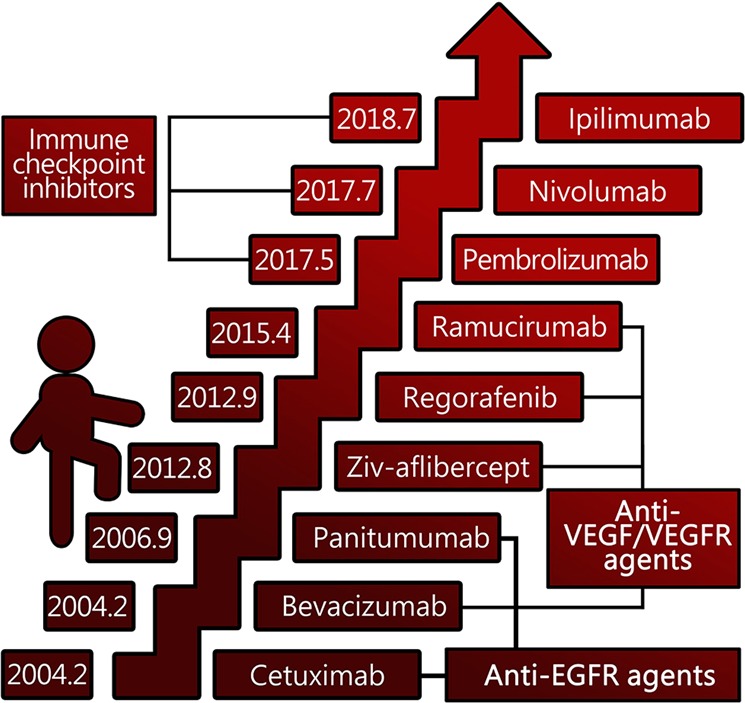
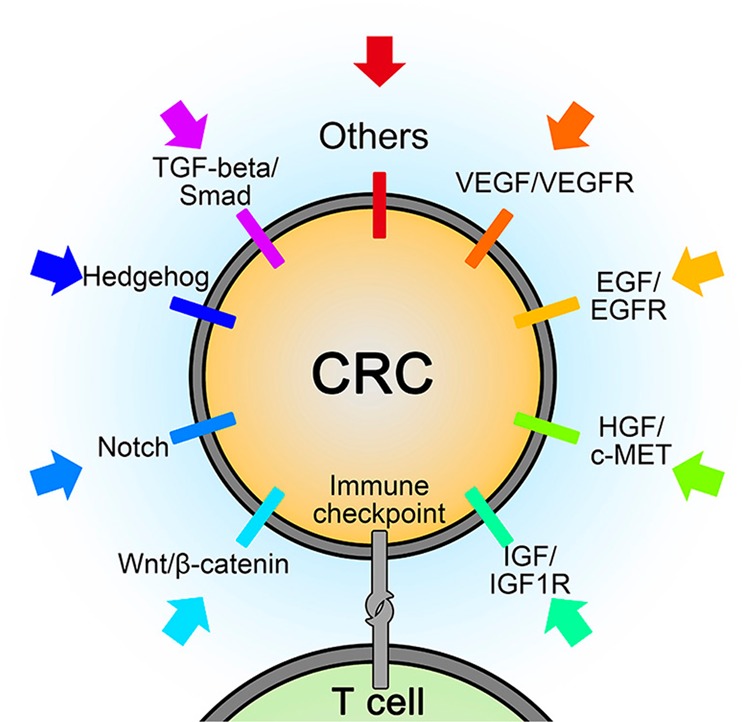
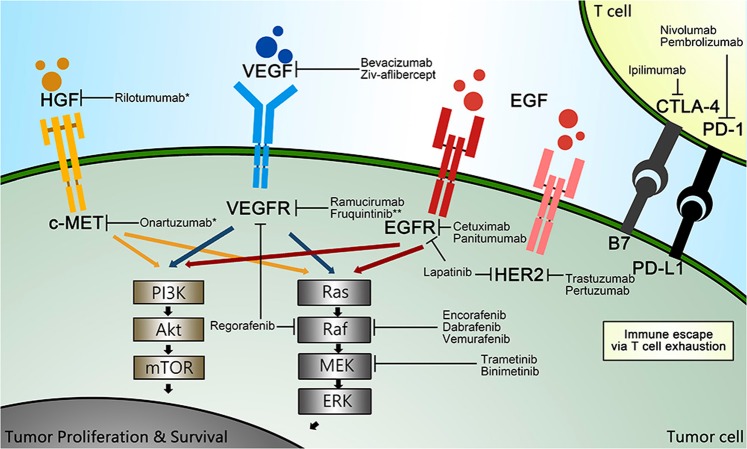
Colorectal cancer (CRC) is among the most lethal and prevalent malignancies in the world and was responsible for nearly 881,000 cancer-related deaths in 2018. Surgery and chemotherapy have long been the first choices for cancer patients. However, the prognosis of CRC has never been satisfying, especially for patients with metastatic lesions. Targeted therapy is a new optional approach that has successfully prolonged overall survival for CRC patients. Following successes with the anti-EGFR (epidermal growth factor receptor) agent cetuximab and the anti-angiogenesis agent bevacizumab, new agents blocking different critical pathways as well as immune checkpoints are emerging at an unprecedented rate. Guidelines worldwide are currently updating the recommended targeted drugs on the basis of the increasing number of high-quality clinical trials. This review provides an overview of existing CRC-targeted agents and their underlying mechanisms, as well as a discussion of their limitations and future trends.
Overview
The claims and statistics of this paper haven’t been checked yet.
Free: it reads the open-access text and checks the first 5 claims that cite a source we can check. Create a free account to check every claim.
Integrity signals
Registry
Cites
Statistics
Figures
Verification
Claims the paper makes
The claims and statistics of this paper haven’t been checked yet.
Free: it reads the open-access text and checks the first 5 claims that cite a source we can check. Create a free account to check every claim.
Claims other papers make about this one
Each is checked against this paper’s own text: does it say what the citing paper says it does?
The source backs part of the claim, not all of it — or backs it for a different population, condition or comparison.
In the citing paper
“The therapeutic landscape of metastatic colorectal cancer is moving toward biomarker-selected strategies. However, options are limited to agents directed at tumors carrying BRAF V600E mutations and to antibodies against programmed death 1 (PD-1) in patients with high microsatellite instability or mismatch-repair deficiency.13,26,27”
From Adagrasib with or without Cetuximab in Colorectal Cancer with Mutated KRAS G12C (2023) · cites this paper as [13]
Experimental — accuracy not yet measuredThe source backs part of the claim, not all of it — or backs it for a different population, condition or comparison.
In the citing paper
“Current first-line standard of care for KRAS G12C-positive CRC includes 5-FU-based chemotherapy with irinotecan, oxaliplatin and/or capecitabine, but is limited by low tumor-specific selectivity and systemic toxicity21.”
From Divarasib plus cetuximab in KRAS G12C-positive colorectal cancer: a phase 1b trial (2024) · cites this paper as [21]
Experimental — accuracy not yet measuredThe cited source says what the claim attributes to it.
In the citing paper
“Cetuximab is an anti-EGFR monoclonal antibody that is indicated for the treatment of RAS wild-type metastatic colorectal cancer, either as monotherapy or in combination with chemotherapy.13”
From Adagrasib with or without Cetuximab in Colorectal Cancer with Mutated KRAS G12C (2023) · cites this paper as [13]
The check wasn’t confident either way, so it gives no verdict — never disputed.
In the citing paper
“Currently, no therapies that specifically target KRAS G12C protein have been approved for the treatment of colorectal cancer.13,19”
From Adagrasib with or without Cetuximab in Colorectal Cancer with Mutated KRAS G12C (2023) · cites this paper as [13]
Experimental — accuracy not yet measuredIn the citing paper
“ROS-mediated DNA damage induces p53 phosphorylation, which in turn stabilizes p53, indispensable to counter tumorigenic growth and differentiation.68”
Self-check
Percentages, sums and reported differences re-computed from the paper’s own numbers.
The self-check needs the paper’s full text.
Citations
Cites
2 retracted
Lee, Y.-J., Karl, D. L., Maduekwe, U. N., Rothrock, C., Ryeom, S., D'Amore, P. A., & Yoon, S. S. (2010) · Cancer Research · doi:10.1158/0008-5472.can-10-1138 · Cited by 61
RetractedYang, S., Zhang, X., Qu, H., Qu, B., Yin, X., & Zhao, H. (2019) · Cancer Gene Therapy · doi:10.1038/s41417-019-0098-6 · Cited by 16 · cited 1×
“Similarly, an exciting antitumor performance of cabozantinib was observed in research based on CRC xenograft models and cell lines, while the results from CRC-focused clinical trials are awaited.(289,336,337) Merestinib, an inhibitor of MET, AXL (Axl receptor tyrosine kinase), TEK (tunica interna endothelial cell kina…”
BackgroundRetractedBray, F., Ferlay, J., Soerjomataram, I., Siegel, R. L., Torre, L. A., & Jemal, A. (2018) · CA: A Cancer Journal for Clinicians · doi:10.3322/caac.21492 · Cited by 84,109
PD-1 and PD-L1 Immune Checkpoint Blockade to Treat Breast Cancer
Hartkopf, A. D., Taran, F.-A., Wallwiener, M., Walter, C. B., Krämer, B., Grischke, E.-M., & Brucker, S. Y. (2016) · Breast Care · doi:10.1159/000453569 · Cited by 30,845
Siegel, R. L., Miller, K. D., & Jemal, A. (2019) · CA: A Cancer Journal for Clinicians · doi:10.3322/caac.21551 · Cited by 20,160
Adverse Renal Effects of Immune Checkpoint Inhibitors: A Narrative Review
Wanchoo, R., Karam, S., Uppal, N. N., Barta, V. S., Deray, G., Devoe, C., Launay-Vacher, V., Jhaveri, K. D., & on behalf of Cancer and Kidney International Network Workgroup on Immune Checkpoint Inhibitors (2017) · American Journal of Nephrology · doi:10.1159/000455014 · Cited by 15,256
Improved Survival with Ipilimumab in Patients with Metastatic Melanoma
Hodi, F. S., O'Day, S. J., McDermott, D. F., Weber, R. W., Sosman, J. A., Haanen, J. B., Gonzalez, R., Robert, C., Schadendorf, D., Hassel, J. C., et al. (2010) · New England Journal of Medicine · doi:10.1056/nejmoa1003466 · Cited by 15,155
Bevacizumab plus Irinotecan, Fluorouracil, and Leucovorin for Metastatic Colorectal Cancer
Hurwitz, H., Fehrenbacher, L., Novotny, W., Cartwright, T., Hainsworth, J., Heim, W., Berlin, J., Baron, A., Griffing, S., Holmgren, E., et al. (2004) · New England Journal of Medicine · doi:10.1056/nejmoa032691 · Cited by 10,968
Immunity, Inflammation, and Cancer
Grivennikov, S. I., Greten, F. R., & Karin, M. (2010) · Cell · doi:10.1016/j.cell.2010.01.025 · Cited by 10,755
Mutations of the BRAF gene in human cancer
Davies, H., Bignell, G. R., Cox, C., Stephens, P., Edkins, S., Clegg, S., Teague, J., Woffendin, H., Garnett, M. J., Bottomley, W., et al. (2002) · Nature · doi:10.1038/nature00766 · Cited by 10,674
Cited by
Items 301–400 of 1,000
The Tissue-Associated Microbiota in Colorectal Cancer: A Systematic Review
da Costa, C. P., Vieira, P. F., Mendes-Rocha, M., Pereira‐Marques, J., Ferreira, R. M., & Figueiredo, C. (2022) · Cancers · doi:10.3390/cancers14143385 · Cited by 33
“In the latter, radiotherapy and chemotherapy are the leading strategies for controlling disease, and targeted therapy approaches have also been successful in prolonging the overall survival of CRC patients [3,5].”
BackgroundProkineticin 2 in cancer-related inflammation
Lattanzi, R., Severini, C., & Miele, R. (2022) · Cancer Letters · doi:10.1016/j.canlet.2022.215838 · Cited by 30
Postbiotics versus probiotics in early-onset colorectal cancer
Feizi, H., Plotnikov, A. O., Rezaee, M. A., Ganbarov, K., Kamounah, F. S., Nikitin, S., Kadkhoda, H., Gholizadeh, P., Pagliano, P., & Kafil, H. S. (2022) · Critical Reviews in Food Science and Nutrition · doi:10.1080/10408398.2022.2132464 · Cited by 32
“Surgery, chemotherapy, and radiotherapy have long been the first-line therapy strategies for malignancy patients, which never have a sufficient and good prognosis (Xie, Chen, and Fang 2020; Zhang, Chen, and Li 2017).”
BackgroundAtanasova, V. S., Riedl, A., Strobl, M. M., Flandorfer, J., Unterleuthner, D., Weindorfer, C., Neuhold, P., Stang, S., Hengstschläger, M., Bergmann, M. M., et al. (2023) · International Journal of Molecular Sciences · doi:10.3390/ijms24021668 · Cited by 30
“, bevazizumab) targeting, and multikinase targeting (regorafenib) as third-line treatment [2].”
BackgroundXia, D., Hu, C., & Hou, Y. (2023) · European Journal of Pharmaceutics and Biopharmaceutics · doi:10.1016/j.ejpb.2023.02.016 · Cited by 29
Resistance to 5-fluorouracil: The molecular mechanisms of development in colon cancer cells
Radenković, N., Nikodijević, D. D., Jovankić, J. V., Blagojević, S., & Milutinović, M. G. (2024) · European Journal of Pharmacology · doi:10.1016/j.ejphar.2024.176979 · Cited by 31
Lazertinib: breaking the mold of third-generation EGFR inhibitors
Patel, K. B., & Heppner, D. E. (2025) · RSC Medicinal Chemistry · doi:10.1039/d4md00800f · Cited by 30
Zhou, L., & Sun, H. (2021) · Clinics and Research in Hepatology and Gastroenterology · doi:10.1016/j.clinre.2020.07.016 · Cited by 32
Yalikong, A., Li, X.-Q., Zhou, P., Qi, Z., Li, B., Cai, S., & Zhong, Y. (2021) · International Journal of Nanomedicine · doi:10.2147/ijn.s287732 · Cited by 26
Zhang, P., Liu, G., & Lü, L. (2021) · Frontiers in Cell and Developmental Biology · doi:10.3389/fcell.2021.703629 · Cited by 32
The microbiome, gastrointestinal cancer, and immunotherapy
Newsome, R. C., Yang, Y., & Jobin, C. (2021) · Journal of Gastroenterology and Hepatology · doi:10.1111/jgh.15742 · Cited by 28
Lonardi, S., Nimeiri, H. S., Xu, C., Zollinger, D. R., Madison, R. W., Fine, A. D., Gjoerup, O. V., Rasola, C., Angerilli, V., Sharma, S., et al. (2022) · International Journal of Molecular Sciences · doi:10.3390/ijms231911529 · Cited by 31
“to be a negative predictor of treatment response (targeted EGFR therapy) and thus identifying these actionable mutations can provide clinically important information in the management of patients with mCRC [22,23].”
BackgroundBilgin, S., Tayhan, S. E., Yıldırım, A., & Koç, E. (2022) · Bioorganic Chemistry · doi:10.1016/j.bioorg.2022.106230 · Cited by 29
Exosomal lncRNAs in gastrointestinal cancer
Vosough, P., Khatami, S. H., Hashemloo, A., Tajbakhsh, A., Karimifard, F., Taghvimi, S., Taheri‐Anganeh, M., Fard, E. S., Savardashtaki, A., & Movahedpour, A. (2022) · Clinica Chimica Acta · doi:10.1016/j.cca.2022.117216 · Cited by 27
Li, Q., Tong, D., Jing, X., Ma, P., Li, F., Jiang, Q., Zhang, J., Wen, H., Cui, M., Huang, C., et al. (2023) · Cancer Gene Therapy · doi:10.1038/s41417-022-00586-8 · Cited by 30
“Therefore, it is a research hotspot in recent years to explore the pathogenesis and development mechanism of CRC from the gene and molecular level, and to find molecular markers for early diagnosis and targeted treatment of CRC in recent years [6, 7].”
BackgroundJacob, J., Francisco, L. E., Chatterjee, T., Liang, Z., Subramanian, S., Liu, Q. J., Rowe, J. H., & Carmon, K. S. (2023) · British Journal of Cancer · doi:10.1038/s41416-023-02192-3 · Cited by 34
“Chemotherapy is associated with many adverse side effects and limited response and response to targeted therapies, such as cetuximab and panitumumab, is largely dependent on mutation statuses [2, 26].”
BackgroundCadmium promotes colorectal cancer metastasis through EGFR/Akt/mTOR signaling cascade and dynamics
Sun, M., Jiang, Z., Gu, P., Guo, B., Li, J., Cheng, S., Ba, Q., & Wang, H. Z. (2023) · The Science of The Total Environment · doi:10.1016/j.scitotenv.2023.165699 · Cited by 27
Recent advances in 3D bioprinted tumor models for personalized medicine
Gnatowski, P., Piłat, E., Kucińska‐Lipka, J., Saeb, M. R., Hamblin, M. R., & Mozafari, M. (2023) · Translational Oncology · doi:10.1016/j.tranon.2023.101750 · Cited by 28
“2 Other promising methods for treating tumors are targeted approaches such as the usage of nanoparticles or therapeutic peptides, immunotherapies and notch targeted strategies [7].”
BackgroundOcular surface toxicities associated with modern anticancer therapies
Boucher, R. C., Haigh, O. L., Barreau, E., Champiat, S., Lambotte, O., Adam, C., Labétoulle, M., & Rousseau, A. (2023) · Survey of Ophthalmology · doi:10.1016/j.survophthal.2023.10.002 · Cited by 27
Therapeutic targeting of the TPX2/TTK network in colorectal cancer
Shaath, H., Vishnubalaji, R., Elango, R., Velayutham, D., Jithesh, P. V., & Alajez, N. M. (2023) · Cell Communication and Signaling · doi:10.1186/s12964-023-01290-2 · Cited by 26
“More promising outcomes were observed when cetuximab was used in combination with other therapies, including BRAF (such as vemurafenib or dabrafenib) and HER2 inhibitors (trastuzumab) [3].”
BackgroundColorectal cancer spectrum: From subtypes and epidemiology to oncotherapies
Agrawal, N., Lanjhiyana, S. K., Jaiswal, M., Siddiqui, M. A., & Gupta, S. (2025) · Gastroenterology & Endoscopy · doi:10.1016/j.gande.2025.01.002 · Cited by 31
Tan, X., Zhang, Z., Liu, P., Yao, H., Shen, L., & Tong, J. (2020) · Cell Death and Disease · doi:10.1038/s41419-020-03266-3 · Cited by 27
RetractedPrion Protein of Extracellular Vesicle Regulates the Progression of Colorectal Cancer
Yun, C.-W., Lee, J., Go, G., Jeon, J., Yoon, S., & Lee, S. H. (2021) · Cancers · doi:10.3390/cancers13092144 · Cited by 28
“Although the ideal treatment for CRC is surgical control to remove tumor and metastases [2], chemotherapy is the typical leading strategy to control CRC [3].”
BackgroundExosomal Components and Modulators in Colorectal Cancer: Novel Diagnosis and Prognosis Biomarkers
Chang, Y., Chan, M., Li, C., Fang, C., Hsiao, M., & Chen, C. (2021) · Biomedicines · doi:10.3390/biomedicines9080931 · Cited by 26
“In addition, although there are targeted therapeutic compounds for EGFR (HER1) and ERBB2 (HER2) (cetuximab/panitumumab and trastuzumab/pertuzumab, respectively), they are not efficient in cases of mutations and continuously activate the downstream signals, including the RAS/RAF/MEK and PI3K/Akt/mTOR axes [68].”
BackgroundIacono, M. L., Modica, C., Porcelli, G., Brancato, O. R., Muratore, G., Bianca, P., Gaggianesi, M., Turdo, A., Veschi, V., Todaro, M., et al. (2022) · Biomolecules · doi:10.3390/biom12050702 · Cited by 28
Nano-Clays for Cancer Therapy: State-of-the Art and Future Perspectives
Persano, F., & Leporatti, S. (2022) · Journal of Personalized Medicine · doi:10.3390/jpm12101736 · Cited by 27
“From this arises the need to develop innovative therapeutic strategies which are targeted for improved efficacy and safety [10,11].”
BackgroundSorokin, M., Zolotovskaia, M., Nikitin, D. M., Suntsova, M., Poddubskaya, E. V., Glusker, A., Garazha, A., Moisseev, A., Li, X., Sekacheva, M. I., et al. (2022) · BMC Cancer · doi:10.1186/s12885-022-10177-3 · Cited by 28
Taib, N., Merhi, M., Inchakalody, V. P., Mestiri, S., Hydrose, S., Makni‐Maalej, K., Raza, A., Sahir, F., Azizi, F., Nizamuddin, P. B., et al. (2023) · Journal of Translational Medicine · doi:10.1186/s12967-023-04073-y · Cited by 30
“Currently, chemotherapies mainly comprising 5-fluorouracil (5-FU), irinotecan (IRI), and oxaliplatin (OX) represent the standard of care for the treatment of CRC patients [3].”
BackgroundNatural Compounds Targeting the Autophagy Pathway in the Treatment of Colorectal Cancer
Du, Y.-X., Mamun, A. A., Lü, A., & Zhang, H. (2023) · International Journal of Molecular Sciences · doi:10.3390/ijms24087310 · Cited by 26
“One possibility is that autophagy facilitates the colorectal tumor-associate antigen (TAAs)-presenting process and exaggerates the specific immune epitope, such as VEGF (vascular endothelial growth factor), EGFR (epidermal growth factor receptor), TP53, or KRAS, which further boosts the peptide vaccines that target on…”
BackgroundCutoff value of IC50 for drug sensitivity in patient-derived tumor organoids in colorectal cancer
Tang, Y., Wang, T., Hu, Y., Ji, H., Yan, B., Hu, X., Zeng, Y., Hao, Y., Xue, W., Chen, Z., et al. (2023) · iScience · doi:10.1016/j.isci.2023.107116 · Cited by 30
“Resistance to existing therapeutics remains the main cause of disease progression and CRC-associated mortality.(3) Currently, the fluorouracil combined with oxaliplatin (FOLFOX or XELOX) regimen is the first-line treatment with objective response rates of 20–40%.”
BackgroundPeng, J., Zhou, J., Liu, X., Zhang, X., Zhou, X., Gong, Z., Chen, Y., Shen, X., & Chen, Y. (2024) · Journal of Controlled Release · doi:10.1016/j.jconrel.2024.01.041 · Cited by 25
Self-citationGuo, M., Luo, B., Pan, M., Li, M., Xu, H., Zhao, F., & Dou, J. (2020) · International Immunopharmacology · doi:10.1016/j.intimp.2020.106850 · Cited by 25
Nestarenkaitė, A., Fadhil, W., Rasmusson, A., Susanti, S., Hadjimichael, E., Laurinavičienė, A., Ilyas, M., & Laurinavičius, A. (2020) · Cancers · doi:10.3390/cancers12102902 · Cited by 28
“Currently, only a few molecular markers have been implemented for the management of CRC although these have mainly been for therapy stratification such as testing for activating KRAS, NRAS and BRAF gene mutations as exclusion criteria for the use of EGFR-targeted therapies in metastatic CRC (mCRC) [2].”
BackgroundQiu, L., Yang, X., Wu, J., Huang, C., Miao, Y., & Fu, Z. (2021) · Frontiers in Oncology · doi:10.3389/fonc.2021.677646 · Cited by 25
Targeting signaling pathways with andrographolide in cancer therapy (Review)
Shaharudin, N. S., Singh, G. K. S., Kek, T., & Sultan, S. (2024) · Molecular and Clinical Oncology · doi:10.3892/mco.2024.2779 · Cited by 28
“The nature of this disease makes it challenging to detect until it reaches an advanced stage (45).”
Backgroundde Boer, E. C. W., van Mourik, A. G., & Jongerius, I. (2020) · Frontiers in Immunology · doi:10.3389/fimmu.2020.578069 · Cited by 29
“Colon cancer is the second-most lethal cancer in the world (143).”
BackgroundCannabinoids, Medical Cannabis, and Colorectal Cancer Immunotherapy
Zaiachuk, M., Pryimak, N., Kovalchuk, O., & Kovalchuk, I. (2021) · Frontiers in Medicine · doi:10.3389/fmed.2021.713153 · Cited by 31
Wijewantha, N. W., Eikanger, M. M., Antony, R. M., Potts, R. A., Rezvani, K. S., & Sereda, G. A. (2021) · Bioconjugate Chemistry · doi:10.1021/acs.bioconjchem.1c00416 · Cited by 24
Liu, F., Liang, Y., Sun, R., Yang, W., Liang, Z., Gu, J., Zhao, F., & Tang, D. (2022) · Chinese Medicine · doi:10.1186/s13020-022-00641-4 · Cited by 24
ERBB Signaling Pathway in Cancer Stem Cells
Hassan, G., & Seno, M. (2022) · Advances in experimental medicine and biology · doi:10.1007/978-3-031-12974-2_3 · Cited by 26
γδ T cells and their clinical application in colon cancer
Corsale, A. M., Simone, M. D., Presti, E. L., Dieli, F., & Meraviglia, S. (2023) · Frontiers in Immunology · doi:10.3389/fimmu.2023.1098847 · Cited by 26
Targeting Mcl-1 Degradation by Bergenin Inhibits Tumorigenesis of Colorectal Cancer Cells
Gan, Y., Li, X., Han, S., Zhou, L. Q., & Li, W. (2023) · Pharmaceuticals · doi:10.3390/ph16020241 · Cited by 26
“Inhibition of glutamine uptake in ovarian cancer can resensitize tumor cells to paclitaxel resistance by downregulating the mTORC1/S6K signaling pathway [44].”
BackgroundExploring the therapeutic and anti-tumor properties of morusin: a review of recent advances
Hafeez, A., Khan, Z., Armaghan, M., Khan, K., Gürer, E. S., Razis, A. F. A., Modu, B., Almarhoon, Z. M., Setzer, W. N., & Sharifi‐Rad, J. (2023) · Frontiers in Molecular Biosciences · doi:10.3389/fmolb.2023.1168298 · Cited by 29
“Maximum tumor shrinkage and prevention of cancer’s spread and development are priorities for these individual (Xie et al., 2020).”
BackgroundUnlocking the potential of targeting histone-modifying enzymes for treating IBD and CRC
Liang, B., Wang, Y., Xu, J., Shao, Y., & Xing, D. (2023) · Clinical Epigenetics · doi:10.1186/s13148-023-01562-1 · Cited by 26
“Histone‐modifying enzymes as potential therapeutic targets for CRC The ideal treatment for CRC is to achieve complete tumor and metastasis removal through surgical intervention, which is often necessary [65].”
BackgroundBiomedical engineering advances: A review of innovations in healthcare and patient outcomes
Anyanwu, E. C., Osasona, F., Akomolafe, O. O., Ogugua, J. O., Olorunsogo, T. O., & Daraojimba, R. E. (2024) · International Journal of Science and Research Archive · doi:10.30574/ijsra.2024.11.1.0139 · Cited by 27
Lv, Q., Yang, H., Wang, D., Zhou, H., Wang, J., Zhang, Y., Wu, D., Xie, Y., Lv, Y., Hu, L., et al. (2024) · Journal of Medicinal Chemistry · doi:10.1021/acs.jmedchem.4c00508 · Cited by 29
Self-citationShnaikat, S. G., Shakya, A. K., & Bardaweel, S. K. (2024) · Saudi Pharmaceutical Journal · doi:10.1016/j.jsps.2024.102099 · Cited by 26
“As the third leading cause of cancer-related death globally, colorectal cancer (CRC) accounts for more than 1.85 million new cases and 850,000 deaths a year with a cumulative incidence risk of 2.27 % be-tween 0 and 74 years of age (Gunter et al., 2019; Mattiuzzi et al., 2019; Xie et al., 2020).”
InfluentialGinghină, O., Hudiță, A., Zaharia, C., Tsatsakis, A. M., Mezhuev, Y. O., Costache, M., & Gălățeanu, B. (2021) · Materials · doi:10.3390/ma14092440 · Cited by 25
“More recently, immune checkpoint blockade agents such as pembrolizumab, nivolumab, and ipilimumab have been exploited as targeted therapy in CRC [20].”
BackgroundXu, S., Zhou, Y., Luo, J., Chen, S., Xie, J., Liu, H., Wang, Y., & Li, Z. (2022) · Genes · doi:10.3390/genes13061094 · Cited by 32
“The 5-year survival rate for CRC patients is about 64%, while it is about 12% for metastasized CRC patients [2].”
BackgroundChun, J., Park, S., Lee, M., Ha, I. J., & Jeong, M.-K. (2023) · Cancers · doi:10.3390/cancers15030653 · Cited by 25
“Standard treatment for CRC includes surgery, radiotherapy, chemotherapy, and targeted therapy [2].”
BackgroundUnraveling the complexities of colorectal cancer and its promising therapies – An updated review
Saha, S., Ghosh, S., Ghosh, S., Nandi, S., & Nayak, A. (2024) · International Immunopharmacology · doi:10.1016/j.intimp.2024.113325 · Cited by 30
Tan, Z., Jiang, L., Lu, A., He, X., Zuo, Y., & Yang, J. (2024) · BMJ Open · doi:10.1136/bmjopen-2024-087959 · Cited by 29
Barták, B. K., Fodor, T., Kalmár, A., Nagy, Z. B., Zsigrai, S., Szigeti, K. A., Valcz, G., Igaz, P., Dank, M., Takács, I., et al. (2022) · International Journal of Molecular Sciences · doi:10.3390/ijms23073774 · Cited by 24
“, with oxaliplatin (FOLFOX) or irinotecan (FOLFIRI) [5].”
BackgroundInfluentialBaker, K. J., Brint, E. K., & Houston, A. M. (2022) · British Journal of Cancer · doi:10.1038/s41416-022-02083-z · Cited by 23
Colorectal Cancer Chemoprevention: A Dream Coming True?
Signorile, M. L., Grossi, V., Fasano, C., & Simone, C. (2023) · International Journal of Molecular Sciences · doi:10.3390/ijms24087597 · Cited by 28
Liu, X., Jin, J., Wu, Y., Du, B., Zhang, L., Lu, D., Liu, Y., Chen, X., Lin, J., Chen, H., et al. (2023) · European Journal of Medicinal Chemistry · doi:10.1016/j.ejmech.2023.115540 · Cited by 23
Cholesterol in colorectal cancer: an essential but tumorigenic precursor?
He, X., Lan, H., Jin, K., & Liu, F. (2023) · Frontiers in Oncology · doi:10.3389/fonc.2023.1276654 · Cited by 28
“For instance, conventional therapies, such as surgery, chemotherapy, radiation therapy, targeted therapy, and immunotherapy, have been used to treat patients with CRC (109, 110).”
BackgroundMihai, M. M., Ion, A., Giurcăneanu, C., Niţipir, C., Popa, A. M., Chifiriuc, M. C., Popa, M. I., Říčař, J., Popa, L. G., Sârbu, I., et al. (2021) · Journal of Clinical Medicine · doi:10.3390/jcm10153219 · Cited by 25
“, erlotinib, lapatinib, agatinib, gefitinib) which are directed against the intracellular tyrosine kinase domain of the EGFR receptor [28,29].”
BackgroundCiardiello, D., Mauri, G., Bianchi, A. S., Siena, S., Zampino, M. G., Fazio, N., & Cervantes, A. M. R. (2024) · Cancer Treatment Reviews · doi:10.1016/j.ctrv.2024.102683 · Cited by 26
New insight in immunotherapy and combine therapy in colorectal cancer
Ji, K., Jia, H., Liu, Z., Yu, G., Wen, R., Zhang, T., Peng, Z., Man, W., Tian, Y., Wang, C., et al. (2025) · Frontiers in Cell and Developmental Biology · doi:10.3389/fcell.2024.1453630 · Cited by 24
Biohybrid Microrobot Enteric‐Coated Microcapsule for Oral Treatment of Colorectal Cancer
Kang, Y., She, Y., Zang, Y., Yuan, M., Niu, G., Tian, X., Zhang, L., Lin, J., Yang, M., Pei, Z., et al. (2025) · Advanced Materials · doi:10.1002/adma.202420586 · Cited by 31
Wang, P., Liu, H., Guo, L., Tang, Y., Lan, T., Zhou, R., Xu, H., Wang, L., Wang, X., Chen, B., et al. (2025) · Acta Biomaterialia · doi:10.1016/j.actbio.2025.08.021 · Cited by 26
Unseld, M., Belic, J., Pierer, K., Zhou, Q. X., Moser, T., Bauer, R., Piringer, G., Gerger, A., Siebenhüner, A. R., Speicher, M. R., et al. (2020) · International Journal of Cancer · doi:10.1002/ijc.33303 · Cited by 23
“Currently only a few resistance mechanisms to VEGF blockade are described and most of them can be attributed to the activation of compensatory pathways such as the HGF/c-Met(35) or the FGFR pathway.(6,36) Moreover, elevated levels of vWF were shown to be associated with tumor-related angiogenesis and the metastatic pr…”
BackgroundHoang, T., Sohn, D. K., Kim, B. C., Cha, Y., & Kim, J. (2022) · Frontiers in Oncology · doi:10.3389/fonc.2021.756214 · Cited by 24
“Among them, anti-EGFR agents are recommended for patients with left-side metastatic CRC with the wild-type RAS genotype only, whereas anti-VEGF agents can be used regardless of the RAS mutation status (124).”
BackgroundInfluentialCytokine-induced killer cells mediated pathways in the treatment of colorectal cancer
Fayyaz, F., Yazdanpanah, N., & Rezaei, N. (2022) · Cell Communication and Signaling · doi:10.1186/s12964-022-00836-0 · Cited by 22
“The novel systemic therapies in metastatic CRC patients, including biologic agents and immune checkpoint inhibitors, have improved the clinical outcomes [6].”
BackgroundA Text-Based Computational Framework for Patient-Specific Modeling for Classification of Cancers
Imoto, H., Yamashiro, S., & Okada, M. (2021) · iScience · doi:10.1016/j.isci.2022.103944 · Cited by 24
Cherradi, S., Garambois, V., Marines, J., Andrade, A. F., Fauvre, A., Morand, O., Fargal, M., Mancouri, F., Ayrolles-Torro, A., Vié, N., et al. (2023) · Cell & Bioscience · doi:10.1186/s13578-023-01015-5 · Cited by 23
Abutalebi, M., Li, D., Ahmad, W., Mokhtari, K., Entezari, M., Hashemi, M., Fu, J., & Maghsoudloo, M. (2024) · International Journal of Biological Macromolecules · doi:10.1016/j.ijbiomac.2024.132239 · Cited by 24
Luo, Q., Shen, F., Zhao, S., Dong, L., Wei, J., Hu, H., Huang, Q., Wang, Q., Yang, P., Liang, W., et al. (2024) · Journal of Experimental & Clinical Cancer Research · doi:10.1186/s13046-024-03145-1 · Cited by 29
Clinical glycoproteomics: methods and diseases
Wang, Y., Lei, K., Zhao, L., & Zhang, Y. (2024) · MedComm · doi:10.1002/mco2.760 · Cited by 25
Duta-Ion, S. G., Juganaru, I. R., Hotinceanu, I. A., Dan, A., Burtavel, L. M., Coman, M. C., Focșa, I. O., Zaruha, A.-G., Codreanu, P. C., Bohîlțea, L. C., et al. (2024) · International Journal of Molecular Sciences · doi:10.3390/ijms252312507 · Cited by 25
Chen, E., Chen, L., & Zhang, W. (2025) · Frontiers in Oncology · doi:10.3389/fonc.2025.1502014 · Cited by 28
Kanoda, R., Nakajima, S., Okayama, H., Kaneta, A., Chida, S., Matsumoto, T., Saito, K., Kikuchi, T., Maruyama, Y., Suzuki, H., et al. (2025) · Scientific Reports · doi:10.1038/s41598-025-03924-6 · Cited by 24
Bartha, Á., & Győrffy, B. (2026) · British Journal of Pharmacology · doi:10.1111/bph.70390 · Cited by 28
“Dysregulation of the MET signalling pathway appears to facilitate tumour progression and metastatic dissemination in colorectal cancer (Xie et al., 2020).”
Colorectal Cancer, Liver Metastases and Biotherapies
Osei‐Bordom, D., Kamarajah, S. K., & Christou, N. (2021) · Biomedicines · doi:10.3390/biomedicines9080894 · Cited by 27
“Research has shown that the site of the primary tumour influences the effectiveness of anti-epidermal growth factor receptor (EGFR) agents; we avoid the use of an anti-EGFR agent in right-sided primary tumours, even if RAS/BRAF wild type [25,50].”
BackgroundMyeloid-derived suppressor cells in colorectal cancer: prognostic biomarkers and therapeutic targets
Al-Mterin, M. A., & Elkord, E. (2022) · Exploration of Targeted Anti-tumor Therapy · doi:10.37349/etat.2022.00097 · Cited by 25
“8 million new cases of colon cancer were diagnosed in 2018, accounting for approximately 10% of all new cancer cases and deaths globally [35, 36].”
BackgroundGuo, A., Zhang, J., Tian, Y., Peng, Y., Luo, P., Zhang, J., Liu, Z., Wu, W., Zhang, H., & Cheng, Q. (2022) · Frontiers in Immunology · doi:10.3389/fimmu.2022.907182 · Cited by 23
“Despite rapid improvements in early diagnosis and treatment in past decades, five-year survival rates for many cancer types remain unsatisfied (9).”
BackgroundRobertis, M. D., Greco, M. R., Cardone, R. A., Mazza, T., Marzano, F., Mehterov, N. H., Kazakova, M., Belev, N., Tullo, A., Pesole, G., et al. (2022) · Cells · doi:10.3390/cells11223568 · Cited by 24
“In addition, drug resistance remains a major barrier to effective cancer treatment, including in targeted therapy approaches [4].”
BackgroundPatient‐derived xenograft model in colorectal cancer basic and translational research
Liu, X., Xin, Z., & Wang, K. (2022) · Animal Models and Experimental Medicine · doi:10.1002/ame2.12299 · Cited by 24
Agomelatine, a Melatonin-Derived Drug, as a New Strategy for the Treatment of Colorectal Cancer
Moreno-SanJuan, S., Puentes-Pardo, J. D., Casado, J., Escudero-Feliú, J., Khaldy, H., Arnedo, J., Carazo, Á., & León, J. (2023) · Antioxidants · doi:10.3390/antiox12040926 · Cited by 27
“The current treatments for CRC include 5-fluorouracil (5-FU) as a standard agent for chemotherapy, either as a single agent or in combination with other drugs, such as oxaliplatin or irinotecan [2].”
BackgroundSpiky Silver–Iron Oxide Nanohybrid for Effective Dual-Imaging and Synergistic Thermo-Chemotherapy
Moonshi, S. S., Vazquez‐Prada, K. X., Tang, J., van Holthe, N. J. W., Cowin, G., Wu, Y., Nguyen, D. H. T., Mckinnon, R., Bulmer, A. C., & Ta, H. T. (2023) · ACS Applied Materials & Interfaces · doi:10.1021/acsami.3c04696 · Cited by 21
Zaki, R. M., Al‐Kharashi, L. A., Sarhan, O. M., Almurshedi, A. S., Aldosari, B. N., & Said, M. (2023) · International Journal of Pharmaceutics X · doi:10.1016/j.ijpx.2023.100208 · Cited by 35
“Radiotherapy, chemotherapy, immunotherapy, and surgery are currently available therapeutic options (Ganesh et al., 2019; Manzanares-Guevara et al., 2020; Xie et al., 2020).”
BackgroundZeng, J., Fan, W., Li, J., Wu, G., & Wu, H. (2023) · International Journal of General Medicine · doi:10.2147/ijgm.s428580 · Cited by 24
“24 There is evidence that the occurrence of tumors is related to inflammation, and blood inflammatory markers can be used as markers for risk prediction and prognosis assessment of CRC.”
BackgroundInfluentialBerberrubine is a novel and selective IMPDH2 inhibitor that impairs the growth of colorectal cancer
He, X., Cui, J., Ma, H., Abuduaini, N., Huang, Y., Tang, L., Wang, W., Zhang, Y., Wang, Y., Lü, W., et al. (2023) · Biochemical Pharmacology · doi:10.1016/j.bcp.2023.115868 · Cited by 23
Antibody-Based Immunotoxins for Colorectal Cancer Therapy
Sanz, L., Ibáñez-Pérez, R., Guerrero‐Ochoa, P., Lacadena, J., & Anel, A. (2021) · Biomedicines · doi:10.3390/biomedicines9111729 · Cited by 21
“At least nine of these therapies have been approved for the treatment of CRC patients, and numerous agents interfering with different pathways have been brought into clinical trials [2].”
BackgroundJarak, I., Santos, A. I., Pinto, A. H., Domingues, C., da Silva, I. S., Melo, R., Veiga, F., & Figueiras, A. (2023) · International Journal of Pharmaceutics · doi:10.1016/j.ijpharm.2023.123456 · Cited by 21
Carlsen, L., Schorl, C., Huntington, K. E., Borrero, L. J. H., Jhaveri, A., Zhang, S., Zhou, L., & El‐Deiry, W. S. (2021) · Oncotarget · doi:10.18632/oncotarget.28075 · Cited by 21
PBK/TOPK Is a Favorable Prognostic Biomarker Correlated with Antitumor Immunity in Colon Cancers
Lee, D.-H., Jeong, Y. J., Won, J., Sim, H.-I., Park, Y., & Jin, H. (2022) · Biomedicines · doi:10.3390/biomedicines10020299 · Cited by 25
“Targeted therapy, such as cetuximab or bevacizumab, has been shown to prolong overall survival (OS), but it is effective only in a subset of patients with colon cancer [2].”
BackgroundDeng, J., Yuan, W., Tan, Q., Wei, X., & Ma, J. (2022) · Journal of Cancer · doi:10.7150/jca.63490 · Cited by 23
“In industrialized countries, CRC and CRC-related adenomas affect a quarter of the population [25, 26].”
BackgroundPhosphoserine Aminotransferase 1: A Metabolic Enzyme Target of Cancers
Chen, Y., Yang, X. F., & Li, C. (2022) · Current Cancer Drug Targets · doi:10.2174/1568009622666220829105300 · Cited by 24
Self-citationŠvec, J., Šťastná, M., Janečková, L., Hrčkulák, D., Vojtěchová, M., Onhajzer, J., Kříž, V., Galušková, K., Šloncová, E., Kubovčiak, J., et al. (2022) · Cancers · doi:10.3390/cancers14174137 · Cited by 23
“Few prognostic molecular markers have been validated in patients with CRC [64], and only a limited number of available options are used in clinical practice for CRC targeting.”
BackgroundRajtmajerová, M., Trailin, A. V., Liška, V., Hemminki, K., & Ambrożkiewicz, F. (2022) · Cancers · doi:10.3390/cancers14215450 · Cited by 22
“Most commonly used combination agents are FOLFOX (5-fluorouracil + leucovorin + oxaliplatin), FOLFIRI (folic acid + 5-flurorouracil + leucovorin + irinotecan), and FOLFOXIRI (folic acid + 5-fluorouracil + leucovorin + oxaliplatin + irinotecan) [29].”
BackgroundGui, Z., Li, J., Li, J., Li, X., Chen, L., Ma, Z., Tang, X., Gong, X., Chai, X., Li, X., et al. (2023) · Chemico-Biological Interactions · doi:10.1016/j.cbi.2023.110408 · Cited by 23
Xiao, Y., Jiang, X., Yin, K., Miao, T., Lu, H., Wang, W., Ma, L., Zhao, Y., Liu, C., Qiao, Y., et al. (2023) · Oncogenesis · doi:10.1038/s41389-023-00458-2 · Cited by 21
Dichotomous colorectal cancer behaviour
Aljama, S., Lago, E. P., Zafra, O., Sierra, J., Simón, D., Santos, C., Rodríguez-Pascual, J., & Garcia‐Romero, N. (2023) · Critical Reviews in Oncology/Hematology · doi:10.1016/j.critrevonc.2023.104067 · Cited by 26
“In addition, response of RCC to EGFR inhibition is suboptimal (Xie et al., 2020), due to the presence of BRAF mutations (Ulivi et al., 2017) and its intrinsic nature (Merlano et al., 2017).”
InfluentialTherapeutic Potential of Targeting Prokineticin Receptors in Diseases
Vincenzi, M., Kremić, A., Jouve, A., Lattanzi, R., Miele, R., Benharouga, M., Alfaidy, N., Migrenne, S., Kanthasamy, A. G., Porcionatto, M. A., et al. (2023) · Pharmacological Reviews · doi:10.1124/pharmrev.122.000801 · Cited by 22
“In in vivo experiments in mice, subcutaneous implantation of CRC cell lines, constitutively expressing PK2, resulted in a marked increase in blood vessels and tumor mass.”
BackgroundInfluentialOsthole impairs mitochondrial metabolism and the autophagic flux in colorectal cancer
Song, J., Ham, J., Park, W., Song, G., & Lim, W. (2024) · Phytomedicine · doi:10.1016/j.phymed.2024.155383 · Cited by 22
Evaluation of Advanced Nanomaterials for Cancer Diagnosis and Treatment
Ndlovu, N., Mdlalose, W. B., Ntsendwana, B., & Moyo, T. (2024) · Pharmaceutics · doi:10.3390/pharmaceutics16040473 · Cited by 23
Choi, J. Y., Seok, H. J., Lee, D. H., Kwon, J., Shin, U. S., Shin, I., & Bae, I. H. (2024) · Journal of Translational Medicine · doi:10.1186/s12967-024-05797-1 · Cited by 23
“Treatment approaches for colorectal cancer typically include a combination of surgery, radiotherapy, chemotherapy, and targeted therapy [2, 3].”
BackgroundJacob, J., Anami, Y., High, P. C., Liang, Z., Subramanian, S., Ghosh, S. C., AghaAmiri, S., Guernsey-Biddle, C., Tran, H., Rowe, J. H., et al. (2024) · Cancer Research · doi:10.1158/0008-5472.can-24-0798 · Cited by 22
Metadata
- Authors
- Xie, Y.-H., Chen, Y.-X., & Fang, J.-Y.
- Affiliations
- Shanghai Jiao Tong University (CN)
- Corresponding author
- Fang, Jing-Yuan
- ORCID
- Fang, Jing-Yuan
- Venue
- Signal Transduction and Targeted Therapy
- Published
- 2020-03-20
- Volume
- 5
- Issue
- 1
- Pages
- 22-22
- ISSN
- 2059-3635 (ISSN-L)
- PMC
- PMC7082344
- OpenAlex
- W3011481749
- Semantic Scholar
- 4980bbd78186d8dcd72cea78c224da6b545d763a
- Cited by
- 1,687
- References
- 521
- Citations by year
- 2026: 153 · 2025: 285 · 2024: 348 · 2023: 346 · 2022: 300 · 2021: 202 · 2020: 51
- FWCI
- 24.09
- Type
- journal article
- Language
- en
- Open access
- gold
- doi.org
- Licence
- cc-by
- creativecommons.org/licenses/by/4.0 (tdm)
- creativecommons.org/licenses/by/4.0 (vor)
- Locations
- Signal Transduction and Targeted Therapy (publishedVersion, cc-by)
- PubMed Central (publishedVersion, cc-by)
- PubMed (publishedVersion)
- Funders
- National Natural Science Foundation of China (81421001, 81530072)
- Topics
- Health Sciences › Medicine › Oncology › Colorectal Cancer Treatments and Studies
- Health Sciences › Medicine › Oncology › Colorectal Cancer Surgical Treatments
- Health Sciences › Medicine › Oncology › Pancreatic and Hepatic Oncology Research
- Keywords
- colorectal cancer, targeted therapy, metastatic colorectal cancer, anti-EGFR therapy, cetuximab, bevacizumab, angiogenesis inhibitors, immune checkpoint inhibitors, molecular pathways, drug mechanisms, treatment guidelines
- MeSH terms
- Bevacizumab, Cetuximab, Humans, Neoplasm Metastasis, Neovascularization, Pathologic, Colorectal Neoplasms, Molecular Targeted Therapy, ErbB Receptors
About these checks
Registry, retraction, Cites and statistics results are computed, not judged, with one exception: a printed reference that no index lists is read once by a model before it counts as a citation error. Claims are extracted by a model and kept only when their quote appears verbatim in the text; each cited source is then checked, with a model’s help, for whether it says what the claim relies on. Those verdicts can be wrong — read the claim’s quote and the cited source before relying on one.
Statistics and arithmetic are recomputed, not judged.
Confidence bands are shown only for fields calibrated on our annotated test set. None is calibrated yet, so no band is shown.
What counts as a claim ›How we measure confidence ›How we check this ›
Are you an author, or do you see a problem with this page? Request a review
Data sources
Bibliographic data: Semantic Scholar, OpenAlex, Crossref.
Contains information from the Semantic Scholar Academic Graph Datasets, made available under the ODC Attribution License (ODC-BY 1.0).
Semantic Scholar’s data is described in: Kinney, R., et al. (2023). The Semantic Scholar Open Data Platform. arXiv:2301.10140.
