

Comprehensive review of targeted therapy for colorectal cancer
Open accessThe DOI matches its Crossref record; 521 of the 521 references it cites were found in a registry or an index.
Abstract
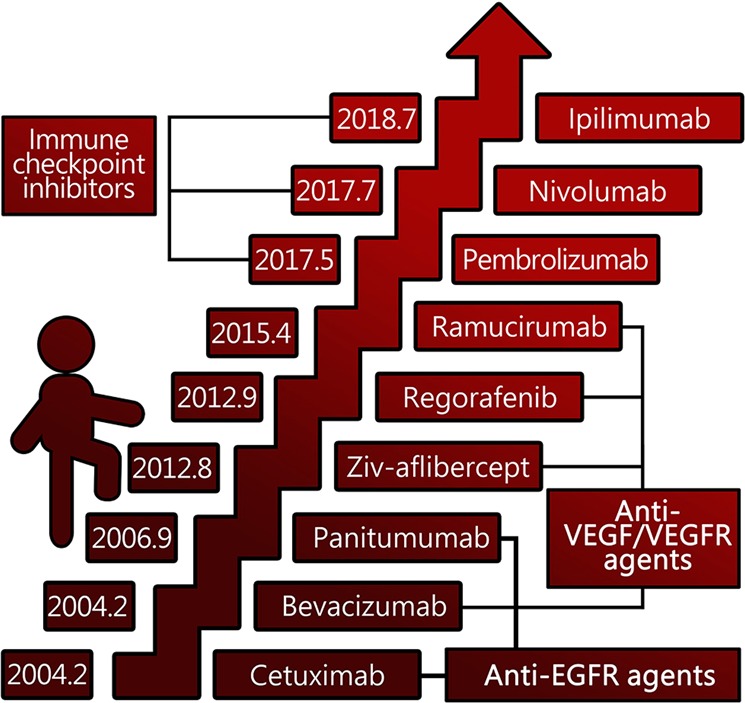
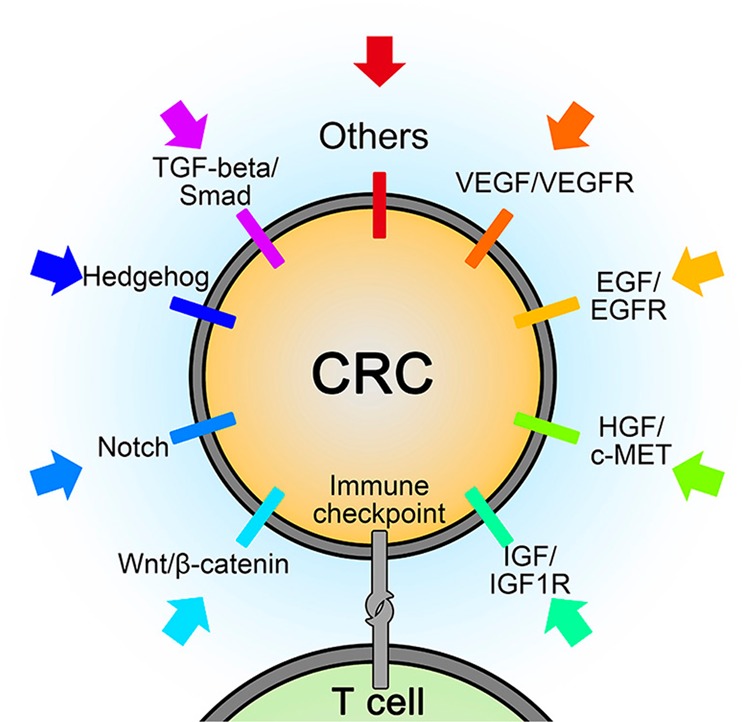
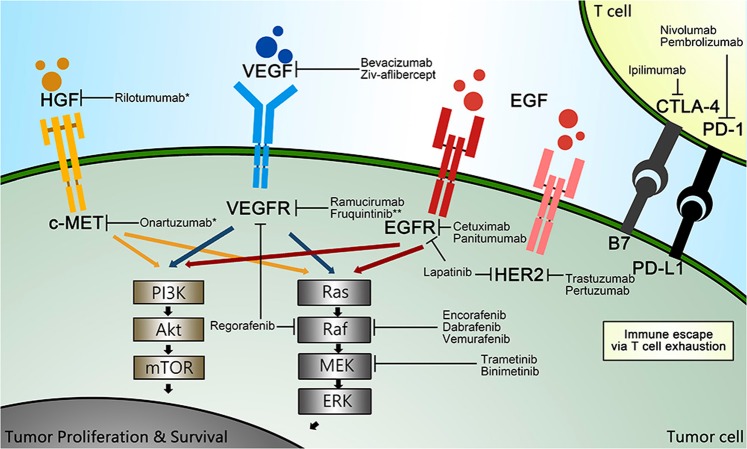
Colorectal cancer (CRC) is among the most lethal and prevalent malignancies in the world and was responsible for nearly 881,000 cancer-related deaths in 2018. Surgery and chemotherapy have long been the first choices for cancer patients. However, the prognosis of CRC has never been satisfying, especially for patients with metastatic lesions. Targeted therapy is a new optional approach that has successfully prolonged overall survival for CRC patients. Following successes with the anti-EGFR (epidermal growth factor receptor) agent cetuximab and the anti-angiogenesis agent bevacizumab, new agents blocking different critical pathways as well as immune checkpoints are emerging at an unprecedented rate. Guidelines worldwide are currently updating the recommended targeted drugs on the basis of the increasing number of high-quality clinical trials. This review provides an overview of existing CRC-targeted agents and their underlying mechanisms, as well as a discussion of their limitations and future trends.
Overview
The claims and statistics of this paper haven’t been checked yet.
Free: it reads the open-access text and checks the first 5 claims that cite a source we can check. Create a free account to check every claim.
Integrity signals
Registry
Cites
Statistics
Figures
Verification
Claims the paper makes
The claims and statistics of this paper haven’t been checked yet.
Free: it reads the open-access text and checks the first 5 claims that cite a source we can check. Create a free account to check every claim.
Claims other papers make about this one
Each is checked against this paper’s own text: does it say what the citing paper says it does?
The source backs part of the claim, not all of it — or backs it for a different population, condition or comparison.
In the citing paper
“The therapeutic landscape of metastatic colorectal cancer is moving toward biomarker-selected strategies. However, options are limited to agents directed at tumors carrying BRAF V600E mutations and to antibodies against programmed death 1 (PD-1) in patients with high microsatellite instability or mismatch-repair deficiency.13,26,27”
From Adagrasib with or without Cetuximab in Colorectal Cancer with Mutated KRAS G12C (2023) · cites this paper as [13]
Experimental — accuracy not yet measuredThe source backs part of the claim, not all of it — or backs it for a different population, condition or comparison.
In the citing paper
“Current first-line standard of care for KRAS G12C-positive CRC includes 5-FU-based chemotherapy with irinotecan, oxaliplatin and/or capecitabine, but is limited by low tumor-specific selectivity and systemic toxicity21.”
From Divarasib plus cetuximab in KRAS G12C-positive colorectal cancer: a phase 1b trial (2024) · cites this paper as [21]
Experimental — accuracy not yet measuredThe cited source says what the claim attributes to it.
In the citing paper
“Cetuximab is an anti-EGFR monoclonal antibody that is indicated for the treatment of RAS wild-type metastatic colorectal cancer, either as monotherapy or in combination with chemotherapy.13”
From Adagrasib with or without Cetuximab in Colorectal Cancer with Mutated KRAS G12C (2023) · cites this paper as [13]
The check wasn’t confident either way, so it gives no verdict — never disputed.
In the citing paper
“Currently, no therapies that specifically target KRAS G12C protein have been approved for the treatment of colorectal cancer.13,19”
From Adagrasib with or without Cetuximab in Colorectal Cancer with Mutated KRAS G12C (2023) · cites this paper as [13]
Experimental — accuracy not yet measuredIn the citing paper
“ROS-mediated DNA damage induces p53 phosphorylation, which in turn stabilizes p53, indispensable to counter tumorigenic growth and differentiation.68”
Self-check
Percentages, sums and reported differences re-computed from the paper’s own numbers.
The self-check needs the paper’s full text.
Citations
Cites
2 retracted
Lee, Y.-J., Karl, D. L., Maduekwe, U. N., Rothrock, C., Ryeom, S., D'Amore, P. A., & Yoon, S. S. (2010) · Cancer Research · doi:10.1158/0008-5472.can-10-1138 · Cited by 61
RetractedYang, S., Zhang, X., Qu, H., Qu, B., Yin, X., & Zhao, H. (2019) · Cancer Gene Therapy · doi:10.1038/s41417-019-0098-6 · Cited by 16 · cited 1×
“Similarly, an exciting antitumor performance of cabozantinib was observed in research based on CRC xenograft models and cell lines, while the results from CRC-focused clinical trials are awaited.(289,336,337) Merestinib, an inhibitor of MET, AXL (Axl receptor tyrosine kinase), TEK (tunica interna endothelial cell kina…”
BackgroundRetractedBray, F., Ferlay, J., Soerjomataram, I., Siegel, R. L., Torre, L. A., & Jemal, A. (2018) · CA: A Cancer Journal for Clinicians · doi:10.3322/caac.21492 · Cited by 84,109
PD-1 and PD-L1 Immune Checkpoint Blockade to Treat Breast Cancer
Hartkopf, A. D., Taran, F.-A., Wallwiener, M., Walter, C. B., Krämer, B., Grischke, E.-M., & Brucker, S. Y. (2016) · Breast Care · doi:10.1159/000453569 · Cited by 30,845
Siegel, R. L., Miller, K. D., & Jemal, A. (2019) · CA: A Cancer Journal for Clinicians · doi:10.3322/caac.21551 · Cited by 20,160
Adverse Renal Effects of Immune Checkpoint Inhibitors: A Narrative Review
Wanchoo, R., Karam, S., Uppal, N. N., Barta, V. S., Deray, G., Devoe, C., Launay-Vacher, V., Jhaveri, K. D., & on behalf of Cancer and Kidney International Network Workgroup on Immune Checkpoint Inhibitors (2017) · American Journal of Nephrology · doi:10.1159/000455014 · Cited by 15,256
Improved Survival with Ipilimumab in Patients with Metastatic Melanoma
Hodi, F. S., O'Day, S. J., McDermott, D. F., Weber, R. W., Sosman, J. A., Haanen, J. B., Gonzalez, R., Robert, C., Schadendorf, D., Hassel, J. C., et al. (2010) · New England Journal of Medicine · doi:10.1056/nejmoa1003466 · Cited by 15,155
Bevacizumab plus Irinotecan, Fluorouracil, and Leucovorin for Metastatic Colorectal Cancer
Hurwitz, H., Fehrenbacher, L., Novotny, W., Cartwright, T., Hainsworth, J., Heim, W., Berlin, J., Baron, A., Griffing, S., Holmgren, E., et al. (2004) · New England Journal of Medicine · doi:10.1056/nejmoa032691 · Cited by 10,968
Immunity, Inflammation, and Cancer
Grivennikov, S. I., Greten, F. R., & Karin, M. (2010) · Cell · doi:10.1016/j.cell.2010.01.025 · Cited by 10,755
Mutations of the BRAF gene in human cancer
Davies, H., Bignell, G. R., Cox, C., Stephens, P., Edkins, S., Clegg, S., Teague, J., Woffendin, H., Garnett, M. J., Bottomley, W., et al. (2002) · Nature · doi:10.1038/nature00766 · Cited by 10,674
Cited by
Items 801–900 of 1,000
Kwon, J., Kwon, J.-H., Kang, A.-R., Song, J. Y., Hwang, S., Um, H., Kim, J., & Park, J. K. (2021) · International Journal of Molecular Sciences · doi:10.3390/ijms222413514 · Cited by 8
“Most patients with CRC are diagnosed with regional or distant metastases, requiring additional chemotherapy after surgery or palliative chemotherapy for metastatic cancer [3,4].”
BackgroundZhong, X., He, X., Wang, Y., Hu, Z., Yu, D., Huang, H., Zhao, S., Wei, P., & Li, D. (2022) · Journal of Immunology Research · doi:10.1155/2022/9935705 · Cited by 10
“Nevertheless, the vast majority of CRC patients showed resistance to immune therapy, which greatly restricts their application in the clinic [39].”
BackgroundThe Regulatory Mechanisms and Clinical Significance of Lnc SNHG4 in Cancer
Nejatizadeh, A., Pourghasem, N., & Ghorbanzadeh, S. (2022) · Current Pharmaceutical Design · doi:10.2174/1381612829666221121161950 · Cited by 8
Chai, R., Su, Z., Zhao, Y., & Liang, W. H. (2023) · Translational Cancer Research · doi:10.21037/tcr-22-2036 · Cited by 9
“In recent years, diverse novel surgeries and specific treatments significantly reduce the mortality of CC patients than before (3,4).”
Mining Google Trends data for nowcasting and forecasting colorectal cancer (CRC) prevalence
Tudor, C. D., & Şova, R. (2023) · PeerJ Computer Science · doi:10.7717/peerj-cs.1518 · Cited by 9
“Colorectal cancer (CRC) is the third most prevalent and second deadliest form of cancer worldwide ( Cervantes et al., 2022 ; Kadakuntla et al., 2021 ; Keum & Giovannucci, 2019 ; Mazidimoradi, Tiznobaik & Salehiniya, 2022 ; Uhlig et al., 2021 ; Xie, Chen & Fang, 2020 ; Xi & Xu, 2021 ).”
BackgroundJu, M., Cheng, H., Qu, K., & Lu, X. (2020) · Medicine · doi:10.1097/md.0000000000020618 · Cited by 8
Kopsanone inhibits proliferation and migration of invasive colon cancer cells
Bonfim, D. P., Nakamura, C. V., de Araújo‐Júnior, J. X., Pessini, G. L., Leite, P. E. C., Morgado‐Díaz, J. A., & Leve, F. (2021) · Phytotherapy Research · doi:10.1002/ptr.7078 · Cited by 8
“Indeed, these chemotherapeutic drugs improve patient survival, but they develop resistance and side effects due to high toxicity of the drugs; moreover, the high cost of these drugs limits their usage (Jeught, Xu, Li, Lu, & Ji, 2018; Xie et al., 2020).”
BackgroundAntona, A., Varalda, M., Roy, K., Favero, F., Mazzucco, E., Zuccalà, M., Leo, G., Soggia, G., Bettio, V., Tosi, M., et al. (2022) · Cancers · doi:10.3390/cancers14030776 · Cited by 12
“Although several of these approaches are promising [13,14], like standard chemotherapy, they can generate severe adverse events, as well as the emergence of resistance.”
BackgroundTargeting the altered tyrosine kinases in colorectal cancer: From inhibitors to drugs
Srivastava, A., Rai, S., Bisht, D., Sachan, M., Jit, B. P., & Srivastava, S. (2022) · Elsevier eBooks · doi:10.1016/b978-0-323-91287-7.00007-7 · Cited by 10
Yingli, H., Ping, Y., Jun, Y., & Xingwang, Z. (2025) · Biochimica et Biophysica Acta (BBA) - Molecular Basis of Disease · doi:10.1016/j.bbadis.2025.167853 · Cited by 7
An updated landscape on nanopharmaceutical delivery for mitigation of colon cancer
Shahzad, M., Hameed, H., Amjad, A., Khan, M. A., Qureshi, I. S., Hameed, A., Saeed, A., & Munir, R. (2025) · Naunyn-Schmiedeberg's Archives of Pharmacology · doi:10.1007/s00210-024-03482-0 · Cited by 7
Nan, K., Zhong, Z., Yue, Y., Zhou, W., Sun, X., Shen, Y., Qu, M., Chen, Z., Gu, J., Sun, C., et al. (2024) · Digestive Diseases and Sciences · doi:10.1007/s10620-023-08213-8 · Cited by 9
“Despite technological advancements in radiotherapy, chemotherapy, neoadjuvant therapy, targeted therapy, and immunotherapy, surgical manipulation remains the primary strategy for CRC treatment [27].”
Zhao, Z., Miao, Z., Hou, Y., Zhong, Y., Zhang, X., & Fang, X. (2024) · International Immunopharmacology · doi:10.1016/j.intimp.2024.112691 · Cited by 8
Sweeten the pill: Multi-faceted polysaccharide-based carriers for colorectal cancer treatment
Maryam, S., & Krukiewicz, K. (2024) · International Journal of Biological Macromolecules · doi:10.1016/j.ijbiomac.2024.136696 · Cited by 8
Wu, J., Zhou, C.-F., Han, Z., Zhang, H., Yan, J., Chen, J., Wang, C., Qin, Z., Mao, Y., Tang, X. T., et al. (2024) · Signal Transduction and Targeted Therapy · doi:10.1038/s41392-024-02051-4 · Cited by 7
Zhao, Q., Zhang, T., Liu, J., Chen, P., Onga, A., Cho, N., Cui, R., & Zheng, C. (2025) · Frontiers in Pharmacology · doi:10.3389/fphar.2024.1532695 · Cited by 9
“However, its clinical application remains limited owing to drug resistance and intestinal toxicity (Benson et al., 2021; Chang et al., 2020; Xie et al., 2020).”
Han, S., Yi, Y. W., Kim, H., Lee, M. Y., Choi, H. J., Seong, Y., Ha, I. J., & Lee, S. (2025) · Biomedicine & Pharmacotherapy · doi:10.1016/j.biopha.2025.117930 · Cited by 10
Mehrabadi, S. (2025) · Anti-Cancer Agents in Medicinal Chemistry · doi:10.2174/0118715206354948250226103832 · Cited by 7
Zhang, Z., Liu, S., Xu, T., Chen, N., Liu, C., Yang, H. M., Shi, Y., Li, Z., Feng, X., Yao, Y., et al. (2025) · Journal of Experimental & Clinical Cancer Research · doi:10.1186/s13046-025-03422-7 · Cited by 7
“Unfortunately, CRC patients receiving anti-angiogenic therapy as a sole treatment do not exhibit significant improvements in clinical outcomes [40, 41].”
Malik, M., Anwar, F., Dini, L., Alamri, A. H., Fatease, A. M. A., Lahiq, A. A., Alqahtani, S., Jin, S. G., Choi, H., & Din, F. U. (2025) · Journal of Pharmaceutical Investigation · doi:10.1007/s40005-025-00753-7 · Cited by 10
“Targeted therapy aims at the tumor microenvironment influence on angiogenesis, cell proliferation, or metas - tasis to inhibit tumor growth and kill tumor cells (Xie et al. 2020; Shim et al. 2024).”
Upasana, U., & Bhattacharya, S. (2025) · ACS Applied Bio Materials · doi:10.1021/acsabm.5c00714 · Cited by 8
Azizi, M., Andalib, A., & Rezaei, M. (2025) · Cancer Cell International · doi:10.1186/s12935-025-03919-3 · Cited by 7
“This is while, targeted therapies have emerged as promising alternatives, demonstrating improved patient’s outcomes [3].”
Mohammadi, A., Ghasempour, G., Lotfi, A. S., & Najafi, M. (2022) · Informatics in Medicine Unlocked · doi:10.1016/j.imu.2022.100890 · Cited by 7
Yang, H., Zhao, X., Liu, J., Jin, M., Liu, X., Yan, J., Yao, X., Mao, X., Li, N., Liang, B., et al. (2022) · Oncogene · doi:10.1038/s41388-022-02528-y · Cited by 10
“Surgery and chemotherapy are the cornerstone of CRC treatment, although acquired drug resistance often leads to treatment failure [3].”
BackgroundMasoudi, R., Mohammadi, A., Morovati, S., Heidari, A. A., & Asad-Sangabi, M. (2023) · International Journal of Biological Macromolecules · doi:10.1016/j.ijbiomac.2023.125536 · Cited by 7
Roshani, D., Moradi, G., & Rasouli, M. A. (2023) · Journal of Research in Health Sciences · doi:10.34172/jrhs.2023.107 · Cited by 8
Targeting isoforms of RON kinase (MST1R) drives antitumor efficacy
Kim, J., Koh, D., Lee, M., Park, Y. S., Hong, S., Shin, J.-S., Lee, M. S., Kim, M.-H., Lee, J. H., Jeong, J., et al. (2023) · Cell Death and Differentiation · doi:10.1038/s41418-023-01235-9 · Cited by 7
STAT2 Controls Colorectal Tumorigenesis and Resistance to Anti-Cancer Drugs
Chiriac, M. T., Hracskó, Z., Becker, C., & Neurath, M. F. (2023) · Cancers · doi:10.3390/cancers15225423 · Cited by 9
“Due to its complex pathogenesis, heterogeneous clinical manifestations, and limited therapeutic options for successfully treating advanced stages of the disease [45,46], CRC remains a medical challenge and overall one of the major socioeconomic burdens of our time [1,2].”
BackgroundFrequent loss of FAM126A expression in colorectal cancer results in selective FAM126B dependency
Li, S., & Han, T. (2024) · iScience · doi:10.1016/j.isci.2024.109646 · Cited by 9
Inhibition of PRMT5-mediated regulation of DKK1 sensitizes colorectal cancer cells to chemotherapy
Abumustafa, W., Castven, D., Becker, D., Salih, S. S., Manzoor, S., Zamer, B. A., Talaat, I., Hamad, M. A., Marquardt, J. U., & Muhammad, J. S. (2024) · Cellular Signalling · doi:10.1016/j.cellsig.2024.111166 · Cited by 9
Zhu, X., Zhang, L., & Qi, S. (2024) · World Journal of Gastrointestinal Oncology · doi:10.4251/wjgo.v16.i5.2168 · Cited by 8
“It ranks as one of the most common cancers globally, contributing to significant morbidity and mortality rates[2].”
Betanin-encapsulated starch nanoparticles: synthesis and cytotoxic effect on colon cancer
Bhat, S. A., Chandramohan, S., Krishna, G. S., Hiranmaya, C., Pajaniradje, S., Nair, A. S., Mohanty, D., & Rajagopalan, R. (2024) · 3 Biotech · doi:10.1007/s13205-024-04078-4 · Cited by 8
“The development of highly effective drug delivery technology called nanoencapsulation has transformed cancer treatment and made a variety of nanoformulations of chemotherapy available(Hossain et al. 2022; Mourdikoudis et al. 2018; Otto and Sicinski 2017; Siegel et al. 2020; Xie et al. 2020).”
Nukulkit, S., Nalinratana, N., Aree, T., Suriya, U., Suttisri, R., Nuengchamnong, N., Chang, H., & Chansriniyom, C. (2024) · Phytochemistry · doi:10.1016/j.phytochem.2024.114291 · Cited by 7
Sepay, N., Kim, T. W., Singh, T. P., Paul, M., Kong, H. J., Ryu, J. S., Ghosh, N., Jeon, S., Lee, S., Ahn, T. S., et al. (2024) · Journal of Drug Delivery Science and Technology · doi:10.1016/j.jddst.2024.106261 · Cited by 10
Willie, Y. B. A., Gunawan, M., Hadad, Y., Ramadon, D., Saputri, F. C., Jansook, P., Boonkanokwong, V., & Iswandana, R. (2025) · Journal of Drug Delivery Science and Technology · doi:10.1016/j.jddst.2025.107319 · Cited by 12
Tang, R., Li, Z. Z., Hu, D., Kanwal, F., Yuan, C., Mustaqeem, M., Batool, A. I., & Rehman, M. F. U. (2021) · ACS Omega · doi:10.1021/acsomega.0c05565 · Cited by 7
The Roles of Transmembrane Mucins Located on Chromosome 7q22.1 in Colorectal Cancer
Almasmoum, H. A. (2021) · Cancer Management and Research · doi:10.2147/cmar.s299089 · Cited by 7
“Drug combination has been used to enhance the effect of chemotherapy such as FOLFOX (5-FU +Oxaliplatin), however most of these approaches are failed to prevent the progression of CRC.93 Therefore, the novel therapeutical approaches are urgent required.”
BackgroundInfluentialKim, I., Eom, T.-K., Park, J.-Y., Kim, H.-J., & Nam, T. (2021) · Molecular Medicine Reports · doi:10.3892/mmr.2021.12576 · Cited by 8
A REVIEW OF TREATMENT, RISK FACTORS, AND INCIDENCE OF COLORECTAL CANCER
Alaryani, F. S., & Alrdahe, S. S. (2022) · International Journal of Applied Pharmaceutics · doi:10.22159/ijap.2022v14i1.42820 · Cited by 7
Lee, E., Yang, J.-H., Choi, J., & Chung, H. (2022) · Cells · doi:10.3390/cells11182876 · Cited by 7
“Tumor destruction-based treatments, including chemotherapy, targeted therapy, and radiation, are still the primary first-line therapies for patients with advanced or metastatic CRC [3].”
BackgroundBelachew, A. M., Bachheti, R. K., Weldekidan, A. K., & Ufgaa, M. G. (2022) · Journal of Biomolecular Structure and Dynamics · doi:10.1080/07391102.2022.2127904 · Cited by 7
“This study looked into 17-HSD1 as a potential target for discovering lead molecules from naturally occurring bioactive molecules (Aran et al., 2016; Xie et al., 2020; Mizukami et al., 2019).”
BackgroundIslam, M. R., Aziz, M. A., Shahriar, M., & Islam, M. S. (2022) · Cancer Control · doi:10.1177/10732748221143879 · Cited by 10
“Colorectal cancer (CRC) is considered one of the most prevalent carcinomas that mainly affects the areas of the digestive tract.(1) This malignancy is accounted for almost 10% of worldwide occurrences and more than 9% of mortalities by the year 2020.”
BackgroundAndrade‐Meza, A., Arias‐Romero, L. E., Armas‐López, L., Ávila‐Moreno, F., Chirino, Y. I., Delgado‐Buenrostro, N. L., García-Castillo, V., Gutiérrez-Cirlos, E. B., Juárez‐Avelar, I., León‐Cabrera, S., et al. (2023) · International Journal of Molecular Sciences · doi:10.3390/ijms24032115 · Cited by 8
“Despite this, the likelihood of patient survival for more than five years is low due to the prevalence of innate or acquired tumor resistance, which occurs in approximately 90% of patients with metastatic cancer [14,15].”
BackgroundMarcelo, G. A., Montpeyó, D., Galhano, J., Martínez‐Máñez, R., Capelo, J. L., Lorenzo, J., Lodeiro, C., & Oliveira, E. (2023) · International Journal of Molecular Sciences · doi:10.3390/ijms24076612 · Cited by 7
Interplay of LncRNA TUG1 and TGF-β/P53 Expression in Colorectal Cancer
Ibrahim, B., Gobran, M. A., Metwalli, A. M., Abd-Elhady, W., Tolba, A., & Omar, W. E. (2023) · Asian Pacific Journal of Cancer Prevention · doi:10.31557/apjcp.2023.24.11.3957 · Cited by 7
A Bioinformatics Tool for Identifying Intratumoral Microbes from the ORIEN Dataset
Wang, C., Ma, A., Li, Y., McNutt, M. E., Zhang, S., Zhu, J., Hoyd, R., Wheeler, C. E., Robinson, L. A., Chan, C. H. F., et al. (2024) · Cancer Research Communications · doi:10.1158/2767-9764.crc-23-0213 · Cited by 8
“COAD is a common malignant tumor in the digestive tract (34).”
BackgroundWang, Z. P., Zhang, C., Guo, J., Yang, Y., Li, P., Wang, Z., Liu, S., Zhang, L., Zeng, X., Zhai, J., et al. (2024) · iScience · doi:10.1016/j.isci.2024.109676 · Cited by 7
“1 5 Therefore, there is an urgent need to identify driver genes and therapeutically relevant targets of CRC. Biological information transfer from DNA to RNA then protein (‘‘Central Dogma’’ proposed by Crick), and thus DNA-binding proteins (DBPs, also termed as transcription factors) and RNA-binding…”
Heidari, A., Emami, M. H., Maghool, F., Mohammadzadeh, S., Elyaderani, P. K., Safari, T., Fahim, A., & Dolatabadi, R. K. (2024) · Frontiers in Microbiology · doi:10.3389/fmicb.2024.1366719 · Cited by 7
A five-immune-related genes-based prognostic signature for colorectal cancer
Zhu, L., Wang, H., & Wang, Z. (2020) · International Immunopharmacology · doi:10.1016/j.intimp.2020.106866 · Cited by 8
Up-and-Coming Experimental Drug Options for Metastatic Colorectal Cancer
Cimino, S. K., & Eng, C. (2020) · Journal of Experimental Pharmacology · doi:10.2147/jep.s259287 · Cited by 9
Profiling Colorectal Cancer in the Landscape Personalized Testing—Advantages of Liquid Biopsy
Verbanac, D., Čeri, A., Hlapčić, I., Shakibaei, M., Brockmueller, A., Krušlin, B., Ljubičić, N., Baršić, N., Detel, D., Batičić, L., et al. (2021) · International Journal of Molecular Sciences · doi:10.3390/ijms22094327 · Cited by 7
“An overview of existing CRC-targeted agents and their underlying mechanisms, as well as a discussion of their limitations and future trends, has been published recently [11].”
BackgroundTune the channel: TRPM8 targeting in prostate cancer
Alaimo, A., Felice, D. D., Genovesi, S., Lorenzoni, M., & Lunardi, A. (2021) · Oncoscience · doi:10.18632/oncoscience.543 · Cited by 7
Pleckstrin 2 is a potential drug target for colorectal carcinoma with activation of APC/β‑catenin
Chai, B., Guo, Y., Zhu, N., Jia, J., Zhang, Z., Ping, M., Jia, K., Cui, X., & Suo, Y. (2021) · Molecular Medicine Reports · doi:10.3892/mmr.2021.12502 · Cited by 7
“However, the side effects, such as tissue homeostasis and regeneration impairment, caused by these inhibitors limit their application for the treatment of patients with CRC (26).”
BackgroundTanaka, T., Suzuki, H., Ushijima, T., Nagasu, S., Akagi, Y., Kawaguchi, T., & Miwa, K. (2022) · Frontiers in Oncology · doi:10.3389/fonc.2022.947013 · Cited by 7
“With the advent of chemotherapeutic combinations such as folinic acid, 5fluorouracil (5FU), and irinotecan [FOLFIRI] or 5-FU, leucovorin, and oxaliplatin [FOLFOX] plus molecular targeted therapy (such as bevacizumab, aflibercept, ramucirumab, cetuximab, and panitumumab), the treatment of metastatic/ unresectable CRC h…”
BackgroundOnar, O., Telkoparan‐Akillilar, P., & Yıldırım, Ö. (2023) · 3 Biotech · doi:10.1007/s13205-023-03471-9 · Cited by 8
“Fluoropyrimidines such as 5-FU has been the most widely used chemotherapeutic agent clinically for nearly 30 years in the treatment of advanced and metastatic colorectal cancer (Xie et al. 2020).”
BackgroundSallinger, K., Gruber, M., Müller, C., Bonstingl, L., Pritz, E., Pankratz, K., Gerger, A., Smolle, M. A., Aigelsreiter, A., Surova, O. V., et al. (2023) · Journal of Translational Medicine · doi:10.1186/s12967-023-04384-0 · Cited by 8
“Therapeutic management has significantly improved over the last decade, including advances in screening, (neo) adjuvant treatment, targeted- and immune checkpoint therapies [3].”
BackgroundLiquid biopsy in colorectal cancer: No longer young, but not yet old
Roviello, G., Lavacchi, D., Antonuzzo, L., Catalano, M., & Mini, E. (2022) · World Journal of Gastroenterology · doi:10.3748/wjg.v28.i15.1503 · Cited by 7
Weisskittel, T., Ung, C. Y., Correia, C., Zhang, C., & Li, H. (2021) · Genome Research · doi:10.1101/gr.275889.121 · Cited by 7
“provided durable response rates and survival benefits in many tumors, but for others, indications for use are unclear (Murdoch and Sager 2008; De Palma et al. 2017; Xie et al. 2020).”
BackgroundHuang, F., Yang, H., Bao, W., Bin, Y., Zhou, S., Wang, M., & Lv, X. (2023) · Clinical and Translational Oncology · doi:10.1007/s12094-023-03268-5 · Cited by 6
“Chemotherapy combined with targeted drug therapy is currently the standard first-and second-line treatment for mCRC [25–27].”
Zhang, N., Dong, L., Liu, S., Ning, T., & Zhu, S. (2025) · Neoplasia · doi:10.1016/j.neo.2025.101159 · Cited by 7
“Despite advances in surgical treatments and combination chemother-apies, the 5-year survival rate for patients with advanced CRC remains low [2].”
Lagunas‐Rangel, F. A., Jonsson, J., Jackeviča, L., Fredriksson, R., Dambrova, M., & Schiöth, H. B. (2025) · Frontiers in Pharmacology · doi:10.3389/fphar.2025.1653702 · Cited by 10
“Although advances in treatment have improved survival rates, signi fi cant challenges such as treatment resistance and non-response remain (Xie et al., 2020).”
Cao, S., Wang, M., Sun, W., Ma, Z., Yang, K., Li, T., Zhu, X., Yang, P., Pan, M., Wang, L., et al. (2025) · Frontiers in Immunology · doi:10.3389/fimmu.2025.1626367 · Cited by 6
Tabassum, N., Hossan, M. S., Islam, M. M., Hasan, M., Islam, M. S., Masud, S., Ahmed, F., & Siddiquee, N. H. (2025) · PLoS ONE · doi:10.1371/journal.pone.0331438 · Cited by 7
Liao, M., Dong, H., Chen, G., Li, W., & Li, G. (2025) · Frontiers in Pharmacology · doi:10.3389/fphar.2025.1658493 · Cited by 7
“Furthermore, gut microbiota biotransformation analysis revealed ginsenoside compound K (Figure 2, 3) as the principal microbial metabolite of P. notoginseng saponin, exhibiting potent antiproliferative effects against human CRC cell lines through distinct molecular mechanisms (Chen et al., 2020).”
Mao, K., Jin, L.-Y., Chen, G., Xie, J., Chen, P., Sun, H.-Y., Li, L., & Zheng, H. (2025) · European Journal of Pharmacology · doi:10.1016/j.ejphar.2025.178278 · Cited by 6
Xu, S., Gao, W., Lin, S., Kang, B., Shi, X., Zheng, D., Xiao, L., Zeng, L., Zhang, Q., Tian, W., et al. (2025) · ACS Applied Materials & Interfaces · doi:10.1021/acsami.5c19528 · Cited by 6
Diaz, F. C., Waldrup, B., Carranza, F., Manjarrez, S., & Velazquez-Villarreal, E. I. (2026) · Cancers · doi:10.3390/cancers18020293 · Cited by 6
“Despite expanding access to next-generation sequencing and targeted therapies, the molecular determinants that shape treatment response and outcomes across clinically relevant subgroups remain incompletely defined [1,3,4].”
Li, N., Deng, W., Zhang, G., Du, Y., Guo, Y. W., Ma, Y., Chen, W., Bie, L., Zhang, C., Song, T., et al. (2021) · Frontiers in Oncology · doi:10.3389/fonc.2021.728854 · Cited by 6
Proudman, D. G., DeVito, N. C., Belinson, S., Allo, M. A., Morris, E. D., Signorovitch, J., & Patel, A. K. (2022) · Journal of Medical Economics · doi:10.1080/13696998.2022.2080463 · Cited by 7
Jeong, S., Farag, A. K., Yun, H. K., Jeong, Y. A., Kim, D. Y., Jo, M. J., Park, S. H., Kim, B. R., Kim, J. L., Kim, B. G., et al. (2022) · Cancers · doi:10.3390/cancers14133043 · Cited by 6
“The standard therapeutic protocol in CRC is surgery and chemo/radiotherapy [3].”
BackgroundInhibiting the Proliferation of Colorectal Cancer Cells by Reducing TSPO/VDAC Expression
Liu, Y., Wang, S., & Yang, W. (2023) · Iranian Journal of Public Health · doi:10.18502/ijph.v52i7.13239 · Cited by 9
“Targeted therapy is a new option for the treatment of CRC, which can successfully prolong the overall survival of CRC patients (25,26).”
BackgroundKhorramdelazad, H., Bagherzadeh, K., Rahimi, A., Safari, E., Hassanshahi, G., Khoshmirsafa, M., Karimi, M., Mohammadi, M., Darehkordi, A., & Falak, R. (2023) · Journal of Biomolecular Structure and Dynamics · doi:10.1080/07391102.2023.2256406 · Cited by 6
“Statistics demonstrate that approximately two million people are diagnosed with CRC annually, and about one million CRC-related deaths are reported (Xie et al., 2020).”
Doleschal, B., Taghizadeh, H., Lentner, T., Riedl, J. M., Granitzer, J., Morariu, D. Ș., Decker, J., Aichberger, K. J., Webersinke, G., Kirchweger, P., et al. (2023) · ESMO Open · doi:10.1016/j.esmoop.2023.102064 · Cited by 7
Song, W., Miao, L., Zhang, K., Liu, Y., Lin, J., Li, J., Huang, Z., Cao, D., Zhang, Y., & Hu, C. (2023) · Cellular Signalling · doi:10.1016/j.cellsig.2023.110987 · Cited by 9
Kryczka, J. M., & Boncela, J. (2023) · Cancers · doi:10.3390/cancers15235623 · Cited by 7
“Currently, the most effective treatment for CRC is primary tumour resection with adequate histologic margin, often preceded or followed by adjuvant chemotherapy [2].”
BackgroundGong, H., Chen, S., Liu, S., Hu, Q., Li, Y., Li, Y., Li, G., Huang, K., Li, R., & Fang, L. (2024) · Cellular and Molecular Life Sciences · doi:10.1007/s00018-023-05105-y · Cited by 10
Chauhan, S., & Sharma, S. (2024) · Current Pharmaceutical Biotechnology · doi:10.2174/0113892010270975231208113157 · Cited by 6
Strong YKL-40 expression in the invasive tumor front of colorectal cancer–A pilot study
Kazakova, M., Ivanova, T., Dikov, D., Molander, D., Simitchiev, K., Sbirkov, Y., Dzhambov, A. M., & Sarafian, V. S. (2024) · Heliyon · doi:10.1016/j.heliyon.2024.e27570 · Cited by 7
“About 20% of these cases may develop metastatic CRC (mCRC), which is the main cause of CRC mortality [38,39].”
BackgroundThe role of the adenylate kinase 5 gene in various diseases and cancer
Siddiqui, M. S., Shahi, M. H., & Castresana, J. S. (2024) · Journal of Clinical and Translational Science · doi:10.1017/cts.2024.536 · Cited by 8
Ouyang, C., Xu, G., Xie, J., Xie, Y., & Zhou, Y. (2024) · Journal of Biochemical and Molecular Toxicology · doi:10.1002/jbt.23829 · Cited by 6
Self-citationThe METTL3/TRAP1 axis as a key regulator of 5-fluorouracil chemosensitivity in colorectal cancer
Kang, Q., Hu, X., Chen, Z., Liang, X., Xiang, S., & Wang, Z. (2024) · Molecular and Cellular Biochemistry · doi:10.1007/s11010-024-05116-8 · Cited by 6
“Therefore, understanding the molecular mechanisms underlying drug resistance is essential for improving the prognosis of CRC. 5-FU remains a frontline chemotherapy option for advanced and metastatic CRC [7].”
Wang, L., Xu, Z., Bains, A., Ali, N., Shang, Z., PATIL, A. R., & Patil, S. (2024) · Biologics · doi:10.2147/btt.s477602 · Cited by 15
Yu, C., Sun, J., Lai, X., Tan, Z., Wang, Y., Du, H., Pan, Z., Chen, T., Yang, Z., Ye, S., et al. (2025) · Medical Oncology · doi:10.1007/s12032-025-02622-7 · Cited by 7
“This has spurred the search for novel therapeutic approaches, with targeted therapy emerging as a promising strategy, improving overall survival in CRC patients [4].”
RETRACTED ARTICLE: CDCA genes as prognostic and therapeutic targets in Colon adenocarcinoma
Zhao, Z., Feng, X., Chen, B., Wu, Y.-H., Wang, X., Tang, Z., Huang, M., & XiaoHua, G. (2025) · Hereditas · doi:10.1186/s41065-025-00368-w · Cited by 6
“Furthermore, current COAD treatment approaches often fail to target the underlying molecular drivers of the disease effectively, leading to high recurrence rates and poor patient outcomes [26, 27].”
RetractedMolecular mechanism of angiogenesis in colorectal cancer
Raphela-Choma, P. P., Choene, M. S., & Motadi, L. R. (2025) · Gene Reports · doi:10.1016/j.genrep.2025.102163 · Cited by 9
Lim, H.-I., Kim, G. Y., Choi, Y., Lee, K., & Ko, S. (2025) · Discover Oncology · doi:10.1007/s12672-025-02056-7 · Cited by 8
“The current therapeutic options for CRC include surgery, chemotherapy, and radiation therapy [4, 5].”
van Bentum, M., Klinger, B., Sieber, A., Naghiloo, S., Zauber, H., Lehmann, N., Haji, M., Niquet, S., Mertins, P., Blüthgen, N., et al. (2025) · Nature Communications · doi:10.1038/s41467-025-59404-y · Cited by 8
Ras Family of Small GTPases in CRC: New Perspectives for Overcoming Drug Resistance
Río-Vilariño, A., del Puerto‐Nevado, L., García‐Foncillas, J., & Cebrián, A. (2021) · Cancers · doi:10.3390/cancers13153757 · Cited by 6
“Inhibition of BRAF is thought to generate a compensatory effect by the overactivation of MAPK [21] and PI3K [133] signalling pathways.”
BackgroundInfluentialSun, Z., Li, G., Shang, D., Zhang, J., Ai, L., & Liu, M. (2022) · Frontiers in Immunology · doi:10.3389/fimmu.2022.988303 · Cited by 6
“COAD treatment is challenging because of the advanced stage and poor OS; accordingly, new therapeutic targets are necessary (26).”
BackgroundA Group of Tumor-Suppressive micro-RNAs Changes Expression Coordinately in Colon Cancer
Farc, O., Budişan, L., Berindan‐Neagoe, I., Braicu, C., Zănoagă, O., Zaharie, F. V., & Cristea, V. (2023) · Current Issues in Molecular Biology · doi:10.3390/cimb45020063 · Cited by 8
“It remains a major public health problem, in spite of the numerous efforts that were made to improve diagnosis and therapy [2].”
BackgroundA potent bioactive fraction against colon cancer from Plectranthus vettiveroides
Athikkavil, F. M., Aiswarya, S. U. D., Johny, R., Sudhesh, M., Nisthul, A. A., Lankalapalli, R. S., Anto, R. J., & Bava, S. V. (2023) · Exploration of Targeted Anti-tumor Therapy · doi:10.37349/etat.2023.00131 · Cited by 8
Arora, P. K., Kumar, S., Bansal, S. K., & Sharma, P. C. (2023) · Oriental Journal Of Chemistry · doi:10.13005/ojc/390202 · Cited by 7
Grenier, S. F., Khan, M. W., Reil, K. A., Sawaged, S., Tsuji, S., Giacalone, M. J., Tian, M., & McGuire, K. L. (2023) · International Journal of Molecular Sciences · doi:10.3390/ijms24129993 · Cited by 6
“Current neoadjuvant therapies, such as immunotherapies, chemotherapeutic agents, and targeted molecular therapies, induce responses in specific populations of CRC patients and are affected by drug resistance mechanisms [3].”
BackgroundOlukunle, O. F., Omoboyede, V., & Chukwuemeka, P. O. (2023) · Journal of Biomolecular Structure and Dynamics · doi:10.1080/07391102.2023.2220823 · Cited by 6
“Notably, key targets including SRC, PIK3R1, PTPN1, MAPK1, GRB2, and EGFR were found to be amplified in a good number of CRC patients, hence, their inhibition could be a major therapeutic strategy as already demonstrated with EGFR inhibition (Xie et al., 2020).”
BackgroundTargeting PTGES/PGE2 axis enhances sensitivity of colorectal cancer cells to 5-fluorouracil
Geng, S., Zhan, H., Cao, L., Geng, L., & Ren, X. (2023) · Biochemistry and Cell Biology · doi:10.1139/bcb-2023-0101 · Cited by 8
Alvanegh, A. G., Nodooshan, M. M., Dorostkar, R., Ranjbar, R., Kondori, B. J., Shahriary, A., Parastouei, K., Vazifedust, S., Afrasiab, E., & Ghaleh, H. E. G. (2023) · Infectious Agents and Cancer · doi:10.1186/s13027-023-00521-y · Cited by 7
“Multiple-agent regimens including one or more drugs, such as Oxaliplatin (OX), Irinotecan (IRI), and Capecitabine (CAP or XELODA or XEL), are currently available, as are single-agent therapies, notably Fluoropyrimidine (5-FU) [8].”
BackgroundAfshar, S., Tapak, L., Amini, P., & Dinu, I. A. (2023) · Heliyon · doi:10.1016/j.heliyon.2023.e18869 · Cited by 8
“8 million new cases of CRC reported globally and a number of 881,000 CRC-related deaths in people of all ages and both sexes were reported [1,2].”
BackgroundA Review of 10-Year Survivability of Immunotherapy in the Management of Colon Cancer
Okoye, C., Tran, M., Soladoye, E., Akahara, D. E., Emeasoba, C. M., Ojinna, B. T., Kelechi, A. E., Obadare, O. O., Diala, C. S., Salaudeen, B. H., et al. (2023) · Cureus · doi:10.7759/cureus.43189 · Cited by 9
“This CTLA-4/B7 interaction reduces T cell response, contributing to immunological tolerance, whereas CD28/B7 interaction stimulates cytotoxic immunity [8].”
BackgroundThe therapeutic impact of programmed death – 1 in the treatment of colorectal cancer
Sangani, P. S., Yazdani, S., Khalili‐Tanha, G., Ghorbani, E., Al-Hayawi, I. S., Fiuji, H., Khazaei, M., Hassanian, S. M., Kiani, M. A., Ghayour‐Mobarhan, M., et al. (2024) · Pathology - Research and Practice · doi:10.1016/j.prp.2024.155345 · Cited by 6
Targeted RT study: results on early toxicity of targeted therapies and radiotherapy
Konnerth, D., Gaasch, A., Westphalen, C. B., Heinrich, K., Niyazi, M., Eze, C., Rogowski, P., Marschner, S. N., Zinn, A., Belka, C., et al. (2024) · Radiation Oncology · doi:10.1186/s13014-024-02494-7 · Cited by 9
“However, the advent of targeted therapies has led to the examination of tumors using molecular genetic methods to identify potential targets for personalized treatment [9–11].”
Background
Metadata
- Authors
- Xie, Y.-H., Chen, Y.-X., & Fang, J.-Y.
- Affiliations
- Shanghai Jiao Tong University (CN)
- Corresponding author
- Fang, Jing-Yuan
- ORCID
- Fang, Jing-Yuan
- Venue
- Signal Transduction and Targeted Therapy
- Published
- 2020-03-20
- Volume
- 5
- Issue
- 1
- Pages
- 22-22
- ISSN
- 2059-3635 (ISSN-L)
- PMC
- PMC7082344
- OpenAlex
- W3011481749
- Semantic Scholar
- 4980bbd78186d8dcd72cea78c224da6b545d763a
- Cited by
- 1,687
- References
- 521
- Citations by year
- 2026: 153 · 2025: 285 · 2024: 348 · 2023: 346 · 2022: 300 · 2021: 202 · 2020: 51
- FWCI
- 24.09
- Type
- journal article
- Language
- en
- Open access
- gold
- doi.org
- Licence
- cc-by
- creativecommons.org/licenses/by/4.0 (tdm)
- creativecommons.org/licenses/by/4.0 (vor)
- Locations
- Signal Transduction and Targeted Therapy (publishedVersion, cc-by)
- PubMed Central (publishedVersion, cc-by)
- PubMed (publishedVersion)
- Funders
- National Natural Science Foundation of China (81421001, 81530072)
- Topics
- Health Sciences › Medicine › Oncology › Colorectal Cancer Treatments and Studies
- Health Sciences › Medicine › Oncology › Colorectal Cancer Surgical Treatments
- Health Sciences › Medicine › Oncology › Pancreatic and Hepatic Oncology Research
- Keywords
- colorectal cancer, targeted therapy, metastatic colorectal cancer, anti-EGFR therapy, cetuximab, bevacizumab, angiogenesis inhibitors, immune checkpoint inhibitors, molecular pathways, drug mechanisms, treatment guidelines
- MeSH terms
- Bevacizumab, Cetuximab, Humans, Neoplasm Metastasis, Neovascularization, Pathologic, Colorectal Neoplasms, Molecular Targeted Therapy, ErbB Receptors
About these checks
Registry, retraction, Cites and statistics results are computed, not judged, with one exception: a printed reference that no index lists is read once by a model before it counts as a citation error. Claims are extracted by a model and kept only when their quote appears verbatim in the text; each cited source is then checked, with a model’s help, for whether it says what the claim relies on. Those verdicts can be wrong — read the claim’s quote and the cited source before relying on one.
Statistics and arithmetic are recomputed, not judged.
Confidence bands are shown only for fields calibrated on our annotated test set. None is calibrated yet, so no band is shown.
What counts as a claim ›How we measure confidence ›How we check this ›
Are you an author, or do you see a problem with this page? Request a review
Data sources
Bibliographic data: Semantic Scholar, OpenAlex, Crossref.
Contains information from the Semantic Scholar Academic Graph Datasets, made available under the ODC Attribution License (ODC-BY 1.0).
Semantic Scholar’s data is described in: Kinney, R., et al. (2023). The Semantic Scholar Open Data Platform. arXiv:2301.10140.
