

Comprehensive review of targeted therapy for colorectal cancer
Open accessThe DOI matches its Crossref record; 521 of the 521 references it cites were found in a registry or an index.
Abstract
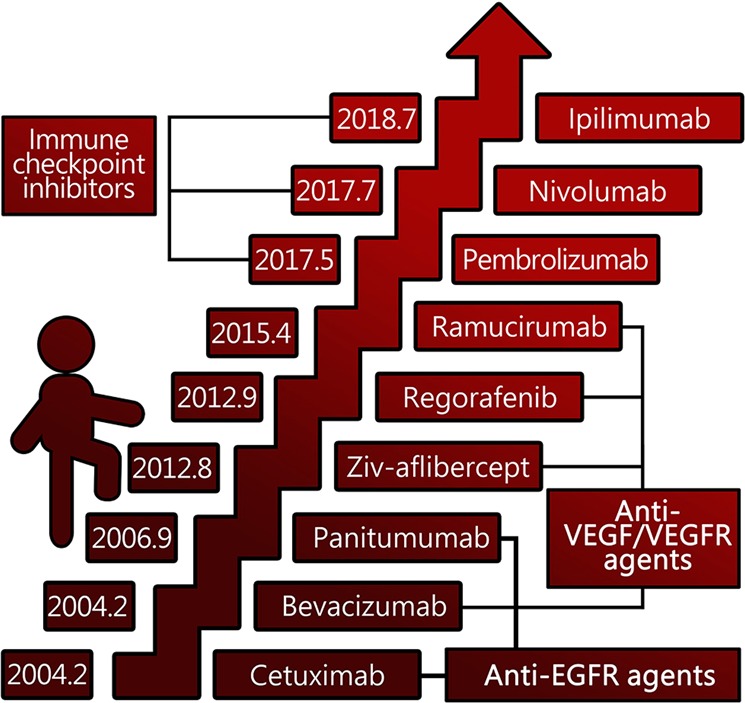
Colorectal cancer (CRC) is among the most lethal and prevalent malignancies in the world and was responsible for nearly 881,000 cancer-related deaths in 2018. Surgery and chemotherapy have long been the first choices for cancer patients. However, the prognosis of CRC has never been satisfying, especially for patients with metastatic lesions. Targeted therapy is a new optional approach that has successfully prolonged overall survival for CRC patients. Following successes with the anti-EGFR (epidermal growth factor receptor) agent cetuximab and the anti-angiogenesis agent bevacizumab, new agents blocking different critical pathways as well as immune checkpoints are emerging at an unprecedented rate. Guidelines worldwide are currently updating the recommended targeted drugs on the basis of the increasing number of high-quality clinical trials. This review provides an overview of existing CRC-targeted agents and their underlying mechanisms, as well as a discussion of their limitations and future trends.
Overview
The claims and statistics of this paper haven’t been checked yet.
Free: it reads the open-access text and checks the first 5 claims that cite a source we can check. Create a free account to check every claim.
Integrity signals
Registry
Cites
Statistics
Figures
Verification
Claims the paper makes
The claims and statistics of this paper haven’t been checked yet.
Free: it reads the open-access text and checks the first 5 claims that cite a source we can check. Create a free account to check every claim.
Claims other papers make about this one
Each is checked against this paper’s own text: does it say what the citing paper says it does?
The source backs part of the claim, not all of it — or backs it for a different population, condition or comparison.
In the citing paper
“The therapeutic landscape of metastatic colorectal cancer is moving toward biomarker-selected strategies. However, options are limited to agents directed at tumors carrying BRAF V600E mutations and to antibodies against programmed death 1 (PD-1) in patients with high microsatellite instability or mismatch-repair deficiency.13,26,27”
From Adagrasib with or without Cetuximab in Colorectal Cancer with Mutated KRAS G12C (2023) · cites this paper as [13]
Experimental — accuracy not yet measuredThe source backs part of the claim, not all of it — or backs it for a different population, condition or comparison.
In the citing paper
“Current first-line standard of care for KRAS G12C-positive CRC includes 5-FU-based chemotherapy with irinotecan, oxaliplatin and/or capecitabine, but is limited by low tumor-specific selectivity and systemic toxicity21.”
From Divarasib plus cetuximab in KRAS G12C-positive colorectal cancer: a phase 1b trial (2024) · cites this paper as [21]
Experimental — accuracy not yet measuredThe cited source says what the claim attributes to it.
In the citing paper
“Cetuximab is an anti-EGFR monoclonal antibody that is indicated for the treatment of RAS wild-type metastatic colorectal cancer, either as monotherapy or in combination with chemotherapy.13”
From Adagrasib with or without Cetuximab in Colorectal Cancer with Mutated KRAS G12C (2023) · cites this paper as [13]
The check wasn’t confident either way, so it gives no verdict — never disputed.
In the citing paper
“Currently, no therapies that specifically target KRAS G12C protein have been approved for the treatment of colorectal cancer.13,19”
From Adagrasib with or without Cetuximab in Colorectal Cancer with Mutated KRAS G12C (2023) · cites this paper as [13]
Experimental — accuracy not yet measuredIn the citing paper
“ROS-mediated DNA damage induces p53 phosphorylation, which in turn stabilizes p53, indispensable to counter tumorigenic growth and differentiation.68”
Self-check
Percentages, sums and reported differences re-computed from the paper’s own numbers.
The self-check needs the paper’s full text.
Citations
Cites
2 retracted
Lee, Y.-J., Karl, D. L., Maduekwe, U. N., Rothrock, C., Ryeom, S., D'Amore, P. A., & Yoon, S. S. (2010) · Cancer Research · doi:10.1158/0008-5472.can-10-1138 · Cited by 61
RetractedYang, S., Zhang, X., Qu, H., Qu, B., Yin, X., & Zhao, H. (2019) · Cancer Gene Therapy · doi:10.1038/s41417-019-0098-6 · Cited by 16 · cited 1×
“Similarly, an exciting antitumor performance of cabozantinib was observed in research based on CRC xenograft models and cell lines, while the results from CRC-focused clinical trials are awaited.(289,336,337) Merestinib, an inhibitor of MET, AXL (Axl receptor tyrosine kinase), TEK (tunica interna endothelial cell kina…”
BackgroundRetractedBray, F., Ferlay, J., Soerjomataram, I., Siegel, R. L., Torre, L. A., & Jemal, A. (2018) · CA: A Cancer Journal for Clinicians · doi:10.3322/caac.21492 · Cited by 84,109
PD-1 and PD-L1 Immune Checkpoint Blockade to Treat Breast Cancer
Hartkopf, A. D., Taran, F.-A., Wallwiener, M., Walter, C. B., Krämer, B., Grischke, E.-M., & Brucker, S. Y. (2016) · Breast Care · doi:10.1159/000453569 · Cited by 30,845
Siegel, R. L., Miller, K. D., & Jemal, A. (2019) · CA: A Cancer Journal for Clinicians · doi:10.3322/caac.21551 · Cited by 20,160
Adverse Renal Effects of Immune Checkpoint Inhibitors: A Narrative Review
Wanchoo, R., Karam, S., Uppal, N. N., Barta, V. S., Deray, G., Devoe, C., Launay-Vacher, V., Jhaveri, K. D., & on behalf of Cancer and Kidney International Network Workgroup on Immune Checkpoint Inhibitors (2017) · American Journal of Nephrology · doi:10.1159/000455014 · Cited by 15,256
Improved Survival with Ipilimumab in Patients with Metastatic Melanoma
Hodi, F. S., O'Day, S. J., McDermott, D. F., Weber, R. W., Sosman, J. A., Haanen, J. B., Gonzalez, R., Robert, C., Schadendorf, D., Hassel, J. C., et al. (2010) · New England Journal of Medicine · doi:10.1056/nejmoa1003466 · Cited by 15,155
Bevacizumab plus Irinotecan, Fluorouracil, and Leucovorin for Metastatic Colorectal Cancer
Hurwitz, H., Fehrenbacher, L., Novotny, W., Cartwright, T., Hainsworth, J., Heim, W., Berlin, J., Baron, A., Griffing, S., Holmgren, E., et al. (2004) · New England Journal of Medicine · doi:10.1056/nejmoa032691 · Cited by 10,968
Immunity, Inflammation, and Cancer
Grivennikov, S. I., Greten, F. R., & Karin, M. (2010) · Cell · doi:10.1016/j.cell.2010.01.025 · Cited by 10,755
Mutations of the BRAF gene in human cancer
Davies, H., Bignell, G. R., Cox, C., Stephens, P., Edkins, S., Clegg, S., Teague, J., Woffendin, H., Garnett, M. J., Bottomley, W., et al. (2002) · Nature · doi:10.1038/nature00766 · Cited by 10,674
Cited by
Items 101–200 of 1,000
Wongkaewkhiaw, S., Wongrakpanich, A., Krobthong, S., Saengsawang, W., Chairoungdua, A., & Boonmuen, N. (2022) · PLoS ONE · doi:10.1371/journal.pone.0266044 · Cited by 65
Bazzichetto, C., Milella, M., Zampiva, I., Simionato, F., Amoreo, C. A., Buglioni, S., Pacelli, C., Pera, L. L., Colombo, T., Bria, E., et al. (2022) · Biomedicines · doi:10.3390/biomedicines10102631 · Cited by 69
“of targeted agents interfering with growth factor-driven and neo-angiogenic pathways (such as the epidermal growth factor receptor and the vascular endothelial growth factor [VEGF] and its receptor, respectively) and, more recently, immunotherapy [3,4].”
BackgroundCastro, F., Pereira, C. L., Macedo, M. H., Almeida, A., Silveira, M. J., Dias, S., Cardoso, A. P., Oliveira, M. J., & Sarmento, B. F. C. C. (2021) · Advanced Drug Delivery Reviews · doi:10.1016/j.addr.2021.06.001 · Cited by 67
The role of the tumor microenvironment in colorectal cancer and the potential therapeutic approaches
Zafari, N., Khosravi, F., Rezaee, Z., Esfandyari, S., Bahiraei, M., Bahramy, A., Ferns, G. A., & Avan, A. (2022) · Journal of Clinical Laboratory Analysis · doi:10.1002/jcla.24585 · Cited by 69
Durinikova, E., Buzo, K., & Arena, S. (2021) · Journal of Experimental & Clinical Cancer Research · doi:10.1186/s13046-021-01981-z · Cited by 67
Monfared, Y. K., Mahmoudian, M., Cecone, C., Caldera, F., Zakeri‐Milani, P., Matencio, A., & Trotta, F. (2022) · Polymers · doi:10.3390/polym14030594 · Cited by 64
“In particular, colon cancer caused nearly 881,000 deaths in 2018 [2].”
BackgroundIron (Fe)-doped mesoporous 45S5 bioactive glasses: Implications for cancer therapy
Kermani, F., Saghir, A. V., Beidokhti, S. M., Nazarnezhad, S., Mollaei, Z., Hamzehlou, S., El‐Fiqi, A., Baino, F., & Kargozar, S. (2022) · Translational Oncology · doi:10.1016/j.tranon.2022.101397 · Cited by 64
Systemically administered low-affinity HER2 CAR T cells mediate antitumor efficacy without toxicity
Shabaneh, T. B., Stevens, A. R., Stull, S. M., Shimp, K. R., Seaton, B. W., Gad, E. A., Jaeger-Ruckstuhl, C. A., Simon, S., Koehne, A. L., Price, J. P., et al. (2024) · Journal for ImmunoTherapy of Cancer · doi:10.1136/jitc-2023-008566 · Cited by 71
Epigenetic Landscape of Liquid Biopsy in Colorectal Cancer
Rodríguez‐Casanova, A., Costa‐Fraga, N., Bao‐Caamano, A., López‐López, R., Muinelo‐Romay, L., & Díaz‐Lagares, Á. (2021) · Frontiers in Cell and Developmental Biology · doi:10.3389/fcell.2021.622459 · Cited by 62
Ganig, N., Baenke, F., Thepkaysone, M.-L., Lin, K., Rao, V. S., Wong, F. C., Polster, H., Schneider, M., Helm, D., Pecqueux, M., et al. (2021) · Cancers · doi:10.3390/cancers13061351 · Cited by 63
“Numerous advancements, ranging from enhanced sensitivity of colonoscopy screenings [2] to improvements in chemotherapeutic treatment [3,4], paved the way for declining CRC incidence and mortality rates within the last decades [5,6].”
BackgroundThe Role of Glycosyltransferases in Colorectal Cancer
Fernandez-Ponce, C. M., Geribaldi‐Doldán, N., Sánchez-Gomar, I., Quiroz, R. N., Ibarra, L. A., Escorcia, L. G., Fernández-Cisnal, R., Aroca, G., Garcia-Cozar, F. J., & Quiroz, E. N. (2021) · International Journal of Molecular Sciences · doi:10.3390/ijms22115822 · Cited by 65
Naser, R., Dilabazian, H., Bahr, H., Barakat, A., & El‐Sibai, M. (2022) · Oncology Reports · doi:10.3892/or.2022.8405 · Cited by 65
New Frontiers in Colorectal Cancer Treatment Combining Nanotechnology with Photo- and Radiotherapy
Freitas, S. C., Sanderson, D., Caspani, S., Magalhães, R., Cortés‐Llanos, B., Granja, A., Reis, S., Belo, J. H., Azevedo, J., Gómez‐Gaviro, M. V., et al. (2023) · Cancers · doi:10.3390/cancers15020383 · Cited by 64
Establishment of Colorectal Cancer Organoids in Microfluidic-Based System
Pinho, D., Santos, D., Vila, A., & Carvalho, S. (2021) · Micromachines · doi:10.3390/mi12050497 · Cited by 59
“Although significant advances in the molecular mechanisms underlying colorectal cancer have been made, the clinical approval of new drugs still faces many challenges [4].”
BackgroundKaneta, A., Nakajima, S., Okayama, H., Matsumoto, T., Saito, K., Kikuchi, T., Endo, E., Ito, M., Mimura, K., Kanke, Y., et al. (2022) · Cancer Immunology Immunotherapy · doi:10.1007/s00262-022-03200-w · Cited by 62
“Although the advances in primary and adjuvant treatments have improved the prognosis of CRC, the cases with advanced CRC still have a poor prognosis [3], and thus further therapeutic strategies should be required.”
BackgroundDiosmetin Exerts Synergistic Effects in Combination with 5-Fluorouracil in Colorectal Cancer Cells
Kamran, S., Sinniah, A., Chik, Z., & Alshawsh, M. A. (2022) · Biomedicines · doi:10.3390/biomedicines10030531 · Cited by 57
“regimen (capecitabine and oxaliplatin), and CAPIRI regimen (capecitabine + irinotecan) [9].”
BackgroundMirdamadian, S. Z., Varshosaz, J., Minaiyan, M., & Taheri, A. (2022) · International Journal of Biological Macromolecules · doi:10.1016/j.ijbiomac.2022.02.080 · Cited by 60
Wang, Y., Lu, K., Yang, X., Xu, S., Chu, H., & Fang, X. (2025) · Frontiers in Immunology · doi:10.3389/fimmu.2025.1678907 · Cited by 69
Nanoparticles: Attractive tools to treat colorectal cancer
Younis, N. K., Roumieh, R., Bassil, E. P., Ghoubaira, J. A., Kobeissy, F. H., & Eid, A. H. (2022) · Seminars in Cancer Biology · doi:10.1016/j.semcancer.2022.08.006 · Cited by 63
Zheng, X., Ma, Y., Bai, Y., Huang, T., Lv, X., Deng, J., Wang, Z., Lian, W., Tong, Y., Zhang, X., et al. (2022) · Frontiers in Immunology · doi:10.3389/fimmu.2022.984480 · Cited by 68
“The occurrence of CRC is a multistage mutation accumulation process involving multiple oncogenes, and the TME also plays an important role in the regulation (3) and drug resistance (4, 5) of CRC.”
BackgroundRecent Insights into Nanotechnology in Colorectal Cancer
Dezfuli, A. A. Z., Abu‐Elghait, M., & Salem, S. S. (2023) · Applied Biochemistry and Biotechnology · doi:10.1007/s12010-023-04696-3 · Cited by 59
“Clinical outcome, biological behavior, and prognosis are all unpredictable in CRC [46].”
Claudin-1 interacts with EPHA2 to promote cancer stemness and chemoresistance in colorectal cancer
Primeaux, M., Liu, X., Gowrikumar, S., Fatima, I., Fisher, K. W., Bastola, D. K., Vecchio, A. J., Singh, A. B., & Dhawan, P. (2023) · Cancer Letters · doi:10.1016/j.canlet.2023.216479 · Cited by 61
Bagherifar, R., Kiaie, S. H., Hatami, Z., Ahmadi, A., Sadeghnejad, A., Baradaran, B., Jafari, R., & Javadzadeh, Y. (2021) · Journal of Nanobiotechnology · doi:10.1186/s12951-021-00861-0 · Cited by 58
Peng, B., Singh, A. K., Chan, C.-H., Deng, Y.-H., Li, P.-Y., Su, C.-W., Wu, C.-Y., & Deng, W. (2023) · BMC Cancer · doi:10.1186/s12885-022-10466-x · Cited by 64
“However, several data reported that treatment with natural products and chemotherapy in patients with colon cancer had pushed their survival period to almost 20 months, resulting in this kind of treatment being essential for colon cancer treatment [9, 26].”
BackgroundLin, J., Lyu, Z., Feng, H., Xie, H., Peng, J., Zhang, W., Zheng, J., Zheng, J., Pan, Z., & Li, Y. (2024) · Drug Resistance Updates · doi:10.1016/j.drup.2024.101097 · Cited by 62
Qiu, X., Wang, A., Wang, J., Zhang, Z., & Tao, L. (2025) · Cell Death Discovery · doi:10.1038/s41420-025-02670-y · Cited by 66
“However, clinical ef fi cacy is often limited by a pattern of short-term response followed by long-term resistance [74].”
Sanaei, M., Khorasani, A. B. S., Pourbagheri‐Sigaroodi, A., Shahrokh, S., Zali, M. R., & Bashash, D. (2021) · Journal of Cellular Physiology · doi:10.1002/jcp.30655 · Cited by 63
The role of zinc finger proteins in malignant tumors
Zhao, J., Wen, D., Zhang, S., Jiang, H., & Di, X. (2023) · The FASEB Journal · doi:10.1096/fj.202300801r · Cited by 60
Managò, S., Tramontano, C., Cave, D. D., Chianese, G., Zito, G., Stefano, L. D., Terracciano, M., Lonardo, E., Luca, A. C. D., & Rea, I. (2021) · Small · doi:10.1002/smll.202101711 · Cited by 56
Mazouji, O., Ouhajjou, A., Incitti, R., & Mansour, H. (2021) · Frontiers in Cell and Developmental Biology · doi:10.3389/fcell.2021.660924 · Cited by 59
“Thus, amplification of the HER gene could confer resistance to anti-EGFR treatment (Xie et al., 2020).”
BackgroundElectrochemotherapy: An Alternative Strategy for Improving Therapy in Drug-Resistant SOLID Tumors
Condello, M., D’Avack, G., Spugnini, E. P., & Meschini, S. (2022) · Cancers · doi:10.3390/cancers14174341 · Cited by 60
“Targeted drugs can be used in combination with chemotherapeutics or alone and are directed against key factors that promote cancer cell survival, such as vascular endothelial growth factor (VEGF), epidermal growth factor receptor (EGFR), BRAF inhibitors, and kinase inhibitors [98].”
BackgroundMolujin, A. M., Abbasiliasi, S., Nurdin, A., Lee, C., Gansau, J. A., & Jawan, R. (2022) · Cancers · doi:10.3390/cancers14194758 · Cited by 66
“However, the treatment option depends on the stages and location of the cancer [8,16].”
BackgroundGharib, E., & Robichaud, G. A. (2024) · International Journal of Molecular Sciences · doi:10.3390/ijms25179463 · Cited by 65
Complement System: An Immunotherapy Target in Colorectal Cancer
Talaat, I. M., Elemam, N. M., & Saber-Ayad, M. M. (2022) · Frontiers in Immunology · doi:10.3389/fimmu.2022.810993 · Cited by 62
Russo, V., Lallo, E., Munnia, A., Spedicato, M., Messerini, L., D’Aurizio, R., Ceroni, E. G., Brunelli, G., Galvano, A., Russo, A., et al. (2022) · Cancers · doi:10.3390/cancers14164012 · Cited by 64
Faghfuri, E., & Gholizadeh, P. (2024) · Biomedicine & Pharmacotherapy · doi:10.1016/j.biopha.2024.116416 · Cited by 57
de Carvalho, T. G., Lara, P., Jorquera‐Cordero, C., Aragão, C. F. S., Aragão, C. F. S., Oliveira, A. D. S., Souza, S. V. D. P., Souza, S. V. D. P., Marques, I. D. L., Soares, L. A. L., et al. (2023) · Biomedicine & Pharmacotherapy · doi:10.1016/j.biopha.2023.115663 · Cited by 59
Obesity-Associated Colorectal Cancer
Gonzalez-Gutierrez, L., Motiño, O., Barriuso, D., de la Puente-Aldea, J., Alvarez-Frutos, L., Kroemer, G., Palacios, R., & Senovilla, L. (2024) · International Journal of Molecular Sciences · doi:10.3390/ijms25168836 · Cited by 60
“Given that the VEGF/VEGFR axis is involved in CRC progression and metastasis [209], the monoclonal antibody directed against VEGF-A, bevacizumab, is employed in first-and second-line strategies for mCRC [210], with a significant impact on overall survival [211].”
BackgroundShi, J., Liu, C., Luo, S., Cao, T., Lin, B., Zhou, M., Zhang, X., Wang, S., Zheng, T., & Li, X. (2021) · Cellular Immunology · doi:10.1016/j.cellimm.2021.104384 · Cited by 56
Exosomes as Powerful Engines in Cancer: Isolation, Characterization and Detection Techniques
Saad, M. G., Beyenal, H., & Dong, W. (2021) · Biosensors · doi:10.3390/bios11120518 · Cited by 54
“Cortical cancer is the second-most fatal cancer and the third-most widespread one [23], and breast cancer is a hostile tumor among women over 40 [24,25].”
BackgroundNelson, V. K., Nuli, M. V., Mastanaiah, J., Saleem, T. S. M., Birudala, G., Jamous, Y. F., Alshargi, O., Kotha, K. K., Sudhan, H. H., Mani, R. R., et al. (2023) · Frontiers in Endocrinology · doi:10.3389/fendo.2023.1201198 · Cited by 60
“The study results revealed that nivolumab possess a better disease control rate of microsatellite instability high CRC (68).”
BackgroundAnti‐angiogenesis in colorectal cancer therapy
Yang, Z., Zhang, X., Bai, X., Xi, X., Liu, W., & Zhong, W. (2024) · Cancer Science · doi:10.1111/cas.16063 · Cited by 57
“43 VEGF might suggest metastasis and poor prognosis of CRC. 44 Overexpressed VEGF was detected in 70% of the cases in a study where 50 patients with CRC were enrolled, thereby revealing patients’ poor prognosis as its tight relationship with tumor size, grade, and advanced tumor stage ( p = 0.006,…”
BackgroundInfluentialXu, H., Wang, Y., Liu, G., Zhu, Z., Shahbazi, M., Reis, R. L., Kundu, S. C., Shi, X., Zu, M., & Xiao, B. (2024) · Advanced Science · doi:10.1002/advs.202410011 · Cited by 74
Sabbatino, F., Conti, V., Liguori, L., Polcaro, G., Corbi, G., Manzo, V., Tortora, V., Carlomagno, C., Vecchione, C., Filippelli, A., et al. (2021) · Life · doi:10.3390/life11020105 · Cited by 55
“This change mostly involves the use of small-molecule tyrosine kinase inhibitors (TKIs), monoclonal antibodies (mAbs) and more recently immunotherapeutic modulators [60].”
BackgroundModifications of Plasma Membrane Organization in Cancer Cells for Targeted Therapy
Choromańska, A., Chwiłkowska, A., Kulbacka, J., Baczyńska, D., Rembiałkowska, N., Szewczyk, A., Michel, O., Gajewska-Naryniecka, A., Przystupski, D., & Saczko, J. (2021) · Molecules · doi:10.3390/molecules26071850 · Cited by 55
“Numerous antagonists were developed, including inhibitory antibodies, ligand traps, and low-molecular-weight kinase inhibitors, for use in targeted therapies, which is very promising in treating cancer without side effects [155,156].”
BackgroundJain, A., & Bhattacharya, S. (2023) · Frontiers in Oncology · doi:10.3389/fonc.2023.1211603 · Cited by 56
de Paula, M. C., Carvalho, S. G., Silvestre, A. L. P., dos Santos, A. M., Meneguin, A. B., & Chorilli, M. (2023) · Carbohydrate Polymers · doi:10.1016/j.carbpol.2023.121257 · Cited by 50
Kleeman, S. O., & Leedham, S. J. (2020) · Cancers · doi:10.3390/cancers12113355 · Cited by 62
Chemokines and chemokine receptors in colorectal cancer; multifarious roles and clinical impact
Braoudaki, M., Ahmad, M. S., Mustafov, D., Seriah, S., Siddiqui, M. N., & Siddiqui, S. S. (2022) · Seminars in Cancer Biology · doi:10.1016/j.semcancer.2022.06.002 · Cited by 54
“Surgery is the most typical treatment option for CRC, in which the aim is to achieve full resection of tumour and metastatic lesions [11].”
InfluentialMola, S., Pandolfo, C., Sica, A., & Porta, C. (2020) · International Journal of Molecular Sciences · doi:10.3390/ijms21186866 · Cited by 47
Unlocking the Wnt pathway: Therapeutic potential of selective targeting FZD7 in cancer
Larasati, Y. A., Boudou, C., Koval, A., & Katanaev, V. L. (2021) · Drug Discovery Today · doi:10.1016/j.drudis.2021.12.008 · Cited by 53
Kim, S., Park, J. W., Seo, H., Kim, M. J., Park, J., Kim, G., Lee, J. O., Shin, Y., Bae, J. M., Koo, B., et al. (2021) · Advanced Science · doi:10.1002/advs.202103360 · Cited by 53
SERS characterization of colorectal cancer cell surface markers upon anti‐EGFR treatment
Lyu, N., Pedersen, B., Shklovskaya, E., Rizos, H., Molloy, M. P., & Wang, Y. (2022) · Exploration · doi:10.1002/exp.20210176 · Cited by 51
Comprehensive review of the resistance mechanisms of colorectal cancer classified by therapy type
Oh, J. M., Kim, S. W., Tsung, C., Kent, E. W., Jain, A., Ruff, S. M., & Zhang, H. (2025) · Frontiers in Immunology · doi:10.3389/fimmu.2025.1571731 · Cited by 56
Wang, Z., & Yang, L. (2024) · Pharmacological Research · doi:10.1016/j.phrs.2024.107150 · Cited by 51
Regulation of Wnt receptor activity: Implications for therapeutic development in colon cancer
Zhong, Z. A., Michalski, M. N., Stevens, P. D., Sall, E. A., & Williams, B. O. (2021) · Journal of Biological Chemistry · doi:10.1016/j.jbc.2021.100782 · Cited by 52
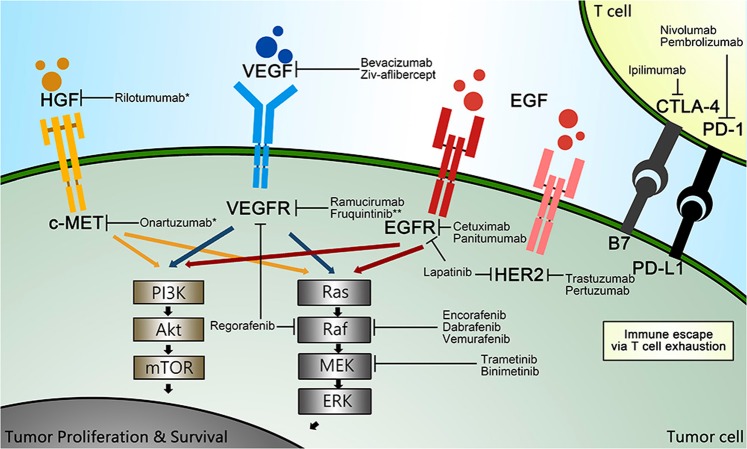
“Several targeted therapies have been approved over the past few years, including monoclonal anti-EGFR antibodies (cetuximab and panitumumab), anti-angiogenic therapies (bevacizumab and aflibercept), and BRAF inhibitors (reviewed in (8)).”
BackgroundCAR T-cells for colorectal cancer immunotherapy: Ready to go?
Ghazi, B., El Ghanmi, A., Kandoussi, S., Ghouzlani, A., & Badou, A. (2022) · Frontiers in Immunology · doi:10.3389/fimmu.2022.978195 · Cited by 46
“First-line therapeutic approaches for patients with CRC, including surgery and chemotherapy, have long been associated with poor prognosis (59).”
BackgroundWilson, R. B., Archid, R., & Reymond, M. A. (2020) · International Journal of Molecular Sciences · doi:10.3390/ijms21114158 · Cited by 53
Autophagy: A Versatile Player in the Progression of Colorectal Cancer and Drug Resistance
Manzoor, S., Muhammad, J. S., Maghazachi, A. A., & Hamid, Q. (2022) · Frontiers in Oncology · doi:10.3389/fonc.2022.924290 · Cited by 45
“Therapeutic modali t ies for CRC include surgery, radiotherapy, chemotherapy, targeted therapy, and immunotherapy (11).”
BackgroundThe role of PIK3CA gene mutations in colorectal cancer and the selection of treatment strategies
Wang, H., Tang, R., Ling, J., & Jia, Y. (2024) · Frontiers in Pharmacology · doi:10.3389/fphar.2024.1494802 · Cited by 65
miR-106b as an emerging therapeutic target in cancer
Sagar, S. K. (2021) · Genes & Diseases · doi:10.1016/j.gendis.2021.02.002 · Cited by 52
“CRC is the most lethal cancer and the third leading cause of cancer mortality globally.(111,112) Overall, colorectal associated death rates have dropped over the years due to early detection because this CRC is curable in its early stage, but incidence rates still remain high.”
BackgroundAhmad, N., Qamar, M., Yuan, Y., Nazir, Y., Wilairatana, P., & Mubarak, M. S. (2022) · Molecules · doi:10.3390/molecules27092831 · Cited by 51
“Current chemotherapy includes both single-agent therapy, mainly fluoropyrimidine (5-FU)based and multiple-agent regimens, containing one or several drugs, including oxaliplatin (OX), irinotecan (IRI), and capecitabine (CAP, XELODA, or XEL) [7].”
BackgroundGenetic Alterations of Metastatic Colorectal Cancer
Testa, U., Castelli, G., & Pelosi, E. (2020) · Biomedicines · doi:10.3390/biomedicines8100414 · Cited by 44
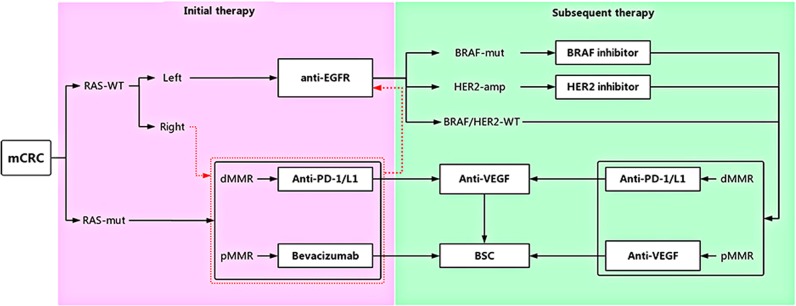
“The strategy recommended by the National Comprehensive Cancer Network (NCCN) for the targeted therapy of metastatic CRC patients implies a differential treatment according to the RAS mutational status and to the colon location of the primary tumor: (i) for patients with left colon mCRC, RAS-WT it is recommended an ini…”
MethodZhou, X., Wang, G., Tian, C., Du, L., Prochownik, E. V., & Li, Y. (2024) · Nature Communications · doi:10.1038/s41467-024-50138-x · Cited by 55
“…metabolic blockade represents a rationally-designed, mechanistically-based and potential therapy for CRC. World-wide, colorectal cancer (CRC) is the third most prevalent and the second most lethal malignancy 1 – 3 , the current treatment of which consists of surgical resection and chemotherapy 4 .”
Ji, Y., Yang, S., Tian, H. W., Zhang, Y., & Zhao, H. (2020) · Cell Death and Disease · doi:10.1038/s41419-020-03154-w · Cited by 44
RetractedExperimental Murine Models for Colorectal Cancer Research
Neto, Í., Rocha, J. P., Gaspar, M. M., & Reis, C. P. (2023) · Cancers · doi:10.3390/cancers15092570 · Cited by 54
Role of thyroid hormone-integrin αvβ3-signal and therapeutic strategies in colorectal cancers
Yang, Y.-C. S. H., Ko, P.-J., Pan, Y.-S., Lin, H., Whang‐Peng, J., Davis, P. J., & Wang, K. (2021) · Journal of Biomedical Science · doi:10.1186/s12929-021-00719-5 · Cited by 53
“resistance are limitations of this therapy [121] NA”
BackgroundLim, E., Kang, J.-H., Kim, Y.-J., Kim, S., & Lee, S. (2022) · Cell Death and Disease · doi:10.1038/s41419-022-04862-1 · Cited by 44
Wang, M., Liu, X., Chen, T., Cheng, X., Xiao, H., Meng, X., & Jiang, Y. (2022) · Frontiers in Oncology · doi:10.3389/fonc.2022.956793 · Cited by 52
“Current CRC treatment methods are based on surgery and chemotherapy, with the most common chemotherapeutic agents being platinum derivatives (oxaliplatin), antimetabolites (capecitabine, 5-fluorouracil (5FU)), topoisomerase inhibitors (irinotecan), and Tegafur/uracil (UFT) (3).”
BackgroundMetabolic Reprogramming in SARS-CoV-2 Infection Impacts the Outcome of COVID-19 Patients
Martínez-Gómez, L. E., Ibarra‐González, I., Fernández‐Lainez, C., Tusié‐Luna, T., Moreno-Macías, H., Martínez-Armenta, C., Jiménez-Gutiérrez, G. E., Vázquez-Cárdenas, P., Vidal-Vázquez, P., Ramírez-Hinojosa, J. P., et al. (2022) · Frontiers in Immunology · doi:10.3389/fimmu.2022.936106 · Cited by 44
Zhao, X., Xiu, J., Yang, H., Han, W., & Jin, Y. (2025) · International Journal of Molecular Sciences · doi:10.3390/ijms26030930 · Cited by 56
A Comprehensive Overview of Colon Cancer- A Grim Reaper of the 21st Century
Kumar, R., Harilal, S., Carradori, S., & Mathew, B. (2020) · Current Medicinal Chemistry · doi:10.2174/0929867327666201026143757 · Cited by 48
Colorectal Cancer: From Genetic Landscape to Targeted Therapy
Bali, M. E., Bakkach, J., & Mechita, M. B. (2021) · Journal of Oncology · doi:10.1155/2021/9918116 · Cited by 51
“Currently, the 5-year overall survival (OS) rate of CRC is estimated at 64% for all stages in the United States, and this seems to decrease to nearly 12% for metastatic CRC (mCRC) [4, 5].”
BackgroundYao, Y., Wang, Y., Chen, L., Tian, Z., Yang, G., Wang, R., Wang, C., Wu, Q., Wu, Y., Gao, J., et al. (2022) · Signal Transduction and Targeted Therapy · doi:10.1038/s41392-022-00908-0 · Cited by 47
Wang, C.-Y., Sun, M., Fan, Z., & Du, J. (2022) · Chinese Journal of Polymer Science · doi:10.1007/s10118-022-2726-0 · Cited by 44
Zeng, X., Yao, B., Liu, J., Gong, G., Liu, M., Li, J., Pan, H., Li, Q., Yang, D., Lu, P., et al. (2023) · npj Precision Oncology · doi:10.1038/s41698-023-00367-y · Cited by 45
Chitoran, E., Rotaru, V., Stefan, D. C., Gullo, G., & Simion, L. (2025) · Cancers · doi:10.3390/cancers17071126 · Cited by 46
“Some studies showed that using anti-EGFRs in the first-line setting for the right CRC should be avoided when other therapeutic alternatives are available [85] while for wild-type ras mCRC left-sided tumors, chemotherapy plus anti-EGFR drugs is the combination of choice as first-line treatment [86].”
Georgieva, M., Gospodinova, Z., Keremidarska‐Markova, M., Kamenska, T., Gencheva, G., & Krasteva, N. A. (2021) · Pharmaceutics · doi:10.3390/pharmaceutics13030424 · Cited by 43
“Exactly in the advanced stages of colon cancer, the patients undergo chemotherapy, which, in many cases, is also futile, as often the tumor cells develop drug resistance [6,7].”
BackgroundShi, W., Li, Y., Bai, X., & Lin, G. (2022) · Frontiers in Oncology · doi:10.3389/fonc.2022.834235 · Cited by 56
“Targeted therapies play a unique role in inhibiting cancer progression by directly inhibiting cell proliferation, differentiation, and migration (16).”
BackgroundLi, J., Sun, H., Jiang, X., Chen, Y., Zhang, Z., Wang, Y., Chen, W., Zhang, Z., Sze, S. C. W., Zhu, P., et al. (2022) · International Journal of Molecular Sciences · doi:10.3390/ijms231911890 · Cited by 46
“Thus, the overall 5-year survival rate of CRC is still unacceptably low [2].”
BackgroundSelf-citationA Nanotherapeutic Strategy to Reverse NK Cell Exhaustion
Pan, S., Guan, J., Xianyu, B., Tan, Y., Li, T., & Xu, H. (2023) · Advanced Materials · doi:10.1002/adma.202211370 · Cited by 41
Manzi, J. L. L., Hoff, C. O., Ferreira, R., Pimentel, A., Datta, J., Livingstone, A. S., Vianna, R., & Abreu, P. (2023) · Cancers · doi:10.3390/cancers15113023 · Cited by 47
“The hyperactivation and hyperexpression of receptors in this family are related to several cancers, such as head and neck, stomach, colorectal, prostate, pancreas, and lung [43], and it may indicate a worse prognosis, survival, resistance to specific drugs, and higher metastasis rate [45–47].”
BackgroundLiu, G., Chen, Z., Liu, D., Chang, B., & Dou, Z. (2023) · IEEE Transactions on Instrumentation and Measurement · doi:10.1109/tim.2023.3293880 · Cited by 55
“C OLORECTAL cancer (CRC), as the third most common cancer in the world, has seriously endangered people’s health and even lives [1], [2], [3].”
BackgroundPredicting drug response from single-cell expression profiles of tumours
Pellecchia, S., Viscido, G., Franchini, M., & Gambardella, G. (2023) · BMC Medicine · doi:10.1186/s12916-023-03182-1 · Cited by 50
Oxymatrine Inhibits Colorectal Cancer Metastasis via Attenuating PKM2-Mediated Aerobic Glycolysis
Li, X., Sun, J., Xu, Q., Duan, W., Yang, L., Wu, X., Lu, G., Zhang, L., & Zheng, Y. (2020) · Cancer Management and Research · doi:10.2147/cmar.s267686 · Cited by 43
Liu, F., Dai, Z., Cheng, Q., Xu, L., Huang, L., Liu, Z., Li, X., Wang, N., Wang, G., Wang, L., et al. (2022) · Biomaterials · doi:10.1016/j.biomaterials.2022.121485 · Cited by 40
Gao, Z., Jiang, J., Hou, L., & Ji, F. (2022) · Oxidative Medicine and Cellular Longevity · doi:10.1155/2022/1366957 · Cited by 45
“In recent years, targeted therapy and immunotherapy have made signi fi cant strides towards becoming viable therapeutic options for CRC, complementing more traditional therapies such as chemotherapy, radiation therapy, and surgery [4].”
Ma, S., Yao, H., Si, X., Huang, Z., Wang, R., Wan, R., Tang, Z., Wang, G., & Song, W. (2024) · Journal of Controlled Release · doi:10.1016/j.jconrel.2024.05.002 · Cited by 42
Feng, L., Wang, X., Guo, X., Shi, L., Su, S., Li, X., Wang, J., Tan, N., Ma, Y., & Wang, Z. (2024) · Angewandte Chemie International Edition · doi:10.1002/anie.202402543 · Cited by 42
Immunotherapy for colorectal cancer
Yu, B., Kang, J., Lei, H., Li, Z., Yang, H. C., & Zhang, M. (2024) · Frontiers in Immunology · doi:10.3389/fimmu.2024.1433315 · Cited by 43
Radiogenomics in Colorectal Cancer
Badic, B., Tixier, F., Rest, C. C. L., Hatt, M., & Visvikis, D. (2021) · Cancers · doi:10.3390/cancers13050973 · Cited by 43
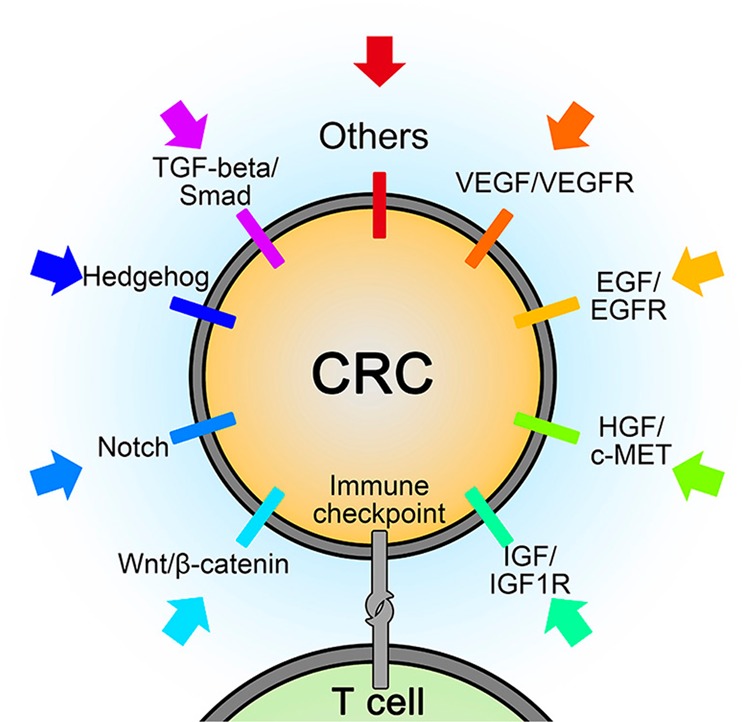
“Other pathways implicated in initiation, progression, activation, and migration of CRC, such as Wnt/β-catenin, Notch, Hedgehog, and TGF-β/SMAD, (PI3K)/AKT could be potential sites for targeted therapy [58].”
BackgroundKwak, A., Park, J. W., Lee, S., Lee, J., Seo, J., Yoon, G., Lee, M., Choi, J., & Shim, J. (2022) · Phytomedicine · doi:10.1016/j.phymed.2022.154383 · Cited by 43
Sigaud, R., Albert, T., Hess, C. C., Hielscher, T., Winkler, N., Kocher, D., Walter, C., Münter, D., Selt, F., Usta, D., et al. (2023) · Nature Communications · doi:10.1038/s41467-023-40235-8 · Cited by 43
Chen, R., Huang, Y., Wang, L., Zhou, J., Tan, Y., Peng, C., Yang, P., Peng, W., Li, J., Gu, Q., et al. (2021) · Biomaterials Science · doi:10.1039/d0bm01904f · Cited by 38
Nguyen, A. N., Ngo, Q. V., Quach, T. T. M., Ueda, S., Yuguchi, Y., Matsumoto, Y., Kitamura, S., Ho, C. D., & Thanh, T. T. T. (2024) · International Journal of Biological Macromolecules · doi:10.1016/j.ijbiomac.2024.129326 · Cited by 47
Dailah, H. G., Hommdi, A. A., Koriri, M. D., Algathlan, E. M., & Mohan, S. (2024) · Heliyon · doi:10.1016/j.heliyon.2024.e24559 · Cited by 48
Research Advances of Lipid Nanoparticles in the Treatment of Colorectal Cancer
Zhang, J., Ali, K., & Wang, J. (2024) · International Journal of Nanomedicine · doi:10.2147/ijn.s466490 · Cited by 42
Fahmy, U. A., Aldawsari, H. M., Badr-Eldin, S. M., Ahmed, O. A. A., Alhakamy, N. A., Alsulimani, H. H., Caraci, F., & Caruso, G. (2020) · Pharmaceutics · doi:10.3390/pharmaceutics12100956 · Cited by 39
“During the last decade, the standard strategy to treat colorectal cancer has been surgery and chemotherapy; however, the prognosis of this type of cancer has never been satisfying, especially with regard to patients undergoing metastatic lesions [7].”
BackgroundEGFR and anti-EGFR nanobodies: review and update
Sharifi, J., Khirehgesh, M. R., Safari, F., & Akbari, B. (2020) · Journal of drug targeting · doi:10.1080/1061186x.2020.1853756 · Cited by 40
“than 900Da, may penetrate the cell that leads to inactivation of the enzymes, interfering with tumour growth, and apoptosis [5].”
BackgroundDurán‐Vinet, B., Araya‐Castro, K., Calderón, J. F., Vergara, L. F., Weber, H. L., Retamales, J., Araya-Castro, P., & Leal, P. (2021) · Cancers · doi:10.3390/cancers13184640 · Cited by 40
“Thereby, molecular diagnosis has risen as a swift and affordable route to obtain an early CRC diagnosis [53], to be followed by suitable treatments, including chemotherapy [54], radiotherapy [55], immunotherapy [56], targeted therapy [57], and other therapies (further reading can be found in [9,58,59]), thus ultimatel…”
Background
Metadata
- Authors
- Xie, Y.-H., Chen, Y.-X., & Fang, J.-Y.
- Affiliations
- Shanghai Jiao Tong University (CN)
- Corresponding author
- Fang, Jing-Yuan
- ORCID
- Fang, Jing-Yuan
- Venue
- Signal Transduction and Targeted Therapy
- Published
- 2020-03-20
- Volume
- 5
- Issue
- 1
- Pages
- 22-22
- ISSN
- 2059-3635 (ISSN-L)
- PMC
- PMC7082344
- OpenAlex
- W3011481749
- Semantic Scholar
- 4980bbd78186d8dcd72cea78c224da6b545d763a
- Cited by
- 1,687
- References
- 521
- Citations by year
- 2026: 153 · 2025: 285 · 2024: 348 · 2023: 346 · 2022: 300 · 2021: 202 · 2020: 51
- FWCI
- 24.09
- Type
- journal article
- Language
- en
- Open access
- gold
- doi.org
- Licence
- cc-by
- creativecommons.org/licenses/by/4.0 (tdm)
- creativecommons.org/licenses/by/4.0 (vor)
- Locations
- Signal Transduction and Targeted Therapy (publishedVersion, cc-by)
- PubMed Central (publishedVersion, cc-by)
- PubMed (publishedVersion)
- Funders
- National Natural Science Foundation of China (81421001, 81530072)
- Topics
- Health Sciences › Medicine › Oncology › Colorectal Cancer Treatments and Studies
- Health Sciences › Medicine › Oncology › Colorectal Cancer Surgical Treatments
- Health Sciences › Medicine › Oncology › Pancreatic and Hepatic Oncology Research
- Keywords
- colorectal cancer, targeted therapy, metastatic colorectal cancer, anti-EGFR therapy, cetuximab, bevacizumab, angiogenesis inhibitors, immune checkpoint inhibitors, molecular pathways, drug mechanisms, treatment guidelines
- MeSH terms
- Bevacizumab, Cetuximab, Humans, Neoplasm Metastasis, Neovascularization, Pathologic, Colorectal Neoplasms, Molecular Targeted Therapy, ErbB Receptors
About these checks
Registry, retraction, Cites and statistics results are computed, not judged, with one exception: a printed reference that no index lists is read once by a model before it counts as a citation error. Claims are extracted by a model and kept only when their quote appears verbatim in the text; each cited source is then checked, with a model’s help, for whether it says what the claim relies on. Those verdicts can be wrong — read the claim’s quote and the cited source before relying on one.
Statistics and arithmetic are recomputed, not judged.
Confidence bands are shown only for fields calibrated on our annotated test set. None is calibrated yet, so no band is shown.
What counts as a claim ›How we measure confidence ›How we check this ›
Are you an author, or do you see a problem with this page? Request a review
Data sources
Bibliographic data: Semantic Scholar, OpenAlex, Crossref.
Contains information from the Semantic Scholar Academic Graph Datasets, made available under the ODC Attribution License (ODC-BY 1.0).
Semantic Scholar’s data is described in: Kinney, R., et al. (2023). The Semantic Scholar Open Data Platform. arXiv:2301.10140.
