

Identification of HSP90 inhibitors as a novel class of senolytics
Open accessThe DOI matches its Crossref record; 77 of the 77 references it cites were found in a registry or an index.
Abstract
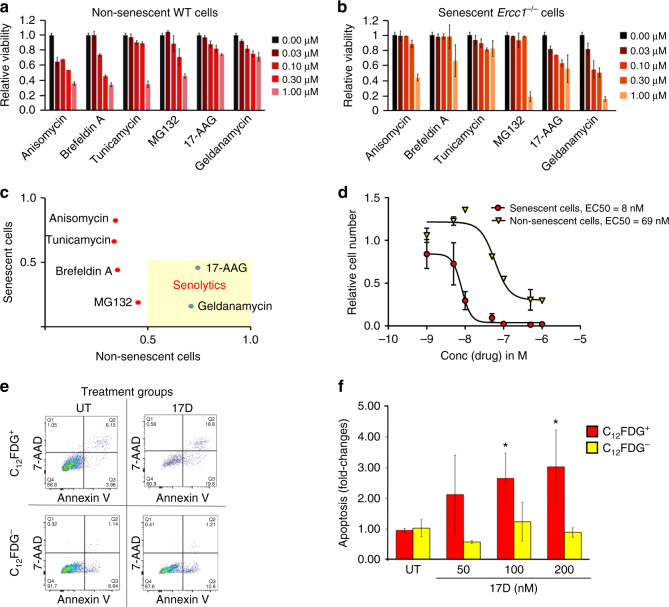
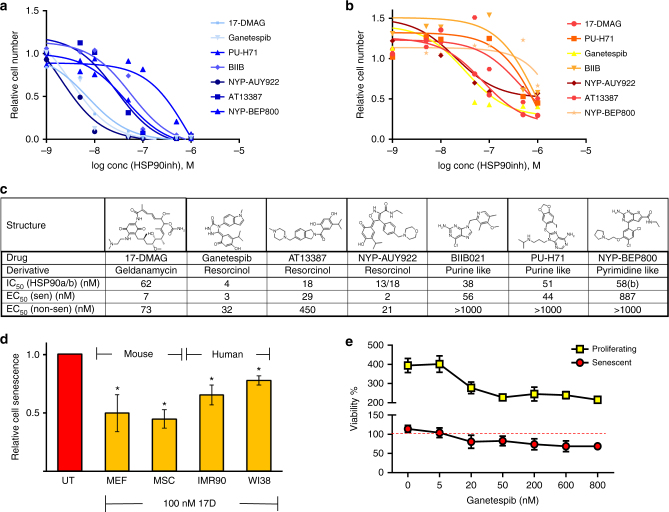
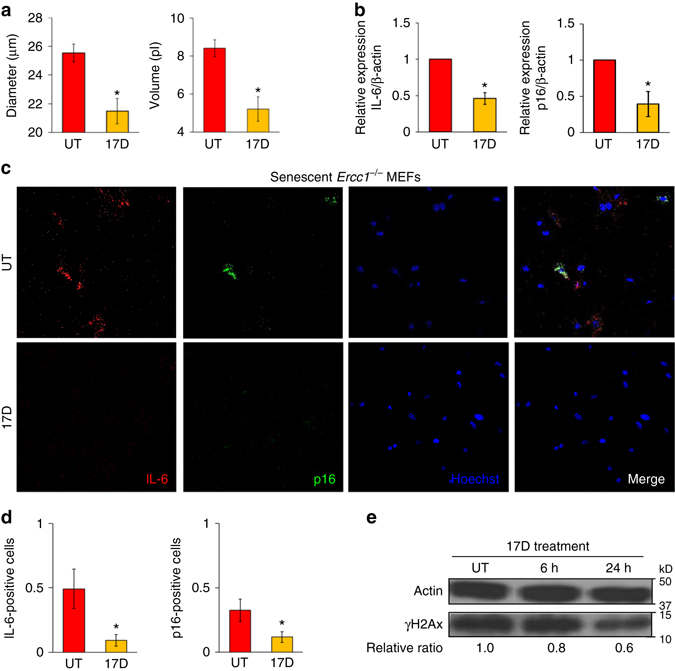
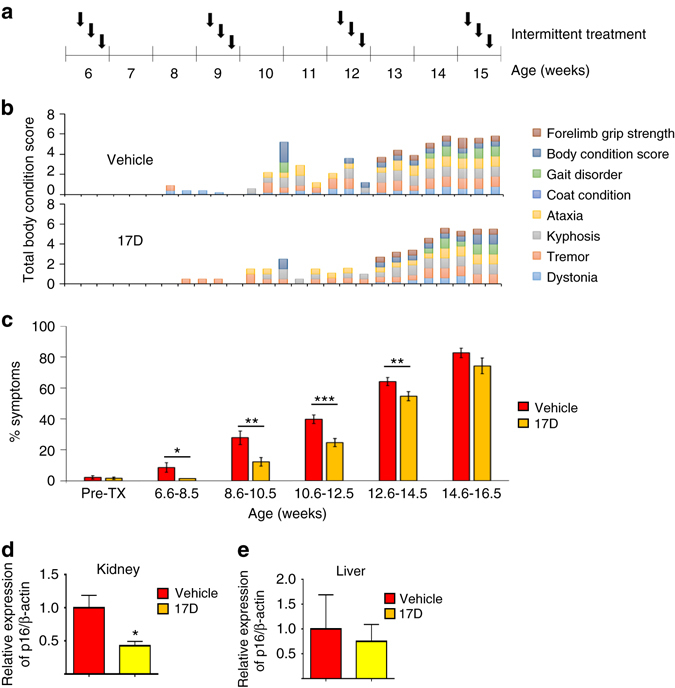
Aging is the main risk factor for many chronic degenerative diseases and cancer. Increased senescent cell burden in various tissues is a major contributor to aging and age-related diseases. Recently, a new class of drugs termed senolytics were demonstrated to extending healthspan, reducing frailty and improving stem cell function in multiple murine models of aging. To identify novel and more optimal senotherapeutic drugs and combinations, we established a senescence associated β-galactosidase assay as a screening platform to rapidly identify drugs that specifically affect senescent cells. We used primary Ercc1 −/− murine embryonic fibroblasts with reduced DNA repair capacity, which senesce rapidly if grown at atmospheric oxygen. This platform was used to screen a small library of compounds that regulate autophagy, identifying two inhibitors of the HSP90 chaperone family as having significant senolytic activity in mouse and human cells. Treatment of Ercc1 −/∆ mice, a mouse model of a human progeroid syndrome, with the HSP90 inhibitor 17-DMAG extended healthspan, delayed the onset of several age-related symptoms and reduced p16 INK4a expression. These results demonstrate the utility of our screening platform to identify senotherapeutic agents as well as identified HSP90 inhibitors as a promising new class of senolytic drugs.
Overview
The claims and statistics of this paper haven’t been checked yet.
Free: it reads the open-access text and checks the first 5 claims that cite a source we can check. Create a free account to check every claim.
Integrity signals
Registry
Cites
Statistics
Figures
Verification
Claims the paper makes
The claims and statistics of this paper haven’t been checked yet.
Free: it reads the open-access text and checks the first 5 claims that cite a source we can check. Create a free account to check every claim.
Claims other papers make about this one
Each is checked against this paper’s own text: does it say what the citing paper says it does?
The source backs part of the claim, not all of it — or backs it for a different population, condition or comparison.
In the citing paper
“Through upregulation of pro-survival and antiapoptotic pathways such as SRC kinases, the PI3K-AKT signaling pathway, heat shock protein (HSP) pathways, serpines, mitochondrial pathways or apoptosis regulator BCL-2-related proteins, those senescent cells with a proapoptotic SASP can survive, despite the cytotoxic microenvironment they create6,7,14,34,35,54–58.”
From Cellular senescence and senolytics: the path to the clinic (2022) · cites this paper as [54]
Experimental — accuracy not yet measuredThe source backs part of the claim, not all of it — or backs it for a different population, condition or comparison.
In the citing paper
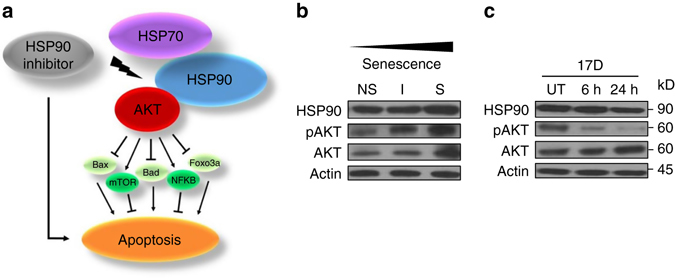
“HSP90 prevents proteasomal degradation of AKT, hence inhibiting HSP90 disables pro-survival signaling through this SCAP node and results in elimination of some senescent cell types54.”
From Cellular senescence and senolytics: the path to the clinic (2022) · cites this paper as [54]
Experimental — accuracy not yet measuredThe source backs part of the claim, not all of it — or backs it for a different population, condition or comparison.
In the citing paper
“Senomorphics are aimed largely at suppressing the SASP and thereby inflammation.”
From Senolytic Drugs: Reducing Senescent Cell Viability to Extend Health Span (2021) · cites this paper as [20]
Experimental — accuracy not yet measuredThe source backs part of the claim, not all of it — or backs it for a different population, condition or comparison.
In the citing paper
“Additionally, SASP establishment and the secretion of SASP factors can be modulated by inhibiting HSP90 (REFS214,249).”
From Cellular senescence in ageing: from mechanisms to therapeutic opportunities (2021) · cites this paper as [214]
Experimental — accuracy not yet measuredThe source backs part of the claim, not all of it — or backs it for a different population, condition or comparison.
In the citing paper
“even eliminating only 30% of senescent cells can be sufficient to alleviate dysfunction in preclinical studies [3,5,7,9,23,24,28,[32], [33], [34], [35], [36], [37]]”
From Senolytics decrease senescent cells in humans: Preliminary report from a clinical trial of Dasatinib plus Quercetin in individuals with diabetic kidney disease (2019) · cites this paper as [37]
Experimental — accuracy not yet measured
19 more claims about this paper
Create a free account to see every claim other papers make about this one.
Self-check
Percentages, sums and reported differences re-computed from the paper’s own numbers.
The self-check needs the paper’s full text.
Citations
Cites
Zhang, J.-H., Chung, T. D. Y., & Oldenburg, K. R. (1999) · SLAS Discovery · doi:10.1177/108705719900400206 · Cited by 6,847
Clearance of p16Ink4a-positive senescent cells delays ageing-associated disorders
Baker, D. J., Wijshake, T., Tchkonia, T., LeBrasseur, N. K., Childs, B. G., van de Sluis, B., Kirkland, J. L., & van Deursen, J. M. (2011) · Nature · doi:10.1038/nature10600 · Cited by 3,670
Self-citationNaturally occurring p16Ink4a-positive cells shorten healthy lifespan
Baker, D. J., Childs, B. G., Durik, M., Wijers, M. E., Sieben, C. J., Zhong, J., A. Saltness, R., Jeganathan, K. B., Verzosa, G. C., Pezeshki, A., et al. (2016) · Nature · doi:10.1038/nature16932 · Cited by 2,876
Cellular senescence: from physiology to pathology
Muñoz-Espín, D., & Serrano, M. (2014) · Nature Reviews Molecular Cell Biology · doi:10.1038/nrm3823 · Cited by 2,818
The role of senescent cells in ageing
van Deursen, J. M. (2014) · Nature · doi:10.1038/nature13193 · Cited by 2,623 · cited 1×
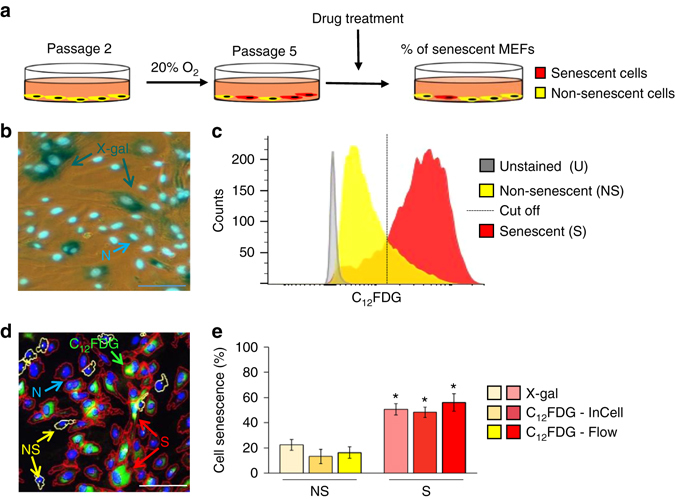
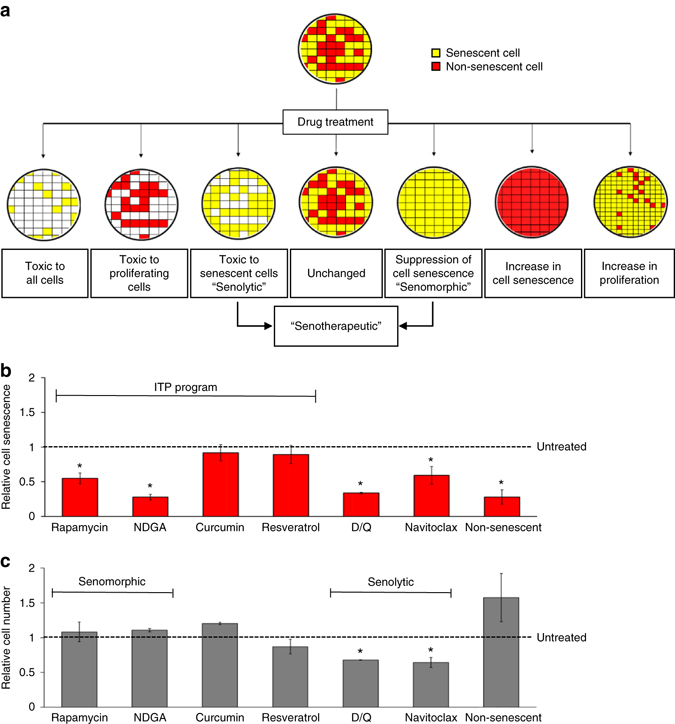
“A reduction in the ratio of senescent to non-senescent cells could be achieved by three drug activities: (1) specifically killing senescent cells, termed senolytics29, (2) suppressing cell senescence phenotypes, termed senomorphics, or (3) increasing proliferation of the non-senescent cells.”
BackgroundThe Achilles' heel of senescent cells: from transcriptome to senolytic drugs
Zhu, Y., Tchkonia, T., Pirtskhalava, T., Gower, A. C., Ding, H., Giorgadze, N., Palmer, A. K., Ikeno, Y., Hubbard, G. B., Lenburg, M., et al. (2015) · Aging Cell · doi:10.1111/acel.12344 · Cited by 2,584
Self-citationCellular senescence in aging and age-related disease: from mechanisms to therapy
Childs, B. G., Durik, M., Baker, D. J., & van Deursen, J. M. (2015) · Nature Medicine · doi:10.1038/nm.4000 · Cited by 2,363
Persistent DNA damage signalling triggers senescence-associated inflammatory cytokine secretion
Rodier, F., Coppé, J.-P., Patil, C. K., Hoeijmakers, W. A. M., Muñoz, D. P., Raza, S. R., Freund, A., Campeau, E., Davalos, A. R., & Campisi, J. (2009) · Nature Cell Biology · doi:10.1038/ncb1909 · Cited by 2,232
Clearance of senescent cells by ABT263 rejuvenates aged hematopoietic stem cells in mice
Chang, J., Wang, Y., Shao, L., Laberge, R.-M., Demaria, M., Campisi, J., Janakiraman, K., Sharpless, N. E., Ding, S., Feng, W., et al. (2016) · Nature Medicine · doi:10.1038/nm.4010 · Cited by 1,819
HSP90 at the hub of protein homeostasis: emerging mechanistic insights
Taipale, M., Jarosz, D. F., & Lindquist, S. (2010) · Nature Reviews Molecular Cell Biology · doi:10.1038/nrm2918 · Cited by 1,818
Cellular senescence and the senescent secretory phenotype: therapeutic opportunities
Tchkonia, T., Zhu, Y., van Deursen, J., Campisi, J., & Kirkland, J. L. (2013) · Journal of Clinical Investigation · doi:10.1172/jci64098 · Cited by 1,774
Self-citationDebacq-Chainiaux, F., Erusalimsky, J. D., Campisi, J., & Toussaint, O. (2009) · Nature Protocols · doi:10.1038/nprot.2009.191 · Cited by 1,668
Cellular senescence mediates fibrotic pulmonary disease
Schafer, M. J., White, T. A., Iijima, K., Haak, A. J., Ligresti, G., Atkinson, E. J., Oberg, A. L., Birch, J., Salmonowicz, H., Zhu, Y., et al. (2017) · Nature Communications · doi:10.1038/ncomms14532 · Cited by 1,613
Self-citationJeon, O. H., Kim, C., Laberge, R.-M., Demaria, M., Rathod, S., Vasserot, A. P., Chung, J. W., Kim, D. H., Poon, Y., David, N., et al. (2017) · Nature Medicine · doi:10.1038/nm.4324 · Cited by 1,515
Targeting the dynamic HSP90 complex in cancer
Trepel, J., Mollapour, M., Giaccone, G., & Neckers, L. (2010) · Nature Reviews Cancer · doi:10.1038/nrc2887 · Cited by 1,514
Ink4a/Arf expression is a biomarker of aging
Krishnamurthy, J., Torrice, C., Ramsey, M. R., Kovalev, G. I., Al-Regaiey, K., Su, L., & Sharpless, N. E. (2004) · Journal of Clinical Investigation · doi:10.1172/jci22475 · Cited by 1,486
Baar, M. P., Brandt, R. M. C., Putavet, D. A., Klein, J. D. D., Derks, K. W. J., Bourgeois, B. R. M., Stryeck, S., Rijksen, Y., van Willigenburg, H., Feijtel, D. A., et al. (2017) · Cell · doi:10.1016/j.cell.2017.02.031 · Cited by 1,454
Autophagy modulation as a potential therapeutic target for diverse diseases
Rubinsztein, D. C., Codogno, P., & Levine, B. (2012) · Nature Reviews Drug Discovery · doi:10.1038/nrd3802 · Cited by 1,437
Senescent intimal foam cells are deleterious at all stages of atherosclerosis
Childs, B. G., Baker, D. J., Wijshake, T., Conover, C. A., Campisi, J., & van Deursen, J. M. (2016) · Science · doi:10.1126/science.aaf6659 · Cited by 1,195
PI3K/Akt and apoptosis: size matters
Franke, T. F., Hornik, C. P., Segev, L., Shostak, G. A., & Sugimoto, C. (2003) · Oncogene · doi:10.1038/sj.onc.1207115 · Cited by 1,184
Laberge, R.-M., Sun, Y., Orjalo, A. V., Patil, C. K., Freund, A., Zhou, L., Curran, S. C., Davalos, A. R., Wilson-Edell, K. A., Liu, S., et al. (2015) · Nature Cell Biology · doi:10.1038/ncb3195 · Cited by 1,160
Zhu, Y., Tchkonia, T., Fuhrmann‐Stroissnigg, H., Dai, H. M., Ling, Y. Y., Stout, M. B., Pirtskhalava, T., Giorgadze, N., Johnson, K. O., Giles, C. B., et al. (2016) · Aging Cell · doi:10.1111/acel.12445 · Cited by 1,148
Self-citationFat tissue, aging, and cellular senescence
Tchkonia, T., Morbeck, D. E., Von Zglinicki, T., Van Deursen, J., Lustgarten, J., Scrable, H., Khosla, S., Jensen, M. D., & Kirkland, J. L. (2010) · Aging Cell · doi:10.1111/j.1474-9726.2010.00608.x · Cited by 1,094
Self-citationCellular senescence drives age-dependent hepatic steatosis
Ogrodnik, M., Miwa, S., Tchkonia, T., Tiniakos, D., Wilson, C. L., Lahat, A., Day, C. P., Burt, A., Palmer, A., Anstee, Q. M., et al. (2017) · Nature Communications · doi:10.1038/ncomms15691 · Cited by 1,044
Self-citationCellular senescence: a translational perspective
Kirkland, J. L., & Tchkonia, T. (2017) · EBioMedicine · doi:10.1016/j.ebiom.2017.04.013 · Cited by 1,013
Self-citationModulation of Akt kinase activity by binding to Hsp90
Sato, S., Fujita, N., & Tsuruo, T. (2000) · Proceedings of the National Academy of Sciences · doi:10.1073/pnas.170276797 · Cited by 967
Hsp90 Molecular Chaperone Inhibitors: Are We There Yet?
Neckers, L., & Workman, P. (2012) · Clinical Cancer Research · doi:10.1158/1078-0432.ccr-11-1000 · Cited by 891
Chronic inflammation induces telomere dysfunction and accelerates ageing in mice
Jurk, D., Wilson, C., Passos, J. F., Oakley, F., Correia-Melo, C., Greaves, L., Saretzki, G., Fox, C., Lawless, C., Anderson, R., et al. (2014) · Nature Communications · doi:10.1038/ncomms5172 · Cited by 819
Senescing human cells and ageing mice accumulate DNA lesions with unrepairable double-strand breaks
Sedelnikova, O. A., Horikawa, I., Zimonjic, D. B., Popescu, N. C., Bonner, W. M., & Barrett, J. C. (2004) · Nature Cell Biology · doi:10.1038/ncb1095 · Cited by 790
Zhu, Y., Doornebal, E. J., Pirtskhalava, T., Giorgadze, N., Wentworth, M., Fuhrmann-Stroissnigg, H., Niedernhofer, L. J., Robbins, P. D., Tchkonia, T., & Kirkland, J. L. (2017) · Aging · doi:10.18632/aging.101202 · Cited by 757
Self-citationRoos, C. M., Zhang, B., Palmer, A. K., Ogrodnik, M. B., Pirtskhalava, T., Thalji, N. M., Hagler, M., Jurk, D., Smith, L. A., Casaclang‐Verzosa, G., et al. (2016) · Aging Cell · doi:10.1111/acel.12458 · Cited by 738
Self-citationToussaint, O., Medrano, E. E., & von Zglinicki, T. (2000) · Experimental Gerontology · doi:10.1016/s0531-5565(00)00180-7 · Cited by 713
A new progeroid syndrome reveals that genotoxic stress suppresses the somatotroph axis
Niedernhofer, L. J., Garinis, G. A., Raams, A., Lalai, A. S., Robinson, A. R., Appeldoorn, E., Odijk, H., Oostendorp, R., Ahmad, A., van Leeuwen, W., et al. (2006) · Nature · doi:10.1038/nature05456 · Cited by 669
Self-citationMiller, R. A., Harrison, D. E., Astle, C. M., Fernandez, E., Flurkey, K., Han, M., Javors, M. A., Li, X., Nadon, N. L., Nelson, J. F., et al. (2014) · Aging Cell · doi:10.1111/acel.12194 · Cited by 621
Self-citationTargeting senescent cells enhances adipogenesis and metabolic function in old age
Xu, M., Palmer, A. K., Ding, H., Weivoda, M. M., Pirtskhalava, T., White, T. A., Sepe, A., Johnson, K. O., Stout, M. B., Giorgadze, N., et al. (2015) · eLife · doi:10.7554/elife.12997 · Cited by 604
Self-citationRapalogs and mTOR inhibitors as anti-aging therapeutics
Lamming, D. W., Ye, L., Sabatini, D. M., & Baur, J. A. (2013) · Journal of Clinical Investigation · doi:10.1172/jci64099 · Cited by 531
(1995) · PubMed · Cited by 496
Niedernhofer, L. J., Odijk, H., Budzowska, M., van Drunen, E., Maas, A., Theil, A. F., de Wit, J., Jaspers, N. G. J., Beverloo, H. B., Hoeijmakers, J. H. J., et al. (2004) · Molecular and Cellular Biology · doi:10.1128/mcb.24.13.5776-5787.2004 · Cited by 492
Self-citationRole of Oxidative Stress in Telomere Length Regulation and Replicative Senescence
VON ZGLINICKI, T. (2000) · Annals of the New York Academy of Sciences · doi:10.1111/j.1749-6632.2000.tb06639.x · Cited by 445
Harrison, D. E., Strong, R., Allison, D. B., Ames, B. N., Astle, C. M., Atamna, H., Fernandez, E., Flurkey, K., Javors, M. A., Nadon, N. L., et al. (2014) · Aging Cell · doi:10.1111/acel.12170 · Cited by 445
Cellular Senescence in Type 2 Diabetes: A Therapeutic Opportunity
Palmer, A. K., Tchkonia, T., LeBrasseur, N. K., Chini, E. N., Xu, M., & Kirkland, J. L. (2015) · Diabetes · doi:10.2337/db14-1820 · Cited by 423
Self-citationMitochondria in Cell Senescence: Is Mitophagy the Weakest Link?
Korolchuk, V. I., Miwa, S., Carroll, B., & von Zglinicki, T. (2017) · EBioMedicine · doi:10.1016/j.ebiom.2017.03.020 · Cited by 409
Rapamycin inhibits the secretory phenotype of senescent cells by a Nrf2-independent mechanism
Wang, R., Yu, Z., Sunchu, B., Shoaf, J., Dang, I., Zhao, S., Caples, K., Bradley, L., Beaver, L. M., Ho, E., et al. (2017) · Aging Cell · doi:10.1111/acel.12587 · Cited by 360
Transplanted Senescent Cells Induce an Osteoarthritis-Like Condition in Mice
Xu, M., Bradley, E. W., Weivoda, M. M., Hwang, S. M., Pirtskhalava, T., Decklever, T., Curran, G. L., Ogrodnik, M., Jurk, D., Johnson, K. O., et al. (2016) · The Journals of Gerontology Series A: Biological Sciences and Medical Sciences · doi:10.1093/gerona/glw154 · Cited by 352
Self-citationTchkonia, T., Lenburg, M., Thomou, T., Giorgadze, N., Frampton, G., Pirtskhalava, T., Cartwright, A., Cartwright, M., Flanagan, J., Karagiannides, I., et al. (2007) · American Journal of Physiology-Endocrinology and Metabolism · doi:10.1152/ajpendo.00202.2006 · Cited by 351
Self-citationChilosi, M., Carloni, A., Rossi, A., & Poletti, V. (2013) · Translational Research · doi:10.1016/j.trsl.2013.06.004 · Cited by 317
ERCC1-XPF Endonuclease Facilitates DNA Double-Strand Break Repair
Ahmad, A., Robinson, A. R., Duensing, A., van Drunen, E., Beverloo, H. B., Weisberg, D. B., Hasty, P., Hoeijmakers, J. H. J., & Niedernhofer, L. J. (2008) · Molecular and Cellular Biology · doi:10.1128/mcb.00293-08 · Cited by 299
Self-citationAstle, M. V., Hannan, K. M., Ng, P. Y., Lee, R. S., George, A. J., Hsu, A. K., Haupt, Y., Hannan, R. D., & Pearson, R. B. (2012) · Oncogene · doi:10.1038/onc.2011.394 · Cited by 295
Heat Shock Protein 90: Inhibitors in Clinical Trials
Biamonte, M. A., Van de Water, R., Arndt, J. W., Scannevin, R. H., Perret, D., & Lee, W.-C. (2010) · Journal of Medicinal Chemistry · doi:10.1021/jm9004708 · Cited by 285
Goldman, D. P., Cutler, D., Rowe, J. W., Michaud, P.-C., Sullivan, J., Peneva, D., & Olshansky, S. J. (2013) · Health Affairs · doi:10.1377/hlthaff.2013.0052 · Cited by 274
Discovery of piperlongumine as a potential novel lead for the development of senolytic agents
Wang, Y., Chang, J., Liu, X., Zhang, X., Zhang, S., Zhang, X., Zhou, D., & Zheng, G. (2016) · Aging · doi:10.18632/aging.101100 · Cited by 274
Cellular senescence and the senescent secretory phenotype in age-related chronic diseases
Zhu, Y., Armstrong, J. L., Tchkonia, T., & Kirkland, J. L. (2014) · Current Opinion in Clinical Nutrition and Metabolic Care · doi:10.1097/mco.0000000000000065 · Cited by 273 · cited 1×
“A reduction in the ratio of senescent to non-senescent cells could be achieved by three drug activities: (1) specifically killing senescent cells, termed senolytics29, (2) suppressing cell senescence phenotypes, termed senomorphics, or (3) increasing proliferation of the non-senescent cells.”
BackgroundSelf-citationExploiting cancer cell vulnerabilities to develop a combination therapy for ras-driven tumors
De Raedt, T., Walton, Z., Yecies, J. L., Li, D., Chen, Y., Malone, C. F., Maertens, O., Jeong, S. M., Bronson, R. T., Lebleu, V., et al. (2011) · Cancer Cell · doi:10.1016/j.ccr.2011.08.014 · Cited by 258
da Rocha Dias, S., Friedlos, F., Light, Y., Springer, C., Workman, P., & Marais, R. (2005) · Cancer Research · doi:10.1158/0008-5472.can-05-2632 · Cited by 246
Itoh, N., Semba, S., Ito, M., Takeda, H., Kawata, S., & Yamakawa, M. (2002) · Cancer · doi:10.1002/cncr.10591 · Cited by 243
Strong, R., Miller, R. A., Astle, C. M., Baur, J. A., de Cabo, R., Fernandez, E., Guo, W., Javors, M., Kirkland, J. L., Nelson, J. F., et al. (2013) · The Journals of Gerontology Series A: Biological Sciences and Medical Sciences · doi:10.1093/gerona/gls070 · Cited by 212
Self-citationMimnaugh, E. G., Xu, W., Vos, M., Yuan, X., Isaacs, J. S., Bisht, K. S., Gius, D., & Neckers, L. (2004) · Molecular Cancer Therapeutics · doi:10.1158/1535-7163.551.3.5 · Cited by 210
Secreted heat shock protein-90 (Hsp90) in wound healing and cancer
Li, W., Sahu, D., & Tsen, F. (2012) · Biochimica et Biophysica Acta (BBA) - Molecular Cell Research · doi:10.1016/j.bbamcr.2011.09.009 · Cited by 206
TRAP-1, the mitochondrial Hsp90
Altieri, D. C., Stein, G. S., Lian, J. B., & Languino, L. R. (2012) · Biochimica et Biophysica Acta (BBA) - Molecular Cell Research · doi:10.1016/j.bbamcr.2011.08.007 · Cited by 186
Clinical strategies and animal models for developing senolytic agents
Kirkland, J. L., & Tchkonia, T. (2015) · Experimental Gerontology · doi:10.1016/j.exger.2014.10.012 · Cited by 168
Self-citationChen, J., Jin, S., Abraham, V., Huang, X., Liu, B., Mitten, M. J., Nimmer, P., Lin, X., Smith, M., Shen, Y., et al. (2011) · Molecular Cancer Therapeutics · doi:10.1158/1535-7163.mct-11-0415 · Cited by 156
Cellular Senescence and the Biology of Aging, Disease, and Frailty
LeBrasseur, N. K., Tchkonia, T., & Kirkland, J. L. (2015) · Nestlé Nutrition Institute Workshop Series · doi:10.1159/000382054 · Cited by 147
Self-citationStrategies and Challenges in Clinical Trials Targeting Human Aging
Newman, J. C., Milman, S., Hashmi, S. K., Austad, S. N., Kirkland, J. L., Halter, J. B., & Barzilai, N. (2016) · The Journals of Gerontology Series A: Biological Sciences and Medical Sciences · doi:10.1093/gerona/glw149 · Cited by 138
Self-citationMhaka, A., Gady, A. M., Rosen, D. M., Lo, K.-M., Gillies, S. D., & Denmeade, S. R. (2004) · Cancer Biology & Therapy · doi:10.4161/cbt.3.6.846 · Cited by 104
Lazaro, I., Oguiza, A., Recio, C., Mallavia, B., Madrigal-Matute, J., Blanco, J., Egido, J., Martin-Ventura, J.-L., & Gomez-Guerrero, C. (2015) · Diabetes · doi:10.2337/db14-1926 · Cited by 94
Combination Therapy of Bortezomib with Novel Targeted Agents: An Emerging Treatment Strategy
Wright, J. J. (2010) · Clinical Cancer Research · doi:10.1158/1078-0432.ccr-09-2882 · Cited by 94
Broad segmental progeroid changes in short-lived Ercc1 −/Δ7 mice
Dollé, M. E. T., Kuiper, R. V., Roodbergen, M., Robinson, J., de Vlugt, S., Wijnhoven, S. W. P., Beems, R. B., de la Fonteyne, L., de With, P., van der Pluijm, I., et al. (2011) · Pathobiology of Aging & Age-related Diseases · doi:10.3402/pba.v1i0.7219 · Cited by 91
Self-citationPharmacological Strategies to Retard Cardiovascular Aging
Alfaras, I., Di Germanio, C., Bernier, M., Csiszar, A., Ungvari, Z., Lakatta, E. G., & de Cabo, R. (2016) · Circulation Research · doi:10.1161/circresaha.116.307475 · Cited by 87
Kirkland, J. L., Stout, M. B., & Sierra, F. (2016) · The Journals of Gerontology Series A: Biological Sciences and Medical Sciences · doi:10.1093/gerona/glw086 · Cited by 83
Self-citationNucleotide excision repair deficient mouse models and neurological disease
Niedernhofer, L. J. (2008) · DNA repair · doi:10.1016/j.dnarep.2007.12.006 · Cited by 57
Self-citationKrukenberg, K. A., Böttcher, U. M. K., Southworth, D. R., & Agard, D. A. (2009) · Protein Science · doi:10.1002/pro.191 · Cited by 57
Chaperoning cell death: a critical dual role for Hsp90 in small-cell lung cancer
Workman, P., & Powers, M. V. (2007) · Nature Chemical Biology · doi:10.1038/nchembio0807-455 · Cited by 56
Xu, W., Soga, S., Beebe, K., Lee, M.-J., Kim, Y. S., Trepel, J., & Neckers, L. (2007) · British Journal of Cancer · doi:10.1038/sj.bjc.6603950 · Cited by 45
Karkoulis, P. K., Stravopodis, D. J., Konstantakou, E. G., & Voutsinas, G. E. (2013) · Cancer Cell International · doi:10.1186/1475-2867-13-11 · Cited by 39
Moving Geroscience Into Uncharted Waters: Table 1.
Sierra, F. (2016) · The Journals of Gerontology Series A: Biological Sciences and Medical Sciences · doi:10.1093/gerona/glw087 · Cited by 33
Quantitative Analysis of Cellular Senescence in Culture and In Vivo
Zhao, J., Fuhrmann‐Stroissnigg, H., Gurkar, A. U., Flores, R. R., Dorronsoro, A., Stolz, D. B., Croix, C. M. S., Niedernhofer, L. J., & Robbins, P. D. (2017) · Current Protocols in Cytometry · doi:10.1002/cpcy.16 · Cited by 23
Self-citationThe HSP90 Inhibitor Ganetespib Radiosensitizes Human Lung Adenocarcinoma Cells
Gomez-Casal, R., Bhattacharya, C., Epperly, M. W., Basse, P. H., Wang, H., Wang, X., Proia, D. A., Greenberger, J. S., Socinski, M. A., & Levina, V. V. (2015) · Cancers · doi:10.3390/cancers7020814 · Cited by 22
Cited by
Cellular Senescence: Defining a Path Forward
Gorgoulis, V., Adams, P. D., Alimonti, A., Bennett, D. C., Bischof, O., Bishop, C., Campisi, J., Collado, M., Evangelou, K., Ferbeyre, G., et al. (2019) · Cell · doi:10.1016/j.cell.2019.10.005 · Cited by 3,225
“/ D mice with senolytic drugs reduces senescence markers and extends health span (Fuhrmann-Stroissnigg et al., 2017; Yousefzadeh et al., 2018; Zhu et al., 2015).”
BackgroundSelf-citationHallmarks of Cellular Senescence
Hernandez-Segura, A., Nehme, J., & Demaria, M. (2018) · Trends in Cell Biology · doi:10.1016/j.tcb.2018.02.001 · Cited by 2,605
“Finally, HSP90 was shown to be a key protein for the survival of senescent cells via stabilization of P-AKT [88].”
Cellular senescence in ageing: from mechanisms to therapeutic opportunities
Di Micco, R., Krizhanovsky, V., Baker, D., & d’Adda di Fagagna, F. (2021) · Nature Reviews Molecular Cell Biology · doi:10.1038/s41580-020-00314-w · Cited by 2,277
From discoveries in ageing research to therapeutics for healthy ageing
Campisi, J., Kapahi, P., Lithgow, G. J., Melov, S., Newman, J. C., & Verdin, E. (2019) · Nature · doi:10.1038/s41586-019-1365-2 · Cited by 1,389
Hickson, L. J., Langhi Prata, L. G. P., Bobart, S. A., Evans, T. K., Giorgadze, N., Hashmi, S. K., Herrmann, S. M., Jensen, M. D., Jia, Q., Jordan, K. L., et al. (2019) · EBioMedicine · doi:10.1016/j.ebiom.2019.08.069 · Cited by 1,383
Self-citation
Metadata
- Authors
- Fuhrmann-Stroissnigg, H., Ling, Y. Y., Zhao, J., McGowan, S. J., Zhu, Y., Brooks, R. W., Grassi, D., Gregg, S. Q., Stripay, J. L., Dorronsoro, A., Corbo, L., Tang, P., Bukata, C., Ring, N., Giacca, M., Li, X., Tchkonia, T., Kirkland, J. L., Niedernhofer, L. J., & Robbins, P. D.
- Affiliations
- Scripps Research Institute (US)
- University of Pittsburgh (US)
- Mayo Clinic (US)
- International Centre for Genetic Engineering and Biotechnology (IT)
- Corresponding author
- Robbins, Paul D.
- ORCID
- Venue
- Nature Communications
- Published
- 2017-09-04
- Volume
- 8
- Issue
- 1
- Pages
- 422-422
- ISSN
- 2041-1723 (ISSN-L)
- PMC
- PMC5583353
- OpenAlex
- W2752676842
- Semantic Scholar
- 75a2484a24067d78ca91ed40dc971ce24f8eafc4
- Cited by
- 701
- References
- 77
- Citations by year
- 2026: 58 · 2025: 70 · 2024: 94 · 2023: 68 · 2022: 102 · 2021: 95 · 2020: 89 · 2019: 68 · 2018: 49 · 2017: 6
- FWCI
- 42.91
- Type
- journal article
- Language
- en
- Open access
- gold
- doi.org
- Licence
- cc-by
- creativecommons.org/licenses/by/4.0 (tdm)
- creativecommons.org/licenses/by/4.0 (vor)
- Locations
- Nature Communications (publishedVersion, cc-by)
- PubMed Central (publishedVersion, cc-by)
- PubMed (publishedVersion)
- ArTS Archivio della ricerca di Trieste (University of Trieste https://www.units.it/) (submittedVersion, cc-by)
- RePEc: Research Papers in Economics (submittedVersion)
- DOAJ (DOAJ: Directory of Open Access Journals) (submittedVersion, cc-by-sa)
- DOAJ (DOAJ: Directory of Open Access Journals) (submittedVersion)
- Funders
- American Federation for Aging Research
- National Institutes of Health (DK-50456, AG043376, AG13925)
- National Institute on Aging (P01AG043376, R01AG013925, R37AG013925)
- National Institute of Diabetes and Digestive and Kidney Diseases (P30DK050456)
- Topics
- Life Sciences › Biochemistry, Genetics and Molecular Biology › Cell Biology › Telomeres, Telomerase, and Senescence
- Life Sciences › Biochemistry, Genetics and Molecular Biology › Aging › Genetics, Aging, and Longevity in Model Organisms
- Life Sciences › Biochemistry, Genetics and Molecular Biology › Molecular Biology › Heat shock proteins research
- Keywords
- Hsp90 inhibitors, senolytics, cellular senescence, senotherapeutics, aging, autophagy, 17-DMAG, healthspan, progeroid syndromes, p16INK4a, drug screening
- MeSH terms
- Aging, Animals, Autophagy, Biological Assay, DNA-Binding Proteins, Drug Evaluation, Preclinical, Endonucleases, Female, Fibroblasts, Humans, Signal Transduction, Biomarkers, Down-Regulation, Benzoquinones, Cellular Senescence, Apoptosis, HSP90 Heat-Shock Proteins, Phosphatidylinositol 3-Kinases, Lactams, Macrocyclic, Proto-Oncogene Proteins c-akt, Mice, Small Molecule Libraries, Human Umbilical Vein Endothelial Cells
About these checks
Registry, retraction, Cites and statistics results are computed, not judged, with one exception: a printed reference that no index lists is read once by a model before it counts as a citation error. Claims are extracted by a model and kept only when their quote appears verbatim in the text; each cited source is then checked, with a model’s help, for whether it says what the claim relies on. Those verdicts can be wrong — read the claim’s quote and the cited source before relying on one.
Statistics and arithmetic are recomputed, not judged.
Confidence bands are shown only for fields calibrated on our annotated test set. None is calibrated yet, so no band is shown.
What counts as a claim ›How we measure confidence ›How we check this ›
Are you an author, or do you see a problem with this page? Request a review
Data sources
Bibliographic data: Semantic Scholar, OpenAlex, Crossref.
Contains information from the Semantic Scholar Academic Graph Datasets, made available under the ODC Attribution License (ODC-BY 1.0).
Semantic Scholar’s data is described in: Kinney, R., et al. (2023). The Semantic Scholar Open Data Platform. arXiv:2301.10140.
