

Turning microplastics into nanoplastics through digestive fragmentation by Antarctic krill
Open accessThe DOI matches its Crossref record; 52 of the 52 references it cites were found in a registry or an index.
Abstract
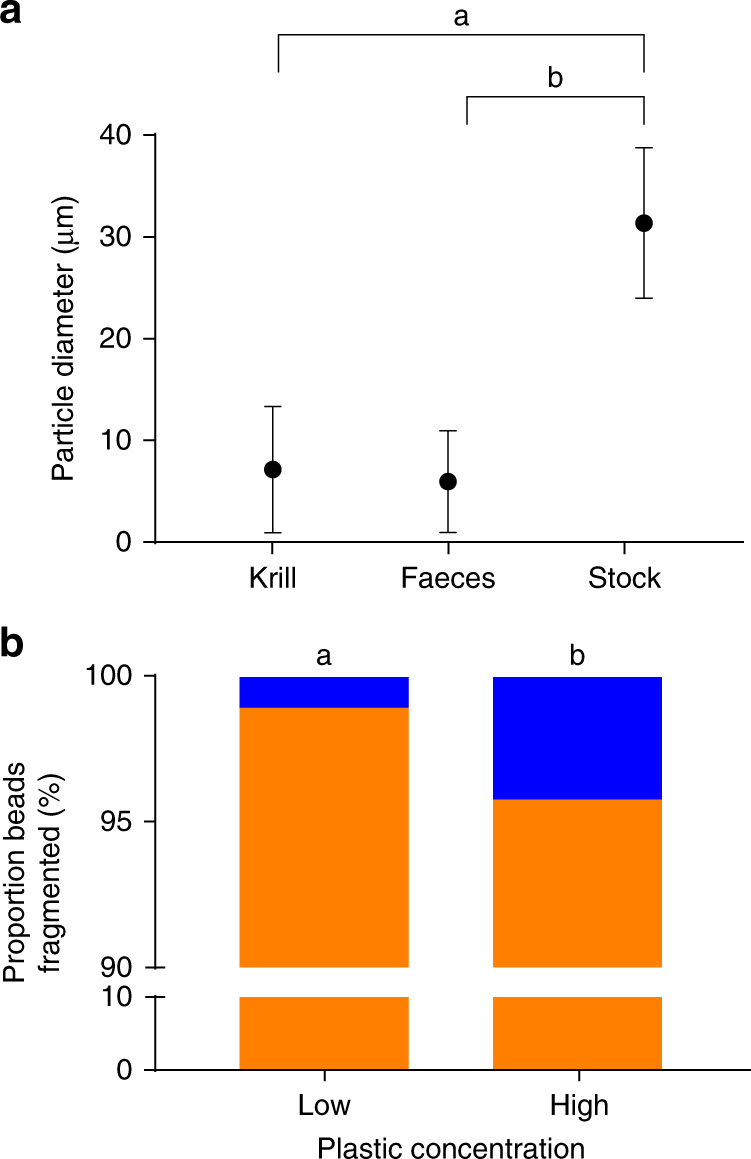
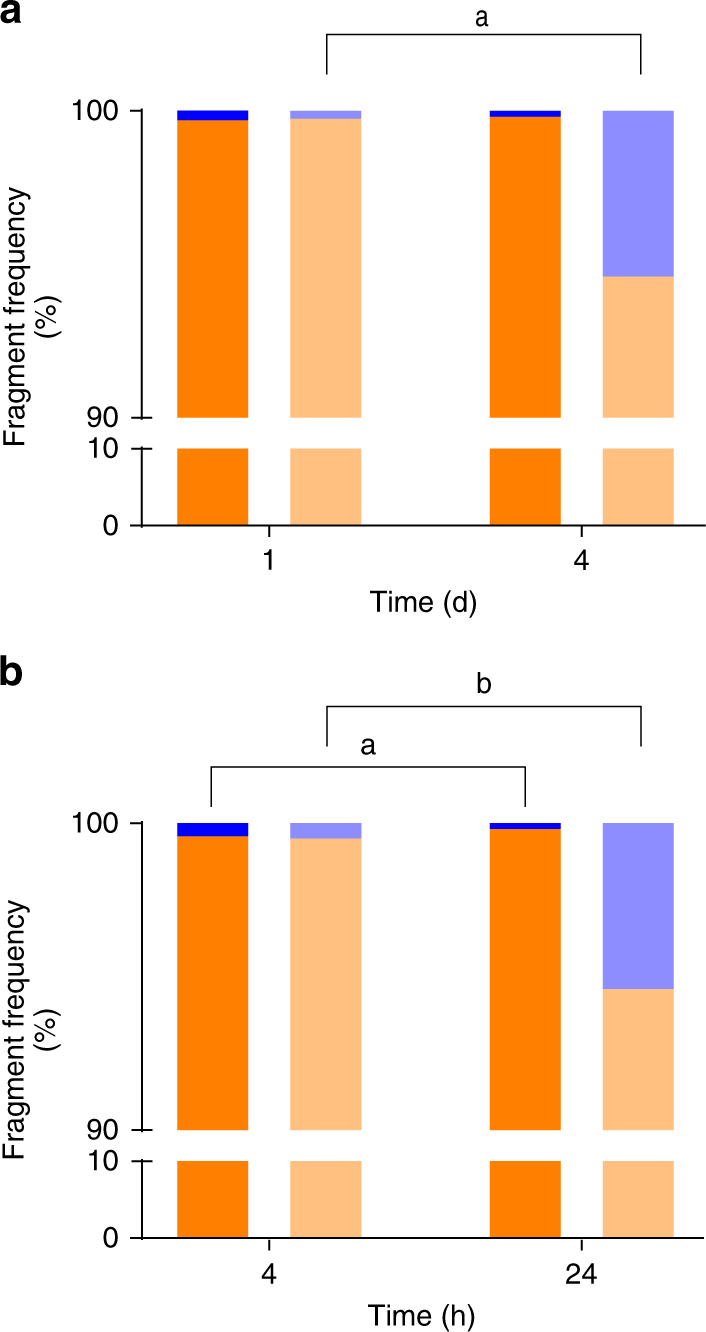
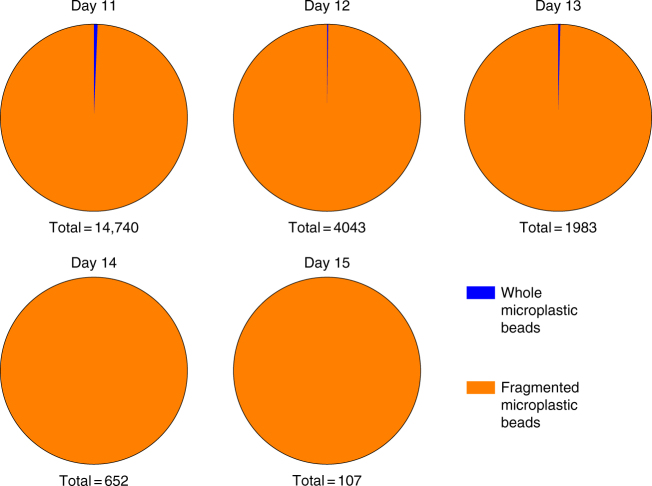
Microplastics (plastics <5 mm diameter) are at the forefront of current environmental pollution research, however, little is known about the degradation of microplastics through ingestion. Here, by exposing Antarctic krill ( Euphausia superba ) to microplastics under acute static renewal conditions, we present evidence of physical size alteration of microplastics ingested by a planktonic crustacean. Ingested microplastics (31.5 µm) are fragmented into pieces less than 1 µm in diameter. Previous feeding studies have shown spherical microplastics either; pass unaffected through an organism and are excreted, or are sufficiently small for translocation to occur. We identify a new pathway; microplastics are fragmented into sizes small enough to cross physical barriers, or are egested as a mixture of triturated particles. These findings suggest that current laboratory-based feeding studies may be oversimplifying interactions between zooplankton and microplastics but also introduces a new role of Antarctic krill, and potentially other species, in the biogeochemical cycling and fate of plastic.
Overview
The claims and statistics of this paper haven’t been checked yet.
Free: it reads the open-access text and checks the first 5 claims that cite a source we can check. Create a free account to check every claim.
Integrity signals
Registry
Cites
Statistics
Figures
Verification
Claims the paper makes
The claims and statistics of this paper haven’t been checked yet.
Free: it reads the open-access text and checks the first 5 claims that cite a source we can check. Create a free account to check every claim.
Claims other papers make about this one
Each is checked against this paper’s own text: does it say what the citing paper says it does?
The source backs part of the claim, not all of it — or backs it for a different population, condition or comparison.
In the citing paper
“PMD fragmentation also leads to the formation of particle sizes <1 mm, i.e. nanoplastics.This has been documented as a result of shear forces in the digestive tracts of krill and perhaps other crustaceans, 96 due to abrasion in a mill 106 or blender, 94 and even as a result of turbulence 95”
From The fate of plastic in the ocean environment – a minireview (2021) · cites this paper as [96]
Experimental — accuracy not yet measuredThe source backs part of the claim, not all of it — or backs it for a different population, condition or comparison.
In the citing paper
“At the nanoscale, optical and chemical methods conventionally used for microplastic analysis are not suitable because of sensitivity issues as well as physical and optical limits.13,40,67,68,96”
From The fate of plastic in the ocean environment – a minireview (2021) · cites this paper as [96]
Experimental — accuracy not yet measuredThe cited source says what the claim attributes to it.
In the citing paper
“Furthermore, the digestive action of marine invertebrates has been demonstrated to facilitate fragmentation of plastic particles to smaller size ranges 37,38 and to provide a pathway for sinking by the excretion of faecal matter aggregates.”
From Weathering plastics as a planetary boundary threat: exposure, fate, and hazards (2021) · cites this paper as [38]
The cited source says what the claim attributes to it.
In the citing paper
“For Antarctic krill, the fragmentation of 31.5 μ m MPs to < 1 μ m mimics this process (Dawson et al., 2018).”
From Trophic transfer of polyester microfibres across a multi-level marine food web. (2025) · cites this paper as Dawson et al., 2018
The check wasn’t confident either way, so it gives no verdict — never disputed.
In the citing paper
“While this is the first report of detailed depuration rates for mysid shrimp, rates calculated here are higher than those reported for similar organisms (i.e., Antarctic krill Euphausia superba , 0.22 h 1 (Dawson et al., 2018)), potentially a consequence of their smaller size.”
From Trophic transfer of polyester microfibres across a multi-level marine food web. (2025) · cites this paper as Dawson et al., 2018
Experimental — accuracy not yet measured
Self-check
Percentages, sums and reported differences re-computed from the paper’s own numbers.
The self-check needs the paper’s full text.
Citations
Cites
Fiji: an open-source platform for biological-image analysis
Schindelin, J., Arganda-Carreras, I., Frise, E., Kaynig, V., Longair, M., Pietzsch, T., Preibisch, S., Rueden, C., Saalfeld, S., Schmid, B., et al. (2012) · Nature Methods · doi:10.1038/nmeth.2019 · Cited by 66,890
Microplastics in the marine environment
Andrady, A. L. (2011) · Marine Pollution Bulletin · doi:10.1016/j.marpolbul.2011.05.030 · Cited by 8,105
Odian, G. (2004) · doi:10.1002/047147875x · Cited by 7,158
Eriksen, M., Lebreton, L. C. M., Carson, H. S., Thiel, M., Moore, C. J., Borerro, J. C., Galgani, F., Ryan, P. G., & Reisser, J. (2014) · PLoS ONE · doi:10.1371/journal.pone.0111913 · Cited by 4,710
(2015) · Springer eBooks · doi:10.1007/978-3-319-16510-3 · Cited by 3,502
Plastic debris in the open ocean
Cózar, A., Echevarría, F., González-Gordillo, J. I., Irigoien, X., Úbeda, B., Hernández-León, S., Palma, Á. T., Navarro, S., García-de-Lomas, J., Ruiz, A., et al. (2014) · Proceedings of the National Academy of Sciences · doi:10.1073/pnas.1314705111 · Cited by 3,133
Microplastic ingestion by zooplankton
Cole, M., Lindeque, P., Fileman, E., Halsband, C., Goodhead, R., Moger, J., & Galloway, T. S. (2013) · Environmental Science & Technology · doi:10.1021/es400663f · Cited by 2,763
The plastic in microplastics: A review
Andrady, A. L. (2017) · Marine Pollution Bulletin · doi:10.1016/j.marpolbul.2017.01.082 · Cited by 2,372
Browne, M. A., Dissanayake, A., Galloway, T. S., Lowe, D. M., & Thompson, R. C. (2008) · Environmental Science & Technology · doi:10.1021/es800249a · Cited by 2,263
Microplastics in bivalves cultured for human consumption
Van Cauwenberghe, L., & Janssen, C. R. (2014) · Environmental Pollution · doi:10.1016/j.envpol.2014.06.010 · Cited by 2,074
Research works printed but not linked: 1
- Rocha-Santos, T. A. P. & Duarte, A. C. Characterization and Analysis of Microplastics Vol. 75 (Elsevier Science, Amsterdam, 2017).
Cited by
Items 901–1,000 of 1,000
Qu, Z., Feng, X., Wang, Y., Wang, R., & Liu, N. (2026) · Toxics · doi:10.3390/toxics14020170 · Cited by 1
“Owing to the small size, hydrophobic surface, and high surface-area-to-volume ratio of MNPs, these particles can translocate across epithelial barriers, accumulate in tissues, and interact with cellular organelles [20,21].”
Bonito, S. D., Rivoira, L., Almeida, C. M. R., Ramos, S., Beldean‐Galea, M. S., Vlase, T., & Bruzzoniti, M. C. (2026) · RENDICONTI LINCEI · doi:10.1007/s12210-025-01401-w · Cited by 1
Toxicokinetics and Toxicodynamics of Nanoplastics in Daphnia magna are Polymer-Type Dependent
Fang, H.-T., Zhang, K.-D., Zhang, Y. W., Wang, X. Z., Pan, W., Tan, Q., Yan, N., Ji, R., & Miao, A. (2026) · Environment & Health · doi:10.1021/envhealth.5c00410 · Cited by 1
Jan, S., Bhat, F. A., Abubakr, A., Malik, M. M., Shah, T. H., Mushtaq, S., Manzoor, A., & Wanjari, R. N. (2026) · Springer eBooks · doi:10.1007/978-3-032-17411-6_3 · Cited by 1
Fan, J., Li, H., Chen, M., Yao, X., Ge, X., Chen, W., Ouyang, M., & Luo, X. (2026) · Air Quality Atmosphere & Health · doi:10.1007/s11869-026-01958-x · Cited by 1
Nicolas, D., Aguilar-Garay, R., Mendoza-Pérez, J. A., Santiago-Valentín, J. D., & Kozak, E. R. (2026) · Microplastics · doi:10.3390/microplastics5010056 · Cited by 1
“…may therefore reflect indirect cellular responses, such as altered regulation of stressor conditionally expressed proteins, rather than direct perturbation through stable polymer confinement, as reported in other marine invertebrate transcriptomic studies lacking clear molecular targets [7,65,66].”
Nisari, A. R., & Renjith, K. R. (2026) · Estuarine Management and Technologies. · doi:10.3897/emt.3.183953 · Cited by 1
“Various abiotic and biotic processes generate significant amounts of small plastic debris and their constituents in the environment at the micro level (<0.5 mm) (Thompson et al. 2004; Dawson et al. 2018; Suzuki et al. 2024).”
InfluentialNakano, A., Houki, S., Yamashita, R., & Kawamura, T. (2026) · Marine Pollution Bulletin · doi:10.1016/j.marpolbul.2026.119619 · Cited by 1
Oliveira, C. F., Navarro, J., Garcia‐Garin, O., Ramírez, F., Montalvo, T., & Martín‐Vélez, V. (2026) · Environmental Research · doi:10.1016/j.envres.2026.124427 · Cited by 1
Ding, L., Wu, M., Li, Q., Li, H., & Mo, C. (2026) · Journal of Contaminant Hydrology · doi:10.1016/j.jconhyd.2026.104969 · Cited by 1
Azhar, H., & Khalid, N. (2026) · Environmental Science and Pollution Research · doi:10.1007/s11356-026-37827-4 · Cited by 2
“Various phenomena including biological degradation, mechanical abrasion, and photochemical degradation degrade the larger particles into smaller particles (Dawson et al. 2018; Wang et al. 2020a, b, c).”
Polystyrene nanoparticles stimulate the growth and microcystin synthesis of Microcystis aeruginosa
Xu, K., Tao, J., Chen, Z., Zheng, X., Zhang, Y., Li, Z., Chen, C., Chunmei, Z., Chen, X., Juneau, P., et al. (2026) · Aquatic Toxicology · doi:10.1016/j.aquatox.2026.107874 · Cited by 1
Ecological roles, climate-driven responses, and critical knowledge gaps of krill in the global ocean
Bernard, K. S., Tarling, G. A., Atkinson, A., Cavan, E. L., Cleary, A. C., Dalpadado, P., Díaz-Astudillo, M., Dorman, J. G., Edwards, M., Färber-Lorda, J., et al. (2026) · ICES Journal of Marine Science · doi:10.1093/icesjms/fsag090 · Cited by 1
Self-citationSun, Z., Wen, X., Zhan, C., & Liu, W. (2026) · Journal of Hazardous Materials Plastics · doi:10.1016/j.hazmp.2026.100067 · Cited by 3
Labi, M. M., Begum, M., Jaman, M. F., Alam, S., Uddin, M. N., Islam, S., Sultana, N. N., & Rahman, M. M. (2026) · Emerging contaminants · doi:10.1016/j.emcon.2026.100708 · Cited by 1
Microplastic removal and textile degradation in a constructed treatment wetland
Johnsen, K., Ståhl, S., Mirabito, A. J., Sarkar, P., Mukhopadhyay, K., & Chambers, L. G. (2026) · Ecological Engineering · doi:10.1016/j.ecoleng.2026.108108 · Cited by 1
Micro- and nano-plastics in the global cryosphere: sources, transport, distribution, and impacts
Lin, W., Wang, F., Zhen-Cai, D. U., & Jing, M. (2026) · Journal of Hazardous Materials Advances · doi:10.1016/j.hazadv.2026.101421 · Cited by 1
Microplastic loading in terrestrial birds from nonlethal sampling
Elias, J. M., Corbin, C. E., Smith, R. J., Rier, S. T., & Graham, J. M. (2026) · The Wilson Journal of Ornithology · doi:10.1080/15594491.2026.2725370 · Cited by 1
Qiu, S., & Diao, P. (2026) · Chemical Engineering Journal · doi:10.1016/j.cej.2026.182576 · Cited by 1
Howell, L. (2019) · Summit (Simon Fraser University) · Cited by 2
Effects of Microplastics in the Cryosphere
Ásmundsdóttir, Á. M., & Scholz, B. (2022) · Springer eBooks · doi:10.1007/978-3-030-39041-9_47 · Cited by 1
Occurrence of ENPs and Nanoplastics in Different Environmental Compartments: An Overview
Lamana, J. J., & Szpunar, J. (2022) · Royal Society of Chemistry eBooks · doi:10.1039/9781839166570-00001 · Cited by 1
A baseline for microplastic occurrence in three New England estuaries
Brown, B. L., Moore, G. E., Mogensen, H., Sims-Harper, T., Gibson, J., Lee, B., Wardinski, C., & Jarrett, G. (2023) · Water Emerging Contaminants & Nanoplastics · doi:10.20517/wecn.2023.54 · Cited by 1
Recycling of Marine Plastic Waste
Moubarak, M., Schlummer, M., Loos, H. M., Ragaert, K., Geem, K. M. V., & Buettner, A. (2025) · Springer handbooks · doi:10.1007/978-3-031-66209-6_36 · Cited by 1
Keshta, A. E., Gamal, A. A., Soryal, M., Hana, P., Albogami, B. Z., & Elshobary, M. E. (2025) · IntechOpen eBooks · doi:10.5772/intechopen.1008992 · Cited by 4
Characterisation of microplastic fibres and their degradation under environmental conditions
Sait, S. T. L. (2019) · NORA - Norwegian Open Research Archives · Cited by 5
Niemcharoen, S. (2022) · Chula Digiverse · doi:10.58837/chula.the.2022.366 · Cited by 1
Impact of Poor Municipal Waste Management on Ruminant LivestockPreprint
Monguno, M. B., Umar, U. L., & Prata, J. C. (2023) · Research Square · doi:10.21203/rs.3.rs-3390808/v1 · Cited by 1
Upscaling sample size for microscopical detection of nanoplasticsPreprint
Hiltunen, A., Huopalainen, J., Häkkilä, S., Damlin, P., & Hänninen, J. (2024) · ChemRxiv · doi:10.26434/chemrxiv-2023-9sbjn-v2 · Cited by 1
Shen, Z., Wang, L., Tang, J., Gao, Z., Tang, C., Huang, D., Mo, S., Tang, J., Xiao, P., Zhao, X., et al. (2024) · Research Square · doi:10.21203/rs.3.rs-3912884/v1 · Cited by 1
Nano-Scale Plastic Pollution in the Marine Species: A Review
Lam, C.-S. (2018) · Journal of Environmental Science and Pollution Research · doi:10.30799/jespr.148.18040401
“Furthermore, Antarctic krill are capable of reduce MP to NP [39,78].”
BackgroundNANOPARTICLE-CELL MEMBRANE INTERACTIONS: ADSORPTION KINETICS AND THE MONOLAYER RESPONSE
Ganji, N. (2019) · Digital Commons - URI (University of Rhode Island) · doi:10.23860/diss-ganji-nasim-2019
How can we cope with the issue of marine debris, including microplastics?
Kitahashi, T., & Nakamura, Y. (2020) · Japanese journal of benthology · doi:10.5179/benthos.74.129
Weiss, L. (2021) · theses.fr (ABES) · doi:10.70675/73e04b2aza8c5z4d78za315z4d3134c5051c · Cited by 3
Nanoplastics Aggregation in Environment: Analytical Methods and Environmental Implications
Duan, W., shuo, W., huanming, L., Yang, Z., lvlin, X., & Zhang, B. (2021) · IOP Conference Series Earth and Environmental Science · doi:10.1088/1755-1315/811/1/012010
“Most scholars definited that the particle size range of nanoplastics is less than 1 micron as nanoplastics [3], there are also some researchers who tend to definited nanoplastics less than 100 nanometers [4].”
BackgroundSu Ortamından Mikroplastik Giderimine Genel Bakış
UYSAL, O. G. (2021) · European Journal of Science and Technology · doi:10.31590/ejosat.1015586
Tissue translocation, multigenerational and population effects of microplastics in Daphnia magna
Schür, C. (2021) · Publication Server of Goethe University Frankfurt am Main (Goethe University Frankfurt) · doi:10.21248/gups.64585 · Cited by 1
The Aggregation and Deposition Behavior of Nanoplastics on Al2o3 In Aquatic EnvironmentsPreprint
Wu, J., Liu, J., Wu, P., Sun, L., Chen, M., Shang, Z., Ye, Q., & Zhu, N. (2022) · SSRN Electronic Journal · doi:10.2139/ssrn.4055968
Symonds, M. E. (2020) · Faculty Opinions – Post-Publication Peer Review of the Biomedical Literature · doi:10.3410/f.738519503.793577737
Ehrlich, H. (2019) · Biologically-inspired systems · doi:10.1007/978-3-319-92483-0_27
Klein, K. (2022) · Publication Server of Goethe University Frankfurt am Main (Goethe University Frankfurt) · doi:10.21248/gups.70776
The Fate of Microplastics Ingested by Gryllodes sigillatus
Ritchie, M. W. (2022) · Carleton University's Institutional Repository (MacOdrum Library, Carleton University) · doi:10.22215/etd/2022-15245
“In Antarctic krill, the most likely location of fragmentation was reported to be physical breakdown by the mandibles, the stomach, and the gastric mill (a grinding organ similar to the proventriculus) (Dawson et al., 2018).”
BackgroundMethodInfluentialโพธาขวัญประชา, จ. (2020) · Chula Digiverse · doi:10.58837/chula.the.2020.1036
Upscaling sample size for microscopical detection of nanoplasticsPreprint
Hiltunen, A., Huopalainen, J., Häkkilä, S., Damlin, P., & Hänninen, J. (2023) · ChemRxiv · doi:10.26434/chemrxiv-2023-9sbjn
Microplastic Sources, Transport, Exposure, Analysis and Removal
Yadav, S., Saquib, S., Bhowmick, S., Gupta, A. R., Setiadi, T., & Singh, P. C. (2023) · Environmental chemistry for a sustainable world · doi:10.1007/978-3-031-36351-1_8
Status of Microplastic Pollution and Development of Recovery Technology
Akiyama, Y., & Moriwaki, H. (2023) · Marine Engineering · doi:10.5988/jime.58.817
Optimizing the method for removing MSNs templates using an ionic liquid ([C4mim]Cl)
Pu, X., Cai, W., Chen, H., Yang, F., & Mu, X. (2024) · Nanotechnology · doi:10.1088/1361-6528/ad1645
“There is evidence that Antarctic krill can digest plastics to form nanoplastics, which then spread further through the food chain [ 49 ] .”
Krill Protein Fortified Extrudates: A Pilot Study
Fleeharty, A. S. (2023) · The Research Repository @ WVU (West Virginia University) · doi:10.33915/etd.12180
Occurrence, sources and potential human health risk of microplastics in seafood species
Wang, J., Wang, H., Mou, M., Zhao, Y., Yan, Z., Li, X., Song, Y., Liu, Z., & Zhao, J. (2024) · Chinese Science Bulletin (Chinese Version) · doi:10.1360/tb-2023-1297
Silva, G. S. (2024) · Digital Library of Theses and Dissertations (Universidade de São Paulo) · doi:10.11606/t.21.2024.tde-01042024-110419
Impact toxicologique de contaminants alimentaires au niveau intestinal et hépatique
Djouina, M. (2023) · theses.fr (ABES) · doi:10.70675/dd1f7d8azb7d6z4067z80c1z992dcbb60da4
Pandemia plástica: Una revision
Marval, B. G., Maza, L. R., & Núñez, J. M. A. (2024) · Ciencia Ambiente y Clima · doi:10.22206/cac.2024.v7i1.3086
Personal Protective Equipment Associated with COVID-19 Pandemic and Microplastic
Rawat, S., & Sharma, M. (2024) · Springer eBooks · doi:10.1007/978-981-97-6461-7_6
Analyzing microplastics using thermal decomposition-gas chromatography/mass spectrometry
Ma, Y., Wang, X., Wang, J., Jiang, X., Liu, Z., & Liu, Z. (2024) · Elsevier eBooks · doi:10.1016/b978-0-443-15779-0.00016-x
Rocha, C. C. D. S. (2024) · Digital Library of Theses and Dissertations (Universidade de São Paulo) · doi:10.11606/t.60.2024.tde-11102024-085357
Bioindicators of microplastics pollution
Polechońska, L., Klink, A., & Polechoński, R. (2024) · Advances in chemical pollution, environmental management and protection · doi:10.1016/bs.apmp.2024.10.002 · Cited by 1
Ehrlich, H. (2024) · Springer eBooks · doi:10.1007/978-3-031-51282-7_27
Moncer, M., Hamza, A., & Trabelsi, L. (2025) · Journal of Sedimentary Environments · doi:10.1007/s43217-025-00223-y · Cited by 1
“Through their natural feeding behaviors, jellyfish inadvertently consume plastic particles and the harmful microorganisms that colonize these plastics (Dawson et al., 2018).”
Elucidating the formation of nanoplastics from plastic nurdles in hydrocarbon-contaminated water
Mobarok, M. H., Xin, Q., Gieleciak, R. M., & Arango, D. (2026) · Environmental Science Nano · doi:10.1039/d5en00591d
Chell, S., Mondal, M., Ghorui, U. K., Dey, U., Chakrabortty, S., Das, K., & Puppala, H. (2025) · Physics and Chemistry of the Earth Parts A/B/C · doi:10.1016/j.pce.2025.104000
Microplastic Contamination in American Lobster (Homarus Americanus) Muscle TissuePreprint
LeBlanc, A. D., Castle, D., S., E. F. M., Ammendolia, J., Kelly, N. E., Maselli, V., & Walker, T. R. (2025) · SSRN Electronic Journal · doi:10.2139/ssrn.5348771
Distribution Pattern of Microplastics in Aquatic Sources
Botle, A., Salgaonkar, S., Thakur, D., Herlekar, M., & Barabde, G. (2025) · Springer eBooks · doi:10.1007/978-981-95-0225-7_4
Microplastics: Environmental Risks in Insect Ecosystem Leading to Adversity on Human Health
Shahna Mohammed, K. P., Mishra, V., Sharma, A., Sharma, T., Gautam, A. S., & Narendravikramsingh (2025) · Springer proceedings in earth and environmental sciences · doi:10.1007/978-3-031-93444-5_83
Microplastics Are Contaminants of Emerging Concern in Aquatic Environments: An Overview
Rath, P., Bhardwaj, L. K., Kumar, A., & Narayan, K. P. (2025) · Springer eBooks · doi:10.1007/978-981-96-8548-6_6 · Cited by 1
Enhancing Safety in Aquaculture with Nanostructures: Hazard Detection and Elimination
Zhang, Q., Wang, X., Wong, L. L., Liu, S., Li, M., & Wang, G. (2025) · Engineering · doi:10.1016/j.eng.2025.07.044
Impacts of Contaminants on Crustaceans in the Field
Ford, A. T., & Knigge, T. (2025) · Oxford University Press eBooks · doi:10.1093/oso/9780197768242.003.0011
Herrera, D. R., Gonçalves, G. R. L., da Costa, R. C., & Narayanaswamy, B. E. (2025) · SSRN Electronic Journal · doi:10.2139/ssrn.5700720
Effects of an Indoor Lifestyle on Selected Serum and Urine Biomarkers in Domestic Cats
Gülersoy, E., Kısmet, E., & Maden, M. (2025) · Advanced Research in Life Sciences · doi:10.2478/arls-2025-0003
Performance and limitations of microplastic removal by conventional processes
Arshad, M., Hussain, I., Daud, M., Hanif, Y., AlMohamadi, H., BANAT, F. A., Hai, A., & Bhutta, M. U. (2025) · Elsevier eBooks · doi:10.1016/b978-0-443-33829-8.00002-6
Cardozo, A. L. P., Mendes, G. A. M., Ribeiro, C. I. R., Ribeiro, S. A., VERGOUWEN, G. L., & Dantas, D. V. (2025) · Anais da Academia Brasileira de Ciências · doi:10.1590/0001-3765202520241391 · Cited by 1
Dai, S., Ye, R., Huang, J., Wang, B., Xie, Z., Ou, X., Yu, N., Huang, C., Hua, Y., Zhou, R., et al. (2022) · Figshare · doi:10.6084/m9.figshare.19607731
Teng, M., Li, Y., Zhao, X., White, J. C., Zhao, L., Sun, J., Zhu, W., & Wu, F. (2024) · Figshare · doi:10.6084/m9.figshare.24636712
Teng, M., Li, Y., Zhao, X., White, J. C., Zhao, L., Sun, J., Zhu, W., & Wu, F. (2023) · Figshare · doi:10.6084/m9.figshare.24636478
Zamo, A. (2023) · Papyrus : Institutional Repository (Université de Montréal) · doi:10.71781/17299
Hao, J. (2023) · eScholarship@McGill (McGill) · doi:10.82308/24678
Plastics in the pelagic – the role of zooplankton
Pedersen, M. M. (2020) · NVA (Nasjonalt vitenarkiv)
A Scientific Perspective on Microplastics in Nature and Society
Koelmans, B., & Henderson, L. (2019) · Strathprints: The University of Strathclyde institutional repository (University of Strathclyde) · Cited by 7
Kneel, S. (2024) · STOR (Dundalk Institute of Technology) · Cited by 1
The Distribution and Fate of Microplastic Pollution in Polar Environments
Jones-Williams, K. (2023) · Open Research Exeter (University of Exeter)
Godoy, V. (2021) · Institutional Repository of the University of Granada (University of Granada) · Cited by 5
Investigating the Occurrence of Microplastics in the Non-Tidal River Thames Ecosystem
Andrews, S. (2024) · Open Research Exeter (University of Exeter)
A Polar Outlook: Nano- and Micro- plastic in sensitive polar marine ecosystems
Rowlands, E. (2023) · Open Research Exeter (University of Exeter)
Young, E. F. (2023) · Skemman · Cited by 1
Human Security in World Affairs: Problems and Opportunities (2nd edition)
(2020) · Arca (British Columbia Electronic Library Network)
Microplastics in aquaculture: the impact on fish welfare and food safety
Matias, R. S. (2025) · Portuguese National Funding Agency for Science, Research and Technology (RCAAP Project by FCT)
Polystyrene Nanoplastics Induce Mitochondrial Dysfunction and Hepatic Fibrosis Via Oxidative StressPreprint
Qiang, S., Huang, Y., Wang, Y., Jiao, L., Luo, Y., Li, S., Gu, H., Wang, Z., Zhang, Y., Wu, X., et al. (2025) · SSRN Electronic Journal · doi:10.2139/ssrn.5391979
Farklı tatlı su omurgasız gruplarının mikroplastik alımının değerlendirilmesi ve karşılaştırılması
Tuncer, G. N. (2023) · Istanbul Technical University Academic Open Archive (Istanbul Technical University)
Neelavannan, K., Sen, I. S., Bakir, A., Nandhini, J., McGoran, A. R., Nel, H., Ramalingam, D., Hoehn, D. P., & Pulikkoden, A. K. (2025) · Scientific Reports · doi:10.1038/s41598-025-33472-y
“Similarly, PE and PP were observed to be the main polymers in surface waters of Nainital Lake and SEM showed that some particles were weathered potentially due to oxidative degradation 85 .”
Xu, H., Yu, Z., & Xie, Y. (2025) · Process Safety and Environmental Protection · doi:10.1016/j.psep.2025.108358
Literature Review: Identification of Microplastics In Tropical Marine Fish
Raharja, F. C., Suryanti, A., Zainuddin, M., & Sari, L. K. (2025) · AQUACOASTMARINE Journal of Aquatic and Fisheries Sciences · doi:10.32734/jafs.v4i2.23531
Wu, Q., Shu, C., Liu, X., Li, Z., Jing, Y., Deng, Y., An, Y., Jiang, X., Qu, M., & Fu, L. (2026) · Nanomaterials · doi:10.3390/nano16040220
Illanes, M., Toro, M. T., Noriega, F., Schoebitz, M., Fustos-Toribio, R., Nelson Zapata, S. M., Moreno, D. A., & López-Belchí, M. D. (2026) · Journal of Agriculture and Food Research · doi:10.1016/j.jafr.2026.102724
Microplastics in the Environment
Dang, F., Huang, Y., & Xing, B. (2026) · ACS in focus · doi:10.1021/acsinfocus.7ea005
Nanoparticle-based sensing of nanoplastics
Deb, M., Rai, D., & Singh, B. (2026) · Comprehensive analytical chemistry · doi:10.1016/bs.coac.2026.02.017
Monràs-Riera, P., Gonzalez-Pineda, M., Llobet, M. D., & Àvila, C. (2026) · Regional Studies in Marine Science · doi:10.1016/j.rsma.2026.104939 · Cited by 2
Lee, X., Wei, S., Zhu, K., Guo, M., Han, H., Peng, D., Lai, C., Wang, J., Wang, X., Qin, Q., et al. (2026) · Journal of Fish Biology · doi:10.1111/jfb.70421
Tallec, K. (2019) · theses.fr (ABES) · doi:10.70675/1290bd49z5e0dz44dbzb65ez1eee9a488d2e · Cited by 8
Blancho, F. (2021) · theses.fr (ABES) · doi:10.70675/8d96eb23z8af8z45fdzb5b4z7a32cfeb6d37 · Cited by 1
Metadata
- Authors
- Dawson, A. L., Kawaguchi, S., King, C. K., Townsend, K. A., King, R., Huston, W. M., & Bengtson Nash, S. M.
- Affiliations
- Griffith University (AU)
- Australian Antarctic Division (AU)
- The University of Queensland (AU)
- University of Technology Sydney (AU)
- Corresponding author
- Dawson, Amanda L.
- ORCID
- Venue
- Nature Communications
- Published
- 2018-03-08
- Volume
- 9
- Issue
- 1
- Pages
- 1001-1001
- ISSN
- 2041-1723 (ISSN-L)
- PMC
- PMC5843626
- OpenAlex
- W2794249619
- Cited by
- 1,023
- References
- 52
- Citations by year
- 2026: 99 · 2025: 133 · 2024: 151 · 2023: 176 · 2022: 165 · 2021: 126 · 2020: 102 · 2019: 54 · 2018: 16
- FWCI
- 27.95
- Type
- journal article
- Language
- en
- Open access
- gold
- doi.org
- Licence
- cc-by
- creativecommons.org/licenses/by/4.0 (tdm)
- creativecommons.org/licenses/by/4.0 (vor)
- Locations
- Nature Communications (publishedVersion, cc-by)
- PubMed Central (publishedVersion, cc-by)
- PubMed (publishedVersion)
- RePEc: Research Papers in Economics (submittedVersion)
- DOAJ (DOAJ: Directory of Open Access Journals) (submittedVersion)
- DOAJ (DOAJ: Directory of Open Access Journals) (submittedVersion, cc-by-sa)
- UTS ePRESS (University of Technology Sydney) (submittedVersion)
- Griffith Research Online (submittedVersion, cc-by)
- Funders
- QIMR Berghofer Medical Research Institute
- Australian Antarctic Division
- Topics
- Physical Sciences › Environmental Science › Pollution › Microplastics and Plastic Pollution
- Physical Sciences › Environmental Science › Health, Toxicology and Mutagenesis › Environmental Toxicology and Ecotoxicology
- Physical Sciences › Environmental Science › Pollution › Pharmaceutical and Antibiotic Environmental Impacts
- Keywords
- microplastics, nanoplastics, Antarctic krill, ingestion, zooplankton, plastic degradation, particle size reduction
- MeSH terms
- Animals, Digestion, Feces, Water Pollutants, Chemical, Polyethylene, Euphausiacea, Nanoparticles
About these checks
Registry, retraction, Cites and statistics results are computed, not judged, with one exception: a printed reference that no index lists is read once by a model before it counts as a citation error. Claims are extracted by a model and kept only when their quote appears verbatim in the text; each cited source is then checked, with a model’s help, for whether it says what the claim relies on. Those verdicts can be wrong — read the claim’s quote and the cited source before relying on one.
Statistics and arithmetic are recomputed, not judged.
Confidence bands are shown only for fields calibrated on our annotated test set. None is calibrated yet, so no band is shown.
What counts as a claim ›How we measure confidence ›How we check this ›
Are you an author, or do you see a problem with this page? Request a review
Data sources
Bibliographic data: Semantic Scholar, OpenAlex, Crossref.
Contains information from the Semantic Scholar Academic Graph Datasets, made available under the ODC Attribution License (ODC-BY 1.0).
Semantic Scholar’s data is described in: Kinney, R., et al. (2023). The Semantic Scholar Open Data Platform. arXiv:2301.10140.
