

Turning microplastics into nanoplastics through digestive fragmentation by Antarctic krill
Open accessThe DOI matches its Crossref record; 52 of the 52 references it cites were found in a registry or an index.
Abstract
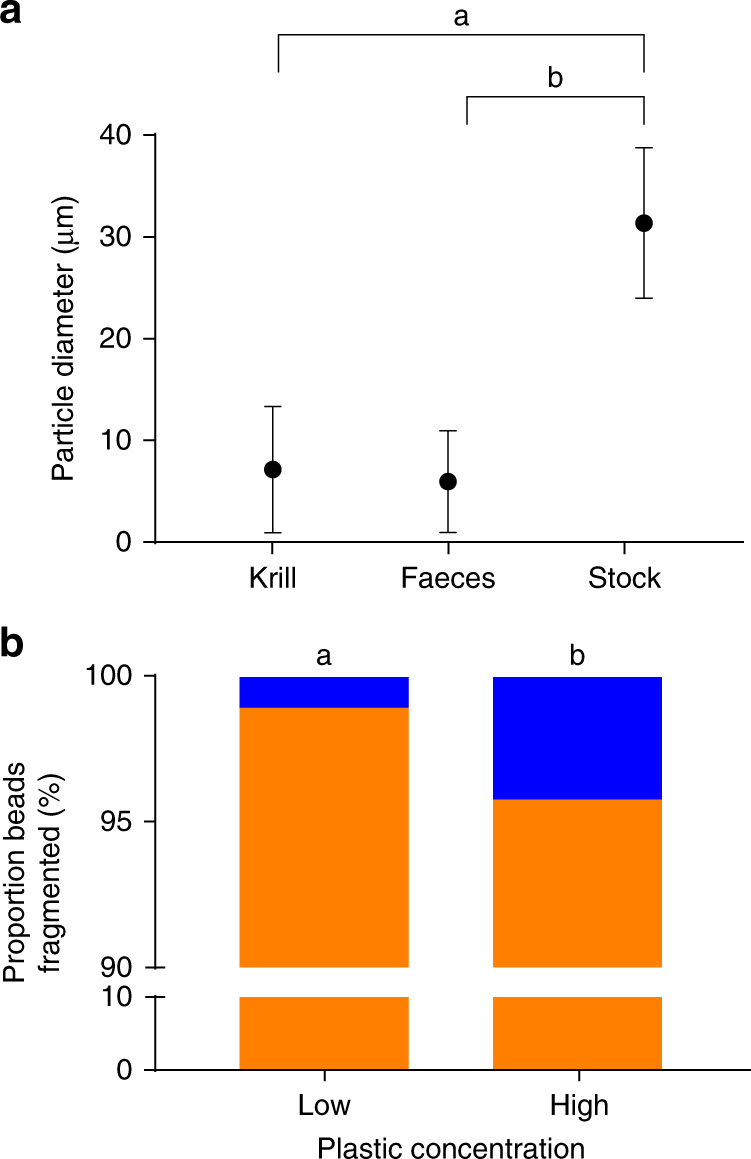
Microplastics (plastics <5 mm diameter) are at the forefront of current environmental pollution research, however, little is known about the degradation of microplastics through ingestion. Here, by exposing Antarctic krill ( Euphausia superba ) to microplastics under acute static renewal conditions, we present evidence of physical size alteration of microplastics ingested by a planktonic crustacean. Ingested microplastics (31.5 µm) are fragmented into pieces less than 1 µm in diameter. Previous feeding studies have shown spherical microplastics either; pass unaffected through an organism and are excreted, or are sufficiently small for translocation to occur. We identify a new pathway; microplastics are fragmented into sizes small enough to cross physical barriers, or are egested as a mixture of triturated particles. These findings suggest that current laboratory-based feeding studies may be oversimplifying interactions between zooplankton and microplastics but also introduces a new role of Antarctic krill, and potentially other species, in the biogeochemical cycling and fate of plastic.
Overview
The claims and statistics of this paper haven’t been checked yet.
Free: it reads the open-access text and checks the first 5 claims that cite a source we can check. Create a free account to check every claim.
Integrity signals
Registry
Cites
Statistics
Figures
Verification
Claims the paper makes
The claims and statistics of this paper haven’t been checked yet.
Free: it reads the open-access text and checks the first 5 claims that cite a source we can check. Create a free account to check every claim.
Claims other papers make about this one
Each is checked against this paper’s own text: does it say what the citing paper says it does?
The source backs part of the claim, not all of it — or backs it for a different population, condition or comparison.
In the citing paper
“PMD fragmentation also leads to the formation of particle sizes <1 mm, i.e. nanoplastics.This has been documented as a result of shear forces in the digestive tracts of krill and perhaps other crustaceans, 96 due to abrasion in a mill 106 or blender, 94 and even as a result of turbulence 95”
From The fate of plastic in the ocean environment – a minireview (2021) · cites this paper as [96]
Experimental — accuracy not yet measuredThe source backs part of the claim, not all of it — or backs it for a different population, condition or comparison.
In the citing paper
“At the nanoscale, optical and chemical methods conventionally used for microplastic analysis are not suitable because of sensitivity issues as well as physical and optical limits.13,40,67,68,96”
From The fate of plastic in the ocean environment – a minireview (2021) · cites this paper as [96]
Experimental — accuracy not yet measuredThe cited source says what the claim attributes to it.
In the citing paper
“Furthermore, the digestive action of marine invertebrates has been demonstrated to facilitate fragmentation of plastic particles to smaller size ranges 37,38 and to provide a pathway for sinking by the excretion of faecal matter aggregates.”
From Weathering plastics as a planetary boundary threat: exposure, fate, and hazards (2021) · cites this paper as [38]
The cited source says what the claim attributes to it.
In the citing paper
“For Antarctic krill, the fragmentation of 31.5 μ m MPs to < 1 μ m mimics this process (Dawson et al., 2018).”
From Trophic transfer of polyester microfibres across a multi-level marine food web. (2025) · cites this paper as Dawson et al., 2018
The check wasn’t confident either way, so it gives no verdict — never disputed.
In the citing paper
“While this is the first report of detailed depuration rates for mysid shrimp, rates calculated here are higher than those reported for similar organisms (i.e., Antarctic krill Euphausia superba , 0.22 h 1 (Dawson et al., 2018)), potentially a consequence of their smaller size.”
From Trophic transfer of polyester microfibres across a multi-level marine food web. (2025) · cites this paper as Dawson et al., 2018
Experimental — accuracy not yet measured
Self-check
Percentages, sums and reported differences re-computed from the paper’s own numbers.
The self-check needs the paper’s full text.
Citations
Cites
Fiji: an open-source platform for biological-image analysis
Schindelin, J., Arganda-Carreras, I., Frise, E., Kaynig, V., Longair, M., Pietzsch, T., Preibisch, S., Rueden, C., Saalfeld, S., Schmid, B., et al. (2012) · Nature Methods · doi:10.1038/nmeth.2019 · Cited by 66,890
Microplastics in the marine environment
Andrady, A. L. (2011) · Marine Pollution Bulletin · doi:10.1016/j.marpolbul.2011.05.030 · Cited by 8,105
Odian, G. (2004) · doi:10.1002/047147875x · Cited by 7,158
Eriksen, M., Lebreton, L. C. M., Carson, H. S., Thiel, M., Moore, C. J., Borerro, J. C., Galgani, F., Ryan, P. G., & Reisser, J. (2014) · PLoS ONE · doi:10.1371/journal.pone.0111913 · Cited by 4,710
(2015) · Springer eBooks · doi:10.1007/978-3-319-16510-3 · Cited by 3,502
Plastic debris in the open ocean
Cózar, A., Echevarría, F., González-Gordillo, J. I., Irigoien, X., Úbeda, B., Hernández-León, S., Palma, Á. T., Navarro, S., García-de-Lomas, J., Ruiz, A., et al. (2014) · Proceedings of the National Academy of Sciences · doi:10.1073/pnas.1314705111 · Cited by 3,133
Microplastic ingestion by zooplankton
Cole, M., Lindeque, P., Fileman, E., Halsband, C., Goodhead, R., Moger, J., & Galloway, T. S. (2013) · Environmental Science & Technology · doi:10.1021/es400663f · Cited by 2,763
The plastic in microplastics: A review
Andrady, A. L. (2017) · Marine Pollution Bulletin · doi:10.1016/j.marpolbul.2017.01.082 · Cited by 2,372
Browne, M. A., Dissanayake, A., Galloway, T. S., Lowe, D. M., & Thompson, R. C. (2008) · Environmental Science & Technology · doi:10.1021/es800249a · Cited by 2,263
Microplastics in bivalves cultured for human consumption
Van Cauwenberghe, L., & Janssen, C. R. (2014) · Environmental Pollution · doi:10.1016/j.envpol.2014.06.010 · Cited by 2,074
Research works printed but not linked: 1
- Rocha-Santos, T. A. P. & Duarte, A. C. Characterization and Analysis of Microplastics Vol. 75 (Elsevier Science, Amsterdam, 2017).
Cited by
Items 101–200 of 1,000
Sources, transport, measurement and impact of nano and microplastics in urban watersheds
Birch, Q. T., Potter, P. M., Pinto, P. X., Dionysiou, D. D., & Al-Abed, S. R. (2020) · Reviews in Environmental Science and Bio/Technology · doi:10.1007/s11157-020-09529-x · Cited by 176
“For example, evidence of digestive formation of ‘‘NPls’’ (using the\ 1 lm definition) from MPs (31.5 lm) by a planktonic crustacean has been reported (Dawson et al. 2018).”
BackgroundInfluentialCombined effects of nanoplastics and copper on the freshwater alga Raphidocelis subcapitata
Bellingeri, A., Bergami, E., Grassi, G., Faleri, C., Redondo-Hasselerharm, P., Koelmans, A. A., & Corsi, I. (2019) · Aquatic Toxicology · doi:10.1016/j.aquatox.2019.02.022 · Cited by 177
The environmental fate of nanoplastics: What we know and what we need to know about aggregation
Pradel, A., Catrouillet, C., & Gigault, J. (2023) · NanoImpact · doi:10.1016/j.impact.2023.100453 · Cited by 167
Xiong, X., Tu, Y., Chen, X., Jiang, X., Shi, H., Wu, C., & Elser, J. J. (2019) · Heliyon · doi:10.1016/j.heliyon.2019.e03063 · Cited by 170
“Previous work has also considered the egestion of microplastics via feces by variety of organisms, which could affect not only the fate and distribution of microplastics but also their toxic effects on organisms (Cole et al., 2013; Dawson et al., 2018; Grigorakis et al., 2017; H€amer et al., 2014; Katija et al., 2017;…”
BackgroundNanoplastic occurrence, transformation and toxicity: a review
Atugoda, T., Piyumali, H., Wijesekara, H., Sonne, C., Lam, S. S., Mahatantila, K., & Vithanage, M. (2023) · Environmental Chemistry Letters · doi:10.1007/s10311-022-01479-w · Cited by 177
“Plastic debris are prone to physical, chemical and biological degradation under exposure to UV radiation, wave current, abrasions, oxidation and microbial inhabitation, resulting in formation of smaller fragments comprising microplastics and nanoplastics posing threats to the environment and surrounding biota (Barnes…”
BackgroundZhang, J., Wang, L., & Kannan, K. (2019) · Environmental Science & Technology · doi:10.1021/acs.est.9b03912 · Cited by 166
Kwak, J. I., & An, Y.-J. (2021) · Journal of Hazardous Materials · doi:10.1016/j.jhazmat.2021.126169 · Cited by 178
Llorca, M., Álvarez-Muñoz, D., Ábalos, M., Rodríguez-Mozaz, S., Santos, L. H. M. L. M., León, V. M., Campillo, J. A., Martínez-Gómez, C., Abad, E., & Farré, M. (2020) · Trends in Environmental Analytical Chemistry · doi:10.1016/j.teac.2020.e00090 · Cited by 161
“Furthermore, evidence of physical size alteration of microplastics by a planktonic crustacean has been recently demonstrated [51].”
BackgroundHasegawa, T., & Nakaoka, M. (2021) · Environmental Pollution · doi:10.1016/j.envpol.2021.116468 · Cited by 176
Rozman, U., & Kalčíková, G. (2022) · Journal of Hazardous Materials · doi:10.1016/j.jhazmat.2021.127529 · Cited by 170
Environmental toxicology of microplastic particles on fish: A review
Banaee, M., Multisanti, C. R., Impellitteri, F., Piccione, G. G., & Faggio, C. (2024) · Comparative Biochemistry and Physiology Part C Toxicology & Pharmacology · doi:10.1016/j.cbpc.2024.110042 · Cited by 224
Microplastic contamination, an emerging threat to the freshwater environment: a systematic review
Bhardwaj, L. K., Rath, P., Yadav, P., & Gupta, U. (2024) · ENVIRONMENTAL SYSTEMS RESEARCH · doi:10.1186/s40068-024-00338-7 · Cited by 194
Natural or Synthetic—How Global Trends in Textile Usage Threaten Freshwater Environments
Stone, C., Windsor, F. M., Munday, M., & Durance, I. (2020) · Science of The Total Environment · doi:10.1016/j.scitotenv.2019.134689 · Cited by 173
Marine microplastics bound dioxin-like chemicals: Model explanation and risk assessment
Chen, Q., Zhang, H., Allgeier, A., Zhou, Q., Ouellet, J. D., Crawford, S. E., Luo, Y., Yang, Y., Shi, H., & Hollert, H. (2019) · Journal of Hazardous Materials · doi:10.1016/j.jhazmat.2018.10.032 · Cited by 161
Kukkola, A., Krause, S., Lynch, I., Sambrook Smith, G. H., & Nel, H. (2021) · Environment International · doi:10.1016/j.envint.2021.106504 · Cited by 165
Kumar, R., Verma, A., Rakib, M. R. J., Gupta, P. K., Sharma, P., Garg, A., Girard, P., & Aminabhavi, T. M. (2023) · Science of The Total Environment · doi:10.1016/j.scitotenv.2022.159097 · Cited by 158
Key mechanisms of micro- and nanoplastic (MNP) toxicity across taxonomic groups
Matthews, S., Mai, L., Jeong, C.-B., Lee, J.-S., Zeng, E. Y., & Xu, E. G. (2021) · Comparative Biochemistry and Physiology Part C: Toxicology & Pharmacology · doi:10.1016/j.cbpc.2021.109056 · Cited by 160
Akindele, E. O., Ehlers, S. M., & Koop, J. H. E. (2019) · Limnologica · doi:10.1016/j.limno.2019.125708 · Cited by 178
Surface functionalization determines behavior of nanoplastic solutions in model aquatic environments
Tallec, K., Blard, O., González-Fernández, C., Brotons, G., Berchel, M., Soudant, P., Huvet, A., & Paul-Pont, I. (2019) · Chemosphere · doi:10.1016/j.chemosphere.2019.03.077 · Cited by 164
Wang, S., Zhang, C., Pan, Z., Sun, D., Zhou, A., Xie, S., Wang, J., & Zou, J. (2020) · Chemosphere · doi:10.1016/j.chemosphere.2020.127345 · Cited by 158
Zheng, X., Liu, X., Zhang, L., Wang, Z., Yuan, Y., Li, J., Li, Y., Huang, H., Cao, X., & Fan, Z. (2022) · Journal of Hazardous Materials · doi:10.1016/j.jhazmat.2021.128094 · Cited by 162
Recent advances on the transport of microplastics/nanoplastics in abiotic and biotic compartments
Huang, D., Chen, H., Shen, M., Tao, J., Chen, S., Yin, L., Zhou, W., Wang, X., Xiao, R., & Li, R. (2022) · Journal of Hazardous Materials · doi:10.1016/j.jhazmat.2022.129515 · Cited by 158
The Mobility of Plastic Nanoparticles in Aqueous and Soil Environments: A Critical Review
Brewer, A., Dror, I., & Berkowitz, B. (2020) · ACS ES&T Water · doi:10.1021/acsestwater.0c00130 · Cited by 166
Duan, Z., Cheng, H., Duan, X., Zhang, H., Wang, Y., Gong, Z., Zhang, H., Sun, H., & Wang, L. (2022) · Journal of Hazardous Materials · doi:10.1016/j.jhazmat.2022.128332 · Cited by 160
Microplastic ingestion in zooplankton from the Fram Strait in the Arctic
Botterell, Z. L. R., Bergmann, M., Hildebrandt, N., Krumpen, T., Steinke, M., Thompson, R. C., & Lindeque, P. K. (2022) · The Science of The Total Environment · doi:10.1016/j.scitotenv.2022.154886 · Cited by 176
“Previous studies have shown there is a close overlap to what is found ingested by the zooplankton and that present in the surrounding water (Desforges et al., 2015; Steer et al., 2017).”
BackgroundInfluentialPedersen, A. F., Meyer, D. N., Petriv, A.-M. V., Soto, A. L., Shields, J. N., Akemann, C., Baker, B. B., Tsou, W.-L., Zhang, Y., & Baker, T. R. (2020) · Environmental Pollution · doi:10.1016/j.envpol.2020.115090 · Cited by 162
The micro-, submicron-, and nanoplastic hunt: A review of detection methods for plastic particles
Caldwell, J., Taladriz‐Blanco, P., Lehner, R., Lubskyy, A., Ortuso, R. D., Rothen‐Rutishauser, B., & Petri‐Fink, A. (2022) · Chemosphere · doi:10.1016/j.chemosphere.2022.133514 · Cited by 167
Zhang, Q., He, Y., Cheng, R., Li, Q., Qian, Z., & Lin, X. (2022) · Environmental Science and Pollution Research · doi:10.1007/s11356-022-19745-3 · Cited by 166
“It has been documented that ingested microplastics in Antarctic krill turned into nanoplastics through digestive fragmentation (Dawson et al. 2018); however, whether the micro(nano)plastics will be destroyed in the process of digestion, how much is the absorption and utilization rate in the process of absorption, and…”
BackgroundTian, L., Chen, Q., Jiang, W., Wang, L., Xie, H., Kalogerakis, N., Ma, Y., & Ji, R. (2019) · Environmental Science: Nano · doi:10.1039/c9en00662a · Cited by 145
Selection of antibiotic resistance genes on biodegradable and non-biodegradable microplastics
Sun, Y., Cao, N., Duan, C., Wang, Q., Ding, C., & Wang, J. (2021) · Journal of Hazardous Materials · doi:10.1016/j.jhazmat.2020.124979 · Cited by 158
Separation and identification of nanoplastics in tap water
Li, Y., Wang, Z., & Guan, B. (2022) · Environmental Research · doi:10.1016/j.envres.2021.112134 · Cited by 156
Benthic Crustacean Digestion Can Modulate the Environmental Fate of Microplastics in the Deep Sea
Cau, A., Avio, C. G., Dessì, C., Moccia, D., Pusceddu, A., Regoli, F., Cannas, R., & Follesa, M. C. (2020) · Environmental Science & Technology · doi:10.1021/acs.est.9b07705 · Cited by 155
Soft and Hard Interactions between Polystyrene Nanoplastics and Human Serum Albumin Protein Corona
Kihara, S., van der Heijden, N. J., Seal, C., Mata, J. P., Whitten, A. E., Köper, I., & McGillivray, D. J. (2019) · Bioconjugate Chemistry · doi:10.1021/acs.bioconjchem.9b00015 · Cited by 158
Distinct lipid membrane interaction and uptake of differentially charged nanoplastics in bacteria
Dai, S., Ye, R., Huang, J., Wang, B., Xie, Z., Ou, X., Yu, N., Huang, C., Hua, Y., Zhou, R., et al. (2022) · Journal of Nanobiotechnology · doi:10.1186/s12951-022-01321-z · Cited by 154
“In the North Atlantic, microplastics are also digested into nanoplastics by marine organisms [15, 16].”
BackgroundTaking control of microplastics data: A comparison of control and blank data correction methods
Dawson, A. L., Santana, M. F. M., Nelis, J. L. D., & Motti, C. A. (2023) · Journal of Hazardous Materials · doi:10.1016/j.jhazmat.2022.130218 · Cited by 131
Self-citationNanoplastics can change the secondary structure of proteins
Hollóczki, O., & Gehrke, S. (2019) · Scientific Reports · doi:10.1038/s41598-019-52495-w · Cited by 149
Prinz, N., & Korez, Š. (2020) · YOUMARES 9 - The Oceans: Our Research, Our Future · doi:10.1007/978-3-030-20389-4_6 · Cited by 113
Hsieh, S., Wu, Y., Xu, R.-Q., Chen, Y., Chen, C., Singhania, R. R., & Dong, C. (2021) · Environmental Pollution · doi:10.1016/j.envpol.2021.117800 · Cited by 154
Johansen, M. P., Cresswell, T., Davis, J., Howard, D. L., Howell, N. R., & Prentice, E. (2019) · Water Research · doi:10.1016/j.watres.2019.04.029 · Cited by 148
Recent Advances in Plant Nanoscience
Zhang, Q., Ying, Y. B., & Ping, J. F. (2021) · Advanced Science · doi:10.1002/advs.202103414 · Cited by 159
Solving the plastic problem: from cradle to grave, to reincarnation
Rhodes, C. J. (2019) · Science Progress · doi:10.1177/0036850419867204 · Cited by 146
Feng, L.-J., Li, J.-W., Xu, E. G., Sun, X.-D., Zhu, F.-P., Ding, Z., Tian, H., Dong, S.-S., Xia, P.-F., & Yuan, X.-Z. (2019) · Environmental Science: Nano · doi:10.1039/c9en00807a · Cited by 139
Zhang, W., Dong, Z., Zhu, L., Hou, Y., & Qiu, Y. (2020) · ACS Nano · doi:10.1021/acsnano.0c02878 · Cited by 151
The Marine Plastic Litter Issue: A Social-Economic Analysis
Abalansa, S., Mahrad, B. E., Vondolia, G. K., Icely, J. D., & Newton, A. (2020) · Sustainability · doi:10.3390/su12208677 · Cited by 162
Can Nanoplastics Alter Cell Membranes?
Hollóczki, O., & Gehrke, S. (2020) · ChemPhysChem · doi:10.1002/cphc.201900481 · Cited by 144
Luo, H., Tu, C., He, D., Zhang, A., Sun, J., Li, J., Xu, J., & Pan, X. (2023) · Science of The Total Environment · doi:10.1016/j.scitotenv.2023.165615 · Cited by 135
Field measurements reveal exposure risk to microplastic ingestion by filter-feeding megafauna
Kahane‐Rapport, S. R., Czapanskiy, M. F., Fahlbusch, J. A., Friedlaender, A. S., Calambokidis, J., Hazen, E. L., Goldbogen, J. A., & Savoca, M. S. (2022) · Nature Communications · doi:10.1038/s41467-022-33334-5 · Cited by 155
Maharana, D., Saha, M., Jaffer, Y. D., Rathore, C., Sreepada, R. A., Xu, X., Koongolla, J. B., & Li, H. (2019) · Chemosphere · doi:10.1016/j.chemosphere.2019.125708 · Cited by 149
Lin, Y., Huang, X. F., Liu, Q. S., Lin, Z., & Jiang, G. (2019) · Talanta · doi:10.1016/j.talanta.2019.120478 · Cited by 143
Wang, S., Liu, M., Wang, J., Jingshan, H., & Wang, J. (2020) · Marine Pollution Bulletin · doi:10.1016/j.marpolbul.2020.111403 · Cited by 144
Organic additive release from plastic to seawater is lower under deep-sea conditions
Fauvelle, V., Garel, M., Tamburini, C., Nerini, D., Castro-Jiménez, J., Schmidt, N., Paluselli, A., Fahs, A., Papillon, L., Booth, A. M., et al. (2021) · Nature Communications · doi:10.1038/s41467-021-24738-w · Cited by 134
Role of surface functionalities of nanoplastics on their transport in seawater-saturated sea sand
Dong, Z., Zhu, L., Zhang, W., Huang, R., Lv, X., Jing, X., Yang, Z., Wang, J., & Qiu, Y. (2019) · Environmental Pollution · doi:10.1016/j.envpol.2019.113177 · Cited by 142
Peng, B.-Y., Sun, Y. X., Wu, Z., Chen, J., Shen, Z., Zhou, X., Wu, W., & Zhang, Y. (2022) · Journal of Cleaner Production · doi:10.1016/j.jclepro.2022.132987 · Cited by 145
Polystyrene microbeads modulate the energy metabolism of the marine diatom Chaetoceros neogracile
Seoane, M., González-Fernández, C., Soudant, P., Huvet, A., Esperanza, M., Cid, Á., & Paul-Pont, I. (2019) · Environmental Pollution · doi:10.1016/j.envpol.2019.04.142 · Cited by 135
Rivers‐Auty, J., Bond, A. L., Grant, M. L., & Lavers, J. L. (2022) · Journal of Hazardous Materials · doi:10.1016/j.jhazmat.2022.130117 · Cited by 138
Li, W., Wu, C., Xiong, Z., Liang, C., Li, Z., Liu, B., Cao, Q., Wang, J., Tang, J., & Li, D. (2022) · Science Advances · doi:10.1126/sciadv.ade1731 · Cited by 136
Microplastics and other anthropogenic particles in Antarctica: Using penguins as biological samplers
Fragão, J., Bessa, F., Otero, V., Barbosa, A., Sobral, P., Waluda, C. M., Guímaro, H. R., & Xavier, J. C. (2021) · The Science of The Total Environment · doi:10.1016/j.scitotenv.2021.147698 · Cited by 141
Brandts, I., Cánovas, M., Tvarijonaviciute, A., Llorca, M., Vega-Herrera, A., Farré, M., Pastor, J., Roher, N., & Teles, M. (2022) · Environmental Research · doi:10.1016/j.envres.2022.113433 · Cited by 140
Yang, X., Wen, P.-P., Yang, Y.-F., Jia, P., Li, W., & Pei, D. (2023) · Frontiers in Microbiology · doi:10.3389/fmicb.2022.1001750 · Cited by 145
“For example, Antarctic krill can turn MPs into NPs through digestive fragmentation (Dawson et al., 2018), and it is a bad sign because NPs are more problematic than MPs based on toxicology.”
BackgroundNanoplastics and ultrafine microplastic in the dutch Wadden Sea - the hidden plastics debris?
Materić, D., Holzinger, R., & Niemann, H. (2022) · Science of The Total Environment · doi:10.1016/j.scitotenv.2022.157371 · Cited by 134
Key knowledge gaps for One Health approach to mitigate nanoplastic risks
Dang, F., Wang, Q., Huang, Y., Wang, Y., & Xing, B. (2022) · Eco-Environment & Health · doi:10.1016/j.eehl.2022.02.001 · Cited by 139
“Since it is common that microplastics are degraded into nano-plastics after ingestion in the gut of vertebrates [49,50], it is not surprising that the number concentrations of nanoplastics will be several orders of magnitudehigherthanthatofmicroplastics inseafood.”
BackgroundProtein corona-mediated transport of nanoplastics in seawater-saturated porous media
Dong, Z., Hou, Y., Han, W., Liu, M., Wang, J., & Qiu, Y. (2020) · Water Research · doi:10.1016/j.watres.2020.115978 · Cited by 133
Atmospheric Micro and Nanoplastics: An Enormous Microscopic Problem
Bianco, A., & Passananti, M. (2020) · Sustainability · doi:10.3390/su12187327 · Cited by 136
Microplastic Polystyrene Ingestion Promotes the Susceptibility of Honeybee to Viral Infection
Deng, Y., Jiang, X., Zhao, H., Yang, S., Gao, J. Q., Wu, Y., Diao, Q., & Hou, C. (2021) · Environmental Science & Technology · doi:10.1021/acs.est.1c01619 · Cited by 139
Distribution and translocation of micro- and nanoplastics in fish
Ma, C., Chen, Q., Li, J., Li, B., Liang, W., Su, L., & Shi, H. (2021) · Critical Reviews in Toxicology · doi:10.1080/10408444.2021.2024495 · Cited by 134
“…superba) and freshwater amphipod (Gammarus duebeni) can fragment the ingested PE spherical MPs (10–45mm) into various shaped pieces (small irregular, flat or cracked and semi-spherical) and sized small MPs, including NPs (558 nm–1 mm in length) (Dawson et al. 2018; Mateos-C ardenas et al. 2020).”
BackgroundMicroplastics in food: scoping review on health effects, occurrence, and human exposure
Udovički, B., Andjelković, M., Veličković, T. Ć., & Rajković, A. (2022) · International Journal of Food Contamination · doi:10.1186/s40550-022-00093-6 · Cited by 138
Shen, M., Song, B., Zhou, C., Hu, T., Zeng, G., & Zhang, Y. (2022) · The Science of The Total Environment · doi:10.1016/j.scitotenv.2022.156723 · Cited by 130
Dong, Z., Zhang, W., Qiu, Y., Yang, Z., Wang, J., & Zhang, Y. (2018) · Water Research · doi:10.1016/j.watres.2018.10.071 · Cited by 129
Zhu, Y., Che, R., Zong, X., Wang, J., Li, J., Zhang, C., & Wang, F. (2024) · Journal of Environmental Management · doi:10.1016/j.jenvman.2024.120039 · Cited by 135
An overview of the effects of nanoplastics on marine organisms
Zaki, M. R. M., & Aris, A. Z. (2022) · Science of The Total Environment · doi:10.1016/j.scitotenv.2022.154757 · Cited by 119
Brandon, J. A., Freibott, A. L., & Sala, L. M. (2019) · Limnology and Oceanography Letters · doi:10.1002/lol2.10127 · Cited by 138
“Once plastics are ingested by zooplankton, they have the potential to bioaccumulate in the food web into larger organisms (Dawson et al. 2018), along with adsorbed persistent organic pollutants and harmful chemical additives (Ogata et al. 2009; Jang et al. 2016), with unknown physiological…”
BackgroundSun, X., Chen, B., Xia, B., Li, Q., Zhu, L., Zhao, X., Gao, Y., & Qu, K. (2020) · Environmental Pollution · doi:10.1016/j.envpol.2020.114336 · Cited by 134
Wu, P., Tang, Y., Cao, G., Li, J., Wang, S., Chang, X., Dang, M., Jin, H., Zheng, C., & Cai, Z. (2020) · Analytical Chemistry · doi:10.1021/acs.analchem.0c01928 · Cited by 122
Distinct accumulation of nanoplastics in human intestinal organoids
Hou, Z., Meng, R., Chen, G., Lai, T., Qing, R., Hao, S., Deng, J., & Wang, B. (2022) · The Science of The Total Environment · doi:10.1016/j.scitotenv.2022.155811 · Cited by 128
Microplastics in Wastewater Treatment Plants: Characteristics, Occurrence and Removal Technologies
Bodzek, M., Pohl, A., & Rosik‐Dulewska, C. (2024) · Water · doi:10.3390/w16243574 · Cited by 136
“Along with microorganisms, other organisms also contribute to the degradation of MPs found in aquatic environments, namely the red clam (Tridacnamaxima) [103], Antarctic krill (Euphausia superba) [104], and some corals and microalgae [105,106].”
Chae, Y., Kim, D., Choi, M.-J., Cho, Y., & An, Y.-J. (2019) · Environment International · doi:10.1016/j.envint.2019.05.042 · Cited by 122
Plastic litter in the European Arctic: What do we know?
Halsband, C., & Herzke, D. (2019) · Emerging contaminants · doi:10.1016/j.emcon.2019.11.001 · Cited by 136
Li, D., Liu, K., Li, C., Peng, G., Andrady, A. L., Wu, T., Zhang, Z., Wang, X., Song, Z., Zong, C., et al. (2020) · Environmental Science & Technology · doi:10.1021/acs.est.0c02374 · Cited by 129
Rios-Fuster, B., Arechavala‐Lopez, P., García-Marcos, K., Alomar, C., Compa, M., Álvarez, E., Julià, M. M., Solomando, A., Sureda, A., & Deudero, S. (2021) · Aquatic Toxicology · doi:10.1016/j.aquatox.2020.105737 · Cited by 128
Yang, W., Gao, P., Ma, G., Huang, J., Wu, Y., Wan, L., Ding, H., & Zhang, W. (2021) · Environmental Pollution · doi:10.1016/j.envpol.2021.117413 · Cited by 123
Plastic occurrence, sources, and impacts in Antarctic environment and biota
Caruso, G., Bergami, E., Singh, N., & Corsi, I. (2022) · Water Biology and Security · doi:10.1016/j.watbs.2022.100034 · Cited by 127
“Furthermore, the biological fragmentation of polystyrene (PS) microspheres to nanoplastics ( 1 μ m) (Gigault et al., 2018) by Antarctic krill (Dawson et al., 2018a) and the ingestion of micro-sized PS fragments by an Ant-arctic collembolan feeding on dumped PS foam from a coastal marine area,…”
An assessment of microplastic inputs into the aquatic environment from wastewater streams
Uddin, S., Fowler, S. W., & Behbehani, M. (2020) · Marine Pollution Bulletin · doi:10.1016/j.marpolbul.2020.111538 · Cited by 120
Wang, D., Su, L., Ruan, H. D., Chen, J., Lu, J., Lee, C.-H., & Jiang, S. Y. (2021) · Marine Pollution Bulletin · doi:10.1016/j.marpolbul.2021.112000 · Cited by 124
Upcycling Plastic Wastes into Value‐Added Products by Heterogeneous Catalysis
Tan, T., Wang, W., Zhang, K., Zhan, Z., Deng, W., Zhang, Q., & Wang, Y. (2022) · ChemSusChem · doi:10.1002/cssc.202200522 · Cited by 127
Could Microplastics Be a Driver for Early Onset Colorectal Cancer?
Li, S., Keenan, J. I., Shaw, I. C., & Frizelle, F. (2023) · Cancers · doi:10.3390/cancers15133323 · Cited by 124
Li, X., He, E., Xia, B., van Gestel, C. A. M., Peijnenburg, W. J. G. M., Cao, X., & Qiu, H. (2020) · Water Research · doi:10.1016/j.watres.2020.116324 · Cited by 117
Mohana, A. A., Farhad, S. M., Haque, N., & Pramanik, B. K. (2021) · Chemosphere · doi:10.1016/j.chemosphere.2021.131430 · Cited by 119
Jiang, H., Bu, J., Bian, K., Su, J., Wang, Z., Sun, H., Wang, H., Zhang, Y., & Wang, C. (2023) · Water Research · doi:10.1016/j.watres.2023.119794 · Cited by 113
Nanoplastics and Microplastics May Be Damaging Our Livers
Yin, J., Ju, Y., Qian, H., Wang, J., Miao, X., Zhu, Y., Zhou, L., & Ye, L. (2022) · Toxics · doi:10.3390/toxics10100586 · Cited by 100
“Among them, MPs with a particle size of less than 1000 nm [4] or 100 nm [5] are called nanoplastics (NPs).”
BackgroundBergami, E., Manno, C., Cappello, S., Vannuccini, M. L., & Corsi, I. (2020) · Environment International · doi:10.1016/j.envint.2020.105999 · Cited by 113
Microplastic environmental behavior and health risk assessment: a review
Lei, J., Ma, Q., Ding, X., Pang, Y., Liu, Q., Wu, J., Zhang, H., & Zhang, T. (2024) · Environmental Chemistry Letters · doi:10.1007/s10311-024-01771-x · Cited by 119
Yuan, W., Zhou, Y., Liu, X., & Wang, J. (2019) · Environmental Science & Technology · doi:10.1021/acs.est.9b02882 · Cited by 112
Molecular mechanisms of microplastics degradation: A review
Golmohammadi, M., Musavi, S. F., Habibi, M., Maleki, R., Golgoli, M., Zargar, M., Dumée, L. F., Baroutian, S., & Razmjou, A. (2022) · Separation and Purification Technology · doi:10.1016/j.seppur.2022.122906 · Cited by 116
Ašmonaitė, G., Sundh, H., Asker, N., & Carney Almroth, B. (2018) · Environmental Science & Technology · doi:10.1021/acs.est.8b04848 · Cited by 103
Shen, M., Liu, S., Hu, T., Zheng, K., Wang, Y., & Long, H. (2023) · Journal of Environmental Management · doi:10.1016/j.jenvman.2023.117529 · Cited by 110
Wang, S., Wang, Y., Liang, Y., Cao, W., Sun, C., Ju, P., & Zheng, L. (2020) · Ecotoxicology and Environmental Safety · doi:10.1016/j.ecoenv.2020.111000 · Cited by 111
Plastic–Rock Complexes as Hotspots for Microplastic Generation
Wang, L., Bank, M. S., Rinklebe, J., & Hou, D. (2023) · Environmental Science & Technology · doi:10.1021/acs.est.3c00662 · Cited by 104
Micro(nano)plastics in the Human Body: Sources, Occurrences, Fates, and Health Risks
Li, P., & Liu, J. (2024) · Environmental Science & Technology · doi:10.1021/acs.est.3c08902 · Cited by 166
Yu, W., Wang, M., Wang, Q. L., Wang, T., Zhou, Z., Mehling, M., Guo, T., Zou, H., Xiao, X., He, Y., et al. (2023) · Advanced Materials · doi:10.1002/adma.202301531 · Cited by 121
Bianco, A., Sordello, F., Ehn, M., Vione, D. V., & Passananti, M. (2020) · The Science of The Total Environment · doi:10.1016/j.scitotenv.2020.140413 · Cited by 113
“Erosion of MPs and NPs is the result of mechanical abrasion, oxidation, UV radiation or microbiological activity (da Costa et al., 2016; Dawson et al., 2018; Lambert et al., 2013; Mattsson et al., 2018).”
Metadata
- Authors
- Dawson, A. L., Kawaguchi, S., King, C. K., Townsend, K. A., King, R., Huston, W. M., & Bengtson Nash, S. M.
- Affiliations
- Griffith University (AU)
- Australian Antarctic Division (AU)
- The University of Queensland (AU)
- University of Technology Sydney (AU)
- Corresponding author
- Dawson, Amanda L.
- ORCID
- Venue
- Nature Communications
- Published
- 2018-03-08
- Volume
- 9
- Issue
- 1
- Pages
- 1001-1001
- ISSN
- 2041-1723 (ISSN-L)
- PMC
- PMC5843626
- OpenAlex
- W2794249619
- Cited by
- 1,023
- References
- 52
- Citations by year
- 2026: 99 · 2025: 133 · 2024: 151 · 2023: 176 · 2022: 165 · 2021: 126 · 2020: 102 · 2019: 54 · 2018: 16
- FWCI
- 27.95
- Type
- journal article
- Language
- en
- Open access
- gold
- doi.org
- Licence
- cc-by
- creativecommons.org/licenses/by/4.0 (tdm)
- creativecommons.org/licenses/by/4.0 (vor)
- Locations
- Nature Communications (publishedVersion, cc-by)
- PubMed Central (publishedVersion, cc-by)
- PubMed (publishedVersion)
- RePEc: Research Papers in Economics (submittedVersion)
- DOAJ (DOAJ: Directory of Open Access Journals) (submittedVersion)
- DOAJ (DOAJ: Directory of Open Access Journals) (submittedVersion, cc-by-sa)
- UTS ePRESS (University of Technology Sydney) (submittedVersion)
- Griffith Research Online (submittedVersion, cc-by)
- Funders
- QIMR Berghofer Medical Research Institute
- Australian Antarctic Division
- Topics
- Physical Sciences › Environmental Science › Pollution › Microplastics and Plastic Pollution
- Physical Sciences › Environmental Science › Health, Toxicology and Mutagenesis › Environmental Toxicology and Ecotoxicology
- Physical Sciences › Environmental Science › Pollution › Pharmaceutical and Antibiotic Environmental Impacts
- Keywords
- microplastics, nanoplastics, Antarctic krill, ingestion, zooplankton, plastic degradation, particle size reduction
- MeSH terms
- Animals, Digestion, Feces, Water Pollutants, Chemical, Polyethylene, Euphausiacea, Nanoparticles
About these checks
Registry, retraction, Cites and statistics results are computed, not judged, with one exception: a printed reference that no index lists is read once by a model before it counts as a citation error. Claims are extracted by a model and kept only when their quote appears verbatim in the text; each cited source is then checked, with a model’s help, for whether it says what the claim relies on. Those verdicts can be wrong — read the claim’s quote and the cited source before relying on one.
Statistics and arithmetic are recomputed, not judged.
Confidence bands are shown only for fields calibrated on our annotated test set. None is calibrated yet, so no band is shown.
What counts as a claim ›How we measure confidence ›How we check this ›
Are you an author, or do you see a problem with this page? Request a review
Data sources
Bibliographic data: Semantic Scholar, OpenAlex, Crossref.
Contains information from the Semantic Scholar Academic Graph Datasets, made available under the ODC Attribution License (ODC-BY 1.0).
Semantic Scholar’s data is described in: Kinney, R., et al. (2023). The Semantic Scholar Open Data Platform. arXiv:2301.10140.
