

Turning microplastics into nanoplastics through digestive fragmentation by Antarctic krill
Open accessThe DOI matches its Crossref record; 52 of the 52 references it cites were found in a registry or an index.
Abstract
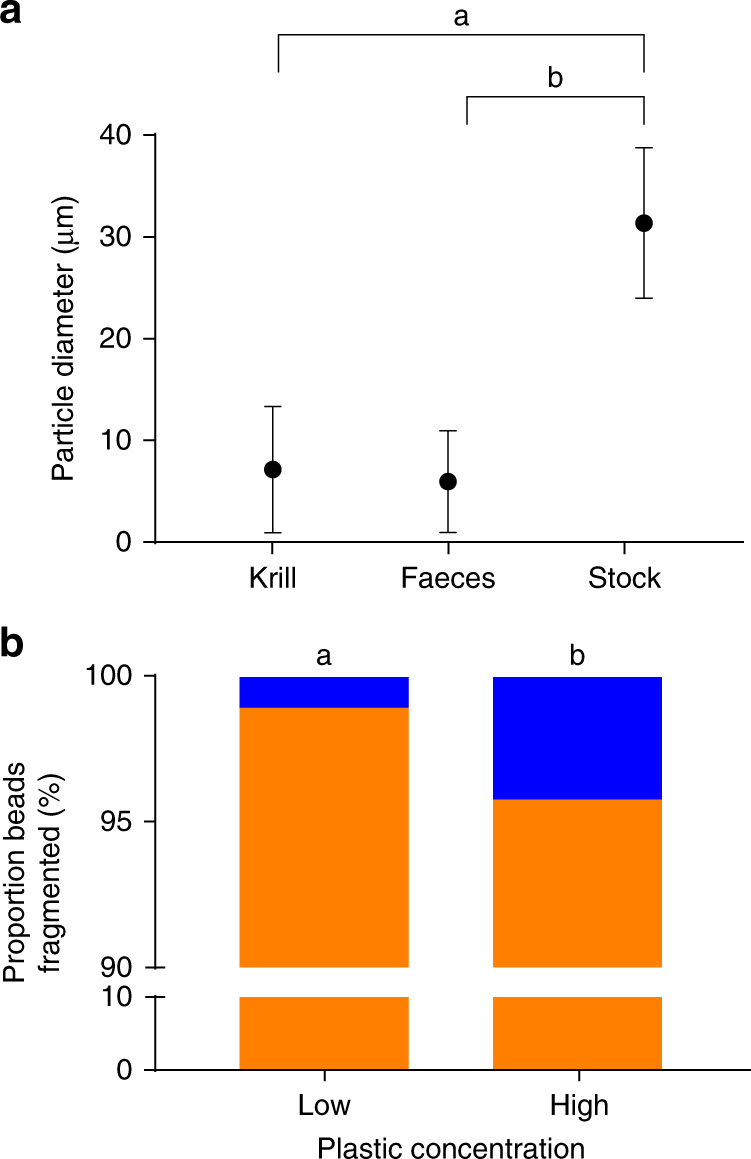
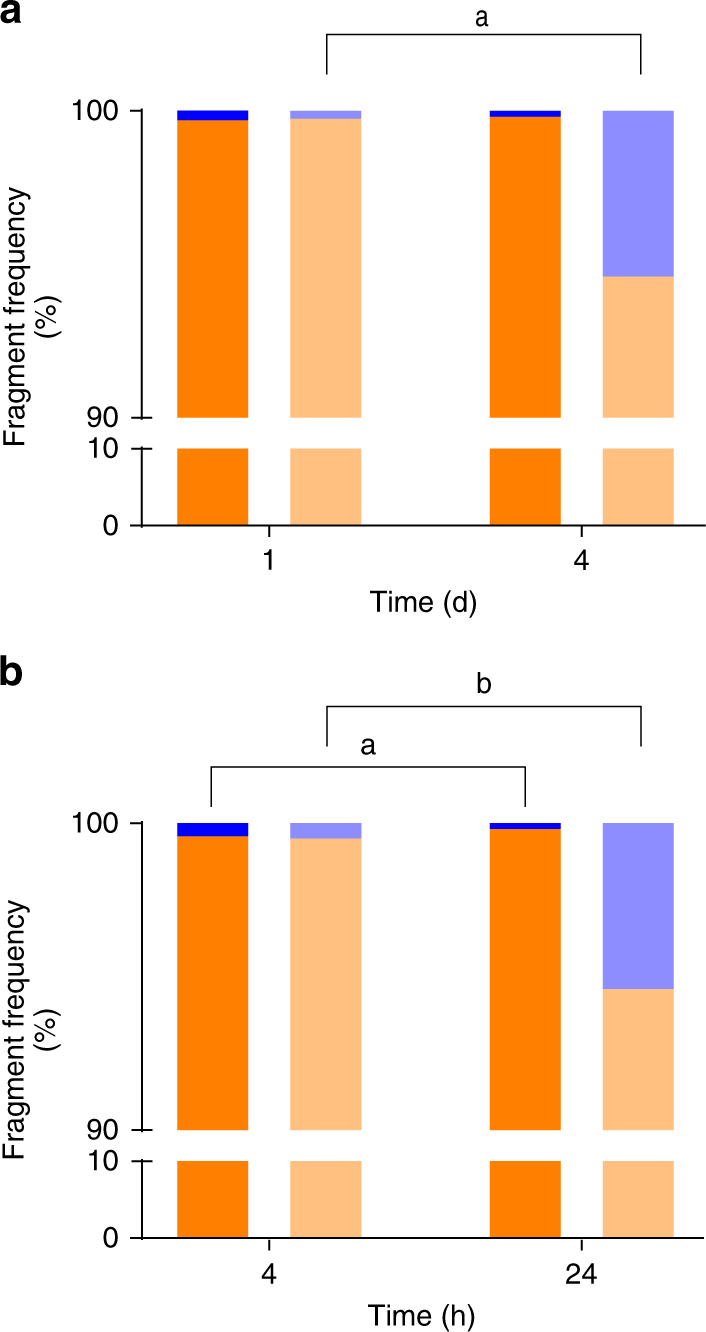
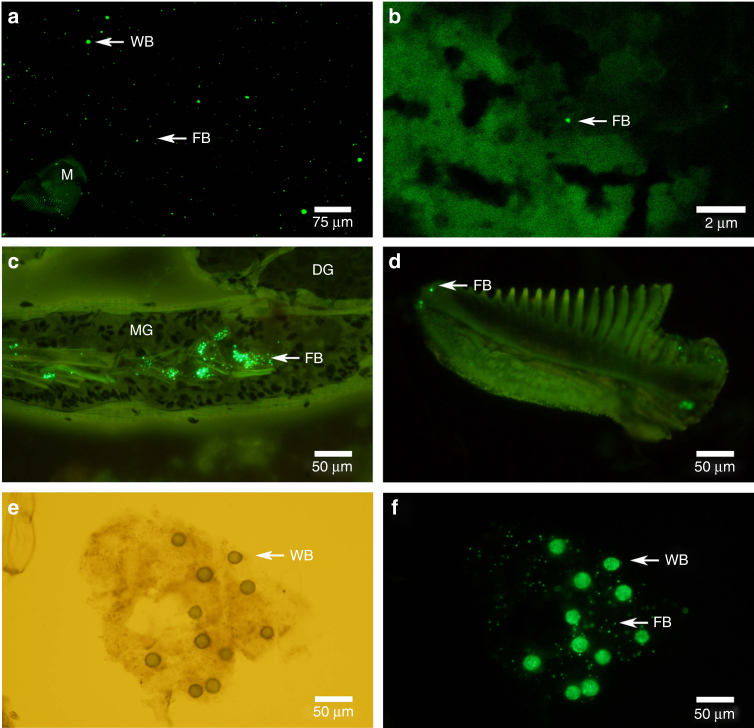
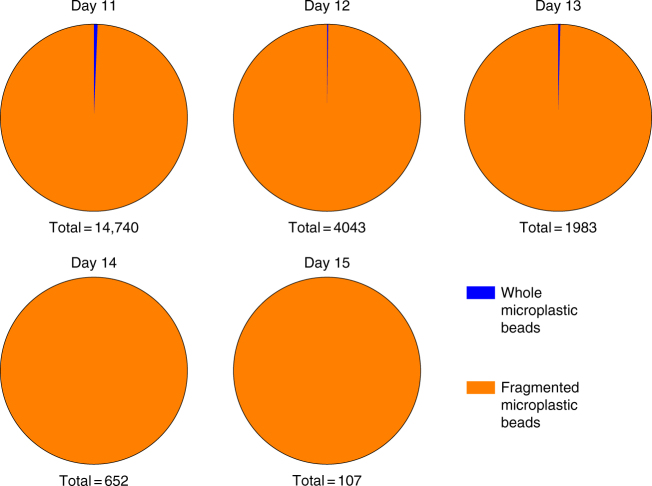
Microplastics (plastics <5 mm diameter) are at the forefront of current environmental pollution research, however, little is known about the degradation of microplastics through ingestion. Here, by exposing Antarctic krill ( Euphausia superba ) to microplastics under acute static renewal conditions, we present evidence of physical size alteration of microplastics ingested by a planktonic crustacean. Ingested microplastics (31.5 µm) are fragmented into pieces less than 1 µm in diameter. Previous feeding studies have shown spherical microplastics either; pass unaffected through an organism and are excreted, or are sufficiently small for translocation to occur. We identify a new pathway; microplastics are fragmented into sizes small enough to cross physical barriers, or are egested as a mixture of triturated particles. These findings suggest that current laboratory-based feeding studies may be oversimplifying interactions between zooplankton and microplastics but also introduces a new role of Antarctic krill, and potentially other species, in the biogeochemical cycling and fate of plastic.
Overview
The claims and statistics of this paper haven’t been checked yet.
Free: it reads the open-access text and checks the first 5 claims that cite a source we can check. Create a free account to check every claim.
Integrity signals
Registry
Cites
Statistics
Figures
Verification
Claims the paper makes
The claims and statistics of this paper haven’t been checked yet.
Free: it reads the open-access text and checks the first 5 claims that cite a source we can check. Create a free account to check every claim.
Claims other papers make about this one
Each is checked against this paper’s own text: does it say what the citing paper says it does?
The source backs part of the claim, not all of it — or backs it for a different population, condition or comparison.
In the citing paper
“PMD fragmentation also leads to the formation of particle sizes <1 mm, i.e. nanoplastics.This has been documented as a result of shear forces in the digestive tracts of krill and perhaps other crustaceans, 96 due to abrasion in a mill 106 or blender, 94 and even as a result of turbulence 95”
From The fate of plastic in the ocean environment – a minireview (2021) · cites this paper as [96]
Experimental — accuracy not yet measuredThe source backs part of the claim, not all of it — or backs it for a different population, condition or comparison.
In the citing paper
“At the nanoscale, optical and chemical methods conventionally used for microplastic analysis are not suitable because of sensitivity issues as well as physical and optical limits.13,40,67,68,96”
From The fate of plastic in the ocean environment – a minireview (2021) · cites this paper as [96]
Experimental — accuracy not yet measuredThe cited source says what the claim attributes to it.
In the citing paper
“Furthermore, the digestive action of marine invertebrates has been demonstrated to facilitate fragmentation of plastic particles to smaller size ranges 37,38 and to provide a pathway for sinking by the excretion of faecal matter aggregates.”
From Weathering plastics as a planetary boundary threat: exposure, fate, and hazards (2021) · cites this paper as [38]
The cited source says what the claim attributes to it.
In the citing paper
“For Antarctic krill, the fragmentation of 31.5 μ m MPs to < 1 μ m mimics this process (Dawson et al., 2018).”
From Trophic transfer of polyester microfibres across a multi-level marine food web. (2025) · cites this paper as Dawson et al., 2018
The check wasn’t confident either way, so it gives no verdict — never disputed.
In the citing paper
“While this is the first report of detailed depuration rates for mysid shrimp, rates calculated here are higher than those reported for similar organisms (i.e., Antarctic krill Euphausia superba , 0.22 h 1 (Dawson et al., 2018)), potentially a consequence of their smaller size.”
From Trophic transfer of polyester microfibres across a multi-level marine food web. (2025) · cites this paper as Dawson et al., 2018
Experimental — accuracy not yet measured
Self-check
Percentages, sums and reported differences re-computed from the paper’s own numbers.
The self-check needs the paper’s full text.
Citations
Cites
Fiji: an open-source platform for biological-image analysis
Schindelin, J., Arganda-Carreras, I., Frise, E., Kaynig, V., Longair, M., Pietzsch, T., Preibisch, S., Rueden, C., Saalfeld, S., Schmid, B., et al. (2012) · Nature Methods · doi:10.1038/nmeth.2019 · Cited by 66,890
Microplastics in the marine environment
Andrady, A. L. (2011) · Marine Pollution Bulletin · doi:10.1016/j.marpolbul.2011.05.030 · Cited by 8,105
Odian, G. (2004) · doi:10.1002/047147875x · Cited by 7,158
Eriksen, M., Lebreton, L. C. M., Carson, H. S., Thiel, M., Moore, C. J., Borerro, J. C., Galgani, F., Ryan, P. G., & Reisser, J. (2014) · PLoS ONE · doi:10.1371/journal.pone.0111913 · Cited by 4,710
(2015) · Springer eBooks · doi:10.1007/978-3-319-16510-3 · Cited by 3,502
Plastic debris in the open ocean
Cózar, A., Echevarría, F., González-Gordillo, J. I., Irigoien, X., Úbeda, B., Hernández-León, S., Palma, Á. T., Navarro, S., García-de-Lomas, J., Ruiz, A., et al. (2014) · Proceedings of the National Academy of Sciences · doi:10.1073/pnas.1314705111 · Cited by 3,133
Microplastic ingestion by zooplankton
Cole, M., Lindeque, P., Fileman, E., Halsband, C., Goodhead, R., Moger, J., & Galloway, T. S. (2013) · Environmental Science & Technology · doi:10.1021/es400663f · Cited by 2,763
The plastic in microplastics: A review
Andrady, A. L. (2017) · Marine Pollution Bulletin · doi:10.1016/j.marpolbul.2017.01.082 · Cited by 2,372
Browne, M. A., Dissanayake, A., Galloway, T. S., Lowe, D. M., & Thompson, R. C. (2008) · Environmental Science & Technology · doi:10.1021/es800249a · Cited by 2,263
Microplastics in bivalves cultured for human consumption
Van Cauwenberghe, L., & Janssen, C. R. (2014) · Environmental Pollution · doi:10.1016/j.envpol.2014.06.010 · Cited by 2,074
Research works printed but not linked: 1
- Rocha-Santos, T. A. P. & Duarte, A. C. Characterization and Analysis of Microplastics Vol. 75 (Elsevier Science, Amsterdam, 2017).
Cited by
Items 701–800 of 1,000
Jhang, Y.-T., Li, C.-H., Yeh, C.-E., Chan, Y.-J., Yang, T.-M., Reyes, C. J. Q., Lin, C., & Hsiao, I. (2025) · Ecotoxicology and Environmental Safety · doi:10.1016/j.ecoenv.2025.118628 · Cited by 12
Release of Nanoplastics from Polypropylene Food Containers into Hot and Cold Water
Shi, K., Okoffo, E. D., Lu, W.-C., Jiang, J., Rauert, C., & Thomas, K. V. (2025) · Journal of Agricultural and Food Chemistry · doi:10.1021/acs.jafc.5c11270 · Cited by 11
Nie, H., Liu, H., Shi, Y., Lai, W., Liu, X., Xi, Z., & Lin, B. (2022) · Toxics · doi:10.3390/toxics10110647 · Cited by 11
“attenuates bleomycin-induced inflammatory cell infiltration and pulmonary fibrosis in rats, and attenuates fibrosis-related mediators [30,31].”
BackgroundResultGanji, N., & Bothun, G. D. (2021) · Environmental Science Nano · doi:10.1039/d0en00934b · Cited by 13
Johannessen, C., & Shetranjiwalla, S. (2021) · Reviews of Environmental Contamination and Toxicology · doi:10.1007/398_2021_80 · Cited by 14
Scoping intergenerational effects of nanoplastic on the lipid reserves of Antarctic krill embryos
Rowlands, E., Galloway, T. S., Cole, M., Lewis, C. N., Hacker, C., Peck, V. L., Thorpe, S. E., Blackbird, S., Wolff, G. A., & Manno, C. (2023) · Aquatic Toxicology · doi:10.1016/j.aquatox.2023.106591 · Cited by 11
Po, B. H. K., Lo, H., Cheung, S. G., & Lai, K. P. (2020) · Marine Pollution Bulletin · doi:10.1016/j.marpolbul.2020.111151 · Cited by 11
Lefebvre, C., Cormier, B., Bihanic, F. L., Magalhães, G. R., Morin, B., Lecomte, S., & Cachot, J. (2024) · Environmental Pollution · doi:10.1016/j.envpol.2024.124440 · Cited by 10
Microplastics Biofragmentation and Degradation Kinetics in the Plastivore Insect Tenebrio molitor
Peng, B.-Y., & Wang, W. (2024) · Environmental Science & Technology · doi:10.1021/acs.est.4c05113 · Cited by 30
Assessing meso-, micro-, and nanoplastic pollution in Los Angeles County estuaries
Hoemann, C., Bauer, C. A., & Fissore, C. (2024) · Marine Pollution Bulletin · doi:10.1016/j.marpolbul.2024.116822 · Cited by 10
Barrett, N., Miller, J. R., & Orbock-Miller, S. (2024) · Environments · doi:10.3390/environments11090195 · Cited by 12
“Food wrappers, what you typically see covering a candy bar and other types of snacks, were also abundant along Richland Creek and most of the other investigated freshwater sites (Tables 3 and 6; Figure 5b), presumably because they are often bought and eaten “on the go”, where trash receptacles are…”
BackgroundYu, X., Zhou, N., Gao, Q., Peijnenburg, W. J. G. M., Yin, K. L., Li, L., & Wang, Y. (2025) · Current Research in Toxicology · doi:10.1016/j.crtox.2025.100251 · Cited by 10
“…Himmelsbach, and Buchberger, 2015; Sun, Ren, and Ni, 2020; Thushari and Senevirathna, 2020); and secondary microplastics, which result from the fragmentation or degradation of larger plastic products, such as bags and bottles (Dawson et al., 2018; Ekvall et al., 2019; Enfrin et al., 2020).”
Nanoplastics: An emerging environmental concern in age-related diseases
Shiwakoti, S., Dhakal, B., Ok, Y., Gong, D.-S., Ko, J.-Y., Kim, P.-G., & Oak, M. (2025) · Environmental Pollution · doi:10.1016/j.envpol.2025.126972 · Cited by 11
Praved, P. H., Sreeraj, P., Neethu, K. V., Nandan, S. B., Ravindran, S., & Marigoudar, S. R. (2025) · Journal of Hazardous Materials · doi:10.1016/j.jhazmat.2025.139866 · Cited by 10
Microplastics and their effects in food systems: Unveiling their human and environmental toxicity
Venkatachalam, C. D., Rajan, S., Ravichandran, S. R., Sengottian, M., Rajan, D., & Gupta, R. K. (2025) · Food Bioscience · doi:10.1016/j.fbio.2025.107847 · Cited by 13
Jian, L., Qiu, Y., Zhang, Z., Feng, A., Shi, G., & Chen, J. (2025) · Journal of environmental chemical engineering · doi:10.1016/j.jece.2025.120454 · Cited by 10
Formation of airborne microplastics
Zhang, K., & Wu, C. (2022) · Comprehensive analytical chemistry · doi:10.1016/bs.coac.2022.07.001 · Cited by 15
Sources and occurrence of microplastics and nanoplastics in the environment
Onyedibe, V. O., Kakar, F. L., Okoye, F. C., Elbeshbishy, E., & Hamza, R. (2022) · Elsevier eBooks · doi:10.1016/b978-0-323-99908-3.00019-1 · Cited by 12
Chen, L., Fan, T., Yang, M., Si, D., Wu, H., Wu, S. H., Xu, J., & Zhou, D. (2023) · The Science of The Total Environment · doi:10.1016/j.scitotenv.2023.166048 · Cited by 10
Fate and effects of microplastic particles in a periphyton-grazer system
Merbt, S. N., Kroll, A., Sgier, L., Tlili, A., Schirmer, K., & Behra, R. (2024) · Environmental Pollution · doi:10.1016/j.envpol.2024.123798 · Cited by 10
“For instance, MP fragmentation has been observed upon ingestion by the arctic grill (Dawson et al., 2018) as well as leaching of chemicals from digested MP (Schrank et al., 2019; Schür et al., 2019; Sun et al., 2021).”
BackgroundZhang, K. Y., Chen, J., Wang, Y., Chen, M., Bao, X., Chen, X., Xie, S., Lin, Z., & Yu, Y. (2024) · Fishes · doi:10.3390/fishes9090342 · Cited by 10
Liu, Y., & Fang, J. (2020) · Applied Sciences · doi:10.3390/app10061974 · Cited by 10
Iwanowicz, D. D., Baldwin, A. K., Barber, L. B., Blazer, V. S., Corsi, S. R., Duris, J. W., Fisher, S. C., Focazio, M. J., Janssen, S. E., Jasmann, J. R., et al. (2024) · U.S. Geological Survey circular/U.S. Geological Survey Circular · doi:10.3133/cir1521 · Cited by 18
Trophic transfer of polyester microfibres across a multi-level marine food web.
Miller, M. E., Motti, C. A., Snekkevik, V. K., Vickers, K., Kennedy, H., Bastin, L., Hamann, M., & Kroon, F. J. (2025) · Marine Pollution Bulletin · doi:10.1016/j.marpolbul.2025.118590 · Cited by 9
Microplastics in Southern Ocean sea ice: a pan-Antarctic perspective
Kelly, A., Rodemann, T., Meiners, K. M., Auman, H. J., Moreau, S., Fripiat, F., Delille, B., & Lannuzel, D. (2024) · Water Emerging Contaminants & Nanoplastics · doi:10.20517/wecn.2024.66 · Cited by 11
Chen, W., Li, Q., Luo, J., Pan, Y., & Feng, H. (2025) · Analytical Chemistry · doi:10.1021/acs.analchem.5c00137 · Cited by 9
Hong, A., Vispute, A., Turner, S., Glazer, R., Weishampel, Z. A., Huang, A., Holmes, Z. A., Schleupner, B., Dunphy‐Daly, M. M., Eward, W. C., et al. (2024) · The Science of The Total Environment · doi:10.1016/j.scitotenv.2025.179075 · Cited by 9
Jiang, D., Wang, Y., Xu, H., Guo, C., Pan, Q., Li, H., & Jiang, K. (2025) · Talanta · doi:10.1016/j.talanta.2025.128468 · Cited by 9
Chen, H., Shen, X., Lin, J., Huang, Q., Zhao, L. P., Zhu, R., Li, L., Liu, Z., & Zhao, C. (2025) · Critical Reviews in Food Science and Nutrition · doi:10.1080/10408398.2025.2538550 · Cited by 13
“The fecal pellets of plankton inhabiting this region serve as a primary medium for carbon transfer and sequestration into the deep ocean (Manno et al. 2015), highlighting the essential role of krill in biogeochemical cycling (Dawson et al. 2018).”
Kudzin, M. H., Gloc, M., Festinger, N., Sikora, M., & Olak-Kucharczyk, M. (2025) · Toxics · doi:10.3390/toxics13110928 · Cited by 11
“Furthermore, MPs can affect animal behavior and reproduction, and can also act as toxic vectors of hazardous chemicals, including endocrine disruptors, through food webs [46,47].”
The risks of marine micro/nano-plastics on seafood safety and human health
Abed, N. E., & Özoğul, F. (2023) · Advances in food and nutrition research · doi:10.1016/bs.afnr.2022.08.004 · Cited by 10
Zamo, A., Rond, C., & Hamdan, A. (2024) · Plasma · doi:10.3390/plasma7010004 · Cited by 9
“Numerous technologies, including physical-[9], chemical-[10], and biological-based techniques [11], are currently being employed to address the removal of plastic materials from aquatic environments.”
Nanoplastics: Unveiling Contamination Routes and Toxicological Implications for Human Health
de Oliveira, C. R. S., Maestri, G., Tochetto, G. A., de Oliveira, J. L., Stiegelmaier, É., Fischer, T. V., & Immich, A. P. S. (2024) · Current Analytical Chemistry · doi:10.2174/0115734110305991240523073849 · Cited by 13
Habumugisha, T., Zhang, Z., Ndayishimiye, J. C., Nkinahamira, F., Uwizewe, C., Cyubahiro, E., Rehman, A., Yan, C., & Zhang, X. (2023) · Environmental Science Nano · doi:10.1039/d3en00017f · Cited by 12
A Janus branch filter for washing machines: Simultaneous removal of microplastics and surfactants
Choi, J. H., Jung, Y. J., Kim, H., Seo, Y. J., & Choi, W. S. (2023) · Chemosphere · doi:10.1016/j.chemosphere.2023.138741 · Cited by 9
Xu, K., Zhao, L., Juneau, P., Chen, Z., Zheng, X., Lian, Y., Li, W., Huang, P., Yan, Q., Chen, X., et al. (2024) · Environmental Pollution · doi:10.1016/j.envpol.2024.124206 · Cited by 10
Dissection of the potential mechanism of polystyrene microplastic exposure on cardiomyocytes
Xue, D., Huang, J., Sun, X., Zhang, W., Ma, H., Yin, D., Wang, Y., Wang, J., Yang, C., & Geng, Q. (2025) · The Science of The Total Environment · doi:10.1016/j.scitotenv.2025.179048 · Cited by 8
The Three Gorges Dam alters the spatial distribution and flux of microplastics in the Yangtze River
Yang, R., Han, X., Wang, Y., Liu, Y., Sun, Q., Su, H., Peng, S., Lu, P., Zhang, D., & Zhou, S. (2025) · Environmental Research · doi:10.1016/j.envres.2025.121440 · Cited by 9
Hidden Threats in Infant Diets and Environment ‒ Risks of Microplastics and Nanoplastics in Food
Kadac-Czapska, K., Bukowska, B., Sicińska, P., & Grembecka, M. (2025) · Reviews of Environmental Contamination and Toxicology · doi:10.1007/s44169-025-00099-z · Cited by 21
“When swallowed, MPs pass through the esophagus into the stomach, where they are digested and fragmented into smaller pieces (from 31.5 to less than 1 µm in diameter), which was proven in the study on Antarctic krill ( Euphausia superba ) (Dawson et al. 2018).”
InfluentialMicroplastic emissions in textile wet processing: Progress, challenges, and mitigation strategies
Ali, I., Yu, L., Jiang, W., Yaroslavov, A. A., Rehman, A., Zhu, X., Luo, J., & Yu, D. (2025) · The Science of The Total Environment · doi:10.1016/j.scitotenv.2025.180589 · Cited by 9
Selim, M. M., Tounsi, A. E., Gomaa, H., & Shenashen, M. A. (2025) · Environmental Geochemistry and Health · doi:10.1007/s10653-025-02790-5 · Cited by 8
“The MPs’ durability, indigestibil-ity, and resistance to artificial digestive fluids provide serious challenges to the human digestive system when ingested (Coffin et al., 2019; Dawson et al., 2018; Liao & Yang, 2020; Zheng et al., 2024a).”
Kim, M. J., & Ro, I. (2025) · Chemical Communications · doi:10.1039/d5cc05043j · Cited by 8
Lv, L., Feng, W., Cai, J., Zhang, Y., Jiang, J., Liao, D., Yan, C., Sui, Y., & Dong, X. (2024) · The Science of The Total Environment · doi:10.1016/j.scitotenv.2024.175582 · Cited by 8
Migration and Transformation of Microplastics
Yu, X., Luo, X., Ye, Y., Zhang, M., Xu, M., Han, C., & Lu, X. (2025) · Wiley eBooks · doi:10.1002/9783527842124.ch2 · Cited by 10
Bukhari, M. N., Fatima, M., Wang, P., Jin, Z., Hu, Z., Dar, M. A., Gao, M., Taqi, M., Zhang, P., & Wang, B. (2025) · Separation and Purification Technology · doi:10.1016/j.seppur.2025.134739 · Cited by 9
Farmen, E., Provencher, J. F., Aliani, S., Baak, J. E., Bergmann, M., Booth, A. M., Bourdages, M. P. T., Buhl‐Mortensen, L., Feld, L., Gabrielsen, G. W., et al. (2021) · Helmholtz-Zentrum für Polar-und Meeresforschung (Alfred-Wegener-Institut) · doi:10.13140/rg.2.2.34524.72324 · Cited by 10
Microplastics in aquatic environments: a review of recent advances
Fish, K. E., Clarizia, L., & Meegoda, J. N. (2023) · Journal of Environmental Engineering and Science · doi:10.1680/jenes.23.00018 · Cited by 8
Expanding sample volume for microscopical detection of nanoplastics
Hiltunen, A., Huopalainen, J., Mäkilä, E. M., Häkkilä, S., Damlin, P., & Hänninen, J. (2024) · Marine Environmental Research · doi:10.1016/j.marenvres.2024.106806 · Cited by 8
Effects of Microplastics in the Cryosphere
Ásmundsdóttir, Á. M., & Scholz, B. (2021) · Springer eBooks · doi:10.1007/978-3-030-10618-8_47-2 · Cited by 15
New Identities of Micro- and Nanoplastics Formed from Biological Effects (Bio-MNPs)
Wang, Y., Wang, F., & Song, M. (2024) · Environment & Health · doi:10.1021/envhealth.4c00072 · Cited by 9
Chemical reactivity of weathered nanoplastics and their interactions with heavy metals
Huang, Y., Dang, F., & Wang, Y. (2024) · Environmental Science Nano · doi:10.1039/d4en00801d · Cited by 11
Ajegi, J. O., Adie, P. A., Ubwa, S. T., Tyohemba, R. L., & Oklo, A. D. (2025) · Environmental Monitoring and Assessment · doi:10.1007/s10661-025-14096-1 · Cited by 10
“Recently, interest in MPs has been on the rise due to the huge amounts discharged into the ocean each year (Dawson et al., 2018).”
From pollution to policy: a holistic review of microplastics in the environment of Bangladesh
Prantor, R. M., Absar, M. N., Karim, M. R., Islam, M. S., Hasan, R., Malafaia, G., Khan, M. M. H., & Andaluri, G. (2025) · Human and Ecological Risk Assessment An International Journal · doi:10.1080/10807039.2025.2566077 · Cited by 8
“Microplastics can enter the food web and accumulate in digestive tracts, which causes severe torment in the tissues and organs of aquatic species (Dawson et al. 2018).”
Microplastic contamination in edible American lobster (Homarus americanus) muscle tissue
LeBlanc, A. D., Castle, D., S., E. F. M., Ammendolia, J., Kelly, N. E., Maselli, V., & Walker, T. R. (2025) · Regional Studies in Marine Science · doi:10.1016/j.rsma.2025.104587 · Cited by 9
Kumar, A., Poddar, V. K., Sardar, S., Mistri, A., & Srivastava, A. (2025) · NanoImpact · doi:10.1016/j.impact.2025.100604 · Cited by 10
Micro- and Nanoplastics and Pulmonary Health: The Current State of Research
Bardawil, C. E., Dobbins, J., Lankford, S. S., Soloff, A. C., & Dhupar, R. (2026) · Microplastics · doi:10.3390/microplastics5010029 · Cited by 7
“Fluorescence microscopy, which can be used with common dyes such as Nile Red or rhodamine, can localize pre-dyed MPs and NPs in biological tissues and aid in distribution studies for in vitro and in vivo studies [19,44,45].”
Avinash, G. P., & Namasivayam, S. K. R. (2026) · Biotechnology and Bioengineering · doi:10.1002/bit.70245 · Cited by 7
“The effectiveness of biological degradation is influenced by substrate characteristics, surface topology, morphology, and molecular mass (Albertsson et al. 1987; Ammala et al. 2011; Zeenat et al. 2021; Dawson et al. 2018).”
The effects of plastic pollution on biodiversity
Savoca, M. S., Murphy, E. L., Brandon, A. M., Hampton, L. M. T., Roman, L., Kong, M., Fernandes, M. E., Abrokwah, S., Darter, C., Galgani, F., et al. (2026) · Nature Reviews Biodiversity · doi:10.1038/s44358-026-00170-0 · Cited by 8
“Furthermore, invertebrates can fragment microplastics into nanoplastics during digestion, increasing the probability that they will be incorporated in food webs 71,72 .”
Microplastics in the Food Chain
Jayasinghe, C. V. L., Jayatilake, S., Rajapakse, H. U. K. D. Z., Kithmini, N. K. S., & Kulathunga, K. M. P. M. (2023) · Wiley eBooks · doi:10.1002/9781119879534.ch20 · Cited by 7
Sources of nanoplastic and microplastic pollution which are hidden in plain sight
Pantos, O., Masterton, H., & Ruffell, H. (2024) · Cambridge Prisms Plastics · doi:10.1017/plc.2024.21 · Cited by 7
Ujuagu, G. I., Ejeromedoghene, O., Enwemiwe, V. N., Mgbechidinma, C. L., Omoniyi, A. O., Oladipo, A., & Gu, J. (2024) · Toxicology Reports · doi:10.1016/j.toxrep.2024.101873 · Cited by 7
Quantitative tracking of the transformation of micro- and nanoplastics in simulated human body fluid
Zhang, H., Sheng, X., Li, L., Xu, A., Lai, Y., & Liu, J. (2024) · Journal of Hazardous Materials · doi:10.1016/j.jhazmat.2024.136992 · Cited by 7
Morais, L. M. S., Akim, V., Aviz, D., Chelazzi, D., Cincinelli, A., Sforzi, L., Giarrizzo, T., & Filho, J. E. M. (2025) · Marine Pollution Bulletin · doi:10.1016/j.marpolbul.2025.117685 · Cited by 7
Kim, S. Y., Woo, S., Lee, S.-W., Jung, E., & Lee, E. (2025) · Journal of Microbiology and Biotechnology · doi:10.4014/jmb.2410.10023 · Cited by 7
“Moreover, the degradation of microplastics leads to the formation of nanoplastics ( 1 μm), which are also harmful [9].”
Degradation of Plastics Using Nanomaterials
David, M., Prakash, L., Sangeetha, J., Naik, J., Thangadurai, D., & Thimmappa, S. C. (2021) · Springer eBooks · doi:10.1007/978-3-030-36268-3_74 · Cited by 7
Microplastic sink that cannot be ignored in chemosynthetic organisms
Zhang, K., Liang, J., Sha, Z., Zhou, L., Zheng, S., & Sun, X. (2023) · Marine Pollution Bulletin · doi:10.1016/j.marpolbul.2023.114815 · Cited by 7
The effect of planktivorous fish on the vertical flux of polystyrene microplastics
Pukos, S., Maszczyk, P., Dąbrowski, K., Zebrowski, M. Ł., & Babkiewicz, E. (2023) · The European Zoological Journal · doi:10.1080/24750263.2023.2217199 · Cited by 8
“Fewer studies focused on the effect of freshwater and marine invertebrates, including zooplankton (Cole et al. 2016; Katija et al. 2017; Dawson et al. 2018; Bonello et al. 2021), and benthic animals (Jang et al. 2018; Arossa et al. 2019; Bulleri et al. 2021; Coppock et al. 2021).”
BackgroundWilkinson, S. M., Whitaker, J. M., & Janosik, A. M. (2025) · Microplastics · doi:10.3390/microplastics4010010 · Cited by 7
Green Treatment Technologies for Microplastic Pollution
Bharath, K. M., Ruthra, R., Silva, J. D., Velusamy, S., Natesan, U., & Hashmi, M. Z. (2022) · Emerging contaminants and associated treatment technologies · doi:10.1007/978-3-030-89220-3_21 · Cited by 10
Krill along the 110°E meridian: Oceanographic influences on assemblages in the eastern Indian Ocean
Sutton, A. L., & Beckley, L. E. (2022) · Deep Sea Research Part II Topical Studies in Oceanography · doi:10.1016/j.dsr2.2022.105133 · Cited by 7
Biodegradation of typical plastics and its mechanisms
Li, X., Liu, Z., Xue, R., Dai, Y., Yue, T., & Zhao, J. L. (2020) · Chinese Science Bulletin (Chinese Version) · doi:10.1360/tb-2020-1347 · Cited by 8
Takeda, H., & Isobe, A. (2024) · Marine Pollution Bulletin · doi:10.1016/j.marpolbul.2024.117032 · Cited by 8
Distribution of Microplastics in the Sediment Profiles of River Benue, North Central Nigeria
Ajegi, J. O., Adie, P. A., Ubwa, S. T., Tyohemba, R. L., & Oklo, A. D. (2026) · Water Air & Soil Pollution · doi:10.1007/s11270-025-09050-3 · Cited by 6
“In recent years, interest in MPs has been on the rise, largely due to the amount (about 8 million tonnes) discharged into the ocean each year (Dawson et al., 2018).”
Understanding the Biological Impact of Organic Pollutants Absorbed by Nanoplastics
Yip, Y. J., Mahadevan, G., Tay, T. S., Neo, M. L., Teo, S. L., & Valiyaveettil, S. (2022) · Environmental Pollution · doi:10.1016/j.envpol.2022.120407 · Cited by 6
Rondón, R., Cárdenas, C. A., Cosseau, C., Bergami, E., Balbi, T., Corsi, I., & González‐Aravena, M. (2024) · Environmental Science and Pollution Research · doi:10.1007/s11356-024-34457-6 · Cited by 6
“For instance, it has been demonstrated that some species, such as the Antarctic krill, can actively ingest MP and transform them into n ones, after digestive fragmentation, making them more available for Antarctic bottom filter-feeders (Dawson et al. 2018).”
Microplastics as Water Pollutants and Sustainable Management Strategies
Erhunmwunse, N. O., Pajiah, T. J., & Ogwu, M. C. (2024) · Springer eBooks · doi:10.1007/978-981-97-4966-9_8 · Cited by 6
Microplastics in Antarctic air: revealing current findings
Deylami, S., Cárdenas-Escudero, J., Ochoa, M., Ayuso-Haro, J., Galán‐Madruga, D., Ruiz, J. L. U., & Cáceres, J. O. (2025) · Antarctic Science · doi:10.1017/s0954102024000555 · Cited by 6
“…environments, plastic wastes can undergo further degradation due to wave action (Bergmann et al. 2015), digestive fragmentation by marine fauna (Dawson et al. 2018) and freeze degradation (Peeken et al. 2018), generating smaller MPs - even nanoplastics - that can be incorporated into the…”
Yao, F., Qi, Y., Chen, Y., Qin, Z., Shi, Z., Liu, Z., & Zhuang, W. (2025) · Journal of Hazardous Materials · doi:10.1016/j.jhazmat.2025.139211 · Cited by 6
Chen, W., Cui, X., Li, J., Zhang, Z., Tao, S., & Zhu, D. (2025) · ACS ES&T Water · doi:10.1021/acsestwater.5c00659 · Cited by 6
Exposure and toxicokinetics of microplastics in arthropods: Mechanisms and consequences
Das, S., Chatterjee, N. H., Das, A., Singh, A., & Ray, S. (2025) · Journal of Hazardous Materials · doi:10.1016/j.jhazmat.2025.139673 · Cited by 7
Drummond, L. O., de Oliveira, A. C., Grande, S. D., & Nuvoloni, F. M. (2025) · Chemosphere · doi:10.1016/j.chemosphere.2025.144716 · Cited by 6
Rondón, R., Valdés, C., Cosseau, C., Bergami, E., Cárdenas, C. A., Balbi, T., Pérez-Toledo, C., Garrido, I., Perrois, G., Chaparro, C., et al. (2024) · Ecotoxicology and Environmental Safety · doi:10.1016/j.ecoenv.2024.116523 · Cited by 6
Impacts of Microplastics on Mangroves - A Review
Rohini, P. D., & Jayadev, A. (2023) · International Journal of Research and Review · doi:10.52403/ijrr.20231004 · Cited by 7
Sari, M. M., Afifah, A. S., & Suryawan, I. W. K. (2023) · Jurnal Energi Baru dan Terbarukan · doi:10.14710/jebt.2023.20092 · Cited by 5
“Sampah plastik yang terbuang ke lingkungan memiliki waktu degradasi yang sangat lama (Dawson et al. 2018; Sari et al. 2023b), mencapai ratusan hingga ribuan tahun.”
BackgroundMenéndez-Pedriza, A., Gual, M., Molina-Millán, L., Heeren, R. M. A., Barata, C., & Navarro‐Martín, L. (2024) · MethodsX · doi:10.1016/j.mex.2024.102973 · Cited by 5
“This break-down capacity for MPs have also been reported for similar organisms such as krill [ 17 ].”
BackgroundManno, C., Corsi, I., Rowlands, E., & Bergami, E. (2024) · Marine Pollution Bulletin · doi:10.1016/j.marpolbul.2024.117238 · Cited by 5
Zhang, M., Hu, M., Li, X., Waiho, K., Xu, S., Song, Z., Khalil, M. F., & Wang, Y. (2025) · Marine Pollution Bulletin · doi:10.1016/j.marpolbul.2025.118245 · Cited by 5
Plant Trait Regulation Enabled by Nanoplastic Nucleic Acid Carriers
Wu, H., Li, Z., Xiao, Y., Liu, H., Li, Y., Pan, Y., Zhang, H., Liu, Q. S., & Jiang, G. (2025) · Environmental Science & Technology · doi:10.1021/acs.est.5c05708 · Cited by 4
Nanoscale plastic pollution: sources, identification and potential mitigation
Boakye, G., Trotta, E., Ambagahawatta, N., Venkataraman, A., Cheeptham, N., & Papadopoulos, C. (2025) · Nanotechnology · doi:10.1088/1361-6528/ae0c1b · Cited by 5
“In addition, NPs may be created inside organisms through natural enzymatic processes [227], which could in principle accelerate the degradation of bioplastics as well.”
Shimly, S., Rasana, N., Rajendrakumar, S., & Nithya, K. (2025) · Journal of environmental chemical engineering · doi:10.1016/j.jece.2025.119535 · Cited by 5
Huang, Y., Li, Q., Xiang, X., Jiang, J., Li, J., Chen, H., Zhang, M., & Jin, B. (2025) · Diversity · doi:10.3390/d17100701 · Cited by 5
“Species such as the brown shrimp ( Crangon crangon ) [33], Antarctic krill ( Euphausia superba ) [34], and green crab ( Carcinus maenas ) [35] have demonstrated the capacity to ingest, fragment, and even alter the morphology of MPs.”
Yang, Y., Lü, F., Zhang, H., & He, P. (2025) · Emerging contaminants · doi:10.1016/j.emcon.2025.100593 · Cited by 6
Shi, Z., Zeng, W., Zhuang, W., Yao, F., Sun, D., Liu, Z., & Zhang, J. (2025) · Water Research · doi:10.1016/j.watres.2025.124926 · Cited by 6
Maurya, P., & Kumar, R. (2026) · Discover Sustainability · doi:10.1007/s43621-025-02510-0 · Cited by 5
“This degradation can occur through physical, chemical, or biological processes, such as exposure to sunlight, mechanical wear, or chemical reactions, which break down larger plastic debris like bottles and bags into smaller fragments [2, 12, 13].”
Yan, C., Cai, Y., Wen, K., Yu, Q., Chen, X. P., Chen, J., Yu, J., & Qiu, X. (2026) · Journal of Hazardous Materials · doi:10.1016/j.jhazmat.2026.142300 · Cited by 5
Environmental pollution by microplastics and its consequences on human health
Silva, J. D. S., Rodrigues, J. R. P., de Sá, R. A. D. Q. C., de Oliveira, M. B. M., da Silva, S. M., Souza, K. S., da Silva, M. R. F., de Araújo, L. C. A., Pereira, E. S., Bezerra, A. Â., et al. (2022) · Research Society and Development · doi:10.33448/rsd-v11i13.35863 · Cited by 5
Miller, C., Neidhart, A., Hess, K. Z., Ali, A.-M. S., Benavidez, A. D., Spilde, M., Peterson, E. J., BREARLEY, A. J., Wang, X., Dhanapala, B. D., et al. (2024) · The Science of The Total Environment · doi:10.1016/j.scitotenv.2024.171834 · Cited by 5
Zarawi, N. A. H., Yatim, S. R. M., Dasiman, R., Rasdi, N. W., Abdullah, S., Zaki, M. A., & Porusia, M. (2023) · Journal of Health and Translational Medicine · doi:10.22452/jummec.sp2023no2.36 · Cited by 5
Sim, H.-H., Shiwakoti, S., Lee, J., Lee, I.-Y., Ok, Y., Lim, H.-K., Ko, J.-Y., & Oak, M. (2024) · The Science of The Total Environment · doi:10.1016/j.scitotenv.2024.175007 · Cited by 5
Nagaraja, S. S., Gouda, Y., Míguez, D., Muralidaran, Y., Ferreira, L. F. R., Américo‐Pinheiro, J. H. P., Mulla, S. I., & Mishra, P. (2024) · Ecotoxicology · doi:10.1007/s10646-024-02810-7 · Cited by 5
“…degrade via physical, chemical, biological forces, UV radiation, etc. and result in the formation macro-plastics ( > 20 mm size), meso-plastic (2 – 20 mm size), microplastics ( < 5 μ m) and nanoplastics (1 nm – 100 nm) (Dawson et al., 2018; Rodriguez-Hernandez et al., 2020; He et al., 2021).”
Metadata
- Authors
- Dawson, A. L., Kawaguchi, S., King, C. K., Townsend, K. A., King, R., Huston, W. M., & Bengtson Nash, S. M.
- Affiliations
- Griffith University (AU)
- Australian Antarctic Division (AU)
- The University of Queensland (AU)
- University of Technology Sydney (AU)
- Corresponding author
- Dawson, Amanda L.
- ORCID
- Venue
- Nature Communications
- Published
- 2018-03-08
- Volume
- 9
- Issue
- 1
- Pages
- 1001-1001
- ISSN
- 2041-1723 (ISSN-L)
- PMC
- PMC5843626
- OpenAlex
- W2794249619
- Cited by
- 1,023
- References
- 52
- Citations by year
- 2026: 99 · 2025: 133 · 2024: 151 · 2023: 176 · 2022: 165 · 2021: 126 · 2020: 102 · 2019: 54 · 2018: 16
- FWCI
- 27.95
- Type
- journal article
- Language
- en
- Open access
- gold
- doi.org
- Licence
- cc-by
- creativecommons.org/licenses/by/4.0 (tdm)
- creativecommons.org/licenses/by/4.0 (vor)
- Locations
- Nature Communications (publishedVersion, cc-by)
- PubMed Central (publishedVersion, cc-by)
- PubMed (publishedVersion)
- RePEc: Research Papers in Economics (submittedVersion)
- DOAJ (DOAJ: Directory of Open Access Journals) (submittedVersion)
- DOAJ (DOAJ: Directory of Open Access Journals) (submittedVersion, cc-by-sa)
- UTS ePRESS (University of Technology Sydney) (submittedVersion)
- Griffith Research Online (submittedVersion, cc-by)
- Funders
- QIMR Berghofer Medical Research Institute
- Australian Antarctic Division
- Topics
- Physical Sciences › Environmental Science › Pollution › Microplastics and Plastic Pollution
- Physical Sciences › Environmental Science › Health, Toxicology and Mutagenesis › Environmental Toxicology and Ecotoxicology
- Physical Sciences › Environmental Science › Pollution › Pharmaceutical and Antibiotic Environmental Impacts
- Keywords
- microplastics, nanoplastics, Antarctic krill, ingestion, zooplankton, plastic degradation, particle size reduction
- MeSH terms
- Animals, Digestion, Feces, Water Pollutants, Chemical, Polyethylene, Euphausiacea, Nanoparticles
About these checks
Registry, retraction, Cites and statistics results are computed, not judged, with one exception: a printed reference that no index lists is read once by a model before it counts as a citation error. Claims are extracted by a model and kept only when their quote appears verbatim in the text; each cited source is then checked, with a model’s help, for whether it says what the claim relies on. Those verdicts can be wrong — read the claim’s quote and the cited source before relying on one.
Statistics and arithmetic are recomputed, not judged.
Confidence bands are shown only for fields calibrated on our annotated test set. None is calibrated yet, so no band is shown.
What counts as a claim ›How we measure confidence ›How we check this ›
Are you an author, or do you see a problem with this page? Request a review
Data sources
Bibliographic data: Semantic Scholar, OpenAlex, Crossref.
Contains information from the Semantic Scholar Academic Graph Datasets, made available under the ODC Attribution License (ODC-BY 1.0).
Semantic Scholar’s data is described in: Kinney, R., et al. (2023). The Semantic Scholar Open Data Platform. arXiv:2301.10140.
