

Turning microplastics into nanoplastics through digestive fragmentation by Antarctic krill
Open accessThe DOI matches its Crossref record; 52 of the 52 references it cites were found in a registry or an index.
Abstract
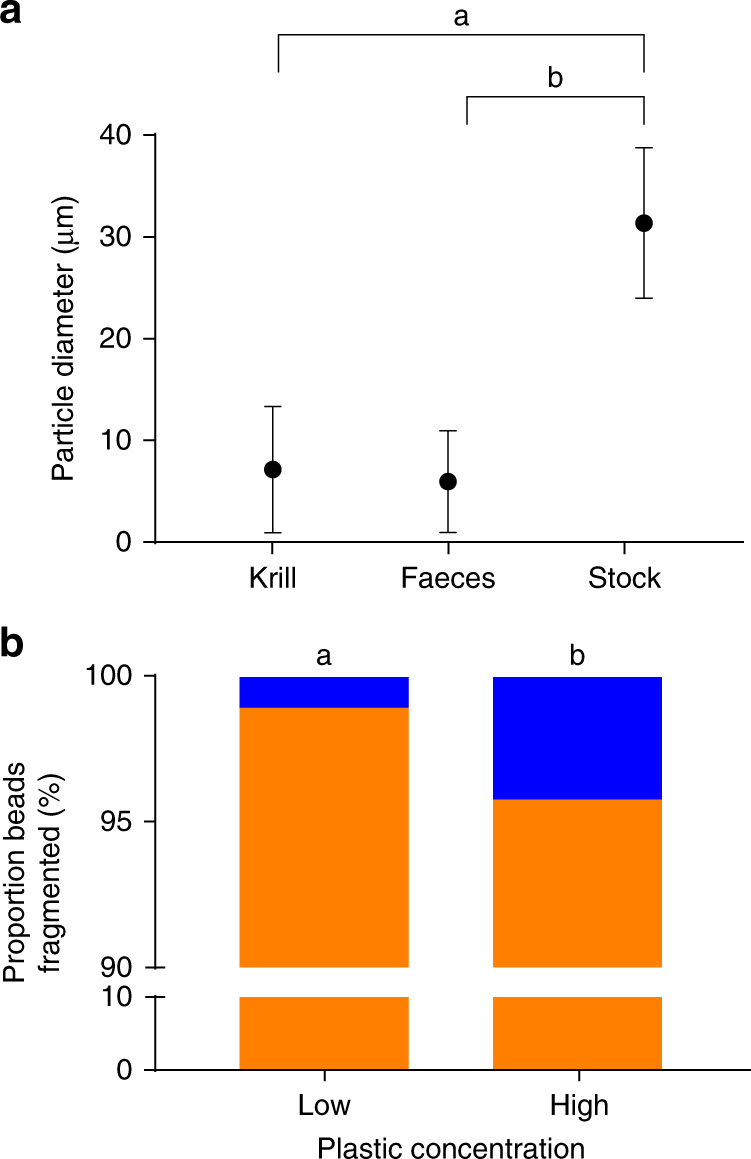
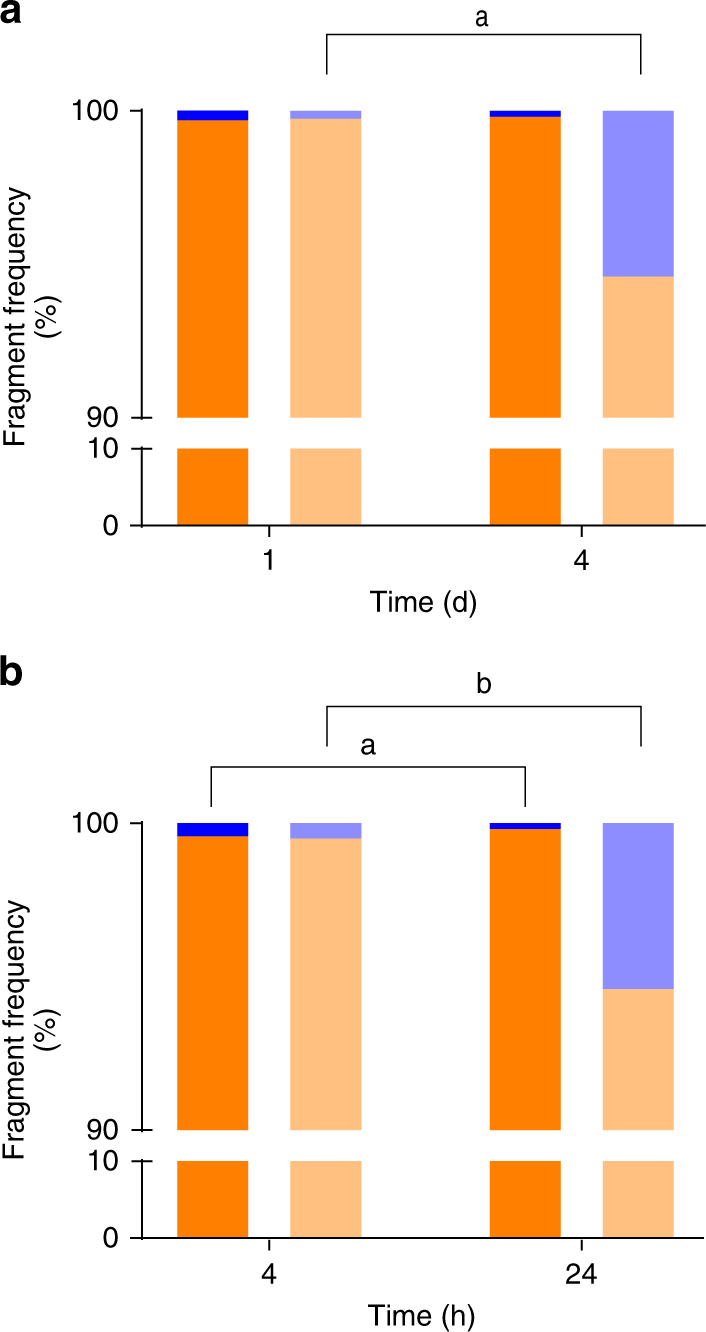
Microplastics (plastics <5 mm diameter) are at the forefront of current environmental pollution research, however, little is known about the degradation of microplastics through ingestion. Here, by exposing Antarctic krill ( Euphausia superba ) to microplastics under acute static renewal conditions, we present evidence of physical size alteration of microplastics ingested by a planktonic crustacean. Ingested microplastics (31.5 µm) are fragmented into pieces less than 1 µm in diameter. Previous feeding studies have shown spherical microplastics either; pass unaffected through an organism and are excreted, or are sufficiently small for translocation to occur. We identify a new pathway; microplastics are fragmented into sizes small enough to cross physical barriers, or are egested as a mixture of triturated particles. These findings suggest that current laboratory-based feeding studies may be oversimplifying interactions between zooplankton and microplastics but also introduces a new role of Antarctic krill, and potentially other species, in the biogeochemical cycling and fate of plastic.
Overview
The claims and statistics of this paper haven’t been checked yet.
Free: it reads the open-access text and checks the first 5 claims that cite a source we can check. Create a free account to check every claim.
Integrity signals
Registry
Cites
Statistics
Figures
Verification
Claims the paper makes
The claims and statistics of this paper haven’t been checked yet.
Free: it reads the open-access text and checks the first 5 claims that cite a source we can check. Create a free account to check every claim.
Claims other papers make about this one
Each is checked against this paper’s own text: does it say what the citing paper says it does?
The source backs part of the claim, not all of it — or backs it for a different population, condition or comparison.
In the citing paper
“PMD fragmentation also leads to the formation of particle sizes <1 mm, i.e. nanoplastics.This has been documented as a result of shear forces in the digestive tracts of krill and perhaps other crustaceans, 96 due to abrasion in a mill 106 or blender, 94 and even as a result of turbulence 95”
From The fate of plastic in the ocean environment – a minireview (2021) · cites this paper as [96]
Experimental — accuracy not yet measuredThe source backs part of the claim, not all of it — or backs it for a different population, condition or comparison.
In the citing paper
“At the nanoscale, optical and chemical methods conventionally used for microplastic analysis are not suitable because of sensitivity issues as well as physical and optical limits.13,40,67,68,96”
From The fate of plastic in the ocean environment – a minireview (2021) · cites this paper as [96]
Experimental — accuracy not yet measuredThe cited source says what the claim attributes to it.
In the citing paper
“Furthermore, the digestive action of marine invertebrates has been demonstrated to facilitate fragmentation of plastic particles to smaller size ranges 37,38 and to provide a pathway for sinking by the excretion of faecal matter aggregates.”
From Weathering plastics as a planetary boundary threat: exposure, fate, and hazards (2021) · cites this paper as [38]
The cited source says what the claim attributes to it.
In the citing paper
“For Antarctic krill, the fragmentation of 31.5 μ m MPs to < 1 μ m mimics this process (Dawson et al., 2018).”
From Trophic transfer of polyester microfibres across a multi-level marine food web. (2025) · cites this paper as Dawson et al., 2018
The check wasn’t confident either way, so it gives no verdict — never disputed.
In the citing paper
“While this is the first report of detailed depuration rates for mysid shrimp, rates calculated here are higher than those reported for similar organisms (i.e., Antarctic krill Euphausia superba , 0.22 h 1 (Dawson et al., 2018)), potentially a consequence of their smaller size.”
From Trophic transfer of polyester microfibres across a multi-level marine food web. (2025) · cites this paper as Dawson et al., 2018
Experimental — accuracy not yet measured
Self-check
Percentages, sums and reported differences re-computed from the paper’s own numbers.
The self-check needs the paper’s full text.
Citations
Cites
Fiji: an open-source platform for biological-image analysis
Schindelin, J., Arganda-Carreras, I., Frise, E., Kaynig, V., Longair, M., Pietzsch, T., Preibisch, S., Rueden, C., Saalfeld, S., Schmid, B., et al. (2012) · Nature Methods · doi:10.1038/nmeth.2019 · Cited by 66,890
Microplastics in the marine environment
Andrady, A. L. (2011) · Marine Pollution Bulletin · doi:10.1016/j.marpolbul.2011.05.030 · Cited by 8,105
Odian, G. (2004) · doi:10.1002/047147875x · Cited by 7,158
Eriksen, M., Lebreton, L. C. M., Carson, H. S., Thiel, M., Moore, C. J., Borerro, J. C., Galgani, F., Ryan, P. G., & Reisser, J. (2014) · PLoS ONE · doi:10.1371/journal.pone.0111913 · Cited by 4,710
(2015) · Springer eBooks · doi:10.1007/978-3-319-16510-3 · Cited by 3,502
Plastic debris in the open ocean
Cózar, A., Echevarría, F., González-Gordillo, J. I., Irigoien, X., Úbeda, B., Hernández-León, S., Palma, Á. T., Navarro, S., García-de-Lomas, J., Ruiz, A., et al. (2014) · Proceedings of the National Academy of Sciences · doi:10.1073/pnas.1314705111 · Cited by 3,133
Microplastic ingestion by zooplankton
Cole, M., Lindeque, P., Fileman, E., Halsband, C., Goodhead, R., Moger, J., & Galloway, T. S. (2013) · Environmental Science & Technology · doi:10.1021/es400663f · Cited by 2,763
The plastic in microplastics: A review
Andrady, A. L. (2017) · Marine Pollution Bulletin · doi:10.1016/j.marpolbul.2017.01.082 · Cited by 2,372
Browne, M. A., Dissanayake, A., Galloway, T. S., Lowe, D. M., & Thompson, R. C. (2008) · Environmental Science & Technology · doi:10.1021/es800249a · Cited by 2,263
Microplastics in bivalves cultured for human consumption
Van Cauwenberghe, L., & Janssen, C. R. (2014) · Environmental Pollution · doi:10.1016/j.envpol.2014.06.010 · Cited by 2,074
Research works printed but not linked: 1
- Rocha-Santos, T. A. P. & Duarte, A. C. Characterization and Analysis of Microplastics Vol. 75 (Elsevier Science, Amsterdam, 2017).
Cited by
Items 301–400 of 1,000
Li, M., Zhao, Z., Zhao, Z., & Li, M. (2025) · ACS Applied Materials & Interfaces · doi:10.1021/acsami.5c02306 · Cited by 75
Ni, Z., Tan, L., Wang, J., Chen, Y., Zhang, N., Meng, F., & Wang, J. (2023) · Science of The Total Environment · doi:10.1016/j.scitotenv.2022.159614 · Cited by 70
Fate of plastic in the environment: From macro to nano by macrofauna
So, M. W. K., Vorsatz, L. D., Cannicci, S., & Not, C. (2022) · Environmental Pollution · doi:10.1016/j.envpol.2022.118920 · Cited by 72
Mehmood, T., Mustafa, B., Mackenzie, K., Ali, W., Sabir, R. I., Anum, W., Gaurav, G. K., Riaz, U., Liu, X., & Peng, L. (2022) · Chemosphere · doi:10.1016/j.chemosphere.2022.137704 · Cited by 75
Burkhardt‐Holm, P., & N’Guyen, A. (2019) · Marine Pollution Bulletin · doi:10.1016/j.marpolbul.2019.04.068 · Cited by 81
Interplay of plastic pollution with algae and plants: hidden danger or a blessing?
Karalija, E., Carbó, M. T. D., Coppi, A., Colzi, I., Dainelli, M., Gašparović, M., Grebenc, T., Gonnelli, C., Papadakis, V. M., Pilić, S., et al. (2022) · Journal of Hazardous Materials · doi:10.1016/j.jhazmat.2022.129450 · Cited by 74
“It has been shown that the digestive tract of Antarctic Krill and some bacteria can degrade ingested fragments of plastics into smaller fragments that are then dispersed into the environment via faeces (De Tender et al., 2017; Dawson et al., 2018).”
Single-Particle Analysis of Micro/Nanoplastics by Hyphenated Sem-Raman Technique
Li, G., Yang, Z., Pei, Z., Li, Y., Yang, R., Liang, Y., Zhang, Q., & Jiang, G. (2022) · Talanta · doi:10.1016/j.talanta.2022.123701 · Cited by 69
Yang, S.-S., Wu, W., Bertocchini, F., Benbow, M. E., Devipriya, S. P., Chi, H. J., Peng, B.-Y., Ding, M.-Q., He, L., Li, M.-X., et al. (2024) · Frontiers of Environmental Science & Engineering · doi:10.1007/s11783-024-1838-x · Cited by 73
Pěnčík, O., Durdakova, M., Molnárová, K., Kucsera, A., Klofáč, D., Koláčková, M., Adam, V., & Húska, D. (2023) · Journal of Hazardous Materials · doi:10.1016/j.jhazmat.2023.131476 · Cited by 69
Mandal, A., Singh, N., Mondal, A., Talib, M., Basu, R., Biswas, M. K., & Darbha, G. K. (2023) · Marine Pollution Bulletin · doi:10.1016/j.marpolbul.2023.115265 · Cited by 73
Photochemical Degradation of Organic Matter in the Atmosphere
Hu, W., Liu, D., Su, S., Ren, L., Ren, H., Wei, L., Yue, S., Xie, Q., Zhang, Z., Wang, Z., et al. (2021) · Advanced Sustainable Systems · doi:10.1002/adsu.202100027 · Cited by 67
Evaluation of nanoplastics toxicity to the human placenta in systems
Enyoh, C. E., Duru, C. E., Ovuoraye, P. E., & Wang, Q. (2022) · Journal of Hazardous Materials · doi:10.1016/j.jhazmat.2022.130600 · Cited by 69
Research progress on microplastics pollution in polar oceans
Huang, L., Zhang, S., Li, L., Zhang, S., Wang, J., Liu, X., & Zhang, W. (2023) · Polar Science · doi:10.1016/j.polar.2023.100946 · Cited by 67
Richard, C. M. C., Dejoie, E., Wiegand, C., Gouesbet, G., Colinet, H., Balzani, P., Siaussat, D., & Renault, D. (2024) · Journal of Hazardous Materials · doi:10.1016/j.jhazmat.2024.135299 · Cited by 71
A spatially variable scarcity of floating microplastics in the eastern North Pacific Ocean
Egger, M., Nijhof, R., Quiros, L., Leone, G., Royer, S., McWhirter, A., Kantakov, G. A., Радченко, В. И., Pakhomov, E. A., Hunt, B. P. V., et al. (2020) · Environmental Research Letters · doi:10.1088/1748-9326/abbb4f · Cited by 71
“Plastic objects accumulating in the surface ocean are fragmented into smaller particles due to mechanisms such as photo-degradation by UV radiation, mechanical abrasion and interactions with marine organisms (Andrady 2011, Dawson et al 2018).”
BackgroundEnvironmental Microplastic Particles vs. Engineered Plastic Microparticles—A Comparative Review
Kefer, S., Miesbauer, O., & Langowski, H. (2021) · Polymers · doi:10.3390/polym13172881 · Cited by 71
Microplastic dynamics in a free water surface constructed wetland
Bydałek, F., Ifayemi, D., Reynolds, L., Barden, R., Kasprzyk‐Hordern, B., & Wenk, J. (2022) · The Science of The Total Environment · doi:10.1016/j.scitotenv.2022.160113 · Cited by 70
Zeng, Y., Deng, B., Kang, Z., Araujo, P., Mjøs, S. A., Liu, R., Lin, J., Yang, T., & Qu, Y. (2023) · Ecotoxicology and Environmental Safety · doi:10.1016/j.ecoenv.2023.114871 · Cited by 68
Patil, S., Bafana, A., Naoghare, P. K., Krishnamurthi, K., & Sivanesan, S. (2020) · Environmental Science and Pollution Research · doi:10.1007/s11356-020-11700-4 · Cited by 67
“…2019 China Drinking water Coagulation and ultrafiltration (UF) processes 90.9% PE Ma et al. 2019 Australia Antarctic krill Euphausia superba - PE Dawson et al. 2018 Germany Wastewater Sol-gel process - PE and PP Herbort et al. 2018 Finland WWTP Membrane bioreactor (MBR) 99.4% - Lares et al.…”
BackgroundInfluentialCheng, F., Zhang, T., Liu, Y., Zhang, Y., & Qu, J. (2021) · Journal of Xenobiotics · doi:10.3390/jox12010001 · Cited by 57
“process of plastic degradation progresses with time and eventually leads to the formation of nanoplastic (NPs, particle size <1 μm) [24,25].”
BackgroundLinking human activity to spatial accumulation of microplastics along mangrove coasts
Wu, Y., Chen, X., Wen, L., Li, Z., Peng, M., Wu, H., & Xie, L. F. (2022) · The Science of The Total Environment · doi:10.1016/j.scitotenv.2022.154014 · Cited by 69
A Review on Microplastics – An Indelible Ubiquitous Pollutant
(2022) · Biointerface Research in Applied Chemistry · doi:10.33263/briac132.126 · Cited by 69
“Studies have shown a greater accumulation of microplastics has affected the countries in Africa, Asia, North America, Europe, and South Africa [19].”
BackgroundInfluentialNiemcharoen, S., Haetrakul, T., Palić, D., & Chansue, N. (2022) · Animals · doi:10.3390/ani12233308 · Cited by 66
Sun, A., & Wang, W. (2023) · Environmental Science & Technology · doi:10.1021/acs.est.3c01307 · Cited by 66
Li, W., Pan, Z., Xu, J., Liu, Q., Zou, Q., Lin, H., Wu, L., & Huang, H. (2021) · The Science of The Total Environment · doi:10.1016/j.scitotenv.2021.151126 · Cited by 66
Organic or junk food? Microplastic contamination in Antarctic krill and salps
Johnston, L. W., Bergami, E., Rowlands, E., & Manno, C. (2023) · Royal Society Open Science · doi:10.1098/rsos.221421 · Cited by 65
Not so dangerous? PET microplastics toxicity on freshwater microalgae and cyanobacteria
Pěnčík, O., Molnárová, K., Durdakova, M., Koláčková, M., Klofáč, D., Kucsera, A., Cápal, P., Svec, P., Bytešníková, Z., Richtera, L., et al. (2023) · Environmental Pollution · doi:10.1016/j.envpol.2023.121628 · Cited by 66
Ribeiro, F., Okoffo, E. D., O'Brien, J. W., O’Brien, S., Harris, J. M., Samanipour, S., Kaserzon, S., Mueller, J. F., Galloway, T. S., & Thomas, K. V. (2021) · Journal of Hazardous Materials Letters · doi:10.1016/j.hazl.2021.100021 · Cited by 69
Goswami, P., Selvakumar, N., Verma, P. P., Saha, M., Suneel, V., Vinithkumar, N. V., Dharani, G., Rathore, C., & Nayak, J. (2022) · The Science of The Total Environment · doi:10.1016/j.scitotenv.2022.160876 · Cited by 73
Microplastics in Antarctic krill (Euphausia superba) from Antarctic region
Zhu, W., Liu, W., Chen, Y., Liao, K., Yu, W., & Jin, H. (2023) · The Science of The Total Environment · doi:10.1016/j.scitotenv.2023.161880 · Cited by 62
Peng, B.-Y., Xu, Y., Zhou, X., Wu, W., & Zhang, Y. (2024) · Environmental Science & Technology · doi:10.1021/acs.est.4c01130 · Cited by 64
Moore, R., Noël, M., Etemadifar, A., Loseto, L. L., Posacka, A. M., Bendell, L. I., & Ross, P. S. (2021) · The Science of The Total Environment · doi:10.1016/j.scitotenv.2021.150201 · Cited by 64
Effect of microplastics PAN polymer and/or Cu2+ pollution on the growth of Chlorella pyrenoidosa
Lin, W., Su, F., Lin, M., Jin, M., Li, Y., Ding, K., Chen, Q., Qian, Q., & Sun, X. (2020) · Environmental Pollution · doi:10.1016/j.envpol.2020.114985 · Cited by 64
Fast-screening flow cytometry method for detecting nanoplastics in human peripheral blood
Salvia, R., Rico, L. G., Bradford, J. A., Ward, M. D., Olszowy, M. W., Martínez, C., Madrid, Á., Grifols, J. R., Ancochea, Á., Gómez-Muñoz, L., et al. (2023) · MethodsX · doi:10.1016/j.mex.2023.102057 · Cited by 64
Cohen, N., & Radian, A. (2022) · Environmental Science & Technology · doi:10.1021/acs.est.2c05026 · Cited by 60
Wang, Q., Meng, L., Liu, W., Zeb, A., Shi, R., Lian, Y., & Chen, S. (2023) · The Science of The Total Environment · doi:10.1016/j.scitotenv.2023.162291 · Cited by 61
Gurumoorthi, K., & Luis, A. J. (2023) · Environmental Pollution · doi:10.1016/j.envpol.2023.121385 · Cited by 65
Piarulli, S., & Airoldi, L. (2020) · Environmental Pollution · doi:10.1016/j.envpol.2020.115151 · Cited by 62
Huang, J., Sun, X., Wang, Y., Su, J., Li, G., Wang, X., Yang, Y., Zhang, Y., Li, B., Zhang, G., et al. (2023) · Ecotoxicology and Environmental Safety · doi:10.1016/j.ecoenv.2023.115447 · Cited by 58
Total Organic Carbon as a Quantitative Index of Micro- and Nano-Plastic Pollution
Peng, L., Lai, Y., Li, Q., Dong, L., Tan, Z., Yu, S., Chen, Y., Sharma, V. K., Liu, J., & Jiang, G. (2022) · Analytical Chemistry · doi:10.1021/acs.analchem.1c03114 · Cited by 58
Adsorption of arsenite to polystyrene microplastics in the presence of humus
Dong, Y., Gao, M., Qiu, W., & Song, Z. (2020) · Environmental Science Processes & Impacts · doi:10.1039/d0em00324g · Cited by 65
Li, B., Huang, Y., Guo, D., Liu, Y., Liu, Z., Han, J., Zhao, J. L., Zhu, X., Huang, Y., Wang, Z., et al. (2022) · The Science of The Total Environment · doi:10.1016/j.scitotenv.2022.153880 · Cited by 57
Biological effects on the migration and transformation of microplastics in the marine environment
Fan, S., Yan, Z., Qiao, L., Gui, F., Li, T., Yang, Q., Zhang, X., & Ren, C. (2023) · Marine Environmental Research · doi:10.1016/j.marenvres.2023.105875 · Cited by 62
Macro- and microplastics as complex threats to coral reef ecosystems
Zhang, W., Ok, Y. S., Bank, M. S., & Sonne, C. (2023) · Environment International · doi:10.1016/j.envint.2023.107914 · Cited by 60
Natural Solar Irradiation Produces Fluorescent and Biodegradable Nanoplastics
Wang, C., Gu, X., Dong, R., Chen, Z., Jin, X., Gao, J., Ok, Y. S., & Gu, C. (2023) · Environmental Science & Technology · doi:10.1021/acs.est.2c07537 · Cited by 58
Sohail, M., Urooj, Z., Noreen, S., Baig, M. M. F. A., Zhang, X., & Li, B. (2023) · The Science of The Total Environment · doi:10.1016/j.scitotenv.2023.164596 · Cited by 59
Tsochatzis, E., Gika, H., Theodoridis, G. A., Maragou, N. C., Τhomaidis, Ν. S., & Corredig, M. (2024) · Heliyon · doi:10.1016/j.heliyon.2024.e32261 · Cited by 61
“Understanding the fate and effects of digested microplastics is essential for assessing their ecological impacts and developing appropriate mitigation strategies [43,88 – 91].”
BackgroundNawaz, F., Islam, Z. U., Ghori, S. A., Bahadur, A., Ullah, H., Ahmad, M., & Khan, G. U. (2025) · Water Environment Research · doi:10.1002/wer.70032 · Cited by 65
“The ongoing breakdown at these small scales contributes to the widespread and persistent presence of plastic pollution across various ecosystems (Dawson et al., 2018; El Hadri et al., 2020; Galloway et al., 2017; Wayman & Niemann, 2021).”
Okshevsky, M., Gautier, E., Farner, J. M., Schreiber, L., & Tufenkji, N. (2020) · Environmental Microbiology Reports · doi:10.1111/1758-2229.12824 · Cited by 58
Islam, M. S., Karim, M. R., Islam, M. T., Oishi, H. T., Tasnim, Z., Das, H., Kabir, A. H. M. E., & Sekine, M. (2022) · The Science of The Total Environment · doi:10.1016/j.scitotenv.2023.162866 · Cited by 61
Kumar, M., Mazumder, P., Silori, R., Manna, S., Panday, D. P., Das, N., Sethy, S. K., Kuroda, K., Mahapatra, D. M., Mahlknecht, J., et al. (2023) · The Science of The Total Environment · doi:10.1016/j.scitotenv.2023.166419 · Cited by 56
Peng, B.-Y., Sun, Y. X., Li, P., Yu, S., Xu, Y., Chen, J., Zhou, X., Wu, W., & Zhang, Y. (2023) · Journal of Environmental Management · doi:10.1016/j.jenvman.2023.118818 · Cited by 57
Teng, M., Li, Y., Zhao, X., White, J. C., Zhao, L., Sun, J., Zhu, W., & Wu, F. (2023) · Microbiome · doi:10.1186/s40168-023-01680-1 · Cited by 56
“After a long-term physical, chemical, and biological reactions, plastics will degrade into microplastics ( MPs , 5 mm) and eventually nanoplas-tics ( NPs , 100 nm) [4].”
Backgroundda Silva, J. R. M. C., Bergami, E., Gomes, V., & Corsi, I. (2022) · Marine Pollution Bulletin · doi:10.1016/j.marpolbul.2022.114353 · Cited by 57
Pollution Characteristics of Microplastics in Mollusks from the Coastal Area of Yantai, China
Liu, J., Zhu, X., Teng, J., Zhao, J., Li, C., Shan, E., Zhang, C., & Wang, Q. (2021) · Bulletin of Environmental Contamination and Toxicology · doi:10.1007/s00128-021-03276-7 · Cited by 57
An enhanced risk assessment framework for microplastics occurring in the Westerscheldt estuary
Liu, Z., Huang, Q., Wang, H., & Zhang, S. (2022) · The Science of The Total Environment · doi:10.1016/j.scitotenv.2022.153006 · Cited by 57
Micro-Nano Plastic in the Aquatic Environment: Methodological Problems and Challenges
Uddin, S., Fowler, S. W., Habibi, N., & Behbehani, M. (2022) · Animals · doi:10.3390/ani12030297 · Cited by 56
“Some other studies have reported the translocation of MPs and NPs to other tissues outside the digestive system by fragmentation [218], intracellular or paracellular endocytosis [59], and translocation of small-sized particles [219].”
BackgroundA Path to a Reduction in Micro and Nanoplastics Pollution
Meegoda, J. N., & Hettiarachchi, M. C. (2023) · International Journal of Environmental Research and Public Health · doi:10.3390/ijerph20085555 · Cited by 58
“In addition, Dawson [25] reported conversion of MP into NP through digestive fragmentation.”
BackgroundJiang, Z., Wang, X., Zhao, H., Yang, Z., Zhou, J., Sun, X., Yang, H., Wang, C., & Huan, S. (2023) · Separation and Purification Technology · doi:10.1016/j.seppur.2023.123925 · Cited by 55
Junaid, M., Liu, S., Yue, Q., Wei, M., & Wang, J. (2023) · Journal of Hazardous Materials · doi:10.1016/j.jhazmat.2023.133243 · Cited by 54
Insects for plastic biodegradation – A review
Siddiqui, S. A., Manap, A. S. A., Kolobe, S. D., Mabelebele, M., Yudhistira, B., & Fernando, I. (2024) · Process Safety and Environmental Protection · doi:10.1016/j.psep.2024.04.021 · Cited by 55
Priyanka, M., & Saravanakumar, M. P. (2021) · The Science of The Total Environment · doi:10.1016/j.scitotenv.2021.150819 · Cited by 54
Zhang, S., He, Z., Wu, C., Wang, Z., Mai, Y., Hu, R., Zhang, X., Huang, W., Tian, Y., Xia, D., et al. (2022) · Environmental Science & Technology · doi:10.1021/acs.est.1c06178 · Cited by 54
Lin, Z., Xu, D., Zhao, Y., Sheng, B., Wu, Z., Wen, X., Zhou, J., Chen, G., Lv, J., Wang, J., et al. (2025) · Journal of Nanobiotechnology · doi:10.1186/s12951-025-03314-0 · Cited by 53
Yoo, J.-W., Cho, H., Jeon, M., Jeong, C., Jung, J.-H., & Lee, Y. (2021) · Aquatic Toxicology · doi:10.1016/j.aquatox.2021.105821 · Cited by 55
Constraining Microplastic Particle Emission Flux from the Ocean
Yang, S., Zhang, T., Gan, Y., Lu, X., Chen, H., Chen, J., Yang, X., & Wang, X. (2022) · Environmental Science & Technology Letters · doi:10.1021/acs.estlett.2c00214 · Cited by 52
Jung, S., Raghavendra, A. J., & Patri, A. K. (2023) · NanoImpact · doi:10.1016/j.impact.2023.100467 · Cited by 52
Development and Validation of an Efficient Method for Processing Microplastics in Biota Samples
Yu, Z., Peng, B., Liu, L., Wong, C. S., & Zeng, E. Y. (2019) · Environmental Toxicology and Chemistry · doi:10.1002/etc.4416 · Cited by 54
“Biota samples were digested consecutively with SDS, protease, cellulase, H2O2, chitinase, and H2O2 again, followed by density separation to remove organic material (Dawson et al. 2018).”
InfluentialLee, J., Choi, Y., Jeong, J., & Chae, K. (2020) · Journal of Hazardous Materials · doi:10.1016/j.jhazmat.2020.123991 · Cited by 53
Lebordais, M., Gutierrez-Villagomez, J. M., Gigault, J., Baudrimont, M., & Langlois, V. S. (2021) · Chemosphere · doi:10.1016/j.chemosphere.2021.130331 · Cited by 53
Narrowing feedstock exemptions under the Montreal Protocol has multiple environmental benefits
Andersen, S. O., Gao, S., Carvalho, S., Ferris, T., Gonzalez, M., Sherman, N. J., Wei, Y., & Zaelke, D. (2021) · Proceedings of the National Academy of Sciences · doi:10.1073/pnas.2022668118 · Cited by 55
Bergami, E., Ferrari, E., Löder, M. G. J., Birarda, G., Laforsch, C., Vaccari, L., & Corsi, I. (2022) · Environmental Research · doi:10.1016/j.envres.2022.114487 · Cited by 51
Riverine microplastics and their interaction with freshwater fish
Sulaiman, B., Woodward, J. C., & Shiels, H. A. (2023) · Water Biology and Security · doi:10.1016/j.watbs.2023.100192 · Cited by 61
Seggio, M., Arcadio, F., Cennamo, N., Zeni, L., & Bossi, A. (2023) · Talanta · doi:10.1016/j.talanta.2023.125211 · Cited by 53
Zhang, Z., Zou, S., & Li, P. (2023) · Environmental Pollution · doi:10.1016/j.envpol.2023.122926 · Cited by 55
Ye, J., Qiu, W., Pang, X., Su, Y., Zhang, X., Huang, J., Xie, H., Liao, J., Tang, Z., Chen, Z., et al. (2024) · Environmental Pollution · doi:10.1016/j.envpol.2024.123713 · Cited by 52
Arafat, Y., Ma, J., Ouyang, X., Zhao, J., Zhao, Y., Weng, L., Islam, M. S., Chen, Y., & Li, Y. (2021) · Chemosphere · doi:10.1016/j.chemosphere.2021.131965 · Cited by 53
Zhu, H., Fu, S., Zou, H., Su, Y., & Zhang, Y. (2021) · Environmental Science Processes & Impacts · doi:10.1039/d1em00438g · Cited by 58
Beyond genetics: can micro and nanoplastics induce epigenetic and gene-expression modifications?
Poma, A. M. G., Morciano, P., & Aloisi, M. (2023) · Frontiers in Epigenetics and Epigenomics · doi:10.3389/freae.2023.1241583 · Cited by 53
“Recently, an interesting publication indicates also biological factors, such as the ingestion of microplastics in crustaceans, as promoters of the degradation process (Dawson et al., 2018).”
Rowlands, E., Galloway, T. S., & Manno, C. (2020) · The Science of The Total Environment · doi:10.1016/j.scitotenv.2020.142379 · Cited by 52
Lee, Y. H., Kim, M., Lee, Y., Kim, D., & Lee, J. (2023) · Journal of Hazardous Materials · doi:10.1016/j.jhazmat.2023.131037 · Cited by 49
Trophic transfer increases the exposure to microplastics in littoral predators
Kangas, A., Setälä, O., Kauppi, L., & Lehtiniemi, M. (2023) · Marine Pollution Bulletin · doi:10.1016/j.marpolbul.2023.115553 · Cited by 51
Bhattacharya, A., & Khare, S. K. (2020) · Journal of Environmental Science and Health Part C · doi:10.1080/10590501.2019.1699379 · Cited by 54
Hariharan, G., Purvaja, R., Anandavelu, I., Robin, R. S., & Ramesh, R. (2022) · Chemosphere · doi:10.1016/j.chemosphere.2022.134487 · Cited by 50
Enyoh, C. E., Wang, Q., Chowdhury, T., Wang, W., Lü, S., Xiao, K., & Chowdhury, M. A. H. (2021) · Processes · doi:10.3390/pr9112086 · Cited by 48
Lian, F., Han, Y., Zhang, Y., Li, J., Sun, B., Geng, Z., Wang, Z., & Xing, B. (2023) · Environmental Science & Technology · doi:10.1021/acs.est.2c09140 · Cited by 49
Peng, B.-Y., Xiao, S., Sun, Y. X., Liu, Y., Chen, J., Zhou, X., Wu, W., & Zhang, Y. (2023) · Environmental Science & Technology · doi:10.1021/acs.est.3c04406 · Cited by 49
Microplastic pollution in high-altitude Nainital lake, Uttarakhand, India
Jain, Y., Hariharan, G., Kaur, G., Nithin, A., Ramasamy, K., Robin, R. S., & Ramachandran, P. (2024) · Environmental Pollution · doi:10.1016/j.envpol.2024.123598 · Cited by 53
Rohais, S., Armitage, J., Romero‐Sarmiento, M., Pierson, J.-L., Télès, V., Bauer, D., Cassar, C., Sebag, D., Klopffer, M., & Pelerin, M. (2024) · Earth-Science Reviews · doi:10.1016/j.earscirev.2024.104822 · Cited by 51
Exposure Pathways and Toxicity of Microplastics in Terrestrial Insects
Sucharitakul, P., Wu, W., Zhang, Y., Peng, B.-Y., Gao, J. Q., Wang, L., & Hou, D. (2024) · Environmental Science & Technology · doi:10.1021/acs.est.4c02842 · Cited by 50
Microplastics in Polar Samples
Tirelli, V., Suaria, G., & Lusher, A. (2020) · Springer eBooks · doi:10.1007/978-3-030-10618-8_4-1 · Cited by 61
Capanni, F., Greco, S., Tomasi, N., Giulianini, P. G., & Manfrin, C. (2021) · The Science of The Total Environment · doi:10.1016/j.scitotenv.2021.147984 · Cited by 49
Microplastic Interactions and Possible Combined Biological Effects in Antarctic Marine Ecosystems
Bargagli, R., & Rota, E. (2022) · Animals · doi:10.3390/ani13010162 · Cited by 50
Microplastics and Nanoplastics Effects on Plant–Pollinator Interaction and Pollination Biology
Shah, S., Ilyas, M., Li, R., Yang, J., & Yang, F. (2023) · Environmental Science & Technology · doi:10.1021/acs.est.2c07733 · Cited by 49
Huang, Q., Lin, Y., Zhong, Q., Ma, F., & Zhang, Y. (2020) · Scientific Reports · doi:10.1038/s41598-020-61414-3 · Cited by 50
Wu, J., Jiang, R., Liu, Q., & Ouyang, G. (2020) · Chemosphere · doi:10.1016/j.chemosphere.2020.127967 · Cited by 48
Development of a fast and efficient method to analyze microplastics in planktonic samples
López-Rosales, A., Andrade, J. M., Grueiro-Noche, G., Fernández‐González, V., López‐Mahía, P., & Muniategui‐Lorenzo, S. (2021) · Marine Pollution Bulletin · doi:10.1016/j.marpolbul.2021.112379 · Cited by 48
Wu, X., Wu, H., Ai, Z., Sekou, K., Li, Z., & Ye, J. (2021) · Journal of Environmental Management · doi:10.1016/j.jenvman.2021.113865 · Cited by 48
Yao, J., Li, H., & Yang, H. Y. (2023) · Journal of Hazardous Materials · doi:10.1016/j.jhazmat.2023.131963 · Cited by 49
Microplastics and Their Effects on Soil Function as a Life-Supporting System
Machado, A. A. D. S., Horton, A. A., Davis, T. N., & Maaß, S. (2020) · The handbook of environmental chemistry · doi:10.1007/698_2020_450 · Cited by 54
Metadata
- Authors
- Dawson, A. L., Kawaguchi, S., King, C. K., Townsend, K. A., King, R., Huston, W. M., & Bengtson Nash, S. M.
- Affiliations
- Griffith University (AU)
- Australian Antarctic Division (AU)
- The University of Queensland (AU)
- University of Technology Sydney (AU)
- Corresponding author
- Dawson, Amanda L.
- ORCID
- Venue
- Nature Communications
- Published
- 2018-03-08
- Volume
- 9
- Issue
- 1
- Pages
- 1001-1001
- ISSN
- 2041-1723 (ISSN-L)
- PMC
- PMC5843626
- OpenAlex
- W2794249619
- Cited by
- 1,023
- References
- 52
- Citations by year
- 2026: 99 · 2025: 133 · 2024: 151 · 2023: 176 · 2022: 165 · 2021: 126 · 2020: 102 · 2019: 54 · 2018: 16
- FWCI
- 27.95
- Type
- journal article
- Language
- en
- Open access
- gold
- doi.org
- Licence
- cc-by
- creativecommons.org/licenses/by/4.0 (tdm)
- creativecommons.org/licenses/by/4.0 (vor)
- Locations
- Nature Communications (publishedVersion, cc-by)
- PubMed Central (publishedVersion, cc-by)
- PubMed (publishedVersion)
- RePEc: Research Papers in Economics (submittedVersion)
- DOAJ (DOAJ: Directory of Open Access Journals) (submittedVersion)
- DOAJ (DOAJ: Directory of Open Access Journals) (submittedVersion, cc-by-sa)
- UTS ePRESS (University of Technology Sydney) (submittedVersion)
- Griffith Research Online (submittedVersion, cc-by)
- Funders
- QIMR Berghofer Medical Research Institute
- Australian Antarctic Division
- Topics
- Physical Sciences › Environmental Science › Pollution › Microplastics and Plastic Pollution
- Physical Sciences › Environmental Science › Health, Toxicology and Mutagenesis › Environmental Toxicology and Ecotoxicology
- Physical Sciences › Environmental Science › Pollution › Pharmaceutical and Antibiotic Environmental Impacts
- Keywords
- microplastics, nanoplastics, Antarctic krill, ingestion, zooplankton, plastic degradation, particle size reduction
- MeSH terms
- Animals, Digestion, Feces, Water Pollutants, Chemical, Polyethylene, Euphausiacea, Nanoparticles
About these checks
Registry, retraction, Cites and statistics results are computed, not judged, with one exception: a printed reference that no index lists is read once by a model before it counts as a citation error. Claims are extracted by a model and kept only when their quote appears verbatim in the text; each cited source is then checked, with a model’s help, for whether it says what the claim relies on. Those verdicts can be wrong — read the claim’s quote and the cited source before relying on one.
Statistics and arithmetic are recomputed, not judged.
Confidence bands are shown only for fields calibrated on our annotated test set. None is calibrated yet, so no band is shown.
What counts as a claim ›How we measure confidence ›How we check this ›
Are you an author, or do you see a problem with this page? Request a review
Data sources
Bibliographic data: Semantic Scholar, OpenAlex, Crossref.
Contains information from the Semantic Scholar Academic Graph Datasets, made available under the ODC Attribution License (ODC-BY 1.0).
Semantic Scholar’s data is described in: Kinney, R., et al. (2023). The Semantic Scholar Open Data Platform. arXiv:2301.10140.
