

Turning microplastics into nanoplastics through digestive fragmentation by Antarctic krill
Open accessThe DOI matches its Crossref record; 52 of the 52 references it cites were found in a registry or an index.
Abstract
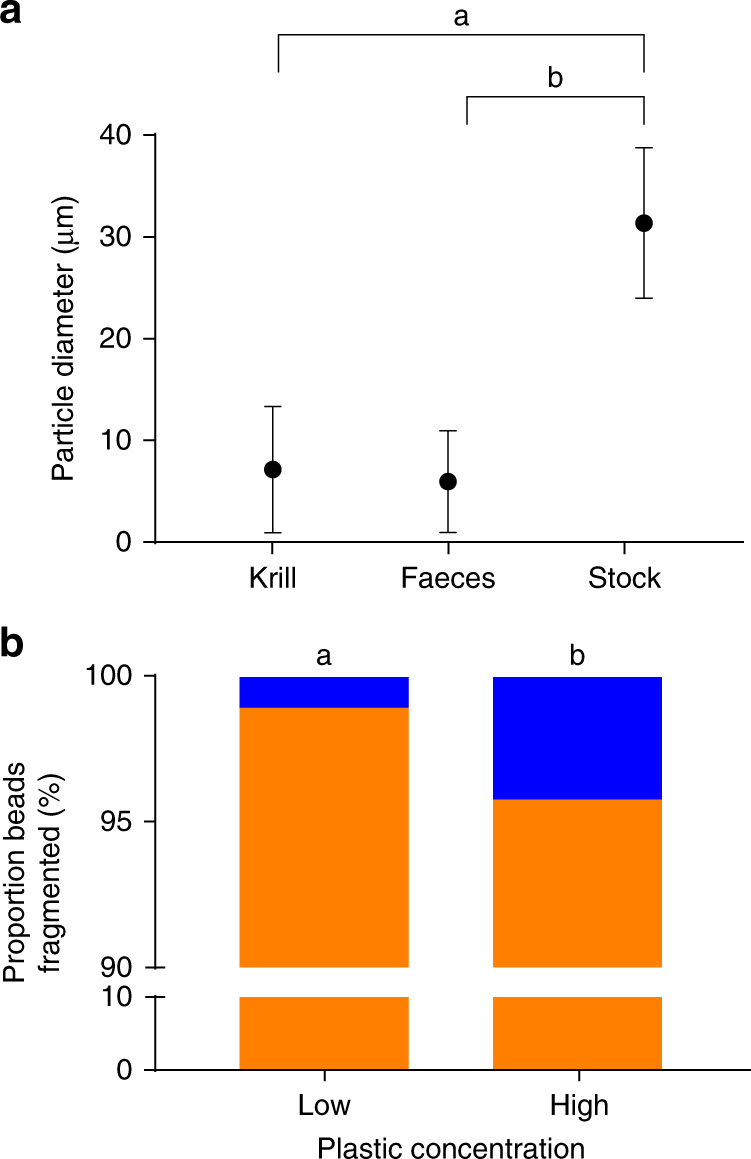
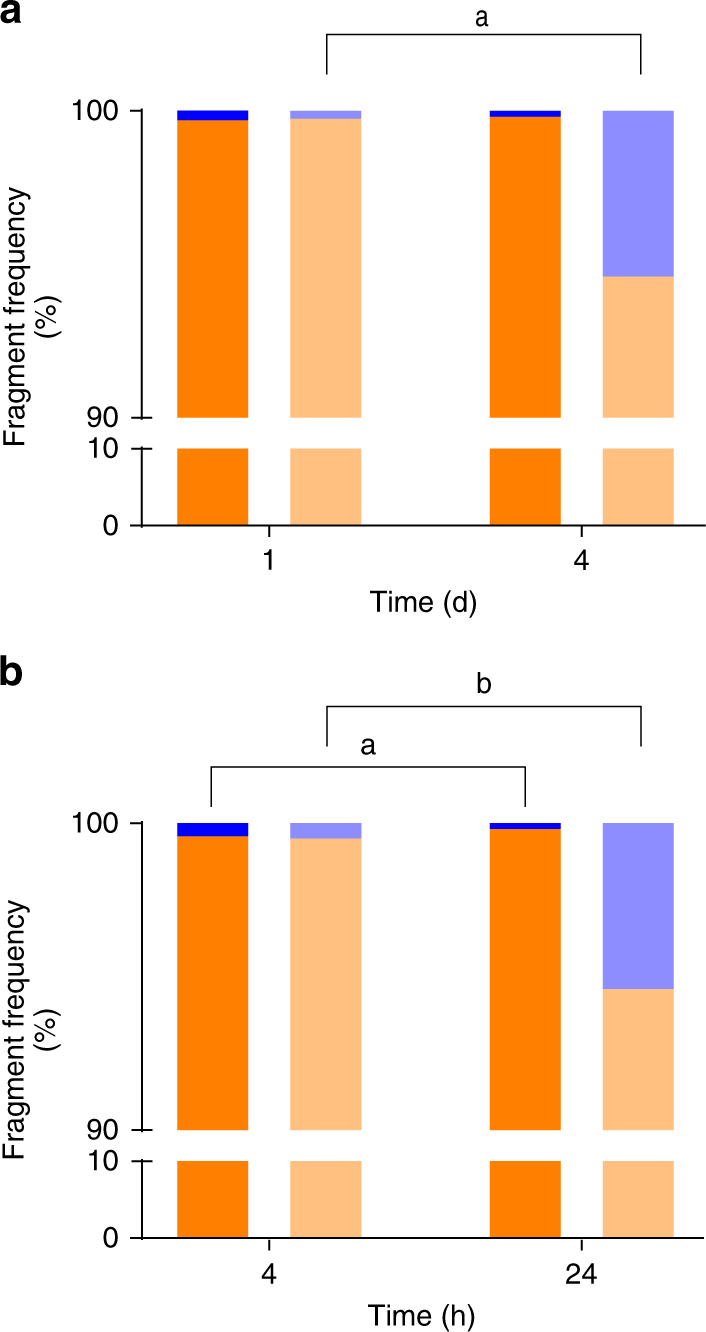
Microplastics (plastics <5 mm diameter) are at the forefront of current environmental pollution research, however, little is known about the degradation of microplastics through ingestion. Here, by exposing Antarctic krill ( Euphausia superba ) to microplastics under acute static renewal conditions, we present evidence of physical size alteration of microplastics ingested by a planktonic crustacean. Ingested microplastics (31.5 µm) are fragmented into pieces less than 1 µm in diameter. Previous feeding studies have shown spherical microplastics either; pass unaffected through an organism and are excreted, or are sufficiently small for translocation to occur. We identify a new pathway; microplastics are fragmented into sizes small enough to cross physical barriers, or are egested as a mixture of triturated particles. These findings suggest that current laboratory-based feeding studies may be oversimplifying interactions between zooplankton and microplastics but also introduces a new role of Antarctic krill, and potentially other species, in the biogeochemical cycling and fate of plastic.
Overview
The claims and statistics of this paper haven’t been checked yet.
Free: it reads the open-access text and checks the first 5 claims that cite a source we can check. Create a free account to check every claim.
Integrity signals
Registry
Cites
Statistics
Figures
Verification
Claims the paper makes
The claims and statistics of this paper haven’t been checked yet.
Free: it reads the open-access text and checks the first 5 claims that cite a source we can check. Create a free account to check every claim.
Claims other papers make about this one
Each is checked against this paper’s own text: does it say what the citing paper says it does?
The source backs part of the claim, not all of it — or backs it for a different population, condition or comparison.
In the citing paper
“PMD fragmentation also leads to the formation of particle sizes <1 mm, i.e. nanoplastics.This has been documented as a result of shear forces in the digestive tracts of krill and perhaps other crustaceans, 96 due to abrasion in a mill 106 or blender, 94 and even as a result of turbulence 95”
From The fate of plastic in the ocean environment – a minireview (2021) · cites this paper as [96]
Experimental — accuracy not yet measuredThe source backs part of the claim, not all of it — or backs it for a different population, condition or comparison.
In the citing paper
“At the nanoscale, optical and chemical methods conventionally used for microplastic analysis are not suitable because of sensitivity issues as well as physical and optical limits.13,40,67,68,96”
From The fate of plastic in the ocean environment – a minireview (2021) · cites this paper as [96]
Experimental — accuracy not yet measuredThe cited source says what the claim attributes to it.
In the citing paper
“Furthermore, the digestive action of marine invertebrates has been demonstrated to facilitate fragmentation of plastic particles to smaller size ranges 37,38 and to provide a pathway for sinking by the excretion of faecal matter aggregates.”
From Weathering plastics as a planetary boundary threat: exposure, fate, and hazards (2021) · cites this paper as [38]
The cited source says what the claim attributes to it.
In the citing paper
“For Antarctic krill, the fragmentation of 31.5 μ m MPs to < 1 μ m mimics this process (Dawson et al., 2018).”
From Trophic transfer of polyester microfibres across a multi-level marine food web. (2025) · cites this paper as Dawson et al., 2018
The check wasn’t confident either way, so it gives no verdict — never disputed.
In the citing paper
“While this is the first report of detailed depuration rates for mysid shrimp, rates calculated here are higher than those reported for similar organisms (i.e., Antarctic krill Euphausia superba , 0.22 h 1 (Dawson et al., 2018)), potentially a consequence of their smaller size.”
From Trophic transfer of polyester microfibres across a multi-level marine food web. (2025) · cites this paper as Dawson et al., 2018
Experimental — accuracy not yet measured
Self-check
Percentages, sums and reported differences re-computed from the paper’s own numbers.
The self-check needs the paper’s full text.
Citations
Cites
Fiji: an open-source platform for biological-image analysis
Schindelin, J., Arganda-Carreras, I., Frise, E., Kaynig, V., Longair, M., Pietzsch, T., Preibisch, S., Rueden, C., Saalfeld, S., Schmid, B., et al. (2012) · Nature Methods · doi:10.1038/nmeth.2019 · Cited by 66,890
Microplastics in the marine environment
Andrady, A. L. (2011) · Marine Pollution Bulletin · doi:10.1016/j.marpolbul.2011.05.030 · Cited by 8,105
Odian, G. (2004) · doi:10.1002/047147875x · Cited by 7,158
Eriksen, M., Lebreton, L. C. M., Carson, H. S., Thiel, M., Moore, C. J., Borerro, J. C., Galgani, F., Ryan, P. G., & Reisser, J. (2014) · PLoS ONE · doi:10.1371/journal.pone.0111913 · Cited by 4,710
(2015) · Springer eBooks · doi:10.1007/978-3-319-16510-3 · Cited by 3,502
Plastic debris in the open ocean
Cózar, A., Echevarría, F., González-Gordillo, J. I., Irigoien, X., Úbeda, B., Hernández-León, S., Palma, Á. T., Navarro, S., García-de-Lomas, J., Ruiz, A., et al. (2014) · Proceedings of the National Academy of Sciences · doi:10.1073/pnas.1314705111 · Cited by 3,133
Microplastic ingestion by zooplankton
Cole, M., Lindeque, P., Fileman, E., Halsband, C., Goodhead, R., Moger, J., & Galloway, T. S. (2013) · Environmental Science & Technology · doi:10.1021/es400663f · Cited by 2,763
The plastic in microplastics: A review
Andrady, A. L. (2017) · Marine Pollution Bulletin · doi:10.1016/j.marpolbul.2017.01.082 · Cited by 2,372
Browne, M. A., Dissanayake, A., Galloway, T. S., Lowe, D. M., & Thompson, R. C. (2008) · Environmental Science & Technology · doi:10.1021/es800249a · Cited by 2,263
Microplastics in bivalves cultured for human consumption
Van Cauwenberghe, L., & Janssen, C. R. (2014) · Environmental Pollution · doi:10.1016/j.envpol.2014.06.010 · Cited by 2,074
Research works printed but not linked: 1
- Rocha-Santos, T. A. P. & Duarte, A. C. Characterization and Analysis of Microplastics Vol. 75 (Elsevier Science, Amsterdam, 2017).
Cited by
Items 401–500 of 1,000
Jiang, J., Zhou, H., Zhang, T., Yao, C., Du, D., Zhao, L., Cai, W., Che, L., Cao, Z., & Wu, X. (2022) · Environmental Pollution · doi:10.1016/j.envpol.2022.119257 · Cited by 51
Plastics in scene: A review of the effect of plastics in aquatic crustaceans
González‐Pisani, X., Lompré, J. S., Pires, A., & Greco, L. S. L. (2022) · Environmental Research · doi:10.1016/j.envres.2022.113484 · Cited by 48
Potential lifetime effects caused by cellular uptake of nanoplastics: A review
Lee, Y., Cho, S., Park, K., Kim, T., Kim, J., Ryu, D.-Y., & Hong, J. (2023) · Environmental Pollution · doi:10.1016/j.envpol.2023.121668 · Cited by 46
An assessment of the ecosystem services of marine zooplankton and the key threats to their provision
Botterell, Z. L. R., Lindeque, P. K., Thompson, R. C., & Beaumont, N. (2023) · Ecosystem Services · doi:10.1016/j.ecoser.2023.101542 · Cited by 48
“…et al., 2018), further research has shown that krill can fragment microplastics into small microplastics and even nanoplastics, which are small enough the translocate through tissue (A. L. Dawson et al., 2018), and can significantly affect swimming behaviour and moulting (Bergami et al., 2020).”
BackgroundMicro/nanorobots for efficient removal and degradation of micro/nanoplastics
Li, W., Wang, J., Xiong, Z., & Li, D. (2023) · Cell Reports Physical Science · doi:10.1016/j.xcrp.2023.101639 · Cited by 51
Welden, N. A. C., & Lusher, A. (2020) · Elsevier eBooks · doi:10.1016/b978-0-12-817880-5.00009-8 · Cited by 48
Bulleri, F., Ravaglioli, C., Anselmi, S., & Renzi, M. (2021) · The Science of The Total Environment · doi:10.1016/j.scitotenv.2021.146650 · Cited by 49
Gupta, B., Ambekar, R. S., Tromer, R. M., Ghosal, P. S., Sinha, R., Majumder, A., Kumbhakar, P., Ajayan, P. M., Galvao, D. S., Gupta, A. K., et al. (2021) · RSC Advances · doi:10.1039/d1ra03097c · Cited by 46
Mateos-Cárdenas, A., Moroney, A. V. D. G., van Pelt, F. N. A. M., O’Halloran, J., & Jansen, M. A. K. (2022) · Food Webs · doi:10.1016/j.fooweb.2022.e00228 · Cited by 50
Wu, J., Ye, Q., Li, P., Sun, L., Huang, M., Liu, J., Ahmed, Z., & Wu, P. (2023) · The Science of The Total Environment · doi:10.1016/j.scitotenv.2023.161787 · Cited by 45
Zhang, J., Ma, C., Xia, X., Li, Y., Lin, X., Zhang, Y., & Yang, Z. (2023) · Environmental Science & Technology · doi:10.1021/acs.est.3c02144 · Cited by 45
Eliso, M. C., Billè, B., Cappello, T., & Maisano, M. S. (2024) · Fishes · doi:10.3390/fishes9030098 · Cited by 47
Rehman, A., Huang, F.-Y., Zhang, Z., Habumugisha, T., Yan, C., Shaheen, U., & Zhang, X. (2024) · Environment International · doi:10.1016/j.envint.2024.108713 · Cited by 47
Li, Y., Ling, W., Hou, C., Yang, J., Xing, Y., Lu, Q., Wu, T., & Gao, Z. (2025) · Journal of Hazardous Materials · doi:10.1016/j.jhazmat.2025.137977 · Cited by 50
Plastic pollution – A case study with Enchytraeus crypticus – From micro-to nanoplastics
Amorim, M. J. B., & Scott-Fordsmand, J. J. (2020) · Environmental Pollution · doi:10.1016/j.envpol.2020.116363 · Cited by 46
Pérez‐Guevara, F., Roy, P. D., Kutralam-Muniasamy, G., & Shruti, V. C. (2021) · Journal of Hazardous Materials Advances · doi:10.1016/j.hazadv.2021.100021 · Cited by 51
Microplastic inventory in sediment profile: A case study of Golden Horn Estuary, Sea of Marmara
Belivermiş, M., Kılıç, Ö., Sezer, N., Sıkdokur, E., Güngör, N. D., & Altuğ, G. (2021) · Marine Pollution Bulletin · doi:10.1016/j.marpolbul.2021.113117 · Cited by 47
A Critical Review of Marine Microfiber Pollution Routes, Toxicity, and Its Sustainable Remediation
Mallick, K., Sahu, S., Sahu, A., Dey, S., & Das, A. P. (2024) · Environmental science and engineering · doi:10.1007/978-3-031-51792-1_10 · Cited by 46
Marine plastic pollution in the polar south: Responses from Antarctic Treaty System
Zhang, M., Haward, M., & McGee, J. (2020) · Polar Record · doi:10.1017/s0032247420000388 · Cited by 46
“Dawson et al. (2018) examined microplastics digested by crustaceans and found that krill had the ability to physically change the size of the microplastics they ingested and turn them into nano-plastics (small particles from 1 to 1000 nanometres (nm)).”
BackgroundWang, J., Zhao, X., Wu, F., Niu, L., Tang, Z., Liang, W., Zhao, T., Fang, M., Wang, H., & Wang, X. (2021) · Fundamental Research · doi:10.1016/j.fmre.2021.05.001 · Cited by 46
Zhang, F., Xu, J., Zhu, L., Peng, G., Jabeen, K., Wang, X., & Li, D. (2021) · Journal of Hazardous Materials · doi:10.1016/j.jhazmat.2021.126456 · Cited by 44
Hygroscopicity of Microplastic and Mixed Microplastic Aqueous Ammonium Sulfate Systems
Bain, A., & Preston, T. C. (2021) · Environmental Science & Technology · doi:10.1021/acs.est.1c04272 · Cited by 43
Toxicity effects of polystyrene nanoplastics and arsenite on Microcystis aeruginosa
Wang, Q., Liu, W., Zeb, A., Lian, Y., Shi, R., Li, J., & Zheng, Z. (2023) · The Science of The Total Environment · doi:10.1016/j.scitotenv.2023.162496 · Cited by 43
De-la-Torre, G. E., Santillán, L., Dioses-Salinas, D. C., Yenney, E., Toapanta, T. Y. A., Okoffo, E. D., Kannan, G., Madadi, R., & Dobaradaran, S. (2024) · Chemosphere · doi:10.1016/j.chemosphere.2024.141870 · Cited by 45
Extraction method development for nanoplastics from oyster and fish tissues
Chang, Y.-S., Chou, S.-H., Jhang, Y.-J., Wu, T., Lin, L., Soo, Y. L., & Hsiao, I. (2021) · The Science of The Total Environment · doi:10.1016/j.scitotenv.2021.152675 · Cited by 42
The heteroaggregation and deposition behavior of nanoplastics on Al2O3 in aquatic environments
Wu, J., Liu, J., Wu, P., Sun, L., Chen, M., Shang, Z., Ye, Q., & Zhu, N. (2022) · Journal of Hazardous Materials · doi:10.1016/j.jhazmat.2022.128964 · Cited by 42
Kaliszewicz, A., Panteleeva, N. N., Karaban, K., Runka, T., Winczek, M., Beck, E., Poniatowska, A., Olejniczak, I., Boniecki, P., Golovanova, E. V., et al. (2023) · Biology · doi:10.3390/biology12020259 · Cited by 43
“, fish [69,70] and invertebrates such as krill [71].”
BackgroundDirect Quantification of Nanoplastics Neurotoxicity by Single‐Vesicle Electrochemistry
Wei, S., Wu, F., Liu, J., Ji, W., He, X., Liu, R., Yu, P., & Mao, L. (2023) · Angewandte Chemie International Edition · doi:10.1002/anie.202315681 · Cited by 41
Ojha, P. C., Satpathy, S. S., Ojha, R., Dash, J., & Pradhan, D. (2024) · Environmental Monitoring and Assessment · doi:10.1007/s10661-024-13247-0 · Cited by 42
“Dawson et al. (2018) investigated the potential of Antarctic Krill to ingest PE-based MPs and delve into the mechanisms of fragmentation and size alteration following ingestion, shedding light on the intriguing phenomenon of biologically-mediated transformation of MPs into NPs.”
Martinelli, M., Gomiero, A., Guicciardi, S., Frapiccini, E., Strafella, P., Angelini, S., Domenichetti, F., Belardinelli, A., & Colella, S. (2021) · Environmental Pollution · doi:10.1016/j.envpol.2021.116872 · Cited by 39
Albano, M., Panarello, G., Paola, D. D., D’Angelo, G., Granata, A., Savoca, S., & Capillo, G. (2021) · International Journal of Environmental Studies · doi:10.1080/00207233.2021.1893489 · Cited by 41
“This result could be related to both the fragmentation process that the plastic particles undergo following ingestion or could once again suggest the indiscriminate ingestion of debris [20].”
BackgroundZooplankton as a suitable tool for microplastic research
Alfonso, M. B., LINDSAY, D. J., Arias, A. H., Nakano, H., Jandang, S., & Isobe, A. (2023) · The Science of The Total Environment · doi:10.1016/j.scitotenv.2023.167329 · Cited by 44
Ducoli, S., Federici, S., Nicsanu, R., Zendrini, A., Marchesi, C., Paolini, L., Radeghieri, A., Bergese, P., & Depero, L. E. (2022) · Environmental Science Nano · doi:10.1039/d1en01016f · Cited by 57
Evidence for protein misfolding in the presence of nanoplastics
Hollóczki, O. (2020) · International Journal of Quantum Chemistry · doi:10.1002/qua.26372 · Cited by 41
Latchere, O., Audroin, T., Hétier, J., Métais, I., & Châtel, A. (2021) · Environmental Pollution · doi:10.1016/j.envpol.2021.116449 · Cited by 40
Wang, T., Tong, C., Wu, F., Jiang, S., & Zhang, S. (2023) · The Science of The Total Environment · doi:10.1016/j.scitotenv.2023.164041 · Cited by 40
Bottari, T., Nibali, V. C., Branca, C., Grotti, M., Savoca, S., Romeo, T., Spanò, N., Azzaro, M., Greco, S., D’Angelo, G., et al. (2022) · Scientific Reports · doi:10.1038/s41598-022-21670-x · Cited by 39
Manno, C., Peck, V. L., Corsi, I., & Bergami, E. (2021) · Marine Pollution Bulletin · doi:10.1016/j.marpolbul.2021.113176 · Cited by 39
Bao, R., Cheng, Z., Peng, L., Mehmood, T., Gao, L., Zhuo, S., Wang, L., & Su, Y. (2023) · Aquatic Toxicology · doi:10.1016/j.aquatox.2023.106745 · Cited by 41
Impact of nanoplastics on membrane scaling and fouling in reverse osmosis desalination process
Yang, Q., Zhang, J., Zhang, N., Wang, D., Yuan, X.-Z., Tang, C. Y., Gao, B., & Wang, Z. (2023) · Water Research · doi:10.1016/j.watres.2023.120945 · Cited by 39
Peng, B.-Y., Xu, Y., Sun, Y. X., Xiao, S., Sun, J., Shen, Z., Chen, J., Zhou, X., & Zhang, Y. (2023) · Journal of Cleaner Production · doi:10.1016/j.jclepro.2023.136831 · Cited by 39
Removal of microplastics in unit processes used in water and wastewater treatment: a review
Bodzek, M., & Pohl, A. (2022) · Archives of Environmental Protection · doi:10.24425/aep.2022.143713 · Cited by 49
“The experiments confirmed that smaller microplastics are much more easily fragmented under environmental conditions, and the physical size decreased from ~ 31 μm for the MPs to less than 1 μm for the fragmentation products (Dawson et al. 2018).”
BackgroundInfluentialOccurrence of microplastics (MPs) in Antarctica and its impact on the health of organisms
Bhardwaj, L. K. (2023) · Maritime Technology and Research · doi:10.33175/mtr.2024.265418 · Cited by 39
Plastic Waste: How Plastics Have Become Part of the Earth's Geological Cycle
Zalasiewicz, J., Gabbott, S. E., & Waters, C. N. (2019) · Elsevier eBooks · doi:10.1016/b978-0-12-815060-3.00023-2 · Cited by 45
Coverage of microplastic data underreporting and progress toward standardization
Pérez‐Guevara, F., Roy, P. D., Kutralam-Muniasamy, G., & Shruti, V. C. (2022) · The Science of The Total Environment · doi:10.1016/j.scitotenv.2022.154727 · Cited by 39
Martins, A., da Silva, D. D., Silva, R. V. D. S., Carvalho, F. D., & Guilhermino, L. M. (2022) · The Science of The Total Environment · doi:10.1016/j.scitotenv.2022.155934 · Cited by 42
Nanoplastics Detected in Commercial Sea Salt
Ruan, X., Ao, J., Ma, M., Jones, R. R., Liu, J., Li, K., Ge, Q., Xu, G., Liu, Y., Wang, T., et al. (2024) · Environmental Science & Technology · doi:10.1021/acs.est.3c11021 · Cited by 38
Wu, X., Xia, P., Ren, L., Guan, J., & Pumera, M. (2024) · Advanced Functional Materials · doi:10.1002/adfm.202410167 · Cited by 37
Liu, F., Wang, S., Zhu, Z., & Liu, G. (2021) · Water · doi:10.3390/w13121713 · Cited by 44
Review of green technologies for the removal of microplastics from diverse environmental sources
Namasivayam, S. K. R., & Avinash, G. P. (2023) · Environmental Quality Management · doi:10.1002/tqem.22131 · Cited by 37
Ompala, C., Renault, J., Taché, O., Cournède, É., Devineau, S., & Chivas‐Joly, C. (2023) · Journal of Hazardous Materials · doi:10.1016/j.jhazmat.2024.134083 · Cited by 39
Rong, J., Yuan, C., Xiang, Y., Wu, X., He, F., Wang, Y., Leung, K. S., & Lin, S. (2024) · The Science of The Total Environment · doi:10.1016/j.scitotenv.2024.172681 · Cited by 36
Jeyasanta, K. I., Sathish, N., Patterson, J., Esmeralda, G., V, & Laju, R. L. (2024) · Chemosphere · doi:10.1016/j.chemosphere.2024.142832 · Cited by 36
Ionic Liquids as Extractants for Nanoplastics
Elfgen, R., Gehrke, S., & Hollóczki, O. (2020) · ChemSusChem · doi:10.1002/cssc.202001749 · Cited by 38
Feng, Y., Duan, J.-L., Sun, X., Ma, J.-Y., Wang, Q., Li, X., Tian, W.-X., Wang, S., & Yuan, X.-Z. (2020) · Environmental Pollution · doi:10.1016/j.envpol.2020.115755 · Cited by 36
Groppe, P., Wintzheimer, S., Eigen, A., Gaß, H., Halik, M., & Mandel, K. S. (2022) · Environmental Science Nano · doi:10.1039/d2en00131d · Cited by 40
Seuront, L., Zardi, G. I., Uguen, M., Bouchet, V. M. P., Delaeter, C., Henry, S., Spilmont, N., & Nicastro, K. R. (2022) · The Science of The Total Environment · doi:10.1016/j.scitotenv.2022.157187 · Cited by 41
“NPs also derive from the fragmentation and weathering of MPs (Gigault et al., 2016; Dawson et al., 2018; Ekvall et al., 2019; Enfrin et al., 2020; Piccardo et al., 2020; Wang et al., 2021), just as MPs are mostly derived from the fragmentation of macroplastics.”
BackgroundMicroplastics in food commodities
Gamarro, E. G., & Constanzo, V. (2022) · FAO eBooks · doi:10.4060/cc2392en · Cited by 55
Zheng, Y., Zhu, J., Li, J., Li, G., & Shi, H. (2023) · Journal of Hazardous Materials · doi:10.1016/j.jhazmat.2023.130764 · Cited by 37
Hasegawa, T., Mizukawa, K., Yeo, B. G., Sekioka, T., Takada, H., & Nakaoka, M. (2021) · Marine Pollution Bulletin · doi:10.1016/j.marpolbul.2022.114343 · Cited by 37
The occurrence of microplastic in aquatic environment and toxic effects for organisms
Chen, Y., Cheng, X., & Zeng, Y. (2023) · International Journal of Environmental Science and Technology · doi:10.1007/s13762-023-04789-w · Cited by 37
“Antarctic krill Euphausia superba can ingest MPs in laboratory experiments (Dawson et al. 2018).”
BackgroundVertical flux of microplastic, a case study in the Southern Ocean, South Georgia
Rowlands, E., Galloway, T. S., Cole, M., Peck, V. L., Posacka, A. M., Thorpe, S. E., & Manno, C. (2023) · Marine Pollution Bulletin · doi:10.1016/j.marpolbul.2023.115117 · Cited by 35
Wu, F., Wang, T., Li, X., Zhao, R., & He, F. (2023) · The Science of The Total Environment · doi:10.1016/j.scitotenv.2023.165258 · Cited by 38
Toxicity assessment of bioplastics on brine shrimp (Artemia franciscana) and cell lines
Charoeythornkhajhornchai, P., Kunjiek, T., Chaipayang, S., & Phosri, S. (2023) · Emerging contaminants · doi:10.1016/j.emcon.2023.100253 · Cited by 43
Kong, W., Jalalah, M., Alsareii, S. A., Harraz, F. A., Almadiy, A. A., Zheng, Y., Thakur, N., & Salama, E. (2023) · Journal of environmental chemical engineering · doi:10.1016/j.jece.2023.111408 · Cited by 36
George, M., Nallet, F., & Fabre, P. (2023) · Marine Pollution Bulletin · doi:10.1016/j.marpolbul.2023.116012 · Cited by 35
“One would not necessarily need to invoke any other mechanism or bias such as ingestion by living organisms [33] or the mesh size of collection nets [14, 16], to explain the field data for float-ing debris.”
BackgroundMondal, P., Hoque, M. S., Rahman, M. A., Hasan, M. M., Chakma, S., Islam, M. S., & Shahjahan, M. (2024) · Marine Pollution Bulletin · doi:10.1016/j.marpolbul.2024.117020 · Cited by 38
Yuan, Q., Wang, Y., Mei, R., Zhao, X., Song, J., Chen, J., Wu, Y., & Chen, L. (2025) · Environmental Science & Technology · doi:10.1021/acs.est.5c03571 · Cited by 34
Li, X., Hu, J., Qiu, R., Zhang, X., Chen, Y., & He, D. (2020) · Environmental Science Nano · doi:10.1039/d0en00654h · Cited by 39
Duru, C. E., Duru, I. A., & Enyoh, C. E. (2021) · Bulletin of the National Research Centre/Bulletin of the National Research Center · doi:10.1186/s42269-021-00563-5 · Cited by 34
Gao, Q., Wang, Y., Ji, Y., Zhao, X., Zhang, P., & Chen, L. (2021) · Journal of Hazardous Materials · doi:10.1016/j.jhazmat.2021.127628 · Cited by 36
Nan, X., Jin, X., Yu, S., Zhou, K., Qin, Y., Wang, Q., & Li, W. (2022) · Environmental Pollution · doi:10.1016/j.envpol.2022.119960 · Cited by 35
Investigation of Microplastic Ingestion in Commercial Fishes from Surabaya River, Indonesia
Lestari, P., Trihadiningrum, Y., & Warmadewanthi, I. (2022) · Environmental Pollution · doi:10.1016/j.envpol.2023.121807 · Cited by 42
Nohara, N. M. L., Ariza-Tarazona, M. C., Triboni, E. R., Nohara, E. L., Villarreal-Chiu, J. F., & Cedillo-González, E. I. (2024) · The Science of The Total Environment · doi:10.1016/j.scitotenv.2024.170382 · Cited by 40
“For example, 31.5 μ m PE microplastics were found to be digestively triturated into nanoplastics ( 1 μ m) in Antarctic krill ( Euphausia superba ), which increased the capacity of fragments to cross biological barriers or are egested as a mixture of triturated particles (Dawson et al., 2018).”
InfluentialMicrobial bioremediation techniques of microplastics and nanoplastics in the marine environment
Zhou, J., Chen, M., Li, Y., Wang, J., Chen, G., & Wang, J. (2024) · TrAC Trends in Analytical Chemistry · doi:10.1016/j.trac.2024.117971 · Cited by 38
Moteallemi, A., Dehghani, M. H., Momeniha, F., & Azizi, S. (2024) · Microchemical Journal · doi:10.1016/j.microc.2024.111884 · Cited by 35
Microplastics in spotted seal cubs (Phoca largha): Digestion after ingestion?
Wang, F., Yu, Y., Wu, H., Wu, W., Wang, L., An, L., & Cai, W. (2021) · The Science of The Total Environment · doi:10.1016/j.scitotenv.2021.147426 · Cited by 35
Sustainable removal of nano/microplastics in water by solar energy
Wang, P., Huang, Z., Chen, S., Jing, M., Ge, Z., Chen, J., Yang, S., Chen, J., & Fang, Y. (2021) · Chemical Engineering Journal · doi:10.1016/j.cej.2021.131196 · Cited by 39
Plastistone: An emerging type of sedimentary rock
Wang, L., & Hou, D. (2023) · Earth-Science Reviews · doi:10.1016/j.earscirev.2023.104620 · Cited by 37
A review of current approaches for the study of microplastic contamination in crustaceans
Sorrentino, R., & Senna, A. R. (2020) · Environmental Reviews · doi:10.1139/er-2020-0024 · Cited by 34
Li, X., Tian, Z., Kong, Y., Cao, X., Liu, N., Zhang, T., Xiao, Z., & Wang, Z. (2024) · Journal of Hazardous Materials · doi:10.1016/j.jhazmat.2024.134426 · Cited by 32
NiO/AgNPs nanowell enhanced SERS sensor for efficient detection of micro/nanoplastics in beverages
Li, Z., Ding, Z., Yan, Z., Han, K., Zhang, M., Zhou, H., Sun, X. J., Sun, H., Li, J., Zhang, W., et al. (2024) · Talanta · doi:10.1016/j.talanta.2024.126877 · Cited by 32
Zhao, R., Ding, J., Yang, Y., Huang, H., & Di, Y. (2025) · Journal of Hazardous Materials · doi:10.1016/j.jhazmat.2025.137620 · Cited by 33
Liang, Y., Hu, S., Zhang, Q., Zhang, D., Guo, G., & Wang, X. (2022) · Analytical Chemistry · doi:10.1021/acs.analchem.1c02752 · Cited by 33
Extraction of biodegradable microplastics from tissues of aquatic organisms
Yu, W., Chen, J., Zhang, S., Zhao, Y., Fang, M., Deng, Y., & Zhang, Y. (2022) · The Science of The Total Environment · doi:10.1016/j.scitotenv.2022.156396 · Cited by 34
McIvor, A. J., Pires, R., Lopes, C., Raimundo, J., Campos, P. F., Pais, M. P., Canning‐Clode, J., & Dinis, A. (2022) · The Science of The Total Environment · doi:10.1016/j.scitotenv.2022.159077 · Cited by 32
Do flushed biodegradable wet wipes really degrade?
Allison, T., Ward, B. D., Harbottle, M., & Durance, I. (2023) · The Science of The Total Environment · doi:10.1016/j.scitotenv.2023.164912 · Cited by 33
Wei, Y., & Chen, Y. (2023) · ACS ES&T Water · doi:10.1021/acsestwater.3c00645 · Cited by 34
Wei, Y., Chen, Y., Cao, X., Yeh, T. J., Zhang, J., Zhan, Z., Cui, Y., & Li, H. (2024) · Environmental Science & Technology · doi:10.1021/acs.est.4c05202 · Cited by 52
Lu, T., Gilfedder, B. S., Peng, H., Peiffer, S., Papastavrou, G., Ottermann, K., & Frei, S. (2021) · Water Air & Soil Pollution · doi:10.1007/s11270-021-05125-z · Cited by 33
“photo-oxidation (Yousif and Haddad, 2013), and biodegradation (Albertsson and Karlsson, 1994), degrade macroplastics (fragments > 5000 μm) into microplastics (MPs) (particles in between 100 nm and 5000 μm) and nanoplastics (NPs) (< 100 nm) (Arthur et al., 2008; Dawson et al., 2018; Gigault et al., 2018; Mattsson et al…”
BackgroundYip, Y. J., Lee, S. S. C., Neo, M. L., Teo, S. L., & Valiyaveettil, S. (2021) · The Science of The Total Environment · doi:10.1016/j.scitotenv.2021.150965 · Cited by 31
Li, Y., Ye, Y., Yuan, H., Rihan, N., Han, M., Liu, X., Zhu, T., Zhao, Y., & Che, X. (2024) · The Science of The Total Environment · doi:10.1016/j.scitotenv.2024.170924 · Cited by 31
Sucharitakul, P., Pitt, K. A., & Welsh, D. T. (2020) · Marine Pollution Bulletin · doi:10.1016/j.marpolbul.2020.111208 · Cited by 32
Evidence of internalized microplastics in mussel tissues detected by volumetric Raman imaging
Aramendia, J., García-Velasco, N., Amigo, J. M., Izagirre, U., Seifert, A., Soto, M., & Castro, K. (2024) · The Science of The Total Environment · doi:10.1016/j.scitotenv.2024.169960 · Cited by 30
Wang, X., Du, S., Qu, C., Yu, F., Zheng, L., Su, M., Liu, H., & Shao, B. (2024) · Chemical Engineering Journal · doi:10.1016/j.cej.2024.150415 · Cited by 30
Ye, Q., Wu, Y., Liu, W.-R., Ma, X., He, D., Wang, Y., Li, J., & Wu, W. (2024) · Chemosphere · doi:10.1016/j.chemosphere.2024.141689 · Cited by 31
Azarm-Karnagh, S., Sattari, M., Banaee, M., Hadavand, B. S., & Falco, F. (2025) · Toxics · doi:10.3390/toxics13050336 · Cited by 31
“Discarded plastics are broken down by biotic factors, such as digestion [4], and abiotic factors, such as UV radiation [5].”
Abundance of microplastics and nanoplastics in urban atmosphere
Hu, T., Zhang, C., Zhu, Y., Duan, J., Liu, S., jin, N., Song, Y., Wu, F., Li, J., Zhang, T., et al. (2026) · Science Advances · doi:10.1126/sciadv.adz7779 · Cited by 35
“Originating from urban, agricultural, and industrial sources, larger waste plastic items undergo fragmentation via physical, chemical, or biological processes over time and generate numerous smaller plastic debris or particles ( 2 , 3 ).”
Li, W., Zu, B., Yang, Q., An, J., & Li, J. (2022) · Marine Pollution Bulletin · doi:10.1016/j.marpolbul.2022.113602 · Cited by 31
Immerschitt, I., & Martens, A. (2020) · Zenodo (CERN European Organization for Nuclear Research) · doi:10.5281/zenodo.3823328 · Cited by 30
Metadata
- Authors
- Dawson, A. L., Kawaguchi, S., King, C. K., Townsend, K. A., King, R., Huston, W. M., & Bengtson Nash, S. M.
- Affiliations
- Griffith University (AU)
- Australian Antarctic Division (AU)
- The University of Queensland (AU)
- University of Technology Sydney (AU)
- Corresponding author
- Dawson, Amanda L.
- ORCID
- Venue
- Nature Communications
- Published
- 2018-03-08
- Volume
- 9
- Issue
- 1
- Pages
- 1001-1001
- ISSN
- 2041-1723 (ISSN-L)
- PMC
- PMC5843626
- OpenAlex
- W2794249619
- Cited by
- 1,023
- References
- 52
- Citations by year
- 2026: 99 · 2025: 133 · 2024: 151 · 2023: 176 · 2022: 165 · 2021: 126 · 2020: 102 · 2019: 54 · 2018: 16
- FWCI
- 27.95
- Type
- journal article
- Language
- en
- Open access
- gold
- doi.org
- Licence
- cc-by
- creativecommons.org/licenses/by/4.0 (tdm)
- creativecommons.org/licenses/by/4.0 (vor)
- Locations
- Nature Communications (publishedVersion, cc-by)
- PubMed Central (publishedVersion, cc-by)
- PubMed (publishedVersion)
- RePEc: Research Papers in Economics (submittedVersion)
- DOAJ (DOAJ: Directory of Open Access Journals) (submittedVersion)
- DOAJ (DOAJ: Directory of Open Access Journals) (submittedVersion, cc-by-sa)
- UTS ePRESS (University of Technology Sydney) (submittedVersion)
- Griffith Research Online (submittedVersion, cc-by)
- Funders
- QIMR Berghofer Medical Research Institute
- Australian Antarctic Division
- Topics
- Physical Sciences › Environmental Science › Pollution › Microplastics and Plastic Pollution
- Physical Sciences › Environmental Science › Health, Toxicology and Mutagenesis › Environmental Toxicology and Ecotoxicology
- Physical Sciences › Environmental Science › Pollution › Pharmaceutical and Antibiotic Environmental Impacts
- Keywords
- microplastics, nanoplastics, Antarctic krill, ingestion, zooplankton, plastic degradation, particle size reduction
- MeSH terms
- Animals, Digestion, Feces, Water Pollutants, Chemical, Polyethylene, Euphausiacea, Nanoparticles
About these checks
Registry, retraction, Cites and statistics results are computed, not judged, with one exception: a printed reference that no index lists is read once by a model before it counts as a citation error. Claims are extracted by a model and kept only when their quote appears verbatim in the text; each cited source is then checked, with a model’s help, for whether it says what the claim relies on. Those verdicts can be wrong — read the claim’s quote and the cited source before relying on one.
Statistics and arithmetic are recomputed, not judged.
Confidence bands are shown only for fields calibrated on our annotated test set. None is calibrated yet, so no band is shown.
What counts as a claim ›How we measure confidence ›How we check this ›
Are you an author, or do you see a problem with this page? Request a review
Data sources
Bibliographic data: Semantic Scholar, OpenAlex, Crossref.
Contains information from the Semantic Scholar Academic Graph Datasets, made available under the ODC Attribution License (ODC-BY 1.0).
Semantic Scholar’s data is described in: Kinney, R., et al. (2023). The Semantic Scholar Open Data Platform. arXiv:2301.10140.
