

Turning microplastics into nanoplastics through digestive fragmentation by Antarctic krill
Open accessThe DOI matches its Crossref record; 52 of the 52 references it cites were found in a registry or an index.
Abstract
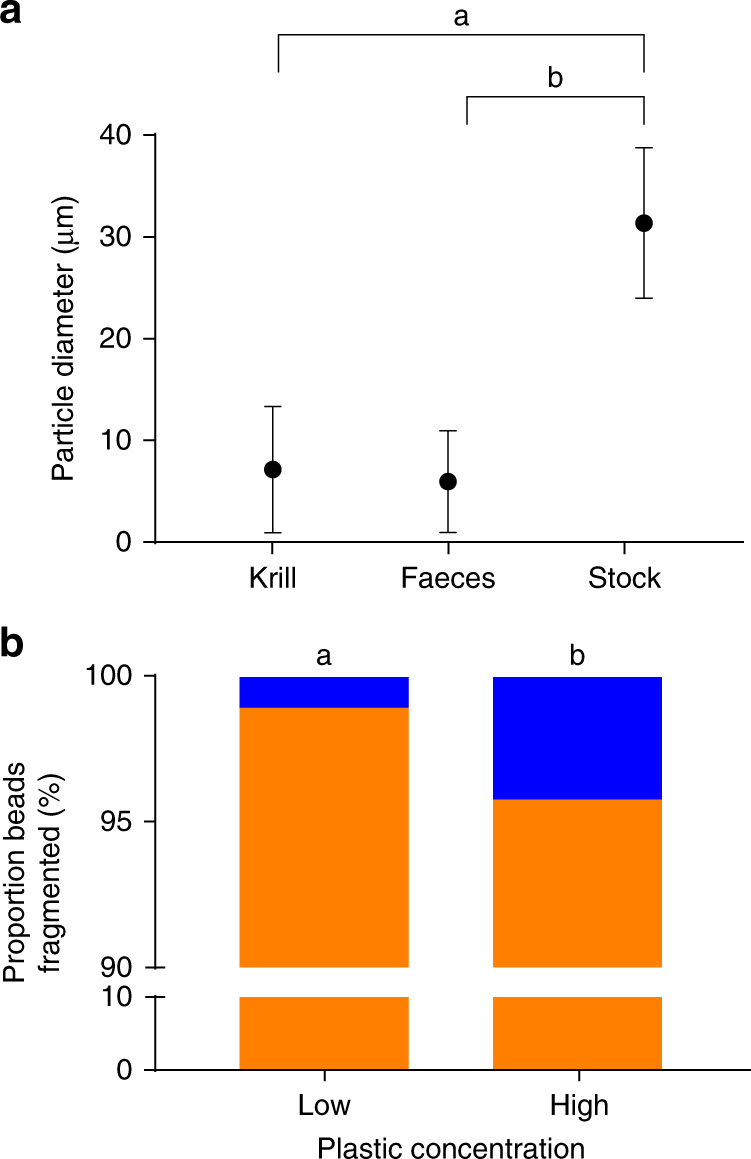
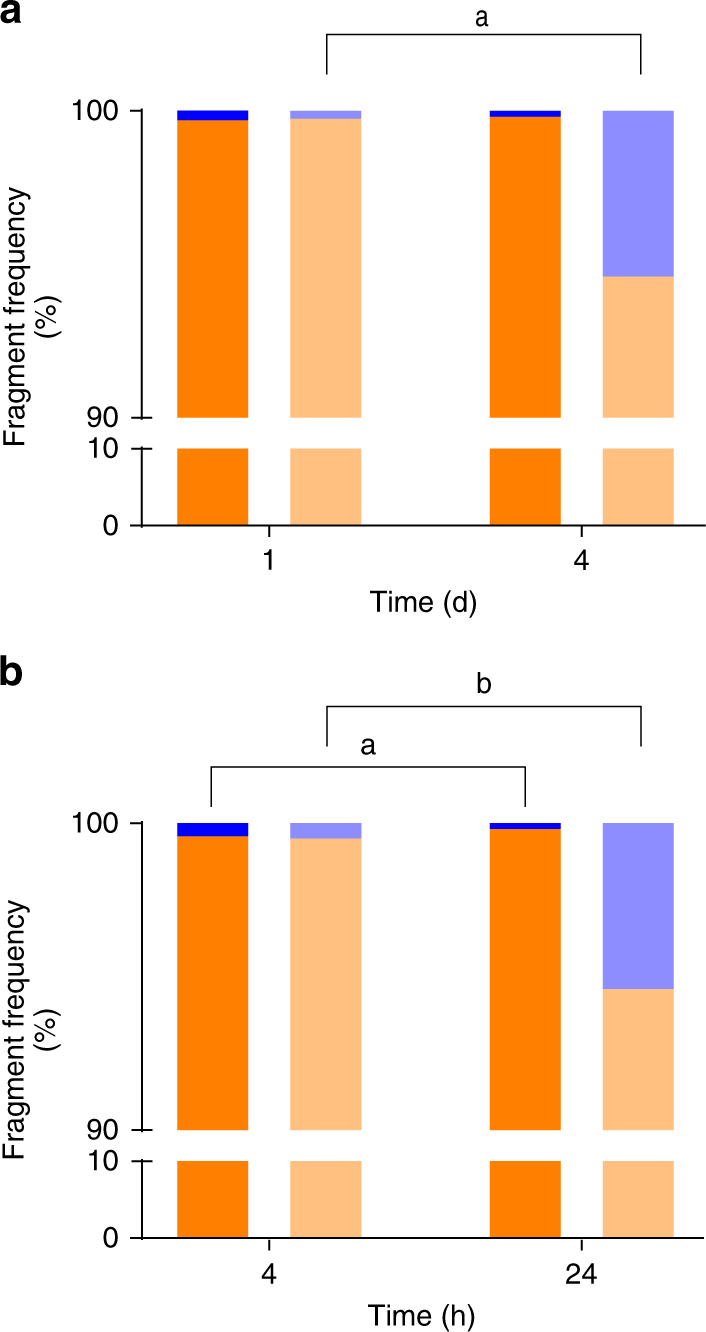
Microplastics (plastics <5 mm diameter) are at the forefront of current environmental pollution research, however, little is known about the degradation of microplastics through ingestion. Here, by exposing Antarctic krill ( Euphausia superba ) to microplastics under acute static renewal conditions, we present evidence of physical size alteration of microplastics ingested by a planktonic crustacean. Ingested microplastics (31.5 µm) are fragmented into pieces less than 1 µm in diameter. Previous feeding studies have shown spherical microplastics either; pass unaffected through an organism and are excreted, or are sufficiently small for translocation to occur. We identify a new pathway; microplastics are fragmented into sizes small enough to cross physical barriers, or are egested as a mixture of triturated particles. These findings suggest that current laboratory-based feeding studies may be oversimplifying interactions between zooplankton and microplastics but also introduces a new role of Antarctic krill, and potentially other species, in the biogeochemical cycling and fate of plastic.
Overview
The claims and statistics of this paper haven’t been checked yet.
Free: it reads the open-access text and checks the first 5 claims that cite a source we can check. Create a free account to check every claim.
Integrity signals
Registry
Cites
Statistics
Figures
Verification
Claims the paper makes
The claims and statistics of this paper haven’t been checked yet.
Free: it reads the open-access text and checks the first 5 claims that cite a source we can check. Create a free account to check every claim.
Claims other papers make about this one
Each is checked against this paper’s own text: does it say what the citing paper says it does?
The source backs part of the claim, not all of it — or backs it for a different population, condition or comparison.
In the citing paper
“PMD fragmentation also leads to the formation of particle sizes <1 mm, i.e. nanoplastics.This has been documented as a result of shear forces in the digestive tracts of krill and perhaps other crustaceans, 96 due to abrasion in a mill 106 or blender, 94 and even as a result of turbulence 95”
From The fate of plastic in the ocean environment – a minireview (2021) · cites this paper as [96]
Experimental — accuracy not yet measuredThe source backs part of the claim, not all of it — or backs it for a different population, condition or comparison.
In the citing paper
“At the nanoscale, optical and chemical methods conventionally used for microplastic analysis are not suitable because of sensitivity issues as well as physical and optical limits.13,40,67,68,96”
From The fate of plastic in the ocean environment – a minireview (2021) · cites this paper as [96]
Experimental — accuracy not yet measuredThe cited source says what the claim attributes to it.
In the citing paper
“Furthermore, the digestive action of marine invertebrates has been demonstrated to facilitate fragmentation of plastic particles to smaller size ranges 37,38 and to provide a pathway for sinking by the excretion of faecal matter aggregates.”
From Weathering plastics as a planetary boundary threat: exposure, fate, and hazards (2021) · cites this paper as [38]
The cited source says what the claim attributes to it.
In the citing paper
“For Antarctic krill, the fragmentation of 31.5 μ m MPs to < 1 μ m mimics this process (Dawson et al., 2018).”
From Trophic transfer of polyester microfibres across a multi-level marine food web. (2025) · cites this paper as Dawson et al., 2018
The check wasn’t confident either way, so it gives no verdict — never disputed.
In the citing paper
“While this is the first report of detailed depuration rates for mysid shrimp, rates calculated here are higher than those reported for similar organisms (i.e., Antarctic krill Euphausia superba , 0.22 h 1 (Dawson et al., 2018)), potentially a consequence of their smaller size.”
From Trophic transfer of polyester microfibres across a multi-level marine food web. (2025) · cites this paper as Dawson et al., 2018
Experimental — accuracy not yet measured
Self-check
Percentages, sums and reported differences re-computed from the paper’s own numbers.
The self-check needs the paper’s full text.
Citations
Cites
Fiji: an open-source platform for biological-image analysis
Schindelin, J., Arganda-Carreras, I., Frise, E., Kaynig, V., Longair, M., Pietzsch, T., Preibisch, S., Rueden, C., Saalfeld, S., Schmid, B., et al. (2012) · Nature Methods · doi:10.1038/nmeth.2019 · Cited by 66,890
Microplastics in the marine environment
Andrady, A. L. (2011) · Marine Pollution Bulletin · doi:10.1016/j.marpolbul.2011.05.030 · Cited by 8,105
Odian, G. (2004) · doi:10.1002/047147875x · Cited by 7,158
Eriksen, M., Lebreton, L. C. M., Carson, H. S., Thiel, M., Moore, C. J., Borerro, J. C., Galgani, F., Ryan, P. G., & Reisser, J. (2014) · PLoS ONE · doi:10.1371/journal.pone.0111913 · Cited by 4,710
(2015) · Springer eBooks · doi:10.1007/978-3-319-16510-3 · Cited by 3,502
Plastic debris in the open ocean
Cózar, A., Echevarría, F., González-Gordillo, J. I., Irigoien, X., Úbeda, B., Hernández-León, S., Palma, Á. T., Navarro, S., García-de-Lomas, J., Ruiz, A., et al. (2014) · Proceedings of the National Academy of Sciences · doi:10.1073/pnas.1314705111 · Cited by 3,133
Microplastic ingestion by zooplankton
Cole, M., Lindeque, P., Fileman, E., Halsband, C., Goodhead, R., Moger, J., & Galloway, T. S. (2013) · Environmental Science & Technology · doi:10.1021/es400663f · Cited by 2,763
The plastic in microplastics: A review
Andrady, A. L. (2017) · Marine Pollution Bulletin · doi:10.1016/j.marpolbul.2017.01.082 · Cited by 2,372
Browne, M. A., Dissanayake, A., Galloway, T. S., Lowe, D. M., & Thompson, R. C. (2008) · Environmental Science & Technology · doi:10.1021/es800249a · Cited by 2,263
Microplastics in bivalves cultured for human consumption
Van Cauwenberghe, L., & Janssen, C. R. (2014) · Environmental Pollution · doi:10.1016/j.envpol.2014.06.010 · Cited by 2,074
Research works printed but not linked: 1
- Rocha-Santos, T. A. P. & Duarte, A. C. Characterization and Analysis of Microplastics Vol. 75 (Elsevier Science, Amsterdam, 2017).
Cited by
Items 201–300 of 1,000
Microplastic consumption induces inflammatory signatures in the colon and prolongs a viral arthritis
Rawle, D. J., Dumenil, T. D., Tang, B., Bishop, C., Yan, K., Le, T. T., & Suhrbier, A. (2021) · The Science of The Total Environment · doi:10.1016/j.scitotenv.2021.152212 · Cited by 112
Remediation of microplastics using bionanomaterials: A review
Chellasamy, G., Kiriyanthan, R. M., Maharajan, T., Radha, A., & Yun, K. (2022) · Environmental Research · doi:10.1016/j.envres.2022.112724 · Cited by 110
Enhanced ASGR2 by microplastic exposure leads to resistance to therapy in gastric cancer
Kim, H., Zaheer, J., Choi, E., & Kim, J. S. (2022) · Theranostics · doi:10.7150/thno.73226 · Cited by 107
“Larger MP particles can be digested to fragments in the digestive track after intake [29, 33].”
BackgroundMicro(nano)plastics and Their Potential Impact on Human Gut Health: A Narrative Review
Covello, C., Vincenzo, F. D., Cammarota, G., & Pizzoferrato, M. (2024) · Current Issues in Molecular Biology · doi:10.3390/cimb46030168 · Cited by 110
“When micro-and nanoplastics are ingested, most of them are excreted through feces [68,69], while a small portion stays in the intestine for several days [68].”
BackgroundContamination of stream fish by plastic waste in the Brazilian Amazon
Ribeiro-Brasil, D. R. G., Torres, N. R., Picanço, A. B., Sousa, D. S. P., Ribeiro, V. S., Brasil, L. S., & Montag, L. F. D. A. (2020) · Environmental Pollution · doi:10.1016/j.envpol.2020.115241 · Cited by 123
Concentration of microplastics in bivalves of the environment: a systematic review
Bom, F. C., & Sá, F. (2021) · Environmental Monitoring and Assessment · doi:10.1007/s10661-021-09639-1 · Cited by 109
“…physical and biological processes, such as weathering by ultraviolet light, waves and winds, degradation of fibers from washing of synthetic textile (Andrady, 2017; Kershaw et al., 2019), and even fragmentation by organisms (Cau et al., 2020; Dawson et al., 2018; Mateos-Cárdenas et al., 2020).”
BackgroundWang, J., Lu, S., Guo, L., Wang, P., He, C., Liu, D., Bian, H., & Sheng, L. (2022) · The Science of The Total Environment · doi:10.1016/j.scitotenv.2022.155092 · Cited by 105
Nanoplastic detection with surface enhanced Raman spectroscopy: Present and future
Mogha, N. K., & Shin, D. (2022) · TrAC Trends in Analytical Chemistry · doi:10.1016/j.trac.2022.116885 · Cited by 107
Severini, M. D. F., Buzzi, N. S., López, A. D. F., Colombo, C. V., Sartor, G. L. C., Rimondino, G. N., & Truchet, D. M. (2020) · Marine Pollution Bulletin · doi:10.1016/j.marpolbul.2020.111700 · Cited by 112
Materials, surfaces, and interfacial phenomena in nanoplastics toxicology research
Martin, L. M. A., Gan, N., Wang, E., Merrill, M., & Xu, W. (2021) · Environmental Pollution · doi:10.1016/j.envpol.2021.118442 · Cited by 108
Surface Pattern Analysis of Microplastics and Their Impact on Human-Derived Cells
Han, S., Bang, J., Choi, D., Hwang, J., Kim, T. H., Oh, Y., Hwang, Y., Choi, J. H., & Hong, J. (2020) · ACS Applied Polymer Materials · doi:10.1021/acsapm.0c00645 · Cited by 112
Kukkola, A. T., Chetwynd, A. J., Krause, S., & Lynch, I. (2024) · Journal of Hazardous Materials · doi:10.1016/j.jhazmat.2024.135053 · Cited by 114
Xi, X., Ding, D., Zhou, H., Baihetiyaer, B., Sun, H., Cai, Y., Wang, N., & Yin, X. (2022) · Journal of Hazardous Materials · doi:10.1016/j.jhazmat.2022.129311 · Cited by 104
Alqahtani, S., Alqahtani, S., Saquib, Q., & Mohiddin, F. A. (2023) · Frontiers in Toxicology · doi:10.3389/ftox.2023.1193386 · Cited by 107
“However, the degradation of plastic does not stop at this stage; MPs can further breakdown into even smaller particles called nanoplastics (NPs) (Dawson et al., 2018).”
BackgroundChaudhary, H. D., Shah, G., Bhatt, U., Singh, H. G., & Soni, V. (2025) · npj Emerging Contaminants · doi:10.1038/s44454-025-00007-z · Cited by 108
Single-Particle Resolution Fluorescence Microscopy of Nanoplastics
Nguyen, B., & Tufenkji, N. (2022) · Environmental Science & Technology · doi:10.1021/acs.est.1c08480 · Cited by 109
Macro- and Microplastics in the Antarctic Environment: Ongoing Assessment and Perspectives
Rota, E., Bergami, E., Corsi, I., & Bargagli, R. (2022) · Environments · doi:10.3390/environments9070093 · Cited by 104
“…is enhanced by the presence of silica diatoms in the diet of krill; anyhow, this study indicates that this keystone Antarctic species, through the production of nanoplastics, can affect the biogeochemical cycle and environmental fate of plastic contaminants in the Southern Ocean [113].”
BackgroundA toxicological perspective of plastic biodegradation by insect larvae
Sanchez-Hernandez, J. C. (2021) · Comparative Biochemistry and Physiology Part C Toxicology & Pharmacology · doi:10.1016/j.cbpc.2021.109117 · Cited by 110
Zhang, Y.-Q., Lykaki, M., Markiewicz, M., Alrajoula, M. T., Kraas, C., & Stolte, S. (2022) · Journal of Hazardous Materials · doi:10.1016/j.jhazmat.2022.128453 · Cited by 103
Microplastics in Surface Waters and Sediments from Guangdong Coastal Areas, South China
Li, Y., Zhang, Y., Chen, G., Xu, K., Gong, H., Huang, K., Yan, M., & Wang, J. (2021) · Sustainability · doi:10.3390/su13052691 · Cited by 105
Lai, Y., Dong, L., Li, Q., Li, P., Hao, Z., Yu, S., & Liu, J. (2021) · Environmental Science & Technology · doi:10.1021/acs.est.0c06839 · Cited by 101
Nie, J.-H., Shen, Y., Roshdy, M., Cheng, X., Wang, G., & Yang, X. (2021) · Nanotoxicology · doi:10.1080/17435390.2021.1930228 · Cited by 55
Biodegradation of conventional plastics: Candidate organisms and potential mechanisms
Wu, Z., Shi, W., Valencak, T. G., Zhang, Y., Liu, G., & Ren, D. (2023) · The Science of The Total Environment · doi:10.1016/j.scitotenv.2023.163908 · Cited by 104
Methods of Analyzing Microsized Plastics in the Environment
Woo, H., Seo, K., Choi, Y., Kim, J., Tanaka, M., Lee, K.-H., & Choi, J. H. (2021) · Applied Sciences · doi:10.3390/app112210640 · Cited by 104
Feng, L., Shi, Y., Li, X.-Y., Sun, X.-D., Fu, X. Y., Sun, J., Wang, Y., Liu, X.-Y., Wang, S., & Yuan, X.-Z. (2020) · Environmental Pollution · doi:10.1016/j.envpol.2020.114453 · Cited by 99
Bioavailability and toxicity of microplastics to zooplankton
He, M., Yan, M., Chen, X., Wang, X., Gong, H., Wang, W., & Wang, J. (2022) · Gondwana Research · doi:10.1016/j.gr.2021.07.021 · Cited by 84
Hariharan, G., Purvaja, R., Anandavelu, I., Robin, R. S., & Ramesh, R. (2020) · Ecotoxicology and Environmental Safety · doi:10.1016/j.ecoenv.2020.111765 · Cited by 99
Fish out, plastic in: Global pattern of plastics in commercial fishmeal
Gündoğdu, S., Eroldoğan, O. T., Evliyaoğlu, E., Turchini, G. M., & Wu, X. G. (2020) · Aquaculture · doi:10.1016/j.aquaculture.2020.736316 · Cited by 97
Liu, Y., Wei, L., Yu, H., Cao, X., Peng, J., Liu, H., & Qu, J. (2022) · Water Research · doi:10.1016/j.watres.2022.119339 · Cited by 95
Jiménez-Arroyo, C., Tamargo, A., Molinero, N., & Moreno-Arribas, M. V. (2022) · Microbial Biotechnology · doi:10.1111/1751-7915.14182 · Cited by 98
“The current references in laboratory- based feeding studies in crustaceans, such as Antarctic krill (Euphausia superba) (Dawson et al., 2018), earthworms (Lumbricus terrestris) (Lwanga et al., 2016) and Achantina fulica snails (Song et al., 2020), revealed that these different organisms eventually…”
BackgroundShabaka, S. H., Marey, R. S., Ghobashy, M. M., Abushady, A. M., Ismail, G. A., & Khairy, H. M. (2020) · Marine Pollution Bulletin · doi:10.1016/j.marpolbul.2020.111465 · Cited by 96
Zhang, Y., Cheng, F., Zhang, T., Li, C., Qu, J., Chen, J., & Peijnenburg, W. J. G. M. (2022) · Environmental Science & Technology · doi:10.1021/acs.est.1c07129 · Cited by 93
Microplastic Contamination of Chicken Meat and Fish through Plastic Cutting Boards
Habib, R. Z., Kindi, R. A., Salem, F. A., Kittaneh, W. F., Poulose, V., Iftikhar, S. H., Mourad, A. I., & Thiemann, T. (2022) · International Journal of Environmental Research and Public Health · doi:10.3390/ijerph192013442 · Cited by 101
“At least in one case, this was attributed to plastic cutting boards [36].”
BackgroundInteractions between microplastics and oil dispersion in the marine environment
Yang, M., Chen, B., Xin, X., Song, X., Liu, J., Dong, G., Lee, K., & Zhang, B. (2020) · Journal of Hazardous Materials · doi:10.1016/j.jhazmat.2020.123944 · Cited by 93
Zheng, K., Fan, Y., Zhu, Z., Chen, G., Tang, C., & Peng, X. (2019) · Environmental Toxicology and Chemistry · doi:10.1002/etc.4437 · Cited by 86
Yilimulati, M., Wang, L., Ma, X., Yang, C., & Habibul, N. (2020) · The Science of The Total Environment · doi:10.1016/j.scitotenv.2020.142370 · Cited by 93
Separation and enrichment of nanoplastics in environmental water samples via ultracentrifugation
Cai, H., Chen, M., Du, F., Matthews, S., & Shi, H. (2021) · Water Research · doi:10.1016/j.watres.2021.117509 · Cited by 92
Catalytic and biocatalytic degradation of microplastics
Zandieh, M., Griffiths, E., Waldie, A., Li, S., Honek, J. F., Rezanezhad, F., Cappellen, P. V., & Liu, J. (2023) · Exploration · doi:10.1002/exp.20230018 · Cited by 99
Effects of microplastics and nanoplastics on the kidney and cardiovascular system
Lee, Y., Zheng, C., Wang, Y., Wang, Y., & Chiu, H. (2025) · Nature Reviews Nephrology · doi:10.1038/s41581-025-00971-0 · Cited by 100
“Plastic undergoes continuous fragmentation through ‘ageing’ processes, including exposure to ultraviolet radiation, fluctuations in temperature, mechanical abrasion and biotic processes 8 .”
Rodrigues, S. M., Elliott, M., Almeida, C. M. R., & Ramos, S. (2021) · Journal of Hazardous Materials · doi:10.1016/j.jhazmat.2021.126057 · Cited by 94
Dietary microplastics: Occurrence, exposure and health implications
Sánchez, A., Rodríguez-Viso, P., Domene, A., Orozco, H., Vélez, D., & Devesa, V. (2022) · Environmental Research · doi:10.1016/j.envres.2022.113150 · Cited by 94
Rapid detection of nanoplastics and small microplastics by Nile-Red staining and flow cytometry
Bianco, A., Carena, L., Peitsaro, N., Sordello, F., Vione, D. V., & Passananti, M. (2022) · Environmental Chemistry Letters · doi:10.1007/s10311-022-01545-3 · Cited by 94
Hua, Z., Zhang, T., Luo, J., Bai, H., Ma, S., Qiang, H., & Guo, X. (2023) · Journal of Hazardous Materials · doi:10.1016/j.jhazmat.2023.132710 · Cited by 89
Morgana, S., Casentini, B., Tirelli, V., Grasso, F., & Amalfitano, S. (2024) · TrAC Trends in Analytical Chemistry · doi:10.1016/j.trac.2024.117559 · Cited by 93
Zhang, D., Wu, C., Liu, Y., Li, W., Li, S., Peng, L., Kang, L., Ullah, S., Gong, Z., Li, Z., et al. (2024) · Journal of Hazardous Materials · doi:10.1016/j.jhazmat.2024.133631 · Cited by 91
Pérez‐Venegas, D., Seguel, M., Pavés, H. J., Pulgar, J., Urbina, M. A., Ahrendt, C., & Galbán-Malagón, C. J. (2018) · Marine Pollution Bulletin · doi:10.1016/j.marpolbul.2018.08.065 · Cited by 92
Far from a distraction: Plastic pollution and the planetary emergency
Lavers, J. L., Bond, A. L., & Rolsky, C. B. (2022) · Biological Conservation · doi:10.1016/j.biocon.2022.109655 · Cited by 96
Quantitative assessment of microplastic in sandy beaches of Gujarat state, India
Rabari, V., Patel, K., Patel, H., & Trivedi, J. N. (2022) · Marine Pollution Bulletin · doi:10.1016/j.marpolbul.2022.113925 · Cited by 95
Shiu, H. T., Pan, X., Liu, Q., Long, K., Cheng, K. K. Y., Ko, B. C. B., Fang, J. K., & Zhu, Y. (2022) · Journal of Hazardous Materials · doi:10.1016/j.jhazmat.2022.129698 · Cited by 91
Paiman, S. H., Noor, S. F. M., Ngadi, N., Nordin, A. H., & Abdullah, N. (2023) · Chemical Engineering Journal · doi:10.1016/j.cej.2023.143534 · Cited by 91
Wu, Y. Q., Ye, C., Liu, F., Gu, X., Yu, L., Shi, X., Du, Y., Ding, M., Chen, C., & Deng, H. (2024) · Advanced Functional Materials · doi:10.1002/adfm.202311075 · Cited by 88
Fu, X. Y., Feng, L., Sun, X.-D., Wang, Y., Wang, Z., Zhu, F., & Yuan, X.-Z. (2022) · Environmental Science & Technology · doi:10.1021/acs.est.1c06595 · Cited by 87
Guilhermino, L., Martins, A., Cunha, S., & Fernandes, J. O. (2021) · Science of The Total Environment · doi:10.1016/j.scitotenv.2021.147082 · Cited by 86
Acosta-Coley, I., Duran-Izquierdo, M., Rodríguez-Cavallo, E., Mercado‐Camargo, J., Méndez-Cuadro, D., & Olivero‐Verbel, J. (2019) · Marine Pollution Bulletin · doi:10.1016/j.marpolbul.2019.06.084 · Cited by 94
Microplastics presence in cultured and wild-caught cuttlefish, Sepia officinalis
Oliveira, A. R., Sardinha-Silva, A., Andrews, P. L. R., Green, D., Cooke, G. M., Hall, S. W., Blackburn, K. J., & Sykes, A. V. (2020) · Marine Pollution Bulletin · doi:10.1016/j.marpolbul.2020.111553 · Cited by 93
Generation of nanoplastics during the photoageing of low-density polyethylene
Sorasan, C., Edo, C., González-Pleiter, M., Fernández‐Piñas, F., Leganés, F., Rodríguez, A., & Rosal, R. (2021) · Environmental Pollution · doi:10.1016/j.envpol.2021.117919 · Cited by 94
Microplastics removal strategies: A step toward finding the solution
Badola, N., Bahuguna, A., Sasson, Y., & Chauhan, J. S. (2021) · Frontiers of Environmental Science & Engineering · doi:10.1007/s11783-021-1441-3 · Cited by 89
Feng, H., Liu, Y., Xu, Y., Li, S., Liu, X., Dai, Y., Zhao, J. L., & Yue, T. (2021) · Journal of Hazardous Materials · doi:10.1016/j.jhazmat.2021.127431 · Cited by 88
Lee, C. H., & Fang, J. K. (2021) · The Science of The Total Environment · doi:10.1016/j.scitotenv.2021.152562 · Cited by 89
Zhang, Z., Wu, X., Liu, H., Huang, X., Chen, Q., Guo, X., & Zhang, J. (2022) · The Science of The Total Environment · doi:10.1016/j.scitotenv.2022.160151 · Cited by 90
Nanoplastics in the oceans: Theory, experimental evidence and real world
Piccardo, M., Renzi, M., & Terlizzi, A. (2020) · Marine Pollution Bulletin · doi:10.1016/j.marpolbul.2020.111317 · Cited by 85
Zhang, F., Li, D., Yang, Y., Zhang, H., Zhu, J., Liu, J., Bu, X., Li, E., Qin, J., Yu, N., et al. (2021) · The Science of The Total Environment · doi:10.1016/j.scitotenv.2021.152099 · Cited by 88
Biochemodynamic Features of Metal Ions Bound by Micro- and Nano-Plastics in Aquatic Media
Town, R. M., van Leeuwen, H. P., & Blust, R. (2018) · Frontiers in Chemistry · doi:10.3389/fchem.2018.00627 · Cited by 86
Li, J., Zheng, X., Liu, X., Zhang, L., Zhang, S., Li, Y., Zhang, W., Li, Q., Zhao, Y., Chen, X., et al. (2023) · The Science of The Total Environment · doi:10.1016/j.scitotenv.2023.167017 · Cited by 89
Biodegradable chito-beads replacing non-biodegradable microplastics for cosmetics
Ju, S., Shin, G., Lee, M., Koo, J. M., Jeon, H., Ok, Y. S., Hwang, D. S., Hwang, S. Y., Oh, D. X., & Park, J. (2021) · Green Chemistry · doi:10.1039/d1gc01588e · Cited by 82
Microplastic pollution in wild populations of decapod crustaceans: A review
Yin, J., Li, J., Craig, N. J., & Su, L. (2021) · Chemosphere · doi:10.1016/j.chemosphere.2021.132985 · Cited by 90
Huber, M. J., Ivleva, N. P., Booth, A. M., Beer, I., Bianchi, I., Drexel, R., Geiss, O., Méhn, D., Meier, F., Molska, A., et al. (2023) · Analytical and Bioanalytical Chemistry · doi:10.1007/s00216-023-04689-5 · Cited by 84
Li, Z., Han, K., Zhang, A., Wang, T., Yan, Z., Ding, Z., Shen, Y., Zhang, M., & Zhang, W. (2023) · Talanta · doi:10.1016/j.talanta.2023.125070 · Cited by 81
Periyasamy, A. (2023) · Toxics · doi:10.3390/toxics11050406 · Cited by 80
“This ultimately results in the production of plastic debris at the micro- and nanoscale [50,51].”
BackgroundVogel, K., Wei, R., Pfaff, L., Breite, D., Al‐Fathi, H., Ortmann, C., Estrela‐Lopis, I., Venus, T., Schulze, A., Harms, H., et al. (2021) · The Science of The Total Environment · doi:10.1016/j.scitotenv.2021.145111 · Cited by 80
“, ingestion by krill) effects (Dawson et al., 2018; Wagner and Reemtsma, 2019), instead of being degraded to harmless end products.”
BackgroundPrevalence of microplastics in the sediments of Odisha beaches, southeastern coast of India
Patchaiyappan, A., ZakiAhmed, S., Dowarah, K., Khadanga, S. S., Singh, T., Jayakumar, S., Thirunavukkarasu, C., & Devipriya, S. P. (2021) · Marine Pollution Bulletin · doi:10.1016/j.marpolbul.2021.112265 · Cited by 86
Effects of clay minerals on the transport of nanoplastics through water-saturated porous media
Lu, T., Gilfedder, B. S., Peng, H., Niu, G., & Frei, S. (2021) · The Science of The Total Environment · doi:10.1016/j.scitotenv.2021.148982 · Cited by 81
Nanoplastics alter ecosystem multifunctionality and may increase global warming potential
Zhou, Y., He, G., Bhagwat, G., Thavamani, P., Yang, Y., Liu, W., & Zhang, Q. (2023) · Global Change Biology · doi:10.1111/gcb.16734 · Cited by 83
“Nano- polystyrene has been widely used in a number of technological and biomedical applications, such as biosensors and drug delivery, because it has a relatively simple synthesis process and can be easily functionalized and modified (Dawson et al., 2018).”
BackgroundChen, S., Chen, Y., Gao, Y., Han, B., Wang, T., Dong, H., & Chen, L. (2023) · The Science of The Total Environment · doi:10.1016/j.scitotenv.2023.166913 · Cited by 80
Origin, ecotoxicity, and analytical methods for microplastic detection in aquatic systems
Kumar, V., Umesh, M., Chakraborty, P., Sharma, P., Sarojini, S., Thazeem, B., Kaur, K., Pasrija, R., & Barceló, . (2023) · TrAC Trends in Analytical Chemistry · doi:10.1016/j.trac.2023.117392 · Cited by 86
Han, Y., Lian, F., Xiao, Z., Gu, S., Cao, X., Wang, Z., & Xing, B. (2021) · Journal of Hazardous Materials · doi:10.1016/j.jhazmat.2021.127870 · Cited by 84
Xie, L., Zhu, K., Chen, N., Deng, Y., Jiang, W., & Jia, H. (2024) · Environmental Science & Technology · doi:10.1021/acs.est.4c09107 · Cited by 80
Banaee, M., Gholamhosseini, A., Sureda, A., Soltanian, S., Fereidouni, M. S., & Ibrahim, A. T. A. (2020) · Environmental Science and Pollution Research · doi:10.1007/s11356-020-11419-2 · Cited by 81
Sun, T., Zhan, J., Li, F., Ji, C., & Wu, H. (2021) · The Science of The Total Environment · doi:10.1016/j.scitotenv.2021.147076 · Cited by 81
“physical abrasion and UV photodegradation), posing a serious threat to the health of freshwater organisms (Eerkes-Medrano et al., 2015; Dawson et al., 2018; Mateos-cárdenas et al., 2020).”
BackgroundOkeke, E. S., Olagbaju, O. A., Okoye, C. O., Addey, C. I., Chukwudozie, K. I., Okoro, J. O., Deme, G. G., Ewusi-Mensah, D., Igun, E., Ejeromedoghene, O., et al. (2022) · Chemical Engineering Journal Advances · doi:10.1016/j.ceja.2022.100402 · Cited by 81
Kida, M., Ziembowicz, S., & Koszelnik, P. (2022) · Journal of environmental chemical engineering · doi:10.1016/j.jece.2022.109047 · Cited by 80
Oturai, N., Pahl, S., & Syberg, K. (2021) · The Science of The Total Environment · doi:10.1016/j.scitotenv.2021.150914 · Cited by 81
Microplastics in wastewaters and their potential effects on aquatic and terrestrial biota
Qaiser, Z., Aqeel, M., Sarfraz, W., Rizvi, Z. F., Noman, A., Naeem, S., & Khalid, N. (2023) · Case Studies in Chemical and Environmental Engineering · doi:10.1016/j.cscee.2023.100536 · Cited by 88
Solomando, A., Capó, X., Alomar, C., Compa, M., Valencia, J. M., Sureda, A., & Deudero, S. (2021) · The Science of The Total Environment · doi:10.1016/j.scitotenv.2021.147479 · Cited by 81
Recent advancement in microplastic removal process from wastewater - A critical review
Dayal, L., Yadav, K. K., Dey, U., Das, K., Kumari, P., Raj, D., & Mandal, R. R. (2024) · Journal of Hazardous Materials Advances · doi:10.1016/j.hazadv.2024.100460 · Cited by 124
Dong, Y., Gao, M., Qiu, W., & Song, Z. (2020) · Journal of Hazardous Materials · doi:10.1016/j.jhazmat.2020.124232 · Cited by 79
Progress on the Effects of Microplastics on Aquatic Crustaceans: A Review
Zhang, S., Wu, H., & Hou, J. (2023) · International Journal of Molecular Sciences · doi:10.3390/ijms24065523 · Cited by 77
“Plastics could form microplastics through mechanical [3], photochemical [4] and biological [5] processes.”
BackgroundCorsi, I., Bellingeri, A., Eliso, M. C., Grassi, G., Liberatori, G., Murano, C., Sturba, L., Vannuccini, M. L., & Bergami, E. (2021) · Nanomaterials · doi:10.3390/nano11081903 · Cited by 75
Quantifying the trophic transfer of sub-micron plastics in an assembled food chain
Monikh, F. A., Holm, S., Kortet, R., Bandekar, M., Kekäläinen, J., Koistinen, A. P., Leskinen, J. T. T., Akkanen, J., Huuskonen, H., Valtonen, A., et al. (2022) · Nano Today · doi:10.1016/j.nantod.2022.101611 · Cited by 77
Do microplastics affect marine ecosystem productivity?
Troost, T. A., Desclaux, T., Leslie, H. A., van der Meulen, M., & Vethaak, A. D. (2018) · Marine Pollution Bulletin · doi:10.1016/j.marpolbul.2018.05.067 · Cited by 80
Microplastics: impacts on corals and other reef organisms
Pantos, O. (2022) · Emerging Topics in Life Sciences · doi:10.1042/etls20210236 · Cited by 74
Recent advances in the breakdown of microplastics: strategies and future prospectives
Lv, M., Jiang, B., Xing, Y., Ya, H., Zhang, T., & Wang, X. (2022) · Environmental Science and Pollution Research · doi:10.1007/s11356-022-22004-0 · Cited by 75
Yarahmadi, A., Heidari, S., Sepahvand, P., Afkhami, H., & Kheradjoo, H. (2024) · Frontiers in Public Health · doi:10.3389/fpubh.2024.1411389 · Cited by 81
“MPs eaten are likely to fragment due to a combination of factors, including GI (cid:280)uids and mechanical pressures inside the GI lumen (215–220).”
BackgroundZhang, P., Wang, Y., Zhao, X., Ji, Y., Mei, R., Fu, L., Man, M., Ma, J., Wang, X., & Chen, L. (2021) · Journal of Hazardous Materials · doi:10.1016/j.jhazmat.2021.127959 · Cited by 76
Degradation and Fragmentation of Microplastics
Andrady, A. L., & Koongolla, J. B. (2022) · Wiley eBooks · doi:10.1002/9781119768432.ch8 · Cited by 95
A case study on small-size microplastics in water and snails in an urban river
An, L., Cui, T., Zhang, Y., & Liu, H. (2022) · The Science of The Total Environment · doi:10.1016/j.scitotenv.2022.157461 · Cited by 73
Haldar, S., Muralidaran, Y., Míguez, D., Mulla, S. I., & Mishra, P. (2022) · The Science of The Total Environment · doi:10.1016/j.scitotenv.2022.160571 · Cited by 76
C, P. B. K., Maharjan, A., Acharya, M., Lee, D., Kusma, S., Gautam, R., Kwon, J., Kim, C., Kim, K., Kim, H., et al. (2023) · The Science of The Total Environment · doi:10.1016/j.scitotenv.2023.165295 · Cited by 79
Shrimp and microplastics: A case study with the Atlantic ditch shrimp Palaemon varians
Saborowski, R., Korez, Š., Riesbeck, S., Weidung, M., Bickmeyer, U., & Gutow, L. (2022) · Ecotoxicology and Environmental Safety · doi:10.1016/j.ecoenv.2022.113394 · Cited by 78
Trans-polar drift-pathways of riverine European microplastic
Huserbräten, M., Hattermann, T., Broms, C. T., & Albretsen, J. (2022) · Scientific Reports · doi:10.1038/s41598-022-07080-z · Cited by 72
Metadata
- Authors
- Dawson, A. L., Kawaguchi, S., King, C. K., Townsend, K. A., King, R., Huston, W. M., & Bengtson Nash, S. M.
- Affiliations
- Griffith University (AU)
- Australian Antarctic Division (AU)
- The University of Queensland (AU)
- University of Technology Sydney (AU)
- Corresponding author
- Dawson, Amanda L.
- ORCID
- Venue
- Nature Communications
- Published
- 2018-03-08
- Volume
- 9
- Issue
- 1
- Pages
- 1001-1001
- ISSN
- 2041-1723 (ISSN-L)
- PMC
- PMC5843626
- OpenAlex
- W2794249619
- Cited by
- 1,023
- References
- 52
- Citations by year
- 2026: 99 · 2025: 133 · 2024: 151 · 2023: 176 · 2022: 165 · 2021: 126 · 2020: 102 · 2019: 54 · 2018: 16
- FWCI
- 27.95
- Type
- journal article
- Language
- en
- Open access
- gold
- doi.org
- Licence
- cc-by
- creativecommons.org/licenses/by/4.0 (tdm)
- creativecommons.org/licenses/by/4.0 (vor)
- Locations
- Nature Communications (publishedVersion, cc-by)
- PubMed Central (publishedVersion, cc-by)
- PubMed (publishedVersion)
- RePEc: Research Papers in Economics (submittedVersion)
- DOAJ (DOAJ: Directory of Open Access Journals) (submittedVersion)
- DOAJ (DOAJ: Directory of Open Access Journals) (submittedVersion, cc-by-sa)
- UTS ePRESS (University of Technology Sydney) (submittedVersion)
- Griffith Research Online (submittedVersion, cc-by)
- Funders
- QIMR Berghofer Medical Research Institute
- Australian Antarctic Division
- Topics
- Physical Sciences › Environmental Science › Pollution › Microplastics and Plastic Pollution
- Physical Sciences › Environmental Science › Health, Toxicology and Mutagenesis › Environmental Toxicology and Ecotoxicology
- Physical Sciences › Environmental Science › Pollution › Pharmaceutical and Antibiotic Environmental Impacts
- Keywords
- microplastics, nanoplastics, Antarctic krill, ingestion, zooplankton, plastic degradation, particle size reduction
- MeSH terms
- Animals, Digestion, Feces, Water Pollutants, Chemical, Polyethylene, Euphausiacea, Nanoparticles
About these checks
Registry, retraction, Cites and statistics results are computed, not judged, with one exception: a printed reference that no index lists is read once by a model before it counts as a citation error. Claims are extracted by a model and kept only when their quote appears verbatim in the text; each cited source is then checked, with a model’s help, for whether it says what the claim relies on. Those verdicts can be wrong — read the claim’s quote and the cited source before relying on one.
Statistics and arithmetic are recomputed, not judged.
Confidence bands are shown only for fields calibrated on our annotated test set. None is calibrated yet, so no band is shown.
What counts as a claim ›How we measure confidence ›How we check this ›
Are you an author, or do you see a problem with this page? Request a review
Data sources
Bibliographic data: Semantic Scholar, OpenAlex, Crossref.
Contains information from the Semantic Scholar Academic Graph Datasets, made available under the ODC Attribution License (ODC-BY 1.0).
Semantic Scholar’s data is described in: Kinney, R., et al. (2023). The Semantic Scholar Open Data Platform. arXiv:2301.10140.
