

Turning microplastics into nanoplastics through digestive fragmentation by Antarctic krill
Open accessThe DOI matches its Crossref record; 52 of the 52 references it cites were found in a registry or an index.
Abstract
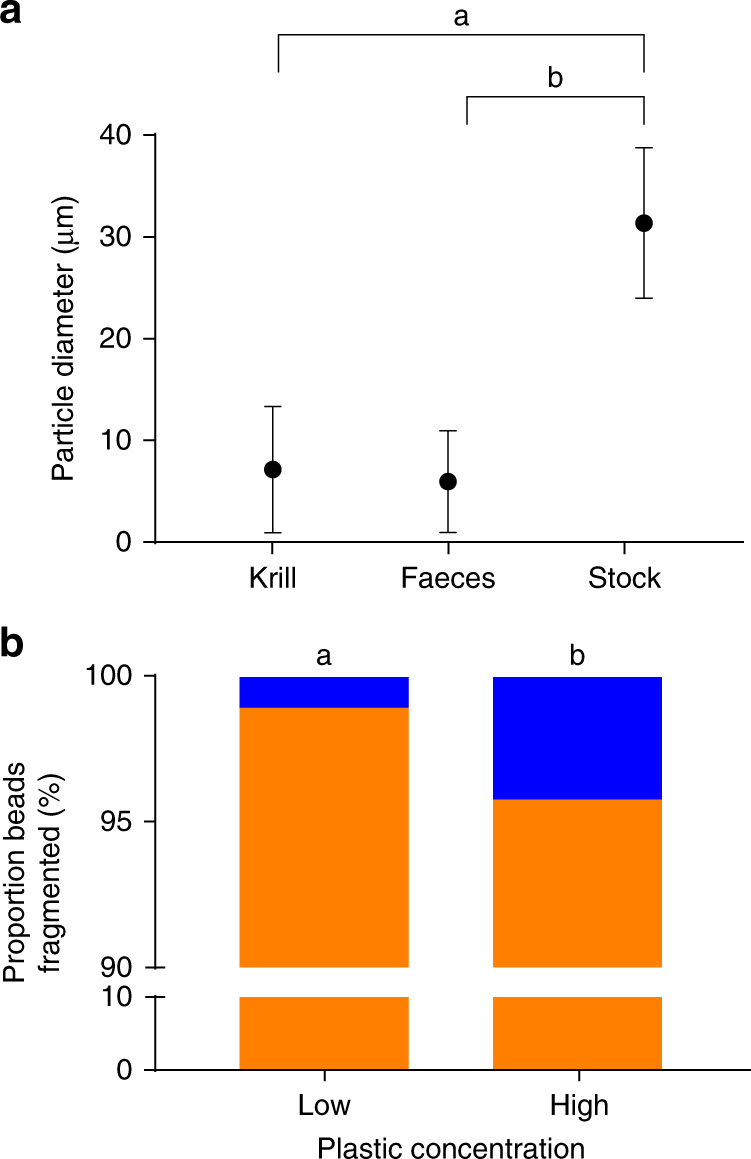
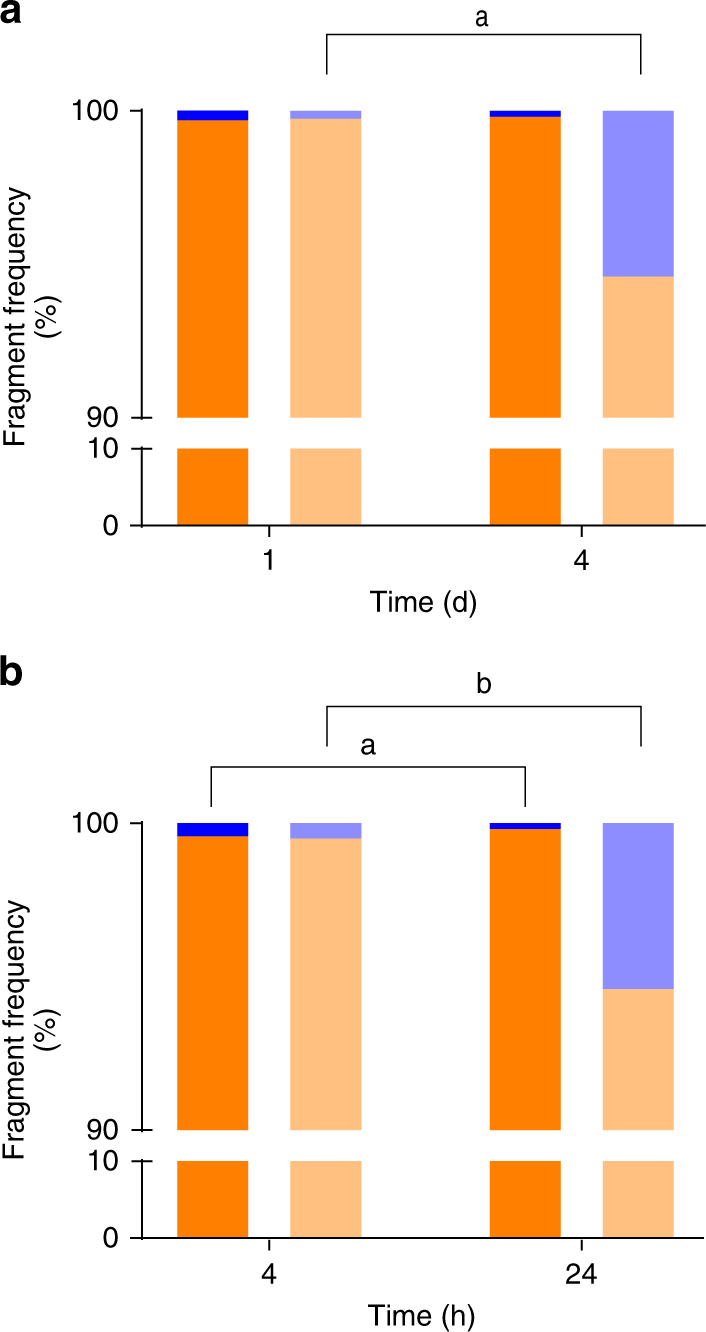
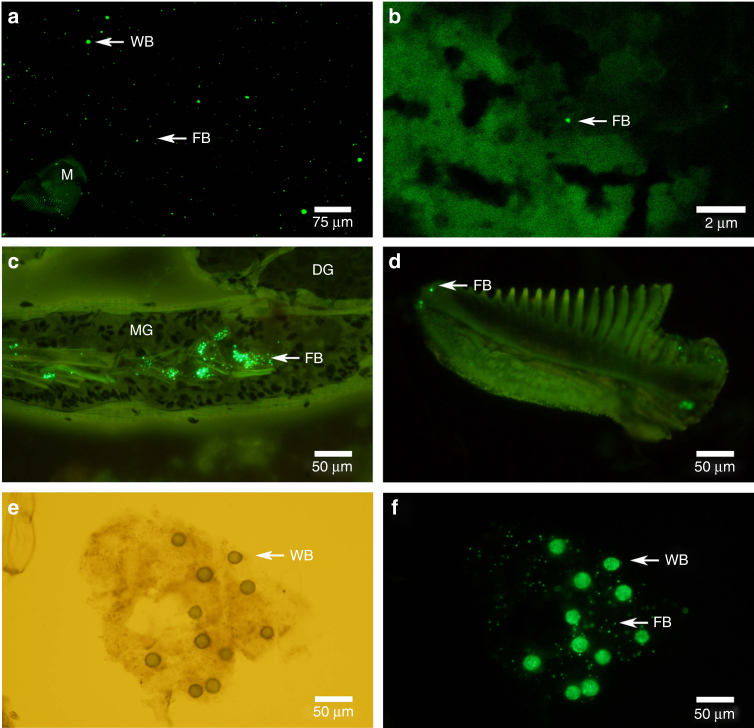
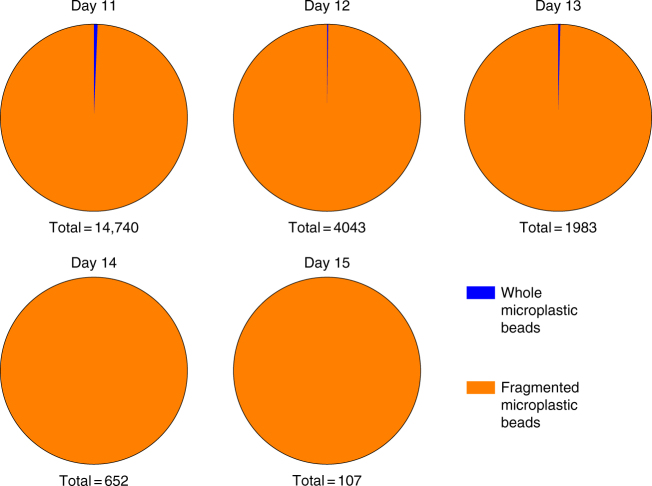
Microplastics (plastics <5 mm diameter) are at the forefront of current environmental pollution research, however, little is known about the degradation of microplastics through ingestion. Here, by exposing Antarctic krill ( Euphausia superba ) to microplastics under acute static renewal conditions, we present evidence of physical size alteration of microplastics ingested by a planktonic crustacean. Ingested microplastics (31.5 µm) are fragmented into pieces less than 1 µm in diameter. Previous feeding studies have shown spherical microplastics either; pass unaffected through an organism and are excreted, or are sufficiently small for translocation to occur. We identify a new pathway; microplastics are fragmented into sizes small enough to cross physical barriers, or are egested as a mixture of triturated particles. These findings suggest that current laboratory-based feeding studies may be oversimplifying interactions between zooplankton and microplastics but also introduces a new role of Antarctic krill, and potentially other species, in the biogeochemical cycling and fate of plastic.
Overview
The claims and statistics of this paper haven’t been checked yet.
Free: it reads the open-access text and checks the first 5 claims that cite a source we can check. Create a free account to check every claim.
Integrity signals
Registry
Cites
Statistics
Figures
Verification
Claims the paper makes
The claims and statistics of this paper haven’t been checked yet.
Free: it reads the open-access text and checks the first 5 claims that cite a source we can check. Create a free account to check every claim.
Claims other papers make about this one
Each is checked against this paper’s own text: does it say what the citing paper says it does?
The source backs part of the claim, not all of it — or backs it for a different population, condition or comparison.
In the citing paper
“PMD fragmentation also leads to the formation of particle sizes <1 mm, i.e. nanoplastics.This has been documented as a result of shear forces in the digestive tracts of krill and perhaps other crustaceans, 96 due to abrasion in a mill 106 or blender, 94 and even as a result of turbulence 95”
From The fate of plastic in the ocean environment – a minireview (2021) · cites this paper as [96]
Experimental — accuracy not yet measuredThe source backs part of the claim, not all of it — or backs it for a different population, condition or comparison.
In the citing paper
“At the nanoscale, optical and chemical methods conventionally used for microplastic analysis are not suitable because of sensitivity issues as well as physical and optical limits.13,40,67,68,96”
From The fate of plastic in the ocean environment – a minireview (2021) · cites this paper as [96]
Experimental — accuracy not yet measuredThe cited source says what the claim attributes to it.
In the citing paper
“Furthermore, the digestive action of marine invertebrates has been demonstrated to facilitate fragmentation of plastic particles to smaller size ranges 37,38 and to provide a pathway for sinking by the excretion of faecal matter aggregates.”
From Weathering plastics as a planetary boundary threat: exposure, fate, and hazards (2021) · cites this paper as [38]
The cited source says what the claim attributes to it.
In the citing paper
“For Antarctic krill, the fragmentation of 31.5 μ m MPs to < 1 μ m mimics this process (Dawson et al., 2018).”
From Trophic transfer of polyester microfibres across a multi-level marine food web. (2025) · cites this paper as Dawson et al., 2018
The check wasn’t confident either way, so it gives no verdict — never disputed.
In the citing paper
“While this is the first report of detailed depuration rates for mysid shrimp, rates calculated here are higher than those reported for similar organisms (i.e., Antarctic krill Euphausia superba , 0.22 h 1 (Dawson et al., 2018)), potentially a consequence of their smaller size.”
From Trophic transfer of polyester microfibres across a multi-level marine food web. (2025) · cites this paper as Dawson et al., 2018
Experimental — accuracy not yet measured
Self-check
Percentages, sums and reported differences re-computed from the paper’s own numbers.
The self-check needs the paper’s full text.
Citations
Cites
Fiji: an open-source platform for biological-image analysis
Schindelin, J., Arganda-Carreras, I., Frise, E., Kaynig, V., Longair, M., Pietzsch, T., Preibisch, S., Rueden, C., Saalfeld, S., Schmid, B., et al. (2012) · Nature Methods · doi:10.1038/nmeth.2019 · Cited by 66,890
Microplastics in the marine environment
Andrady, A. L. (2011) · Marine Pollution Bulletin · doi:10.1016/j.marpolbul.2011.05.030 · Cited by 8,105
Odian, G. (2004) · doi:10.1002/047147875x · Cited by 7,158
Eriksen, M., Lebreton, L. C. M., Carson, H. S., Thiel, M., Moore, C. J., Borerro, J. C., Galgani, F., Ryan, P. G., & Reisser, J. (2014) · PLoS ONE · doi:10.1371/journal.pone.0111913 · Cited by 4,710
(2015) · Springer eBooks · doi:10.1007/978-3-319-16510-3 · Cited by 3,502
Plastic debris in the open ocean
Cózar, A., Echevarría, F., González-Gordillo, J. I., Irigoien, X., Úbeda, B., Hernández-León, S., Palma, Á. T., Navarro, S., García-de-Lomas, J., Ruiz, A., et al. (2014) · Proceedings of the National Academy of Sciences · doi:10.1073/pnas.1314705111 · Cited by 3,133
Microplastic ingestion by zooplankton
Cole, M., Lindeque, P., Fileman, E., Halsband, C., Goodhead, R., Moger, J., & Galloway, T. S. (2013) · Environmental Science & Technology · doi:10.1021/es400663f · Cited by 2,763
The plastic in microplastics: A review
Andrady, A. L. (2017) · Marine Pollution Bulletin · doi:10.1016/j.marpolbul.2017.01.082 · Cited by 2,372
Browne, M. A., Dissanayake, A., Galloway, T. S., Lowe, D. M., & Thompson, R. C. (2008) · Environmental Science & Technology · doi:10.1021/es800249a · Cited by 2,263
Microplastics in bivalves cultured for human consumption
Van Cauwenberghe, L., & Janssen, C. R. (2014) · Environmental Pollution · doi:10.1016/j.envpol.2014.06.010 · Cited by 2,074
Research works printed but not linked: 1
- Rocha-Santos, T. A. P. & Duarte, A. C. Characterization and Analysis of Microplastics Vol. 75 (Elsevier Science, Amsterdam, 2017).
Cited by
Items 801–900 of 1,000
Chronic LDPE microplastic ingestion: oxidative stress and mutagenicity in reef fish Stegastes fuscus
Pinto, T. D. S., Ferreira, B. B., de Souza, J. F., de Souza, A. M., Bégout, M., Cousin, X., & Luchiari, A. C. (2025) · Marine Environmental Research · doi:10.1016/j.marenvres.2025.107362 · Cited by 7
Microplastics in aquatic and terrestrial environment
Singh, S., Negi, T., Tarafdar, A., Sirohi, R., Pandey, A. K., Bhat, M. I., & Sindhu, R. (2021) · Elsevier eBooks · doi:10.1016/b978-0-12-821888-4.00009-5 · Cited by 8
Thit, A., Grønlund, S. N., Trudsø, L. L., Hansen, B. W., Herzog, S. D., Nielsen, S. L., Oturai, N., Posselt, D., Praveenkumar, R., Sandgaard, M. H., et al. (2022) · The Science of The Total Environment · doi:10.1016/j.scitotenv.2022.155831 · Cited by 6
Treatment technologies for the removal of micro plastics from aqueous medium
Shaik, F., Nayeemuddin, M., & Lakkimsetty, N. R. (2022) · AIP conference proceedings · doi:10.1063/5.0080232 · Cited by 6
Helmberger, M. S., & Grieshop, M. J. (2022) · Environmental Entomology · doi:10.1093/ee/nvac052 · Cited by 5
The Ocean Plastic Incubator Chamber (OPIC) system to monitor in situ plastic degradation at sea
Bergami, E., Apeland, B., Sharma, R., Enderlein, P., & Manno, C. (2022) · Environmental Pollution · doi:10.1016/j.envpol.2022.119868 · Cited by 6
State of the Art of Microplastic and Nanoplastic Pollution: Origin and Removal Methods
Кирій, С. О., Dontsova, T. A., Karaschuk, O., & Янушевська, О. І. (2023) · Springer proceedings in physics · doi:10.1007/978-3-031-18096-5_12 · Cited by 7
Utari, S. P. S. D., Astiana, I., Ginting, E. K., & Pradnyaswari, N. M. R. (2023) · Jurnal Pengolahan Hasil Perikanan Indonesia · doi:10.17844/jphpi.v26i2.44430 · Cited by 5
Limited exposure of captive Australian marsupials to plastics
Okoffo, E. D., Lu, W.-C., Yenney, E., & Thomas, K. V. (2024) · The Science of The Total Environment · doi:10.1016/j.scitotenv.2024.172716 · Cited by 5
Korez, Š., Gutow, L., & Saborowski, R. (2022) · Environmental Pollution · doi:10.1016/j.envpol.2022.119023 · Cited by 5
Jiang, Y., Yang, F., Zhao, Y., Wang, X., Chen, M., & Wang, J. (2020) · Chemosphere · doi:10.1016/j.chemosphere.2020.127653 · Cited by 5
RetractedShah, T. M., Khan, Z., Bacha, Z. U., Zaffar, Z., Munsif, F., Ahmad, A., & Ahmad, P. (2024) · Scientia Horticulturae · doi:10.1016/j.scienta.2024.113732 · Cited by 5
Micro- and Nanoplastics: Its Impact on Antarctica and Similar Ecosystems
Bhardwaj, L. K., Choudhury, M., Goswami, L., Rahman, F., & Xu, J. (2025) · Sustainable development goals series · doi:10.1007/978-981-96-5047-7_11 · Cited by 4
Micro-litter pollution in the ascidian Cnemidocarpa verrucosa along the Antarctic Peninsula
Gonzalez-Pineda, M., Salvado, H. H., Monràs-Riera, P., & Àvila, C. (2025) · Environmental Pollution · doi:10.1016/j.envpol.2025.127017 · Cited by 4
Bardawil, C. E., Dobbins, J., Lankford, S., Chowdrey, S., Shumway, J., Balamayooran, G., Schaack, C., & Dhupar, R. (2025) · Microplastics · doi:10.3390/microplastics4040084 · Cited by 4
“Fluorescence microscopy has proven useful for visualizing MP uptake and localization in biological systems [17].”
Bermúdez, R., Jolo, R., Swarzenski, P. W., Oberhänsli, F., Taylor, A., Alonso, C., Métian, M., & Nejstgaard, J. C. (2025) · Microplastics and Nanoplastics · doi:10.1186/s43591-025-00148-3 · Cited by 6
Xu, D., Zhang, G., Zhu, C., Bai, S., Sun, H., Wang, J., & Yin, X. (2026) · Journal of Hazardous Materials · doi:10.1016/j.jhazmat.2026.141212 · Cited by 4
Mahajan, P., Gusain, M., & Singh, P. (2026) · Microchemical Journal · doi:10.1016/j.microc.2026.117228 · Cited by 5
Advanced photocatalytic materials for micro/nanoplastic degradation: A comprehensive review
Dutta, M., Kumar, S., Bhimireddi, R., Shukla, M., Koparkar, A., Sharma, K. P., Varma, R. S., Gupta, R., Kumar, R., & Singh, L. (2026) · Environmental Surfaces and Interfaces · doi:10.1016/j.esi.2026.02.001 · Cited by 4
Preparation of Microplastics and Nanoplastics for Environmental Research
Li, X., Wu, X.-Y., Lee, J. H., & Liu, J. W. (2026) · Environmental Science & Technology · doi:10.1021/acs.est.6c00693 · Cited by 4
Enhanced microplastic fragmentation along human built structures in an urban waterway
Moore, E. K., Pittman, L., Heminghaus, M., Heintzelman, D. P., & Hatter, A. (2024) · International Journal of Environmental Science and Technology · doi:10.1007/s13762-024-05962-5 · Cited by 4
“Moreover, microplastics have been shown to bioaccumulate in multiple trophic levels of marine food webs, including estuary caught fish and Antarctic krill (Dawson et al. 2018a; Miller et al. 2020; Li et al. 2022).”
Ammendolia, J., Covernton, G. A., Skrepnyk, A., Dower, J. F., & Jacobs, S. (2024) · Arctic Science · doi:10.1139/as-2024-0014 · Cited by 4
Ayala, F., Cardeña, M., & Cárdenas‐Alayza, S. (2021) · Revista Internacional de Contaminación Ambiental · doi:10.20937/rica.53745 · Cited by 4
Biodegradation of Microplastics in Soil
Yu, Y., Luan, Y., & Dai, W. (2022) · Advances in transdisciplinary engineering · doi:10.3233/atde220362 · Cited by 4
Composition, properties and other factors influencing plastics biodegradability
Hakvåg, S., Brakstad, O. G., Kubowicz, S., & Booth, A. M. (2023) · Elsevier eBooks · doi:10.1016/b978-0-323-89858-4.00014-2 · Cited by 6
Ecological Impacts and Toxicity of Micro- and Nanoplastics in Agroecosystem
Aransiola, S. A., Victor-Ekwebelem, M. O., Ajiboye, E. A., Zobeashia, S. S. L.-T., Ijah, U. J. J., & Oyedele, O. J. (2023) · Springer eBooks · doi:10.1007/978-3-031-21195-9_10 · Cited by 6
Pyznar, M., Maszczyk, P., Kiersztyn, B., Dąbrowski, K., Zebrowski, M. Ł., Lee, J., & Babkiewicz, E. (2023) · The European Zoological Journal · doi:10.1080/24750263.2023.2217200 · Cited by 4
“Biotic degradation of plastics can occur directly: physically (by biting or chewing (So et al. 2022)) or chemically (enzymes during digestive degradation (Dawson et al. 2018; Cornwall 2021)).”
BackgroundNanobiotechnology: A Sustainable Approach for Marine Environment Bioremediation
Abouelkheir, S. S., Elsherbiny, B. A., Moffit, S. M., Mahmoud, N. H., Mohamed, J. H., Abdella, B., & El-Sheekh, M. M. (2023) · Springer eBooks · doi:10.1007/978-981-99-2489-9_8 · Cited by 4
Direct Quantification of Nanoplastics Neurotoxicity by Single‐Vesicle Electrochemistry
Wei, S., Wu, F., Liu, J., Ji, W., He, X., Liu, R., Yu, P., & Mao, L. (2023) · Angewandte Chemie · doi:10.1002/ange.202315681 · Cited by 5
Prior, J. H., Whitaker, J. M., & Janosik, A. M. (2024) · Microplastics · doi:10.3390/microplastics3020014 · Cited by 5
“Microplastic consumption leads to effects on the planktonic food web and the further breakdown of plastics into smaller particles [2].”
BackgroundMicroplastics in the food chain
Pathak, G. C., Mangla, S., & Bhan, V. (2024) · Elsevier eBooks · doi:10.1016/b978-0-443-29804-2.00002-0 · Cited by 9
Aziz, A. A., Osman, M. S., Rasdi, N. W., Shafie, F. A., Feisal, N. A. S., Zaki, M. A., & Yatim, S. R. M. (2024) · JURNAL KESEHATAN LINGKUNGAN · doi:10.20473/jkl.v16i4.2024.321-330 · Cited by 4
“The visual similarity of these particles to lower trophic level species increases the likelihood of marine animals mistaking them as viable food, potentially ingesting hazardous materials (24).”
BackgroundZeng, H., Zhou, Q., Hu, X., Hou, X., Wu, K., & Zheng, T. (2025) · Water Research · doi:10.1016/j.watres.2025.124262 · Cited by 4
Dimitrijevic, J. (2018) · Summit (Simon Fraser University) · Cited by 5
When Small Becomes Smaller: Digestive Fragmentation of Microplastics by CrabsPreprint
Lo, H., Sin, Y. Y., Xu, X., Gorokhova, E., & Cheung, S. G. (2022) · SSRN Electronic Journal · doi:10.2139/ssrn.4122028 · Cited by 4
Microplastics: toxicity and tolerance in plants
Azhar, H., Khalid, N., Qaiser, Z., Aqeel, M., Sarfraz, W., Ejaz, U., Rizvi, Z. F., Khan, S. M., & Noman, A. (2024) · Elsevier eBooks · doi:10.1016/b978-0-443-29804-2.00005-6 · Cited by 3
Roberts, S. J., Hughes, K. A., Li, C., Peel, R. H., Saunders, K. M., Schneider, L., & Waller, C. L. (2025) · Routledge eBooks · doi:10.4324/9781003406471-8 · Cited by 5
Monràs-Riera, P., Ruiz-Orejón, L. F., Angulo‐Preckler, C., Sardá, R., & Àvila, C. (2025) · Environmental Research · doi:10.1016/j.envres.2025.122560 · Cited by 3
Anthropogenic particles and associated metals in Antarctic seabirds from Victoria Land (Antarctica)
Bottari, T., Leonardi, A. A., Bruno, C. A., Guardamagna, I., Lanteri, G., Fabrizi, F., Irrera, A., Smedile, F., Azzaro, M., D’Angelo, G., et al. (2025) · Journal of Hazardous Materials · doi:10.1016/j.jhazmat.2025.140627 · Cited by 4
Buzzi, N. S., Jaureguí, A., Marín, A., Navarro, J. C., Llorca, M., Lizanda, M., Andrade, M. C. D., Moya, A. C., Gámez‐Pérez, J., Cabedo, L., et al. (2026) · Marine Pollution Bulletin · doi:10.1016/j.marpolbul.2026.119254 · Cited by 3
Wu, C., Wang, Y., Wu, J., Zhou, D., Ren, J., Yang, J., Li, X., Liu, G., Wu, Y., & Yan, X. (2026) · Chemical Engineering Journal · doi:10.1016/j.cej.2026.173593 · Cited by 3
Kavalackal, J. J., Thakur, S., Sharma, N., Rana, V. S., Sharma, S., Singhal, S., Kumar, R., & Kumar, A. (2026) · Physics and Chemistry of the Earth Parts A/B/C · doi:10.1016/j.pce.2026.104357 · Cited by 3
Ruiz‐Sagalés, M., Salvia, R., Halldórsson, S. D., Chosson, V., Sigurðsson, G. M., Aguilar, Á., Borrell, A., Ward, M. D., Pétriz, J., & Garcia‐Garin, O. (2026) · Environmental Research · doi:10.1016/j.envres.2026.124237 · Cited by 3
Microplastic toxicity in shrimp: From mechanistic pathways to ecological implications
Kim, L., & An, Y. (2026) · Comparative Biochemistry and Physiology Part C Toxicology & Pharmacology · doi:10.1016/j.cbpc.2026.110514 · Cited by 4
Zhao, Y., Cabello, N. I., & Fuji, T. (2026) · Talanta · doi:10.1016/j.talanta.2026.129718 · Cited by 3
Insights into the Physical Fragmentation of Plastics into Airborne Microplastics
Adotey, E., Salthammer, T., & Morawska, L. (2026) · ACS ES&T Air · doi:10.1021/acsestair.5c00431 · Cited by 3
Advanced oxidation process as a promising approach for microplastic degradation
Dulla, J. B., Karpurapu, H. L., & Davuluri, S. B. (2026) · Environmental Science and Pollution Research · doi:10.1007/s11356-026-37882-x · Cited by 3
“Due to their small size, persistence, and mobility, MPs are now ubiquitously detected in aquatic, terrestrial, and atmospheric environments, including remote regions such as the Arctic and Antarctic (Dawson et al. 2018; Fu et al. 2020; Zhang et al. 2021).”
Wang, Z., Gao, X., Lu, X., Zhang, H., & Jia, Z. (2023) · Molecules · doi:10.3390/molecules28217254 · Cited by 3
Mikroplastik Kirliliği Eğitiminin Önlisans Öğrencilerinin Farkındalık Seviyesine Etkisi
Vardar, D. Ö., & Çalı, A. (2024) · Journal of Anatolian Environmental and Animal Sciences · doi:10.35229/jaes.1463437 · Cited by 3
Corcoran, P. L. (2024) · Elsevier eBooks · doi:10.1016/b978-0-443-14082-2.00028-4 · Cited by 4
Environmental Toxicologic Pathology and Human Health
Elmore, S. A., & Boorman, G. A. (2023) · Elsevier eBooks · doi:10.1016/b978-0-443-16153-7.00001-0 · Cited by 3
Kajian Pengelolaan Sampah Perkotaan pada Pulau Kecil Padat Penduduk di Pulau Lengkang, Kota Batam
Adicita, Y., Sari, M. M., Darwin, D., Afifah, A. S., Ulhasanah, N., Sianipar, I. M. J., Tehupeiory, A., Septiariva, I. Y., & Suryawan, I. W. K. (2022) · Jurnal Wilayah dan Lingkungan · doi:10.14710/jwl.10.3.226-235 · Cited by 4
Microplastic Pollution in Marine Ecosystem and Its Remediation
Jadhav, H. S., Fulke, A. B., Jablonski, M., & Giripunje, M. D. (2023) · Springer eBooks · doi:10.1007/978-981-99-5022-5_12 · Cited by 3
Newrick, B. A., Laca, A., & Laca, A. (2024) · Ingeniería del agua · doi:10.4995/ia.2024.21599 · Cited by 3
“Un estudio encontró que el krill antártico, Euphausia superba, una especie crustácea perteneciente al orden de Euphausiacea presente habitualmente en las aguas frías de los océanos Pacífico y Atlántico, es capaz de llevar a cabo la degradación de MPs de PE (Dawson et al. , 2018).”
BackgroundKlangnurak, W., Prachumwong, S., Alfonso, M. B., Nakano, H., Chavanich, S. A., Viyakarn, V., & Jandang, S. (2025) · Environmental Science and Pollution Research · doi:10.1007/s11356-025-36068-1 · Cited by 3
“…of other prey species such as the Japanese anchovy ( Engraulis japonicus , ~ 20 h) (Ohkubo et al. 2022), the three-spined stickleback ( Gaster-osteus aculeatus , ~ 20–48 h) (Bour et al. 2020a, b), shrimp ( Penaeus spp. ~ 27–75 h) (Gray and Weinstein 2017), and krill (~ 1 day) (Dawson et al. 2018).”
Emerging Techniques for the Mitigation of Micro and Nanoplastics in Soil
Pavan, C. S., Kumar, P. S., Sree, N. R. S., & Munawar, T. M. (2023) · Springer eBooks · doi:10.1007/978-3-031-21195-9_16 · Cited by 3
Effect assessment of nano- and microplastics in freshwater ecosystems
Redondo‐Hasselerharm, P. E. (2020) · doi:10.18174/533220 · Cited by 4
The Ecological Effects of Micro(nano)plastics in the Water Environment
Khosrovyan, A. (2024) · Water · doi:10.3390/w16142020 · Cited by 3
Murano, C., Bentivoglio, T., Anselmi, S., Roselli, L., Capua, I. D., Renzi, M., & Terlizzi, A. (2024) · Environmental Pollution · doi:10.1016/j.envpol.2024.125566 · Cited by 2
Wu, X., Liao, H., Zhang, X., Ma, Z., & Fu, Z. (2025) · Microorganisms · doi:10.3390/microorganisms13040882 · Cited by 2
Microplastics, PFAS, and Pharmaceutical Residues as Emerging Contaminants in the Global Food Chain
Latheef, L. (2025) · IGI Global eBooks · doi:10.4018/979-8-3373-7052-1.ch002 · Cited by 2
Batcham, I., Adjalo, D. K., Houedakor, K. Z., Tede, K. K. E., & Zinsou-Klassou, K. (2025) · Waste · doi:10.3390/waste3040038 · Cited by 2
“[42], the authors have demonstrated that plastics can enter the food chain and affect local wildlife, including bird and fish species found in the area.”
De, K., MAITI, B., & Sautya, S. (2025) · Hydrobiologia · doi:10.1007/s10750-025-06066-y · Cited by 2
Maulidya, S. P., Sari, S. H. J., Fuad, M. A. Z., Iranawati, F., Surget, S. M., & Sartimbul, A. (2025) · ILMU KELAUTAN Indonesian Journal of Marine Sciences · doi:10.14710/ik.ijms.30.4.557-573 · Cited by 2
“Microplastics may have been eaten by prey due to their small size (Alberghini et al ., 2023; Dawson et al ., 2018).”
Beyond Abiotic Decay: Fiddler Crabs Accelerate Plastic Fragmentation in Pollution Hotspots
Riascos, J. M., Díaz, D., Restrepo, L., & Galloway, T. S. (2025) · Global Change Biology · doi:10.1111/gcb.70651 · Cited by 2
“…the foregut of Gammarus duebeni , respectively, which led to the hypothesis that fragmentation observed in their laboratory experiments could be performed by the gastric mill (Dawson et al. 2018; Mateos-Cárdenas et al. 2020; Rani-Borges, Pompêo, and Queiroz 2023; Rani-Borges, Queiroz, et al. 2023).”
Akash, S., Rameshwar, S. S., Rajamohan, N., Sivaprakash, B., Paramasivam, S., Cappellini, G., & Gatto, G. (2025) · Journal of Hazardous Materials Advances · doi:10.1016/j.hazadv.2025.100889 · Cited by 5
Jiang, S., Wang, H., Xia, T., Ning, P., Lu, H., Rui, A., Zhou, S., Bai, X., & Hou, Q. (2025) · Land Degradation and Development · doi:10.1002/ldr.70351 · Cited by 2
Kirthika, V., Bhagya, L., Kariyawasam, C., Andaramana, P., Sandun, I., Ahamed, A., Liyanage, C., Galpaya, C., Wijesekara, H., & Koswattage, K. R. (2026) · International Journal of Environmental Science and Technology · doi:10.1007/s13762-026-07072-w · Cited by 3
“The biological breakdown of both natural and synthetic macroplastics is reported in numerous studies (Tsiota et al. 2018; Dawson et al. 2018).”
Scatigna, M., Aloisi, M., & Poma, A. M. G. (2026) · Environmental Science Advances · doi:10.1039/d5va00376h · Cited by 2
Fluorescent methods for micro-/nano-plastics analysis in environment
Tao, R., Tan, J., Wang, W., Gong, X., Tong, Y.-J., & Gong, Z. (2026) · TrAC Trends in Analytical Chemistry · doi:10.1016/j.trac.2026.118867 · Cited by 2
Morris, S., Sarlin, P. J., Morris, S., Morris, S., & Joseph, P. (2026) · Regional Studies in Marine Science · doi:10.1016/j.rsma.2026.105088 · Cited by 2
Najafi, M., Farahbakhsh, J., Mahmoudi, E., Johns, M. L., & Zargar, M. (2026) · Journal of environmental chemical engineering · doi:10.1016/j.jece.2026.123902 · Cited by 2
Orthogonal in-line microscopy coupled with SP ICP-MS for the quantitative analysis of microparticles
Grüner, B., Hauer, R., Elinkmann, M., Lockwood, T. E., de Vega, R. G., Hill, C., Hohenester, U., & Clases, D. (2026) · Analytica Chimica Acta · doi:10.1016/j.aca.2026.346044 · Cited by 2
Effects of Microplastics in the Cryosphere
Ásmundsdóttir, Á. M., & Schulz, B. (2021) · Springer eBooks · doi:10.1007/978-3-030-10618-8_47-1 · Cited by 4
Fate, transport, and impact of microplastics on planktonic organisms
Bonanno, G. (2022) · Elsevier eBooks · doi:10.1016/b978-0-12-822471-7.00009-2 · Cited by 4
Beneath the Surface: Unraveling the Impact of Micro and Nanoplastics on Plant Performance
Dewi, S. K., Bhat, S. A., Wei, Y., & Li, F. (2024) · Springer eBooks · doi:10.1007/978-3-031-51967-3_6 · Cited by 2
Can Hediste diversicolor Speed Up the Breakdown of Cigarette Butts in Marine Sediments?
Conradi, M., Sánchez-Moyano, J. E., Rodríguez-Martín, F. J., & Bayo, J. (2024) · Applied Sciences · doi:10.3390/app14114409 · Cited by 2
Microplastics as Vectors for Metals from Mines and Fuels: Environmental Pathways and Implications
Vaijayanthimala, S., & Sharma, K. (2024) · Journal of Mines Metals and Fuels · doi:10.18311/jmmf/2023/43592 · Cited by 3
Liu, X., Yuan, Q., Ding, J., Li, Y., Liu, X., Fang, C., & Wang, M. (2024) · Chemosphere · doi:10.1016/j.chemosphere.2024.143907 · Cited by 2
Chen, S., Zhang, X., Zhang, Q., Huang, J., & Zhang, B. (2025) · ACS ES&T Water · doi:10.1021/acsestwater.4c01068 · Cited by 3
Fulke, A. B., Swain, G. K., Jadhav, H. S., Bhanushali, S., Dora, G. U., Panigrahi, J., & Badesab, F. (2025) · Marine Pollution Bulletin · doi:10.1016/j.marpolbul.2025.118643 · Cited by 2
Toxicological assessment of nanoparticles and microplastics
(2022) · Biomedical Letters · doi:10.47262/bl/8.1.20220101 · Cited by 2
Shannon, C. (2020) · Open Access Victoria University of Wellington | Te Herenga Waka (Figshare) · doi:10.26686/wgtn.17148608 · Cited by 12
Sharma, A., Prakash, S., Malavika, B. R., Mathew, M. M., Arrigo, F., Lakshmi, S., Elumalai, P., Freitas, R., & Faggio, C. (2022) · Research Square · doi:10.21203/rs.3.rs-1812636/v1 · Cited by 3
Hermabessière, L. (2018) · theses.fr (ABES) · doi:10.70675/da6604dcz9ef6z4004z838fzdc1945dfe83b · Cited by 4
Impact of microplastics on economic condition in underdeveloped nations
N., S., Haldar, S., Chanda, V., Muralidaran, Y., & Mishra, P. (2024) · Elsevier eBooks · doi:10.1016/b978-0-443-29804-2.00021-4 · Cited by 4
Khamboonruang, P., Klorvuttimontara, S., Kanchanaketu, T., & Prommi, T. O. (2024) · Ecologica Montenegrina · doi:10.37828/em.2024.80.5 · Cited by 2
Removal of Emerging Contaminants Microplastics by Using Biochar Technology, a Review
Roy, D., & Das, S. (2025) · Interdisciplinary biotechnological advances · doi:10.1007/978-981-97-9922-0_22 · Cited by 1
Effects of Polystyrene Microplastics on Behavioural Response and Histopathology of Carassius auratus
Kumari, M., & Kumari, A. (2025) · Current World Environment · doi:10.12944/cwe.20.1.31 · Cited by 1
Impact of Micro-nanoplastics on Gut and Immune Function
Singh, C., Singh, R., Shekhar, A., & Das, I. (2025) · Sustainable development goals series · doi:10.1007/978-981-96-5047-7_19 · Cited by 1
Shahzad, M. M., Karim, A., Yasin, F., Latif, F., Umer, M. A., Abbas, W., Khan, M. A., & Usman, M. (2025) · Springer eBooks · doi:10.1007/978-3-031-94480-2_10 · Cited by 1
The production of ‘food boluses’ by Antarctic krill and implications for organic matter transport
Butterley, A., Kawaguchi, S., Bach, L. T., & Swadling, K. M. (2025) · Biology Letters · doi:10.1098/rsbl.2025.0312 · Cited by 1
“Studies show that krill ingest artificial articles such as microplastics ( 5 mm) [31], suggesting some may be ingested, while other larger particles may influence the formation of boluses.”
Self-citationFerrari, V., Simonini, R., Murano, C., Prevedelli, D., & Bergami, E. (2025) · Environments · doi:10.3390/environments12100365 · Cited by 1
Zhang, Z., Yang, Y., Shi, W., Pan, W., Zhao, X., Cui, S., & An, L. (2025) · Environmental Chemistry Letters · doi:10.1007/s10311-025-01887-8 · Cited by 1
Karnaukhov, D. Y., Biritskaya, S., Solodkova, A., Guliguev, A., Ermolaeva, Y., Lavnikova, A., Golubets, D., Maslennikova, M., Frank, Y. A., Vishnyakov, V. S., et al. (2025) · Environments · doi:10.3390/environments13010007 · Cited by 1
Moloi, M. S., Mattern, A., Küster, E., & Kühnel, D. (2026) · Ecotoxicology and Environmental Safety · doi:10.1016/j.ecoenv.2026.119711 · Cited by 1
Teng, J., Zhao, S., Zhao, J., Wang, D., Li, J., Fang, Y., Wang, Q., & Zhao, Y. (2026) · Marine Environmental Research · doi:10.1016/j.marenvres.2026.107871 · Cited by 1
Scientist's warning on recasting our relationship with plastics: Looking to the broader context
Rhodes, C. J., & Fresh-lands Environmental Actions, R. (2026) · Clean Technologies and Recycling · doi:10.3934/ctr.2026004 · Cited by 1
Nanorobotics: A Futuristic Approach to Microplastic Removal
Yuvarajan, R., & Karthika, R. (2026) · Springer eBooks · doi:10.1007/978-981-95-5033-3_10 · Cited by 1
Zhang, R., Liu, J., Li, Q., Zhang, M., Zhang, T., Tang, H., & Li, H. (2026) · Sensors and Actuators B Chemical · doi:10.1016/j.snb.2026.139653 · Cited by 1
Metadata
- Authors
- Dawson, A. L., Kawaguchi, S., King, C. K., Townsend, K. A., King, R., Huston, W. M., & Bengtson Nash, S. M.
- Affiliations
- Griffith University (AU)
- Australian Antarctic Division (AU)
- The University of Queensland (AU)
- University of Technology Sydney (AU)
- Corresponding author
- Dawson, Amanda L.
- ORCID
- Venue
- Nature Communications
- Published
- 2018-03-08
- Volume
- 9
- Issue
- 1
- Pages
- 1001-1001
- ISSN
- 2041-1723 (ISSN-L)
- PMC
- PMC5843626
- OpenAlex
- W2794249619
- Cited by
- 1,023
- References
- 52
- Citations by year
- 2026: 99 · 2025: 133 · 2024: 151 · 2023: 176 · 2022: 165 · 2021: 126 · 2020: 102 · 2019: 54 · 2018: 16
- FWCI
- 27.95
- Type
- journal article
- Language
- en
- Open access
- gold
- doi.org
- Licence
- cc-by
- creativecommons.org/licenses/by/4.0 (tdm)
- creativecommons.org/licenses/by/4.0 (vor)
- Locations
- Nature Communications (publishedVersion, cc-by)
- PubMed Central (publishedVersion, cc-by)
- PubMed (publishedVersion)
- RePEc: Research Papers in Economics (submittedVersion)
- DOAJ (DOAJ: Directory of Open Access Journals) (submittedVersion)
- DOAJ (DOAJ: Directory of Open Access Journals) (submittedVersion, cc-by-sa)
- UTS ePRESS (University of Technology Sydney) (submittedVersion)
- Griffith Research Online (submittedVersion, cc-by)
- Funders
- QIMR Berghofer Medical Research Institute
- Australian Antarctic Division
- Topics
- Physical Sciences › Environmental Science › Pollution › Microplastics and Plastic Pollution
- Physical Sciences › Environmental Science › Health, Toxicology and Mutagenesis › Environmental Toxicology and Ecotoxicology
- Physical Sciences › Environmental Science › Pollution › Pharmaceutical and Antibiotic Environmental Impacts
- Keywords
- microplastics, nanoplastics, Antarctic krill, ingestion, zooplankton, plastic degradation, particle size reduction
- MeSH terms
- Animals, Digestion, Feces, Water Pollutants, Chemical, Polyethylene, Euphausiacea, Nanoparticles
About these checks
Registry, retraction, Cites and statistics results are computed, not judged, with one exception: a printed reference that no index lists is read once by a model before it counts as a citation error. Claims are extracted by a model and kept only when their quote appears verbatim in the text; each cited source is then checked, with a model’s help, for whether it says what the claim relies on. Those verdicts can be wrong — read the claim’s quote and the cited source before relying on one.
Statistics and arithmetic are recomputed, not judged.
Confidence bands are shown only for fields calibrated on our annotated test set. None is calibrated yet, so no band is shown.
What counts as a claim ›How we measure confidence ›How we check this ›
Are you an author, or do you see a problem with this page? Request a review
Data sources
Bibliographic data: Semantic Scholar, OpenAlex, Crossref.
Contains information from the Semantic Scholar Academic Graph Datasets, made available under the ODC Attribution License (ODC-BY 1.0).
Semantic Scholar’s data is described in: Kinney, R., et al. (2023). The Semantic Scholar Open Data Platform. arXiv:2301.10140.
