

Turning microplastics into nanoplastics through digestive fragmentation by Antarctic krill
Open accessThe DOI matches its Crossref record; 52 of the 52 references it cites were found in a registry or an index.
Abstract
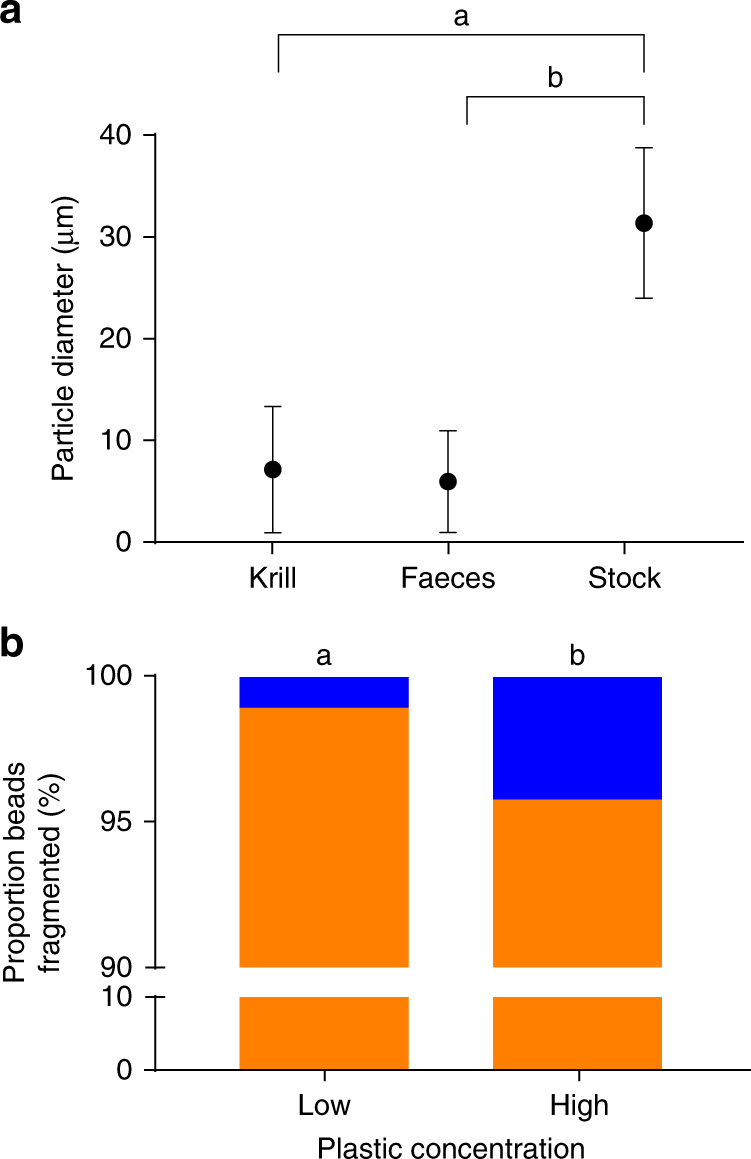
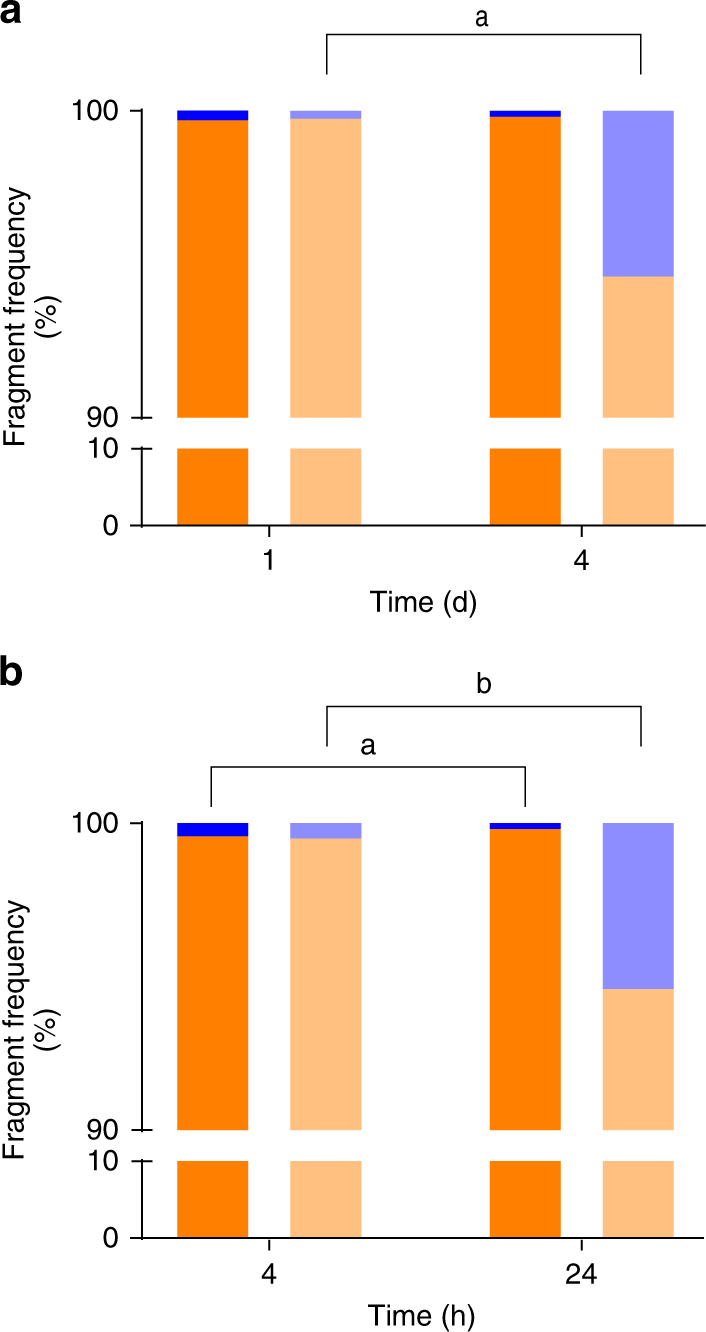
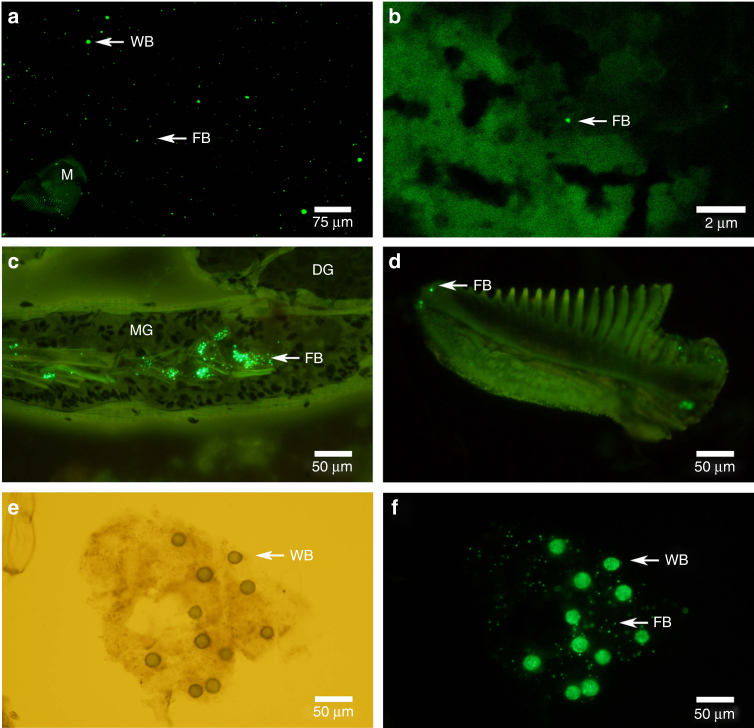
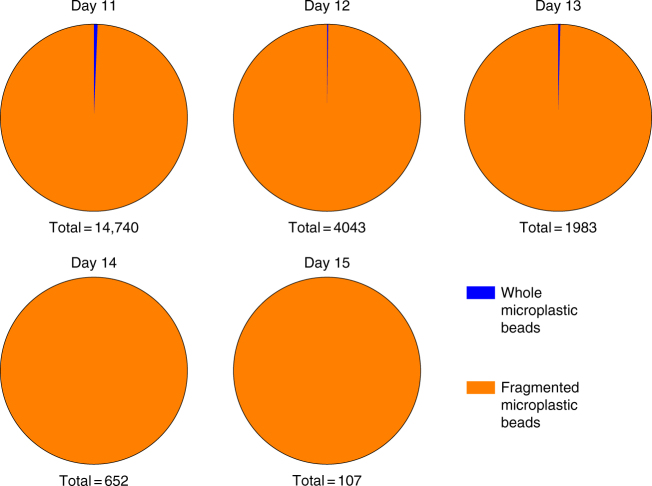
Microplastics (plastics <5 mm diameter) are at the forefront of current environmental pollution research, however, little is known about the degradation of microplastics through ingestion. Here, by exposing Antarctic krill ( Euphausia superba ) to microplastics under acute static renewal conditions, we present evidence of physical size alteration of microplastics ingested by a planktonic crustacean. Ingested microplastics (31.5 µm) are fragmented into pieces less than 1 µm in diameter. Previous feeding studies have shown spherical microplastics either; pass unaffected through an organism and are excreted, or are sufficiently small for translocation to occur. We identify a new pathway; microplastics are fragmented into sizes small enough to cross physical barriers, or are egested as a mixture of triturated particles. These findings suggest that current laboratory-based feeding studies may be oversimplifying interactions between zooplankton and microplastics but also introduces a new role of Antarctic krill, and potentially other species, in the biogeochemical cycling and fate of plastic.
Overview
The claims and statistics of this paper haven’t been checked yet.
Free: it reads the open-access text and checks the first 5 claims that cite a source we can check. Create a free account to check every claim.
Integrity signals
Registry
Cites
Statistics
Figures
Verification
Claims the paper makes
The claims and statistics of this paper haven’t been checked yet.
Free: it reads the open-access text and checks the first 5 claims that cite a source we can check. Create a free account to check every claim.
Claims other papers make about this one
Each is checked against this paper’s own text: does it say what the citing paper says it does?
The source backs part of the claim, not all of it — or backs it for a different population, condition or comparison.
In the citing paper
“PMD fragmentation also leads to the formation of particle sizes <1 mm, i.e. nanoplastics.This has been documented as a result of shear forces in the digestive tracts of krill and perhaps other crustaceans, 96 due to abrasion in a mill 106 or blender, 94 and even as a result of turbulence 95”
From The fate of plastic in the ocean environment – a minireview (2021) · cites this paper as [96]
Experimental — accuracy not yet measuredThe source backs part of the claim, not all of it — or backs it for a different population, condition or comparison.
In the citing paper
“At the nanoscale, optical and chemical methods conventionally used for microplastic analysis are not suitable because of sensitivity issues as well as physical and optical limits.13,40,67,68,96”
From The fate of plastic in the ocean environment – a minireview (2021) · cites this paper as [96]
Experimental — accuracy not yet measuredThe cited source says what the claim attributes to it.
In the citing paper
“Furthermore, the digestive action of marine invertebrates has been demonstrated to facilitate fragmentation of plastic particles to smaller size ranges 37,38 and to provide a pathway for sinking by the excretion of faecal matter aggregates.”
From Weathering plastics as a planetary boundary threat: exposure, fate, and hazards (2021) · cites this paper as [38]
The cited source says what the claim attributes to it.
In the citing paper
“For Antarctic krill, the fragmentation of 31.5 μ m MPs to < 1 μ m mimics this process (Dawson et al., 2018).”
From Trophic transfer of polyester microfibres across a multi-level marine food web. (2025) · cites this paper as Dawson et al., 2018
The check wasn’t confident either way, so it gives no verdict — never disputed.
In the citing paper
“While this is the first report of detailed depuration rates for mysid shrimp, rates calculated here are higher than those reported for similar organisms (i.e., Antarctic krill Euphausia superba , 0.22 h 1 (Dawson et al., 2018)), potentially a consequence of their smaller size.”
From Trophic transfer of polyester microfibres across a multi-level marine food web. (2025) · cites this paper as Dawson et al., 2018
Experimental — accuracy not yet measured
Self-check
Percentages, sums and reported differences re-computed from the paper’s own numbers.
The self-check needs the paper’s full text.
Citations
Cites
Fiji: an open-source platform for biological-image analysis
Schindelin, J., Arganda-Carreras, I., Frise, E., Kaynig, V., Longair, M., Pietzsch, T., Preibisch, S., Rueden, C., Saalfeld, S., Schmid, B., et al. (2012) · Nature Methods · doi:10.1038/nmeth.2019 · Cited by 66,890
Microplastics in the marine environment
Andrady, A. L. (2011) · Marine Pollution Bulletin · doi:10.1016/j.marpolbul.2011.05.030 · Cited by 8,105
Odian, G. (2004) · doi:10.1002/047147875x · Cited by 7,158
Eriksen, M., Lebreton, L. C. M., Carson, H. S., Thiel, M., Moore, C. J., Borerro, J. C., Galgani, F., Ryan, P. G., & Reisser, J. (2014) · PLoS ONE · doi:10.1371/journal.pone.0111913 · Cited by 4,710
(2015) · Springer eBooks · doi:10.1007/978-3-319-16510-3 · Cited by 3,502
Plastic debris in the open ocean
Cózar, A., Echevarría, F., González-Gordillo, J. I., Irigoien, X., Úbeda, B., Hernández-León, S., Palma, Á. T., Navarro, S., García-de-Lomas, J., Ruiz, A., et al. (2014) · Proceedings of the National Academy of Sciences · doi:10.1073/pnas.1314705111 · Cited by 3,133
Microplastic ingestion by zooplankton
Cole, M., Lindeque, P., Fileman, E., Halsband, C., Goodhead, R., Moger, J., & Galloway, T. S. (2013) · Environmental Science & Technology · doi:10.1021/es400663f · Cited by 2,763
The plastic in microplastics: A review
Andrady, A. L. (2017) · Marine Pollution Bulletin · doi:10.1016/j.marpolbul.2017.01.082 · Cited by 2,372
Browne, M. A., Dissanayake, A., Galloway, T. S., Lowe, D. M., & Thompson, R. C. (2008) · Environmental Science & Technology · doi:10.1021/es800249a · Cited by 2,263
Microplastics in bivalves cultured for human consumption
Van Cauwenberghe, L., & Janssen, C. R. (2014) · Environmental Pollution · doi:10.1016/j.envpol.2014.06.010 · Cited by 2,074
Research works printed but not linked: 1
- Rocha-Santos, T. A. P. & Duarte, A. C. Characterization and Analysis of Microplastics Vol. 75 (Elsevier Science, Amsterdam, 2017).
Cited by
Items 501–600 of 1,000
Effects of Shape on Interaction Dynamics of Tetrahedral Nanoplastics and the Cell Membrane
Yong, X., & Du, K. (2023) · The Journal of Physical Chemistry B · doi:10.1021/acs.jpcb.2c07460 · Cited by 31
Ingested plastic and trace element concentrations in Short-tailed Shearwaters (Ardenna tenuirostris)
Puskic, P. S., Lavers, J. L., Adams, L. R., & Bond, A. L. (2020) · Marine Pollution Bulletin · doi:10.1016/j.marpolbul.2020.111143 · Cited by 30
Analytical Chemistry of Plastic Debris: Sampling, Methods, and Instrumentation
Hale, R. C., Seeley, M. E., King, A. E., & Yu, L. (2021) · Environmental contamination remediation and management · doi:10.1007/978-3-030-78627-4_2 · Cited by 35
Mauro, R. P. D., Castillo, S., Pérez, A. F., Iachetti, C. M., Silva, L., Tomba, J. P., & Chiesa, I. L. (2022) · Environmental Pollution · doi:10.1016/j.envpol.2022.119364 · Cited by 31
Aynard, A., Courrèges, C., Lamana, J. J., Raad, A., Miqueu, C., Grassl, B., & Reynaud, S. (2023) · Environmental Pollution · doi:10.1016/j.envpol.2023.121229 · Cited by 30
Microplastic ingestion by deep‐pelagic crustaceans and fishes
Bos, R. P., Zhao, S., Sutton, T., & Frank, T. M. (2023) · Limnology and Oceanography · doi:10.1002/lno.12370 · Cited by 30
Advances on micro/nanoplastics and their effects on the living organisms: A review
Zhao, X., Gao, S., Ouyang, D., Su, C., Qiu, C., Qiu, H., & Chen, Z. (2023) · The Science of The Total Environment · doi:10.1016/j.scitotenv.2023.166722 · Cited by 29
Do microplastics accumulate in penguin internal organs? Evidence from Svenner island, Antarctica
Bhattacharjee, S., Rathore, C., Naik, A., Saha, M., Tudu, P., Dastidar, P. G., Bhattacharyya, S., de Boer, J., & Chaudhuri, P. (2024) · The Science of The Total Environment · doi:10.1016/j.scitotenv.2024.175361 · Cited by 29
Ritchie, M. W., Provencher, J. F., Allison, J. E., Muzzatti, M. J., & MacMillan, H. A. (2023) · Environmental Pollution · doi:10.1016/j.envpol.2023.123168 · Cited by 29
Yin, J., Zhu, T., Li, X., Yin, X. M., Xu, J., & Xu, G. (2024) · Journal of Hazardous Materials · doi:10.1016/j.jhazmat.2024.135309 · Cited by 28
Popa, R., & Tăbăran, F. (2025) · Applied Sciences · doi:10.3390/app15116135 · Cited by 32
Goh, P. B., Pradit, S., Towatana, P., Khokiattiwong, S., Kongket, B., & Moh, J. H. Z. (2021) · Sains Malaysiana · doi:10.17576/jsm-2021-5010-05 · Cited by 34
He, S., Chi, H., Li, C., Gao, Y., Li, Z.-C., Zhou, X., & Yan, B. (2022) · Environmental Science Nano · doi:10.1039/d1en00940k · Cited by 28
Xiang, K., He, Z., Fu, J., Wang, G., Li, H., Zhang, Y., Zhang, S., & Chen, L. (2022) · Journal of Hazardous Materials · doi:10.1016/j.jhazmat.2022.129454 · Cited by 32
Jadhav, H. S., Fulke, A. B., & Giripunje, M. D. (2022) · International Journal of Environmental Science and Technology · doi:10.1007/s13762-022-04363-w · Cited by 29
“Microplastics can be consumed as a nourishment source by Antarctic krill and algae (Dawson et al. 2018).”
BackgroundJiang, W., Yan, W., Tan, Q., Xiao, Y., Shi, Y., Lei, J., Li, Z., Hou, Y., Liu, T., & Li, Y. (2022) · The Science of The Total Environment · doi:10.1016/j.scitotenv.2022.159058 · Cited by 28
Khdre, A. M., Ramadan, S. A., Ashry, A., & Alaraby, M. (2023) · Water Air & Soil Pollution · doi:10.1007/s11270-023-06179-x · Cited by 31
He, S., Wang, J., Zhou, L., Jia, T., Mao, Z., Zhang, X., Zhang, L., Wang, J., Yang, M., & Huang, P. (2023) · Ecotoxicology and Environmental Safety · doi:10.1016/j.ecoenv.2023.114906 · Cited by 28
Meng, L., Sun, X., Li, Q., Zheng, S., Liang, J., & Zhao, C. (2023) · The Science of The Total Environment · doi:10.1016/j.scitotenv.2023.168226 · Cited by 29
Uncovering the sub-lethal impacts of plastic ingestion by shearwaters using fatty acid analysis
Puskic, P. S., Lavers, J. L., Adams, L. R., Grünenwald, M., Hutton, I. J., & Bond, A. L. (2019) · Conservation Physiology · doi:10.1093/conphys/coz017 · Cited by 28
“Plastic can then be readily consumed by a range of marine life from krill (Dawson et al., 2018) to large marine mammals (Fossi et al.”
BackgroundKim, D., Kim, S. A., Nam, S., Kwak, J. I., Kim, L., Lee, T.-Y., Kim, H., An, S., & An, Y. (2024) · Marine Pollution Bulletin · doi:10.1016/j.marpolbul.2024.116056 · Cited by 32
Zheng, S., & Wang, W. (2024) · Environmental Science & Technology · doi:10.1021/acs.est.3c10338 · Cited by 29
Microplastics in animal-derived products and their potential risks to human health
Zeng, H., Cui, Y., Shao, R., Li, T., Zhao, Y., Liu, R., Dai, Z., Liu, Y., Wang, J., Xie, Q., et al. (2025) · TrAC Trends in Analytical Chemistry · doi:10.1016/j.trac.2025.118187 · Cited by 31
Duan, X., Helal, M., Wang, X., Huang, Y., Ebbesen, M. F., Brewer, J. R., Wang, S., Wu, C., Holbech, H., & Xu, E. G. (2025) · Environmental Science & Technology · doi:10.1021/acs.est.4c10984 · Cited by 28
Lins, T. F., O'Brien, A., Köse, T., Rochman, C. M., & Sinton, D. A. (2022) · Environmental Science Nano · doi:10.1039/d2en00123c · Cited by 31
Swelling-Induced Fragmentation and Polymer Leakage of Nanoplastics in Seawater
Lai, Y., Dong, L., Sheng, X., Li, Q., Li, P., Hao, Z., Yu, S., & Liu, J. (2022) · Environmental Science & Technology · doi:10.1021/acs.est.2c05669 · Cited by 27
Sources and Circulation of Microplastics in the Aerosphere – Atmospheric Transport of Microplastics
Sathyamohan, G., Arachchige, M. S. A., Ambade, B., & Vithanage, M. S. (2023) · Wiley eBooks · doi:10.1002/9781119879534.ch8 · Cited by 30
Mass-based trophic transfer of polystyrene nanoplastics in the lettuce-snail food chain
Li, Y., Lin, X., Wang, J., Xu, G., & Yu, Y. H. (2023) · The Science of The Total Environment · doi:10.1016/j.scitotenv.2023.165383 · Cited by 27
Quantifying microplastic ingestion, degradation and excretion in insects using fluorescent plastics
Ritchie, M. W., Cheslock, A., Bourdages, M. P. T., Hamilton, B. M., Provencher, J. F., Allison, J. E., & MacMillan, H. A. (2023) · Conservation Physiology · doi:10.1093/conphys/coad052 · Cited by 29
“, 2023), which then can be used to analyse MP effects on organisms under laboratory conditions in terrestrial and aquatic species (Watts et al., 2014; Mazurais et al., 2015; Al-Jaibachi et al., 2018; Dawson et al., 2018; Hasegawa and Nakaoka, 2021; Fudlosid et al., 2022; Lievens et al., 2023).”
BackgroundUnderestimated activity-based microplastic intake under scenario-specific exposures
Liu, K., Li, Q., Andrady, A. L., Wang, X., He, Y., & Li, D. (2023) · Environmental Science and Ecotechnology · doi:10.1016/j.ese.2023.100316 · Cited by 27
“This hypothesis is supported by previous observations regarding the critical role of Antarctic krill that can convert MPs into smaller-sized particles [131].”
ResultNanoplastics in soil plastisphere: Occurrence, bio-interactions and environmental risks
Yu, Y., Zhang, L., Zhuang, Z., Zhuang, Q., Dong, S., Zhao, X., & Mao, L. (2024) · Nano Today · doi:10.1016/j.nantod.2024.102409 · Cited by 26
Carreón, R. V., Rodríguez‐Hernández, A. G., de la Rosa, L. E. S., Gervacio-Arciniega, J. J., & Krishnan, S. K. (2024) · ACS Sensors · doi:10.1021/acssensors.4c02081 · Cited by 26
Biochar-based adsorption technologies for microplastic remediation in aquatic ecosystems
Selim, M. M., Tounsi, A. E., Gomaa, H., & Shenashen, M. A. (2025) · AIP Advances · doi:10.1063/5.0258086 · Cited by 27
Lebordais, M., Venel, Z., Gigault, J., Langlois, V. S., & Baudrimont, M. (2021) · Nanomaterials · doi:10.3390/nano11051151 · Cited by 26
Dangerous microplastics in topshells and anemones along the north coast of Spain
Janssens, L., & García‐Vázquez, E. (2021) · Marine Pollution Bulletin · doi:10.1016/j.marpolbul.2021.112945 · Cited by 30
Metal-binding processes on nanoplastics: rare earth elements as probes
Blancho, F., Davranche, M., Marsac, R., Léon, A., Dia, A., Grassl, B., Reynaud, S., & Gigault, J. (2022) · Environmental Science Nano · doi:10.1039/d2en00048b · Cited by 31
Micro- and nanoplastics effects in a multiple stressed marine environment
Catarino, A. I., Asselman, J., Niu, Z., & Everaert, G. (2022) · Journal of Hazardous Materials Advances · doi:10.1016/j.hazadv.2022.100119 · Cited by 29
Vermicomposting leads to more abundant microplastics in the municipal excess sludge
Cui, G., Lü, F., Hu, T., Zhang, H., Shao, L., & He, P. (2022) · Chemosphere · doi:10.1016/j.chemosphere.2022.136042 · Cited by 26
Chen, W., Tu, P., Ye, X., Tang, Q., Yu, T., & Zheng, X. (2022) · Toxicology and Applied Pharmacology · doi:10.1016/j.taap.2022.116212 · Cited by 26
Zhang, B., Tang, X., Liu, Q., Li, L., Zhao, Y., & Zhao, Y. (2022) · Ecotoxicology and Environmental Safety · doi:10.1016/j.ecoenv.2022.114072 · Cited by 26
New Methods for the Quantification of Ingested Nano- and Ultrafine Plastics in Seabirds
Keys, B. C., Grant, M. L., Rodemann, T., Mylius, K. A., Pinfold, T. L., Rivers‐Auty, J., & Lavers, J. L. (2022) · Environmental Science & Technology · doi:10.1021/acs.est.2c06973 · Cited by 27
Low-Density Plastic Debris Dispersion beneath the Mediterranean Sea Surface
Baudena, A., Kiko, R., Jalón‐Rojas, I., & Pedrotti, M. L. (2023) · Environmental Science & Technology · doi:10.1021/acs.est.2c08873 · Cited by 28
Progress in selecting marine bioindicators for nanoplastics ecological risk assessment
Corsi, I., Bellingeri, A., & Bergami, E. (2023) · Ecological Indicators · doi:10.1016/j.ecolind.2023.110836 · Cited by 27
“…of pelagic ecosystems, has recently been shown to internalise microplastics (mainly microfibers of polyamide-PA, PE and PET) (Wilkie Johnston et al., 2023; Zhu et al. 2023), with the ability to fragment them into nanoplastics, as demonstrated through a bench-scale experiment (Dawson et al., 2018).”
Can “Risk-Sharing” Mechanisms Help Clonal Aquatic Plants Mitigate the Stress of Nanoplastics?
Yu, H., Jia, H., Shen, N., Gang, D., Yuan, W., Yang, Y., Hu, C., & Qu, J. (2024) · Environmental Science & Technology · doi:10.1021/acs.est.3c09436 · Cited by 27
Biological hazards of micro- and nanoplastic with adsorbents and additives
Hong, A. R., & Kim, J. S. (2024) · Frontiers in Public Health · doi:10.3389/fpubh.2024.1458727 · Cited by 25
Coping with the “dirt”: brown shrimp and the microplastic threat
Korez, Š., Gutow, L., & Saborowski, R. (2020) · Zoology · doi:10.1016/j.zool.2020.125848 · Cited by 25
Qu, M., Chen, H., Lai, H., Liu, X., Wang, D., & Zhang, X. (2022) · Chemosphere · doi:10.1016/j.chemosphere.2022.135498 · Cited by 27
Rani-Borges, B., Queiroz, L. G., do Prado, C. C. A., de Melo, E. C., de Moraes, B. R., Ando, R. A., de Paiva, T. C. B., & Pompêo, M. L. M. (2023) · Aquatic Toxicology · doi:10.1016/j.aquatox.2023.106516 · Cited by 25
Kim, Y., Kim, H., Jeong, M.-S., Kim, D., Kim, J., Jung, J., Seo, H.-M., Han, H.-J., Lee, W.-S., & Choi, C. (2023) · Scientific Reports · doi:10.1038/s41598-023-39844-6 · Cited by 31
“It was already reported that krill 57 , the main prey of Antarctic penguins 58 , ingested microplastics in a laboratory environment.”
InfluentialCharacterization of microplastics in digestive tract of commercial fish species from the Oman Sea
Abbasi, A. R., Sadeghi, P., & Abadi, Z. T. R. (2023) · Marine Pollution Bulletin · doi:10.1016/j.marpolbul.2023.115769 · Cited by 27
Peters, R., Relou, E., Sijtsma, E., & Undas, A. K. (2025) · Food Safety and Risk · doi:10.1186/s40550-025-00112-2 · Cited by 25
“In addition, several studies have investigated the possibility of plastic debris fragmenting into nano-sized plastic particles by UV radiation (Lam-bert and Wagner, 2016a), mechanical energy (Ekvall et al., 2019) and by digestive fragmentation (Dawson et al., 2018).”
Tire wear particles in aquatic ecosystems: Current knowledge and future perspectives
Wang, Y., Wang, J., Cao, X., Qi, W., Peng, J., Liu, H., & Qu, J. (2024) · TrAC Trends in Analytical Chemistry · doi:10.1016/j.trac.2024.118095 · Cited by 25
Shankar, V. S., De, K., Jacob, S., & Satyakeerthy, T. R. (2025) · Marine Pollution Bulletin · doi:10.1016/j.marpolbul.2025.117591 · Cited by 24
Zhang, K., Yu, L., Qu, L., Hui, N., Chen, L., Wang, J., & YAN, H. H. (2025) · iScience · doi:10.1016/j.isci.2025.112078 · Cited by 25
Morgan, E., Hutchinson, D., & Gaion, A. (2021) · Bulletin of Environmental Contamination and Toxicology · doi:10.1007/s00128-021-03129-3 · Cited by 26
Effects of Diesel, Heavy Metals and Plastics Pollution on Penguins in Antarctica: A Review
Puasa, N. A., Zulkharnain, A., Verasoundarapandian, G., Wong, C.-Y., Zahri, K. N. M., Merican, F., Shaharuddin, N. A., Gómez-Fuentes, C., & Ahmad, S. A. (2021) · Animals · doi:10.3390/ani11092505 · Cited by 27
“These plastics undergo fragmentation until they reach nanometer sizes or mineralize into biomass and carbon dioxide [101].”
BackgroundAKUMULASI MIKROPLASTIK PADA SPESIES IKAN EKONOMIS PENTING DI PERAIRAN PULAU BARRANGLOMPO, MAKASSAR
Sawalman, R., Zamani, N. P., Werorilangi, S., & Ismet, M. S. (2021) · Jurnal Ilmu dan Teknologi Kelautan Tropis · doi:10.29244/jitkt.v13i2.34587 · Cited by 39
“Di dalam saluran pencernaan, mikroplastik dapat mengalami fragmentasi menjadi partikel yang lebih kecil sehingga memungkinkan mengalami translokasi ke dalam darah dan daging (Dawson et al., 2018; Weis, 2020).”
BackgroundFemale mosquito-a potential vector for transporting plastic residues to humans
Gopinath, P. M., Darekar, A. S., Kanimozhi, S., Mukherjee, A., & Chandrasekaran, N. (2022) · Chemosphere · doi:10.1016/j.chemosphere.2022.134666 · Cited by 26
Bergami, E., Emerenciano, A. K., Pinto, L. P., Joviano, W. R., Font, A., de Godoy, T. A., da Silva, J. R. M. C., González‐Aravena, M., & Corsi, I. (2022) · NanoImpact · doi:10.1016/j.impact.2022.100437 · Cited by 25
Semensatto, D., Labuto, G., & Gerolin, C. R. (2022) · Environmental Science and Pollution Research · doi:10.1007/s11356-022-24567-4 · Cited by 24
“…properties of the polymers and the environmental conditions where those particles are, such as exposure to UV radiation, mechanical abrasion, biological interactions with the particles, and the chemical characteristics of the media (ter Halle et al. 2016; Song et al. 2017; Dawson et al. 2018).”
Government environmental regulation strategy for new pollutants control in mariculture
Yu, L., Zheng, S., & Gao, Q. (2023) · Marine Policy · doi:10.1016/j.marpol.2023.105545 · Cited by 24
Cau, A., Gorule, P. A., Bellodi, A., Carreras-Colom, E., Moccia, D., Pittura, L., Regoli, F., & Follesa, M. C. (2023) · Marine Pollution Bulletin · doi:10.1016/j.marpolbul.2023.114912 · Cited by 24
Possibilities of removing microplastics from the aquatic environment using membrane processes
Bodzek, M., & Pohl, A. (2023) · Desalination and Water Treatment · doi:10.5004/dwt.2023.29154 · Cited by 24
“In addition, MPs exposed to Antarctic krill ( Euphasia superba ) were found to undergo fragmentation involving a reduction in size (from 31.5 µm to less than 1 µm) [133].”
InfluentialLiu, M., Yu, X., Yang, M., Shu, W., Cao, F., Liu, Q., Wang, J., & Jiang, Y. (2023) · Journal of Hazardous Materials · doi:10.1016/j.jhazmat.2023.132315 · Cited by 25
Han, G., Oh, S., Yeo, S. J., Lee, J., & Lim, H. (2023) · The Science of The Total Environment · doi:10.1016/j.scitotenv.2023.166956 · Cited by 24
Pan, W., Zhou, Y., Xie, H., Liang, L., Zou, G., Du, L., & Guo, X. (2024) · Chemosphere · doi:10.1016/j.chemosphere.2024.141553 · Cited by 24
Ye, J., Ren, Y., Dong, Y., & Fan, D. (2024) · Toxicology · doi:10.1016/j.tox.2024.153792 · Cited by 24
Mortensen, N. P., Johnson, L. M., Grieger, K., Ambroso, J. L., & Fennell, T. R. (2019) · Reproductive Toxicology · doi:10.1016/j.reprotox.2019.08.016 · Cited by 27
Microplastic hotspots mapped across the Southern Ocean reveal areas of potential ecological impact
Hunter, A., Thorpe, S. E., McCarthy, A., & Manno, C. (2024) · Scientific Reports · doi:10.1038/s41598-024-79816-y · Cited by 24
Lai, R., Qu, F., Ju, M., Xie, C., Qian, H., Xia, T., Wang, C., Yu, G., Tang, Y., Bai, X., et al. (2024) · Bioresource Technology · doi:10.1016/j.biortech.2024.132031 · Cited by 24
Li, J., Wang, K., Lin, Z., Zhu, M., Xu, S., Cui, Z., Ouyang, Z., Wen, D., & Li, Q. (2025) · Journal of Chromatography A · doi:10.1016/j.chroma.2025.465868 · Cited by 23
Xie, D., Wei, H., Lee, J., & Wang, M. (2022) · Environmental Pollution · doi:10.1016/j.envpol.2022.119170 · Cited by 25
Leistenschneider, C., Bohec, C. L., Eisen, O., Houstin, A., Neff, S., Primpke, S., Zitterbart, D. P., Burkhardt‐Holm, P., & Gerdts, G. (2022) · The Science of The Total Environment · doi:10.1016/j.scitotenv.2022.158314 · Cited by 24
“It only has been shown, experimentally, that Antarctic krill can ingest and fragment MP into nanoplastics (Dawson et al., 2018).”
Perini, D. A., Parra‐Ortiz, E., Varó, I., Queralt-Martín, M., Malmsten, M., & Alcaraz, A. (2022) · Langmuir · doi:10.1021/acs.langmuir.2c02487 · Cited by 23
“11 − 17 Cell membranes are the primary protective barrier of living organisms against toxic agents 8,18 and particularly NPs. 19 NP − membrane interactions involve a complex balance between elastic and adhesion forces that define the degree of membrane deformation and NP wrapping by lipids.”
BackgroundKapoor, R. T., & Rafatullah, M. (2024) · Journal of Water Process Engineering · doi:10.1016/j.jwpe.2024.106736 · Cited by 25
Bitencourt, G. R., Mello, P. A., Flores, É. M. M., Pirola, C., Carnaroglio, D., & Bizzi, C. A. (2020) · The Science of The Total Environment · doi:10.1016/j.scitotenv.2020.142301 · Cited by 25
Ding, F., Wang, H., Li, Y., Leng, X., Gao, J., & Huang, D. (2024) · Environmental Toxicology and Pharmacology · doi:10.1016/j.etap.2024.104426 · Cited by 25
Periyasamy, A. P. (2025) · Kuwait Journal of Science · doi:10.1016/j.kjs.2025.100395 · Cited by 22
Zhang, L., Wang, W., Wang, F., Wu, D., Su, Y., Zhan, M., Li, K., Shi, H., & Xie, B. (2025) · Environmental Science & Technology · doi:10.1021/acs.est.4c12227 · Cited by 25
Current Approaches and Challenges in Advanced Oxidation Processes for Nanoplastic Degradation
Fazli, A., Athanassiou, A., & Fragouli, D. (2025) · Advanced Science · doi:10.1002/advs.202504352 · Cited by 25
Song, W., Zhang, J., Ling, C., Zhao, Y., Ji, R., Su, Y., & Xing, B. (2026) · Environment & Health · doi:10.1021/envhealth.5c00592 · Cited by 27
The Montreal Protocol and the fate of environmental plastic debris
Jansen, M. A. K., Barnes, P. W., Bornman, J. F., Rose, K. C., Madronich, S., White, C. C., Zepp, R. G., & Andrady, A. L. (2023) · Photochemical & Photobiological Sciences · doi:10.1007/s43630-023-00372-x · Cited by 20
“There is evidence that virgin plastics can be fragmented in the gut of ingesting crustaceans [37, 38]; similarly, MPs can be generated as a consequence of the mechanical forces imposed on objects as diverse as car tyres [39] or artificial sports turf [40].”
BackgroundZhang, X., Shi, J., Yuan, P., Li, T., Cao, Z., & Zou, W. (2023) · Journal of Hazardous Materials · doi:10.1016/j.jhazmat.2023.132472 · Cited by 22
Meng, F., Ni, Z., Tan, L., Cai, P., & Wang, J. (2023) · Chemosphere · doi:10.1016/j.chemosphere.2023.140755 · Cited by 22
Queiroz, L. G., do Prado, C. C. A., de Melo, E. C., de Moraes, B. R., de Oliveira, P. F. M., Ando, R. A., de Paiva, T. C. B., Pompêo, M. L. M., & Rani-Borges, B. (2024) · Environmental Science & Technology · doi:10.1021/acs.est.3c08193 · Cited by 23
Rahman, E., BinAhmed, S., Keyes, P., Alberg, C. H., Godfreey-Igwe, S., Haugstad, G. D., & Xiong, B. (2024) · Environmental Science & Technology · doi:10.1021/acs.est.3c09649 · Cited by 24
Dog poop bags: A non-negligible source of plastic pollution
Mai, L., Zeng, E., & Zeng, E. Y. (2021) · Environmental Pollution · doi:10.1016/j.envpol.2021.118355 · Cited by 22
Foetisch, A., Filella, M., Watts, B., Bragoni, M., & Bigalke, M. (2023) · Microplastics and Nanoplastics · doi:10.1186/s43591-023-00066-2 · Cited by 21
“The possible mechanisms of environmental plastic degradation include abiotic processes, such as thermal degradation [17], photo-degrada-tion [18, 19] and mechanical breakdown [20], as well as biotic processes such as bio-fragmentation [21, 22] and biodegradation [23, 24].”
BackgroundBabkiewicz, E., Nowakowska, J., Zebrowski, M. Ł., Kunijappan, S., Jarosińska, K., Maciaszek, R., Żebrowski, J., Jurek, K. J., & Maszczyk, P. (2025) · Environmental Science & Technology · doi:10.1021/acs.est.4c08909 · Cited by 23
He, Y., Li, Q., Sun, Q., Li, H., Yu, T., Chen, M., Zhang, G., Zhang, B., Wang, W., & Ju, S. (2025) · Journal of Nanobiotechnology · doi:10.1186/s12951-025-03650-1 · Cited by 23
“This waste gradually breaks down into microplastics (MPs) and nanoplastics (NPs) due to the synergistic effects of ultraviolet irradiation, mechanical abrasion, and bio-chemical degradation [2, 3].”
Plastic impact on marine benthic organisms and food webs
Pitacco, V., Orlando‐Bonaca, M., & Avio, C. G. (2022) · Elsevier eBooks · doi:10.1016/b978-0-12-822471-7.00007-9 · Cited by 28
Hajjar, C., Bulle, C., & Boulay, A. (2023) · The International Journal of Life Cycle Assessment · doi:10.1007/s11367-023-02212-7 · Cited by 24
“Biofragmentation generates smaller fragments; for example, nanoplastics have been detected in fecal pellets of marine organisms following their ingestion of MPs (Dawson et al. 2018; Watts et al. 2015).”
Uncovering layer by layer the risk of nanoplastics to the environment and human health
Antunes, J., Sobral, P., Branco, V., & Martins, M. (2024) · Journal of Toxicology and Environmental Health Part B · doi:10.1080/10937404.2024.2424156 · Cited by 21
Tallec, K., Paul-Pont, I., Petton, B., Alunno‐Bruscia, M., Bourdon, C., Bernardini, I., Boulais, M., Lambert, C., Quéré, C., Bideau, A., et al. (2021) · Nanotoxicology · doi:10.1080/17435390.2021.1879963 · Cited by 22
Bour, A., Sandgaard, M. H., Syberg, K., Palmqvist, A., & Almroth, B. C. (2021) · Journal of Hazardous Materials · doi:10.1016/j.jhazmat.2021.125652 · Cited by 22
Wang, S.-C., Liu, F., Huang, T.-Y., Fan, J.-L., Gao, Z.-Y., & Liu, G. (2021) · Nanomaterials · doi:10.3390/nano11102471 · Cited by 22
Transfer of Micro(nano)plastics in animals: A mini-review and future research recommendation
Hu, L., Zhou, Y., Wang, Y., Zhang, D., & Pan, X. (2022) · Journal of Hazardous Materials Advances · doi:10.1016/j.hazadv.2022.100101 · Cited by 26
Microplastic contamination in Indonesian anchovies from fourteen locations
Ningrum, E. W., & Patria, M. P. (2021) · Biodiversitas Journal of Biological Diversity · doi:10.13057/biodiv/d230116 · Cited by 23
“A study on anchovies’ prey showed that zooplankton ingested 131.5 microplastic pieces per m3 water while krill ingested 31.5 μm microplastics and broke them down into nano plastics, and Euphausiids ingested 816 μm sized microplastics (Sun et al. 2017; Dawson et al. 2018).”
BackgroundInfluentialSuman, T. Y., Keerthiga, R., & Kwak, I. (2025) · Archives of Toxicology · doi:10.1007/s00204-025-04233-7 · Cited by 28
On the Novel Process of Pristine Microplastic Bio-fragmentation by Zebrafish (Danio rerio)
Khan, D., & Ali, S. A. (2023) · Archives of Environmental Contamination and Toxicology · doi:10.1007/s00244-023-00987-2 · Cited by 20
“Similarly, the bio-fragmentation of microplastics have also been reported for some marine invertebrates such as Antarctic krill (Euphausia superba), Amphipod (Hyalella azteca) (Dawson et al. 2018; Borges et al. 2022).”
Background
Metadata
- Authors
- Dawson, A. L., Kawaguchi, S., King, C. K., Townsend, K. A., King, R., Huston, W. M., & Bengtson Nash, S. M.
- Affiliations
- Griffith University (AU)
- Australian Antarctic Division (AU)
- The University of Queensland (AU)
- University of Technology Sydney (AU)
- Corresponding author
- Dawson, Amanda L.
- ORCID
- Venue
- Nature Communications
- Published
- 2018-03-08
- Volume
- 9
- Issue
- 1
- Pages
- 1001-1001
- ISSN
- 2041-1723 (ISSN-L)
- PMC
- PMC5843626
- OpenAlex
- W2794249619
- Cited by
- 1,023
- References
- 52
- Citations by year
- 2026: 99 · 2025: 133 · 2024: 151 · 2023: 176 · 2022: 165 · 2021: 126 · 2020: 102 · 2019: 54 · 2018: 16
- FWCI
- 27.95
- Type
- journal article
- Language
- en
- Open access
- gold
- doi.org
- Licence
- cc-by
- creativecommons.org/licenses/by/4.0 (tdm)
- creativecommons.org/licenses/by/4.0 (vor)
- Locations
- Nature Communications (publishedVersion, cc-by)
- PubMed Central (publishedVersion, cc-by)
- PubMed (publishedVersion)
- RePEc: Research Papers in Economics (submittedVersion)
- DOAJ (DOAJ: Directory of Open Access Journals) (submittedVersion)
- DOAJ (DOAJ: Directory of Open Access Journals) (submittedVersion, cc-by-sa)
- UTS ePRESS (University of Technology Sydney) (submittedVersion)
- Griffith Research Online (submittedVersion, cc-by)
- Funders
- QIMR Berghofer Medical Research Institute
- Australian Antarctic Division
- Topics
- Physical Sciences › Environmental Science › Pollution › Microplastics and Plastic Pollution
- Physical Sciences › Environmental Science › Health, Toxicology and Mutagenesis › Environmental Toxicology and Ecotoxicology
- Physical Sciences › Environmental Science › Pollution › Pharmaceutical and Antibiotic Environmental Impacts
- Keywords
- microplastics, nanoplastics, Antarctic krill, ingestion, zooplankton, plastic degradation, particle size reduction
- MeSH terms
- Animals, Digestion, Feces, Water Pollutants, Chemical, Polyethylene, Euphausiacea, Nanoparticles
About these checks
Registry, retraction, Cites and statistics results are computed, not judged, with one exception: a printed reference that no index lists is read once by a model before it counts as a citation error. Claims are extracted by a model and kept only when their quote appears verbatim in the text; each cited source is then checked, with a model’s help, for whether it says what the claim relies on. Those verdicts can be wrong — read the claim’s quote and the cited source before relying on one.
Statistics and arithmetic are recomputed, not judged.
Confidence bands are shown only for fields calibrated on our annotated test set. None is calibrated yet, so no band is shown.
What counts as a claim ›How we measure confidence ›How we check this ›
Are you an author, or do you see a problem with this page? Request a review
Data sources
Bibliographic data: Semantic Scholar, OpenAlex, Crossref.
Contains information from the Semantic Scholar Academic Graph Datasets, made available under the ODC Attribution License (ODC-BY 1.0).
Semantic Scholar’s data is described in: Kinney, R., et al. (2023). The Semantic Scholar Open Data Platform. arXiv:2301.10140.
