

Turning microplastics into nanoplastics through digestive fragmentation by Antarctic krill
Open accessThe DOI matches its Crossref record; 52 of the 52 references it cites were found in a registry or an index.
Abstract
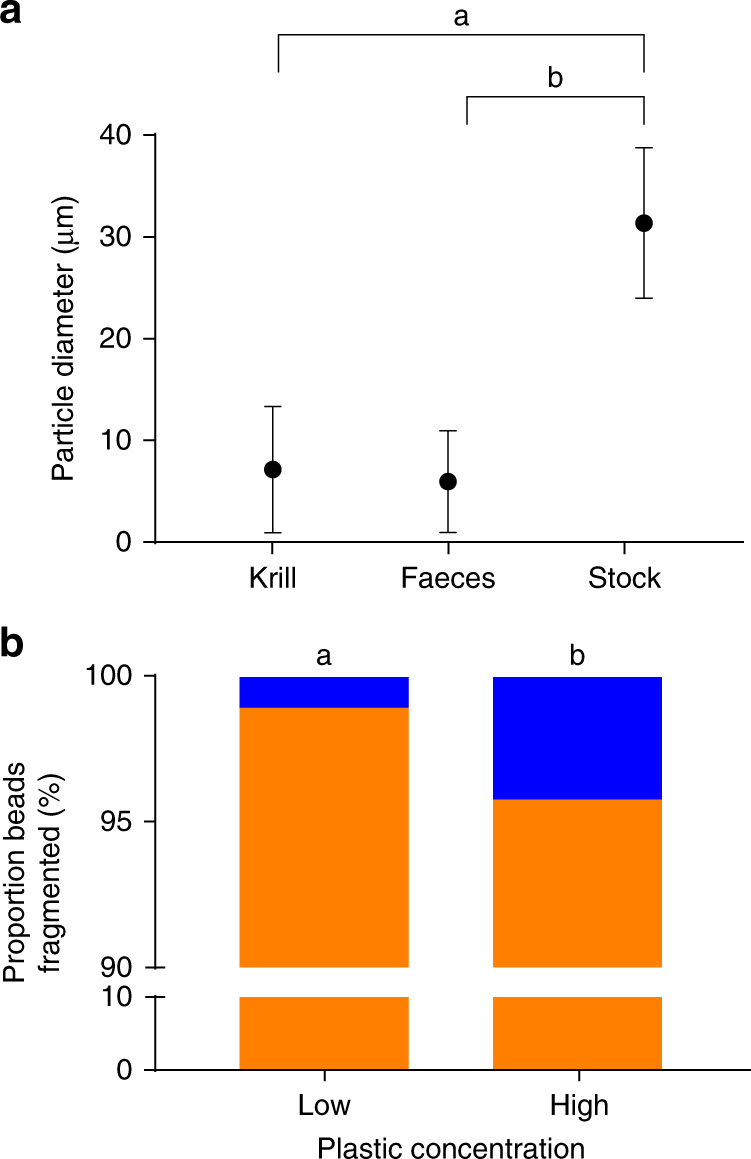
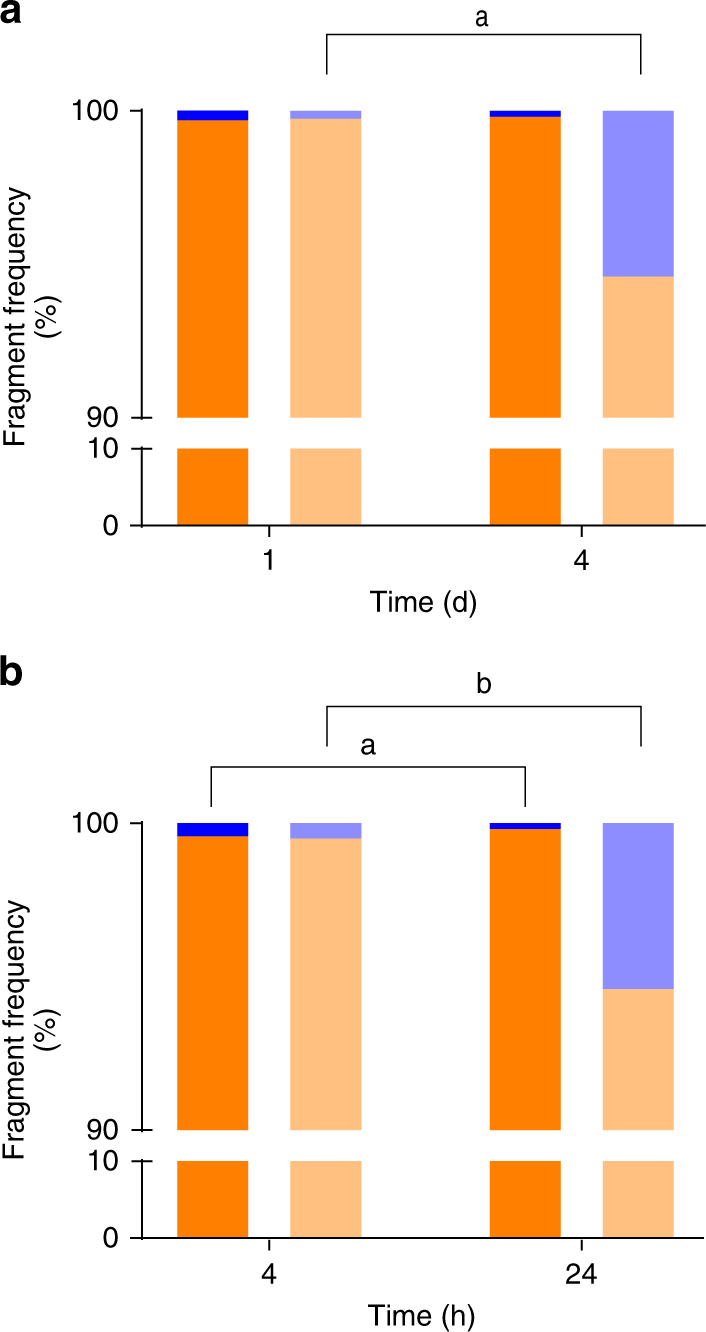
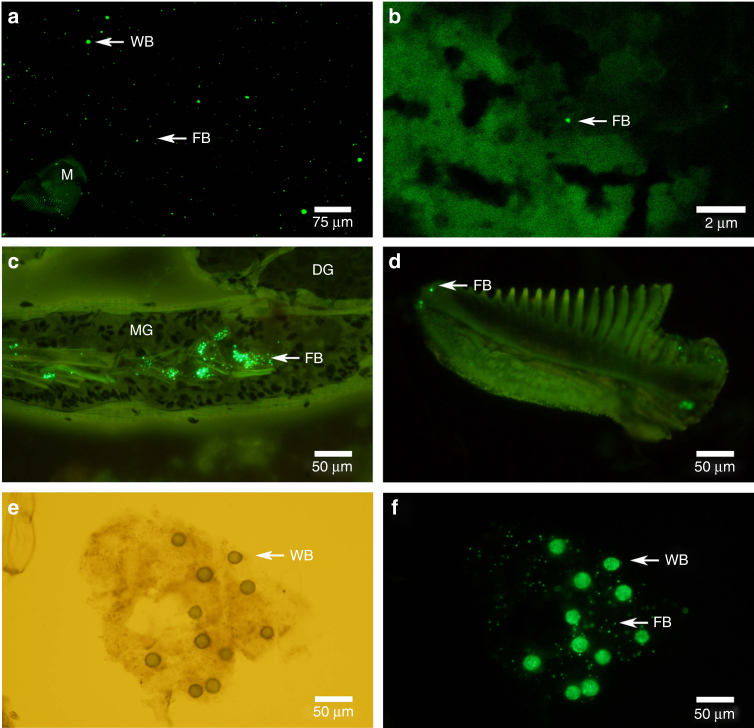
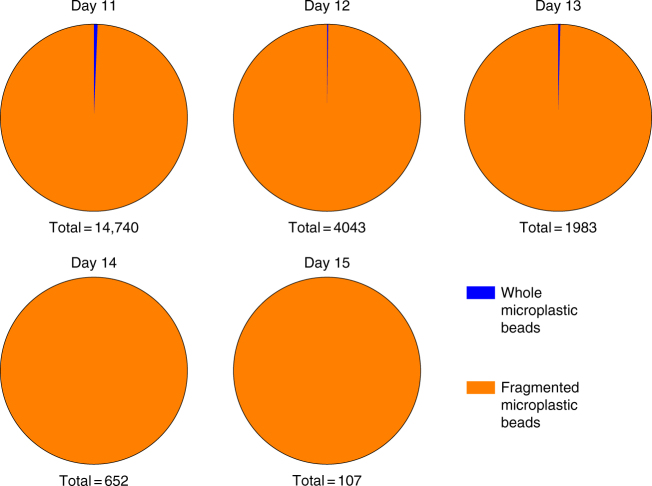
Microplastics (plastics <5 mm diameter) are at the forefront of current environmental pollution research, however, little is known about the degradation of microplastics through ingestion. Here, by exposing Antarctic krill ( Euphausia superba ) to microplastics under acute static renewal conditions, we present evidence of physical size alteration of microplastics ingested by a planktonic crustacean. Ingested microplastics (31.5 µm) are fragmented into pieces less than 1 µm in diameter. Previous feeding studies have shown spherical microplastics either; pass unaffected through an organism and are excreted, or are sufficiently small for translocation to occur. We identify a new pathway; microplastics are fragmented into sizes small enough to cross physical barriers, or are egested as a mixture of triturated particles. These findings suggest that current laboratory-based feeding studies may be oversimplifying interactions between zooplankton and microplastics but also introduces a new role of Antarctic krill, and potentially other species, in the biogeochemical cycling and fate of plastic.
Overview
The claims and statistics of this paper haven’t been checked yet.
Free: it reads the open-access text and checks the first 5 claims that cite a source we can check. Create a free account to check every claim.
Integrity signals
Registry
Cites
Statistics
Figures
Verification
Claims the paper makes
The claims and statistics of this paper haven’t been checked yet.
Free: it reads the open-access text and checks the first 5 claims that cite a source we can check. Create a free account to check every claim.
Claims other papers make about this one
Each is checked against this paper’s own text: does it say what the citing paper says it does?
The source backs part of the claim, not all of it — or backs it for a different population, condition or comparison.
In the citing paper
“PMD fragmentation also leads to the formation of particle sizes <1 mm, i.e. nanoplastics.This has been documented as a result of shear forces in the digestive tracts of krill and perhaps other crustaceans, 96 due to abrasion in a mill 106 or blender, 94 and even as a result of turbulence 95”
From The fate of plastic in the ocean environment – a minireview (2021) · cites this paper as [96]
Experimental — accuracy not yet measuredThe source backs part of the claim, not all of it — or backs it for a different population, condition or comparison.
In the citing paper
“At the nanoscale, optical and chemical methods conventionally used for microplastic analysis are not suitable because of sensitivity issues as well as physical and optical limits.13,40,67,68,96”
From The fate of plastic in the ocean environment – a minireview (2021) · cites this paper as [96]
Experimental — accuracy not yet measuredThe cited source says what the claim attributes to it.
In the citing paper
“Furthermore, the digestive action of marine invertebrates has been demonstrated to facilitate fragmentation of plastic particles to smaller size ranges 37,38 and to provide a pathway for sinking by the excretion of faecal matter aggregates.”
From Weathering plastics as a planetary boundary threat: exposure, fate, and hazards (2021) · cites this paper as [38]
The cited source says what the claim attributes to it.
In the citing paper
“For Antarctic krill, the fragmentation of 31.5 μ m MPs to < 1 μ m mimics this process (Dawson et al., 2018).”
From Trophic transfer of polyester microfibres across a multi-level marine food web. (2025) · cites this paper as Dawson et al., 2018
The check wasn’t confident either way, so it gives no verdict — never disputed.
In the citing paper
“While this is the first report of detailed depuration rates for mysid shrimp, rates calculated here are higher than those reported for similar organisms (i.e., Antarctic krill Euphausia superba , 0.22 h 1 (Dawson et al., 2018)), potentially a consequence of their smaller size.”
From Trophic transfer of polyester microfibres across a multi-level marine food web. (2025) · cites this paper as Dawson et al., 2018
Experimental — accuracy not yet measured
Self-check
Percentages, sums and reported differences re-computed from the paper’s own numbers.
The self-check needs the paper’s full text.
Citations
Cites
Fiji: an open-source platform for biological-image analysis
Schindelin, J., Arganda-Carreras, I., Frise, E., Kaynig, V., Longair, M., Pietzsch, T., Preibisch, S., Rueden, C., Saalfeld, S., Schmid, B., et al. (2012) · Nature Methods · doi:10.1038/nmeth.2019 · Cited by 66,890
Microplastics in the marine environment
Andrady, A. L. (2011) · Marine Pollution Bulletin · doi:10.1016/j.marpolbul.2011.05.030 · Cited by 8,105
Odian, G. (2004) · doi:10.1002/047147875x · Cited by 7,158
Eriksen, M., Lebreton, L. C. M., Carson, H. S., Thiel, M., Moore, C. J., Borerro, J. C., Galgani, F., Ryan, P. G., & Reisser, J. (2014) · PLoS ONE · doi:10.1371/journal.pone.0111913 · Cited by 4,710
(2015) · Springer eBooks · doi:10.1007/978-3-319-16510-3 · Cited by 3,502
Plastic debris in the open ocean
Cózar, A., Echevarría, F., González-Gordillo, J. I., Irigoien, X., Úbeda, B., Hernández-León, S., Palma, Á. T., Navarro, S., García-de-Lomas, J., Ruiz, A., et al. (2014) · Proceedings of the National Academy of Sciences · doi:10.1073/pnas.1314705111 · Cited by 3,133
Microplastic ingestion by zooplankton
Cole, M., Lindeque, P., Fileman, E., Halsband, C., Goodhead, R., Moger, J., & Galloway, T. S. (2013) · Environmental Science & Technology · doi:10.1021/es400663f · Cited by 2,763
The plastic in microplastics: A review
Andrady, A. L. (2017) · Marine Pollution Bulletin · doi:10.1016/j.marpolbul.2017.01.082 · Cited by 2,372
Browne, M. A., Dissanayake, A., Galloway, T. S., Lowe, D. M., & Thompson, R. C. (2008) · Environmental Science & Technology · doi:10.1021/es800249a · Cited by 2,263
Microplastics in bivalves cultured for human consumption
Van Cauwenberghe, L., & Janssen, C. R. (2014) · Environmental Pollution · doi:10.1016/j.envpol.2014.06.010 · Cited by 2,074
Research works printed but not linked: 1
- Rocha-Santos, T. A. P. & Duarte, A. C. Characterization and Analysis of Microplastics Vol. 75 (Elsevier Science, Amsterdam, 2017).
Cited by
Items 601–700 of 1,000
Lu, L., Huang, W., Han, Y., Tong, D., Sun, S., Yu, Y., Liu, G., & Shi, W. M. (2023) · Environmental Toxicology and Pharmacology · doi:10.1016/j.etap.2023.104208 · Cited by 20
Song, K., Xie, S., Li, C., He, J., Jin, W., Wang, R., Huang, W., Li, P., & Feng, Z. (2023) · Environmental Pollution · doi:10.1016/j.envpol.2023.123072 · Cited by 22
Krishna, A. B. S., Madhu, M., & Jayadev, A. (2023) · Environmental Monitoring and Assessment · doi:10.1007/s10661-023-12219-0 · Cited by 20
“Physical degradation of plastics involves wave actions, sediment-mediated abrasions, and/or digestive segregation by different organisms (Barnes et al., 2009; Dawson et al., 2018; Mateos-Cárdenas et al., 2020).”
Liu, M., Liu, X.-Y., Guo, Y.-Y., Ma, J.-Y., Duan, J.-L., Zhang, M., Han, Y., Sun, X., Sun, Y.-C., Wang, Y., et al. (2024) · ACS Nano · doi:10.1021/acsnano.4c00739 · Cited by 20
Ingestion of microplastics by anchovies from Talisayan harbor, East Kalimantan, Indonesia
Ningrum, E. W., Patria, M. P., & Sedayu, A. (2019) · Journal of Physics Conference Series · doi:10.1088/1742-6596/1402/3/033072 · Cited by 23
Eliso, M. C., Bergami, E., Bonciani, L., Riccio, R., Belli, G., Belli, M., Corsi, I., & Spagnuolo, A. (2022) · Environmental Pollution · doi:10.1016/j.envpol.2022.120892 · Cited by 22
Kang, Y., Gao, S.-H., Pan, Y., Gao, R., Li, T., Fan, L., Su, Y., Zhang, W., Yu, Z., Liang, B., et al. (2025) · Nature Communications · doi:10.1038/s41467-025-67879-y · Cited by 21
“Plastic pollution is a global environmental issue that has attracted considerable attention worldwide 1 .”
Quantifying microplastics in fjords along the Western Antarctic Peninsula
Garza, T. N., Barnes, D. K. A., Scourse, J. D., Whitaker, J. M., & Janosik, A. M. (2023) · Marine Pollution Bulletin · doi:10.1016/j.marpolbul.2023.115144 · Cited by 19
Gómez, V., Pozo, K., Clérandeau, C., Cachot, J., Montes, C. D. S., Příbylová, P., Glabán-Malagón, C., Clarke, B. O., Klánová, J., & Morin, B. (2023) · Marine Pollution Bulletin · doi:10.1016/j.marpolbul.2023.115361 · Cited by 19
Fan, Z., Jiang, C., Muhammad, T., Feng, Y., Sun, L., Jiang, L., & Lu, C. (2024) · Journal of Cleaner Production · doi:10.1016/j.jclepro.2024.142834 · Cited by 19
Zhang, W., Tian, D., Yu, Y., Tong, D., Zhou, W., Yu, Y., Lu, L., Li, W., Liu, G., & Shi, W. (2024) · The Science of The Total Environment · doi:10.1016/j.scitotenv.2024.174112 · Cited by 19
Nanoscale imaging of the simultaneous occlusion of nanoplastics and glyphosate within soil minerals
Chi, J., Yin, Y., Zhang, W., Putnis, C. V., & Wang, L. (2021) · Environmental Science Nano · doi:10.1039/d1en00381j · Cited by 22
Weissberg, D. (2013) · PubMed · Cited by 26
Bioturbation effects and behavioral changes in buried bivalves after exposure to microplastics
Zhang, K., Zheng, S., Zhao, C., Liang, J., & Sun, X. (2024) · Journal of Hazardous Materials · doi:10.1016/j.jhazmat.2024.136765 · Cited by 20
Varma, S., Duttaroy, A. K., & Basak, S. (2025) · The Science of The Total Environment · doi:10.1016/j.scitotenv.2025.179879 · Cited by 19
Zhang, S., Li, P., Hu, Q., Xue, Y., Wu, Y., Huang, H., Zhang, Y., Ya, Z., Tan, T., Liu, J., et al. (2025) · Advanced Materials · doi:10.1002/adma.202508428 · Cited by 18
Giroux, M. S., Reichman, J. R., Langknecht, T., Burgess, R. M., & Ho, K. T. (2022) · Environmental Pollution · doi:10.1016/j.envpol.2023.122650 · Cited by 18
Li, W., Luo, D., Yan, N., Miao, L., Adyel, T. M., Kong, M., & Hou, J. (2023) · Journal of environmental chemical engineering · doi:10.1016/j.jece.2023.111287 · Cited by 25
Feces and molting as microplastic sinks in a mangrove crab
Pichardo-Casales, B., Vargas-Abúndez, J. A., MOULATLET, G. M., & Capparelli, M. V. (2024) · Marine Pollution Bulletin · doi:10.1016/j.marpolbul.2024.116410 · Cited by 18
Pang, K., Fu, F., Wang, H., Ding, S., Fang, Y., & Liu, X. (2024) · The Science of The Total Environment · doi:10.1016/j.scitotenv.2024.175242 · Cited by 19
Effects of functionalized nanoplastics on oxidative stress in the mussel Mytilus coruscus
Yang, P., Shang, Y., Qu, B., Zhang, J., Khalil, M. F., Hu, M., & Wang, Y. (2024) · Marine Pollution Bulletin · doi:10.1016/j.marpolbul.2024.117437 · Cited by 18
Towards harmonized ecotoxicological effect assessment of micro- and nanoplastics in aquatic systems
Beggel, S., Kalis, E. J. J., & Geist, J. P. (2024) · Environmental Pollution · doi:10.1016/j.envpol.2024.125504 · Cited by 19
Human and ecological health effects of nanoplastics: May not be a tiny problem
Hughes, M. F., Clapper, H. M., Burgess, R. M., & Ho, K. T. (2021) · Current Opinion in Toxicology · doi:10.1016/j.cotox.2021.09.004 · Cited by 18
Special issue plastics in polar regions
Corsi, I., Bergami, E., & Caruso, G. (2020) · Environment International · doi:10.1016/j.envint.2020.106203 · Cited by 18
Dawson, A. L., Santana, M., Perez, M. A., Meehan, K., McCarthy, H., Vickers, K., & Motti, C. A. (2025) · Environmental Pollution · doi:10.1016/j.envpol.2025.125884 · Cited by 17
Self-citationDegradation of Plastics and Formation of Primary and Secondary Microplastics
Mishra, S. K., Chowdhury, S. D., Bhunia, P., Sarkar, A., Surampalli, R. Y., & Zhang, T. C. (2025) · Wiley eBooks · doi:10.1002/9781394251100.ch3 · Cited by 23
Tang, C., Xu, J., Liang, R., Xu, J., & Li, L. (2025) · Journal of environmental chemical engineering · doi:10.1016/j.jece.2025.116584 · Cited by 17
An Overview of Physical, Chemical and Biological Methods for Removal of Microplastics
Enyoh, C. E., Fadare, O. O., Paredes, M., Wang, Q., Verla, A. W., Shafea, L., & Chowdhury, T. (2022) · Environmental footprints and eco-design of products and processes · doi:10.1007/978-981-16-8440-1_12 · Cited by 22
Blonç, M., Brandts, I., Cánovas, M., Franco‐Martínez, L., Rubio, C. P., Tort, L., Tvarijonaviciute, A., Gravato, C., & Teles, M. (2023) · Ecological Indicators · doi:10.1016/j.ecolind.2023.109966 · Cited by 17
Jonai, T., Ohori, Y., Fujii, T., Nakayama, A., Moriwaki, H., & Akiyama, Y. (2023) · Separation and Purification Technology · doi:10.1016/j.seppur.2023.123697 · Cited by 18
Hu, Y., Ying, S., & Huang, Y. (2023) · Chemical Research in Chinese Universities · doi:10.1007/s40242-023-3052-y · Cited by 17
Pawak, V. S., Shekhar, C., Loganathan, V. A., & Sabapathy, M. (2023) · Chemical Engineering Research and Design · doi:10.1016/j.cherd.2023.08.038 · Cited by 17
Burger, M., Bouwman, H., du Preez, L. H., & Landman, W. (2024) · Bulletin of Environmental Contamination and Toxicology · doi:10.1007/s00128-024-03852-7 · Cited by 17
“On the other hand, Antarctic krill (Euphausia superba ) for instance, produce smaller plastics in the digestive gland (Dawson et al. 2018 ).”
BackgroundAli, W., Jeong, H., Zinck, P., Souissi, S., & Lee, J. (2024) · Marine Pollution Bulletin · doi:10.1016/j.marpolbul.2024.117318 · Cited by 19
Long-Term Changes in the Abundance, Size, and Morphotype of Marine Plastics in the North Pacific
Miyazono, K., Tadokoro, K., Thushari, G. G. N., Miyamoto, H., Takasuka, A., Watai, M., Yasuda, T., Sato, T., Yamashita, R., Kodama, T., et al. (2025) · Environmental Science & Technology · doi:10.1021/acs.est.4c09706 · Cited by 17
Resolving natural organic matter and nanoplastics in binary or ternary systems via UV–Vis analysis
Zhang, R., Chen, Y., Ouyang, X., Weng, L., Ma, J., Islam, M. S., & Li, Y. (2022) · Journal of Colloid and Interface Science · doi:10.1016/j.jcis.2022.11.050 · Cited by 18
Zheng, R., Li, Q., Li, P., Li, L., & Liu, J. (2022) · Chemosphere · doi:10.1016/j.chemosphere.2022.137374 · Cited by 18
Gagné, F., André, C., Turgeon, S., & Ménard, N. (2023) · Comparative Biochemistry and Physiology Part C Toxicology & Pharmacology · doi:10.1016/j.cbpc.2023.109563 · Cited by 17
Zhang, Y., Gao, R.-Y., Wang, Z.-J., Shao, Q.-Q., Hu, Y.-W., Jia, H.-B., Liu, X., Dong, F., Fu, L.-M., & Zhang, J. (2023) · Chemosphere · doi:10.1016/j.chemosphere.2023.138341 · Cited by 17
Dunn, R. A., & Welden, N. A. C. (2023) · Water Air & Soil Pollution · doi:10.1007/s11270-023-06190-2 · Cited by 16
“Filter-feeder hosts which mechanically breakdown plastic particles, such as krill (Dawson et al., 2018a), would also increase microbial access to the polymer, speeding up biodegradation rates.”
BackgroundHeerey, L., O’Sullivan, J., Bruen, M., Turner, J., Mahon, A. M., Murphy, S., Lally, H., O’Connor, J., O’Connor, I., & Nash, R. (2023) · The Science of The Total Environment · doi:10.1016/j.scitotenv.2023.164028 · Cited by 17
Catarino, A. I., Patsiou, D., Summers, S., Everaert, G., Henry, T. B., & Gutiérrez, T. (2023) · TrAC Trends in Analytical Chemistry · doi:10.1016/j.trac.2023.117262 · Cited by 17
Jadhav, H. S., Fulke, A. B., Dasari, L. N., Dalai, A., & Haridevi, C. K. (2023) · Bioresource Technology · doi:10.1016/j.biortech.2023.129952 · Cited by 19
Accumulation of nanoplastics by wheat seedling roots: Both passive and energy-consuming processes
Zhu, J., He, Y., Zheng, Q., Yang, Q., Zhou, W., Sun, Y., & Zhan, X. (2024) · Journal of Hazardous Materials · doi:10.1016/j.jhazmat.2024.136052 · Cited by 17
Stefanelli-Silva, G., Tavares, P. V. F., de Moraes, B. R., Ando, R. A., Campos, L. S., Petti, M. A. V., Smith, C. R., & Sumida, P. Y. G. (2024) · Environmental Science & Technology · doi:10.1021/acs.est.4c09487 · Cited by 17
Calzoni, E., Montegiove, N., Cesaretti, A., Bertoldi, A., Cusumano, G., Gigliotti, G., & Emiliani, C. (2024) · Biophysica · doi:10.3390/biophysica4040047 · Cited by 17
Levesque, B., Hrapovic, S., Berrué, F., Vogt, A., Ellis, L. D., & Hermabessière, L. (2025) · Toxicological Sciences · doi:10.1093/toxsci/kfaf015 · Cited by 16
“Such degradation from microplastic to nanoplastic has recently been demonstrated in the laboratory (Dawson et al. 2018; Khan and Ali 2023).”
Santos, D., Cabecinha, E., Luzio, A., Bellas, J., & Monteiro, S. M. (2025) · Journal of Environmental Management · doi:10.1016/j.jenvman.2025.124770 · Cited by 17
Todeschini, S., Milanese, C., Medina‐Llamas, M., Visetti, F., & Manenti, S. (2025) · Journal of Environmental Management · doi:10.1016/j.jenvman.2025.125497 · Cited by 16
The Toxicity of (Nano)Microplastics on C. elegans and Its Mechanisms
Hu, J., Li, X., Lei, L., Cao, C., Wang, D., & He, D. (2020) · The handbook of environmental chemistry · doi:10.1007/698_2020_452 · Cited by 18
de Assis, G. C., de Jesus, R. A., da Silva, W. T. A., Ferreira, L. F. R., Figueiredo, R. T., & de Oliveira, R. J. (2021) · Surfaces · doi:10.3390/surfaces5010002 · Cited by 18
Kim, L., Kwak, J. I., Kim, S. A., & An, Y. (2023) · Journal of Hazardous Materials · doi:10.1016/j.jhazmat.2023.131425 · Cited by 16
He, Y., Liu, B., Ma, X., Hu, X., Yan, W., & Wang, F. (2025) · Food Research International · doi:10.1016/j.foodres.2025.116802 · Cited by 15
Nanomaterials for the remediation of microplastics in wastewater
Sharma, A. K., Choudhary, H., Chauhan, P., & Chaliha, J. (2025) · Nano Trends · doi:10.1016/j.nwnano.2025.100152 · Cited by 15
Long, B., Li, Q., Hu, C. H., Chen, Y., Zeng, Y., Li, W., Pearson, S., Liu, M., Fei, C., Yuan, J. S., et al. (2025) · Nature Communications · doi:10.1038/s41467-025-67543-5 · Cited by 15
“The techno-economic Analysis (TEA) and life cycle analysis (LCA) were carried out to evaluate the feasibility and scenario for commercial application of RUMBA, along with its emission impacts (Supplementary Tables 2 – 8, Supplementary Figs.”
Rambacher, J., Pantos, O., Hardwick, S., Cameron, E. Z., & Gaw, S. (2023) · Cambridge Prisms Plastics · doi:10.1017/plc.2023.6 · Cited by 16
“In Antarctic krill (Euphausia superba), the ingestion of polyethylene (PE) microspheres under controlled conditions led to their fragmentation (Dawson et al., 2018).”
BackgroundClark, N. J., Fischer, A. C., Durndell, L. J., Galloway, T. S., & Thompson, R. C. (2023) · Chemosphere · doi:10.1016/j.chemosphere.2023.140058 · Cited by 15
Sun, A., & Wang, W. (2024) · Environmental Science & Technology · doi:10.1021/acs.est.3c07869 · Cited by 15
Experimental ingestion of microplastics in three common Antarctic benthic species
Gonzalez-Pineda, M., Àvila, C., Lacerot, G., Lozoya, J. P., de Mello, F. T., Faccio, R., Pignanelli, F., & Salvado, H. H. (2024) · Marine Environmental Research · doi:10.1016/j.marenvres.2024.106879 · Cited by 15
Li, H., Liu, H., Lin, Q., Chen, T., & Peng, R. (2025) · Sustainability · doi:10.3390/su17051897 · Cited by 18
Degradation of Plastics Using Nanomaterials
David, M., Prakash, L., Sangeetha, J., Naik, J., Thangadurai, D., & Thimmappa, S. C. (2020) · Springer eBooks · doi:10.1007/978-3-030-11155-7_74-1 · Cited by 18
Plastic and Microplastic Pollution: From Ocean Smog to Planetary Boundary Threats
Liu, L., Mai, L., & Zeng, E. Y. (2019) · Springer eBooks · doi:10.1007/978-981-13-9447-8_14 · Cited by 17
From Cradle to Grave: Microplastics—A Dangerous Legacy for Future Generations
Lang, T., Jelić, F., & Wechselberger, C. (2024) · Environments · doi:10.3390/environments11120263 · Cited by 14
“Airborne particles, depending on their size, can penetrate various regions in the respiratory system.”
Zhang, J., Hu, G., Guo, H., Yang, W., Li, X., Ni, Y., He, M., Ding, P., & Yu, Y. (2024) · The Science of The Total Environment · doi:10.1016/j.scitotenv.2024.178031 · Cited by 14
Microplastics and nanoplastics on Mt. Everest
Wang, Y., Xu, X., Wu, J., Dong, Z., Su, Y., Huang, G., Qing, G., Feng, Z., Jia, H., Zhao, J. L., et al. (2025) · Cell Reports Sustainability · doi:10.1016/j.crsus.2025.100467 · Cited by 30
The gastric sieve of penaeid shrimp species is a sub-micron nutrient filter
Pattarayingsakul, W., Pudgerd, A., Munkongwongsiri, N., Vanichviriyakit, R., Chaijarasphong, T., Thitamadee, S., & Kruangkum, T. (2019) · Journal of Experimental Biology · doi:10.1242/jeb.199638 · Cited by 14
“Alternatively, they might be fragmented into even smaller microor nano-particles as reported for millimeter diameter microplastic beads in Antarctic krill (Dawson et al., 2018).”
BackgroundMinimal meso-plastics detected in Australian coastal reef fish
Puskic, P. S., & Coghlan, A. R. (2021) · Marine Pollution Bulletin · doi:10.1016/j.marpolbul.2021.113074 · Cited by 14
Addressing Microplastics in a Global Agreement on Plastic Pollution
Rognerud, I., Hurley, R. R., Lusher, A., Bråte, I. L. N., & Steindal, E. H. (2023) · TemaNord · doi:10.6027/temanord2022-566 · Cited by 19
Are Daphnia similis Playing a Significant Role in Microplastic Biofragmentation?
Rani-Borges, B., Pompêo, M. L. M., & Queiroz, L. G. (2023) · Water Air & Soil Pollution · doi:10.1007/s11270-023-06384-8 · Cited by 14
“Still, the special lack of data on this organism-mediated process is worrying, as it turns out to be, as shown here and in other studies (Dawson et al., 2018; Mateos-Cárdenas et al., 2020; Rani-Borges et al., 2022), significant in altering the structure of this contaminant.”
BackgroundResultSu, L., Wu, Q., Niu, J., Gong, G., & Ran, F. (2023) · ACS Sustainable Chemistry & Engineering · doi:10.1021/acssuschemeng.3c03973 · Cited by 14
Nanoplastics impair growth and nitrogen fixation of marine nitrogen-fixing cyanobacteria
Deng, L., Cheung, S., Liu, J., Chen, J., Chen, F., Zhang, X., & Liu, H. (2024) · Environmental Pollution · doi:10.1016/j.envpol.2024.123960 · Cited by 14
Rondón, R., Cosseau, C., Bergami, E., Cárdenas, C. A., Pérez-Toledo, C., Alvarez, D., Aldridge, J., Font, A., Garrido, I., Cruz, F. S., et al. (2024) · Marine Environmental Research · doi:10.1016/j.marenvres.2024.106539 · Cited by 14
Projecting environmental and krill fishery impacts on the Antarctic Peninsula food web in 2100
Testa, G., Neira, S., Giesecke, R., & Piñones, A. (2022) · Progress In Oceanography · doi:10.1016/j.pocean.2022.102862 · Cited by 14
Discovery of microplastics and nanoplastics in pediatric myocardium and blood
Lv, L., Lang, X., Sun, Y., Li, G., Wu, Y., Liu, Z., & Wang, Q. (2025) · Environmental Technology & Innovation · doi:10.1016/j.eti.2025.104371 · Cited by 14
Primpke, S., Meyer, B., Falcou-Préfol, M., Schütte, W., & Gerdts, G. (2024) · The Science of The Total Environment · doi:10.1016/j.scitotenv.2024.170618 · Cited by 14
“In laboratory experiments, it has been demonstrated that krill can ingest MP (Dawson et al., 2018) and investigations on wild-caught krill are still limited (Wilkie Johnston et al., 2023; Zhu et al., 2023).”
BackgroundSon, S. H., Jung, Y. J., Koo, H. Y., & Choi, W. S. (2024) · ACS Applied Materials & Interfaces · doi:10.1021/acsami.3c19398 · Cited by 13
Removal of Nanoplastics from Copollutant Systems Using Seaweed Cellulose Nanofibers
Zhang, L. H., Zhang, J., Ma, H., Wei, Z., Liu, G., Zhang, H., & Liu, Y. (2024) · Journal of Agricultural and Food Chemistry · doi:10.1021/acs.jafc.4c00832 · Cited by 13
Toxicity assessment of di(2-ethylhexyl) phthalate using zebrafish embryos: Cardiotoxic potential
Naïja, A., Horie, Y., Boughattas, S., Ismail, S., & Al-Mansouri, N. (2024) · Comparative Biochemistry and Physiology Part C Toxicology & Pharmacology · doi:10.1016/j.cbpc.2024.109956 · Cited by 13
Rezaei, S., Ciriza, D. B., Hassanzadeh, A., Kheirandish, F., Gucciardi, P. G., Maragò, O. M., Saija, R., & Iatì, M. A. (2024) · ACS Photonics · doi:10.1021/acsphotonics.4c01008 · Cited by 13
“22,24,25 The potential for transfer through the trophic chain 26 makes micro and nanoplastics particles (MNPs) a source of contamination at all trophic levels.”
Unraveling Plastic Pollution in Protected Terrestrial Raptors Using Regurgitated Pellets
Wayman, C. H., Fernández‐Piñas, F., López, I., Fernández-Valeriano, R., Iglesias‐Lebrija, J. J., González, F., Rosal, R., & González-Pleiter, M. (2024) · Microplastics · doi:10.3390/microplastics3040041 · Cited by 13
Zhang, G., Du, J., Zhang, C., Zhao, Z., Chen, Y., Liu, M., Chen, J., Fan, G., Ma, L., Li, S., et al. (2024) · International Journal of Biological Macromolecules · doi:10.1016/j.ijbiomac.2024.137732 · Cited by 14
“Recent studies have indicated that organisms such as Antarctic krill [8] and rotifers [9] can significantly accelerate the fragmentation of MPs into NPs.”
Insect farming: A bioeconomy-based opportunity to revalorize plastic wastes
Sanchez-Hernandez, J. C., & Megharaj, M. (2024) · Environmental Science and Ecotechnology · doi:10.1016/j.ese.2024.100521 · Cited by 15
“For example, in Antarctic krill, particles of 150 e 500 nm in size were found in the digestive gland, indicating translocation from the gut [124].”
InfluentialFar‐Reaching Impact of Microplastics on Agricultural Systems: Options for Mitigation and Adaptation
Shimly, S., Rajendrakumar, S., & Rahut, D. B. (2025) · Land Degradation and Development · doi:10.1002/ldr.5459 · Cited by 18
Li, Q., Niu, X., Cai, Y., Li, L., & Xia, Z. (2025) · Toxicology · doi:10.1016/j.tox.2025.154137 · Cited by 13
Photodegradation of polystyrene microplastics exposed to natural sunlight
Kilinc, Z., Yeşilay, G., Çetin, D., Suludere, Z., Rashdan, S. A., Hazeem, L. J., Bououdina, M., & Kyzas, G. Z. (2025) · Journal of Photochemistry and Photobiology A Chemistry · doi:10.1016/j.jphotochem.2025.116462 · Cited by 14
Koistinen, V., Babu, A. F., Shad, E., & Zarei, I. (2025) · Food Innovation and Advances · doi:10.48130/fia-0025-0022 · Cited by 13
Microplastics in Polar Samples
Tirelli, V., Suaria, G., & Lusher, A. (2022) · Springer eBooks · doi:10.1007/978-3-030-39041-9_4 · Cited by 21
Monràs-Riera, P., Angulo‐Preckler, C., & Àvila, C. (2023) · Marine Pollution Bulletin · doi:10.1016/j.marpolbul.2023.115516 · Cited by 13
Gwenzi, W., Gufe, C., Alufasi, R., Makuvara, Z., Marumure, J., Shanmugam, S. R., Selvasembian, R., & Halabowski, D. (2024) · The Science of The Total Environment · doi:10.1016/j.scitotenv.2024.171116 · Cited by 13
Microplastic pollution and nutrient enrichment shift the diet of freshwater macroinvertebrates
Rodríguez, A. M., Kratina, P., & Jones, J. I. (2024) · Environmental Pollution · doi:10.1016/j.envpol.2024.124540 · Cited by 14
Microplastic polyethylene induced inner ear dysfunction in murine model
Zaheer, J., Lee, H., Kim, S., Jang, J., Kim, H., Choi, J. H., Park, M., & Kim, J. S. (2024) · Journal of Hazardous Materials · doi:10.1016/j.jhazmat.2024.135193 · Cited by 12
Liu, Y., Qin, Z., Wang, G., Jia, X., Zhou, J., Li, H., Li, Z., & Fang, X. (2024) · Journal of Hazardous Materials · doi:10.1016/j.jhazmat.2024.136943 · Cited by 12
Fragmentation of expanded polystyrene to microplastics by wharf roach Ligia spp.
Lee, S., Tsuruda, Y., Honda, M., Mukai, K., Hirasawa, T., Wijaya, D. C., Takai, Y., SHIMASAKI, Y., & Oshima, Y. (2025) · Marine Pollution Bulletin · doi:10.1016/j.marpolbul.2025.117769 · Cited by 13
Innovative materials that behave like robots to combat plastic pollution
Ali, S., Khan, M. H., Zuhra, Z., & Wang, J. (2025) · Materials Horizons · doi:10.1039/d4mh01772b · Cited by 13
Plastic litter is rapidly bioeroded in mangrove forests
Obonaga, L. D., Ortiz, A., Wilke, T., & Riascos, J. M. (2025) · Marine Environmental Research · doi:10.1016/j.marenvres.2025.107027 · Cited by 12
Ockenden, Α., Mitrano, D. M., Kah, M., Tremblay, L. A., & Simon, K. S. (2024) · Microplastics and Nanoplastics · doi:10.1186/s43591-024-00096-4 · Cited by 11
Dey, P., Bradley, T. M., & Boymelgreen, A. M. (2024) · PLoS ONE · doi:10.1371/journal.pone.0314191 · Cited by 11
Microplastics in the marine environment: Impacts, identification and treatments
Fernandes, M. C., Leite, L. M. D. F., da Costa, M. R. F., Fregolente, L. V., & Nogueira, G. P. (2025) · Bioresource Technology Reports · doi:10.1016/j.biteb.2025.102073 · Cited by 13
Quantification of paint flakes and metal emissions during pro-active in-water hull cleaning
Fischer, M., Garrick, D.-L., von Bargen, K., Mayer, J., Kirchgeorg, T., & Watermann, B. T. (2025) · Chemosphere · doi:10.1016/j.chemosphere.2025.144291 · Cited by 13
Microplastics as benzo-a-pyrene carriers: genotoxicity assessment simulating human gastric digestion
Maestra, S. L., D’Agostini, F., Benvenuti, M., Alberti, S., Passalacqua, M., Gronda, F., & Ferrea, L. (2025) · Archives of Toxicology · doi:10.1007/s00204-025-04046-8 · Cited by 11
“When ingested, MPs pass from the oesophagus to the stomach, undergoing a gastric digestion phase lasting 2 to 6 h (Dawson et al. 2018) and then passing to the intestine.”
Metadata
- Authors
- Dawson, A. L., Kawaguchi, S., King, C. K., Townsend, K. A., King, R., Huston, W. M., & Bengtson Nash, S. M.
- Affiliations
- Griffith University (AU)
- Australian Antarctic Division (AU)
- The University of Queensland (AU)
- University of Technology Sydney (AU)
- Corresponding author
- Dawson, Amanda L.
- ORCID
- Venue
- Nature Communications
- Published
- 2018-03-08
- Volume
- 9
- Issue
- 1
- Pages
- 1001-1001
- ISSN
- 2041-1723 (ISSN-L)
- PMC
- PMC5843626
- OpenAlex
- W2794249619
- Cited by
- 1,023
- References
- 52
- Citations by year
- 2026: 99 · 2025: 133 · 2024: 151 · 2023: 176 · 2022: 165 · 2021: 126 · 2020: 102 · 2019: 54 · 2018: 16
- FWCI
- 27.95
- Type
- journal article
- Language
- en
- Open access
- gold
- doi.org
- Licence
- cc-by
- creativecommons.org/licenses/by/4.0 (tdm)
- creativecommons.org/licenses/by/4.0 (vor)
- Locations
- Nature Communications (publishedVersion, cc-by)
- PubMed Central (publishedVersion, cc-by)
- PubMed (publishedVersion)
- RePEc: Research Papers in Economics (submittedVersion)
- DOAJ (DOAJ: Directory of Open Access Journals) (submittedVersion)
- DOAJ (DOAJ: Directory of Open Access Journals) (submittedVersion, cc-by-sa)
- UTS ePRESS (University of Technology Sydney) (submittedVersion)
- Griffith Research Online (submittedVersion, cc-by)
- Funders
- QIMR Berghofer Medical Research Institute
- Australian Antarctic Division
- Topics
- Physical Sciences › Environmental Science › Pollution › Microplastics and Plastic Pollution
- Physical Sciences › Environmental Science › Health, Toxicology and Mutagenesis › Environmental Toxicology and Ecotoxicology
- Physical Sciences › Environmental Science › Pollution › Pharmaceutical and Antibiotic Environmental Impacts
- Keywords
- microplastics, nanoplastics, Antarctic krill, ingestion, zooplankton, plastic degradation, particle size reduction
- MeSH terms
- Animals, Digestion, Feces, Water Pollutants, Chemical, Polyethylene, Euphausiacea, Nanoparticles
About these checks
Registry, retraction, Cites and statistics results are computed, not judged, with one exception: a printed reference that no index lists is read once by a model before it counts as a citation error. Claims are extracted by a model and kept only when their quote appears verbatim in the text; each cited source is then checked, with a model’s help, for whether it says what the claim relies on. Those verdicts can be wrong — read the claim’s quote and the cited source before relying on one.
Statistics and arithmetic are recomputed, not judged.
Confidence bands are shown only for fields calibrated on our annotated test set. None is calibrated yet, so no band is shown.
What counts as a claim ›How we measure confidence ›How we check this ›
Are you an author, or do you see a problem with this page? Request a review
Data sources
Bibliographic data: Semantic Scholar, OpenAlex, Crossref.
Contains information from the Semantic Scholar Academic Graph Datasets, made available under the ODC Attribution License (ODC-BY 1.0).
Semantic Scholar’s data is described in: Kinney, R., et al. (2023). The Semantic Scholar Open Data Platform. arXiv:2301.10140.
