

Efficient and self-adaptive in-situ learning in multilayer memristor neural networks
Open accessThe DOI matches its Crossref record; 52 of the 52 references it cites were found in a registry or an index.
Abstract
Memristors with tunable resistance states are emerging building blocks of artificial neural networks. However, in situ learning on a large-scale multiple-layer memristor network has yet to be demonstrated because of challenges in device property engineering and circuit integration. Here we monolithically integrate hafnium oxide-based memristors with a foundry-made transistor array into a multiple-layer neural network. We experimentally demonstrate in situ learning capability and achieve competitive classification accuracy on a standard machine learning dataset, which further confirms that the training algorithm allows the network to adapt to hardware imperfections. Our simulation using the experimental parameters suggests that a larger network would further increase the classification accuracy. The memristor neural network is a promising hardware platform for artificial intelligence with high speed-energy efficiency.
Overview
The claims and statistics of this paper haven’t been checked yet.
Free: it reads the open-access text and checks the first 5 claims that cite a source we can check. Create a free account to check every claim.
Integrity signals
Registry
Cites
Statistics
Figures
Verification
Claims the paper makes
The claims and statistics of this paper haven’t been checked yet.
Free: it reads the open-access text and checks the first 5 claims that cite a source we can check. Create a free account to check every claim.
Claims other papers make about this one
Each is checked against this paper’s own text: does it say what the citing paper says it does?
The cited source says what the claim attributes to it.
In the citing paper
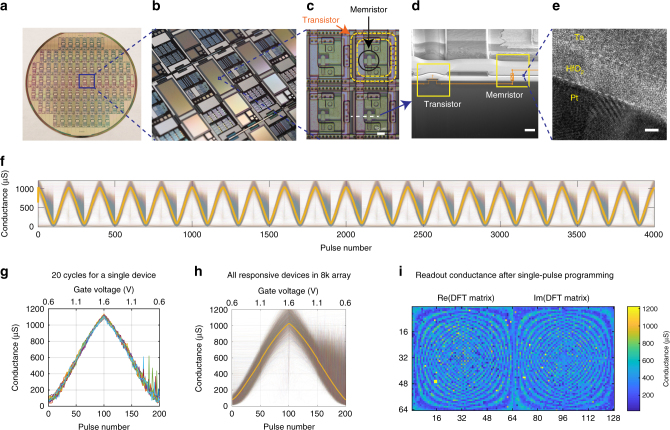
“However, severe non-linearity and asymmetry during the LTP-LTD are observed in Fig. 1b, similar to other conventional oxide-based memristors.23,32,33”
The cited source says what the claim attributes to it.
In the citing paper
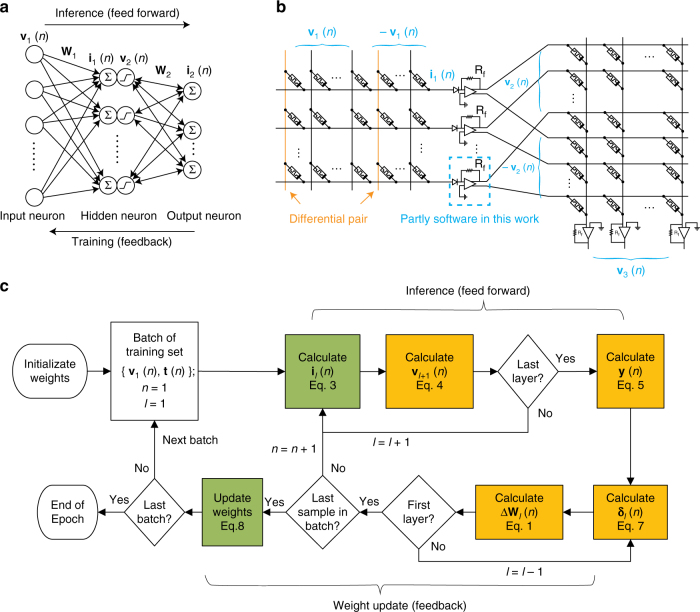
“the memristive dot product engine (MDPE), which performs large-scale vector-matrix multiplication (VMM) operations using a memristive crossbar array6–13”
From Flexible self-rectifying synapse array for energy-efficient edge multiplication in electrocardiogram diagnosis (2025) · cites this paper as [8]
Self-check
Percentages, sums and reported differences re-computed from the paper’s own numbers.
The self-check needs the paper’s full text.
Citations
Cites
Deep Residual Learning for Image Recognition
He, K., Zhang, X., Ren, S., & Sun, J. (2016) · 2016 IEEE Conference on Computer Vision and Pattern Recognition (CVPR) · doi:10.1109/cvpr.2016.90 · Cited by 235,474 · cited 1×
“ith the introduction of hardware accelerators 1 – 4 for inference in deep neural networks (DNNs) 5 – 9 , the focus on improving overall energy and time performance arti fi cial intelligence applications is now on training.”
BackgroundVery Deep Convolutional Networks for Large-Scale Image Recognition
Simonyan, K., & Zisserman, A. (2014) · arXiv · doi:10.48550/arxiv.1409.1556 · Cited by 114,148
ImageNet classification with deep convolutional neural networks
Krizhevsky, A., Sutskever, I., & Hinton, G. E. (2017) · Communications of the ACM · doi:10.1145/3065386 · Cited by 112,155
LeCun, Y., Bengio, Y., & Hinton, G. (2015) · Nature · doi:10.1038/nature14539 · Cited by 84,126
Gradient-based learning applied to document recognition
Lecun, Y., Bottou, L., Bengio, Y., & Haffner, P. (1998) · Proceedings of the IEEE · doi:10.1109/5.726791 · Cited by 58,805 · cited 2×
“Here the network was trained using stochastic gradient descent (SGD) 32 to classify handwritten digits in MNIST dataset.”
MethodInfluentialLearning representations by back-propagating errors
Rumelhart, D. E., Hinton, G. E., & Williams, R. J. (1986) · Nature · doi:10.1038/323533a0 · Cited by 31,892 · cited 1×
“The error backpropagation 39,40 in this work is calculated in software from the values of the readout weights (see Methods).”
MethodSelf-citationMastering the game of Go with deep neural networks and tree search
Silver, D., Huang, A., Maddison, C. J., Guez, A., Sifre, L., van den Driessche, G., Schrittwieser, J., Antonoglou, I., Panneershelvam, V., Lanctot, M., et al. (2016) · Nature · doi:10.1038/nature16961 · Cited by 15,612
Strukov, D. B., Snider, G. S., Stewart, D. R., & Williams, R. S. (2008) · Nature · doi:10.1038/nature06932 · Cited by 11,828
Self-citationTensorFlow: A system for large-scale machine learning
Abadi, M., Barham, P., Chen, J., Chen, Z., Davis, A., Dean, J., Devin, M., Ghemawat, S., Irving, G., Isard, M., et al. (2016) · arXiv (Cornell University) · doi:10.48550/arxiv.1605.08695 · Cited by 11,822
In-Datacenter Performance Analysis of a Tensor Processing Unit
Jouppi, N. P., Young, C., Patil, N., Patterson, D., Agrawal, G., Bajwa, R., Bates, S., Bhatia, S., Boden, N., Borchers, A., et al. (2017) · Proceedings of the 44th Annual International Symposium on Computer Architecture · doi:10.1145/3079856.3080246 · Cited by 4,537
Research works printed but not linked: 2
- 40. LeCun, Y. A theoretical framework of back-propagation. In Proc. of Connectionist Models Summer School (eds Touretzky, D., Hinton, G. E. & Sejnowski, T. J.) 21–28 (CMU, Pittsburgh, PA, USA, 1988).
- 53. Gokmen, T. & Vlasov, Y. Acceleration of deep neural network training with resistive cross-point devices: design considerations. Front. Neurosci.10, 333 (2016). 10.3389/fnins.2016.00333 PMC4954855 27493624 · DOI · Paper page
Cited by
Items 401–500 of 926
Linear Optimization for Memristive Device in Neuromorphic Hardware
Fu, J., Liao, Z., Gong, N., & Wang, J. (2019) · IEEE Computer Society Annual Symposium on VLSI · doi:10.1109/isvlsi.2019.00088 · Cited by 18
“Also, in order to obtain precise conductance tuning, in [2, 21, 22], write-and-verify tuning with feedback circuits is used to adjust the device reliably.”
MethodNikiruy, K. E., Surazhevsky, I. A., Demin, V. A., & Emelyanov, A. V. (2020) · physica status solidi (a) · doi:10.1002/pssa.201900938 · Cited by 18
Memristive Fuzzy Deep Learning Systems
Zhang, Y., Cui, M., Shen, L., & Zeng, Z. (2020) · IEEE Transactions on Fuzzy Systems · doi:10.1109/tfuzz.2020.2995966 · Cited by 18
Cai, F., Yen, S.-H., Uppala, A., Thomas, L., Liu, T., Fu, P., Zhang, X., Low, A., Kamalanathan, D., Hsu, J., et al. (2022) · Advanced Intelligent Systems · doi:10.1002/aisy.202200014 · Cited by 20
A full-function memristive pavlov associative memory circuit with inter-stimulus interval effect
Sun, C., Wang, C., & Xu, C. (2022) · Neurocomputing · doi:10.1016/j.neucom.2022.07.044 · Cited by 17
Local Learning in RRAM Neural Networks with Sparse Direct Feedback Alignment
Crafton, B., West, M., Basnet, P., Vogel, E. M., & Raychowdhury, A. (2019) · International Symposium on Low Power Electronics and Design (ISLPED) · doi:10.1109/islped.2019.8824820 · Cited by 21
“RRAM is one such device that have been experimentally demonstrated in data-intensive machine learning applications [2], [3].”
BackgroundSPICE Simulation of RRAM-Based Cross-Point Arrays Using the Dynamic Memdiode Model
Aguirre, F. L., Pazos, S. M., Palumbo, F., Suñé, J., & Miranda, E. A. (2021) · Frontiers in Physics · doi:10.3389/fphy.2021.735021 · Cited by 17
Shin, H., Kang, M., & Kim, L. (2022) · IEEE Transactions on Computers · doi:10.1109/tc.2022.3227871 · Cited by 24
“Also, [22] states about 11% of cells are stuck and unable to tune.”
BackgroundKhan, S. A., Oli-Uz-Zaman, M., & Wang, J. (2023) · IEEE Journal on Emerging and Selected Topics in Circuits and Systems · doi:10.1109/jetcas.2023.3235658 · Cited by 18
“A linear and symmetric relation is demonstrated but using a much larger digital memory and multiple types of pulses in [35] and requiring to identify and verify the precise conductance of the device for each weight update.”
BackgroundMethodMapping-aware Biased Training for Accurate Memristor-based Neural Networks
Diware, S., Gebregiorgis, A., Joshi, R., Hamdioui, S., & Bishnoi, R. (2023) · IEEE International Conference on Artificial Intelligence Circuits and Systems (AICAS) · doi:10.1109/aicas57966.2023.10168661 · Cited by 20
“First, on-chip training This work was supported in part by the EU H2020 grant “DAIS” that has received funding from the ECSEL Joint Undertaking (JU) under grant agreement No. 101007273. inherently adapts the weights to conductance variation as the network is trained on the CIM chip [13], [14].”
MethodHan, L., Pan, R., Zhou, Z., Lu, H., Chen, Y., Yang, H., Huang, P. C., Sun, G., Liu, X., & Kang, J. (2024) · IEEE Transactions on Computer-Aided Design of Integrated Circuits and Systems · doi:10.1109/tcad.2024.3358220 · Cited by 20
“In nvCIM-based CNN accelerators, off-chip training (mapping software weights to nvCIM chips directly) is widely adopted on account of the enormous time and energy consumption of on-chip training [30].”
BackgroundCoherent General-Purpose Photonic Matrix Processor
Zhu, Z., Fardoost, A., Vanani, F. G., Klein, A. B., Li, G., & Pang, S. (2024) · ACS Photonics · doi:10.1021/acsphotonics.3c01694 · Cited by 20
Tan, T., Guo, H., Li, Y., Wang, Y., Cai, W., Bao, W., Zhou, P., & Feng, X. (2024) · ACS Nano · doi:10.1021/acsnano.4c00456 · Cited by 16
Self-citationAll-Passive Hardware Implementation of Multilayer Perceptron Classifiers
Ananthakrishnan, A., & Allen, M. G. (2020) · IEEE Transactions on Neural Networks and Learning Systems · doi:10.1109/tnnls.2020.3016901 · Cited by 18
“Looking ahead, we expect the next generation of all-passive SMLPs to be adaptive and capable of unsupervised “online” learning albeit at the cost of additional circuitry and related overheads [22], [29], [30], [43].”
BackgroundFu, Y., Dong, B., Su, W.-C., Lin, C., Zhou, K., Chang, T., Zhuge, F., Li, Y., He, Y., Gao, B., et al. (2020) · Nanoscale · doi:10.1039/d0nr04782a · Cited by 17
Self-citationHigh Robustness Memristor Neural State Machines
Tian, L., Wang, Y., Shi, L., & Zhao, R. J. (2020) · ACS Applied Electronic Materials · doi:10.1021/acsaelm.0c00700 · Cited by 16
Abd, H., & Konig, A. S. (2020) · tm - Technisches Messen · doi:10.1515/teme-2020-0024 · Cited by 16
Fully memristive spiking neural network for energy-efficient graph learning
Shi, T., Gao, L., Zhou, R., Tian, Y., Chen, P., Ding, Y., Tang, S., Ma, H., Lu, J., Zhang, H., et al. (2025) · Science Advances · doi:10.1126/sciadv.adv2312 · Cited by 19
“Therefore, in the programming of the cell, we use primarily the RESET process to tune finely the conductance ( 30 ).”
Self-citationSolution-based manufacturing of 2D materials for memristive device applications
Nam, K., Kim, G. Y., Rhee, D., Park, H., Jariwala, D., & Kang, J. (2025) · International Journal of Extreme Manufacturing · doi:10.1088/2631-7990/add634 · Cited by 22
“Multilevel states can also be stored if memristors in the crossbar array exhibit analog switching behavior [162] .”
Wu, Y., Tang, Z., Qiu, F., Chen, Z., Fang, J., Jiang, Y., Tang, X., Li, S., Ma, L., Zhou, Y., et al. (2025) · Advanced Functional Materials · doi:10.1002/adfm.202513366 · Cited by 15
Technology Roadmap of Bioinspired Computing Hardware
Wang, S., Li, Z., Pei, M., Ren, Q., Deng, M., Kah-Wee, A., Ascoli, A., Banerjee, S., Bonnin, M., van de Burgt, Y., et al. (2026) · ACS Nano · doi:10.1021/acsnano.5c17087 · Cited by 20
Self-citationComputing with Injection-Locked Spintronic Diodes
Mazza, L., Puliafito, V., Raimondo, E., Giordano, A., Zeng, Z., Carpentieri, M., & Finocchio, G. (2022) · Physical Review Applied · doi:10.1103/physrevapplied.17.014045 · Cited by 16
“Another solution is based on memristors [6] [7] where the multiplication is obtained using Ohm’s law.”
MethodAtomic-scale tuning of ultrathin memristors
Goul, R. W., Marshall, A. D., Seacat, S., Peelaers, H., Hernandez, F. C. R., & Wu, J. Z. (2022) · Communications Physics · doi:10.1038/s42005-022-01037-4 · Cited by 18
Nonvolatile Memristive Materials and Physical Modeling for In‐Memory and In‐Sensor Computing
Go, S., Lim, K.-G., Lee, T. H., & Loke, D. K. (2024) · Small Science · doi:10.1002/smsc.202300139 · Cited by 16
Yang, T. J., Cho, J. R., Lee, H., Lee, H. J., Myoung, S. J., Lee, D. Y., Choi, S., Bae, J., Kim, D. M., Kim, C., et al. (2024) · IEEE Access · doi:10.1109/access.2024.3366224 · Cited by 16
“…several programming voltage schemes for improving the linearity and symmetry have been investigated, such as pulse-pair scheme [12], pulse-width and amplitude modulation [13], [14], [15], [16], [17], [18], hybrid programming scheme [19], and codesign of cell structure and programming scheme [20].”
BackgroundNoh, K., Kwak, H., Son, J., Kim, S., Um, M., Kang, M., Kim, D., Ji, W., Lee, J.-Y., Jo, H., et al. (2024) · Science Advances · doi:10.1126/sciadv.adl3350 · Cited by 16
Memristor-based circuit design of BiLSTM network
Yang, L., Lei, J. W., Cheng, M., Ding, Z., Li, S., & Zeng, Z. (2024) · Neural Networks · doi:10.1016/j.neunet.2024.106780 · Cited by 17
2C‐Ternary Content Addressable Memory in Memcapacitor Crossbar Array with NAND Flash Structure
Hwang, H., Yu, J., Youn, S., Choi, W. Y., & Kim, H. (2025) · Small · doi:10.1002/smll.202408618 · Cited by 15
Long, T. Y., Zhu, L. Q., Ren, Z. Y., & Guo, Y. B. (2020) · Journal of Physics D Applied Physics · doi:10.1088/1361-6463/ab9ad7 · Cited by 16
Merged Logic and Memory Fabrics for Accelerating Machine Learning Workloads
Crafton, B., Spetalnick, S. D., Fang, Y., & Raychowdhury, A. (2020) · IEEE Design and Test · doi:10.1109/mdat.2020.3016587 · Cited by 15
“Reading the weights out requires that we spend significant time reading each weight one at a time, or a row at a time described by Li et al. [25].”
MethodFixed-point iterative linear inverse solver with extended precision
Zhu, Z., Klein, A. B., Li, G., & Pang, S. (2023) · Scientific Reports · doi:10.1038/s41598-023-32338-5 · Cited by 19
“Recently, analog accelerators that utilize natural physical processes for array multiplications and summations have shown to be even faster and more energy efficient for matrix processing [19], with implementations on both electronic [20], [21] and photonic [22], [23] platforms.”
BackgroundReliability of Neural Networks Based on Spintronic Neurons
Raimondo, E., Giordano, A., Grimaldi, A., Puliafito, V., Carpentieri, M., Zeng, Z., Tomasello, R., & Finocchio, G. (2021) · IEEE Magnetics Letters · doi:10.1109/lmag.2021.3100317 · Cited by 17
Nguyen, T. V., An, J., Oh, S., Truong, S. N., & Min, K. (2022) · Neuromorphic Computing and Engineering · doi:10.1088/2634-4386/ac781a · Cited by 16
“…(Strukov et al 2008, Jo et al 2010, Truong et al 2014, Hu et al 2014, 2018, Adam et al 2016, Bhat et al 2017, Chakrabarti et al 2017, Li et al 2018b, Li and Belkin 2018, Li et al 2018a, Jeong and Shi 2018, Sheng et al 2019, James 2019, Amirsoleimani et al 2020, Lin et al 2020, Wang et al 2020).”
Background2022 roadmap on neuromorphic devices and applications research in China
Wan, Q. C., Wan, C., Wu, H., Yang, Y., Huang, X., Zhou, P., Chen, L., Wang, T., Li, Y., Xue, K., et al. (2022) · Neuromorphic Computing and Engineering · doi:10.1088/2634-4386/ac7a5a · Cited by 17
“Classical machine learning tasks, such as information encoding [8], data classification [9], and reinforcement learning [10], can already be implemented in them.”
BackgroundSelf-citationGi, S.-G., Lee, H., Jang, J., & Lee, B. (2022) · IEEE Transactions on Industrial Electronics · doi:10.1109/tie.2022.3190876 · Cited by 16
“For these reasons, various types of CNN hardware with ReRAM-based VMM accelerators have been proposed [4]–[6] and their effectiveness has been demonstrated through experiments.”
BackgroundDevice‐System End‐to‐End Design of Photonic Neuromorphic Processor Using Reinforcement Learning
Tang, Y., Zamani, P. T., Chen, R., Ma, J., Qi, M., Yu, C., & Gao, W. (2022) · Laser & Photonics Review · doi:10.1002/lpor.202200381 · Cited by 16
Thermally Triggered Vanishing Bulk Polyoxymethylene for Transient Electronics
Liu, D., Zhang, S., Cheng, H., Peng, R., & Luo, Z. (2019) · Scientific Reports · doi:10.1038/s41598-019-54565-5 · Cited by 16
Improvement of analogue switching characteristics of MoS 2 memristors through plasma treatment
Li, D., Ryu, B., Yoon, J. S., Li, Z., & Liang, X. (2019) · Journal of Physics D Applied Physics · doi:10.1088/1361-6463/ab6572 · Cited by 19
Experimentally-Validated Crossbar Model for Defect-Aware Training of Neural Networks
Mao, R., Wen, B., Jiang, M., Chen, J., & Li, C. (2022) · IEEE Transactions on Circuits and Systems II: Express Briefs · doi:10.1109/tcsii.2022.3160591 · Cited by 14
Self-citationAguirre, F. L., Gomez, N. M., Pazos, S. M., Palumbo, F., Suñé, J., & Miranda, E. (2021) · Journal of Low Power Electronics and Applications · doi:10.3390/jlpea11010009 · Cited by 14
“reported in [9] the case of character Citation: Aguirre, F.”
BackgroundMethodInfluentialMultisensory Neuromorphic Devices: From Physics to Integration
Gui, A., Mu, H., Yang, R., Zhang, G., & Lin, S. (2026) · Nano-Micro Letters · doi:10.1007/s40820-025-01940-9 · Cited by 20
BlockAMC: Scalable In-Memory Analog Matrix Computing for Solving Linear Systems
Pan, L., Zuo, P., Luo, Y., Sun, Z., & Huang, R. (2024) · Design, Automation, and Test in Europe · doi:10.23919/date58400.2024.10546501 · Cited by 20
Dynamic Control of Weight-Update Linearity in Magneto-Ionic Synapses
Bernard, G., Cottart, K., Syskaki, M., Porée, V., Resta, A., Nicolaou, A., Durnez, A., Ono, S., Mora-Hernández, A., Langer, J., et al. (2025) · Nano Letters · doi:10.1021/acs.nanolett.4c05247 · Cited by 16
Complex dynamical behavior in memristor–capacitor systems
Chen, L., Zhou, Y., Yang, F., Zhong, S., & Zhang, J. (2019) · Nonlinear Dynamics · doi:10.1007/s11071-019-05209-w · Cited by 14
OCTAN: An On-Chip Training Algorithm for Memristive Neuromorphic Circuits
Ansari, M., Fayyazi, A., Kamal, M., Afzali‐Kusha, A., & Pedram, M. (2019) · IEEE Transactions on Circuits and Systems I Regular Papers · doi:10.1109/tcsi.2019.2934560 · Cited by 16
“Network configurations are mainly chosen based on [24] and [13].”
BackgroundMethodInfluentialSong, Y., Wang, X., Wu, Q., Wang, C., Du, S., Zhang, L., & Miao, X. (2021) · Applied Physics Letters · doi:10.1063/5.0049702 · Cited by 14
Self-citationAn Efficient Programming Framework for Memristor-based Neuromorphic Computing
Zhang, G. L., Li, B., Huang, X., Shen, C., Zhang, S., Burcea, F., Graeb, H., Ho, T.-Y., Li, H. H., & Schlichtmann, U. (2021) · Design, Automation, and Test in Europe · doi:10.23919/date51398.2021.9474084 · Cited by 14
“To simulate the behavior of memristors, memristor programming models have been proposed in [22], [23].”
MethodExploiting Non-idealities of Resistive Switching Memories for Efficient Machine Learning
Yon, V., Amirsoleimani, A., Alibart, F., Melko, R. G., Drouin, D., & Beilliard, Y. (2022) · Frontiers in Electronics · doi:10.3389/felec.2022.825077 · Cited by 18
Wang, G., Ding, Z., Li, S., Yang, L., & Jiao, R. (2022) · Journal of the Franklin Institute · doi:10.1016/j.jfranklin.2022.09.025 · Cited by 14
Zayer, F., Dghais, W., & Hamdi, B. (2019) · Journal of Physics D Applied Physics · doi:10.1088/1361-6463/ab24a7 · Cited by 16
Wang, Z., Hong, Q., & Wang, X. (2020) · IEEE Transactions on Computational Biology and Bioinformatics · doi:10.1109/tcbb.2020.2974944 · Cited by 15
Self-citationIn Situ Learning in Hardware Compatible Multilayer Memristive Spiking Neural Network
Li, J., Xu, H., Sun, S., Li, N., Li, Q., Li, Z., & Liu, H. (2021) · IEEE Transactions on Cognitive and Developmental Systems · doi:10.1109/tcds.2021.3049487 · Cited by 20
“In situ learning shows great significance in improving network accuracy and tolerating device defect [48].”
BackgroundOn-Chip Photonic Synapses Based on Slot-Ridge Waveguides With PCMs For In-Memory Computing
Zhang, H., Huang, B., Zhang, Z., Cheng, C., Zhang, Z., Zhang, H., Chen, R., & Chen, H. (2021) · IEEE photonics journal · doi:10.1109/jphot.2021.3066500 · Cited by 17
“Several electronic synapses, such as memory [4]–[7], memristors [8]–[10], and the field-effect transistors [11]–[13] have already been developed.”
BackgroundOnline Training of Spiking Recurrent Neural Networks with Phase-Change Memory SynapsesPreprint
Demirağ, Y., Frenkel, C., Payvand, M., & Indiveri, G. (2021) · arXiv (Cornell University) · doi:10.48550/arxiv.2108.01804 · Cited by 19
“Recently, new types of compact nanoscale devices have garnered significant attention for implementing artificial synapses [11, 12, 13, 14, 15, 16] that can implement in-situ learning and break the von Neumann bottleneck [17, 18].”
BackgroundChen, X., Zhang, M., Cui, Y. L., Wang, Y., Du, X., Tian, H., Rao, G., & Wang, X. (2025) · InfoMat · doi:10.1002/inf2.70047 · Cited by 14
Shen, Z., Shen, J., Sheng, H., Kang, L., Zeng, Z., Chen, W., Li, A., & Zhao, C. (2026) · Advanced Functional Materials · doi:10.1002/adfm.202531922 · Cited by 17
“V characterization analysis of memristors in the modeling is typicallyexpressedas I = G ( ω , V ) ⋅ V [78,79,81].”
InfluentialShin, U., Ishii, M., Okazaki, A., Ito, M., Rasch, M. J., Kim, W., Nomura, A., Choi, W., Koh, D., Hosokawa, K., et al. (2022) · Advanced Intelligent Systems · doi:10.1002/aisy.202200034 · Cited by 13
Metallopolymeric Memristor Based Artificial Optoelectronic Synapse for Neuromorphic Computing
Cheng, X., Qin, Z., Guo, H., Dou, Z., Lian, H., Fan, J., Qu, Y., & Dong, Q. (2024) · ACS Applied Electronic Materials · doi:10.1021/acsaelm.4c00427 · Cited by 14
Blood-based biomemristor for hyperglycemia and hyperlipidemia monitoring
Gao, K., Sun, B. T., Zhou, G., Cao, Z., Xiang, L.-B., Yu, J., Wang, R., Yao, Y., Lin, F., Li, Z., et al. (2024) · Materials Today Bio · doi:10.1016/j.mtbio.2024.101169 · Cited by 18
Exploring the potential of 2D PtTe2-based memristors for neuromorphic computing
Lian, X., Zhang, X., Li, S., Ding, B., Jiang, J., Zhang, Y., Guo, Y., Cai, Z., & Wang, L. (2025) · Applied Physics Letters · doi:10.1063/5.0244591 · Cited by 13
Lu, Y., Liu, K., Yang, J., Zhang, T., Cheng, C., Dang, B., Xu, L., Zhu, J., Huang, Q., Huang, R., et al. (2020) · Advanced Electronic Materials · doi:10.1002/aelm.202000204 · Cited by 14
Self-citationMixed-Signal Neuromorphic Computing Circuits Using Hybrid CMOS-RRAM Integration
Saxena, V. (2020) · IEEE Transactions on Circuits & Systems II Express Briefs · doi:10.1109/tcsii.2020.3048034 · Cited by 21
“Few key trends have emerged in the recent RRAM-based neuromorphic ICs which are summarized below: 1) Inference-Only ICs: Initial works demonstrated VMM functionality using standalone RRAM memory arrays with off-chip learning [70], [71].”
BackgroundNeuromorphic behaviors of N-type locally-active memristor
Wang, S., Lü, Z., Liang, Y., & Wang, G. (2022) · Acta Physica Sinica · doi:10.7498/aps.71.20212017 · Cited by 15
Anatomy of resistive switching behavior in titanium oxide based RRAM device
Yang, K., Fu, L., Chen, J., Wang, F., Tian, L., Song, X., Wu, Z., & Li, Y. (2022) · Materials Science in Semiconductor Processing · doi:10.1016/j.mssp.2022.106492 · Cited by 14
Self-citationDong, S., Chen, Y., Fan, Z. H., Chen, K., Qin, M., Zeng, M., Lu, X., Zhou, G., Gao, X., & Liu, J. (2022) · Neurocomputing · doi:10.1016/j.neucom.2022.04.008 · Cited by 16
Fu, Y., Zhou, Y., Huang, X., Gao, B., He, Y., Li, Y., Chai, Y., & Miao, X. (2021) · Technical digest - International Electron Devices Meeting/Technical digest · doi:10.1109/iedm19574.2021.9720551 · Cited by 14
Self-citationDong, S., Fan, Z. H., Chen, Y., Chen, K., Qin, M., Zeng, M., Lu, X., Zhou, G., Gao, X., & Liu, J. (2023) · Neural Networks · doi:10.1016/j.neunet.2023.01.008 · Cited by 14
Electric-Field-Induced Metal Filament Formation in Cobalt-Based CBRAM Observed by TEM
Choi, Y.-J., Bang, S., Kim, T., Hong, K., Kim, S., Kim, S., Park, B., & Choi, W. Y. (2023) · ACS Applied Electronic Materials · doi:10.1021/acsaelm.3c00034 · Cited by 15
Tutorial: Fabrication and three-dimensional integration of nanoscale memristive devices and arrays
Lin, P., & Xia, Q. (2018) · Journal of Applied Physics · doi:10.1063/1.5038109 · Cited by 16
Self-citationInkjet assisted fabrication of planar biocompatible memristors
Illarionov, G. A., Kolchanov, D. S., Kuchur, O. A., Zhukov, M. V., Sergeeva, E., Krishtop, V. V., Vinogradov, A. V., & Morozov, M. I. (2019) · RSC Advances · doi:10.1039/c9ra08114c · Cited by 13
Fundamental Limits on the Computational Accuracy of Resistive Crossbar-based In-memory Architectures
Roy, S. K., Patil, A. D., & Shanbhag, N. R. (2022) · IEEE International Symposium on Circuits and Systems proceedings · doi:10.1109/iscas48785.2022.9937336 · Cited by 17
Smaller, faster, lower-power analog RRAM matrix computing circuits without performance compromise
Luo, Y., Zuo, P., Wang, S., Sun, Z., & Huang, R. (2025) · Science China Information Sciences · doi:10.1007/s11432-023-3990-4 · Cited by 17
High-throughput numerical modeling of the tunable synaptic behavior in 2D MoS2 memristive devices
Spetzler, B., Sangwan, V. K., Hersam, M. C., & Ziegler, M. (2025) · npj 2D Materials and Applications · doi:10.1038/s41699-025-00530-y · Cited by 17
AIDX: Adaptive Inference Scheme to Mitigate State-Drift in Memristive VMM Accelerators
Liu, T., Amirsoleimani, A., Alibart, F., Ecoffey, S., Drouin, D., & Genov, R. (2020) · IEEE Transactions on Circuits & Systems II Express Briefs · doi:10.1109/tcsii.2020.3026642 · Cited by 12
“INTRODUCTION RRESISTIVE switching memory crossbars have emerged as potentially high-speed and low-power accelerators for vector-matrix multiplication (VMM) [1], [2].”
BackgroundA Case for 3D Integrated System Design for Neuromorphic Computing and AI Applications
Kurshan, E., Li, H. H., Seok, M., & Xie, Y. (2020) · International Journal of Semantic Computing · doi:10.1142/s1793351x20500063 · Cited by 12
Neural Network Acceleration and Voice Recognition with a Flash-based In-Memory Computing SoC
Zhao, L., Gao, S., Zhang, S., Qiu, X., Yang, F., Li, J., Chen, Z., & Zhao, Y. (2021) · IEEE International Conference on Artificial Intelligence Circuits and Systems (AICAS) · doi:10.1109/aicas51828.2021.9458476 · Cited by 13
“Compared to traditional training approaches [11,12], this residual training approach can help to reduce the frequency of writing memory cells and achieve more efficient training for non-volatile CIM arrays.”
BackgroundZhang, Y., Wu, Z., Liu, S., Guo, Z., Chen, Q., Gao, P., Wang, P., & Liu, G. (2021) · Frontiers in Neuroscience · doi:10.3389/fnins.2021.717222 · Cited by 16
Low-time-complexity document clustering using memristive dot product engine
Zhou, H., Li, Y., & Miao, X. (2022) · Science China Information Sciences · doi:10.1007/s11432-021-3316-x · Cited by 13
Self-citationHuang, J., Stathopoulos, S., Serb, A., & Prodromakis, T. (2022) · Frontiers in Nanotechnology · doi:10.3389/fnano.2022.851856 · Cited by 17
“Most memristor-based neuromorphic designs (e.g Hu et al. (2018) and Li et al. (2018)) store weights as memristor conductance and apply incoming inputs as voltages across memristors, so that the multiplication results can be easily attained by measuring the current according to Ohm’s law.”
BackgroundAsghar, M. S., Arslan, S., Al-Hamid, A. A., & Kim, H. (2023) · Sensors · doi:10.3390/s23146275 · Cited by 12
“In this paper, we present an analog CMOS-based hardware implementation of an SNN for IoT and mobile applications.”
BackgroundInfluentialAnalog content-addressable memory from complementary FeFETs
Liu, X., Katti, K., He, Y., Jacob, P. M., Richter, C., Schroeder, U. P., Kurinec, S. K., Chaudhari, P., & Jariwala, D. (2023) · Device · doi:10.1016/j.device.2023.100218 · Cited by 17
Truong, S. N. (2019) · Micromachines · doi:10.3390/mi10100671 · Cited by 15
Onen, M., Butters, B., Toomey, E., Gokmen, T., & Berggren, K. K. (2019) · Nanotechnology · doi:10.1088/1361-6528/ab47bc · Cited by 12
“We note that several methods involving serial accessing (row-by-row or device-by-device) for updating the crosspoint elements, and possibly computing the update matrix externally, can be used to eliminate the symmetric switching requirement [16, 17].”
MethodJang, J., & Gi, S.-G. (2025) · Advanced Materials Technologies · doi:10.1002/admt.202500588 · Cited by 13
Tsioustas, C., Bousoulas, P., Kleitsiotis, G., & Tsoukalas, D. (2023) · APL Machine Learning · doi:10.1063/5.0131524 · Cited by 14
HZO/HSO Superlattice ReFET Array Integrating Optical Sensing for Neuromorphic Vision Computing
Dang, B., Sun, K., Su, H., Chen, J., Yao, P., Zeng, T., Shi, S., Zhou, G., Liu, L., Xu, X., et al. (2025) · Advanced Materials · doi:10.1002/adma.202508889 · Cited by 12
Compact and Stable Memristive Visual Geometry Group Neural Network
Ran, H., Wen, S., Li, Q., Cao, Y., Shi, K., & Huang, T. (2021) · IEEE Transactions on Neural Networks and Learning Systems · doi:10.1109/tnnls.2021.3104860 · Cited by 12
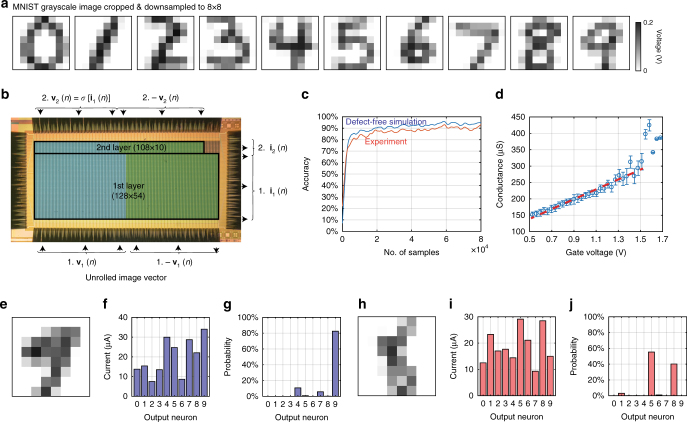
“A two-layer ANN with 64 input, 54 hidden, and ten output neurons performed the classification accuracy of 92% for the Modified National Institute of Standards and Technology (MNIST) database [25].”
MethodPhotonic Kernel Machine Learning for Ultrafast Spectral Analysis
Denis, Z., Favero, I., & Ciuti, C. (2022) · Physical Review Applied · doi:10.1103/physrevapplied.17.034077 · Cited by 14
From Memristor-Modeled Jerk System to the Nonlinear Systems with Memristor
Wu, X., He, S., Tan, W., & Wang, H. (2022) · Symmetry · doi:10.3390/sym14040659 · Cited by 11
Higher order neural processing with input-adaptive dynamic weights on MoS2 memtransistor crossbars
Rahimifard, L., Shylendra, A., Nasrin, S., Liu, S. E., Sangwan, V. K., Hersam, M. C., & Trivedi, A. R. (2022) · Frontiers in Electronic Materials · doi:10.3389/femat.2022.950487 · Cited by 12
Memristive Neural Networks for Predicting Seizure Activity
Gerasimova, S. A., Lebedeva, A., Gromov, N. V., Malkov, A., Fedulina, A., Levanova, T. A., & Pisarchik, A. N. (2023) · Современные технологии в медицине · doi:10.17691/stm2023.15.4.03 · Cited by 11
Physical neural networks with self-learning capabilities
Yu, W., Guo, H., Xiao, J., & Shen, J. (2024) · Science China Physics Mechanics and Astronomy · doi:10.1007/s11433-024-2403-x · Cited by 11
Kim, S., Lee, Y., Kim, H., & Choi, S. (2019) · Nanoscale · doi:10.1039/c9nr06715a · Cited by 14
Patterning, morphing, and coding of gel composites by direct ink writing
Sui, Y., Li, C., Feng, S., Ling, Y., Li, C., Wu, X., Shen, J., Song, J. J., Peng, H., & Huang, W. (2021) · Journal of Materials Chemistry A · doi:10.1039/d0ta12275k · Cited by 11
Self-citationPedretti, G., Mannocci, P., Li, C., Sun, Z., Strachan, J. P., & Ielmini, D. (2021) · IEEE Transactions on Electron Devices · doi:10.1109/ted.2021.3095430 · Cited by 12
Self-citationPartial-Gated Memristor Crossbar for Fast and Power-Efficient Defect-Tolerant Training
Pham, K. V., Nguyen, T. V., & Min, K. (2019) · Micromachines · doi:10.3390/mi10040245 · Cited by 11
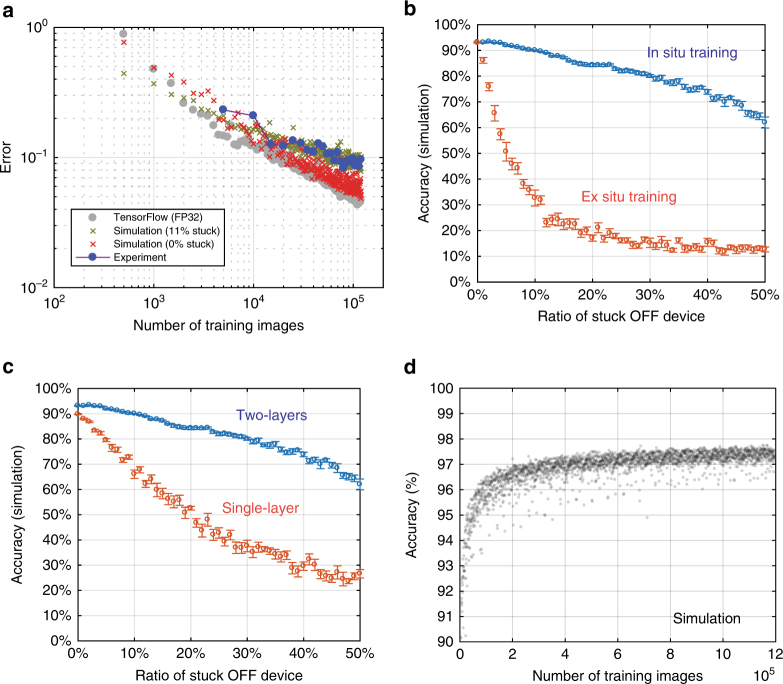
“The 20% defects in the crossbar can be thought to be enough, because the previous publication experimentally reported that 11% of the 6912 memristors fabricated were the stuck-at-fault defects [29].”
ResultA neuromorphic SLAM architecture using gated-memristive synapses
Jones, A., Rush, A., Merkel, C. E., Herrmann, E., Jacob, A. P., Thiem, C., & Jha, R. (2019) · Neurocomputing · doi:10.1016/j.neucom.2019.09.098 · Cited by 12
Design of Tunable Analog Filters Using Memristive Crossbars
Korkmaz, A., He, C., Katehi, L. P. B., Williams, R. S., & Palermo, S. M. (2021) · IEEE International Symposium on Circuits and Systems proceedings · doi:10.1109/iscas51556.2021.9401275 · Cited by 11
Self-citationFull-Analog Reservoir Computing Circuit Based on Memristor With a Hybrid Wide-Deep Architecture
Chen, L., Wang, X., Yang, C., Chen, Z., Zhang, J., & Zeng, Z. (2023) · IEEE Transactions on Circuits and Systems I Regular Papers · doi:10.1109/tcsi.2023.3334267 · Cited by 14
“Particularly, memristors have been widely used in diverse neural networks, including multilayer neural networks [23], [24], [25], convolutional neural networks [26], [27], [28], chaotic neural networks [29], [30], and long short-term memory networks [31], [32], and all of them exhibit merits such…”
BackgroundNeuromorphic Analog Machine Vision Enabled by Nanoelectronic Memristive Devices
Shchanikov, S., Bordanov, I., Kucherik, A. O., Gryaznov, E. G., & Mikhaylov, A. N. (2023) · Applied Sciences · doi:10.3390/app132413309 · Cited by 10
Metadata
- Authors
- Li, C., Belkin, D., Li, Y., Yan, P., Hu, M., Ge, N., Jiang, H., Montgomery, E., Lin, P., Wang, Z., Song, W., Strachan, J. P., Barnell, M., Wu, Q., Williams, R. S., Yang, J. J., & Xia, Q.
- Affiliations
- University of Massachusetts Amherst (US)
- Swarthmore College (US)
- Binghamton University (US)
- Hewlett-Packard (United States) (US)
- U.S. Air Force Research Laboratory Information Directorate (US)
- Corresponding author
- Yang, J. Joshua
- Xia, Qiangfei
- ORCID
- Venue
- Nature Communications
- Published
- 2018-06-19
- Volume
- 9
- Issue
- 1
- Pages
- 2385-2385
- ISSN
- 2041-1723 (ISSN-L)
- PMC
- PMC6008303
- OpenAlex
- W2807750997
- Cited by
- 931
- References
- 49
- Citations by year
- 2026: 76 · 2025: 112 · 2024: 103 · 2023: 131 · 2022: 120 · 2021: 126 · 2020: 147 · 2019: 100 · 2018: 16
- FWCI
- 37.17
- Type
- journal article
- Language
- en
- Open access
- gold
- doi.org
- Licence
- cc-by
- creativecommons.org/licenses/by/4.0 (tdm)
- creativecommons.org/licenses/by/4.0 (vor)
- Locations
- Nature Communications (publishedVersion, cc-by)
- Europe PMC (PubMed Central) (publishedVersion, other-oa)
- PubMed Central (publishedVersion, cc-by)
- PubMed (publishedVersion)
- RePEc: Research Papers in Economics (submittedVersion)
- DOAJ (DOAJ: Directory of Open Access Journals) (submittedVersion, cc-by-sa)
- Funders
- Air Force Research Laboratory (FA8750-15-2-0044)
- National Science Foundation (ECCS-1253073)
- Topics
- Physical Sciences › Engineering › Electrical and Electronic Engineering › Advanced Memory and Neural Computing
- Physical Sciences › Engineering › Electrical and Electronic Engineering › Ferroelectric and Negative Capacitance Devices
- Physical Sciences › Computer Science › Artificial Intelligence › Neural Networks and Applications
- Keywords
- memristor neural networks, in situ learning, multilayer neural networks, monolithic integration, energy-efficient hardware, neuromorphic computing, classification accuracy
About these checks
Registry, retraction, Cites and statistics results are computed, not judged, with one exception: a printed reference that no index lists is read once by a model before it counts as a citation error. Claims are extracted by a model and kept only when their quote appears verbatim in the text; each cited source is then checked, with a model’s help, for whether it says what the claim relies on. Those verdicts can be wrong — read the claim’s quote and the cited source before relying on one.
Statistics and arithmetic are recomputed, not judged.
Confidence bands are shown only for fields calibrated on our annotated test set. None is calibrated yet, so no band is shown.
What counts as a claim ›How we measure confidence ›How we check this ›
Are you an author, or do you see a problem with this page? Request a review
Data sources
Bibliographic data: Semantic Scholar, OpenAlex, Crossref.
Contains information from the Semantic Scholar Academic Graph Datasets, made available under the ODC Attribution License (ODC-BY 1.0).
Semantic Scholar’s data is described in: Kinney, R., et al. (2023). The Semantic Scholar Open Data Platform. arXiv:2301.10140.
