

Efficient and self-adaptive in-situ learning in multilayer memristor neural networks
Open accessThe DOI matches its Crossref record; 52 of the 52 references it cites were found in a registry or an index.
Abstract
Memristors with tunable resistance states are emerging building blocks of artificial neural networks. However, in situ learning on a large-scale multiple-layer memristor network has yet to be demonstrated because of challenges in device property engineering and circuit integration. Here we monolithically integrate hafnium oxide-based memristors with a foundry-made transistor array into a multiple-layer neural network. We experimentally demonstrate in situ learning capability and achieve competitive classification accuracy on a standard machine learning dataset, which further confirms that the training algorithm allows the network to adapt to hardware imperfections. Our simulation using the experimental parameters suggests that a larger network would further increase the classification accuracy. The memristor neural network is a promising hardware platform for artificial intelligence with high speed-energy efficiency.
Overview
The claims and statistics of this paper haven’t been checked yet.
Free: it reads the open-access text and checks the first 5 claims that cite a source we can check. Create a free account to check every claim.
Integrity signals
Registry
Cites
Statistics
Figures
Verification
Claims the paper makes
The claims and statistics of this paper haven’t been checked yet.
Free: it reads the open-access text and checks the first 5 claims that cite a source we can check. Create a free account to check every claim.
Claims other papers make about this one
Each is checked against this paper’s own text: does it say what the citing paper says it does?
The cited source says what the claim attributes to it.
In the citing paper
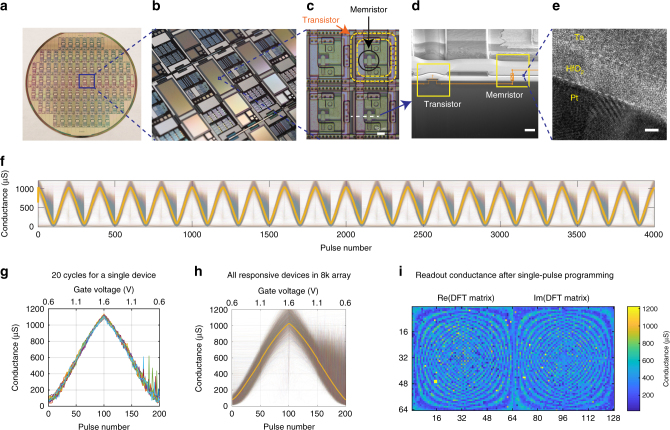
“However, severe non-linearity and asymmetry during the LTP-LTD are observed in Fig. 1b, similar to other conventional oxide-based memristors.23,32,33”
The cited source says what the claim attributes to it.
In the citing paper
“the memristive dot product engine (MDPE), which performs large-scale vector-matrix multiplication (VMM) operations using a memristive crossbar array6–13”
From Flexible self-rectifying synapse array for energy-efficient edge multiplication in electrocardiogram diagnosis (2025) · cites this paper as [8]
Self-check
Percentages, sums and reported differences re-computed from the paper’s own numbers.
The self-check needs the paper’s full text.
Citations
Cites
Deep Residual Learning for Image Recognition
He, K., Zhang, X., Ren, S., & Sun, J. (2016) · 2016 IEEE Conference on Computer Vision and Pattern Recognition (CVPR) · doi:10.1109/cvpr.2016.90 · Cited by 235,474 · cited 1×
“ith the introduction of hardware accelerators 1 – 4 for inference in deep neural networks (DNNs) 5 – 9 , the focus on improving overall energy and time performance arti fi cial intelligence applications is now on training.”
BackgroundVery Deep Convolutional Networks for Large-Scale Image Recognition
Simonyan, K., & Zisserman, A. (2014) · arXiv · doi:10.48550/arxiv.1409.1556 · Cited by 114,148
ImageNet classification with deep convolutional neural networks
Krizhevsky, A., Sutskever, I., & Hinton, G. E. (2017) · Communications of the ACM · doi:10.1145/3065386 · Cited by 112,155
LeCun, Y., Bengio, Y., & Hinton, G. (2015) · Nature · doi:10.1038/nature14539 · Cited by 84,126
Gradient-based learning applied to document recognition
Lecun, Y., Bottou, L., Bengio, Y., & Haffner, P. (1998) · Proceedings of the IEEE · doi:10.1109/5.726791 · Cited by 58,805 · cited 2×
“Here the network was trained using stochastic gradient descent (SGD) 32 to classify handwritten digits in MNIST dataset.”
MethodInfluentialLearning representations by back-propagating errors
Rumelhart, D. E., Hinton, G. E., & Williams, R. J. (1986) · Nature · doi:10.1038/323533a0 · Cited by 31,892 · cited 1×
“The error backpropagation 39,40 in this work is calculated in software from the values of the readout weights (see Methods).”
MethodSelf-citationMastering the game of Go with deep neural networks and tree search
Silver, D., Huang, A., Maddison, C. J., Guez, A., Sifre, L., van den Driessche, G., Schrittwieser, J., Antonoglou, I., Panneershelvam, V., Lanctot, M., et al. (2016) · Nature · doi:10.1038/nature16961 · Cited by 15,612
Strukov, D. B., Snider, G. S., Stewart, D. R., & Williams, R. S. (2008) · Nature · doi:10.1038/nature06932 · Cited by 11,828
Self-citationTensorFlow: A system for large-scale machine learning
Abadi, M., Barham, P., Chen, J., Chen, Z., Davis, A., Dean, J., Devin, M., Ghemawat, S., Irving, G., Isard, M., et al. (2016) · arXiv (Cornell University) · doi:10.48550/arxiv.1605.08695 · Cited by 11,822
In-Datacenter Performance Analysis of a Tensor Processing Unit
Jouppi, N. P., Young, C., Patil, N., Patterson, D., Agrawal, G., Bajwa, R., Bates, S., Bhatia, S., Boden, N., Borchers, A., et al. (2017) · Proceedings of the 44th Annual International Symposium on Computer Architecture · doi:10.1145/3079856.3080246 · Cited by 4,537
Research works printed but not linked: 2
- 40. LeCun, Y. A theoretical framework of back-propagation. In Proc. of Connectionist Models Summer School (eds Touretzky, D., Hinton, G. E. & Sejnowski, T. J.) 21–28 (CMU, Pittsburgh, PA, USA, 1988).
- 53. Gokmen, T. & Vlasov, Y. Acceleration of deep neural network training with resistive cross-point devices: design considerations. Front. Neurosci.10, 333 (2016). 10.3389/fnins.2016.00333 PMC4954855 27493624 · DOI · Paper page
Cited by
Items 501–600 of 926
Kausar, A., & Ahmad, I. (2024) · Journal of Plastic Film & Sheeting · doi:10.1177/87560879241226504 · Cited by 10
Naser, H. N., & Hashim, H. A. (2024) · Systems and Soft Computing · doi:10.1016/j.sasc.2024.200144 · Cited by 10
Ferroelectric devices for artificial intelligence chips
Bi, J., Faizan, M., Liu, X., Ma, Y., Wang, X. A., & Stempitsky, V. R. (2025) · Chip · doi:10.1016/j.chip.2025.100129 · Cited by 14
Shan, L., Xu, C., Pan, J., Lu, W., Ma, X., Liu, D., Shi, C., Du, T., Zhang, J., & Chen, H. (2025) · Advanced Materials · doi:10.1002/adma.202420534 · Cited by 12
Emerging memory devices for neuromorphic computing in the Internet of Medical Things
Cao, T., Shen, C., Wang, D., Zhao, H.-N., Tan, R., Zhou, Z., Li, H., Li, B., Zhao, M., & Huang, H. (2025) · Cell Reports Physical Science · doi:10.1016/j.xcrp.2025.102735 · Cited by 15
Memristor-based intelligent systems for sensing, computing, and therapeutic integration applications
Lan, J., Chen, Y., Cao, Z., Wang, K., Lu, Q., Ren, F., Lv, Y., Sun, B. T., & Wu, R. (2025) · Materials Today Advances · doi:10.1016/j.mtadv.2025.100628 · Cited by 12
Qiao, X., Liu, Z., Sun, J., Yan, X., Jia, X., Jiao, J., Liu, X., Ni, Y., Ding, X., Sun, J., et al. (2026) · Advanced Materials · doi:10.1002/adma.202517373 · Cited by 13
“Each synaptic weight was encoded as the difference in conductance between the two devices [264].”
InfluentialNon-spike timing-dependent plasticity learning mechanism for memristive neural networks
Tang, Z., Chen, Y., Wang, Z., Hu, R., & Wu, E. Q. (2020) · Applied Intelligence · doi:10.1007/s10489-020-01985-w · Cited by 10
“Four latest works on memristive neural networks, including ESIL-MMNN [17], RESPARC [3], CBRAM [26], and HDR-MSN [31], are chosen for comparisons.”
BackgroundMethodSelf-citationZhou, Y., Gao, B., Zhang, Q., Yao, P., Geng, Y., Li, X., Sun, W. B., Zhao, M., Xi, Y., Tang, J., et al. (2021) · Fundamental Research · doi:10.1016/j.fmre.2021.06.020 · Cited by 10
Lin, Y., Tang, J., Gao, B., Qin, Q., Zhang, Q., Qian, H., & Wu, H. (2022) · IEEE Transactions on Circuits & Systems II Express Briefs · doi:10.1109/tcsii.2022.3224470 · Cited by 15
“Two mainstream solutions, in situ [3], [4], [5], [6] and ex situ training, are proposed to mitigate the impact of conductance fluctuation on network performance.”
BackgroundMemristor-Based Signal Processing for Compressed Sensing
Wang, R., Zhang, W., Wang, S., Zeng, T., Ma, X., Wang, H., & Hao, Y. (2023) · Nanomaterials · doi:10.3390/nano13081354 · Cited by 13
Spampinato, C., Magna, P. L., Valastro, S., Smecca, E., Arena, V., Bongiorno, C., Mannino, G., Fazio, E., Corsaro, C., Neri, F., et al. (2023) · Solar · doi:10.3390/solar3030020 · Cited by 10
Liu, G., Wang, W., Guo, Z., Jia, X., Zhao, Z., Zhou, Z., Niu, J., Duan, G., & Yan, X. (2023) · Nanoscale · doi:10.1039/d3nr00510k · Cited by 10
Bennett, C. H., Parmar, V., Calvet, L. E., Klein, J., Suri, M., Marinella, M. J., & Querlioz, D. (2019) · IEEE Access · doi:10.1109/access.2019.2920076 · Cited by 12
“Recently, these initial attempts have been extended to multi-layer perceptron (MLP) learning systems [9], [10], which implement approximate versions of the backpropagation algorithm [11].”
BackgroundEnhanced Spiking Neural Network with forgetting phenomenon based on electronic synaptic devices
Li, J., Xu, H. F., Sun, S., Liu, S., Li, N., Li, Q., Liu, H., & Li, Z. (2019) · Neurocomputing · doi:10.1016/j.neucom.2019.09.030 · Cited by 10
Cha, J., Jang, B. C., Oh, J., Lee, C., Yang, S. Y., Park, H., Im, S. G., & Choi, S. (2022) · Advanced Intelligent Systems · doi:10.1002/aisy.202200018 · Cited by 10
Electronegative metal dopants improve switching variability in Al2O3 resistive switching devices
Tan, Z. J., Somjit, V., Toparlı, Ç., Yildiz, B., & Fang, N. X. (2022) · Physical Review Materials · doi:10.1103/physrevmaterials.6.105002 · Cited by 12
Efficient grouping approach for fault tolerant weight mapping in memristive crossbar array
Yadav, D. N., Thangkhiew, P. L., Chakraborty, S., & Sengupta, I. (2023) · Memories - Materials Devices Circuits and Systems · doi:10.1016/j.memori.2023.100045 · Cited by 11
Wafer-Scale TaOx Device Variability and Implications for Neuromorphic Computing Applications
Bennett, C. H., Garland, D. R., Jacobs-Gedrim, R. B., Agarwal, S., & Marinella, M. J. (2019) · IEEE International Reliability Physics Symposium proceedings · doi:10.1109/irps.2019.8720596 · Cited by 18
Breaking the Quantum PIN Code of Atomic Synapses
Török, T. N., Csontos, M., Makk, P., & Halbritter, A. (2020) · Nano Letters · doi:10.1021/acs.nanolett.9b04617 · Cited by 11
Brace, A., Salim, M. A., Subbiah, V., Ma, H., Emani, M., Trifa, A., Clyde, A. R., Adams, C., Uram, T., Yoo, H., et al. (2021) · Platform for Advanced Scientific Computing Conference · doi:10.1145/3468267.3470578 · Cited by 15
“Although examples of in situ learning do exist [18], the sheer volume of data streamed from such simulations is often the bottleneck for enabling near-real-time feedback.”
BackgroundChen, Q., Han, T., Tang, M., Zhang, Z., Zheng, X., & Liu, G. (2020) · Micromachines · doi:10.3390/mi11040427 · Cited by 9
“5 G0–50 G0, which is even broader than that used in synaptic weight updating of the reported memristive neural networks [39,40].”
BackgroundEfficient Hybrid Training Method for Neuromorphic Hardware Using Analog Nonvolatile Memory
Kwon, D., Woo, S. Y., Hwang, J., Kim, H., Bae, J., Shin, W., Park, B., & Lee, J. (2023) · IEEE Transactions on Neural Networks and Learning Systems · doi:10.1109/tnnls.2023.3327906 · Cited by 10
Artificial Neural Network Based on Memristive Circuit for High-Speed Equalization
Luo, Z., Du, S., Zhang, Z., Lv, F., Hong, Q., & Lai, M. (2024) · IEEE Transactions on Circuits and Systems I Regular Papers · doi:10.1109/tcsi.2023.3348990 · Cited by 9
“In addition, while there are many hardware implementations of memristor-based multilayer perceptrons [43], [44], there does not seem to be a memristor-based ANN equalizer circuit.”
BackgroundHuang, Y., Zheng, L., Wang, Z., Lin, Z., Zhang, C., Si, M., & Guo, X. (2024) · IEEE Transactions on Electron Devices · doi:10.1109/ted.2024.3404916 · Cited by 9
“To implement a whole system, peripheral circuits such as TIA, DAC, ADC, and the necessary controlling unit can be designed and realized referring to the previous work [24], [25], [26], [27], [28].”
MethodSelf-citationResonance dynamics in multilayer neural networks subjected to electromagnetic induction
Wu, Y., Sun, Z., & Zhao, N. (2024) · Communications in Nonlinear Science and Numerical Simulation · doi:10.1016/j.cnsns.2024.108575 · Cited by 9
Jiang, P., Song, D., Huang, M., Yang, F., Wang, L., Liu, P., Miao, X., & Wang, X. (2025) · Science China Information Sciences · doi:10.1007/s11432-024-4240-x · Cited by 10
Efficient and Robust Edge AI: Software, Hardware, and the Co-design
Kim, B., Li, S., Taylor, B., & Chen, Y. (2025) · ACM Transactions on Embedded Computing Systems · doi:10.1145/3724396 · Cited by 10
“Deep learning can be implemented in memristors and take their variations into consideration by integrating hardware-based feedforward operations in a resistive PIM accelerator with a software-based backpropagation and training algorithm [44].”
Physical mechanisms and integration design of memristors
Wang, M., Wang, K., Sun, B. T., Zhou, G., Cao, Z., Gao, K., Ren, F., Chen, X., Li, X., & Shao, J. (2025) · Materials Today Nano · doi:10.1016/j.mtnano.2025.100628 · Cited by 16
Recent progress in bio-voltage memristors working with ultralow voltage of biological amplitude
Fu, T., Fu, S., & Yao, J. (2023) · Nanoscale · doi:10.1039/d2nr06773k · Cited by 10
Koh, E. K., Dananjaya, P. A., Poh, H. Y., Liu, L., Lee, C. X. X., Thong, J. R., You, Y. S., & Lew, W. S. (2024) · Nanoscale Horizons · doi:10.1039/d3nh00554b · Cited by 12
In-memory computing: characteristics, spintronics, and neural network applications insights
Jangra, P., & Duhan, M. (2024) · Multiscale and Multidisciplinary Modeling Experiments and Design · doi:10.1007/s41939-024-00517-0 · Cited by 9
“IMC architectures, based on precision, showcase trends such as adopting 8/16-bit fixed-point precision for weights and inputs, as seen in recent works like (Li et al. 2018b; Song et al. 2017).”
Nanosecond resistive switching in Ag/AgI/PtIr nanojunctions
Sánta, B., Molnár, D., Haiber, P., Gubicza, Á., Szilágyi, E., Zolnai, Z., Halbritter, A., & Csontos, M. (2020) · Beilstein Journal of Nanotechnology · doi:10.3762/bjnano.11.9 · Cited by 10
Cycle-to-cycle Variation Enabled Energy Efficient Privacy Preserving Technology in ANN
Fu, J., Liao, Z., & Wang, J. (2020) · IEEE International System-on-Chip Conference (SOCC) · doi:10.1109/socc49529.2020.9524794 · Cited by 9
Li, J., Zhou, H., Li, Y., & Miao, X. (2022) · Science China Information Sciences · doi:10.1007/s11432-021-3374-x · Cited by 11
Self-citationA Coordinated Model Pruning and Mapping Framework for RRAM-Based DNN Accelerators
Qu, S., Li, B., Zhao, S., Zhang, L., & Wang, Y. (2022) · IEEE Transactions on Computer-Aided Design of Integrated Circuits and Systems · doi:10.1109/tcad.2022.3221906 · Cited by 9
“Previous works map the positive and negative weights in separate crossbars and need double crossbars [5], [15], [16], further exacerbating the degradation”
BackgroundMemristive Circuit Design of Quantized Convolutional Auto-Encoder
Zhang, Y., Wang, X., Yang, C., & Zeng, Z. (2022) · IEEE Transactions on Emerging Topics in Computational Intelligence · doi:10.1109/tetci.2022.3214582 · Cited by 9
Investigating Series and Parallel Oxide Memtransistors for Tunable Weight Update Properties
Kang, S., Yang, S., Lee, D., Kim, S., Suh, J., & Lee, H. (2023) · ACS Applied Electronic Materials · doi:10.1021/acsaelm.3c00325 · Cited by 9
Current Multiplier Based Synapse and Neuron Circuits for Compact SNN Chip
Asghar, M. S., Arslan, S., & Kim, H. (2021) · IEEE International Symposium on Circuits and Systems proceedings · doi:10.1109/iscas51556.2021.9401173 · Cited by 12
Memristive brain-like computing
Wen, X.-Y., Wang, Y.-S., He, Y., Miao, X., & Hubei Yangtze Memory Laboratories, W. 4. (2022) · Acta Physica Sinica · doi:10.7498/aps.71.20220666 · Cited by 10
Multifunctional memristors based on N-doped Nb2C MXene nanosheets for neuromorphic computing
Gou, J., Li, Y., Zhang, D., Yan, S., Cui, C., Zhong, L., Pan, R. N., Guo, R., & Jie, W. (2025) · Journal of Alloys and Compounds · doi:10.1016/j.jallcom.2025.179892 · Cited by 9
Self-citationPeng, J. Z., Zou, G., Huo, J., Li, Z., Sun, T., Feng, B., Du, C., Huo, J., & Liu, L. (2025) · Advanced Functional Materials · doi:10.1002/adfm.202504334 · Cited by 11
Peptide‐Based Electronics for Neuromorphic Hardware
Yi, Z., Lin, Z., Yao, Y., Zhai, Y., Wang, Y., Zhang, Q., Zhou, Y., Lv, Z., & Han, S. (2025) · Advanced Functional Materials · doi:10.1002/adfm.202517899 · Cited by 9
Liu, Z., Gao, C., Yang, J., Chen, Z., Li, E., Li, J., Li, M., & Zhang, J. (2025) · International Journal of Extreme Manufacturing · doi:10.1088/2631-7990/ae053a · Cited by 18
“Li et al. [149] innovatively integrated a dynamic pulse modulation strategy with the 1T1R configuration by simultaneously applying synchronized voltage pulses to both the memristor’s top electrode and the transistor gate (Figures 9(c) and (d)).”
InfluentialSelf-citationZhao, W., Huang, Y., Tewari, A., Rad, A. J., Zhang, A., Ge, N., Yang, J. J., Hu, M., Majumdar, S., & Xia, Q. (2026) · Nature Sensors · doi:10.1038/s44460-025-00013-z · Cited by 13
Self-citationDevice‐Level Implementation of Reservoir Computing With Memristors
Park, S., Kim, H., & Jang, H. W. (2026) · Advanced Intelligent Systems · doi:10.1002/aisy.202500843 · Cited by 9
“Currently, the most effective way to prevent sneak current and enlarge the scale of CBA is to accompany transistors to form a 1T1R structure [159], where the current path is controlled by the state of the transistors.”
Strategies of high-accuracy memristor-based analogue computing in memory for artificial intelligence
Jiang, Z., Zhao, H., Tang, J., Lu, Y., Qin, Q., Wang, Z., Hu, R., Yu, R., He, Y., Zhang, J., et al. (2026) · Nature Materials · doi:10.1038/s41563-026-02600-y · Cited by 12
“Substantial progress has been made in developing analogue CIM chips for AI, evolving from initial proof-of-concept arrays 5 to board-level integrated systems 6–9 and recently achieving full system-on-chip integration 10,11 .”
Self-citationLi, S.-M., Gu, X., Liu, J., Zhang, D., Sun, Q., Jiang, Y.-P., & Tang, X.-G. (2026) · Journal of Colloid and Interface Science · doi:10.1016/j.jcis.2026.141016 · Cited by 9
Physical Synthesis for Advanced Neural Network Processors
He, Z., Liao, P., Liu, S., Ma, Y., Lin, Y., & Yu, B. (2021) · Asia and South Pacific Design Automation Conference (ASP-DAC) · doi:10.1145/3394885.3431625 · Cited by 12
“In-memory analog simulation is another promising approach, for instance [44] based on memristor crossbar and [45] based on FTJ.”
Towards Energy-Efficient Computing Hardware Based on Memristive Nanodevices
Huang, Y., Ravichandran, V., Zhao, W., & Xia, Q. (2023) · IEEE Nanotechnology Magazine · doi:10.1109/mnano.2023.3297106 · Cited by 9
“A self-adaptive in-situ learning algo-rithm designed for memristor crossbar arrays in multilayer neural networks was developed [43].”
Self-citationLi, Y., Wang, W. J., Wang, M., Dou, C., Ma, Z., Zhou, H., Zhang, P., Lepri, N., Zhang, X., Luo, Q., et al. (2023) · Advanced Intelligent Systems · doi:10.1002/aisy.202300399 · Cited by 8
“In fe re nc e Er ro r [ % ] HP inference Binary inference Stochastic inference (1) Stochastic inference (25) Stochastic inference (100) HP learned BS learned 100 101”
BackgroundInfluentialSelf-citationTan, J., Zhang, F., Wu, J., Luo, L., Duan, S., & Wang, L. (2024) · Cognitive Neurodynamics · doi:10.1007/s11571-024-10069-1 · Cited by 9
“A more effective approach involves integrating CMOS switches with gate characteristics on the memristor, as discussed by Li et al. (2018b, 2022).”
Fu, T., Fu, S., Wang, S., & Yao, J. (2024) · Device · doi:10.1016/j.device.2024.100329 · Cited by 11
Noise-aware training of neuromorphic dynamic device networks
Manneschi, L., Vidamour, I. T., Stenning, K. D., Swindells, C., Venkat, G., Griffin, D., Gui, L., Sonawala, D., Donskikh, D., Hariga, D., et al. (2025) · Nature Communications · doi:10.1038/s41467-025-64232-1 · Cited by 8
“To perform optimization on in-materio computers, general methodologieshavebeendevelopedthattraintheinterconnectivityof devices, leading to the concept of physical neuralnetworks(PNNs) 19 – 21 .”
Solid-State Electrochemical Process and Performance Optimization of Memristive Materials and Devices
Xue, W., Xu, X., & Liu, G. (2019) · Chemistry · doi:10.3390/chemistry1010005 · Cited by 9
Effect of Asymmetric Nonlinearity Dynamics in RRAMs on Spiking Neural Network Performance
Fouda, M. E., Neftci, E., Eltawil, A. M., & Kurdahi, F. J. (2019) · Asilomar Conference on Signals, Systems and Computers (ACSSC) · doi:10.1109/ieeeconf44664.2019.9049043 · Cited by 9
Analog IGZO Memristor With Extended Capabilities
Dumitru, V., Beşleagă, C., & Ionescu, O. N. (2020) · IEEE Journal of the Electron Devices Society · doi:10.1109/jeds.2020.3006000 · Cited by 9
Behavioral modeling of multilevel HfO2-based memristors for neuromorphic circuit simulation
Pérez-Ávila, A. J., González-Cordero, G., Pérez, E., Quesada, E. P.-B., Mahadevaiah, M. K., Wenger, C., Roldán, J. B., & Jiménez-Molinos, F. (2020) · Conference on Design of Circuits and Integrated Systems · doi:10.1109/dcis51330.2020.9268652 · Cited by 13
“The RRAM resistance modulation allows their use as electronic synapses [4] for implementing spike time dependent plasticity (STDP) learning rules [5] or registering the synaptic weights in hardware artificial neural networks (ANNs) [6], [7].”
MethodOn the organic memristive device resistive switching efficacy
Gerasimov, Y., Zykov, E., Prudnikov, N. V., Talanov, M. O., Toschev, A. S., & Erokhin, V. V. (2020) · Chaos Solitons & Fractals · doi:10.1016/j.chaos.2020.110549 · Cited by 8
Spectral Ranking in Complex Networks Using Memristor Crossbars
Korkmaz, A., Zoppo, G., Marrone, F., Yi, S., Williams, R. S., Corinto, F., & Palermo, S. M. (2023) · IEEE Journal on Emerging and Selected Topics in Circuits and Systems · doi:10.1109/jetcas.2023.3237836 · Cited by 10
“The area of the memristor crossbar depends on the material and process technology and examples can be found in [18], [19], [46], [47], and [48].”
BackgroundSelf-citationTakagaki, Y., Jenichen, B., Ramsteiner, M., & Trampert, A. (2020) · Journal of Alloys and Compounds · doi:10.1016/j.jallcom.2020.153880 · Cited by 8
Architecture-Accuracy Co-optimization of ReRAM-based Low-cost Neural Network Processor
Lee, S., Lee, S., Lee, J., Choi, J.-M., Kwon, D.-W., Hong, S.-K., & Kwon, K.-W. (2020) · ACM Great Lakes Symposium on VLSI (GLSVLSI) · doi:10.1145/3386263.3406954 · Cited by 8
“However, when it comes to actual hardware implementation, there is very little work reported, and the reported accuracy is generally low as well (around 91% for the MNIST dataset) [14, 17].”
BackgroundZanotti, T., Puglisi, F. M., & Pavan, P. (2021) · IEEE International Reliability Physics Symposium proceedings · doi:10.1109/irps46558.2021.9405103 · Cited by 8
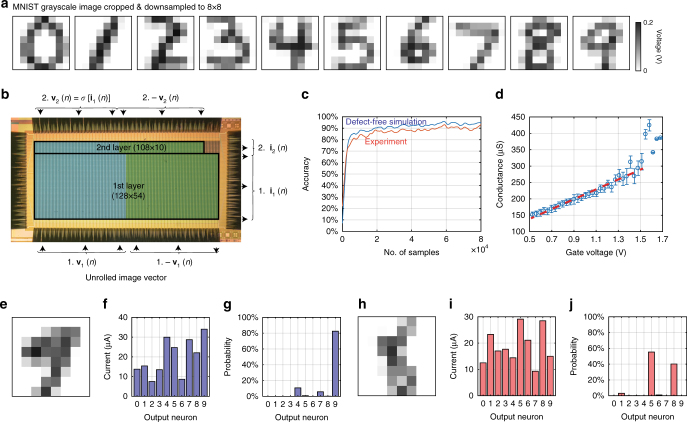
“Specifically, the images were resized to 8x8 pixels and binarized (i.e., converted to black and white images) following an approach similar to the one used in [16], [17], see Fig.”
MethodWang, G., Ding, Z., Li, S., Yang, L., & Jiao, R. (2022) · Chinese Physics B · doi:10.1088/1674-1056/ac7209 · Cited by 8
Zhao, J., Sun, Y., Lu, W., Pei, Y., Zhou, Z., Guo, R., Zeng, K., Liu, B., Peng, Q., Chen, J., et al. (2022) · Applied Physics Reviews · doi:10.1063/5.0082919 · Cited by 8
Conductance variability in RRAM and its implications at the neural network level
Aziza, H., Fieback, M., Hamdioui, S., Xun, H., & Taouil, M. (2025) · Microelectronics Reliability · doi:10.1016/j.microrel.2025.115594 · Cited by 8
Low-dimensional optoelectronic memristors: From quantum confinement to neuromorphic vision
Pei, Y., Zhang, J., Guo, M., Zhao, J., Wang, L., Chen, J., & Yan, X. (2025) · Materials Science and Engineering R Reports · doi:10.1016/j.mser.2025.101115 · Cited by 9
Multisensory integration through high-efficiency neuromorphic hardware
Yi, Z., Xie, Y., Lv, Z., Zhai, Y., Zheng, M.-L., Yang, J., Du, Y., Ma, X., Zhou, Y., Wang, X., et al. (2025) · Nano Research · doi:10.26599/nr.2025.94908066 · Cited by 7
Self-citationHuang, M., Luo, Z., Wang, H., Zhao, R., Wang, X., Zheng, F., Zhao, Z., & Hu, Z. (2026) · The Journal of Physical Chemistry Letters · doi:10.1021/acs.jpclett.5c04053 · Cited by 8
Bring memristive in-memory computing into general-purpose machine learning: A perspective
Zhou, H., Chen, J., Li, J., Yang, L., Li, Y., & Miao, X. (2023) · APL Machine Learning · doi:10.1063/5.0167743 · Cited by 10
Self-citationMemristor-Based Neural Network Implementation with Adjustable Synaptic Weights in LTSPICE
Mladenov, V., Tsenov, G. T., & Kirilov, S. (2023) · International Conference Automatics and Informatics (ICAI) · doi:10.1109/icai58806.2023.10339092 · Cited by 7
“Memristors are successfully applicable in memory arrays, reconfigurable electronic circuits, neural networks, and many others [27], [28].”
BackgroundNon von Neumann computing concepts
Syed, G. S., Gallo, M. L., & Sebastian, A. (2024) · Elsevier eBooks · doi:10.1016/b978-0-12-823491-4.00002-3 · Cited by 10
Defect-Tolerant Logic Synthesis for Memristor Crossbars with Performance Evaluation
Tunali, O., Morgul, M. C., & Altun, M. (2018) · IEEE Micro · doi:10.1109/mm.2018.053631138 · Cited by 7
“Furthermore, as reported in Li et al.(10) and Borghetti et al.”
BackgroundResultResistance Switching Statistics and Mechanisms of Pt Dispersed Silicon Oxide-Based Memristors
Lian, X., Shen, X., Lu, L., He, N., Wan, X., Samanta, S., & Tong, Y. (2019) · Micromachines · doi:10.3390/mi10060369 · Cited by 7
Device-aware Circuit Design for Robust Memristive Neuromorphic Systems with STDP-based Learning
Sayyaparaju, S., Adnan, M. M., Amer, S., & Rose, G. S. (2020) · ACM Journal on Emerging Technologies in Computing Systems · doi:10.1145/3380969 · Cited by 10
“In the recent past, CMOS-memristor hybrid systems have been proposed and experimentally demonstrated for representative neuromorphic applications such as pattern recognition [2, 10, 28, 39, 46, 53].”
BackgroundEmulation of Synaptic Scaling Based on MoS2 Neuristor for Self‐Adaptative Neuromorphic Computing
Wu, L., Bao, L., Wang, Z., Yu, Z., Wang, B., Chen, Q., Ling, Y., Qin, Y., Tang, K., Cai, Y., et al. (2021) · Advanced Electronic Materials · doi:10.1002/aelm.202001104 · Cited by 7
Self-citationBehavioral Model of Dot-Product Engine Implemented with 1T1R Memristor Crossbar Including Assessment
Wen, J., Ulbricht, M., Pérez, E., Fan, X., & Krstic, M. D. (2021) · IEEE International Symposium on Design and Diagnostics of Electronic Circuits & Systems (DDECS) · doi:10.1109/ddecs52668.2021.9417070 · Cited by 8
“Furthermore, it is also expected to consider the unresponsive devices that potentially degrade the system performance [5].”
BackgroundNeuromorphic Dynamics at the Nanoscale in Silicon Suboxide RRAM
Buckwell, M., Ng, W. H., Mannion, D. J., Cox, H. R. J., Hudziak, S., Mehonić, A., & Kenyon, A. J. (2021) · Frontiers in Nanotechnology · doi:10.3389/fnano.2021.699037 · Cited by 9
Yang, I. S., Park, Y., Hwang, Y., Yang, H., Kim, J., & Lee, W. I. (2022) · Nanomaterials · doi:10.3390/nano12223969 · Cited by 7
Automatic Learning Rate Adaption for Memristive Deep Learning Systems
Zhang, Y., & Shen, L. (2023) · IEEE Transactions on Neural Networks and Learning Systems · doi:10.1109/tnnls.2023.3244006 · Cited by 10
“The quantized values of synaptic weights or adaptive learning rates are stored in the memristive arrays [51] with the proposed quantized method using (11).”
MethodTang, Z., Zhao, R., Luo, L., Wang, H., & Lü, C. (2023) · IEEE International Conference on High Performance Switching and Routing (HPSR) · doi:10.1109/hpsr57248.2023.10148030 · Cited by 9
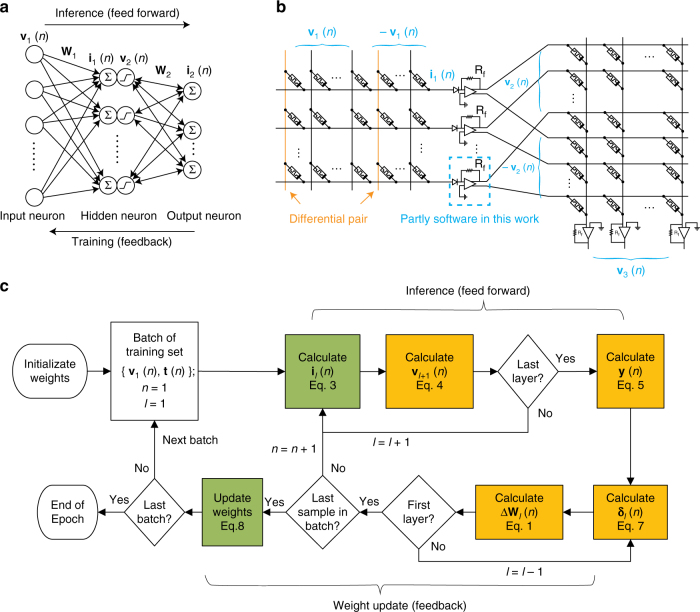
“Each offline-trained weight is achieved by the difference in memristor conductance between two differential memristors [1]–[3], [10], allowing the realization of positive and negative weight.”
BackgroundMemristors in Cellular-Automata-Based Computing:A Review
Karamani, R.-E., Fyrigos, I.-A., Ntinas, V. G., Vourkas, I., Adamatzky, A., & Sirakoulis, G. C. (2023) · Electronics · doi:10.3390/electronics12163523 · Cited by 7
Bio-Inspired Information Pathways: From Neuroscience to Neurotronics
Ziegler, M., Mussenbrock, T., & Kohlstedt, H. (2023) · Springer series on bio- and neurosystems · doi:10.1007/978-3-031-36705-2 · Cited by 10
Hardware in Loop Learning with Spin Stochastic Neurons
Islam, A. N. M. N., Yang, K., Shukla, A. K., Khanal, P., Zhou, B., Wang, W., & Sengupta, A. (2024) · Advanced Intelligent Systems · doi:10.1002/aisy.202300805 · Cited by 7
“53] Here, we present proof-of-concept demonstration of a network-level approach where the neuronal devices are included in the training process of a handwritten digit recognition problem, allowing the network to learn the desired patterns with the effect of device-to-device variations included.”
BackgroundIn-situ learning in multilayer locally-connected memristive spiking neural network
Li, J., Xu, H., Sun, S., Li, Z., Li, Q., Liu, H., & Li, N. (2021) · Neurocomputing · doi:10.1016/j.neucom.2021.08.011 · Cited by 7
Fast and Low-Cost Mitigation of ReRAM Variability for Deep Learning Applications
Lee, S., Fouda, M. E., Lee, J., Eltawil, A. M., & Kurdahi, F. J. (2021) · IEEE International Conference on Computer Design: VLSI in Computers and Processors (ICCD) · doi:10.1109/iccd53106.2021.00051 · Cited by 7
Memristive Cosine‐Similarity‐Based Few‐Shot Learning with Lifelong Memory Adaptation
Zhou, H., Yang, L., Bao, H., Li, J., Li, Y., & Miao, X. (2023) · Advanced Intelligent Systems · doi:10.1002/aisy.202200173 · Cited by 7
Self-citationRebooting Neuromorphic Design - A Complexity Engineering Approach
Ganesh, N. (2020) · IEEE International Conference on Rebooting Computing (ICRC) · doi:10.1109/icrc2020.2020.00012 · Cited by 8
Energy-Efficient Neuromorphic Architectures for Nuclear Radiation Detection Applications
Canales-Verdial, J. I., Wagner, J. R., Schmucker, L. A., Wetzel, M., Proctor, P., Carson, M., Meng, J., Withers, N. J., Harris, C. T., Nogan, J. J., et al. (2024) · Sensors · doi:10.3390/s24072144 · Cited by 6
ML-Driven Compact Models for RRAMs: Addressing Variability and Simulation Efficiency
Hong, G., Huh, I., You, J. H., Choe, J. M., Kim, Y.-G., & Jeong, C. (2025) · IEEE Electron Device Letters · doi:10.1109/led.2025.3545909 · Cited by 6
“R ESISTIVE Random Access Memory (RRAM) devices have been extensively researched for their potential to physically implement artificial synapses in neuromorphic systems, making them a promising candidate for next-generation memory and neuromorphic computing [1], [2], [3], [4], [5], [6], [7].”
Progresses and outlook in neuromorphic devices
Wang, Y., Liu, C., Huang, R., & Yang, Y. (2019) · Chinese Science Bulletin (Chinese Version) · doi:10.1360/tb-2019-0739 · Cited by 6
Xiao, Y., Ke, S., Jin, Y., Zhang, T., Jiang, B., Meng, J., Chen, S., Li, R., Zhang, Z., & Ye, C. (2023) · Ceramics International · doi:10.1016/j.ceramint.2023.12.211 · Cited by 10
Hardware-Aware Quantization for Accurate Memristor-Based Neural Networks
Diware, S., Yaldagard, M. A., & Bishnoi, R. (2024) · doi:10.1145/3676536.3698023 · Cited by 11
“Firstly, on-chip training accommodates conductance variation impact by training the network directly on CIM chip [26, 27].”
Training DNN IoT Applications for Deployment On Analog NVM Crossbars
Garćıa-Redondo, F., Das, S., & Rosendale, G. (2020) · International Joint Conference on Neural Networks (IJCNN) · doi:10.1109/ijcnn48605.2020.9206822 · Cited by 6
The Image Identification Application with HfO2-Based Replaceable 1T1R Neural Networks
Lin, J., Liu, H., Wang, S., Wang, D., & Wu, L. (2022) · Nanomaterials · doi:10.3390/nano12071075 · Cited by 6
“In recent years, a large number of studies have been reported on the construction of artificial Nanomaterials 2022 , 12 , 1075 2 of 10 neural networks using memristor-simulated synapses [21–26].”
BackgroundQuantization-Aware In-situ Training for Reliable and Accurate Edge AI
de Lima, J. P. C., & Carro, L. (2022) · Design, Automation, and Test in Europe · doi:10.23919/date54114.2022.9774657 · Cited by 10
Shi, Z., Hou, Y., Chen, C., Tan, G., Lin, H., Lai, P., Hou, C., Shyue, J., Cheng, W., Su, T., et al. (2022) · Advanced Electronic Materials · doi:10.1002/aelm.202200922 · Cited by 6
A Wide Dynamic Range Read-out System For Resistive Switching Technology
Xie, L., Shen, J., Mifsud, A., Wang, C., Alshaya, A., & Papavassiliou, C. (2022) · IEEE International Symposium on Circuits and Systems proceedings · doi:10.1109/iscas48785.2022.9937616 · Cited by 6
Study on Memristor-Based 3-D Convolutional Neural Network Adapting to Non-Ideal Effects
Dong, B., Li, P., Fu, Y., Chang, T., Li, Y., Miao, X., & He, Y. (2023) · IEEE Transactions on Electron Devices · doi:10.1109/ted.2022.3233552 · Cited by 6
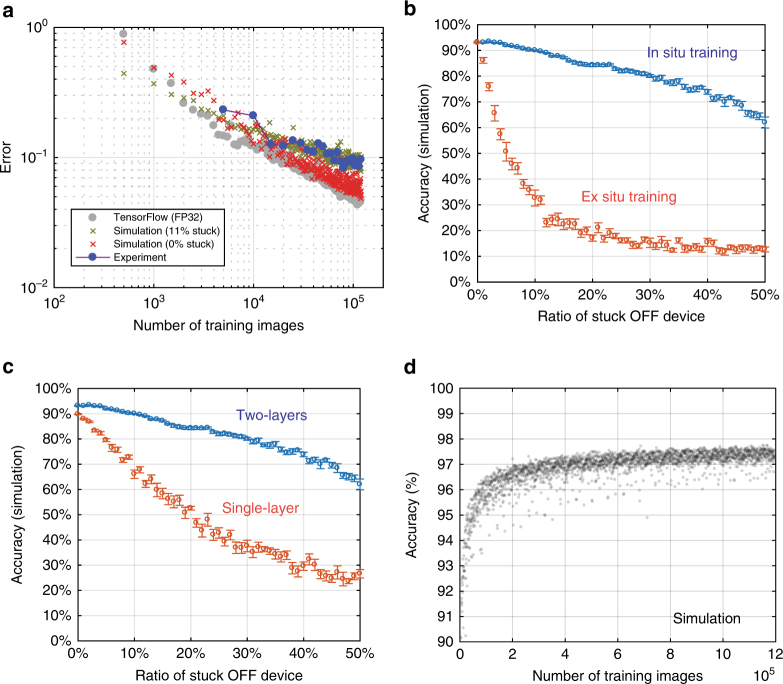
“Note that deep MNN is more sensitive to non-ideal effects, and in situ training is able to compensate for memristor imperfections [25].”
BackgroundSelf-citationFehérvári, J. G., Balogh, Z., Török, T. N., & Halbritter, A. (2024) · APL Machine Learning · doi:10.1063/5.0173662 · Cited by 9
Metadata
- Authors
- Li, C., Belkin, D., Li, Y., Yan, P., Hu, M., Ge, N., Jiang, H., Montgomery, E., Lin, P., Wang, Z., Song, W., Strachan, J. P., Barnell, M., Wu, Q., Williams, R. S., Yang, J. J., & Xia, Q.
- Affiliations
- University of Massachusetts Amherst (US)
- Swarthmore College (US)
- Binghamton University (US)
- Hewlett-Packard (United States) (US)
- U.S. Air Force Research Laboratory Information Directorate (US)
- Corresponding author
- Yang, J. Joshua
- Xia, Qiangfei
- ORCID
- Venue
- Nature Communications
- Published
- 2018-06-19
- Volume
- 9
- Issue
- 1
- Pages
- 2385-2385
- ISSN
- 2041-1723 (ISSN-L)
- PMC
- PMC6008303
- OpenAlex
- W2807750997
- Cited by
- 931
- References
- 49
- Citations by year
- 2026: 76 · 2025: 112 · 2024: 103 · 2023: 131 · 2022: 120 · 2021: 126 · 2020: 147 · 2019: 100 · 2018: 16
- FWCI
- 37.17
- Type
- journal article
- Language
- en
- Open access
- gold
- doi.org
- Licence
- cc-by
- creativecommons.org/licenses/by/4.0 (tdm)
- creativecommons.org/licenses/by/4.0 (vor)
- Locations
- Nature Communications (publishedVersion, cc-by)
- Europe PMC (PubMed Central) (publishedVersion, other-oa)
- PubMed Central (publishedVersion, cc-by)
- PubMed (publishedVersion)
- RePEc: Research Papers in Economics (submittedVersion)
- DOAJ (DOAJ: Directory of Open Access Journals) (submittedVersion, cc-by-sa)
- Funders
- Air Force Research Laboratory (FA8750-15-2-0044)
- National Science Foundation (ECCS-1253073)
- Topics
- Physical Sciences › Engineering › Electrical and Electronic Engineering › Advanced Memory and Neural Computing
- Physical Sciences › Engineering › Electrical and Electronic Engineering › Ferroelectric and Negative Capacitance Devices
- Physical Sciences › Computer Science › Artificial Intelligence › Neural Networks and Applications
- Keywords
- memristor neural networks, in situ learning, multilayer neural networks, monolithic integration, energy-efficient hardware, neuromorphic computing, classification accuracy
About these checks
Registry, retraction, Cites and statistics results are computed, not judged, with one exception: a printed reference that no index lists is read once by a model before it counts as a citation error. Claims are extracted by a model and kept only when their quote appears verbatim in the text; each cited source is then checked, with a model’s help, for whether it says what the claim relies on. Those verdicts can be wrong — read the claim’s quote and the cited source before relying on one.
Statistics and arithmetic are recomputed, not judged.
Confidence bands are shown only for fields calibrated on our annotated test set. None is calibrated yet, so no band is shown.
What counts as a claim ›How we measure confidence ›How we check this ›
Are you an author, or do you see a problem with this page? Request a review
Data sources
Bibliographic data: Semantic Scholar, OpenAlex, Crossref.
Contains information from the Semantic Scholar Academic Graph Datasets, made available under the ODC Attribution License (ODC-BY 1.0).
Semantic Scholar’s data is described in: Kinney, R., et al. (2023). The Semantic Scholar Open Data Platform. arXiv:2301.10140.
