

Efficient and self-adaptive in-situ learning in multilayer memristor neural networks
Open accessThe DOI matches its Crossref record; 52 of the 52 references it cites were found in a registry or an index.
Abstract
Memristors with tunable resistance states are emerging building blocks of artificial neural networks. However, in situ learning on a large-scale multiple-layer memristor network has yet to be demonstrated because of challenges in device property engineering and circuit integration. Here we monolithically integrate hafnium oxide-based memristors with a foundry-made transistor array into a multiple-layer neural network. We experimentally demonstrate in situ learning capability and achieve competitive classification accuracy on a standard machine learning dataset, which further confirms that the training algorithm allows the network to adapt to hardware imperfections. Our simulation using the experimental parameters suggests that a larger network would further increase the classification accuracy. The memristor neural network is a promising hardware platform for artificial intelligence with high speed-energy efficiency.
Overview
The claims and statistics of this paper haven’t been checked yet.
Free: it reads the open-access text and checks the first 5 claims that cite a source we can check. Create a free account to check every claim.
Integrity signals
Registry
Cites
Statistics
Figures
Verification
Claims the paper makes
The claims and statistics of this paper haven’t been checked yet.
Free: it reads the open-access text and checks the first 5 claims that cite a source we can check. Create a free account to check every claim.
Claims other papers make about this one
Each is checked against this paper’s own text: does it say what the citing paper says it does?
The cited source says what the claim attributes to it.
In the citing paper
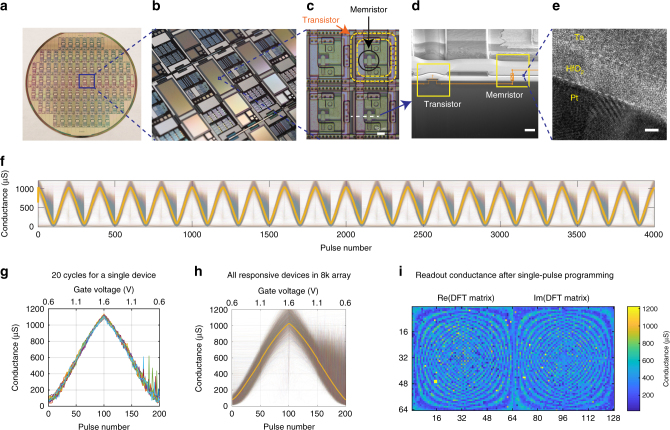
“However, severe non-linearity and asymmetry during the LTP-LTD are observed in Fig. 1b, similar to other conventional oxide-based memristors.23,32,33”
The cited source says what the claim attributes to it.
In the citing paper
“the memristive dot product engine (MDPE), which performs large-scale vector-matrix multiplication (VMM) operations using a memristive crossbar array6–13”
From Flexible self-rectifying synapse array for energy-efficient edge multiplication in electrocardiogram diagnosis (2025) · cites this paper as [8]
Self-check
Percentages, sums and reported differences re-computed from the paper’s own numbers.
The self-check needs the paper’s full text.
Citations
Cites
Deep Residual Learning for Image Recognition
He, K., Zhang, X., Ren, S., & Sun, J. (2016) · 2016 IEEE Conference on Computer Vision and Pattern Recognition (CVPR) · doi:10.1109/cvpr.2016.90 · Cited by 235,474 · cited 1×
“ith the introduction of hardware accelerators 1 – 4 for inference in deep neural networks (DNNs) 5 – 9 , the focus on improving overall energy and time performance arti fi cial intelligence applications is now on training.”
BackgroundVery Deep Convolutional Networks for Large-Scale Image Recognition
Simonyan, K., & Zisserman, A. (2014) · arXiv · doi:10.48550/arxiv.1409.1556 · Cited by 114,148
ImageNet classification with deep convolutional neural networks
Krizhevsky, A., Sutskever, I., & Hinton, G. E. (2017) · Communications of the ACM · doi:10.1145/3065386 · Cited by 112,155
LeCun, Y., Bengio, Y., & Hinton, G. (2015) · Nature · doi:10.1038/nature14539 · Cited by 84,126
Gradient-based learning applied to document recognition
Lecun, Y., Bottou, L., Bengio, Y., & Haffner, P. (1998) · Proceedings of the IEEE · doi:10.1109/5.726791 · Cited by 58,805 · cited 2×
“Here the network was trained using stochastic gradient descent (SGD) 32 to classify handwritten digits in MNIST dataset.”
MethodInfluentialLearning representations by back-propagating errors
Rumelhart, D. E., Hinton, G. E., & Williams, R. J. (1986) · Nature · doi:10.1038/323533a0 · Cited by 31,892 · cited 1×
“The error backpropagation 39,40 in this work is calculated in software from the values of the readout weights (see Methods).”
MethodSelf-citationMastering the game of Go with deep neural networks and tree search
Silver, D., Huang, A., Maddison, C. J., Guez, A., Sifre, L., van den Driessche, G., Schrittwieser, J., Antonoglou, I., Panneershelvam, V., Lanctot, M., et al. (2016) · Nature · doi:10.1038/nature16961 · Cited by 15,612
Strukov, D. B., Snider, G. S., Stewart, D. R., & Williams, R. S. (2008) · Nature · doi:10.1038/nature06932 · Cited by 11,828
Self-citationTensorFlow: A system for large-scale machine learning
Abadi, M., Barham, P., Chen, J., Chen, Z., Davis, A., Dean, J., Devin, M., Ghemawat, S., Irving, G., Isard, M., et al. (2016) · arXiv (Cornell University) · doi:10.48550/arxiv.1605.08695 · Cited by 11,822
In-Datacenter Performance Analysis of a Tensor Processing Unit
Jouppi, N. P., Young, C., Patil, N., Patterson, D., Agrawal, G., Bajwa, R., Bates, S., Bhatia, S., Boden, N., Borchers, A., et al. (2017) · Proceedings of the 44th Annual International Symposium on Computer Architecture · doi:10.1145/3079856.3080246 · Cited by 4,537
Research works printed but not linked: 2
- 40. LeCun, Y. A theoretical framework of back-propagation. In Proc. of Connectionist Models Summer School (eds Touretzky, D., Hinton, G. E. & Sejnowski, T. J.) 21–28 (CMU, Pittsburgh, PA, USA, 1988).
- 53. Gokmen, T. & Vlasov, Y. Acceleration of deep neural network training with resistive cross-point devices: design considerations. Front. Neurosci.10, 333 (2016). 10.3389/fnins.2016.00333 PMC4954855 27493624 · DOI · Paper page
Cited by
Memory devices and applications for in-memory computing
Sebastian, A., Le Gallo, M., Khaddam-Aljameh, R., & Eleftheriou, E. (2020) · Nature Nanotechnology · doi:10.1038/s41565-020-0655-z · Cited by 2,289
Fully hardware-implemented memristor convolutional neural network
Yao, P., Wu, H., Gao, B., Tang, J., Zhang, Q., Zhang, W., Yang, J. J., & Qian, H. (2020) · Nature · doi:10.1038/s41586-020-1942-4 · Cited by 2,179
“However, previous memristor-based demonstrations relied on a single array 4,24–26 , mainly because of the challenge of producing highly repeatable arrays.”
BackgroundMethodInfluentialSelf-citationMemristive crossbar arrays for brain-inspired computing
Xia, Q., & Yang, J. J. (2019) · Nature Materials · doi:10.1038/s41563-019-0291-x · Cited by 1,800
Self-citationResistive switching materials for information processing
Wang, Z., Wu, H., Burr, G. W., Hwang, C. S., Wang, K. L., Xia, Q., & Yang, J. J. (2020) · Nature Reviews Materials · doi:10.1038/s41578-019-0159-3 · Cited by 1,214
Self-citationNeuro-inspired computing chips
Zhang, W., Gao, B., Tang, J., Yao, P., Yu, S., Chang, M.-F., Yoo, H.-J., Qian, H., & Wu, H. (2020) · Nature Electronics · doi:10.1038/s41928-020-0435-7 · Cited by 892
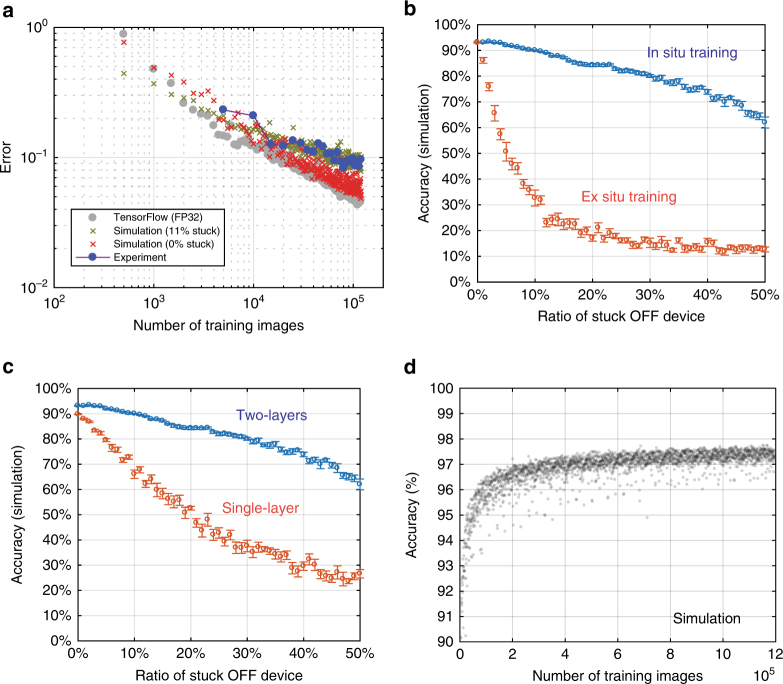
“As a result, compared to defect-free simulation, the hardware implementation would show a lower computing accuracy 38 .”
BackgroundResultA comprehensive review on emerging artificial neuromorphic devices
Zhu, J., Zhang, T., Yang, Y., & Huang, R. (2020) · Applied Physics Reviews · doi:10.1063/1.5118217 · Cited by 758
Parallel programming of an ionic floating-gate memory array for scalable neuromorphic computing
Fuller, E. J., Keene, S. T., Melianas, A., Wang, Z., Agarwal, S., Li, Y., Tuchman, Y., James, C. D., Marinella, M. J., Yang, J. J., et al. (2019) · Science · doi:10.1126/science.aaw5581 · Cited by 756
Self-citationA fully integrated reprogrammable memristor–CMOS system for efficient multiply–accumulate operations
Cai, F., Correll, J. M., Lee, S. H., Lim, Y., Bothra, V., Zhang, Z., Flynn, M. P., & Lu, W. D. (2019) · Nature Electronics · doi:10.1038/s41928-019-0270-x · Cited by 728
An optical neural chip for implementing complex-valued neural network
Zhang, H., Gu, M., Jiang, X. D., Thompson, J., Cai, H., Paesani, S., Santagati, R., Laing, A., Zhang, Y., Yung, M. H., et al. (2021) · Nature Communications · doi:10.1038/s41467-020-20719-7 · Cited by 666
Embedded Devices for Neuromorphic Time-Series Assessment
Mazumder, A. N., Hosseini, M., & Mohsenin, T. (2022) · Research Explorer (The University of Manchester) · doi:10.13016/m2ksy0-wxr3 · Cited by 652
A crossbar array of magnetoresistive memory devices for in-memory computing
Jung, S., Lee, H., Myung, S., Kim, H., Yoon, S. K., Kwon, S.-W., Ju, Y., Kim, M., Yi, W., Han, S., et al. (2022) · Nature · doi:10.1038/s41586-021-04196-6 · Cited by 644
Metrology for the next generation of semiconductor devices
Orji, N. G., Badaroglu, M., Barnes, B. M., Beitia, C., Bunday, B. D., Celano, U., Kline, R. J., Neisser, M., Obeng, Y., & Vladar, A. E. (2018) · Nature Electronics · doi:10.1038/s41928-018-0150-9 · Cited by 501
Hardware implementation of memristor-based artificial neural networks
Aguirre, F., Sebastian, A., Le Gallo, M., Song, W., Wang, T., Yang, J. J., Lu, W., Chang, M.-F., Ielmini, D., Yang, Y., et al. (2024) · Nature Communications · doi:10.1038/s41467-024-45670-9 · Cited by 564
Self-citationEdge learning using a fully integrated neuro-inspired memristor chip
Zhang, W., Yao, P., Gao, B., Liu, Q., Wu, D., Zhang, Q., Li, Y., Qin, Q., Li, J., Zhu, Z., et al. (2023) · Science · doi:10.1126/science.ade3483 · Cited by 437
Self-citationMemristor‐Based Neuromorphic Chips
Duan, X., Cao, Z., Gao, K., Yan, W., Sun, S., Zhou, G., Wu, Z., Ren, F., & Sun, B. (2024) · Advanced Materials · doi:10.1002/adma.202310704 · Cited by 432
Long short-term memory networks in memristor crossbar arrays
Li, C., Wang, Z., Rao, M., Belkin, D., Song, W., Jiang, H., Yan, P., Li, Y., Lin, P., Hu, M., et al. (2019) · Nature Machine Intelligence · doi:10.1038/s42256-018-0001-4 · Cited by 429
Self-citationEmerging Memristive Artificial Synapses and Neurons for Energy‐Efficient Neuromorphic Computing
Choi, S., Yang, J., & Wang, G. (2020) · Advanced Materials · doi:10.1002/adma.202004659 · Cited by 424
Self-citationLarge-Scale Optical Neural Networks Based on Photoelectric Multiplication
Hamerly, R., Bernstein, L., Sludds, A., Soljačić, M., & Englund, D. (2019) · Physical Review X · doi:10.1103/physrevx.9.021032 · Cited by 388
“Analog crossbar arrays based on CMOS gates [18] or memristors [19, 20] promise better performance, but as analog electronic devices, they suffer from calibration issues and limited accuracy [21].”
BackgroundBrain-inspired computing with memristors: Challenges in devices, circuits, and systems
Zhang, Y., Wang, Z., Zhu, J., Yang, Y., Rao, M., Song, W., Zhuo, Y., Zhang, X., Cui, M., Shen, L., et al. (2020) · Applied Physics Reviews · doi:10.1063/1.5124027 · Cited by 384
Self-citationReinforcement learning with analogue memristor arrays
Wang, Z., Li, C., Song, W., Rao, M., Belkin, D., Li, Y., Yan, P., Jiang, H., Lin, P., Hu, M., et al. (2019) · Nature Electronics · doi:10.1038/s41928-019-0221-6 · Cited by 370
Self-citationSemiconductor Quantum Dots for Memories and Neuromorphic Computing Systems
Lv, Z., Wang, Y., Chen, J., Wang, J., Zhou, Y., & Han, S.-T. (2020) · Chemical Reviews · doi:10.1021/acs.chemrev.9b00730 · Cited by 364
Reliability of analog resistive switching memory for neuromorphic computing
Zhao, M., Gao, B., Tang, J., Qian, H., & Wu, H. (2020) · Applied Physics Reviews · doi:10.1063/1.5124915 · Cited by 349
Zhong, Y., Tang, J., Li, X., Liang, X., Liu, Z., Li, Y., Xi, Y., Yao, P., Hao, Z., Gao, B., et al. (2022) · Nature Electronics · doi:10.1038/s41928-022-00838-3 · Cited by 343
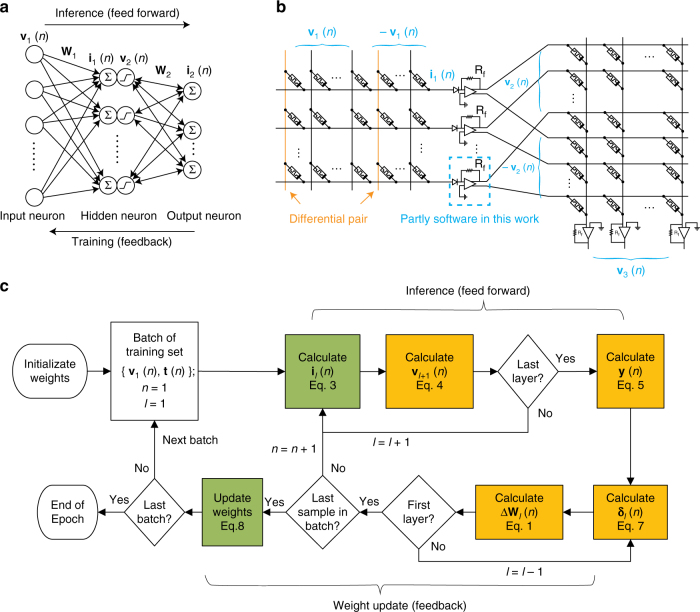
“2a The output signals of the reservoir module are applied to the bit lines (BLs) of the NVM array in the form of differential pairs to realize both positive and negative weights 38,39 .”
MethodSelf-citationHybrid 2D–CMOS microchips for memristive applications
Zhu, K., Pazos, S., Aguirre, F., Shen, Y., Yuan, Y., Zheng, W., Alharbi, O., Villena, M. A., Fang, B., Li, X., et al. (2023) · Nature · doi:10.1038/s41586-023-05973-1 · Cited by 324
Ielmini, D., & Ambrogio, S. (2020) · Nanotechnology · doi:10.1088/1361-6528/ab554b · Cited by 321
Neuromemristive Circuits for Edge Computing: A Review
Krestinskaya, O., James, A. P., & Chua, L. O. (2020) · IEEE Transactions on Neural Networks and Learning Systems · doi:10.1109/tnnls.2019.2899262 · Cited by 319
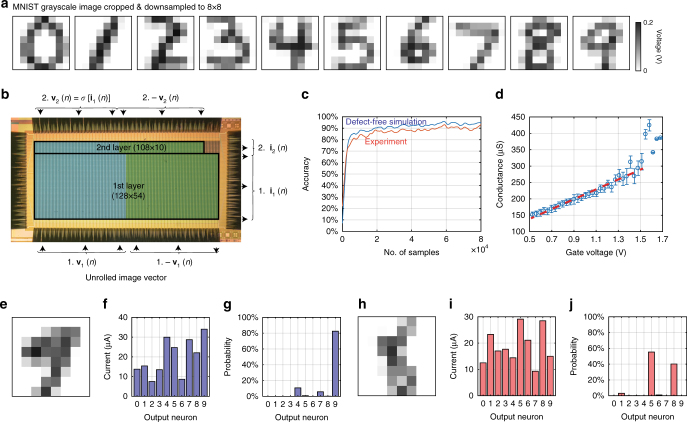
“Partially fabricated two-layer ANN with 64 input, 54 hidden, and 10 output neurons shown in [93].”
BackgroundStretchable elastic synaptic transistors for neurologically integrated soft engineering systems
Shim, H., Sim, K., Ershad, F., Yang, P., Thukral, A., Rao, Z., Kim, H.-J., Liu, Y., Wang, X., Gu, G., et al. (2019) · Science Advances · doi:10.1126/sciadv.aax4961 · Cited by 310
Sub-nanosecond memristor based on ferroelectric tunnel junction
Ma, C., Luo, Z., Huang, W., Zhao, L., Chen, Q., Lin, Y., Liu, X., Chen, Z., Liu, C., Sun, H., et al. (2020) · Nature Communications · doi:10.1038/s41467-020-15249-1 · Cited by 312
Brain organoid reservoir computing for artificial intelligence
Cai, H., Ao, Z., Tian, C., Wu, Z., Liu, H., Tchieu, J., Gu, M., Mackie, K., & Guo, F. (2023) · Nature Electronics · doi:10.1038/s41928-023-01069-w · Cited by 277
In situ training of feed-forward and recurrent convolutional memristor networks
Wang, Z., Li, C., Lin, P., Rao, M., Nie, Y., Song, W., Qiu, Q., Li, Y., Yan, P., Strachan, J. P., et al. (2019) · Nature Machine Intelligence · doi:10.1038/s42256-019-0089-1 · Cited by 307
Self-citationNeuro-inspired electronic skin for robots
Liu, F., Deswal, S., Christou, A., Sandamirskaya, Y., Kaboli, M., & Dahiya, R. (2022) · Science Robotics · doi:10.1126/scirobotics.abl7344 · Cited by 300
A review of memristor: material and structure design, device performance, applications and prospects
Xiao, Y., Jiang, B., Zhang, Z., Ke, S., Jin, Y., Wen, X., & Ye, C. (2023) · Science and Technology of Advanced Materials · doi:10.1080/14686996.2022.2162323 · Cited by 295
“Each memory cell at the cross-array node is connected to a transistor to form a one transistor one resistor (1T1 R) structure [141,148–151]; 3.”
BackgroundMethodInfluentialReservoir Computing Using Diffusive Memristors
Midya, R., Wang, Z., Asapu, S., Zhang, X., Rao, M., Song, W., Zhuo, Y., Upadhyay, N., Xia, Q., & Yang, J. J. (2019) · Advanced Intelligent Systems · doi:10.1002/aisy.201900084 · Cited by 279
Self-citationResearch progress on solutions to the sneak path issue in memristor crossbar arrays
Shi, L., Zheng, G., Tian, B., Dkhil, B., & Duan, C. (2020) · Nanoscale Advances · doi:10.1039/d0na00100g · Cited by 262
Alloying conducting channels for reliable neuromorphic computing
Yeon, H., Lin, P., Choi, C., Tan, S. H., Park, Y., Lee, D., Lee, J., Xu, F., Gao, B., Wu, H., et al. (2020) · Nature Nanotechnology · doi:10.1038/s41565-020-0694-5 · Cited by 262
Self-citationCommittee machines—a universal method to deal with non-idealities in memristor-based neural networks
Joksas, D., Freitas, P., Chai, Z., Ng, W. H., Buckwell, M., Li, C., Zhang, W. D., Xia, Q., Kenyon, A. J., & Mehonić, A. (2020) · Nature Communications · doi:10.1038/s41467-020-18098-0 · Cited by 267
“We stress that we ) 31 Current/voltage nonlinearity TaO x RRAM Hot-forming step is adopted C. Li (2018) 15 Current/voltage nonlinearity Ta/HfO 2 RRAM 1T1R architecture is adopted Y. Fang (2018) 32 Device-to-device variability HfO x RRAM Ultra-thin ALD-TiN buffer layer is introduced B. Govoreanu…”
BackgroundSelf-citationChallenges in materials and devices for resistive-switching-based neuromorphic computing
del Valle, J., Ramírez, J. G., Rozenberg, M. J., & Schuller, I. K. (2018) · Journal of Applied Physics · doi:10.1063/1.5047800 · Cited by 254
Volatile and Nonvolatile Memristive Devices for Neuromorphic Computing
Zhou, G., Wang, Z., Sun, B., Zhou, F., Sun, L., Zhao, H., Hu, X., Peng, X., Yan, J., Wang, H., et al. (2022) · Advanced Electronic Materials · doi:10.1002/aelm.202101127 · Cited by 243
Self-citationLuo, Z., Wang, Z., Guan, Z., Ma, C., Zhao, L., Liu, C., Sun, H., Wang, H., Lin, Y., Jin, X., et al. (2022) · Nature Communications · doi:10.1038/s41467-022-28303-x · Cited by 225
Self-citationHardware Implementation of Neuromorphic Computing Using Large‐Scale Memristor Crossbar Arrays
Li, Y., & Ang, K.-W. (2021) · Advanced Intelligent Systems · doi:10.1002/aisy.202000137 · Cited by 220
Self-citation90% yield production of polymer nano-memristor for in-memory computing
Zhang, B., Chen, W., Zeng, J., Fan, F., Gu, J., Chen, X., Yan, L., Xie, G., Liu, S., Yan, Q., et al. (2021) · Nature Communications · doi:10.1038/s41467-021-22243-8 · Cited by 218
Robust Ag/ZrO 2 /WS 2 /Pt Memristor for Neuromorphic Computing
Yan, X., Qin, C., Lu, C., Zhao, J., Zhao, R., Ren, D., Zhou, Z., Wang, H., Wang, J., Zhang, L., et al. (2019) · ACS Applied Materials & Interfaces · doi:10.1021/acsami.9b17160 · Cited by 217
Memristive Crossbar Arrays for Storage and Computing Applications
Li, H., Wang, S., Zhang, X., Wang, W., Yang, R., Sun, Z., Feng, W., Lin, P., Wang, Z., Sun, L., et al. (2021) · Advanced Intelligent Systems · doi:10.1002/aisy.202100017 · Cited by 205
Self-citationMultilevel HfO2-based RRAM devices for low-power neuromorphic networks
Milo, V., Zambelli, C., Olivo, P., Pérez, E., K. Mahadevaiah, M., G. Ossorio, O., Wenger, C., & Ielmini, D. (2019) · APL Materials · doi:10.1063/1.5108650 · Cited by 200
Jang, B. C., Kim, S., Yang, S. Y., Park, J., Cha, J.-H., Oh, J., Choi, J., Im, S. G., Dravid, V. P., & Choi, S.-Y. (2019) · Nano Letters · doi:10.1021/acs.nanolett.8b04023 · Cited by 203
He, K., Wang, C., He, Y., Su, J., & Chen, X. (2023) · Chemical Reviews · doi:10.1021/acs.chemrev.3c00527 · Cited by 200
Research Progress on Memristor: From Synapses to Computing Systems
Yang, X., Taylor, B., Wu, A., Chen, Y., & Chua, L. O. (2022) · IEEE Transactions on Circuits and Systems I: Regular Papers · doi:10.1109/tcsi.2022.3159153 · Cited by 200
Variability in Resistive Memories
Roldán, J. B., Miranda, E., Maldonado, D., Mikhaylov, A. N., Agudov, N. V., Dubkov, A. A., Koryazhkina, M. N., González, M. B., Villena, M. A., Poblador, S., et al. (2023) · Advanced Intelligent Systems · doi:10.1002/aisy.202200338 · Cited by 197
In-memory Learning with Analog Resistive Switching Memory: A Review and Perspective
Xi, Y., Gao, B., Tang, J., Chen, A., Chang, M.-F., Hu, X. S., Spiegel, J. V. D., Qian, H., & Wu, H. (2021) · Proceedings of the IEEE · doi:10.1109/jproc.2020.3004543 · Cited by 196
“For example, the 1T1R configuration with HfO2-based RRAMs [146] has provided a practical solution by ingeniously using the current compliance of the transistor.”
BackgroundMethodInfluentialAnalog architectures for neural network acceleration based on non-volatile memory
Xiao, T. P., Bennett, C. H., Feinberg, B., Agarwal, S., & Marinella, M. J. (2020) · Applied Physics Reviews · doi:10.1063/1.5143815 · Cited by 193
Roadmap on emerging hardware and technology for machine learning
Berggren, K., Xia, Q., Likharev, K. K., Strukov, D. B., Jiang, H., Mikolajick, T., Querlioz, D., Salinga, M., Erickson, J. R., Pi, S., et al. (2021) · Nanotechnology · doi:10.1088/1361-6528/aba70f · Cited by 190
“Emerging technologies like carbon nanotube field effect transistors and resistive switches have been implemented in working demonstrations suggesting defectivities less than 10 –4 , but nevertheless may not achieve significantly higher levels of perfection [45, 54].”
BackgroundInfluentialSelf-citationNeural signal analysis with memristor arrays towards high-efficiency brain–machine interfaces
Liu, Z., Tang, J., Gao, B., Yao, P., Li, X., Liu, D., Zhou, Y., Qian, H., Hong, B., & Wu, H. (2020) · Nature Communications · doi:10.1038/s41467-020-18105-4 · Cited by 190
In situ learning using intrinsic memristor variability via Markov chain Monte Carlo sampling
Dalgaty, T., Castellani, N., Turck, C., Harabi, K.-E., Querlioz, D., & Vianello, E. (2021) · Nature Electronics · doi:10.1038/s41928-020-00523-3 · Cited by 180
Neurohybrid Memristive CMOS-Integrated Systems for Biosensors and Neuroprosthetics
Mikhaylov, A., Pimashkin, A., Pigareva, Y., Gerasimova, S., Gryaznov, E., Shchanikov, S., Zuev, A., Talanov, M., Lavrov, I., Demin, V., et al. (2020) · Frontiers in Neuroscience · doi:10.3389/fnins.2020.00358 · Cited by 185
Adaptive Extreme Edge Computing for Wearable Devices
Covi, E., Donati, E., Liang, X., Kappel, D., Heidari, H., Payvand, M., & Wang, W. (2021) · Frontiers in Neuroscience · doi:10.3389/fnins.2021.611300 · Cited by 177
Stimuli‐Responsive Memristive Materials for Artificial Synapses and Neuromorphic Computing
Bian, H., Goh, Y. Y., Liu, Y., Ling, H., Xie, L., & Liu, X. (2021) · Advanced Materials · doi:10.1002/adma.202006469 · Cited by 182
Chen, S., Zhang, T., Tappertzhofen, S., Yang, Y., & Valov, I. (2023) · Advanced Materials · doi:10.1002/adma.202301924 · Cited by 177
Zhang, P., Xia, M., Zhuge, F., Zhou, Y., Wang, Z., Dong, B., Fu, Y., Yang, K., Li, Y., He, Y., et al. (2019) · Nano Letters · doi:10.1021/acs.nanolett.9b00525 · Cited by 179
Self-citationAnalog content-addressable memories with memristors
Li, C., Graves, C. E., Sheng, X., Miller, D., Foltin, M., Pedretti, G., & Strachan, J. P. (2020) · Nature Communications · doi:10.1038/s41467-020-15254-4 · Cited by 171
Self-citationYin, S., Sun, X., Yu, S., & Seo, J.-S. (2020) · IEEE Transactions on Electron Devices · doi:10.1109/ted.2020.3015178 · Cited by 171
“Due to these limitations, the literature on RRAM-based DNN hardware has mostly implemented simpler multilayer perceptrons (MLPs) [17], [19], with limited implementation of mainstream convolutional neural networks (CNNs).”
BackgroundDevice and Circuit Architectures for In‐Memory Computing
Ielmini, D., & Pedretti, G. (2020) · Advanced Intelligent Systems · doi:10.1002/aisy.202000040 · Cited by 170
Sun, X., & Yu, S. (2019) · IEEE Journal on Emerging and Selected Topics in Circuits and Systems · doi:10.1109/jetcas.2019.2933148 · Cited by 170
“In recent years, emerging non-volatile memory (eNVM) based resistive synaptic devices [5], such as phase change memory (PCM) [6], [7], resistive random access memory (RRAM) [8]–[11], and ferroelectric field effect transistor (FeFET) [12], [13] are considered as promising candidates to replace SRAM cells due to the sma…”
BackgroundOxide‐Based Electrolyte‐Gated Transistors for Spatiotemporal Information Processing
Li, Y., Lu, J., Shang, D., Liu, Q., Wu, S., Wu, Z., Zhang, X., Yang, J., Wang, Z., Lv, H., et al. (2020) · Advanced Materials · doi:10.1002/adma.202003018 · Cited by 166
Self-citationBiomemristors as the next generation bioelectronics
Sun, B., Zhou, G., Guo, T., Zhou, Y. N., & Wu, Y. A. (2020) · Nano Energy · doi:10.1016/j.nanoen.2020.104938 · Cited by 165
Nonstationary distributions and relaxation times in a stochastic model of memristor
Agudov, N. V., Safonov, A. V., Krichigin, A. V., Kharcheva, A. A., Dubkov, A. A., Valenti, D., Guseinov, D. V., Belov, A. I., Mikhaylov, A. N., Carollo, A., et al. (2020) · Journal of Statistical Mechanics: Theory and Experiment · doi:10.1088/1742-5468/ab684a · Cited by 158
Self-Powered Tactile Sensor with Learning and Memory
Wu, C., Kim, T. W., Park, J. H., Koo, B., Sung, S., Shao, J., Zhang, C., & Wang, Z. L. (2020) · ACS Nano · doi:10.1021/acsnano.9b07165 · Cited by 150
Self-citationNetworking retinomorphic sensor with memristive crossbar for brain-inspired visual perception
Wang, S., Wang, C., Wang, P., Wang, C., Li, Z.-A., Pan, C., Dai, Y., Gao, A., Liu, C., Liu, J., et al. (2020) · National Science Review · doi:10.1093/nsr/nwaa172 · Cited by 164
Self-citationCüppers, F., Menzel, S., Bengel, C., Hardtdegen, A., von Witzleben, M., Böttger, U., Waser, R., & Hoffmann‐Eifert, S. (2019) · APL Materials · doi:10.1063/1.5108654 · Cited by 168
ABO 3 multiferroic perovskite materials for memristive memory and neuromorphic computing
Sun, B. T., Zhou, G., Sun, L., Zhao, H., Chen, Y., Yang, F., Zhao, Y. X., & Song, Q. (2021) · Nanoscale Horizons · doi:10.1039/d1nh00292a · Cited by 161
In-memory computing with emerging memory devices: Status and outlook
Mannocci, P., Farronato, M., Lepri, N., Cattaneo, L., Glukhov, A., Sun, Z., & Ielmini, D. (2023) · APL Machine Learning · doi:10.1063/5.0136403 · Cited by 192
Printed synaptic transistor–based electronic skin for robots to feel and learn
Liu, F., Deswal, S., Christou, A., Baghini, M. S., Chirila, R., Shakthivel, D., Chakraborty, M., & Dahiya, R. (2022) · Science Robotics · doi:10.1126/scirobotics.abl7286 · Cited by 161
Xiang, S., Zhang, Y., Gong, J., Guo, X., Lin, L., & Hao, Y. (2019) · IEEE Journal of Selected Topics in Quantum Electronics · doi:10.1109/jstqe.2019.2911565 · Cited by 157
RRAM for Compute-in-Memory: From Inference to Training
Yu, S., Shim, W., Peng, X., & Luo, Y. (2021) · IEEE Transactions on Circuits and Systems I Regular Papers · doi:10.1109/tcsi.2021.3072200 · Cited by 172
Photonic Neural Networks: A Survey
Marinis, L. D., Cococcioni, M., Castoldi, P., & Andriolli, N. (2019) · IEEE Access · doi:10.1109/access.2019.2957245 · Cited by 166
“Further research aimed at speeding up electronic ANN by means of analog architectures based on memristors [9], [10].”
Hänsch, W., Raghunathan, A., Roy, K., Chakrabarti, B., Phatak, C., Wang, C., & Guha, S. (2023) · Advanced Materials · doi:10.1002/adma.202204944 · Cited by 167
Essential Characteristics of Memristors for Neuromorphic Computing
Chen, W., Song, L., Wang, S., Zhang, Z., Wang, G., Hu, G., & Gao, S. (2022) · Advanced Electronic Materials · doi:10.1002/aelm.202200833 · Cited by 165
A Bioinspired Stretchable Sensory‐Neuromorphic System
Kim, S. H., Baek, G. W., Yoon, J., Seo, S., Park, J., Hahm, D., Chang, J. H., Seong, D., Seo, H., Oh, S., et al. (2021) · Advanced Materials · doi:10.1002/adma.202104690 · Cited by 142
Memristive and CMOS Devices for Neuromorphic Computing
Milo, V., Malavena, G., Compagnoni, C. M., & Ielmini, D. (2020) · Materials · doi:10.3390/ma13010166 · Cited by 159
“Later, other DNN implementations in small-scale 1T1R RRAM crossbar arrays were demonstrated enabling MNIST classification with 92% test performance [137] and gray-scale face classification on the Yale face database with 91.”
BackgroundMethodNeuromorphic artificial intelligence systems
Ivanov, D., Chezhegov, A., Kiselev, M. V., Grunin, A. A., & Larionov, D. (2022) · Frontiers in Neuroscience · doi:10.3389/fnins.2022.959626 · Cited by 182
Wang, Y., Tang, H., Xie, Y., Chen, X., Ma, S., Sun, Z., Sun, Q., Chen, L., Zhu, H., Wan, J., et al. (2021) · Nature Communications · doi:10.1038/s41467-021-23719-3 · Cited by 152
In‐Memory Computing using Memristor Arrays with Ultrathin 2D PdSeO x /PdSe 2 Heterostructure
Li, Y., Chen, S., Yu, Z., Li, S., Xiong, Y., Pam, M., Zhang, Y., & Ang, K. (2022) · Advanced Materials · doi:10.1002/adma.202201488 · Cited by 144
Self-citationOptical Computing: Status and Perspectives
Kazanskiy, N. L., Butt, M. A., & Khonina, S. N. (2022) · Nanomaterials · doi:10.3390/nano12132171 · Cited by 165
Midya, R., Wang, Z., Asapu, S., Joshi, S., Li, Y., Zhuo, Y., Song, W., Jiang, H., Upadhay, N., Rao, M., et al. (2019) · Advanced Electronic Materials · doi:10.1002/aelm.201900060 · Cited by 132
Self-citationLow-Power Memristor for Neuromorphic Computing: From Materials to Applications
Xia, Z., Sun, X., Wang, Z., Meng, J., Jin, B., & Wang, T. (2025) · Nano-Micro Letters · doi:10.1007/s40820-025-01705-4 · Cited by 181
Self-citationAdvances in Memristor-Based Neural Networks
Xu, W., Wang, J., & Yan, X. (2021) · Frontiers in Nanotechnology · doi:10.3389/fnano.2021.645995 · Cited by 143
“…(Alibart et al., 2013; Liu et al., 2013; Sarwar et al., 2013; Fackenthal et al., 2014; Prezioso et al., 2015; Midya et al., 2017; Yan et al., 2017, 2019b,d; Ambrogio et al., 2018; Krestinskaya et al., 2018; Li C. et al., 2018, Li et al., 2019; Wang et al., 2018a, 2019a,b; Upadhyay et al., 2020).”
Fu, X. D., Li, T., Cai, B., Miao, J., Panin, G. N., Ma, X., Wang, J., Jiang, X., Li, Q., Dong, Y., et al. (2023) · Light Science & Applications · doi:10.1038/s41377-023-01079-5 · Cited by 304
Organic small molecule-based RRAM for data storage and neuromorphic computing
Mu, B., Hsu, H., Kuo, C., Han, S., & Zhou, Y. (2020) · Journal of Materials Chemistry C · doi:10.1039/d0tc02116d · Cited by 125
Memristor-based analogue computing for brain-inspired sound localization with in situ training
Gao, B., Zhou, Y., Zhang, Q., Zhang, S., Yao, P., Xi, Y., Liu, Q., Zhao, M., Zhang, W., Liu, Z., et al. (2022) · Nature Communications · doi:10.1038/s41467-022-29712-8 · Cited by 137
Memristor‐Based Intelligent Human‐Like Neural Computing
Wang, S., Song, L., Chen, W., Wang, G., Hao, E., Li, C., Hu, Y., Pan, Y., Nathan, A., Hu, G., et al. (2022) · Advanced Electronic Materials · doi:10.1002/aelm.202200877 · Cited by 133
Self-citationMixed-Precision Deep Learning Based on Computational Memory
Nandakumar, S. R., Le Gallo, M., Piveteau, C., Joshi, V., Mariani, G., Boybat, I., Karunaratne, G., Khaddam-Aljameh, R., Egger, U., Petropoulos, A., et al. (2020) · Frontiers in Neuroscience · doi:10.3389/fnins.2020.00406 · Cited by 120
Nanoscale resistive switching devices for memory and computing applications
Lee, S. H., Zhu, X., & Lu, W. D. (2020) · Nano Research · doi:10.1007/s12274-020-2616-0 · Cited by 125
Memristive Devices for New Computing Paradigms
Im, I. H., Kim, S. J., & Jang, H. W. (2020) · Advanced Intelligent Systems · doi:10.1002/aisy.202000105 · Cited by 129
Ismail, M., Mahata, C., & Kim, S. (2021) · Journal of Alloys and Compounds · doi:10.1016/j.jallcom.2021.162141 · Cited by 115
CMOS-compatible neuromorphic devices for neuromorphic perception and computing: a review
Zhu, Y., Mao, H., Zhu, Y., Wang, X., Fu, C., Ke, S., Wan, C., & Wan, Q. C. (2023) · International Journal of Extreme Manufacturing · doi:10.1088/2631-7990/acef79 · Cited by 124
“Li et al constructed a multi-layer neural network by monolithically integrating hafnium oxide-based resistive switching devices and transistor arrays on a silicon chip, as depicted in figure 7(a) [110].”
BackgroundMethodThe strategies of filament control for improving the resistive switching performance
Li, T., Yu, H., Chen, S. H. Y., Zhou, Y., & Han, S. (2020) · Journal of Materials Chemistry C · doi:10.1039/d0tc03639k · Cited by 113
Modeling of discrete fracmemristor and its application
He, S., Sun, K., Peng, Y., & Wang, L. (2020) · AIP Advances · doi:10.1063/1.5134981 · Cited by 116
Kim, M., Kim, I., & Lee, J. (2022) · Science Advances · doi:10.1126/sciadv.abm8537 · Cited by 124
Jeon, K., Ryu, J. J., Im, S., Seo, H. K., Eom, T., Ju, H., Yang, M. K., Jeong, D. S., & Kim, G. H. (2024) · Nature Communications · doi:10.1038/s41467-023-44620-1 · Cited by 108
Memristive Synapses for Brain‐Inspired Computing
Wang, J., & Zhuge, F. (2019) · Advanced Materials Technologies · doi:10.1002/admt.201800544 · Cited by 112
Tree-based machine learning performed in-memory with memristive analog CAM
Pedretti, G., Graves, C. E., Serebryakov, S., Mao, R., Sheng, X., Foltín, M., Li, C., & Strachan, J. P. (2021) · Nature Communications · doi:10.1038/s41467-021-25873-0 · Cited by 134
Self-citation
Metadata
- Authors
- Li, C., Belkin, D., Li, Y., Yan, P., Hu, M., Ge, N., Jiang, H., Montgomery, E., Lin, P., Wang, Z., Song, W., Strachan, J. P., Barnell, M., Wu, Q., Williams, R. S., Yang, J. J., & Xia, Q.
- Affiliations
- University of Massachusetts Amherst (US)
- Swarthmore College (US)
- Binghamton University (US)
- Hewlett-Packard (United States) (US)
- U.S. Air Force Research Laboratory Information Directorate (US)
- Corresponding author
- Yang, J. Joshua
- Xia, Qiangfei
- ORCID
- Venue
- Nature Communications
- Published
- 2018-06-19
- Volume
- 9
- Issue
- 1
- Pages
- 2385-2385
- ISSN
- 2041-1723 (ISSN-L)
- PMC
- PMC6008303
- OpenAlex
- W2807750997
- Cited by
- 931
- References
- 49
- Citations by year
- 2026: 76 · 2025: 112 · 2024: 103 · 2023: 131 · 2022: 120 · 2021: 126 · 2020: 147 · 2019: 100 · 2018: 16
- FWCI
- 37.17
- Type
- journal article
- Language
- en
- Open access
- gold
- doi.org
- Licence
- cc-by
- creativecommons.org/licenses/by/4.0 (tdm)
- creativecommons.org/licenses/by/4.0 (vor)
- Locations
- Nature Communications (publishedVersion, cc-by)
- Europe PMC (PubMed Central) (publishedVersion, other-oa)
- PubMed Central (publishedVersion, cc-by)
- PubMed (publishedVersion)
- RePEc: Research Papers in Economics (submittedVersion)
- DOAJ (DOAJ: Directory of Open Access Journals) (submittedVersion, cc-by-sa)
- Funders
- Air Force Research Laboratory (FA8750-15-2-0044)
- National Science Foundation (ECCS-1253073)
- Topics
- Physical Sciences › Engineering › Electrical and Electronic Engineering › Advanced Memory and Neural Computing
- Physical Sciences › Engineering › Electrical and Electronic Engineering › Ferroelectric and Negative Capacitance Devices
- Physical Sciences › Computer Science › Artificial Intelligence › Neural Networks and Applications
- Keywords
- memristor neural networks, in situ learning, multilayer neural networks, monolithic integration, energy-efficient hardware, neuromorphic computing, classification accuracy
About these checks
Registry, retraction, Cites and statistics results are computed, not judged, with one exception: a printed reference that no index lists is read once by a model before it counts as a citation error. Claims are extracted by a model and kept only when their quote appears verbatim in the text; each cited source is then checked, with a model’s help, for whether it says what the claim relies on. Those verdicts can be wrong — read the claim’s quote and the cited source before relying on one.
Statistics and arithmetic are recomputed, not judged.
Confidence bands are shown only for fields calibrated on our annotated test set. None is calibrated yet, so no band is shown.
What counts as a claim ›How we measure confidence ›How we check this ›
Are you an author, or do you see a problem with this page? Request a review
Data sources
Bibliographic data: Semantic Scholar, OpenAlex, Crossref.
Contains information from the Semantic Scholar Academic Graph Datasets, made available under the ODC Attribution License (ODC-BY 1.0).
Semantic Scholar’s data is described in: Kinney, R., et al. (2023). The Semantic Scholar Open Data Platform. arXiv:2301.10140.
