

The DOI matches its Crossref record; 21 of the 21 references it cites were found in a registry or an index.
Sleep loss causes social withdrawal and loneliness
Open accessAbstract
Loneliness and social isolation markedly increase mortality risk, and are linked to numerous mental and physical comorbidities, including sleep disruption. But does sleep loss causally trigger loneliness? Here, we demonstrate that a lack of sleep leads to a neural and behavioral phenotype of social withdrawal and loneliness; one that can be perceived by other members of society, and reciprocally, makes those societal members lonelier in return. We propose a model in which sleep loss instigates a propagating, self-reinforcing cycle of social separation and withdrawal.
Overview
The claims and statistics of this paper haven’t been checked yet.
Run the check — free, no account needed. It reads the open-access text and checks the sources it cites.
Integrity signals
Registry
Cites
Statistics
Figures
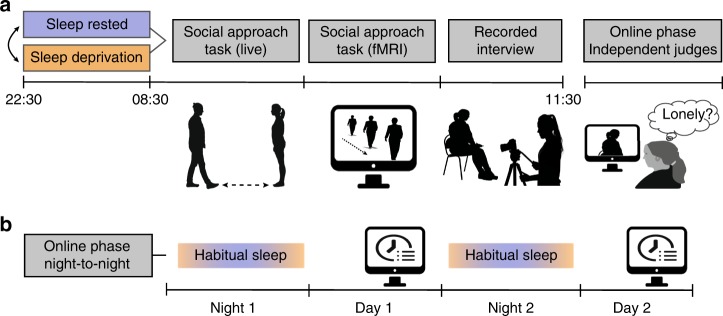
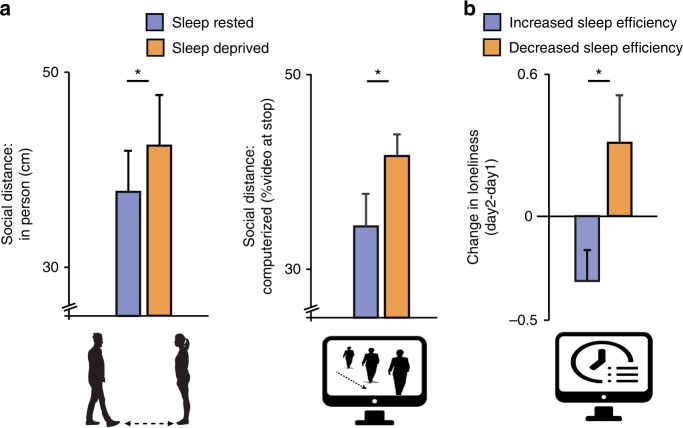
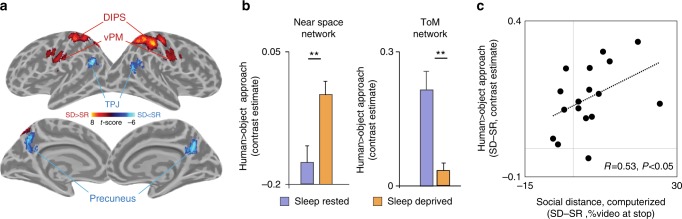
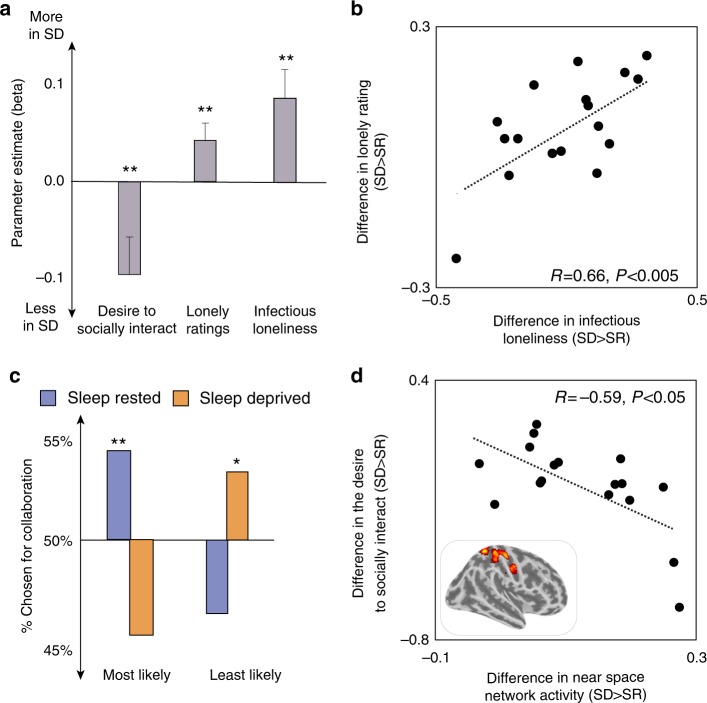
Verification
Claims the paper makes
The claims and statistics of this paper haven’t been checked yet.
Run the check — free, no account needed. It reads the open-access text and checks the sources it cites.
Claims other papers make about this one
Each is checked against this paper’s own text: does it say what the citing paper says it does?
The cited source says what the claim attributes to it.
In the citing paper
“Thus, our findings support previous reports about the social transmission of loneliness[ 27 ]”
From Loneliness and the Social Brain: How Perceived Social Isolation Impairs Human Interactions (2021) · cites this paper as [27]
Self-check
Percentages, sums and reported differences re-computed from the paper’s own numbers.
The self-check needs the paper’s full text.
Citations
Cites
Development and validation of brief measures of positive and negative affect: The PANAS scales.
Watson, D., Clark, L. A., & Tellegen, A. (1988) · Journal of Personality and Social Psychology · doi:10.1037/0022-3514.54.6.1063 · Cited by 32,433
Social Relationships and Health
House, J. S., Landis, K. R., & Umberson, D. (1988) · Science · doi:10.1126/science.3399889 · Cited by 7,073
Loneliness and Social Isolation as Risk Factors for Mortality: A Meta-Analytic Review
Holt-Lunstad, J., Smith, T. B., Baker, M., Harris, T., & Stephenson, D. (2015) · Perspectives on Psychological Science · doi:10.1177/1745691614568352 · Cited by 6,043
BERKMAN, L. F., & SYME, S. L. (1979) · American Journal of Epidemiology · doi:10.1093/oxfordjournals.aje.a112674 · Cited by 5,341
A Short Scale for Measuring Loneliness in Large Surveys: Results From Two Population-Based Studies
Hughes, M. E., Waite, L. J., Hawkley, L. C., & Cacioppo, J. T. (2004) · Research on Aging · doi:10.1177/0164027504268574 · Cited by 4,781
State-Trait Anxiety Inventory for Adults
Spielberger, C. D. (2012) · PsycTESTS Dataset · doi:10.1037/t06496-000 · Cited by 3,479
Marteau, T. M., & Bekker, H. (1992) · British Journal of Clinical Psychology · doi:10.1111/j.2044-8260.1992.tb00997.x · Cited by 3,238
Loneliness and health: potential mechanisms
Cacioppo, J. T., Hawkley, L. C., Crawford, L. E., Ernst, J. M., Burleson, M. H., Kowalewski, R. B., Malarkey, W. B., Van Cauter, E., & Berntson, G. G. (2002) · Psychosomatic Medicine · doi:10.1097/00006842-200205000-00005 · Cited by 1,149
Loneliness within a nomological net: An evolutionary perspective
Cacioppo, J. T., Hawkley, L. C., Ernst, J. M., Burleson, M., Berntson, G. G., Nouriani, B., & Spiegel, D. (2006) · Journal of Research in Personality · doi:10.1016/j.jrp.2005.11.007 · Cited by 1,010
Toward a neurology of loneliness
Cacioppo, S., Capitanio, J. P., & Cacioppo, J. T. (2014) · Psychological Bulletin · doi:10.1037/a0037618 · Cited by 623
Research works printed but not linked: 47
- Eisenberger, N. I., Taylor, S. E., Gable, S. L., Hilmert, C. J. & Lieberman, M. D. Neural pathways link social support to attenuated neuroendocrine stress responses. Neuroimage 35, 1601–1612 (2007). · DOI · Paper page
- Wilson, R. S. et al. Loneliness and risk of alzheimer disease. Arch. Gen. Psychiatry 64, 234–240 (2007). · DOI · Paper page
- Lau, S. & Gruen, G. E. The social stigma of loneliness: effect of target person’s and perceiver’s sex. Pers. Soc. Psychol. Bull. 18, 182–189 (1992). · DOI
- Lawrence, E. W. & John, A. B. Keeping one’s distance: the influence of spatial distance cues on affect and evaluation. Psychol. Sci. 19, 302–308 (2008). · DOI
- Renshaw, P. D. & Brown, P. J. Loneliness in middle childhood: concurrent and longitudinal predictors. Child Dev. 64, 1271–1284 (1993). · DOI
- Cheek, J. M. & Buss, A. H. Shyness and sociability. J. Pers. Soc. Psychol. 41, 330 (1981). · DOI
- Nurmi, J.-E. & Salmela-Aro, K. Social strategies and loneliness: a prospective study. Pers. Individ. Dif. 23, 205–215 (1997). · DOI
- Kaushal, N., Nair, D., Gozal, D. & Ramesh, V. Socially isolated mice exhibit a blunted homeostatic sleep response to acute sleep deprivation compared to socially paired mice. Brain Res. 1454, 65–79 (2012). · DOI
- Tavernier, R. & Willoughby, T. Bidirectional associations between sleep (quality and duration) and psychosocial functioning across the university years. Dev. Psychol. 50, 674 (2014). · DOI
- Cacioppo, J. T. et al. Do lonely days invade the nights? Potential social modulation of sleep efficiency. Psychol. Sci. 13, 384–387 (2002). · DOI · Paper page
- Smith, S. S., Kozak, N. & Sullivan, K. A. An investigation of the relationship between subjective sleep quality, loneliness and mood in an Australian sample: can daily routine explain the links? Int. J. Soc. Psychiatry 58, 166–171 (2012). · DOI
- Carney, C. E., Edinger, J. D., Meyer, B., Lindman, L. & Istre, T. Daily activities and sleep quality in college students. Chronobiol. Int. 23, 623–637 (2006). · DOI
- Perry, A., Nichiporuk, N. & Knight, R. T. Where does one stand: a biological account of preferred interpersonal distance. Soc. Cogn. Affect. Neurosci. 11, 317–326, https://doi.org/10.1093/scan/nsv115 (2016). · DOI
- Holt, D. J. et al. Abnormalities in personal space and parietal–frontal function in schizophrenia. NeuroImage Clin. 9, 233–243 (2015). · DOI
- Mahon, N. E. Loneliness and sleep during adolescence. Percept. Mot. Skills 78, 227–231 (1994). · DOI · Paper page
- Friedman, E. M. et al. Social relationships, sleep quality, and interleukin-6 in aging women. Proc. Natl Acad. Sci. USA 102, 18757–18762 (2005). · DOI · Paper page
- Kurina, L. M. et al. Loneliness is associated with sleep fragmentation in a communal society. Sleep 34, 1519–1526 (2011). · DOI
- Bremmer, F. et al. Polymodal motion processing in posterior parietal and premotor cortex: a human fMRI study strongly implies equivalencies between humans and monkeys. Neuron 29, 287–296 (2001). · DOI · Paper page
- Van Overwalle, F. & Baetens, K. Understanding others’ actions and goals by mirror and mentalizing systems: a meta-analysis. Neuroimage 48, 564–584 (2009). · DOI · Paper page
- Saxe, R., Carey, S. & Kanwisher, N. Understanding other minds: linking developmental psychology and functional neuroimaging. Annu. Rev. Psychol. 55, 87–124 (2004). · DOI · Paper page
- Frith, C. D. & Frith, U. Interacting minds--a biological basis. Science 286, 1692–1695 (1999). · DOI · Paper page
- Cacioppo, J. T., Norris, C. J., Decety, J., Monteleone, G. & Nusbaum, H. In the eye of the beholder: individual differences in perceived social isolation predict regional brain activation to social stimuli. J. Cogn. Neurosci. 21, 83–92 (2009). · DOI · Paper page
- Kana, R. K. et al. Aberrant functioning of the theory-of-mind network in children and adolescents with autism. Mol. Autism 6, 59 (2015). · DOI
- Walter, H. et al. Dysfunction of the social brain in schizophrenia is modulated by intention type: an fMRI study. Soc. Cogn. Affect. Neurosci. 4, 166–176 (2009). · DOI
- Candini, M. et al. Personal space regulation in childhood autism: effects of social interaction and person’s perspective. Autism Res. 10, 144–154 (2017). · DOI
- Adam, E. K., Hawkley, L. C., Kudielka, B. M. & Cacioppo, J. T. Day-to-day dynamics of experience–cortisol associations in a population-based sample of older adults. Proc. Natl Acad. Sci. USA 103, 17058–17063 (2006). · DOI · Paper page
- Cacioppo, J. T., Fowler, J. H. & Christakis, N. A. Alone in the crowd: The structure and spread of loneliness in a large social network. J. Pers. Soc. Psychol. 97, 977 (2009). · DOI
- Teneggi, C., Canzoneri, E., di Pellegrino, G. & Serino, A. Social modulation of peripersonal space boundaries. Curr. Biol. 23, 406–411 (2013). · DOI · Paper page
- Pinquart, M. & Sörensen, S. Risk Factors for Loneliness in Adulthood and Old Age--A Meta-analysis. In S. P. Shohov (Ed.), Advances in psychology research, vol. 19, pp. 111–143. Hauppauge, NY, US: Nova Science Publishers. (2003).
- Mander, B. A., Winer, J. R. & Walker, M. P. Sleep and human aging. Neuron 94, 19–36 (2017). · DOI
- Hawkley, L. C. & Cacioppo, J. T. Aging and loneliness: downhill quickly? Curr. Dir. Psychol. Sci. 16, 187–191 (2007). · DOI · Paper page
- Centers for Disease Control and Prevention (CDC). Unhealthy sleep-related behaviors--12 States, 2009. MMWR Morb. Mortal. Wkly. Rep. 60, 233–238 (2011).
- McGlinchey, E. L. et al. The effect of sleep deprivation on vocal expression of emotion in adolescents and adults. Sleep 34, 1233–1241 (2011). · DOI
- Kushida, C. A. et al. Comparison of actigraphic, polysomnographic, and subjective assessment of sleep parameters in sleep-disordered patients. Sleep Med. 2, 389–396 (2001). · DOI
- Ohayon, M. et al. National Sleep Foundation’s sleep quality recommendations: first report. Sleep Health 3, 6–19 (2017). · DOI · Paper page
- Gabay, A. S., Radua, J., Kempton, M. J. & Mehta, M. A. The ultimatum game and the brain: a meta-analysis of neuroimaging studies. Neurosci. Biobehav. Rev. 47, 549–558 (2014). · DOI
- Fehr, E. & Camerer, C. F. Social neuroeconomics: the neural circuitry of social preferences. Trends Cogn. Sci. 11, 419–427 (2007). · DOI · Paper page
- Mazaika, P. K., Hoeft, F., Glover, G. H. & Reiss, A. L. Methods and software for fMRI analysis of clinical subjects. Neuroimage 47, S58 (2009). · DOI
- Behzadi, Y., Restom, K., Liau, J. & Liu, T. T. A component based noise correction method (CompCor) for BOLD and perfusion based fMRI. Neuroimage 37, 90–101 (2007). · DOI · Paper page
- Friston, K. J. et al. Statistical parametric maps in functional imaging: a general linear approach. Hum. Brain Mapp. 2, 189–210 (1994). · DOI · Paper page
- van Veluw, S. J. & Chance, S. A. Differentiating between self and others: an ALE meta-analysis of fMRI studies of self-recognition and theory of mind. Brain Imaging Behav. 8, 24–38 (2014). · DOI
- Poldrack, R. A. & Mumford, J. A. Independence in ROI analysis: where is the voodoo? Soc. Cogn. Affect. Neurosci. 4, 208–213 (2009). · DOI
- Lieberman, M. D. & Cunningham, W. A. Type I and Type II error concerns in fMRI research: re-balancing the scale. Soc. Cogn. Affect. Neurosci. 4, 423–428 (2009). · DOI · Paper page
- Segrin, C. Interpersonal communication problems associated with depression and loneliness. In P. A. Andersen, L. K. Guerrero, (eds), Handbook of Communication and Emotion, PP. 215–242 (Academic Press, Elsevier, 1996). · DOI
- Krause, A. J. et al. The sleep-deprived human brain. Nat. Rev. Neurosci. 18, 404 (2017). · DOI · Paper page
- Thompson, E. R. Development and validation of an internationally reliable short-form of the Positive and Negative Affect Schedule (PANAS). J. Cross Cult. Psychol. 38, 227–242 (2007). · DOI · Paper page
- Ohayon, M. M., Carskadon, M. A., Guilleminault, C. & Vitiello, M. V. Meta-analysis of quantitative sleep parameters from childhood to old age in healthy individuals: developing normative sleep values across the human lifespan. Sleep 27, 1255–1273 (2004). · DOI · Paper page
Cited by
Sorted by citations
Ben Simon, E., Rossi, A., Harvey, A. G., & Walker, M. P. (2019) · Nature Human Behaviour · doi:10.1038/s41562-019-0754-8 · Cited by 177
Self-citationLoneliness and the Social Brain: How Perceived Social Isolation Impairs Human Interactions
Lieberz, J., Shamay‐Tsoory, S. G., Saporta, N., Esser, T., Kuskova, E., Stoffel‐Wagner, B., Hurlemann, R., & Scheele, D. (2021) · Advanced Science · doi:10.1002/advs.202102076 · Cited by 116
Pardos, Z. A., & Bhandari, S. (2024) · PLOS ONE · doi:10.1371/journal.pone.0304013 · Cited by 97
Smartphone App to Address Loneliness Among College Students: Pilot Randomized Controlled Trial
Bruehlman-Senecal, E., Hook, C. J., Pfeifer, J. H., FitzGerald, C., Davis, B., Delucchi, K. L., Haritatos, J., & Ramo, D. E. (2020) · JMIR Mental Health · doi:10.2196/21496 · Cited by 80
The physiological correlates of interpersonal space
Candini, M., Battaglia, S., Benassi, M., di Pellegrino, G., & Frassinetti, F. (2021) · Scientific Reports · doi:10.1038/s41598-021-82223-2 · Cited by 73
Sleep Predicts Collegiate Academic Performance
Prichard, J. R. (2020) · Sleep Medicine Clinics · doi:10.1016/j.jsmc.2019.10.003 · Cited by 46
Sleep quality and treatment of social anxiety disorder
Horenstein, A., Morrison, A. S., Goldin, P., ten Brink, M., Gross, J. J., & Heimberg, R. G. (2019) · Anxiety, Stress, & Coping · doi:10.1080/10615806.2019.1617854 · Cited by 45
“Evidence also suggests that poor sleep may lead to greater social avoidance (Simon & Walker, 2018) and that there is a bidirectional relationship between sleep problems and anxiety more generally (Alvaro, Roberts, & Harris, 2013), suggesting that poor sleep may, in turn, worsen social avoidance and…”
Using behavioral rhythms and multi-task learning to predict fine-grained symptoms of schizophrenia
Tseng, V. W.-S., Sano, A., Ben-Zeev, D., Brian, R., Campbell, A. T., Hauser, M., Kane, J. M., Scherer, E. A., Wang, R., Wang, W., et al. (2020) · Scientific Reports · doi:10.1038/s41598-020-71689-1 · Cited by 44
Daimer, S., Mihatsch, L. L., Neufeld, S. A., Murray, G. K., & Knolle, F. (2022) · eLife · doi:10.7554/elife.75893 · Cited by 21
Anonymization of Daily Activity Data by Using ℓ-diversity Privacy Model
Parameshwarappa, P., Chen, Z., & Koru, G. (2021) · ACM Transactions on Management Information Systems · doi:10.1145/3456876 · Cited by 19
Sadeghi-Bahmani, D., Rigotti, V., Stanga, Z., Lang, U. E., Blais, R. K., Kelley, M. L., & Brand, S. (2024) · Frontiers in Public Health · doi:10.3389/fpubh.2024.1390636 · Cited by 6
“…is associated with symptoms of depression and anxiety (1–12), low impulse control (13, 14), non-suicidal self-injury and suicidal behavior (10, 12, 15–20), impaired cognitive and emotional processing (21–36), reckless or aggressive driving behavior (37–44), and impaired social behavior (45, 46).”
Background
Metadata
- Authors
- Ben Simon, E., & Walker, M. P.
- Affiliations
- University of California, Berkeley (US)
- Corresponding author
- Walker, Matthew P.
- Venue
- Nature Communications
- Published
- 2018-08-14
- Volume
- 9
- Issue
- 1
- Pages
- 3146-3146
- ISSN
- 2041-1723 (ISSN-L)
- PMC
- PMC6092357
- OpenAlex
- W2887297302
- Cited by
- 352
- References
- 21
- Citations by year
- 2026: 44 · 2025: 59 · 2024: 65 · 2023: 45 · 2022: 45 · 2021: 37 · 2020: 34 · 2019: 19 · 2018: 4
- FWCI
- 12.41
- Type
- journal article
- Language
- en
- Open access
- gold
- doi.org
- Locations
- Nature Communications (publishedVersion, cc-by)
- Europe PMC (PubMed Central) (publishedVersion, cc-by)
- PubMed Central (publishedVersion, cc-by)
- PubMed (publishedVersion)
- RePEc: Research Papers in Economics (submittedVersion)
- DOAJ (DOAJ: Directory of Open Access Journals) (submittedVersion)
- DOAJ (DOAJ: Directory of Open Access Journals) (submittedVersion, cc-by-sa)
- eScholarship (California Digital Library) (submittedVersion)
- eScholarship (California Digital Library) (submittedVersion, cc-by)
- Funders
- ISEF Foundation
- Iran Science Elites Federation
- National Institutes of Health
- National Institute on Aging (RF1AG054019, R01AG031164)
- National Institute of Mental Health (R01MH093537)
- Topics
- Life Sciences › Neuroscience › Cognitive Neuroscience › Sleep and Wakefulness Research
- Social Sciences › Psychology › Experimental and Cognitive Psychology › Sleep and related disorders
- Social Sciences › Psychology › Experimental and Cognitive Psychology › Sleep and Work-Related Fatigue
- Keywords
- sleep deprivation, loneliness, social withdrawal, social isolation, sleep disruption, social feedback, self-reinforcing cycles, social behavior, mortality risk
- MeSH terms
- Adolescent, Adult, Behavior, Female, Humans, Sleep Initiation and Maintenance Disorders, Loneliness, Magnetic Resonance Imaging, Male, Sleep Deprivation, Social Isolation, Young Adult
About these checks
Registry, retraction, Cites and statistics results are computed, not judged, with one exception: a printed reference that no index lists is read once by a model before it counts as a citation error. Claims are extracted by a model and kept only when their quote appears verbatim in the text; each cited source is then checked, with a model’s help, for whether it says what the claim relies on. Those verdicts can be wrong — read the claim’s quote and the cited source before relying on one.
Statistics and arithmetic are recomputed, not judged.
Confidence bands are shown only for fields calibrated on our annotated test set. None is calibrated yet, so no band is shown.
What counts as a claim ›How we measure confidence ›How we check this ›
Are you an author, or do you see a problem with this page? Request a review
