

The DOI matches its Crossref record; 41 of the 41 references it cites were found in a registry or an index.
High throughput ANI analysis of 90K prokaryotic genomes reveals clear species boundaries
Open accessPublished version of a preprint
Abstract
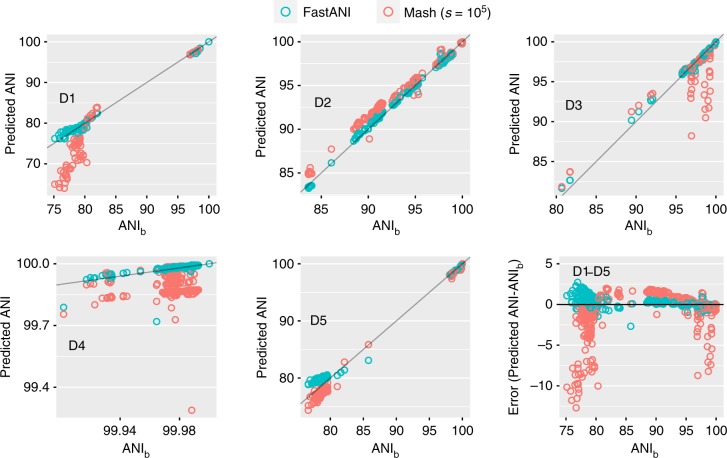
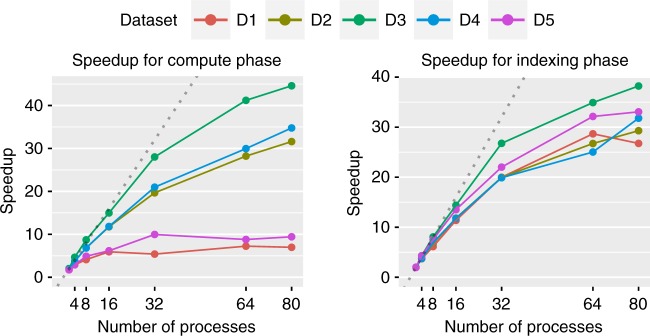
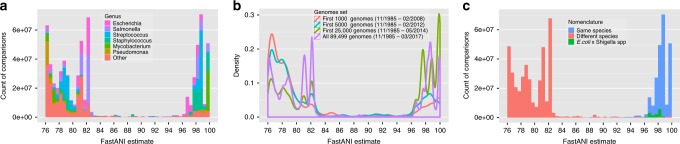
A fundamental question in microbiology is whether there is continuum of genetic diversity among genomes, or clear species boundaries prevail instead. Whole-genome similarity metrics such as Average Nucleotide Identity (ANI) help address this question by facilitating high resolution taxonomic analysis of thousands of genomes from diverse phylogenetic lineages. To scale to available genomes and beyond, we present FastANI, a new method to estimate ANI using alignment-free approximate sequence mapping. FastANI is accurate for both finished and draft genomes, and is up to three orders of magnitude faster compared to alignment-based approaches. We leverage FastANI to compute pairwise ANI values among all prokaryotic genomes available in the NCBI database. Our results reveal clear genetic discontinuity, with 99.8% of the total 8 billion genome pairs analyzed conforming to >95% intra-species and <83% inter-species ANI values. This discontinuity is manifested with or without the most frequently sequenced species, and is robust to historic additions in the genome databases.
Overview
The claims and statistics of this paper haven’t been checked yet.
Run the check — free, no account needed. It reads the open-access text and checks the sources it cites.
Integrity signals
Registry
Cites
Statistics
Figures
Verification
Claims the paper makes
The claims and statistics of this paper haven’t been checked yet.
Run the check — free, no account needed. It reads the open-access text and checks the sources it cites.
Claims other papers make about this one
Each is checked against this paper’s own text: does it say what the citing paper says it does?
The cited source says what the claim attributes to it.
In the citing paper
“FastANI (v1.3.1) (https://github.com/ParBLiSS/FastANI.) was used to calculate the average nucleotide identity between the isolated strains and the original Lp082,47 ensuring isolates were evolved from Lp082”
From Gut microbiota drives structural variation of exogenous probiotics to enhance colonization (2025) · cites this paper as [47]
Self-check
Percentages, sums and reported differences re-computed from the paper’s own numbers.
The self-check needs the paper’s full text.
Citations
Cites
Gapped BLAST and PSI-BLAST: a new generation of protein database search programs
Altschul, S. (1997) · Nucleic Acids Research · doi:10.1093/nar/25.17.3389 · Cited by 73,302
Search and clustering orders of magnitude faster than BLAST
Edgar, R. C. (2010) · Bioinformatics · doi:10.1093/bioinformatics/btq461 · Cited by 21,098
Fast and sensitive protein alignment using DIAMOND
Buchfink, B., Xie, C., & Huson, D. H. (2015) · Nature Methods · doi:10.1038/nmeth.3176 · Cited by 14,201
<tt>BLAT</tt> —The <tt>BLAST</tt> -Like Alignment Tool
Kent, W. J. (2002) · Genome Research · doi:10.1101/gr.229202 · Cited by 8,480
Canu: scalable and accurate long-read assembly via adaptive k -mer weighting and repeat separationPreprint
Koren, S., Walenz, B. P., Berlin, K., Miller, J. R., Bergman, N. H., & Phillippy, A. M. (2017) · Genome Research · doi:10.1101/gr.215087.116 · Cited by 7,260
Self-citationShifting the genomic gold standard for the prokaryotic species definition
Richter, M., & Rossello-Mora, R. A. (2009) · Proceedings of the National Academy of Sciences · doi:10.1073/pnas.0906412106 · Cited by 6,343
Versatile and open software for comparing large genomes
Kurtz, S., Phillippy, A., Delcher, A. L., Smoot, M., Shumway, M., Antonescu, C., & Salzberg, S. L. (2004) · Genome Biology · doi:10.1186/gb-2004-5-2-r12 · Cited by 5,254
Self-citationMauve: Multiple alignment of conserved genomic sequence with rearrangements
Darling, A. C. E., Mau, B., Blattner, F. R., & Perna, N. T. (2004) · Genome Research · doi:10.1101/gr.2289704 · Cited by 4,949
DNA–DNA hybridization values and their relationship to whole-genome sequence similarities
Goris, J., Konstantinidis, K. T., Klappenbach, J. A., Coenye, T., Vandamme, P. A. R., & Tiedje, J. M. (2007) · INTERNATIONAL JOURNAL OF SYSTEMATIC AND EVOLUTIONARY MICROBIOLOGY · doi:10.1099/ijs.0.64483-0 · Cited by 4,733 · cited 2×
“Nevertheless, it closely reflects the traditional microbiological concept of DNA-DNA hybridization relatedness for defining species (3), as it takes into account the fluid nature of the bacterial gene pool and hence implicitly considers shared function.”
BackgroundMethodSelf-citationA large-scale evaluation of algorithms to calculate average nucleotide identity
Yoon, S.-H., Ha, S. M., Lim, J., Kwon, S., & Chun, J. (2017) · Antonie van Leeuwenhoek · doi:10.1007/s10482-017-0844-4 · Cited by 3,614
Research works printed but not linked: 1
- Staley, J. The phylogenomic species concept. Microbiol. Today 36, 80–83 (2009).
Cited by
Sorted by citations
Items 801–900 of 1,013
Xie, G., Zhu, Y., Zhong, Z., Du, Q., Wu, Y., Xing, K., Zhang, M., & Shu, H. (2023) · LWT · doi:10.1016/j.lwt.2023.115088 · Cited by 27
Pena, M. M., Bhandari, R., Bowers, R. M., Weis, K., Newberry, E. A., Wagner, N., Pupko, T., Jones, J. B., Woyke, T., Vinatzer, B. A., et al. (2024) · Genome Biology and Evolution · doi:10.1093/gbe/evae074 · Cited by 24
910 metagenome-assembled genomes from the phytobiomes of three urban-farmed leafy Asian greens
Bandla, A., Pavagadhi, S., Sudarshan, A. S., Hong, M. P. C., & Swarup, S. (2020) · Scientific Data · doi:10.1038/s41597-020-00617-9 · Cited by 27
Li, Z., Ju, Y., Xia, J., Zhang, Z., Zhen, H., Tong, X., Sun, Y., Lu, H., Zong, Y., Chen, P., et al. (2023) · Advanced Science · doi:10.1002/advs.202300050 · Cited by 25
Population genomic analysis of clinical ST15 Klebsiella pneumoniae strains in China
Li, F., Zhang, M., & Fan, Z. (2023) · Frontiers in Microbiology · doi:10.3389/fmicb.2023.1272173 · Cited by 26
Onetto, C. A., Grbin, P. R., McIlroy, S. J., & Eales, K. L. (2018) · FEMS Microbiology Ecology · doi:10.1093/femsec/fiy231 · Cited by 26
Furlan, J. P. R., de Almeida, O. G. G., Martinis, E. C. P. D., & Stehling, E. G. (2019) · Frontiers in Microbiology · doi:10.3389/fmicb.2019.02151 · Cited by 26
“…A. calcoaceticus DSM 30006, and A. nosocomialis 28F was performed using the FastANI method that computes the relatedness (Average Nucleotide Identity – ANI) among all orthologous genes in whole-genome sequences, reflecting strains of the same species if they possess ANI ≥95% (Jain et al., 2018).”
MethodWilhelm, R. C., Murphy, S. J. L., Feriancek, N. M., Karasz, D. C., DeRito, C. M., Newman, J. D., & Buckley, D. H. (2020) · INTERNATIONAL JOURNAL OF SYSTEMATIC AND EVOLUTIONARY MICROBIOLOGY · doi:10.1099/ijsem.0.004029 · Cited by 26
O’Rourke, A. E., Lee, M., Nierman, W. C., Everroad, R. C., & Dupont, C. L. (2020) · PLoS ONE · doi:10.1371/journal.pone.0227152 · Cited by 26
“2; [17]), suggesting that they are each of highly similar genomic lineages and may have stemmed from the two distinct founding strains.”
BackgroundVignolle, G. A., Mach, R. L., Mach-Aigner, A. R., & Derntl, C. (2020) · BMC Genomics · doi:10.1186/s12864-020-6653-6 · Cited by 26
Reduced metagenome sequencing for strain-resolution taxonomic profiles
Snipen, L. G., Angell, I.-L., Rognes, T., & Rudi, K. (2021) · Microbiome · doi:10.1186/s40168-021-01019-8 · Cited by 26
Comandatore, F., Damiani, C., Cappelli, A., Ribolla, P. E. M., Gasperi, G., Gradoni, F., Capelli, G., Piazza, A., Montarsi, F., Mancini, M. V., et al. (2021) · mBio · doi:10.1128/mbio.00106-21 · Cited by 26
“bacterial species (19), suggesting that the “clusters” that we found may correspond to Asaia species.”
Rahi, P., Khairnar, M., Hagir, A., Narayan, A., Jain, K. R., Madamwar, D., Pansare, A. N., & Shouche, Y. S. (2021) · Archives of Microbiology · doi:10.1007/s00203-021-02349-9 · Cited by 26
Metagenome-Assembled Genomes Contribute to Unraveling of the Microbiome of Cocoa Fermentation
de Almeida, O. G. G., & Martinis, E. C. P. D. (2021) · Applied and Environmental Microbiology · doi:10.1128/aem.00584-21 · Cited by 26
“For this purpose, genomes were downloaded from the RefSeq database using the script “ncbi-genome-download” (see Table S5), and the ANIs were calculated with the fastANI tool (93).”
MethodNivina, A., Paredes, S. H., Fraser, H. B., & Khosla, C. (2021) · Proceedings of the National Academy of Sciences · doi:10.1073/pnas.2100751118 · Cited by 26
Lu, R., Chen, Y., Zhang, X., Feng, Y., Comes, H. P., Li, Z., Zheng, Z., Yuan, Y., Wang, L., Huang, Z., et al. (2021) · Plant Biotechnology Journal · doi:10.1111/pbi.13758 · Cited by 26
Ho, T. M., Méndez, S. G., Vandecasteele, M., Willems, A. L., Luo, D., Beirinckx, S., & Goormachtig, S. (2022) · Plant and Soil · doi:10.1007/s11104-022-05304-9 · Cited by 26
Zhang, Y., Dong, J., Wang, Y., Gu, J., Yin, J., Ahmad, M., & Ling, J. (2022) · International Biodeterioration & Biodegradation · doi:10.1016/j.ibiod.2022.105408 · Cited by 26
Chia, M., Naim, A. N. M., Tay, A. S. L., Lim, K. M., Chew, K. L., Yow, S. J., Chen, J. L., Common, J., Nagarajan, N., & Tham, E. H. (2022) · Journal of Allergy and Clinical Immunology · doi:10.1016/j.jaci.2022.01.031 · Cited by 28
Ullmann, L., Wibberg, D., Busche, T., Rückert, C., Müsgens, A., Kalinowski, J., & Blank, L. M. (2022) · Journal of Fungi · doi:10.3390/jof8030269 · Cited by 26
Kuzmanović, N., Biondi, E., Overmann, J., Puławska, J., Verbarg, S., Smalla, K., & Lassalle, F. (2022) · BMC Genomics · doi:10.1186/s12864-022-08662-x · Cited by 27
Lv, Q., Li, S., Zhang, Y., Guo, R., Wang, Y., Peng, Y., & Zhang, X. (2022) · Frontiers in Cellular and Infection Microbiology · doi:10.3389/fcimb.2022.957439 · Cited by 26
do Amaral, R. B., Cardozo, M. V., Varani, A. M., Furquim, M. E. C., Dias, C. M., de Assis, W. O., da Silva, A. R., Herrera, H. M., Machado, R. Z., & André, M. R. (2022) · Microorganisms · doi:10.3390/microorganisms10081609 · Cited by 26
Characterization of antibiotic-resistance traits in Akkermansia muciniphila strains of human origin
Filardi, R., Gargari, G., Mora, D., & Arioli, S. (2022) · Scientific Reports · doi:10.1038/s41598-022-23980-6 · Cited by 26
Queiroz, L. L., Lacorte, G. A., Isidorio, W. R., Landgraf, M., Franco, B. D. G. D. M., Pinto, U. M., & Hoffmann, C. (2022) · mSystems · doi:10.1128/msystems.00564-22 · Cited by 32
“Taxonomic inference of MAGs was done using CheckM27 and PhyloPhlAn 3.028 with database SGB.Nov19, after that, all complete sequences of each MAG species from NCBI RefSeq were downloaded and compared them with MAG sequences using FastANI26.”
MethodInfluentialThe community ecology perspective of omics data
Jurburg, S. D., Buscot, F., Chatzinotas, A., Chaudhari, N. M., Clark, A. T., Garbowski, M., Grenié, M., Hom, E. F. Y., Karakoç, C., Marr, S., et al. (2022) · Microbiome · doi:10.1186/s40168-022-01423-8 · Cited by 31
Salamzade, R., Swaney, M. H., & Kalan, L. (2022) · Microbiology Spectrum · doi:10.1128/spectrum.03578-22 · Cited by 24
Robinson, L. A., Collins, A. C. Z., Murphy, R. A., Davies, J. C., & Allsopp, L. P. (2023) · Frontiers in Microbiology · doi:10.3389/fmicb.2022.1042505 · Cited by 29
“1; Cain et al., 2019) genomes were downloaded from the NCBI GenBank database (Genome List - Genome - NCBI).2 Alignment-free average nucleotide identity (ANI) of sequenced P. aeruginosa clinical isolates and reference P. aeruginosa genomes, PAO1, PA14, and PAK, was calculated using FastANI (v1.”
MethodPye, H. V., Thilliez, G., Acton, L., Kolenda, R., Al-Khanaq, H., Grove, S., & Kingsley, R. A. (2023) · Food microbiology · doi:10.1016/j.fm.2023.104237 · Cited by 18
Marynowska, M., Sillam‐Dussès, D., Untereiner, B., Klimek, D., Goux, X., Gawron, P., Roisin, Y., Delfosse, P., & Całusińska, M. (2023) · BMC Genomics · doi:10.1186/s12864-023-09224-5 · Cited by 26
Xu, L., Yang, W., Qiu, T., Gao, X., Zhang, H., Zhang, S., Cui, H. S., Guo, L., Yu, H., & Yu, H. (2023) · Frontiers in Microbiology · doi:10.3389/fmicb.2023.1137162 · Cited by 27
“The pairwise average nucleotide identity (ANI) analysis was performed using fastANI software (Jain et al., 2018).”
MethodMEGAnnotator2: a pipeline for the assembly and annotation of microbial genomes
Lugli, G. A., Fontana, F., Tarracchini, C., Milani, C., Mancabelli, L., Turroni, F., & Ventura, M. (2023) · Microbiome Research Reports · doi:10.20517/mrr.2022.21 · Cited by 26
Dong, Q., Lin, H., Allen, M.-M., Garneau, J. R., Sia, J. K., Smith, R. C., Haro, F., McMillen, T. A., Pope, R. L., Metcalfe, C. K., et al. (2023) · Cell Reports · doi:10.1016/j.celrep.2023.112861 · Cited by 26
Wiegand, S., Sobol, M. S., Schnepp-Pesch, L. K., Yan, G., Iqbal, S., Vollmers, J., Müller, J. A., & Kaster, A. (2023) · Microorganisms · doi:10.3390/microorganisms11102612 · Cited by 26
“The resulting clusters were classified into 11 groups according to the proportion of novel MAGs and their sources (Supplementary Text).”
BackgroundAhmed, N., Khattab, R. A., Ragab, Y. M., & Hassan, M. (2023) · BMC Genomics · doi:10.1186/s12864-023-09749-9 · Cited by 29
“The average nucleotide identity (ANI) was calculated using fastANI [40].”
MethodJiao, J., Abdugheni, R., Zhang, D., Ahmed, I., Ali, M., Chuvochina, M. S., Dedysh, S. N., Dong, X., Göker, M., Hedlund, B. P., et al. (2024) · National Science Review · doi:10.1093/nsr/nwae168 · Cited by 27
“…bioinformatics, which allowed the development of a wide array of quantitative similarity criteria, such as average nucleotide identity (ANI) [47 –49 ], digital DNA-DNA hybridization (dDDH) [50 ], average amino acid identity (AAI) [51 ], protein ortholog clusters percentage (POCP) [52 ] and core…”
BackgroundLawrence, G. W., García-Gutiérrez, E., O’Mahony, A. K., Walsh, C. J., O’Connor, P. M., Begley, M., Guinane, C. M., & Cotter, P. D. (2024) · mBio · doi:10.1128/mbio.01573-24 · Cited by 26
Select symbionts drive high IgA levels in the mouse intestine
Zhang, S., Han, Y., Schofield, W. B., Nicosia, M., Karell, P. E., Newhall, K. P., Zhou, J. Y., Musich, R. J., Pan, S., Valujskikh, A., et al. (2023) · Cell Host & Microbe · doi:10.1016/j.chom.2023.09.001 · Cited by 25
Comparison of the DNBSEQ platform and Illumina HiSeq 2000 for bacterial genome assembly
Hu, T., Chen, J., Lin, X., He, W., Liang, H., Wang, M., Li, W., Wu, Z., Han, M., Jin, X., et al. (2024) · Scientific Reports · doi:10.1038/s41598-024-51725-0 · Cited by 25
One species, many faces: The underappreciated importance of strain diversity
Nysten, J. V., Sofras, D., & Dijck, P. V. (2024) · PLoS Pathogens · doi:10.1371/journal.ppat.1011931 · Cited by 31
Zhang, L., Lin, T., Liu, W., & Ling, F. (2024) · ACS Environmental Au · doi:10.1021/acsenvironau.3c00074 · Cited by 25
Sornchuer, P., Saninjuk, K., Amonyingcharoen, S., Ruangtong, J., Thongsepee, N., Martviset, P., Chantree, P., & Sangpairoj, K. (2024) · Antibiotics · doi:10.3390/antibiotics13030245 · Cited by 25
“33 was used to calculate the genome-wide average nucleotide identity (ANI) between genomes [67].”
MethodRapid dissemination of host metabolism–manipulating genes via integrative and conjugative elements
Colombi, E., Bertels, F., Doulcier, G., McConnell, E., Pichugina, T., Sohn, K. H., Straub, C., McCann, H. C., & Rainey, P. B. (2024) · Proceedings of the National Academy of Sciences · doi:10.1073/pnas.2309263121 · Cited by 25
“In contrast, there is not a single gene in the same pathway that is differentially expressed when grown in glucose. carry PsICEs with backbone genes that share less than 95% average nucleotide identity, a threshold commonly used to define distinct bacterial species (41).”
Sengupta, P., Sivabalan, S. K. M., Singh, N. K., Raman, K., & Venkateswaran, K. J. (2024) · Microbiome · doi:10.1186/s40168-024-01777-1 · Cited by 25
“To ensure tax-379 onomic identification and relatedness of the genomes, we employed the FastANI v.1.33 tool to calculate pairwise ANI for each downloaded genome [55].”
MethodInfluentialWeng, N., Singh, A., Ohlsson, J. A., Dolfing, J., & Westerholm, M. (2024) · Frontiers in Microbiology · doi:10.3389/fmicb.2024.1389257 · Cited by 28
A natural ANI gap that can define intra-species units of bacteriophages and other viruses
Aldeguer‐Riquelme, B., Conrad, R. E., Antón, J., Rossello-Mora, R. A., & Konstantinidis, K. T. (2024) · mBio · doi:10.1128/mbio.01536-24 · Cited by 28
“This is similar to the 95% ANI threshold commonly employed for microbial species definition (16, 17), and thus, sequence-discrete species seem to exist similarly for both microbes and their viruses.”
ResultSelf-citationConrad, R. E., Brink, C. E., Viver, T., Rodriguez‐R, L. M., Aldeguer‐Riquelme, B., Hatt, J. K., Venter, S. N., Rossello-Mora, R. A., Amann, R., & Konstantinidis, K. T. (2024) · Nature Communications · doi:10.1038/s41467-024-53787-0 · Cited by 25
Self-citationXu, X., Lin, Y., Deng, Y., Liu, L., Wang, D., Tang, Q., Wang, C., Chen, X., Che, Y., Wyrsch, E. R., et al. (2025) · Nature Communications · doi:10.1038/s41467-025-62455-w · Cited by 31
“34) 68 was applied for genome-wide similarity estimation relative to hybrid assemblies.”
The Microflora Danica atlas of Danish environmental microbiomes
Singleton, C. M., Jensen, T. B. N., Delogu, F., Knudsen, K. S., Sørensen, E. A., Jørgensen, V. R., Karst, S. M., Yang, Y., Sereika, M., Petriglieri, F., et al. (2025) · Nature · doi:10.1038/s41586-025-09794-2 · Cited by 31
Chalita, M., Ha, S. M., Kim, Y. O., Oh, H., Yoon, S.-H., & Chun, J. (2020) · Pathogens · doi:10.3390/pathogens9030204 · Cited by 26
Román‐Ponce, B., Millán‐Aguiñaga, N., Matus, D. G. G., Chase, A. B., Ginigini, J. G. M., Soapi, K., Feussner, K., Jensen, P. R., & Trujillo, M. E. (2020) · INTERNATIONAL JOURNAL OF SYSTEMATIC AND EVOLUTIONARY MICROBIOLOGY · doi:10.1099/ijsem.0.004330 · Cited by 25
Pornputtapong, N., Acheampong, D. A., Patumcharoenpol, P., Jenjaroenpun, P., Wongsurawat, T., Jun, S., Yongkiettrakul, S., Chokesajjawatee, N., & Nookaew, I. (2020) · Frontiers in Bioengineering and Biotechnology · doi:10.3389/fbioe.2020.556413 · Cited by 26
“KITSUNE also provides the transformation distance based on the formula presented by Fan et al. (2015), which is used for Mash (Ondov et al., 2016) and FastANI (Jain et al., 2018) for genomic distance calculation, that is where k is the considered k-mer length and j is the similarity index (1 – distance) between two ge…”
BackgroundMethodRuiz-Pérez, C. A., Bertagnolli, A. D., Tsementzi, D., Woyke, T., Stewart, F. J., & Konstantinidis, K. T. (2021) · Systematic and Applied Microbiology · doi:10.1016/j.syapm.2021.126185 · Cited by 23
Self-citationMatarrita‐Carranza, B., Murillo‐Cruz, C., Avendaño, R., Ríos, M. I., Chavarría, M., Gómez-Calvo, M. L., Tamayo‐Castillo, G., Araya, J. J., & Pinto‐Tomás, A. A. (2021) · Antonie van Leeuwenhoek · doi:10.1007/s10482-021-01520-y · Cited by 26
Lumian, J., Jungblut, A. D., Dillion, M. L., Hawes, I., Doran, P. T., Mackey, T., Dick, G. J., Grettenberger, C. L., & Sumner, D. Y. (2021) · Genes · doi:10.3390/genes12030426 · Cited by 25
Novel Microbial Groups Drive Productivity in an Archean Iron Formation
Sheik, C. S., Badalamenti, J. P., Telling, J. P., Hsu, D. S. Y., Alexander, S. C., Bond, D. R., Gralnick, J. A., Lollar, B. S., & Toner, B. M. (2021) · Frontiers in Microbiology · doi:10.3389/fmicb.2021.627595 · Cited by 25
“Average Nucleotide Identity (ANI) and Amino Acid Identity (AAI) of the MAGs that share a similar lineage, such as Soudan3, Soudan-5, and Soudan-8, indicate these genomes likely represent individual species as the ANI values were all below the proposed 95% cutoff for species (Jain et al., 2018).”
BackgroundWareth, G., Linde, J., Hammer, P., Splettstoesser, W. D., Pletz, M. W., Neubauer, H., & Sprague, L. (2021) · Pathogens · doi:10.3390/pathogens10060690 · Cited by 25
Veschetti, L., Sandri, A., Patuzzo, C., Melotti, P., Malerba, G., & Lleò, M. M. (2021) · Microbial Genomics · doi:10.1099/mgen.0.000606 · Cited by 25
Hugouvieux‐Cotte‐Pattat, N., Jacot‐des‐Combes, C., Briolay, J., & Pritchard, L. (2021) · INTERNATIONAL JOURNAL OF SYSTEMATIC AND EVOLUTIONARY MICROBIOLOGY · doi:10.1099/ijsem.0.005037 · Cited by 25
Tang, J., Li, L., Li, M., Du, L., Shah, M. M. R., Waleron, M. M., Waleron, M., Waleron, K., & Daroch, M. (2021) · Frontiers in Microbiology · doi:10.3389/fmicb.2021.696102 · Cited by 26
“Comparative Genome Analyses As shown in Table 5, results of genome-wide ANI and AAI conformed to the suggested values for species (ANI > 96%, AAI ≥ 95%) and genus (ANI < 83%, AAI ≤ 70%) delimitation (Walter et al., 2017; Jain and Rodriguez, 2018), again confirming the taxonomy delineation of strain A183 as a novel spe…”
BackgroundResultFerrer, L., Fonticoba, R., Pérez, D., Viñes, J., Fàbregas, N., Madroñero, S., Meroni, G., Martino, P. A., Martínez, S., Maté, L., et al. (2021) · Veterinary Dermatology · doi:10.1111/vde.13040 · Cited by 25
Cheng, Y.-Y., Liu, Y., Chen, Y., Huang, F.-M., Chen, R.-C., Xiao, Y.-H., & Zhou, K. (2021) · Microbiology Spectrum · doi:10.1128/spectrum.01141-21 · Cited by 25
Lindner, B. G., Suttner, B., Zhu, K. J., Conrad, R. E., Rodriguez‐R, L. M., Hatt, J. K., Brown, J. M., & Konstantinidis, K. T. (2021) · Water Research · doi:10.1016/j.watres.2021.117993 · Cited by 25
Self-citationLee, I. P. A., & Andam, C. P. (2022) · Scientific Reports · doi:10.1038/s41598-022-04995-5 · Cited by 25
Dai, D., Lü, H., Xing, P., & Wu, Q. L. (2022) · Microorganisms · doi:10.3390/microorganisms10020233 · Cited by 24
Tang, J., Shah, M. M. R., Yao, D., Jiang, Y., Du, L., Zhao, K., Li, L., Li, M., Waleron, M. M., Waleron, M., et al. (2022) · Frontiers in Microbiology · doi:10.3389/fmicb.2022.765105 · Cited by 25
Henríquez‐Castillo, C., Plominsky, Á. M., Ramírez‐Flandes, S., Bertagnolli, A. D., Stewart, F. J., & Ulloa, O. (2022) · Frontiers in Marine Science · doi:10.3389/fmars.2022.993667 · Cited by 23
“Average nucleotide identity (ANI) was computed using fastANI (Jain et al., 2018).”
MethodTaxonomy and Species Diversity of Sourdough Lactic Acid Bacteria
Vuyst, L. D., González-Alonso, V., Wardhana, Y. R., & Pradal, I. (2023) · Springer eBooks · doi:10.1007/978-3-031-23084-4_6 · Cited by 25
Li, J., Li, Y., Cao, X., Zheng, J., Zhang, Y., Xie, H., Li, C., Liu, C., & Shen, H. (2023) · Frontiers in Microbiology · doi:10.3389/fmicb.2023.1174200 · Cited by 26
“3 (Jain et al., 2018) was used to calculate the ANI values with all 6,639 genomes were as query, and all genomes of type strains belonging to this genus as reference.”
MethodWójcicki, M., Świder, O., Średnicka, P., Shymialevich, D., Ilczuk, T., Koperski, Ł., Cieślak, H., Sokołowska, B., & Juszczuk‐Kubiak, E. (2023) · International Journal of Molecular Sciences · doi:10.3390/ijms241210134 · Cited by 25
Lerminiaux, N. A., Mitchell, R., Bartoszko, J. J., Davis, I. R., Ellis, C., Fakharuddin, K., Hota, S. S., Katz, K. C., Kibsey, P., Leis, J. A., et al. (2023) · Antimicrobial Agents and Chemotherapy · doi:10.1128/aac.00860-23 · Cited by 25
Lindsey, R. L., Gladney, L. M., Huang, A. D., Griswold, T., Katz, L. S., Dinsmore, B. A., Im, M. S., Kučerová, Z., Smith, P. A., Lane, C., et al. (2023) · Frontiers in Microbiology · doi:10.3389/fmicb.2023.1225207 · Cited by 25
“FastANI has shown results that are comparable to the previous methods but has significantly improved the overall runtime to just seconds (Jain et al., 2018).”
BackgroundResultInfluentialPlum-Jensen, L. E., Schramm, A., & Marshall, I. P. G. (2024) · Systematic and Applied Microbiology · doi:10.1016/j.syapm.2024.126487 · Cited by 25
Systematics: The Cohesive Nature of Bacterial Species Taxa
Cohan, F. M. (2019) · Current Biology · doi:10.1016/j.cub.2019.01.033 · Cited by 25
Maintenance of Sympatric and Allopatric Populations in Free-Living Terrestrial Bacteria
Chase, A. B., Arevalo, P., Brodie, E., Polz, M. F., Karaöz, U., & Martiny, J. B. H. (2019) · mBio · doi:10.1128/mbio.02361-19 · Cited by 25
Portik, D. M., Feng, X., Benoit, G., Nasko, D. J., Auch, B., Bryson, S., Cano, R. J., Carlin, M. R., Damerum, A., Farthing, B., et al. (2024) · bioRxiv (Cold Spring Harbor Laboratory) · doi:10.1101/2024.05.10.593587 · Cited by 25
“4.3 (Olm et al. 2017) to cluster MAGs into species-level groups based on an average nucleotide identity (ANI) of 95% (Jain et al. 2018; Olm et al. 2020).”
InfluentialZhang, N., Qi, L., Liu, X., Jin, M., Jin, Y., Yang, X., Chen, J., Qin, S., Liu, F., Tang, Y., et al. (2022) · Microbiology Spectrum · doi:10.1128/spectrum.01690-22 · Cited by 24
Ikhimiukor, O. O., Souza, S. S. R., Akintayo, I. J., Marcovici, M. M., Workman, A. D., Martin, I. W., & Andam, C. P. (2023) · Microbiology Spectrum · doi:10.1128/spectrum.00549-23 · Cited by 24
“We used the recommended ≥95% ANI threshold to delineate species boundary (38).”
MethodWang, D., Shang, J., Lin, H., Liang, J., Wang, C., Sun, Y., Bai, Y., & Qu, J. (2023) · Water Research · doi:10.1016/j.watres.2023.120859 · Cited by 24
A history of repeated antibiotic usage leads to microbiota-dependent mucus defects
Krigul, K. L., Feeney, R. H., Wongkuna, S., Aasmets, O., Holmberg, S. M., Andreson, R., Puértolas-Balint, F., Pantiukh, K., Sootak, L., Org, T., et al. (2024) · Gut Microbes · doi:10.1080/19490976.2024.2377570 · Cited by 25
Unravelling the genomic and environmental diversity of the ubiquitous Solirubrobacter
Jara-Servín, A., Mejia, G., Romero, M. F., Peimbert, M., & Alcaraz, L. D. (2024) · Environmental Microbiology · doi:10.1111/1462-2920.16685 · Cited by 29
Personalized bacteriophage therapy for chronic biliary tract Pseudomonas aeruginosa infections
Li, N., Li, L., He, B., Li, D., Jin, W., Wu, Y. S., Zhu, B., Cheng, M., Wu, N., Tan, D., et al. (2025) · hLife · doi:10.1016/j.hlife.2025.03.004 · Cited by 24
Eladawy, M., Heslop, N., Negus, D., Thomas, J. C., & Hoyles, L. (2025) · Journal of Antimicrobial Chemotherapy · doi:10.1093/jac/dkaf352 · Cited by 28
“Another example, the smeF gene in Stenotrophomonas maltophilia , responsible for quinolones resistance (Jia et al., 2015) was detected only by AMRFinder. smeF was detected in only one strain in this study, and that Pseudomonas and Acinetobacter spp. had poor concordance in this study and previous…”
Lee, I. P. A., & Andam, C. P. (2019) · BMC Microbiology · doi:10.1186/s12866-019-1664-7 · Cited by 24
Webster, G., Mullins, A. J., Cunningham-Oakes, E., Renganathan, R. R. A., Aswathanarayan, J. B., Mahenthiralingam, E., & Vittal, R. R. (2020) · FEMS Microbiology Ecology · doi:10.1093/femsec/fiaa147 · Cited by 33
“The MinHash-based ANI tool FastANI (Jain et al. 2018) was used to identify RefSeq genomes of the same genus with high sequence similarity to each endophyte isolate.”
MethodMullins, A. J., Li, Y., Qin, L., Hu, X., Xie, L., Gu, C., Mahenthiralingam, E., Liao, X., & Webster, G. (2020) · Microbiology · doi:10.1099/mic.0.000986 · Cited by 24
Mechanisms driving genome reduction of a novel Roseobacter lineage
Feng, X., Chu, X., Yang, Q., Henson, M. W., Lanclos, V. C., Qin, F., Barnes, S. J., Zhao, Y., Thrash, J. C., & Luo, H. (2021) · The ISME Journal · doi:10.1038/s41396-021-01036-3 · Cited by 24
“The average nucleotide identity (ANI) between genomes was 88 calculated using fastANI (18).”
MethodFeng, Y., Hu, Y., & Zong, Z. (2021) · Antimicrobial Agents and Chemotherapy · doi:10.1128/aac.01596-21 · Cited by 24
“using pairwise average nucleotide identity (ANI) with FastANI (9) v1.”
MethodInfluentialPeris, D., Lu, D. S., Kinneberg, V. B., Methlie, I.-S., Dahl, M. S., James, T. Y., Kauserud, H., & Skrede, I. (2022) · PLoS Genetics · doi:10.1371/journal.pgen.1010097 · Cited by 24
Liu, Y., Pei, T., Du, J., Yao, Q., Deng, M., & Zhu, H. (2022) · Microbiology Spectrum · doi:10.1128/spectrum.01264-21 · Cited by 24
Evolutionary Ecology of Natural Comammox Nitrospira Populations
Palomo, A., Dechesne, A., Cordero, O. X., & Smets, B. F. (2022) · mSystems · doi:10.1128/msystems.01139-21 · Cited by 25
The minimizer Jaccard estimator is biased and inconsistent
Belbasi, M., Blanca, A., Harris, R. S., Koslicki, D., & Medvedev, P. (2022) · Bioinformatics · doi:10.1093/bioinformatics/btac244 · Cited by 23
“Here, we will consider the example of the minimizer Jaccard estimate [12, 13, 15], which computes the Jaccard similarity using minimizer sketches and forms the basis of the widely used mashmap [12, 13] aligner.”
The Notable Achievements and the Prospects of Bacterial Pathogen Genomics
Amoutzias, G. D., Nikolaidis, M., & Hesketh, A. R. (2022) · Microorganisms · doi:10.3390/microorganisms10051040 · Cited by 24
“FastANI [51] is designed to compare complete genomes by utilising the Mashmap sequence mapping algorithm instead of alignment software.”
MethodSalt flat microbial diversity and dynamics across salinity gradient
Hazzouri, K. M., Sudalaimuthuasari, N., Saeed, E. E., Kundu, B., Al-Maskari, R. S., Nelson, D., AlShehhi, A. A., Aldhuhoori, M. A., Almutawa, D. S., Alshehhi, F. R., et al. (2022) · Scientific Reports · doi:10.1038/s41598-022-15347-8 · Cited by 24
de Albuquerque, N. R. M., & Haag, K. L. (2022) · Journal of Eukaryotic Microbiology · doi:10.1111/jeu.12944 · Cited by 24
“…on 65 available microsporidian genomes did not reveal a clear discontinuity between intra- and interspecific ANI values as described for bacteria (Jain et al., 2018), instead there are overlapping ANI values in some intra- and interspecies comparisons as found for yeasts (Lachance et al., 2020).”
BackgroundMethodInfluentialRaquel Hurtado, C., Barh, D., Weimer, B. C., Viana, M. V. C., Profeta, R., Sousa, T. J., Aburjaile, F. F., Quino, W., de Souza, R. P., Mestanza, O., et al. (2022) · Antibiotics · doi:10.3390/antibiotics11091170 · Cited by 27
“1 [42] to determine the degree of genomic relatedness.”
BackgroundNef, C., Madoui, M., Pelletier, É., & Bowler, C. (2022) · PLoS Biology · doi:10.1371/journal.pbio.3001893 · Cited by 24
“ANI between the MAGs was calculated using FastANI [124] on the whole genomes with the— ql and—rl parameters and—minFraction 0.05 to retrieve all the identity percentages even for highly divergent MAGs.”
InfluentialFeng, X., Zhang, R., Wang, D., Dong, W.-G., Wang, Z., Zhai, Y., Han, W., Xia, Y. Y., Tian, J., Wei, J., et al. (2023) · Microbiology Spectrum · doi:10.1128/spectrum.02764-22 · Cited by 26
“ANI values between the genomes of QHH-9511 and other species were calculated by FastANI (32).”
Fontana, F., Longhi, G., Alessandri, G., Lugli, G. A., Mancabelli, L., Tarracchini, C., Viappiani, A., Anzalone, R., Ventura, M., Turroni, F., et al. (2023) · mSystems · doi:10.1128/msystems.01068-22 · Cited by 25
“Genome quality assessment was performed manually and through the use of checkM (54) software for completeness and contamination score, fastANI (55) software for the Average Nucleotide Identity between strains of the same species and sourmash (56) software for k-mer based genomes comparison.”
MethodThermophilic Dehalococcoidia with unusual traits shed light on an unexpected past
Palmer, M., Covington, J. K., Zhou, E., Thomas, S. C., Habib, N., Seymour, C. O., Lai, D., Johnston, J., Hashimi, A., Jiao, J., et al. (2023) · The ISME Journal · doi:10.1038/s41396-023-01405-0 · Cited by 24
“Genomes of all Tepidiforma species ranged between 2.74 and 2.77 Mbp (see Supplementary Note 1) and enabled identi fi cation of the new isolates as novel species in the genus Tepidiforma , with ANI values well below suggested species delineation guidelines [28].”
Influential
Metadata
- Authors
- Jain, C., Rodriguez-R, L. M., Phillippy, A. M., Konstantinidis, K. T., & Aluru, S.
- Affiliations
- National Institutes of Health (US)
- Georgia Institute of Technology (US)
- Corresponding author
- Konstantinidis, Konstantinos T.
- Aluru, Srinivas
- ORCID
- Venue
- Nature Communications
- Published
- 2018-11-30
- Volume
- 9
- Issue
- 1
- Pages
- 5114-5114
- ISSN
- 2041-1723 (ISSN-L)
- PMC
- PMC6269478
- OpenAlex
- W2951254987
- Cited by
- 5,748
- References
- 40
- Citations by year
- 2026: 1107 · 2025: 1110 · 2024: 977 · 2023: 789 · 2022: 695 · 2021: 617 · 2020: 305 · 2019: 128 · 2018: 16
- FWCI
- 96.11
- Type
- journal article
- Language
- en
- Open access
- gold
- doi.org
- Locations
- Nature Communications (publishedVersion, cc-by)
- bioRxiv (Cold Spring Harbor Laboratory) (acceptedVersion, cc-by)
- Europe PMC (PubMed Central) (publishedVersion, other-oa)
- PubMed Central (publishedVersion, cc-by)
- PubMed (publishedVersion)
- RePEc: Research Papers in Economics (submittedVersion)
- DOAJ (DOAJ: Directory of Open Access Journals) (submittedVersion, cc-by-sa)
- DOAJ (DOAJ: Directory of Open Access Journals) (submittedVersion)
- Funders
- National Science Foundation (1416259, 1816027, 1356288)
- Topics
- Life Sciences › Biochemistry, Genetics and Molecular Biology › Molecular Biology › Genomics and Phylogenetic Studies
- Health Sciences › Medicine › Microbiology (medical) › Bacterial Identification and Susceptibility Testing
- Physical Sciences › Environmental Science › Ecology › Microbial Community Ecology and Physiology
- Keywords
- average nucleotide identity, prokaryotic genomes, species boundaries, taxonomic classification, draft genome sequence
- MeSH terms
- Phylogeny, Prokaryotic Cells, Genetic Variation, Databases, Factual, Genome, Bacterial, Sequence Analysis, DNA
About these checks
Registry, retraction, Cites and statistics results are computed, not judged, with one exception: a printed reference that no index lists is read once by a model before it counts as a citation error. Claims are extracted by a model and kept only when their quote appears verbatim in the text; each cited source is then checked, with a model’s help, for whether it says what the claim relies on. Those verdicts can be wrong — read the claim’s quote and the cited source before relying on one.
Statistics and arithmetic are recomputed, not judged.
Confidence bands are shown only for fields calibrated on our annotated test set. None is calibrated yet, so no band is shown.
What counts as a claim ›How we measure confidence ›How we check this ›
Are you an author, or do you see a problem with this page? Request a review
