

The DOI matches its Crossref record; 41 of the 41 references it cites were found in a registry or an index.
High throughput ANI analysis of 90K prokaryotic genomes reveals clear species boundaries
Open accessPublished version of a preprint
Abstract
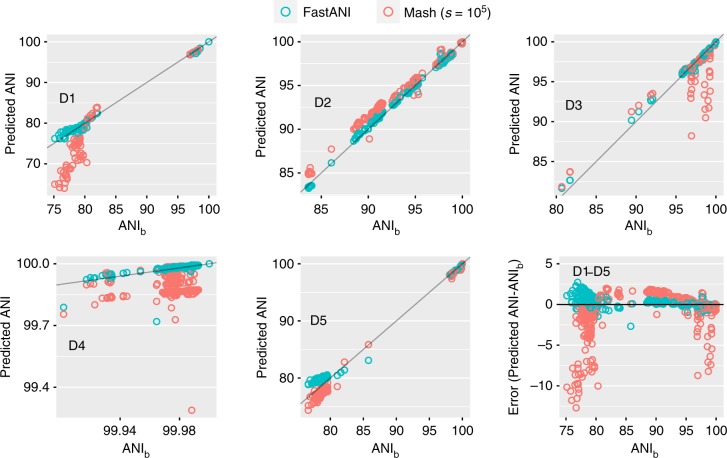
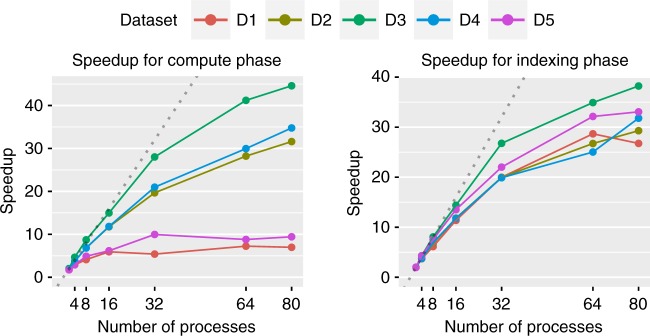
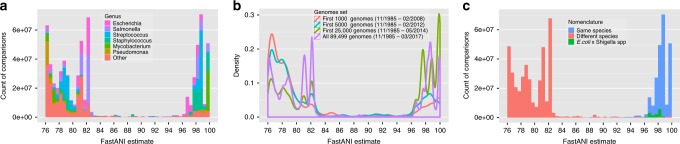
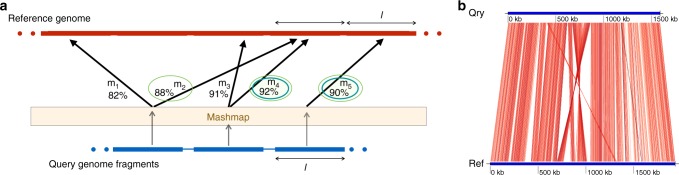
A fundamental question in microbiology is whether there is continuum of genetic diversity among genomes, or clear species boundaries prevail instead. Whole-genome similarity metrics such as Average Nucleotide Identity (ANI) help address this question by facilitating high resolution taxonomic analysis of thousands of genomes from diverse phylogenetic lineages. To scale to available genomes and beyond, we present FastANI, a new method to estimate ANI using alignment-free approximate sequence mapping. FastANI is accurate for both finished and draft genomes, and is up to three orders of magnitude faster compared to alignment-based approaches. We leverage FastANI to compute pairwise ANI values among all prokaryotic genomes available in the NCBI database. Our results reveal clear genetic discontinuity, with 99.8% of the total 8 billion genome pairs analyzed conforming to >95% intra-species and <83% inter-species ANI values. This discontinuity is manifested with or without the most frequently sequenced species, and is robust to historic additions in the genome databases.
Overview
The claims and statistics of this paper haven’t been checked yet.
Run the check — free, no account needed. It reads the open-access text and checks the sources it cites.
Integrity signals
Registry
Cites
Statistics
Figures
Verification
Claims the paper makes
The claims and statistics of this paper haven’t been checked yet.
Run the check — free, no account needed. It reads the open-access text and checks the sources it cites.
Claims other papers make about this one
Each is checked against this paper’s own text: does it say what the citing paper says it does?
The cited source says what the claim attributes to it.
In the citing paper
“FastANI (v1.3.1) (https://github.com/ParBLiSS/FastANI.) was used to calculate the average nucleotide identity between the isolated strains and the original Lp082,47 ensuring isolates were evolved from Lp082”
From Gut microbiota drives structural variation of exogenous probiotics to enhance colonization (2025) · cites this paper as [47]
Self-check
Percentages, sums and reported differences re-computed from the paper’s own numbers.
The self-check needs the paper’s full text.
Citations
Cites
Gapped BLAST and PSI-BLAST: a new generation of protein database search programs
Altschul, S. (1997) · Nucleic Acids Research · doi:10.1093/nar/25.17.3389 · Cited by 73,302
Search and clustering orders of magnitude faster than BLAST
Edgar, R. C. (2010) · Bioinformatics · doi:10.1093/bioinformatics/btq461 · Cited by 21,098
Fast and sensitive protein alignment using DIAMOND
Buchfink, B., Xie, C., & Huson, D. H. (2015) · Nature Methods · doi:10.1038/nmeth.3176 · Cited by 14,201
<tt>BLAT</tt> —The <tt>BLAST</tt> -Like Alignment Tool
Kent, W. J. (2002) · Genome Research · doi:10.1101/gr.229202 · Cited by 8,480
Canu: scalable and accurate long-read assembly via adaptive k -mer weighting and repeat separationPreprint
Koren, S., Walenz, B. P., Berlin, K., Miller, J. R., Bergman, N. H., & Phillippy, A. M. (2017) · Genome Research · doi:10.1101/gr.215087.116 · Cited by 7,260
Self-citationShifting the genomic gold standard for the prokaryotic species definition
Richter, M., & Rossello-Mora, R. A. (2009) · Proceedings of the National Academy of Sciences · doi:10.1073/pnas.0906412106 · Cited by 6,343
Versatile and open software for comparing large genomes
Kurtz, S., Phillippy, A., Delcher, A. L., Smoot, M., Shumway, M., Antonescu, C., & Salzberg, S. L. (2004) · Genome Biology · doi:10.1186/gb-2004-5-2-r12 · Cited by 5,254
Self-citationMauve: Multiple alignment of conserved genomic sequence with rearrangements
Darling, A. C. E., Mau, B., Blattner, F. R., & Perna, N. T. (2004) · Genome Research · doi:10.1101/gr.2289704 · Cited by 4,949
DNA–DNA hybridization values and their relationship to whole-genome sequence similarities
Goris, J., Konstantinidis, K. T., Klappenbach, J. A., Coenye, T., Vandamme, P. A. R., & Tiedje, J. M. (2007) · INTERNATIONAL JOURNAL OF SYSTEMATIC AND EVOLUTIONARY MICROBIOLOGY · doi:10.1099/ijs.0.64483-0 · Cited by 4,733 · cited 2×
“Nevertheless, it closely reflects the traditional microbiological concept of DNA-DNA hybridization relatedness for defining species (3), as it takes into account the fluid nature of the bacterial gene pool and hence implicitly considers shared function.”
BackgroundMethodSelf-citationA large-scale evaluation of algorithms to calculate average nucleotide identity
Yoon, S.-H., Ha, S. M., Lim, J., Kwon, S., & Chun, J. (2017) · Antonie van Leeuwenhoek · doi:10.1007/s10482-017-0844-4 · Cited by 3,614
Research works printed but not linked: 1
- Staley, J. The phylogenomic species concept. Microbiol. Today 36, 80–83 (2009).
Cited by
Sorted by citations
Items 301–400 of 1,013
Li, C.-J., Zhang, Z., Zhan, P.-C., Lv, A.-P., Li, P., Liu, L., Li, W., Yang, L., & Zhi, X. (2022) · Anaerobe · doi:10.1016/j.anaerobe.2022.102686 · Cited by 64
Boddicker, A. M., & Mosier, A. C. (2018) · The ISME Journal · doi:10.1038/s41396-018-0240-8 · Cited by 63
Taxonomic Novelty and Distinctive Genomic Features of Hot Spring Cyanobacteria
Alcorta, J., Alarcón-Schumacher, T., Salgado, O., & Dı́ez, B. (2020) · Frontiers in Genetics · doi:10.3389/fgene.2020.568223 · Cited by 64
“The similarity between MAGs was assessed through all-vs-all comparisons of the average nucleotide identity (ANI) using fastANI software (Jain et al., 2018) and the average amino acid identity (AAI) using compareM software4.”
MethodPredicting host taxonomic information from viral genomes: A comparison of feature representations
Young, F., Rogers, S., & Robertson, D. L. (2020) · PLoS Computational Biology · doi:10.1371/journal.pcbi.1007894 · Cited by 60
Li, L., Liu, Z., Zhang, M., Meng, D., Liu, X., Wang, P., Li, X.-T., Jiang, Z., Zhong, S., Jiang, C., et al. (2020) · mSystems · doi:10.1128/msystems.00867-20 · Cited by 65
“State-of-the-art whole-genome average nucleotide identity (ANI) analysis (32) classified all Acidiphilium genomes into four clades (species) based on an ANI cutoff of 95% (see Fig.”
BackgroundTransmission and Antibiotic Resistance of Achromobacter in Cystic Fibrosis
Gabrielaitė, M., Bartell, J. A., Nørskov‐Lauritsen, N., Pressler, T., Nielsen, F. C., Johansen, H. K., & Marvig, R. L. (2021) · Journal of Clinical Microbiology · doi:10.1128/jcm.02911-20 · Cited by 63
“All the reference genomes used had average nucleotide identities of $95% to our isolates as identified by fastANI (22).”
Vibrio Clade 3.0: New Vibrionaceae Evolutionary Units Using Genome-Based Approach
Jiang, C., Tanaka, M., Nishikawa, S., Mino, S., Romalde, J. L., Thompson, F. L., Gómez‐Gil, B., & Sawabe, T. (2021) · Current Microbiology · doi:10.1007/s00284-021-02725-0 · Cited by 63
“However, more efforts on acquiring genomes for the remaining Vibrionaceae species will improve and perfect the phylogenetic analysis to better Table 3 List of strains/species pair showing a value above species boundary No FastANI (”
MethodInfluentialGut microbiota strain richness is species specific and affects engraftment
Chen-Liaw, A., Aggarwala, V., Mogno, I., Haifer, C., Li, Z., Eggers, J., Helmus, D. S., Hart, A. B., Wehkamp, J., Lamousé-Smith, E. S. N., et al. (2024) · Nature · doi:10.1038/s41586-024-08242-x · Cited by 70
Giguere, A. T., Eichorst, S. A., Meier, D. V., Herbold, C. W., Richter, A. A., Greening, C., & Woebken, D. (2020) · The ISME Journal · doi:10.1038/s41396-020-00750-8 · Cited by 62
Long-read metagenomics retrieves complete single-contig bacterial genomes from canine feces
Cuscó, A., Pérez, D., Viñes, J., Fàbregas, N., & Francino, O. (2021) · BMC Genomics · doi:10.1186/s12864-021-07607-0 · Cited by 65
Prospects for multi-omics in the microbial ecology of water engineering
McDaniel, E., Wahl, A., Ishii, S., Pinto, A. J., Ziels, R. M., Nielsen, P. H., McMahon, K. D., & Williams, R. B. H. (2021) · Water Research · doi:10.1016/j.watres.2021.117608 · Cited by 66
Shared features and reciprocal complementation of the Chlamydomonas and Arabidopsis microbiota
Durán, P., Flores‐Uribe, J., Wippel, K., Zhang, P., Guan, R., Melkonian, B., Melkonian, M., & Garrido‐Oter, R. (2022) · Nature Communications · doi:10.1038/s41467-022-28055-8 · Cited by 68
Holm, J. B., France, M., Ma, B., McComb, E. J., Robinson, C. K., Mehta, A., Tallon, L. J., Brotman, R. M., & Ravel, J. (2020) · Frontiers in Cellular and Infection Microbiology · doi:10.3389/fcimb.2020.00117 · Cited by 64
“1 with fragment lengths of 1,000 bp, which is about the mean length of coding sequences (Jain et al., 2018).”
BackgroundReji, L., & Francis, C. A. (2020) · The ISME Journal · doi:10.1038/s41396-020-0675-6 · Cited by 62
Libkind, D., Čadež, N., Opulente, D. A., Langdon, Q. K., Rosa, C. A., Sampaio, J. P., Gonçalves, P. M., Hittinger, C. T., & Lachance, M. (2020) · FEMS Yeast Research · doi:10.1093/femsyr/foaa042 · Cited by 62
Doré, H., Farrant, G. K., Guyet, U., Haguait, J., Humily, F., Ratin, M., Pitt, F. D., Ostrowski, M. D., Six, C., Brillet-Guéguen, L., et al. (2020) · Frontiers in Microbiology · doi:10.3389/fmicb.2020.567431 · Cited by 63
“…2016), ANI and AAI were indeed most often Frontiers in Microbiology | www.frontiersin.org 14 September 2020 | Volume 11 | Article 567431 well below the cut-off of 95% (Figure 3), usually considered to be the limit between bacterial species (Konstantinidis and Tiedje, 2005a,b; Jain et al., 2018).”
BackgroundCrognale, S., Braguglia, C. M., Gallipoli, A., Gianico, A., Rossetti, S., & Montecchio, D. (2021) · Microorganisms · doi:10.3390/microorganisms9020327 · Cited by 61
Caicedo-Montoya, C., Manzo‐Ruiz, M., & Ríos‐Estepa, R. (2021) · Frontiers in Microbiology · doi:10.3389/fmicb.2021.677558 · Cited by 67
Benler, S., Faure, G., Tran, H.-A., Shmakov, S., Zheng, F., & Koonin, E. (2021) · mBio · doi:10.1128/mbio.02938-21 · Cited by 61
Wang, D., Meng, Y., & Meng, F. (2022) · Water Research · doi:10.1016/j.watres.2022.119062 · Cited by 61
Hu, Y., Yang, Y., Feng, Y., Fang, Q., Wang, C., Zhao, F., McNally, A., & Zong, Z. (2023) · PLoS Medicine · doi:10.1371/journal.pmed.1004233 · Cited by 64
“33 [22] by comparing genomes with type strain of each species from the genus Klebsiella.”
BackgroundDiverse plasmid systems and their ecology across human gut metagenomes revealed by PlasX and MobMess
Yu, M., Fogarty, E. C., & Eren, A. M. (2024) · Nature Microbiology · doi:10.1038/s41564-024-01610-3 · Cited by 73
“2.0; https://github.com/ arpcard/rgi) to search for similarity in the CARD database of resistance genes 97 .”
InfluentialBaker, B. A., Gutiérrez‐Preciado, A., del Río, Á. R., McCarthy, C. G. P., López‐García, P., Huerta‐Cepas, J., Susko, E., Roger, A. J., Eme, L., & Moreira, D. (2024) · Nature Microbiology · doi:10.1038/s41564-024-01647-4 · Cited by 68
“1c) were calculated using FastANI (v.1.34) 60 .”
InfluentialSelective enrichment of comammox from activated sludge using antibiotics
Wang, Y., Zhao, R., Liu, L., Li, B. J., & Zhang, T. (2021) · Water Research · doi:10.1016/j.watres.2021.117087 · Cited by 61
Yakkala, H., Samantarrai, D., Gribskov, M., & Siddavattam, D. (2019) · PLoS ONE · doi:10.1371/journal.pone.0218204 · Cited by 60
Vertical Transmission at the Pathogen-Symbiont Interface: Serratia symbiotica and Aphids
Perreau, J. M., Patel, D. J., Anderson, H., Maeda, G. P., Elston, K. M., Barrick, J. E., & Moran, N. A. (2021) · mBio · doi:10.1128/mbio.00359-21 · Cited by 60
“The average nucleotide identity for S. symbiotica genomes was calculated using FastANI (72).”
The highly diverse Antarctic Peninsula soil microbiota as a source of novel resistance genes
Marcoleta, A. E., Arros, P., Varas, M. A., da Costa, J. R. N., Rojas-Salgado, J., Berríos-Pastén, C., Tapia-Fuentes, S., Silva, D., Fierro, J. F., Canales, N., et al. (2021) · The Science of The Total Environment · doi:10.1016/j.scitotenv.2021.152003 · Cited by 61
Gregory, A., Gerhardt, K., Zhong, Z.-P., Bolduc, B., Temperton, B., Konstantinidis, K. T., & Sullivan, M. B. (2022) · Microbiome · doi:10.1186/s40168-022-01231-0 · Cited by 68
“’ Lastly, FastANI (Jain et al. 2018) using default settings was used to compare average nucleotide identity across the different strains and species within the mock community.”
MethodSelf-citationLarge-scale phage cultivation for commensal human gut bacteria
Shen, J., Zhang, J., Mo, L., Li, Y., Li, Y., Li, C., Kuang, X., Tao, Z., Qu, Z., Wu, L. H., et al. (2023) · Cell Host & Microbe · doi:10.1016/j.chom.2023.03.013 · Cited by 62
Medvedeva, S., Borrel, G., Krupovìč, M., & Gribaldo, S. (2023) · Nature Microbiology · doi:10.1038/s41564-023-01485-w · Cited by 65
“103) and fastANI 104 .”
Controversies in bacterial taxonomy: The example of the genus Borrelia
Margos, G., Fingerle, V., Cutler, S. J., Gofton, A. W., Stevenson, B., & Estrada‐Peña, A. (2019) · Ticks and Tick-borne Diseases · doi:10.1016/j.ttbdis.2019.101335 · Cited by 60
Unravelling the diversity of magnetotactic bacteria through analysis of open genomic databases
Uzun, M., Alekseeva, L., Krutkina, M. S., Koziaeva, V. V., & Grouzdev, D. S. (2020) · Scientific Data · doi:10.1038/s41597-020-00593-0 · Cited by 60
Fagorzi, C., Ilie, A., Decorosi, F., Cangioli, L., Viti, C., Mengoni, A., & diCenzo, G. C. (2020) · Genome Biology and Evolution · doi:10.1093/gbe/evaa221 · Cited by 57
“Using FastANI (Jain et al. 2018), one-way average nucleotide identity (ANI) values of each assembly were calculated against 887 alphaproteobacterial genomes available through the National Center for Biotechnological Information (NCBI) with an assembly level of complete or chromosome.”
MethodInfluentialAnaerobic single‐cell dispensing facilitates the cultivation of human gut bacteria
Afrizal, A., Hitch, T. C. A., Viehof, A., Treichel, N. S., Riedel, T., Abt, B., Buhl, E. M., Kohlheyer, D., Overmann, J., & Clavel, T. (2022) · Environmental Microbiology · doi:10.1111/1462-2920.15935 · Cited by 60
Speth, D. R., Yu, F. B., Connon, S. A., Lim, S., Magyar, J. S., Peña-Salinas, M. E., Quake, S. R., & Orphan, V. J. (2022) · The ISME Journal · doi:10.1038/s41396-022-01222-x · Cited by 59
Okura, M., Auger, J.-P., SHIBAHARA, T., Goyette-Desjardins, G., Calsteren, M. V., Maruyama, F., Kawai, M., Osaki, M., Segura, M., Gottschalk, M. G., et al. (2021) · Scientific Reports · doi:10.1038/s41598-021-85882-3 · Cited by 58
Petriglieri, F., Singleton, C. M., Kondrotaite, Z., Dueholm, M. S., McDaniel, E., McMahon, K. D., & Nielsen, P. H. (2022) · mSystems · doi:10.1128/msystems.00016-22 · Cited by 72
Denitrification in foraminifera has an ancient origin and is complemented by associated bacteria
Woehle, C., Roy, A.-S., Glock, N., Michels, J., Wein, T., Weißenbach, J., Romero, D., Hiebenthal, C., Gorb, S. N., Schönfeld, J., et al. (2022) · Proceedings of the National Academy of Sciences · doi:10.1073/pnas.2200198119 · Cited by 57
Botelho, J., Cazares, A., & Schulenburg, H. (2022) · Nucleic Acids Research · doi:10.1093/nar/gkac1220 · Cited by 69
Phage-inclusive profiling of human gut microbiomes with Phanta
Pinto, Y., Chakraborty, M., Jain, N., & Bhatt, A. S. (2023) · Nature Biotechnology · doi:10.1038/s41587-023-01799-4 · Cited by 57
Chromids Aid Genome Expansion and Functional Diversification in the Family Burkholderiaceae
diCenzo, G. C., Mengoni, A., & Perrin, E. (2018) · Molecular Biology and Evolution · doi:10.1093/molbev/msy248 · Cited by 60
Strain-level analysis reveals the vertical microbial transmission during the life cycle of bumblebee
Su, Q., Wang, Q., Mu, X., Chen, H., Meng, Y., Zhang, X., Zheng, L., Hu, X., Zhai, Y., & Zheng, H. (2021) · Microbiome · doi:10.1186/s40168-021-01163-1 · Cited by 63
Species divergence in gut-restricted bacteria of social bees
Li, Y., Leonard, S. P., Powell, J. E., & Moran, N. A. (2022) · Proceedings of the National Academy of Sciences · doi:10.1073/pnas.2115013119 · Cited by 53
Hyperactive nanobacteria with host-dependent traits pervade Omnitrophota
Seymour, C. O., Palmer, M., Becraft, E. D., Stepanauskas, R., Friel, A. D., Schulz, F., Woyke, T., Eloe‐Fadrosh, E. A., Lai, D., Jiao, J., et al. (2023) · Nature Microbiology · doi:10.1038/s41564-022-01319-1 · Cited by 54
Functional Strain Redundancy and Persistent Phage Infection in Swiss Hard Cheese Starter Cultures
Somerville, V., Berthoud, H., Schmidt, R. S., Bachmann, H.-P., Meng, Y. H., Fuchsmann, P., von Ah, U., & Engel, P. (2022) · The ISME Journal · doi:10.1038/s41396-021-01071-0 · Cited by 55
“The ANI values were calculated with fastANI [24].”
Maturana, J. L., & Cárdenas, J. P. (2021) · Frontiers in Microbiology · doi:10.3389/fmicb.2021.660920 · Cited by 59
“%) of ANI values were found between 95 and 83% (Jain et al., 2018), suggesting that this algorithm is robust to establish taxonomic relationships between genomes.”
BackgroundMethodInfluentialMehrshad, M., López-Fernández, M., Sundh, J., Bell, E., Simone, D., Buck, M., Bernier‐Latmani, R., Bertilsson, S., & Dopson, M. (2021) · Nature Communications · doi:10.1038/s41467-021-24549-z · Cited by 56
Zamudio, R., Boerlin, P., Beyrouthy, R., Madec, J.-Y., Schwarz, Š., Mulvey, M. R., Zhanel, G. G., Cormier, A. C., Chalmers, G., Bonnet, R., et al. (2022) · Nature Communications · doi:10.1038/s41467-022-34970-7 · Cited by 60
Large-scale phylogenomics of aquatic bacteria reveal molecular mechanisms for adaptation to salinity
Jurdzinski, K. T., Mehrshad, M., Delgado, L. F., Deng, Z., Bertilsson, S., & Andersson, A. F. (2023) · Science Advances · doi:10.1126/sciadv.adg2059 · Cited by 51
Lassalle, F., Al-Shalali, S., Al-Hakimi, M., Njamkepo, E., Bashir, I. M., Dorman, M. J., Rauzier, J., Blackwell, G. A., Taylor–Brown, A., Beale, M. A., et al. (2023) · Nature Microbiology · doi:10.1038/s41564-023-01472-1 · Cited by 56
A multi-kingdom collection of 33,804 reference genomes for the human vaginal microbiome
Huang, L., Guo, R., Li, S., Wu, X., Zhang, Y., Guo, S., Lv, Y., Xiao, Z., Kang, J., Meng, J., et al. (2024) · Nature Microbiology · doi:10.1038/s41564-024-01751-5 · Cited by 61
“We conducted a genome-wide clustering analysis on 19,542 prokaryotic genomes, resulting in 786 species-level genome bins (SGBs, referred to as ‘species’ thereafter) based on the 95% nucleotide similarity threshold 19 .”
Rissanen, A. J., Saarela, T., Jäntti, H., Buck, M., Peura, S., Aalto, S. L., Ojala, A., Pumpanen, J., Tiirola, M., Elvert, M., et al. (2020) · FEMS Microbiology Ecology · doi:10.1093/femsec/fiaa252 · Cited by 53
“Further, the bins were clustered into metagenomic OTUs if the average nucleotide identity (ANI) between them was above 95%, as computed with fastANI (version 1.3) (Jain et al. 2018).”
MethodInfluentialComprehensive Comparative Genomics and Phenotyping of Methylobacterium Species
Alessa, O., Ogura, Y., Fujitani, Y., Takami, H., Hayashi, T., Şahin, N., & Tani, A. (2021) · Frontiers in Microbiology · doi:10.3389/fmicb.2021.740610 · Cited by 63
Chen, X., Zhu, Y., Chen, J., Yan, S., & Xie, S. (2023) · Water Research · doi:10.1016/j.watres.2023.120397 · Cited by 56
Zhang, Y., & Liu, W. (2019) · Critical Reviews in Environmental Science and Technology · doi:10.1080/10643389.2019.1571351 · Cited by 53
“and targeted variable regions) Genus–family 12%–15% in underestimating diversity (Brooks et al., 2015; Jain et al., 2017) Source: Zhang and Liu, forthcoming.”
BackgroundPopulation genomics of Staphylococcus pseudintermedius in companion animals in the United States
Smith, J. T., Amador, S., McGonagle, C. J., Needle, D. B., Gibson, R. J., & Andam, C. P. (2020) · Communications Biology · doi:10.1038/s42003-020-1009-y · Cited by 55
Microdiversity characterizes prevalent phylogenetic clades in the glacier-fed stream microbiome
Fodelianakis, S., Washburne, A., Bourquin, M., Pramateftaki, P. V., Kohler, T. J., Styllas, M. N., Tolosano, M., Staercke, V. D., Schön, M., Busi, S. B., et al. (2021) · The ISME Journal · doi:10.1038/s41396-021-01106-6 · Cited by 55
Mardanov, A. V., Beletsky, A. V., Ravin, N. V., Botchkova, E. A., Litti, Y., & Nozhevnikova, A. N. (2019) · Frontiers in Microbiology · doi:10.3389/fmicb.2019.02442 · Cited by 54
“The ANI between the genomes of J2 and KSU-1 was 94.91%, a value just below the species boundary cutoff of 95% (Konstantinidis and Tiedje, 2005; Jain et al., 2018), suggesting a recent divergence and speciation of these species (Olm et al., 2019).”
BackgroundInfluentialÁlvarez-Molina, A., Cobo-Díaz, J. F., López, M., Maradona, M. P., de Toro, M., & Álvarez‐Ordóñez, A. (2021) · International Journal of Food Microbiology · doi:10.1016/j.ijfoodmicro.2021.109043 · Cited by 53
Xiong, Q., Hu, Y.-X., Lv, W., Wang, Q.-H., Liu, G.-X., & Hu, Z.-Y. (2021) · BMC Genomics · doi:10.1186/s12864-021-08006-1 · Cited by 23
Ataeian, M., Liu, Y., Kouris, A., Hawley, A. K., & Strous, M. (2022) · Frontiers in Microbiology · doi:10.3389/fmicb.2022.780346 · Cited by 51
“MetaErg was used for annotation of the MAGs (Dong and Strous, 2019). fastANI (Jain et al., 2018) was used for comparison of MAGs across samples to MAGs previously obtained from Kulunda soda lakes (Vavourakis et al., 2018) and Cariboo Plateau soda lakes (Zorz et al., 2019).”
MethodTan, F., Cheng, J., Zhang, Y., Jiang, X., & Liu, Y. (2022) · Biotechnology for Biofuels and Bioproducts · doi:10.1186/s13068-022-02175-1 · Cited by 54
Niche differentiation among annually recurrent coastal Marine Group II Euryarchaeota
Orellana, L. H., Francis, B., Krüger, K., Teeling, H., Müller, M.-C., Fuchs, B. M., Konstantinidis, K. T., & Amann, R. (2019) · The ISME Journal · doi:10.1038/s41396-019-0491-z · Cited by 54
Self-citationSayavedra, L., Li, T., Batista, M. B., Seah, B. K. B., Booth, C., Zhai, Q., Chen, W., & Narbad, A. (2021) · Environmental Microbiology · doi:10.1111/1462-2920.15538 · Cited by 55
Parks, D. H., Rigato, F., Vera-Wolf, P., Krause, L., Hugenholtz, P., Tyson, G. W., & Wood, D. (2021) · Frontiers in Microbiology · doi:10.3389/fmicb.2021.643682 · Cited by 54
“A baseline of 95% ANI was selected to match the commonly used operational definition of a prokaryotic species (Jain et al., 2018; Parks et al., 2020).”
MethodFan, X., Dai, R.-C., Zhang, S., Geng, Y.-Y., Kang, M., Guo, D.-W., Mei, Y.-N., Pan, Y.-H., Sun, Z.-Y., Xu, Y.-C., et al. (2023) · Nature Communications · doi:10.1038/s41467-023-43380-2 · Cited by 55
“S1) 56 .”
Garcillán-Barcia, M. P., Redondo, S., & de la Cruz, F. (2023) · Plasmid · doi:10.1016/j.plasmid.2023.102684 · Cited by 54
The multi-kingdom microbiome of the goat gastrointestinal tract
Cao, Y., Feng, T., Wu, Y., Xu, Y., Du, L., Wang, T., Luo, Y., Wang, Y., Li, Z., Xuan, Z., et al. (2023) · Microbiome · doi:10.1186/s40168-023-01651-6 · Cited by 65
Zhang, P., Wang, X., Li, S., Cao, X., Zou, J., Fang, Y., Shi, Y., Xiang, F., Shen, B., Li, Y., et al. (2023) · Genome biology · doi:10.1186/s13059-023-03056-y · Cited by 55
“(“species” hereafter) at the nucleotide similarity threshold of 95% [22].”
BackgroundHost‐specific competitiveness to form nodules in Rhizobium leguminosarum symbiovar viciae
Boivin, S., Lahmidi, N. A., Sherlock, D., Bonhomme, M., Dijon, D., Gotty, K., Quéré, A. L., Pervent, M., Tauzin, M., Carlsson, G., et al. (2019) · New Phytologist · doi:10.1111/nph.16392 · Cited by 53
“leguminosarum, gsE (27 strains), gsC (10 strains) and gsB (3 strains), that have been previously identified in European isolates (Kumar et al., 2015; Jain et al., 2018; Cavassim et al., 2019).”
BackgroundGenomic and phenotypic analysis of rock phosphate-solubilizing rhizobacteria
Santos-Torres, M., Perdomo, F. A., Mendoza-Labrador, J., Gutiérrez, A. Y., Vargas, C., Castro-Rincón, E., Caro‐Quintero, A., Uribe-Vélez, D., & Estrada-Bonilla, G. A. (2020) · Rhizosphere · doi:10.1016/j.rhisph.2020.100290 · Cited by 53
Revealing the microbial heritage of traditional Brazilian cheeses through metagenomics
Kothe, C. I., Mohellibi, N., & Renault, P. (2022) · Food Research International · doi:10.1016/j.foodres.2022.111265 · Cited by 51
The microbial community of a biofilm lining the wall of a pristine cave in Western New Guinea
Turrini, P., Tescari, M., Visaggio, D., Pirolo, M., Lugli, G. A., Ventura, M., Frangipani, E., & Visca, P. (2020) · Microbiological Research · doi:10.1016/j.micres.2020.126584 · Cited by 54
Genes Influencing Phage Host Range in Staphylococcus aureus on a Species-Wide Scale
Moller, A. G., Winston, K., Ji, S., Wang, J., Hargita, M. N., Solís‐Lemus, C., & Read, T. D. (2021) · mSphere · doi:10.1128/msphere.01263-20 · Cited by 57
“31 (45), which is shown as a lower165 triangle identity matrix in Supplemental Table S1.”
BackgroundD’Souza, A. W., Boolchandani, M., Patel, S., Galazzo, G., van Hattem, J. M., Arcilla, M. S., Melles∗, D. C., de Jong, M. D., Schultsz, C., Bootsma, M., et al. (2021) · Genome Medicine · doi:10.1186/s13073-021-00893-z · Cited by 54
Williams, T. J., Allen, M. A., Ivanova, N., Huntemann, M., Haque, S., Hancock, A. M., Brazendale, S., & Cavicchioli, R. (2021) · Frontiers in Microbiology · doi:10.3389/fmicb.2021.674758 · Cited by 52
“FastANI (Jain et al., 2018) was used to calculate ANI between Ca. Organicella MAGs.”
MethodShared antibiotic resistance and virulence genes in Staphylococcus aureus from diverse animal hosts
Bruce, S. A., Smith, J. T., Mydosh, J. L., Ball, J., Needle, D. B., Gibson, R. J., & Andam, C. P. (2022) · Scientific Reports · doi:10.1038/s41598-022-08230-z · Cited by 55
Tantoso, E., Eisenhaber, B., Kirsch, M., Shitov, V. A., Zhao, Z., & Eisenhaber, F. (2022) · BMC Biology · doi:10.1186/s12915-022-01347-7 · Cited by 57
Abdel‐Glil, M. Y., Thomas, P., Brandt, C., Melzer, F., Subbaiyan, A., Chaudhuri, P., Harmsen, D., Jolley, K. A., Janowicz, A., Garofolo, G., et al. (2022) · Journal of Clinical Microbiology · doi:10.1128/jcm.00311-22 · Cited by 54
“3 (38), and by performing a protein-based phylogeny using up to 400 universal bacterial proteins with PhyloPhlan v0.”
MethodGuzmán-Moreno, J., García-Ortega, L. F., Torres-Saucedo, L., Rivas-Noriega, P., Ramírez-Santoyo, R. M., Sánchez-Calderón, L., Quiroz-Serrano, I. N., & Vidales-Rodríguez, L. E. (2022) · Microbiology Spectrum · doi:10.1128/spectrum.00656-22 · Cited by 55
“The selection of representative species was carried out according to their pairwise average nucleotide identity (ANI) values, which were determined by FastANI (102).”
MethodHow can microbial population genomics inform community ecology?
VanInsberghe, D., Arevalo, P., Chien, D. M., & Polz, M. F. (2020) · Philosophical Transactions of the Royal Society B Biological Sciences · doi:10.1098/rstb.2019.0253 · Cited by 52
Loh, H. Q., Hervé, V., & Brune, A. (2021) · Frontiers in Microbiology · doi:10.3389/fmicb.2020.635786 · Cited by 49
“Average nucleotide acid identities (ANI) were calculated with fastANI (Jain et al., 2018).”
MethodWilliams, T. J., Allen, M. A., Berengut, J. F., & Cavicchioli, R. (2021) · Frontiers in Microbiology · doi:10.3389/fmicb.2021.741077 · Cited by 52
Nishikawa, Y., Kogawa, M., Hosokawa, M., Wagatsuma, R., Mineta, K., Takahashi, K., Ide, K., Yura, K., Behzad, H., Gojobori, T., et al. (2022) · ISME Communications · doi:10.1038/s43705-022-00179-4 · Cited by 51
Comparative Genomics of the Genus Pseudomonas Reveals Host- and Environment-Specific Evolution
Saati‐Santamaría, Z., Baroncelli, R., Rivas, R., & García‐Fraile, P. (2022) · Microbiology Spectrum · doi:10.1128/spectrum.02370-22 · Cited by 51
“33) (87) and adding the “–matrix” flag.”
gcPathogen: a comprehensive genomic resource of human pathogens for public health
Guo, C., Chen, Q., Fan, G., Sun, Y., Nie, J., Shen, Z., Meng, Z., Zhou, Y., Li, S., Wang, S., et al. (2023) · Nucleic Acids Research · doi:10.1093/nar/gkad875 · Cited by 53
Taxogenomics and Systematics of the Genus Pantoea
Tambong, J. T. (2019) · Frontiers in Microbiology · doi:10.3389/fmicb.2019.02463 · Cited by 51
Ulloa, O., Henríquez‐Castillo, C., Ramírez‐Flandes, S., Plominsky, Á. M., Murillo, A. A., Morgan‐Lang, C., Hallam, S., & Stepanauskas, R. (2021) · Proceedings of the National Academy of Sciences · doi:10.1073/pnas.2025638118 · Cited by 51
Jonkheer, E. M., Brankovics, B., Houwers, I., van der Wolf, J. M., Bonants, P. J. M., Vreeburg, R. A. M., Bollema, R., de Haan, J. R., Berke, L., Smit, S., et al. (2021) · BMC Genomics · doi:10.1186/s12864-021-07583-5 · Cited by 52
Joseph, T., Chlenski, P., Litman, A., Korem, T., & Pe’er, I. (2022) · Genome Research · doi:10.1101/gr.275533.121 · Cited by 51
“We used FastANI (Jain et al. 2018) to ascertain that all MAG pairs had <95% ANI: two pairs—MAGs 6 and 19, and MAGs 8 and 22 —had ANI> 99%; we therefore discarded MAGs 19 and 22, which had lower completion.”
MethodTaxonomic and Metabolic Incongruence in the Ancient Genus Streptomyces
Chevrette, M. G., Carlos‐Shanley, C., Louie, K., Bowen, B. P., Northen, T. R., & Currie, C. R. (2019) · Frontiers in Microbiology · doi:10.3389/fmicb.2019.02170 · Cited by 49
“ANI between genomes was calculated via fastANI (Jain et al., 2018).”
MethodWang, Q., Liang, J., Zhao, C. N., Bai, Y., Liu, R., Liu, H., & Qu, J. (2020) · Environmental Pollution · doi:10.1016/j.envpol.2020.114478 · Cited by 50
Extensive Horizontal Gene Transfer within and between Species of Coagulase-Negative Staphylococcus
Smith, J. T., & Andam, C. P. (2021) · Genome Biology and Evolution · doi:10.1093/gbe/evab206 · Cited by 50
Liu, F., Yuwono, C., Tay, C. Y., Wehrhahn, M. C., Riordan, S. M., & Zhang, L. (2022) · BMC Genomics · doi:10.1186/s12864-022-08402-1 · Cited by 54
Breusing, C., Genetti, M., Russell, S. L., Corbett-Detig, R. B., & Beinart, R. A. (2022) · Proceedings of the National Academy of Sciences · doi:10.1073/pnas.2115608119 · Cited by 50
Toward quantifying the adaptive role of bacterial pangenomes during environmental perturbations
Conrad, R. E., Viver, T., Gago, J. F., Hatt, J. K., Venter, S. N., Rossello-Mora, R. A., & Konstantinidis, K. T. (2021) · The ISME Journal · doi:10.1038/s41396-021-01149-9 · Cited by 46
Self-citationA comprehensive resource for Bordetella genomic epidemiology and biodiversity studies
Bridel, S., Bouchez, V., Brancotte, B., Hauck, S., Armatys, N., Landier, A., Mühle, E., Guillot, S., Toubiana, J., Maiden, M. C. J., et al. (2022) · Nature Communications · doi:10.1038/s41467-022-31517-8 · Cited by 47
Ou, Y.-F., Dong, H., McIlroy, S. J., Crowe, S. A., Hallam, S., Han, P., Kallmeyer, J., Simister, R. L., Vuillemin, A., Leu, A. O., et al. (2022) · The ISME Journal · doi:10.1038/s41396-022-01281-0 · Cited by 50
FastANI, Mash and Dashing equally differentiate between Klebsiella species
Hernández-Salmerón, J. E., & Moreno‐Hagelsieb, G. (2022) · PeerJ · doi:10.7717/peerj.13784 · Cited by 49
“32 ( Jain et al., 2018 ), which calculates a close approximation to the original ANI implementation ( Goris et al., 2007 ), which was based on pairwise alignments produced with blastn ( Altschul et al., 1997 ).”
Keller‐Costa, T., Kozma, L., Silva, S. G., Toscan, R. B., Gonçalves, J. M. S., Lago‐Lestón, A., Kyrpides, N. C., da Rocha, U. N., & Costa, R. (2022) · Microbiome · doi:10.1186/s40168-022-01343-7 · Cited by 50
Metadata
- Authors
- Jain, C., Rodriguez-R, L. M., Phillippy, A. M., Konstantinidis, K. T., & Aluru, S.
- Affiliations
- National Institutes of Health (US)
- Georgia Institute of Technology (US)
- Corresponding author
- Konstantinidis, Konstantinos T.
- Aluru, Srinivas
- ORCID
- Venue
- Nature Communications
- Published
- 2018-11-30
- Volume
- 9
- Issue
- 1
- Pages
- 5114-5114
- ISSN
- 2041-1723 (ISSN-L)
- PMC
- PMC6269478
- OpenAlex
- W2951254987
- Cited by
- 5,748
- References
- 40
- Citations by year
- 2026: 1107 · 2025: 1110 · 2024: 977 · 2023: 789 · 2022: 695 · 2021: 617 · 2020: 305 · 2019: 128 · 2018: 16
- FWCI
- 96.11
- Type
- journal article
- Language
- en
- Open access
- gold
- doi.org
- Locations
- Nature Communications (publishedVersion, cc-by)
- bioRxiv (Cold Spring Harbor Laboratory) (acceptedVersion, cc-by)
- Europe PMC (PubMed Central) (publishedVersion, other-oa)
- PubMed Central (publishedVersion, cc-by)
- PubMed (publishedVersion)
- RePEc: Research Papers in Economics (submittedVersion)
- DOAJ (DOAJ: Directory of Open Access Journals) (submittedVersion, cc-by-sa)
- DOAJ (DOAJ: Directory of Open Access Journals) (submittedVersion)
- Funders
- National Science Foundation (1416259, 1816027, 1356288)
- Topics
- Life Sciences › Biochemistry, Genetics and Molecular Biology › Molecular Biology › Genomics and Phylogenetic Studies
- Health Sciences › Medicine › Microbiology (medical) › Bacterial Identification and Susceptibility Testing
- Physical Sciences › Environmental Science › Ecology › Microbial Community Ecology and Physiology
- Keywords
- average nucleotide identity, prokaryotic genomes, species boundaries, taxonomic classification, draft genome sequence
- MeSH terms
- Phylogeny, Prokaryotic Cells, Genetic Variation, Databases, Factual, Genome, Bacterial, Sequence Analysis, DNA
About these checks
Registry, retraction, Cites and statistics results are computed, not judged, with one exception: a printed reference that no index lists is read once by a model before it counts as a citation error. Claims are extracted by a model and kept only when their quote appears verbatim in the text; each cited source is then checked, with a model’s help, for whether it says what the claim relies on. Those verdicts can be wrong — read the claim’s quote and the cited source before relying on one.
Statistics and arithmetic are recomputed, not judged.
Confidence bands are shown only for fields calibrated on our annotated test set. None is calibrated yet, so no band is shown.
What counts as a claim ›How we measure confidence ›How we check this ›
Are you an author, or do you see a problem with this page? Request a review
