

The DOI matches its Crossref record; 41 of the 41 references it cites were found in a registry or an index.
High throughput ANI analysis of 90K prokaryotic genomes reveals clear species boundaries
Open accessPublished version of a preprint
Abstract
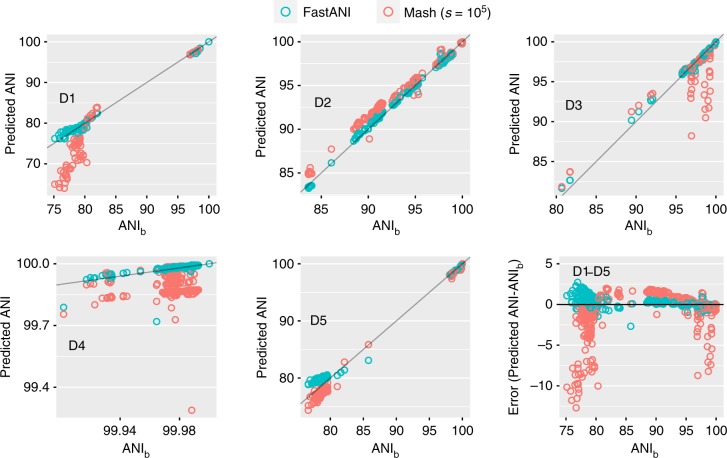
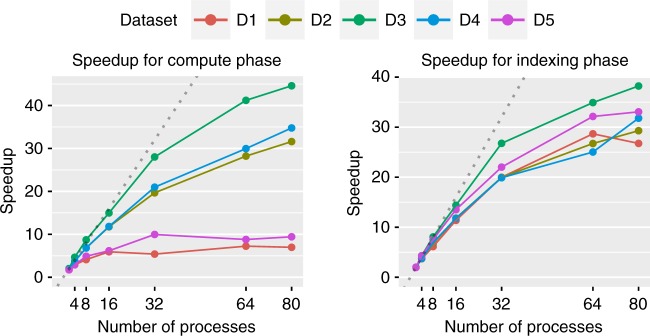
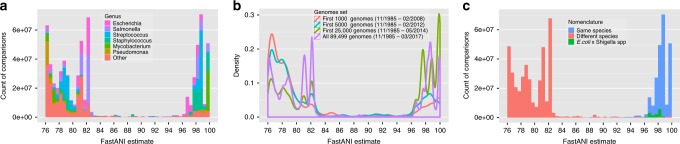
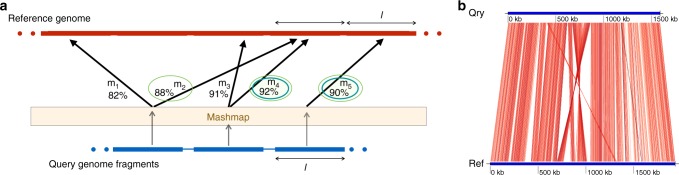
A fundamental question in microbiology is whether there is continuum of genetic diversity among genomes, or clear species boundaries prevail instead. Whole-genome similarity metrics such as Average Nucleotide Identity (ANI) help address this question by facilitating high resolution taxonomic analysis of thousands of genomes from diverse phylogenetic lineages. To scale to available genomes and beyond, we present FastANI, a new method to estimate ANI using alignment-free approximate sequence mapping. FastANI is accurate for both finished and draft genomes, and is up to three orders of magnitude faster compared to alignment-based approaches. We leverage FastANI to compute pairwise ANI values among all prokaryotic genomes available in the NCBI database. Our results reveal clear genetic discontinuity, with 99.8% of the total 8 billion genome pairs analyzed conforming to >95% intra-species and <83% inter-species ANI values. This discontinuity is manifested with or without the most frequently sequenced species, and is robust to historic additions in the genome databases.
Overview
The claims and statistics of this paper haven’t been checked yet.
Run the check — free, no account needed. It reads the open-access text and checks the sources it cites.
Integrity signals
Registry
Cites
Statistics
Figures
Verification
Claims the paper makes
The claims and statistics of this paper haven’t been checked yet.
Run the check — free, no account needed. It reads the open-access text and checks the sources it cites.
Claims other papers make about this one
Each is checked against this paper’s own text: does it say what the citing paper says it does?
The cited source says what the claim attributes to it.
In the citing paper
“FastANI (v1.3.1) (https://github.com/ParBLiSS/FastANI.) was used to calculate the average nucleotide identity between the isolated strains and the original Lp082,47 ensuring isolates were evolved from Lp082”
From Gut microbiota drives structural variation of exogenous probiotics to enhance colonization (2025) · cites this paper as [47]
Self-check
Percentages, sums and reported differences re-computed from the paper’s own numbers.
The self-check needs the paper’s full text.
Citations
Cites
Gapped BLAST and PSI-BLAST: a new generation of protein database search programs
Altschul, S. (1997) · Nucleic Acids Research · doi:10.1093/nar/25.17.3389 · Cited by 73,302
Search and clustering orders of magnitude faster than BLAST
Edgar, R. C. (2010) · Bioinformatics · doi:10.1093/bioinformatics/btq461 · Cited by 21,098
Fast and sensitive protein alignment using DIAMOND
Buchfink, B., Xie, C., & Huson, D. H. (2015) · Nature Methods · doi:10.1038/nmeth.3176 · Cited by 14,201
<tt>BLAT</tt> —The <tt>BLAST</tt> -Like Alignment Tool
Kent, W. J. (2002) · Genome Research · doi:10.1101/gr.229202 · Cited by 8,480
Canu: scalable and accurate long-read assembly via adaptive k -mer weighting and repeat separationPreprint
Koren, S., Walenz, B. P., Berlin, K., Miller, J. R., Bergman, N. H., & Phillippy, A. M. (2017) · Genome Research · doi:10.1101/gr.215087.116 · Cited by 7,260
Self-citationShifting the genomic gold standard for the prokaryotic species definition
Richter, M., & Rossello-Mora, R. A. (2009) · Proceedings of the National Academy of Sciences · doi:10.1073/pnas.0906412106 · Cited by 6,343
Versatile and open software for comparing large genomes
Kurtz, S., Phillippy, A., Delcher, A. L., Smoot, M., Shumway, M., Antonescu, C., & Salzberg, S. L. (2004) · Genome Biology · doi:10.1186/gb-2004-5-2-r12 · Cited by 5,254
Self-citationMauve: Multiple alignment of conserved genomic sequence with rearrangements
Darling, A. C. E., Mau, B., Blattner, F. R., & Perna, N. T. (2004) · Genome Research · doi:10.1101/gr.2289704 · Cited by 4,949
DNA–DNA hybridization values and their relationship to whole-genome sequence similarities
Goris, J., Konstantinidis, K. T., Klappenbach, J. A., Coenye, T., Vandamme, P. A. R., & Tiedje, J. M. (2007) · INTERNATIONAL JOURNAL OF SYSTEMATIC AND EVOLUTIONARY MICROBIOLOGY · doi:10.1099/ijs.0.64483-0 · Cited by 4,733 · cited 2×
“Nevertheless, it closely reflects the traditional microbiological concept of DNA-DNA hybridization relatedness for defining species (3), as it takes into account the fluid nature of the bacterial gene pool and hence implicitly considers shared function.”
BackgroundMethodSelf-citationA large-scale evaluation of algorithms to calculate average nucleotide identity
Yoon, S.-H., Ha, S. M., Lim, J., Kwon, S., & Chun, J. (2017) · Antonie van Leeuwenhoek · doi:10.1007/s10482-017-0844-4 · Cited by 3,614
Research works printed but not linked: 1
- Staley, J. The phylogenomic species concept. Microbiol. Today 36, 80–83 (2009).
Cited by
Sorted by citations
Items 501–600 of 1,013
Sakulworakan, R., Chokmangmeepisarn, P., Dinh‐Hung, N., Elayaraja, S., Hırono, I., Chuanchuen, R., Kayansamruaj, P., & Rodkhum, C. (2021) · Frontiers in Microbiology · doi:10.3389/fmicb.2021.733668 · Cited by 40
Bowers, R. M., Nayfach, S., Schulz, F., Jungbluth, S. P., Ruhl, I. A., Sheremet, A., Lee, J., Goudeau, D., Eloe‐Fadrosh, E. A., Stepanauskas, R., et al. (2021) · The ISME Journal · doi:10.1038/s41396-021-01178-4 · Cited by 38
Evseev, P. V., Lukianova, A. A., Tarakanov, R. I., Tokmakova, A. D., Shneider, M. M., Ignatov, A. N., & Анатольевич, М. К. (2022) · Current Issues in Molecular Biology · doi:10.3390/cimb44020060 · Cited by 43
“[62], the authors said that some bacterial populations “show large intrapopulation sequence diversity, probably due to unique ecological niche(s) they have occupied for long evolutionary times compared to other marine taxa (i.”
BackgroundMethodCornet, L., Cleenwerck, I., Praet, J., Léonard, R. R., Vereecken, N. J., Michez, D., Smagghe, G. J., Baurain, D., & Vandamme, P. A. R. (2022) · mSystems · doi:10.1128/msystems.01500-21 · Cited by 40
“ANI values were computed with fastANI (74).”
Trait biases in microbial reference genomes
Albright, S., & Louca, S. (2023) · Scientific Data · doi:10.1038/s41597-023-01994-7 · Cited by 42
Bioplastic accumulates antibiotic and metal resistance genes in coastal marine sediments
Cesare, A. D., Pinnell, L. J., Brambilla, D., Elli, G., Sabatino, R., Sathicq, M. B., Corno, G., O’Donnell, C. A., & Turner, J. W. (2021) · Environmental Pollution · doi:10.1016/j.envpol.2021.118161 · Cited by 42
Murakami, T., Takeuchi, N., Mori, H., Hirose, Y., Edwards, A., Irvine-Fynn, T. D. L., Li, Z., Ishii, S., & Segawa, T. (2022) · Microbiome · doi:10.1186/s40168-022-01238-7 · Cited by 39
Grevesse, T., Guéguen, C., Onana, V. E., & Walsh, D. A. (2022) · Microbiome · doi:10.1186/s40168-022-01417-6 · Cited by 39
Joglekar, P., Conlan, S., Lee-Lin, S.-Q., Deming, C., Kashaf, S. S., Program, N. C. S., Kong, H. H., Segre, J. A., Barnabas, B. B., Black, S., et al. (2023) · Proceedings of the National Academy of Sciences · doi:10.1073/pnas.2310585120 · Cited by 43
“(27).”
Konstantinidis, K. T. (2023) · mLife · doi:10.1002/mlf2.12088 · Cited by 37
“The histograms are based on pairwise comparisons performed with FastANI between about 90,000 complete genomes available in the NCBI database as described previously 18 .”
BackgroundMethodInfluentialSelf-citationOrsi, R. H., Liao, J., Carlin, C. R., & Wiedmann, M. (2023) · mBio · doi:10.1128/mbio.00938-23 · Cited by 39
“…(WGS) becomes cheaper and faster with advances in technology, WGS of colonies obtained from selective media (e.g., MOX) could be used for species identification using scientifically recognizable objective criteria, such as an average nucleotide identity of 95% for species identification (60).”
MethodBenchmarking short-read metagenomics tools for removing host contamination
Gao, Y., Luo, H., Lyu, H., Yang, H., Yousuf, S., Huang, S. W., & Liu, Y. (2025) · GigaScience · doi:10.1093/gigascience/giaf004 · Cited by 40
Cavassim, M. I. A., Moeskjær, S., Moslemi, C., Fields, B., Bachmann, A., Vilhjálmsson, B. J., Schierup, M. H., Young, J. P. W., & Andersen, S. U. (2020) · Microbial Genomics · doi:10.1099/mgen.0.000351 · Cited by 39
“With ever-increasing numbers of bacterial whole-genome sequences (WGS), it has become possible to re-evaluate bacterial-species classification [5, 6].”
Park, C. J., & Andam, C. P. (2019) · Frontiers in Microbiology · doi:10.3389/fmicb.2019.00552 · Cited by 40
“Strain NRRL WC-3904 exhibits a slightly lower ANI value of 94% when compared to the rest of the genomes in the dataset.”
BackgroundMethodResultInfluentialLocation, Location, Location—Commensalism, Damage and Evolution of the Pathogenic Neisseria
Seifert, H. S. (2019) · Journal of Molecular Biology · doi:10.1016/j.jmb.2019.04.007 · Cited by 39
Wegner, C., Gorniak, L., Riedel, S., Westermann, M., & Küsel, K. (2019) · Applied and Environmental Microbiology · doi:10.1128/aem.01830-19 · Cited by 39
Golz, J. C., Epping, L., Knüver, M.-T., Borowiak, M., Hartkopf, F., Deneke, C., Malorny, B., Semmler, T., & Stingl, K. (2020) · Scientific Reports · doi:10.1038/s41598-020-60320-y · Cited by 43
Rahi, P., Giram, P., Chaudhari, D. S., diCenzo, G. C., Kiran, S., Khullar, A., Chandel, M., Gawari, S., Mohan, A., Chavan, S., et al. (2020) · Systematic and Applied Microbiology · doi:10.1016/j.syapm.2020.126127 · Cited by 39
Microbial Metabolic Redundancy Is a Key Mechanism in a Sulfur-Rich Glacial Ecosystem
Trivedi, C. B., Stamps, B. W., Lau, G. E., Grasby, S. E., Templeton, A. S., & Spear, J. R. (2020) · mSystems · doi:10.1128/msystems.00504-20 · Cited by 39
“GTDB-Tk has a number of dependencies as well, including the database GTDB (81), pplacer (76), FastANI (82), Prodigal (83), FastTree 2 (84), the “multiple segment Veterbi” (MSV) algorithm (78), and Mash (85).”
Deep-sea microbes as tools to refine the rules of innate immune pattern recognition
Gauthier, A. E., Chandler, C. E., Poli, V., Gardner, F. M., Tekiau, A., Smith, R. D., Bonham, K. S., Cordes, E. E., Shank, T. M., Zanoni, I., et al. (2021) · Science Immunology · doi:10.1126/sciimmunol.abe0531 · Cited by 37
Thomassen, G. M. B., Reiche, T., Tennfjord, C. E., & Mehli, L. (2022) · Microorganisms · doi:10.3390/microorganisms10071420 · Cited by 38
Hooykaas, M. J. G., & Hooykaas, P. J. J. (2021) · MicrobiologyOpen · doi:10.1002/mbo3.1180 · Cited by 38
“Average nucleotide identity (ANI) values were calculated with fastANI (Jain et al., 2018), and Digital DNA– DNA hybridization (DDH) values were estimated with GGDC 2.1 (identities/HSP length) (Meier- Kolthoff et al., 2013).”
MethodInfluentialPeng, M., Wang, D., Lui, L. M., Nielsen, T., Tian, R., Kempher, M. L., Tao, X., Pan, C., Chakraborty, R., Deutschbauer, A. M., et al. (2022) · Microbiology Spectrum · doi:10.1128/spectrum.02591-21 · Cited by 41
“95% are considered to be the same species (21, 22).”
BackgroundGlobal Phylogeography of Marine Synechococcus in Coastal Areas Reveals Strong Community Shifts
Doré, H., Leconte, J., Guyet, U., Breton, S., Farrant, G. K., Demory, D., Ratin, M., Hoebeke, M., Corre, E., Pitt, F. D., et al. (2022) · mSystems · doi:10.1128/msystems.00656-22 · Cited by 38
Mosley, O. E., Gios, E., & Handley, K. M. (2024) · ISME Communications · doi:10.1093/ismeco/ycae047 · Cited by 38
“33 [36].”
Zhao, Y., Ding, W., Xu, L., & Sun, J.-Q. (2024) · Frontiers in Microbiology · doi:10.3389/fmicb.2024.1395477 · Cited by 44
“The ANI values between these strains were calculated using fastANI v. 1.33 (Jain et al., 2018).”
MethodInfluentialHossain, M. S., Iken, B., & Iyer, R. S. (2024) · Scientific Reports · doi:10.1038/s41598-024-78564-3 · Cited by 38
“In the KBase platform, the GTDB-Tk app used a third-party dependency tool, FastANI, 38 to compute Average Nucleotide Identity (ANI) using alignment-free approximate sequence mapping.”
InfluentialPseudomonas Diversity Within Urban Freshwaters
Batrich, M., Maskeri, L., Schubert, R., Ho, B., Kohout, M., Abdeljaber, M., Abuhasna, A., Kholoki, M., Psihogios, P., Razzaq, T. M., et al. (2019) · Frontiers in Microbiology · doi:10.3389/fmicb.2019.00195 · Cited by 40
Cheng, Y.-I., Chou, L., Chiu, Y., Hsueh, H.-T., Kuo, C., & Chu, H. (2020) · Frontiers in Microbiology · doi:10.3389/fmicb.2020.00082 · Cited by 38
“Taken together, these results suggest that some revisions of the Thermosynechococcus taxonomy may be necessary based on the 95% ANI cutoff (Jain et al., 2018).”
BackgroundMethodResultInfluentialFujitani, H., Momiuchi, K., Ishii, K., Nomachi, M., Kikuchi, S., Ushiki, N., Sekiguchi, Y., & Tsuneda, S. (2020) · Frontiers in Microbiology · doi:10.3389/fmicb.2020.545190 · Cited by 38
“Average nucleotide identities (ANI) were calculated using fastANI with the default settings (Jain et al., 2018).”
MethodCriscuolo, A. (2020) · F1000Research · doi:10.12688/f1000research.26930.1 · Cited by 37
Abdel-Glil, M. Y., Chiaverini, A., Garofolo, G., Fasanella, A., Parisi, A., Harmsen, D., Jolley, K. A., Elschner, M. C., Tomaso, H., Linde, J., et al. (2021) · Journal of Clinical Microbiology · doi:10.1128/jcm.02889-20 · Cited by 38
Mullins, A. J., & Mahenthiralingam, E. (2021) · Frontiers in Microbiology · doi:10.3389/fmicb.2021.726847 · Cited by 42
“2 (Jain et al., 2018) with a species threshold of 95% to confirm genome identities compared to the type strain or proxytype strain genome.”
BackgroundZhang, H., Wang, Y., Liu, P., Sun, Y., Dong, X., & Hu, X. (2021) · The Science of The Total Environment · doi:10.1016/j.scitotenv.2021.151539 · Cited by 39
Strainline: full-length de novo viral haplotype reconstruction from noisy long reads
Luo, X., Kang, X., & Schönhuth, A. (2022) · Genome biology · doi:10.1186/s13059-021-02587-6 · Cited by 36
Roos, M. M., Abdullah, H. S. M., Debbar, M., Ueberschaar, N., & Agler, M. T. (2022) · The ISME Journal · doi:10.1038/s41396-022-01271-2 · Cited by 38
Predators of Soil Bacteria in Plant and Human Health
Martins, S. J., Taerum, S. J., Triplett, L. R., Emerson, J., Zasada, I. A., Toledo, B., Kovač, J., Martin, K. J., & Bull, C. T. (2022) · Phytobiomes Journal · doi:10.1094/pbiomes-11-21-0073-rvw · Cited by 38
Kees, E. D., Murugapiran, S. K., Bennett, A. C., & Hamilton, T. L. (2022) · mSystems · doi:10.1128/msystems.00317-22 · Cited by 38
“Taxonomic classification was determined by pplacer (Matsen et al., 2010) and/or fastANI (Jain et al., 2018) within the Genome Taxonomy Database Toolkit (GTDB-Tk, v. 1.3.0) (Chaumeil et al., 2019), using the classify workflow and database version 89.”
MethodInfluentialUnexpected absence of ribosomal protein genes from metagenome-assembled genomes
Mise, K., & Iwasaki, W. (2022) · ISME Communications · doi:10.1038/s43705-022-00204-6 · Cited by 35
Population genomics meets the taxonomy of cyanobacteria
Dvořák, P., Jahodářová, E., Stanojković, A., Skoupý, S., & Casamatta, D. A. (2023) · Algal Research · doi:10.1016/j.algal.2023.103128 · Cited by 40
Zehnle, H., Laso-Pérez, R., Lipp, J. S., Riedel, D., Merino, D. B., Teske, A., & Wegener, G. (2023) · Nature Microbiology · doi:10.1038/s41564-023-01400-3 · Cited by 38
Roussel, T., Halary, S., Duval, C., Piquet, B., Cadoret, J.-P., Vernès, L., Bernard, C., & Marie, B. (2023) · Journal of Applied Microbiology · doi:10.1093/jambio/lxad159 · Cited by 39
Whole-genome sequence of a high-temperature edible mushroom Pleurotus giganteus (zhudugu)
Yu, H., Zhang, M., Sun, Y., Li, Q., Liu, J., Song, C., Shang, X., Tan, Q., Zhang, L., & Yu, H. (2022) · Frontiers in Microbiology · doi:10.3389/fmicb.2022.941889 · Cited by 38
“The pairwise average nucleotide identity (ANI) values between genomes were analyzed using FastANI software (Jain et al., 2018).”
MethodBartie, K. L., Ngo, T. P. H., Bekaert, M., Oanh, Đ. T. H., Hoare, R., Adams, A., & Desbois, A. P. (2023) · Frontiers in Microbiology · doi:10.3389/fmicb.2022.1067235 · Cited by 37
Jardim, B. R., Tran‐Nguyen, L. T. T., Gambley, C., Al-Sadi, A. M., Al‐Subhi, A. M., Foissac, X., Salar, P., Cai, H., Yang, J., Davis, R. I., et al. (2023) · INTERNATIONAL JOURNAL OF SYSTEMATIC AND EVOLUTIONARY MICROBIOLOGY · doi:10.1099/ijsem.0.005977 · Cited by 37
Li, J., Zhang, D., Luo, C., Li, B., & Zhang, G. (2023) · Environmental Science & Technology · doi:10.1021/acs.est.3c04247 · Cited by 37
Clostridium butyricum Bacteremia Associated with Probiotic Use, Japan
Sada, R. M., Matsuo, H., Motooka, D., Kutsuna, S., Hamaguchi, S., Yamamoto, G., & Ueda, A. (2024) · Emerging infectious diseases · doi:10.3201/eid3004.231633 · Cited by 37
“1 and *C alculated using FastANI ( 31 ).”
MethodLongitudinal dynamics of farmer and livestock nasal and faecal microbiomes and resistomes
Mahmud, B., Vargas, R. C., Sukhum, K. V., Patel, S., Liao, J., Hall, L. R., Kesaraju, A., Le, T., Kitchner, T., Kronholm, E., et al. (2024) · Nature Microbiology · doi:10.1038/s41564-024-01639-4 · Cited by 38
“The pairwise average nucleotide identities (ANIs) were calculated for all MAG pairs using FastANI (v.1.33) 94 .”
InfluentialAn ancient ecospecies of Helicobacter pylori
Tourrette, E., Torres, R. C., Svensson, S. L., Matsumoto, T., Miftahussurur, M., Fauzia, K. A., Alfaray, R. I., Vilaichone, R., Tuan, V. P., Aftab, H., et al. (2024) · Nature · doi:10.1038/s41586-024-07991-z · Cited by 40
Bioprospecting of culturable marine biofilm bacteria for novel antimicrobial peptides
Fan, S., Qin, P., Lu, J., Wang, S., Zhang, J., Wang, Y., Cheng, A., Cao, Y., Ding, W., & Zhang, W. (2024) · iMeta · doi:10.1002/imt2.244 · Cited by 38
“Redundant genomes were analyzed using the fastANI software (version 1.33), and those with ANI values > 99.9% were removed [44].”
InfluentialClonal Candida auris and ESKAPE pathogens on the skin of residents of nursing homes
Proctor, D. M., Sansom, S. E., Deming, C., Conlan, S., Blaustein, R. A., Atkins, T. K., Program, N. C. S., Mullikin, J., Thomas, J., Young, A., et al. (2025) · Nature · doi:10.1038/s41586-025-08608-9 · Cited by 37
Hidden Diversity within Common Protozoan Parasites as Revealed by a Novel Genomotyping Scheme
Seabolt, M. H., Konstantinidis, K., & Roellig, D. (2021) · Applied and Environmental Microbiology · doi:10.1128/aem.02275-20 · Cited by 31
Self-citationOsvatic, J., Wilkins, L. G. E., Leibrecht, L., Leray, M., Zauner, S., Polzin, J., Camacho-García, Y. E., Gros, O., van Gils, J. A., Eisen, J. A., et al. (2021) · Proceedings of the National Academy of Sciences · doi:10.1073/pnas.2104378118 · Cited by 37
Colombi, E., Perry, B. J., Sullivan, J. T., Bekuma, A. A., Terpolilli, J. J., Ronson, C. W., & Ramsay, J. P. (2021) · Microbial Genomics · doi:10.1099/mgen.0.000657 · Cited by 38
Phylogenomics of Haloarchaea: The Controversy of the Genera Natrinema-Haloterrigena
de la Haba, R. R., Minegishi, H., Kamekura, M., Shimane, Y., & Ventosa, A. (2021) · Frontiers in Microbiology · doi:10.3389/fmicb.2021.740909 · Cited by 37
“…can also be employed for genus demarcation–, ANIb (Goris et al., 2007), ANIm, TETRA (Richter and Rossello-Mora, 2009), MUMi (Deloger et al., 2009), dDDH (Meier-Kolthoff et al., 2013), gANI, alignment fraction (Varghese et al., 2015), OrthoANI (Lee et al., 2016), and FastANI (Jain et al., 2018).”
Diversity and Prevalence of Clostridium innocuum in the Human Gut Microbiota
Bhattacharjee, D., Flores, C., Woelfel-Monsivais, C., & Seekatz, A. M. (2022) · mSphere · doi:10.1128/msphere.00569-22 · Cited by 38
“an expected cutoff for a genus (90%)- or species-level (95%) comparison (53, 54) (Fig.”
BackgroundOsvatic, J., Yuen, B., Kunert, M., Wilkins, L. G. E., Hausmann, B., Girguis, P. R., Lundin, K., Taylor, J. D., Jospin, G., & Petersen, J. M. (2023) · The ISME Journal · doi:10.1038/s41396-022-01355-z · Cited by 34
Kiu, R., Darby, E. M., Alcon-Giner, C., Acuna-Gonzalez, A., Camargo, A., Lamberte, L. E., Phillips, S., Sim, K., Shaw, A. G., Clarke, P., et al. (2025) · Nature communications · doi:10.1038/s41467-025-62584-2 · Cited by 36
Cortez, D., Neira, G., González, C., Vergara, E., & Holmes, D. S. (2022) · Frontiers in Microbiology · doi:10.3389/fmicb.2022.803241 · Cited by 38
Li, F., Li, X., Cheng, C. C., Bujdoš, D., Tollenaar, S. L., Simpson, D. J. W., Tasseva, G., Pérez-Muñoz, M. E., Frese, S. A., Gänzle, M. G., et al. (2023) · BMC Biology · doi:10.1186/s12915-023-01541-1 · Cited by 34
Ma, X., Sun, T., Zhou, J., Zhi, M., Shen, S., Wang, Y., Gu, X., Li, Z., Gao, H., Wang, P., et al. (2023) · Microbiology Spectrum · doi:10.1128/spectrum.05184-22 · Cited by 34
“nucleatum, an ANI analysis was performed using the FastANI software (58) with default parameters, and the results were visualized as a heatmap.”
MethodSriaporn, C., Campbell, K. A., Kranendonk, M. J. V., & Handley, K. M. (2023) · ISME Communications · doi:10.1038/s43705-023-00291-z · Cited by 35
Marin, M. G., Quinones‐Olvera, N., Wippel, C., Behruznia, M., Jeffrey, B. M., Harris, M., Mann, B., Rosenthal, A., Jacobson, K. R., Warren, R. M., et al. (2025) · Bioinformatics · doi:10.1093/bioinformatics/btaf219 · Cited by 36
“3) run with default parameters to estimate Average Nucleotide Identity (ANI) between all pairs of complete genomes (Jain et al. 2018).”
Nguyen, H. D. T., Sultana, T., Kesanakurti, P. R., & Hambleton, S. (2019) · IMA Fungus · doi:10.1186/s43008-019-0011-9 · Cited by 36
Pelegrin, A. C., Saharman, Y. R., Griffon, A., Palmieri, M., Mirande, C., Karuniawati, A., Sedono, R., Aditianingsih, D., Goessens, W. H. F., van Belkum, A., et al. (2019) · mBio · doi:10.1128/mbio.02384-19 · Cited by 35
Mageeney, C. M., Lau, B. Y., Wagner, J. M., Hudson, C. M., Schoeniger, J. S., Krishnakumar, R., & Williams, K. P. (2020) · Nucleic Acids Research · doi:10.1093/nar/gkaa156 · Cited by 36
“Pairwise average nucleotide identity (ANI) values between IGEs were taken using fastANI (52) with arguments ‘-k -t 120 –fragLen 500 –minFrag 2’ to accommodate the minimum size allowed for our IGEs.”
MethodZhang, Y., Xu, J. H., Wang, E. T., & Wang, N. (2020) · Microorganisms · doi:10.3390/microorganisms8040583 · Cited by 36
Merino, N., Kawai, M., Boyd, E. S., Colman, D. R., McGlynn, S. E., Nealson, K. H., Kurokawa, K., & Hongoh, Y. (2020) · Frontiers in Microbiology · doi:10.3389/fmicb.2020.01031 · Cited by 36
Olsen, A. B., Spilsberg, B., Nilsen, H., Lagesen, K., Gulla, S., Avendaño-Herrera, R. E., Irgang, R., Duchaud, É., & Colquhoun, D. J. (2020) · INTERNATIONAL JOURNAL OF SYSTEMATIC AND EVOLUTIONARY MICROBIOLOGY · doi:10.1099/ijsem.0.004501 · Cited by 36
Volpiano, C. G., Sant’Anna, F. H., Ambrosini, A., José, J. F. B. D. S., Beneduzi, A., Whitman, W. B., de Souza, E. M., Lisboa, B. B., Vargas, L. K., & Passaglia, L. M. P. (2021) · Frontiers in Microbiology · doi:10.3389/fmicb.2021.614957 · Cited by 36
“…with OGRI values, new algorithms with optimized search parameters (Lee I. et al., 2016; Rodriguez-R and Konstantinidis, 2016) or to speeding up the search process (Richter and RossellóMóra, 2009; Varghese et al., 2015; Yoon et al., 2017b; Jain et al., 2018) are continuously being developed.”
MethodInfluentialPeng, Z., Dottorini, T., Hu, Y., Li, M., Yan, S., Fanning, S., Baker, M., Xu, J., & Li, F. (2021) · Frontiers in Microbiology · doi:10.3389/fmicb.2021.628538 · Cited by 37
“324 (Jain et al., 2018).”
BackgroundResultInfluentialRecent paradigm shifts in the perception of the role of Bacillus thuringiensis in foodborne disease
Biggel, M., Jeßberger, N., Kovač, J., & Johler, S. (2022) · Food Microbiology · doi:10.1016/j.fm.2022.104025 · Cited by 44
Seol, D., Lim, J. S., Sung, S., Lee, Y. H., Jeong, M., Cho, S., Kwak, W., & Kim, H. (2022) · Microbiology Spectrum · doi:10.1128/spectrum.02017-21 · Cited by 37
Mohite, O. S., Lloyd, C. J., Monk, J. M., Weber, T., & Palsson, B. Ø. (2022) · Synthetic and Systems Biotechnology · doi:10.1016/j.synbio.2022.04.011 · Cited by 35
Bessarab, I. N., Maszenan, A. M., Haryono, M., Arumugam, K., Saw, N. M. M. T., Seviour, R. J., & Williams, R. B. H. (2022) · Frontiers in Microbiology · doi:10.3389/fmicb.2022.834906 · Cited by 35
Wang, Y.-L., Zhang, Y.-L., Hu, Y., Liu, L., Liu, S.-J., & Zhang, T. (2023) · Microbiome · doi:10.1186/s40168-023-01494-1 · Cited by 32
Lugli, G. A., Mancabelli, L., Milani, C., Fontana, F., Tarracchini, C., Alessandri, G., van Sinderen, D., Turroni, F., & Ventura, M. (2023) · npj Biofilms and Microbiomes · doi:10.1038/s41522-023-00392-6 · Cited by 36
Young, J. P. W., Jorrín, B., Moeskjær, S., & James, E. K. (2023) · INTERNATIONAL JOURNAL OF SYSTEMATIC AND EVOLUTIONARY MICROBIOLOGY · doi:10.1099/ijsem.0.005979 · Cited by 35
Genomic and transcriptomic insights into complex virus–prokaryote interactions in marine biofilms
Zhou, K., Wong, T. Y., Long, L., Anantharaman, K., Zhang, W., Wong, W. C., Zhang, R., & Qian, P. (2023) · The ISME Journal · doi:10.1038/s41396-023-01546-2 · Cited by 35
“FastANI v.1.33 was employed to calculate ANI for viruses with custom parameters (--fragLen 500 -minFraction 0.8) and for prokaryotic hosts with a custom setting (-minFraction 0.5) [44].”
MethodInfluentialWahl, A., Fischer, M. A., Klaper, K., Müller, A., Borgmann, S., Friesen, J., Hunfeld, K., Ilmberger, A., Kolbe-Busch, S., Kresken, M., et al. (2024) · International Journal of Medical Microbiology · doi:10.1016/j.ijmm.2024.151601 · Cited by 36
Sulaiman, J. E., Thompson, J. C., Qian, Y., Vivas, E. I., Diener, C., Gibbons, S. M., Safdar, N., & Venturelli, O. S. (2024) · Nature Communications · doi:10.1038/s41467-024-51062-w · Cited by 36
Chai, Z., Tian, Z., Zheng, M., Wang, B., Li, Y., Cui, J., Ju, F., Niu, J., & Guo, J. (2024) · Water Research · doi:10.1016/j.watres.2024.122949 · Cited by 35
Xu, Z. S., Pham, V. D., Yang, X., & Gänzle, M. G. (2025) · Microbiome · doi:10.1186/s40168-024-02026-1 · Cited by 37
Interindividual variability in gut microbiome mediates the efficacy of resistant starch on MASLD
Long, X., Wang, H., Lu, Y., Gao, X., Xiao, Y., Zhang, M., Guo, J., Yang, H. J., Zhang, R., Li, Q., et al. (2025) · Cell Metabolism · doi:10.1016/j.cmet.2025.10.017 · Cited by 37
Phylogenomic Rhizobium Species Are Structured by a Continuum of Diversity and Genomic Clusters
González, V., Santamaría, R. I., Bustos, P., Pérez-Carrascal, O. M., Vinuesa, P., Juárez, S., Martínez‐Flores, I., Cevallos, M. A., Brom, S., Martínez‐Romero, E., et al. (2019) · Frontiers in Microbiology · doi:10.3389/fmicb.2019.00910 · Cited by 35
“…et al., 2006; Young et al., 2006; Shamseldin et al., 2016); and, (iii) the fact that large mobile plasmids—known as symbiotic plasmids, or pSym—and symbiotic islands encode most of the essential genes for root nodulation and nitrogen fixation (Johnston et al., 1978; Sullivan and Ronson, 1998).”
BackgroundLocal Necrotic Cells Trigger Systemic Immune Activation via Gut Microbiome Dysbiosis in Drosophila
Kosakamoto, H., Yamauchi, T., Akuzawa-Tokita, Y., Nishimura, K., Soga, T., Murakami, T., Mori, H., Yamamoto, K., Miyazaki, R., Koto, A., et al. (2020) · Cell Reports · doi:10.1016/j.celrep.2020.107938 · Cited by 35
Microbial Strategies for Survival in the Glass Sponge Vazella pourtalesii
Bayer, K., Busch, K., Kenchington, E., Beazley, L. I., Franzenburg, S., Michels, J., Hentschel, U., & Slaby, B. M. (2020) · mSystems · doi:10.1128/msystems.00473-20 · Cited by 35
“The phylogenomic trees produced by GTDB-Tk (77, 92, 93) were visualized on the Interactive Tree Of Life (iTOL) platform v4.”
MethodNovick, A., & Doolittle, W. F. (2021) · Studies in History and Philosophy of Science Part A · doi:10.1016/j.shpsa.2021.03.006 · Cited by 35
Shibu, P., McCuaig, F., McCartney, A. L., Kujawska, M., Hall, L. J., & Hoyles, L. (2021) · Microbial Genomics · doi:10.1099/mgen.0.000592 · Cited by 35
“The species affiliations of the genomes encoding the full kleboxymycin BGC were determined using FastANI v1.”
BackgroundMethodInfluentialRamírez-Fernández, L., Orellana, L. H., Johnston, E. R., Konstantinidis, K. T., & Orlando, J. (2021) · The Science of The Total Environment · doi:10.1016/j.scitotenv.2021.147693 · Cited by 33
Self-citationPetrillo, C., Castaldi, S., Lanzilli, M., Selci, M., Cordone, A., Giovannelli, D., & Isticato, R. (2021) · Frontiers in Microbiology · doi:10.3389/fmicb.2021.715678 · Cited by 35
Wu, M., Wang, Q., Wang, C., Zeng, Q., Li, J., Wu, H., Wu, B., Xu, H. Y., & Qiu, Z. (2022) · Ecotoxicology and Environmental Safety · doi:10.1016/j.ecoenv.2022.113956 · Cited by 35
Bista, P. K., Pillai, D., Roy, C., Scaria, J., & Narayanan, S. K. (2022) · Microbiology Spectrum · doi:10.1128/spectrum.00297-22 · Cited by 33
“necrophorum were analyzed using the FastANI algorithm by constructing an ANI heat map (53).”
MethodLinking prokaryotic genome size variation to metabolic potential and environment
Rodríguez-Gijón, A., Buck, M., Andersson, A., Izabel-Shen, D., Nascimento, F. J. A., & Garcia, S. (2023) · bioRxiv · doi:10.1038/s43705-023-00231-x · Cited by 29
Baker, J. L. (2023) · FEMS Microbiology Reviews · doi:10.1093/femsre/fuad051 · Cited by 37
Hadza Prevotella require diet-derived microbiota-accessible carbohydrates to persist in mice
Gellman, R., Olm, M. R., Terrapon, N., Enam, F., Higginbottom, S. K., Sonnenburg, J. L., & Sonnenburg, E. D. (2023) · Cell Reports · doi:10.1016/j.celrep.2023.113233 · Cited by 34
Nuhamunada, M., Mohite, O. S., Phaneuf, P. V., Palsson, B. Ø., & Weber, T. (2024) · Nucleic Acids Research · doi:10.1093/nar/gkae314 · Cited by 36
Sun, X., Xue, F., Cong, C., Murtaza, B., Wang, L., Li, X., Li, S., & Xu, Y. (2024) · Food Research International · doi:10.1016/j.foodres.2024.114607 · Cited by 34
Genomes OnLine Database (GOLD) v.10: new features and updates
Mukherjee, S., Stamatis, D., Li, C. T., Ovchinnikova, G., Kandimalla, M., Handke, V., Reddy, A., Ivanova, N., Woyke, T., Eloe‐Fadrosh, E. A., et al. (2024) · Nucleic Acids Research · doi:10.1093/nar/gkae1000 · Cited by 39
Wilson, B. C., Zuppi, M., Derraik, J. G. B., Albert, B. B., Tweedie‐Cullen, R. Y., Leong, K. S. W., Beck, K. L., Vatanen, T., O'Sullivan, J. M., Cutfield, W. S., et al. (2025) · Nature Communications · doi:10.1038/s41467-025-62752-4 · Cited by 40
Metadata
- Authors
- Jain, C., Rodriguez-R, L. M., Phillippy, A. M., Konstantinidis, K. T., & Aluru, S.
- Affiliations
- National Institutes of Health (US)
- Georgia Institute of Technology (US)
- Corresponding author
- Konstantinidis, Konstantinos T.
- Aluru, Srinivas
- ORCID
- Venue
- Nature Communications
- Published
- 2018-11-30
- Volume
- 9
- Issue
- 1
- Pages
- 5114-5114
- ISSN
- 2041-1723 (ISSN-L)
- PMC
- PMC6269478
- OpenAlex
- W2951254987
- Cited by
- 5,748
- References
- 40
- Citations by year
- 2026: 1107 · 2025: 1110 · 2024: 977 · 2023: 789 · 2022: 695 · 2021: 617 · 2020: 305 · 2019: 128 · 2018: 16
- FWCI
- 96.11
- Type
- journal article
- Language
- en
- Open access
- gold
- doi.org
- Locations
- Nature Communications (publishedVersion, cc-by)
- bioRxiv (Cold Spring Harbor Laboratory) (acceptedVersion, cc-by)
- Europe PMC (PubMed Central) (publishedVersion, other-oa)
- PubMed Central (publishedVersion, cc-by)
- PubMed (publishedVersion)
- RePEc: Research Papers in Economics (submittedVersion)
- DOAJ (DOAJ: Directory of Open Access Journals) (submittedVersion, cc-by-sa)
- DOAJ (DOAJ: Directory of Open Access Journals) (submittedVersion)
- Funders
- National Science Foundation (1416259, 1816027, 1356288)
- Topics
- Life Sciences › Biochemistry, Genetics and Molecular Biology › Molecular Biology › Genomics and Phylogenetic Studies
- Health Sciences › Medicine › Microbiology (medical) › Bacterial Identification and Susceptibility Testing
- Physical Sciences › Environmental Science › Ecology › Microbial Community Ecology and Physiology
- Keywords
- average nucleotide identity, prokaryotic genomes, species boundaries, taxonomic classification, draft genome sequence
- MeSH terms
- Phylogeny, Prokaryotic Cells, Genetic Variation, Databases, Factual, Genome, Bacterial, Sequence Analysis, DNA
About these checks
Registry, retraction, Cites and statistics results are computed, not judged, with one exception: a printed reference that no index lists is read once by a model before it counts as a citation error. Claims are extracted by a model and kept only when their quote appears verbatim in the text; each cited source is then checked, with a model’s help, for whether it says what the claim relies on. Those verdicts can be wrong — read the claim’s quote and the cited source before relying on one.
Statistics and arithmetic are recomputed, not judged.
Confidence bands are shown only for fields calibrated on our annotated test set. None is calibrated yet, so no band is shown.
What counts as a claim ›How we measure confidence ›How we check this ›
Are you an author, or do you see a problem with this page? Request a review
