

The DOI matches its Crossref record; 41 of the 41 references it cites were found in a registry or an index.
High throughput ANI analysis of 90K prokaryotic genomes reveals clear species boundaries
Open accessPublished version of a preprint
Abstract
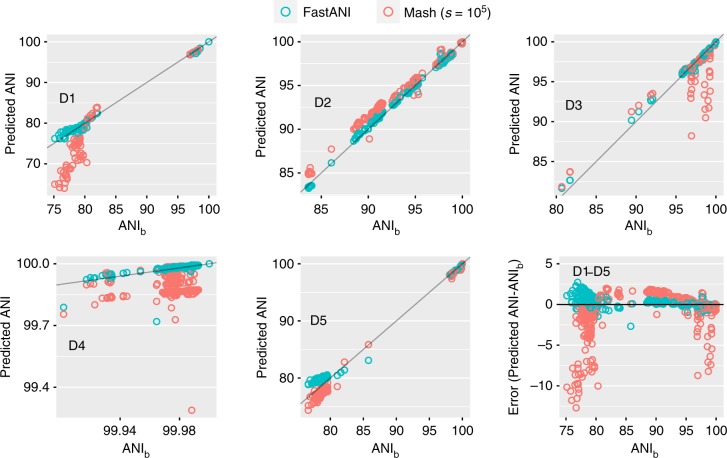
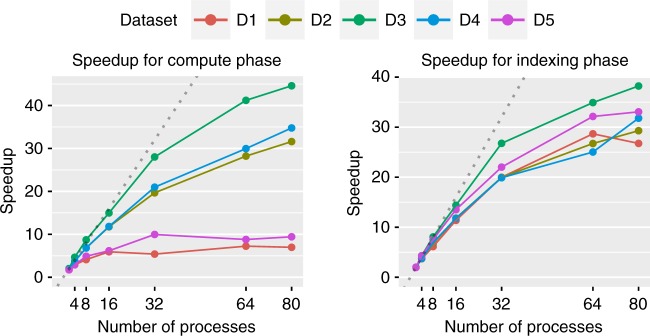
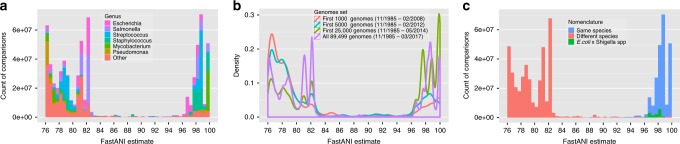
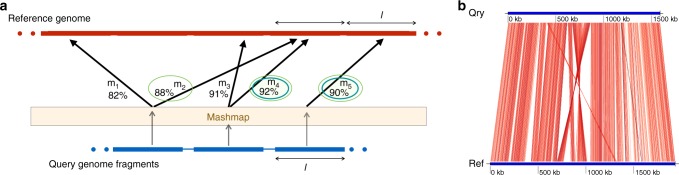
A fundamental question in microbiology is whether there is continuum of genetic diversity among genomes, or clear species boundaries prevail instead. Whole-genome similarity metrics such as Average Nucleotide Identity (ANI) help address this question by facilitating high resolution taxonomic analysis of thousands of genomes from diverse phylogenetic lineages. To scale to available genomes and beyond, we present FastANI, a new method to estimate ANI using alignment-free approximate sequence mapping. FastANI is accurate for both finished and draft genomes, and is up to three orders of magnitude faster compared to alignment-based approaches. We leverage FastANI to compute pairwise ANI values among all prokaryotic genomes available in the NCBI database. Our results reveal clear genetic discontinuity, with 99.8% of the total 8 billion genome pairs analyzed conforming to >95% intra-species and <83% inter-species ANI values. This discontinuity is manifested with or without the most frequently sequenced species, and is robust to historic additions in the genome databases.
Overview
The claims and statistics of this paper haven’t been checked yet.
Run the check — free, no account needed. It reads the open-access text and checks the sources it cites.
Integrity signals
Registry
Cites
Statistics
Figures
Verification
Claims the paper makes
The claims and statistics of this paper haven’t been checked yet.
Run the check — free, no account needed. It reads the open-access text and checks the sources it cites.
Claims other papers make about this one
Each is checked against this paper’s own text: does it say what the citing paper says it does?
The cited source says what the claim attributes to it.
In the citing paper
“FastANI (v1.3.1) (https://github.com/ParBLiSS/FastANI.) was used to calculate the average nucleotide identity between the isolated strains and the original Lp082,47 ensuring isolates were evolved from Lp082”
From Gut microbiota drives structural variation of exogenous probiotics to enhance colonization (2025) · cites this paper as [47]
Self-check
Percentages, sums and reported differences re-computed from the paper’s own numbers.
The self-check needs the paper’s full text.
Citations
Cites
Gapped BLAST and PSI-BLAST: a new generation of protein database search programs
Altschul, S. (1997) · Nucleic Acids Research · doi:10.1093/nar/25.17.3389 · Cited by 73,302
Search and clustering orders of magnitude faster than BLAST
Edgar, R. C. (2010) · Bioinformatics · doi:10.1093/bioinformatics/btq461 · Cited by 21,098
Fast and sensitive protein alignment using DIAMOND
Buchfink, B., Xie, C., & Huson, D. H. (2015) · Nature Methods · doi:10.1038/nmeth.3176 · Cited by 14,201
<tt>BLAT</tt> —The <tt>BLAST</tt> -Like Alignment Tool
Kent, W. J. (2002) · Genome Research · doi:10.1101/gr.229202 · Cited by 8,480
Canu: scalable and accurate long-read assembly via adaptive k -mer weighting and repeat separationPreprint
Koren, S., Walenz, B. P., Berlin, K., Miller, J. R., Bergman, N. H., & Phillippy, A. M. (2017) · Genome Research · doi:10.1101/gr.215087.116 · Cited by 7,260
Self-citationShifting the genomic gold standard for the prokaryotic species definition
Richter, M., & Rossello-Mora, R. A. (2009) · Proceedings of the National Academy of Sciences · doi:10.1073/pnas.0906412106 · Cited by 6,343
Versatile and open software for comparing large genomes
Kurtz, S., Phillippy, A., Delcher, A. L., Smoot, M., Shumway, M., Antonescu, C., & Salzberg, S. L. (2004) · Genome Biology · doi:10.1186/gb-2004-5-2-r12 · Cited by 5,254
Self-citationMauve: Multiple alignment of conserved genomic sequence with rearrangements
Darling, A. C. E., Mau, B., Blattner, F. R., & Perna, N. T. (2004) · Genome Research · doi:10.1101/gr.2289704 · Cited by 4,949
DNA–DNA hybridization values and their relationship to whole-genome sequence similarities
Goris, J., Konstantinidis, K. T., Klappenbach, J. A., Coenye, T., Vandamme, P. A. R., & Tiedje, J. M. (2007) · INTERNATIONAL JOURNAL OF SYSTEMATIC AND EVOLUTIONARY MICROBIOLOGY · doi:10.1099/ijs.0.64483-0 · Cited by 4,733 · cited 2×
“Nevertheless, it closely reflects the traditional microbiological concept of DNA-DNA hybridization relatedness for defining species (3), as it takes into account the fluid nature of the bacterial gene pool and hence implicitly considers shared function.”
BackgroundMethodSelf-citationA large-scale evaluation of algorithms to calculate average nucleotide identity
Yoon, S.-H., Ha, S. M., Lim, J., Kwon, S., & Chun, J. (2017) · Antonie van Leeuwenhoek · doi:10.1007/s10482-017-0844-4 · Cited by 3,614
Research works printed but not linked: 1
- Staley, J. The phylogenomic species concept. Microbiol. Today 36, 80–83 (2009).
Cited by
Sorted by citations
Items 101–200 of 1,013
Characterization of a sponge microbiome using an integrative genome-centric approach
Engelberts, J. P., Robbins, S. J., de Goeij, J. M., Aranda, M., Bell, S. C., & Webster, N. S. (2020) · The ISME Journal · doi:10.1038/s41396-020-0591-9 · Cited by 156
“com/Ecogenomics/GtdbTk), which classifies MAGs based on placement in a reference concatenated gene tree based on a set of 120 bacterial and 122 archaeal markers using a combination of FASTANI and pplacer [23, 24].”
MethodKeeping up with the Bacillus cereus group: taxonomy through the genomics era and beyond
Carroll, L. M., Cheng, R. A., Wiedmann, M., & Kovač, J. (2021) · Critical Reviews in Food Science and Nutrition · doi:10.1080/10408398.2021.1916735 · Cited by 162
“(Jain et al. 2018) surveyed 90,000 prokaryotic genomes (including some members of B.”
BackgroundMethodInfluentialAfrican fermented foods: overview, emerging benefits, and novel approaches to microbiome profiling
Obafemi, Y. D., Oranusi, S. U., Ajanaku, K. O., Akinduti, P. A., Leech, J., & Cotter, P. D. (2022) · npj Science of Food · doi:10.1038/s41538-022-00130-w · Cited by 185
Tran, P. Q., Bachand, S. C., McIntyre, P. B., Kraemer, B. M., Vadeboncoeur, Y. M., Kimirei, I. A., Tamatamah, R. A., McMahon, K. D., & Anantharaman, K. (2021) · The ISME Journal · doi:10.1038/s41396-021-00898-x · Cited by 144
“We calculated pairwise genome-level average nucleotide identities (ANI) values between all 309 vs. 309 genomes using fastANI [34].”
NanoCLUST: a species-level analysis of 16S rRNA nanopore sequencing data
Rodríguez‐Pérez, H., Ciuffreda, L., & Flores, C. (2020) · Bioinformatics · doi:10.1093/bioinformatics/btaa900 · Cited by 143
Active sulfur cycling in the terrestrial deep subsurface
Bell, E., Lamminmäki, T., Alneberg, J., Andersson, A. F., Chen, Q., Xiong, W., Hettich, R. L., Frutschi, M., & Bernier‐Latmani, R. (2020) · The ISME Journal · doi:10.1038/s41396-020-0602-x · Cited by 142
“Average nucleotide identity between SAGs and MAGs was determined with FastANI [43].”
Baker, J. L., Morton, J. T., Dinis, M., Álvarez, R., Tran, N. C., Knight, R. D., & Edlund, A. (2020) · Genome Research · doi:10.1101/gr.265645.120 · Cited by 150
Genomic diversity affects the accuracy of bacterial single-nucleotide polymorphism–calling pipelines
Bush, S. J., Foster, D., Eyre, D. W., Clark, E. L., Maio, N. D., Shaw, L. P., Stoesser, N. E., Peto, T., Crook, D. W., & Walker, A. S. (2020) · GigaScience · doi:10.1093/gigascience/giaa007 · Cited by 140
Blin, K., Shaw, S., Kautsar, S. A., Medema, M. H., & Weber, T. (2020) · Nucleic Acids Research · doi:10.1093/nar/gkaa978 · Cited by 140
Gröschel, M. I., Meehan, C. J., Barilar, I., Diricks, M., Gonzaga, A., Steglich, M., Conchillo‐Solé, O., Scherer, I.-C., Mamat, U., Luz, C. F., et al. (2020) · Nature Communications · doi:10.1038/s41467-020-15123-0 · Cited by 145
EDGAR3.0: comparative genomics and phylogenomics on a scalable infrastructure
Dieckmann, M. A., Beyvers, S., Fankep, R. C. N., Hanel, P., Jelonek, L., Blom, J., & Goesmann, A. (2021) · Nucleic Acids Research · doi:10.1093/nar/gkab341 · Cited by 144
Coral holobiont cues prime Endozoicomonas for a symbiotic lifestyle
Pogoreutz, C., Oakley, C. A., Rädecker, N., Cárdenas, A., Perna, G., Xiang, N., Peng, L., Davy, S. K., Ngugi, D. K., & Voolstra, C. R. (2022) · The ISME Journal · doi:10.1038/s41396-022-01226-7 · Cited by 136
Morlino, M. S., Serna-García, R., Savio, F., Zampieri, G., Morosinotto, T., Treu, L., & Campanaro, S. (2023) · Biotechnology Advances · doi:10.1016/j.biotechadv.2023.108264 · Cited by 139
A shared core microbiome in soda lakes separated by large distances
Zorz, J., Sharp, C. E., Kleiner, M., Gordon, P. M. K., Pon, R. T., Dong, X., & Strous, M. (2019) · Nature Communications · doi:10.1038/s41467-019-12195-5 · Cited by 135
Phytoplasma Taxonomy: Nomenclature, Classification, and Identification
Wei, W., & Zhao, Y. (2022) · Biology · doi:10.3390/biology11081119 · Cited by 137
Tan, S., Liu, J., Fang, Y., Hedlund, B. P., Lian, Z., Huang, L., Li, J., Huang, L., Li, W., Jiang, H., et al. (2019) · The ISME Journal · doi:10.1038/s41396-019-0415-y · Cited by 133
Skmer: assembly-free and alignment-free sample identification using genome skims
Sarmashghi, S., Bohmann, K., Gilbert, M. T. P., Bafna, V., & Mirarab, S. (2019) · Genome biology · doi:10.1186/s13059-019-1632-4 · Cited by 128
“Presumably, FastANI, which relies on alignment of short blocks, counts short gaps (with some definition of short) as mismatch but excludes larger ones.”
MethodInfluentialNicholson, A. C., Gulvik, C. A., Whitney, A. M., Humrighouse, B. W., Bell, M. E., Holmes, B., Steigerwalt, A. G., Villarma, A., Sheth, M., Batra, D. G., et al. (2020) · INTERNATIONAL JOURNAL OF SYSTEMATIC AND EVOLUTIONARY MICROBIOLOGY · doi:10.1099/ijsem.0.003935 · Cited by 134
Meta-analysis of cheese microbiomes highlights contributions to multiple aspects of quality
Walsh, A. M., Macori, G., Kilcawley, K. N., & Cotter, P. D. (2020) · Nature Food · doi:10.1038/s43016-020-0129-3 · Cited by 133
The microbial ecology of Escherichia coli in the vertebrate gut
Foster-Nyarko, E., & Pallen, M. J. (2022) · FEMS Microbiology Reviews · doi:10.1093/femsre/fuac008 · Cited by 161
“Consequently, the taxonomy of the genus Escherichia has been modified with the reclassification of E. hermannii, E. blattae, and E. vulneris to other genera and the description of five cryptic clades within Escherichia (Walk et al. 2009, Priest and Barker 2010, Hata et al. 2016, Jain et al. 2018).”
Endo, H., Blanc‐Mathieu, R., Li, Y., Salazar, G., Henry, N., Labadie, K., de Vargas, C., Sullivan, M. B., Bowler, C., Wincker, P., et al. (2020) · Nature Ecology & Evolution · doi:10.1038/s41559-020-01288-w · Cited by 128
Johnston, E. R., Hatt, J. K., He, Z., Wu, L., Guo, X. Y., Luo, Y., Schuur, E. A. G., Tiedje, J. M., Zhou, J. Z., & Konstantinidis, K. T. (2019) · Proceedings of the National Academy of Sciences · doi:10.1073/pnas.1901307116 · Cited by 129
Self-citationAn Integrated Metagenome Catalog Reveals New Insights into the Murine Gut Microbiome
Lesker, T. R., Raj, A. C. D., Gálvez, E. J. C., Lagkouvardos, I., Baines, J. F., Clavel, T., Sczyrba, A., McHardy, A. C., & Strowig, T. (2020) · Cell Reports · doi:10.1016/j.celrep.2020.02.036 · Cited by 130
A genomic view of the microbiome of coral reef demosponges
Robbins, S. J., Song, W., Engelberts, J. P., Glasl, B., Slaby, B. M., Boyd, J. A., Marangon, E., Botté, E. S., Laffy, P. W., Thomas, T., et al. (2021) · The ISME Journal · doi:10.1038/s41396-020-00876-9 · Cited by 129
Phylogenetically and catabolically diverse diazotrophs reside in deep-sea cold seep sediments
Dong, X., Zhang, C., Peng, Y., Zhang, H., Shi, L.-D., Wei, G., Hubert, C. R. J., Wang, Y., & Greening, C. (2022) · Nature Communications · doi:10.1038/s41467-022-32503-w · Cited by 127
Semenec, L., Cain, A. K., Dawson, C. J., Liu, Q., Dinh, H., Lott, H., Penesyan, A., Maharjan, R. P., Short, F. L., Hassan, K. A., et al. (2023) · Nature Communications · doi:10.1038/s41467-023-36252-2 · Cited by 122
LaFrentz, B., Králová, S., Burbick, C., Alexander, T. L., Phillips, C., Griffin, M., Waldbieser, G., García, J., Sebastião, F. D. A., Soto, E., et al. (2021) · Systematic and Applied Microbiology · doi:10.1016/j.syapm.2021.126293 · Cited by 107
Enhanced cultured diversity of the mouse gut microbiota enables custom-made synthetic communities
Afrizal, A., Jennings, S. A. V., Hitch, T. C. A., Riedel, T., Basic, M., Panyot, A., Treichel, N. S., Hager, F. T., Wong, E. O.-Y., Wolter, B., et al. (2022) · Cell Host & Microbe · doi:10.1016/j.chom.2022.09.011 · Cited by 124
Carroll, L. M., Wiedmann, M., Mukherjee, M., Nicholas, D. C., Mingle, L. A., Dumas, N. B., Cole, J. A., & Kovač, J. (2019) · Frontiers in Microbiology · doi:10.3389/fmicb.2019.00144 · Cited by 124
“0 (Jain et al., 2018) was used to calculate average nucleotide identity (ANI) values between assembled genomes of isolates sequenced in this study and selected reference genomes (Table 2), as well as the genomes of 18 currently published B.”
MethodLiu, R., Wei, X. L., Song, W., Wang, L., Cao, J., Wu, J., Thomas, T., Jin, T., Wang, Z., Wei, W., et al. (2022) · Microbiome · doi:10.1186/s40168-022-01263-6 · Cited by 136
Adaptive differentiation and rapid evolution of a soil bacterium along a climate gradient
Chase, A. B., Weihe, C., & Martiny, J. B. H. (2021) · Proceedings of the National Academy of Sciences · doi:10.1073/pnas.2101254118 · Cited by 113
Accurate reconstruction of bacterial pan- and core genomes with PEPPANPreprint
Zhou, Z., Charlesworth, J., & Achtman, M. (2020) · Genome Research · doi:10.1101/gr.260828.120 · Cited by 121
“2 (Jain et al. 2018), and these genomes were grouped into ANI95% clusters using the AgglomerativeClustering function with linkage=single and distance_threshold=0.05.”
MethodInfluentialMicrobial composition of Kombucha determined using amplicon sequencing and shotgun metagenomics
Arıkan, M., Mitchell, A. L., Finn, R. D., & Gürel, F. (2020) · Journal of Food Science · doi:10.1111/1750-3841.14992 · Cited by 123
Yan, Q., Li, S., Yan, Q., Huo, X., Wang, C., Wang, X., Sun, Y., Zhao, W., Yu, Z., Zhang, Y., et al. (2024) · Cell · doi:10.1016/j.cell.2024.04.043 · Cited by 127
Genetic determinants of host tropism in Klebsiella phages
Beamud, B., García-González, N., Gómez-Ortega, M., González-Candelas, F., Domingo-Calap, P., & Sanjuan, R. (2023) · Cell Reports · doi:10.1016/j.celrep.2023.112048 · Cited by 113
“Phage classification Phage genomes available at NCBI (PhageDB) were obtained with inphared (Cook et al., 2021) (10/02/2021, n=14037) and compared against isolated phages with FastANI (fraglen=500).”
MethodDashing: fast and accurate genomic distances with HyperLogLog
Baker, D. N., & Langmead, B. (2019) · Genome biology · doi:10.1186/s13059-019-1875-0 · Cited by 120
Predicting butyrate- and propionate-forming bacteria of gut microbiota from sequencing data
Kircher, B., Woltemate, S., Gutzki, F. M., Schlüter, D., Geffers, R., Bähre, H., & Vital, M. (2022) · Gut Microbes · doi:10.1080/19490976.2022.2149019 · Cited by 133
“32) (24)) below 98% to the 194 representative (and to each other) were included as well (n=522); A few were manually 195”
BackgroundLactobacilli Have a Niche in the Human Nose
Boeck, I. D., van den Broek, M. F. L., Allonsius, C. N., Spacova, I., Wittouck, S., Martens, K., Wuyts, S., Cauwenberghs, E., Jokicevic, K., Vandenheuvel, D., et al. (2020) · Cell Reports · doi:10.1016/j.celrep.2020.107674 · Cited by 121
The Origin of Niches and Species in the Bacterial World
Baquero, F., Coque, T. M., Galán, J. C., & Martínez, J. L. (2021) · Frontiers in Microbiology · doi:10.3389/fmicb.2021.657986 · Cited by 117
“…the whole genome’s average nucleotide identity (ANI) identifies as members of the same species those organisms showing ≥95% average nucleotide identity among themselves, and the taxonomical empty space can be extended until reaching less than 83% average nucleotide identity (Jain et al., 2018).”
BackgroundSingh, P., Singh, R. K., Guo, D.-J., Sharma, A., Singh, R. N., Li, D.-P., Malviya, M. K., Song, X., Lakshmanan, P., Yang, L., et al. (2021) · Frontiers in Microbiology · doi:10.3389/fmicb.2021.628376 · Cited by 117
“FastANI is built to complete genome sequences for rapid alignmentfree computation of complete-genome ANI and facilitates the comparison of whole and draft genome assemblies in pairs.”
MethodValiente-Mullor, C., Beamud, B., Ansari, I., Francés‐Cuesta, C., García‐González, N., Mejía, L., Ruiz-Hueso, P., & Gónzález‐Candelas, F. (2021) · PLoS Computational Biology · doi:10.1371/journal.pcbi.1008678 · Cited by 117
Kim, C. Y., Lee, M., Yang, S., Kim, K., Yong, D., Kim, H. R., & Lee, I. (2021) · Genome Medicine · doi:10.1186/s13073-021-00950-7 · Cited by 120
Genome binning of viral entities from bulk metagenomics data
Johansen, J., Plichta, D. R., Nissen, J. N., Jespersen, M. L., Shah, S. A., Deng, L., Stokholm, J., Bisgaard, H. F., Nielsen, D. S., Sørensen, S. J., et al. (2022) · Nature Communications · doi:10.1038/s41467-022-28581-5 · Cited by 116
“In order to identify the host of viruses, viral bins were aligned to MAGs using FastANI (v.1.1, ‘ --fragLen 5000 --minFrag 1 ’ ) 67 and blastn megablast (v. 2.8.1) 63 with a minimum ANI ≥ 90% and sequence identity ≥ 90, respectively.”
MethodInfluentialEllegaard, K., Suenami, S., Miyazaki, R., & Engel, P. (2020) · Current Biology · doi:10.1016/j.cub.2020.04.070 · Cited by 112
Accurate and sensitive detection of microbial eukaryotes from whole metagenome shotgun sequencing
Lind, A., & Pollard, K. S. (2021) · Microbiome · doi:10.1186/s40168-021-01015-y · Cited by 120
Wang, M., Ge, L., Chen, L., Komarow, L., Hanson, B., Reyes, J., Cober, E., Alenazi, T. H., Zong, Z., Xie, Q., et al. (2023) · Clinical Infectious Diseases · doi:10.1093/cid/ciad556 · Cited by 118
Woodworth, M. H., Conrad, R. E., Haldopoulos, M. E., Pouch, S. M., Babiker, A., Mehta, A. K., Sitchenko, K. L., Wang, C. H., Strudwick, A. F., Ingersoll, J., et al. (2023) · Science Translational Medicine · doi:10.1126/scitranslmed.abo2750 · Cited by 118
Self-citationCompendium of 530 metagenome-assembled bacterial and archaeal genomes from the polar Arctic Ocean
Royo‐Llonch, M., Sánchez, P., Ruiz‐González, C., Salazar, G., Pedrós‐Alió, C., Sebastián, M., Labadie, K., Paoli, L., Ibarbalz, F. M., Zinger, L., et al. (2021) · Nature Microbiology · doi:10.1038/s41564-021-00979-9 · Cited by 130
Parsnp 2.0: scalable core-genome alignment for massive microbial datasets
Kille, B. L., Nute, M., Huang, V., Kim, E., Phillippy, A. M., & Treangen, T. J. (2024) · Bioinformatics · doi:10.1093/bioinformatics/btae311 · Cited by 113
“Users can now provide their query inputs through regular expression CLI matching and text files, output VCF files directly, use FastANI (Jain et al. 2018) for genome recruitment, use FastTree2 (Price et al. 2010) for phylogeny reconstruction or skip the step as a whole, and more.”
Self-citationRapid species-level metagenome profiling and containment estimation with sylph
Shaw, J., & Yu, Y. W. (2024) · Nature Biotechnology · doi:10.1038/s41587-024-02412-y · Cited by 114
“…the genome with the lowest P value against a set of >4,271 E. coli genomes downloaded from the National Center for Biotechnology Information (NCBI) 27 and found a 99.99% ANI and 99% aligned fraction match with an E. coli isolate from a patient with bacteremia (PRJNA203078) and a 99.84% ANI match…”
InfluentialHumGut: a comprehensive human gut prokaryotic genomes collection filtered by metagenome data
Hiseni, P., Rudi, K., Wilson, R. C., Hegge, F. T., & Snipen, L. G. (2021) · Microbiome · doi:10.1186/s40168-021-01114-w · Cited by 116
bin3C: exploiting Hi-C sequencing data to accurately resolve metagenome-assembled genomes
DeMaere, M. Z., & Darling, A. E. (2019) · Genome biology · doi:10.1186/s13059-019-1643-1 · Cited by 109
“0) [34] was used to calculate pairwise average nucleotide identity (ANI) between the 223 candidate genome sequences.”
MethodMetagenome-assembled genome extraction and analysis from microbiomes using KBase
Chivian, D. C., Jungbluth, S. P., Dehal, P., Wood‐Charlson, E. M., Canon, R. S., Allen, B. H., Clark, M. M., Gu, T., Land, M., Price, G. A., et al. (2022) · Nature Protocols · doi:10.1038/s41596-022-00747-x · Cited by 108
The genus Serratia revisited by genomics
Williams, D. J., Grimont, P. A. D., Cazares, A., Grimont, F., Ageron, E., Pettigrew, K. A., Cazares, D., Njamkepo, E., Weill, F., Heinz, E., et al. (2022) · Nature Communications · doi:10.1038/s41467-022-32929-2 · Cited by 110
The gut microbiota — brain axis of insects
Liberti, J., & Engel, P. (2020) · Current Opinion in Insect Science · doi:10.1016/j.cois.2020.01.004 · Cited by 113
Wibberg, D., Stadler, M., Lambert, C. R., Bunk, B., Spröer, C., Rückert, C., Kalinowski, J., Cox, R. J., & Kuhnert, E. (2020) · Fungal Diversity · doi:10.1007/s13225-020-00447-5 · Cited by 106
Shaw, L. P., Chau, K., Kavanagh, J., AbuOun, M., Stubberfield, E. J., Gweon, H. S., Barker, L., Rodger, G., Bowes, M. J., Hubbard, A. T. M., et al. (2021) · Science Advances · doi:10.1126/sciadv.abe3868 · Cited by 99
Single cell genomics reveals plastid-lacking Picozoa are close relatives of red algae
Schön, M., Zlatogursky, V. V., Singh, R., Poirier, C., Wilken, S., Mathur, V., Strassert, J. F. H., Pinhassi, J., Worden, A., Keeling, P., et al. (2021) · Nature Communications · doi:10.1038/s41467-021-26918-0 · Cited by 82
“0 100 200 300 EGTs Rattus norvegicus (0) Neurospora crassa (0) Dictyostelium discoideum (1) Tetrahymena thermophila (1) Thecamonas trahens (1) Cryptosporidium muris (3) Phytophthora capsici (6) Hematodinium sp SG-2012 (10) Paraphysomonas bandaiensis (12) Rhodelphids (14) Telonema subtile (15) Picozoa (16) Toxoplasma g…”
BackgroundParks, D. H., Chaumeil, P.-A., Mussig, A. J., Rinke, C., Chuvochina, M. S., & Hugenholtz, P. (2025) · Nucleic Acids Research · doi:10.1093/nar/gkaf1040 · Cited by 163
“In terms of computational efficiency, we replaced FastANI [ 24 ] with skani [ 25 ] for calculating ANI and AF values in R09-RS220.”
Rubin‐Blum, M., Antony, C. P., Sayavedra, L., Martínez‐Pérez, C., Birgel, D., Peckmann, J., Wu, Y.-C., Cárdenas, P., MacDonald, I. R., Marcon, Y., et al. (2019) · The ISME Journal · doi:10.1038/s41396-019-0346-7 · Cited by 104
Streptomyces Endophytes Promote Host Health and Enhance Growth across Plant Species
Worsley, S. F., Newitt, J., Rassbach, J., Batey, S. F. D., Holmes, N. A., Murrell, J. C., Wilkinson, B. M., & Hutchings, M. I. (2020) · Applied and Environmental Microbiology · doi:10.1128/aem.01053-20 · Cited by 105
“1%, respectively; these were below the 95% threshold that is generally used to assign strains to a known species (29, 30), and so they could be new Streptomyces species.”
Rodríguez-Gijón, A., Nuy, J. K., Mehrshad, M., Buck, M., Schulz, F., Woyke, T., & Garcia, S. L. (2022) · Frontiers in Microbiology · doi:10.3389/fmicb.2021.761869 · Cited by 105
Walker, T., Quek, S., Jeffries, C. L., Bandibabone, J., Dhokiya, V., Bamou, R., Kristan, M., Messenger, L. A., Gidley, A., Hornett, E. A., et al. (2021) · Current Biology · doi:10.1016/j.cub.2021.03.056 · Cited by 101
Zeng, Y., Nupur, N., Wu, N., Madsen, A. M., Chen, X., Gardiner, A. T., & Koblížek, M. (2021) · Frontiers in Microbiology · doi:10.3389/fmicb.2020.606612 · Cited by 103
“1.32; Jain et al., 2018) and CompareM (ver.”
BackgroundInfluentialBatista, B. D., Dourado, M. N., Figueredo, E. F., Hortencio, R. O., Marques, J. P. R., Piotto, F. Â., Bonatelli, M. L., Settles, M. L., de Azevedo, J. L., & Quecine, M. C. (2021) · Archives of Microbiology · doi:10.1007/s00203-021-02361-z · Cited by 108
An early origin of iron–sulfur cluster biosynthesis machineries before Earth oxygenation
Garcia, P. S., D’Angelo, F., de Choudens, S. O., Dussouchaud, M., Bouveret, E., Gribaldo, S., & Barras, F. (2022) · Nature Ecology & Evolution · doi:10.1038/s41559-022-01857-1 · Cited by 103
Rapid ecosystem-scale consequences of acute deoxygenation on a Caribbean coral reef
Johnson, M. D., Scott, J. J., Leray, M., Lucey, N., Bravo, L. M. R., Wied, W. L., & Altieri, A. H. (2021) · Nature Communications · doi:10.1038/s41467-021-24777-3 · Cited by 99
Zervas, A., Aggerbeck, M. R., Allaga, H., Güzel, M., Hendriks, M., Jonuškienė, I., Kedves, O., Kupeli, A., Lamovšek, J., Mülner, P., et al. (2020) · Microorganisms · doi:10.3390/microorganisms8122028 · Cited by 100
Bacterial endosymbionts protect beneficial soil fungus from nematode attack
Büttner, H., Niehs, S. P., Vandelannoote, K., Cseresnyés, Z., Dose, B., Richter, I., Gerst, R., Figge, M. T., Stinear, T. P., Pidot, S. J., et al. (2021) · Proceedings of the National Academy of Sciences · doi:10.1073/pnas.2110669118 · Cited by 100
Yuan, J., Zhou, J., Zhou, J., Hu, M., Zhang, Q., Kong, N., Ren, H., Liang, L., & Yue, J. (2020) · Biology Direct · doi:10.1186/s13062-020-0258-5 · Cited by 102
Palmer, M., Steenkamp, E. T., Blom, J., Hedlund, B. P., & Venter, S. N. (2020) · INTERNATIONAL JOURNAL OF SYSTEMATIC AND EVOLUTIONARY MICROBIOLOGY · doi:10.1099/ijsem.0.004124 · Cited by 102
Comprehensive mouse microbiota genome catalog reveals major difference to its human counterpart
Kieser, S., Zdobnov, E. M., & Trajkovski, M. (2022) · PLoS Computational Biology · doi:10.1371/journal.pcbi.1009947 · Cited by 99
“95% ANI was used as a threshold to delineate genomes from the same species [18,19].”
MethodStrainGE: a toolkit to track and characterize low-abundance strains in complex microbial communities
van Dijk, L. R., Walker, B. J., Straub, T. J., Worby, C. J., Grote, A., Schreiber, H. L., Anyansi, C., Pickering, A. J., Hultgren, S. J., Manson, A. L., et al. (2022) · Genome biology · doi:10.1186/s13059-022-02630-0 · Cited by 93
“The reads from a metagenomic sample are then aligned to the concatenated reference using BWA mem (25), removing read pairs with 1) improper pairing; 2) clipped alignment; or 3) implied insert size smaller than the read length.”
MethodInfluentialCarbon fixation rates in groundwater similar to those in oligotrophic marine systems
Overholt, W. A., Trumbore, S. E., Xu, X., Bornemann, T. L. V., Probst, A. J., Krüger, M., Herrmann, M., Thamdrup, B., Bristow, L. A., Taubert, M., et al. (2022) · Nature Geoscience · doi:10.1038/s41561-022-00968-5 · Cited by 103
Hou, J., Wang, Y., Zhu, P., Yang, N., Liang, L., Yu, T., Niu, M., Konhauser, K. O., Woodcroft, B. J., & Wang, F. (2023) · Science Advances · doi:10.1126/sciadv.adf5069 · Cited by 108
“After removing the MAGs assigned to other microbial lineages, the average nuclear acid identities (ANIs) between pairwise sets of MAGs were calculated by using FastANI ( 82 ).”
Sequencing-based analysis of microbiomes
Pinto, Y., & Bhatt, A. S. (2024) · Nature Reviews Genetics · doi:10.1038/s41576-024-00746-6 · Cited by 109
“Whereas species boundaries are generally well defined, there is debate over the exact definition of ‘strains’ within microbiology 71–73 .”
Mobile antimicrobial resistance genes in probiotics
Tóth, A. G., Csabai, I., Judge, M. F., Maróti, G., Becsei, Á., Spisák, S., & Solymosi, N. (2021) · doi:10.1101/2021.05.04.442546 · Cited by 97
Tully, B. (2019) · Nature Communications · doi:10.1038/s41467-018-07840-4 · Cited by 92
Oñate, F. P., Chamignon, C., Burz, S. D., Lapaque, N., Monnoye, M., Philippe, C., Bredel, M., Chêne, L., Farin, W., Paillarse, J.-M., et al. (2023) · International Journal of Molecular Sciences · doi:10.3390/ijms241512232 · Cited by 97
Ecosystem-wide metagenomic binning enables prediction of ecological niches from genomes
Alneberg, J., Bennke, C. M., Beier, S., Bunse, C., Quince, C., Ininbergs, K., Riemann, L., Ekman, M., Jürgens, K., Labrenz, M., et al. (2020) · Communications Biology · doi:10.1038/s42003-020-0856-x · Cited by 93
Major genetic discontinuity and novel toxigenic species in Clostridioides difficile taxonomy
Knight, D. R., Imwattana, K., Kullin, B., Guerrero-Araya, E., Paredes‐Sabja, D., Didelot, X., Dingle, K. E., Eyre, D. W., Rodríguez, C., & Riley, T. V. (2021) · eLife · doi:10.7554/elife.64325 · Cited by 98
“…Center for Biotechnology Information (NCBI) (Ciufo et al., 2018), ANI provides a pre- cise, objective, and scalable method for delineation of species, defined as monophyletic groups of strains with genomes that exhibit at least 96% ANI (Jain et al., 2018; Richter and Rosselló-Móra, 2009).”
BackgroundMethodInfluentialComprehensive dataset of shotgun metagenomes from oxygen stratified freshwater lakes and ponds
Buck, M., Garcia, S. L., Fernández, L., Martin, G., Martínez-Rodríguez, G. A., Saarenheimo, J., Zopfi, J., Bertilsson, S., & Peura, S. (2021) · Scientific Data · doi:10.1038/s41597-021-00910-1 · Cited by 96
Mende, D. R., Letunić, I., Maistrenko, O. M., Schmidt, T., Milanese, A., Paoli, L., Hernández-Plaza, A., Orakov, A. N., Forslund, S. K., Sunagawa, S., et al. (2019) · Nucleic Acids Research · doi:10.1093/nar/gkz1002 · Cited by 90
Defining the Rhizobium leguminosarum Species Complex
Young, J. P. W., Moeskjær, S., Afonin, A. М., Rahi, P., Maluk, M., James, E. K., Cavassim, M. I. A., Rashid, M. H.-O., Aserse, A. A., Perry, B. J., et al. (2021) · Genes · doi:10.3390/genes12010111 · Cited by 95
“31 [71] with the default settings (kmer = 16, fragment length = 3000, minimum shared fraction = 0.”
BackgroundDiet leaves a genetic signature in a keystone member of the gut microbiota
Dapa, T., Ramiro, R. S., Pedro, M. F., Gordo, I., & Xavier, K. B. (2022) · Cell Host & Microbe · doi:10.1016/j.chom.2022.01.002 · Cited by 91
Beyond DNA barcoding: The unrealized potential of genome skim data in sample identification
Bohmann, K., Mirarab, S., Bafna, V., & Gilbert, M. T. P. (2020) · Molecular Ecology · doi:10.1111/mec.15507 · Cited by 90
“(2018). A Sequel to Sanger: Amplicon sequencing that scales. BMC Genomics, 19(1), 219. https://doi.org/10.1186/s1286 4-018-4611-3 Hebert, P. D. N., Cywinska, A., Ball, S. L., & deWaard, J. R. (2003). Biological identifications through DNA barcodes. Proceedings. Biological Sciences/The Royal Society, 270(1512), 313–321…”
BackgroundInfluentialGenomic insights into the phylogeny and biomass-degrading enzymes of rumen ciliates
Li, Z., Wang, X., Zhang, Y., Yu, Z., Zhang, T., Dai, X., Pan, X., Jing, R., Yan, Y., Liu, Y., et al. (2022) · The ISME Journal · doi:10.1038/s41396-022-01306-8 · Cited by 100
Dove, N. C., Torn, M. S., Hart, S. C., & Taş, N. (2021) · Nature Communications · doi:10.1038/s41467-021-22408-5 · Cited by 96
Gut microbiota modulates weight gain in mice after discontinued smoke exposure
Fluhr, L., Mor, U., Kolodziejczyk, A. A., Dori-Bachash, M., Leshem, A., Itav, S., Cohen, Y., Suez, J., Zmora, N., Moresi, C., et al. (2021) · Nature · doi:10.1038/s41586-021-04194-8 · Cited by 95
Zaid, D. S., Cai, S., Hu, C., Li, Z., & Li, Y. (2022) · Microbiology Spectrum · doi:10.1128/spectrum.02169-21 · Cited by 92
“The genomes of sequenced Bacillus strains were compared with the B. velezensis HNA3 genome using the average nucleotide identity analysis tool FastANI (92).”
MethodFunctional Insights into the Kelp Microbiome from Metagenome-Assembled Genomes
Weigel, B. L., Miranda, K. K., Fogarty, E. C., Watson, A. R., & Pfister, C. A. (2022) · mSystems · doi:10.1128/msystems.01422-21 · Cited by 93
“The demarcation for a bacterial species using whole-genome average nucleotide identity (ANI) is typically$95% (35), while ANI values across genera average 73% (36).”
BackgroundMethodInfluentialCamargo, A. P., de Souza, R. S. C., José, J., Gerhardt, I. R., Dante, R. A., Mukherjee, S., Huntemann, M., Kyrpides, N. C., Carazzolle, M. F., & Arruda, P. (2022) · The ISME Journal · doi:10.1038/s41396-022-01345-1 · Cited by 92
Daza, M. V. B., Cortimiglia, C., Bassi, D., & Cocconcelli, P. S. (2021) · INTERNATIONAL JOURNAL OF SYSTEMATIC AND EVOLUTIONARY MICROBIOLOGY · doi:10.1099/ijsem.0.004948 · Cited by 96
A key genetic factor governing arabinan utilization in the gut microbiome alleviates constipation
Zhang, C., Yu, L., Ma, C., Jiang, S., Zhang, Y., Wang, S., Tian, F., Xue, Y., Zhao, J., Zhang, H., et al. (2023) · Cell Host & Microbe · doi:10.1016/j.chom.2023.10.011 · Cited by 98
Całusińska, M., Marynowska, M., Bertucci, M., Untereiner, B., Klimek, D., Goux, X., Sillam‐Dussès, D., Gawron, P., Halder, R., Wilmes, P., et al. (2020) · Communications Biology · doi:10.1038/s42003-020-1004-3 · Cited by 87
Rat, A., Naranjo, H. D., Krigas, N., Grigoriadou, K., Maloupa, E., Alonso, A. V., Schneider, C., Papageorgiou, V. P., Assimopoulou, A. N., Tsafantakis, N., et al. (2021) · Frontiers in Microbiology · doi:10.3389/fmicb.2021.633488 · Cited by 89
Blanco‐Míguez, A., Beghini, F., Cumbo, F., McIver, L. J., Thompson, K. N., Zolfo, M., Manghi, P., Dubois, L., Huang, K. D., Thomas, A. M., et al. (2022) · bioRxiv (Cold Spring Harbor Laboratory) · doi:10.1101/2022.08.22.504593 · Cited by 89
Estimating Pangenomes with Roary
Sitto, F., & Battistuzzi, F. U. (2019) · Molecular Biology and Evolution · doi:10.1093/molbev/msz284 · Cited by 89
Shi, W., Sun, Q., Fan, G., Hideaki, S., Ohkuma, M., Itoh, T., Zhou, Y., Cai, M., Kim, S.-G., Lee, J., et al. (2020) · Nucleic Acids Research · doi:10.1093/nar/gkaa957 · Cited by 87
“Various genome similarity metrics, including ANIb (60), FastANI (61), orthoANIb and orthoANIu (62), are provided for the calculation of similarity between a submitted genome sequence and the selected sequences.”
BackgroundPanACoTA: A modular tool for massive microbial comparative genomicsPreprint
Perrin, A., & Rocha, E. P. C. (2020) · bioRxiv (Cold Spring Harbor Laboratory) · doi:10.1093/nargab/lqaa106 · Cited by 103
“For example, using 15 cores, FastANI [27] requires around 1h15 to compare all pairs of 200 genomes (40,000 pairwise comparisons), where Mash with a sketch size of 106 does the task in less than 3 minutes.”
Method
Metadata
- Authors
- Jain, C., Rodriguez-R, L. M., Phillippy, A. M., Konstantinidis, K. T., & Aluru, S.
- Affiliations
- National Institutes of Health (US)
- Georgia Institute of Technology (US)
- Corresponding author
- Konstantinidis, Konstantinos T.
- Aluru, Srinivas
- ORCID
- Venue
- Nature Communications
- Published
- 2018-11-30
- Volume
- 9
- Issue
- 1
- Pages
- 5114-5114
- ISSN
- 2041-1723 (ISSN-L)
- PMC
- PMC6269478
- OpenAlex
- W2951254987
- Cited by
- 5,748
- References
- 40
- Citations by year
- 2026: 1107 · 2025: 1110 · 2024: 977 · 2023: 789 · 2022: 695 · 2021: 617 · 2020: 305 · 2019: 128 · 2018: 16
- FWCI
- 96.11
- Type
- journal article
- Language
- en
- Open access
- gold
- doi.org
- Locations
- Nature Communications (publishedVersion, cc-by)
- bioRxiv (Cold Spring Harbor Laboratory) (acceptedVersion, cc-by)
- Europe PMC (PubMed Central) (publishedVersion, other-oa)
- PubMed Central (publishedVersion, cc-by)
- PubMed (publishedVersion)
- RePEc: Research Papers in Economics (submittedVersion)
- DOAJ (DOAJ: Directory of Open Access Journals) (submittedVersion, cc-by-sa)
- DOAJ (DOAJ: Directory of Open Access Journals) (submittedVersion)
- Funders
- National Science Foundation (1416259, 1816027, 1356288)
- Topics
- Life Sciences › Biochemistry, Genetics and Molecular Biology › Molecular Biology › Genomics and Phylogenetic Studies
- Health Sciences › Medicine › Microbiology (medical) › Bacterial Identification and Susceptibility Testing
- Physical Sciences › Environmental Science › Ecology › Microbial Community Ecology and Physiology
- Keywords
- average nucleotide identity, prokaryotic genomes, species boundaries, taxonomic classification, draft genome sequence
- MeSH terms
- Phylogeny, Prokaryotic Cells, Genetic Variation, Databases, Factual, Genome, Bacterial, Sequence Analysis, DNA
About these checks
Registry, retraction, Cites and statistics results are computed, not judged, with one exception: a printed reference that no index lists is read once by a model before it counts as a citation error. Claims are extracted by a model and kept only when their quote appears verbatim in the text; each cited source is then checked, with a model’s help, for whether it says what the claim relies on. Those verdicts can be wrong — read the claim’s quote and the cited source before relying on one.
Statistics and arithmetic are recomputed, not judged.
Confidence bands are shown only for fields calibrated on our annotated test set. None is calibrated yet, so no band is shown.
What counts as a claim ›How we measure confidence ›How we check this ›
Are you an author, or do you see a problem with this page? Request a review
