

The DOI matches its Crossref record; 41 of the 41 references it cites were found in a registry or an index.
High throughput ANI analysis of 90K prokaryotic genomes reveals clear species boundaries
Open accessPublished version of a preprint
Abstract
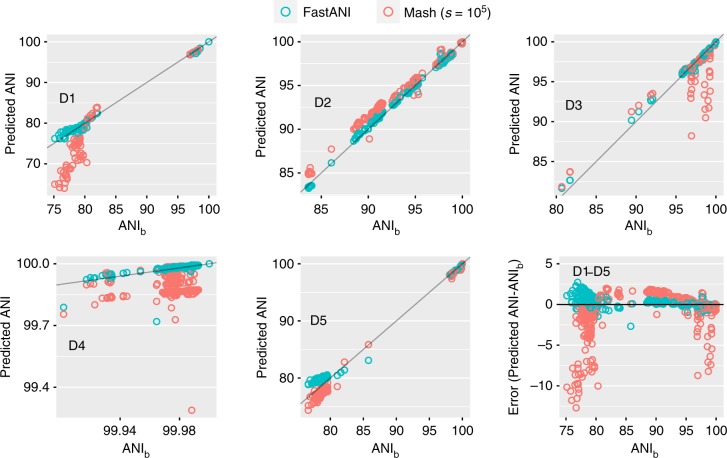
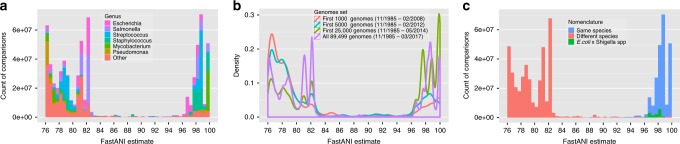
A fundamental question in microbiology is whether there is continuum of genetic diversity among genomes, or clear species boundaries prevail instead. Whole-genome similarity metrics such as Average Nucleotide Identity (ANI) help address this question by facilitating high resolution taxonomic analysis of thousands of genomes from diverse phylogenetic lineages. To scale to available genomes and beyond, we present FastANI, a new method to estimate ANI using alignment-free approximate sequence mapping. FastANI is accurate for both finished and draft genomes, and is up to three orders of magnitude faster compared to alignment-based approaches. We leverage FastANI to compute pairwise ANI values among all prokaryotic genomes available in the NCBI database. Our results reveal clear genetic discontinuity, with 99.8% of the total 8 billion genome pairs analyzed conforming to >95% intra-species and <83% inter-species ANI values. This discontinuity is manifested with or without the most frequently sequenced species, and is robust to historic additions in the genome databases.
Overview
The claims and statistics of this paper haven’t been checked yet.
Run the check — free, no account needed. It reads the open-access text and checks the sources it cites.
Integrity signals
Registry
Cites
Statistics
Figures
Verification
Claims the paper makes
The claims and statistics of this paper haven’t been checked yet.
Run the check — free, no account needed. It reads the open-access text and checks the sources it cites.
Claims other papers make about this one
Each is checked against this paper’s own text: does it say what the citing paper says it does?
The cited source says what the claim attributes to it.
In the citing paper
“FastANI (v1.3.1) (https://github.com/ParBLiSS/FastANI.) was used to calculate the average nucleotide identity between the isolated strains and the original Lp082,47 ensuring isolates were evolved from Lp082”
From Gut microbiota drives structural variation of exogenous probiotics to enhance colonization (2025) · cites this paper as [47]
Self-check
Percentages, sums and reported differences re-computed from the paper’s own numbers.
The self-check needs the paper’s full text.
Citations
Cites
Gapped BLAST and PSI-BLAST: a new generation of protein database search programs
Altschul, S. (1997) · Nucleic Acids Research · doi:10.1093/nar/25.17.3389 · Cited by 73,302
Search and clustering orders of magnitude faster than BLAST
Edgar, R. C. (2010) · Bioinformatics · doi:10.1093/bioinformatics/btq461 · Cited by 21,098
Fast and sensitive protein alignment using DIAMOND
Buchfink, B., Xie, C., & Huson, D. H. (2015) · Nature Methods · doi:10.1038/nmeth.3176 · Cited by 14,201
<tt>BLAT</tt> —The <tt>BLAST</tt> -Like Alignment Tool
Kent, W. J. (2002) · Genome Research · doi:10.1101/gr.229202 · Cited by 8,480
Canu: scalable and accurate long-read assembly via adaptive k -mer weighting and repeat separationPreprint
Koren, S., Walenz, B. P., Berlin, K., Miller, J. R., Bergman, N. H., & Phillippy, A. M. (2017) · Genome Research · doi:10.1101/gr.215087.116 · Cited by 7,260
Self-citationShifting the genomic gold standard for the prokaryotic species definition
Richter, M., & Rossello-Mora, R. A. (2009) · Proceedings of the National Academy of Sciences · doi:10.1073/pnas.0906412106 · Cited by 6,343
Versatile and open software for comparing large genomes
Kurtz, S., Phillippy, A., Delcher, A. L., Smoot, M., Shumway, M., Antonescu, C., & Salzberg, S. L. (2004) · Genome Biology · doi:10.1186/gb-2004-5-2-r12 · Cited by 5,254
Self-citationMauve: Multiple alignment of conserved genomic sequence with rearrangements
Darling, A. C. E., Mau, B., Blattner, F. R., & Perna, N. T. (2004) · Genome Research · doi:10.1101/gr.2289704 · Cited by 4,949
DNA–DNA hybridization values and their relationship to whole-genome sequence similarities
Goris, J., Konstantinidis, K. T., Klappenbach, J. A., Coenye, T., Vandamme, P. A. R., & Tiedje, J. M. (2007) · INTERNATIONAL JOURNAL OF SYSTEMATIC AND EVOLUTIONARY MICROBIOLOGY · doi:10.1099/ijs.0.64483-0 · Cited by 4,733 · cited 2×
“Nevertheless, it closely reflects the traditional microbiological concept of DNA-DNA hybridization relatedness for defining species (3), as it takes into account the fluid nature of the bacterial gene pool and hence implicitly considers shared function.”
BackgroundMethodSelf-citationA large-scale evaluation of algorithms to calculate average nucleotide identity
Yoon, S.-H., Ha, S. M., Lim, J., Kwon, S., & Chun, J. (2017) · Antonie van Leeuwenhoek · doi:10.1007/s10482-017-0844-4 · Cited by 3,614
Research works printed but not linked: 1
- Staley, J. The phylogenomic species concept. Microbiol. Today 36, 80–83 (2009).
Cited by
Sorted by citations
Items 901–1,000 of 1,013
Mcr-dependent methanogenesis in Archaeoglobaceae enriched from a terrestrial hot spring
Buessecker, S., Chadwick, G. L., Quan, M. E., Hedlund, B. P., Dodsworth, J. A., & Dekas, A. (2023) · The ISME Journal · doi:10.1038/s41396-023-01472-3 · Cited by 24
Umanets, A., SURONO, I. S., & Venema, K. (2023) · BMC Genomics · doi:10.1186/s12864-023-09495-y · Cited by 24
A genome catalog of the early-life human skin microbiome
Shen, Z., Robert, L., Stolpman, M., Che, Y., Allen, K. J., Saffery, R., Walsh, A., Young, A., Eckert, J., Deming, C., et al. (2023) · Genome biology · doi:10.1186/s13059-023-03090-w · Cited by 26
“33 [35].”
InfluentialBaud, G., Prasad, A., Ellegaard, K., & Engel, P. (2023) · Genome biology · doi:10.1186/s13059-023-03131-4 · Cited by 25
“The pairwise genomic ANI was com - puted using fastANI [63].”
MethodThe evolutionary genomics of adaptation to stress in wild rhizobium bacteria
Kehlet-Delgado, H., Montoya, A. P., Jensen, K. T., Wendlandt, C. E., Dexheimer, C., Roberts, M. D., Torres‐Martínez, L., Friesen, M., Griffitts, J. S., & Porter, S. S. (2024) · Proceedings of the National Academy of Sciences · doi:10.1073/pnas.2311127121 · Cited by 24
“To delineate clades, pairwise calculations of ANI distances between the concatenated alignments of marker genes identified by PhyloPhlan were performed with the tool FastANI (85) and a cutoff of 95% for clustering of medoid genomes (86).”
MethoddiCenzo, G. C., Dębiec-Andrzejewska, K., Krzysztoforski, J., Uhrynowski, W., Mengoni, A., Fagorzi, C., Gόrecki, A., Dziewit, Ł., Bajda, T., Rzepa, G., et al. (2018) · Genes · doi:10.3390/genes9080379 · Cited by 24
Kogay, R., Neely, T. B., Birnbaum, D. P., Hankel, C., Shakya, M., & Zhaxybayeva, O. (2019) · Genome Biology and Evolution · doi:10.1093/gbe/evz206 · Cited by 23
“To reduce the bias arising from the overrepresentation of particular taxa in the estimation of the RcGTA-like cluster abundance in Alphaproteobacteria, the 1,423 genomes were grouped into Operational Taxonomic Units (OTUs) by computing pairwise Average Nucleotide Identity (ANI) using the FastANI v1.”
BackgroundMethodMetagenomic analysis of ecological niche overlap and community collapse in microbiome dynamics
Fujita, H., Ushio, M., Suzuki, K. T., Abe, M., Yamamichi, M., Okazaki, Y., Canarini, A., Hayashi, I., Fukushima, K., Fukuda, S., et al. (2023) · Frontiers in Microbiology · doi:10.3389/fmicb.2023.1261137 · Cited by 23
“The identity between metagenome-assembled genomes (MAGs) were calculated using FastANI (Jain et al., 2018) 1.33 and MAGs with > 99% identity were dereplicated through the time-series ( Supplementary Table 1 ).”
MethodInfluentialBruna, P., Núñez-Montero, K., Contreras, M. J., Leal, K., García, M., Abanto, M., & Barrientos, L. (2024) · Applied Microbiology and Biotechnology · doi:10.1007/s00253-024-13154-x · Cited by 23
“32 tool (Jain et al. 2018), and digital DNA-DNA hybridization (dDDH) was performed using the web tool Genome-to-Genome Distance Calculator (GGDC) (Meier-Kolthoff et al. 2022).”
MethodTamarit, D., Köstlbacher, S., Appler, K. E., Panagiotou, K., Anda, V. D., Rinke, C., Baker, B. J., & Ettema, T. J. G. (2024) · Systematic and Applied Microbiology · doi:10.1016/j.syapm.2024.126525 · Cited by 21
Espinoza, J. L., Phillips, A., Prentice, M. B., Tan, G. S., Kamath, P. L., Lloyd, K. G., & Dupont, C. L. (2024) · Nucleic Acids Research · doi:10.1093/nar/gkae528 · Cited by 22
“The cluster module first uses either skani (default) or FastANI ( 48 ) to compute pairwise ANI and these are used to construct a Netw or kX graph objects for each organism type where nodes are genomes and weighted edges are ANI values ( 49 ).”
MethodRazaghi, P., Raza, M., Han, S., Ma, Z. Y., Cai, L., Zhao, P., Chen, Q., Phurbu, D., & Liu, F. (2024) · Studies in Mycology · doi:10.3114/sim.2024.109.03 · Cited by 24
Hu, P., Qian, Y., Radian, A., Xu, M., Guo, C., & Gu, J. (2024) · Journal of Hazardous Materials · doi:10.1016/j.jhazmat.2024.135395 · Cited by 23
Schmartz, G. P., Rehner, J., Gund, M. P., Keller, V., Molano, L.-A. G., Rupf, S., Hannig, M., Berger, T., Flockerzi, E., Seitz, B., et al. (2024) · Nature Communications · doi:10.1038/s41467-024-52598-7 · Cited by 26
Pita, S., Myers, P. N., Johansen, J., Russel, J., Nielsen, M. C., Eklund, A. C., & Nielsen, H. B. (2024) · Frontiers in Microbiology · doi:10.3389/fmicb.2024.1425489 · Cited by 24
Sbissi, I., Chouikhi, F., Ghodhbane‐Gtari, F., & Gtari, M. (2025) · BMC Genomics · doi:10.1186/s12864-025-11228-2 · Cited by 23
Bacillus velezensis CNPMS-22 as biocontrol agent of pathogenic fungi and plant growth promoter
Figueiredo, J. E. F., Diniz, G. D. F. D., Marins, M. S., Silva, F. C., Ribeiro, V. P., Lanza, F., Oliveira-Paiva, C. A., & Cruz‐Magalhães, V. (2025) · Frontiers in Microbiology · doi:10.3389/fmicb.2025.1522136 · Cited by 23
Breselge, S., Skibinska, I., Yin, X., Brennan, L., Kilcawley, K. N., & Cotter, P. D. (2025) · Communications Biology · doi:10.1038/s42003-025-07808-3 · Cited by 25
Carroll, L. M., & Wiedmann, M. (2020) · mBio · doi:10.1128/mbio.01263-20 · Cited by 23
“0 (10) was used to confirm that all 150 22”
MethodDorman, M. J., Domman, D., Poklépovich, T., Tolley, C., Zolezzi, G., Kane, L., Viñas, M. R., Panagópulo, M., Moroni, M., Binsztein, N., et al. (2020) · Nature Communications · doi:10.1038/s41467-020-18647-7 · Cited by 23
Tambong, J. T., Xu, R., Gerdis, S., Daniels, G. C., Chabot, D., Hubbard, K., & Harding, M. W. (2021) · Frontiers in Microbiology · doi:10.3389/fmicb.2021.666689 · Cited by 23
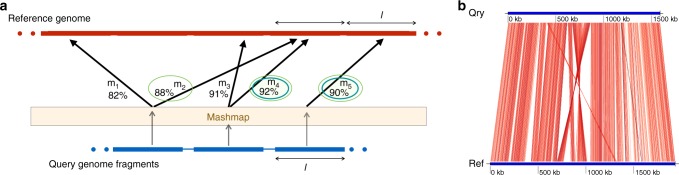
“The sized fragments are then mapped to the reference genome using Mashmap (Jain et al., 2018).”
BackgroundMethodInfluentialTrigg, S. A., Venkataraman, Y. R., Gavery, M. R., Roberts, S., Bhattacharya, D., Downey‐Wall, A. M., Eirin-Lopez, J. M., Johnson, K. M., Lotterhos, K. E., Puritz, J. B., et al. (2021) · Molecular Ecology Resources · doi:10.1111/1755-0998.13542 · Cited by 23
Ataeian, M., Vadlamani, A., Haines, M., Mosier, D., Dong, X., Kleiner, M., Strous, M., & Hawley, A. K. (2021) · iScience · doi:10.1016/j.isci.2021.103405 · Cited by 23
“Genome synteny and average nucleotide identities between genomes were calculated using FastANI (Jain et al., 2018).”
MethodInfluentialYi, B., & Dalpke, A. H. (2021) · Infection Genetics and Evolution · doi:10.1016/j.meegid.2021.105183 · Cited by 23
Aulitto, M., Martínez-Álvarez, L., Fiorentino, G., Limauro, D., Peng, X., & Contursi, P. (2022) · International Journal of Molecular Sciences · doi:10.3390/ijms23063135 · Cited by 23
Allen, J. L., Doidge, N. P., Bushell, R. N., Browning, G. F., & Marenda, M. S. (2022) · PLoS ONE · doi:10.1371/journal.pone.0264848 · Cited by 23
Cayemitte, P. E., Raymond, P., & Aïder, M. (2022) · ACS Food Science & Technology · doi:10.1021/acsfoodscitech.2c00173 · Cited by 23
Sheik, C. S., Natwora, K. E., Alexson, E. E., Callaghan, J. D., Sailer, A., Schreiner, K. M., Steinman, B. A., Finkenbinder, M. S., Filstrup, C. T., & Bramburger, A. J. (2022) · Journal of Great Lakes Research · doi:10.1016/j.jglr.2022.08.002 · Cited by 23
Koch, M., Noonan, A. J. C., Qiu, Y., Dofher, K., Kieft, B., Mottahedeh, S., Shastri, M., & Hallam, S. (2022) · Frontiers in Bioengineering and Biotechnology · doi:10.3389/fbioe.2022.932695 · Cited by 23
“Furthermore, the pairwise average nucleotide identity (ANI) between P. yuhuli AB48 and the members of this genus was calculated using FastANI (Jain et al., 2018).”
MethodJirakkakul, J., Khoiri, A. N., Duangfoo, T., Dulsawat, S., Sutheeworapong, S., Petsong, K., Wattanachaisaereekul, S., Paenkaew, P., Tachaleat, A., Cheevadhanarak, S., et al. (2023) · PLoS ONE · doi:10.1371/journal.pone.0281505 · Cited by 23
Roberts, L. W., Enoch, D., Khokhar, F., Blackwell, G. A., Wilson, H. J., Warne, B., Gouliouris, T., Iqbal, Z., & Török, M. E. (2023) · Microbial Genomics · doi:10.1099/mgen.0.001048 · Cited by 23
Novel diversity of polar Cyanobacteria revealed by genome-resolved metagenomics
Pessi, I. S., Popin, R. V., Durieu, B., Lara, Y. J., Tytgat, B., Savaglia, V., Roncero‐Ramos, B., Hultman, J., Verleyen, E., Vyverman, W., et al. (2023) · Microbial Genomics · doi:10.1099/mgen.0.001056 · Cited by 23
Synergy between Comammox and Anammox Bacteria in Wastewater Ammonia Removal
Xu, S., Chai, W., Xiao, R., Wang, B., & Lü, H. (2023) · ACS ES&T Engineering · doi:10.1021/acsestengg.3c00144 · Cited by 23
A global Corynebacterium diphtheriae genomic framework sheds light on current diphtheria reemergence
Hennart, M., Crestani, C., Bridel, S., Armatys, N., Brémont, S., Carmi–Leroy, A., Landier, A., Passet, V., Fonteneau, L., Vaux, S., et al. (2023) · Peer Community Journal · doi:10.24072/pcjournal.307 · Cited by 23
Investigating the cecal microbiota of broilers raised in extensive and intensive production systems
Marcolla, C. S., Ju, T., Lantz, H. L., & Willing, B. P. (2023) · Microbiology Spectrum · doi:10.1128/spectrum.02352-23 · Cited by 25
“Isolates that concomitantly presented 16S rRNA identity below 98% against the NCBI rRNA/ITS database using BLAST and OrthoANIu values lower than 95% against NCBI reference genomes were considered new species (105).”
MethodAfordoanyi, D. M., Akosah, Y. A., Shnakhova, L. M., Saparmyradov, K., Diabankana, R. G. C., & Validov, S. Z. (2023) · Microorganisms · doi:10.3390/microorganisms12010088 · Cited by 23
“The preliminary assembled genome was then blasted for closely related genomes using FASTANI [20], ANIb (average nucleotide identity based on BLAST), and JspeciesWS (https://jspecies. ribohost.com/jspeciesws/#home, accessed 13 April 2023).”
MethodTarget enrichment of metazoan mitochondrial DNA with hybridization capture probes
Sevigny, J. L., Leasi, F., Simpson, S., Domênico, M. D., Jörger, K. M., Norenburg, J. L., & Thomas, W. K. (2020) · Ecological Indicators · doi:10.1016/j.ecolind.2020.106973 · Cited by 23
Morabito, C., Cigliano, R. A., Maréchal, É., Rébeillé, F., & Amato, A. (2020) · Data in Brief · doi:10.1016/j.dib.2020.105729 · Cited by 23
“Average Nucleotide Identity between A. limacinum ATCC R © MYA1381 TM nd A. limacinum strain CCAP_4062/1 genomes was calculated with FastANI [27] .”
MethodGenomic sketching with multiplicities and locality-sensitive hashing using Dashing 2Preprint
Baker, D. N., & Langmead, B. (2023) · Genome Research · doi:10.1101/gr.277655.123 · Cited by 23
“33 (Jain et al. 2018).”
BackgroundDeng, Z., Chen, H., Wang, J., Zhang, N., Han, Z., Xie, Y., Zhang, X., Fang, X., Yu, H., Zhang, D., et al. (2023) · Environmental Science & Technology · doi:10.1021/acs.est.3c03738 · Cited by 22
Lu, X., Cheng, G., Wang, P., Wang, X., Dong, Z., Mu, Q.-J., Yu, J., Jiang, Z., Xiao, J., Feng, H., et al. (2024) · Aquaculture · doi:10.1016/j.aquaculture.2024.740661 · Cited by 22
Spatial ecology of Haemophilus and Aggregatibacter in the human oral cavity
Giacomini, J. J., Torres‐Morales, J., Tang, J., Dewhirst, F. E., Borisy, G. G., & Welch, J. L. M. (2024) · Microbiology Spectrum · doi:10.1128/spectrum.04017-23 · Cited by 25
“We then performed quality control and dereplication steps to ensure that each genome in the collection had a completeness of at least 90%, had a contamination level below 5% as estimated by CheckM (21), and had no more than 98% average nucleotide identity (ANI) with any other genome (22).”
MethodChen, M., Trotter, V. V., Walian, P. J., Chen, Y., Lopez, R., Lui, L. M., Nielsen, T., Malana, R. G., Thorgersen, M. P., Hendrickson, A. J., et al. (2024) · The ISME Journal · doi:10.1093/ismejo/wrae151 · Cited by 23
Cheng, M., Xu, Y., Cui, X., Wei, X., Chang, Y., Xu, J., Lei, C., Xue, L., Zheng, Y., Wang, Z., et al. (2024) · Nature Communications · doi:10.1038/s41467-024-52713-8 · Cited by 23
Wang, Q., Chen, R., Liu, H., Liu, Y., Li, J., Wang, Y., Jin, Y., Bai, Y., Song, Z., Lu, X., et al. (2024) · Virus Research · doi:10.1016/j.virusres.2024.199473 · Cited by 22
“34 (Jain et al., 2018).”
Efficiently constructing complete genomes with CycloneSEQ to fill gaps in bacterial draft assemblies
Liang, H., Zou, Y., Wang, M., Hu, T., Wang, H., He, W., Ju, Y., Guo, R., Chen, J., Guo, F., et al. (2025) · Gigabyte · doi:10.46471/gigabyte.154 · Cited by 22
High-resolution metagenome assembly for modern long reads with myloasm
Shaw, J., Marin, M. G., & Li, H. (2026) · Nature Biotechnology · doi:10.1038/s41587-026-03053-z · Cited by 34
Magnuson, E., Mykytczuk, N., Pellerin, A., Goordial, J., Twine, S. M., Wing, B. A., Foote, S. J., Fulton, K. M., & Whyte, L. G. (2020) · Environmental Microbiology · doi:10.1111/1462-2920.14916 · Cited by 24
Kogay, R., Wolf, Y. I., Koonin, E. V., & Zhaxybayeva, O. (2020) · mBio · doi:10.1128/mbio.01206-20 · Cited by 20
Khaleque, H. N., González, C., Johnson, D. B., Kaksonen, A. H., Holmes, D. S., & Watkin, E. L. J. (2020) · INTERNATIONAL JOURNAL OF SYSTEMATIC AND EVOLUTIONARY MICROBIOLOGY · doi:10.1099/ijsem.0.004519 · Cited by 22
Triclosan Tolerance Is Driven by a Conserved Mechanism in Diverse Pseudomonas Species
McFarland, A. G., Bertucci, H. K., Littman, E., Shen, J., Huttenhower, C., & Hartmann, E. M. (2021) · Applied and Environmental Microbiology · doi:10.1128/aem.02924-20 · Cited by 22
“FastANI was used for pairwise ANI calculations between all 160 type strains (31).”
BackgroundMethodGould, A. L., Fritts-Penniman, A. L., & Gaisiner, A. (2021) · Frontiers in Ecology and Evolution · doi:10.3389/fevo.2021.630207 · Cited by 19
“First, the program fastANI (Jain et al., 2018) was used to calculate the whole-genome average nucleotide identity (ANI) of each sample relative to several available reference genomes of Photobacterium species previously isolated from fish light organs, P. kishitanii pjapo1.”
Yi, H., Lin, Y., Lin, C., & Jin, W. (2021) · Genome biology · doi:10.1186/s13059-021-02303-4 · Cited by 21
Wang, X., Shen, S., Wu, H., Wang, H., Wang, L., & Lü, Z. (2021) · Microorganisms · doi:10.3390/microorganisms9071417 · Cited by 22
“And organisms belonging to the same species typically showing ≥95% ANI among themselves [21].”
BackgroundRakitin, A. L., Ermakova, A. Y., Beletsky, A. V., Ma, P., Mardanov, A. V., & Ravin, N. V. (2021) · Biology · doi:10.3390/biology10090871 · Cited by 22
“lwoffii were above the 95% threshold for species delineation [51,52], indicating that all of them belong to the same species (Supplementary Table S2).”
BackgroundThe, H. C., Minh, C. N. N., Hong, C. T. T., Nguyen, T. N. T., Pike, L. J., Zellmer, C., Duc, T. P., Tran, T.-A., Thanh, T. H., Van, M. P., et al. (2021) · Microbiology Spectrum · doi:10.1128/spectrum.00526-21 · Cited by 21
“Four control strains were also included: B. pseudocatenulatum DSM20438, B. longum subsp. longum NCIMB 8809, Staphylococcus aureus ATCC 25923, and S. aureus ATCC 29213.”
BackgroundInfluentialComparative Genomics of Pseudomonas stutzeri Complex: Taxonomic Assignments and Genetic Diversity
Li, X., Yang, Z., Wang, Z., Li, W., Zhang, G., & Yan, H. (2022) · Frontiers in Microbiology · doi:10.3389/fmicb.2021.755874 · Cited by 22
“These two trees showed accordance with each other in strain grouping (P 0.05) by Kendall-Colijn test with λ = 0 implemented in R package Treespace (Jombart et al., 2017).”
MethodInfluentialSemenova, E., Grouzdev, D. S., Sokolova, D. S., Tourova, T. P., Poltaraus, A. B., Potekhina, N. V., Shishina, P. N., Bolshakova, M. A., Avtukh, A. N., Ianutsevich, E. A., et al. (2022) · Microorganisms · doi:10.3390/microorganisms10020378 · Cited by 22
Quiroz-Morales, S. E., García‐Reyes, S., Ponce‐Soto, G. Y., Servín‐González, L., & Soberón‐Chávez, G. (2022) · Diversity · doi:10.3390/d14050345 · Cited by 22
Tang, J., Zhou, H., Yao, D., Riaz, S., You, D., Klepacz-Smółka, A., & Daroch, M. (2022) · Frontiers in Microbiology · doi:10.3389/fmicb.2022.876272 · Cited by 22
Kumar, S., Bansal, K., & Sethi, S. K. (2022) · Food Microbiology · doi:10.1016/j.fm.2022.104039 · Cited by 22
It is time for a new type of type to facilitate naming the microbial world
Palmer, M., Sutcliffe, I. C., Venter, S. N., & Hedlund, B. P. (2022) · New Microbes and New Infections · doi:10.1016/j.nmni.2022.100991 · Cited by 22
“Those decisions leverage the power of average nucleotide identity to unambiguously identify species [43] and marker gene phylogenetic approaches to guide decisions on taxonomic placement and rank [11].”
BackgroundProPan: a comprehensive database for profiling prokaryotic pan-genome dynamics
Zhang, Y., Zhang, H., Zhang, Z., Qian, Q., Zhang, Z., & Xiao, J. (2022) · Nucleic Acids Research · doi:10.1093/nar/gkac832 · Cited by 22
Comparative genomics of Staphylococcus capitis reveals species determinants
Chong, C. E., Bengtsson, R. J., & Horsburgh, M. J. (2022) · Frontiers in Microbiology · doi:10.3389/fmicb.2022.1005949 · Cited by 22
“2 was used with default settings to compare all isolates of potential ssp. ureolyticus and ssp. capitis isolates, using the recommended cutoff score of >95% that indicates isolates belong to the same species (Jain et al., 2018).”
MethodGourmelon, M., Boukerb, A. M., Nabi, N., Banerji, S., Joensen, K., Serghine, J., Cormier, A., Mégraud, F., Lehours, P., Alter, T., et al. (2022) · Applied and Environmental Microbiology · doi:10.1128/aem.01368-22 · Cited by 22
“3) (59) and PYANI with blast option (v.”
BackgroundWhole Genome Sequence of an Edible Mushroom Oudemansiella raphanipes (Changgengu)
Zhu, L., Gao, X., Zhang, M., Hu, C., Yang, W., Guo, L., Yang, S., Yu, H., & Yu, H. (2023) · Journal of Fungi · doi:10.3390/jof9020266 · Cited by 24
McGuire, P. M., Butkevich, N., Saksena, A., Walter, M. T., Shapleigh, J. P., & Reid, M. C. (2023) · Environmental Microbiology · doi:10.1111/1462-2920.16387 · Cited by 22
Getz, E. W., Lanclos, V. C., Kojima, C. Y., Cheng, C., Henson, M. W., Schön, M. E., Ettema, T. J. G., Faircloth, B. C., & Thrash, J. C. (2023) · mSystems · doi:10.1128/msystems.00179-23 · Cited by 21
“33 (40) with default settings to identify additional SAR11 and AEGEAN-169 genomes from the Microbiomics and the OceanDNA MAG data sets.”
BackgroundCrestani, C., Arcari, G., Landier, A., Passet, V., Garnier, D., Brémont, S., Armatys, N., Carmi–Leroy, A., Toubiana, J., Badell, E., et al. (2023) · Research in Microbiology · doi:10.1016/j.resmic.2023.104113 · Cited by 22
Han, D. M., Baek, J. H., Choi, D. G., Jeon, M., Eyun, S., & Jeon, C. O. (2023) · Food Microbiology · doi:10.1016/j.fm.2023.104435 · Cited by 23
Tadesse, B. T., Svetličić, E., Zhao, S., Berhane, N., Jers, C., Solem, C., & Mijakovic̀, I. (2024) · Microbiological Research · doi:10.1016/j.micres.2024.127702 · Cited by 22
Biodegradation of humic acids by Streptomyces rochei to promote the growth and yield of corn
Zhang, G., Li, B., Yang, Y., Zhang, Z., Cheng, D., Wang, F., Wei, Z., Mao, N., Wang, S., Liu, X., et al. (2024) · Microbiological Research · doi:10.1016/j.micres.2024.127826 · Cited by 22
Schaible, G. A., Jay, Z. J., Cliff, J., Schulz, F., Gauvin, C. C., Goudeau, D., Malmstrom, R. R., Ruff, S. E., Edgcomb, V. P., & Hatzenpichler, R. (2024) · PLoS Biology · doi:10.1371/journal.pbio.3002638 · Cited by 23
Yagel, Y., Sestito, S., Motro, Y., Shnaiderman‐Torban, A., Khalfin, B., Sagi, O., Navon‐Venezia, S., Steinman, A., & Moran‐Gilad, J. (2020) · Antibiotics · doi:10.3390/antibiotics9040177 · Cited by 22
Henkel, J. V., Vogts, A., Werner, J., Neu, T. R., Spröer, C., Bunk, B., & Schulz‐Vogt, H. N. (2020) · Systematic and Applied Microbiology · doi:10.1016/j.syapm.2020.126155 · Cited by 24
Rocha, F. Y. O., Junior, A. S. N., de Matos, G. F., Gitahy, P. D. M., Rossi, C. N., Vidal, M. S., & Baldani, J. I. (2021) · Frontiers in Microbiology · doi:10.3389/fmicb.2021.659965 · Cited by 22
“In those cases where the taxonomic species identification are dubious, the solution would be to sequence the whole genome of the strains and use the Average Nucleotide Identity (ANI) as a tool to identify the Bacillus species (Jain et al., 2018).”
MethodLugli, G. A., Calvete-Torre, I., Alessandri, G., Milani, C., Turroni, F., Laiolo, P., Ossiprandi, M. C., Margolles, A., Ruiz, L., & Ventura, M. (2021) · Systematic and Applied Microbiology · doi:10.1016/j.syapm.2021.126273 · Cited by 21
Dindhoria, K., Kumar, R., Bhargava, B., & Kumar, R. (2024) · mSystems · doi:10.1128/msystems.01050-23 · Cited by 21
Chan, Y.-X., Cao, H., Jiang, S., Li, X., Fung, K.-K., Lee, C.-H., Sridhar, S., Chen, J. H.-K., & Ho, P. (2024) · Microbiology Spectrum · doi:10.1128/spectrum.00541-24 · Cited by 21
“1) using FastANI (49).”
MethodSudo, M., Osvatic, J., Taylor, J. D., Dufour, S. C., Prathep, A., Wilkins, L. G. E., Rattei, T., Yuen, B., & Petersen, J. M. (2024) · mSystems · doi:10.1128/msystems.01135-23 · Cited by 21
“3 (59), with a program-sug gested 95% one-way ANI used as the threshold for species delimitation.”
MethodTemporospatial dynamics and host specificity of honeybee gut bacteria
Luo, S., Zhang, X., & Zhou, X. Y. (2024) · Cell Reports · doi:10.1016/j.celrep.2024.114408 · Cited by 21
“23 There is a growing number of formally identified species within the same phylotype in the honeybee gut microbiota (Table 1).”
Poli, N., Keel, C., & Garrido‐Sanz, D. (2024) · Frontiers in Microbiology · doi:10.3389/fmicb.2024.1440341 · Cited by 21
Filippis, F. D., Valentino, V., Yap, M., Cabrera‐Rubio, R., Barcenilla, C., Carlino, N., Cobo-Díaz, J. F., Quijada, N. M., Calvete‐Torre, I., Ruas‐Madiedo, P., et al. (2024) · npj Biofilms and Microbiomes · doi:10.1038/s41522-024-00541-5 · Cited by 24
Feng, Y., Yang, Y., Hu, Y., Xiao, Y., Xie, Y., Wei, L., Wen, H., Zhang, L., McNally, A., & Zong, Z. (2024) · Cell Reports · doi:10.1016/j.celrep.2024.114602 · Cited by 22
Adaptive traits of Nitrosocosmicus clade ammonia-oxidizing archaea
Han, S., Kim, S., Sedlacek, C. J., Farooq, A., Song, C., Lee, S.-J., Liu, S., Brüggemann, N., Rohe, L., Kwon, M., et al. (2024) · mBio · doi:10.1128/mbio.02169-24 · Cited by 21
Becker, J. W., Pollak, S., Berta-Thompson, J. W., Becker, K. W., Braakman, R., Dooley, K. D., Hackl, T., Coe, A., Arellano, A. A., LeGault, K. N., et al. (2024) · mBio · doi:10.1128/mbio.03497-23 · Cited by 21
He, Z., Gao, J., Li, Q., Wei, Z., Zhang, D., & Pan, X. (2024) · Water Research · doi:10.1016/j.watres.2024.122705 · Cited by 21
Biodegradation of synthetic organic pollutants: principles, progress, problems, and perspectives
Huang, Y. L., Deng, Y., Yu, K., Li, B. J., & Zhang, T. (2025) · FEMS Microbiology Reviews · doi:10.1093/femsre/fuaf043 · Cited by 23
“Metagenomic analysis provides comprehensive taxonomic and functional insights into microbial consortia, providing species-or strain-level resolution and enabling metabolic pathway reconstruction (Kim et al. 2014 , Jain et al. 2018 ; Fig.”
Decoding the Genomic Variability among Members of the Bifidobacterium dentium Species
Lugli, G. A., Tarracchini, C., Alessandri, G., Milani, C., Mancabelli, L., Turroni, F., Bunešová, V., Ruíz, L., Margollés, A., & Ventura, M. (2020) · Microorganisms · doi:10.3390/microorganisms8111720 · Cited by 21
Bioinformatic Analysis of the Campylobacter jejuni Type VI Secretion System and Effector Prediction
Robinson, L. A., Liaw, J., Omole, Z., Xia, D., van Vliet, A. H. M., Corcionivoschi, N., Hachani, A., & Gundogdu, O. (2021) · Frontiers in Microbiology · doi:10.3389/fmicb.2021.694824 · Cited by 22
“ANI was calculated using FastANI with a fragment length of 1000 bp against the reference C. jejuni NCTC11168 (AL111168) strain (Jain et al., 2018).”
MethodXiao, T., Guo, Q., Zhou, Y., Shen, P., Wang, Y., Fang, Q., Li, M., Zhang, S., Guo, L., Yu, X., et al. (2022) · Frontiers in Microbiology · doi:10.3389/fmicb.2022.782210 · Cited by 22
“ANI values above 95% between genomes of these isolates denote the same source (Jain et al., 2018).”
Backgroundde Oliveira, L. B., Calchi, A. C., Vultão, J. G., Yogui, D. R., Kluyber, D., Alves, M. H., Desbiez, A. L. J., de Santi, M., Girotto-Soares, A., Soares, J. F., et al. (2022) · Transboundary and Emerging Diseases · doi:10.1111/tbed.14523 · Cited by 21
Diverse interactions of five core type III effectors from Ralstonia solanacearum with plants
Cong, S., Li, J., Xiong, Z.-Z., & Wei, H. (2022) · Journal of genetics and genomics/Journal of Genetics and Genomics · doi:10.1016/j.jgg.2022.04.018 · Cited by 21
Loss of Novel Diversity in Human Gut Microbiota Associated with Ongoing Urbanization in China
Sun, S., Wang, H., Howard, A. G., Zhang, J., Su, C., Wang, Z., Du, S., Fodor, A. A., Gordon‐Larsen, P., & Zhang, B. (2022) · mSystems · doi:10.1128/msystems.00200-22 · Cited by 22
“MAGs that were unclassified at the species level were grouped at the lowest taxonomic rank, and FastANI (28) was used to calculate the average nucleotide Loss of Microbial Diversity with Ongoing Urbanization mSystems”
MethodInfluentialChukamnerd, A., Pomwised, R., Jeenkeawpiam, K., Sakunrang, C., Chusri, S., & Surachat, K. (2022) · Microbiological Research · doi:10.1016/j.micres.2022.127136 · Cited by 21
Mao, Z., Yang, P., Liu, H., Mao, Y., Lei, Y., Hou, D., Ma, H., Liao, X., & Jiang, W. (2022) · Frontiers in Microbiology · doi:10.3389/fmicb.2022.880946 · Cited by 21
“FastANI (Jain et al., 2018) was used to calculate the whole-genome average nucleotide identity (ANI) with the parameter “fragLen” being set to 1000.”
BackgroundMethodExploring the biodiversity of Bifidobacterium asteroides among honey bee microbiomes
Lugli, G. A., Fontana, F., Tarracchini, C., Mancabelli, L., Milani, C., Turroni, F., & Ventura, M. (2022) · Environmental Microbiology · doi:10.1111/1462-2920.16223 · Cited by 19
“For each genome pair, the ANI value was calculated using the software fastANI (Jain et al., 2018).”
InfluentialAndrew, S. M., Wilson, T., Smith, S. N., Marchetti, A., & Septer, A. N. (2022) · ISME Communications · doi:10.1038/s43705-022-00181-w · Cited by 21
VeChat: correcting errors in long reads using variation graphs
Luo, X. L., Kang, X., & Schönhuth, A. (2022) · Nature Communications · doi:10.1038/s41467-022-34381-8 · Cited by 20
Massively parallel single-cell genomics of microbiomes in rice paddies
Aoki, W., Kogawa, M., Matsuda, S., Matsubara, K., Hirata, S., Nishikawa, Y., Hosokawa, M., Takeyama, H., Matoh, T., & Ueda, M. (2022) · Frontiers in Microbiology · doi:10.3389/fmicb.2022.1024640 · Cited by 21
Metadata
- Authors
- Jain, C., Rodriguez-R, L. M., Phillippy, A. M., Konstantinidis, K. T., & Aluru, S.
- Affiliations
- National Institutes of Health (US)
- Georgia Institute of Technology (US)
- Corresponding author
- Konstantinidis, Konstantinos T.
- Aluru, Srinivas
- ORCID
- Venue
- Nature Communications
- Published
- 2018-11-30
- Volume
- 9
- Issue
- 1
- Pages
- 5114-5114
- ISSN
- 2041-1723 (ISSN-L)
- PMC
- PMC6269478
- OpenAlex
- W2951254987
- Cited by
- 5,748
- References
- 40
- Citations by year
- 2026: 1107 · 2025: 1110 · 2024: 977 · 2023: 789 · 2022: 695 · 2021: 617 · 2020: 305 · 2019: 128 · 2018: 16
- FWCI
- 96.11
- Type
- journal article
- Language
- en
- Open access
- gold
- doi.org
- Locations
- Nature Communications (publishedVersion, cc-by)
- bioRxiv (Cold Spring Harbor Laboratory) (acceptedVersion, cc-by)
- Europe PMC (PubMed Central) (publishedVersion, other-oa)
- PubMed Central (publishedVersion, cc-by)
- PubMed (publishedVersion)
- RePEc: Research Papers in Economics (submittedVersion)
- DOAJ (DOAJ: Directory of Open Access Journals) (submittedVersion, cc-by-sa)
- DOAJ (DOAJ: Directory of Open Access Journals) (submittedVersion)
- Funders
- National Science Foundation (1416259, 1816027, 1356288)
- Topics
- Life Sciences › Biochemistry, Genetics and Molecular Biology › Molecular Biology › Genomics and Phylogenetic Studies
- Health Sciences › Medicine › Microbiology (medical) › Bacterial Identification and Susceptibility Testing
- Physical Sciences › Environmental Science › Ecology › Microbial Community Ecology and Physiology
- Keywords
- average nucleotide identity, prokaryotic genomes, species boundaries, taxonomic classification, draft genome sequence
- MeSH terms
- Phylogeny, Prokaryotic Cells, Genetic Variation, Databases, Factual, Genome, Bacterial, Sequence Analysis, DNA
About these checks
Registry, retraction, Cites and statistics results are computed, not judged, with one exception: a printed reference that no index lists is read once by a model before it counts as a citation error. Claims are extracted by a model and kept only when their quote appears verbatim in the text; each cited source is then checked, with a model’s help, for whether it says what the claim relies on. Those verdicts can be wrong — read the claim’s quote and the cited source before relying on one.
Statistics and arithmetic are recomputed, not judged.
Confidence bands are shown only for fields calibrated on our annotated test set. None is calibrated yet, so no band is shown.
What counts as a claim ›How we measure confidence ›How we check this ›
Are you an author, or do you see a problem with this page? Request a review
