

Rbpj expression in regulatory T cells is critical for restraining TH2 responses
Open accessThe DOI matches its Crossref record; 71 of the 71 references it cites were found in a registry or an index.
Abstract
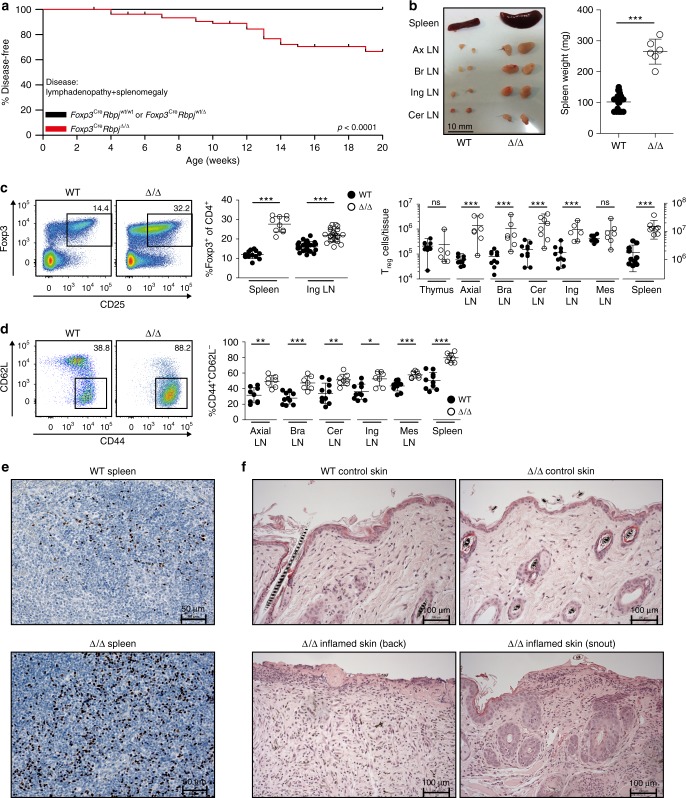
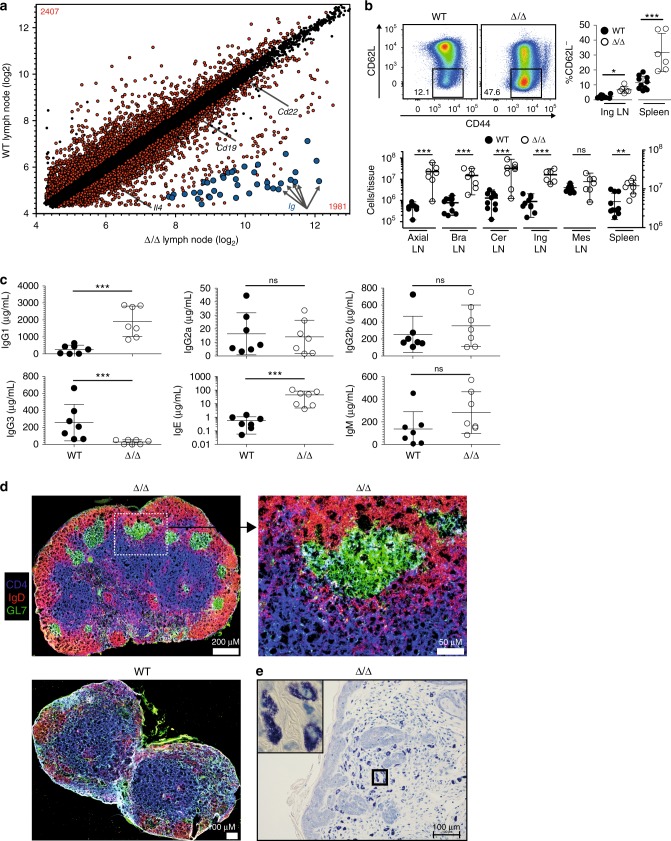
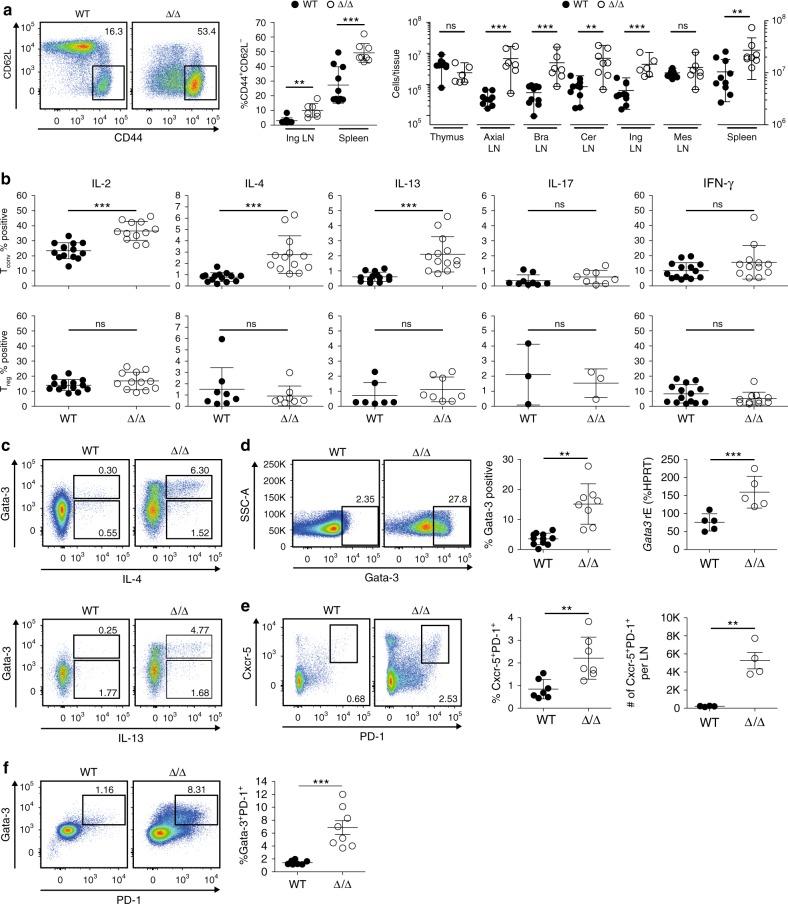
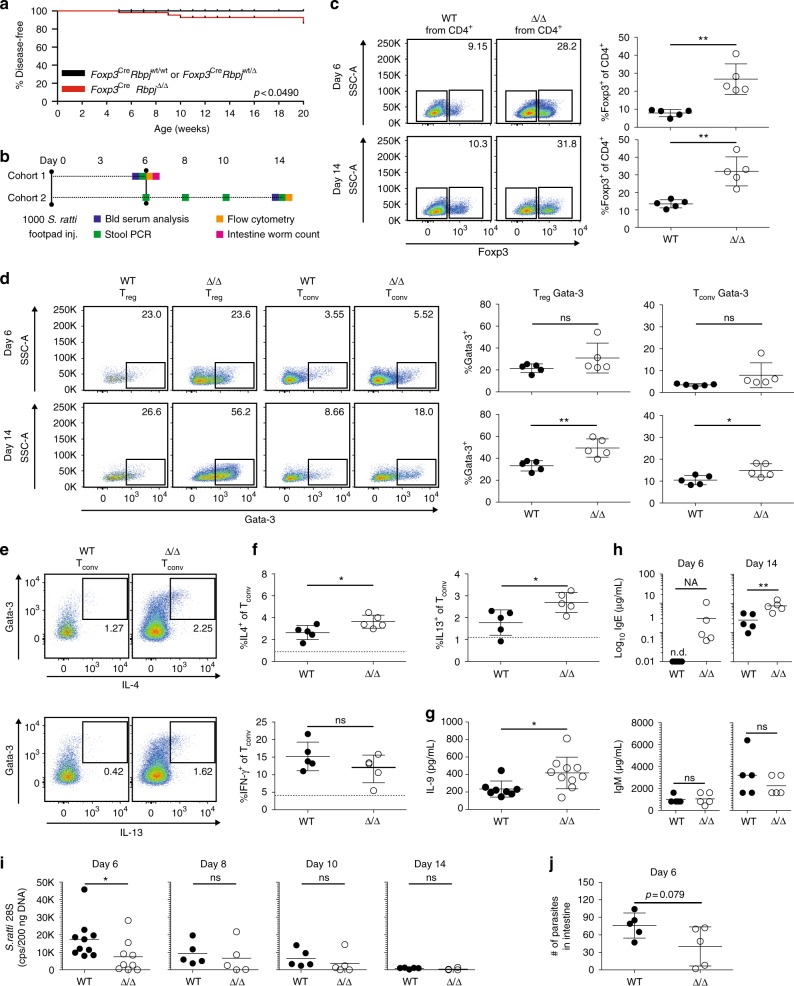
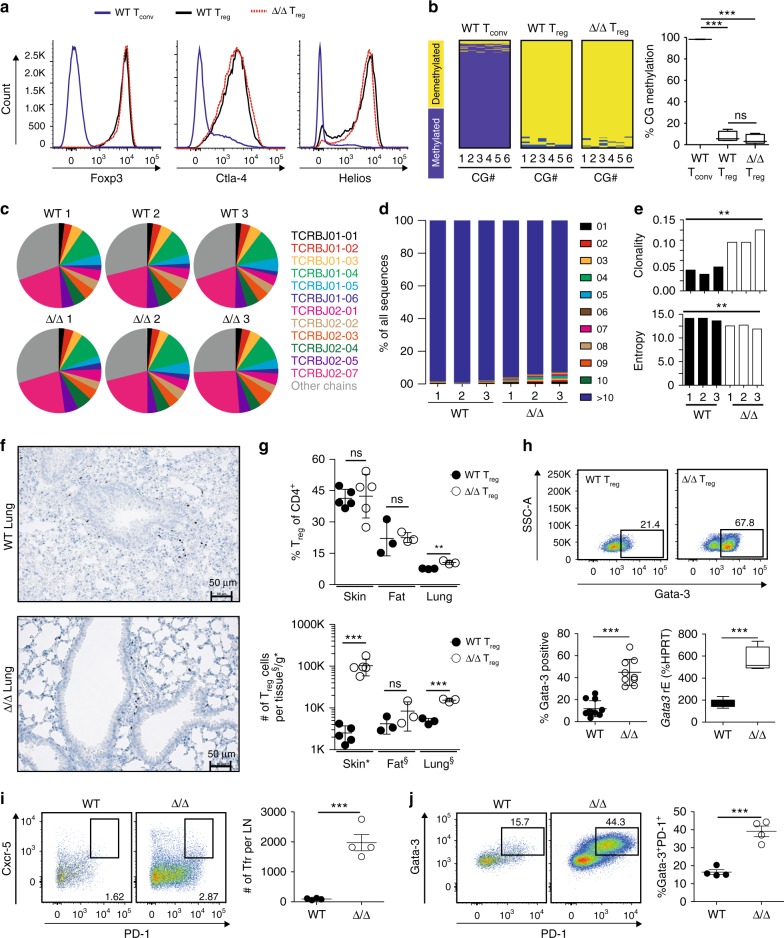
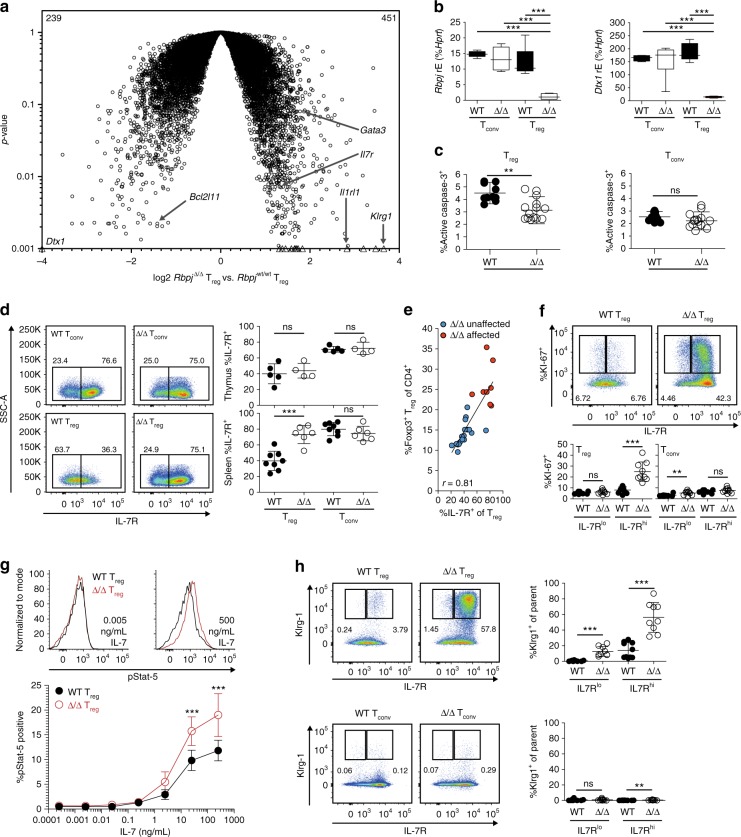
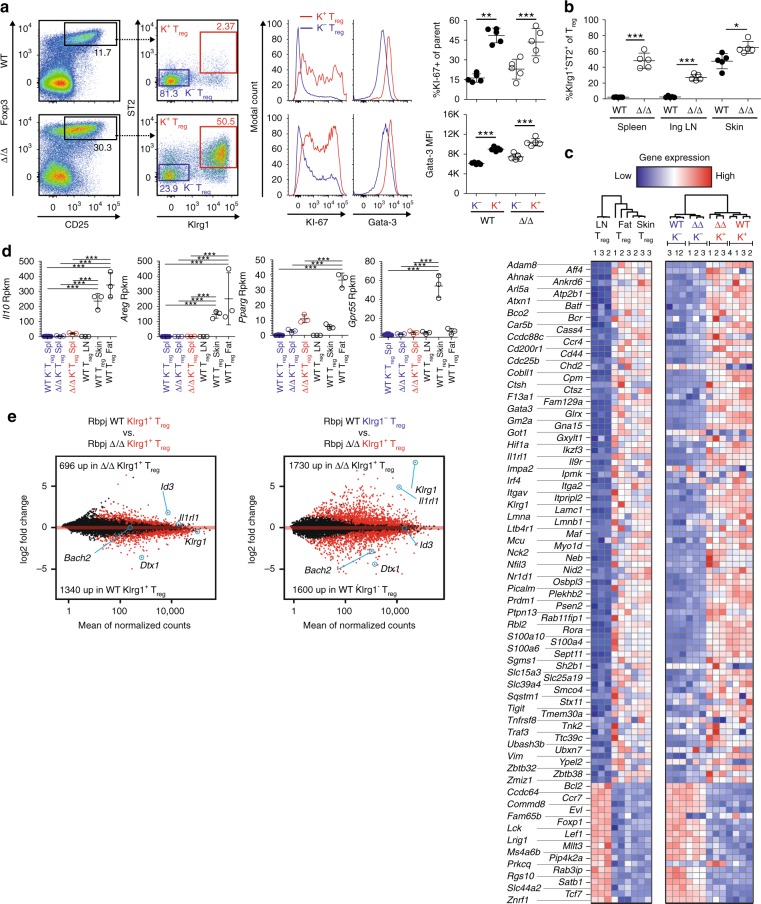
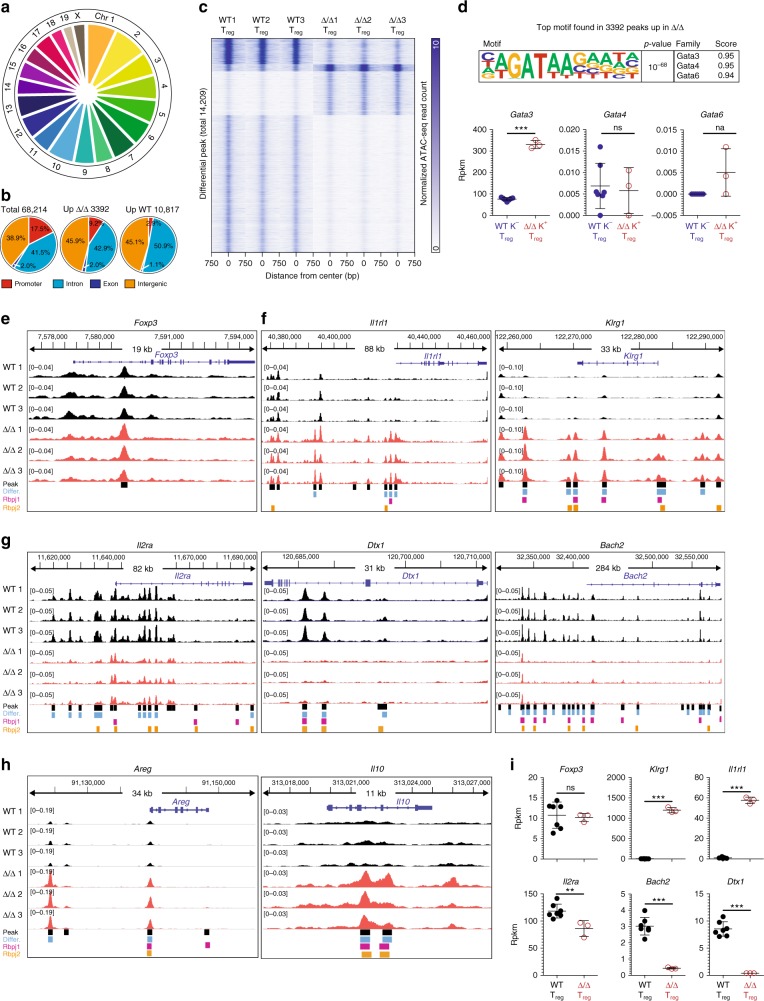
The transcriptional regulator Rbpj is involved in T-helper (T H) subset polarization, but its function in T reg cells remains unclear. Here we show that T reg-specific Rbpj deletion leads to splenomegaly and lymphadenopathy despite increased numbers of T reg cells with a polyclonal TCR repertoire. A specific defect of Rbpj-deficient T reg cells in controlling T H 2 polarization and B cell responses is observed, leading to the spontaneous formation of germinal centers and a T H 2-associated immunoglobulin class switch. The observed phenotype is environment-dependent and can be induced by infection with parasitic nematodes. Rbpj-deficient T reg cells adopt open chromatin landscapes and gene expression profiles reminiscent of tissue-derived T H 2-polarized T reg cells, with a prevailing signature of the transcription factor Gata-3. Taken together, our study suggests that T reg cells require Rbpj to specifically restrain T H 2 responses, including their own excessive T H 2-like differentiation potential.
Overview
The claims and statistics of this paper haven’t been checked yet.
Free: it reads the open-access text and checks the first 5 claims that cite a source we can check. Create a free account to check every claim.
Integrity signals
Registry
Cites
Statistics
Figures
Verification
Claims the paper makes
The claims and statistics of this paper haven’t been checked yet.
Free: it reads the open-access text and checks the first 5 claims that cite a source we can check. Create a free account to check every claim.
Claims other papers make about this one
Each is checked against this paper’s own text: does it say what the citing paper says it does?
The source backs part of the claim, not all of it — or backs it for a different population, condition or comparison.
In the citing paper
“Tissue Treg cell precursor development is initiated in lymphatic organs and, thereby, follows a multistep model [375, 377, 452, 453].”
From Guidelines for the use of flow cytometry and cell sorting in immunological studies (third edition) (2021) · cites this paper as [377]
Experimental — accuracy not yet measured
Self-check
Percentages, sums and reported differences re-computed from the paper’s own numbers.
The self-check needs the paper’s full text.
Citations
Cites
Fast gapped-read alignment with Bowtie 2
Langmead, B., & Salzberg, S. L. (2012) · Nature Methods · doi:10.1038/nmeth.1923 · Cited by 56,400
STAR: ultrafast universal RNA-seq aligner
Dobin, A., Davis, C. A., Schlesinger, F., Drenkow, J., Zaleski, C., Jha, S., Batut, P., Chaisson, M., & Gingeras, T. R. (2013) · Bioinformatics · doi:10.1093/bioinformatics/bts635 · Cited by 51,709
BEDTools: a flexible suite of utilities for comparing genomic features
Quinlan, A. R., & Hall, I. M. (2010) · Bioinformatics · doi:10.1093/bioinformatics/btq033 · Cited by 27,437
An integrated encyclopedia of DNA elements in the human genome
The ENCODE Project Consortium (2012) · Nature · doi:10.1038/nature11247 · Cited by 18,072
Differential expression analysis for sequence count data
Anders, S., & Huber, W. (2010) · Genome Biology · doi:10.1186/gb-2010-11-10-r106 · Cited by 15,581
Heinz, S., Benner, C., Spann, N., Bertolino, E., Lin, Y. C., Laslo, P., Cheng, J. X., Murre, C., Singh, H., & Glass, C. K. (2010) · Molecular Cell · doi:10.1016/j.molcel.2010.05.004 · Cited by 13,382
Control of Regulatory T Cell Development by the Transcription Factor Foxp3
Hori, S., Nomura, T., & Sakaguchi, S. (2003) · Science · doi:10.1126/science.1079490 · Cited by 8,187
Foxp3 programs the development and function of CD4+CD25+ regulatory T cells
Fontenot, J. D., Gavin, M. A., & Rudensky, A. Y. (2003) · Nature Immunology · doi:10.1038/ni904 · Cited by 7,745
Buenrostro, J. D., Giresi, P. G., Zaba, L. C., Chang, H. Y., & Greenleaf, W. J. (2013) · Nature Methods · doi:10.1038/nmeth.2688 · Cited by 6,422
The Role of Tumoral FOXP3 on Cell Proliferation, Migration, and Invasion in Gastric Cancer
Zhang, L., Xu, J., Zhang, X., Zhang, Y., Wang, L., Huang, X., & Xu, Z. (2017) · Cellular Physiology and Biochemistry · doi:10.1159/000479442 · Cited by 4,088
Open source clustering software
de Hoon, M. J. L., Imoto, S., Nolan, J., & Miyano, S. (2004) · Bioinformatics · doi:10.1093/bioinformatics/bth078 · Cited by 3,043
Java Treeview—extensible visualization of microarray data
Saldanha, A. J. (2004) · Bioinformatics · doi:10.1093/bioinformatics/bth349 · Cited by 2,991
An essential role for Scurfin in CD4+CD25+ T regulatory cells
Khattri, R., Cox, T., Yasayko, S.-A., & Ramsdell, F. (2003) · Nature Immunology · doi:10.1038/ni909 · Cited by 2,856
Brunkow, M. E., Jeffery, E. W., Hjerrild, K. A., Paeper, B., Clark, L. B., Yasayko, S.-A., Wilkinson, J. E., Galas, D., Ziegler, S. F., & Ramsdell, F. (2001) · Nature Genetics · doi:10.1038/83784 · Cited by 2,636
Sambamba: fast processing of NGS alignment formats
Tarasov, A., Vilella, A. J., Cuppen, E., Nijman, I. J., & Prins, P. (2015) · Bioinformatics · doi:10.1093/bioinformatics/btv098 · Cited by 2,413
Feuerer, M., Herrero, L., Cipolletta, D., Naaz, A., Wong, J., Nayer, A., Lee, J., Goldfine, A. B., Benoist, C., Shoelson, S., et al. (2009) · Nature Medicine · doi:10.1038/nm.2002 · Cited by 2,145
Self-citationWildin, R. S., Ramsdell, F., Peake, J., Faravelli, F., Casanova, J.-L., Buist, N., Levy-Lahad, E., Mazzella, M., Goulet, O., Perroni, L., et al. (2001) · Nature Genetics · doi:10.1038/83707 · Cited by 1,922
Regulatory T cells prevent catastrophic autoimmunity throughout the lifespan of mice
Kim, J. M., Rasmussen, J. P., & Rudensky, A. Y. (2007) · Nature Immunology · doi:10.1038/ni1428 · Cited by 1,820
Regulatory T Cell-Derived Interleukin-10 Limits Inflammation at Environmental Interfaces
Rubtsov, Y. P., Rasmussen, J. P., Chi, E. Y., Fontenot, J., Castelli, L., Ye, X., Treuting, P., Siewe, L., Roers, A., Henderson, W. R., et al. (2008) · Immunity · doi:10.1016/j.immuni.2008.02.017 · Cited by 1,586
Skewer: a fast and accurate adapter trimmer for next-generation sequencing paired-end reads
Jiang, H., Lei, R., Ding, S.-W., & Zhu, S. (2014) · BMC Bioinformatics · doi:10.1186/1471-2105-15-182 · Cited by 1,521
Koch, M. A., Tucker-Heard, G., Perdue, N. R., Killebrew, J. R., Urdahl, K. B., & Campbell, D. J. (2009) · Nature Immunology · doi:10.1038/ni.1731 · Cited by 1,258
Homeostasis of Naive and Memory T Cells
Surh, C. D., & Sprent, J. (2008) · Immunity · doi:10.1016/j.immuni.2008.11.002 · Cited by 1,193
Count-based differential expression analysis of RNA sequencing data using R and Bioconductor
Anders, S., McCarthy, D. J., Chen, Y., Okoniewski, M., Smyth, G. K., Huber, W., & Robinson, M. D. (2013) · Nature Protocols · doi:10.1038/nprot.2013.099 · Cited by 1,146
Hori, S., Nomura, T., & Sakaguchi, S. (2017) · The Journal of Immunology · doi:10.1093/jimmunol/198.3.981 · Cited by 1,066
CD4 + Regulatory T Cells Control T H 17 Responses in a Stat3-Dependent Manner
Chaudhry, A., Rudra, D., Treuting, P., Samstein, R. M., Liang, Y., Kas, A., & Rudensky, A. Y. (2009) · Science · doi:10.1126/science.1172702 · Cited by 1,000
Regulatory T-cell suppressor program co-opts transcription factor IRF4 to control TH2 responses
Zheng, Y., Chaudhry, A., Kas, A., deRoos, P., Kim, J. M., Chu, T.-T., Corcoran, L., Treuting, P., Klein, U., & Rudensky, A. Y. (2009) · Nature · doi:10.1038/nature07674 · Cited by 958
DNA methylation controls Foxp3 gene expression
Polansky, J. K., Kretschmer, K., Freyer, J., Floess, S., Garbe, A., Baron, U., Olek, S., Hamann, A., von Boehmer, H., & Huehn, J. (2008) · European Journal of Immunology · doi:10.1002/eji.200838105 · Cited by 785
Phenotypical and functional specialization of FOXP3+ regulatory T cells
Campbell, D. J., & Koch, M. A. (2011) · Nature Reviews Immunology · doi:10.1038/nri2916 · Cited by 773
Ohkura, N., Hamaguchi, M., Morikawa, H., Sugimura, K., Tanaka, A., Ito, Y., Osaki, M., Tanaka, Y., Yamashita, R., Nakano, N., et al. (2012) · Immunity · doi:10.1016/j.immuni.2012.09.010 · Cited by 754
Interleukin 2 Signaling Is Required for CD4+ Regulatory T Cell Function
Furtado, G. C., de Lafaille, M. A. C., Kutchukhidze, N., & Lafaille, J. J. (2002) · The Journal of Experimental Medicine · doi:10.1084/jem.20020190 · Cited by 625
GATA3 controls Foxp3+ regulatory T cell fate during inflammation in mice
Wohlfert, E. A., Grainger, J. R., Bouladoux, N., Konkel, J. E., Oldenhove, G., Ribeiro, C. H., Hall, J. A., Yagi, R., Naik, S., Bhairavabhotla, R., et al. (2011) · Journal of Clinical Investigation · doi:10.1172/jci57456 · Cited by 556
Notch Signaling in the Immune System
Radtke, F., Fasnacht, N., & MacDonald, H. R. (2010) · Immunity · doi:10.1016/j.immuni.2010.01.004 · Cited by 543
Control of T Helper 2 Responses by Transcription Factor IRF4-Dependent Dendritic Cells
Gao, Y., Nish, S. A., Jiang, R., Hou, L., Licona-Limón, P., Weinstein, J. S., Zhao, H., & Medzhitov, R. (2013) · Immunity · doi:10.1016/j.immuni.2013.08.028 · Cited by 478
An Essential Role of the Transcription Factor GATA-3 for the Function of Regulatory T Cells
Wang, Y., Su, M. A., & Wan, Y. Y. (2011) · Immunity · doi:10.1016/j.immuni.2011.08.012 · Cited by 461
Immunoglobulin class switching
Stavnezer, J. (1996) · Current Opinion in Immunology · doi:10.1016/s0952-7915(96)80058-6 · Cited by 445
BACH2 represses effector programs to stabilize Treg-mediated immune homeostasis
Roychoudhuri, R., Hirahara, K., Mousavi, K., Clever, D., Klebanoff, C. A., Bonelli, M., Sciumè, G., Zare, H., Vahedi, G., Dema, B., et al. (2013) · Nature · doi:10.1038/nature12199 · Cited by 407
Transcription factor IRF4 drives dendritic cells to promote Th2 differentiation
Williams, J. W., Tjota, M. Y., Clay, B. S., Vander Lugt, B., Bandukwala, H. S., Hrusch, C. L., Decker, D. C., Blaine, K. M., Fixsen, B. R., Singh, H., et al. (2013) · Nature Communications · doi:10.1038/ncomms3990 · Cited by 402
Direct regulation of Gata3 expression determines the T helper differentiation potential of Notch
Amsen, D., Antov, A., Jankovic, D., Sher, A., Radtke, F., Souabni, A., Busslinger, M., McCright, B., Gridley, T., & Flavell, R. A. (2007) · Immunity · doi:10.1016/j.immuni.2007.05.021 · Cited by 396
Guidance of regulatory T cell development by Satb1-dependent super-enhancer establishment
Kitagawa, Y., Ohkura, N., Kidani, Y., Vandenbon, A., Hirota, K., Kawakami, R., Yasuda, K., Motooka, D., Nakamura, S., Kondo, M., et al. (2017) · Nature Immunology · doi:10.1038/ni.3646 · Cited by 379
Noval Rivas, M., Burton, O. T., Wise, P., Charbonnier, L.-M., Georgiev, P., Oettgen, H. C., Rachid, R., & Chatila, T. A. (2015) · Immunity · doi:10.1016/j.immuni.2015.02.004 · Cited by 374
Notch Directly Regulates Gata3 Expression during T Helper 2 Cell Differentiation
Fang, T. C., Yashiro-Ohtani, Y., Del Bianco, C., Knoblock, D. M., Blacklow, S. C., & Pear, W. S. (2007) · Immunity · doi:10.1016/j.immuni.2007.04.018 · Cited by 363
Notch signaling is an important regulator of type 2 immunity
Tu, L., Fang, T. C., Artis, D., Shestova, O., Pross, S. E., Maillard, I., & Pear, W. S. (2005) · The Journal of Experimental Medicine · doi:10.1084/jem.20050923 · Cited by 284
Genome-wide DNA-methylation landscape defines specialization of regulatory T cells in tissues
Delacher, M., Imbusch, C. D., Weichenhan, D., Breiling, A., Hotz-Wagenblatt, A., Träger, U., Hofer, A.-C., Kägebein, D., Wang, Q., Frauhammer, F., et al. (2017) · Nature Immunology · doi:10.1038/ni.3799 · Cited by 282
Self-citationNOTCH1-RBPJ complexes drive target gene expression through dynamic interactions with superenhancers
Wang, H., Zang, C., Taing, L., Arnett, K. L., Wong, Y. J., Pear, W. S., Blacklow, S. C., Liu, X. S., & Aster, J. C. (2014) · Proceedings of the National Academy of Sciences · doi:10.1073/pnas.1315023111 · Cited by 252
Yu, F., Sharma, S., Edwards, J., Feigenbaum, L., & Zhu, J. (2015) · Nature Immunology · doi:10.1038/ni.3053 · Cited by 248
Schmidl, C., Klug, M., Boeld, T. J., Andreesen, R., Hoffmann, P., Edinger, M., & Rehli, M. (2009) · Genome Research · doi:10.1101/gr.091470.109 · Cited by 240
Self-citationThe different faces of Notch in T-helper-cell differentiation
Amsen, D., Antov, A., & Flavell, R. A. (2009) · Nature Reviews Immunology · doi:10.1038/nri2488 · Cited by 202
Taghon, T., Yui, M. A., & Rothenberg, E. V. (2007) · Nature Immunology · doi:10.1038/ni1486 · Cited by 195
Role of Deltex-1 as a Transcriptional Regulator Downstream of the Notch Receptor
Yamamoto, N., Yamamoto, S.-I., Inagaki, F., Kawaichi, M., Fukamizu, A., Kishi, N., Matsuno, K., Nakamura, K., Weinmaster, G., Okano, H., et al. (2001) · Journal of Biological Chemistry · doi:10.1074/jbc.m105245200 · Cited by 189
Novel application of Ki67 to quantify antigen-specific in vitro lymphoproliferation
Soares, A., Govender, L., Hughes, J., Mavakla, W., de Kock, M., Barnard, C., Pienaar, B., Janse van Rensburg, E., Jacobs, G., Khomba, G., et al. (2010) · Journal of Immunological Methods · doi:10.1016/j.jim.2010.08.007 · Cited by 171
Bach2 maintains T cells in a naive state by suppressing effector memory-related genes
Tsukumo, S.-I., Unno, M., Muto, A., Takeuchi, A., Kometani, K., Kurosaki, T., Igarashi, K., & Saito, T. (2013) · Proceedings of the National Academy of Sciences · doi:10.1073/pnas.1306691110 · Cited by 168
Concannon, C. G., Tuffy, L. P., Weisová, P., Bonner, H. P., Dávila, D., Bonner, C., Devocelle, M. C., Strasser, A., Ward, M. W., & Prehn, J. H. M. (2010) · Journal of Cell Biology · doi:10.1083/jcb.200909166 · Cited by 150
Rendeiro, A. F., Schmidl, C., Strefford, J. C., Walewska, R., Davis, Z., Farlik, M., Oscier, D., & Bock, C. (2016) · Nature Communications · doi:10.1038/ncomms11938 · Cited by 146
Self-citationControl of peripheral tolerance by regulatory T cell–intrinsic Notch signaling
Charbonnier, L., Wang, S., Georgiev, P., Sefik, E., & Chatila, T. A. (2015) · Nature Immunology · doi:10.1038/ni.3288 · Cited by 135
Id2 and Id3 maintain the regulatory T cell pool to suppress inflammatory disease
Miyazaki, M., Miyazaki, K., Chen, S., Itoi, M., Miller, M., Lu, L.-F., Varki, N., Chang, A. N., Broide, D. H., & Murre, C. (2014) · Nature Immunology · doi:10.1038/ni.2928 · Cited by 133
Interleukin‐7 can induce the activation of Jak 1, Jak 3 and STAT 5 proteins in murine T cells
Foxwell, B. M. J., Beadling, C., Guschin, D., Kerr, I., & Cantrell, D. (1995) · European Journal of Immunology · doi:10.1002/eji.1830251109 · Cited by 128
Tubular Dickkopf-3 promotes the development of renal atrophy and fibrosis
Federico, G., Meister, M., Mathow, D., Heine, G. H., Moldenhauer, G., Popovic, Z. V., Nordström, V., Kopp-Schneider, A., Hielscher, T., Nelson, P. J., et al. (2016) · JCI Insight · doi:10.1172/jci.insight.84916 · Cited by 127
Self-citationProtein kinase CK2 enables regulatory T cells to suppress excessive TH2 responses in vivo
Ulges, A., Klein, M., Reuter, S., Gerlitzki, B., Hoffmann, M., Grebe, N., Staudt, V., Stergiou, N., Bohn, T., Brühl, T.-J., et al. (2015) · Nature Immunology · doi:10.1038/ni.3083 · Cited by 119
Self-citationKim, E. H., Gasper, D. J., Lee, S. H., Plisch, E. H., Svaren, J., & Suresh, M. (2014) · The Journal of Immunology · doi:10.4049/jimmunol.1302378 · Cited by 113
Bach2–Batf interactions control Th2-type immune response by regulating the IL-4 amplification loop
Kuwahara, M., Ise, W., Ochi, M., Suzuki, J., Kometani, K., Maruyama, S., Izumoto, M., Matsumoto, A., Takemori, N., Takemori, A., et al. (2016) · Nature Communications · doi:10.1038/ncomms12596 · Cited by 108
Conditional ablation of Notch signaling in pancreatic development
Nakhai, H., Siveke, J. T., Klein, B., Mendoza-Torres, L., Mazur, P. K., Algül, H., Radtke, F., Strobl, L. J., Zimber‐Strobl, U., & Schmid, R. M. (2008) · Development · doi:10.1242/dev.013722 · Cited by 97
Self-citationGATA-3 Dose-Dependent Checkpoints in Early T Cell Commitment
Scripture-Adams, D. D., Damle, S. S., Li, L., Elihu, K. J., Qin, S., Arias, A. M., Butler, R. R., Champhekar, A., Zhang, J. A., & Rothenberg, E. V. (2014) · The Journal of Immunology · doi:10.4049/jimmunol.1301663 · Cited by 81
Deltex1 antagonizes HIF-1α and sustains the stability of regulatory T cells in vivo
Hsiao, H.-W., Hsu, T.-S., Liu, W.-H., Hsieh, W.-C., Chou, T.-F., Wu, Y.-J., Jiang, S.-T., & Lai, M.-Z. (2015) · Nature Communications · doi:10.1038/ncomms7353 · Cited by 67
Strongyloides infection in rodents: immune response and immune regulation
Breloer, M., & Abraham, D. (2016) · Parasitology · doi:10.1017/s0031182016000111 · Cited by 62
Self-citationBlankenhaus, B., Reitz, M., Brenz, Y., Eschbach, M.-L., Hartmann, W., Haben, I., Sparwasser, T., Huehn, J., Kühl, A., Feyerabend, T. B., et al. (2014) · PLoS Pathogens · doi:10.1371/journal.ppat.1003913 · Cited by 58
Self-citationMucosal mast cells are indispensable for the timely termination of Strongyloides ratti infection
Reitz, M., Brunn, M.-L., Rodewald, H.-R., Feyerabend, T. B., Roers, A., Dudeck, A., Voehringer, D., Jönsson, F., Kühl, A. A., & Breloer, M. (2017) · Mucosal Immunology · doi:10.1038/mi.2016.56 · Cited by 56
Self-citationKilbride, S. M., Farrelly, A. M., Bonner, C., Ward, M. W., Nyhan, K. C., Concannon, C. G., Wollheim, C. B., Byrne, M. M., & Prehn, J. H. M. (2010) · Journal of Biological Chemistry · doi:10.1074/jbc.m110.138107 · Cited by 45
Enforced Expression of GATA-3 Severely Reduces Human Thymic Cellularity
Taghon, T., De Smedt, M., Stolz, F., Cnockaert, M., Plum, J., & Leclercq, G. (2001) · The Journal of Immunology · doi:10.4049/jimmunol.167.8.4468 · Cited by 40
ESCHBACH, M.-L., KLEMM, U., KOLBAUM, J., BLANKENHAUS, B., BRATTIG, N., & BRELOER, M. (2010) · Parasite Immunology · doi:10.1111/j.1365-3024.2010.01199.x · Cited by 37
Self-citationNouir, N. B., Eschbach, M.-L., Piédavent, M., Osterloh, A., Kingsley, M. T., Erttmann, K. D., Brattig, N. W., Liebau, E., Fleischer, B., & Breloer, M. (2011) · Vaccine · doi:10.1016/j.vaccine.2011.11.110 · Cited by 25
Self-citationDietze, K. K., Dittmer, U., Koudaimi, D. K., Schimmer, S., Reitz, M., Breloer, M., & Hartmann, W. (2016) · PLoS neglected tropical diseases · doi:10.1371/journal.pntd.0005170 · Cited by 20
Self-citation
Research works printed but not linked: 1
- Romeis. Mikroskopische Technik, Vol. 19 (Springer Spektrum, Berlin, Heidelberg, 2015).
Cited by
Guidelines for the use of flow cytometry and cell sorting in immunological studies (second edition)
Cossarizza, A., Chang, H., Radbruch, A., Acs, A., Adam, D., Adam‐Klages, S., Agace, W. W., Aghaeepour, N., Akdis, M., Allez, M., et al. (2019) · European Journal of Immunology · doi:10.1002/eji.201970107 · Cited by 979
Self-citationGuidelines for the use of flow cytometry and cell sorting in immunological studies (third edition)
Cossarizza, A., Chang, H., Radbruch, A., Abrignani, S., Addo, R., Akdis, M., Andrä, I., Andreata, F., Annunziato, F., Arranz, E., et al. (2021) · European Journal of Immunology · doi:10.1002/eji.202170126 · Cited by 531
Self-citationTreg Heterogeneity, Function, and Homeostasis
Shevyrev, D., & Tereshchenko, V. (2020) · Frontiers in Immunology · doi:10.3389/fimmu.2019.03100 · Cited by 404
Delacher, M., Imbusch, C. D., Hotz-Wagenblatt, A., Mallm, J.-P., Bauer, K., Simon, M., Riegel, D., Rendeiro, A. F., Bittner, S., Sanderink, L., et al. (2020) · Immunity · doi:10.1016/j.immuni.2019.12.002 · Cited by 261
Self-citationFunction and Role of Regulatory T Cells in Rheumatoid Arthritis
Jiang, Q., Yang, G., Liu, Q., Wang, S., & Cui, D. (2021) · Frontiers in Immunology · doi:10.3389/fimmu.2021.626193 · Cited by 246
Metadata
- Authors
- Delacher, M., Schmidl, C., Herzig, Y., Breloer, M., Hartmann, W., Brunk, F., Kägebein, D., Träger, U., Hofer, A.-C., Bittner, S., Weichenhan, D., Imbusch, C. D., Hotz-Wagenblatt, A., Hielscher, T., Breiling, A., Federico, G., Gröne, H.-J., Schmid, R. M., Rehli, M., Abramson, J., & Feuerer, M.
- Affiliations
- German Cancer Research Center (DE)
- University Hospital Regensburg (DE)
- Weizmann Institute of Science (IL)
- Bernhard Nocht Institute for Tropical Medicine (DE)
- Technical University of Munich (DE)
- Corresponding author
- Feuerer, Markus
- ORCID
- Venue
- Nature Communications
- Published
- 2019-04-08
- Volume
- 10
- Issue
- 1
- Pages
- 1621-1621
- ISSN
- 2041-1723 (ISSN-L)
- PMC
- PMC6453958
- OpenAlex
- W2931731406
- Cited by
- 63
- References
- 71
- Citations by year
- 2026: 6 · 2025: 10 · 2024: 10 · 2023: 12 · 2022: 7 · 2021: 9 · 2020: 8 · 2019: 1
- FWCI
- 2.49
- Type
- journal article
- Language
- en
- Open access
- gold
- doi.org
- Licence
- cc-by
- creativecommons.org/licenses/by/4.0 (tdm)
- creativecommons.org/licenses/by/4.0 (vor)
- Locations
- Nature Communications (publishedVersion, cc-by)
- Europe PMC (PubMed Central) (publishedVersion, cc-by)
- PubMed Central (publishedVersion, cc-by)
- PubMed (publishedVersion)
- RePEc: Research Papers in Economics (submittedVersion)
- DOAJ (DOAJ: Directory of Open Access Journals) (submittedVersion)
- DOAJ (DOAJ: Directory of Open Access Journals) (submittedVersion, cc-by-sa)
- University of Regensburg Publication Server (University of Regensburg) (submittedVersion)
- mediaTUM (Technical University of Munich) (submittedVersion, other-oa)
- mediaTUM – the media and publications repository of the Technical University Munich (Technical University Munich) (submittedVersion)
- Funders
- Memorial Sloan-Kettering Cancer Center
- Deutsches Krebsforschungszentrum
- Deutsche Forschungsgemeinschaft (TRR221, 324392634)
- H2020 European Research Council (648145)
- Topics
- Life Sciences › Immunology and Microbiology › Immunology › T-cell and B-cell Immunology
- Life Sciences › Immunology and Microbiology › Immunology › Psoriasis: Treatment and Pathogenesis
- Life Sciences › Immunology and Microbiology › Immunology › IL-33, ST2, and ILC Pathways
- Keywords
- RBPJ, regulatory T cells, Th2 immune response, germinal center, B cell response, parasitic nematode infection, GATA3, chromatin accessibility, Treg differentiation, splenomegaly, lymphadenopathy
- MeSH terms
- Animals, Cell Differentiation, Disease Models, Animal, Female, Gene Expression Regulation, Humans, Immunity, Cellular, Lymphocyte Activation, Male, Mice, Inbred C57BL, Mice, Transgenic, Strongyloidiasis, Strongyloides ratti, Th2 Cells, Germinal Center, Gene Expression Profiling, T-Lymphocytes, Regulatory, GATA3 Transcription Factor, Mice, Immunoglobulin J Recombination Signal Sequence-Binding Protein, Transcriptome
About these checks
Registry, retraction, Cites and statistics results are computed, not judged, with one exception: a printed reference that no index lists is read once by a model before it counts as a citation error. Claims are extracted by a model and kept only when their quote appears verbatim in the text; each cited source is then checked, with a model’s help, for whether it says what the claim relies on. Those verdicts can be wrong — read the claim’s quote and the cited source before relying on one.
Statistics and arithmetic are recomputed, not judged.
Confidence bands are shown only for fields calibrated on our annotated test set. None is calibrated yet, so no band is shown.
What counts as a claim ›How we measure confidence ›How we check this ›
Are you an author, or do you see a problem with this page? Request a review
Data sources
Bibliographic data: Semantic Scholar, OpenAlex, Crossref.
Contains information from the Semantic Scholar Academic Graph Datasets, made available under the ODC Attribution License (ODC-BY 1.0).
Semantic Scholar’s data is described in: Kinney, R., et al. (2023). The Semantic Scholar Open Data Platform. arXiv:2301.10140.
