

Sexual-dimorphism in human immune system aging
Open accessPublished version of a preprint
The DOI matches its Crossref record; 66 of the 67 references it cites were found in a registry or an index.
Abstract
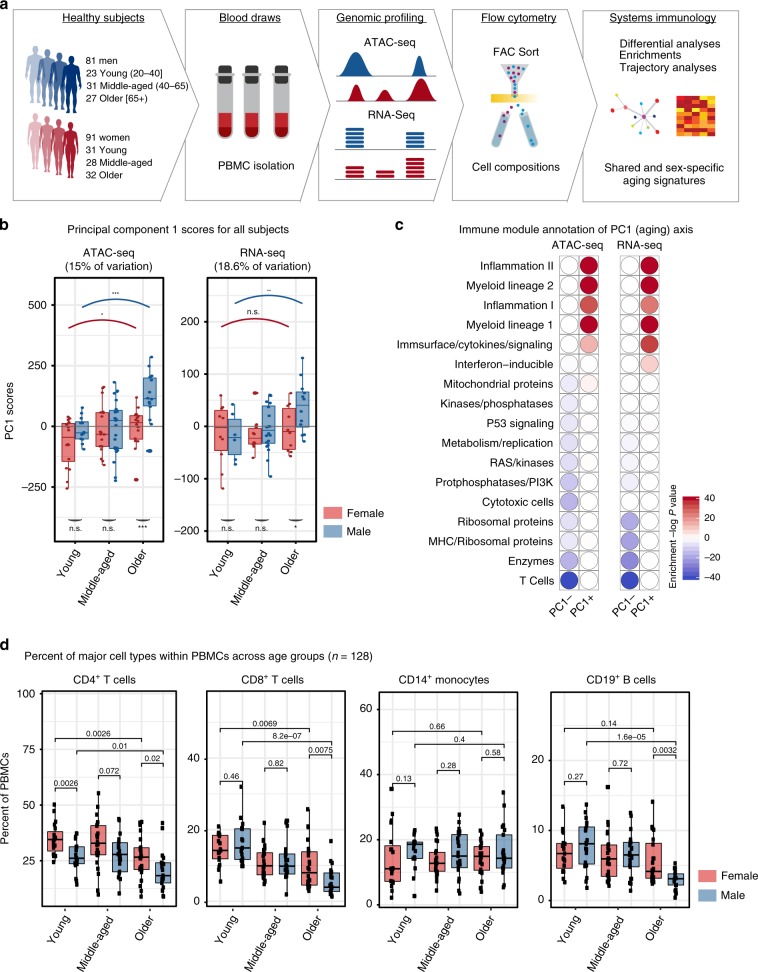
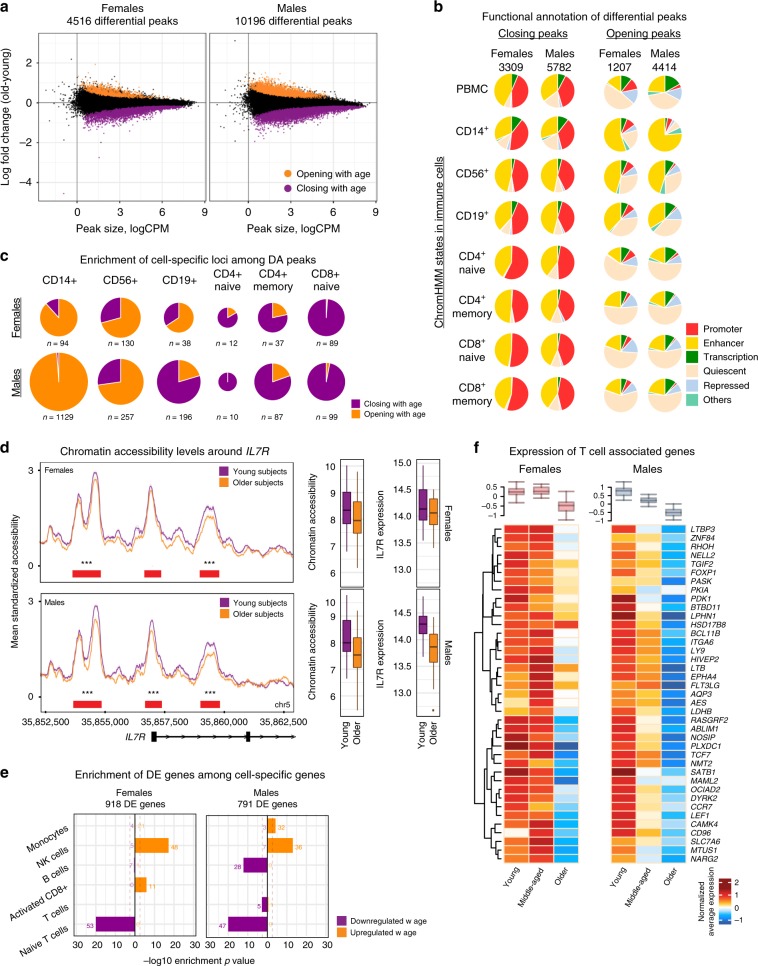
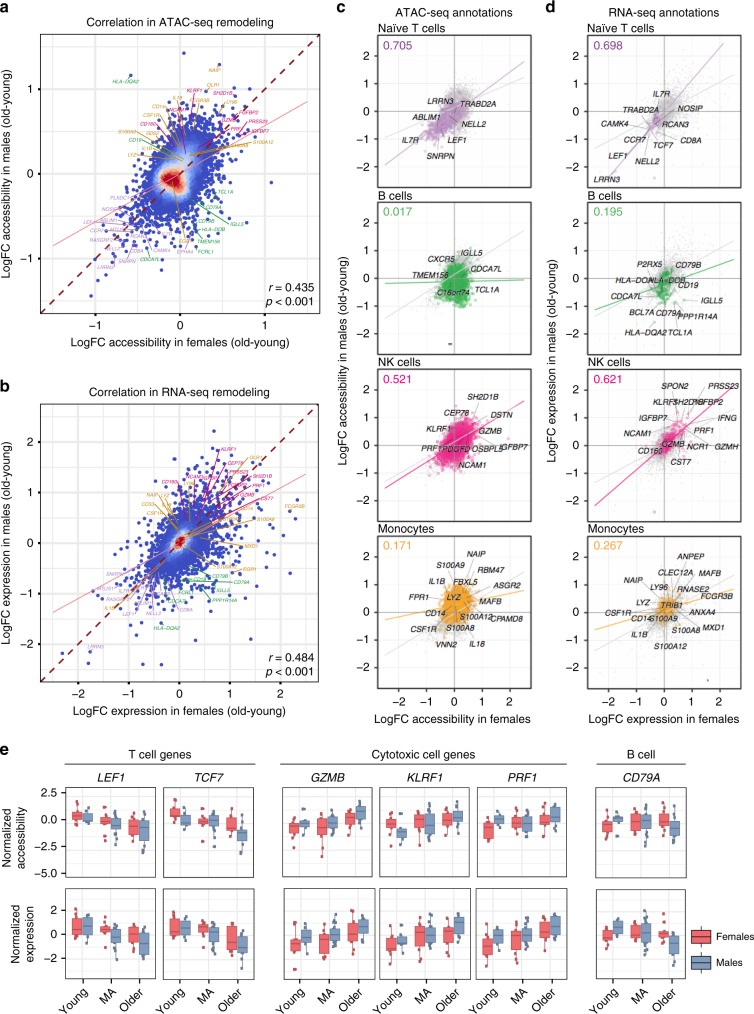
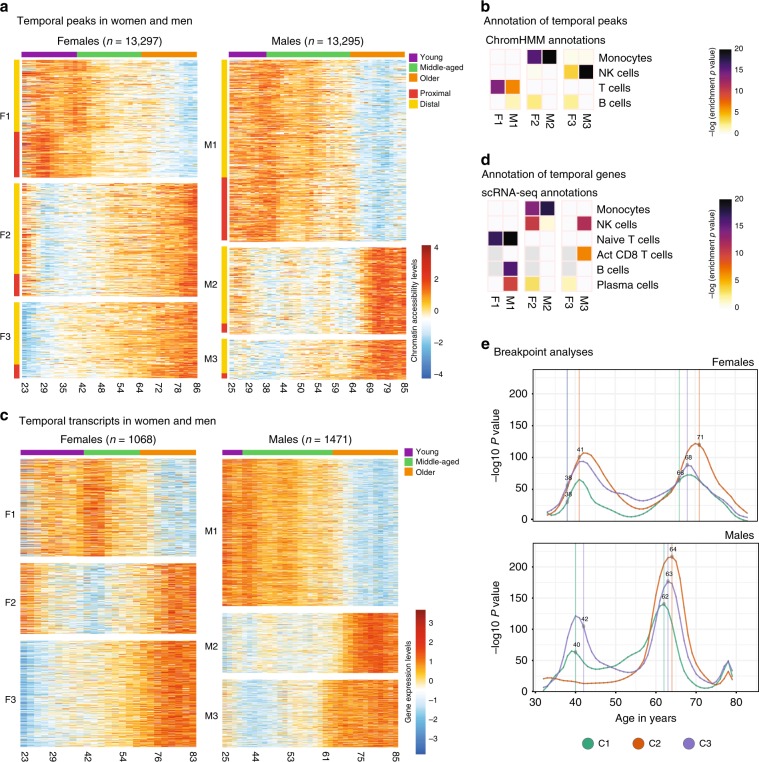
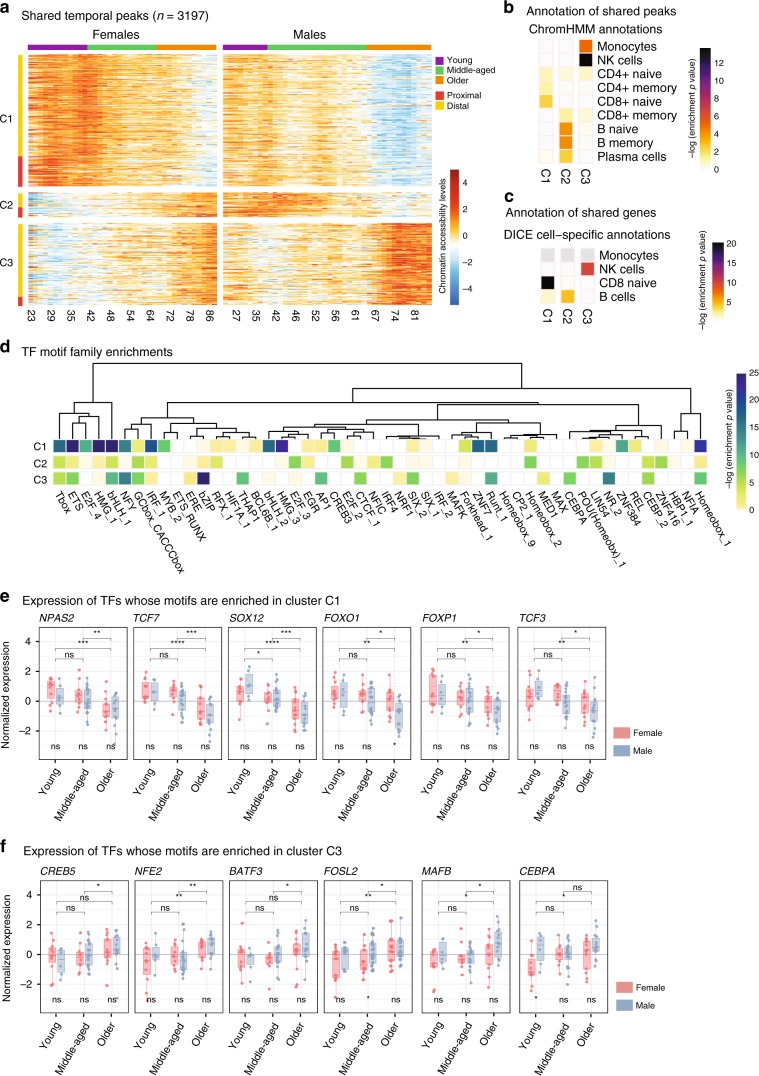
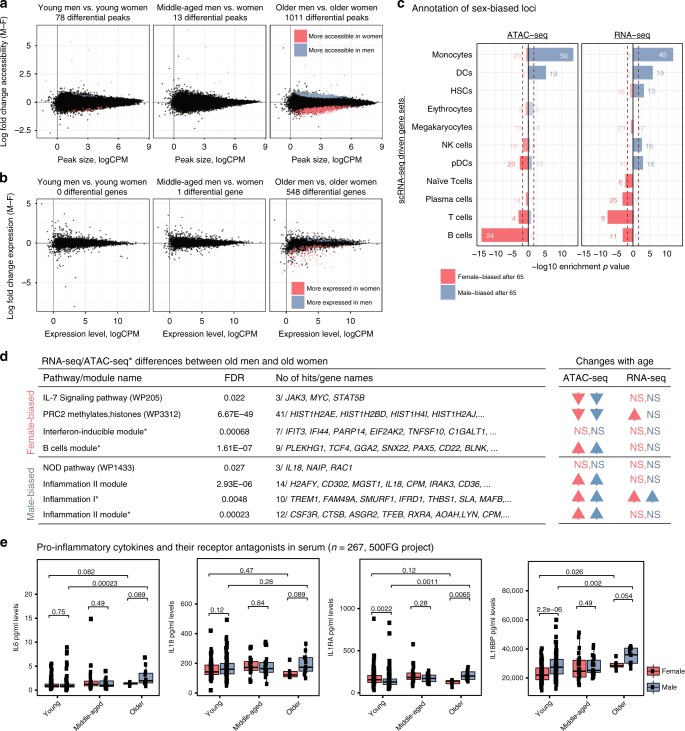
Differences in immune function and responses contribute to health- and life-span disparities between sexes. However, the role of sex in immune system aging is not well understood. Here, we characterize peripheral blood mononuclear cells from 172 healthy adults 22–93 years of age using ATAC-seq, RNA-seq, and flow cytometry. These data reveal a shared epigenomic signature of aging including declining naïve T cell and increasing monocyte and cytotoxic cell functions. These changes are greater in magnitude in men and accompanied by a male-specific decline in B-cell specific loci. Age-related epigenomic changes first spike around late-thirties with similar timing and magnitude between sexes, whereas the second spike is earlier and stronger in men. Unexpectedly, genomic differences between sexes increase after age 65, with men having higher innate and pro-inflammatory activity and lower adaptive activity. Impact of age and sex on immune phenotypes can be visualized at https://immune-aging.jax.org to provide insights into future studies.
Overview
The claims and statistics of this paper haven’t been checked yet.
Free: it reads the open-access text and checks the first 5 claims that cite a source we can check. Create a free account to check every claim.
Integrity signals
Registry
Cites
Statistics
Figures
Verification
Claims the paper makes
The claims and statistics of this paper haven’t been checked yet.
Free: it reads the open-access text and checks the first 5 claims that cite a source we can check. Create a free account to check every claim.
Claims other papers make about this one
Each is checked against this paper’s own text: does it say what the citing paper says it does?
The cited source says what the claim attributes to it.
In the citing paper
“In line with this, (older) men appear more likely than women to exhibit chronically raised levels of pro-inflammatory mediators but less adaptive immune activity (M ´ arquez et al., 2020; Huang et al., 2021).”
From Gene Therapy-Associated Uveitis (GTAU): Understanding and mitigating the adverse immune response in retinal gene therapy (2025) · cites this paper as Márquez et al., 2020
In the citing paper
“similarly, epigenetic and other molecular features in blood cells177 or skin178 change in distinct undulating patterns across the lifespan.”
From Measuring biological age using omics data (2022) · cites this paper as [177]
In the citing paper
“Peripheral blood mononuclear cells exhibit two distinct peaks of rapid epigenomic changes in humans, one around 40 years of age and another around 60–70 years of age.36”
From Asynchronous, contagious and digital aging (2021) · cites this paper as [36]
Self-check
Percentages, sums and reported differences re-computed from the paper’s own numbers.
The self-check needs the paper’s full text.
Citations
Cites
Trimmomatic: a flexible trimmer for Illumina sequence data
Bolger, A. M., Lohse, M., & Usadel, B. (2014) · Bioinformatics · doi:10.1093/bioinformatics/btu170 · Cited by 65,548
Fast and accurate short read alignment with Burrows-Wheeler transform
Li, H., & Durbin, R. (2009) · Bioinformatics · doi:10.1093/bioinformatics/btp324 · Cited by 58,607
Robinson, M. D., McCarthy, D. J., & Smyth, G. K. (2010) · Bioinformatics · doi:10.1093/bioinformatics/btp616 · Cited by 41,364
Wickham, H. (2016) · Use R! · doi:10.1007/978-3-319-24277-4 · Cited by 33,115
BEDTools: a flexible suite of utilities for comparing genomic features
Quinlan, A. R., & Hall, I. M. (2010) · Bioinformatics · doi:10.1093/bioinformatics/btq033 · Cited by 27,437
RSEM: accurate transcript quantification from RNA-Seq data with or without a reference genome
Li, B., & Dewey, C. N. (2011) · BMC Bioinformatics · doi:10.1186/1471-2105-12-323 · Cited by 22,179
Model-based Analysis of ChIP-Seq (MACS)
Zhang, Y., Liu, T., Meyer, C. A., Eeckhoute, J., Johnson, D. S., Bernstein, B. E., Nusbaum, C., Myers, R. M., Brown, M., Li, W., et al. (2008) · Genome Biology · doi:10.1186/gb-2008-9-9-r137 · Cited by 18,386
ggplot2: Elegant Graphics for Data Analysis
Wickham, H. (2009) · doi:10.1007/978-0-387-98141-3 · Cited by 14,447
The Timed “Up & Go”: A Test of Basic Functional Mobility for Frail Elderly Persons
Podsiadlo, D., & Richardson, S. (1991) · Journal of the American Geriatrics Society · doi:10.1111/j.1532-5415.1991.tb01616.x · Cited by 14,418
Heinz, S., Benner, C., Spann, N., Bertolino, E., Lin, Y. C., Laslo, P., Cheng, J. X., Murre, C., Singh, H., & Glass, C. K. (2010) · Molecular Cell · doi:10.1016/j.molcel.2010.05.004 · Cited by 13,382
Research works printed but not linked: 2
- Kleiveland, C. R. In: (eds Verhoeckx, K., Cotter, P., López-Expósito, I., Kleiveland, C., Lea, T., Mackie, A., Requena, T., Swiatecka, D. & Wichers, H.) The Impact of Food Bioactives on Health (eds). (Springer, Cham, 2015).
- Buenrostro, J. D., Giresi, P. G., Zaba, L. C., Chang, H. Y. & Greenleaf, W. J. Transposition of native chromatin for fast and sensitive epigenomic profiling of open chromatin, DNA-binding proteins and nucleosome position. Nat. Methods 10, 1213-1218 (2013). · DOI · Paper page
Cited by
Male sex identified by global COVID-19 meta-analysis as a risk factor for death and ITU admission
Peckham, H., de Gruijter, N. M., Raine, C., Radziszewska, A., Ciurtin, C., Wedderburn, L. R., Rosser, E. C., Webb, K., & Deakin, C. T. (2020) · Nature Communications · doi:10.1038/s41467-020-19741-6 · Cited by 1,503
Sex differences in immune responses that underlie COVID-19 disease outcomes
Takahashi, T., Ellingson, M. K., Wong, P., Israelow, B., Lucas, C., Klein, J., Silva, J., Mao, T., Oh, J. E., Tokuyama, M., et al. (2020) · Nature · doi:10.1038/s41586-020-2700-3 · Cited by 1,459
Inflammation and aging: signaling pathways and intervention therapies
Li, X., Li, C., Zhang, W., Wang, Y., Qian, P., & Huang, H. (2023) · Signal Transduction and Targeted Therapy · doi:10.1038/s41392-023-01502-8 · Cited by 1,443
“For example, studies have shown that women living longer than men,(4) in which older men showed higher activity of inflammation-related modules, with a more dramatic decrease in the ratio of naive T and B cells compared to older women.(4,5) In addition, centenarians have been found to possess stronger anti-inflammator…”
ResultConsidering how biological sex impacts immune responses and COVID-19 outcomes
Scully, E. P., Haverfield, J., Ursin, R. L., Tannenbaum, C., & Klein, S. L. (2020) · Nature Reviews Immunology · doi:10.1038/s41577-020-0348-8 · Cited by 932
Mittelbrunn, M., & Kroemer, G. (2021) · Nature Immunology · doi:10.1038/s41590-021-00927-z · Cited by 702
Gut microbiome pattern reflects healthy ageing and predicts survival in humans
Wilmanski, T., Diener, C., Rappaport, N., Patwardhan, S., Wiedrick, J., Lapidus, J., Earls, J. C., Zimmer, A., Glusman, G., Robinson, M., et al. (2021) · Nature Metabolism · doi:10.1038/s42255-021-00348-0 · Cited by 675
Immunosenescence and inflammaging in the aging process: age-related diseases or longevity?
Santoro, A., Bientinesi, E., & Monti, D. (2021) · Ageing Research Reviews · doi:10.1016/j.arr.2021.101422 · Cited by 603
Measuring biological age using omics data
Rutledge, J., Oh, H., & Wyss-Coray, T. (2022) · Nature Reviews Genetics · doi:10.1038/s41576-022-00511-7 · Cited by 570
Cancer stem cell–immune cell crosstalk in tumour progression
Bayik, D., & Lathia, J. D. (2021) · Nature Reviews Cancer · doi:10.1038/s41568-021-00366-w · Cited by 561
Nonlinear dynamics of multi-omics profiles during human aging
Shen, X., Wang, C., Zhou, X., Zhou, W., Hornburg, D., Wu, S., & Snyder, M. P. (2024) · Nature Aging · doi:10.1038/s43587-024-00692-2 · Cited by 500
“Some studies examined the nonlinear alterations of molecules during human aging 13 .”
The aging lung: Physiology, disease, and immunity
Schneider, J. L., Rowe, J. H., Garcia-de-Alba, C., Kim, C. F., Sharpe, A. H., & Haigis, M. C. (2021) · Cell · doi:10.1016/j.cell.2021.03.005 · Cited by 500
Inflammation, Aging, and Cardiovascular Disease
Liberale, L., Badimon, L., Montecucco, F., Lüscher, T. F., Libby, P., & Camici, G. G. (2022) · Journal of the American College of Cardiology · doi:10.1016/j.jacc.2021.12.017 · Cited by 462
Sex differences in biological aging with a focus on human studies
Hägg, S., & Jylhävä, J. (2021) · eLife · doi:10.7554/elife.63425 · Cited by 442
The Gut Microbiota and Unhealthy Aging: Disentangling Cause from Consequence
DeJong, E. N., Surette, M. G., & Bowdish, D. M. E. (2020) · Cell Host & Microbe · doi:10.1016/j.chom.2020.07.013 · Cited by 370
Bienvenu, L. A., Noonan, J., Wang, X., & Peter, K. (2020) · Cardiovascular Research · doi:10.1093/cvr/cvaa284 · Cited by 338
Sex disparities matter in cancer development and therapy
Haupt, S., Caramia, F., Klein, S. L., Rubin, J. B., & Haupt, Y. (2021) · Nature Reviews Cancer · doi:10.1038/s41568-021-00348-y · Cited by 331
Sex differences in severity and mortality from COVID-19: are males more vulnerable?
Pradhan, A., & Olsson, P.-E. (2020) · Biology of Sex Differences · doi:10.1186/s13293-020-00330-7 · Cited by 313
“The frequency of B cells also declined in older males [61].”
BackgroundIndividual risk management strategy and potential therapeutic options for the COVID-19 pandemic
Gasmi, A., Noor, S., Tippairote, T., Dadar, M., Menzel, A., & Bjørklund, G. (2020) · Clinical Immunology · doi:10.1016/j.clim.2020.108409 · Cited by 305
“The older man is more prone to infectious diseases with high pro-inflammatory immune responses and low adaptive immune responses than an older woman [35, 36].”
BackgroundMechanisms and consequences of sex differences in immune responses
Dunn, S. E., Perry, W. A., & Klein, S. L. (2024) · Nature Reviews Nephrology · doi:10.1038/s41581-023-00787-w · Cited by 249
“However, several studies performed over the human life course have now demonstrated that indices of declining immunity, including genetic and epigenetic modifications in peripheral blood mononuclear cells (PBMCs), occurs earlier and with a greater magnitude in males than in females 255 .”
Huang, Z., Chen, B., Liu, X., Li, H., Xie, L., Gao, Y., Duan, R., Li, Z., Zhang, J., Zheng, Y., et al. (2021) · Proceedings of the National Academy of Sciences · doi:10.1073/pnas.2023216118 · Cited by 247
Sex differences in immune responses
Takahashi, T., & Iwasaki, A. (2021) · Science · doi:10.1126/science.abe7199 · Cited by 239
miR-21 and miR-146a: The microRNAs of inflammaging and age-related diseases
Olivieri, F., Prattichizzo, F., Giuliani, A., Matacchione, G., Rippo, M. R., Sabbatinelli, J., & Bonafè, M. (2021) · Ageing Research Reviews · doi:10.1016/j.arr.2021.101374 · Cited by 219
Post-COVID-19 Depressive Symptoms: Epidemiology, Pathophysiology, and Pharmacological Treatment
Mazza, M. G., Palladini, M., Poletti, S., & Benedetti, F. (2022) · CNS Drugs · doi:10.1007/s40263-022-00931-3 · Cited by 220
“Moreover, males tend to express a stronger age-dependent activation of the innate pro-inflammatory pathways [123], leading to higher chronic subclinical systemic inflammation than that observed in females [124].”
BackgroundA Geroscience Perspective on COVID-19 Mortality
Promislow, D. E. L. (2020) · The Journals of Gerontology: Series A · doi:10.1093/gerona/glaa094 · Cited by 211
“This is a likely contributing factor, given that in general, age leads to a decline in adaptive immune function, and an increase in pro-inflammatory activity (14).”
BackgroundT Cells: Warriors of SARS-CoV-2 Infection
de Candia, P., Prattichizzo, F., Garavelli, S., & Matarese, G. (2021) · Trends in Immunology · doi:10.1016/j.it.2020.11.002 · Cited by 185
“An additional insight regarding sex-dependent differences in terms of immune-related aging comes from chromatin accessibility and RNA-seq analyses showing that older women (>65 years) have higher genomic activity compared with age-matched older men, as evidenced from transcription factor expression in adaptive immune…”
Inflamm-aging: Why older men are the most susceptible to SARS-CoV-2 complicated outcomes
Bonafè, M., Prattichizzo, F., Giuliani, A., Storci, G., Sabbatinelli, J., & Olivieri, F. (2020) · Cytokine & Growth Factor Reviews · doi:10.1016/j.cytogfr.2020.04.005 · Cited by 184
“lymphocyte-driven acquired immunity affects predominantly men (Marquez et al., 2020).”
InfluentialVerkleij, C. P. M., Broekmans, M. E. C., van Duin, M., Frerichs, K. A., Kuiper, R., de Jonge, A. V., Kaiser, M., Morgan, G., Axel, A., Boominathan, R., et al. (2021) · Blood Advances · doi:10.1182/bloodadvances.2020003805 · Cited by 182
“73 m(2) Median (range) 85 (23-90) 69 (42-90) 78 (43-90) Unknown, n (%) 3 (23) 0 0 ,60, n (%) 1 (10) 1 (6) 4 (27) ,30, n (%) 1 (10) 0 0 b2-microglobulin, median (range), mg/L 3.”
Park, C., & Ko, F. C. (2021) · Clinics in Geriatric Medicine · doi:10.1016/j.cger.2021.05.008 · Cited by 162
Bunders, M. J., & Altfeld, M. (2020) · Immunity · doi:10.1016/j.immuni.2020.08.003 · Cited by 163
Cenko, E., Badimón, L., Bugiardini, R., Claeys, M. J., Luca, G. D., de Wit, C., Dérumeaux, G., Dorobanţu, M., Duncker, D. J., Eringa, E. C., et al. (2021) · Cardiovascular Research · doi:10.1093/cvr/cvab298 · Cited by 167
“Aging induces a decline in the proportion of naı̈ve T cells and enhanced monocyte and cytotoxic cell functions that is more prominent in men, and a male-specific B cells decline after age 65 years old.(202,203) In addition, a trend of age-related decrease was observed in the production of some cytokines.”
BackgroundSex differences in markers of oxidation and inflammation. Implications for ageing
de Toda, I. M., González-Sánchez, M., Cerro, E. D., Valera, G., Carracedo, J., & Guerra‐Pérez, N. (2023) · Mechanisms of Ageing and Development · doi:10.1016/j.mad.2023.111797 · Cited by 173
Louca, P., Murray, B. A. K., Kläser, K., Graham, M. S., Mazidi, M., Leeming, E. R., Thompson, E. J., Bowyer, R. C. E., Drew, D. A., Nguyen, L. H., et al. (2021) · BMJ Nutrition Prevention & Health · doi:10.1136/bmjnph-2021-000250 · Cited by 174
Sex differences in frailty: Comparisons between humans and preclinical models
Kane, A. E., & Howlett, S. E. (2021) · Mechanisms of Ageing and Development · doi:10.1016/j.mad.2021.111546 · Cited by 156
The Impact of Immune System Aging on Infectious Diseases
Quiros-Roldan, E., Sottini, A., Natali, P. G., & Imberti, L. (2024) · Microorganisms · doi:10.3390/microorganisms12040775 · Cited by 133
“…higher monocyte activity [63], expression of myeloid cell-related genes [64], and a faster decline in the number and function of B and T cells [63]. females aged between 20 and 70, tested eight lymphocyte subpopulations, 3 million single nucleotide polymorphisms, and 560 genes of the immune…”
InfluentialLu, R. J., Taylor, S., Contrepois, K., Kim, M., Bravo, J. I., Ellenberger, M., Sampathkumar, N. K., & Benayoun, B. A. (2021) · Nature Aging · doi:10.1038/s43587-021-00086-8 · Cited by 126
Immune system and COVID-19 by sex differences and age
Ciarambino, T., Para, O., & Giordano, M. (2021) · Women s Health · doi:10.1177/17455065211022262 · Cited by 158
Sex and gender perspectives in colorectal cancer
Baraibar, I., Ros, J., Gonzalez, N. S., Salvà, F., Garcia, A. R., Castells, M. R., Tabernero, J. M., & Élez, E. (2023) · ESMO Open · doi:10.1016/j.esmoop.2023.101204 · Cited by 144
“This is delayed by 5-6 years in females, who exhibit greater adaptive immunity.(63) A pan-cancer analysis to evaluate the sex-based variance of different genomic immune-related factors using The Cancer Genome Atlas showed differences in tumour mutation burden, neoantigen burden, tumour purity, cytolytic activity, CD8þ…”
Asynchronous, contagious and digital aging
Rando, T. A., & Wyss-Coray, T. (2021) · Nature Aging · doi:10.1038/s43587-020-00015-1 · Cited by 121
The role of peripheral inflammatory insults in Alzheimer’s disease: a review and research roadmap
Walker, K. A., Le Page, L. M., Terrando, N., Duggan, M. R., Heneka, M. T., & Bettcher, B. M. (2023) · Molecular Neurodegeneration · doi:10.1186/s13024-023-00627-2 · Cited by 113
“A large body of evidence suggests that while females generally display stronger innate and adaptive immune responses, clear some infections more rapidly, and show greater antibody response to vaccines, they are also at increased risk for autoimmune diseases compared to males [156, 157].”
BackgroundBile acids as key modulators of the brain-Gut-Microbiota axis in alzheimer’s disease
Mulak, A. (2021) · Journal of Alzheimer s Disease · doi:10.3233/jad-210608 · Cited by 114
“Recently, sexual dimorphisms in human immune system aging have been reported pointing to higher innate and pro-inflammatory activity and lower adaptive activity in older men compared to older women [115].”
BackgroundCho, S. I., Yoon, S., & Lee, H. (2021) · Scientific Reports · doi:10.1038/s41598-021-85813-2 · Cited by 131
Sexual dimorphism in COVID-19: potential clinical and public health implications
Bechmann, N., Barthel, A., Schedl, A., Herzig, S., Varga, Z., Gebhard, C., Mayr, M., Hantel, C., Beuschlein, F., Wolfrum, C., et al. (2022) · Publikationen an der Universität Bielefeld (Universität Bielefeld) · Cited by 110
Sexual dimorphism in COVID-19: potential clinical and public health implications
Bechmann, N., Barthel, A., Schedl, A., Herzig, S., Varga, Z., Gebhard, C., Mayr, M., Hantel, C., Beuschlein, F., Wolfrum, C., et al. (2022) · The Lancet Diabetes & Endocrinology · doi:10.1016/s2213-8587(21)00346-6 · Cited by 131
Sex Differences in Respiratory Viral Pathogenesis and Treatments
Ursin, R. L., & Klein, S. L. (2021) · Annual Review of Virology · doi:10.1146/annurev-virology-091919-092720 · Cited by 122
Mitochondrial phenotypes in purified human immune cell subtypes and cell mixtures
Rausser, S., Trumpff, C., McGill, M. A., Junker, A., Wang, W., Ho, S.-H., Mitchell, A., Karan, K. R., Monk, C., Segerstrom, S. C., et al. (2021) · eLife · doi:10.7554/elife.70899 · Cited by 102
Gendered effects on inflammation reaction and outcome of COVID‐19 patients in Wuhan
Qin, L., Li, X., Shi, J., Yu, M., Wang, K., Tao, Y., Zhou, Y., Zhou, M., Xu, S., Wu, B., et al. (2020) · Journal of Medical Virology · doi:10.1002/jmv.26137 · Cited by 103
“Besides, elder patients had immune disorders including age-related defects in T-cell and B-cell function and the excess production of inflammatory cytokines, which could lead to a deficiency in control of viral replication and more prolonged proinflammatory responses and poor outcomes.33 Márquez et al.34 also conclude…”
BackgroundDohm-Hansen, S., English, J. A., Lavelle, A., Fitzsimons, C. P., Lucassen, P. J., & Nolan, Y. M. (2024) · Trends in Neurosciences · doi:10.1016/j.tins.2024.02.001 · Cited by 123
COVID-19 and Crosstalk With the Hallmarks of Aging
Salimi, S., & Hamlyn, J. M. (2020) · The Journals of Gerontology: Series A · doi:10.1093/gerona/glaa149 · Cited by 98
“Age is one of the main drivers of variations in chromatin structure measured by the assay for transposase-accessible chromatin with high-throughput sequencing (ATAC-seq) (53).”
BackgroundInfluentialOne-year mental health outcomes in a cohort of COVID-19 survivors
Mazza, M. G., Palladini, M., LORENZO, R. D., Bravi, B., Poletti, S., Furlan, R., Ciceri, F., Vai, B., Bollettini, I., Melloni, E. M. T., et al. (2021) · Journal of Psychiatric Research · doi:10.1016/j.jpsychires.2021.11.031 · Cited by 111
“Males are characterized by a stronger age-dependent activation of the innate pro-inflammatory pathways compared to women (M ´ arquez et al., 2020), leading to male ’ s higher chronic subclinical systemic inflammation (inflammaging) and immune system impairment (immune senescence) (Bonaf ` e et al.,…”
Karakaslar, E. O., Katiyar, N., Hasham, M., Youn, A., Sharma, S., Chung, C., Marches, R., Korstanje, R., Banchereau, J., & Ucar, D. (2023) · Aging Cell · doi:10.1111/acel.13792 · Cited by 98
“Pvalues are calculated using unpaired t-test B Association summary heatmap of human PBMCs for associations of age with indicated cell type using data from previously published human PBMCs((9)).”
MethodSelf-citationBachmann, M. C., Bellalta, S., Basoalto, R., Gómez‐Valenzuela, F., Jalil, Y., Lépez, M., Matamoros, A., & Rommy von Bernhardi, M. (2020) · Frontiers in Immunology · doi:10.3389/fimmu.2020.570083 · Cited by 107
“Also, in aged individuals, epigenomic changes generate a more robust innate and pro-inflammatory response in men and an increased activity in the adaptive immune response in women (72, 73).”
BackgroundAge and Sex: Impact on adipose tissue metabolism and inflammation
Varghese, M., Song, J., & Singer, K. (2021) · Mechanisms of Ageing and Development · doi:10.1016/j.mad.2021.111563 · Cited by 113
Macrophage function in the elderly and impact on injury repair and cancer
Duong, L., Radley‐Crabb, H. G., Lee, B. R., Dye, D. E., Pixley, F. J., Grounds, M. D., Nelson, D. J., & Jackaman, C. (2021) · Immunity & Ageing · doi:10.1186/s12979-021-00215-2 · Cited by 107
“Inflammageing, characterised by elevated IL-6, is higher in male compared with female humans [48].”
BackgroundSex bias in lymphocytes: Implications for autoimmune diseases
Dodd, K. C., & Menon, M. (2022) · Frontiers in Immunology · doi:10.3389/fimmu.2022.945762 · Cited by 108
Sex/gender-related differences in inflammaging
Olivieri, F., Marchegiani, F., Matacchione, G., Giuliani, A., Ramini, D., Fazioli, F., Sabbatinelli, J., & Bonafè, M. (2023) · Mechanisms of Ageing and Development · doi:10.1016/j.mad.2023.111792 · Cited by 83
“in estrogen levels could lead to a reduction of sex-specific differences in the immune system, it was reported that aging is accompanied by a further increase in the sexual dimorphism of immune cells (Marquez et al., 2020), an observation that deserves further mechanistic investigations.”
InfluentialMenees, K. B., Earls, R. H., Chung, J., Jernigan, J. E., Filipov, N. M., Carpenter, J. M., & Lee, J. (2021) · Immunity & Ageing · doi:10.1186/s12979-021-00214-3 · Cited by 98
“were inactivated with age in males, but activated in females which may influence sex-differences in humoral immunity [22].”
BackgroundWhy Females Do Better: The X Chromosomal TLR7 Gene-Dose Effect in COVID-19
Spiering, A. E., & de Vries, T. J. (2021) · Frontiers in Immunology · doi:10.3389/fimmu.2021.756262 · Cited by 102
Impact of aging on immunity in the context of COVID-19, HIV, and tuberculosis
Grifoni, A., Alonzi, T., Alter, G., Noonan, D. M., LANDAY, A. L., Albini, A., & Goletti, D. (2023) · Frontiers in Immunology · doi:10.3389/fimmu.2023.1146704 · Cited by 94
Marian, A. J. (2020) · Cardiovascular Pathology · doi:10.1016/j.carpath.2020.107278 · Cited by 96
Altered X-chromosome inactivation predisposes to autoimmunity
Huret, C., Ferrayé, L., David, A., Mohamed, M., Valentin, N., Charlotte, F., Savignac, M., Goodhardt, M., Guéry, J., Rougeulle, C., et al. (2024) · Science Advances · doi:10.1126/sciadv.adn6537 · Cited by 89
“…specific to postmenopausal women [rheumatoid arthritis ( 64 ), some forms of Sjögren’s syndrome ( 65 ), atherosclerosis or of ischemic heart diseases ( 43 , 66 ), and inflam-maging ( 67 )] when estrogen levels are low and cannot account for the sexual dimorphism observed in these diseases.”
BackgroundNeuroimmune contributions to Alzheimer’s disease: a focus on human data
Haage, V., & De Jager, P. L. (2022) · Molecular Psychiatry · doi:10.1038/s41380-022-01637-0 · Cited by 74
Repurposing SGLT-2 Inhibitors to Target Aging: Available Evidence and Molecular Mechanisms
Grotta, R. L., Frigé, C., Matacchione, G., Olivieri, F., de Candia, P., Ceriello, A., & Prattichizzo, F. (2022) · International Journal of Molecular Sciences · doi:10.3390/ijms232012325 · Cited by 82
Single-cell profiling reveals age-associated immunity in atherosclerosis
Smit, V., de Mol, J., Schaftenaar, F. H., Depuydt, M. A. C., Postel, R. J., Smeets, D., Verheijen, F. W., Bogers, L., van Duijn, J., Verwilligen, R. A. F., et al. (2023) · Cardiovascular Research · doi:10.1093/cvr/cvad099 · Cited by 85
“24,55 Additionally, we found increased regulatory and effector T-cells upon activation, particularly pro-atherogenic IFN-γ -producing T-cells, in our naturally aged atherosclerotic Ldlr − / − mice.”
Patrick, R., Naval-Sánchez, M., Deshpande, N., Huang, Y., Zhang, J., Chen, X., Yang, Y., Tiwari, K., Esmaeili, M., Tran, M., et al. (2024) · Cell Metabolism · doi:10.1016/j.cmet.2024.06.006 · Cited by 82
Márquez, E. J., Trowbridge, J. J., Kuchel, G. A., Banchereau, J., & Ucar, D. (2020) · Immunity & Ageing · doi:10.1186/s12979-020-00183-z · Cited by 83
“We also uncovered striking sex differences in how the B cell compartment age [40].”
BackgroundResultInfluentialSelf-citationSex and gender affect immune aging
Calabrò, A., Accardi, G., Aiello, A., Caruso, C., & Candore, G. (2023) · Frontiers in Aging · doi:10.3389/fragi.2023.1272118 · Cited by 71
“The gradual decline in hormones, guided by sex, has a signi fi cant impact on the aging immune system (Márquez et al., 2020), primarily because immune cells possess estrogen receptors that can in fl uence downstream immune-in fl ammatory pathways, such as the nuclear factor kappa-light-chain-enhancer…”
BackgroundMethodInfluentialInnate lymphoid cells and COVID-19 severity in SARS-CoV-2 infection
Silverstein, N. J., Wang, Y., Manickas-Hill, Z., Carbone, C., Dauphin, A., Boribong, B. P., Loiselle, M., Davis, J., Leonard, M. M., Kuri-Cervantes, L., et al. (2022) · eLife · doi:10.7554/elife.74681 · Cited by 79
“These demographic risk factors could be due to sexual dimorphism and changes with aging in composition and function of the human immune system ( Darboe et al., 2020 ; Klein and Flanagan, 2016 ; Márquez et al., 2020 ; Patin et al., 2018 ; Solana et al., 2012 ).”
InfluentialGuislain, P. (1997) · Cited by 71
Chhabra, Y., Fane, M. E., Pramod, S., Hüser, L., Zabransky, D. J., Wang, V., Dixit, A., Zhao, R., Kumah, E., Brezka, M. L., et al. (2024) · Cell · doi:10.1016/j.cell.2024.08.013 · Cited by 79
Marfella, R., Sardu, C., D’Onofrio, N., Prattichizzo, F., Scisciola, L., Messina, V., Grotta, R. L., Balestrieri, M. L., Maggi, P., Napoli, C., et al. (2022) · Nature Communications · doi:10.1038/s41467-022-30068-2 · Cited by 72
Glial and neuroimmune cell choreography in sexually dimorphic pain signaling
Midavaine, É., Côté, J., Marchand, S., & Sarret, P. (2021) · Neuroscience & Biobehavioral Reviews · doi:10.1016/j.neubiorev.2021.01.023 · Cited by 70
The X in seX-biased immunity and autoimmune rheumatic disease
Jiwrajka, N., & Anguera, M. C. (2022) · The Journal of Experimental Medicine · doi:10.1084/jem.20211487 · Cited by 71
The Neuroimmunology of Guillain-Barré Syndrome and the Potential Role of an Aging Immune System
Hagen, K. M., & Ousman, S. S. (2021) · Frontiers in Aging Neuroscience · doi:10.3389/fnagi.2020.613628 · Cited by 85
“also found that males appear to have accelerated age-related transcriptomic changes to their PBMCs compared to females (Márquez et al., 2020).”
BackgroundSenescence in tissue samples of humans with age-related diseases: A systematic review
Tuttle, C. S. L., Luesken, S. W. M., Waaijer, M. E. C., & Maier, A. B. (2021) · Ageing Research Reviews · doi:10.1016/j.arr.2021.101334 · Cited by 64
ETS1 acts as a regulator of human healthy aging via decreasing ribosomal activity
Xiao, F.-H., Yu, Q., Deng, Z.-L., Yang, K., Ye, Y., Ge, M.-X., Yan, D., Wang, H.-T., Chen, X.-Q., Yang, L.-Q., et al. (2022) · Science Advances · doi:10.1126/sciadv.abf2017 · Cited by 63
Marcon, G., Tettamanti, M., Capacci, G., Fontanel, G., Spanò, M., Nobili, A., Forloni, G., & Franceschi, C. (2020) · Aging · doi:10.18632/aging.103872 · Cited by 63
“Men have also a stronger inflammatory state in circulating monocytes compared to women [31].”
BackgroundThe systemic immune response in Parkinson’s disease: focus on the peripheral immune component
Lauritsen, J., & Romero‐Ramos, M. (2023) · Trends in Neurosciences · doi:10.1016/j.tins.2023.07.005 · Cited by 74
Natural disaster and immunological aging in a nonhuman primate
Watowich, M. M., Chiou, K. L., Montague, M. J., Simons, N. D., Horvath, J. E., Ruiz-Lambides, A. V., Martínez, M. I., Higham, J. P., Brent, L. J. N., Platt, M. L., et al. (2022) · Proceedings of the National Academy of Sciences · doi:10.1073/pnas.2121663119 · Cited by 59
Nissen, S. K., Farmen, K., Carstensen, M., Schulte, C., Goldeck, D., Brockmann, K., & Romero‐Ramos, M. (2022) · Brain Behavior and Immunity · doi:10.1016/j.bbi.2022.01.005 · Cited by 69
“The lack of consensus might be related to differences in the stages and types of PD, medication, comorbidities, sex, and flow gating strategy (Marquez et al., 2020; Umehara et al., 2020).”
BackgroundMethodATAC-clock: An aging clock based on chromatin accessibility
Morandini, F., Rechsteiner, C., Pérez, K., Praz, V., Garcia, G. L., Hinte, L. C., von Meyenn, F., & Ocampo, A. (2023) · GeroScience · doi:10.1007/s11357-023-00986-0 · Cited by 68
“Similar changes in PBMC compositions have been reported in previous studies [22, 28, 29].”
InfluentialPostinfectious Epigenetic Immune Modifications — A Double-Edged Sword
DiNardo, A. R., Netea, M. G., & Musher, D. M. (2021) · New England Journal of Medicine · doi:10.1056/nejmra2028358 · Cited by 67
Extending human healthspan and longevity: a symposium report
DeVito, L. M., Barzilai, N., Cuervo, A. M., Niedernhofer, L. J., Milman, S., Levine, M. E., Promislow, D., Ferrucci, L., Kuchel, G. A., Mannick, J. B., et al. (2021) · Annals of the New York Academy of Sciences · doi:10.1111/nyas.14681 · Cited by 61
Self-citationSex-Specific Immune Responses in Stroke
Banerjee, A., & McCullough, L. D. (2022) · Stroke · doi:10.1161/strokeaha.122.036945 · Cited by 60
Production of MHCII ‐expressing classical monocytes increases during aging in mice and humans
Barman, P. K., Shin, J. E., Lewis, S. A., Kang, S., Wu, D., Wang, Y., Yang, X., Nagarkatti, P. S., Nagarkatti, M., Messaoudi, I., et al. (2022) · Aging Cell · doi:10.1111/acel.13701 · Cited by 69
Geraghty, T., Obeidat, A. M., Ishihara, S., Wood, M. J., Li, J., Lopes, E. B. P., Scanzello, C. R., Griffin, T. M., Malfait, A., & Miller, R. E. (2023) · Arthritis & Rheumatology · doi:10.1002/art.42530 · Cited by 63
“For example, while age417 related epigenomic changes in peripheral blood mononuclear cells occur as soon as 418 late-thirties with similar timing between sexes, the second spike is earlier and 419 stronger in men, and genomic differences between sexes increased after age 65 420 (81).”
Toward precision interventions and metrics of inflammaging
Franceschi, C., Olivieri, F., Moskalev, A., Ivanchenko, M., & Santoro, A. (2025) · Nature Aging · doi:10.1038/s43587-025-00938-7 · Cited by 72
“…between sex-related differences in genetic factors, including maternally inherited mitochondrial DNA genetic variants, age-related X chromosome inactivation skewing, hormonal changes (menstrual cycle, pregnancy, menopause), specific environmental exposure and the microbiome, among others 35,37 .”
Shchukina, I., Bagaitkar, J., Shpynov, O., Loginicheva, E., Porter, S. I., Mogilenko, D. A., Wolin, E., Collins, P. L., Demidov, G. M., Artomov, M., et al. (2020) · Nature Aging · doi:10.1038/s43587-020-00002-6 · Cited by 67
Shapiro, J. R., Sitaras, I., Park, H. S., Aytenfisu, T. Y., Caputo, C. A., Li, M., Lee, J., Johnston, T. S., Li, H., Wouters, C., et al. (2022) · Clinical Infectious Diseases · doi:10.1093/cid/ciac397 · Cited by 58
“more slowly in females than in males [15, 16].”
BackgroundThe gut microbiota is an emerging target for improving brain health during ageing
Boehme, M., Guzzetta, K. E., Wasén, C., & Cox, L. M. (2022) · Gut Microbiome · doi:10.1017/gmb.2022.11 · Cited by 62
“Still, clinical FMT presents safety, logistical and feasibility questions, especially when operating within a community that has a higher incidence of frailty and immunodeficiency (Marquez et al., 2020).”
Immunesenescence: A Predisposing Risk Factor for the Development of COVID-19?
Hazeldine, J., & Lord, J. M. (2020) · Frontiers in Immunology · doi:10.3389/fimmu.2020.573662 · Cited by 67
“Immunologically, immunesenescence and inflammaging appear to be more profound in older males when compared to females (30, 31), whilst an accelerated aging phenotype, termed premature immunesenescence has been described in obese subjects and patients with type 2 diabetes (T2D) (32–34).”
BackgroundAn immunologist’s guide to immunosenescence and its treatment
Caruso, C., Ligotti, M. E., Accardi, G., Aiello, A., & Candore, G. (2022) · Expert Review of Clinical Immunology · doi:10.1080/1744666x.2022.2106217 · Cited by 55
“Aging, on the other hand, is the main factor of variation of epigenomes/transcriptomes in blood mononuclear cells, whose variations with age are positively associated with the myeloid lineage and inflammation and negatively associated with naive T, mostly CD8 as discussed above, in accordance with the pathophysiologic…”
BackgroundResultAngarola, B. L., Sharma, S. M., Katiyar, N., Kang, H. G., Nehar-Belaid, D., Park, S., Gott, R., Eryilmaz, G. N., LaBarge, M. A., Palucka, K., et al. (2024) · Nature Aging · doi:10.1038/s43587-024-00751-8 · Cited by 73
“Indeed, widespread changes in chromatin accessibility have been observed across multiple aged human and mouse tissues 23,24 .”
Self-citationA Glb1-2A-mCherry reporter monitors systemic aging and predicts lifespan in middle-aged mice
Sun, J., Wang, M., Zhong, Y., Ma, X., Sun, S., Xu, C., Peng, L., Li, G., Zhang, L., Liu, Z., et al. (2022) · Nature Communications · doi:10.1038/s41467-022-34801-9 · Cited by 52
SARS-CoV-2, immunosenescence and inflammaging: partners in the COVID-19 crime
Domingues, R., Lippi, A., Setz, C., Outeiro, T. F., & Kriško, A. (2020) · Aging · doi:10.18632/aging.103989 · Cited by 58
“The depletion of B lymphocyte-driven acquired immunity is a characteristic of old age, affecting predominantly men [51].”
BackgroundResultSexual Dimorphism of Coronavirus 19 Morbidity and Lethality
Brandi, M. L., & Giustina, A. (2020) · Trends in Endocrinology and Metabolism · doi:10.1016/j.tem.2020.09.003 · Cited by 50
“These sex hormonal functions can lead to either a proinflammatory or an antiinflammatory (or tolerogenic) phenotype, and are potentially relevant in diseases associated with highly pathogenic viruses characterised by fever, pneumonia, and acute respiratory distress syndrome; complications hypothesised to be mediated b…”
BackgroundRegulation of the Immune System Development by Glucocorticoids and Sex Hormones
Quatrini, L., Ricci, B., Ciancaglini, C., Tumino, N., & Moretta, L. (2021) · Frontiers in Immunology · doi:10.3389/fimmu.2021.672853 · Cited by 61
“Age-related epigenomic changes first spike around latethirties with similar timing and magnitude between sexes, whereas the second spike occurs earlier and stronger in men (56).”
BackgroundAdvances in sex disparities for cancer immunotherapy: unveiling the dilemma of Yin and Yang
Ma, J., Yao, Y., Tian, Y., Chen, K., & Liu, B. (2022) · Biology of Sex Differences · doi:10.1186/s13293-022-00469-5 · Cited by 51
“Notably, although in humans, the level of CD4 + T cells decreases with age, the number of circulating CD4 + T cells in females is higher than that in age-matched males; there are higher numbers of CD4 + T cells circulating in females than in age-matched males, even as levels decline with aging [9, 67].”
BackgroundSenescence in Pulmonary Fibrosis: Between Aging and Exposure
Venosa, A. (2020) · Frontiers in Medicine · doi:10.3389/fmed.2020.606462 · Cited by 54
“Peripheral blood analysis shows that aging males exhibit marked epigenomic alteration linked to naïve T and B cell decline and increased monocyte cytotoxicity (368).”
BackgroundRavichandran, S., Díaz, F. A. E., Karakaslar, E. O., Marcheş, R., Kenyon‐Pesce, L., Rossi, R. J., Chaussabel, D., Nehar-Belaid, D., LaFon, D. C., Pascual, V., et al. (2024) · Nature Immunology · doi:10.1038/s41590-023-01717-5 · Cited by 50
“Accelerated inflammaging in men 27 might contribute to the observed sex differences in PCV13 responses.”
Self-citationXu, J., Chen, Z., Huang, X.-J., Wu, J., Huang, H., Niu, L., Wang, H., Li, J., Lowrie, D. B., Hu, Z., et al. (2024) · Science Advances · doi:10.1126/sciadv.adk8093 · Cited by 54
“It must be stressed, however, that the immune system of humans varies with age and sex ( 73 , 74 ), and trained immunity can be maintained over time ( 75 ).”
Metadata
- Authors
- Márquez, E. J., Chung, C.-H., Marches, R., Rossi, R. J., Nehar-Belaid, D., Eroglu, A., Mellert, D. J., Kuchel, G. A., Banchereau, J., & Ucar, D.
- Affiliations
- The Jackson Laboratory for Genomic Medicine (US)
- University of Connecticut (US)
- Corresponding author
- Ucar, Duygu
- ORCID
- Venue
- Nature Communications
- Published
- 2020-02-06
- Volume
- 11
- Issue
- 1
- Pages
- 751-751
- ISSN
- 2041-1723 (ISSN-L)
- PMC
- PMC7005316
- OpenAlex
- W3004442407
- Semantic Scholar
- f82cdf8fa7f9d9a4608804410d4d2a9a997f43be
- Cited by
- 584
- References
- 67
- Citations by year
- 2026: 98 · 2025: 88 · 2024: 80 · 2023: 75 · 2022: 81 · 2021: 100 · 2020: 59
- FWCI
- 26.87
- Type
- journal article
- Language
- en
- Open access
- gold
- doi.org
- Licence
- cc-by
- creativecommons.org/licenses/by/4.0 (tdm)
- creativecommons.org/licenses/by/4.0 (vor)
- Locations
- Nature Communications (publishedVersion, cc-by)
- bioRxiv (Cold Spring Harbor Laboratory) (acceptedVersion, other-oa)
- PubMed Central (publishedVersion, cc-by)
- PubMed (publishedVersion)
- RePEc: Research Papers in Economics (submittedVersion)
- DOAJ (DOAJ: Directory of Open Access Journals) (submittedVersion)
- DOAJ (DOAJ: Directory of Open Access Journals) (submittedVersion, cc-by-sa)
- The Mouseion at the JAXlibrary (Jackson Laboratory) (submittedVersion)
- Funders
- U.S. Department of Health & Human Services | NIH | National Institute of General Medical Sciences (GM124922)
- Topics
- Life Sciences › Biochemistry, Genetics and Molecular Biology › Aging › Genetics, Aging, and Longevity in Model Organisms
- Life Sciences › Immunology and Microbiology › Immunology › T-cell and B-cell Immunology
- Life Sciences › Biochemistry, Genetics and Molecular Biology › Molecular Biology › Genomics and Chromatin Dynamics
- Keywords
- immunosenescence, sex differences, peripheral blood mononuclear cells, naive T cells, monocytes, cytotoxic T lymphocytes, innate immunity, pro-inflammatory activity, adaptive immunity
- MeSH terms
- Chromatin Immunoprecipitation Sequencing, RNA-Seq, Adult, Aged, Aged, 80 and over, Aging, B-Lymphocytes, Female, Flow Cytometry, Humans, Leukocytes, Mononuclear, Male, Middle Aged, Monocytes, Sex Characteristics, Models, Immunological, Epigenesis, Genetic, Young Adult, Transcriptome
About these checks
Registry, retraction, Cites and statistics results are computed, not judged, with one exception: a printed reference that no index lists is read once by a model before it counts as a citation error. Claims are extracted by a model and kept only when their quote appears verbatim in the text; each cited source is then checked, with a model’s help, for whether it says what the claim relies on. Those verdicts can be wrong — read the claim’s quote and the cited source before relying on one.
Statistics and arithmetic are recomputed, not judged.
Confidence bands are shown only for fields calibrated on our annotated test set. None is calibrated yet, so no band is shown.
What counts as a claim ›How we measure confidence ›How we check this ›
Are you an author, or do you see a problem with this page? Request a review
Data sources
Bibliographic data: Semantic Scholar, OpenAlex, Crossref.
Contains information from the Semantic Scholar Academic Graph Datasets, made available under the ODC Attribution License (ODC-BY 1.0).
Semantic Scholar’s data is described in: Kinney, R., et al. (2023). The Semantic Scholar Open Data Platform. arXiv:2301.10140.
