

Bifurcation in brain dynamics reveals a signature of conscious processing independent of report
Open accessThe DOI matches its Crossref record; 87 of the 89 references it cites were found in a registry or an index.
Abstract
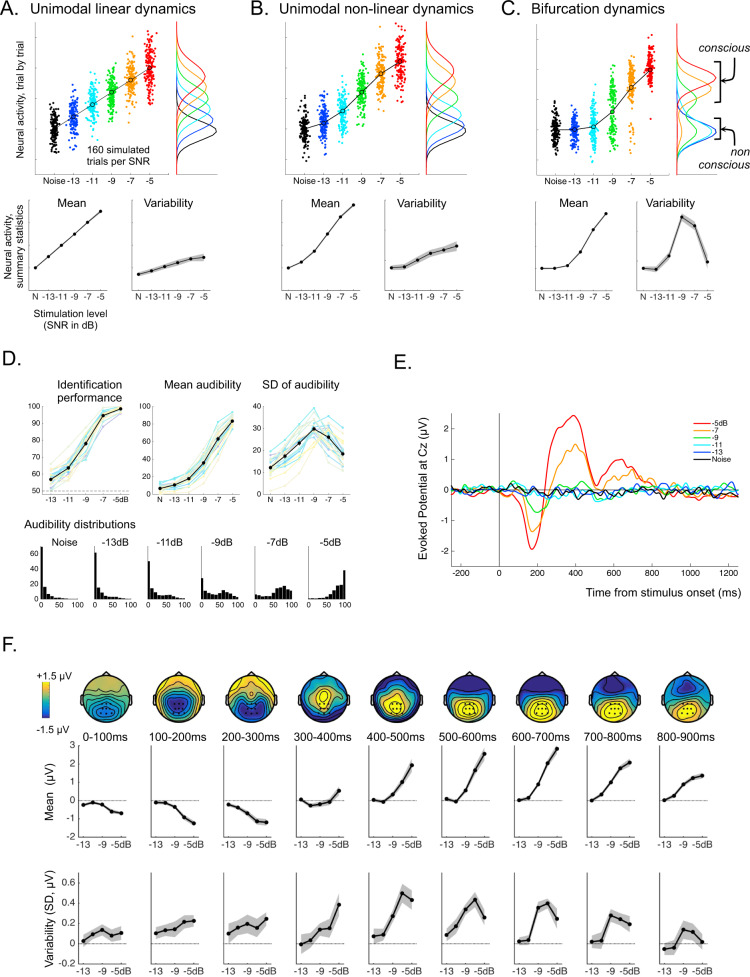
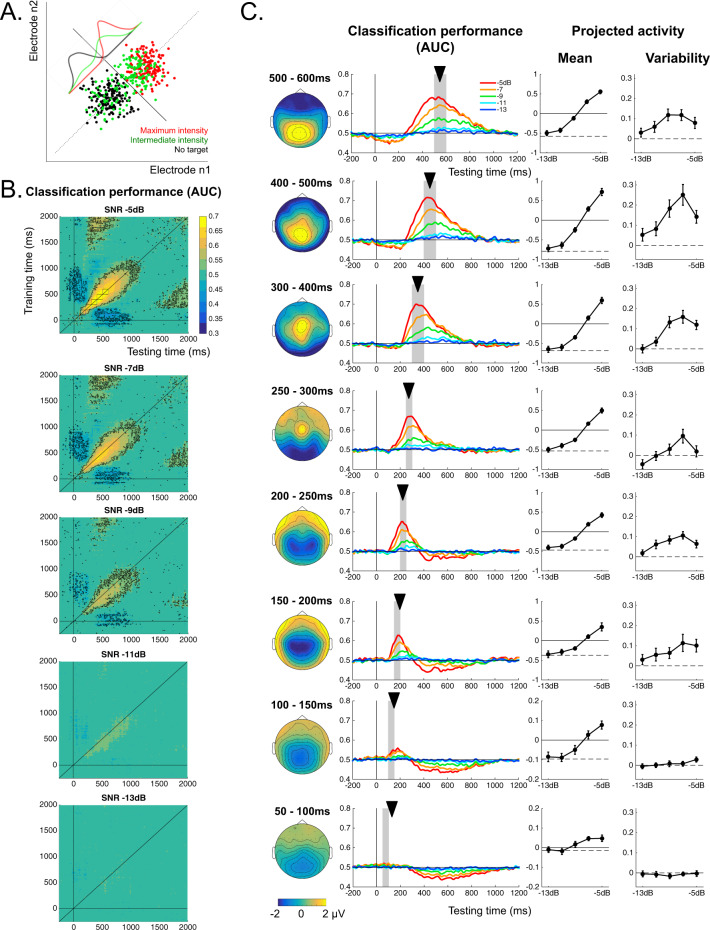
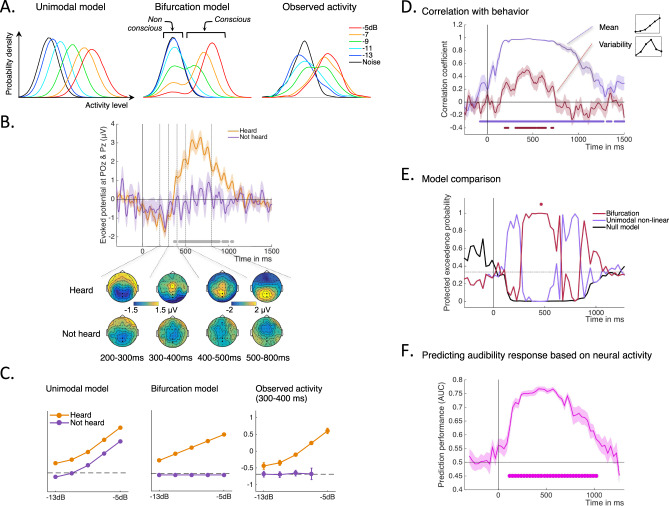
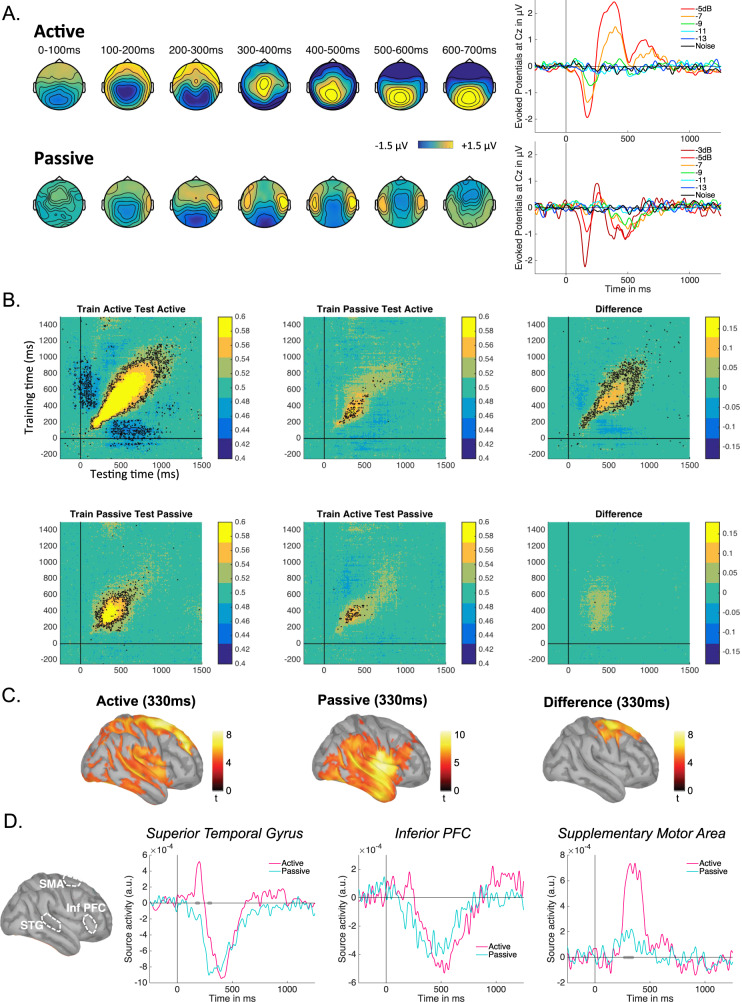
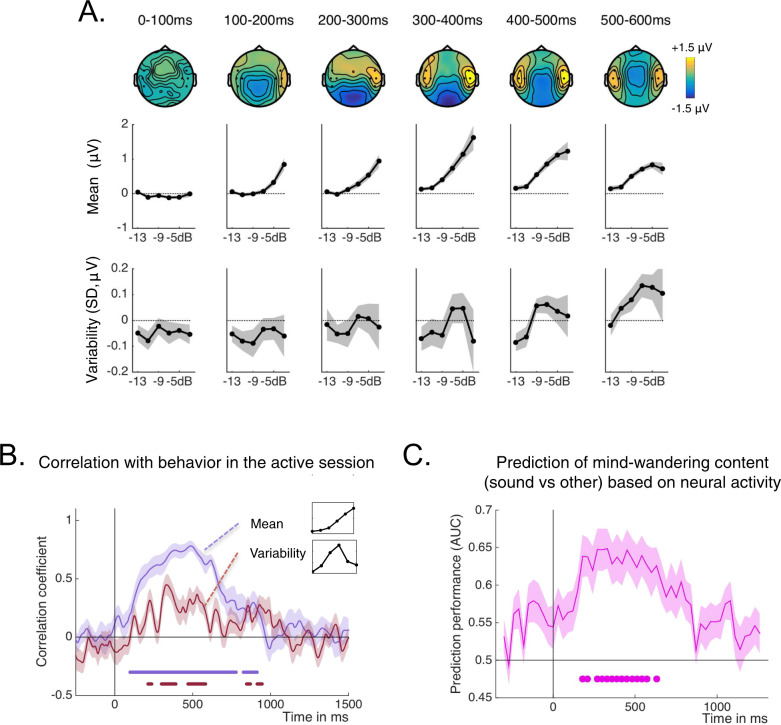
An outstanding challenge for consciousness research is to characterize the neural signature of conscious access independently of any decisional processes. Here we present a model-based approach that uses inter-trial variability to identify the brain dynamics associated with stimulus processing. We demonstrate that, even in the absence of any task or behavior, the electroencephalographic response to auditory stimuli shows bifurcation dynamics around 250–300 milliseconds post-stimulus. Namely, the same stimulus gives rise to late sustained activity on some trials, and not on others. This late neural activity is predictive of task-related reports, and also of reports of conscious contents that are randomly sampled during task-free listening. Source localization further suggests that task-free conscious access recruits the same neural networks as those associated with explicit report, except for frontal executive components. Studying brain dynamics through variability could thus play a key role for identifying the core signatures of conscious access, independent of report.
Overview
The claims and statistics of this paper haven’t been checked yet.
Free: it reads the open-access text and checks the first 5 claims that cite a source we can check. Create a free account to check every claim.
Integrity signals
Registry
Cites
Statistics
Figures
Verification
Claims the paper makes
The claims and statistics of this paper haven’t been checked yet.
Free: it reads the open-access text and checks the first 5 claims that cite a source we can check. Create a free account to check every claim.
Claims other papers make about this one
Each is checked against this paper’s own text: does it say what the citing paper says it does?
The cited source doesn’t support the claim as written.
In the citing paper
“Human intracerebral (stereo-EEG) recordings led to the identification of tonic activity patterns, 41 i.e., prolonged low-amplitude gamma-band responses to sensory stimulation, likely corresponding to the intracranial correlate of previously reported late EEG components reflecting perceptual awareness.42,43”
From An integrative, multiscale view on neural theories of consciousness (2024) · cites this paper as [42]
Checked by a reasoning model — may be wrong.
Experimental — accuracy not yet measuredThe cited source says what the claim attributes to it.
In the citing paper
“Interestingly, empirical evidence for early versus late signatures is currently hotly debated (compare, for example, Dembski et al. 2021; Sergent et al. 2021).”
From An academic survey on theoretical foundations, common assumptions and the current state of consciousness science (2022) · cites this paper as Sergent et al. 2021
Self-check
Percentages, sums and reported differences re-computed from the paper’s own numbers.
The self-check needs the paper’s full text.
Citations
Cites
Controlling the False Discovery Rate: A Practical and Powerful Approach to Multiple Testing
Benjamini, Y., & Hochberg, Y. (1995) · Journal of the Royal Statistical Society Series B: Statistical Methodology · doi:10.1111/j.2517-6161.1995.tb02031.x · Cited by 109,482
A Simplex Method for Function Minimization
Nelder, J. A., & Mead, R. (1965) · The Computer Journal · doi:10.1093/comjnl/7.4.308 · Cited by 28,905
Gelman, A., Carlin, J. B., Stern, H. S., & Rubin, D. B. (2003) · doi:10.1201/9780429258480 · Cited by 27,276
Brainard, D. H. (1997) · Spatial Vision · doi:10.1163/156856897x00357 · Cited by 19,702
The VideoToolbox software for visual psychophysics: transforming numbers into movies
Pelli, D. G. (1997) · Spatial Vision · doi:10.1163/156856897x00366 · Cited by 11,098
The control of the false discovery rate in multiple testing under dependency
Benjamini, Y., & Yekutieli, D. (2001) · The Annals of Statistics · doi:10.1214/aos/1013699998 · Cited by 10,490
Oostenveld, R., Fries, P., Maris, E., & Schoffelen, J.-M. (2011) · Computational Intelligence and Neuroscience · doi:10.1155/2011/156869 · Cited by 10,323
(1966) · Medical Entomology and Zoology · Cited by 10,293
Convergence Properties of the Nelder--Mead Simplex Method in Low Dimensions
Lagarias, J. C., Reeds, J. A., Wright, M. H., & Wright, P. E. (1998) · SIAM Journal on Optimization · doi:10.1137/s1052623496303470 · Cited by 7,447
Kleiner, M., Brainard, D. H., & Pelli, D. G. (2007) · MPG.PuRe (Max Planck Society) · Cited by 6,195
Research works printed but not linked: 1
- Luck, S. J. An Introduction to the event-related Potential Technique. Second Edition, pp. x, 406 (The MIT Press, 2014).
Cited by
Seth, A. K., & Bayne, T. (2022) · Nature Reviews Neuroscience · doi:10.1038/s41583-022-00587-4 · Cited by 880
The Border Between Seeing and Thinking
Block, N. (2023) · doi:10.1093/oso/9780197622223.001.0001 · Cited by 367
Consciousness and complexity: a consilience of evidence
Sarasso, S., Casali, A. G., Casarotto, S., Rosanova, M., Sinigaglia, C., & Massimini, M. (2021) · Neuroscience of Consciousness · doi:10.1093/nc/niab023 · Cited by 171
Perceptual awareness negativity: a physiological correlate of sensory consciousness
Dembski, C., Koch, C., & Pitts, M. (2021) · Trends in Cognitive Sciences · doi:10.1016/j.tics.2021.05.009 · Cited by 157
Northoff, G., & Zilio, F. (2022) · Behavioural Brain Research · doi:10.1016/j.bbr.2022.113788 · Cited by 138
The ConTraSt database for analysing and comparing empirical studies of consciousness theories
Yaron, I., Melloni, L., Pitts, M., & Mudrik, L. (2022) · Nature Human Behaviour · doi:10.1038/s41562-021-01284-5 · Cited by 147
Francken, J. C., Beerendonk, L., Molenaar, D., Fahrenfort, J. J., Kiverstein, J. D., Seth, A. K., & van Gaal, S. (2022) · Neuroscience of Consciousness · doi:10.1093/nc/niac011 · Cited by 136
“Interestingly, empirical evidence for early versus late signatures is currently hotly debated (compare, for example, Dembski et al. 2021; Sergent et al. 2021).”
BackgroundAn integrative, multiscale view on neural theories of consciousness
Storm, J. F., Klink, P. C., Aru, J., Senn, W., Goebel, R., Pigorini, A., Avanzini, P., Vanduffel, W., Roelfsema, P. R., Massimini, M., et al. (2024) · Neuron · doi:10.1016/j.neuron.2024.02.004 · Cited by 114
Melloni, L., Mudrik, L., Pitts, M., Bendtz, K., Ferrante, O., Gorska, U., Hirschhorn, R., Khalaf, A., Kozma, C., Lepauvre, A., et al. (2023) · PLoS ONE · doi:10.1371/journal.pone.0268577 · Cited by 113
Hayat, H., Marmelshtein, A., Krom, A. J., Sela, Y., Tankus, A., Strauss, I., Fahoum, F., Fried, I., & Nir, Y. (2022) · Nature Neuroscience · doi:10.1038/s41593-022-01107-4 · Cited by 91
Dellert, T., Müller-Bardorff, M., Schlossmacher, I., Pitts, M., Hofmann, D., Bruchmann, M., & Straube, T. (2021) · The Journal of Neuroscience · doi:10.1523/jneurosci.2799-20.2021 · Cited by 77
“In accordance with previous studies (Pitts et al., 2012; Shafto and Pitts, 2015; Cohen et al., 2020; Schlossmacher et al., 2020, 2021; Sergent et al., 2021) and contradicting GNWT predictions (Dehaene, 2014; Mashour et al., 2020), the parietal P3b was primarily linked to task relevance and not…”
Theory of the Multiregional Neocortex: Large-Scale Neural Dynamics and Distributed Cognition
Wang, X.-J. (2022) · Annual Review of Neuroscience · doi:10.1146/annurev-neuro-110920-035434 · Cited by 83
“A time-dependent analysis revealed a dynamic signature of the onset of ignition in the model, similar to that observed in a human experiment using an auditory detection paradigm and EEG recordings (Sergent et al. 2021).”
Decoding perceptual awareness across the brain with a no-report fMRI masking paradigm
Hatamimajoumerd, E., Ratan Murty, N. A., Pitts, M., & Cohen, M. A. (2022) · Current Biology · doi:10.1016/j.cub.2022.07.068 · Cited by 66
“…paradigms for consciousness studies, virtually all of them fail to use more nuanced decoding measures like the ones described here, 24,26–30, 32, 34, 62 but see Kapoor et al. The masks were constructed using line segments from the animal and object stimuli, overlaid upon each other such…”
Towards a pluralistic neurobiological understanding of consciousness
He, B. J. (2023) · Trends in Cognitive Sciences · doi:10.1016/j.tics.2023.02.001 · Cited by 61
Consensus Goals in the Field of Visual Metacognition
Rahnev, D., Balsdon, T., Charles, L., de Gardelle, V., Denison, R., Desender, K., Faivre, N., Filevich, E., Fleming, S. M., Jehee, J., et al. (2022) · Perspectives on Psychological Science · doi:10.1177/17456916221075615 · Cited by 63
“Corroborating this distinction, Sergent et al. (2021) suggested that the network that subtends such global availability during conscious perception takes a different form according to whether participants are requested to decide on their perception.”
Self-citationTürker, B., Musat, E. M., Chabani, E., Fonteix-Galet, A., Maranci, J.-B., Wattiez, N., Pouget, P., Sitt, J., Naccache, L., Arnulf, I., et al. (2023) · Nature Neuroscience · doi:10.1038/s41593-023-01449-7 · Cited by 57
“This evidence included subjective report (the gold standard for assessing conscious access) and the presence of neural responses previously shown to reflect conscious perception 43–45 (a stable and sustained brain activity in response to stimuli).”
Fronto-parietal networks shape human conscious report through attention gain and reorienting
Liu, J., Bayle, D. J., Spagna, A., Sitt, J. D., Bourgeois, A., Lehongre, K., Fernández-Vidal, S., Adam, C., Lambrecq, V., Navarro, V., et al. (2023) · Communications Biology · doi:10.1038/s42003-023-05108-2 · Cited by 60
“Both theories postulate that FP networks contribute to post-conscious cognitive processing and task relevance of targets, such as motor planning or verbal report 21,22 , and claim that attention and consciousness are distinct both conceptually and neurally.”
Differential cortical network engagement during states of un/consciousness in humans
Zelmann, R., Paulk, A. C., Tian, F., Balanza, G. A., Peralta, J. D., Crocker, B., Cosgrove, G. R., Richardson, R. M., Williams, Z. M., Dougherty, D. D., et al. (2023) · Neuron · doi:10.1016/j.neuron.2023.08.007 · Cited by 57
Northoff, G., & Zilio, F. (2022) · Entropy · doi:10.3390/e24020270 · Cited by 46
“[100] demonstrated that the level of post-stimulus TTV around 250–300 ms provides a critical threshold: after that, stimulus-related activity may persist and thus be prolonged, showing low TTV during conscious access.”
BackgroundResultAn integrative view of the role of prefrontal cortex in consciousness
Panagiotaropoulos, T. I. (2024) · Neuron · doi:10.1016/j.neuron.2024.04.028 · Cited by 51
Beyond task response—Pre-stimulus activity modulates contents of consciousness
Northoff, G., Zilio, F., & Zhang, J. (2024) · Physics of Life Reviews · doi:10.1016/j.plrev.2024.03.002 · Cited by 41
The nature of consciousness in anaesthesia
Montupil, J., Cardone, P., Staquet, C., Bonhomme, A., Defresne, A., Martial, C., Alnagger, N., Gosseries, O., & Bonhomme, V. L. (2023) · BJA Open · doi:10.1016/j.bjao.2023.100224 · Cited by 44
“70 Its maintenance or disappearance during anaesthesia and its associated possible different phenomenological brain states (unconsciousness, disconnected consciousness, and connected consciousness) are beginning to be studied.”
BackgroundEhret, G., & Romand, R. (2022) · Frontiers in Systems Neuroscience · doi:10.3389/fnsys.2022.941534 · Cited by 41
“In our present neuroscience approach, we follow the search for neural correlates of consciousness (NCCs) in brain activity of humans, a main topic of human neuroscience for many years (e.g., Crick and Koch, 1990; Dehaene and Naccache, 2001; Gaillard et al., 2009; Aru et al., 2012b; Koch et al., 2016; Tononi et al., 20…”
BackgroundInfluentialQuality space computations for consciousness
Fleming, S. M., & Shea, N. J. (2024) · Trends in Cognitive Sciences · doi:10.1016/j.tics.2024.06.007 · Cited by 47
“One example is the ‘ global playground ’ : a broad network of areas among which sensory representations are shared and maintained for several hundreds of milliseconds, thus offering wider cognitive possibilities compared with automatic unconscious processing, but with no speci fi c agenda [73].”
The search for the neural correlate of consciousness: Progress and challenges
Lepauvre, A., & Melloni, L. (2021) · Philosophy and the Mind Sciences · doi:10.33735/phimisci.2021.87 · Cited by 38
“Such observations are not limited to the visual domain, as Sergent et al. (2021) recently showed that the P3b correlates with awareness of auditory stimuli during the active report condition, but not during the no-report task.1 While these studies seem to relegate late, frontal activation to…”
BackgroundLow-dimensional organization of global brain states of reduced consciousness
Perl, Y. S., Pallavicini, C., Piccinini, J., Demertzi, A., Bonhomme, V. L., Martial, C., Panda, R., Alnagger, N., Annen, J., Gosseries, O., et al. (2023) · Cell Reports · doi:10.1016/j.celrep.2023.112491 · Cited by 45
Neural correlates of consciousness in an attentional blink paradigm with uncertain target relevance
Dellert, T., Krebs, S., Bruchmann, M., Schindler, S., Peters, A., & Straube, T. (2022) · NeuroImage · doi:10.1016/j.neuroimage.2022.119679 · Cited by 37
Cortical evidence accumulation for visual perception occurs irrespective of reports
Stockart, F., Msheik, R., Robin, A., Jurkovičová, L., Goueytes, D., Rouy, M., Mareček, R., Hoffmann, D., Mudrik, L., Román, R., et al. (2025) · Nature Communications · doi:10.1038/s41467-025-63255-y · Cited by 36
Self-citationMinimal exposure durations reveal visual processing priorities for different stimulus attributes
Lanfranco, R. C., Canales‐Johnson, A., Rabagliati, H., Cleeremans, A., & Carmel, D. (2024) · Nature Communications · doi:10.1038/s41467-024-52778-5 · Cited by 37
Irruption Theory: A Novel Conceptualization of the Enactive Account of Motivated Activity
Froese, T. (2023) · Entropy · doi:10.3390/e25050748 · Cited by 47
“For instance, increased variability of brain dynamics in a near-threshold auditory classification has been proposed as a neural signature of consciousness [81], which makes sense given that the perception of audible yet unclear stimuli is expected to elicit more motivational involvement to complete the task and, hence…”
BackgroundFarisco, M., & Changeux, J.-P. (2023) · Neuroscience of Consciousness · doi:10.1093/nc/niad016 · Cited by 29
“Importantly, this marker of conscious processing has not been associated with a quantification of information/differentiation so far, and it is often absent in conscious conditions in which stimuli are not task relevant (Pitts, et al. 2014; Sergent, et al. 2021).”
BackgroundShea, N. J. (2024) · doi:10.1093/9780191997167.001.0001 · Cited by 36
Neural signatures of visual awareness independent of postperceptual processing
Cohen, M. A., Dembski, C., Ortego, K., Steinhibler, C., & Pitts, M. A. (2024) · Cerebral Cortex · doi:10.1093/cercor/bhae415 · Cited by 30
“Another suggestion is that the P3b is linked with conscious experience, but only when the task requires that experience to be cognitively accessed for report or further processing (Naccache, 2018; Tagliabue et al., 2019; Sergent, 2021).”
Consciousness as Representing One's Mind: The Higher-Order Approach to Consciousness Explained
Brown, R. (2025) · doi:10.1093/oso/9780197784006.001.0001 · Cited by 29
Tonic somatosensory responses and deficits of tactile awareness converge in the parietal operculum
Del Vecchio, M., Fossataro, C., Zauli, F. M., Sartori, I., Pigorini, A., d’Orio, P., Abarrategui, B., Russo, S., Mikulan, E. P., Caruana, F., et al. (2021) · Brain · doi:10.1093/brain/awab384 · Cited by 26
Whyte, C. J., Hohwy, J., & Smith, R. (2022) · Current Research in Neurobiology · doi:10.1016/j.crneur.2022.100036 · Cited by 24
A class of 5D Hamiltonian conservative hyperchaotic systems with symmetry and multistability
Dong, Q., Zhou, S., Zhang, Q., & Kasabov, N. K. (2022) · Nonlinear Dynamics · doi:10.1007/s11071-022-07735-6 · Cited by 24
Francken, J., Beerendonk, L., Molenaar, D., Fahrenfort, J. J., Kiverstein, J., Seth, A., & van Gaal, S. (2021) · doi:10.31234/osf.io/8mbsk · Cited by 20
Evers, K., Farisco, M., & Pennartz, C. M. A. (2024) · Consciousness and Cognition · doi:10.1016/j.concog.2024.103668 · Cited by 22
A measure centrality index for systematic empirical comparison of consciousness theories
Chis-Ciure, R., Melloni, L., & Northoff, G. (2024) · Neuroscience & Biobehavioral Reviews · doi:10.1016/j.neubiorev.2024.105670 · Cited by 22
“In light of these debates, Sergent et al. (2021) reassessed the P3b ’ s role without report relying on Fig.”
BackgroundInfluentialFrontoparietal asymmetries leading to conscious perception
Bartolomeo, P., Liu, J., & Malkinson, T. S. (2024) · Trends in Cognitive Sciences · doi:10.1016/j.tics.2024.12.002 · Cited by 22
Filimonov, D., Railo, H., Revonsuo, A., & Koivisto, M. (2022) · Neuropsychologia · doi:10.1016/j.neuropsychologia.2022.108154 · Cited by 22
“…theory, that awareness happens solely in the LP time-window, which contains both the modality-specific correlate of sensory experience and the modality-general correlate of access to cognitive functions (Baars, 1997; Dehaene et al., 2006, but see also Sergent et al., 2021 for recent modifications).”
Rakhshan, V., Hassani‐Abharian, P., Joghataei, M., Nasehi, M. M., & Khosrowabadi, R. (2022) · BioMed Research International · doi:10.1155/2022/8588272 · Cited by 25
“The sample size was determined as 31 subjects based on the few previous studies on the e ff ects of BBs on working memory (e.g., 4, 20, 28, 29, and 34 subjects), noting that a minimum of 20 subjects is recommended for EEG studies [32], and also considering the central limit theorem.”
Depth of anaesthesia monitoring: time to reject the index?
McCulloch, T. J., & Sanders, R. (2023) · British Journal of Anaesthesia · doi:10.1016/j.bja.2023.04.016 · Cited by 24
Yaron, I., Melloni, L., Pitts, M., & Mudrik, L. (2021) · doi:10.1101/2021.06.10.447863 · Cited by 21
“These different procedures probe somewhat different processes 3 , sometimes yielding different results 25–27 .”
BackgroundA dynamic bifurcation mechanism explains cortex-wide neural correlates of conscious access
Klatzmann, U., Froudist‐Walsh, S., Bliss, D. P., Theodoni, P., Mejías, J. F., Niu, M., Rapan, L., Palomero‐Gallagher, N., Sergent, C., Dehaene, S., et al. (2025) · Cell Reports · doi:10.1016/j.celrep.2025.115372 · Cited by 23
“When plotted across trials, this early activity creates a unimodal distribution 37 and likely corresponds to pre-conscious processing.”
InfluentialSelf-citationDoradzińska, Ł., & Bola, M. (2024) · Journal of Cognitive Neuroscience · doi:10.1162/jocn_a_02156 · Cited by 22
“…(Dellert, Krebs, et al., 2022; Kronemer et al., 2022; Dellert, Müller-Bardorff, et al., 2021; Schlossmacher et al., 2021; Schröder et al., 2021; Sergent et al., 2021; Cohen et al., 2020; Koivisto et al., 2016; Pitts, Metzler, et al., 2014; Pitts, Padwal, et al., 2014; also supported also by…”
ResultWhat does decoding from the PFC reveal about consciousness?
Block, N. J. (2024) · Trends in Cognitive Sciences · doi:10.1016/j.tics.2024.05.004 · Cited by 22
Roth-Paysen, M.-L., Bröcker, A., Bruchmann, M., & Straube, T. (2022) · NeuroImage · doi:10.1016/j.neuroimage.2022.119652 · Cited by 19
Nakai, T., & Nishimoto, S. (2022) · Communications Biology · doi:10.1038/s42003-022-04221-y · Cited by 23
The layer 6b theory of attention
Zolnik, T. A., Eickholt, B. J., Molnár, Z., & Larkum, M. E. (2026) · Neuron · doi:10.1016/j.neuron.2025.11.024 · Cited by 18
Behavioral, experiential, and physiological signatures of mind blanking
Musat, E. M., Coz, A. L., Corcoran, A. W., Belloli, L. M. L., Naccache, L., & Andrillon, T. (2025) · Proceedings of the National Academy of Sciences · doi:10.1073/pnas.2510262122 · Cited by 19
Consciousness makes sense in the light of evolution
Grinde, B. (2024) · Neuroscience & Biobehavioral Reviews · doi:10.1016/j.neubiorev.2024.105824 · Cited by 20
“In mammals, the latter is characterized by the ignition of divergent brain activity in the thalamocortical loops and has been referred to as a delayed event-related potential (Mashour et al., 2020; Sergent et al., 2021).”
BackgroundConscious tactile perception entails distinct neural dynamics within somatosensory areas
Albertini, D., Vecchio, M. D., Sartori, I., Pigorini, A., Talami, F., Zauli, F. M., Sarasso, S., Mikulan, E., Massimini, M., & Avanzini, P. (2025) · Current Biology · doi:10.1016/j.cub.2025.04.052 · Cited by 20
Neural correlates of conscious processing of emotional faces: Evidence from event-related potentials
Sun, B., Zeng, X., Chen, X., Zhao, J., & Fu, S. (2023) · Neuropsychologia · doi:10.1016/j.neuropsychologia.2023.108478 · Cited by 16
Brain dynamics shape cognition–Spatiotemporal Neuroscience
Northoff, G., Wolman, A., & Zhang, J. (2025) · Physics of Life Reviews · doi:10.1016/j.plrev.2025.07.009 · Cited by 16
Spontaneous neuronal avalanches as a correlate of access consciousness
Rabuffo, G., Sorrentino, P., Bernard, C., & Jirsa, V. (2022) · Frontiers in Psychology · doi:10.3389/fpsyg.2022.1008407 · Cited by 15
Neural correlates of consciousness in an auditory no-report fMRI study
Dellert, T., Balster, H., Schloßmacher, I., Bruchmann, M., Moeck, R., & Straube, T. (2025) · Current Biology · doi:10.1016/j.cub.2025.10.026 · Cited by 15
A neuroimaging dataset during sequential color qualia similarity judgments with and without reports
Hirao, T., Miyamae, M., Matsuyoshi, D., Inoue, R., Takado, Y., Obata, T., Higuchi, M., Tsuchiya, N., & Yamada, M. (2025) · Scientific Data · doi:10.1038/s41597-025-04511-0 · Cited by 15
Brockhoff, L., Vetter, L., Bruchmann, M., Schindler, S., Moeck, R., & Straube, T. (2023) · Scientific Reports · doi:10.1038/s41598-023-31132-7 · Cited by 16
Perceptual Awareness in Human Infants: What is the Evidence?
Dehaene‐Lambertz, G. (2024) · Journal of Cognitive Neuroscience · doi:10.1162/jocn_a_02149 · Cited by 13
“…is independent of the adult ’ s report, indicating an early process of evidence accumulation in parallel and modular pathways, whereas conscious access is marked by a radical change in neural activity (Sergent et al., 2021; Mashour, Roelfsema, Changeux, & Dehaene, 2020; van Vugt et al., 2018).”
BackgroundA mesoscale connectome-based model of conscious access in the macaque monkeyPreprint
Klatzmann, U., Froudist‐Walsh, S., Bliss, D. P., Theodoni, P., Mejías, J. F., Niu, M., Rapan, L., Margulies, D. S., Palomero‐Gallagher, N., Sergent, C., et al. (2022) · bioRxiv (Cold Spring Harbor Laboratory) · doi:10.1101/2022.02.20.481230 · Cited by 12
“When plotted across trials, this early activity creates a unimodal distribution (Sergent et al. 2021), and likely corresponds to pre-conscious processing (Dehaene et al. 2006).”
BackgroundMethodResultInfluentialSelf-citationDoll, L., Dykstra, A. R., & Gutschalk, A. (2024) · iScience · doi:10.1016/j.isci.2024.110530 · Cited by 13
“22,23 Inthepresentstudy,weexploredif theauditoryawarenessnegativity(AAN)couldembodythevariableneuralrepresentationpredictedby SDT.”
InfluentialZhu, Y., Li, C., Hendry, C., Glass, J., Canseco-Gonzalez, E., Pitts, M. A., & Dykstra, A. R. (2024) · Journal of Neuroscience · doi:10.1523/jneurosci.0145-23.2023 · Cited by 16
Filimonov, D., Tanskanen, S., Revonsuo, A., & Koivisto, M. (2024) · Consciousness and Cognition · doi:10.1016/j.concog.2024.103720 · Cited by 11
“…functions, especially the reportability of the stimulus (Railo et al., 2009; Koivisto et al., 2017; Wiens et al., 2023; Schlossmacher et al., 2021; Sergent et al., 2021; Filimonov et al., 2022), although this debate is not yet settled (Dellert et al., 2021; Pitts et al., 2012, 2014; Shafto &…”
BackgroundMethodResultInfluentialMusat, E. M., Rohaut, B., Sangaré, A., Benhaiem, J.-M., & Naccache, L. (2022) · Frontiers in Neuroscience · doi:10.3389/fnins.2022.756651 · Cited by 11
Event-related potential correlates of consciousness in simple auditory hallucinations
Filimonov, D., Lenkkeri, S., Koivisto, M., & Revonsuo, A. (2025) · NeuroImage · doi:10.1016/j.neuroimage.2025.121168 · Cited by 13
“…et al., 2024a), response requirements and task-related processing in general (Filimonov et al., 2024b; Dellert et al., 2021; Pitts et al., 2012, 2014; Sergent et al., 2021), and it has been reported to be absent in the no-report condition (Cohen et al., 2020; Schlossmacher et al., 2020, 2021).”
Rowe, E., Garrido, M. I., & Tsuchiya, N. (2023) · Cortex · doi:10.1016/j.cortex.2023.11.016 · Cited by 10
“To reconcile with GNWT, Tru¨butschek and colleagues (2017) proposed that unconscious working memory may be supported by ‘activity silent’ synaptic weight changes which are not accompanied by observable cortical activation (see also King et al., 2016 and Sergent et al., 2021).”
BackgroundUnconscious multisensory integration: behavioral and neural evidence from subliminal stimuli
Frumento, S., Preatoni, G., Chee, L., Gemignani, A., Ciotti, F., Menicucci, D., & Raspopović, S. (2024) · Frontiers in Psychology · doi:10.3389/fpsyg.2024.1396946 · Cited by 9
Subcortical correlates of consciousness with human single neuron recordings
Pereira, M., Faivre, N., Bernasconi, F., Brandmeir, N. J., Suffridge, J., Tran, K., Wang, S., Finomore, V. S., Konrad, P. E., Rezai, A. R., et al. (2025) · eLife · doi:10.1101/2023.01.27.525684 · Cited by 8
Fractional-order PID control of tipping in network congestion
He, J., Xiao, M., Lu, Y., Wang, Z., & Zheng, W. X. (2023) · International Journal of Systems Science · doi:10.1080/00207721.2023.2210143 · Cited by 8
“There is some research on bifurcation-induced tipping of network congestion (Duran et al., 2019, April; Sergent et al., 2021; Wang & Pei, 2020).”
BackgroundContent–state dimensions characterize different types of neuronal markers of consciousness
Pérez, P., Manasova, D., Hermann, B., Raimondo, F., Rohaut, B., Bekinschtein, T. A., Naccache, L., Arzi, A., & Sitt, J. D. (2024) · Neuroscience of Consciousness · doi:10.1093/nc/niae027 · Cited by 8
“The violation of this regularity by the other sequence: XXXXX or XXXXY, respectively, is represented by the P3b waveform and requires conscious awareness and working memory (Bekinschtein et al. 2009) [although see Sergent et al. (2021) for an updated view of P300].”
BackgroundStimulus representations in visual cortex shaped by spatial attention and microsaccades
Srinivasan, K., Lowet, E., Gomes, B. D., & Desimone, R. (2025) · Proceedings of the National Academy of Sciences · doi:10.1073/pnas.2420704122 · Cited by 7
Zhou, Y., Yang, B., & Wang, C. (2024) · Neural Networks · doi:10.1016/j.neunet.2024.106313 · Cited by 7
Distinct dynamic connectivity profiles promote enhanced conscious perception of auditory stimuli
Türker, B., Manasova, D., Béranger, B., Naccache, L., Sergent, C., & Sitt, J. D. (2024) · Communications Biology · doi:10.1038/s42003-024-06533-7 · Cited by 8
“25 participants underwent fMRI recordings during an auditory detection task adapted from Sergent et al. 28 (Fig.”
Self-citationRetrospective cueing mediates flexible conscious access to past spoken words.
Garnier-Allain, A., Pressnitzer, D., & Sergent, C. (2023) · Journal of Experimental Psychology Human Perception & Performance · doi:10.1037/xhp0001132 · Cited by 8
Self-citationNoorman, S., Stein, T., Fahrenfort, J. J., & van Gaal, S. (2025) · eLife · doi:10.1101/2023.10.16.562523 · Cited by 7
Filimonov, D., Krabbe, A., Revonsuo, A., & Koivisto, M. (2024) · Neuroscience of Consciousness · doi:10.1093/nc/niae031 · Cited by 7
“…a stimulus is selected by attention for further processing in a global neuronal workspace, involving higher-order cognitive functions in the fronto-parietal areas, conscious experience of the stimulus emerges (Dehaene and Naccache 2001; however, see recent modifications in Sergent et al. (2021).”
BackgroundCiceri, S., Lohuis, M. N. O., Rottschäfer, V., Pennartz, C. M. A., Avitabile, D., van Gaal, S., & Olcese, U. (2024) · eNeuro · doi:10.1523/eneuro.0191-24.2024 · Cited by 8
Disentangling Some Conceptual Knots
Pessoa, L. (2023) · Journal of Cognitive Neuroscience · doi:10.1162/jocn_a_01961 · Cited by 7
“In addition, analysis of the temporal evolution of activity revealed a dynamic signature of the onset of “ignition” that paralleled results observed with EEG in a human auditory detection experiment (Sergent et al., 2021).”
ResultSubcortical correlates of consciousness with human single neuron recordingsPreprint
Pereira, M., Faivre, N., Bernasconi, F., Brandmeir, N. J., Suffridge, J., Tran, K., Wang, S., Finomore, V. S., Konrad, P. E., Rezai, A. R., et al. (2025) · eLife · doi:10.7554/elife.95272 · Cited by 10
“We also found no clear indication that neurons with a beta-band oscillatory component were more or less selective.”
The exclusionary approach to consciousness
Paßler, M. (2023) · Neuroscience of Consciousness · doi:10.1093/nc/niad022 · Cited by 7
“Notably, these include studies that dismiss the P3b ERP as a legitimate NCC candidate (Fr ̈ assle et al. 2014; Pitts Michael et al. 2014; Sergent et al. 2021; Elaheh et al. 2022; Vishal et al. 2022).”
InfluentialCase-by-case: neural markers of emotion and task stimulus significance
Schupp, H. T., Flösch, K., & Kirmse, U. (2022) · Cerebral Cortex · doi:10.1093/cercor/bhac250 · Cited by 6
Emotion regulation capacity lacks a shared neural signature
Sicorello, M., Zähringer, J., Kraynak, T. E., Gianaros, P. J., Nebe, S., Paschke, L. M., Steimke, R., Stelzel, C., Walter, H., LaBar, K. S., et al. (2026) · Nature · doi:10.1101/2025.08.18.670843 · Cited by 5
Stockart, F., Robin, A., Blumenfeld, H., Brázdil, M., Kahane, P., Mudrik, L., Thum, J. A., Pereira, M., & Faivre, N. (2026) · eLife · doi:10.7554/elife.109604.4 · Cited by 5
Self-citationNeural field modeling and analysis of consciousness states in the brain
Polyakov, D., Robinson, P. A., Makbili, A., Laureys, S., Gosseries, O., & Shriki, O. (2025) · Neuroscience of Consciousness · doi:10.1093/nc/niaf055 · Cited by 5
“…comprises r eciprocal connections between the cortex and the thalamus, which are essential for maintaining wakefulness, perception,and cognitive functions (Koch and Tsuchiya,2007,Tononi et al.2016a,Boly et al.,2017,Darracq et al.,2018,Laufs et al.,2019, Pal et al., 2019, Sergent et al., 2021).”
A fractional-order Wilson-Cowan formulation of cortical disinhibition
González-Ramírez, L. R. (2023) · Journal of Computational Neuroscience · doi:10.1007/s10827-023-00862-y · Cited by 7
“In addition, different authors have used a similar theoretical framework to establish connections between mathematical models and normal or pathological brain dynamics (e.g., Ermentrout and Terman (2010); Sergent et al. (2021); Perez Velazquez et al. (2003); Breakspear (2017)).”
Insights on overflow from failure to report tasks
Hutchinson, B. T., Bandara, K. H., McGovern, H. T., & Talipski, L. A. (2021) · Behavioural Brain Research · doi:10.1016/j.bbr.2021.113610 · Cited by 5
Filimonov, D., Koivisto, M., & Revonsuo, A. (2026) · NeuroImage · doi:10.1016/j.neuroimage.2026.121762 · Cited by 6
“…in their previous study (Cohen et al., 2020): instead, the authors prereg-istered a set of criteria for confirming bifurcation of the neural signal (Sergent et al., 2021; Kouider et al., 2013) and made their decision based on it: for instance, there had to be no difference in the signal between 17…”
InfluentialMultiple independent components contribute to event-related potential correlates of conscious vision
Colombari, E., & Railo, H. (2024) · Consciousness and Cognition · doi:10.1016/j.concog.2024.103785 · Cited by 4
Zheng, N., Li, Y., Shi, W., & Xie, Q. (2025) · Neurocomputing · doi:10.1016/j.neucom.2025.129569 · Cited by 5
Maffei, A., Gambarota, F., Liotti, M., Dell’Acqua, R., Tsuchiya, N., & Sessa, P. (2024) · Cortex · doi:10.1016/j.cortex.2024.02.010 · Cited by 4
“It would be an interesting future paradigm to combine our paradigm with the no-report condition as done by Cohen et al. (2020) or Sergent et al. (2021).”
Perez-Alcantara, M., Washer, S. J., Chen, Y., Steer, J., Gonzalez-Padilla, D., McWilliam, J., Willé, D., Panousis, N., Kolberg, P., Navarro-Guerrero, E., et al. (2026) · Nature Genetics · doi:10.1038/s41588-026-02843-0 · Cited by 4
D'Angiò, M., Chiarella, S. G., Simione, L., Pace, E. D., van Leeuwen, C., & Raffone, A. (2025) · Neuroscience & Biobehavioral Reviews · doi:10.1016/j.neubiorev.2025.106445 · Cited by 5
Explanation, scope, and perspective: sources of schismogenesis in consciousness science
Ellia, F., & Tsuchiya, N. (2026) · Trends in Cognitive Sciences · doi:10.1016/j.tics.2026.03.005 · Cited by 6
What biology can and cannot tell us about conscious AI
Klatzmann, U., & Doerig, A. (2026) · Trends Open · doi:10.1016/j.treopn.2026.07.012 · Cited by 3
Frontal engagement in perceptual integration under low subjective visibility
Bae, J., Jung, K., James, O., Suzuki, S., & Kim, Y. (2024) · NeuroImage · doi:10.1016/j.neuroimage.2024.120984 · Cited by 3
Mechanistic Computational Models of Cognition Across Scales and Species
Froudist‐Walsh, S., Ivanov, T. G., Fantacci, T., Magrou, L., Cho, H., Russo, E., Busch, A., Muller, L., Meng, J. H., Murray, J. D., et al. (2026) · Biological Psychiatry · doi:10.1016/j.biopsych.2026.08.017 · Cited by 4
Physical effort modulates perceptual awareness judgment independent of level of processing
Qiu, S., Cheng, X., Cheng, Z., Cao, J., Fan, Z., & Ding, X. (2024) · Consciousness and Cognition · doi:10.1016/j.concog.2024.103746 · Cited by 3
Séguin, P., Maby, E., Perrin, F., Farnè, A., & Mattout, J. (2023) · HAL · doi:10.48550/arxiv.2310.00266 · Cited by 5
“For example, in a paradigm with stimulations around the discrimination threshold, the P300 was present only in the active task (Sergent et al., 2021).”
Background
Metadata
- Authors
- Sergent, C., Corazzol, M., Labouret, G., Stockart, F., Wexler, M., King, J.-R., Meyniel, F., & Pressnitzer, D.
- Affiliations
- Centre National de la Recherche Scientifique (FR)
- Université Paris-Sud (FR)
- Corresponding author
- Sergent, Claire
- ORCID
- Venue
- Nature Communications
- Published
- 2021-02-19
- Volume
- 12
- Issue
- 1
- Pages
- 1149-1149
- ISSN
- 2041-1723 (ISSN-L)
- PMC
- PMC7895979
- OpenAlex
- W3131701397
- Semantic Scholar
- 6850d04a917110a956ef51b4f12ce433c071a4df
- Cited by
- 200
- References
- 89
- Citations by year
- 2026: 29 · 2025: 41 · 2024: 57 · 2023: 38 · 2022: 26 · 2021: 9
- FWCI
- 17.09
- Type
- journal article
- Language
- en
- Open access
- gold
- doi.org
- Licence
- cc-by
- creativecommons.org/licenses/by/4.0 (tdm)
- creativecommons.org/licenses/by/4.0 (vor)
- Locations
- Nature Communications (publishedVersion, cc-by)
- PubMed Central (publishedVersion, cc-by)
- PubMed (publishedVersion)
- HAL (submittedVersion, other-oa)
- RePEc: Research Papers in Economics (submittedVersion)
- DOAJ (DOAJ: Directory of Open Access Journals) (submittedVersion, cc-by-sa)
- Funders
- Agence Nationale de la Recherche (ANR-17-CE37-0004-01, ANR-17-EURE-0017, ANR-10-IDEX-0001-02)
- Topics
- Life Sciences › Neuroscience › Cognitive Neuroscience › Neural dynamics and brain function
- Social Sciences › Arts and Humanities › Philosophy › Philosophy and Theoretical Science
- Social Sciences › Arts and Humanities › Philosophy › Free Will and Agency
- Keywords
- conscious access, bifurcation dynamics, trial-to-trial variability, EEG, source localization, model-based analysis
- MeSH terms
- Cognitive Neuroscience, Acoustic Stimulation, Adolescent, Adult, Auditory Perception, Behavior, Brain, Consciousness, Electroencephalography, Female, Humans, Male, Visual Perception, Young Adult
About these checks
Registry, retraction, Cites and statistics results are computed, not judged, with one exception: a printed reference that no index lists is read once by a model before it counts as a citation error. Claims are extracted by a model and kept only when their quote appears verbatim in the text; each cited source is then checked, with a model’s help, for whether it says what the claim relies on. Those verdicts can be wrong — read the claim’s quote and the cited source before relying on one.
Statistics and arithmetic are recomputed, not judged.
Confidence bands are shown only for fields calibrated on our annotated test set. None is calibrated yet, so no band is shown.
What counts as a claim ›How we measure confidence ›How we check this ›
Are you an author, or do you see a problem with this page? Request a review
Data sources
Bibliographic data: Semantic Scholar, OpenAlex, Crossref.
Contains information from the Semantic Scholar Academic Graph Datasets, made available under the ODC Attribution License (ODC-BY 1.0).
Semantic Scholar’s data is described in: Kinney, R., et al. (2023). The Semantic Scholar Open Data Platform. arXiv:2301.10140.
